COST/BENFIT

“Apple in China” is a message to the entire world about the risks of technological relocation solely based on reducing costs of labor in a politically and culturally divided world. This is a book every employer should listen to or read.

Books of Interest
 Website: chetyarbrough.blog

Apple in China (The Capture of the World’s Greatest Company)

Author: Patrick McGees

Narrated By:  Fred Sanders

Patrick McGee (Author, technology/business journalist, San Francisco Correspondent for “Financial Times”.)

Patrick McGee has written an important book about world trade. He reveals a shocking story about Apple and the risk of basing a corporation’s economic future on a singular aspect of its success, i.e. cost of manufacturing. This is a story of two companies and the world’s labor market. Foxconn and Apple look to China, Taiwan, South Korea, Ireland, and Asian countries that vie for the role of the cheapest and best labor markets in the world. Foxconn’s and much of Apple’s search and success as a tech company is based on finding the cheapest labor in the world for the manufacture of product. However, McGee explains how that view makes Apple and other international corporations vulnerable to the politics of nation-states that have a mix of economic and political agendas. McGee explains how politics can be a greater cost than benefit to a business enterprise because of nation-state’ politics.

The power of political leadership in business enterprise is on display in America today with Donald Trump and his doomed effort to return America to a 20th century manufacturing behemoth.

McGee’s story is about the impact of China’s government on Apple and Foxconn led by Tim Cook and Terry Gou. Tim Cook is the wunderkind hired by Steve Jobs before his death, and Terry Gou is the Taiwanese billionaire who founded Foxconn which is now headed by Young Liu who was educated in Taiwan and the United States.

Tim Cook (CEO of Apple Inc.)

McGee explains why and how Tim Cook became the CEO of Apple. Jobs who was known as a poor manager of people, needed a manager who emulated Jobs’ drive but understood how to manager an organization to become bigger while remaining profitable. Cook is characterized as someone who has a near photographic memory. His analysis of reports from subordinates could be used to advance company goals or change a subordinate’s understanding of anything they propose that is not practicable or goal focused. What McGee argues is that Tim Cook’s focus on the cost of manufacturing became an Achilles heel when he hires Foxconn to organize Apple’s iPhone manufacturing to be done mostly in one country, China.

To accomplish iPhone manufacture in China, Cook had to transfer thousands of American engineers to train laborers in the assembly of Apple products.

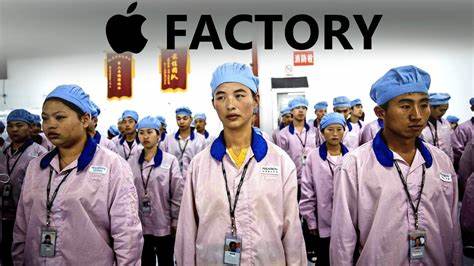
Cook needed a go-between which became Foxconn, a Taiwanese company that is the largest electronics labor contractor in the world. Foxconn is also China’s largest private-sector employer with over 800k employees. Foxconn employees assemble iPhones, semiconductors, and electronics for some of the largest American technology companies in the world, e.g. Apple, Microsoft, and Dell. Foxconn’s relationship with China is further complicated by the international relationship between Taiwan and China. Foxconn has built a lucrative business in the tech industry because of its labor intensity and the desire of tech companies to minimize overhead to improve their profits.

World trade has made Foxconn the leading international labor subcontractor in the world. They employ an estimated 800,000 employees in China alone.

The desire to bring Taiwan under the control of communist China is a background conflict between Xi and Terry Gou. It may be unlikely that Gou would ever be elected President of Taiwan, but his candidacy is a cloud of suspicion to knowledgeable Chinese, Taiwanese, and American leaders. McGee notes Foxconn’s tax audits and land-use investigations by Chinese authorities that some believe are politically motivated. Foxconn has been criticized for poor working conditions because of incidents of worker protests, suicides, and labor strikes. China’s posture on those working conditions is ambiguous and most American businesses are ignorant or uncaring. A China crackdown on labor conditions would have wide effects on the global tech industry.

For Apple to lower costs of iPhone assembly, Foxconn contracted China’s people at low wages, to support what would be unfair labor practices in America, to assemble iPhones.

This benefited Apple in the first years of their association with Foxconn in China. However, later in the transition President Xi spread false reports of poor and unfair warranty practices being offered Chinese consumers of Apple products. Contrary to Xi’s claims, McGee explains that Apple warranties were the same in China as they were throughout the world.

McGee infers politics were behind Xi’s false claims about iPhone warranties.

China’s economy benefited from Apple’s move for cheaper manufacturing costs. China gained an immense technology boost from the retraining of Chinese citizens by Apple’s experienced engineers. With iPhone manufacturing in China, Apple’s revenues rose from $24 billion in 2007 to $201 billion in 2022. Apple invested an estimated $275 billion in China’s economy over 5 years. However, with Xi’s lies and vilification of Apple’s warranty, Chinese smartphone giants like Huawei, Xiaomi, Oppo, and Vivo increased sales. One presumes, Tesla followed a similar cost and benefit reward with its labor and technology transfer to China’s electric vehicle manufacturers.

McGee notes the bad publicity for Apple in the Chinese market threatens Apple’s future in three ways.

One, its loss of sales in China, two, a significant change in low-cost manufacturing advantages with rising Chinese labor cost, and three, Apple’ technology transfer to Chinese companies. Add to those lost advantages is Apple’s relocation costs to another country for iPhone manufacture.

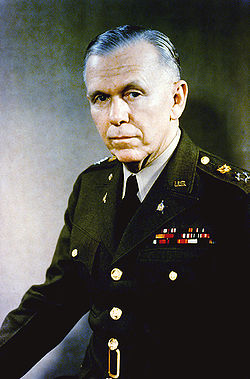
GENERAL GEORGE C. MARSHALL (1880-1959)

An interesting comparison McGee makes between Apple’s $275 billion investment in China for iPhone assembly is that it is more than double the amount used in the Marshall Plan to rebuild Europe after WWII.

McGee notes Apple has a supply chain vulnerability from the Chinese government’s relationship with key suppliers of iPhone components wherever they are assembled. “Apple in China” is a message to the entire world about the risks of technological relocation solely based on reducing costs of labor in a politically and culturally divided world. This is a book every employer should listen to or read.

SNARES

Being bad is a human characteristic, i.e., the desire for money, power, prestige, and sex are elemental parts of the human condition. They are the “Snares” of human life.

Books of Interest
 Website: chetyarbrough.blog

The Snares (A Novel)

By: Rav Grewal-Kök

Narrated By:  Neil Shah

Rav Grewal-Kök (Author, “The Snares” is his first novel. Rav Grewal-Kök has written for The Atlantic, New England Review and won a National Endowment for the Arts fellowship.)

“The Snares” is about a well-educated lawyer who feels like an American outsider struggling to become a success. His mother and father are Punjabi. He seems burdened by being a person of a different race and ethnicity in white America. That feeling is reinforced by the circumstances of his life. He is married to a woman who comes from a wealthy white American family. He is a lawyer at forty years of age that is offered a job by the CIA. His hope is that working for the CIA will be a career making move that will make him a success in his own eyes and in the opinion of his in-laws. The irony of Grewal-Kök’s story is that the CIA is not an avenue for success but a road to perdition. The author paints a picture of the CIA and FBI that makes a mockery of American ideals.

What Grewal-Kök shows is that American government employees are just like the general population.

All the prejudices and dishonesty of America (or any country) are as present in governments as in any organization of human beings. The difference is that government has wider societal influence than a singular business, or eleemosynary organization. Government is filled with all the social goodness and prejudice of the society in which it is designed to serve.

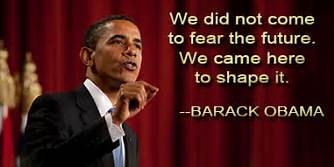
“The Snares” the author is writing about are the best and worst of what the American CIA represent. The author’s main character, Neel Chima, is interviewed for a job with the CIA. Chima is hired by the CIA during the George W. Bush administration. George W., considered a Republican conservative, is the first President to authorize drone strikes for targeted killing. President Bush approved the killing of 6 Yemeni’ men in Yemen for their attack on the USS Cole. What is often forgotten is that Barack Obama, a Democratic liberal, authorized between 400 and 600 drone strikes that killed an estimated 3,797 people, of which 300 to 400 were civilians.

Obama’s drone strikes were in Afghanistan, Pakistan, Yemen, and Somalia.

One takes for granted that every drone strike is based on a careful examination of the human targets that are chosen. What Grewal-Kök implies is the CIA is something more than an intelligence service charged with collecting, analyzing and acting on foreign threats to America. As CIA operatives, these very human and well-educated government employees are pursuing a good life by stopping considered threats to America. Neel Chima is hired because the CIA officer in charge believes he can be an asset in the pursuit of foreign intelligence because of his ambition and life as a Punjabi American. However, Chima’s career ends in a state of turmoil, in part because of his own human vices but largely because of inept management by unscrupulous supervisors.

The snares that Grewal-Kök is referring to are “bad people” who are in powerful government positions. These bad government actors use their position to subvert newbies to their organization for actions that are contrary to ideals of the government agency for which they work. This is particularly dangerous in organizations like the CIA and FBI that are designed to interpret behaviors of potential criminals, i.e. not criminals in the act of crime but those who may or may not commit a crime.

J. Edgar Hoover led the FBI from 1924 to 1972.

The FBI arrested Americans suspected of being radicals during the Red Scare without due process. President Trump is doing the same thing with the arbitrary exportation of immigrants today. The FBI targeted Martin Luther King Jr. and tried to discredit him by closely surveilling, recording, and interpreting his activity. Hoover arguably collected secret files on politicians and famous Americans to aid his power and influence in government more than to reduce public corruption. The author infers the same is true in the CIA.

Grewal-Kök’s primary focus is on the CIA but the “Snares” of which he writes are the same that troubled the FBI. The CIA is creating files on other countries’ citizens with recommendations on actions to kill real and perceived enemies of America. Both conservative and liberal Presidents of the United States have used the CIA to kill foreign nationals. In 2o05 Abu Hamza Rabia was killed by a drone strike under George W. Bush’s administration. In 2006, the assassination of Abu Musab al-Zarqawi was done in an airstrike under Bush. In 2011, Anwar al-Awlaki, a U.S. born cleric and Al-Qaeda figure was killed in Yemen by a drone strike under Obama’s administration. In the same year, Osama bin Laden is assassinated in a U.S. Navy Seal’ raid ordered by Obama. In 2020, Qasem Soleimani, a major general in Iran’s Islamic Guard was killed in a drone strike at the orders of the Trump administration. In 2022, a CIA drone strike in Kabul, Afghanistan killed Ayman al-Zawahiri under President Biden.

WHAT IS THE TRUTH?

Even if all of these sanctioned murders by American Presidents have been justified, the story of “Snares” makes real–the potential for a bad or ambitious CIA agent to lie or inadvertently misconstrue the truth. Grewal-Kök explains how all human beings are subject to the “Snares” of life.

The character of Neel Chima is an everyman in America. His fall from grace is partly self-inflicted but accelerated by bad actors in the CIA. Being bad is a human characteristic, i.e., the desire for money, power, prestige, and sex are elemental parts of the human condition. They are the “Snares” of human life.

ARROGANCE

A President who only sees government as a cost and the wealthy as the nation’s only benefactors, compounds America’s inability to solve the problems of poverty with eviction being a preeminent symptom.

Books of Interest
 Website: chetyarbrough.blog

Evicted (Poverty and Profit in the American City)

By: Matthew Desmond

Narrated By:  Dion Graham

Matthew Desmond (Author, sociologist and a Pulitzer Prize winner, Professor of Sociology at Princeton.)

Matthew Desmond has written about American poverty in “Evicted”. There are two types of poverty. One is a worker who is not making enough money to be anything more than poor. The second kind of poor is grinding poverty where one must choose between having food to eat or a roof over one’s head. One who is poor can live in America, may get an education, find a job, and get along in life. However, those with too little money to eat and have shelter–live lives of desperation. Desmond’s book is about the latter to show how American society is failing desperate citizens. Desmond interviews several poor Americans that offer a clear understanding of the difference between being poor in America and being desperately poor in America.

“Land of opportunity” believers argue there are jobs in America and those who choose to beg for food rather than work deserve their fate. The truth is that many jobs in America do not pay enough for those who have jobs to pay rent and feed their families. Housing is expensive and affordable housing is not being produced in large enough quantities to reduce the costs of housing. Affordable housing is hard to build because many homeowners resist having it built in their neighborhoods. When land is found, it is often too expensive for the builder to make a profit with low rents. The cost of construction is often higher than it needs to be because of high land prices, building code requirements, or rezoning needed to allow multifamily housing.

Education in America is not meeting the needs of its citizens.

School availability is not well enough managed to ensure education for all who live in America. Sex education and contraception are being discouraged in school, which is a foolish, self-destructive societal mistake. Healthcare is too expensive for many Americans with low incomes which compounds the health problems of the poor who cannot afford either medical service or treatment. Grinding poverty causes some to seek relief through drugs which increases medical problems and further aggravates inequality being fed by an illicit industry that is growing in America. Drug abuse kills Americans in many ways; not the least of which is addiction and poverty.

The history of American income inequality is burdened by forms of racism and sexual discrimination that do not treat people equally.

Jobs are changing with automation and outsourcing of goods produced by an international economy. American government has failed to create policies that help those who need more help. As one of the wealthiest nations in the world, America has been incapable of solving the spread of poverty among its citizens.

In reading/listening to Desmond’s research, it seems like there is an American conspiracy making one of the wealthiest countries in the world incapable of solving the housing, education, and employment problems of its citizens.

A President who only sees government as a cost and the wealthy as the nation’s only benefactors, compounds America’s inability to solve the problems of poverty with eviction being a preeminent symptom.

US/CHINA

The inference one draws from Rudd’s book is that peaceful co-existence will only come from a recognition and acceptance of the cultural differences between American democratic capitalism and Chinese authoritarian capitalism.

Books of Interest
 Website: chetyarbrough.blog

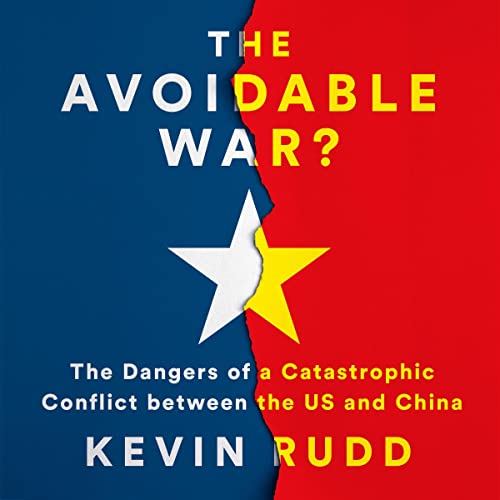
The Avoidable War? (The Dangers of a Catastrophic Conflict between the US and China)

By: Kevin Rudd

Narrated By: Kevin Rudd, Rafe Beckley

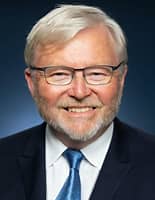
Kevin Rudd (Author, Australian diplomat and former politician who served as the 26th prime minister of Australia. He is fluent in Mandarin and received honors in Chinese studies from the Australian National University.)

Kevin Rudd’s title, “The Avoidable War?” is a provocative book, evidenced by its audiobook title’s question mark. The greatest part of Rudd’s book has a neutral and non-committal view that almost makes one put the book down. However, Rudd’s knowledge of the languages of Chinese and English and his many diplomatic contacts with politicians in both cultures entice one to keep listening for a solution to fundamental differences. The last chapters of Rudd’s book are enlightening and have the ring of truth but imply irreconcilable cultures that make a question mark after the title of the book correct but unsatisfying.

Spheres of Influence.

The first part of Rudd’s book puts one off because it reinforces the aggressive warlike foreign policy beliefs of China and the U.S.

Rudd emphasizes China’s military buildup and its intent to expand its sphere of influence in the Pacific theater. Xi’s intention is to expand China’s power and influence. That intent gives one a sense of impending doom. One has to put that feeling aside to get to the last chapters of the book. Rudd explains the vulnerabilities of both America and China may avoid a nuclear war and its cataclysmic consequence but not offer peace.

XI JINPING (GENERAL SECRETARY OF THE COMMUNIST PARTY OF CHINA AND PRESIDENT OF THE PEOPLE’S REPUBLIC OF CHINA.)

Rudd explains the history of Xi Jinping’s rise to power and his actions assure his continuation as the General Secretary of the Chinese Communist Party and President of the People’s Republic of China. Xi served in the People’s Liberation Army for three years, beginning in 1979. Xi earned a bachelor’s degree in chemical engineering in 1979. He pursued a Doctorate in Marxist Theory and Law while working in the government. Xi rose to power in 2012 with his appointment as General Secretary of the Chinese Communist Party. He was elected by the National People’s Congress to the Presidency in 2013.

Rudd infers Xi is a committed believer in a socialist form of communism.

The picture of Xi that Rudd creates is of a leader who acknowledges the value of economic growth while firmly believing in a classless society that melds the strength of government authoritarianism with the skills of Chinese entrepreneurs. Xi maintains the direction of China’s economic growth by eliminating any political opposition from party members or influential entrepreneurs that get in the way of authoritarian socialist communism. Rudd believes Xi will be in power for many years to come.

The tariff war started by President Trump undoubtedly troubles Xi, but one doubts it will change Xi’s international frame of mind.

History has changed since Rudd wrote his book. In contrast to Xi who will likely be President for many years, America limits the office to two terms. This is particularly relevant to the authoritarian influence of Donald Trump in the next three plus years of his second term. Xi recognizes Trump will be replaced by a different President at the end of his last term in office. There will be negotiation on the tariffs, but Trump’s position is weakened by the limit of his term in office.

The faltering reduction of income for Chinese workers and families.

As noted by Rudd, the most important issues facing Xi’s administration is the reduction of income for Chinese workers and families. The immense improvements in average incomes of families in China came from its opening to capitalism which created a more socialist form of communism. That capitalist opening increases pressure on Xi to ameliorate Trump’s U.S. tariff policy. Putting aside President Trump’s false reasoning on creating an international tariff war, one hopes Xi’s need to grow the Chinese economy will aid Trump’s negotiation on tariffs.

Much of Rudd’s book is about China’s economic growth and its intent to acquire Taiwanese territory.

As is well known, the U.S. is ambivalent about Taiwan with many Americans who say “who cares” about their fate and others who believe every nation should be free to choose their own form of government. Now that China has experienced the value of introducing capitalism to communism, Taiwan would be a valuable addition to the Chinese economy. In the history of Mao’s defeat of Chiang Kai-shek in the Chinese Civil War, Taiwan became an island nation in 1949. The nation of Taiwan was built by refugees from mainland China who chose to become an independent capitalist country that eschews communism.

CHIANG KAI-SHEK (CHAIRMAN OF THE NATIONAL GOVERNMENT OF CHINA 1943-1948)

Taiwan’s growth as a tech giant has made them a capitalist economic success. Xi undoubtedly sees the potential of Taiwan’s economic benefit to China’s faltering economy. One concludes from Rudd’s book that the history of Chiang Kai-shek’s followers and their departure from China irks Xi, both from an historical as well as economic perspective.

The primary subject of Rudd’s book is the issue of war with China.

What Rudd is driving for is a rational appreciation of what America should do with the growing international power of China. Rudd implies China will become the equal, if not superior, of the American economy. He believes China will return to its former hegemonic influence, like that of its former dynasties. Rudd acknowledges Xi faces the immense task of returning China’s economy to its recent economic success. He implies Xi will succeed by carrying on with his view of how economic success can be returned with prudent authoritarian control of capitalism with the objective of creating a classless society idealized by communism.

The fundamental point Rudd is making is that China has a culture founded on authoritarianism and chooses to use capitalism in a way that is not democratic.

The surveillance technology of today allows Xi and future China rulers to influence Chinese culture in ways beyond the theoretical interest of democratic governments. The inference one draws from Rudd’s book is that peaceful co-existence will only come from a recognition and acceptance of the cultural differences between American democratic capitalism and Chinese authoritarian capitalism.

PROJECT 2025

Only the Constitution of the United States stands between Trump’s authoritarianism and what has made America one of the wealthiest countries in the world.

Books of Interest
 Website: chetyarbrough.blog

The Project (How Project 2025 Is Reshaping America)

By: David A. Graham

Narrated By: Ari Fliakos

David A. Graham (Author, journalist, staff writer at The Atlantic.)

Graham has taken the time to dissect the policies proposed by the Heritage Foundation’s support and creation of Project 2025. Project 2025 is a political treatise that seems to outline many of the policies and objectives of the Trump administration.

As Graham notes, even though Trump is unlikely to have read Project 2025, its content seems to outline much of what Trump has done or is trying to do in his Presidency.

A priority in Project 2025 is downsizing the federal government. Interestingly, government employee firings began as soon as Trump entered the oval office. With Trump’s appointment of Elon Musk as the leader of DOGE (the Department of Government Efficiency) over 200,000 federal workers have been discharged. An estimated 10,000 employees were discharged from the Department of Health and Human Services. If all of these firings were to be permanent, an estimated $1.17 billion to $1.26 billion would be saved per year. With 2 million federal employees, less than 1 percent of the payroll cost of government has been SAVED.

Three things come to mind with the 1 percent cost reduction in government employee payroll.

One, is the effect of a job lost to a family who depends on gainful employment. Two, what public services are lost as a result of 2oo,000 fired government employees. And finally, what value is there to the public in reducing government payroll cost by less than 1 percent?

Of course, some will say that misses the point of the symbolic value of reducing the cost of government.

After all, America is founded on capitalism not socialist welfare. Yes and no. Yes, we are capitalists. No, we benefit from government employees who are gainfully employed because they buy things with the money they make while providing service to the public. Is the risk of unemployment in America worth the cost of some human inefficiency?

Project 2025 recommends tax system overhaul with the implementation of a flat income tax.

Trump has reduced jobs in the Department of the IRS. One should remind oneself that the present tax system takes the same maximum amount of money per year out of a family’s income for social security whether they make a million dollars per year or minimum wage. The social security tax rate is 6.2% of up to $176,100 of income per year. After one who is making more than $176,100, no further social security tax is taken. Americans pay that 6.2% whether they make minimum wage or millions of dollars per year. There is something wrong with that picture. Tax reform is needed in America, but the tax reform Trump is interested in is for rich capitalists, not minimum wage earners.

Trump wants to abolish the IRS and finance the government with tariffs and a sales tax.

He wants to have a national sales tax of 23% or roughly 30 cents per dollar spent. That tax will be a burden to the poor but nothing to the rich. Trump perceives an equal benefit to minimum wage workers because they would not have to pay taxes on tips, overtime, and social security. Is that tax benefit equal to corporate tax reductions of 21% to 20% and a reduced rate of 15% for U.S. manufacturers. More jobs may or may not be created, but who gains the most benefit?

Trump infers corporation owners and managers would not put tax savings in their pockets but would create more jobs.

Two entitlement programs Trump believes will be unnecessary as a result of his tax changes are Medicare and Medicaid. Trump supporters believe economic growth will offset the negative impact that his tax reform plan will have on the poor. Does that make it unnecessary to have Medicare or Medicaid for the poor?

Trump is making a mockery of the Constitution by indiscriminately arresting and deporting anyone who cannot prove their status as a legal resident of America.

Project 2025 insists on immigration enforcement with improved border security and tighter immigration policies. Trump endorses that plan, but it is a job for Congress, not an autocratic President. He is willing to pay immigrants with American tax dollars for them to return to their countries of birth. Whose money is it that Trump is choosing to use?

Trump believes global warming is just a seasonal event in the history of earth.

Project 2025 recommends rolling back environmental regulations and endorsing fossil fuels over renewable energy. Trump endorses that plan by rolling back environmental regulations because he believes global warming is a fiction. Science is a fiction to President Trump.
Project 2025 recommends strengthening the executive branch of government and decreasing the rolls of Congress and the courts.

Project 2025 recommends strengthening the executive branch of government and decreasing the rolls of Congress and the courts that are the basis upon which separation of powers were written into the Constitution. Trump is ignoring fundamental tenants of the Constitution like Due Process of Law in the deportation of immigrants.

Project 2025 recommends criminalizing pornography, removing legal protections for anti-LGBT discrimination, and ending diversity programs that drive for equality of all Americans. Trump is using the office of the Presidency to punish elite colleges that have DEI programs meant to address American social inequality.

Trump believes what he believes and acts on those beliefs. His sexual picadilloes are ok but pornography is not. The author shows Trump has support for his beliefs in Project 2025. His support is equally apparent in the free vote of a majority who voted for him in the last election. Only the Constitution of the United States stands between Trump’s authoritarianism and what has made America one of the wealthiest countries in the world.
ABSOLUTION

History of the world has shown all forms of government are “equal opportunity” inhibitors, if not destroyers.

Books of Interest
 Website: chetyarbrough.blog

Secondhand Time (The Last of the Soviets)

By: Svetlana Alexievich

Narrated By: Amanda Carlin, Mark Bramhall, Cassandra Campbell & 8 more.

Svetlana Alexievich (Author, Belarusian investigative journalist, winner of the Nobel Prize in Literature in 2015.)

Svetlana Alexievich’s “Secondhand Time” is a remarkable and informative explanation of why Putin believes he is right and why many citizens of Russia seem to continue in their support of his administration.

Map of the former U.S.S.R.

Alexievich conducts a series of interviews with Russian citizens of different generations about the U.S.S.R. and its return to the world stage as a Russian nation. The narrators of her book recite those interviews to give listener/readers a complex and enlightening picture of Russian culture. The clash of communist and capitalist ideals is at the foundation of the interviews and the narrators dramatically told stories.

The Russian Soviet Army is the first to arrive in the Battle of Berlin on April 16, 1945. Their flag was hoisted on May 1, 1945.

The citizens of Russia are justifiably proud of their role in WWII that turned the tide of Germany’s war of aggression. (Of course, that is putting aside Stalin’s Machiavellian decision to join Hitler at the beginning of the war.) Some Russian soldiers who fought in that war were disgusted with what they feel was a betrayal by Mikhail Gorbachev of communist ideals for which they lived and died for in the 20th century.

The rejection of communist ideals for capitalism is viewed by some Russians as a tyranny of greed that lays waste to the poor and creates a class of haves and have-nots.

Some Russian veterans of WWII see the seduction of capitalism destroying the ideal of a classless society. Some citizens see the ideal of a government is to demand the wealth of life be spread equally according to individual need. To these believers, enforcement of communist ideals would eliminate private property and greed that would create a classless society. Some believed Stalin exemplified leadership that would achieve that ideal. The hardship of life during Stalin’s rule is considered by some as justified means for the achievement of the Marxist ideal of communism.

Statue of the “Circle of Life” in Norway.

Cultures may be different, but all human life is the same.

The underlying point of these interviews is to show Russian culture is not monolithic, just as culture is not in any nation. All cultures are filled with diversity. There is no singular cultural mind but a range of interests among many factions that establish a nation’s culture. The evidence of that is the contrast of Gorbachev and Putin in Russia and FDR and Trump in America. All four leaders led their countries but represent completely different cultural beliefs.

Conservatives, New York Governor Al Smith, Southern Democrats, and isolationists like Charles Beard opposed FDR in America. Putin and Trump have their cultural supporters in today’s national governments, but they also have their critics. The difference is that in Putin’s world, being killed or put in prison for opposition is culturally acceptable. In America, one is reminded of Trump’s deportation and imprisonment of migrants without due process.

The author’s interviews are not suggesting that either Russia or the West have good or bad governments but that every culture tests their leaders.

Many Russians, undoubtedly blame American Democracy for the dismantling of the U.S.S.R. Alexievich interviews Russians who believe the hardship that countries within the U.S.S.R. experienced were not the fault of Stalinist policies but the failure of citizens to live up to the ideals of communism. To anyone who has traveled to the Baltics, that opinion is founded on ignorance of the hostility expressed by citizens of the Baltics who were starved, displaced, jailed, and murdered during their occupation by Russia.

The other part of the story is the rise of the oligarchs in Russia as a result of the greed associated with capitalism.

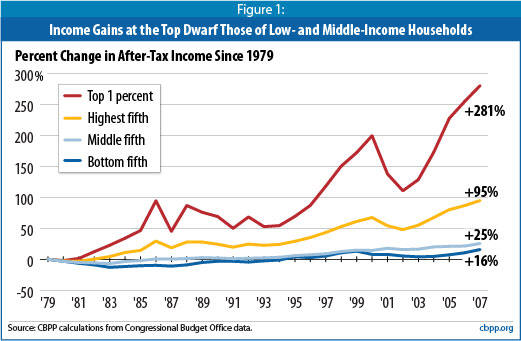
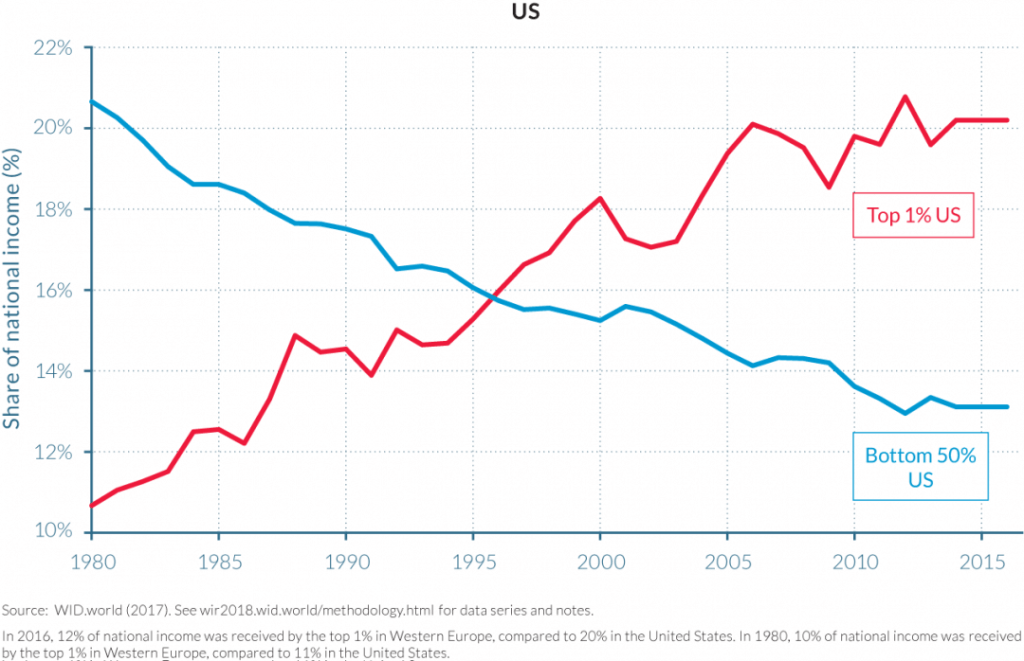
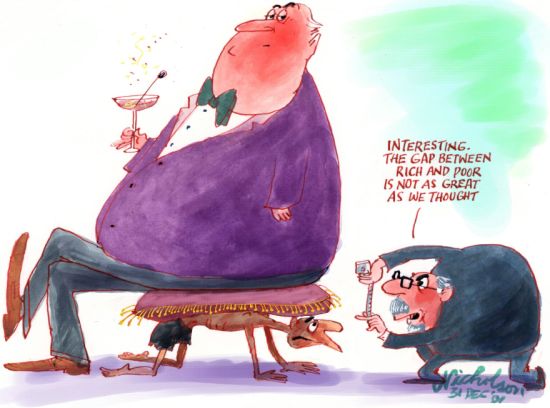
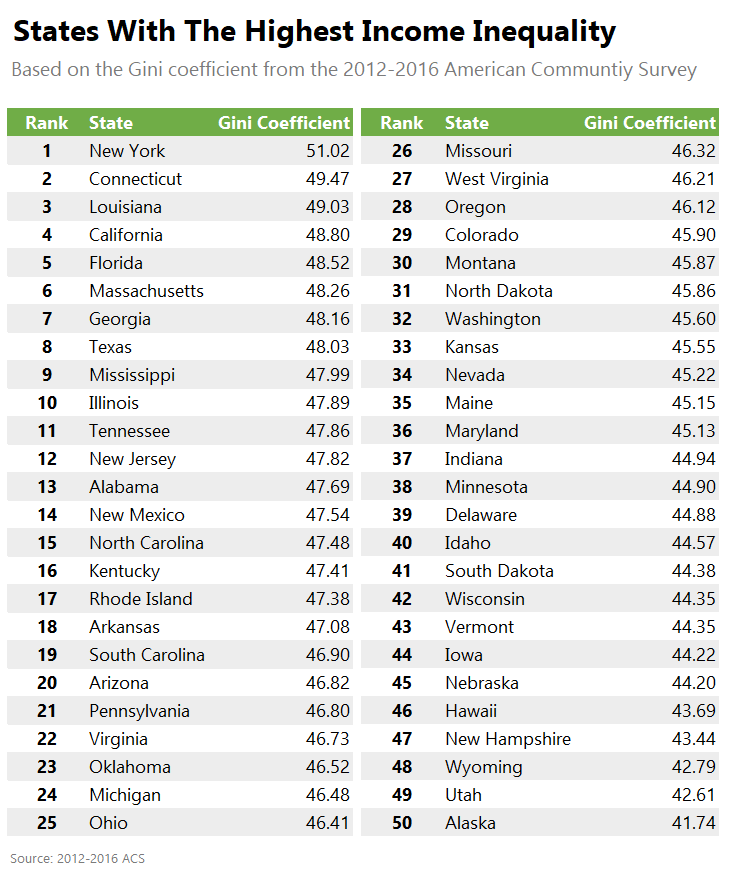
The gap between rich and poor is accelerated in Russia just as it has been in America. Democracy does not have clean hands when it comes to equality of opportunity. Like the Jewish pogroms in Russia, America’s enslavement, murder, and discrimination of Blacks is proven history.

Siberian Exile during Stalin’s reign in Russia.

Alexievich draws from all sides of Russian beliefs. Those interviewed note the terrible conditions of those exiled to Siberia. Many Russians became disillusioned by the redistribution of wealth and privilege after Gorbachev and Yeltsin showed themselves to not be up to the task of leadership change. In fairness, one wonders who could have been up to the task when Russia had a long history of monarchal and tyrannical leadership?

A few Russians became immensely wealthy while the majority were somewhat better off but some struggled with the loss of State benefits and fewer jobs. The rising gap between rich and poor soured communist idealists. Even those who had been sent to Siberia by Stalin who toiled and suffered the experience of isolation, slave labor, and frigid weather felt they were no better off because of the loss of a socialist future.

The frightening truth of Alexievich’s book about the culture of Russia is that Putin may be absolved for his atrocities just as leaders of America have been absolved for their mistakes. History of the world has shown all forms of government are “equal opportunity” inhibitors, if not destroyers.

HUMAN HOPE

Migration is the movement of people to new areas of the world for work, better living conditions, and safety. In that process the world economy is strengthened. .

Books of Interest
 Website: chetyarbrough.blog

The Shortest History of Migration

By: Ian Goldin

Narrated By: Julian Elfer

Ian Andrew Goldin (South African born professor at the University of Oxford, specializes in globalization and development.)

Professor Goldin has written a history of migration that reminds one of the well-known phrases attributed to Socrates: “I know that I know nothing”. Goldin is born in South Africa to a Lithuanian father who fled his home country to escape political and social upheaval in Europe during the early 20th century. In retrospect, that migration saved the future of the Goldin’s from Stalinist suppression after WWII. It is ironic that Ian Goldin is raised in South Africa where white suppression of native South Africans was common. “The Shortest History of Migration” is no apologia, but it is a forthright history of the ubiquity of world migration.

Migration is an essential characteristic of civilization believed to have begun in Africa.

The obvious irony of human origin is the darker skin tone of our first ancestors who had higher levels of skin melanin to protect them from the harsh effects of the sun. Humanity began as a species of a black ancestor, an estimated 6 to 7 million years ago.

Neanderthal precursor of human beings.

Goldin implies humans moved from Africa to explore the world. They may have left to escape the harshness of their existence or because of the nature of species’ curiosity. Their change in environment led to changes in their physiognomy (facial features and expressions) caused by the evolutionary nature of life and the exigencies of environment. The point is that migration has been a part of history since the beginning of life on earth.

What may be forgotten by some is that migration was largely unregulated until WWI according to Goldin.

That seems largely true except the United States passed the Naturalization Act of 1790 that established rules for citizenship and an Immigration Act of 1891 that created the U.S. Bureau of Immigration; both of which implied regulation. Nevertheless, the fundamental point is that migration has been a part of society from the beginning of human life.

WWI generated many new laws and policies about migration.

Wartime measures required passports and border crossing cards to manage migration. National security increased scrutiny of immigrants. Broader societal and political concerns about migration spread across the world. Migration became more complicated.

Goldin argues the benefit of migration is misunderstood and misrepresented by leaders like Donald Trump.

Goldin suggests the economic impact of Trump’s anti-migrant beliefs and policies will undermine both the world and American economies. In 2023, an estimated 18% of the economic output of the American economy came from migration. The two industries most impacted are agriculture and construction but many immigrants work in caregiving and medical professions, all of which will be impacted by labor shortages. Goldin notes that migrants working in other countries send money back to their home countries that amount to more revenue than is provided by tourism and foreign aid. Many, if not most, economists would argue migration is a cornerstone of economic growth and stability. Trump’s false statements about migrant criminality are overblown and unsupported by economic statistics that show migrants contributed an estimated $25.7 billion in 2022 to the Social Security system in taxes that benefit aged American citizens (like myself).

Trump policies will not return American to the manufacturing prosperity of the twentieth century but to a possible depression like that of the 1930s or, at the very least, a recession like that of 2007-2009.

Migration is the movement of people to new areas of the world for work, better living conditions, and safety. In that process the world economy is strengthened.

WAR

The only hope for Ukraine is a change in Russia’s leadership as a result of Putin’s foolish effort to return Russia to its past. It is the same effort and mistake Trump is making in trying to return America to the 20th century.

Books of Interest
 Website: chetyarbrough.blog

The Evil Hours: A Biography of Post-Traumatic Stress Disorder

By: David J. Morris

Narrated By: Mike Chamberlain

David J. Morris (Author, former Marine, reporter in Iraq, received Navy-Marine Corps Commendation Medal, M.A. from San Diego State University and the University of California, Irvine.)

In listening to “The Evil Hours”, the refrain “War, what is it good for, ABSOLUTLY NOTHING” from Edwin Starr’s song comes to mind. Ukraine’s and America’s current political position in ending the war are irreconcilable. Anyone who has read this blog knows I am not a fan of President Trump but his position on the war is sadly correct. It is sad because it is only Ukranian people who will suffer, not we who are isolated from the European continent.

Having recently visited the Baltics, and hearing of their experience under Stalin from a family we had dinner with makes one understand how horrible Trump’s decision will be for Ukraine’s citizens.

Trump’s decision is a Hobson’s choice because there seems no alternative. The potential for nuclear war is a threat from Putin who has an ego like Trump’s that cannot be assuaged. Putin appears not to be deterred by his followers or the Russian citizens.

What is left is the domination of a portion of Ukraine that will be forced to live under a dictatorship.

Hearing from Baltic citizens of how horrible their lives were under Stalin; one’s heart goes out to Ukrainian citizens who will have to live under Putin. Putin and Russia will pay a high price for their occupation because of citizen opposition that will take many forms. Though there is no comfort to the Ukranian people, Russia’s occupation will eventually end. The cost of Russia’s invasion of Ukraine has been high. It will be a reminder of the folly of unjust invasion and dictatorial control of an independent people.

America’s foolish Vietnam’ belief in a domino theory of Vietnam was wrong, just as the belief that Russia’s success in Ukraine will lead to further Russian expansion.

The relevance of “The Evil Hours” is the stress Ukrainians will face with Russian occupation. One hopes Russian occupation will not take as long as it did for the Baltic countries to regain independence.

PTSD is shown as the horrible consequence of internecine conflict that will continue after Russia’s occupation.

The only hope for Ukraine is a change in Russia’s leadership as a result of Putin’s foolish effort to return Russia to its past. It is the same effort and mistake Trump is making in trying to return America to the 20th century.

SOCIAL CROSSROAD

There is enough abundance in the world to create opportunity for all, but Ernaux’s history implies people must change their ways.

Books of Interest
 Website: chetyarbrough.blog

The Years

By: Annie Ernaux

Narrated by: Anna Bentinck

Annie Ernaux (Author, French writer, 2022 Nobel Prize winner, born in 1940.)

Annie Ernaux offers a perspective on history from the experience of her life as a French woman in the mid 20th to 21st century. Though born before the beginning of World War II, Ernaux matures as a young woman in the 1950s. A striking difference between the history of this time is the difference between Algeria’s drive for independence and American’s mistakes in Vietnam. French Algeria is less understood in American memories than its troubled history in Vietnam. Aside from misunderstanding France’s Algerian experience, the social changes Ernaux’s notes are similar to many Americans’ experiences in Vietnam.

Eisenhower’s, Kennedy’s, and Johnson’s leadership in the Vietnam war seem, in some respects, similar to Ernaux’s memory of Charles de Gaulle’s leadership in Algeria.

Eisenhower and Kennedy were veterans of war who became leaders of their countries. Though Eisenhower and Kennedy believed Vietnam was a threat as a communist Domino, de Gaulle believed Algeria was a threat to France’s right to colonize. These famous nationalist leaders were wrong. Southeast Asian countries had a right to choose their own form of government, and Algeria had a right to choose self-government.

Though Annie Ernaux was born just before 1946, she matured during great changes in the world.

Her experience of post-war reconstruction, the rise of consumerism, women’s rights, sexual liberation, social class differentiation, and societal norms changed in America, France, and most nations of the world.

George Marshall was Secretary of State from 1947 to 49 and headed the Marshall Plan to reconstruct Europe after the war.

America played a great part in the financial reconstruction of Europe, Japan, and Germany after the end of WWII. America’s goal was to prevent future conflicts, promote economic recovery, and counter the influence of communism, but in that process, America influenced social norms throughout the world. Some of the influences created clear lines of opposition between communism, socialism, and capitalism. However, all economic systems influenced societal change. Whether communist, socialist, or capitalist there were changes in normative social values. Societies increased consumerism, instituted policies for equal rights to some degree, and made class distinctions based on money, or its equivalent, i.e., power. In capitalist and socialist societies, social position became more about money and the power of its influence. In communist societies, it was more about power and the influence of money. Political differences remained sharply divided in ways that influenced social norms, but the general direction was similar. Communism, socialism, capitalism, and all its derivations focused on consumerism, women’s rights, and class differences that changed the world during Annie Ernaux’s “…Years” of life.

Feckless leaders, deluded authoritarians, and a few truly service-oriented leaders rose in every system of government, including American, English, Japanese, Chinese, French, Russian, and other nations. The main differences lay in leader’s longevity, and their economic policies. Leaders of China and Russia having fewer leadership changes between 1946 and 2006 than most nations were largely authoritarian. There were 6 leadership changes in China and 9 in the Soviet Union. Only 1 of 6 in China and only 1 of 9 in the Soviet Union leaned toward capitalism.

From 1946 to 2006, there were 11 presidents in America, 13 prime ministers in England, 32 prime ministers in Japan, and 6 presidents in France. All of these democratic nations exclusively leaned toward capitalism.

However, Ernaux’s history infers every nation shows social norms changing in similar ways. Even China and Russia show changes in consumerism, women’s rights, sexual liberation, and class differentiation. Unquestionably, the societal changes did not change to the same degree, but they were similar. Maladies of society are common in all forms of government, only the degree of change in societal norms is different. All nations have more or less consumer opportunities, more or less human equality, all have class distinctions, but normative change is a work in progress, not an end but a beginning process.

Annie Ernaux in earlier years of her life.

Ernaux’s trip down memory lane is interesting but not particularly revelatory. Her remembrance of the past is helpful because she shows how social change evolved in both good and bad ways in her own life. Consumerism seems on the edge of being out of control with money and wealth being the “sine qua non” of the good life. Without money, life seemed not worth living to some. Ernaux suggests America has become an arrogant example of wealth and privilege that diminishes civility. Ernaux is not suggesting she is above the fray of wealth as privilege and reveals her own character flaws by noting affairs with younger men in what seems a wasted attempt to reclaim youth. She implies a prejudice against Arabs and Africans who she believes wrongly consider themselves as French. She infers they are not French because they are not white Christians, even if they are born in France.

One comes away from “The Years” with a feeling that societies of the world are at a crossroad.

Wealth should not be the measure of one’s social value and privilege. Inequality is a sin against humanity. Prejudice is the cause of much of the world’s conflict. Immigration is a misunderstood value of societal comity. Tolerance of all religious beliefs has been an unresolvable puzzle but a desirable societal goal. There is enough abundance in the world to create opportunity for all, but Ernaux’s history implies people must change their ways.

PAST & PRESENT

Only with education and understanding of the past can society or the individual change their future.

Books of Interest
 Website: chetyarbrough.blog

Cowboy Apocalypse (Religion and the Myth of the Vigilante Messiah)

By: Rachel Wagner

Narrated by: Dina Pearlman

Rachel Wagner (Author, professor of religion and philosophy at Ithaca College in Ithaca New York.)

Rachel Wagner has written a highly personal book about American gun culture that will resonate with some and appall others. As an academic philosopher and professor of religion, Wagner analyzes gun violence and sexism and how belief in “might makes right” is deeply ingrained in American character.

There are so many stories of death and injury from gun violence in America that one becomes numbed by Wagner’s apocalyptic story.

We were living in Las Vegas when 59 people were killed, and 527 were injured by one gunman in a hotel room less than 3 miles from our home. When one looks at statistics of children murdered in school rooms since 2010, a solution for gun violence should be urgent, but it appears not.

Rise in school shootings between 2010 and 2o19.

Wagner argues gun violence in the U.S. is viewed by much of the public as a belief in the myth of the “good guy with a gun” that is embedded in the history of America and reinforced by fictional stories, books, television, and the movies. She argues detective fiction like “The Big Sleep”, TV series like “Have Gun Will Travel”, and movies like “Die Hard” have lone heroes who defeat dastardly villains.

Think Alan Ladd in “Shane” or John Wayne in any of his westerns, and one believes gun-toting man-gods keep the world safe.

Wagner shows how malleable society is and why the gun lobby is rewarded and sustained by the myth of the “good guy with a gun”. Wagner argues gun-toting Americans have become gods in their own mind. What they really are is examples to potential killers of school children and unsuspecting tourists.

Wagner believes American gun obsession has wheedled its way into a religious narrative based on Christian apocalypticism and romanticization of American history. She notes the myths of armed vigilantes who are seen as saviors who can reset society when it goes astray. This myth seeps into American cultural shibboleths of white supremacy and patriarchal dominance that pervade video games, movies, and novels.

Wagner argues sexual and racial inequality are exacerbated by America’s gun culture. Wagner notes an experience in her personal life and her education in religion show how “might makes right” has been, and still is, a danger to society.

Wagner argues America needs to look in the mirror and quit glorifying firearms and vigilante justice. She suggests the January 6th attack on the capitol shows how widespread belief in vigilante justice is in America.

January 6, 2021, insurrection when a mob of supporters of then-President Trump stormed the U.S. Capitol.

The philosophical and religious beliefs of the author are made clear in her final chapters. Only with education and understanding of the past can society or the individual change their future.