MOST INTERESTING ESSAYS 2/5/26: THEORY & TRUTH, MEMORY & INTELLIGENCE, PSYCHIATRY, WRITING, EGYPT IN 2019, LIVE OR DIE, GARDEN OF EDEN, SOCIAL DYSFUNCTION, DEATH ROW, RIGHT & WRONG, FRANTZ FANON, TRUTHINESS, CONSPIRACY, LIBERALITY, LIFE IS LIQUID, BECOMING god-LIKE, TIPPING POINT, VANISHING WORLD, JESUS SAYS
The climax of “Modern Gothic” is where myth enters Moreno-Carcia’s story. The fundamental truths of colonization are revealed in her creative story while its denouement is an entertaining explosion of imagination.
Books of Interest Website: chetyarbrough.blog
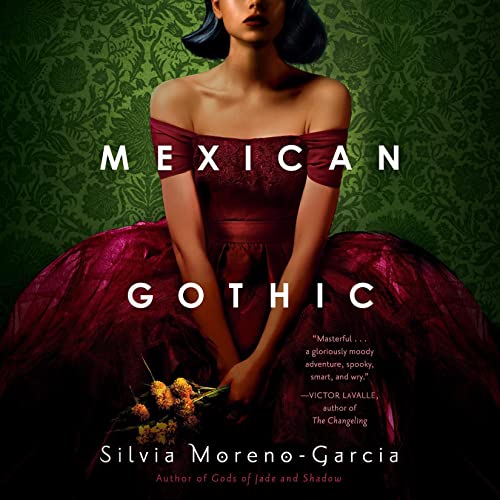
Mexican Gothic
Author: Silvia Moreno-Garcia
NarratedBy: Frankie Corzo
Silvia Moreno-Garcia (Author, Mexican/Canadian novelist, editor and publisher.)
Moreno-Garcia’s “Mexican Gothic” is a chilling story of colonization, eugenics, ecological contamination, mystical beliefs, and control of society by men. The author chooses the name of Doyle as an English family that exploits the Mexico’ silver mining industry in earlier centuries. A dynasty is created by generations of Doyle’s. They created a colonial manor called “High Place” from which to rule a crumbling empire. As colonizers they capitalize on Mexico’s silver deposits by exploiting native Mexicans’ land and labor to grow their mining operation. The wealth of local citizens is lost to the English foreigners who keep wages low to increase the wealth of the Doyle family.
Over generations, the Doyle men married local women that were related to each other. A common practice of royalty before the twentieth century.
They wished to maintain the genetic purity of the Doyle bloodline by having future Doyles marry genetic descendants of Mexican women that had been their wives. This is not greatly different than the experience of royal marriages in European cultures. The consequence of that marriage tradition is that recessive genetic mutations become more prominent in offspring. Children were more susceptible to diseases like cystic fibrosis and had higher incidents of developmental and cognitive disorders. This is one of many threads of meaning in “Mexican Gothic” because one of these descendants becomes a murderer of Doyle family members and the current Doyle generation seems socially dysfunctional. Added to that dysfunction is the Doyle family’s diminishing wealth.
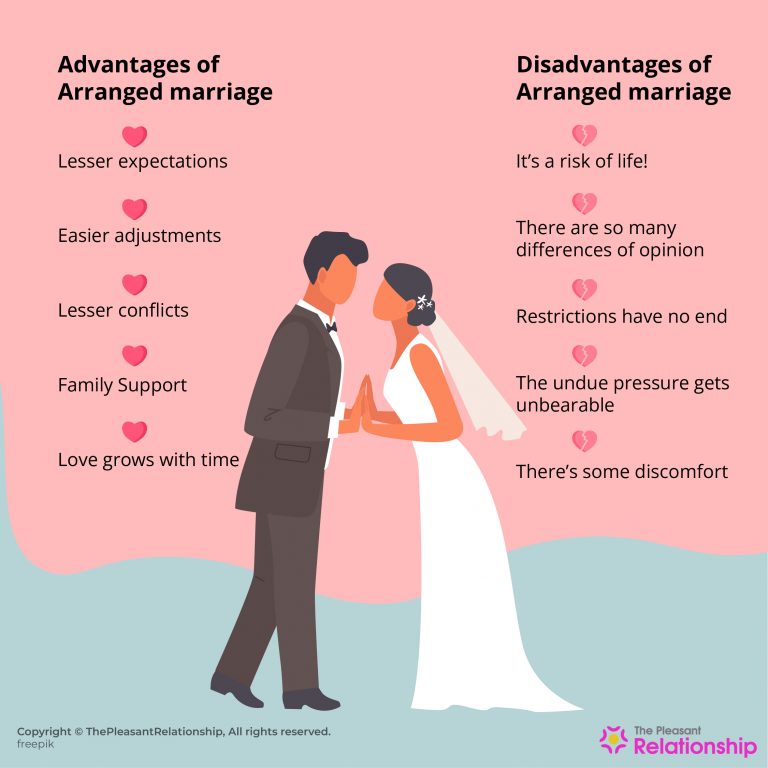
An arranged marriage is a lynch pin to the story.
The heroine, Noemi, is the daughter of a wealthy Mexican family. She is sent to investigate a letter that was received by her father from a young woman that marries a Doyle. She is a cousin of Noemi’s. The marriage is arranged in part because of her father, and he feels something is wrong and wants Noemi to visit the Doyle family to find what the mysterious letter means. Soon after Noemi arrives, she begins to have hallucinatory dreams. Listener/readers find the hallucinations are because of spores that are in the bedroom of the deteriorating Doyle house. A clever thread of meaning in Moreno-Garcia’s story is ecological contamination that comes from colonization. As one nation colonizes another, it inevitably brings different plants and animals that are not indigenous to the country they are colonizing. The author notes a fungus is growing in the Doyle household that may have come from the original colonizers.
The penultimate theme in “Modern Gothic” is the creation of myths that compound the horrific events that occur in the Doyle house.
From the history of murders in the Doyle household, to hallucinatory dreams, to incestuous relationships, to the gloom and doom of the story, to a myth about the age of the Doyle patriarch, Moreno-Garcia offers a climax to her story that vivifies reader/listener’s imagination. The climax of “Modern Gothic” is where myth enters Moreno-Carcia’s story. The fundamental truths of colonization are revealed in her creative story while its denouement is an entertaining explosion of imagination.
Nadel reports Robert Crumb’s life and antics without criticism which seems appropriate because he is simply recounting a human beings’ life. Nadel does not act as a judge but as a reporter of a lived life.
Books of Interest Website: chetyarbrough.blog
Crumb
Author: Dan Nadel
NarratedBy: Ron Shapiro
Dan Nadel (Author, curator-at-large for the Lucas Museum of Narrative Art in Los Angeles.)
“Crumb” is a well written biography of Robert Crumb, the cartoonist. The subject matter is of interest to me because of the remarkable talent of a disheveled young man with coke bottle glasses that has a gift of drawing. That gift provides him wealth and success despite coming from a troubled household that gives him an eye for the weirdness of life. He and his brother, Charles who was 1 year older, began a monthly hand-drawn comic book when he is 15 years old. They sold it door to door in the late 1950s. Charles wrote the stories and Robert illustrated them. Nadel shows how that early life experience sharpened Robert’s artistic skills and planted the seeds for his future success.
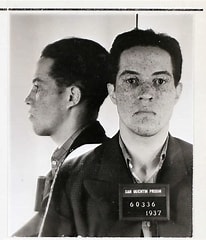
R. Crumb drawing of himself.
Nadel notes how Crumb’s drawings are deeply personal and sometimes disturbing because they capture the inner conflicts within Crumb’s life while tapping into the undercurrents of postwar America. Crumb’s work delves into the male id and its impulses exposing sexual obsession, neurosis, and human alienation. Crumb’s life story borders on a confessional and makes one confront their own obsessions. His comics delve into consumerism and conformity about race and gender with a biting satire that makes one realize the absurdity of American, if not all, human life. Nadel suggests Crumb’s work is an unfiltered chronical of the life he lived and lives.
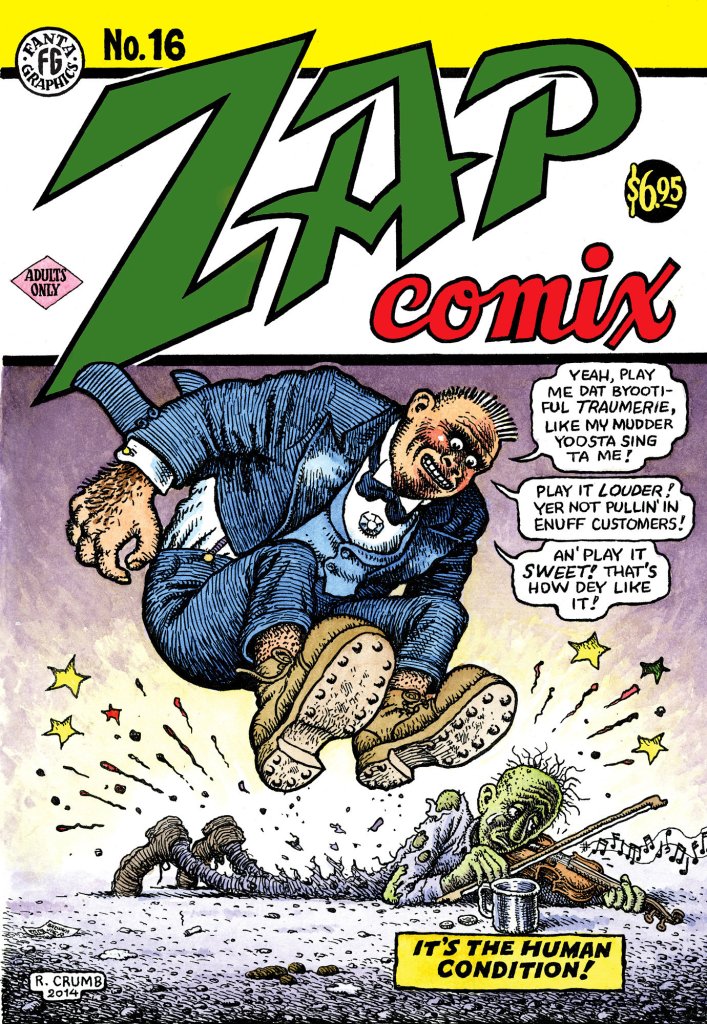
Robert Crumb gained fame in the 1960s counterculture when Zap Comix was released in 1967.
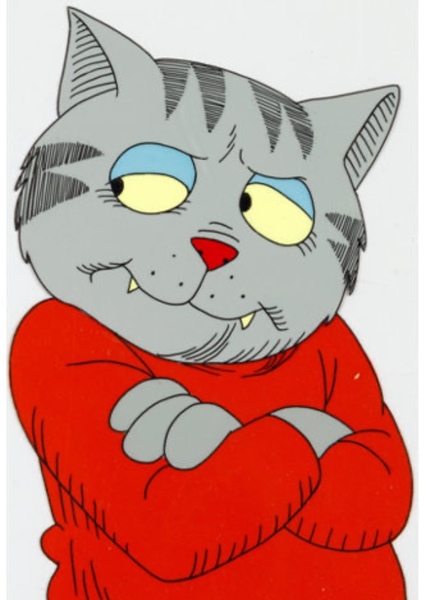
“Mr. Natural” and “Fritz the Cat” became cult icons illustrating the absurdity of life. Nadel suggests Crumb’s subjects are expressions of his working through his personal demons. Some of his images are racist and misogynistic which paints a picture of a troubled society. His subject matter ranges from popular music, counterculture, the history of comics, to graphic satire.
Fritz the Cat
Nadel explains Crumb is married twice. His first marriage to Dana Morgan falls apart in part because of Crumb’s emotional volatility, but also because of the cultural upheaval of the 1960s. Nadel explains Morgan was the first woman Crumb had sex with which is complicated by Crumb’s confusion about sex. Crumb’s fame increases. He experiments with LSD. These dramatic changes in his life increase his discontent. There seems no single reason for the divorce. Crumb moves to San Franciso in 1967 to immerse himself in a counterculture and the comix scene.
Crumb meets Alaine Kominsky in 1972, and they marry in 1978. Their creative partnership blossoms with the creation of autobiographical comics that reveal the quirks, conflicts, and affections of their relationship. Their joint work is “Dirty Laundry Comics”. Ms. Kominsky dies in 2022.
Nadel notes that Crumb insisted on honesty when he agreed to have his biography written. Aline Kominsky is acknowledged as a stabilizing force in Crumb’s life. Crumb lived through America’s wars, the psychedelic age of the 60s and has now has reached the age of 81. Nadel explains much about Crumb’s turbulent life and how that turbulence shaped him and his art. Nadel offers a layered and empathetic portrait of R. Crumb, the ups and downs of his life, without excusing or condemning the beliefs, actions, or art of his long life.
Crumb’s behavior like jumping on the backs of women for piggyback rides and his racially charged imagery is uncritically reported.
Some of what Crumb illustrated in his art and what he did with his piggyback rides undoubtedly insults the public. In many ways, Crumb marginalizes society with his racist and misogynistic comics. Nadel reports Robert Crumb’s life and antics without criticism which seems appropriate because he is simply recounting a human beings’ life. Nadel does not act as a judge but as a reporter of a lived life.
Crumb’s parents were poor. He lived in poverty but overcame its limitations with the art of drawing that opened the world of commerce to him. From comics to greeting card drawings and back to comics, Crumb became a maven of the art of irreverent behavior.
Governmental and educational institutions are the foundations of Democracy. They must stand and support the right to free speech without committing, allowing, or condoning violence in the exercise of that right. (Of course, this is easy to say but difficult to follow because of the loss of emotional control by protectors of the public and/or protesters.)
Books of Interest Website: chetyarbrough.blog
The Coddling of the American Mind (How Good Intentions and Bad Ideas are Setting Up a Generation for Failure)
Author: Jonathan Haidt, Greg Lukianoff
NarratedBy: Jonathan Haidt
Jonathan Haidt (Social Psychologist)Greg Lukianoff (Lawyer & free speech advocate.)
This is an interesting book written by a social psychologist and a free speech advocate. The authors suggest the focus for parents of Generation Z have, in some ways, become overly protective of their children. They argue– Gen Z’ parents are not addressing the mental health issues caused by this technological age. Jonathan Haidt and Greg Lukianoff argue society has become more attuned to children’s protection than the reality of living in a world of diversity.
With the societal change that has accompanied the birth and maturation of Generation Z, immersive tech like AR and VR, along with AI and smart devices, is having profound effects on society.
Haidt and Lukianoff suggest parents focus too much on keeping their children safe to the point of stifling their intellectual growth. The example they give is of the mother who is publicly ridiculed for allowing her 8-year-old son to find his way back home from a city market by mass transit. She prepares him for the excursion with a transit schedule, pocket money, a cell phone, and general information he needs to find his way home. The boy successfully finds his way home and allegedly expresses happiness about what he views as an adventure and accomplishment.
Undoubtedly, there is some truth to the authors’ suggestion that parents are too protective of their children. Thinking of a single mother who has to work but has children at home. Many single parents cannot afford a babysitter, so leaving their children during the day is not uncommon. Single parent families do the best they can but if children are old enough to fill a cereal bowl for breakfast, they are expected to take care of themselves.
John Walsh (Became a child protection advocate, producer, and actor after the murder of his son.)
On the other hand, the writers note the horrible tragedy of John Walsh who’s six-year-old son is kidnapped in 1981. The six-year-old is found two weeks later with a severed head. Though child kidnappings rarely end in such a horrific way, one can understand why many parents became highly protective of their children after the 1980s. Haidt and Lukianoff acknowledge the horrific murder of Walsh’s son, but history shows unsupervised children that are harmed is much less than 1 percent of the dependent children population. What the authors suggest is that some of the overprotection of children since the Walsh tragedy in 1981 has been counterproductive.
Allergy immunity.
As an example of over protection, the authors suggest peanut butter allergies have risen because of inordinate fear by the public. They suggest that early life exposure to peanuts would have provided immunity and fear of exposure is the proximate cause for today’s rise in allergic reactions. Putting aside the theory of a human body’s creation of developing an allergy immunity, the frustration one has with monitoring a child’s life experience is in knowing where to draw the line between reasonable supervision and overprotectiveness.
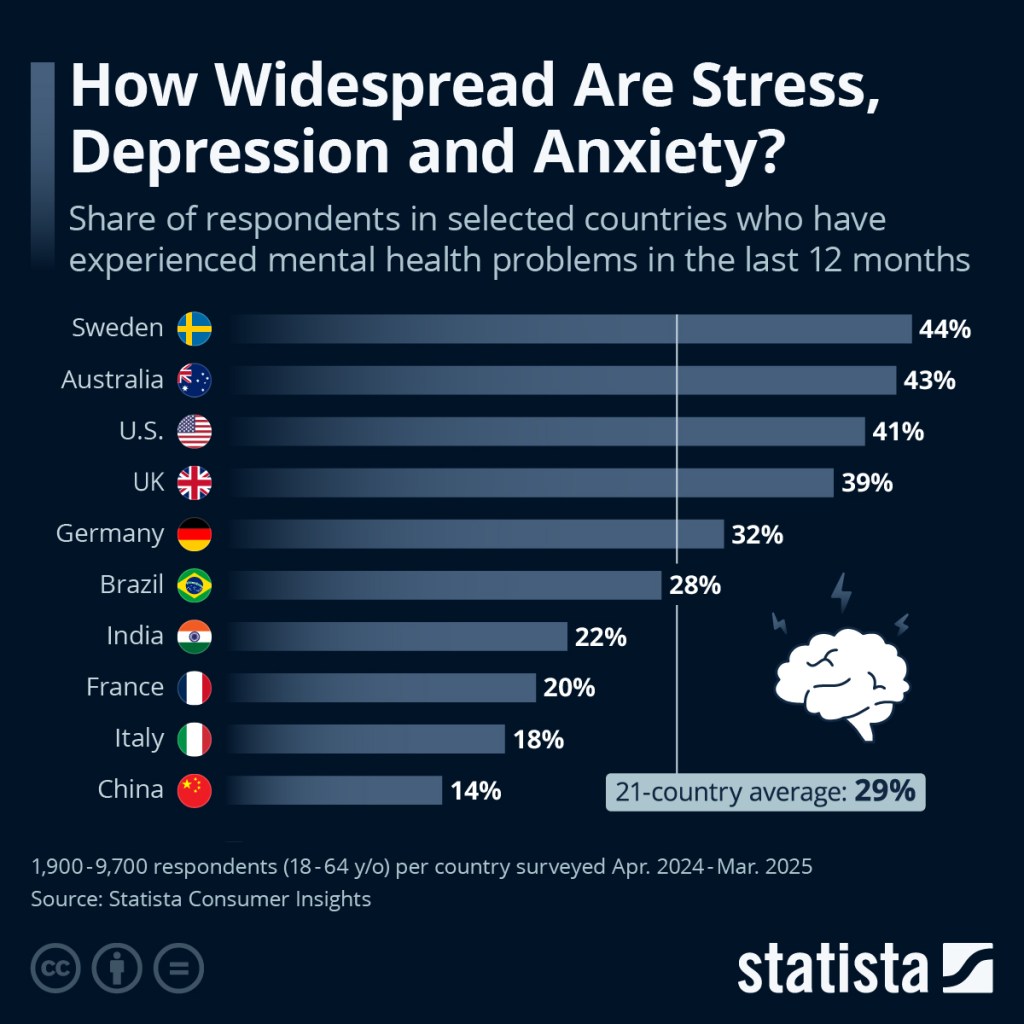
The authors infer the widespread rise in stress, anxiety, and depression in America is partly due to overprotectiveness.
Undoubtedly suppression of free inquiry and play diminishes the potential of a child’s development. Haidt and Lukianoff argue overprotection has contributed to a rising anxiety and depression in Generation Z and society in general. The authors cite national surveys that show increased rates of anxiety, depression, and self-harm. They note hospitalization and suicide rates are increasing based on self-inflicted injuries among teens with sharper rises among females. They note colleges and universities are reporting higher demand for mental health services.
Whether stress, anxiety, and depression are because of over protection remains a question in this listener’s mind. One suspects that children are cared for in too many different ways for research to conclude that stress, anxiety, and depression increases due to overprotection. It is more likely due to parental inattention because of work that takes them away from home and personal fulfillment in their own lives which are only partly satisfied by being parents.
Rather than parental overprotection, it seems intensified social media and smartphone use accelerates stress, anxiety, and depression in children and society in general.
Constant connectivity, online comparison, and cyberbullying are having outsized effects on emotional stability. The authors suggest overprotective parenting compounds the negative consequence of connectivity by depriving children of experience that can build their resistance to anxiety and depression. That may be partly true but not the whole story. Smart phone screen addiction takes one away from day-to-day real-life experience. The idea being that experiencing life’s failures and successes builds resistance to anxiety and depression whereas smart screens are pictures of life not lived by the person who is looking at them. Smart phones open the Pandora’s box of judgement which can either inflate or deflate one’s sense of themselves.
A large part of Haidt’s and Lukianoff’s book addresses the public confrontations occurring on campuses and the streets of America that are becoming violent demonstrations rather than expressions of opinion.
They suggest street demonstrations can be used constructively if participants would commit themselves to open dialogue and diverse viewpoints. Participants need to be taught cognitive behavioral techniques that can mitigate emotional reactions while building on psychological resilience. Rather than reacting emotionally to what one disagrees with, participants should focus on diverse viewpoints that allow for disagreement but do not become physical conflicts. We are all an “us”, i.e. not an “us and them’. Confrontation can be the difference between a white supremacist plowing into a crowd in Charleston, South Carolina and non-violent protest by leaders like Martin Luther King Jr. or Václav Havel. People like President Trump see the world as “us vs them” rather than one “blue marble” hoping to find another that can support human civilization.
Peaceful protests are an opportunity to understand human diversity without losing one’s humanity. Race, creed, and ethnicity are who we are and what we believe. Protesters should not be used as an excuse for violence but for understanding. Of course, this is a big ask which is too often unachievable.
The authors believe humanity can do better by allowing children to learn from their experiences while accepting diversity or difference of opinion without violence. Children and adults can be taught by experience and guidance to manage stress. Free play, risk-taking and real-world problem-solving come at every age and they can make a difference in human life. This listener only partially agrees with the author’s belief that “helicopter parenting” is interfering with free play and reasonable levels of risk taking. Democratic cultures need to reaffirm free speech as a mandate; with violence being unacceptable on every side of the aisle.
Anti-Trump demonstration.
Governmental and educational institutions are the foundations of Democracy. They must stand and support the right to free speech without committing, allowing, or condoning violence in the exercise of that right. (Of course, this is easy to say but difficult to follow because of the loss of emotional control by protectors of the public and/or protesters.)
Ibram Kendi’s book is about Malcolm X’s transformation from a poorly educated Black youth to man of erudition and importance–a remarkable tribute to the equality of all human beings.
Books of Interest Website: chetyarbrough.blog
Malcolm Lives! (The Official Biography of Malcolm X for Young Listeners)
Author: Ibram X. Kendi
NarratedBy: Ibram X. Kendi
Ibram X. Kendi (Author, American professor and historian of race at State University of New York.)
Though Kendi’s book does not have the erudition of Manning Marable’s “Malcolm X”, his book reveals much more about Malcolm Littles’ challenging childhood and his pilgrimage to Pano-Africanism, global human rights, and belief in Sunni Islamism. The Sunni belief in community and the scholarship of study, along with the rough early experience of Malcolm Little’s life, changes him and, to a degree, America’s racist belief in human inequality.
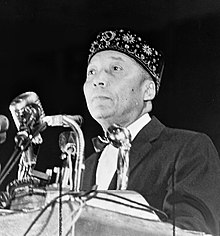
Malcolm X (born Malcolm Little, 1925-1965, human rights activist.)
Kendi explains how Malcolm Little was an uneducated hoodlum when young. Manning Marable shows how insightful and intelligent Malcolm became as a man. A listener/reader of “Malcolm Lives!” gives listener/readers a glimpse of how great they can be if they put their minds and hearts into a life that can make a difference in flawed society. Little becomes self-educated by reading and adopting a belief in something greater than himself.
In some ways, Malcolm is aided by his innate ability to separate the kindness of people he knew from the ignorance of their prejudice.
Interestingly, it is a helpful teacher that changes the direction of Malcolm’s life by encouraging him to be a part of society. On the other hand, this early teacher discourages Malcolm from becoming a Lawyer because he believed the color of Malcolm’s skin would get in his way. Malcolm learned lessons of self-reliance and independence that diminished his regard for the help of a teacher he formally admired. Kendi explains this is just the beginning of Malcolm’s life that evolves from hoodlumism to caring about society that is riven with inequality, but capable of change. Kendi explains how Malcolm’s life exemplifies that capability.
Malcom Little’s life begins in 1925 in Omaha, Nebraska. This is a time in America when the Ku Klux Klan is at its greatest strength.
Malcolm is in the eighth grade experiencing disillusionment from a teacher he respected. He drops out of school and learns how to live off the land by working minimum wage jobs. The work is at night clubs and pool halls that feed his hunger for excitement while growing angrier and angrier about a world of injustice. He covets a white girlfriend who is seduced by his charm but lets him down when she rats him out for house robberies while she and two girlfriends are parties to the crimes. Little is sentenced to eight years in prison for the crime. The lesson he learns from that experience is that friendliness is no protection from the ignorance of prejudice.
John Elton Bembry (aka Bimbi, an inmate who befriended Malcolm and encouraged him to read and educate himself while serving his sentence.)
The irony of Little’s imprisonment is that the teacher he needed when young came in the guise of a fellow prisoner who is recognized by others as someone who commanded respect because of his book learning, intellect, and eloquence. His name was John Elton Bembry, aka “Bimbi”. Bimbi’s leadership by example and eloquence led Little back to what was seen by his early teacher, the capability of a young man willing to work hard to better himself. Little began re-educating himself by reading books from the prison library. Soon after, one of Little’s brothers introduces him to the Nation of Islam.
Elijah Muhammad (1897-1975, American religious leader and self-proclaimed Messenger of Allah)
Kendi reveals the spotty history of the founding of NOI, which ultimately leads to Little’s break with NOI and his adoption of the Sunni faith. Though religion means nothing to some, Little’s adoption of Sunni beliefs and his self-education through reading and travel (when released from prison) changes his life. NOI gave Malcom purpose and discipline while in prison because it reinforced his belief in Black pride and self-reliance. However, the rigidity of its teaching of Black separatism and the personal conduct of its leader, Elijah Muhammad, who fathered children out of wedlock, alienated Little. In 1964, Malcolm went on a pilgrimage to Mecca. He found Muslims of all races praying together. The universality of Sunni Islam showed the narrowness of NOI’s view of society.
This is the capture of the NOI follower who is convicted of Malcolm X’s assassination. He is paroled after serving 45 years in a prison cell.
In the last chapters of Kendi’s book there is mention of the establishment of the nation of Israel and the resistance of Palestinian’ Muslim followers to the taking of land for the formation of Israel. The land that became Israel and Gaza were occupied by an early ethnic group known as the Canaanites. Many Palestinians and Israelites descended from the Canaanites. What some may argue is that people of the Jewish faith were first to create a religious force and formal government in the holy lands of Jerusalem. In Malcolm X’s opinion, the rights of the Palestinian people were being violated in the same way as Blacks in America. Whether that is fair judgement remains a question.
Without hegemonic control by the Palestinian leadership of disputed holy lands, no Palestinian State could be created. Today–Jews, Palestinians, and the world are paying a price for that disagreement.
An argument can be made that in ancient times Jews chose to create a form of government in Jerusalem while Palestinians did not. The same is true today. Yassa Arafat and his followers refused an opportunity to create a separate Palestinian State. Arafat would not agree because of conflicts over full sovereignty over holy lands that were disputed by both Jews and Palestinians.
Kendi ends his book with a story about NOI and Malcom X’s assassination. Malcolm had split from NOI and formed his own movement. The fact that members of NOI were involved in the murder of Malcolm X seems damning. However, Kendi’s book is about Malcolm X’s transformation from a poorly educated Black youth to man of erudition and importance–a remarkable tribute to the equality of all human beings.
“Old School Indian” is returned without being completed. It would have been interesting to know more about what it is like to be raised in America as a descendant of a Mohawk Indian Tribe but experimenting with gender identity are steps too far for this reader/listener.
Books of Interest Website: chetyarbrough.blog
Old School Indian (Novel)
Author: Aaron John Curtis
Narrated By: Jason Grasi
Aaron John Curtis (Author, essayist, member of the Akwesasne Kanienkehaka, a Mohawk tribe.)
Curtis begins a rye, mordant, and witty novel that gives one an idea of how an Indian descendant might view themselves as a part of American society. Curtis’s main character is Abe Jacobs; raised in an Indian family deeply rooted in their Mohawk culture. He grows to attend college at Syracuse University in New York with an ambition to become a writer. He becomes concerned about skin sores that develop on his skin that itch, suppurate, appear, and disappear.
Abe is a handsome young man in Curtis’s story. He is troubled by skin sores and anxious to find out what causes them and how they can be treated and cured. He meets his future wife while going to college. She is a free spirited, attractive woman who is drawn to Abe because of his good looks which become more attractive when she finds he is a descendant of a Mohawk tribe. They become lovers on the day they meet. As their relationship grows, life goes on. They have times when they are apart, living life on their own terms but staying in touch by phone and recurrent rendezvouses.
The seriousness of Abe’s disease is finally diagnosed. The symptoms can cause artery inflammation leading to organ failure and dementia at an early age. This fictional disease (though there is a true similar disease) prepares readers for a story about what it is like to be in the prime of one’s life to face a disease that can disfigure your appearance and shorten your life. Aside from the point of having a potentially deadly disease, a listener/reader wonders what it is like to be a descendent of an Indian tribe in America.
As the book progresses, the story of Abe and his girlfriend are shown to have been raised in families struggling with poverty. Abe and his soon to be wife begin revealing the hardship of their lives. Poverty diminishes life in so many ways that the author’s clever beginning is not enough for this critic to complete his story. His hero tries to commit suicide at 12 years of age. Abe’s poverty is something many generations have experienced but being drawn to suicide and willingness to experiment with gender identity are steps too far for this critic.
“Old School Indian” is returned without being completed. It would have been interesting to know more about what it is like to be raised in America as a descendant of a Mohawk Indian Tribe but experimenting with gender identity are steps too far for this reader/listener.
Musk, like all human beings, is imperfect. His association with a President who feels money is more important than humanity only feeds Musk’s ineptitude as a manager of people.
Books of Interest Website: chetyarbrough.blog
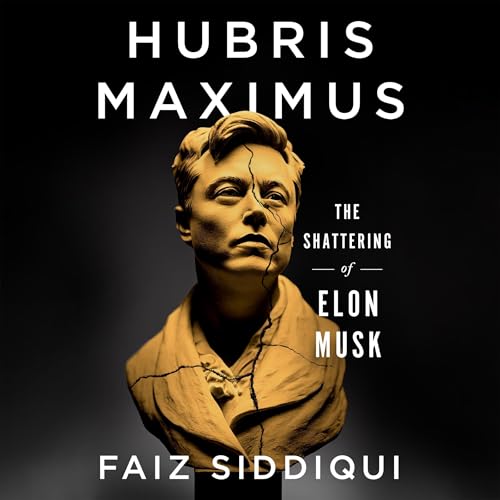
Hubris Maximus (The Shattering of Elon Musk)
By: Faiz Siddiqui
Narrated By: André Santana
Faiz Siddiqui (Author, technology reporter for The Washington Post)
Faiz Siddiqui exposes the character of Elon Musk as a brilliant entrepreneur with an outsized pride in his ability that reflects an arrogance that diminishes his genius. Musk’s success with Tesla and SpaceX accomplishments are equal, and in some ways exceed, the business successes of John D. Rockefeller and Steve Jobs. In wealth, Musk exceeds Rockefeller and in inventiveness, he competes with Steve Jobs.
As brilliant as Musk shows himself to be, his fragile ego diminishes his genius.
Siddiqui reveals how petty Musk can be while balancing that pettiness with his contribution to creative ideas that will live far beyond his mortal life. Musk’s development of space travel and communication satellites for the world with a non-governmental, free enterprise operation is a tribute to the power of capitalism. His next immense contribution, though controversial and a work in progress, will be self-driving transportation.
Elon Musk’s Successful Return of Rockets Launched into Space.
Siddiqui’s picture of Musk’s flawed personality is somewhat balanced by the image of a person driven to succeed. However, that drive is not something that naturally translates to organizational performance. Musk is not a developer of people and should not be in charge of an organization’s management. Like Apple employees that kept some of their work undisclosed to Steve Jobs when the mobile phone was being considered, Musk needs to leave management of employees to others. People management is a skill set that Musk does not have as was made quite clear with his acquisition of Twitter and his work with DOGE. DOGE feeds Musk’s managerial weaknesses with President Trump’s mistaken belief that cost of government is more important than effectiveness. DOGE is a growing tragedy of American governance.
Musk is right about the value of self-driving vehicles, but he is trying to produce the wrong product to prove his belief.
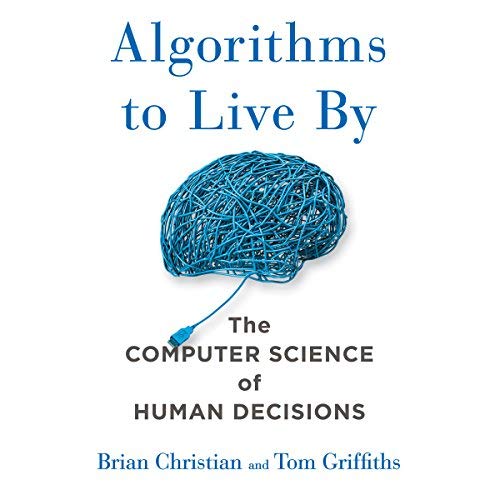
Self-driving vehicles will reduce traffic accidents, injuries, and death but the product to achieve that goal is what Musk should be working on. The game of Go is estimated to have 10 to the 172nd power of possible positions. Self-driving cars probably have a similar astronomical number of possible causes of accidents.
Musk, or someone with his creative genius, needs to create a product that can be sold to all vehicle manufacturers.
This newly invented product would use AI to learn, reinforce understanding of vehicular movements, accidents, and incidents. That accumulated information would allow creative play in the same way GO became an unbeatable game for human beings playing against a programed computer. Musk is putting the cart before the horse by building cars and then making them safe, self-driving vehicles. The first step is to gather information from as many driven vehicles as possible, collate that information, and use computer power to creatively play with the information. That information, like learning the moves of GO would create self-driving algorithms that would reduce self-driving vehicle’ accidents, injuries, and deaths.
A sad reveal in “Hubris Maximus” is that an American treasure, Elon Musk, is being vilified for the wrong reasons.
Musk’s contribution to the reduction of air pollution has benefited the world. His vision of interstellar travel may be the next step in human expedition, exploration, and habitation of the universe. Earth’s interconnectedness is vitally enhanced by Musk’s satellite system. The universe is humanity’s next frontier.
Musk, like all human beings, is imperfect. His association with a President who feels money is more important than humanity only feeds Musk’s ineptitude as a manager of people.
The story of “…Belle Lettres…” inelegantly reminds one of the effects of Trump on America’s reputation.
Books of Interest Website: chetyarbrough.blog
The Belles Lettres Papers (A Novel)
By: Charles Simmons
Narrated By: Alex Hyde-White
Charles Paul Simmons (1924-2017, Author and former American editor for The New York Times Book Review, graduate of Columbia University in 1948.)
“The Belles Lettres Papers” is a fictional account about the destruction of an American book review company. Written by a person who worked as the editor for the NY Times Book Review gives credibility to its author. One wonders how the nationally famous paper felt about his book. Simmons writes a story of a magazine company that exclusively reviews new books that become literary successes, sometimes bestsellers, or dead or dying dust gatherers.
To this book critic, Simmons certainly seems to know what he is writing about but “The Belles Lettres Papers” falls into a dust gatherer category of books.
Book reading or listening is an educational, sometimes entertaining, experience. There are so many books written that it is impossible to know what to read or listen to without someone’s review of what has been newly or recently published. Of course, there are genres that a reader/listener will choose that influences their book choices. Even when one limits themselves to a genre, there are too many choices that require a way of limiting one’s choice.
Experience reveals “best seller” is not a consistently reliable way of choosing a book, but it is one of the most commonly used methods of selection.
What “…Belles Lettres…” reveals is the potential corruption that can inflate a books placement on a best seller list. Book review publications, like all business enterprises, have owners and employees that have various levels of honesty, capability, and ethical standards. What Simmons shows is how every business owner and employee is subject to the influence of money and power.
The potential weaknesses of humanity play out in every organization that provides service or material to the public.
Simmons shows how a fictional book review company has employees who are corrupted by the power of their positions and the money they make. The fictional company has a male business manager who thinks his female secretary wishes to have sex with him because of natural attraction. Ethically, no employee reporting to a manager they work for should have sexual relations with a direct report. This is particularly egregious in Simmon’s story because of sexual inequality that permeates society. As Lord Acton’s observation about power (power corrupts, absolute power corrupts absolutely), a person who has power over another is always at risk of self-delusion.
Simmons goes on to explain how undercompensating employees can corrupt an organization by incentivizing theft and other ways of undermining a company’s integrity.
Simmons addresses the incentive of owners or those in power of an organization to cut personnel employment to save money at the cost of product quality or service. America is experiencing that today with the actions of the Trump Administration in arbitrarily firing federal employees, regardless of what they do for American citizens.
In a last chapter, Simmons addresses the revisions that can occur in a company that decides on a wholesale turnover in employees.
The integrity of a company’s mission can be sorely challenged. In the case of “…Belle Lettres…” a decision for publication of salacious books replaces the company’s former studied reviews of good writers. The organization loses its reputation as a reviewer of high-quality publications.
Trump’s assessment of immigration.
The story of “…Belle Lettres…” inelegantly reminds one of the effects of Trump on America’s reputation as a supporter of western society by reducing foreign aid, undermining university independence, denying global warming, arbitrarily firing government employees, and expelling American immigrants.
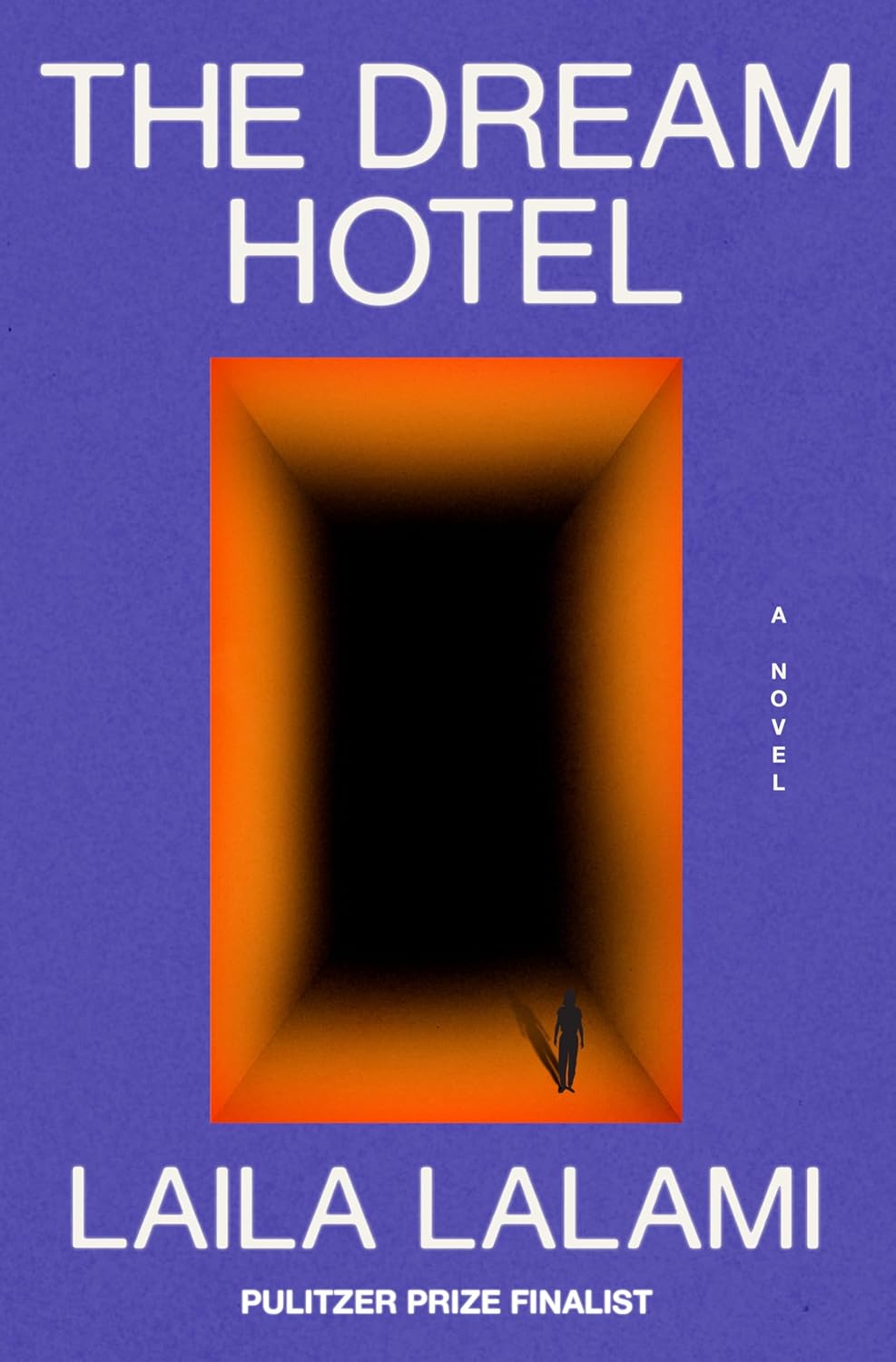
The author makes a point in “The Dream Hotel”, but her book is a tedious repetition of the risk of human digitization that is a growing concern in this 21st century world.
Books of Interest Website: chetyarbrough.blog
The Dream Hotel (A Novel)
By: Laila Lalami
Narrated By: Frankie Corzo, Barton Caplan
Laila Lalami (Moroccan-American novelist, essayist, and professor, earned a PhD in linguistics, finalist for the Pulitzer Prize for “The Moor’s Account”.)
Laila Lalami imagines a “Brave New World” in which algorithms predict probabilities of lethal criminal behavior. She creates a nation-state with a human behavior monitoring and detention system for every human that might commit a lethal crime. The growing collection of data about human thought and action suggests a level of truth and possibility.
Lalami creates a state that monitors, collates, and creates probability algorithms for human behavior.
To a degree, that state already exists. The difference is that the algorithms are to get people to buy things in capitalist countries and jail or murder people in authoritarian countries. One might argue America and most western countries are in the first category while Russia, and North Korea are in the second.
Lalami’s description of the detention system, like many bureaucratic organizations, is inefficient and bound by rules that defeat their ideal purpose.
A young mother named Hussein is coming back from a business trip. She is detained because of data collected on her about where she has been, what she did on her business trip, her foreign sounding name, and the kind of relationship she has with her husband and twin children. An algorithm has been created based on a profile of her life. It flags the young woman so that she has a number slightly over a probability threshold of someone who might kill their husband. Of course, this is ridiculous on its face. Whether she murders her husband or not is based on innate errors of behavioral prediction and bureaucratic confusion.
Every organization or bureaucracy staffed by human beings has a level of confusion and inefficiency that is compounded by information inaccuracy.
That does not make the organization bad or good, but it does mean, like today’s American government’s bad decisions on foreign aid or FDA bureaucracy throws the baby out with the bath water. Lalami’s point is that detention because of one’s name, family relationship, and presumed prediction for murder, based on a digitized life, is absurd. Algorithms cannot predict or explain human behavior. At best, an algorithm has a level of predictability, but life is too complex to be measured by a fictive number created by an algorithm.
The author makes a point in “The Dream Hotel”, but her book is a tedious repetition of the risk of human digitization that is a growing concern in this 21st century world.
“This is Your Brain on Parasites” is a bad book title but McAuliffe has written an interesting book about physical and mental health, and the treatments being researched in the 21st century.
Books of Interest Website: chetyarbrough.blog
This is Your Brain on Parasites (How Tiny Creatures Manipulate Our Behavior) and Shape Society
By: Kathleen McAuliffe
Narrated By: Nicol Zanzarella
Kathleen McAuliffe (Author, science journalist who has published in The New York Times, The Atlantic, and Smithsonian. Received an M.A. in natural science from Trinty College Dublin.)
Kathleen McAuliffe apprises the public of the importance of personal health along with a somewhat bizarrely titled book “This is Your Brain on Parasites”. McAuliffe’s book is about the science of health and its maintenance. The idea of a parasite in one’s brain seems unworthy of a book because of the creepy implication of possession. However, McAuliffe refers to a physician and several research scientists that have found evidence of brain parasites that effect animal and human behavior.
Dr. Robert Sapolsky, a neuroscientist and professor at Stanford studied what is called a Toxoplasma gondii parasite. It forms cysts in brain tissue that are shown to affect human behavior. People who have developed the cysts have shown symptoms of risk-taking behavior, and mental dysfunction like schizophrenia.
Dr. Jaroslav Flegr is a parasitologist, evolutionary biologist and professor of biology at the Faculty of Science, and professor at Charles University in Prague.
McAuliffe meets with a Czech scientist, Dr. Jaroslav Flegr, who conducted research showing the Toxoplasma gondii parasite in cat feces can infect the brain of a human being. The author meets other American research scientists that show how parasites infect animal brains whose behavior is affected in ways that are not natural to their species. A parasite being the source of a diseased brain has implications for treating mentally dysfunctional patients that may have a parasitic infection.
What McAuliffe’s book implies is the importance of washing one’s hands when handling pets, or their fecal material.
“This is Your Brain…” reminds one of the importance of hygiene when replenishing a bird feeder or filling an animal feeding trough to avoid possible parasites.
As most know, Kennedy is not a believer in vaccination despite a growing measles epidemic and the proof that vaccination works. McAuliffe does believe there are circumstances where a child crawling across the floor of a clean house gathers some immunity naturally but that un-common pathogens require uncommon vaccination.
Two other subjects mentioned by McAuliffe is natural and science made vaccinations and the benefits they provide humanity. This is a particularly timely suggestion considering Trump’s appointment of Robert F. Kennedy Jr. (a confessed anti-vaxxer) as the Secretary of Health and Human Services.
McAuliffe notes how research is showing how certain microbes can remove calories from food and how certain drugs can reduce hunger among overweight patients. She reflects on the intersection of microbiology and human health.
Another interesting examination by McAuliffe is the science research being done on gut microbiomes, a community of microorganisms in human digestive systems.
The research on microbiomes has resulted in effective weight loss drugs that have become popular medications for people struggling with weight gain.
“This is Your Brain on Parasites” is a bad book title but McAuliffe has written an interesting book about physical and mental health, and the treatments being researched in the 21st century.
The imagination of Han Kang gives reader/listener’s an explanation of how a human being can become psychotic. Kang’s characters show how psychosis comes from many sources, a major one of which is family relationship.
Books of Interest Website: chetyarbrough.blog
The Vegetarian
By: Han Kang
Narrated by: Deborah Smith, Janet Song, Stephen Park
Han Kang (Author, South Korean writer, awarded the International Booker Prize for fiction in 2016 and the Nobel Prize in Literature in 2024.)
A listener/reader may be tempted to put this book aside with the thought that it is a titillating pornographic tale that is not worthy of one’s time. However, after an hour or two, one realizes this is a journey for something difficult to describe.
In Kang’s fictional story, two sisters are raised by the same parents. One is the older of the two and becomes a successful small business owner with a video artist husband; the other is a housewife who lives with a husband that seems to neither love nor respect her. Both marriages fail but for different but interlocking reasons.
The younger sister becomes a vegetarian later in her married life. She explains her vegetarianism is based on a dream she has about something that is not clearly defined. One gathers the dream has something to do with the source of meat that involves the killing of animals while vegetarian food comes from nature’s abundance. The husband reluctantly goes along with the change but becomes more and more unhappy in his life with the younger sister. The unhappiness grows to something greater when his wife begins to complain about how her meat-eating husband’ smells. The breaking point comes when the husband asks his wife’s mother, father, and sister-in-law to convince his wife to abandon vegetarianism and begin adding meat to her diet. At dinner in their house, the father forcefully demands his daughter to eat meat. She refuses and the conflict becomes violent. Her father pries her mouth open and shoves meat into her mouth. The daughter rebels and cuts her wrist with a knife in an act of defiance. Her brother-in-law grasps the younger daughter who is profusely bleeding and rushes her to the hospital.
The brother-in-law that rushed to save the vegetarian is a video artist.
The main characters of the story and the substance of their conflict is now made clear to the listener/reader. The next portentous development is the older sister’s husband (a video artist) begins to fantasize about the younger sister whom he had rushed to the hospital. His fantasy grows to the point of asking the younger daughter to pose nude for an art video he wishes to create. She agrees. A listener/reader begins to understand the younger sister is slipping into a psychosis. Her brother-in-law paints her nude body with flowers that make her feel that she is becoming part of nature, i.e., something growing like the vegetarian diet upon which she relies. The brother-in-law’s sexual desire becomes more aroused by the video and his relationship with the younger sister.
The deepening psychosis of the younger daughter grows when the brother-in-law hires a nude male model to be a part of a new video.
The male model resists but agrees to pose with her but refuses to go beyond allowing flowers being painted on his nude body and a video of the two without clothes but with painted bodies. The brother-in-law’s sexual fantasy grows from this experience but is disappointed in the male actor who refuses to have sex with the sister-in-law while the video is being filmed. The male actor did not want to be viewed as a porn star.
The brother-in-law’s fantasy leads to the sister-in-law’s agreement to have sex with him on film as long as he allows her to paint flowers on his body that are similar to what he had painted on her body. They become sexually entwined at the sister-in-law’s house. The older sister discovers them in their sexual rendezvous where the video is being produced.
The younger sister has crossed a barrier between sanity and insanity. It is not a matter of remorse for the sexual relationship but from a reinforcement of her obsessive need for being a vegetarian as an integral part of nature. She refuses her humanity. She has crossed the Rubicon between sanity and insanity. She refuses to eat anything and only wishes to drink water to feed her growth as a plant. Both her husband and the husband of the older sister-in-law essentially drop out of Kang’s story. The older sister’s husband does not forgive her husband for his sexual transgression and the younger sister’s husband never loved the vegetarian in the first place.
This amazing book, “The Vegetarian”, offers a vivid portrayal of a human beings’ descent into psychosis.
The imagination of Han Kang gives reader/listener’s an explanation of how a human being can become psychotic. Kang’s characters show how psychosis comes from many sources, a major one of which is family relationship.