AMERICA’S BEGINNING

History buffs will be fascinated by Atkinson’s history of America’s Revolution, but it is a bit too long for this non-historian.

Books of Interest
 Website: chetyarbrough.blog

The Fate of the Day (The War for America, Fort Ticonderoga to Charleston, 1777-1780)

AuthorRick Atkinson

Narration by: Grover Gardner, Rick Atkinson

Rick Atkinson (American author, journalist, and military historian.)

Atkinson is an accomplished writer who has won Pulitzer Prizes for both histories and journalism. “The Fate of the Day” is a well written book about America’s war of independence. It is highly entertaining because of Atkinson’s detailed descriptions of the times and the major combatants in the revolutionary war. It gives reader/listener’s a view of the rag-tag and multi-cultural colonial military and British leaders. “The Fate of the Day” illustrates the colonists’ successes and failures against a much better trained and experienced British military.

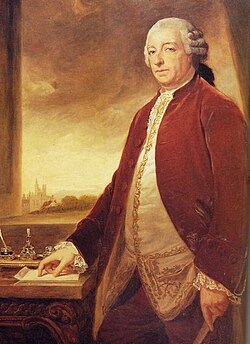
Sir Henry Clinton on the left and Lord George Germain on the right.

Atkinson offers a picture of Great Britain’s incompetence, arrogance, and misjudgment of the colonies fight for independence. Atkinson explains that Sir Henry Clinton, the Commander-in-Chief of the British Forces, though quite smart and considered a gifted strategist, fails to communicate clearly to his British field officers. Compounding that confusion is Lord Germain, the Secretary of State in England, to whom Clinton, Howe, and Cornwallis reported. Germain gave orders that were too far removed from the field of action. It caused many misunderstandings and confusion that diminished the effectiveness of British forces during the colonists’ battles for independence.

George Washington.

However, Atkinson also explains the faults of the Colonies’ leadership during the revolution. The stoic George Washington learned his role in the revolution on the job. He had no experience in the tactics of battle which led to misjudgments in the field. However, his skill in managing Congress, the states, and his fractious international officers offset his tactical mistakes. Washington instilled resilience, discipline, and courage in his subordinates. He held the army together despite poor military provisioning, erratic and meager pay, inadequate recruitment and training for war in an often-harsh environment.

Nathanael Greene (Major General in the Revolutionary War for America’s independence.)

Washington has some good field commanders reporting to him. Nathanael Greene is a self-taught militia officer who became a sophisticated strategist. He had a strategy to defeat British forces in the south with his troop mobility and attrition in fighting British superiority. Green avoids decisive battles with the British by evading superior forces and coordinating local militias to harass and ambush British forces. (A reminder of the Vietcong in America’s future war.) This causes the British to spread their forces to try and defend everywhere at once which only made them more vulnerable to attack. Atkinson gives the example of Greene’s retreats across North Carolina that make Cornwallis pursue Union soldiers over rough terrain which made Cornwallis outrun his supplies. By the time they reached Virginia, Cornwallis and his troops were overextended. Though Green did not win many battles, he effectively undermined British resolve to continue the fight.

Benedict Arnold (American-born British military officer who fought with distinction for the American Continental Army.)

In contrast to Greene, Atkinson profiles the infamous Benedict Arnold. It is a surprising contrast because Arnold betrayed the colonies by defecting to the British. Atkinson explains Arnold risked his life in defense of America’s drive for independence. He was heroic in that drive but felt unrecognized. Arnold led the surprise seizure of Fort Ticonderoga, the first major victory of the war. Atkinson notes Arnold led his troops on the assault of Quebec in 1775 which required a 300-mile march for which his men nearly starved; some dying on the march. Arnold led the assault and was shot in the leg. Even though wounded again in the leg at the Battle of Saratoga, he fought through 1777 when his tactical military actions compelled Burgoyne to surrender. Atkinson shows Arnold to be a smart, heroic commander but his emotions, the lack of recognition or promotion led him to defect to the British. The irony is that he is never trusted by either America or the British because of his defection.

America’s Revolutionary War.

Atkinson’s book is compelling because of the cinematic way he tells the story of America’s Revolutionary War. Picking details of heroes like Washington, and Greene which ranges from Washington’s trouble with his teeth to the clever strategy of guerilla war conducted by Greene to the bravery and defection of Arnold. Atkinson’s story helps one understand how human and creative early settlers of America were, not unlike the better American leaders of today.

Ben Franklin (America’s chief diplomat in Europe during the Revolution.)

Atkinson explains Ben Franklin is the colonists’ chief diplomat in Europe. Franklin’s charm as a a political operator who is willing to lie and flatter the French gave him celebrity and influence in the French court. He manages to create a French alliance that eventually supplied material and military power for support of the colonies against Great Britain. Of course, it helps that the French were vying for their own influence against the growing hegemony of England.

The Marquis de La Fayette (French miliary officer and politician who volunteered to serve in the Continental Army.)

Even before France began supporting the colonists, a young soldier named Lafayette joined the Revolution. The French aristocracy originally objects to the wealthy young aristocrat’s involvement. In response, Lafayette sails to America as a 19-year-old who believed in the colonists’ cause. His early experience as a soldier in France made him a general officer in the Continental army. He rode next to George Washington which gave weight to the Revolution’s global importance by internationalizing the war.

America’s independence.

History buffs will be fascinated by Atkinson’s history of America’s Revolution, but it is a bit too long for this non-historian.

PEACE IN ISRAEL

Like America’s Civil War and the issues of slavery and independence, peace will only come to Israel with a political and territorial agreement based on human equality.

Books of Interest
 Website: chetyarbrough.blog

BEING JEWISH AFTER THE DESTRUCTION OF GAZA (A Reckoning)

AuthorPeter Beinart

Narration by: Malcolm Gladwell

Peter Beinart (Author, journalist, political commentator, professor, former editor of the New Republic, born in Cambridge, Mass. to Jewish immigrants from S. Africa.)

This is a surprising Jewish author’s analysis of Israel’s response to the horror of Hamas’ murders/rapes of 1200 people and the taking of 251 Jewish hostages on October 7, 2023. Peter Beinart appears to be a devout Jew and journalist who criticizes Israel’s response to Hamas’s brutal attack and hostage taking. He believes, as current news reports confirm, Hamas will return to control and influence Gaza and West Bank Palestinians after Israel’s brutal response to the Hamas’ atrocity.

NYT’s Picture of Grief over the Hamas attack on October 7th, 2023.

Without reservation, Beinart condemns Hamas for their war crime on October 7th. However, his book equally condemns Netanyahu’s response. Beinart points to the Israeli government’s destruction, murder, and starvation of thousands of Palestinian men, women, and children who had nothing to do with the planning or execution of the Hamas horror of October 7th. The author argues Israel must focus on a political, non-military solution to Palestinian human rights. He believes Netanyahu’s actions only perpetuate a cycle of violence in Israel which will not achieve security for either the Israeli or Palestinian people.

One wonders how unpopular Beinart’s opinion may be among Israel’s Jewish population. As a blogger who received written comments from a devout Jewish person who supports Trump and Netanyahu’s actions in Israel, it is surprising to hear Beinart’s analysis of the Gaza war and his criticism of Israel’s actions. As the reviewer of this book who admittedly has little respect for religion and its history of atrocities, it is encouraging to hear from one who believes in their religion and condemns those who have no empathy for other religions. God is a universal concept with religions that worship His existence in different ways. Beinart makes one wonder why there is so little room for a “let it be” attitude toward different religious beliefs.

Empathy.

Beinart argues for Jewish empathy toward Palestinians while condemning Hamas’ actions in Israel. He believes long-term peace requires political compromise and a recognition of Palestinian rights. Military actions only guarantee rather than deter future violence and injustice. Beinart’s plan is to end Israeli’ occupation of Gaza and expand the rights of Palestinians to control Gaza and the West Bank. He argues it can be either a one-state or two-state solution. Beinart argues ground invasion by Israel in Gaza must stop. He recommends forthrightly engaging the humanitarian crises in Gaza by providing aid and rebuilding what has been destroyed.

Pursuit of peace is not easy.

None of this is easy because of the enmity that remains. The complications of political opposition, and security are ongoing concerns for Israelites and Palestinians, but Beinart believes the risks of a negotiated political, religious, and territorial settlement is worth it. Human equality is a work in progress for all nations in the world. Beinart persuasively argues a political and territorial agreement between Palestinians and Israelites is the only possible path to peace. Like America’s Civil War and the issues of slavery and independence, peace will only come to Israel with a political and territorial agreement based on human equality. Of course, the drive for equality remains a work in progress for America. That will be true in Israel for generations to come, but peace can be restored with pursuit of equality for Palestinians and Jews.

TWO OLD MEN

Age is an existential risk that can only be managed by the checks and balances of others which is why America’s government has survived and prospered despite good and ethically or morally corrupt Presidents.

Books of Interest
 Website: chetyarbrough.blog

Original Sin (President Biden’s Decline, Its Cover-Up, and His Disastrous Choice to Run Again)

AuthorJake Tapper, Alex Thompson

Narrated By:  Jake Tapper

“Original Sin” is a hard-hitting expose by two tough minded reporters that convincingly explain President Biden did not have the cognitive ability to be America’s President in the last two years of his Presidency. This is a particularly hard pill to swallow because the current President of the United States is old while being at the opposite end of the political spectrum. At 74, this book reviewer is old. Age undoubtedly has an impact on this reviewer’s cognitive abilities and the cogency of what he thinks and writes. President Trump is 79 years old. The difference is that what a critic writes means nothing in respect to governance of the United States and the impact it has on American citizens and world events.

Trump’s decisions and actions have had great impact on U.S. relationship with other countries, American public policy, and the economic future of Americans.

Trump has directed the firing of thousands of government employees. Because of Trump’s authoritarian characteristics, he surrounds himself with sycophants who are more interested in pleasing him than managing the government’s responsibility for America’s welfare and role in the world. Authoritarianism is untrue of Biden who throughout his public career has been a consensus builder, not an autocrat. This is not to suggest Biden is not fundamentally wrong in not immediately supporting an alternative candidate for the Presidency. The authors of “Original Sin” clearly explain Biden fails America by waffling on his candidacy for a second term.

Old age is a risk for every manager of other people’s lives and opportunities.

Biden is not at fault for getting old but people who worked with him are guilty of negligence in their service to the American people. Tapper and Thompson offer numerous examples of Biden’s intellectual decline. The importance of their assessment of Biden’s failing capabilities is a warning to all managers of other people’s lives, employment, and family responsibilities. Age is a life circumstance that affects every human being. One who is losing their cognitive ability cannot see it in themselves. It is the responsibility of others to help older people relinquish responsibility for those things they can no longer handle.

Relinquishment by a man or woman who has great responsibility is a hard thing to accept. Age effects people in different ways. The catch 22 is that loss of cognitive ability is unseen by the person who loses it. It is the responsibility of those who rely on one who is losing their reasoning ability to manage the circumstance of that decline.

Putting politics of government aside, President Trump is old. The concern one has is the risk of relying on those who work for Trump, like many who worked for Biden, may see loyalty as more important than the public interest of America. Age is an existential risk that can only be managed by the checks and balances of others which is why America’s government has survived and prospered despite good and ethically or morally corrupt Presidents.

America will survive Trump but it will take time to reset America’s relationship with the world. America has had good and bad Presidents in both political parties but its foundation of checks and balances have kept it on course for the betterment of society. It is nations with leaders that have no checks and balances that threaten social and economic equality.

RELIGION

As a mirror and catalyst for change and hope, Professor Mark Bergson offers an excellent review of the world’s religions.

Books of Interest
 Website: chetyarbrough.blog

Cultural Literacy for Religion (Everything a Well-Educated Person Should Know)

Lecturer: Mark Berkson

By:  The Great Courses

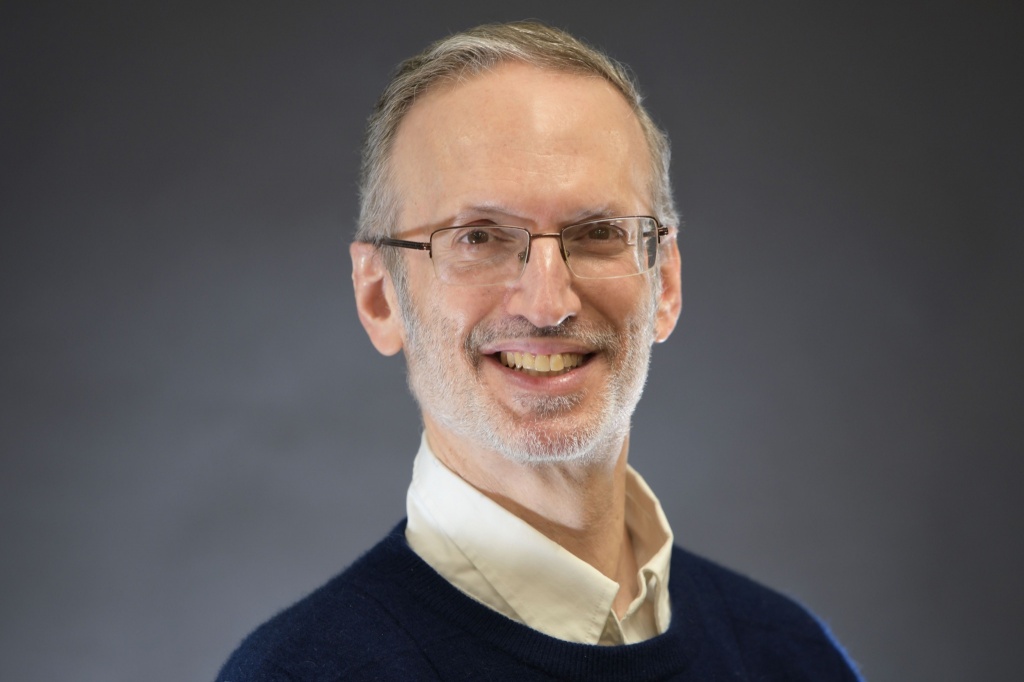
Mark Berkson (Professor and Chair in the Department pf Religion at Hamline University)

Professor Berkson provides an excellent overview of the most important religions in the world in his lectures. Though this reviewer is not a person who follows any religion, Professor Berkson offers a broad understanding of religious beliefs and their differences in his lecture series.

CHRISTIAN, ISLAMIC, AND HINDUIST RELIGIONS HAVE THE MOST FOLLOWERS

The three religions with the greatest number of followers are Christian, Islamic, and Hinduist which are categorized as a transcendent group of religions. In broad terms, their beliefs are in salvation, divine revelation, moral law, and a soul’s journey toward a divine being as the ultimate truth and value of life. These religions reflect on both the first and second categories of religion because they transcend the self to either a divine or a more centered understanding of oneself.

A third category would be followers of a sect of Buddhists adherents, Jainists, or Confucianists which believe in enlightenment, discipline, meditation, and moral cultivation of oneself in relation to nature, the cosmos, and everyday life. This third category is not centered around a divine being but around self-effort to create ethical harmony among human beings that will offer peace to all.

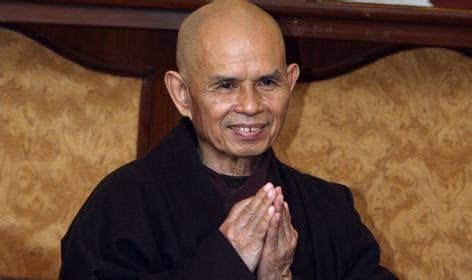
Thích Nhất Hạnh was a most famous Vietnamese Thiền Buddhist monk who believed and taught self-effort to create ethical harmony in oneself. (Died at age 95 in 2022.)

Berkson notes Daoist’s, Shinto’s, and some Buddhists (like Thích Nhất Hạnh) believe in the balance, flow, and interconnectedness of living in accordance with nature. He categorizes these religions as “religions of immanence”.

Tenzin Gyatso (the 14th Tibetan Dalai Lama, exiled in India from his native land in China, represents the Buddhist idea of self-transcendence.)

Berkson explains religion became important to civilization because they made living life more important than just survival. Religion gave meaning to life. Religion also provided social and moral order to life. Religion gave comfort in time of grief, fear, and uncertainty. Religion inspired societies to be creative to build cities, and create art. Religion provided a belief in something greater than oneself and the possibility of transcendence beyond earthly existence.

As one listens to Berkson’s lectures, one wonders whether religion has been more positive than negative in civilization’s development.

Berkson tries to sit on a fence between two extreme opinions. One is the positive contributions of religion to human moral and ethical belief. On the other, religion has aggravated social comity by creating differences. Different religious beliefs have murdered or demeaned millions of human beings who believe only their religion is important. If you defile the truth of my religious belief, you are not one of us. On the one hand, religion brings people together and grows cultural and artistic beliefs. On the other hand, religious belief creates silos that suppress inquiry, reinforce prejudices, and delegitimize political authority. Belief in a religion can advance understanding of human nature but at the same time suppress any inquiry into faith or science.

One will better understand specific religious beliefs as a result of Bergson’s lectures.

Bergson notes tensions between religious beliefs are the basis upon which many social and human atrocities have occurred. Christianity notes that no one comes to God except through Chistian belief while Hinduism believes there are many paths to the divine. Exclusivity in religion may not cause a war, but it certainly creates tension. The core beliefs of Judaism, Christianity, and Islam have led to millions of deaths because of distinctions made between the word of God in the Hebrew Bible, Christian old and new testaments, and the Qur’an.

As a mirror and catalyst for change and hope, Bergson offers an excellent review of the world’s religions.

However, in the history of yesterday and today, the Jewish holocaust of WWII and slaughter of Palestinians in Gaza rend one’s heart. To quote Rodney King amid the Los Angeles riots, “Can we all get along?”– apparently not.

POWER DISTRIBUTION

Unequal opportunity and inequality of race, ethnicity, and the sexes are societies’ problem. This foolish story is a waste of reader/listener’s time because it fails to address the reality of social inequality with a solution that can make a difference.

Books of Interest
 Website: chetyarbrough.blog

The Power (A Novel)

Author: Naomi Alderman

Narrated By: Adjoa Andoh

Naomi Alderman (Author, British writer, novelist, producer for TV and movies.)

This is a marginally interesting novel about gender inequality. Naomi Alderman begins her story with two male thugs who murder the heroine’s mother and leave a daughter for dead. The young daughter defends her mother with a deadly electrical power that has laid dormant in her life but becomes energized by a force of will. The daughter attacks the overpowering thugs but is unable to save her mother. Alderman’s idea is to reverse the traditional roles of men and women by giving women a power greater than the physical strength advantages of men. This latent power is alleged to have been repressed and is miraculously discovered and cultivated in this young girl by her mother.

The reason I find Alderman’s story tiresome is because she creates the same problem for women that exists in this largely patriarchal world. Great men like great women that wield inordinate power over others are almost always bad because as Lord Acton noted “power tends to corrupt, and absolute power corrupts absolutely”.

The influence of raw power is diminished by social change, not by leaders’ gender, or the risk of superior weapons of mass destruction.

Raw power is not a gender problem. WMD as a raw power in the hands of a male or female leader are a societal problem. Unequal opportunity and inequality of race, ethnicity, and the sexes are societies’ problems. This foolish story is a waste of reader/listener’s time because it fails to address the reality of social inequality with a solution that can make a difference.

GENERIC DRUGS

Katherine Eban believes generic drugs are important for global health because of affordability and accessibility. One wonders if anyone who reads or listens to “Bottle of Lies” will take generic drugs if they can afford the original FDA approved product.

Books of Interest
 Website: chetyarbrough.blog

Bottle of Lies (The Inside Story of the Generic Drug Boom)

Author: Katherine Eban

Narrated By: Katherine Eban

Katherine Eban (Author, American Rhodes scholar with a MPhil from University of Oxford.)

“Bottle of Lies” is a history of duplicity and dishonesty in the generic drug industry. It is a damning dissection of the lure of money at the expense of human life. On the one hand, affordability, healthcare savings, global health, and the value of regulation are made clear in “Bottle of Lies”. On the other, Katherine Eban shows how the lure of capitalism and greed creates an incentive to evade regulation and kill innocent people seeking drug treatment for their illnesses.

Katherine Eban reveals the history of an India drug company named Ranbaxy that was founded by two brothers, Ranbir Singh and Gurbax Singh.

In 1937, these two entrepreneurs recognized the economic opportunity of creating a drug manufacturing operation with lower labor costs in India to capture the market in drugs nearing their patent expiration dates. They were focused more on organizational cost cutting and the money that could be made than the efficacy of the drugs they could produce. The company was sold in 1952 to their cousin Bhai Mohan Singh. This cousin transformed Ranbaxy to a pharmaceutical giant, but his experience was in construction and finance, not pharmaceuticals. However, his son Parvinder Singh joined the company in 1967 and was a graduate from Washington State University and the University of Michigan with a master’s degree and PhD in pharmacy.

Parvinder Singh (1944-1999, became the leader of Ranbaxy in 1967.)

Eban argues Parvinder Singh looked at his father’s business as a scientist with a pharmaceutical understanding and a desire to produce lower cost drugs for the world for more than a source of wealth. Parvinder appeared to value quality, transparency, drug efficacy, and long-term credibility for Ranbaxy. Parvinder recruited talent who believed in lowering costs and maintaining the efficacy of drugs the company manufactured. However, Parvinder dies in 1999 and the executives who took over the company focused on maximizing profit rather than the efficacy of the drugs being produced. Parvinder’s leadership is succeeded by Brian Tempest who expands the company by navigating the regulatory restrictions on generic drug manufacture. Tempest tries to balance profitability with global health efficacy of generic drugs. Parvinder’s son, Malvinder Singh eventually becomes the CEO of the company. He returned control to the Singh family. The corporate culture changed to what its original founders created, i.e., a drug producer driven by profit. Malvinder was not a scientist.

Malvinder Singh (Born in 1973, Grandson of Bhai Mohan Singh and son of Dr. Parvinder Singh.)

Under Malvinder, Eban shows the company turns from science to economic strategy to increase revenues of Ranbaxy. Internal checks on the efficacy and testing of their drugs is eroded. Criticism from regulators and whistleblowers are either ignored or sidelined by company management. Peter Baker Tucker’s role in exposing Ranbaxy is detailed in Eban’s history. With the help of Dinesh Thakur, an employee of Ranbaxy, Tucker bravely exposed the company’s fraud. (Thakur received $48 million compensation as a whistleblower award.) Tucker is an FDA investigator who reviewed Ranbaxy’s internal documents that revealed their fabricated data about their drug manufacturing process.

Peter Baker Tucker (aka Peter Baker, former FDA investigator.)

Ranbaxy is sold to a Japanese company called Daiichi Sankyo in 2008. Eban explains that Malvinder concealed critical information about FDA investigations and data fraud in the company’s sale. Malvinder and his brother, Shivinder Singh, are arrested in 2019 and remain in custody in 2021, facing multiple fraud accusations.

Sun Pharma acquires the remnants of the Ranbaxy-Sankyo’ sale.

Though Eban does not focus on what happens after the sale to the Japanese company, it is sold at a loss to Sun Pharmaceutical Industries and Singh family’s ownership is sued by Sankyo for hiding regulatory issues of the company. Daiichi received a $500 million settlement but effectively lost money on their investment. Eban, in “Bottle of Lies” offers a nuanced indictment of generic drug manufacturer and sale.

Eban believes generic drugs are important for global health because of affordability and accessibility.

Quality and drug efficacy must be insured through international regulation. Eban endorses unannounced inspections, routine testing of the drugs, and strict legal enforcement against poor manufacturing systems. Without transparency and oversight of all drug manufacturing, human lives are put at risk.

This is quite an expose, but it ends with criticism of inspections of China’s drug manufacturing capabilities.

The inspections of foreign companies that manufacture generic drugs, like those she refers to in her book, are conducted by similar inspectors who do not know the culture or language of the countries in which generic drugs are being produced. The FDA was paying their inspector in India $40,000 per year at the time of Ranbaxy’s investigation. It is by instinct, not interrogation, that malfeasance is detected. Too much is missed when one cannot talk to and clearly understand employees of manufacturing companies.

It seems America has two choices: one is to increase the salaries of FDA inspectors and require that they know the language of the countries in which they are working and two, set up a system of random reverse engineering of generic drugs allowed in the United States. This not to suggest all other FDA regulations would not be enforced when a generic drug is proposed but that site reviews would be more professionally conducted. One wonders if anyone who reads or listens to “Bottle of Lies” will take generic drugs if they can afford the original FDA approved product.

FICTION’S VALUE

How many thoughts run through one’s mind as they listen or read Hurwitz’s imaginative story? Maybe a movie will be made that simplifies and dumbs down its plot. The point is that fiction begins, regardless of the media in which it is represented, from a writer’s mind who creates a story.

Books of Interest
 Website: chetyarbrough.blog

Out of the Dark (An Orphan X Novel–Book 4)

Author: Gregg Hurwitz

Narrated By: Scott Brick

Gregg Hurwitz (Author, American crime novelist, comic book writer.)

In the media lately, there has been the observation that novels are losing their grip on the reading public. A number of recent studies, like that done by the National Endowments for the Arts, show a drop in adult readers of fiction in 2012 from 45.2% of adults to 37.6% in 2022. Possibly more troubling is the 13-year-olds drop from 27% to 14% in a similar time frame. Some suggest it is because of cognitive fatigue and a cultural shift to visual or audio entertainment. There is undoubtedly some truth in that belief.

Empathy, thought, and human insight generated by audiobooks, films, and serialized television generate the same thrill and human understanding as written fictional stories.

However, even though the format has changed, an author’s creation is the source of an idea whether it is converted to a film or audiobook. One can draw as much, if not more, knowledge of the world and human experience from visual and audio input as from reading a book. Books of fiction can be equally impactful from a screen that is viewed or an audiobook that is heard through EarPods.

Fiction begins on the written page whether it becomes a movie or a bestselling audiobook.

Of course, audio/visual actors can elicit different interpretations to an audience of what has been written by its originator but that is true of any person’s perception of what a writer meant in the creation of his/her story. So what? If the visual or auditory results are insightful then the media representation of a book of fiction has value. The point is the impetus of media presentation came from a written document by a writer. Of course, in today’s world, that writer may have his idea enhanced by A.I. but the idea still came from human thought.

Hurwitz’s novel is complicated with many story lines and characters.

Hurwitz’s novel resonates with a view of today’s world. America has a President that was nearly assassinated in his first term of office. This President uses lies in ways that make one wonder about his views and the direction of America. It makes one think about the assassin Hurwitz creates and whether a foolish young man on a roof could become an agent of the government to murder perceived enemies of the state by someone who is out of control. Of course, a majority of voters chose today’s President so maybe lying should not be a criterion for judgement of one’s value as a leader of a democracy.

“Out of the Dark” is a fictional novel that captures a listener’s imagination in a well narrated audiobook.

The story is of an incredibly intelligent, tech savvy, American assassin that chooses to turn his skill to murdering an American President. The President is characterized as a brilliant politician serving his last term of office. A woman secret service officer is interviewed by the President to be the person in charge to protect him from the rogue assassin that has been used by the President to assassinate alleged foreign enemies. Assassination is a crime against humanity. There seems no justification for one nation state to have assassination as a tool of governance. Would assassination of Hitler have erased antisemitism or WWII?

How many thoughts run through one’s mind as they listen or read Hurwitz’s imaginative story? Maybe a movie will be made that simplifies and dumbs down its plot. The point is that fiction begins, regardless of the media in which it is represented, from a writer’s mind who creates a story.

MAGIC

Dody wrote this book to suggest every American who thinks they have achieved success in life is often mistaken. In today’s world, the President of the United States could learn something from James Dody’s story. On the other hand, is anyone in their 70s likely to change?

Books of Interest
 Website: chetyarbrough.blog

Into the Magic Shop (A Neurosurgeon’s Quest to Discover the Mysteries of the Brain and the Secrets of the Heart.)

Author: James R. Doty MD

Narrated By: Dan Woren

James Doty (Author, MD, clinical professor of neurosurgery at Stanford University, director of the Center for Compassion and Altruism Research and Education.)

“Into the Magic Shop” is a nearly unbelievable life story of James Doty written from his recollections of growing up in Lancaster, California. It will change opinions about a number of misconceptions one may have of American opportunity, brain surgery physicians, and the influence a mentor may have on a person’s life.

Doty is obviously blessed with intelligence, a gift to persuade, and a drive to exceed the expectations of lower economic class Americans.

Doty is born into a poor family with a father who is characterized as an alcoholic and a mother with suicidal tendencies. Despite these humble and troubled family circumstances, Doty achieves the remarkable goal of becoming a brain surgeon who is now a professor of neurosurgery at one of America’s leading ivy league universities.

“Into the Magic Shop” shows how important a mentor can be to a person nearing the age of puberty (between 9 and 14).

Doty explains he had an early interest in magic and chooses to visit a magic shop in which there is a woman with a grown son who manages the shop. She is visiting her son and takes a liking to this young boy who stops by the shop to buy a false finger he uses for a magic trick. They strike up a conversation and the mother of the store manager makes a deal with Doty to come by the magic shop to see her for the several weeks she plans to be there before leaving.

Doty tells of a confrontation he has with two bullies that are abusing a smaller student when Doty is on his way to the magic shop.

One infers from Doty’s story that he is tall for his age. Doty tells of a confrontation he has with these two bullies that are abusing a smaller student when Doty is on his way to the magic shop. Because of Doty’s earlier mentor’ discussions with the mother of the magic shop manager, he approaches the bullies while using a breath control exercise to calm himself in a confrontation. Instead of escalating confrontation with the bullies, Doty maintains his composure while talking to the bullies about their poor behavior. Doty is able to walk away unharmed after interrupting the abuse of the smaller boy.

There are a number of life lessons Doty learns from the store manager’s mother.

Dody learns how to relax his body and tame his mind when faced with adversity. She explains how visualizing good things like success from personal effort can shape one’s future. Believing in oneself and focusing on what you want to achieve offers purpose and achievement in life. She explains how understanding one’s emotions and being compassionate allows one to let go of fear and shame which helps him realize his parents are dealing with life in the best way they can. Importantly, these weekly meetings help Doty understand how daily practice with the magic of meditation offers peace and understanding with one’s thoughts about compassion and personal accomplishment. Fully understanding compassion comes later in Dody’s life, but personal accomplishment begins from the first days of his mentor’s teaching. Most importantly, his mentor explains how he can develop a balance between physical well-being, love, and respect for others.

Doty’s family is on the verge of eviction for non-payment of rent.

In following his mentor’s suggestion, he visualizes a better outcome than the embarrassment of an eviction. Serendipitously, a person who owed his father money appeared at the doorway with a repayment that allowed the family to avoid eviction. Doty surmises positive visualization and meditation have the power to change one’s future. He plans to graduate from high school and visualizes going to college to become a doctor. Though he does not have the money for tuition, he applies to a California university and is accepted as a beginning student with financial aid for his education.

“Into the Magic Shop” revises one’s opinion of surgeons in the sense that there are some who see their patients as whole human beings rather than victims of neurological dysfunction.

Secondarily, one realizes where one comes from is not where one is destined to remain. Doty’s young academic career is festooned with family emergencies and lack of funds that challenge his road to education as a surgeon. His father dies before he can reach him, but he has a dream of his father just before his death that praises him for his accomplishments.

Doty’s early life experience with his magic shop mentor taught him mindfulness, visualization, and the power of intention.

In earlier years of his success, he discounts his mentor’s advice about compassion. Mindfulness, visualization and power of intention result in his success in becoming a neurosurgeon. The criteria of academic performance created admission roadblocks that were overcome by this vision and persuasive ability to clearly show his skill as a human being and future physician. He often voiced disagreement with administrative bureaucracies that challenged his authority. He faces many challenges but clear vision of his role as a caring physician overcame much of his supervisors ill will toward him. He gained experience at Walter Reed Army Medical Center while serving 9 years in the U.S. Army. He became chief of pediatric neurosurgery at Children’s Hospital in Orange Country, California that led him to complex spine surgery at Stanford.

“Into the Magic Shop” is partly about becoming a surgeon.

But its primary message is that every human being can change the course of their lives by committing to one’s goal in life by clearly focusing on an objective and using innate abilities to achieve it. Those lessons came easily to Doty until he is nearly bankrupted by investments when the dot-com financial crash in the early 2000s wipes out his and many others’ wealth.

Dody’s financial collapse led him back to studying the notes he took from his long past counseling with his mentor.

In reading those notes, Dody realizes the lesson he had forgotten was to practice compassion for others in his life. He had become a wealthy American and thought he had lost it all. What he had not lost was the magic explained to him by his mentor. He was a surgeon now and what money he lost was just a measure of wealth, not his ability to be a successful physician.

Compassion.

Dody rebuilds his life but now understands how important compassion is to success in life because its reward is not based on wealth but on the contribution one can make to others. He becomes acquainted with the Dali Llama and the magic he had forgotten from his mentor, namely compassion, returns as Dody’s guide to life.

Dody wrote this book to suggest every American who thinks they have achieved success in life is often mistaken. In today’s world, the President of the United States could learn something from James Dody’s story. On the other hand, is anyone in their 70s likely to change?

MUSK

Musk, like all human beings, is imperfect. His association with a President who feels money is more important than humanity only feeds Musk’s ineptitude as a manager of people.

Books of Interest
 Website: chetyarbrough.blog

Hubris Maximus  (The Shattering of Elon Musk)

By: Faiz Siddiqui

Narrated By:  André Santana

Faiz Siddiqui (Author, technology reporter for The Washington Post)

Faiz Siddiqui exposes the character of Elon Musk as a brilliant entrepreneur with an outsized pride in his ability that reflects an arrogance that diminishes his genius. Musk’s success with Tesla and SpaceX accomplishments are equal, and in some ways exceed, the business successes of John D. Rockefeller and Steve Jobs. In wealth, Musk exceeds Rockefeller and in inventiveness, he competes with Steve Jobs.

As brilliant as Musk shows himself to be, his fragile ego diminishes his genius.

Siddiqui reveals how petty Musk can be while balancing that pettiness with his contribution to creative ideas that will live far beyond his mortal life. Musk’s development of space travel and communication satellites for the world with a non-governmental, free enterprise operation is a tribute to the power of capitalism. His next immense contribution, though controversial and a work in progress, will be self-driving transportation.

Elon Musk’s Successful Return of Rockets Launched into Space.

Siddiqui’s picture of Musk’s flawed personality is somewhat balanced by the image of a person driven to succeed. However, that drive is not something that naturally translates to organizational performance. Musk is not a developer of people and should not be in charge of an organization’s management. Like Apple employees that kept some of their work undisclosed to Steve Jobs when the mobile phone was being considered, Musk needs to leave management of employees to others. People management is a skill set that Musk does not have as was made quite clear with his acquisition of Twitter and his work with DOGE. DOGE feeds Musk’s managerial weaknesses with President Trump’s mistaken belief that cost of government is more important than effectiveness. DOGE is a growing tragedy of American governance.

Musk is right about the value of self-driving vehicles, but he is trying to produce the wrong product to prove his belief.

Self-driving vehicles will reduce traffic accidents, injuries, and death but the product to achieve that goal is what Musk should be working on. The game of Go is estimated to have 10 to the 172nd power of possible positions. Self-driving cars probably have a similar astronomical number of possible causes of accidents.

Musk, or someone with his creative genius, needs to create a product that can be sold to all vehicle manufacturers.

This newly invented product would use AI to learn, reinforce understanding of vehicular movements, accidents, and incidents. That accumulated information would allow creative play in the same way GO became an unbeatable game for human beings playing against a programed computer. Musk is putting the cart before the horse by building cars and then making them safe, self-driving vehicles. The first step is to gather information from as many driven vehicles as possible, collate that information, and use computer power to creatively play with the information. That information, like learning the moves of GO would create self-driving algorithms that would reduce self-driving vehicle’ accidents, injuries, and deaths.

A sad reveal in “Hubris Maximus” is that an American treasure, Elon Musk, is being vilified for the wrong reasons.

Musk’s contribution to the reduction of air pollution has benefited the world. His vision of interstellar travel may be the next step in human expedition, exploration, and habitation of the universe. Earth’s interconnectedness is vitally enhanced by Musk’s satellite system. The universe is humanity’s next frontier.

Musk, like all human beings, is imperfect. His association with a President who feels money is more important than humanity only feeds Musk’s ineptitude as a manager of people.

US/CHINA

The inference one draws from Rudd’s book is that peaceful co-existence will only come from a recognition and acceptance of the cultural differences between American democratic capitalism and Chinese authoritarian capitalism.

Books of Interest
 Website: chetyarbrough.blog

The Avoidable War? (The Dangers of a Catastrophic Conflict between the US and China)

By: Kevin Rudd

Narrated By: Kevin Rudd, Rafe Beckley

Kevin Rudd (Author, Australian diplomat and former politician who served as the 26th prime minister of Australia. He is fluent in Mandarin and received honors in Chinese studies from the Australian National University.)

Kevin Rudd’s title, “The Avoidable War?” is a provocative book, evidenced by its audiobook title’s question mark. The greatest part of Rudd’s book has a neutral and non-committal view that almost makes one put the book down. However, Rudd’s knowledge of the languages of Chinese and English and his many diplomatic contacts with politicians in both cultures entice one to keep listening for a solution to fundamental differences. The last chapters of Rudd’s book are enlightening and have the ring of truth but imply irreconcilable cultures that make a question mark after the title of the book correct but unsatisfying.

Spheres of Influence.

The first part of Rudd’s book puts one off because it reinforces the aggressive warlike foreign policy beliefs of China and the U.S.

Rudd emphasizes China’s military buildup and its intent to expand its sphere of influence in the Pacific theater. Xi’s intention is to expand China’s power and influence. That intent gives one a sense of impending doom. One has to put that feeling aside to get to the last chapters of the book. Rudd explains the vulnerabilities of both America and China may avoid a nuclear war and its cataclysmic consequence but not offer peace.

XI JINPING (GENERAL SECRETARY OF THE COMMUNIST PARTY OF CHINA AND PRESIDENT OF THE PEOPLE’S REPUBLIC OF CHINA.)

Rudd explains the history of Xi Jinping’s rise to power and his actions assure his continuation as the General Secretary of the Chinese Communist Party and President of the People’s Republic of China. Xi served in the People’s Liberation Army for three years, beginning in 1979. Xi earned a bachelor’s degree in chemical engineering in 1979. He pursued a Doctorate in Marxist Theory and Law while working in the government. Xi rose to power in 2012 with his appointment as General Secretary of the Chinese Communist Party. He was elected by the National People’s Congress to the Presidency in 2013.

Rudd infers Xi is a committed believer in a socialist form of communism.

The picture of Xi that Rudd creates is of a leader who acknowledges the value of economic growth while firmly believing in a classless society that melds the strength of government authoritarianism with the skills of Chinese entrepreneurs. Xi maintains the direction of China’s economic growth by eliminating any political opposition from party members or influential entrepreneurs that get in the way of authoritarian socialist communism. Rudd believes Xi will be in power for many years to come.

The tariff war started by President Trump undoubtedly troubles Xi, but one doubts it will change Xi’s international frame of mind.

History has changed since Rudd wrote his book. In contrast to Xi who will likely be President for many years, America limits the office to two terms. This is particularly relevant to the authoritarian influence of Donald Trump in the next three plus years of his second term. Xi recognizes Trump will be replaced by a different President at the end of his last term in office. There will be negotiation on the tariffs, but Trump’s position is weakened by the limit of his term in office.

The faltering reduction of income for Chinese workers and families.

As noted by Rudd, the most important issues facing Xi’s administration is the reduction of income for Chinese workers and families. The immense improvements in average incomes of families in China came from its opening to capitalism which created a more socialist form of communism. That capitalist opening increases pressure on Xi to ameliorate Trump’s U.S. tariff policy. Putting aside President Trump’s false reasoning on creating an international tariff war, one hopes Xi’s need to grow the Chinese economy will aid Trump’s negotiation on tariffs.

Much of Rudd’s book is about China’s economic growth and its intent to acquire Taiwanese territory.

As is well known, the U.S. is ambivalent about Taiwan with many Americans who say “who cares” about their fate and others who believe every nation should be free to choose their own form of government. Now that China has experienced the value of introducing capitalism to communism, Taiwan would be a valuable addition to the Chinese economy. In the history of Mao’s defeat of Chiang Kai-shek in the Chinese Civil War, Taiwan became an island nation in 1949. The nation of Taiwan was built by refugees from mainland China who chose to become an independent capitalist country that eschews communism.

CHIANG KAI-SHEK (CHAIRMAN OF THE NATIONAL GOVERNMENT OF CHINA 1943-1948)

Taiwan’s growth as a tech giant has made them a capitalist economic success. Xi undoubtedly sees the potential of Taiwan’s economic benefit to China’s faltering economy. One concludes from Rudd’s book that the history of Chiang Kai-shek’s followers and their departure from China irks Xi, both from an historical as well as economic perspective.

The primary subject of Rudd’s book is the issue of war with China.

What Rudd is driving for is a rational appreciation of what America should do with the growing international power of China. Rudd implies China will become the equal, if not superior, of the American economy. He believes China will return to its former hegemonic influence, like that of its former dynasties. Rudd acknowledges Xi faces the immense task of returning China’s economy to its recent economic success. He implies Xi will succeed by carrying on with his view of how economic success can be returned with prudent authoritarian control of capitalism with the objective of creating a classless society idealized by communism.

The fundamental point Rudd is making is that China has a culture founded on authoritarianism and chooses to use capitalism in a way that is not democratic.

The surveillance technology of today allows Xi and future China rulers to influence Chinese culture in ways beyond the theoretical interest of democratic governments. The inference one draws from Rudd’s book is that peaceful co-existence will only come from a recognition and acceptance of the cultural differences between American democratic capitalism and Chinese authoritarian capitalism.