Good luck and safe travels, if you have the time and inclination to visit, go see Dorothy and her companions in Dolan’s immersive theatre.
Travel
Written by Chet Yarbrough
The Sphere in Las Vegas is a must see when visiting Las Vegas.
James Dolan, the executive chairman of Madison Square Garden Company, is credited with the idea of the Las Vegas Sphere.
James Lawrence Dolan (American businessman, supervisor of the New York Knicks, and New York Rangers, former CEO of cable vision, owns 70% of the voting power of the Sphere Entertainment Co., a publicly traded company.)
At the time of the Sphere’s construction in Las Vegas, there was concern about it ever being profitable. The cost of the Sphere exceeded expectations but Dolan’s vision and anyone who has visited the Sphere will be overwhelmed by its sensory impact and entertainment potential. In its first quarter of operation, a 98.4 million operating loss was reported. However, the reported revenue of the Sphere was $314.2 million in 2024 and its showed net inc9ome of $151.8 million in Q2 of 2025 after a previous year’s loss of an estimated $46.6 million.
The Wizard of Oz at the Sphere had mixed reviews when it first came out. We had visited the Sphere when it first opened with a World of life’ presentation. The Wizard was equally astonishing and entertaining.
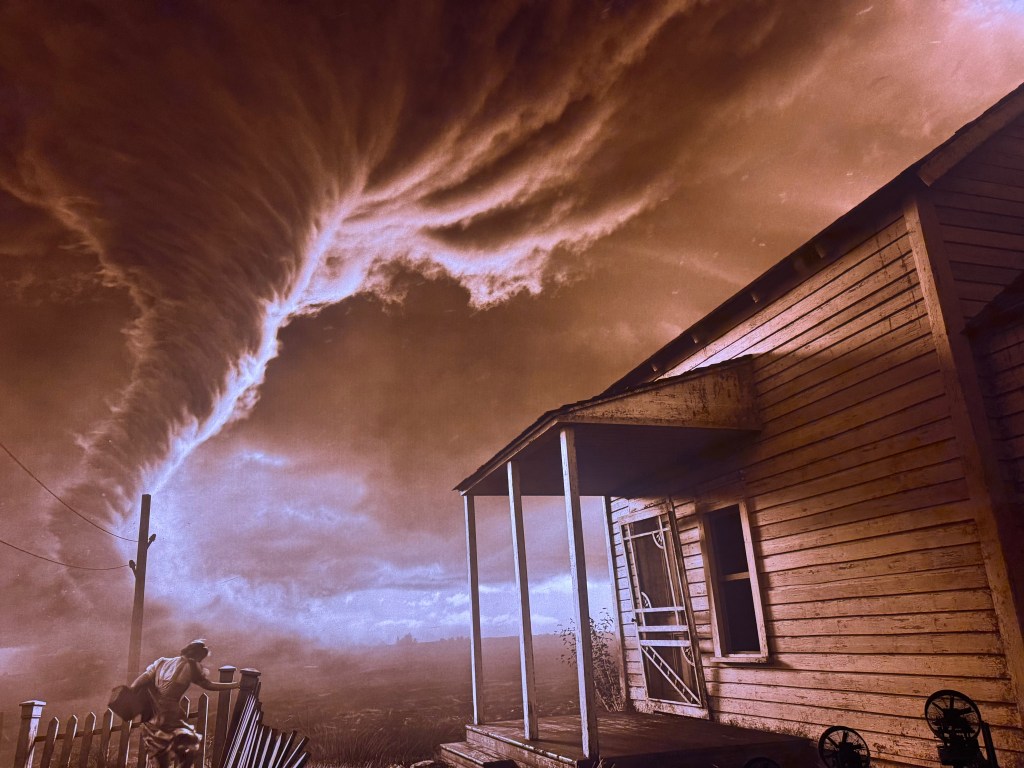
As the Sphere production introduces unforgettable characters like The Scarecrow, The Tin Man, and the Cowardly Lion, some fans will tear up with the joy of seeing them in the immersive qualities of the Sphere. Viewers will feel the wind of the storm as it sweeps across the Sphere’s dome.
The special effects are amazing. You feel the wind of the hurricane, catch a fake apple from a forest of talking trees that complain about travelers picking their apples, and feel the heat from a fire in the witch’s castle. This is a tour de force of the Sphere’s potential.
Good luck and safe travels, if you have the time and inclination to visit, go see Dorothy and her companions in Dolan’s immersive theatre.
Didion reminds one of Yeats Poem to warn society of civilization’s collapse. Yeats wrote “The Second Coming” after WWI and the Spanish Flu. Seems similar to today’s political war and the Covid pandemic.
Books of Interest Website: chetyarbrough.blog
Slouching Toward Bethlehem
Author: Joan Didion
NarratedBy: Diane Keaton
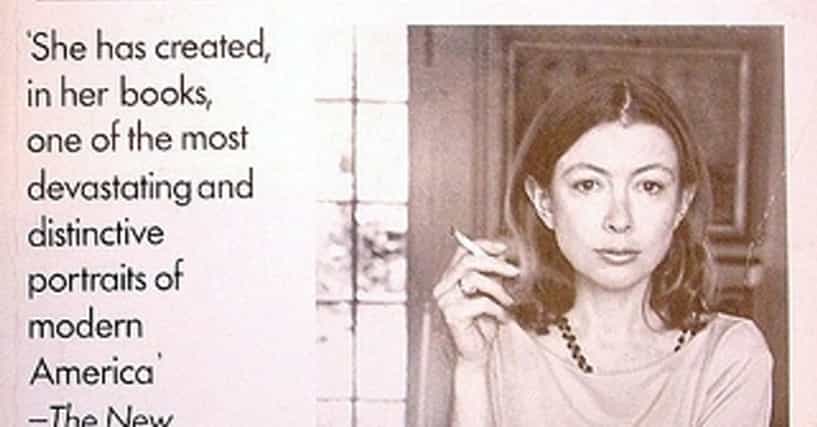
Joan Didion (Author, American writer and journalist, published in The Saturday Evening Post, National Review, Life, Esquire, and The New Yorker. She also wrote screenplays for “The Panic in Needle Park”, “A Star is Born”, and “Upclose and Personal” as well as receiving a National Book Critics Circle Award and a Pulitzer. 1934-2021.)
Diane Keaton (Actor, Academy Award winner, BAFTA recipient, two-time Golden Globe, and Tony Award winner. 1946-2025.)
Diane Keaton died yesterday.
Several years ago, I purchased “Slouching Toward Bethlehem” without reading it until Keaton had done an audiobook’ narration of it. “Slouching Toward Bethlehem” illustrates Didion’s skill as an essayist and writer while Keaton’s many acclaimed movies show how accomplished both women have been in their lives.
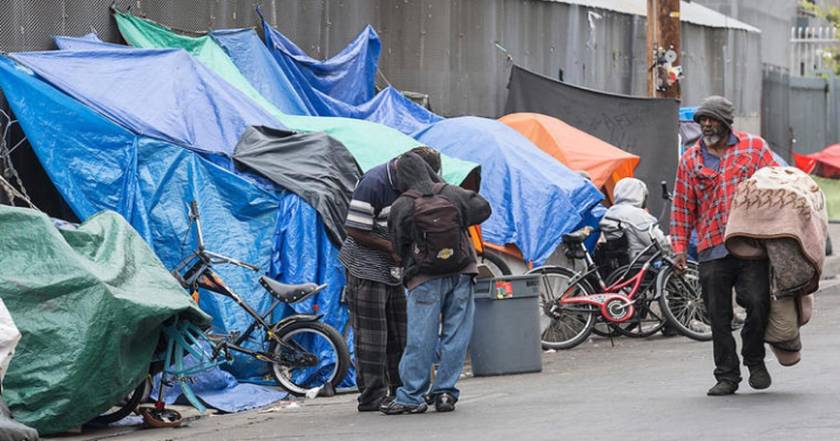
“Slouching Toward Bethlehem” is interesting because it offers an interpretation of why homelessness is so much more obvious in America than other countries.
Having lived in different areas of the United States, the appearance of homelessness in the big cities of America is disgraceful. Visiting the Baltics, Norway, Finland, China, and Japan in the last few years illustrates how badly America is handling homelessness. With the exception of Norway, per capita incomes in the United States are more than twice the incomes of the aforementioned countries. Norway’s per capita income is $87,925 while America’s is $82,769. China’s per capita income is $13,122 but walking through major Chinese cities, there are no people sleeping on the streets. The Baltics per capita incomes range from $22,000 to a little more than $30,000. There is poverty in all these countries, but their leaders and societies have found a way to keep their citizens housed. This is not to argue their poor are not faced with hardship but to show how poorly American society is treating its homeless.
There seems a generational divide in Didion’s “Slouching Toward Bethlehem”.
The beat generation of the 1960s for which Timothy Leary coined the phrase “Turn on, tune in, drop out” alluded to in Didion’s essays may offer a partial explanation. Many of us experimented with drugs in the 60s but there has to be more than that to explain what has happened to big cities in America. Part of the answer is the change in income for the middle-class. In the 1960s middle-class incomes were strong and broadly shared. In the 21st century, middle class incomes have stagnated. CEO’s income in the ’60s made 20 times middle class earners but in the 21st century the ratio rose to 300-1. The rich got richer and the middleclass got poorer. Power shifted from a voting middle class to a richer upper-class that accelerated income gaps that changed election results with an income class bias.
Housing costs accelerated to new highs in the 21st century. The 1960s price-to-income ratios were 2:1 while today they are 5:1 or higher. The effort during the Obama administration to weaken standards for home buyer qualification exacerbated the greed of mortgage companies which led to a near economic collapse of the finance industry. Instead of bailing out homebuyers that could not pay their mortgages, the Obama administration bailed out mortgage companies and their owners while endorsing eviction of buyers who could not afford their mortgage payments.
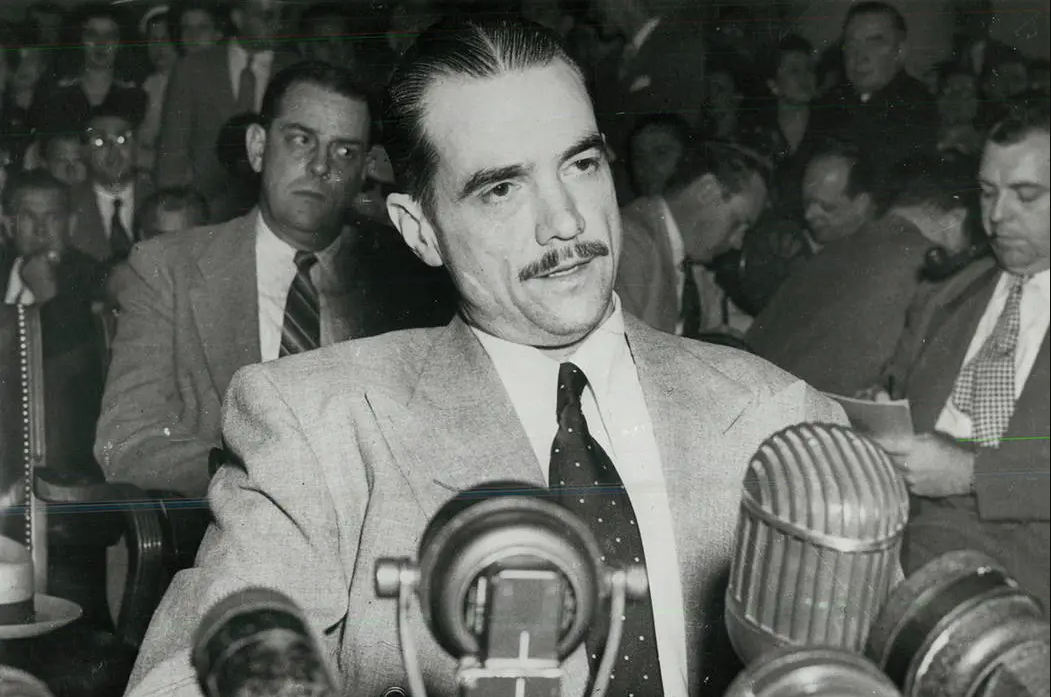
“Slouching Toward Bethlehem” writes of famous successful people like John Wayne, Howard Hughes, Joan Baez, and herself as symbols of the 1960s. She is effectively glorifying them and herself while showing how they mythologized success to a generation of young people who were turning on, tuning in, and dropping out. Image became more important than substance. Working to be great at acting, becoming wealthy by investing wisely, singing about peace, justice and non-violence to make money, and writing about societal dysfunction were money makers. Capitalizing on dysfunction of society did nothing to ameliorate it. John Wayne is only a symbol of justice in the movies and Howard Hughes inherited his wealth that allowed him to invest, sometimes unwisely and with poor personal management skills. He began investing in Las Vegas because management could be left to others. To be fair, Didion and Baez try to return something to society for their success but their efforts pale in comparison to America’s decline. Artists report facts of life but rarely offer solutions.
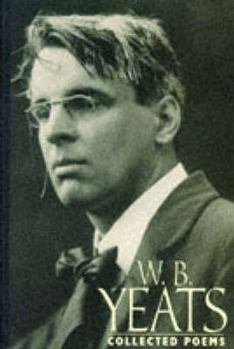
William Butler Yeats (1865-1939, Irish poet, dramatist, writer and literary critic.
W. B. Yeats Poem summarizes and exemplifies what Didion alludes to in her book.
Turning and turning in the widening gyre
The falcon cannot hear the falconer;
Things fall apart; the centre cannot hold;
Mere anarchy is loosed upon the world,
The blood-dimmed tide is loosed, and everywhere
The ceremony of innocence is drowned;
The best lack all conviction, while the worst
Are full of passionate intensity.

Surely some revelation is at hand;
Surely the Second Coming is at hand.
The Second Coming! Hardly are those words out
When a vast image out of Spiritus Mundi
Troubles my sight: somewhere in sands of the desert
A shape with lion body and the head of a man,
A gaze blank and pitiless as the sun,
Is moving its slow thighs, while all about it
Reel shadows of the indignant desert birds.

The darkness drops again; but now I know
That twenty centuries of stony sleep
Were vexed to nightmare by a rocking cradle,
And what rough beast, its hour come round at last,
Slouches towards Bethlehem to be born?
Didion reminds one of Yeats Poem to warn society of civilization’s collapse. Yeats wrote “The Second Coming” after WWI and the Spanish Flu. Seems similar to today’s political war and the Covid pandemic.
Travelling to Japan is an enlightening trip. It may change your life. On the other hand, it may not. It has taken many generations for Japan to become what it is today. By age, America is a baby just learning to walk.
Travel
Written by Chet Yarbrough
Mt. Fuji–on our way to Tokyo from Hiroshima, Japan.
Our brief 3-week visit to Japan this year was a pleasant escape from the hostility of a changing immigration policy in America. Our 15-member group of travelers is guided through Japanese culture by three interesting Japanese citizens, i.e. one–a young Japanese student of the piano; two, an American who has lived in Japan for many years, and three, a Japanese’ Hiroshima guide who is an experienced world traveler and guide to her country. All three showed different aspects of a truly fascinating and beautiful country.
A modern bullet train in Japan transported us at 300 miles per hour from our arrival point to Tokyo.
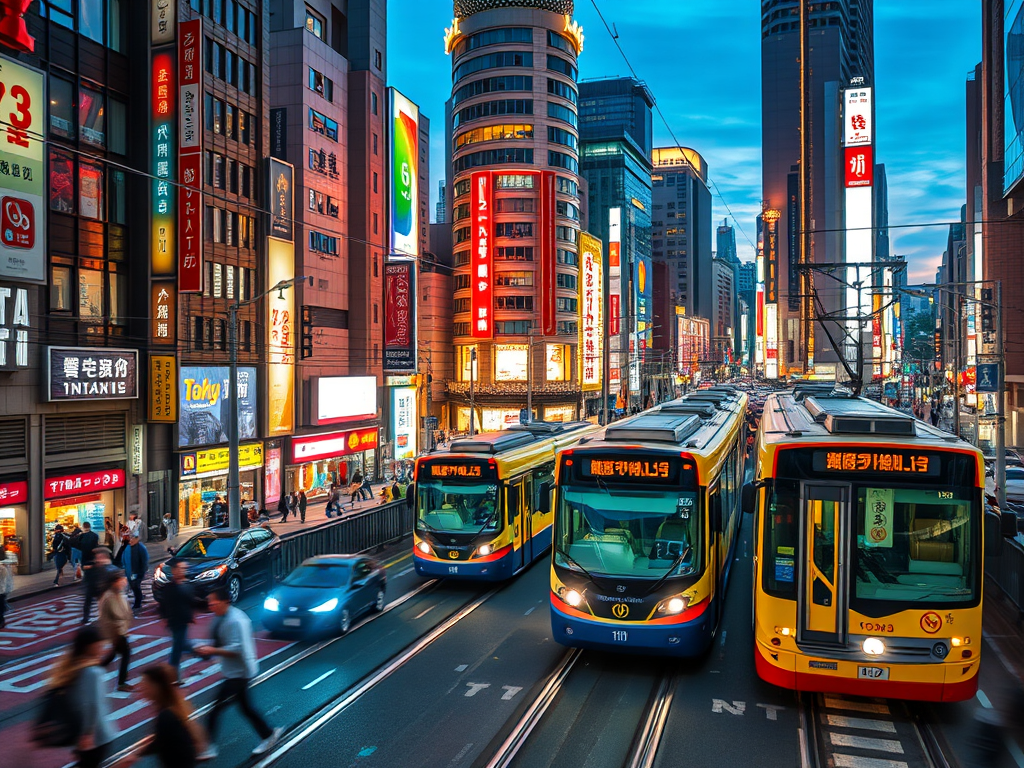
Two of the most striking experiences for me are 1. seeing the incredibly modern infrastructure of Japan and 2. the intelligent use of a densely populated environment. Both of these experiences offer examples to the world of what can be done to accommodate continued population growth. New York City has a population of 8.48 million people while Tokyo’s metropolitan area accommodates 37 million. As an observer of society, my perception is that Tokyo is friendlier, cleaner, and safer than New York City. This is not to disparage New York. New York is one of the greatest entertainment capitols of the world, along with London, but Japan demonstrates how culture makes a difference in how people live.
Tokyo is amazingly clean with shopping for every person’s interest. Shopping centers and markets are busy throughout the metropolitan area. Crowds of buyers are entertained by the appearance of comic figures and pleased to find everything one wishes to buy with a bow of a business employee’s head and a smile of welcome.
Japan’s public transportation system far exceeds the ease of travel and reliability of New York and other major metropolitan cities in the United States. The highway system and high-speed rail systems of Japan put California’s and America’s fumbling public transportation infrastructure projects to shame.
As an early riser, one can see young women walking by themselves to work in the early morning. They walk down narrow side streets, without concern in Tokyo. In contrast, a woman (let alone a man) is unlikely to feel safe and secure in any of America’s big cities when alone on a street in an early morning or late night.
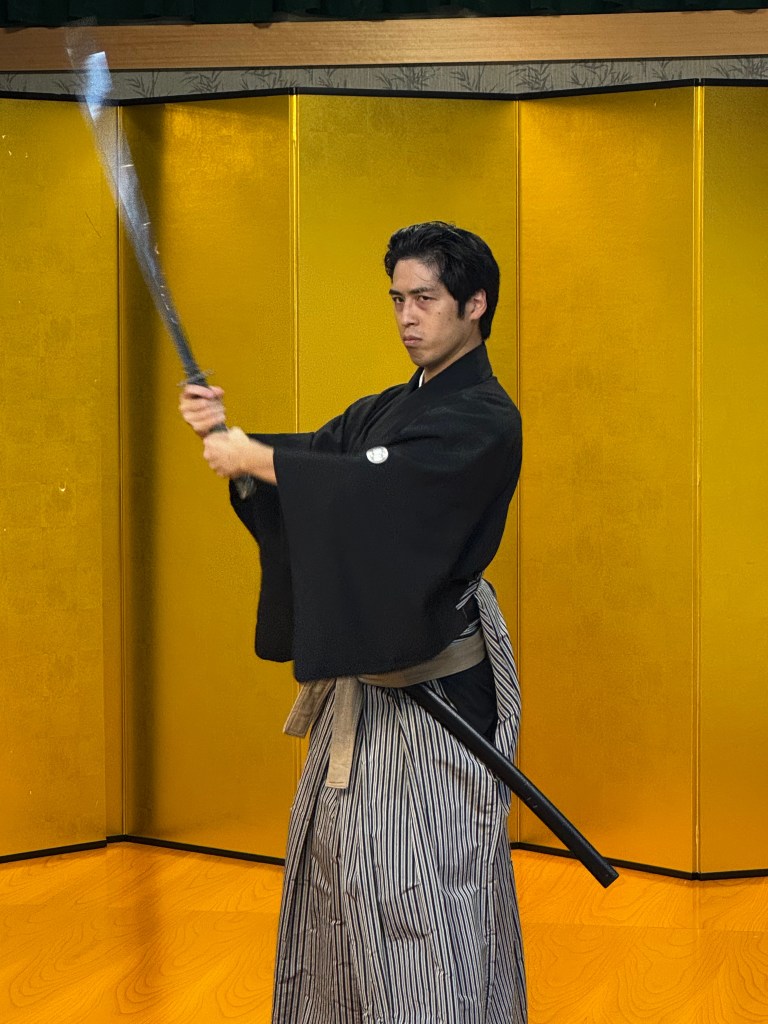
A professional demonstration of Samurai sword tradition is offered our group. After the professional demonstration, my wife demonstrates her skill but has trouble drawing a sword from her belted scabbard, a very funny demonstration for we who were too reserved to participate but entirely willing to laugh.
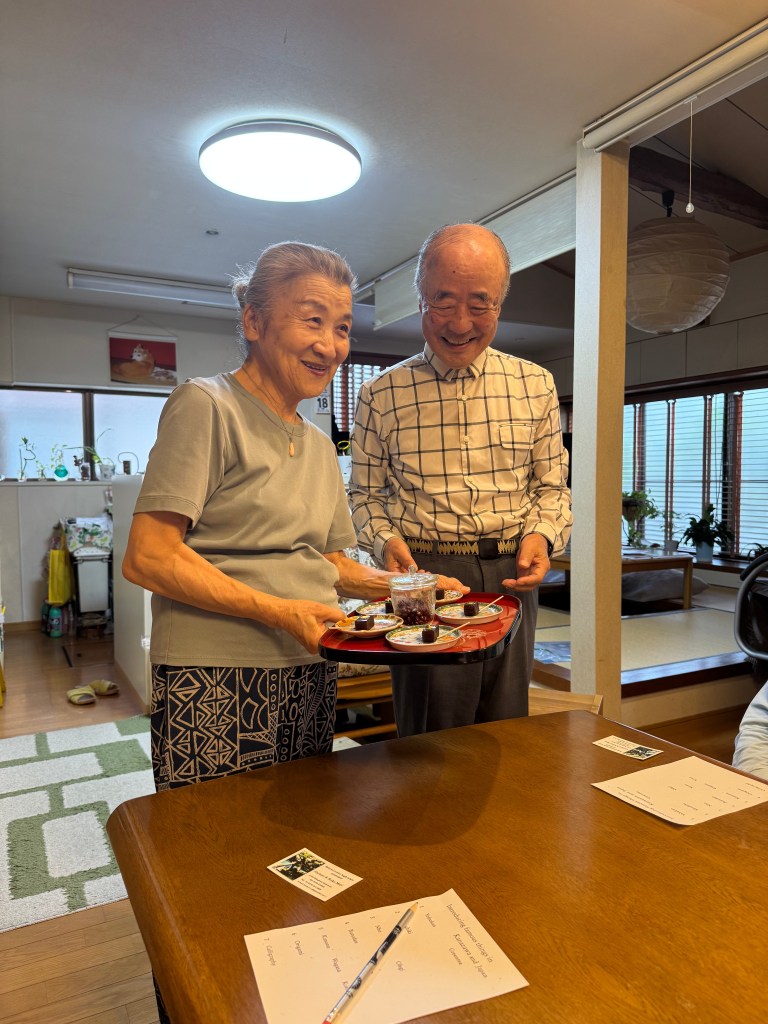
A home hosted cultural demonstration is given to four of us. Our hosts are a retired Japanese professor and his wife, who is a professional musician. They entertained us for an hour with music and a demonstration of Kabuki theater.
Undoubtedly, there are many Japanese citizens who do not choose to entertain foreign guests but the respect and deference to strangers provided by this couple is a lesson that every American host or hostess could learn when visited by a tourist from another country.
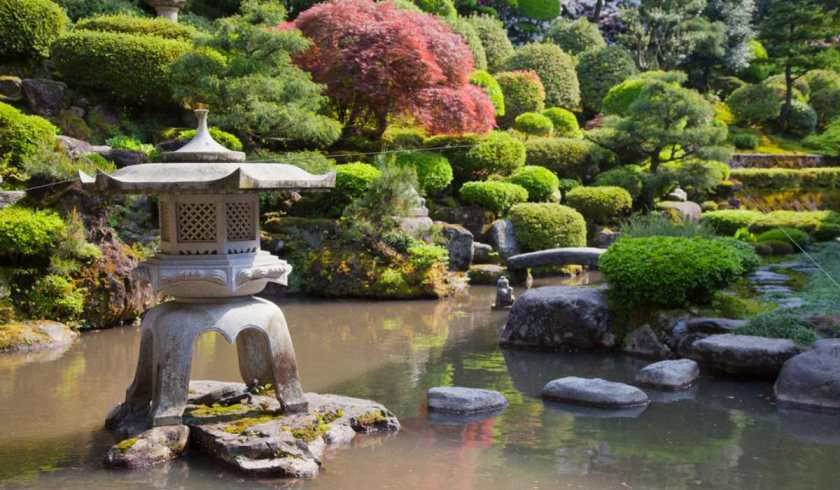
As one travels across Japan, the cities are densely populated but every open space is either bountifully landscaped or prepared for farming or construction.
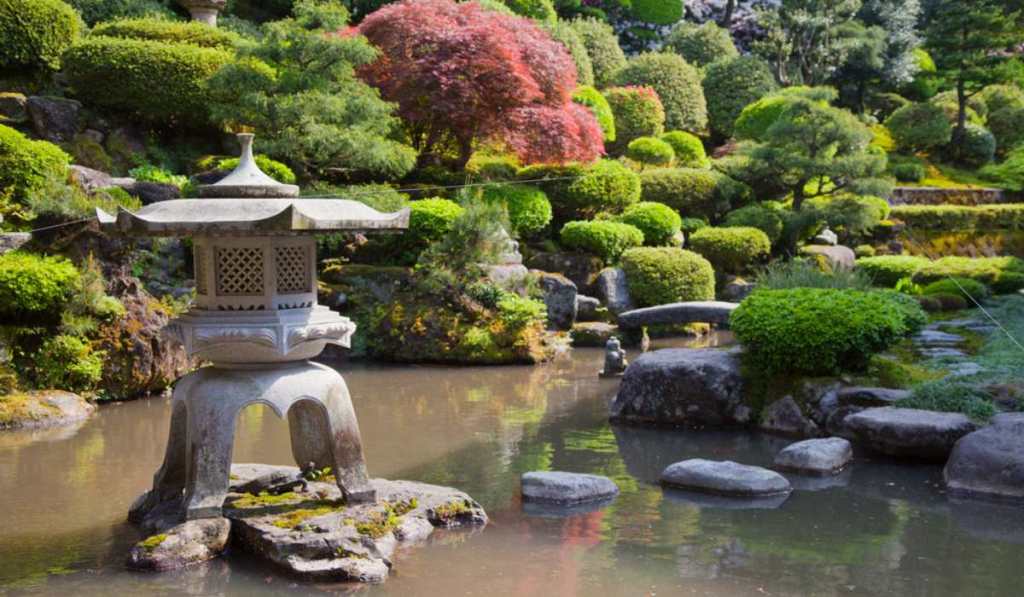
A Japanese garden.
In Japan, there is an obvious effort to create garden areas as a refuge from urbanization. It is as though individual businesses are willing to provide space for mini-New York’ Central Parks to balance nature with urbanization. Travelling across Japan, one can view the care of Japanese forests, garden areas, and open spaces between cities. Highways are designed to minimize noise from automobiles on heavily travelled throughfares.
Japan has government policies that keep homelessness invisible by providing housing for the indigent. It is not a perfect system as is noted by one of our guides who explains there is little help to transition the homeless to working lives. Nevertheless, one feels there is a public acceptance of cost for housing of the poor. America could use some of that compassion.
One wonders what makes the difference between cultures. Is it religion? Most Japanese are either Shinto or Buddhist (92.3%). The confluence of these two beliefs is evidence of a common belief that life involves suffering but that everything in nature is a celebration of life rather than preparation for an afterlife. To Japanese, one must have harmony with nature, sincerity, and celebration of life rather than salvation or a beatific afterlife. The Japanese strive to achieve peace within themselves. The ideal is to achieve what is call nirvana, a peace beyond suffering.
The Toril Gate above and the Wheel of Dharma below are the symbols of Shinto and Buddhist belief.
I am unsure of the licensing requirements for renting a car in Japan. However, one of our guides advised that he had tried to get a driver’s license twice. He advised the written test is a snap. However, he flunked the driver’s test both times and still has no Japanese driver’s license. After travelling around Japan in taxis and buses, it becomes easy to understand why a driver’s test is so difficult to pass. The roads of Japan are often quite narrow. It is necessary to wait for oncoming traffic before you can proceed. The judgement of a driver is called upon in many narrow road circumstances and only practice reveals the appropriate maneuvers. Added to that complication is the expense of the test when seeking a driver’s license. With a driver test, the cost is $2,000. Traffic is heavy in the major cities and in some rural areas. As a visitor, public transportation is excellent–so considering a car rental is problematic, if not unwise.
Travelling to Japan is an enlightening trip. It may change your life. On the other hand, it may not. It has taken many generations for Japan to become what it is today. By age, America is a baby just learning to walk.
Here’s wishing you a great trip if you choose to go.
Gaige’s writing is crisp, insightful, entertaining, and highly relatable. It gets to the heart of life’s struggles without being judgmental or accusatory.
Books of Interest Website: chetyarbrough.blog
Heartwood
Author: Amity Gaige
NarratedBy: Justine Lupe & 5 more
Amity Gaige (Author, lecturer in English at Yale University, 2017 Guggenheim Fellow in Fiction.)
“Heartwood” is a well written, creative, and insightful novel about human fragility. It begins with a lost hiker on the Appalachian Trail. One may recall newspaper articles about this trail where many famous and infamous people have been known to travel. What is less well known is the trail is 2,197-miles long and crosses 14 states. Amity Gaige writes a story of one lost hiker, but it is much more. Of course, it is about search and rescue that reveals how complicated it is to find someone who is lost in a wilderness. In a public hiking trail, at least in the pre-Trump era, national government employees were available to conduct search and rescue services in national parks. There are many local volunteers who aide in these searches, but it is managed by experienced park rangers. Gaige reveals the inner fears and reality of one who is lost in life as well as in a wilderness. The creativity of the author is in her reveal of human nature. All people struggle to live lives that mean something but exhibit physical and mental flaws that get in the way.
The lost hikers name is Valerie Gillis. The primary searcher is Bev Miller, a lieutenant in charge of search and rescue teams when someone is lost on the Appalachian Trail. Those who are rescued, and those who rescue, live lives of equal unpredictability. (Bev Miller’s mother is in a health care facility for the elderly who are troubled by dementia.) The hiker is seeking solace from her personal life by taking a hike on the Trail with a friend who is a substitute for her recently divorced husband. Her and her friend become separated, and she wanders off the Trail. She becomes disoriented and cannot find her way back to the well-traveled path but, as a trained nurse, she copes with her isolation better than most who might make the same mistake. She keeps her wits about her, but an unexpected event changes the course of her life.
Military training.
The area in which Gillis becomes lost is near a security encampment used to train soldiers for wilderness’ survival. The training is harsh and some of the inductees choose to go AWOL, absent without leave. An AWOL’ escapee who is having a nervous breakdown comes across Gillis. His psychological imbalance influences him to imprison Gillis making her unable to find her way back to the Trail. Eventually, her antagonist leaves but Gillis’s physical deterioration advances to the point of near starvation.
The author is exploring the idiosyncrasies of life. Many incidents that lead to the rescue of Gillis show how every human being deals with events in life that are beyond their control. One elderly woman who exhibits symptoms of dementia becomes a clue to the location of Gillis. This elderly woman’s life shows one of many circumstances in life that are beyond one’s control. This dementia burdened woman recovers some of her lost faculties to report having talked to a young man who is being treated for psychological imbalance. He tells of meeting a lost hiker in the wilderness. Until that clue is revealed. no one knew the correct area in which to search for Gillis.
There are many human relationship strengths and weaknesses revealed in Amity Gaige’s “Heartwood”. Gaige’s writing is crisp, insightful, entertaining, and highly relatable. It gets to the heart of life’s struggles without being judgmental or accusatory.
There is more death to come in the last chapters of “Wild Dark Story”. The underlying gloom about the fate of earth and civilization may ware on some who may become bored with the author’s story.
Books of Interest Website: chetyarbrough.blog
Wild Dark Shore (A Novel)
Author: Charlotte McConaghy
NarratedBy: Cooper Mortlock & 3 more
Charlotte McConaghy (Author, writer born in Australia in 1988, Graduate Degree in Screenwriting and Masters in Screen Arts.)
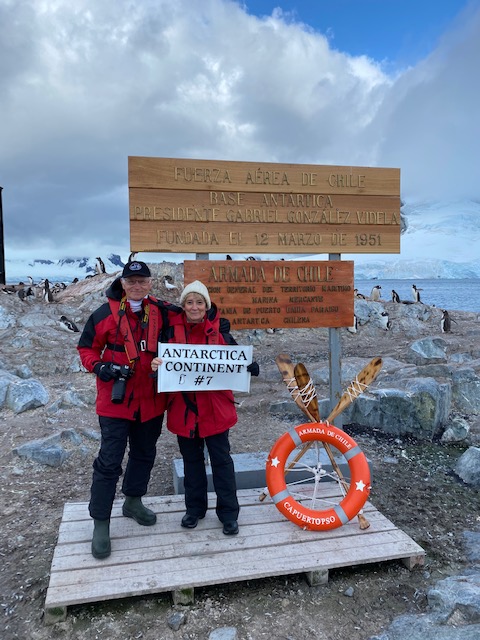
This is a novel for environmentalists with a survivalist mentality but it is also a tale of mystery and human relationships. McConaghy’s education makes “Wild Dark Shore” feel like a screenwriter’s idea for a movie. She paints a word-picture of a cold wilderness island sinking into oblivion because of climate change. It reminds one of visiting a weather station in Antartica. One is mesmerized by seabirds flying in a brutal wind, penguins flocking across an icy landscape, and sea lions sunning themselves on broken islands of ice. If you are lucky on your voyage, you will see a pod of whales. McConaghy paints a picture of a forbidding landscape once inhabited by natives that became a lighthouse for ships of the sea. At the time of the author’s story, it became an outpost for environmental observation and seed preservation.
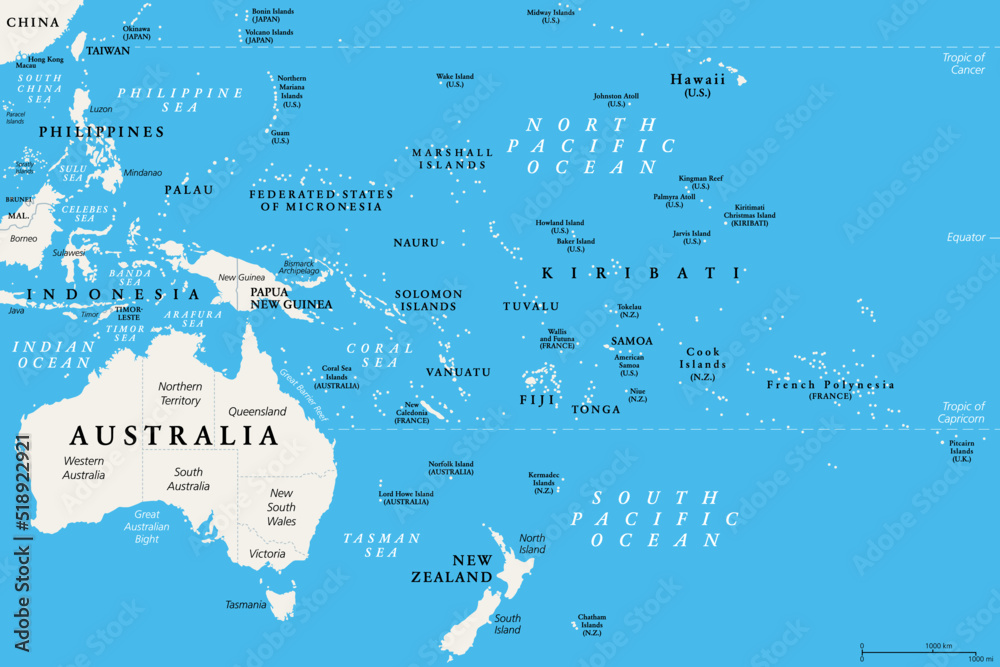
Islands around Australia.
“Wild Dark Story” is a mystery about a lost husband and a tough-minded wife who wants to know what happened to him after receiving three letters expressing fear about his assignment and life at the station. The station is being closed down by a family working at the island station. There is a father, two sons, and a daughter. The father’s wife has died. The task of closing the station is perilous but this family has lived on the station for several years and is intimately aware of the dangers and what must be done to ready it for abandonment. Their evacuation plans are interrupted when a vessel crashes near the station. The vessel carries the wife of the person who received the three letters from her husband. She survives the vessel’s destruction with wounds from the rocky shoreline. The pilot of the vessel is dead. The woman is rescued by the family that is preparing for evacuation.
Environmental degradation.
“Wild Dark Story” has some appeal to environmentalists because it is a dramatic presentation of the fragility of civilization in the face of rising tides and a warming planet. The island is set up, presumably by either a government or corporation that wishes to preserve unique plants from seeds in a cavern designed for that purpose. Preservation is being shown as a form of resistance to environmental degradation.
Leaving an isolated land.
In conversations amongst the family preparing for evacuation, the loss of the woman’s husband may have had something to do with the family that is closing the station. The father is reluctant to tell what happened and suggests his children should not say anything about it to the woman.
The new arrival’s husband was a biologist responsible for seed preservation.
There was a fire that burned down their home on the mainland. It was built by the hands of the woman who is trying to find out what happened to her husband. They had separated because the fire and total loss of the home had fractured their relationship. Her husband’s fate is never fully confirmed, but the novel strongly implies he may have died by accident, suicide, or possibly through a cover-up related to the dismantling of the seed vault.
Her husband had bonded with the youngest of the three children. This is interesting because one of the last fights he had with his wife before he left was about her not wanting to have a child.
Rescue or not.
At this point, the novel becomes too long. The mystery of her husband’s death may have been because of psychological imbalance but no definitive answer is given. The theme of the book is that isolation warps truth and identity and that grief is a force that drives human beings to fall apart or renew their lives. There is more death to come in the last chapters of “Wild Dark Story”. The underlying gloom about the fate of earth and civilization may ware on some who may become bored with the author’s story.
Technology is a key to social need which has not been well served in the past or present and could become worse without pragmatic accommodation.
Books of Interest Website: chetyarbrough.blog
Daughters of the Baboo Grove (From Chian to America, a True Story of Abduction, Adoption, and Separated Twins)
Author: Barbara Demick
NarratedBy: Joy Osmanski
Barbara Demick (Author, American journalist, former Beijing bureau chief for the Los Angeles Times.)
This is a brief and fascinating historical glimpse of a government policy gone awry. Like America’s mistaken policies on immigration, Barbara Demick’s story of China’s one-child policy traces the effects of government overreach. Demick tells the story of a rural Chinese family who births twin sisters during the time of China’s unjust enforcement of their one-child policy. One sister is abducted by Chinese government officials, and is adopted by a family in Texas. The ethics of an inhumane Chinese government policy and the perfidy of free enterprise are exposed in Demick’s true story of two children’s lives.
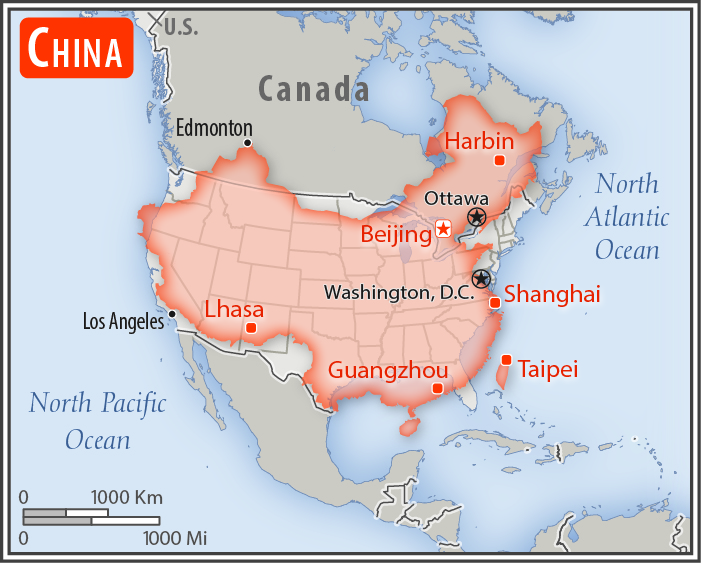
The territorial size of China in respect to continental America.
China’s one-child policy leads to a Chinese criminal enterprise to capitalize on kidnapping and selling children born to families that could not afford the fines for having more children than the law allows. Undoubtedly, most children born were cherished by their parents, but the hardship of life and human greed leads to unconscionable human trafficking. Kidnapping became a part of a legal and criminal enterprise in China. Government policy allowed bureaucrats and scofflaws to confiscate children from their parents and effectively deliver or sell children to orphanages or people wanting to adopt a child. Demick recounts stories of grieving parents and grandparents that cannot get their children back once they have been taken.
Child trafficking, broken families, loss of personal identity, human shame, and the immoral implication of other countries interest in adopting children are unintended consequences of a poorly thought out and implemented government policy.
Demick becomes interested in this story because of a message she receives from a stepbrother of an adopted Chinese sister that has a twin that lives in China. Because of Demick’s long experience in visiting and reporting on China, she had a network of people she could call. Using adoption records, Demick is able to find the Texas stepsister who had been kidnapped when she was 22 months old. She was trafficked to an orphanage in the Hunan Province of China. Years later, through messaging apps, the twins communicated with each other and shared their photographs. They eventually meet in China in 2019.
One is hesitant to argue a government policy is a unique act of China when every government makes policy decisions that have unintended consequences.
America’s policy decisions on immigration are a present-day fiasco that is as wrong as the one-child policy in China’s history. The one-child policy is eventually rejected by the Chinese’ government but Demick’s book shows how bad government policy has consequences that live on even when they are changed by future governments. America’s policy on immigration will be eventually reversed but its damage will live on.
Getting back to the story, Demick is instrumental in having the mother of Esther (aka E) and the twins meet in China.
One is hesitant to argue a government policy is a unique act of China when every government makes policy decisions that have unintended consequences. The twins are initially reticent but warm to each other in a way that bridges the cultural and language divide between the sisters. The two mothers see their respective roles in their daughter’s lives. E and her identical twin, Shuangjie, are reserved when they meet because of the cultural distance that was created by E’s adoption.
E. appears more confident than Shuangjie who is more reserved and less assured.
However, Demick suggests they seem to mirror each other in subsequent meetings. One feels a mix of emotions listening to this audiobook version of “Daughter’s of the Bamboo Grove”. They have grown up in different environments but seem to have been raised in similar economic circumstances, though the two economies are vastly different in income per household, the two appear to be raised in similar economic classes.
Every person who reads/listens to “Daughter’s of the Bamboo Grove” can view the story from different perspectives.
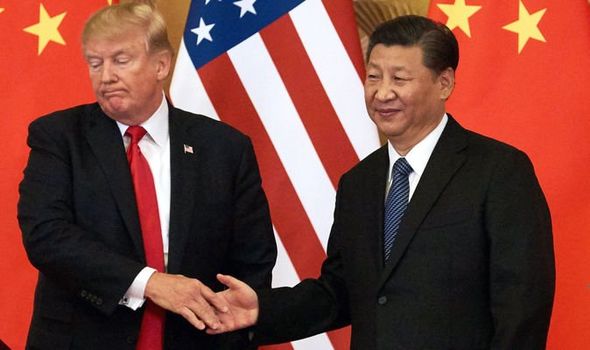
There is the perspective of identical twins raised in different families, cultures, and histories. How are identical twins different when they are raised by different parents and in different cultures? Another perspective is that Xi and Trump have had dramatic effects on the societies their policies have created. The Twin’s meeting in 2019 is one year after my wife and I had visited China. Xi had become President after his predecessor began opening China’s economic opportunities. Two incidents on the trip when Xi had become President come to mind. The first is the feeling one has of being monitored everywhere and the internet restrictions when used to ask questions. The second was an incident in a crowded Chinese market when I was approached by a beefy citizen who raised his arms and seemed to be angrily talking to me in Chinese which I sadly did not understand. The distinct impression is that I was not welcome. This was a singular incident that did not repeat in our 21-day tour, but it seemed like an expression of hostility toward America.
This listener/reader thinks of the unintended consequences of Trump’s treatment of alleged illegal immigrants.
Trump’s immigration policy is similar to China’s earlier mistake with the one-child policy. America’s, China’s, and Japan’s economies are highly dependent on youth which is diminished in two fundamental ways. One is by public policy that restricts birth, and the other is immigration. Freedom of choice is a foundational belief in democracy while considered a threat in autocracy. In America today, it seems there is little difference between America, Japan, or China in regard to government policy that threatens the future. All have an aging population that can only be aided by younger generations. Even though manufacturing may become less labor intensive, public need in the service industry will grow. Technology is a key to social need which has not been well served in the past or present and could become worse without pragmatic accommodation.
Ravina’s history is helpful in preparing for a trip to Japan because it offers some basis for comparison and understanding.
Books of Interest Website: chetyarbrough.blog
Understanding Japan (A Cultural History)
Lecturer: Mark J. Ravine
By: The Great Courses: Civilization & Culture
Mark J. Ravina (Professor of History at Emory University with an M.A. and Ph.D. from Stanford.)
In preparation for a trip to Japan this fall, it seems prudent to hear from someone who knows something about Japan’s culture and history. Professor Ravina specializes in Japanese history with focus on 18th and 19th century Japanese politics; however, these lectures go farther back and forward than his specialty. There is so much detail in these lectures, one is unable to fairly summarize what Ravina reveals.
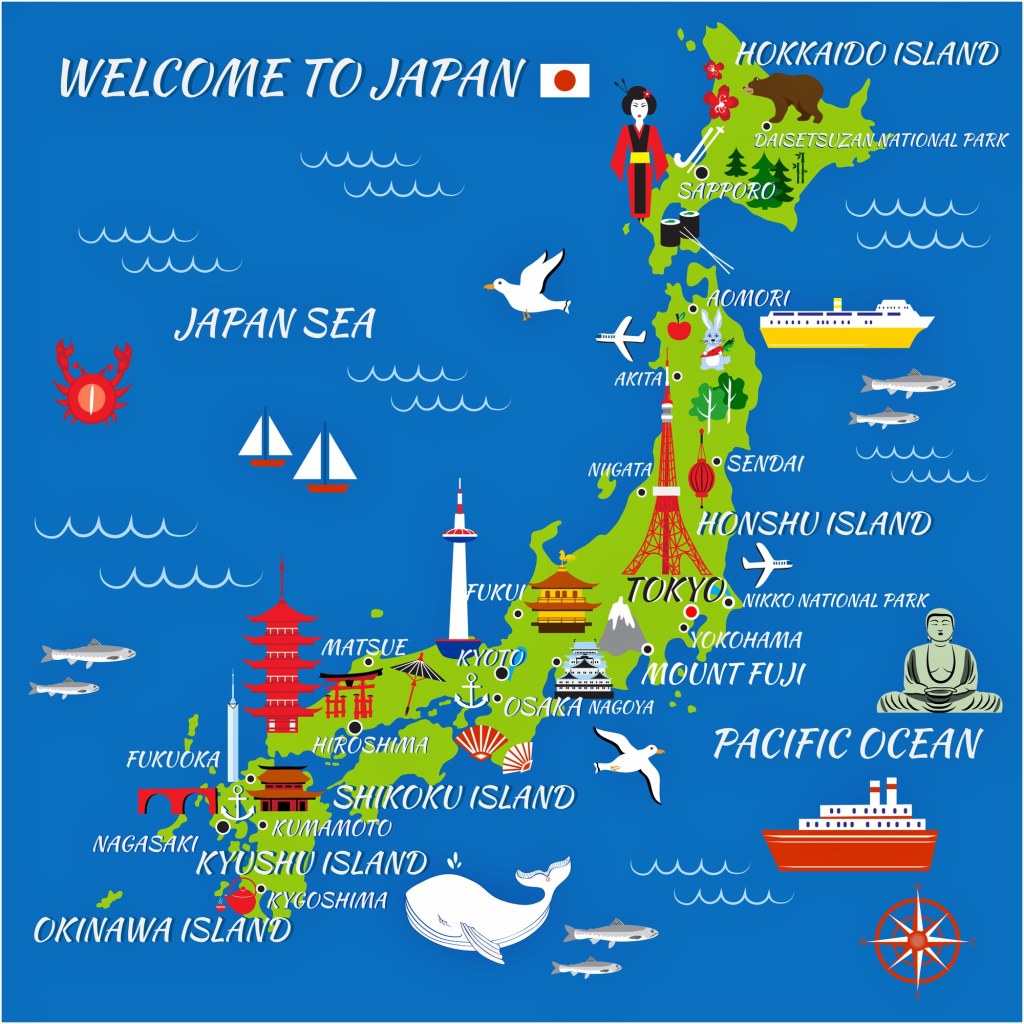
Japan is an archipelago made up of 14,125 islands with 260 of which are occupied. The four main islands are Honshu (the home of Tokyo, Kyoto, and Osaka), Hokkaido to the north, Kyushu to the south, and the smallest Shikoku (between Honshu and Kyushu).
Like the history of any nation that has existed since the 4th century CE, Japan’s culture has evolved based on influences that came from within and outside its borders. From indigenous beliefs to exposure to areas outside its territory, Japan has changed its traditions and culture. The rule of Japan has ranged from imperium to a battle-hardened warrior class to a popularly elected intellectual class influenced by internal and external societal and political events. At times, each social class has offered both stability and conflict. In the 20th century, of course, Japan’s attack on Pearl Harbor dramatically changed its economy and influenced its society.
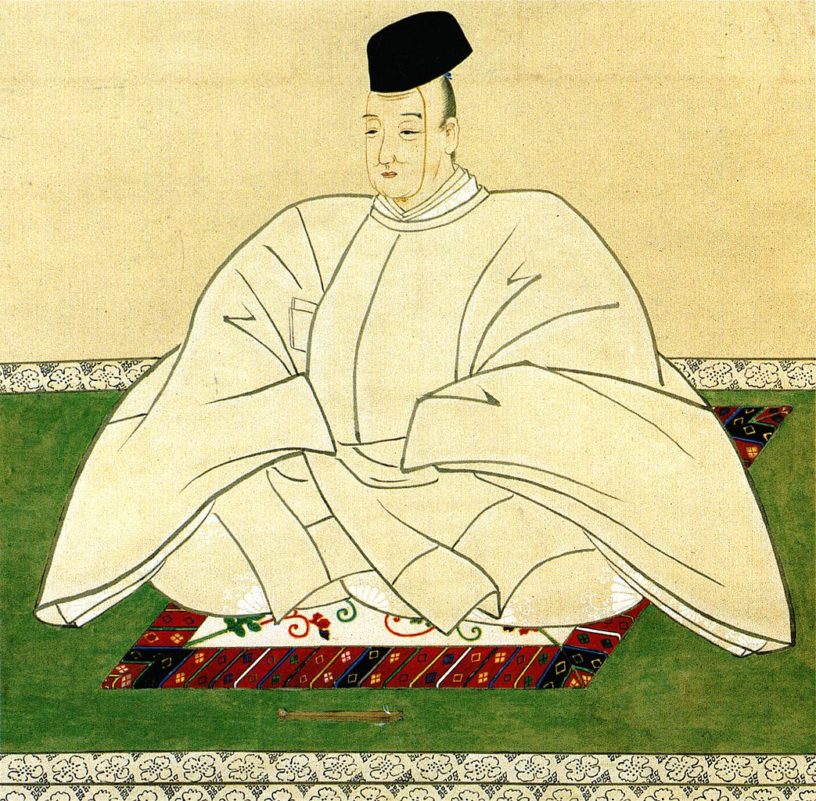
Japanese Emperor.
In Japan’s early centuries, an imperial and aristocratic class rose to rule Japan. The Asuka, Nara, Helan emperors during the Fujiwara era (538-1185) were respected and revered but the rise of the samurai class turned emperors into influencers more than exercisers of power. Power becomes centralized in a society that is highly stratified with nobility, Buddhist clergy, samurai, farmers, and artisans. Before 1185, territorial regents developed their own armies by relying on feudal lords who had their own warrior clans that became the fierce samurai of legend and reality.
As regents of Japan gained power and influence, emperors became symbols of culture more than centers of power. Rule and administration of territories became reliant on the power of a samurai class that at first supported the regents but soon became the true rulers of Japan.
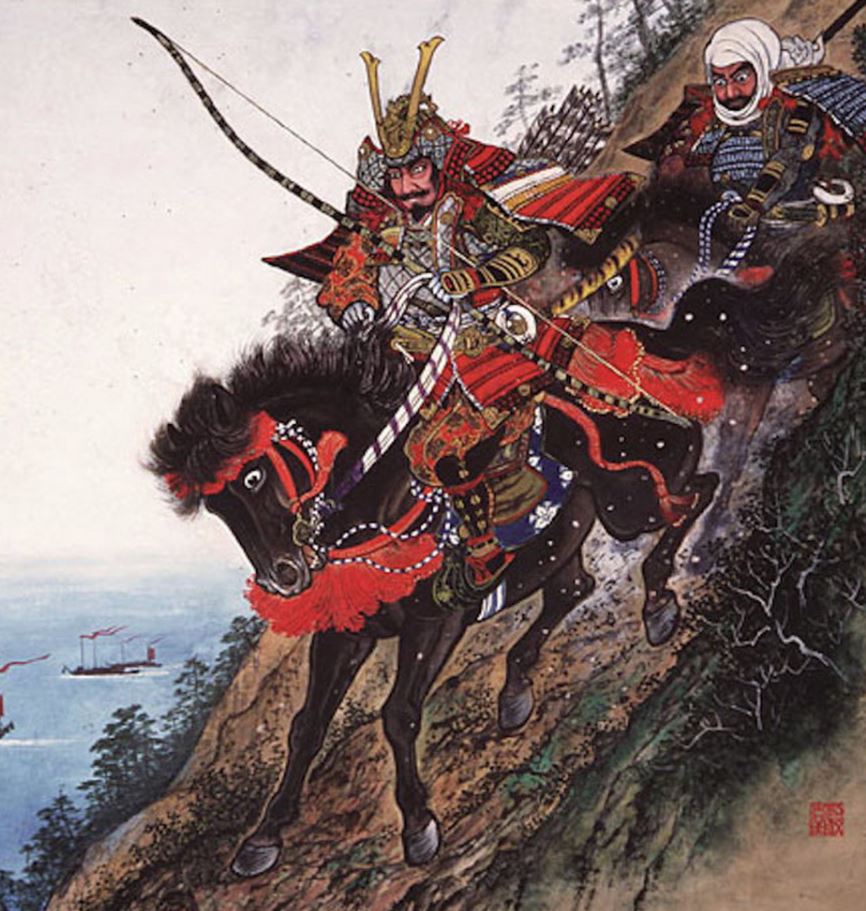
Loyalty, honor, and focus on victory or death changed the management class and encouraged society to revere a Zen aesthetic, a belief in simplicity, naturalness, imperfection, and quiet depth. The samurai became a power behind the thrown in the 12th century and eventually the de facto rulers of Japan with emperors becoming more ceremonial. Leading samurai became Shoguns, hereditary military rulers of Japan. Emperors were revered, but their power diminished with growing influence of Shoguns that held power for nearly 700 years from 1185 to 1868.
Samurai leadership unified Japanese society.
Ravina explains the samurai period of Japan matured in the 12th century which evolved into rule by the strongest. Samurai influence shaped the political, social and philosophical identify of the people. In what is called the Edo period of the samurai from 1603 to 1868, there were long periods of peace and prosperity like that of the Tokugawa shogunate in the modern-day Tokyo area of Japan. The Edo period lasted for 250 years. Literacy grew during this period and was tied to governance, law, and moral instruction. Religious practices became more ritualized with meditation and subtlety different spiritual beliefs. A merchant class is formed during this period and the arts, like calligraphy and theatre performances, became more widely practiced. Kabuki theatre becomes an entertainment with a reputation ranging from the ethereal to debauched.
Ravina explains samurai values are not abandoned but are recast to focus on industrialization of Japan in the 19th century.
By the end of the ninetieth century, 95% of the citizens had been educated in schools, compared with just 3% in 1853. The samurai became leaders in modern institutions and businesses. They followed a samurai code called Bushido with core values of rectitude, courage, benevolence, respect, honesty, honor, loyalty, and self-control. Emphasis is put on living with purpose, discipline, and moral clarity.
A Japanese garden.
Ravina notes Japanese culture is exemplified by garden creations that represent the religious and philosophical ideals of its residents. The Japanese take great pride in their tea gardens, rock gardens, strolling gardens, some of which have become UNESCO heritage sites. The Japanese revere nature because it represents the Zen principles of simplicity, naturalness, imperfection, and the depth of a quiet life. Gardens are considered spiritual and moral spaces for quiet contemplation.
Ravina suggests Japan, like America and most nations of the world, has not abandoned its past but has adapted to the present based on what has happened in its past. Ravina’s history is helpful in preparing for a trip to Japan because it offers some basis for comparison and understanding.
Mahaffey is a supporter of nuclear energy and its potential for earth’s energy needs. He argues fission can be made a useful source of energy while fusion research holds the best opportunity for humanity’s future.
Books of Interest Website: chetyarbrough.blog
Atomic Adventures (Secret Islands, Forgotten N-Rays, and Isotopic Murder-A Journey into the Wild World of Nuclear Science.)
By: James Mahaffey
Narrated By: Keith Sellon-Wright
James Mahaffey (Author, Research scientist at Georgia Tech Research Institute)
“Atomic Adventures” is a reminder of the race for the atomic bomb, its wide pursuit by nations of the world, and research for the holy grail of atomic fusion. Mahaffey’s science explanations are tedious for non-scientists, but his history of the secrets and use of atomic energy are interesting and surprising.
The United States, with the help of the UK, may have been first to acquire the atom bomb in 1945, but eight more nations acquired it by 2006.
United States: Acquired in 1945.
Russia (formerly the Soviet Union): Acquired in 1949.
United Kingdom: Acquired in 1952.
France: Acquired in 1960.
China: Acquired in 1964.
India: Acquired in 1974.
Israel: Believed to have acquired in the late 1960s, though it maintains a policy of deliberate ambiguity.
Pakistan: Acquired in 1998.
North Korea: Acquired in 2006
It is somewhat ironic that Pakistan did not acquire the atom bomb until 1998 when Pakistan’s “father of the bomb”, Abdul Qadeer Khan, became a rich man by selling technological know-how of the bomb to nations like North Korea, Libya, and Iran.
Abdul Qadeer Khan (1936-2021, father of Pakistan’s atomic weapons program, died at age 85.)
As a singular discovery, Einstein’s E = mc² offered a dual opportunity for the world, i.e., destruction and/or survival of the human race. The bomb suggests destruction while nuclear fusion offers an inexhaustible energy source that could reverse global warming and rocket human beings to other worlds.
Mahaffey notes there were Japanese, as well as better known German scientists, who were working on the creation of a nuclear bomb that could destroy Allied armaments and combatants. The rush to weaponize radiation during WWII surprisingly includes research being done by Japan as well as Germany during WWII. America won the research race because of superior human and financial resources that could be marshalled to complete the scientific research and experimentation needed to perfect a nuclear weapon.
Mahaffey explores the creation and destructive history of the atom bomb.
Surprising to some listeners, Mahaffey explains Argentina’s significant effort to increase its research and development of nuclear power after WWII. Argentina created the National Atomic Energy Commision in 1950. The chief researcher, hired by President Juan Perón, was Ronald Richter (1909-1991), an Austrian-born scientist who headed their plan to create a fusion power facility. Richter fails but nuclear energy remains an important part of Argentina’s history. In the 1960s they built their own research reactors and by 1974 built their first fission nuclear power reactor, Atucha I. By 1984, they had two heavy-water reactors with Atucha I and Atucha II.
Ronald Richter (1909-1991, Austrian-born German who became an Argentine citizen who headed up the Argentine Huemul Project to create a nuclear fusion power plant. He failed, despite the millions of dollars spent to build and rebuild fusion power plants.
Yoshio Nishina (the father of modern physics research), Bunsaku Arakatsu, and Masatoshi Okochi created the so-called Ni-Go and F-Go projects to develop an atom bomb. They did not get beyond the laboratory stage because of a lack of resources, the exigency of war, and the complexity of nuclear technology. The energy of nuclear power, as shown by history, is two edged.
Yoshio Nishina (1890-1945, the father of modern physics research during WWII.)
and potentially provide a clean renewable energy source.
Mahaffey explains how research in fusion can go awry. In a news article, two chemists reported in 1989 that fusion was created in their experiment by involving heavy water (deuterium oxide) and palladium electrodes. They reported excess heat production that they believed was nuclear fusion. As with all scientific experiment, their results had to be confirmed by other scientists testing of their results in the same experiment. Mahaffey, in his role at the Georgia Research Institute, was asked to replicate the experiment. Using the same tabletop experiment, Mahaffey initially confirmed Fleishmann’s and Pons’ findings. However, no other table-top experiments found the same results. What Mahaffey finally found was that the neutron counting device that was recording increased heat was the actual source of the heat increase, not the chemical interaction between heavy water and palladium electrodes. Further research is being conducted but the U.S. Department of Energy concluded in 2004 there is no convincing evidence to support cold fusion. Tests are still being done but Mahaffey infers that research is a scientific dead end. Mahaffey and a colleague tried again in a basement of his colleague’s house to try a similar experiment and failed.
Nuclear power has the potential to revolutionize interplanetary travel. The higher efficiency and power, particularly with the perfection of fusion, will shorten travel times and make trips to Mars and beyond more feasible.
Mahaffey explains how communication will be a challenge when interplanetary travel becomes common. The distance to other planets or galaxies will impede communication because of the limits of the “speed of light”. However, the solution may lie in quantum entanglement’s experimental proof found by Clauser, Aspect, and Zellinger. The complexity of entanglement makes the theory unprovable at the time of Mahaffey’s book.
In theory, quantum entanglement suggests information (communication) may be instantaneously transmitted across galaxies without the limitations of the speed of light.
Mahaffey goes on to explain the risk of radiation in a chapter about a “dirty bomb”. Security measures used to protect the public from radiation leaks make thieves believe something valuable is being secured by government laboratories. Thieves will steal these secure containers only to find they are risking death by opening their booty. Additionally, Mahaffey notes radioactive material is often disposed of illegally and irradiates innocent people who own dump sites that received inadequately contained radioactive material.
Mahaffey is a supporter of nuclear energy and its potential for earth’s energy needs. He argues fission can be made a useful source of energy while fusion research holds the best opportunity for humanity’s future.
Freedom, once it is experienced, is an unconquerable force. Conquest of Ukraine, the Baltics, or Taiwan would be a pyric victory at a cost far in excess of a conquerors’ perceived value.
Books of Interest Website: chetyarbrough.blog
The Return of Great Powers (Russia, China, and the Next World War)
By: Jim Sciutto
Narrated By: Jim Sciutto
Jim Sciutto (Former American news anchor for ABC, national security correspondent for CNN, Yale graduate majoring in Chinese history.)
Jim Sciutto has been seen by many on television. One suspects few know he served as the Chief of Staff and Senior Advisor to the U.S. Ambassador to China between 2011 and 2013. His book, “The Return of Great Powers” is interesting but not particularly revelatory. It was written before today’s news of the blows to Iran’s role in the Middle East with the removal of Syria’s brutal leader and Israel’s increased attacks on Hezbollah and Hamas. Tragically, there is always death of innocents in war. The question is whether war is ever worth its cost.
Sciutto certainly has a better grasp of China than most Americans based on his education and experience but his general analysis of the “…Great Powers” and their return is more topical than insightful.
The rise of Putin and Xi have certainly changed the world. Newspapers and television are full of stories about these leaders’ dance around the war in Ukraine. Xi offers moral and financial support to Putin, along with some important weapon components needed by the military, but China limits military equipment and direct munitions provisions for the war. China may benefit from Russia’s Ukraine invasion because of Xi’s expressed interest in acquiring Taiwan but China’s advances have not moved much from where they were before the invasion.
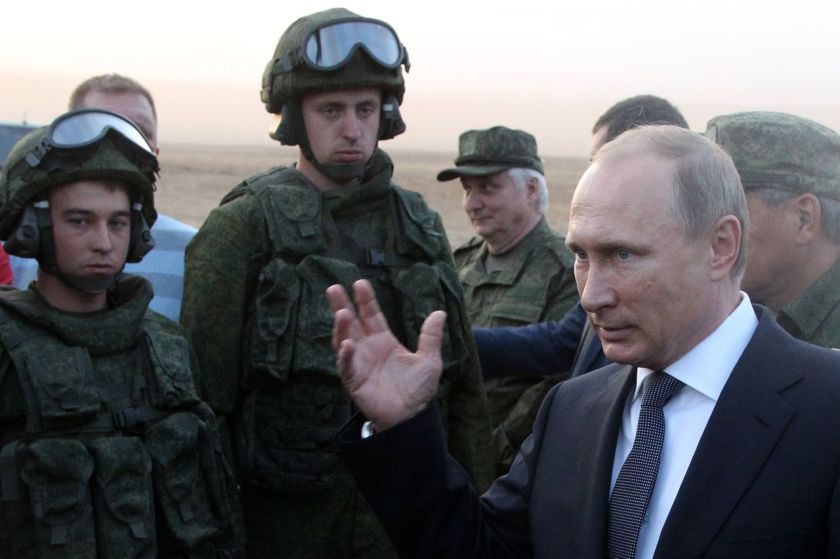
What seems clear today, particularly in Sciutto’s book, is that Putin has made too many mistakes in his invasion of Ukraine.
Putin’s apparent disregard for Russian soldiers’ deaths undoubtedly threatens his influence with many Russian citizens. Some of America’s media suggest Putin is becoming more conscious of his political and personal vulnerability. It is reported by Gleb Karakulov. a Russian engineer and defector who fled to Kazakhstan, that Putin has become paranoid and increasingly isolated.
Sciutto suggests Estonia is on a Putin invasion list once Ukraine has been conquered.
Having recently returned from the Baltics, occupation of Estonia would be a pyric victory for the same reasons as the Ukraine invasion. The hate for Russians one hears from Baltics’ residents (Lithuanian, Estonian, and Latavian) who were under the rule of Russia from 1940s to 1991 is palpable. The jail cells, torture, and murder of Baltic citizens by Russia is detailed by tour guides from each country. The prosperity of the Baltic countries since 1991 is a tribute to freedom that will not be given up easily by its people. At best, Russia may be able to occupy the Baltics, but citizen resistance would far outweigh any value occupation might offer.
Sciutto goes on to imply Taiwan will lose its independence to China.
The picture of death and destruction he outlines with China’s overwhelming military might mitigates against China’s success. Once freedom is experienced, it is like genies in a bottle–difficult to be re-imprisoned. Whether NATO or America will come to Taiwan’s aid is unknown, but like Russia’s invasion of Ukraine and Putin’s interest in the Baltics, the price to be paid is higher than the reward they can expect.
Freedom, once it is experienced, is an unconquerable force. Conquest of Ukraine, the Baltics, or Taiwan would be a pyric victory at a cost far in excess of a conquerors’ perceived value.
Our tour of the Baltic countries reveals evidence of Stalin’s brutality and the fear it created in the Baltic countries between 1945 and 1990-91. The same fate may be in store for Ukraine if Putin’s invasion succeeds.
Travel
Written by Chet Yarbrough
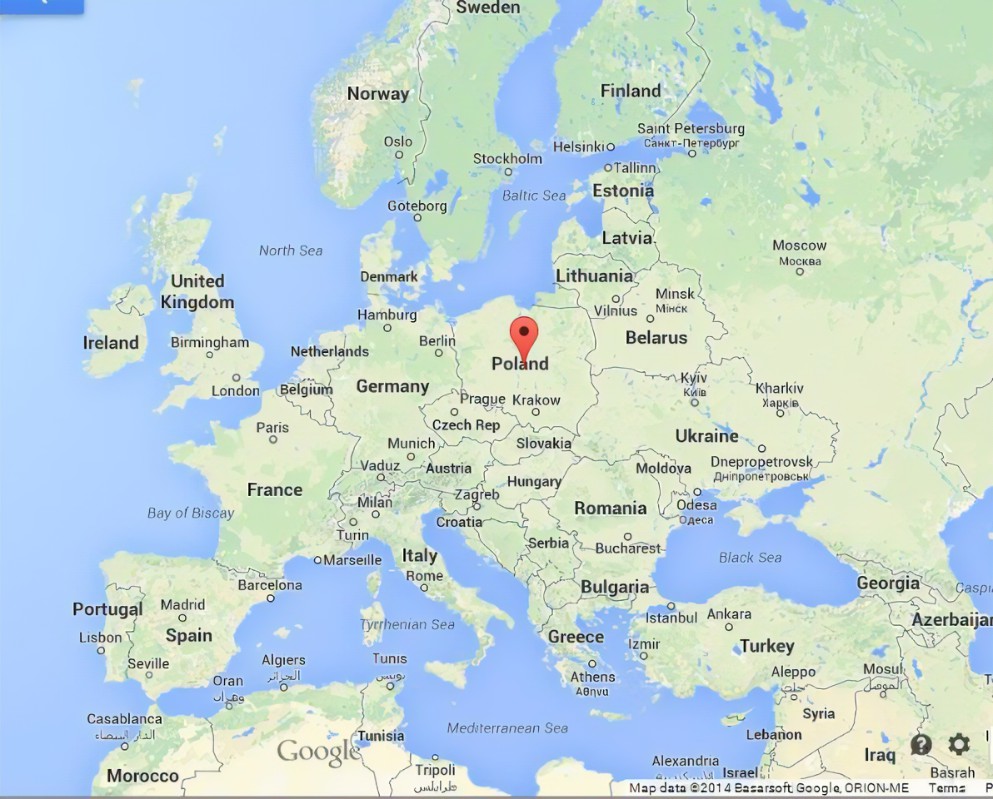
It’s been a while since our last trip out of America because of Covid. Poland, the Baltics, and Finland were my first choice because of their troubled history with Russia. The depth and breadth of these five countries’ history is a reminder of what is at stake with the invasion of Ukraine.
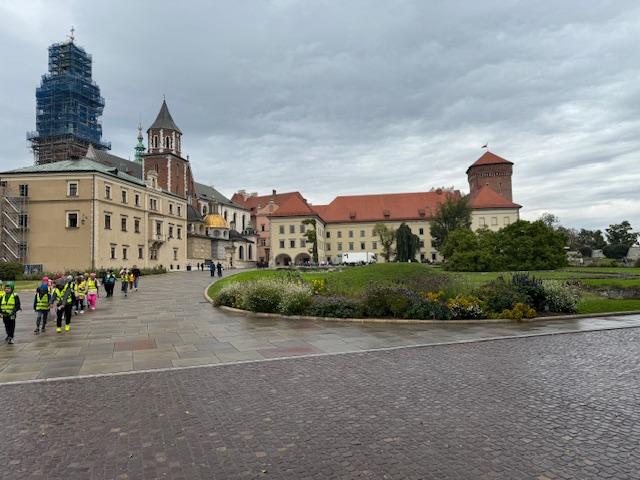
In traveling to Poland, the Baltics, and Finland, one’s understanding of political suppression becomes crystal clear. In contrast to the Baltics and Finland, Poland is the most often invaded of the five countries. The Mongol empire invades Poland in the 13th century, the Swedish Monarchy in the 17th, Russia, Prussia, and Austria partition Poland in the 18th, and in two world wars Russia and Germany vie for Poland’s land in the 20th. It is little wonder that Poland chooses to be a haven for Ukrainians when Russia invades Ukraine in the 21st century. Poland understands the hardship of invasion and suppression by a foreign power.
Poland’s sovereignty has been challenged by many invasions, beginning with the Mongol empire in the 13th century.
Genghis Khan (1162-1227.)
Traveling across Poland makes one understand why it has been invaded so many times. Poland’s lush countryside is a reminder of Ukraine’s agricultural reputation as the breadbasket of Europe.
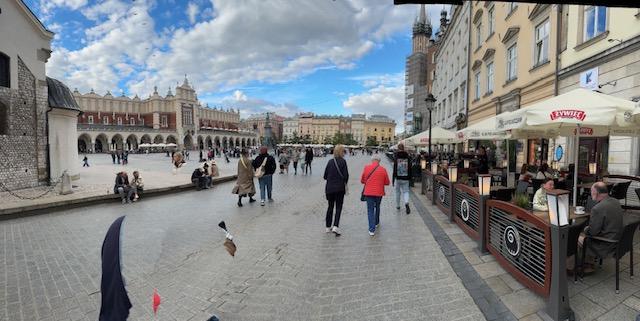
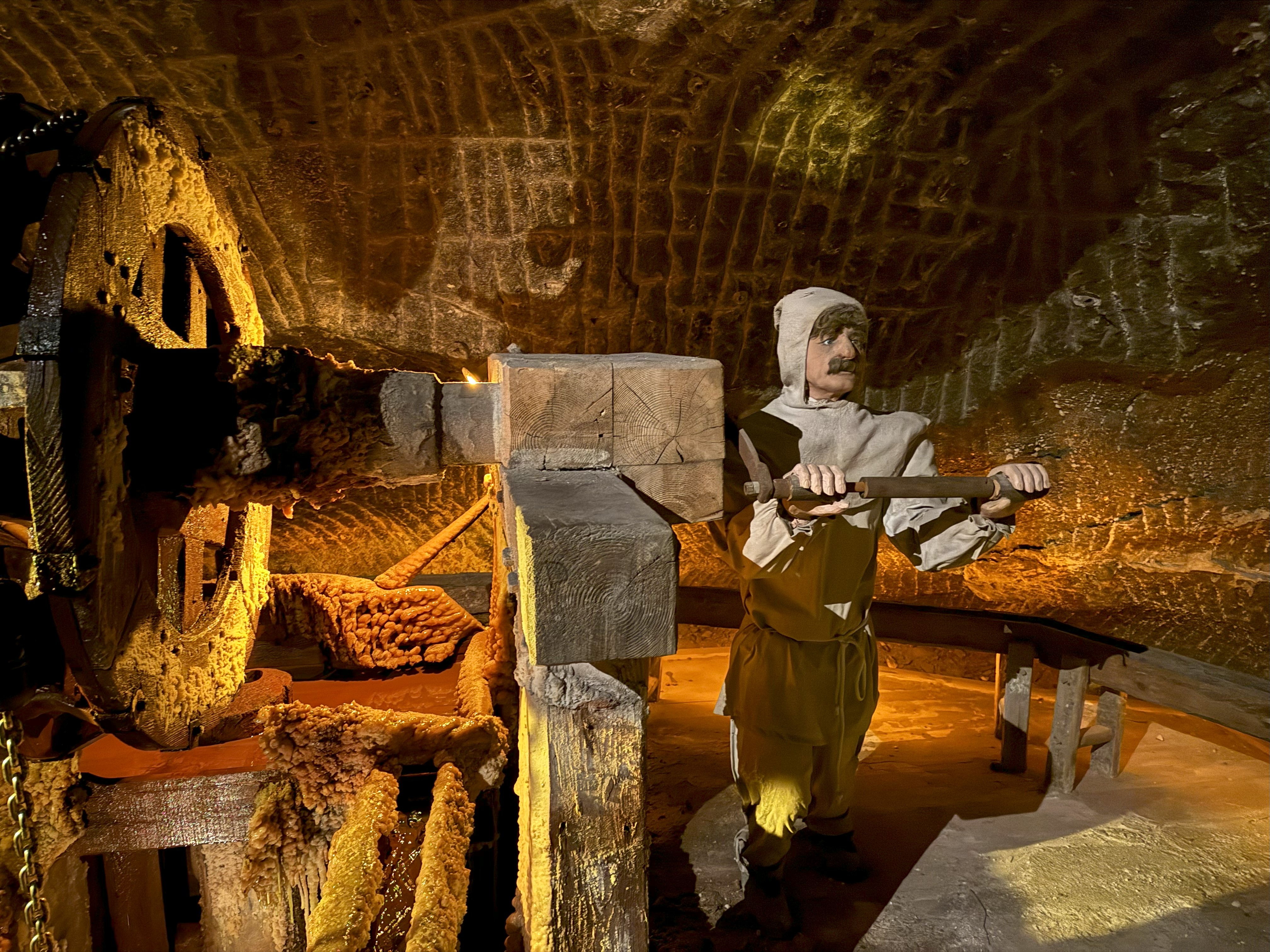
To invaders, the wealth of Ukraine is like the wealth of Poland. Poland’s elaborate salt mine at Wieliczka was established in the 13th century. It played a crucial role in Poland’s economy when salt was referred to as “white gold”. Adding to Poland’s agricultural value is its industrial growth and its obvious economic prosperity; not to mention its strategic location as pathway to East and West European countries.
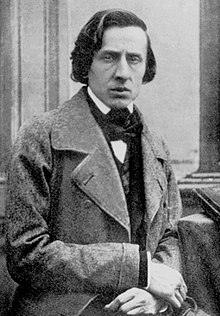
Beyond its wealth, Poland’s culture birthed the great composer, Frederic Chopin and renowned Pope, John Paul II.
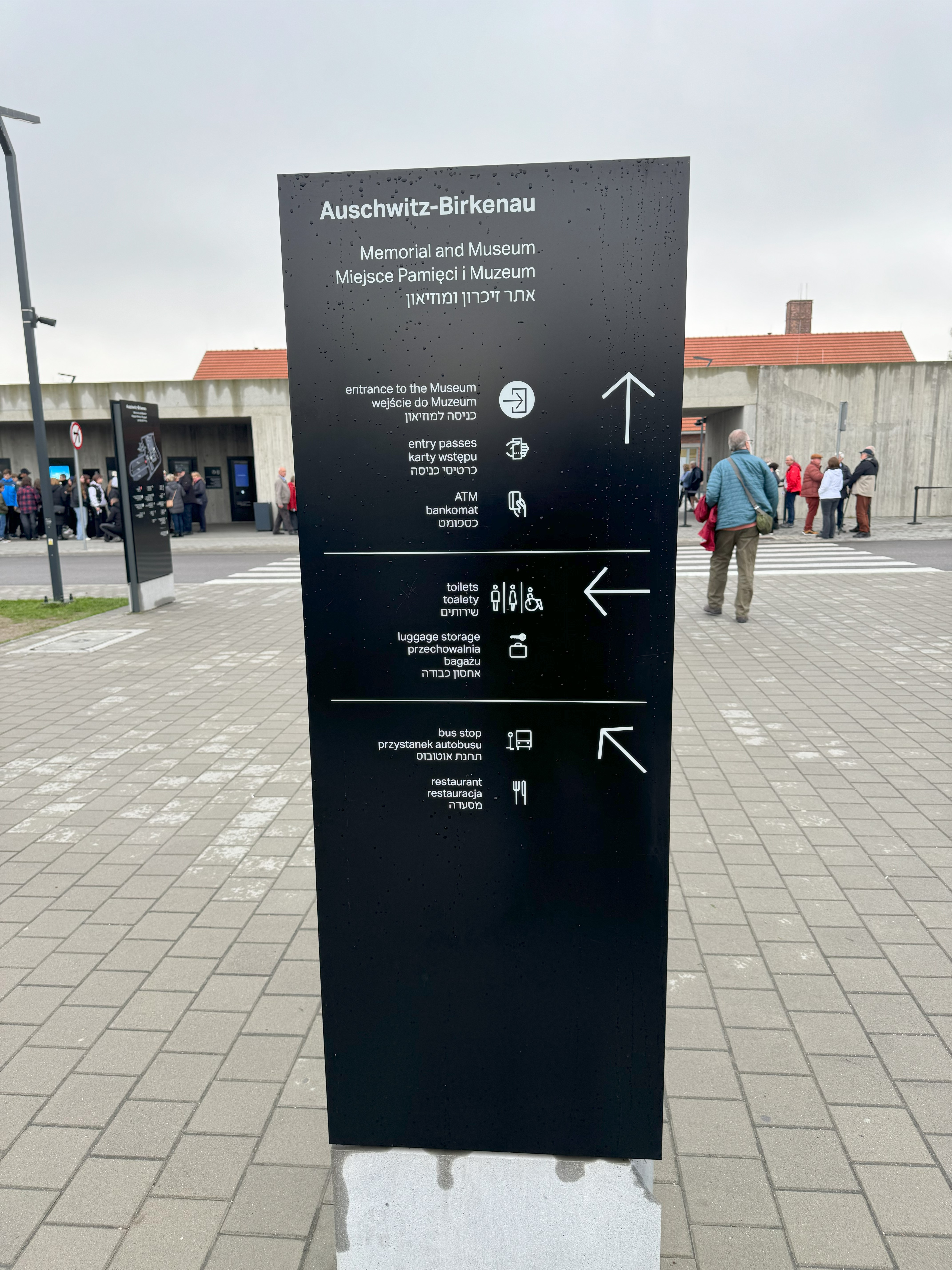
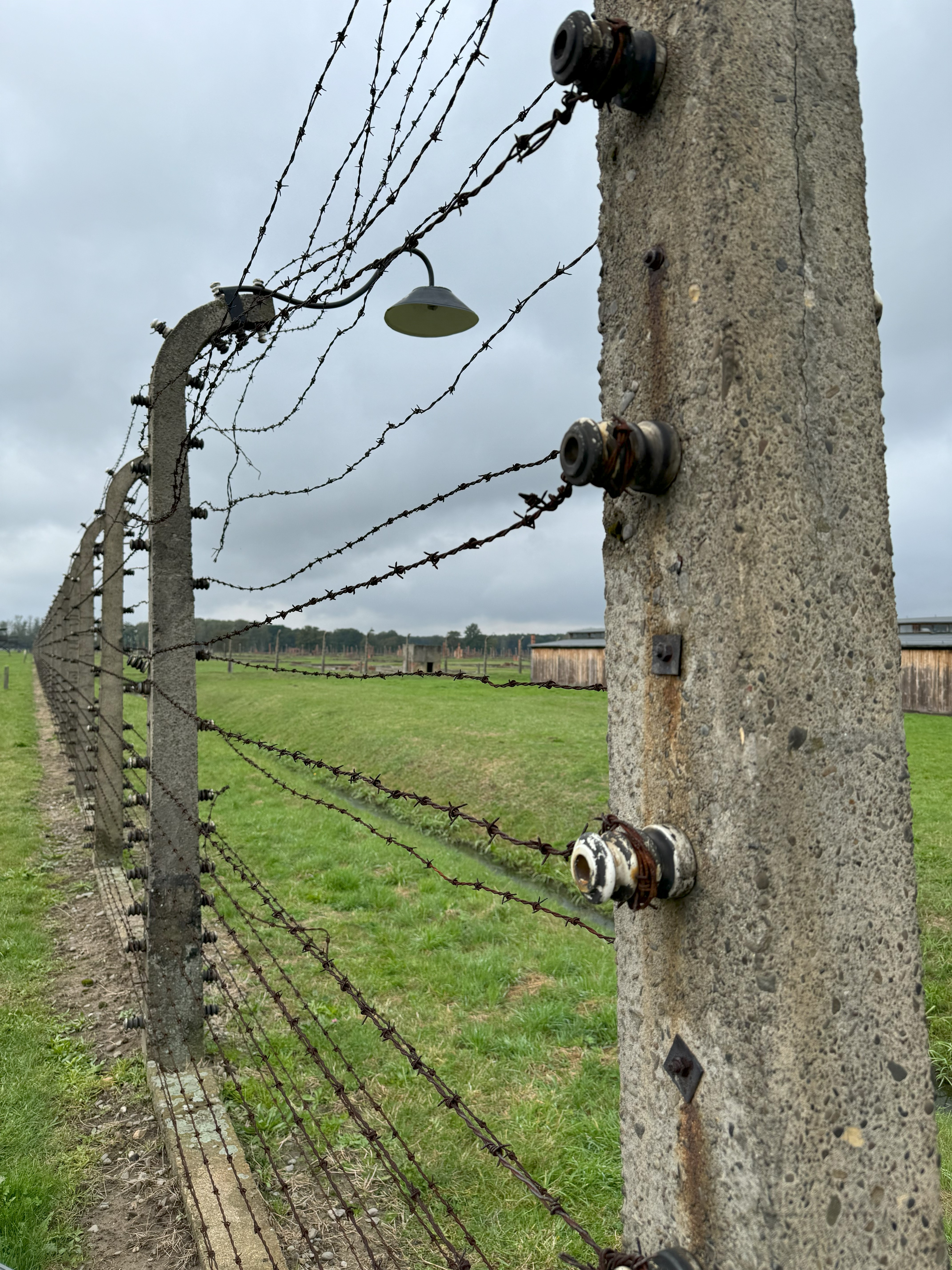
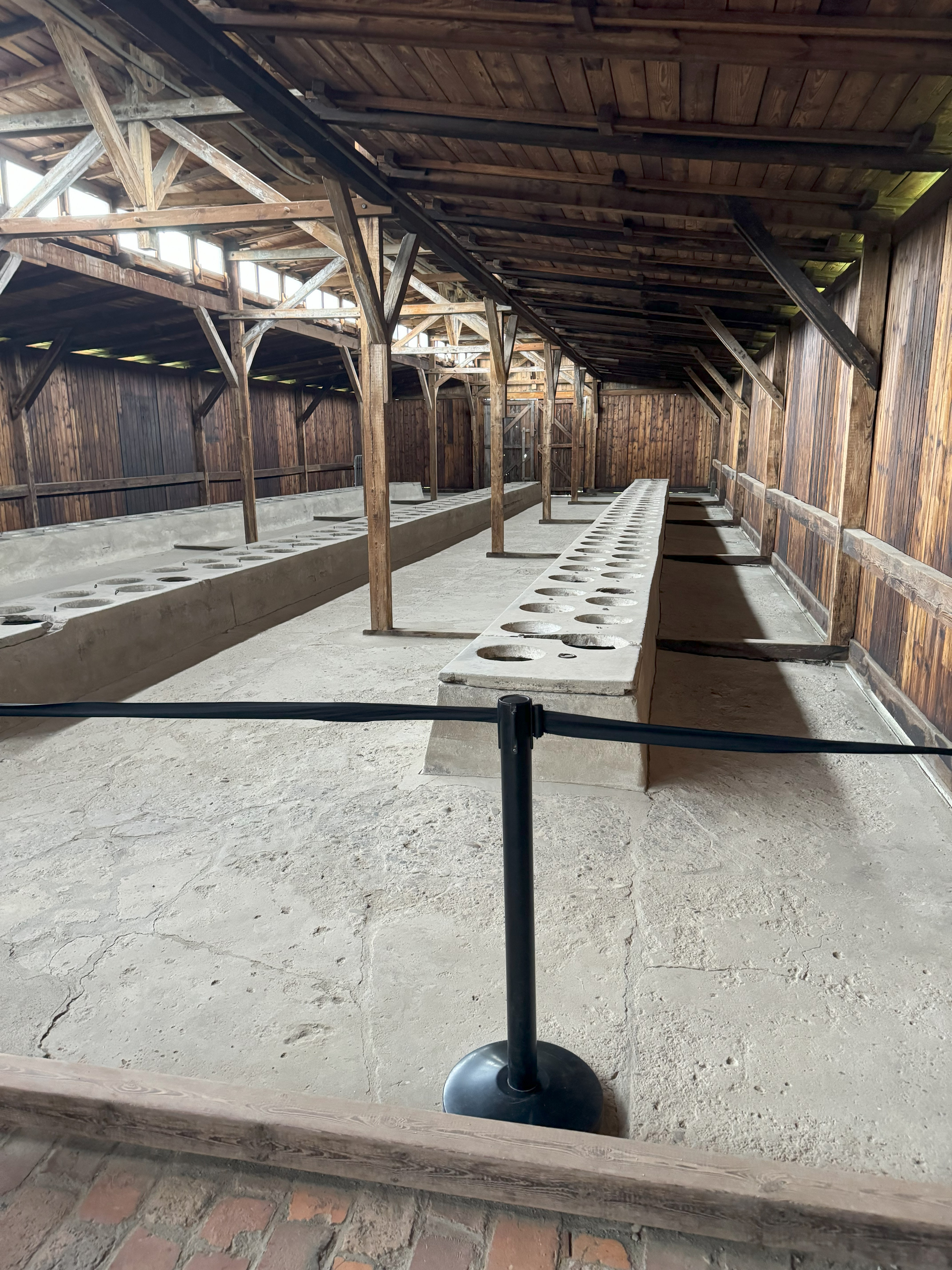
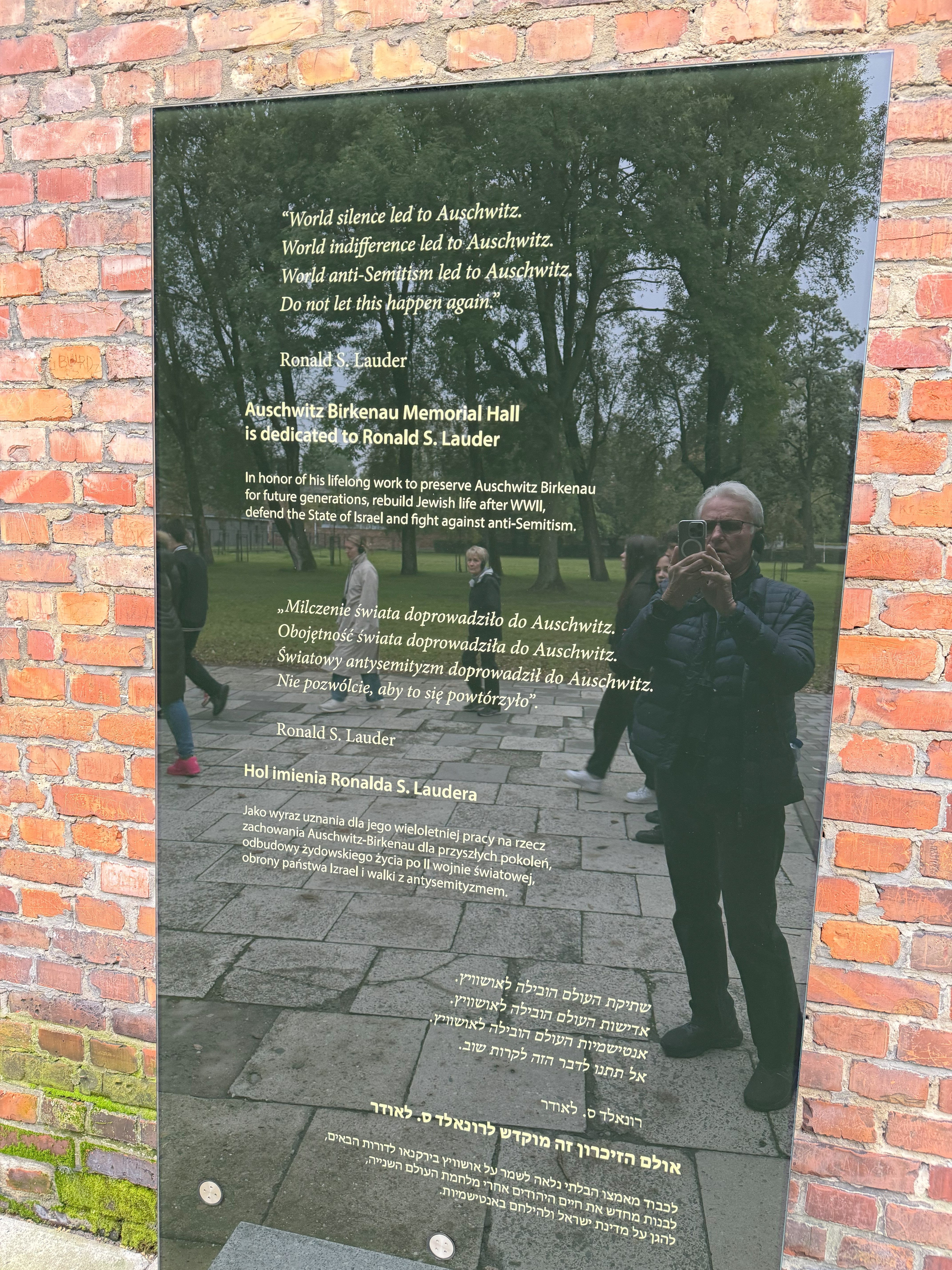
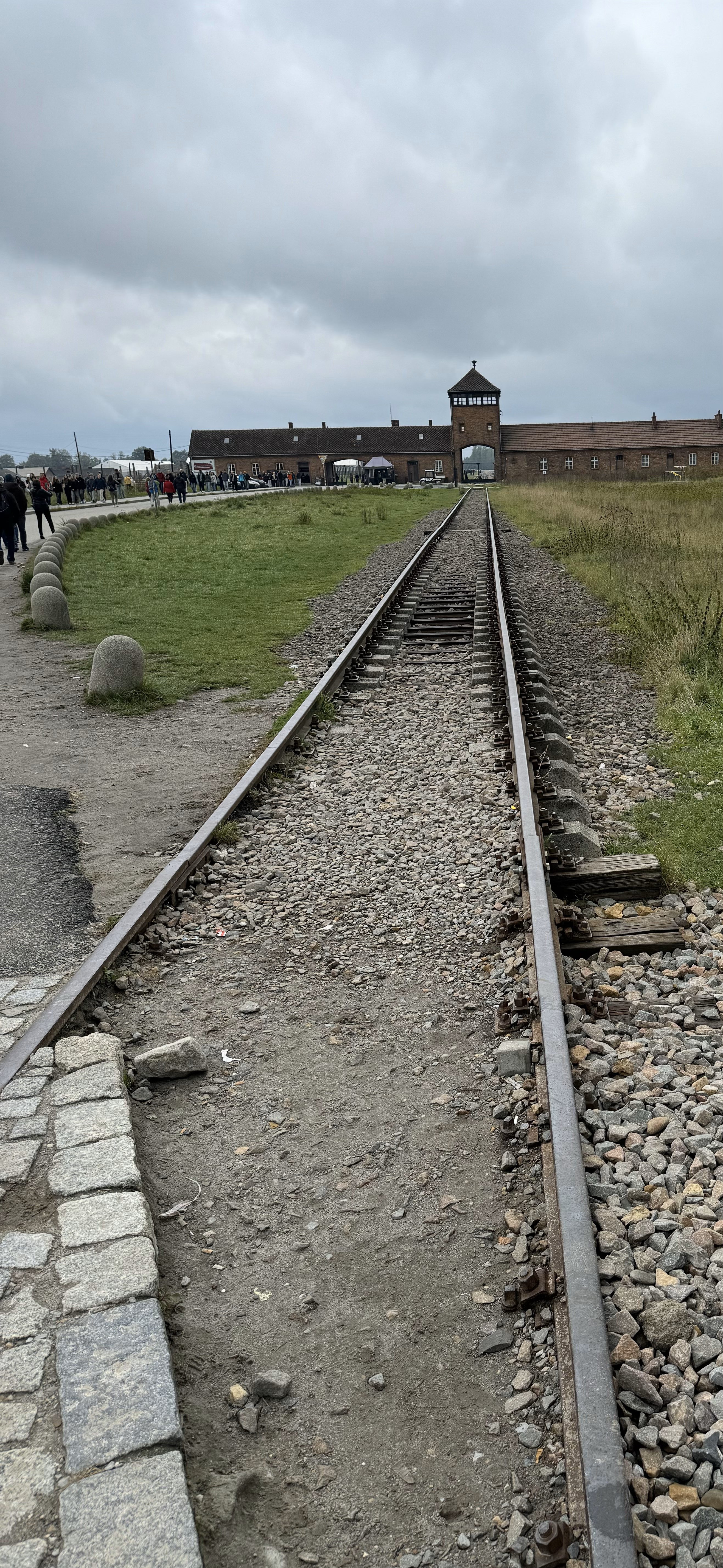
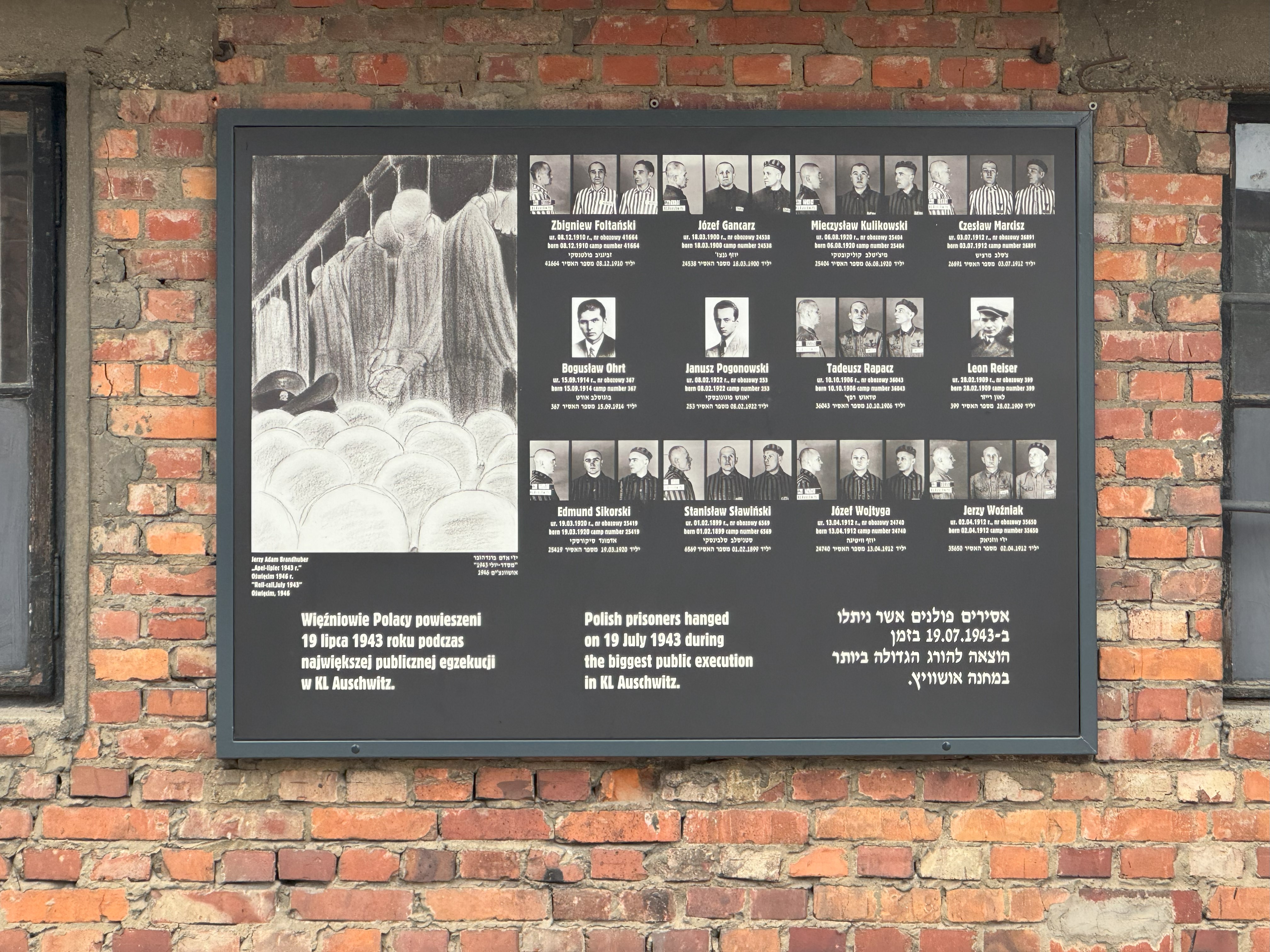
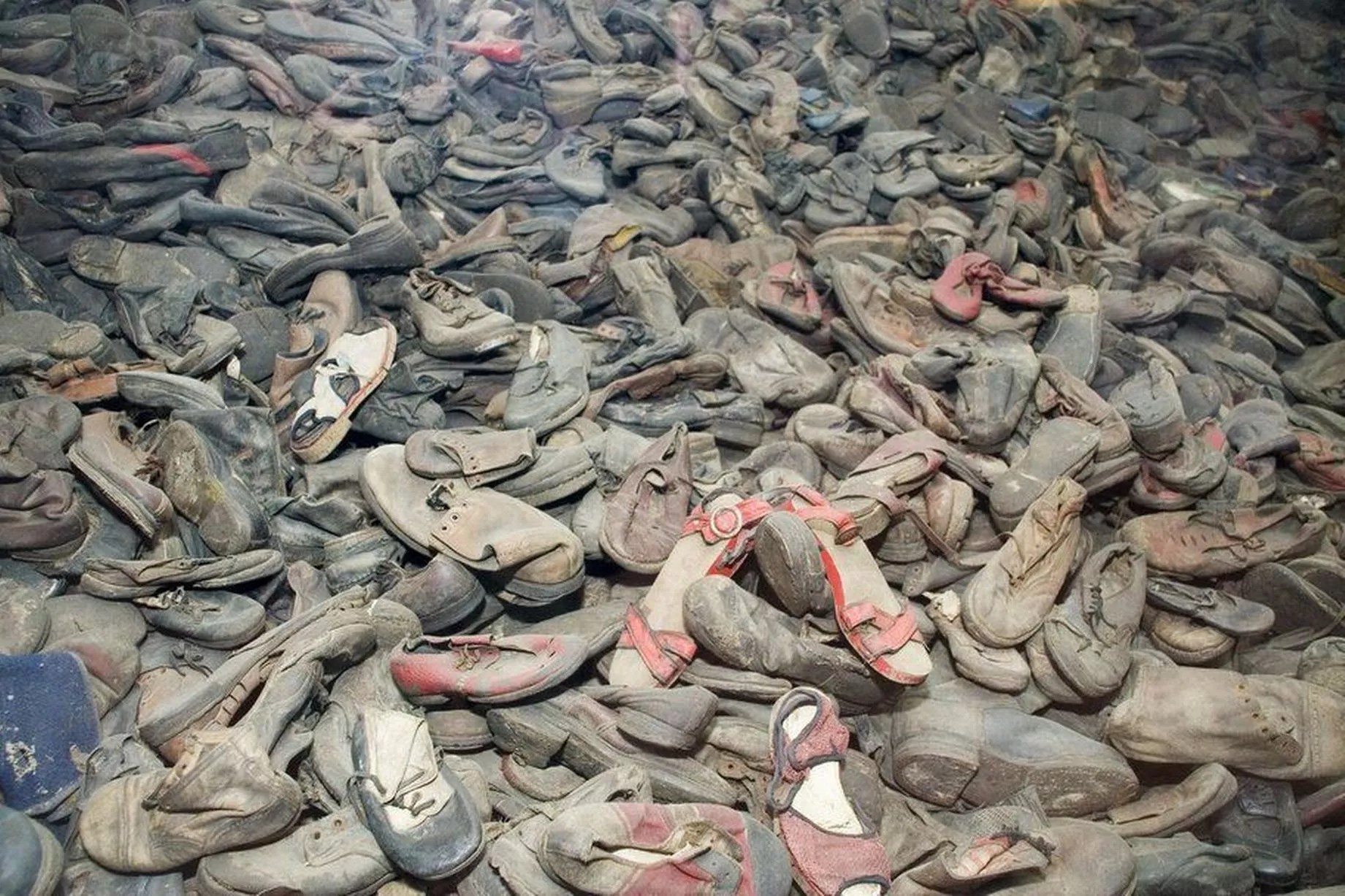
The atrocity of the Holocaust is made real and unforgettable to visitors of the Auschwitz’ death camp in Poland. One shutters with a view of work camps, gas chambers, shoes and clothes of over a million people gassed by the Germans at Auschwitz. Upon liberation of Auschwitz, the German commander is hung from the U-shaped posts erected at the camp. How could this mass murder have happened? Tragically, mass murder is happening today.
Man’s inhumanity to man is evidenced in Ukraine, Myanmar, Yemen, Ethiopia, Israel, and Gaza. No country in the world that wages war, either defensively or offensively, is without innocent blood on their hands.
After this brief exposure to Poland, we fly to Lithuania. Here we find the atrocity of Stalin’s Russia as the tyrant of the Baltics after WWII. One’s ignorance of the history of Russia’s tyrannical rule is concretely revealed by a woman who is a survivor of Stalin’s takeover of the Baltics in 1945. A version of her story is told in “Between Shades of Gray” which was recommended by our guide on this trip.
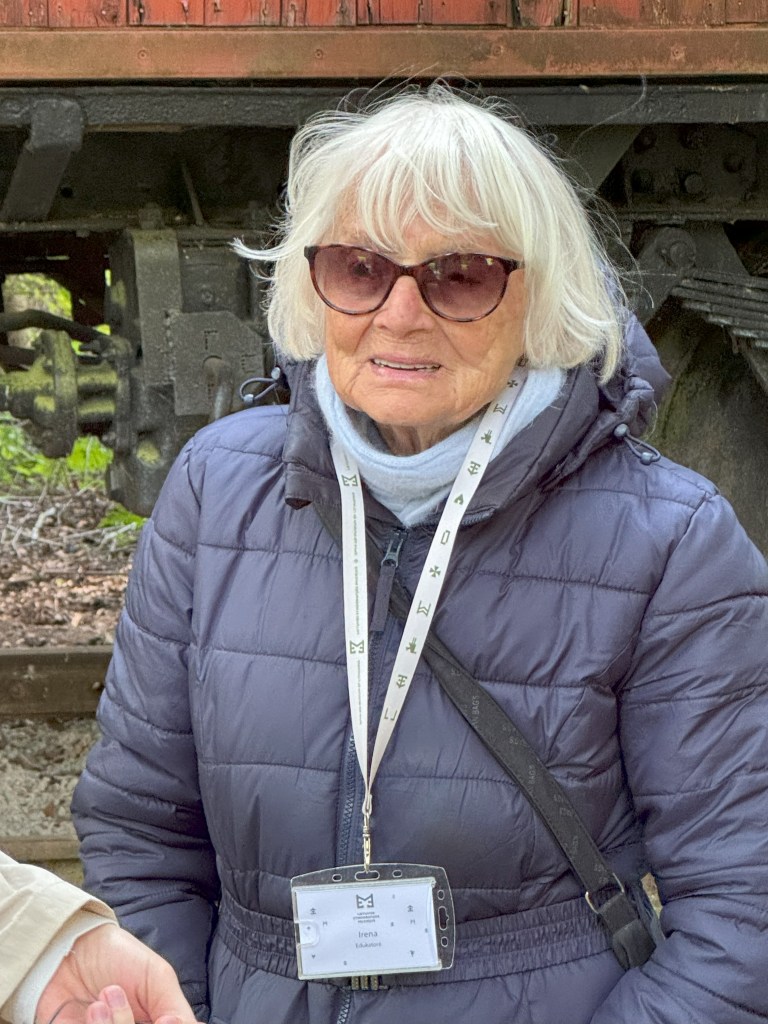
The subject of “Between Shades of Gray” is a young girl and her brother’s survival during Stalin’s invasion of the Baltics. Much of what is written in Ruta Sepetys’ book is a reflection of what this spry octogenarian survivor explains happened to her and her family in 1945. Her name is Lina Vilkas.
Ms. Vilkas explains this is a replica of the rail car used to transport Lithuanians to work camps in Siberia.
One hole in the floor of a similar box car is a toilet for its overcrowded Lithuanian’ prisoners.
The Baltics were ruled by Russia until the early 1990s. Lithuanian independence is declared in 1990: Estonia and Latvia independence in 1991. After touring Lithuania, the cruelty of imprisonment, torture, and murder of Baltic residents is revealed in a tour of jail torture cells, and work farms. The tour evidence is reinforced by vituperative comments by home-hosted’ survivors of Russia’s 45-year dictatorial rule. The fear of reprisal and murder kept most Lithuanians in line. The hate and distrust of Russians seems palpable in the Baltics. Even Gorbachev is viewed by our guide as a mere functionary, not liberator of the Baltics. Forgetting may come with time, but forgiveness seems unlikely.
These pictures are of one of the Russian prisons in which Lithuanian citizens were held. The lower left shows a rubber floored room in which prisoners who were losing their mind were detained. The chamber to its right is a killing chamber where prisoners received a bullet to the back of the head. The bucket above these two pictures is a toilet for a cell, only emptied after smells must have permeated the hallways. Constant surveillance, torture, and demonstrated murders kept Baltic prisoners in line and the general public in fear.
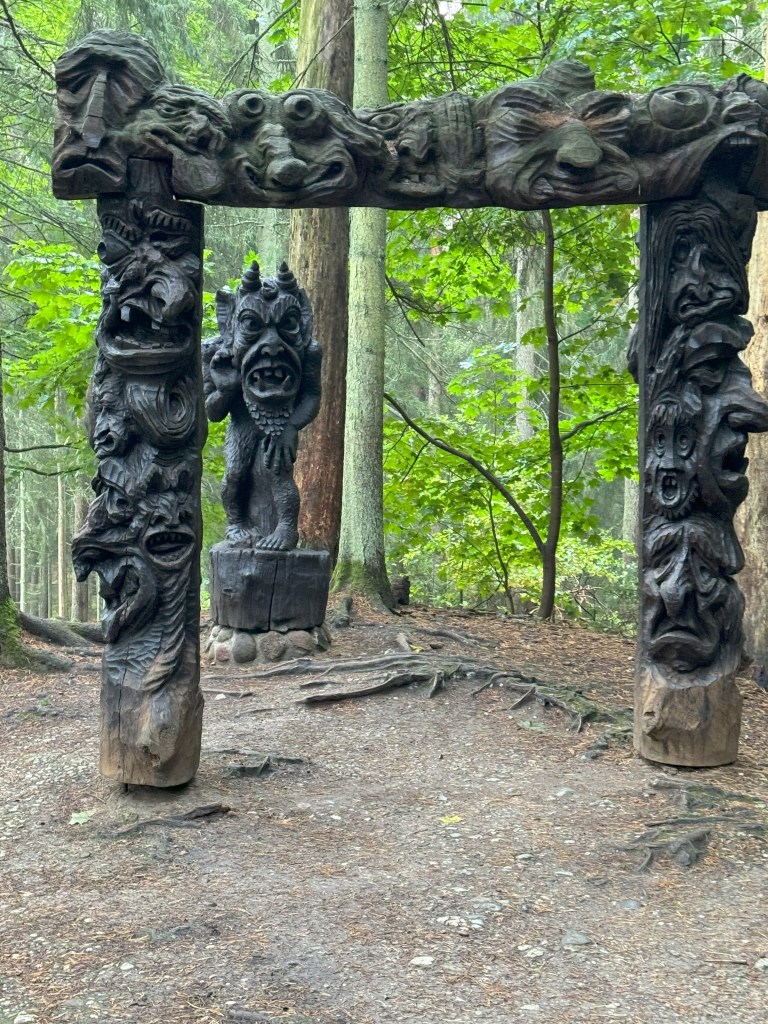
To lighten our tour’s mood, these distressful reminders of Russian torture and murder, a brief trip is taken to a folklore and witches’ park in Neringa, Lithuania.
The most remarkable thing about travelling through the Baltics while listening to guides and economy lecturers is how industrially successful the Baltics have been since their liberation in the 1990s. Taxes are represented as more burdensome than in America, but residents appear benefitted from that tax burden when one sees how prosperous the Baltics appear to short-term visitors. Few homeless people are seen in the city. The cobble stone streets are constantly being repaired; new development is seen everywhere; luxury goods are seen in stores throughout the city.
The fear felt when Russia ruled the Baltics seems gone. Fear seems replaced by optimism for the Baltic’s future as members of the European Union. However, Russia’s invasion of Ukraine represents an ever-present concern to the Baltics new way of life. One wonders if that threat might lead to a military response from the Baltics like that of North Korea’s alleged troop deployment in Russia’s war in Ukraine. That seems doubtful but no one away from armed and deadly conflict can know.
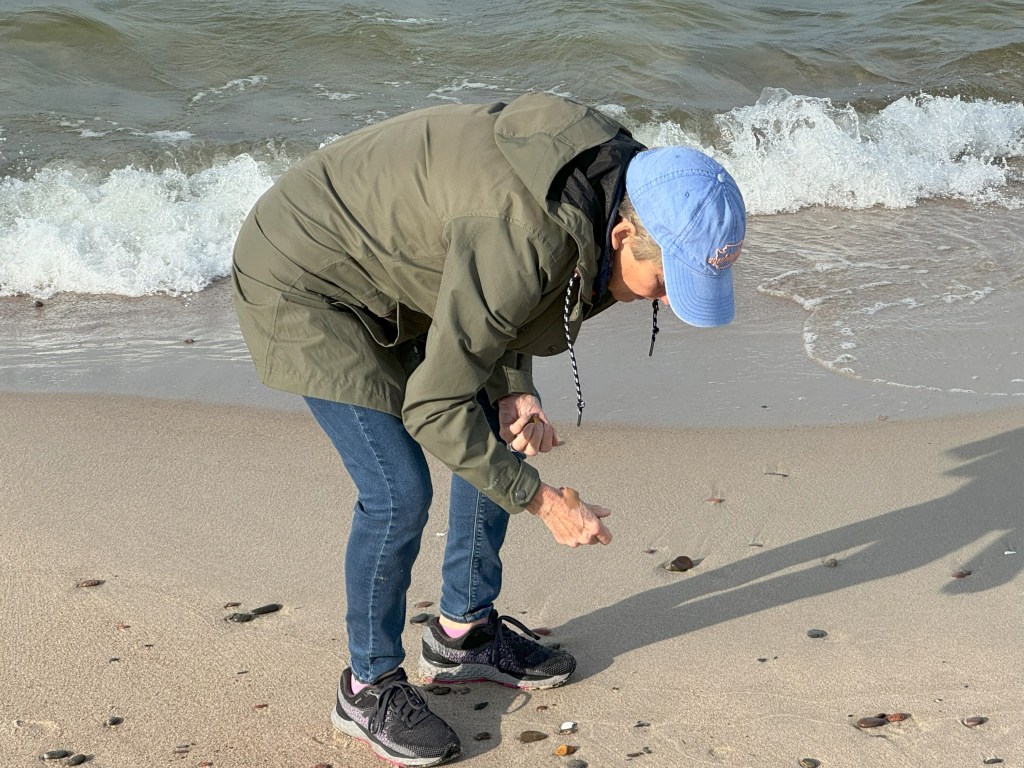
Taking a bus to Neringa, Lithuanian, our guide takes us to a beach on the Baltic Sea. Here, we search for amber, a fossilized tree resin that ranges in color from yellow, to brown, green, blue, or black. Amber is a jeweler and hobbyist collectors dream, found primarily around the Baltic Sea. Few tourists leave the Baltics without a piece of amber to remind them of the trip.
Baltic Sea amber search.
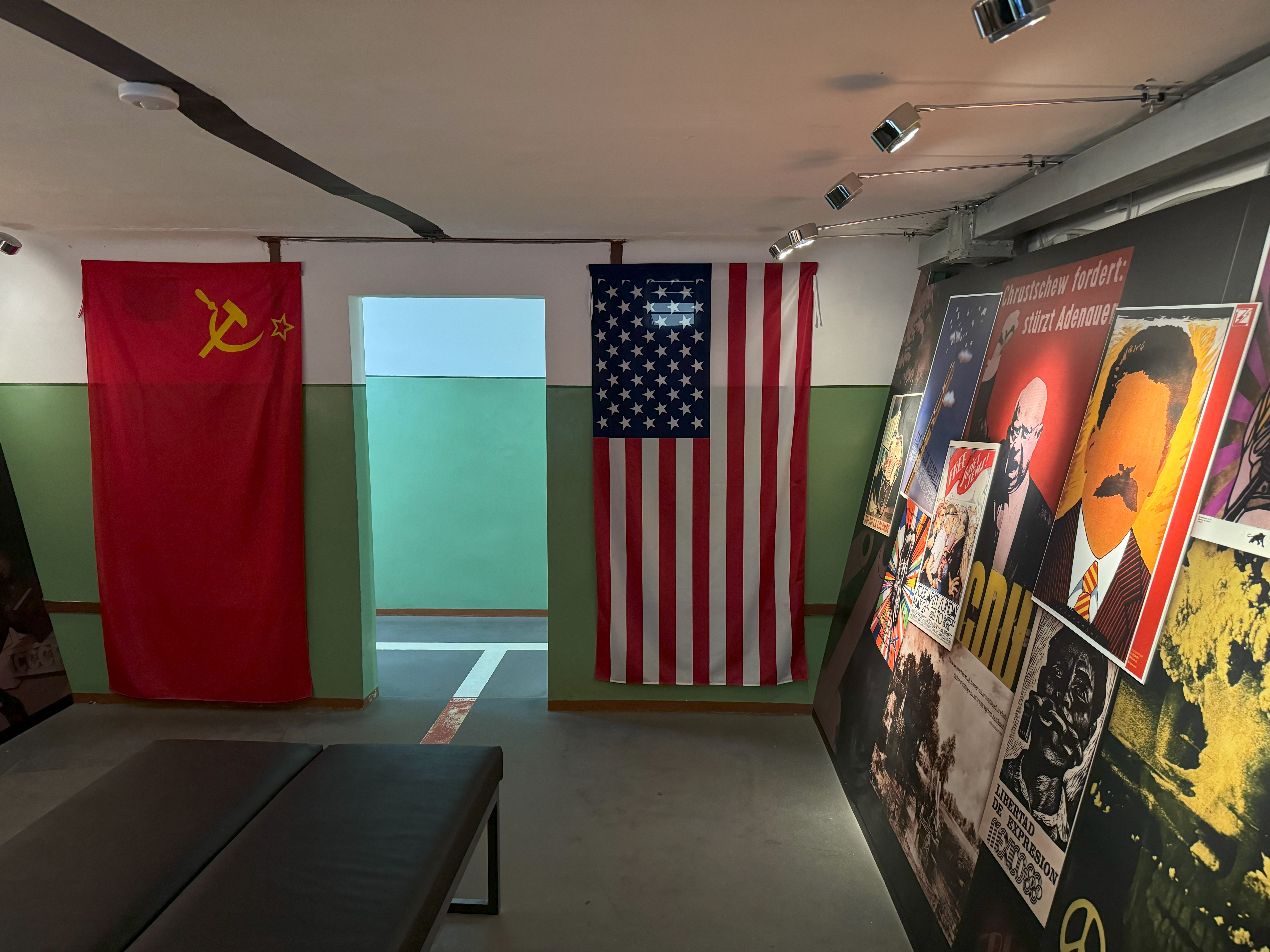
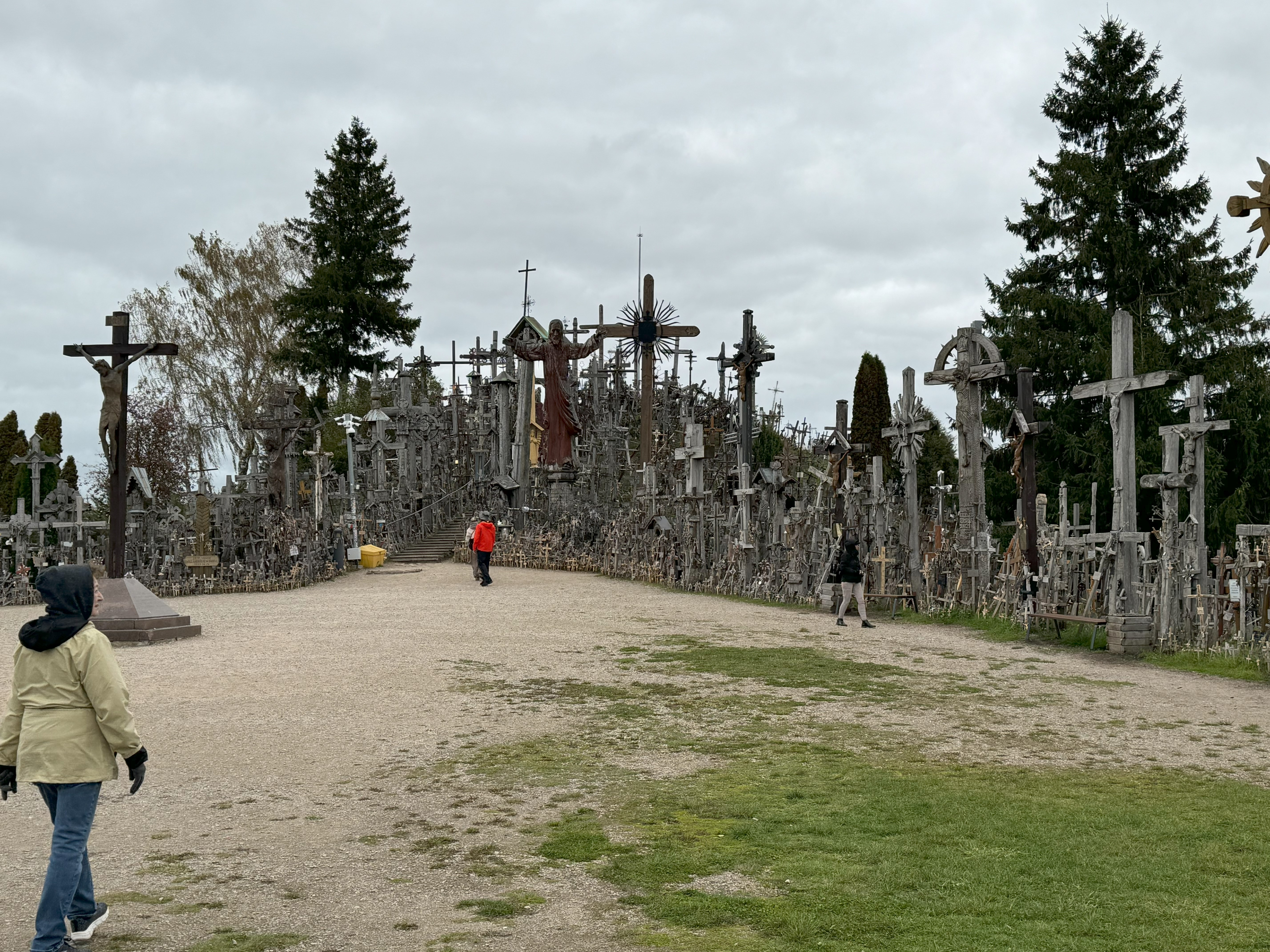
Next, we head to Rukundziai, Lithuania to visit an abandoned and preserved missile base. Later we visit the countryside: a tourist attraction called the “Hill of Crosses”, a cultural heritage site that honors friends and family that have died. Thousands of crosses have been placed to commemorate those who have passed. The jumble of crosses is immense.
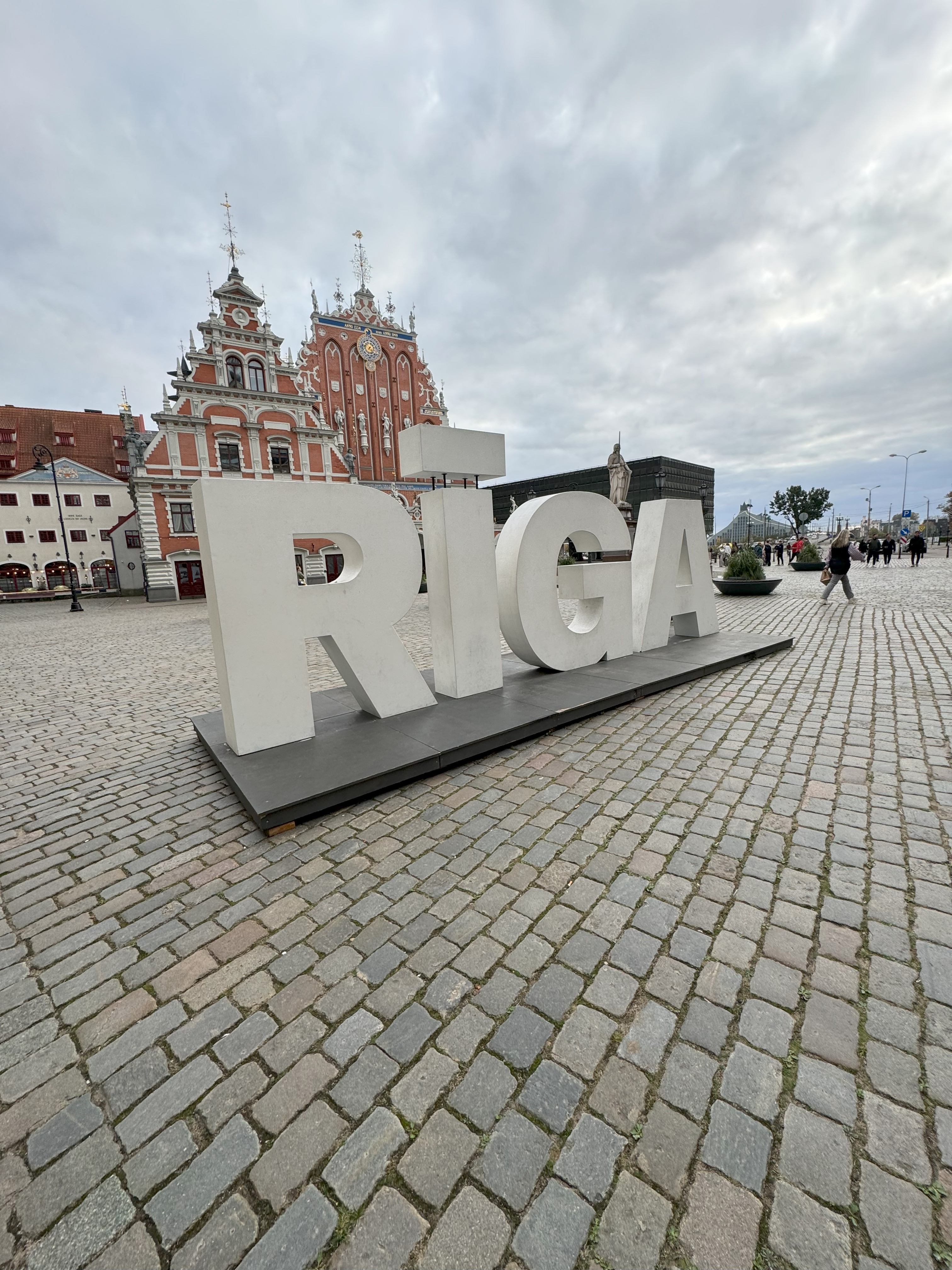
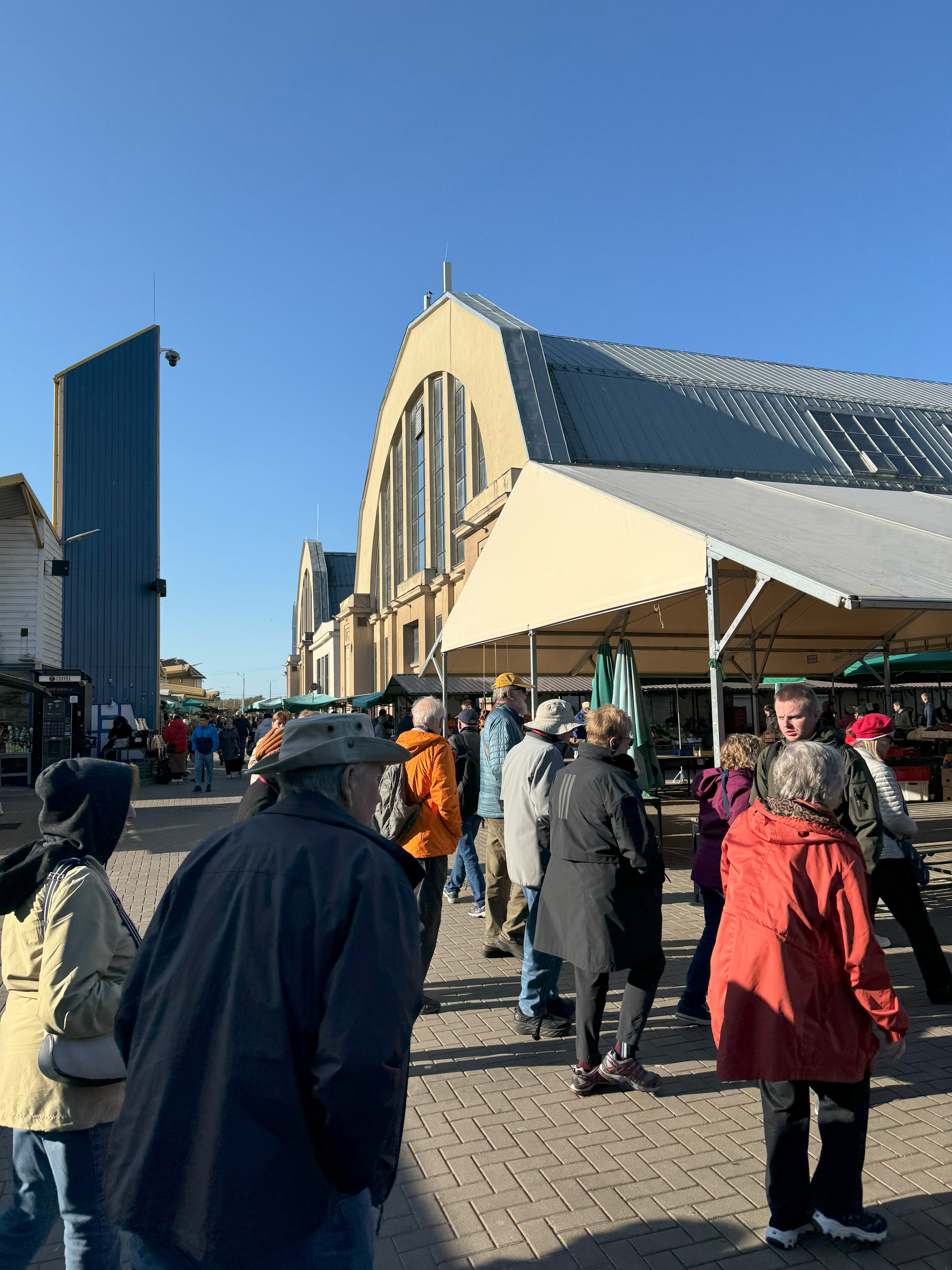
We are on our way to Riga, the capital of Latvia. Here, we visit a massive public market held in five former blimp hangars, reassembled in the heart of Latvia. Every spice and consumer product one can think of seems on display. Flowers are everywhere. Like Lithuania, Riga is a modern city with a well-known University. We spend part of the day in the city but head to the country for a visit to a goat farm. Like Poland and Lithuania, Latvia impresses travelers with its industry, farming, and economic growth.
Our final stop in the Baltics is Tallinn, Estonia which will be our port of debarkation to Finland. We visit Peter the Great’s summer home, a massive property which has become a national Russian and West European’ art museum. The Palace was not completed before the King died but its grounds are a sight to behold. Though Peter the Great was a 17th century Russian Czar, he was an enlightened monarch who had interests in science, technology and natural science. From the perspective of Estonian citizens, he brought interest in improving general education for the young.
We depart Estonia by ferry. Our ship is crowded with tourist buses, transport vehicles and citizens from all over the world. The two-hour crossing is a pleasure, accompanied with food, refreshments, and spectacular Baltic Sea views.
What one recognizes on this trip is the great concern the three Baltic countries have of Russia’s invasion of Ukraine.
We take a ten-story ferry across the Baltics to visit Finland.
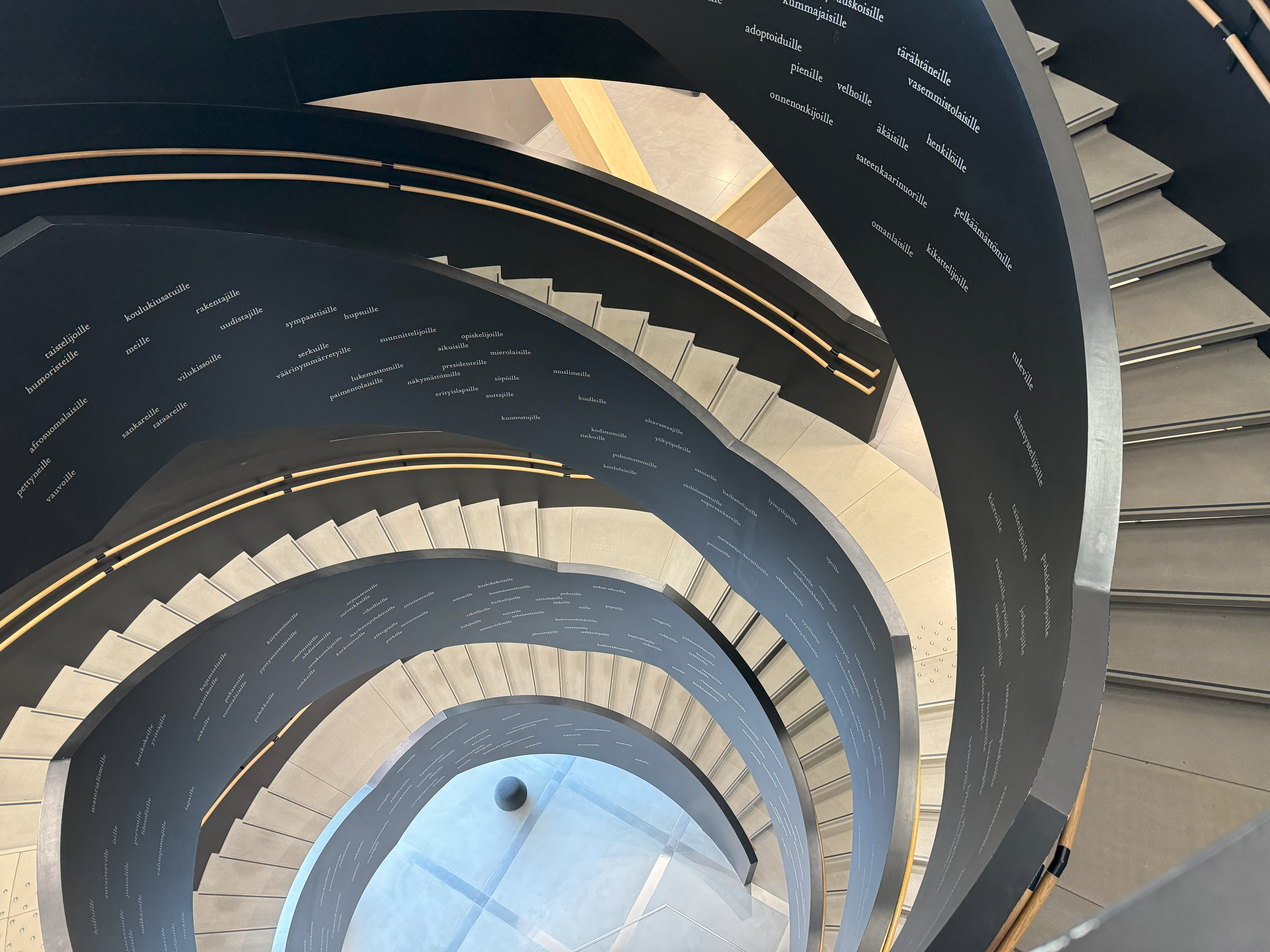
Helsinki is a modern 21st century city, Finland’s capitol. We visit a state-of-the-art library that serves the public with everything from sound studios to AI model makers to classes to private reading/discussion rooms. Finland’s reputation as the happiest country in the world starts with a state-of-the art education system. On a field trip, our 16-person group visits a state subsidized farm in the country. It is a large farm with a short growing season that is supplemented by horse and farm animal stabling during the winter. It is surprisingly managed by a young couple, one of which is a descendant of the original owners. Management seems somewhat lay-back by American farming standards. It appears the farm could not exist without Finland’s government subsidy. The young couple seem underqualified farmers–more like hosts to a culture that would not survive without government help.
As is well known, Finland has a long border with Russia. In defense of their country, the Finns allied themselves with the Nazis during WWII. They are reported to have protected Finnish Jews from the Nazis, but fear of Russian encroachment was judged to require a devil’s bargain during WWII. In a previous trip to Finland, a guide explains a tenuous relationship with Russians that allows easy travel between countries because of their long border with Russia. The Finns are respectful but undoubtedly with watchful eyes. Finland refuses to be intimidated by Russia. By the same token, Russia appears disinclined to interfere with Finnish governance.
Many citizens feel they could be the next target of aggression by Russian oligarchs being led by today’s reincarnation of a Stalin in Vladimer Putin clothes.
The story of Holodomor and today’s Ukraine invasion show the depth of Russian government venality. Our tour of the Baltic countries reveals evidence of Stalin’s brutality and the fear it created in the Baltic countries between 1945 and 1990-91. The same fate may be in store for Ukraine if Putin’s invasion succeeds.