MOST INTERESTING ESSAYS 12/4/25: THEORY & TRUTH, MEMORY & INTELLIGENCE, PSYCHIATRY, WRITING, EGYPT IN 2019, LIVE OR DIE, GARDEN OF EDEN, SOCIAL DYSFUNCTION, DEATH ROW, RIGHT & WRONG, FRANTZ FANON, TRUTHINESS, CONSPIRACY, LIBERALITY, LIFE IS LIQUID, BECOMING god-LIKE, TIPPING POINT, VANISHING WORLD
Like abolition, women’s suffrage, labor, civil rights, LGBTQ, and MeToo movements of the distant and near past, capitalism’s reform is due.
Books of Interest Website: chetyarbrough.blog
SAVING CAPITALISM (For the Many, Not the Few)
Author: Robert B. Reich
Narration by: Robert B. Reich
Robert Reich (Author, American professor, lawyer and political commentator that worked in the Geral Ford and Jimmy Carter administrations, and served as th secretary of labor in Bill Clinton’s administration.)
Robert Reich, as an advisor to Presidents of the United States is recognized by Time Magazine as one of the Ten Best Cabinet Members of the 21st Century and by the Wall Street Journal as one of the most influential business thinkers in 2008. In “Saving Capitalism” Reich criticizes corporate America for unethical and unfair capitalist practices that make a mockery of capitalist equality.
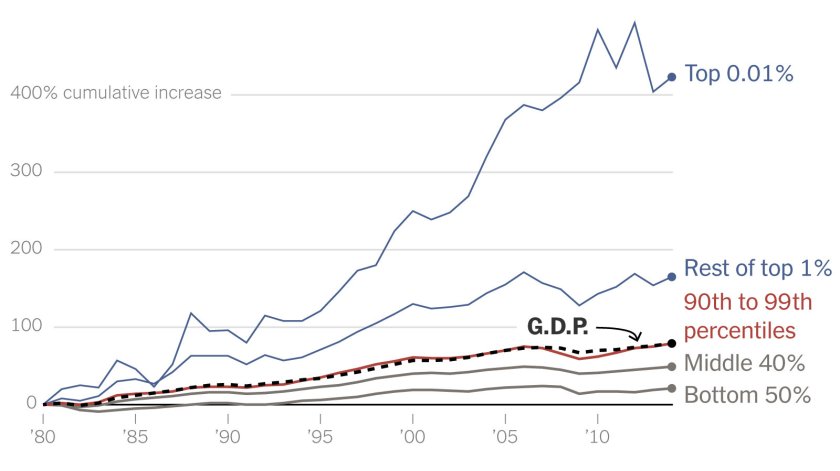
U.S. Rising Income Disparity.
Economic class warfare in America is a time worn argument by many economists in the 20th and 21st century. Reich’s topical analysis has some truth, but his analysis of wealth and markets oversimplifies the complexity of American capitalism. One cannot deny the harm that capitalist greed has done to increase wealth of the rich and decrease wealth of the poor in America. The political system is rigged by the influence of wealth over political policy and economic equality.
American capitalism’s rigging begins at birth, carries through public education, and ends in low-income opportunities for the poor.
The power of wealth feeds American capitalist Democracy’s circle of life. Money of the wealthy is spent to birth and educate their children with the best medical care and schools in America. The corporations and super rich of America hire and fund lobbyists who promote corporate agendas to support government representatives’ campaigns for office. The aspiring representatives are people who owe their allegiance to corporations and the rich who helped get them elected. That circle is biased toward making the rich richer.
Equality of opportunity is rigged in ever-larger corporations that reap super profits and pay CEO’s millions of dollars per year while low wage earners are left to fend for themselves. Mega corporations should be broken up like the oil industry dismantling in 1911. Like Standard Oil, today’s conglomerates have too much power over consumer purchasing, advertising, social media, medical industries, and (most importantly) the election process of America. The rigging begins with healthy birthing of children of the rich, extending to less qualified schooling for the poor, and ending with low-wage family’s children having unequal economic opportunity.
One cannot deny that Reich’s book and this biased review are an ideological belief that distorts and oversimplifies reality, but it carries an element of truth that cannot be denied. How can one person be worth a potential trillion-dollar net worth for service as CEO of one company that makes electric cars. Corporations like Amazon, Google, Facebook, UnitedHealth Group, and Cencora control markets through their size to capture disproportionate shares of advertising, social media, retail sales, and medication industries without competition to moderate their power, and influence. Add billionaires like Elon Musk, Larry Ellison, Mark Zukerberg, Larry Page, Steve Ballmer, Warren Buffett, and Michael Dell and others of great wealth–one is inclined to believe American capitalism is rigged.
As brilliant as Musk shows himself to be, his fragile ego diminishes his genius.
There is an unfairness in criticizing the wealthy for their success in America. They are not wealthy because of luck but because of their innate abilities, risk taking, and hard work but influence should not come from the power of their wealth to change government policies that focus on enriching themselves. Just as the robber barons had their influence curbed by antitrust legislation, the same should be done today. The influence of lobbyists and their support should be more publicly disclosed. The federal government should play more of a financial role in improving public education. Cries of inequality should be exposed, critiqued, and adjudicated fairly.
Capitalism remains the best economic system in the world, but it has its weaknesses. The best prescription for that weakness is equality of opportunity in the arena of employment competition. It begins with fair and equal access to medical care and access to a good education.
Like abolition, women’s suffrage, labor, civil rights, LGBTQ, and MeToo movements of the distant and near past, capitalism’s reform is due.
Brannen emphasizes the importance of understanding the science of geology, climate modeling, and shaping energy systems to mitigate environmental damage. None of his ideas seem likely to change the direction of world leadership. Thinking on a planetary scale is beyond the interest of world leaders, let alone the fictional “Tom, Dick, and Harry” or “Mohammed, Jose, Wie, and Ahmed”. (All stupid men, of course.)
Books of Interest Website: chetyarbrough.blog
The Story of CO2 Is the Story of Everything (How Carbon Dioxide Made Our World)
Author: Peter Brannen
NarratedBy: Adam Verner
Peter Brannen (Author, Fellow at CU Boulder, science teacher, journalist who has written for The New York Times, The Washington Post, The Atlantic, The Guardian and other outlets.)
“The Story of CO2…” is a slog. Though Brannen’s points are important, the details are overwhelming. Brannen offers a view of global warming based on the history of carbon dioxide emissions and its role in earth’s mass extinctions caused by nature, human industrialization and capitalist growth. The scope of his 500+ page book addresses natural history and the advance of human civilization with so much detail that only a polymath would understand his vision of how “living things” end. On the other hand, even an inept reader will feel threatened by his detailed analysis of global warming’s risks to humanity.
On the one hand, it seems Brannen’s emphasis on CO2 discounts the roles of oxygen and water in the growth and survival of humanity but stick with his theme and you get it.
Brannen’s story is a frightening diagnosis of humanity’s risks. His book doesn’t offer much hope for civilization’s future. Brennen explains industrialization is driven by exploitation of energy and human nature. He notes these are the driving forces behind global warming that will end life on earth. It seems human greed is globalized whether political leaders consider themselves socialists or capitalist. Brannen explains societies of the world have exploited energy through release of CO2 in the atmosphere. That release of CO2 has raised living standards of civilization but, at the same time, polluted the world. Brannen argues civilization has little understanding of the truth that carbon dioxide release over eons of time have damaged the environment. Brannen details how that lack of understanding threatens life on earth. More seriously, many leaders of the world refuse to believe the science of global warming and continue to release CO2 into the atmosphere.
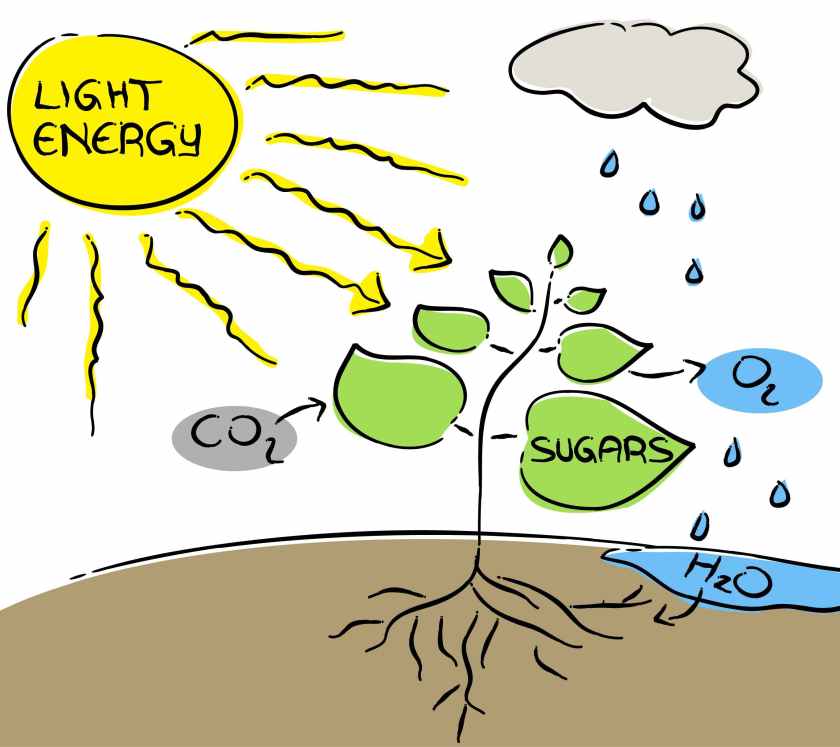
What is made clear in “The story of CO2…” is that photosynthesis by plants converts sunlight into energy which makes CO2 the basis upon which all life exists on earth.
All living things are built from carbon. Humanity’s ability to release energy from carbon gave rise to industrialization, modern infrastructure, and global mobility. Living standards of society were raised, food production increased, lifespans were extended, and the public prospered. However, modern times show that excess production of CO2 threatens mass extinction. The irony is that CO2 seemed a free lunch in our early beginnings but now threatens life’s existence.
Global warming.
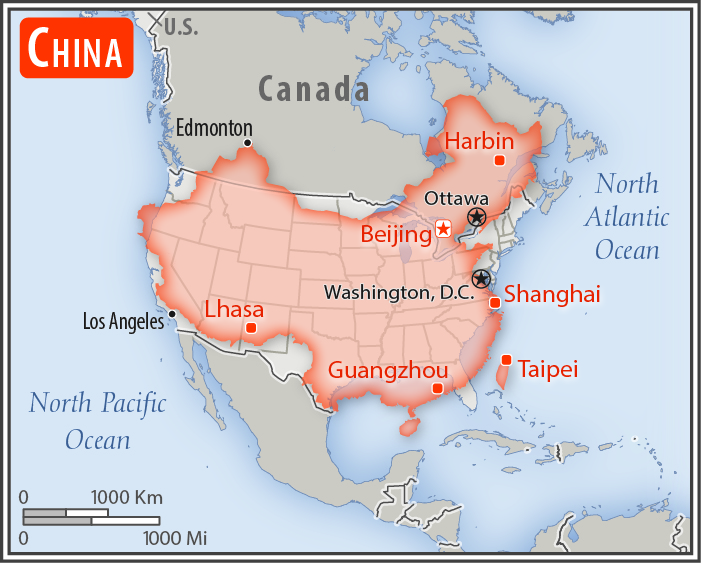
There are no easy answers to Brannen’s CO2 threat to life on earth. It is unrealistic to believe the world will abandon fossil fuel use. Some, like President Trump in the U.S., believe global warming is just a cycle of nature while supporting and encouraging continued development and use of fossil fuels like coal and oil. Though China has done more than any country to create renewable energy and clean transportation, neither China nor the world will achieve the Paris Agreement limit of a maximin 1.5-degree centigrade increase. In reality, China remains the largest emitter of CO2 with coal, petroleum and natural gas; despite being the largest clean energy investor in the world.
Brannen argues for understanding the true development direction of the world.
To reduce global warming, Brannen recommends a shift in economic and geopolitical systems with an alignment of economies based on ecological impact. He emphasizes the importance of understanding the science of geology, climate modeling, and shaping energy systems to mitigate environmental damage. None of his ideas seem likely to change the direction of world leadership. Thinking on a planetary scale is beyond the interest of world leaders, let alone the fictional “Tom, Dick, and Harry” or “Mohammed, Jose, Wie, and Ahmed”. (All stupid men, of course.)
It is ironic that Trump has suffered so much from America’s legal system and is unable to see NIMBY mentality and a return to the past will not “Make America Great”.
Books of Interest Website: chetyarbrough.blog
Breakneck (China’s Quest to Engineer the Future)
Author: Dan Wang
NarratedBy: Jonathan Yen
Feng Chen Wang aka Dan Wang (Author, Canadian technology analyst and writer, visiting scholar at Yale Law School.)
Dan Wang is a highly credible author of the 21st century economies of China and the United States. Mr. Wang’s mother and father were born in China when the one child policy was the law of the land. Mr. Wang was born in Canada in either 1991 or 1992. Though Mr. Wang may be an only child, his parents advised him that living in China was challenging because of its state control and family planning that restricted their human rights.
Dan Wang has lived in Canada, America, and China.
From 2017 to 2023 he worked as a technology analyst in Hong Kong, Beijing, and Shanghai. As a young man, Wang bicycled across China with young friends. Having been educated in Canada and the United States, growing up in Toronto and Ottawa and going to high school in Philadelphia, he has a broad understanding of the economies of all three nations. Of course, his specialty is technology which gives him a unique understanding of what is happening in America and China today. He graduated from the University of Rochester in 2014, studying philosophy and economics.
Trump’s apparent view of Xi.
After listening to Wang’s book, one begins to understand why President Trump’s perspective is that the world, with emphasis on China, has taken advantage of America’s economic wealth by eviscerating its industrial industries with less expensive product made in other countries. Wang presumes as a person who has an economics education that Adam Smith (the Father of Economics) and Donald Trump are right when they argue tariffs are justified in areas of national defense, or for retaliation. On the other hand, Adam Smith, noted “It is the maxim of every prudent master of a family, never to attempt to make at home what it will cost him more to make than to buy.”
Adam Smith (Father of Economic Theory)
Smith argued if another nation can provide the same product for less cost, a prudent buyer should buy the cheaper product and use money saved to produce a different product. Wang and Trump disagree with Smith because the revenue producer that America turns to is the service industry rather than product development. What is missed by Wang and Trump is that America is the third largest agricultural producer in the world with China and India being the largest. Of course, the difference is that America has 1/3rd the population of China and India, respectively. Lower population and high agricultural production in the United States hugely benefits its economy. More significantly, food, like water, is an essential need of life. The point is that non-food product production is not necessary for living life.
Loss of industrial production to China.
Wang’s and Trump’s argument is that America’s loss of industrial production has made it too dependent on other countries. They either infer or say Americans are forgetting how to manufacture product. They argue American industries are closing because of America’s inability to compete with other nations because of labor and material cost differences. History shows America fails to expand its industries because production of things is provided by other nations at a lower cost. And as Adam Smith noted, “It is the maxim of every prudent master of a family, never to attempt to make at home what it will cost him more to make than to buy.”
Wang decries America’s movement toward a service industry as the basis for economic growth.
America is the richest country in the world, but America has failed to eliminate poverty, house the homeless, feed the malnourished, and provide for the infrastructure needed to improve America lives. One may ask oneself-what is wrong with becoming a service industry nation? Why does America have to return to its past. As Adam Smith noted: “It is the maxim of every prudent master of a family, never to attempt to make at home what it will cost him more to make than to buy.” The future is about being healthy, being housed, fed, and clothed. It should not be about being the richest and fattest minority in the world, particularly when there is an inordinate gap between the rich and poor.
Wang argues America’s economy is diminished, not by reduced industrialization, but by its growth of legalism that reinforces nimby (not in my backyard) litigation.
Delays in public improvements in America are restrained by lawsuits that protect the rich and victimize the poor. An example is the long delays in mass transportation improvements which become more costly with every year that passes before completion. The delays are caused by litigation. When China can build rapid transit in 3 years while it takes 15 or more years in America, one wonders why. The huge investments China has made in massive infrastructure improvements have vastly improved their economy. In contrast, America wastes investment resources litigating mass transportation improvements in California, Washington, and other states by increasing costs from delays caused by litigation. It is like throwing the baby out with the bath water because the number of people who benefit from infrastructure improvement are largely discounted or ignored. Equally appalling is homelessness in America because of NIMBY’ objection to low-cost multifamily housing that could get the homeless off the street. Cost benefit analysis should prevail, not litigation based on interest group objection. In Wang’s terms, American infrastructure decisions should be based on science and engineering like, what he argues, China bases their infrastructure decisions upon.
The fundamental point is that America has lost sight of the importance of a balance between benefit to the public and individual rights. Equality of opportunity is split between the rich and poor with the middle class being too complacent while the rich reap unconscionable reward. Where are the Eisenhower-like Presidents who promoted an Interstate Highway System that created a 421,000-mile interstate highway system?
Trump is no Eisenhower because he wishes to return America to a past rather than look to its future. It is ironic that Trump has suffered so much from America’s legal system and is unable to see NIMBY mentality and a return to the past will not “Make America Great”. Wang’s book explains how China has succeeded in improving their economy while America’s economy is failing.
Steven Johnson notes how innovations and societal change does not come from a singular genius. Innovation and social change come from a confluence of geniuses, managers, and consumers.
Books of Interest Website: chetyarbrough.blog
How We Got to Now (Six Innovations That Made the Modern World)
Author: Steven Johnson
NarratedBy: George Newbern
Steven Johnson (Author, journalist)
Steven Johnson has written a moderately interesting book about innovation. He writes of six discoveries that came from the experience of everyday life. Glass, temperature, sound, health, time, and light are taken for granted in the 21st century. What Johnson explains is how these six elements were the basis of extraordinary human innovation and change in society.
Barovier Art Deco Murano glass pendant.
Glass has been around for centuries with the earliest found in Ancient Egypt. The heat of desert sands created glass in the form of beads that became jewelry in pre-Christian times. As the world industrialized, glass gathered new uses. Glass became mirrors to reflect human images, lenses for glasses, windows, and structural components of buildings. From the art of 15th-century to Leeuwenhoek’s creation of microscopes to Galileo’s telescopes to strengthening and lightening of high-rise construction materials to invention of fiber-optic cables, glass changed society.
Willis Carrier (1876-1950, designed the first modern air conditioning system in 1902.)
The benefit of cold temperatures helped preserve food and led to wider exploration of the world to avoid the cold. In warmer climates, experience of food preservation and human shelter from heat incentivized society to invent refrigeration for food and air conditioning for buildings. Public health and food safety improved with refrigeration. The cold preserved blood for future medical use and food for later consumption. The value of extreme cold led to cryogenics that aided fertility treatments by freezing sperm, eggs, and embryos for long term biological storage.
Heddy Lamarr (1914-2000, Hollywood star who patented a radio signal device that could change frequencies for secret messages during WWII.)
Johnson explains how sound innovation led to everything from the phonograph to sonar to coded messages during the war years. During WWII, secret communications between military strategists were critical. The often-recalled code breaking story of Alan Turing and the Enigma machine was a breakthrough for Allies to read German secrets. Interestingly, the famous actress, Heddy Lamarr patented a radio signal device for Allied powers’ secret communications.
As cities formed and people congregated in closer proximity, innovations in sanitation, water, and air purification grew to improve public health.
Johnson notes how light innovation grew from candles to light bulbs to lasers that changed the way humans can communicate and live after dark. Thomas Edison and the invention of the light bulb required the management skill of many to spread light around the world.
Thomas Edison (1847-1931)
An innovator’s timing makes a difference because the lack of a consumer can delay change like it did with Charles Babbage and Ada Lovelace in their 1837 concept of a general-purpose computer.
Charles Baggage 1791-1871Ada Lovelace 1815-1852
Ada Lovelace, the daughter of Lord Bryon, becomes the first computer software programmer in history. This was nearly 100 years before computer programing became important.
To improve human productivity, time became important. Precise timekeeping improved productivity, navigation, industrialization, and global coordination.
Johnson notes how innovations and societal change does not come from a singular genius. Innovation and social change come from a confluence of geniuses, managers, and consumers. He suggests Barovier, Leeuwenhoek, Galilei, Tudor, Carrier, and Lamarr were geniuses in their innovative ideas about glass, cold, and sound but it is a confluence of ideas, accidents, collaborations, and market desire that made them successful. The same may be said of Edison with light, Jobs with computers, and Musk with electric vehicles.
Migration is the movement of people to new areas of the world for work, better living conditions, and safety. In that process the world economy is strengthened. .
Books of Interest Website: chetyarbrough.blog
The Shortest History of Migration
By: Ian Goldin
Narrated By: Julian Elfer
Ian Andrew Goldin (South African born professor at the University of Oxford, specializes in globalization and development.)
Professor Goldin has written a history of migration that reminds one of the well-known phrases attributed to Socrates: “I know that I know nothing”. Goldin is born in South Africa to a Lithuanian father who fled his home country to escape political and social upheaval in Europe during the early 20th century. In retrospect, that migration saved the future of the Goldin’s from Stalinist suppression after WWII. It is ironic that Ian Goldin is raised in South Africa where white suppression of native South Africans was common. “The Shortest History of Migration” is no apologia, but it is a forthright history of the ubiquity of world migration.
Migration is an essential characteristic of civilization believed to have begun in Africa.
The obvious irony of human origin is the darker skin tone of our first ancestors who had higher levels of skin melanin to protect them from the harsh effects of the sun. Humanity began as a species of a black ancestor, an estimated 6 to 7 million years ago.
Neanderthal precursor of human beings.
Goldin implies humans moved from Africa to explore the world. They may have left to escape the harshness of their existence or because of the nature of species’ curiosity. Their change in environment led to changes in their physiognomy (facial features and expressions) caused by the evolutionary nature of life and the exigencies of environment. The point is that migration has been a part of history since the beginning of life on earth.
What may be forgotten by some is that migration was largely unregulated until WWI according to Goldin.
That seems largely true except the United States passed the Naturalization Act of 1790 that established rules for citizenship and an Immigration Act of 1891 that created the U.S. Bureau of Immigration; both of which implied regulation. Nevertheless, the fundamental point is that migration has been a part of society from the beginning of human life.
WWI generated many new laws and policies about migration.
Wartime measures required passports and border crossing cards to manage migration. National security increased scrutiny of immigrants. Broader societal and political concerns about migration spread across the world. Migration became more complicated.
Goldin argues the benefit of migration is misunderstood and misrepresented by leaders like Donald Trump.
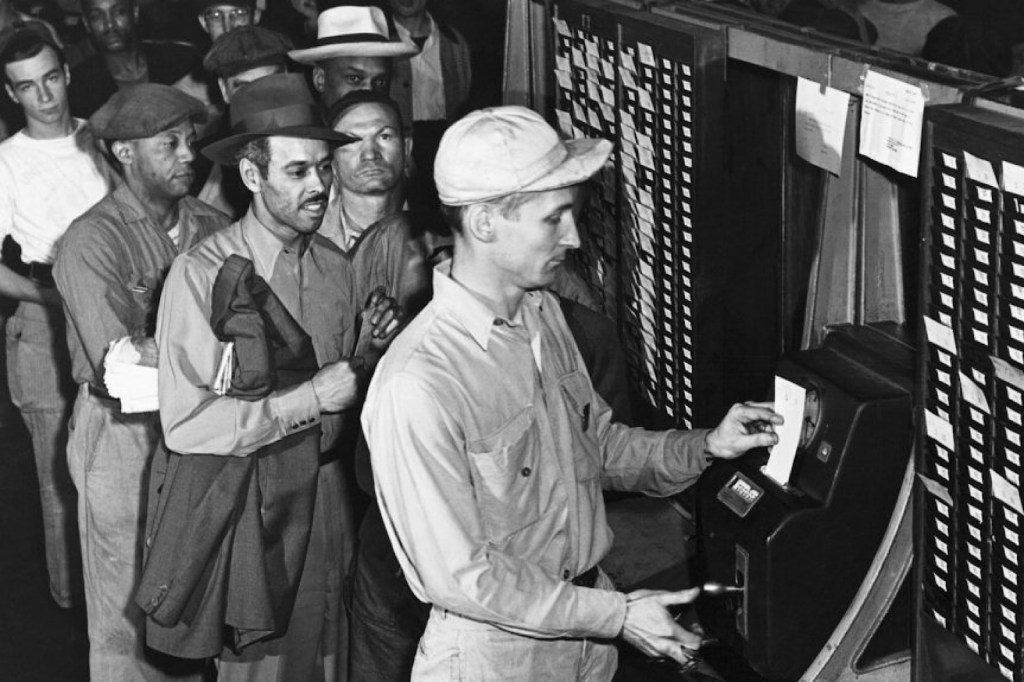
Goldin suggests the economic impact of Trump’s anti-migrant beliefs and policies will undermine both the world and American economies. In 2023, an estimated 18% of the economic output of the American economy came from migration. The two industries most impacted are agriculture and construction but many immigrants work in caregiving and medical professions, all of which will be impacted by labor shortages. Goldin notes that migrants working in other countries send money back to their home countries that amount to more revenue than is provided by tourism and foreign aid. Many, if not most, economists would argue migration is a cornerstone of economic growth and stability. Trump’s false statements about migrant criminality are overblown and unsupported by economic statistics that show migrants contributed an estimated $25.7 billion in 2022 to the Social Security system in taxes that benefit aged American citizens (like myself).
Trump policies will not return American to the manufacturing prosperity of the twentieth century but to a possible depression like that of the 1930s or, at the very least, a recession like that of 2007-2009.
Migration is the movement of people to new areas of the world for work, better living conditions, and safety. In that process the world economy is strengthened.
Government is not a business for profit and should not be solely measured by its cost. America will survive the catastrophic mistakes being made by President Trump but American citizens, and the welfare of the world will suffer for years to come.
Books of Interest Website: chetyarbrough.blog
Who is Government (The Untold Story of Public Service)
By: Michael Lewis, Casey Cep, Dave Eggers, John Lanchester, Geraldine Brooks, Sarah Vowell, and Kamau Bell
Edited By: Michael Lewis
The stories of these writers are a tribute to those who have chosen careers in American government. Having personally earned a master’s degree in public administration, worked as a local government manager, then as a manager of a private business division, and finally, as a personal business owner, I have an opinion about President Trump. My experience is based on three different types of employment. All were rewarding experiences but in fundamentally different ways.
DONALD TRUMPELON MUSK
The writers of “Who is Government” show how ignorant business creators and managers like Donald Trump and Elon Musk are in discounting the contribution of employees of government organizations. Private corporations do not survive without profit to its owners. Public organizations do not survive without service to the public.
Profit is simple to measure. Public service is measurable but more abstract and difficult to quantify.
One can choose, like Musk did with Twitter, to reduce costs by firing employees. That may improve profitability but at a cost that may hurt or destroy the future of a business. In the case of Twitter, the company lost much of their advertising revenue because an unsupervised public forum could spread false and defamatory information that embarrasses advertisers who were protected by Twitter’ employees that were fired. No analysis was done by Musk about Twitter information’ controls provided by employees. The new entity, “X”, seems to have assuaged some advertisers’ concerns because they have started to use Musk’s new company. The point is that if Musk had taken more time to evaluate what fired employees were doing, he may have retained many of the advertisers who left the forum.
Trump’s employment of Musk to decimate the government employee workforce is following the same foolish path that was taken with Twitter.
No analysis of employee contributions is made. The goal is only to reduce government’ cost regardless of employee’ contribution to public need or service. The consequences have likely reduced health and welfare of American citizens; not to mention harm done to incomes of thousands of government employees’ families.
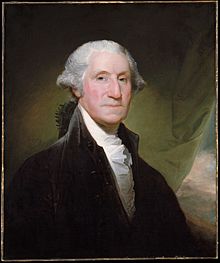
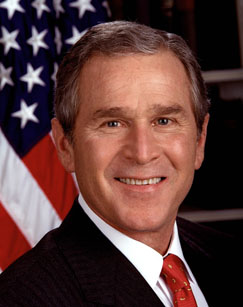
GEORGE WASHINGTONHARRY TRUMANJIMMY CARTERGEORGE WALKER BUSH (43RD PRES. OF THE UNITED STATES)
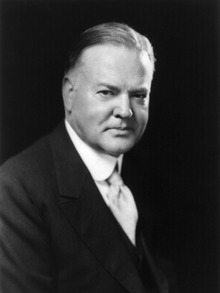
With exceptions of George Washington, Harry Truman, Carter, and the two Bush presidents, the worst former businessman that became President was Herbert Hoover who served as President before the greatest depression in America’s history. With Trump as President, one has to wonder whether he is leading America and the world toward its second great depression.
HERBERT HOOVER (31ST PRESIDENT OF THE U.S.)
“Who is Government” illustrates how government employees have contributed to the health and welfare of America. They are unknown and viewed by people like Trump and Musk as just a cost, without benefit to the public. How many science, medical, veteran, and welfare services are being decimated by their narrow vision of government management?
Government is not a business for profit and should not be solely measured by its cost. America will survive the catastrophic mistakes being made by President Trump but American citizens, and the welfare of the world will suffer for years to come.
Sir John Anderson Kay calls for more training in ethical behavior and fiduciary responsibility in the financial industry. Kay believes “too big to fail” financial institutions should be broken up to reduce risk and encourage competition.
Books of Interest Website: chetyarbrough.
Other People’s Money (The Real Business of Finance)
By: John Kay
Narrated By: Walter Dixon
Sir John Anerson Kay (Author, CBE, FRSE, FBA, FAcSS, British economist, dean of Oxford’s Said Business School.)
John Kay explains how the world’s finance system was designed to support national economies and international trade. However, he argues the world’s financial system, though designed to improve the lives of everyone, has evolved into a system that primarily benefits those within the financial industry, not everyone.
Kay offers the example of Ponzi schemes like that created by Bernie Madoff, and mortgage derivatives created by financial quants. Unlike Madoff’s personal enrichment, the financial industry’s’ mortgage derivatives enriched mortgage lenders, banks and brokers who sold them to other financial institutions like hedge funds, investment banks, mutual funds, foreign and retail investors. Mortgage derivatives were a national Ponzi scheme, greater than Madoff’s, that only enriched the financial industry. In 2008, the financial industry nearly bankrupted the world. The finance managers served no jail time while poorly qualified homeowners were thrown into the street because they could not afford their home mortgages.
What is puzzling is how so many people lost their homes in 2008 despite government regulation of the financial industry, which was ostensibly designed to protect consumers and stabilize the housing market.
“Other People’s Money” is managed by financial institutions that have nothing to lose if other people’s money is lost. A poor finance industry manager might lose his/her job because of poor sales received for selling financial products to other financial companies. However, if their sales are good, huge bonuses are given to top earners. Kay notes three faults in this system. One, it is a closed system that primarily feeds on itself as an industry. Two, the product of sale can as easily be worthless as valuable. And three, the money that is being used is primarily the public’s money, not the financial industries’ money. Mortgage derivatives became weapons of mass financial destruction. The public suffered more than the financial industry for the obvious reason that it was the public’s money.
In theory client funds are kept separate from a firm’s own assets. Though that may be true, the equity of lenders is small in relation to the loans made to others because the loan actually comes from “Other People’s Money”, i.e., those who deposit their paychecks in a financial institution. There are government entities like the SEC in the US that enforce separation of a lender’s equity from other people’s money but so what? Other people’s money is the bulk of what is lent out to others.
Government regulations require record-keeping, transparency and risk management. So why did so many people lose their homes in 2008 while lenders were bailed out? If the Government regulated how other people’s money was being invested, how did the 2008 mortgage crises occur? It occurred because of the way the financial industry is regulated and the greed of financial institutions in selling a product that had less value than realized until it was too late. The fault within the industry grew bigger based on the packaging and resale of other people’s money in a product that became worthless.
The point is that there is little equity from money lenders that use “Other People’s Money” to invest in the economy. Financial institutions are required to have as little as 4.5 percent to 6 percent equity in loans for what they lend to others. The remainder is “Other People’s Money”. Most of the risk of institutionally loaned money is born by the public. Of course, there are insurance guarantees from the government, but they are limited.
Kay notes financial industries are motivated to expand their businesses by capitalizing on short-term gains for profit rather than long-term stability and growth.
Kay goes on to explain that financial institutions are the biggest contributors to candidates for public office. Just as the Supreme Court’s decision to give corporations personhood, the influence of corporate America distorts the influence of American citizens. Naturally, financial institutions push for favorable regulations designed to benefit owners and managers of the finance industry. He explains how financial risk is designed to fall back on taxpayers and less informed investors. Because financing institution managers are using other people’s money, they are more concerned about lender profit and their bonuses than loan default. Kay suggests there is a lack of transparency that hides the exploitive nature of lending that has minimal personal risk to lending institutions, its managers, and loan officers.
Kay argues financial products and services need to be simplified and made more transparent so consumers can understand how lending institutions and insiders are benefiting from their transactions.
Kay explains the primary functions of the financial industry should be focused on making payments simple with clearer explanations of risks so that capital is efficiently and wisely allocated. Government oversight should be exercised to promote transparency, accountability and long-term stability of the economy. Training in ethical behavior and financial responsibility is needed for agents of the financial industry so that incentives and rewards balance with the needs of the economy.
Kay suggests regulatory reform is necessary with greater transparency, and accountability for long term financial stability. He calls for more training in ethical behavior and fiduciary responsibility in the financial industry. Kay believes “too big to fail” financial institutions should be broken up to reduce risk and encourage competition.
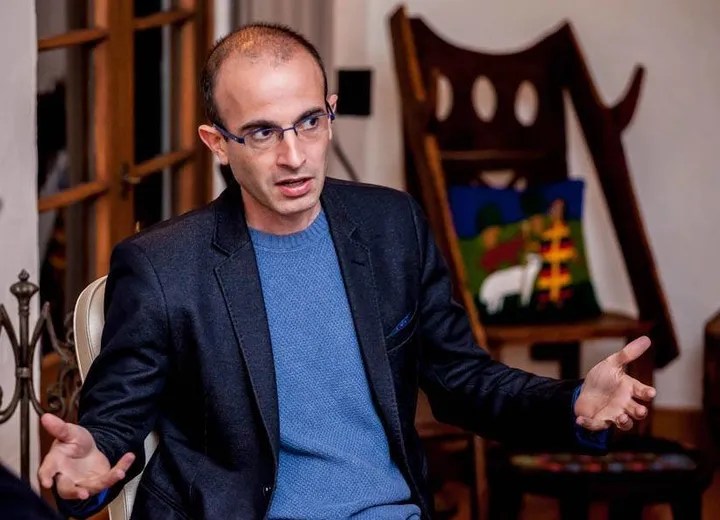
Harari explains why bureaucracy and A.I. can mislead as easily as inform. A.I. should never be considered a decision maker but a tool for human understanding of a complex world.
Books of Interest Website: chetyarbrough.blog
Nexus (A Brief History of Information Networks from the Stone Age to AI)
By: Yuval Noah Harari
Narrated By: Vidish Athavale
Yuval Noah Harari (Author, Israeli medievalist, historian, and public intellectual serving as a professor in the Department of History at Hebrew University of Jerusalem)
Yuval Noah Harari’s “Nexus” is a perspective on information networks and how they evolve from neanderthal grunts to the fundamental link of society. Harari dissects human history and information networks with an eye toward the existence and future of Artificial Intelligence. Harari’s point is that information networks create, control, and compel change. Civilization began with verbal, then written, then video, and finally digital information that brings human beings together into larger and larger groups.
Networked information creates interest groups. Harari explains these interest groups rise from the evolution of information networks.
With written documents and invention of the printing press, the influence of information spreads across the world. Reproduced documents like government Constitutions, the Bible, Quran, The Torah, The Vedas, The Tripitaka, The Guru Granth Shib, The Tao Te Ching, and The Bhagavad Gita create followers whose understanding of society is reenforced by bureaucratic organizations. Villages, towns, cities, and nations grow from religious organizations and government bureaucracies.
Harari notes how information network’s compel obeisance to group think.
Human conflicts may be based on the desire for money, power, and prestige, but Harari’s point is that the agency of change is the information network. Without cohesiveness of an information network, governments, rebellions, and invasions fail. Successful governments, whether formed from rebellions, or invasions succeed or fail based on bureaucracies that use information networks to influence and indoctrinate citizens of established or acquired territories. The power of information networks is exponentially increased by A.I.
The crux of Harari’s concern is the difference between autocracy and democracy and the harmful potential of a digital age that uses information networks to weaponize and control society with the addition of A.I.
The next great economic revolution, after the Agricultural and Industrial Revolutions is today’s Information Age. I would argue America nearly lost control of the great wealth it created by making the rich richer and the poor unchanged. American democracy’s inequality of opportunity remains a work in process.
America’s failure to provide income equality.
Providing equal economic opportunity is a complicated achievement because it begins with the birth of newborns, acceptance of legal immigration and an education system that fairly serves the needs of society. America is among the wealthiest nations in the world but unlike the Nordic countries and its northern neighbor, Canada, it ranks below the middle for income equality. America’s economic tide is not raising all boats. The Information Age provides an opportunity for America to get its economy right by using A.I. to create a more equal income opportunity for its citizens.
Harari’s book is erudite, enlightening, and worth one’s time to read and understand. He advises of many things beyond what is mentioned in this brief review. Harari explains why bureaucracy is both a good and bad thing and that A.I. can mislead as easily as inform. A.I. should never be considered a decision maker but a tool for human understanding of a complex world.
Just as McCulloch’s history shows how the internet changed yesterday, it seems A.I. will change the future.
Books of Interest Website: chetyarbrough.blog
How the Internet Happened (From Netscape to the iPhone)
By: Brian McCullough
Narrated By: Timothy Pabon
Brian McCullough (Author, CEO of Resume Writers.com, entrepreneur.)
A book about the beginning of the internet is such old news, one is inclined to put this book aside. The internet was born in the 1960s and only became recognizable in the 1980s. However, even in 2024, it is interesting to hear about early users who became rich just by organizing information on an easily accessible and free media platform.
Like this blog, it is rewarding to write something that others are interested in reading.
The exercise of book reviews is a reward to one’s education and an ego boost for a writer from an audiences’ clicks. Brian McCullough tells the story of the founders of YAHOO, Jerry Yang and David Filo who were in college and became fascinated by the World Wide Web because of information it offered with clicks on a computer board. This was in the 1990s. Though there were many websites to choose from, they were disorganized and difficult to find if you were looking for specific information. Yang and Filo began organizing the websites by their offered information. YAHOO’S founders were looking for information of interest to them, and presumed others would like to know how they could use a keyboard to find information they might need or want.
Jerry Yang and David Filo were fascinated by what could be found on the internet.
They spent hours, days, weeks, months that grew into years organizing website addresses so others could find what was interesting to them. In these early years, making money was not their primary objective. They did not use their site to advertise products for income. They felt clicks were their reward and that clicks would be lost if advertisers were allowed to use their site. They chose to have users pay a fee to become members of their site. Their use and organization of the internet became an obsession for them and followers steadily increased. Their click numbers and users rose into the millions and advertisers were again knocking at their door. They resisted until they realized their idea could be worth something more than their interest in learning, gathering, and organizing knowledge. They relented, allowed advertising, and the clicks to their site kept on rising. YAHOO went public. The rest is history.
McCulloch goes on to describe the rise and fall of companies that capitalize on the internet.
The companies ranged from behemoth companies like Amazon, Microsoft, Google, Apple, and Ebay that rocketed to the stratosphere while Priceline.com, Netscape, Pets.com, Webvan and others plunged into the abyss. This is not to say today’s behemoths will continue to dominate the market or that some new company will replace their success with even greater appeal. A.I., like the internet, may be a killer discovery that makes or breaks today’s behemoths into tomorrow’s also-rans or hangers-on.
McCulloch’s history is interesting because it explains how winners understood the future better than losers understood the present.
It’s fascinating to find Apple’s Jobs resisted creation of the iPhone but employees worked secretly to refine the idea and Jobs eventually agreed. McCulloch also reveals the monopolistic nature of today’s winners and the threat they present to the future. Killer ideas of today’s tech companies capitalize on the internet’s information ubiquity, and how it can be organized to offer product to the world at a competitive price.
A.I. is a new idea that organizes information on its own with consequences to the public that are yet to be realized. Just as McCulloch’s history shows how the internet changed yesterday, it seems A.I. will change the future.
Hager’s history of the drug industry illustrates the strength and weakness of human nature whether one is a capitalist, socialist, or communist.
Books of Interest Website: chetyarbrough.blog
“Ten Drugs” How Plants, Powders, and Pills Have Shaped the History of Medicine
By: Thomas Hager
Narrated By: Angelo Di Loreto
Thomas Hager (Author, science historian, editor, publisher, Oregon native, received master’s degree in medical microbiology and immunology from the Oregon Health Sciences University.)
“Ten Drugs” is a critical view of today’s drug industry, its drug discoverers, the medical profession, and its manufacturers. Hager explains opium is proven to have been used by Mesopotamian Sumerians in 3400 BCE but older than its known cultivation. The Sumerians called it “hul gil” which means “joy plant”.
Thomas Hager begins with opium and its discovery thousands of years ago when the bitter taste of a poppy seed capsule is tasted by a curious African’, Egyptian’, Greek’, or Roman’ Homo erectus.
Wide use grew to affect national relations between China and the western world in the opium wars of 1856-1860. China’s Qing dynasty lost territorial control of Hong Kong to Great Britain when opium became a cash cow for international trade.
Hager explains how opium offered both risk and reward to the world. It threatened society with addiction and overdose while offering surcease of pain for the wounded or health afflicted.
Addiction significantly increased among the Chinese during and after the opium wars. After many tries to prohibit opium, it was in the early 20th century that addiction was internationally condemned. It was the People’s Republic of China in 1949 that launched an aggressive anti-opium campaign that dramatically reduced opium purchase and use in China. Later, Hager infers China’s success in eliminating the trade is by murdering its dealers and penalizing its users. Ironically, Hager notes former President Trump called for the death penalty for drug dealers to combat America’s drug crises, a policy only likely to be implemented in an authoritarian country.
The first opium war in China, 1841.
Hager infers China’s success in eliminating the trade is by murdering its dealers and penalizing its users.
Hager explains the history of opium evolved into drug derivatives like morphine, laudanum, and codeine to offer pain relief from a variety of medical maladies. These derivatives were effective but still carried the risk of addiction. Hager explains later that addiction is related to nerve system receptors at a molecular level that create a craving for the effects of particular drugs. Opium and its derivatives eventually became regulated because of their addictive character. In America, the Harrison Narcotics Tax Act of 1914 marked the beginning of strict control of opium’s derivative prescriptions in the U.S.
Edward Jenner (1749-1823, English physician and scientist who discovered the use of cowpox to inoculate against smallpox.)
Hager moves on to vaccination. Interestingly, Hager explains the discoverer of inoculation by transfer is not Edward Jenner (1749-1823), a British physician called the Father of Immunology. It was a wealthy English woman named Lady Mary Worley Montague who learned of the use, of what became known as vaccination, in Turkey. She had survived a smallpox infection. Ms. Montague accompanied her husband, who was the British ambassador to the Ottoman empire in 1716.
Ms. Montague learned of a Turkish custom of transferring infected smallpox exudate to healthy children to give them a milder form of smallpox. That transferred exudate inoculated the young from getting a fatal dose of the disease in later life. Smallpox is estimated to have killed over 300,000,000 people (a statistic roughly equivalent to every person alive in the U.S. in the in the 1990s). The Turkish custom of inoculation was found highly effective.
Lady Mary Worley Montague who learned of the use of vaccination in Turkey. Earlier in her life, she had survived a smallpox infection.
In her return to England, Ms. Montague widely disseminated information about the success of the Turkish custom to prevent smallpox. Edward Jenner chose to use cowpox as a substitute tissue for smallpox vaccination of his patients. Jenner found cowpox infected tissue was equally effective in immunization and less dangerous than the using smallpox exudate. Jenner’s discovery of cowpox vaccination in 1796 became widely accepted but nearly 80 years after Ms. Montague’s worldwide promotion of Turkey’s vaccination procedure. Jenner’s vaccination success led to the World Health Organization’s claim that smallpox eradication could be achieved through an international inoculation program. Smallpox is alleged to have been eradicated as a disease in 1980.
The next drug identified as important by Hager is sulfa, a major cause of death from infected open wounds.
The common cause is a bacteria called Streptococcus. Bayer Corporation, a dye manufacturer in Germany, decides to enter the drug industry because their investment, facilities, and research scientists were ideal for entry into research and manufacture of drugs. They compound a drug called Prontosil that is discovered as a sulfa based chemical compound that successfully kills Streptococcal bacteria that cause fatal infections from open wounds. Bayer’s discovery saved many lives as WWII was gathering in the 1930s. Ironically, one of the saved lives is FDR’s son who had a severe streptococcal infection in 1936.
Hager notes personal mental illness and social dysfunction are perennial maladies that plague society through the 21st century.
Isolation and various therapies have been used to address mental illness. In early days, asylums were created to isolate patients who could not cope with daily life. Palliative treatment ranged from isolation to Freudian consultation, to electroshock, to newly discovered drug treatments. Though not mentioned by Hager, a little research shows the first significant breakthrough drug was lithium in 1949.
John Cade (1912-1980, An Australian psychiatrist discovered the effects of lithium carbonate as a mood stabilizer in 1948.)
Lithium was actually discovered in 1817 but did not get used for mental illness until 1948 when John Cade, an Australian psychiatrist, found that lithium carbonate stabilized mo0d and reduced the severity of manic episodes in patients.
Though Hager doesn’t mention lithium, he notes the French chemist Paul Charpentier identified antihistamine in 1950 as an antipsychotic to aid his patients’ erratic behavior. The use of Thorazine became a common drug synthesized by Rhone-Poulenc Laboratories in France. It was released in the 1950s and considered a major breakthrough in psychiatric treatment. It had a calming effect on severely schizophrenic patients by attacking excess dopamine production in the brain.
The major criticism Hager has of drug manufacturers and the medical industry is in the inherent influence of money, power, and prestige that distorts honest evaluation of drug effectiveness and side effects.
The drug industry depends on the success of their research for new drug discoveries to maintain the cost and improve the value of their businesses. However, human nature gets in the way of every human being. The lure of more money, power, and prestige enter into evaluative judgements and descriptions of tests for new drugs. The financial success of a drug that mitigates or cures particular societal ills make millions, if not billions, of dollars for drug manufacturers. Drug manufacturers are not eleemosynary institutions. They are in the business of making money and preserving their longevity while enriching themselves and their stockholders. Hager argues human nature distorts the truth of drug efficacy with tailored reports of a drug’s true benefit and potential for harm. He offers statins as an example of drug manufacturers’ misleading promotions.
Hager reviews the history of statins and correlations drawn by the medical industry about their efficacy in reducing heart ailments.
He suggests clinical studies by manufacturers often distort the entire effect of statins in preventing heart attacks. Statins are designed to reduce cholesterol in the blood stream. However, many studies that correlate cholesterol with heart disease are only partly related to heart attacks while having measurable side effects that diminish human cognition, memory, and potential organ damage, i.e, liver and kidney damage. Hager cautions those who take statins not to stop without discussing it with their physicians. However, Hager recounts an unsolicited personal contact that suggested he should be taking a statin because he is over 60 and had a brain vessel bleed in his earlier medical history. The contact recommended Hager take a statin based on that history. Hager notes that he felt his private medical history had been hacked, and that the contact is evidence of drug industry promotion of statins for profit more than public benefit.
In Hager’s last chapters, he explains how the drug industry is being attacked for influence peddling. In drug manufacturers drive for profits, they offer incentives to the medical profession (e.g. trips to conferences in exotic resorts, personal solicitations from sales reps, etc.) to use specific drugs in their practices.
In the end, Hager argues there are exceptions to the medical industries drive for profits by telling the story of British researchers Georges Kohler and Cesar Milstein who made a discovery in 1975 that changed the focus of drug manufacturer to what is called monoclonal antibody drug development. Kohler and Milstein found a process for creating drugs that have fewer side effects by creating antibody drugs that exclusively attack diseases at a molecular level. The irony of their discovery is Kohler and Milstein chose not to patent their discovery. If they had patented their discovery, they could have gained income for every company who chose to create monoclonal antibody drugs.
British researchers Georges Kohler and Cesar Milstein
Research is growing to create drugs that more precisely address the known molecular cause of disease without affecting the general health of patients. Not surprisingly, today’s manufacturers of monoclonal drugs use Kohler’s and Milstein’s process while requiring patents for their drugs.
Hager’s history of the drug industry illustrates the strength and weakness of human nature whether one is a capitalist, socialist, or communist.