HUMAN LIFE

What we see today is not reality, but our minds’ interpretation of the material world. It seems that everything in the world is process, e.g., gravity, or time relativity, or quantum unpredictability.

Books of Interest
 Website: chetyarbrough.blog

Brain Myths Exploded (Lessons from Neuroscience)

Lecturer: Indre Viskontas

By:  The Great Courses

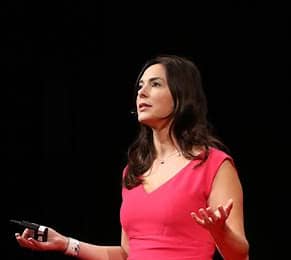
Indre Viskontas (Ph.D. in cognitive neuroscience from UCLA, performed at Cafe Royal Opera in San Francisco, studies neural basis of memory and creativity, Lecturer at USF.)

Dr. Indre Viskontas offers interesting facts and theories about the brain in her Great Courses lectures. Her educational and musical accomplishments are remarkable examples of brain’ flexibility, human intelligence, and life-long potential. Her lectures show cognitive improvement may occur throughout one’s life while recalling incidents of brain damage and discoveries of science experiments that reveal how the brain works.

Viskontas suggests the belief that humans use only 10% of their brain is a myth.

The brain is made of eight distinctive structures which are interconnected and work together for our thoughts, feelings, and movements. A network of neurons sends electrical and chemical signals between parts of the brain that generate human thought and action; some of which are automatic and others cognitively reasoned. Viskontas explains how interconnections allow continued mental and physical functioning even when a part of the brain is damaged. Experiment and human accident have proven that the brain can adapt to loss of normal thought and action by retraining healthy parts of the brain. Retraining the brain can improve lost function. This may not return the perfect function of an undamaged brain, but it will improve function.

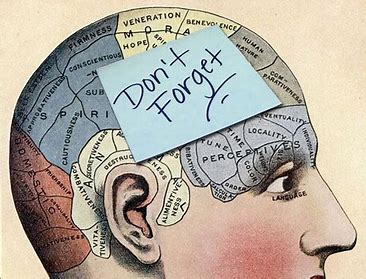
Viskontas explains human memory is a reconstructive process with varying degrees of accuracy.

There are people who have nearly perfect recall of their past. However, experiment has shown that even those few who can recall their personal history in detail are affected by emotion that distorts its accuracy. Furthermore, Viskontas explains personal history’ memory is limited to personal experience rather than any measurement of IQ. Of course, there are a few people who are said to have eidetic memories that can recall images with precision. They have so-called “photographic memories”, but IQ is based on problem-solving abilities that, at best, would be enhanced by a photographic memory. It is the application of recalled information to problem solving abilities that make one a genius like John von Neumann and Nikol Tesla who were alleged to have eidetic memories.

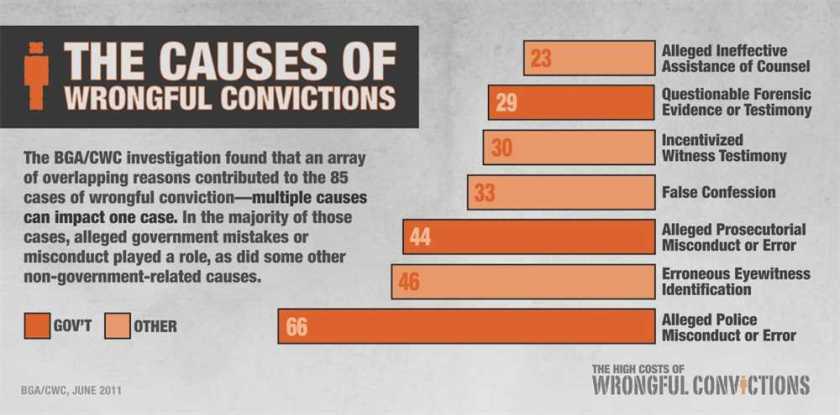
The risk is that “eyewitness” accounts can be influenced and totally wrong.

Scientific experiment has proven memory is a reconstructive process. With DNA analysis, a number of convicted murderers have been found innocent despite many eyewitnesses that identified them at scenes of crime. One is reminded of the gorilla experiment where eyewitnesses are distracted when a gorilla is sitting in a chair just as a human action scene is created in the same room. They do not see the gorilla and are surprised when it is pointed out to them later.

In the era of quantum computing, the concept of reality is evolving at a rate that boggles the mind.

The idea of a probabilistic rather than concrete reality reminds one of the differences between the science of Newton and Einstein. Newton thought of things as concrete reality. Einstein takes steps toward relativity with less emphasis on the concreteness of reality. What we see today is not reality, but our minds’ interpretation of the material world. It seems that everything in the world is process, e.g., gravity, or time relativity, or quantum unpredictability. Life and human beings may only be a pile of atoms in an atomic process of birth, life, death, and whatever comes after death.

As human beings grow older, new things take longer to learn but Viskontas explains it is commitment that makes a difference in learning something new.

Taking piano lessons as an older adult, deciding to become an opera singer after graduating from college as a neuroscientist, or reading/listening to books about science when you are not educated as a scientist takes more time as you get older, slower, and less inquisitive. Dr. Viskcontas’ lectures infer it is never too late to learn something new. It just takes longer for it to become a part of who you are.

INTELLIGENCE

After two or three chapters of Huston’s book, reader/listeners will likely complete it. The difficulty, as with all good advice, is following it.

Books of Interest
 Website: chetyarbrough.blog

SHARP (Simple Ways to Improve Your Life with Brain Science)

By: Therese Huston PhD

Narrated By:  Theresa Bakken

Therese Huston (Author, earned an MS and PhD in Cognitive Psychology from Carnegie Mellon University.)

Therese Huston is a well-known public speaker who has written a book that has appeal for those who wish to know what they can do to improve their memory and cognitive abilities. This is not a book some will be interested in either listening to or reading. Many presume they have a proscribed intelligence and memory largely determined by genetic inheritance. Huston infers there is some science-based truth in that opinion but that one’s memory, cognitive ability, and psychological health can be treated, if not improved, at any age.

Huston’s prescription for improved memory and cognitive ability requires effort.

Undoubtedly, we inherit much of our innate cognitive ability but whatever one’s genetic inheritance and age may be Huston argues cognition and memory can be improved. Huston discusses areas of the brain that are the base from which cognition and memory originate, are stored, and then called upon.

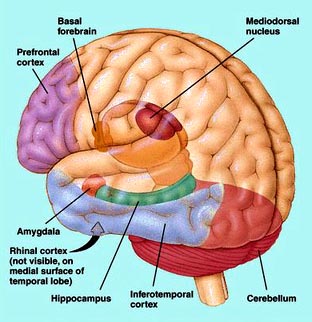
Huston notes the hippocampus, amygdala, prefrontal cortex, neocortex, cerebellum, and basal ganglia are key brain areas involved in cognition and memory.

The hippocampus is the primary location of memories, but the other five areas interact with one’s personal experiences in ways ranging from emotion, individual understanding, decision-making, reasoning, skill development, and formed habits. As we age, the way we process, store, and retrieve information deteriorates. We lose some memories, process information more slowly, and find it more difficult to process new information in the context of past experience.

What Huston explains is that exercise, visual, and tactical experience can improve memory and cognition at every age.

Staying active, experiencing the world in ways that stimulate the production of dopamine, and exercising effort to learn and do new things improves cognitive ability and memory. Dopamine is a neurotransmitter in the human body that regulates mood, focus and behavior. It is released by the body when it is stimulated by exercise, engaging experience, and learning new things. Huston offers advice on how one at any age can improve their mental health and care for themselves and others when they are troubled by various common and extraordinary events in life. Life’s events stimulate the release of dopamine which can illicit rage and bad behavior but also provide focus and beneficial behavior.

Huston suggests 14 generally simple ways of helping oneself and others cope with the stresses of life.

Many of her solutions are commonly understood, others less so. Not surprisingly, she notes exercise, proper nutrition, quality sleep, and deep breathing are important for maintenance and improvement of brain function and memory. Some more difficult and less understood aids to brain health and memory are 1) importance of social engagement, 2) learning new things from personal and other’s recorded experience, and 3) practicing ways of reducing the stresses of life in yourself and others you care about.

One who reads or listens to “Sharp” will recognize the value of Huston’s advice for improving memory and cognitive ability.

After two or three chapters, reader/listeners will likely complete her book. The difficulty, as with all good advice, is following it.

MEDICINE

A government designed to use public funds to pick winners and losers in the drug industry threatens human health. Only with the truth of science discoveries and honest reporting of drug efficacy can a physician offer hope for human recovery from curable diseases.

Books of Interest
 Website: chetyarbrough.blog

Rethinking Medications (Truth, Power, and the Drugs You Take)

By: Jerry Avorn

Narrated By: Jerry Avorn MD

Jerry Avorn (Author, professor of medicine at Harvard Medical School where he received his MD, Chief Emeritus of the Division of Pharmacoepidemiology and Pharmacoeconomics)

Doctor Avorn enlightens listener/readers about drug industry’ costs, profits, and regulation. Avorn explains how money corrupts the industry and the FDA while encouraging discovery of effective drug treatments. The cost, profits, and benefits of the industry revolve around research, discovery, medical efficacy, human health, ethics, and regulation.

Drug manufacture is big business.

Treatments for human maladies began in the dark ages when little was known about the causes of disease and mental dysfunction. Cures ranged from spirit dances to herbal concoctions that allegedly expelled evil, cured or killed its followers and users. The FDA (Food and Drug Administration) did not come into existence until 1930, but its beginnings harken back to the 1906 Pure Food and Drug Act signed into law by Theodore Roosevelt. The FDA took on the role of reviewing scientific drug studies for drug treatments that could aid health recovery for the public. The importance of review was proven critical by incidents like that in 1937, when 107 people died from a Sulfanilamide drug which was found to be poisonous. From that 1937 event forward, the FDA required drug manufacturers to prove safety of a drug before selling it to the public. The FDA began inspecting drug factories while demanding drug ingredient labeling. However, Avorn illustrates how the FDA was seduced by Big Pharma’ to offer drug approvals based on flawed or undisclosed research reports.

Dr. Martin Makary (Dr. Makary was confirmed as the new head of the FDA on March 25, 2025. He is the 27th head of the Department. He is a British-American surgeon and professor.)

What Dr. Avorn reveals is how the FDA has either failed the public or been seduced by drug manufacturers to approve drugs that have not cured patients but have, in some cases, harmed or killed patients. It will be interesting to see what Dr. Marin Makary can do to improve FDA’s regulation of drugs. Avorn touches on court cases that have resulted in huge financial settlements by drug manufacturing companies and their stockholders. However, he notes the actual compensation received by individually harmed patients or families is miniscule in respect to the size of the fines; not to mention many billions of dollars the drug companies received before unethical practices were exposed. Avorn notes many FDA’ research and regulation incompetencies allowed drug companies to hoodwink the public about drug companies’ discovered but unrevealed drug side-effects.

A few examples can be easily found in an internet search:

1) Vioxx (Rofecoxib), a pain killer, had to be withdrawn from use in 2004 because it was linked to increased risk of heart attacks and strokes. It was removed from the market in 2004.

2) Fen-Phen (Fenfluramine/Phentermine), a weight-loss drug had to be taken off the market in 1997 because of severe heart and lung complications.

3) Accutane was used to cure acne but was found to be linked to birth defects and had to be withdrawn in 2009.

4) Thalidomide was found to cause birth defects to become repurposed for treatment of certain cancers.

5) A more recent failure of the FDA is their failure to regulate opioids like OxyContin that resulted in huge fines to manufacturers and distributors of the drug.

Lobbyists are hired by drug companies to influence politicians to gain support of drug companies. In aggregate, this chart shows the highest-spending lobbyists in the 3rd Qtr. of 2020 were in the medical industry.

Dr. Avorn argues Big Pharma’s lobbying power has unduly influenced FDA to approve drugs that are not effective in treating patients for their diagnosed conditions. Avorn infers Big Pharma is more focused on increasing revenue than effectively reviewing drug manufacturer’ supplied studies. Avorn argues the FDA has become too dependent on industry fees that are paid by drug manufacturers asking for expedited drug approvals. Avorn infers the FDA fails to demand more documentation from drug manufacturers on their drug’ research. The author suggests many approved opioids, cancer treatment drugs, and psychedelics have questionable effectiveness or have safety concerns. Misleading or incomplete information is provided by drug companies that makes applications an approval process, not a fully relevant or studied action on the efficacy of new drugs.

Avorn is disappointed in the Trump administrations’ selection of Robert Kennedy as the U.S. Secretary of Health and Human Services because of his lack of qualification.

The unscientific bias of Kennedy and Trump in regard to vaccine effectiveness reinforces the likelihood of increased drug manufacturers’ fees that are just a revenue source for the FDA. Trump will likely reward Kennedy for decreasing the Departments’ overhead by firing research scientists and increasing the revenues they collect from drug manufacturers seeking drug approvals.

Trump sees and uses money as the only measure of value in the world.

It is interesting to note that Avorn is a Harvard professor, a member of one of the most prestigious universities in the world. Harvard is being denied government grants by the Trump administration, allegedly because of Harvard’s DEI policy. One is inclined to believe diversity, equity, and inclusion are ignored by Trump because he is part of the white ruling class in America. Trump chooses to stop American aid to the world to reduce the cost of government. American government’s decisions to starve the world and discriminate against non-whites is a return to the past that will have future consequences for America.

Next, Avorn writes about the high cost of drugs, particularly in the United States. Discoveries are patented in the United States to incentivize innovation, but drug companies are gaming that Constitutional right by slightly modifying drug manufacture when their patent rights are nearing expiration. They renew their patent and control the price of the slightly modified drug that has the same curative qualities. As publicly held corporations, they are obligated to keep prices as high as the market allows. The consequence leaves many families at the mercy of their treatable diseases because they cannot afford the drugs that can help them.

Martin Shkreli, American investor who rose to fame and infamy for using hedge funds to buy drug patents and artificially raise their prices to only increase revenues.

The free market system in America allows an investor to buy a drug patent and arbitrarily raise its price. Avorn suggests this is a correctable problem with fair regulation and a balance between government sponsored funding for drug research in return for public funding. Of course, there are some scientists like Jonas Salk in 1953 who refused to privately patent the polio vaccine because it had such great benefit to the health of the world.

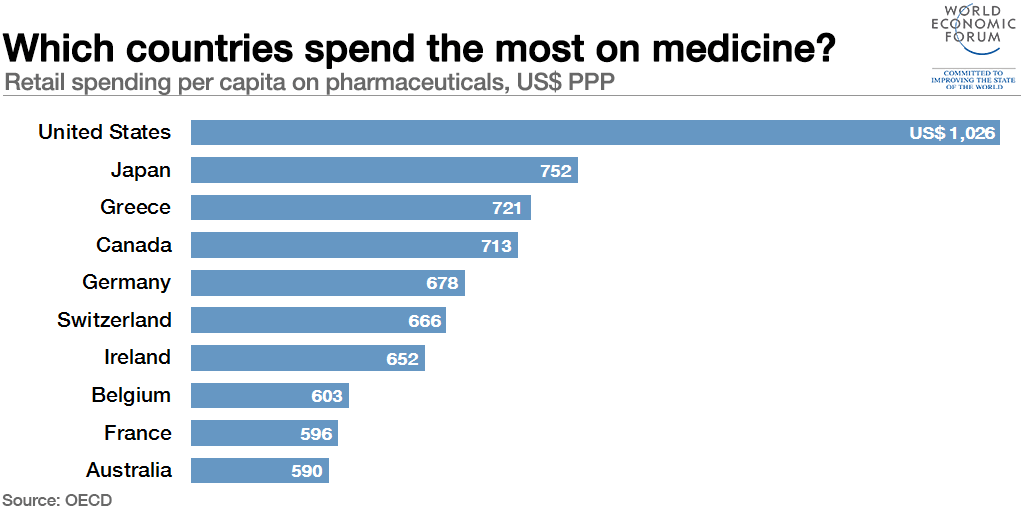
Avorn notes the 1990’s drug costs in the U.S. are out of control.

Only the rich are able to pay for newer drugs that cost hundreds of thousands of dollars per year. Americans spend over $13,000 per year per person while Europe is around $5,000 and low-income countries under $500 per year. These expenditures are to extend life which one would think make Americans live longest. Interestingly, America is not even in the top 10. Hong Kong’s average life expectancy is 85.77 years, Japan 85. South Korea 84.53. The U.S. average life expectancy is 79.4. To a cynic like me, one might say what’s 5 or 6 more years of life really worth? On the other hand, billionaires and millionaires like Peter Thiel and Bryan Johnson have invested millions into anti-aging research.

Avorn reinforces the substance of Michael Pollan’s book “How to Change Your Mind” which reenvisions the value of hallucinogens in this century.

Avorn notes hallucinogens efficacy is reborn in the 21st century to a level of medical and social acceptance. Avorn is a trained physician as opposed to Pollan who is a graduate with an M.A. in English, not with degrees in science or medicine.

In reviewing Avorn’s informative history, it is apparent that patients should be asking their doctors more questions about the drugs they are taking.

Drugs have side effects that can conflict with other drugs being taken. In this age of modern medicine, there are many drugs that can be effective, but they can also be deadly. Drug manufacturers looking at drug creation as only revenue producers is a bad choice for society.

Avorn’s history of the drug industry shows failure in American medicines is more than the mistake of placing an incompetent in charge of the U.S.

Taking money away from research facilities diminishes American innovation in medicine and other important sciences. However, research is only as good as the accuracy of its proof of efficacy for the treatment of disease and the Hippocratic Oath of “First, do no harm”. A government designed to use public funds to pick winners and losers in the drug industry threatens human health. Only with the truth of science discoveries and honest reporting of drug efficacy can a physician offer hope for human recovery from curable diseases.

RISK/REWARD

AI is only a tool of human beings and will be misused by some leaders in the same way Atom bombs, starvation, disease, climate, and other maladies have harmed the sentient world. AI is more of an opportunity than threat to society.

Books of Interest
 Website: chetyarbrough.blog

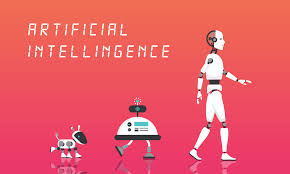
A Brief History of Artificial Intelligence (What It Is, Where We Are, and Where We Are Going)

By: Michael Wooldridge

Narrated By: Glen McCready

Michael Wooldridge (Author, British professor of Computer Science, Senior Research Fellow at Hertford College University of Oxford.)

Wooldridge served as the President of the International Joint Conference in Artificial Intelligence from 2015-17, and President of the European Association for AI from 2014-16. He received a number of A.I. related service awards in his career.

Alan Turing (1912-1954, Mathematician, computer scientist, cryptanalyst, philosopher, and theoretical biologist.)

Wooldridge’s history of A.I. begins with Alan Turing who has the honorific title of “father of theoretical computer science and artificial intelligence”. Turing is best known for breaking the German Enigma code in WWII with the development of an automatic computing engine. He went on to develop the Turing test that evaluated a machine’s ability to provide answers to questions that exhibited human-like behavior. Sadly, he is equally well known for being a publicly persecuted homosexual who committed suicide in 1954. He was 41 years old at the time of his death.

Wooldridge explains A.I. has had a roller-coaster history of highs and lows with new highs in this century.

Breaking the Enigma code is widely acknowledged as a game changer in WWII. Enigma’s code breaking shortened the war and provided strategic advantage to the Allied powers. However, Wooldridge notes computer utility declined in the 70s and 80s because applications relied on laborious programming rules that introduced biases, ethical concerns, and prediction errors. Expectations of A.I.’s predictability seemed exaggerated.

The idea of a neuronal connection system was thought of in 1943 by Warren McCulloch and Walter L Pitts.

In 1958, Frank Rosenblatt developed “Perception”, a program based on McCulloch and Pitt’s idea that made computers capable of learning. However, this was a cumbersome programming process that failed to give consistent results. After the 80s, machine learning became more usefully predictive with Geoffrey Hinton’s devel0pment of backpropagation, i.e., the use of an algorithm to check on programming errors with corrections that improved A.I. predictions. Hinton went on to develop a neural network in 1986 that worked like the synapse structure of the brain but with much fewer connections. A limited neural network for computers led to a capability for reading text and collating information.

Geoffrey Hinton (the “Godfather of AI” won the 2018 Turing Award.)

Then, in 2006 Hinton developed a Deep Belief Network that led to deep learning with a type of a generative neural network. Neural networks offered more connections that improved computer memory with image recognition, speech processing, and natural language understanding. In the 2000s, Google acquired a deep learning company that could crawl and index the internet. Fact-based decision-making, and the accumulation of data, paved the way for better A.I. utility and predictive capability.

Face recognition capability.

What seems lost in this history is the fact that all of these innovations were created by human cognition and creation.

Many highly educated and inventive people like Elon Musk, Stephen Hawking, Bill Gates, Geoffrey Hinton, and Yuval Harari believe the risks of AI are a threat to humanity. Musk calls AI a big existential threat and compares it to summoning a demon. Hawking felt Ai could evolve beyond human control. Gates expressed concern about job displacement that would have long-term negative consequences with ethical implications that would harm society. Hinton believed AI would outthink humans and pose unforeseen risks. Harari believed AI would manipulate human behavior and reshape global power structures and undermine governments.

All fears about AI have some basis for concern.

However, how good a job has society done throughout history without AI? AI is only a tool of human beings and will be misused by some leaders in the same way atom bombs, starvation, disease, climate, and other maladies have harmed the sentient world. AI is more of an opportunity than threat to society.

FUTURE A.I.

Human nature will not change but A.I. will not destroy humanity but insure its survival and improvement.

Books of Interest
 Website: chetyarbrough.blog

Human Compatible (Artificial Intelligence and the Problem of Control)

By: Stuart Russell

Narrated By: Raphael Corkhill

Stuart Johnathan Russell (British computer scientist, studied physics at Wadham College, Oxford, received first-class honors with a BA in 1982, moved to U.S. and received a PhD in computer science from Stanford.)

Stuart Russell has written an insightful book about A.I. as it currently exists with speculation about its future. Russell in one sense agrees with Marcus’s and Davis’s assessment of today’s A.I. He explains A.I. is presently not intelligent but argues it could be in the future. The only difference between the assessments in Marcus’s and Davis’s “Rebooting AI” and “Human Compatible” is that Russell believes there is a reasonable avenue for A.I. to have real and beneficial intelligence. Marcus and Davis are considerably more skeptical than Russell about A.I. ever having the equivalent of human intelligence.

Russell infers A.I. is at a point where gathered information changes human culture.

Russell argues A.I. information gathering is still too inefficient to give the world safe driverless cars but believes it will happen. There will be a point where fewer deaths on the highway will come from driverless cars than those that are under the control of their drivers. The point is that A.I. will reach a point of information accumulation that will reduce traffic deaths.

A.I. will reach a point of information accumulation that will reduce traffic deaths.

After listening to Russell’s observation, one conceives of something like a pair of glasses on the face of a person being used to gather information. That information could be automatically transferred by improvements in Wi-Fi to a computing device that would collate what a person sees to become a database for individual human thought and action. The glasses will become a window of recallable knowledge to its wearer. A.I. becomes a tool of the human mind which uses real world data to choose what a human brain comprehends from his/her experience in the world. This is not exactly what Russell envisions but the idea is born from a combination of what he argues is the potential of A.I. information accumulation. The human mind remains the seat of thought and action with the help of A.I., not the direction or control by A.I.

Russell’s ideas about A.I. address the concerns that Marcus and Davis have about intelligence remaining in the hands of human’s, not a machine that becomes sentient.

Russell agrees with Marcus, and Davis–that growth of A.I. does have risk. However, Russell goes beyond Marcus and Davis by suggesting the risk is manageable. Risk management is based on understanding human action is based on knowledge organized to achieve objectives. If one’s knowledge is more comprehensive, thought and action is better informed. Objectives can be more precisely and clearly formed. Of course, there remains the danger of bad actors with the advance of A.I., but that has always been the risk of one who has knowledge and power. The minds of a Mao, Hitler, Beria, Stalin, and other dictators and murderers of humankind will still be among us.

The competition and atrocities of humanity will not disappear with A.I. Sadly, A.I. will sharpen the dangers to humanity but with an equal resistance by others that are equally well informed. Humanity has managed to survive with less recallable knowledge so why would humanity be lost with more recallable knowledge? As has been noted many times in former book reviews, A.I. is, and always will be, a tool of human beings, not a controller.

The world will have driverless cars, robotically produced merchandise, and cultures based on A.I.’ service to others in the future.

Knowledge will increase the power and influence of world leaders to do both good and bad in the world. Human nature will not change but A.I. will not destroy humanity. Artificial Intelligence will insure human survival and improvement. History shows humanity has survived famine, pestilence, and war with most cultures better off than when human societies came into existence.

CHOICE

A listener/reader comes away from Pollan’s book with a feeling that there is as much at risk as reward in experimenting with hallucinogens without the aid of professionals. A bad trip can kill you.

Books of Interest
 Website: chetyarbrough.blog

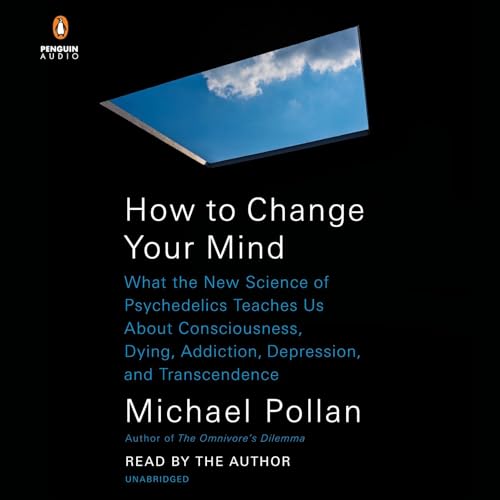
How to Change Your Mind (What the New Science of Psychedelics Teaches Us About Consciousness, Dying, Addiction, Depression, and Transcendence)

By: Michael Pollan

Narrated By: Michael Pollan

Michael Pollan (Author, journalist, professor and lecturer at Harvard and UC Berkeley, received a B.A. in English from Bennington College and M.A. in English from Columbia University.)

“How to Change Your Mind” is a slippery slope examination of hallucinatory drugs. The slipperiness comes from a concern about drug use even though hallucinatory drugs are not addictive. Written by a liberal art’s graduate rather than a physician, psychiatrist, or scientist makes one skeptical of the author’s review and perspective on LSD and other hallucinatory drugs. However, his story is interesting and has an appeal to anyone who has experimented with hallucinogens.

RISKS AND EFFECTS OF HALLUCINOGENS

Pollan’s subject is partly about mushroom drug derivatives, like psilocybin and psilocin, that have hallucinogenic effects. But he also reviews the history of LSD which is a semi-synthetic compound accidentally discovered by a chemist named Albert Hofmann in 1938. LSD is derived from ergot, a type of fungus that grows on rye and other grains.

Albert Hofmann (1906-2008, chemist who synthesized, ingested and studied the effects of LSD.)

Pollan recalls the history of hallucinogenic drugs that evolved from ancient native rituals to public experimentation. Today, medical analysis and treatment with hallucinogenic drugs is being recommended. The revised belief of hallucinogens as a scourge of society is reborn to a level of medical and social acceptance.

One who has lived a long life in the 20th and now 21st century recalls Pollan’s rollercoaster history. Pollan falls on the side of acceptance of the hallucinogenic experience as an aid to society. His reported revisionist belief begins at the age of 60 when he tries a hallucinogenic drug and begins a study of its history. One is somewhat skeptical of Pollan’s objectivity because he is in the business of making a living from writing.

Pollan features several experts in the field of psychedelic research. He refers to Roland Griffiths (upper left corner) now deceased, neuroscientist at Johns Hopkins University who conducted studies on psilocybin’s effect on consciousness and mental health. He meets with Paul Stamets (lower left corner), a mycologist who is a fungi guru who explains where psilocybin mushrooms can be found, how they can be identified, while selling hallucinatory mushrooms to become a wealthy entrepreneur. He writes about James Fadiman (right), a psychologist and researcher who conducted hallucinogenic microdosing experiments on patients to show their potential benefits.

Pollan’s history persuasively argues the benefits of hallucinogenic drugs. However, a bad trip can kill you. On the other hand, Pollan notes recent research shows hallucinogenic drugs have alleviated anxiety, depression, PTSD, addiction, and the fear of dying. He notes psychedelics disrupt the brain’s default modes that negatively affect human behavior.

A listener/reader comes away from Pollan’s book with a feeling that there is as much at risk as reward in experimenting with hallucinogens without the aid of professionals.

THINKING

A.I. will continue to grow as an immense gatherer of information. Will it ever think? Can, should, or will future prediction and political policy be based only on knowledge of the past?

Books of Interest
 Website: chetyarbrough.blog

Rebooting AI (Building Artificial Intelligence We Can Trust)

By: Gary Marcus and Ernest Davis

Narrated By: Kaleo Griffith

These two academics explain much of the public’s misunderstanding of the current benefit and threat of Artificial Intelligence.

Marcus and Davis note that A.I. cannot read and does not think but only repeats what it is programmed to report.

They are not suggesting A.I. is useless but that its present capabilities are much more limited than what the public believes. In terms of product search and economic benefit to retailers, A.I. is a gold mine. But A.I.’s ability to safely move human beings in self-driving cars, free humanity from manual labor, or predict cures for the diseases of humanity are far into the future. A.I. is only a just-born baby.

Self-driving cars, robot servants, and cures for medical maladies remain works in process for Artificial Intelligence.

Marcus and Davis note A.I. usefulness remains fully dependent on human reasoning. It is a tool for recall of documented information and repetitive work. A.I. is not sentient or capable of reasoning based on the information in its memory. Because of a lack of reasoning capability, answers to questions are based on whatever information has been fed to an A.I. entity. It does not use reason to answer inquiry but only recites responses to questions from programmed information in its memory. If sources of programmed information are in conflict, the answers one receives from A.I. may be right, wrong, conflicted, or unresponsive. You can as easily get an answer from A.I. that is wrong as one that is right because it is only repeating what it has gathered from the past.

What Marcus and Davis show is how important it is that questions asked of Microsoft’s Copilot, ChatGPT, Watson, or some other A.I. platform be phrased carefully.

The value of A.I. is that it can help one recall pertinent information only if questions are precisely worded. This is a valuable supplement to human memory, but it is not a reasoned or infallible resource.

Marcus and Davis explain “Deep Learning” is not a substitute for human reasoning, but it is a supplement for more precise recorded information.

Even with multilayered neural networks, like deep learning which attempt to mimic human reasoning by patterning of raw data, can be wrong or confused. One is reminded of the Socratic belief of “I know something that I know nothing.” Truth is always hidden within a search for meaning, i.e., a gathering of information

The true potential of A.I. is in its continued consumption of all sources of information to respond to queries based on a comprehensive base of information. The idea of an A.I. that can read, hear, and collate all the information in the world is at once frightening and thrilling.

The risk is the loss of human freedom. The reward is the power of understanding. However, the authors explain there are many complications for A.I. to usefully capitalize on all the information in the world. Information has to be understood in the context of its contradictions, its ethical consequence, information bias, and the inherent unpredictability of human behavior. Even with knowledge of all information in the world, decisions based on A.I. do not ensure the future of humanity? Should humanity trust A.I. to recommend what is in the best interest of humanity based on past knowledge?

Markus and Davis argue A.I. is not, does not, and will not think.

A.I. will continue to grow as an immense gatherer of information. Will it ever think? Can, should, or will future prediction and political policy be based only on knowledge of the past?

HEALTH

“This is Your Brain on Parasites” is a bad book title but McAuliffe has written an interesting book about physical and mental health, and the treatments being researched in the 21st century.

Books of Interest
 Website: chetyarbrough.blog

This is Your Brain on Parasites (How Tiny Creatures Manipulate Our Behavior) and Shape Society

By: Kathleen McAuliffe

Narrated By: Nicol Zanzarella

Kathleen McAuliffe (Author, science journalist who has published in The New York Times, The Atlantic, and Smithsonian. Received an M.A. in natural science from Trinty College Dublin.)
Kathleen McAuliffe apprises the public of the importance of personal health along with a somewhat bizarrely titled book “This is Your Brain on Parasites”. McAuliffe’s book is about the science of health and its maintenance. The idea of a parasite in one’s brain seems unworthy of a book because of the creepy implication of possession. However, McAuliffe refers to a physician and several research scientists that have found evidence of brain parasites that effect animal and human behavior.

Dr. Robert Sapolsky, a neuroscientist and professor at Stanford studied what is called a Toxoplasma gondii parasite. It forms cysts in brain tissue that are shown to affect human behavior. People who have developed the cysts have shown symptoms of risk-taking behavior, and mental dysfunction like schizophrenia.

Dr. Jaroslav Flegr is a parasitologist, evolutionary biologist and professor of biology at the Faculty of Science, and professor at Charles University in Prague.

McAuliffe meets with a Czech scientist, Dr. Jaroslav Flegr, who conducted research showing the Toxoplasma gondii parasite in cat feces can infect the brain of a human being. The author meets other American research scientists that show how parasites infect animal brains whose behavior is affected in ways that are not natural to their species. A parasite being the source of a diseased brain has implications for treating mentally dysfunctional patients that may have a parasitic infection.

What McAuliffe’s book implies is the importance of washing one’s hands when handling pets, or their fecal material.

“This is Your Brain…” reminds one of the importance of hygiene when replenishing a bird feeder or filling an animal feeding trough to avoid possible parasites.

As most know, Kennedy is not a believer in vaccination despite a growing measles epidemic and the proof that vaccination works. McAuliffe does believe there are circumstances where a child crawling across the floor of a clean house gathers some immunity naturally but that un-common pathogens require uncommon vaccination.

Two other subjects mentioned by McAuliffe is natural and science made vaccinations and the benefits they provide humanity. This is a particularly timely suggestion considering Trump’s appointment of Robert F. Kennedy Jr. (a confessed anti-vaxxer) as the Secretary of Health and Human Services.

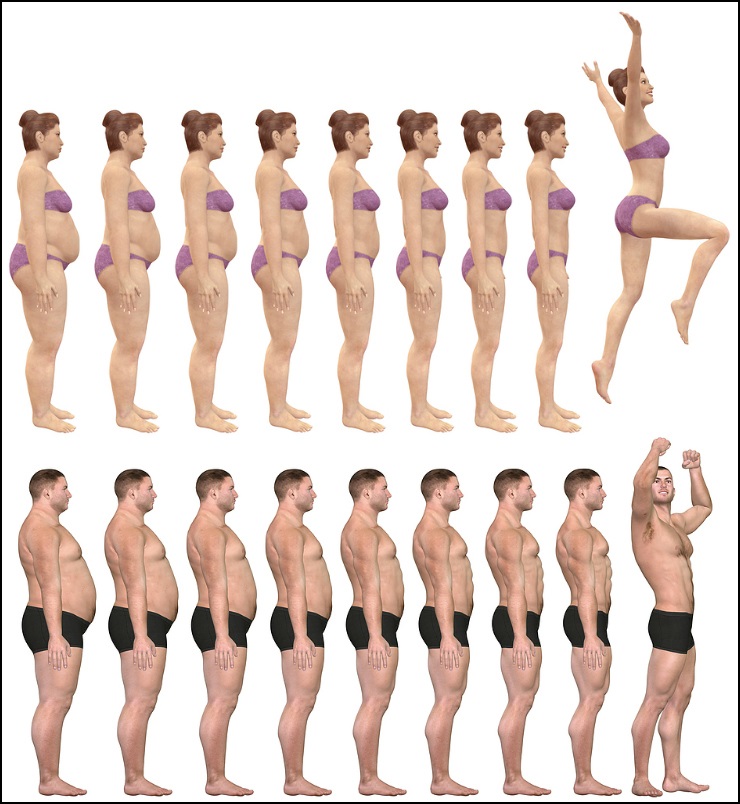
McAuliffe notes how research is showing how certain microbes can remove calories from food and how certain drugs can reduce hunger among overweight patients. She reflects on the intersection of microbiology and human health.

Another interesting examination by McAuliffe is the science research being done on gut microbiomes, a community of microorganisms in human digestive systems.

The research on microbiomes has resulted in effective weight loss drugs that have become popular medications for people struggling with weight gain.

“This is Your Brain on Parasites” is a bad book title but McAuliffe has written an interesting book about physical and mental health, and the treatments being researched in the 21st century.

HUMAN

What is the value of high IQ? If everyone was smarter, would they be happier? It seems the only real value of genetics is in the prevention of known diseases, not in improvement of IQs or creation of a perfect human being (whatever that is).

Books of Interest
 Website: chetyarbrough.blog

The Social Genome: The New Science of Nature and Nurture

By: Dalton Conley

Narrated By: Christopher Douyard

Dalton Clark Conley (Author, Princeton University professor, American sociologist.)

Dalton Conley offers a complex explanation of why one child intellectually and financially excels while others are left behind. The “Social Genome” is an attempt to explain the complexity and inadequacy of genetic research. Not too surprisingly, there seems a correlation between wealth and intellectual development, but its relationship includes familial and environmental nurturing in ways that are too complex for today’s science to measure.

FAMOUS WOMEN IN HISTORY (Many women are as intellectually strong and mentally tough as men, e.g.  Cleopatra, Sojourner Truth, Indira Gandhi, Golda Meir, Benazir Bhutto, Malala Yousafzai, and others.)

Dalton argues both genetics and environment shape human intellect and economic success. However, science’s current knowledge of genetic and environmental impact is not clearly understood in a way to aid human development. The current limitations of science make it impossible to determine the precise genetic and environmental factors that shape human development. Dalton offers many examples of how genetics and environment are relevant to human development, but neither are precisely measurable nor manageable.

The idea of clearly understanding the genetic and environmental causes of who humans become is a bit frightening.

Even if it were possible to achieve precise measurement of genetic and environmental influences, should that knowledge be used to create designer human beings?

Piketty argues that the income gap widens after World War II.  He estimates 60% of 2010’s wealth is held by less than 1% of the population. 

Dalton does believe there is a correlation between economic well-being and IQ, but the correlation is affected by genetic inheritance. Dalton concludes economic well-being is a positive factor in IQ improvement. That raises questions about how one can improve the economic well-being of a society to improve IQ. Dalton infers there is no one size fits all solution for IQ improvement. Nurture and nature are too intimately intertwined to know how IQ of a society can be improved. A conclusion one may draw is that environmental and societal factors like human nutrition, general education and improved equal opportunity can mitigate IQ diminishment. Whether one should modify human genomes is a step too far.

In many ways, this is a frustrating book to listen to or read.

If all people looked more alike than different would there be less conflict in the world? No, but being of one race or another makes a difference in one’s opportunities in the world. What is the value of high IQ? If everyone was smarter, would they be happier? It seems the only real value of genetics is in the prevention of known diseases, not in improvement of IQs or creation of a perfect human being (whatever that is).

UNDERSTANDING SCIENCE

The immense downside of an unpredictive future is the many setbacks that will occur because of inept political leadership. Science is not an answer. It is only a tool for understanding.

Books of Interest
 Website: chetyarbrough.blog

Science in the 20th Century (A Social-Intellectual Survey)

By: The Great Courses

Narrated By: Steven L. Goldman

Professor Steven L. Goldman.

Goldman’s review of 2oth century science identifies the fundamental change that has occurred in today’s perception of reality. One wonders if Albert Einstein was wrong about the predictability of science. Even at the end of Einstein’s life, he believed quantum mechanics was just a step in scientific research and not a basis for the truth of reality. Einstein insisted there was an undiscovered law about the nature of reality that would return life to predictability. The details of Goldman’s “Science in the 20th Century” infers otherwise.

Unpredictability of life’s existence is reinforced by Professor Goldman’s summary of scientific discoveries.

What is true of physics in the world, seems true for all the sciences. Whether reviewing the physical, biological, algorithmic, social, or applied sciences, unpredictability exists. Every science seems as unpredictable for the same reason as noted in the science of the quantum world. One cannot identity both position and momentum of an atomic particle at the same time. By the same measure, popularly elected representatives or authoritarian dictatorships cannot be measured by their position and direction of action. One can see a leader’s position but not measure their direction until the direction is past. Who would have thought Hitler would be the instigator of WWII? World leaders today are just as unpredictable. Citizens cannot measure leader’s positions and direction in advance. Citizens can only see one or the other at a specific point in time–never both position and direction at the same time.

What Goldman’s history of science implies is that if we live in a world of quantum mechanics, all life is, always has been, and always will be, unpredictable.

The solace in this possible truth is that, though there is still immense societal conflict and inequality in the world, science has improved society.

  • Technology has improved communication, transportation and daily life.
  • Vaccines, antibiotics, and surgical operations have drastically improved helath and life expectancy.
  • The world population has become more literate and has greater access to education than ever before.
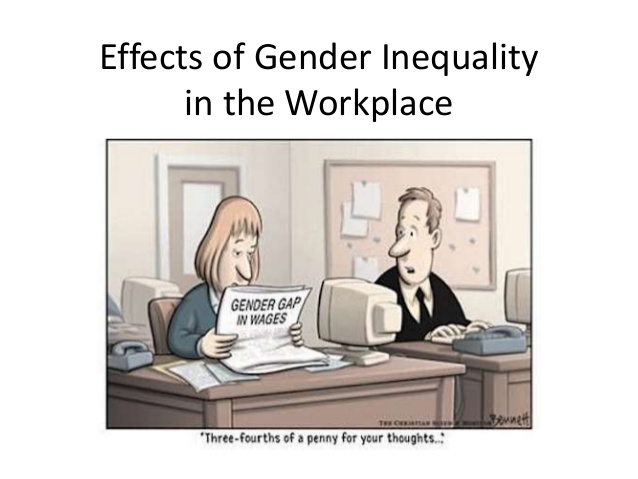
  • Equality and justice show some progress in human rights, gender equality and social inclusion.
  • Enviornmental awareness has improved to combat climate change which has led to renewal energy innovations and conservation initiatives.
  • The world has increased connectivity to improve cultural exchange, economic collaboration and shared global interests.

Science is not an answer. It is only a tool for understanding.

The immense downside of an unpredictive future is the many setbacks that will occur because of inept political leadership. From the perspective of quantum mechanics, one hopes leadership means do not justify humanity’s end.