MOST INTERESTING ESSAYS 2/5/26: THEORY & TRUTH, MEMORY & INTELLIGENCE, PSYCHIATRY, WRITING, EGYPT IN 2019, LIVE OR DIE, GARDEN OF EDEN, SOCIAL DYSFUNCTION, DEATH ROW, RIGHT & WRONG, FRANTZ FANON, TRUTHINESS, CONSPIRACY, LIBERALITY, LIFE IS LIQUID, BECOMING god-LIKE, TIPPING POINT, VANISHING WORLD, JESUS SAYS
Only with education and understanding of the past can society or the individual change their future.
Books of Interest Website: chetyarbrough.blog
Cowboy Apocalypse (Religion and the Myth of the Vigilante Messiah)
By: Rachel Wagner
Narrated by: Dina Pearlman
Rachel Wagner (Author, professor of religion and philosophy at Ithaca College in Ithaca New York.)
Rachel Wagner has written a highly personal book about American gun culture that will resonate with some and appall others. As an academic philosopher and professor of religion, Wagner analyzes gun violence and sexism and how belief in “might makes right” is deeply ingrained in American character.
There are so many stories of death and injury from gun violence in America that one becomes numbed by Wagner’s apocalyptic story.
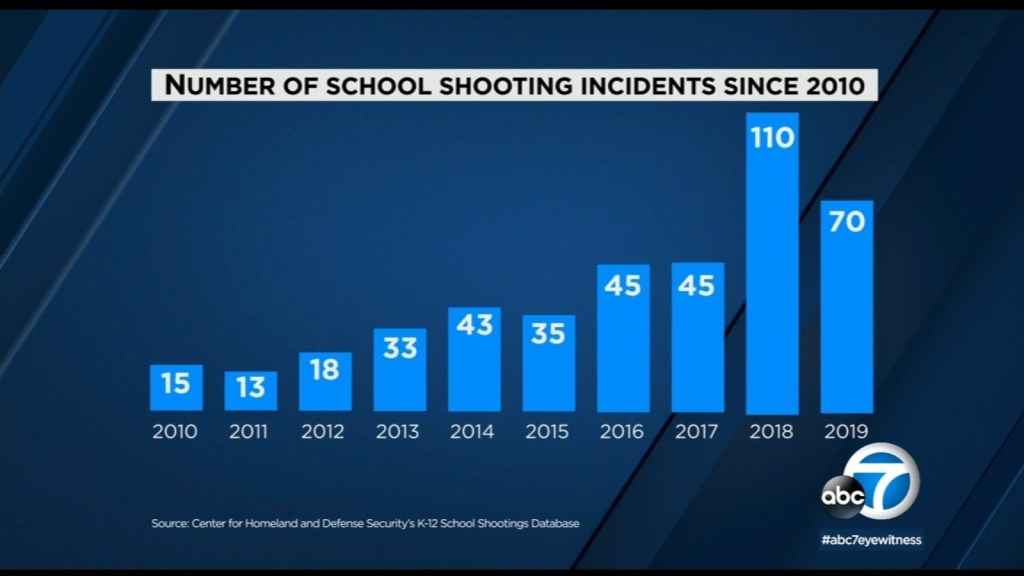
We were living in Las Vegas when 59 people were killed, and 527 were injured by one gunman in a hotel room less than 3 miles from our home. When one looks at statistics of children murdered in school rooms since 2010, a solution for gun violence should be urgent, but it appears not.
Rise in school shootings between 2010 and 2o19.
Wagner argues gun violence in the U.S. is viewed by much of the public as a belief in the myth of the “good guy with a gun” that is embedded in the history of America and reinforced by fictional stories, books, television, and the movies. She argues detective fiction like “The Big Sleep”, TV series like “Have Gun Will Travel”, and movies like “Die Hard” have lone heroes who defeat dastardly villains.
Think Alan Ladd in “Shane” or John Wayne in any of his westerns, and one believes gun-toting man-gods keep the world safe.
Wagner shows how malleable society is and why the gun lobby is rewarded and sustained by the myth of the “good guy with a gun”. Wagner argues gun-toting Americans have become gods in their own mind. What they really are is examples to potential killers of school children and unsuspecting tourists.
HAVE GUN WILL TRAVELDIE HARD
Wagner believes American gun obsession has wheedled its way into a religious narrative based on Christian apocalypticism and romanticization of American history. She notes the myths of armed vigilantes who are seen as saviors who can reset society when it goes astray. This myth seeps into American cultural shibboleths of white supremacy and patriarchal dominance that pervade video games, movies, and novels.
Wagner argues sexual and racial inequality are exacerbated by America’s gun culture. Wagner notes an experience in her personal life and her education in religion show how “might makes right” has been, and still is, a danger to society.
Wagner argues America needs to look in the mirror and quit glorifying firearms and vigilante justice. She suggests the January 6th attack on the capitol shows how widespread belief in vigilante justice is in America.
January 6, 2021, insurrection when a mob of supporters of then-President Trump stormed the U.S. Capitol.
The philosophical and religious beliefs of the author are made clear in her final chapters. Only with education and understanding of the past can society or the individual change their future.
In light of Donald Trump’s disruption of government employment, one wonders what foreign and domestic conspiracies are being missed?
Books of Interest Website: chetyarbrough.blog
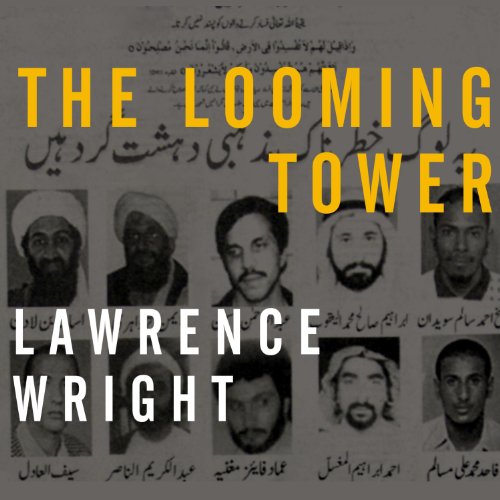
The Looming Tower (Al-Qaeda and the Road to 9/11)
By: Lawrence Wright
Edited By: Alan Sklar
Lawrence Wright (Author, writer and journalist.)
Lawrence Wright won the Pulitzer Prize for his meticulous research and writing on the origin of Al-Qaeda and its lead up to the 9/11 attack on America. “The Looming Tower” is not a popular audiobook for some Americans. It tells listener/readers of America’s intelligence failure in the early 21st century. A militant Muslim religious organization is created in the Middle East with intent and successful execution of an attack on the United States in 2o01.
Sayyid Qutb (1906-1966, Egyptian Author, Educator, Islamic Theorist, Poet, former leading member of the Muslim Brotherhood.)
A name not well known by most Americans is Sayyid Qutb (pronounced koo-tube), a Muslim religious believer and scholar. Wright suggests Qutb laid the groundwork for Islamist extremism in a religious organization called the Brotherhood. Though Qutb was raised in Egypt and gained his education at a Cairo teacher’s school called Dar al-‘Ulum, he spent two years at the University of Northern Colorado between 1948 and 1950. Wright argues Qutb’s experience in America shaped his views of Western society and, in particular, America. He believed and wrote that the moral and cultural nature of non-Islamic society was decadent. Wright suggests Qutb warranted violence against the West because his experience in Colorado showed Western culture corrupted Islamic values.
The World Trade Center collapse killed 2,753 civilians, firefighters, and law enforcement officers.
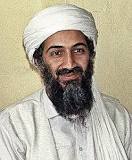
In The Looming Tower, Lawrence Wright suggests the primary motivation for 9/11 stemmed from ideological and cultural grievances rooted in extremist interpretations of Islam. Osama bin-Laden is shown to have adopted beliefs that were the same as those of Qutb, i.e. the belief that all who were not adherent to the Muslim religion were infidels and subject to damnation in this life and in their life after death. Wright emphasizes the influence of figures like Sayyid Qutb, who’s disdain for Western values and culture laid the philosophical groundwork for jihadist movements. Qutb, and subsequent al-Qaeda leaders like Osama bin Laden and Ayman al-Zawahiri, believed that Western influences were corrupting Islamic society and threatening Muslim values and beliefs.
Osama bin-Laden is estimated to have inherited $25 million to $30 million dollars from his father Mohammed bin Laden when he died. Osama chose to use his wealth to destroy American cultural and religious symbols he believed were contrary to Muslim beliefs.
The book outlines how bin Laden and his network were driven by anti-Western ideology to oppose U.S. foreign policies in the Middle East. Al Qaeda wished to assert power by attacking symbolic targets. The 9/11 attacks were meant to provoke a dramatic response from the U.S. and further polarize the world along ideological lines, feeding into their long-term vision of a global jihad. Wright meticulously explores how these motivations were cultivated over decades. “The Looming Tower” is a compelling and deeply researched account of the events leading up to 9/11 in 2001.
Abdullah Yusuf Azzam (1941-1989, father of global jihad, a Palestinian-Jordanian’ Islamist jihadist and theologian, is killed in a car bomb, along with his 2 sons, in Peshawar, Pakistan.)
Osama bin-Laden’s father was a billionaire construction magnet in Saudi Arabia. Osama bin Laden, and the many heirs of his father, enabled his many children to live lives in luxury if they chose. Osama chose to use his wealth to destroy American cultural and religious symbols he believed were contrary to Muslim beliefs. Abdullah Azzam was often referred to as the “father of global jihad,” Azzam was a mentor to bin Laden and played a significant role in shaping his ideology. He encouraged bin Laden to channel his resources into the Afghan jihad against the Soviet Union. The irony of bin Laden’s choice is that he was an incompetent military leader but an effective promoter and steward of jihad, the effort to live a righteous life, avoid sin and uphold the principles of Islam. A further irony is that bin Laden’s murder of innocents seems a sin of the highest degree.
Osama bin Laden was killed on May 2, 2011, during a U.S. military operation called Operation Neptune Spear.
The mission was carried out by SEAL Team Six, a special operations unit of the U.S. Navy, at bin Laden’s compound in Abbottabad, Pakistan. This was eleven years after the world trade center, Pentagon, and flight 93 crash. The Trade Center collapse killed 2,753 civilians, firefighters, and law enforcement officers. The Pentagon attack killed 184 military and civilian personnel. Flight 93 resulted in 40 passenger and crew deaths. In a complex web of influence and support, “The Looming Tower” emphasizes the attacks were the result of al-Qaeda’s planning and execution by followers of Osama bin Laden.
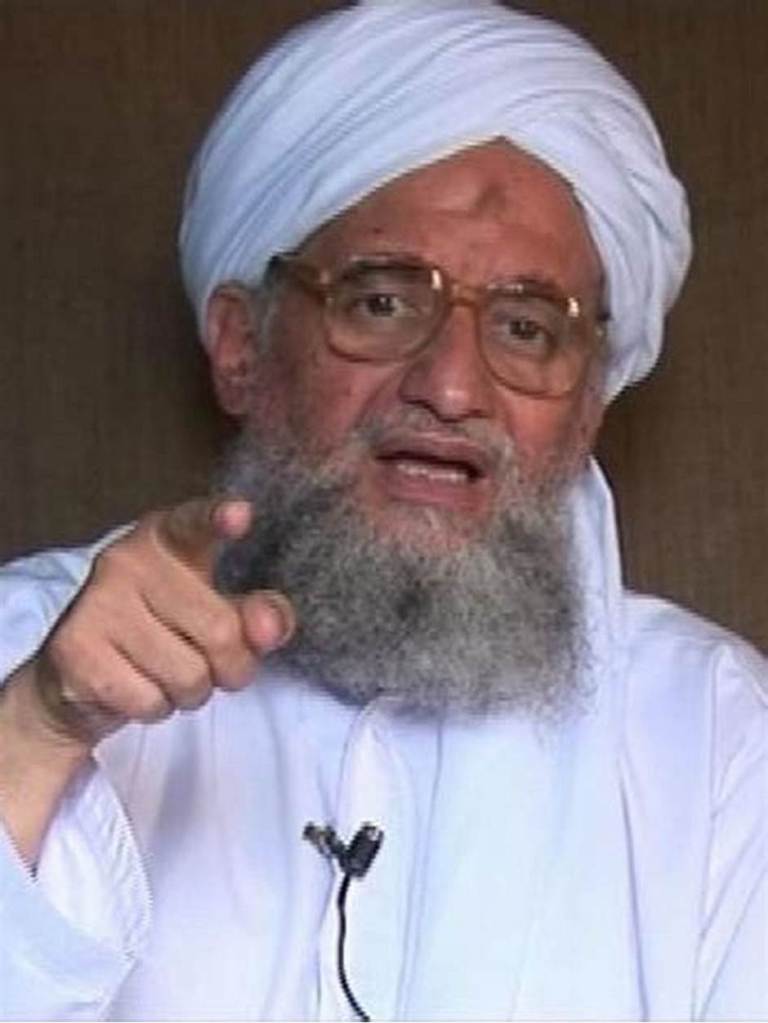
Wright notes Ayman al-Zawahiri became Bin Laden’s second-in-command and a key strategist for al-Qaeda. Zawahiri takes control of al-Qaeda after bin Laden’s death.
Ayman al-Zawahiri’s background in Egyptian Islamic Jihad and his partnership with bin Laden were pivotal in the group’s evolution. Ayman al-Zawahiri became the leader of al-Qaeda after Osama bin Laden was killed. An American operation that killed al-Zawahiri in 2022 was carried out by the CIA that targeted him on the balcony of a safe house in Kabul, Afghanistan.
Wright notes that bin Laden received financial support from members of the Saudi elite during the early stages of his jihadist activities, though this relationship soured over time.
Jamal al-Fadl was an al-Qaeda operative who helped establish the organization’s financial infrastructure. He later defected and provided critical intelligence to the U.S. about al-Qaeda’s operations. Many individuals and entities played pivotal roles in enabling bin Laden’s vision and the expansion of al-Qaeda. Wright’s book delves deeply into their motivations and actions. It’s a fascinating, albeit chilling, exploration of history.
John P. O’Neillwas an FBI counter-terrorism expert who tirelessly pursued bin Laden.
John P. O’Neillwas an FBI counter-terrorism expert who tirelessly pursued bin Laden. Tragically, O’Neill died in the 9/11 attack while serving as head of security at the World Trade Center. The FBI had gathered significant domestic intelligence on al-Qaeda operatives within the United States, including their movements and activities. However, the CIA, focused on foreign intelligence. They withheld crucial information about al-Qaeda’s overseas operations and connections because foreign intelligence was their exclusive responsibility. This lack of coordination with the FBI (limited to domestic terrorism), and rivalry between the agencies, meant that neither had a complete picture of the threat. The CIA had knowledge of al-Qaeda members Khalid al-Mihdhar and Nawaf al-Hazmi who were two team members for the attacks on 9/11. Because of a lack of cooperation between agencies, the FBI did not know they should be tracking these individuals. They became key players in hijacking American Airlines Flight 77 which plowed into the Pentagon.
In The Looming Tower, Lawrence Wright emphasizes the significance of John O’Neill, an FBI counterterrorism expert, as one of the most important figures who recognized the threat posed by Osama bin Laden. O’Neill was deeply committed to tracking al-Qaeda and warned about its intentions, but his efforts were often hindered by interagency conflicts and bureaucratic obstacles. Wright portrays O’Neill as a passionate and prescient individual who understood the gravity of al Qaeda’s threat long before many others did.
In The Looming Tower, Lawrence Wright highlights the CIA’s Alec Station, who tracked Osama bin Laden and al-Qaeda. This unit was led by Michael Scheuer, a CIA analyst who played a pivotal role in gathering intelligence on bin Laden during the 1990s. Alec Station was instrumental in understanding al-Qaeda’s operations, though the book criticizes the interagency conflicts that hindered surveillance effectiveness. Wright paints a vivid picture of the challenges faced by intelligence agencies in the lead-up to 9/11.
Michael Scheuer, a CIA analyst who played a pivotal role in gathering intelligence on bin Laden during the 1990s.
On the CIA side, Michael Scheuer, who led Alec Station (the CIA’s unit that was monitoring bin Laden), played a role in identifying the danger. However, Wright notes the lack of collaboration between the FBI and CIA, ultimately undermined their ability to prevent the attacks. The book paints a vivid picture of the challenges faced in navigating institutional rivalries while trying to protect the nation. Wright’s narrative is both compelling and sobering.
“The Looming Tower” highlights how some individuals connected to al-Qaeda faced legal consequences. For example, figures like Ali Mohamed, a former U.S. Army sergeant turned al-Qaeda operative, was prosecuted for his role in supporting terrorism. Mohamed provided critical intelligence and training to al-Qaeda and was eventually arrested and convicted in the U.S.
In light of Donald Trump’s disruption of government employment, one wonders what foreign and domestic conspiracies are being missed?
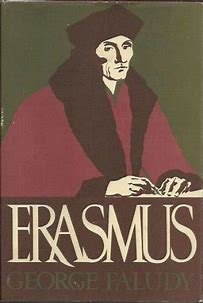
George Faludy suggests the most popular books written by Erasmus were “The Praise of Folly” and “Colloquies” which are similar in that they offer humorous and insightful stories of the human condition. One leaves Faludy’s biography of “Erasmus” with the thought that these two should be read, particularly because of the time in which we live today.
Books of Interest Website: chetyarbrough.blog
ERASMUS
By: George Faludy
György Bernát József Leimdörfer aka George Faludy (1910-2006) Author, Hungarian poet and translator.
George Faludy’s biography of Erasmus was published in 1970. A few years ago, I purchased a paperback edition of Faludy’s book because of an interest in a 16th century “man of the cloth” (an ordained Catholic priest) who became a devotee of Francesco Petraca (better known as Petrarch who is considered the father of humanism). Erasmus was born in 1466 and died in 1536. He believed in the value, dignity, and potential of human beings. Petrarch had been dead for a hundred years when Erasmus became a proponent of humanism at a time when Catholic’ Indulgences were challenged by Martin Luther. Luther’s Ninety-Five Theses led to a schism in the church leading to the establishment of Protestantism.
Martin Luther (1483-1546)
Luther’s Ninety-Five Theses led to a schism in the church leading to the establishment of Protestantism.
It is hard to imagine how Erasmus managed to become a leader in reforming the Catholic Church with his humanist beliefs. Erasmus walks a fine line between the schism fomented by Martin Luther and his belief in reform. Erasmus wrote the famous work “The Praise of Folly” that was a satirical critique of societal and ecclesiastical practices of the Catholic church without joining the movement started by Luther. On the one hand, Erasmus agreed with Luther on the importance of faith and the perfidy of “indulgences” sold by the Church. Indulgences were to raise money with alleged religious guaranties for a Catholic’s admittance to heaven. On the other, Erasmus insisted on faith in God and reform, not abandonment of the Catholic church. Erasmus’s academic and scholarly review and interpretation of religious texts convinced him that the Church only needed reform, not schism.
Faludy carefully explains the tumultuous relationship between Erasmus and Luther that at times seemed to break but survived their fundamental disagreement on reform versus schism.
Erasmus acknowledged many misrepresentations of religious text with an unwavering belief in the divinity of their origin. As one who is skeptical about the divinity of religious texts, it is encouraging to read of this highly respected scholar’s belief in their truth. Faludy’s biography of Erasmus may not change an agnostic’s mind about God, but it will give one pause because of Erasmus’s reported research of original religious works in Greek, Latin, and other languages, i.e., a skill beyond most peoples’ capabilities.
Faludy does not write of Erasmus as a saintly person but as a well-educated and diligent scholar.
A surprising note by Faludy is that Erasmus suffered from syphilis which suggests something less than perfection in Erasmus’s character. However, Faludy’s note is not corroborated by any other information known to this reviewer.
Faludy suggested the most popular books written by Erasmus were “The Praise of Folly” and “Colloquies” which are similar in that they offer humorous and insightful stories of the human condition. One leaves Faludy’s biography of “Erasmus” with the thought that these two should be read, particularly because of the time in which we live today.
The story of Michelangelo ends with the return of the Medicis to power. It is for Michelangelo–a journey of “…Agony and Ecstasy”–of love for his work, the daughter of a Medici, and the tumult of his time.
Books of Interest Website: chetyarbrough.
The Agony and the Ecstasy (The Biographical Novel of Michelangelo)
By: Irving Stone
Irving Stone (1903-1989, died at the age of 86, American writer of biographical novels about artists, politicians and intellectuals.)
Irving Stone’s novel is an entertaining book and an historically supported story of the famous artist, Michelangelo. Michelangelo was a Florentine born in Florence, an influential city at the heart of the Italian Renaissance. The Medici family was in control of Florence’s political and cultural life in Michelangelo’s youth.
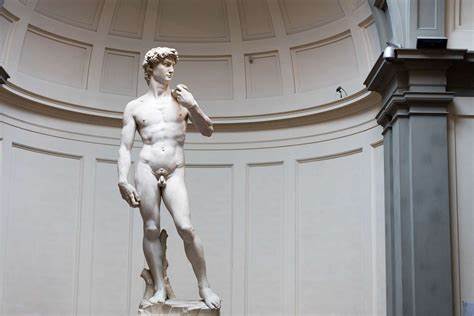
Two of the most famous artists of all time, Leonardo Da Vinci and Michelangelo Buonarroti created two of the most famous art works of the world in Florence, i.e. da Vinci’s “Adoration of the Magi” and Michelangelo’s “David”. However, their personal relationship began roughly in their brief contact in Florence. In 1504. Leonardo da Vinci was 52 years old. Michelangelo was 29.
“Adoration of the Magi”“David”
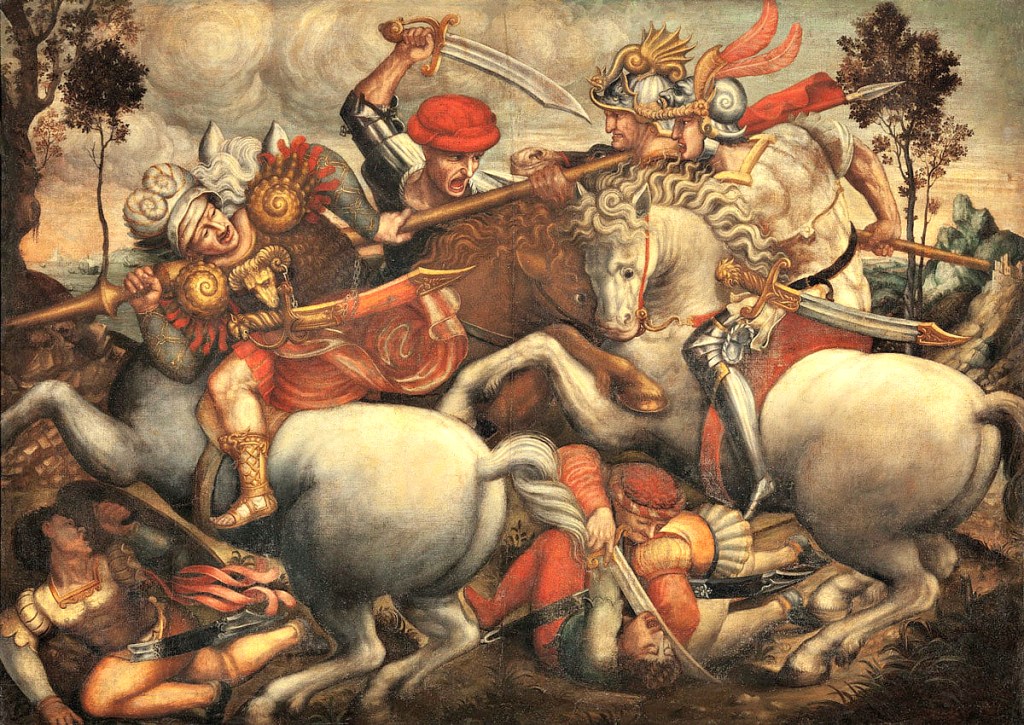
They had both been contacted to paint murals in the Hall of Five Hundred in the Palazzo Vecchio. Leonardo had already made his reputation as a master painter, polymath, and diverse genius. Michelangelo was considered a sculptor more than a painter. However, in a casual conversation da Vinci alludes to sculpture as a less prestigious form of art. The younger Michelangelo is offended and is alleged to have said harsh words to da Vinci with a challenge to paint a competing fresco in the Palazzo Vecchio. Neither completed their planned paintings but their preparatory works were preserved and considered important developments of the High Renaissance. Irving Stone suggests they meet later in life and Leonardo apologizes for what he felt was a misinterpretation of his words about the art of sculpture.
Leonardo’s Unfinished WorkMichelangel’s Unfinished Work
Stone suggests Michelangelo is more of an ascetic than da Vinci. Leonardo as noted by other authors, had many interests beyond art. Michelangelo prefers sculpture to any other form of art and when he is contracted for his artistic genius, he grudgingly takes commissions for his skill as a painter. “The Agony and the Ecstasy” is a title that captures Michelangelo’s artistic conflict.
Stone shows Michelangelo pursues human dissection, just as Leonardo is said to have, to more fully understand the construction of the human body for an artist to make painting or sculpture appear more real. Human dissection is not legal in Michelangelo’s time in Florence, so he secretly works at night when no one is around to see what he is doing.
Stone addresses the political turmoil of the time and how Michelangelo is hired by the Medici family when he is a young man. This is before the Borgias replace the Medici family in Italy. Michelangelo remains close to the Medicis even in their exile but is attracted to Rome in 1496 by Cardinal Raffaele Riario, a relative of Pope Sixtus IV. In Rome, Michelangelo creates “Bacchus”, the god of Wine.
Michelangelo’s Bacchus, the Roman god of agriculture, wine, and fertility.
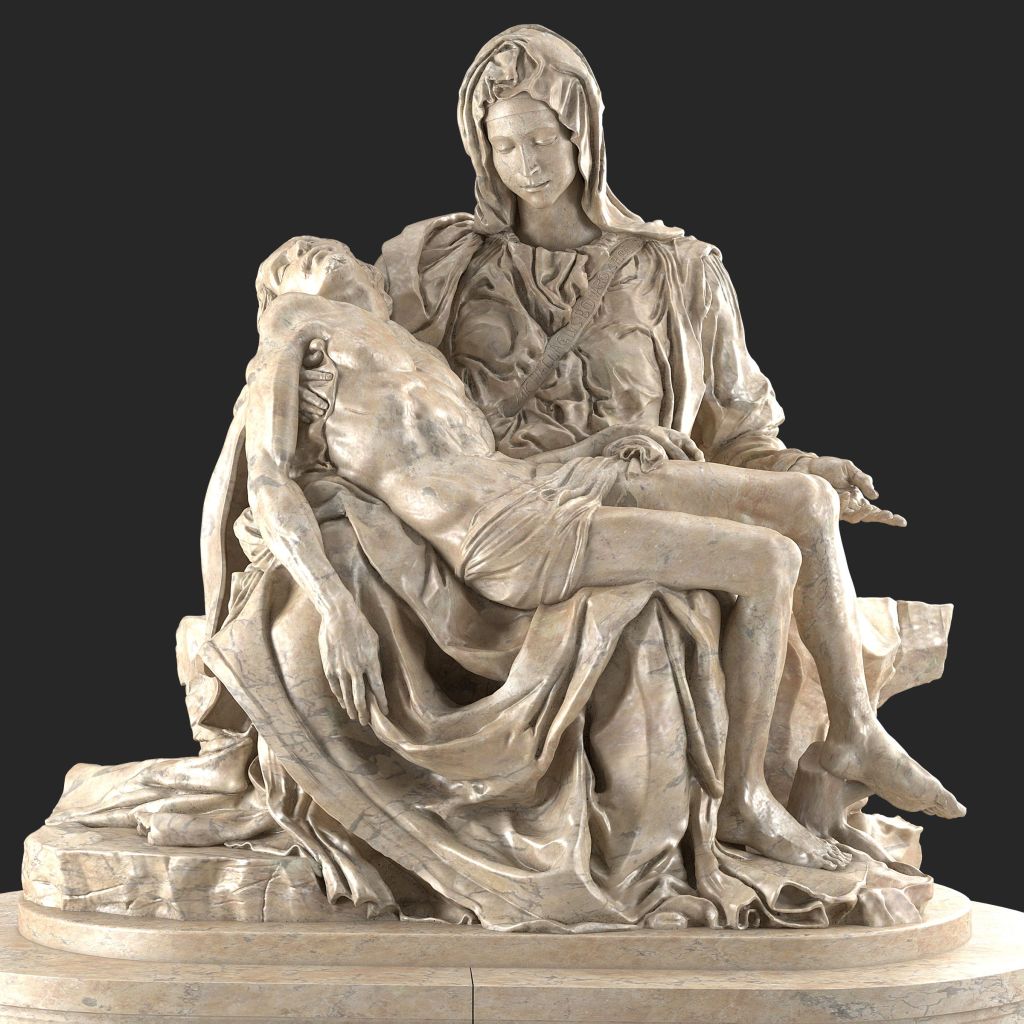
After creating “Bacchus, a French cardinal commissions the “Pieta” for St. Peters Basilica. Michelangelo gains the reputation of being a master sculptor.
Michelangelo’s Pieta depicting Mary holding the body of Christ.
Stone suggests the Pope asks why Mary appears so young and Michelangelo explains it is because she is the mother of a divine.
After the Pieta, Michelangelo is commissioned by overseers of the Office of Works of the Cathedral of Florence. This is not clear in “The Agony and the Ecstasy” but it reinforces Irving Stone’s recognition of Michelangelo’s deep connection to Florence. He returns to Rome, but his heart is in Florence. Much of Michelangelo’s time in Rome is uncomfortable and does not calm down for him until the Medicis return to power.
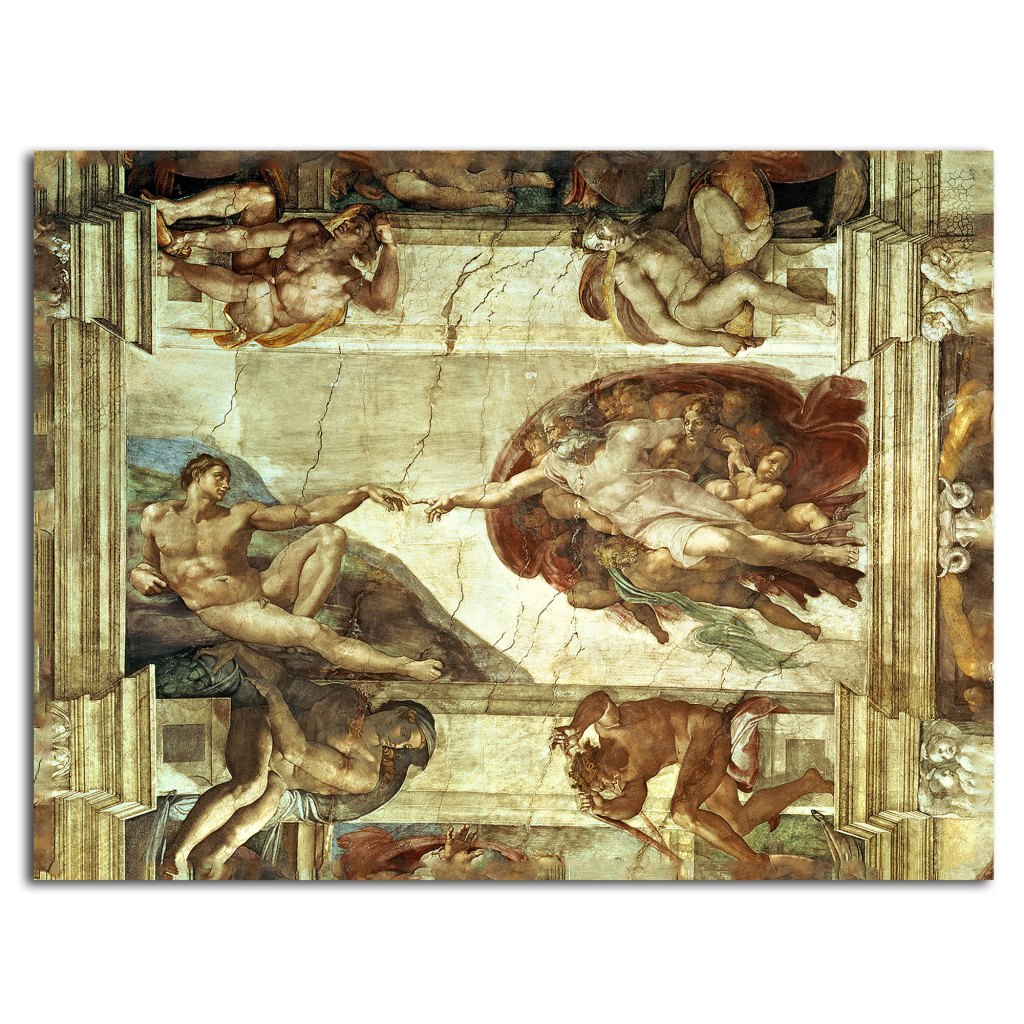
The warrior Pope, Pope Julius II heads the church from 1503-1513. Irving Stone explains; this Pope demands Michelangelo paint the ceiling of the Sistine Chapel at the Vatican in Rome. Of course, Michelangelo resists because he wishes to be remembered for sculpture, not painting, because it is an art that gives him joy. The forceful Pope insists, and Michelangelo makes a false start that changes into a history of the birth of the world on the ceiling of the Chapel. He works on the ceiling of the Chapel from 1508 to 1512.
Birth of the world.God touches AdamDetail of the touch.
Sistine Chapel painting by Michelangelo between 1508 and 1512.
The story of Michelangelo ends with the return of the Medicis to power. It is for Michelangelo–a journey of “…Agony and Ecstasy”–of love for his work, the daughter of a Medici, and the tumult of his time. Michelangelo never marries and dies at the age of 88 in 1564.
Extending Harari’s idea of biophysics research and algo-rhythmic programming suggests a potential for immense changes in society. A singularity that melds A.I. with human brain function and algo-rhythmic programming may be tomorrow’s world revolution. Of course, that capability cuts both ways, i.e., for the good and bad of society.
Books of Interest Website: chetyarbrough.blog
Homo Deus (A Brief History of Tomorrow)
By: Uval Noah Harari
Narrated By: Derek Perkins
Yuval Noah Harari (Author, Israeli medievalist, military historian, science writer.)
By any measure, Yuval Noah Harari is a well-educated and insightful person who will offend some and enlighten others with his opinion about religion, spirituality, the nature of human beings, and the future. He implies the Bible is a book of fiction that is historically proven to have been written by different authors with contradictions that only interpreters can reconcile as God’s work.
“Homo Deus” is a spiritual book suggesting humanity is on its own and has a chance to survive the future but only through the ability of human understanding and effort.
To Harari, the greatest threats to society are national leaders who believe in God, heaven and eternal life who discount human existence and use of science to improve human life on earth. The irony of Harari’s belief is that humanist leaders are the only hope for human life’ survival.
Harari argues science, free enterprise, and the growth of knowledge offer the best hope for the future of human life.
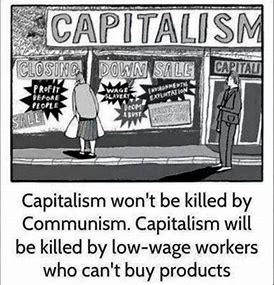
Neither capitalism nor communism are a guarantee of survival because of the increasing potential for error as human beings become more God-like. Advances in engineering, artificial intelligence, and biotechnology may replace the happenstance of human birth. The value of free enterprise is evident in the agricultural, industrial, and technological revolutions of history. However, as science improves the understanding of the mind and body of human beings, the technology of biogenetics offers hope for the future while running the risk of biological error with unforeseen consequences.
Harari’s book is the brave new world written about by Shakespeare in the 17th century and reimagined by Aldous Huxley in his 1932 dystopian novel “Brave New World”.
On the one hand, Shakespeare offers a positive spin as his character, Miranda, sees people from outside her experience and says “How beauteous mankind is! O Brave! That has such people in’t”. While Huxley notes a future society that becomes conformist and lacks individuality and human emotion. Which way society will turn is unknown.
The conformist demands of collective ownership of property and means of production by communism impede creativity. Capitalism is more creative and dynamic. However, capitalist incentive raises the specter of human nature that only sees financial gain without any concern for environmental or human cost. On balance, capitalism appears more likely to accelerate technology because communism more often follows than changes scientific direction.
Some think A.I. will lead the world to greater knowledge and prosperity while others believe it will destroy human life. A sceptic might suggest both views are wrong because A.I. is only a tool for recalling knowledge of the past to help humans make better decisions for the future. The real risk, as it has always been, is human leadership.
Harari believes, like Nietzsche, that God is dead because belief in God is losing its power and significance in the modern world.
Though many still believe in God, it seems more people are viewing God as a myth. The Pew Research Center reports a median of 45% of people across 34 countries still believe in God. However, the variation is wide with Brazil saying 70% believe while in Japan the percentage is only 20%. Harari implies belief in God is in decline.
Harari explains biophysics illustrates that human thought is algorithmic. He argues our thoughts, decisions, and behaviors can be understood to be a result of patterns created in human brains that are pre-determined. There is no “free-will” in Harari’s opinion. This is not to suggest aberrant behavior does not exist, but that human thought and action is determined by our experientially defined brain in the same way a computer is programmed. Experience from birth to adulthood is just part of a mind’s programming.
Harari implies understanding of brain function will change the world as massively as the Agricultural, Industrial, and technological revolutions.
Harari goes on to suggest humans have never been singular beings, but a multitude of beings split into two brains that mix and match their biogenetic and biochemical programming to think and act in pre-determined ways. Experiments have shown that the way the left half of a human brain sees and compels action is different than how the right brain sees and compels action. Each half thinks and acts independently while negotiating a concerted action when both halves are functioning normally. That negotiation between the two brain halves results in an algorithm for action based on the biochemical nature of the brain. The way two halves of the brain interact multiply the person we are or will become.
Extending Harari’s idea of biophysics research and algo-rhythmic programming suggests a potential for immense changes in society. A singularity that melds A.I. with human brain function and algo-rhythmic programming may be tomorrow’s world revolution. Of course, that capability cuts both ways, i.e., for the good and bad of society. Interestingly, Harari paints a grim picture of the future based on an A.I. revolution.
“Say Nothing” is an attempt to give listener/readers an understanding of Ireland’s “Troubles”. Patrick Radden Keefe helps one understand but it remains a complicated and confusing history because of its mix of religion and national sovereignty.
Books of Interest Website: chetyarbrough.blog
Say Nothing (A True Story of Murder and Memory in Northern Ireland)
By: Patrick Radden Keefe
Narrated By: Mathew Blaney
Patrick Radden Keefe (Author, American writer and investigative journalist.)
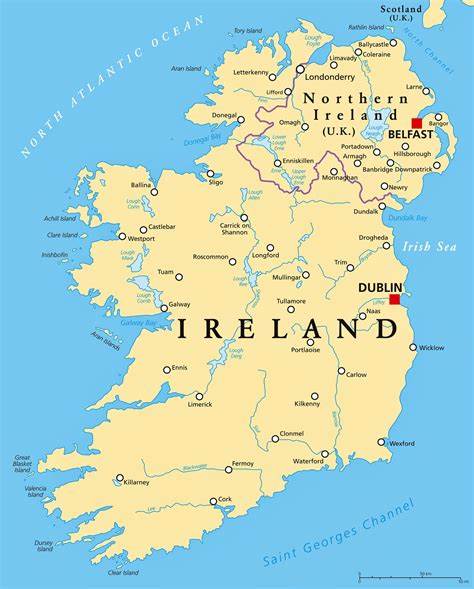
“Say Nothing” is an attempt to give listener/readers an understanding of Ireland’s “Troubles”. Patrick Radden Keefe helps one understand but it remains a complicated and confusing history because of its mix of religion and national sovereignty. From the 1960s to the late 1980s, there were violent clashes between unionist/loyalists, who were largely protestant and wanted to be part of Great Britain; while Unionist/loyalists, who were largely Catholic wanted independence as the Republic of Ireland.
Bombings, sniper attacks, and violent confrontations caused an estimated 3600 deaths and tens-of-thousands injuries during the “Troubles”.
Not until 1998, with the “Good Friday Agreement” did the deadly conflicts cease. However, Great Britain’s Brexit, periods of political deadlock with the Northern Ireland Assembly, and debates over details of the “…Agreement” have occurred. Keefe tells a story of the build-up to the “…Agreement” in “Say Nothing”.
The Irish Republican Army that wished for Irish independence murdered Jean McConville, a mother of ten, in 1972.
The murder is puzzling because McConville is Catholic which suggests her death was either a mistake or that some Catholics were union/loyalists. Some in the IRA suggested she acted as a spy for the UK. That is a mystery Keefe fails to unravel while giving listener/readers some historical perspective on Ireland’s Troubles. Some say Marian Price was the murderer, but Keefe demurs and argues there is no concrete evidence.
Northern Ireland is over 40% Catholic while the Republic of Ireland is over 60% Catholic.
Ireland’s troubles date back to the 16th and 17th centuries when English and Scottish Protestant settlers chose Ireland as their new home. The native population of Ireland was Catholic and religious differences and land acquisition by Protestants set the table for conflict. In 1921, Ireland was split in two with Northern Ireland remaining a part of the UK but with a 40% minority who remained Catholic. A Catholic movement for civil rights in Northern Ireland began in the 1960s. Violence and political conflict ensued with the formation of paramilitary groups like the IRA (Irish Republican Army) that began bombing and shooting Protestant followers. The IRA wished to end British rule, unify Ireland, accommodate religious difference, and create an independent nation.
Over the years, there were several leaders of the IRA. Michael Collins, Cathal Brugha, Liam Lynch, Sean Stiofain, Gerry Adams, and Martin McGuinness. Gerry Adams is the leader most often referred to in Keefe’s book.
The IRA never admitted to ordering the abduction and murder of Jean McConville. The author directly asks Adams if he ordered the murder, and his response is that he has no blood on his hands. Some suggest, her murder was a collective decision by leaders of the IRA.
Both Northern Ireland and the Republic of Ireland were ambivalent about Brexit and chose to neither entirely agree with separation from the EU nor entirely agree with the UK in its rejection of membership.
There remains a great deal of ambivalence about unification of Ireland as an independent nation but “The Good Friday Agreement” allows for a referendum on unification because of what appears to be a majority in both jurisdictions to create one nation.
It is interesting to note that the Catholic religion is the largest religious group in both Northern Ireland and the Republic of Ireland, but that Northern Ireland Catholics constitute 42.3% while the Republic of Ireland is 69.1% Catholic. Keefe’s story triggers an interest in understanding the history of Ireland, but it is too long in its telling to offer clarity.
James Baldwin’s “The Fire Next Time” gives advice that resonates with the troubles of the world today.
Books of Interest Website: chetyarbrough.blog
The Fire Next Time
By: James Baldwin
Narrated By: Jessie Martin
James Baldwin (Author, 1924-1987, African American writer and civil rights activist.)
“The Fire Next Time” consists of two brief essays by James Baldwin that are seminal works on the equality of all human beings. Published in 1963, the first essay is “My Dungeon Shook” which is advice to a young black American. The second, “Down at the Cross…” is a criticism of Catholic and the Nation of Islam religions.
The first is a message to Baldwin’s nephew about white America’s prejudice toward black Americans.
He is telling his nephew to reject white America’s stereotypical view of black Americans. Baldwin tells his nephew to embrace who he is as a human being, neither better nor worse, and to pursue life and living with the truth of his being.
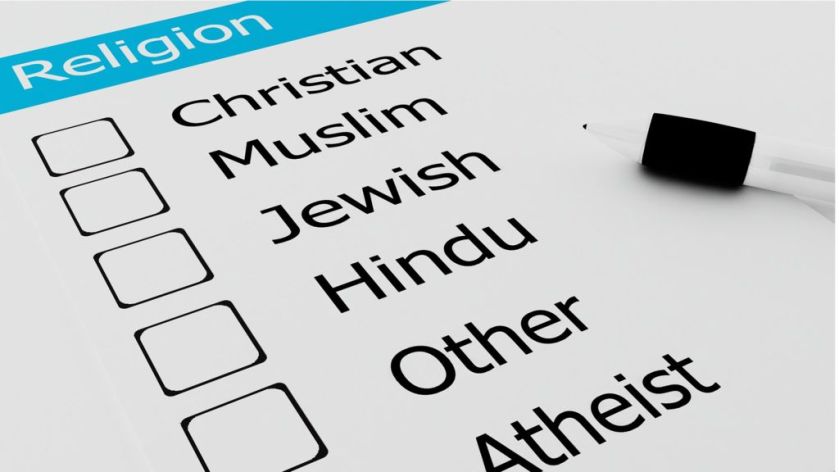
RELIONS OF THER WORLD
“Down at the Cross” is a criticism of religion, particularly the Christian and Nation of Islam faiths. Baldwin argues that both diminish the truth of God by feeding the flames of anti-spiritualism and social inequality.
Baldwin argues through love and understanding of differences among religions and races, the divisiveness of inequality can be erased.
The fundamental point of Baldwin’s writing is that NOI offers a part of what black America needs by instilling self-respect and identity. However, he criticizes NOI’s separatism as counterproductive and extreme. Baldwin advocates love and understanding among all human beings.
Elijah Muhammad (1897-1975, Religious Leader of NOI)
Elijah Muhammed’s advance of the Nation of Islam (NOI) is credited for advocating black empowerment, but Baldwin implies that empowerment mitigates against belief in the equality of all human beings.
Baldwin evolves to a more humanist view of life and declines to take a prominent role either in the Nation of Islam, or the Pentacostal religion he left twenty years earlier. James Baldwin’s “The Fire Next Time” gives advice that resonates with the troubles of the world today.
One hopes for more Leifer’s in this world of human tragedy.
Books of Interest Website: chetyarbrough.blog
Tablets Shattered (The End of an American Jewish Century and the Future of Jewish Life)
By: Joshua Leifer
Narrated By: Eli Schiff
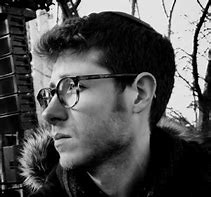
Joshua Leifer (Author, journalist and scholar who explores the past and present of American Jewry, Leifer pursues a PhD at Yale on the history of modern moral and social thought.)
Joshua Leifer reflects on the Americanization of Jewish ethnicity in modern times. Leifer offers his personal view of modern events in Israel, including the terror of October 7th, 2023, and its aftermath.
In the last month, my wife and I journeyed to Poland, the Baltics, and Finland.
On the trip, we visited Auschwitz, the terror of Soviet occupation of the Baltics, and the tenuous relationship of Finland and Russia. More will be shared in a future review.
The holocaust is made present to anyone who chooses to visit Auschwitz.
This is a monument to the Holocaust, located in Germany.
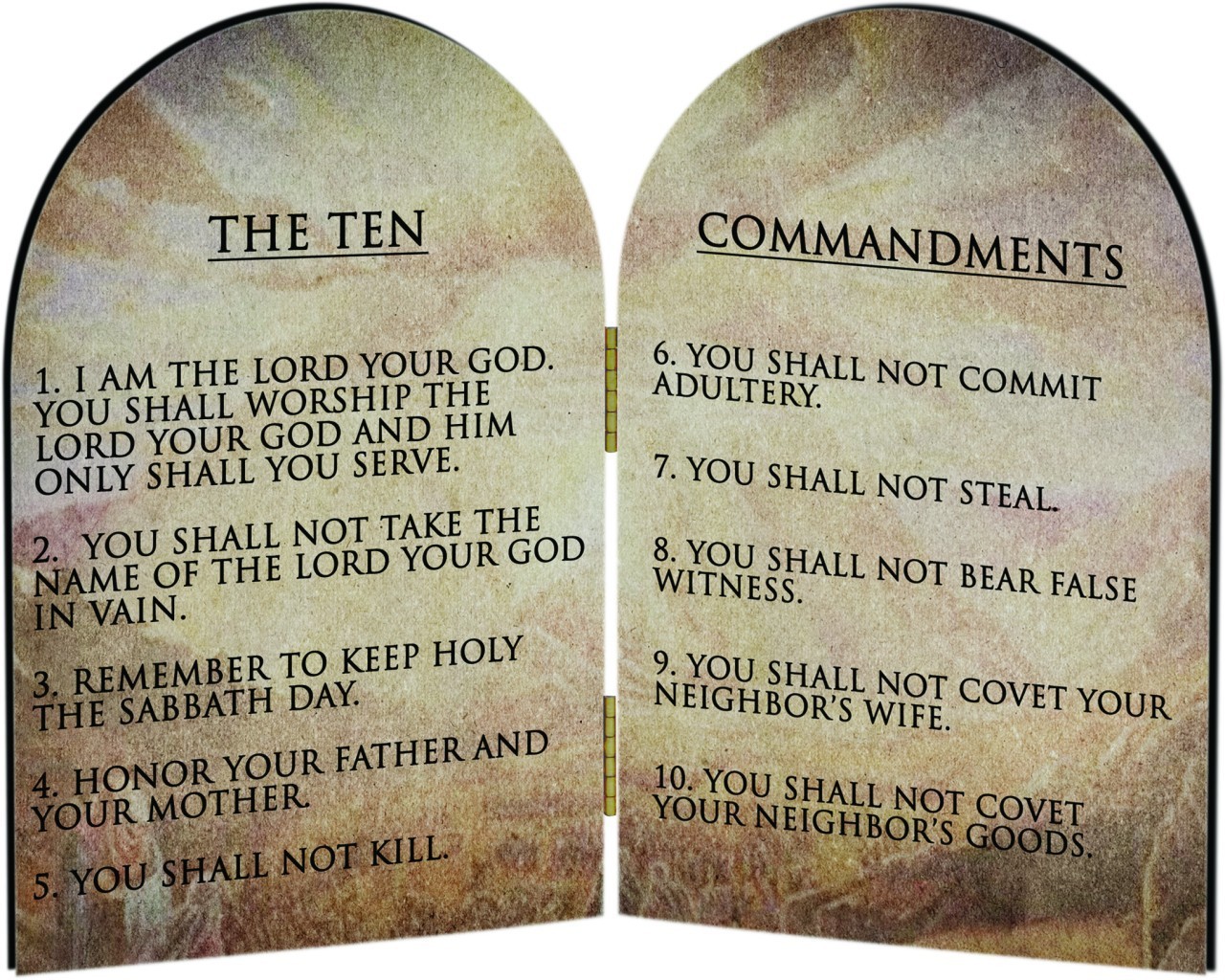
Leifer’s book is not about Auschwitz’s atrocity but about a diminishment of Jewish identity. One who reads or listens to Leifer’s view of Jewish ethnicity will look at Judaism in a different way. Regardless of one’s personal beliefs, Leifer argues Judaism is losing its way from what he believes is a fundamental tenet of the Jewish religion. That tenet is that Judaism will always be a minority within cultures of the world and, as a minority, Leiger argues it is critically important for followers to return to its Judaic roots. Leifer implies Americanization of Judaism is a social influence that threatens the Tablets of the Covenant, i.e., the Ten Commandments.
Leifer explains that Israel will continue to grow as an independent nation with an exodus of Jewish believers from America and the world. Leifer suggests that exodus is evident in the diminishing number of American Jews who have chosen to leave America to become Israeli citizens. His hope is that in Jews return to a nation of their own with a renewed belief and adherence to the Ten Commandments.
I am the Lord your God: You shall have no other gods before Me.
You shall not make for yourself a graven image: No idols or images.
You shall not take the name of the Lord your God in vain.
Remember the Sabbath day, to keep it holy.
Honor your father and your mother.
You shall not murder.
You shall not commit adultery.
You shall not steal.
You shall not bear false witness against your neighbor.
You shall not covet: Do not desire your neighbor’s house, wife, or possessions.
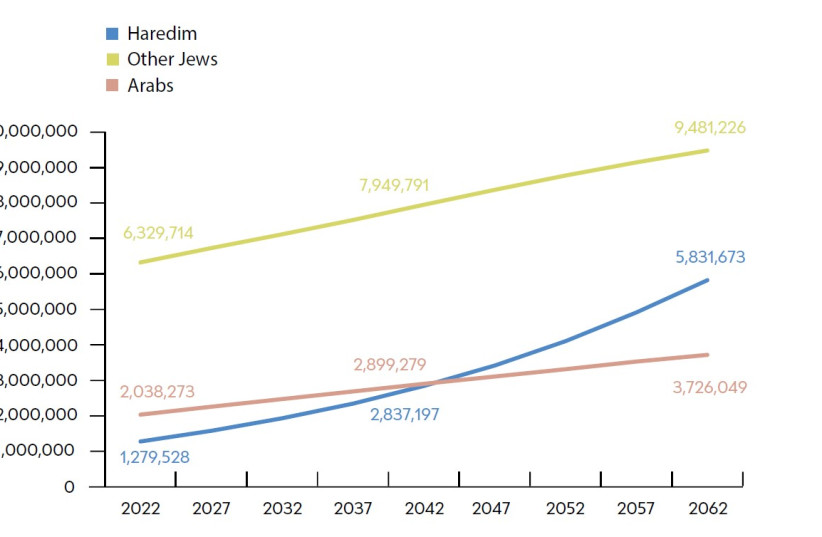
Of particular note is the Haredim who adhere to traditional Jewish law and customs.
There is an underlying accusation in Leifer’s book that America reinforced want for money, power, and prestige that changed the nature of Judaism.
However, human nature is a failing in all cultures. The truth is that all forms of government and culture seduce human beings to violate the Ten Commandments: not only Jewish followers. Human nature is an equal opportunity exploiter of society and people.
Leifer does have a point in that any ethnicity that truly follows the ten commandments is better than one that ignores them.
The fault in Leifer’s belief is that the ten commandments will or can be universally accepted by any culture or ethnicity. Human nature can be improved upon, but one doubts it can be erased by either religious or secular teaching of the Commandments.
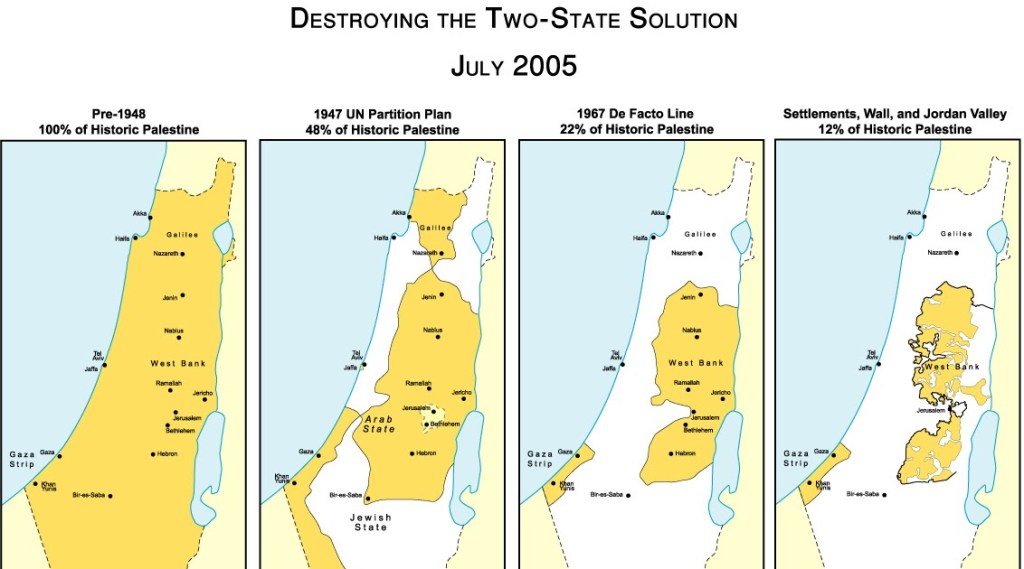
Leifer hopes for a two-state solution in Israel. That seems a laudable and achievable goal, but human nature remains the same. With statehood, both Israeli and Palestinian societies may become better but there will always be the threat of Commandment violation because of human nature. One hopes for more Leifer’s in this world of human tragedy.
“…Western Civilization” and its Christian and democratic foundation gives little comfort to those who are worried about societies’ future.
Books of Interest Website: chetyarbrough.blog
“The Foundations of Western Civilization”
By: Great Books Series
Lecturer: Professor Thomas F.X. Noble
Thomas F. X. Noble (Professor at Notre Dame, Ph.D. from Michigan State University, President of the American Society of Church History, received the Charles Sheedy Prize for Excellence in Teaching in 2011.)
Noble offers a distinctive view of the foundation of Western Civilization in 48-lectures sponsored by the Great Books Series. There is little doubt about the importance of religion in the world. Noble explains how the Bible is a seminal work underpinning one of the two largest religions of the world, Christianity. Noble explains the Bible, just as the Quran in the east, provides a contract between a singular God and humanity. However, the dialectic of religion is that it binds people together as well as rips them apart. On the one hand, religious belief brings people together with belief in something greater than themselves. On the other, Christian and Islamic believers have maimed and murdered millions.
Noble explains Christianity began in the same area of the world as the Muslim religion, but several centuries earlier.
The spread of Christianity begins in the 1st century while Muslimism spread in the 7th. The ministry of Jesus Christ spread Christianity in 30-33 AD. Some would argue the New Testament Gospels of Matthew, Mark, Luke, and John are extensions of the Hebrew Bible. The Jewish Torah and Hebrew Bible emphasize the oneness of God, which is consistent with Christian belief, but the difference is that Jesus was not considered a Messiah by Jews. Jesus was, at most, only a messenger of God to Jews, like Muhammed is considered to Muslims.
Noble notes the spread of Christianity began in the Middle East, centuries before Muhammad’s spread of Muslimism in Mesopotamia.
Noble suggests Christianity’s spread is associated with the advent of Zoroastrianism in Mesopotamia. The prophet Zoroaster believed in a monotheistic faith before the ministry of Jesus in Judea and before the record of Judaism in the Torah of 1400 BC, the later Holy Bible, New Testament, and Quran. The common factor in Judaism, Christianity, and Muslimism is belief in one Supreme Being. Of course, there are numerous differences in these religions after their “One God” similarity. The point is, they all originated in the Middle East according to Noble’s history.
The point Noble is making is that religion is an integral part of the foundation of civilization. Religion brought people together. At the same time, religion became a foundation for difference among people of similar and different cultures. Noble explains those differences helped and hindered the shape of western civilizations.
Greeks feared the tyranny of the majority and were concerned about the lack of expertise in governance and decision-making on the part of the general population. They saw the risk of demagogues. America and the western world have experienced all of these democratic risks. One could argue America is experiencing those risks in 2024.
As these risks play out in ancient Greece, they were mitigated by pragmatic Athenian leaders like Cleisthenes who respected special interests of his time in office. He introduced a lottery system that gave voice and some influence on policy to representatives of these special interests. The people being governed were recognized in public forums that allowed free expression. On the other hand, Cleisthenes instituted the principle of societal ostracism for aberrant behavior of people who advocated against what was perceived as the common good. Future leaders expanded political rights of Greek residents and created a council of special interests to have a direct role and influence in public policy. Public ostracism of Greek citizens for up to ten years was formalized to maintain government’ stability.
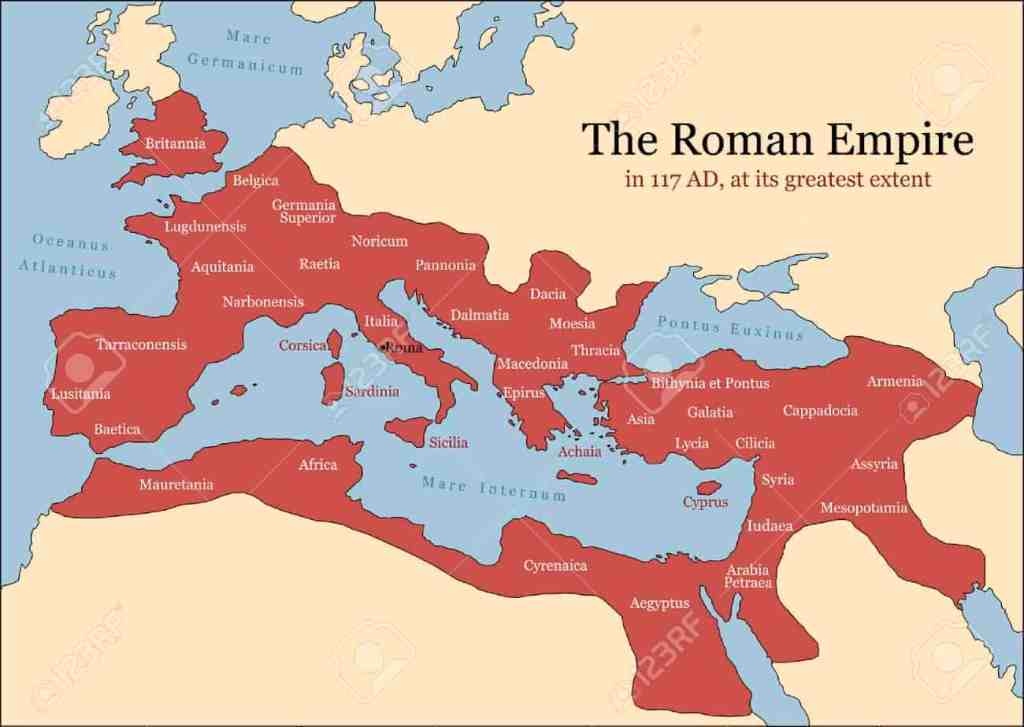
Rather than direct democracy, Rome established a representative system of democratic governance.
Noble moves on to the Roman Empire that adopted many of the principles that advanced Greek civil governance. However, rather than direct democracy, Rome established a representative system of democratic governance. Rome made wealth a more important criteria for serving as a representative of government. However, Rome did not use their citizen representatives to make law but only to give vent to their opinions about leadership’s decisions. Rome extended their empire by military conquest but when battles were won, they appointed governors of new territories that granted citizenship to the conquered. Military control is maintained by Rome for centuries, but a voice is given to the citizens of conquered territories. In a combination of military power, alliances with native rulers, and positive incentives, Rome assimilated foreign cultures into a vast empire.
The power and influence of Rome diminished in the 3rd century. Rome’s diminishing power comes from multiple directions. Noble explains the rise of disparate tribal groups challenged Roman authority. The growing influence of religion and diminished gravitas of its citizens accelerated Romes’s loss of power and influence.
However, it is clear the lessons of Greece’s and Rome’s democratic history are guides to the future of “…Western Civilization”.
China recognizes the importance of investment in their military and its economic investment in other countries (e.g., Road and Belt program) to advance its influence and role in the world.
Religion brought societies together while splitting human society in ways that maimed and murdered millions of people.
Noble circles back to a more detailed history of religion. As the Roman Empire begins to collapse, dynasties were formed through the 3rd century AD.
As these dynasties collapsed, Christianity spreads across former Roman controlled lands. The Byzantine Empire formed in 395 CE; Christianity grew through the 15th century to become the largest religion in the world. The Frankish dynasty established itself between 750 and 887 CE, with Charlemagne as its most renown leader. In 774 CE., Charlemagne created a papal state in central Italy. A Frankish dynasty was formed by the Carolingian family (756-887 CE) that managed to stabilize and spread Christian religion throughout Western Europe. The Carolingian family constructed churches and schools to teach Christianity. They created a Carolingian army to protect and expand belief in a Christian God. Noble’s lectures show religious belief in a Supreme Being roils the world. From reading/listening to other histories, governments founded on religious belief are destined to fail.
The remaining lectures summarize the history of the Rennaissance, the Reformation, and the split of the Christian church. Noble’s lectures reflect his erudition, multi-lingual expertise, and understanding of the people of those historical events. The underpinning notion is that religion and its permutations will continue to impact the future of the world, let alone “…Western Civilization”.
Is belief in God worth it? Cook’s history of Muslimism and knowledge of Christianity makes one wonder.
Books of Interest Website: chetyarbrough.blog
“A History of the Muslim World From its origins to the Dawn of Modernity”
By: Michael Cook
Narrated By: Ric Jerrom
Michael A. Cook (British historian, scholar of Islamic History)
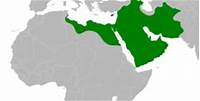
Professor Cook overwhelms one with a voluminous examination of the Muslim World. His history really begins before the birth of the Arab prophet, Muhammad (570-632). However, it is after Muhammed’s revelations and his departure from Mecca in 610 CE, when he and his followers settle in Medina (622) that a more documented history is revealed. Arabs are identified as a nomadic tribe who occupied the Arabian Peninsula, Syrian Desert, North, and Lower Mesopotamia in the mid-9th century BCE. However, notable territorial regions first appeared in the 14th century BCE with the Assyrian and Neo-Assyrian Empires. Cook suggests it is in the 7th century CE that Islam became a force in the Middle East. After the Prophet Muhammad’s death in 1632, the Rashidun Caliphate established itself (632-661 CE).
(REVIEWER’S NOTE: Scribes recreated fragmentary writings and legends of long-dead contemporaries of Christ in the case of the Holy Bible, just as the thoughts of the “last messenger of Allah” were recorded by scribes. Modern science experiments explain human minds do not precisely record or recall the past. The human mind recreates the past and fills any gaps that may arise to complete the mind’s imprecise memory. That is why scribes of biblical or unbiblical history are interpretations of facts of the past, and not necessarily accurate facts of the past.)
With the Ottoman Empire’s dissolution, Turkey, Greece, Serbia, Bulgaria, Romania, Albania, Montenegro, and Macedonia were formed. Three Arab nation-states came out of the Ottoman Empire’ dissolution. They were Syria, Iraq, and Transjordan (now Jordan).
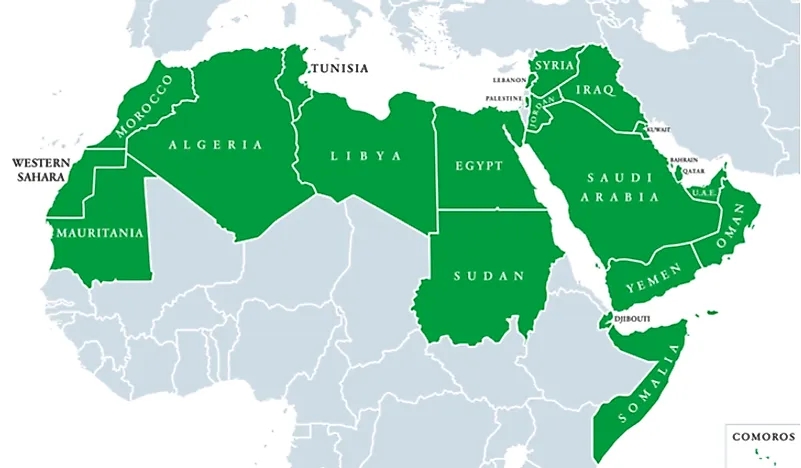
Interestingly, modern states with the highest number of Arab speaking residents are Egypt, Sudan, Algeria, Iraq, Morocco, Saudi Arabia, and Yemen. Only Egypt and Sudan have more than 10% of their population who use Arabic as their primary language. The point of this realization is that Professor Cook is writing a history of the Muslim religion, not Arab culture.
What Cook shows is how Muslim belief (24% of the world population) impacted the world.
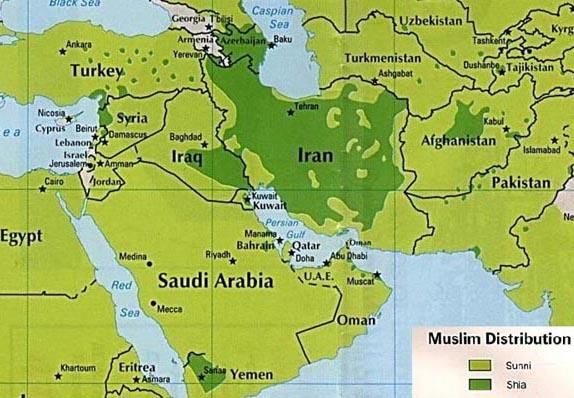
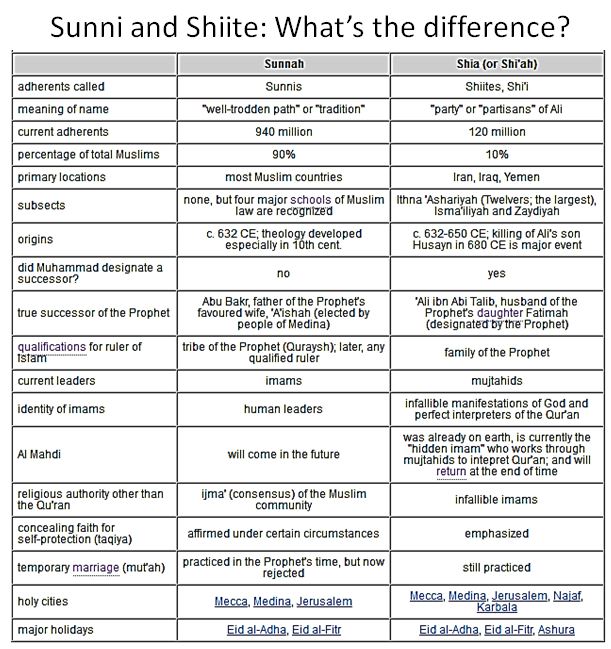
Cook begins to explain the split between Sunni and Shia religious belief. In the modern world, only Iran, Bahrain, Yemen, and Iraq have Shia-majority populations with a significant Shia community in Lebanon and Afghanistan. Sunni religious belief is practiced by a majority population in nearly 20 countries with a mixture in Egypt, Turkey, Pakistan, Saudi Arabia, Yemen, Eritrea, Syria, Afghanistan, Lebanon, Turkmenistan, and Azerbaijan.
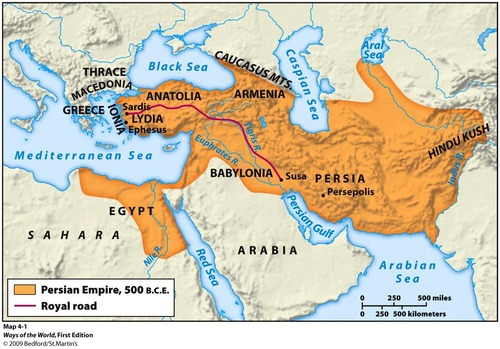
A surprising observation by Cook is the impact of a language change in the Middle East. Persian (aka Farsi) became a bridge connecting the diverse communities and histories of the Middle East. This change largely took place between the 9th and 11th centuries. It significantly impacted Muslim cultural beliefs and Iranian culture in general.
Cook implies the colloquialization of translations by Farsi (the language of Persia) of Arab Caliphate’ triumphs and failures molded beliefs of Middle Eastern nation-states. Countries like Iran either adopted or rejected Farsi’ stories of accomplishments and failures by Arab Caliphates. Some failure is associated with moral turpitude, a falling away from Qur’anic teaching, translated into Farsi language.
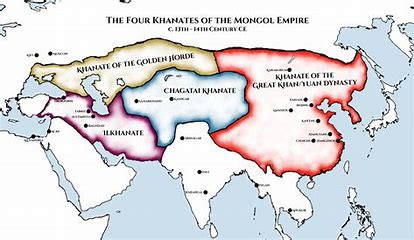
(Genghis Khan’s sons establish four kingdoms in the Middle East that lasted until 1368.)
Though none of the kingdoms practiced a particular religion, each influenced the course of religious acceptance. The environment they created allowed Christian religion to spread from Russian territory, while Turkish influence leaned toward Islam. Cook explains how young rebel leaders gained followers by successfully defeating and pillaging villages that had poor defenses. With each successful raid, more young people would join the raiders. This incremental growth led to the spread of Christian and Islamic religious influence, depending on the religious leaning of raiding parties.
Cook clearly illustrates how Arab culture lies at the heart of Islamic religion despite its nomadic existence. From the first madrasas (Islamic schools) in the Abbasid Caliphate in the 9th century, the teachings of the last messenger of Allah began with Arabs. Cook explains the religion is unlikely to have flourished without other cultures adoption. Without Persian, Turk, Uzbek, and Mongol societies adoption, the spread of Islam would have been minimized. Muslim belief evolved in a cauldron of conflict with Christianity, Judaism, and other indigenous religions but prevailed as a religion with two faces, i.e., the Suni and Shia Divide.
Like the schism between Catholics and Protestants, Sunni and Shia believe in one God but differ in ways that have roiled the world. In the case of Catholics and Protestants, there is the French wars of 1562-1598, the European thirty years war of 1618-1648, and the Troubles in Ireland in 1968-1998. In the case of Sunni and Shia, there was the battle of Karbala in 680 CE, the Safavid-Ottoman wars in the 16th-17th centuries, the Lebanese Civil War of 1975-1990, the Iraq War of 2003-2011, and the Syrian Civil War that began in 2011 and continues through today.
The forgoing were only human deaths within the two major religions of the world, while neglecting the atrocities incurred between Christianity and Islam. There were the Crusades between the 11th and 13th centuries, the Battle of Lepanto in 1571, The Siege of Vienna in 1683, and the Lebanese Civil War between 1975-1990.
Later chapters of Cook’s history reveal the conflicts between the Islamic religion and other major religions in the Middle East, besides Christianity. Many leaders are identified for historians who will be interested in knowing more, but the names become a blur to a dilatant of history.














































 REVIEWS AND VIEWS OF LIFE