One hopes for more Leifer’s in this world of human tragedy.
Books of Interest Website: chetyarbrough.blog
Tablets Shattered (The End of an American Jewish Century and the Future of Jewish Life)
By: Joshua Leifer
Narrated By: Eli Schiff
Joshua Leifer (Author, journalist and scholar who explores the past and present of American Jewry, Leifer pursues a PhD at Yale on the history of modern moral and social thought.)
Joshua Leifer reflects on the Americanization of Jewish ethnicity in modern times. Leifer offers his personal view of modern events in Israel, including the terror of October 7th, 2023, and its aftermath.
In the last month, my wife and I journeyed to Poland, the Baltics, and Finland.
On the trip, we visited Auschwitz, the terror of Soviet occupation of the Baltics, and the tenuous relationship of Finland and Russia. More will be shared in a future review.
The holocaust is made present to anyone who chooses to visit Auschwitz.
This is a monument to the Holocaust, located in Germany.
Leifer’s book is not about Auschwitz’s atrocity but about a diminishment of Jewish identity. One who reads or listens to Leifer’s view of Jewish ethnicity will look at Judaism in a different way. Regardless of one’s personal beliefs, Leifer argues Judaism is losing its way from what he believes is a fundamental tenet of the Jewish religion. That tenet is that Judaism will always be a minority within cultures of the world and, as a minority, Leiger argues it is critically important for followers to return to its Judaic roots. Leifer implies Americanization of Judaism is a social influence that threatens the Tablets of the Covenant, i.e., the Ten Commandments.
Leifer explains that Israel will continue to grow as an independent nation with an exodus of Jewish believers from America and the world. Leifer suggests that exodus is evident in the diminishing number of American Jews who have chosen to leave America to become Israeli citizens. His hope is that in Jews return to a nation of their own with a renewed belief and adherence to the Ten Commandments.
I am the Lord your God: You shall have no other gods before Me.
You shall not make for yourself a graven image: No idols or images.
You shall not take the name of the Lord your God in vain.
Remember the Sabbath day, to keep it holy.
Honor your father and your mother.
You shall not murder.
You shall not commit adultery.
You shall not steal.
You shall not bear false witness against your neighbor.
You shall not covet: Do not desire your neighbor’s house, wife, or possessions.
Of particular note is the Haredim who adhere to traditional Jewish law and customs.
There is an underlying accusation in Leifer’s book that America reinforced want for money, power, and prestige that changed the nature of Judaism.
However, human nature is a failing in all cultures. The truth is that all forms of government and culture seduce human beings to violate the Ten Commandments: not only Jewish followers. Human nature is an equal opportunity exploiter of society and people.
Leifer does have a point in that any ethnicity that truly follows the ten commandments is better than one that ignores them.
The fault in Leifer’s belief is that the ten commandments will or can be universally accepted by any culture or ethnicity. Human nature can be improved upon, but one doubts it can be erased by either religious or secular teaching of the Commandments.
Leifer hopes for a two-state solution in Israel. That seems a laudable and achievable goal, but human nature remains the same. With statehood, both Israeli and Palestinian societies may become better but there will always be the threat of Commandment violation because of human nature. One hopes for more Leifer’s in this world of human tragedy.
“…Western Civilization” and its Christian and democratic foundation gives little comfort to those who are worried about societies’ future.
Books of Interest Website: chetyarbrough.blog
“The Foundations of Western Civilization”
By: Great Books Series
Lecturer: Professor Thomas F.X. Noble
Thomas F. X. Noble (Professor at Notre Dame, Ph.D. from Michigan State University, President of the American Society of Church History, received the Charles Sheedy Prize for Excellence in Teaching in 2011.)
Noble offers a distinctive view of the foundation of Western Civilization in 48-lectures sponsored by the Great Books Series. There is little doubt about the importance of religion in the world. Noble explains how the Bible is a seminal work underpinning one of the two largest religions of the world, Christianity. Noble explains the Bible, just as the Quran in the east, provides a contract between a singular God and humanity. However, the dialectic of religion is that it binds people together as well as rips them apart. On the one hand, religious belief brings people together with belief in something greater than themselves. On the other, Christian and Islamic believers have maimed and murdered millions.
Noble explains Christianity began in the same area of the world as the Muslim religion, but several centuries earlier.
The spread of Christianity begins in the 1st century while Muslimism spread in the 7th. The ministry of Jesus Christ spread Christianity in 30-33 AD. Some would argue the New Testament Gospels of Matthew, Mark, Luke, and John are extensions of the Hebrew Bible. The Jewish Torah and Hebrew Bible emphasize the oneness of God, which is consistent with Christian belief, but the difference is that Jesus was not considered a Messiah by Jews. Jesus was, at most, only a messenger of God to Jews, like Muhammed is considered to Muslims.
Noble notes the spread of Christianity began in the Middle East, centuries before Muhammad’s spread of Muslimism in Mesopotamia.
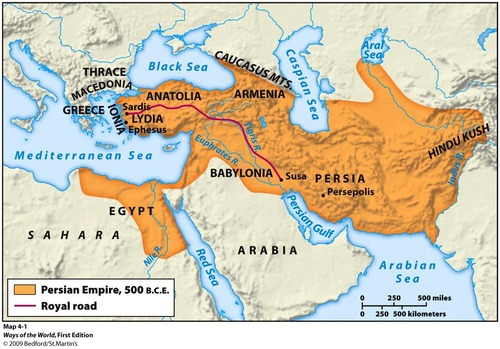
Noble suggests Christianity’s spread is associated with the advent of Zoroastrianism in Mesopotamia. The prophet Zoroaster believed in a monotheistic faith before the ministry of Jesus in Judea and before the record of Judaism in the Torah of 1400 BC, the later Holy Bible, New Testament, and Quran. The common factor in Judaism, Christianity, and Muslimism is belief in one Supreme Being. Of course, there are numerous differences in these religions after their “One God” similarity. The point is, they all originated in the Middle East according to Noble’s history.
The point Noble is making is that religion is an integral part of the foundation of civilization. Religion brought people together. At the same time, religion became a foundation for difference among people of similar and different cultures. Noble explains those differences helped and hindered the shape of western civilizations.
Greeks feared the tyranny of the majority and were concerned about the lack of expertise in governance and decision-making on the part of the general population. They saw the risk of demagogues. America and the western world have experienced all of these democratic risks. One could argue America is experiencing those risks in 2024.
As these risks play out in ancient Greece, they were mitigated by pragmatic Athenian leaders like Cleisthenes who respected special interests of his time in office. He introduced a lottery system that gave voice and some influence on policy to representatives of these special interests. The people being governed were recognized in public forums that allowed free expression. On the other hand, Cleisthenes instituted the principle of societal ostracism for aberrant behavior of people who advocated against what was perceived as the common good. Future leaders expanded political rights of Greek residents and created a council of special interests to have a direct role and influence in public policy. Public ostracism of Greek citizens for up to ten years was formalized to maintain government’ stability.
Rather than direct democracy, Rome established a representative system of democratic governance.
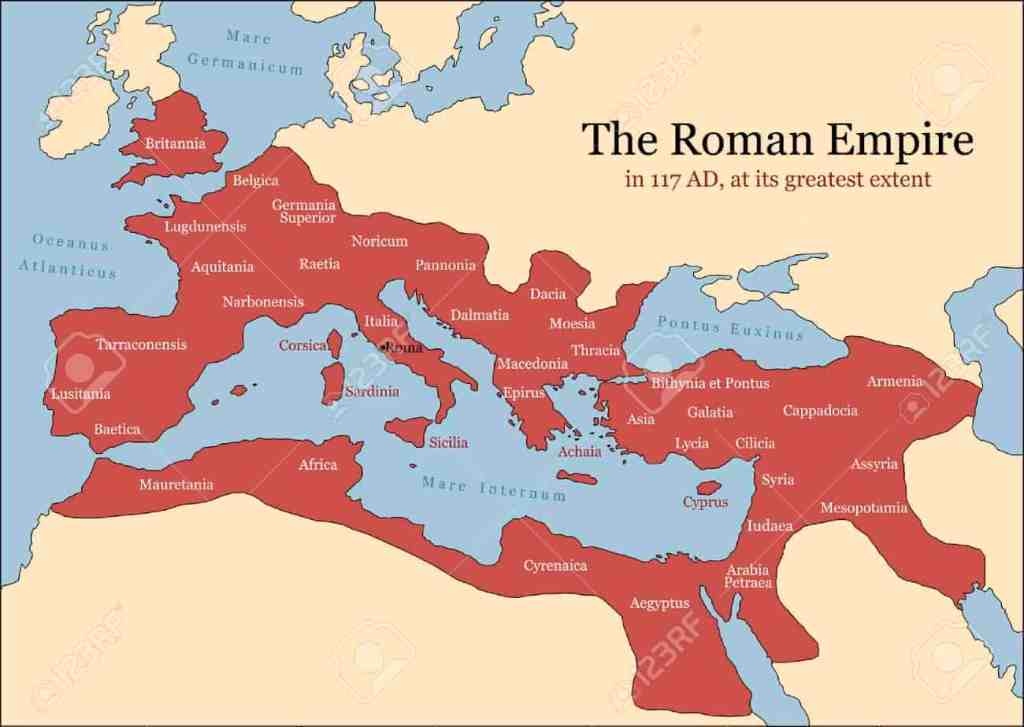
Noble moves on to the Roman Empire that adopted many of the principles that advanced Greek civil governance. However, rather than direct democracy, Rome established a representative system of democratic governance. Rome made wealth a more important criteria for serving as a representative of government. However, Rome did not use their citizen representatives to make law but only to give vent to their opinions about leadership’s decisions. Rome extended their empire by military conquest but when battles were won, they appointed governors of new territories that granted citizenship to the conquered. Military control is maintained by Rome for centuries, but a voice is given to the citizens of conquered territories. In a combination of military power, alliances with native rulers, and positive incentives, Rome assimilated foreign cultures into a vast empire.
The power and influence of Rome diminished in the 3rd century. Rome’s diminishing power comes from multiple directions. Noble explains the rise of disparate tribal groups challenged Roman authority. The growing influence of religion and diminished gravitas of its citizens accelerated Romes’s loss of power and influence.
However, it is clear the lessons of Greece’s and Rome’s democratic history are guides to the future of “…Western Civilization”.
China recognizes the importance of investment in their military and its economic investment in other countries (e.g., Road and Belt program) to advance its influence and role in the world.
Religion brought societies together while splitting human society in ways that maimed and murdered millions of people.
Noble circles back to a more detailed history of religion. As the Roman Empire begins to collapse, dynasties were formed through the 3rd century AD.
As these dynasties collapsed, Christianity spreads across former Roman controlled lands. The Byzantine Empire formed in 395 CE; Christianity grew through the 15th century to become the largest religion in the world. The Frankish dynasty established itself between 750 and 887 CE, with Charlemagne as its most renown leader. In 774 CE., Charlemagne created a papal state in central Italy. A Frankish dynasty was formed by the Carolingian family (756-887 CE) that managed to stabilize and spread Christian religion throughout Western Europe. The Carolingian family constructed churches and schools to teach Christianity. They created a Carolingian army to protect and expand belief in a Christian God. Noble’s lectures show religious belief in a Supreme Being roils the world. From reading/listening to other histories, governments founded on religious belief are destined to fail.
The remaining lectures summarize the history of the Rennaissance, the Reformation, and the split of the Christian church. Noble’s lectures reflect his erudition, multi-lingual expertise, and understanding of the people of those historical events. The underpinning notion is that religion and its permutations will continue to impact the future of the world, let alone “…Western Civilization”.
Is belief in God worth it? Cook’s history of Muslimism and knowledge of Christianity makes one wonder.
Books of Interest Website: chetyarbrough.blog
“A History of the Muslim World From its origins to the Dawn of Modernity”
By: Michael Cook
Narrated By: Ric Jerrom
Michael A. Cook (British historian, scholar of Islamic History)
Professor Cook overwhelms one with a voluminous examination of the Muslim World. His history really begins before the birth of the Arab prophet, Muhammad (570-632). However, it is after Muhammed’s revelations and his departure from Mecca in 610 CE, when he and his followers settle in Medina (622) that a more documented history is revealed. Arabs are identified as a nomadic tribe who occupied the Arabian Peninsula, Syrian Desert, North, and Lower Mesopotamia in the mid-9th century BCE. However, notable territorial regions first appeared in the 14th century BCE with the Assyrian and Neo-Assyrian Empires. Cook suggests it is in the 7th century CE that Islam became a force in the Middle East. After the Prophet Muhammad’s death in 1632, the Rashidun Caliphate established itself (632-661 CE).
(REVIEWER’S NOTE: Scribes recreated fragmentary writings and legends of long-dead contemporaries of Christ in the case of the Holy Bible, just as the thoughts of the “last messenger of Allah” were recorded by scribes. Modern science experiments explain human minds do not precisely record or recall the past. The human mind recreates the past and fills any gaps that may arise to complete the mind’s imprecise memory. That is why scribes of biblical or unbiblical history are interpretations of facts of the past, and not necessarily accurate facts of the past.)
With the Ottoman Empire’s dissolution, Turkey, Greece, Serbia, Bulgaria, Romania, Albania, Montenegro, and Macedonia were formed. Three Arab nation-states came out of the Ottoman Empire’ dissolution. They were Syria, Iraq, and Transjordan (now Jordan).
Interestingly, modern states with the highest number of Arab speaking residents are Egypt, Sudan, Algeria, Iraq, Morocco, Saudi Arabia, and Yemen. Only Egypt and Sudan have more than 10% of their population who use Arabic as their primary language. The point of this realization is that Professor Cook is writing a history of the Muslim religion, not Arab culture.
What Cook shows is how Muslim belief (24% of the world population) impacted the world.
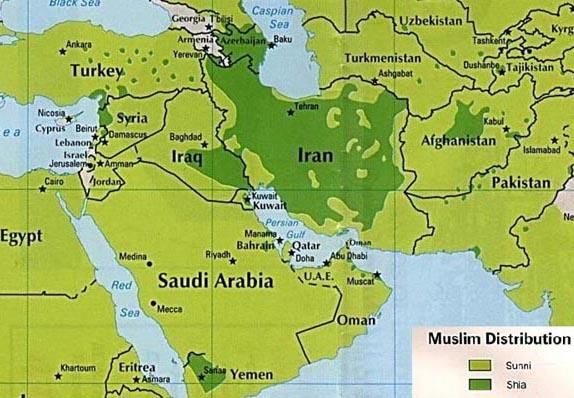
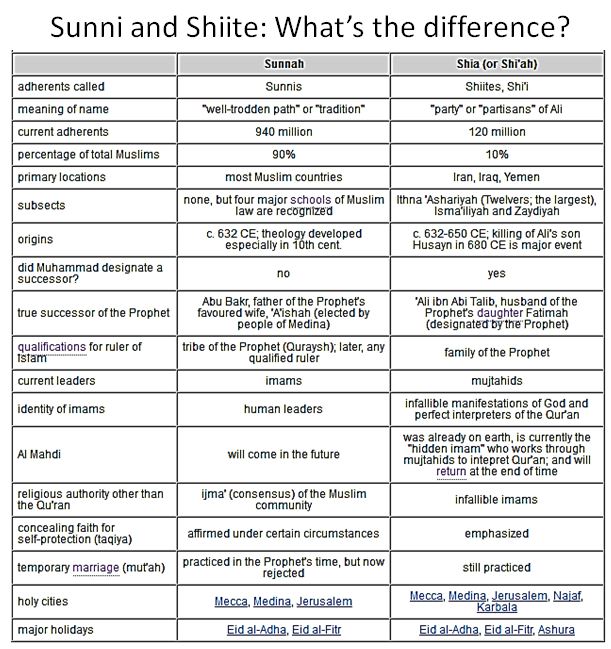
Cook begins to explain the split between Sunni and Shia religious belief. In the modern world, only Iran, Bahrain, Yemen, and Iraq have Shia-majority populations with a significant Shia community in Lebanon and Afghanistan. Sunni religious belief is practiced by a majority population in nearly 20 countries with a mixture in Egypt, Turkey, Pakistan, Saudi Arabia, Yemen, Eritrea, Syria, Afghanistan, Lebanon, Turkmenistan, and Azerbaijan.
A surprising observation by Cook is the impact of a language change in the Middle East. Persian (aka Farsi) became a bridge connecting the diverse communities and histories of the Middle East. This change largely took place between the 9th and 11th centuries. It significantly impacted Muslim cultural beliefs and Iranian culture in general.
Cook implies the colloquialization of translations by Farsi (the language of Persia) of Arab Caliphate’ triumphs and failures molded beliefs of Middle Eastern nation-states. Countries like Iran either adopted or rejected Farsi’ stories of accomplishments and failures by Arab Caliphates. Some failure is associated with moral turpitude, a falling away from Qur’anic teaching, translated into Farsi language.
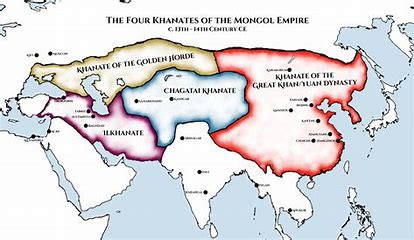
(Genghis Khan’s sons establish four kingdoms in the Middle East that lasted until 1368.)
Though none of the kingdoms practiced a particular religion, each influenced the course of religious acceptance. The environment they created allowed Christian religion to spread from Russian territory, while Turkish influence leaned toward Islam. Cook explains how young rebel leaders gained followers by successfully defeating and pillaging villages that had poor defenses. With each successful raid, more young people would join the raiders. This incremental growth led to the spread of Christian and Islamic religious influence, depending on the religious leaning of raiding parties.
Cook clearly illustrates how Arab culture lies at the heart of Islamic religion despite its nomadic existence. From the first madrasas (Islamic schools) in the Abbasid Caliphate in the 9th century, the teachings of the last messenger of Allah began with Arabs. Cook explains the religion is unlikely to have flourished without other cultures adoption. Without Persian, Turk, Uzbek, and Mongol societies adoption, the spread of Islam would have been minimized. Muslim belief evolved in a cauldron of conflict with Christianity, Judaism, and other indigenous religions but prevailed as a religion with two faces, i.e., the Suni and Shia Divide.
Like the schism between Catholics and Protestants, Sunni and Shia believe in one God but differ in ways that have roiled the world. In the case of Catholics and Protestants, there is the French wars of 1562-1598, the European thirty years war of 1618-1648, and the Troubles in Ireland in 1968-1998. In the case of Sunni and Shia, there was the battle of Karbala in 680 CE, the Safavid-Ottoman wars in the 16th-17th centuries, the Lebanese Civil War of 1975-1990, the Iraq War of 2003-2011, and the Syrian Civil War that began in 2011 and continues through today.
The forgoing were only human deaths within the two major religions of the world, while neglecting the atrocities incurred between Christianity and Islam. There were the Crusades between the 11th and 13th centuries, the Battle of Lepanto in 1571, The Siege of Vienna in 1683, and the Lebanese Civil War between 1975-1990.
Later chapters of Cook’s history reveal the conflicts between the Islamic religion and other major religions in the Middle East, besides Christianity. Many leaders are identified for historians who will be interested in knowing more, but the names become a blur to a dilatant of history.
Like the number 47 in “Guardians of the Galaxy”, the 27 books of the New Testament offer no answer to the meaning of life.
Books of Interest Website: chetyarbrough.blog
“The History of the Bible” (The Great Book Lectures)
By: Bart D. Ehrman
Narrated by: Bart D. Ehrman Lectures
Bart Denton Ehrman (American New Testament Scholar, Wheaton College BA, Princeton Theological Seminary received a Master of Divinity and PhD.)
Bart D. Ehrman’s lectures are a revelation to one who knows little about either the Bible or the New Testament. As a scholar, Ehrman views the New Testament as history, not a religious covenant. The New Testament, as differentiated from the Holy Bible (a covenant with Israel), is a later covenant with Jesus that extends religion to all humankind.
Ehrman’s lectures are not about religious belief but about the history of the New Testament.
Removing the ideas of religious belief from his lectures will undoubtedly offend many who believe in God’s and/or Jesus’s divinity. What Ehrman does is explain how the New Testament is a flawed recollection of historical figures. The flaws come from scribes who interpret three contemporaries of Jesus–Matthew’s, John’s, and Peter’s fragmentary writings of Jesus’ ministry and teachings.
The 27 books of the New Testament are written by scribes of later centuries that are interpretations of Matthew’s, John’s, and Peter’s interpretations of Jesus’s beliefs and history on earth.
Because scribes and contemporaries’ recollection of Jesus are human, truth is in the eye and limitations of its beholders. The inference from Ehrman’s lectures is that truth is distorted by interpretations of interpretations.
Ehrman systematically reveals how the story of Jesus’s life and beliefs change over the centuries.
He gives listeners a better understanding of the complexity and false interpretations of religion that accompany the many atrocities committed by believers who foolishly murder fellow human beings. These great historical conflicts are based on interpreters’ interpretations of interpretations.
God may or may not exist, but human beings insist on their beliefs to the detriment of humanity.
History unreservedly shows–believing in religion, without concern for society leads to discrimination, mayhem, and murder. That is as clear today in the Israeli/Palestinian conflict as in the history of the Jewish holocaust and pogroms of the past.
Like the number 47 in “Guardians of the Galaxy”, the 27 books of the New Testament offer no answer to the meaning of life.
Sartre seemed right when he wrote “hell is other people” in “No Exit”. Neither belief in humanism nor God seem to hold an answer for humanity’s future.
Books of Interest Website: chetyarbrough.blog
“Humanly Possible” (Seven Hundred Years of Humanist Freethinking, Inquiry, and Optimism)
By: Sarah Bakewell
Narrated by: Antonia Beamish
Sarah Bakewell (British author and professor, received the Windham-Campbell Literature Prize for non-fiction in 2018.
Sarah Bakewell provides a detailed history of humanism. To many, Bakewell’s story is a history of society falling away from God. Bakewell puts religion aside while explaining why and how humanists challenge religious belief and lean toward science as an explanation of life.
Bakewell notes humanism reaches back to the 5th century BCE with the Greek philosopher Protagoras. He was a teacher identified by Plato in a dialogue titled “Protagoras”. Through Plato’s dialogue, one finds Protagoras taught the importance of literature, and art that infers a set of moral principles to guide human behavior. Several centuries later, Diogenes Laertius writes “Lives of the Philosophers” that adds to history’s knowledge of Protagoras’s beliefs. Protagoras taught public speaking, poetry criticism, citizenship, and grammar.
Protagoras (490-420 BCE, Bakewell suggests Protagoras set the foundation for the humanist movement.)
Francesco Petrarch (1304-1374) takes up the humanist movement during the Italian Renaissance. Petrarch became internationally known as a humanist. He traveled extensively, looking for Classical manuscripts and ancient texts to recover the knowledge of Greek and Roman writers. He discovered letters that told of Cicero’s personal life–what it was like in the late Roman Republic (106-43 BCE). Cicero’s observations showed the importance of human character in the way one lives life.
Francesco Petracco (1304-1374, Italian scholar and poet and one of the earliest students and promoters of humanism.)
Collection of ancient manuscripts by Petrarch and Coluccio Salutati (1331-1406) of Florence expanded the humanist movement. Giovanni Boccaccio writes “The Decameron”, a collection of short stories that reinforces the principles of human worth and dignity, belief in reason and human ethics, and the value of critical thinking, i.e., humanist ideals.
Desiderius Erasmus (1469-1536)Sir Thomas More (1478-1535)William Shakespeare (1564-1616)
The humanist mantle is picked up in England and the wider part of continental Europe after the early 15th century. Erasmus, Sir Thomas More, and William Shakespeare, reinforce the movement. Desiderius Erasmus is a Dutch humanist. He attacks the excessive powers of the papacy. He values human liberty more than orthodoxy. He inspires the Protestant Reformation and the Catholic Counter-Reformation. He emphasizes the study of classics over medieval tradition. Erasmus has great impact on the Renaissance and its religious and intellectual climate with an eye for life on earth, more than an afterlife. He wrote “The Praise of Folly”, satirizing religious practices based on superstition and impiety. Though he hoped for divine mercy, Erasmus emphasized faith and good deeds in life, humanist ideals.
Bakewell notes Sir Thomas More writes “Utopia”, published in 1516, that describes an ideal society that addresses penology, state-controlled education, religious pluralism, divorce, euthanasia, and surprisingly, women’s rights.
Shakespeare’s plays introduce psychological realism and depth to human thought and action. Much of what he writes is secular rather than religious. Shakespeare implies life on earth is more than preparation for an afterlife.
Shakespeare suggests life on earth is more than preparation for an afterlife. Death is viewed as final, a humanist view of life and death.
Bakewell goes on to write of Denis Diderot, David Hume, Kant, Adam Smith, and Voltaire. They become leaders of humanism in the 17th and 18th centuries. Diderot emphasizes critical thinking, education, and secular values. Hume writes “A Treatise of Human Nature” to explain human morality. Adam Smith’s “Wealth of Nations” reflects on national economic growth and how the principle of “raising all boats” comes from free enterprise and free trade, humanity in action.
Denis Diderot (French philosopher 1743-1784)David Hume (Scottish philosopher, 1711-1776) Immanuel Kant (German philosopher, 1724-1804)Adam Smith (Scottish economist and philosopher, 1723-1790)VOLTAIRE aka FRANCOIS-MARIE AROUET (1694-1778, WRITER, PHILOSOPHER, PLAYWRIGHT, HISTORIAN)
The idea of humanism is rocketed into American thought by Charles Darwin’s “Origin of Species”.
CHARLES DARWIN (1809-1882) FOUNDER OF THE THEORY OF THE ORIGIN OF SPECIES.Thomas Huxley. Coloured portrait of the British biologist Thomas Henry Huxley (1825-95). Huxley was the main advocate for the theory of evolution in scientific debates because Charles Darwin, its co-proposer, was a shy man who shunned publicity. One of the most famous debates on Darwin’s theory in which he took part occurred at a meeting of the British Association for the Advancement of Science in Oxford in 1860. Huxley’s research on primates firmly established man in this biological order, providing further scientific evidence for evolution. Huxley also did work in palaeontology and zoology. This artwork was taken from A Modern Portrait Gallery, volume 3 (1881).
Natural selection became a science-based explanation for the origin of species, including human beings. Its impact is evident in the personal transition of Darwin (the son of a medical doctor and grandson of a botanist), who planned to join the clergy, but became a person who identifies himself as an agnostic. Thomas Henry Huxley publicly endorses Darwin’s theory and coins the term “agnosticism” in 1869. Many of the scientific community joined that endorsement during Darwin’s life.
As Bakewell advances her history into the twentieth century, Thomas Mann and Bertrand Rusell carry the torch of humanism. The interesting point made about humanism by Mann is that a humanist must guard against the tendency to reason too much. The rise of Nazism in Mann’s home country and the repressiveness of Stalin’s (and now Putin’s) communism are examples of what concerned Mann. On the one hand, Mann recognizes the “unbearable pity for the sufferings of mankind” but also the danger of accepting authoritarian leaders who preach nationalist socialism or communism while promoting nationalist hegemony, forced labor, racial discrimination, ethnic cleansing, and gender inequality. The rise of Nazism and Putin’s invasion of Ukraine show how authoritarian reasoning can magnify the sufferings of humanity.
Paul Thomas Mann (1875-1955, German novelist, won Nobel Prize in literature 1929, wrote “Buddenbrooks “and “The Magic Mountain”)Bertrand Arthur William Russell (1872-1970, British philosopher, historian, social critic.)
Bertrand Russell, a British philosopher, mathematician, logician, historian, and humanist activist, warned against superstition and preached the importance of education. Both Mann and Russell advance the ideals of humanism. One still reserves judgement about humanist’ rejection of God when both religion and science have a mixed history for humanity.
Bakewell does not end with just a history of humanism. She speculates on where humanism may go from here.
She acknowledges her own beliefs as a humanist. She notes humanism has been noted in the past as a fragile vessel for transporting humanity into a future. The vessel’s fragility is in the nature of human beings.
Few can doubt we are self-interested animals that have to come to grips with what is ultimately in our self-interest.
Human self-interest must change from greed for money and/or power for humanism to work. If self-interest rests anywhere, it needs to be in the prestige that is earned by being engaged with the welfare of humanity. In light of history, human pursuit of societal welfare seems only to appear when annihilation is nigh. The war in Ukraine and human history are evidence of humanity’s failures. When perceived threats to peace and happiness disappear, humanity returns to the destructive self-interest of money and power.
Evolution may ultimately reveal the truth of life and death but neither religion nor science have been historically infallible nor unerring.
Blog: awalkingdelight Website: chetyarbrough.blog
Scientism and Secularism: Learning to Respond to a Dangerous Ideology
By: J.P. Moreland, Dan Egeler-Forward
Narrated by: Mathew McAuliffe
J. P. Moreland (Author, American philosopher, theologian and Christian apologist.)
“Scientism and Secularism” is a disappointing polemic on an important but highly biased assessment of religion and science. No one escapes the bias of belief because of their life experience. J. P. Moreland’s life experience leads him to believe God is the proven origin of life. For many that is not how they became believers or non-believers. Belief in God is an evolutionary belief just as truths of science have evolved with newer discoveries.
The horrible consequences of religious belief have murdered millions of human beings.
Moreland’s book is a tiring replication of faith not factual certainty or proof of God’s existence. Religion, like science, has evolved over centuries of human existence.
Maybe there is God, but Moreland’s God is only Moreland’s God, a God founded on faith not proof.
Who in their right mind would not want a God that is omniscient and omnipresent that ultimately ensures the fair treatment during life and after death?
As a discipline, philosophy addresses fundamental questions about the nature of reality, knowledge, and existence. It plays an important role in science because it provides a framework for empirical evaluation, but categorization as a philosopher is not evidence of truth. At best, Philosophy is only a beginning of knowledge, not proof of knowledge.
Moreland denies evolution but history shows both religion and science have evolved over the centuries with immeasurable pain and gain for society. Moreland argues Darwin is wrong about the evolution of man. Moreland argues the randomness of genetic selection and time are not an experimentally proven explanation of the perfection and distinction of animal species. Really?
The only area of agreement one may have with Moreland is that great achievements in the world of ideas and things could not have been created without the existence of both religion and science. Evolution may ultimately reveal the truth of life and death but neither religion nor science have been historically infallible nor unerring.
The power of belief in science or religion both leads and misleads humanity. Humans may not forgive but they often forget.
Blog: awalkingdelight Website: chetyarbrough.blog
The Hiding Place
By: Corrie ten Boom, Elizabeth Sherrill, John Sherrill
Narrated by: Wanda McCaddon
Corrie ten Boom (Dutch watchmaker, Christian writer and public speaker.)John Sherrill and Elizabeth Sherrill (Christian writers.)
This is the life story of Corrie ten Boom and her experience in WWII. It is an autobiography written with the help of the Sherrills who have written or co-authored over 30 books translated into more than 40 languages. Though Ms. ten Boom and the Sherrills have passed, “The Hiding Place” is a paean to religious belief that has sustained civilization.
The belief eulogized in “The Hiding Place” is Christian, but it could be any faith. Whether Islamism, Hinduism, Buddhism, Shintoism, Sikhism, Judaism, Taoism, Confucianism, Caodaism, humanism, naturalism, “…ism” is belief in something greater than oneself.
The rise of Nazism in Germany was a political ideology, secular in its origin, and loosely based on belief in science.
Science is a systematic method of gaining knowledge about nature, its causes and consequence. Like every belief system, science is based on human cognition which can lead or mislead humanity. Neither science nor religion have omniscient or omnipresent insight to the nature of the universe because of the human mind’s limitations and interpretations of facts and events. Religion, like science, can lead and mislead civilization because of human limitation and interpretation.
Thankfully, Corrie ten Boom’s family’s belief in the Bible led them to aid Jews when they were persecuted by the false science of German Naziism.
The relevance of “The Hiding Place” resonates today in the conflict between Palestinians and Jews in Israel and Palestine. One can see a conflict between religion and science in the tragedy that is unfolding in Gaza. Both Hamas and the Jews use their religious beliefs and the science of war to kill each other. As in all war, there is no winner. The death of 6,000,000 Jews in WWII and the slaughter of Jews at the festival in Israel are horrid and unforgivable, but can they or should they be used as justification for the horror of what is happening in Gaza?
She follows her religious belief to do what she could to save her Catholic family and Netherland’s Jews from Nazi’s societal and science ignorance. What forgiveness there is in Corrie ten Boom’s book is only in the acceptance of the Word in her Bible. The power of belief in science or religion both leads and misleads humanity. Humans may not forgive but they often forget.
Reflecting on “Blood Brothers”, a listener understands America is a long way from the ideal of equality. Being equal does not mean everyone can be the greatest heavy-weight boxer in the world. Equality means every citizen can choose to be the best version of themselves without being repressed by the society in which they live.
Audio-book Review By Chet Yarbrough
Blog: awalkingdelight Website: chetyarbrough.blog
Blood Brothers (The Fatal Friendship Between Muhammad Ali and Malcolm X)
By:Randy Roberts Johnny Smith
Narrated by: David Drummond
Randy Roberts (Professor of History at Purdue)Johnny Smith (Asst. Professor of History specializing in Sports at Georgia Tech.)
Randy Roberts and Johnny Smith offer a nuanced and well-written view of Muhammed Ali, his fame, his skill as a heavy weight boxing champion, and figure head for the Nation of Islam (NOI). The author’s juxtapose Ali and Malcolm X as “Blood Brothers” who shed light on the unquestionable value and horrendous harm religious belief can impose on society.
Roberts and Smith show human nature is an unconquerable beast that both leads and misleads humanity. The maturity and personal growth of Muhammed Ali and Malcolm X is revealed in “Blood Brothers”. They both become members of NOI, an American faction of Islam, that preaches Black America can only be equal through separation from non-black people. Elijah Muhammed, a self-proclaimed Messenger of Allah, creates a fellowship of Black Muslims (NOI) who insist on a Black American nation, independent of American governance. Elijah Muhammed insists–in order to become democratically free and equal to non-Black American citizens, an independent Black American nation must be formed.
What Roberts’ and Smith’s history shows is NOI’s flaw is in belief that separate can ever be equal based on race, religion, or color.
Though self-worth and pride can be immeasurably enhanced by exclusionary race, religion, or difference what is missed is the truth of human nature. Human nature is riven with self-interest based on money, power, and/or prestige. Elijah Muhammed and other leaders of religion are human. Religious leader’s self-interest drains the life out of Divinities force. In one sense, NOI offers a sense of pride and equality for Black Americans but in another, it creates further discrimination and inequality with separation and distinction from others.
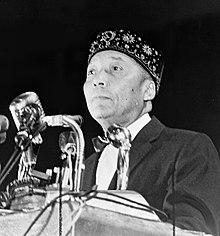
Malcolm X assassinated in 1965Ali and Elijah Muhammed
Roberts’ and Smith’s story of Malcolm X, and to a lesser extent, Muhammed Ali’s friendship, show how religion can bring people together, but also tear them apart. Malcolm X evolves from an intelligent street punk to an insightful leader of the Muslim religion. Malcolm becomes a favorite of NOI until he challenges its leader (Elijah Muhammed) for abandoning what he believes is a fundamental tenant of the faith, marriage chastity. Malcolm X exposes extra-marital affairs of Elijah Muhammed as evidence of the leader’s fall from faith. As his disaffection grows, Malcolm X begins to believe separate cannot be equal and that NOI’s belief in separation of the races is a violation of a faith that says Allah or God created all humankind.
Elijah Muhammad (Leader of NOI 1934-1975, Born in 1897 as Elijah Robert Poole, Died at age 77 in 1975.)
Malcolm X is a teacher of Ali before his break with the leader of NOI. Malcolm X appeals to Ali’s innate ability as a fighter and doggerel actor for truth and justice. Ali is put in the position of following Malcolm’s differences with Elijah Muhammed or staying within the Nation of Islam. The authors infer Ali looks at Elijah Muhammed as the father he wishes he had while Malcolm X as a brother who has been led astray.
To the authors, the assassination of Malcolm X by NOI’s followers is inferred by Ali to be a threat to his life if he forsakes NOI’ beliefs. When Elijah Muhammed dies, some years after Malcolm’s assassination, Ali revises his view of NOI and leans more toward the teachings of his former friend, Malcolm X. Ali moderates NOI’s anti-white sentiment.
Reflecting on “Blood Brothers”, a listener understands America is a long way from the ideal of equality. Being equal does not mean everyone can be the greatest heavy-weight boxer in the world. Equality means every citizen can choose to be the best version of themselves without being repressed by the society in which they live.
The WEIRDest People in the World(How the West Became Psychologically Peculiar and Particularly Prosperous)
By:Joseph Henrich
Narrated by: Korey Jackson
Joseph Henrich (American author, professor of human evolutionary biology at Harvard, former professor of psychology and economics at the University of British Columbia.)
Joseph Henrich writes an explosive book focusing on social evolution. The explosion is in the first half of the book. The remainder has a few firecrackers but no explosions. His erudite research infers much of the world will either evolve in a western world way or degrade into an economically and politically poorer and disruptive society that distrusts the western world and foments military and political opposition. If Henrich’s analysis carries some truth, one hopes the western world will persist within a more secular religious belief system that will preserve the earth’s environment.
Henrich’s argument is that the rise of religion and the concept of gods and God changed the world from tribalist, kinship’ enclaves to nation-state societies. In the early days of human habitation, Henrich’s research suggests tribes of people developed society based on kinship. However, societies evolution into larger communities is burdened by the limitations of kinship. Henrich suggests history shows political and economic relationships fall apart when kinship is the sole cohesive force of society. Both kinship and religion remain important, but religion became the more significant and cohesive part of society. Kinship’s weakness is that it limits the size of community. The growth of religion incorporated kinship to provide greater social cohesion for larger political and economic systems. Rather than kinship as the only cohesive force of society, people began to believe in something more than familial relationships. With the creation of religion, the idea of a supreme being and a moral center for “the-many-rather-than-the-one” offers a concept of societal cohesion beyond kinship.
TRIBES OF THE WORLD
The big five religions, Christianity, Judaism, Islam, Hinduism, and Buddhism became a cohesive force for nation-state development. (Of course, there are more religions than these five, but they account for 78% of the world’s population.) Religious belief provides a societal force that expands the concept of tribal communities to nation-state and, to a degree, eastern and western hemispheric cohesiveness.
However, it seems the world (particularly the western hemisphere) is becoming more secular.
One may argue advances in science erode religious beliefs. However, Henrich infers that erosion became a landslide in the western world with Martin Luther’s posting of the 95 Thesis on the Castle Church on October 31, 1517. Luther’s posting marks the beginning of the Protestant Reformation. Henrich argues the power of religion evolves with the church’s holiness, social objectivity, and political fairness being challenged by the public. Luther exposes the perfidy of the church for selling indulgences for parishioners to erase their sins to pave their way to heaven.
Whether the motivation is the posting, innate human curiosity, or the invention of the Guttenberg press (1440), history shows the public began to learn how to read and write. The public wishes to understand the world as it is, rather than how leaders of the church report their interpretation of God and the Bible.
The consequence of these two sociological conclusions benefited the western hemisphere more than the eastern hemisphere. One concludes that may be related to the way religion is viewed in the west versus the east, with the caveat that such a generalization ignores the reality that many eastern hemisphere countries have predated, if not exceeded, the economic and social growth of the west.
However, it seems those eastern hemisphere countries that have emphasized religion over secular human interests have lagged behind western economic and social growth. Henrich’s sociological studies imply a balance is needed between religious and secular belief for economic and social growth to achieve peace among nations. It seems nations of the world need to reconcile belief in religion with the social needs of society for earth to survive as the home of humanity.
Henrich ends his sociological analysis with two fundamental requirements for civilizations’ continued advancement. Contrary to an oft assumed cause being the lone genius that invents something new or discovers some unknown truth of science, Henrich suggests interconnectedness and diversity are the foundation of civilizations’ advance.
If Henrich’s theory of society is correct, humans need to quit killing each other and embrace diversity with the tools of technological communication and innovation that will come from respect for different cultures. From that foundation, innovation will change the world and earth will have a chance to become a place of peace and prosperity.
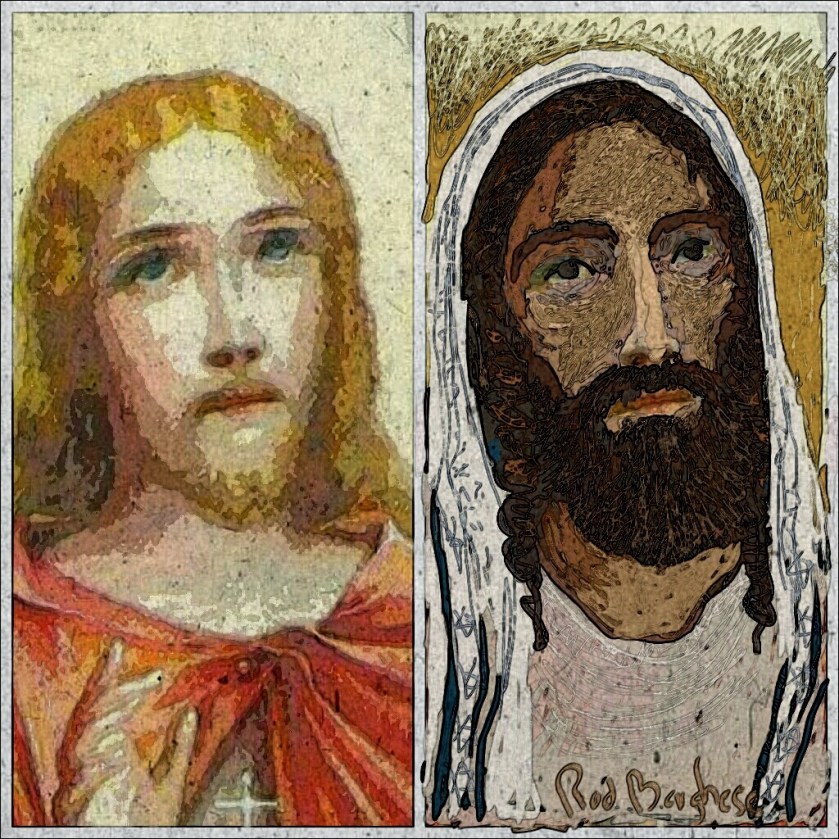
One can choose the life of Buddha, Muhammed, Jesus Christ, Zoroaster, Rishabhanatha, Maimonides, Saint Francis of Assisi, Confucious or some other spiritual figure but it is one’s individual memories and our ability in “letting go” that will give one peace of mind and happiness in life.
Audio-book Review By Chet Yarbrough
Blog: awalkingdelight Website: chetyarbrough.blog
The Untethered Soul (The Journey Beyond Yourself)
By:Michael A. Singer
Narrated by:Peter Berkrot
Michael Alan Singer (American Author, journalist, motivational speaker, software developer.)
Michael Alan Singer’s audiobook is a reification of “Letting Go” written by David Hawkins. Hawkins, a medical practitioner, and Singer, a successful tech entrepreneur, come to similar conclusions about how to live life. Singer offers a more spiritual and ritualistic approach in working through remembered, and often suppressed, experiences of life by confronting them and letting them go.
Dr. David Hawkins posits the idea of a cosmic mind that can be tapped into by one’s thoughts to mitigate negative feelings. Singer’s approach is more direct and based on actual experience revealed by conscious thought and conscious rejection.
Singer believes every experience in one’s life is recorded by the mind, either correctly or falsely.
Singer suggests, through meditation, harmful or distorted memories can be revealed and discarded as inconsequential by the process of “letting go”. This is the same “letting go” referred to by Hawkins but located in a cosmic mind (the totality of human thought) rather than the individual mind argued by Singer.
Singer’s idea for treatment seems more therapeutically practical than Hawkins.
Both writers offer a solution to many human problems, but Singer suggests a therapeutic process exercisable by the individual, without the mysticism of a cosmic mind.
Singer introduces the idea that every experience in an individual’s life is consciously or subconsciously recorded in one’s mind.
Singer’s suggestion is that all negative feelings from life experience can be eradicated by letting them go. By “letting go” of accurate or inaccurate memory, Singer suggests one’s peace of mind, energy, and happiness improves.
One can choose the life of Buddha, Muhammed, Jesus Christ, Zoroaster, Rishabhanatha, Maimonides, Saint Francis of Assisi, Confucious or some other spiritual figure but it is one’s individual memories and our ability in “letting go” that will give one peace of mind and happiness in life.