PARENTING

Tara Westover’s trials are distressing for a listener/reader of her memoir, but all children are born into a struggle to find their own identity. “Educated” is evidence of Tara’s escape from prejudice and ignorance. It is an encouraging story of recovery with an education she acquires from a lived life.

Books of Interest
 Website: chetyarbrough.blog

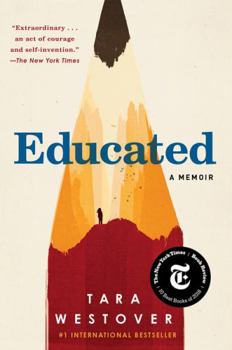
Educated (A Memoir)

By: Tara Westover

Narrated By: Julia Whelan

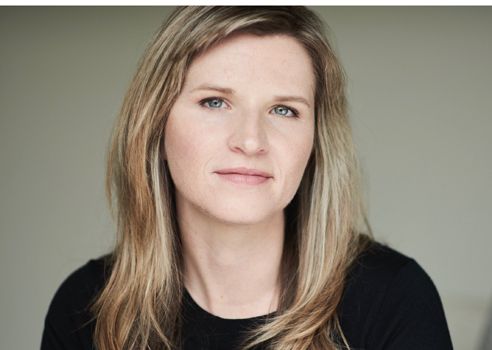
Tara Westover (Author, memoirist, essayist and historian.)

“Educated” is a memoir of Tara Westover’s childhood in America. Her story is personal but universal. Some children are born in caring and nurturing families, all are subject to parents’ strengths and weaknesses. Tara reflects on the life of her family with a father, mother, and siblings raised in a family with a survivalist father who has strong religious beliefs and antigovernment views of life. He raises his sons and a daughter with a wife who conforms to his wishes and a mother-in-law who believes he is wrong about public education and the value of extreme beliefs in independence.

Tara Westover reminds listener/readers that every culture in the world is blessed and cursed by diversity.

Westover’s father would be called an American “antigovernment extremist” and “survivalist”. He does not believe in institutions of government or public services and argues all forms of regulation outside the family distort the natural state of society. He believes it is necessary to hoard food, fuel, and human necessities to assure self-sufficiency in the event of natural disasters or government-imposed laws.

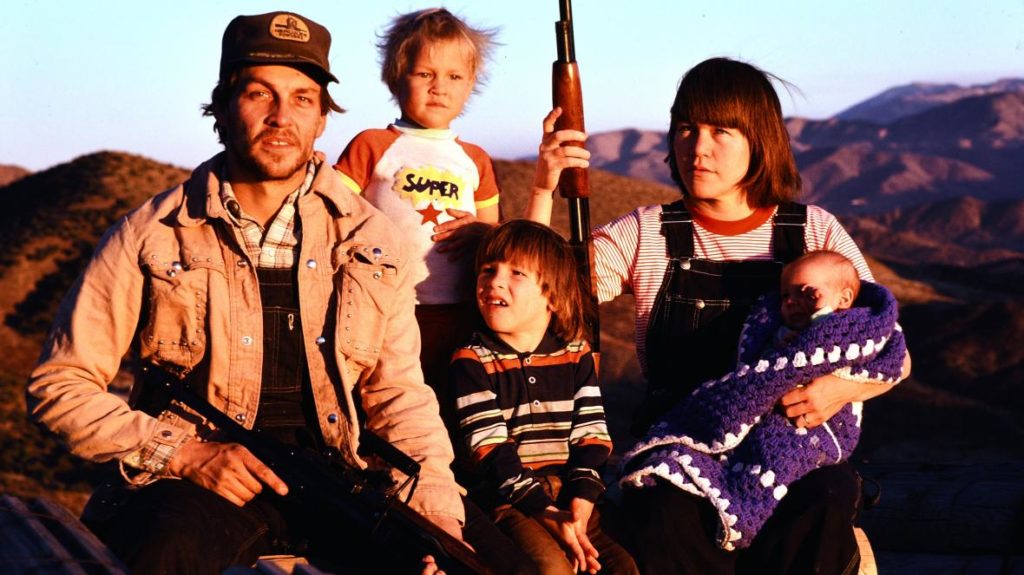
The Weaver Family Tragedy in August 1992 is an important symbol to Tara’s father.

Randy Weaver held antigovernment and white separatist views. His wife and son were killed by FBI agents on Ruby Ridge. A settlement of $3.1 million for wrongful deaths is awarded Weaver on August 15, 1995.

The Westover father grooms his children to support the family in a scrap metal business that evolves into a contracting company. As the children of the family mature, some leave while the father expands the family business with employment of outsiders. As Tara matures, she reluctantly becomes a worker in the family business to earn enough money to go to college. As Westover writes her story one wonders if her father will be the cause of the next Weaver Family Tragedy.

Westover shows how work and American life is not a fairy tale but for most a struggle for survival just as it is in every culture.

Desire has no limits. Freedom allows one to cope with life and, in some cases, exceed its limitations. Some cultures offer more freedom than others. Whether raised in America or somewhere else, one’s education comes from the culture in which they live. The circumstances of family are a part of a child’s education, but formal education varies within and between nations. Most nations have some form of public education, but education occurs whether publicly or privately pursued. The Westover family, in their children’s grade school and high school years rely on their mother’s home schooling.

The Westover’ family is neither a “Leave it to Beaver”, “My Three Sons”, or TV produced fantasy.

It is a reflection of a family dealing with the hardship of life in America that is sustained by a culture of independence and self-determination. Every child is impacted by the family in which they are raised. Whether government supported education or not, every child becomes an educated adult in different ways. Some like Tara Westover grow to adulthood with an education that comes from self-determination and grit despite her father’s influence and her sibling’s erratic behavior toward her.

Children do not choose their parents. Every child grows to adulthood in their own way.

There is always some level of care and nurturing in every family. The level of care they receive varies but ultimately it is how they deal with the circumstances in which they live that determines who they become. Two nearly fatal car accidents for Tara’s family and her near ejection from her family at age 16 seem to make her stronger. Her ability to write this memoir is a tribute to her determination to live a fulfilling life. The genetics of life have magnified and fortified the Westover children’s successes and failures in life.

Breaking free of prejudice and ignorance, whether one is formally educated or un-schooled, is difficult.

Prejudice is difficult because it is founded on emotional blindness shared by fellow travelers. Ignorance is founded on refusal of facts and knowledge of history. Two of the Westover sons and Tara seem to break the cycle. The first boy to leave the nest is on his way to Purdue after graduating from BYU. The second boy is believed by his father to be a genius and given license by his father to apply to BYU. One wonders whether the second boy will escape the curse of prejudice and ignorance of his remarkable family. Tara Westover’s trials are distressing for a listener/reader of her memoir, but all children are born into a struggle to find their own identity. “Educated” is evidence of Tara’s escape from prejudice and ignorance. It is an encouraging story of recovery with an education she acquires from a lived life.

A UKRAINE BOMB SHELL

Though Yovanovitch had nothing to do with Poroshenko’s defeat by Zelensky, it seems clear that her tenure as Ambassador to Ukraine set the table for a change in direction for Ukraine.

Books of Interest
 Website: chetyarbrough.blog

Lessons from the Edge (A Memoir)

By: Marie Yovanovitch

Narrated By: Marie Yovanovitch

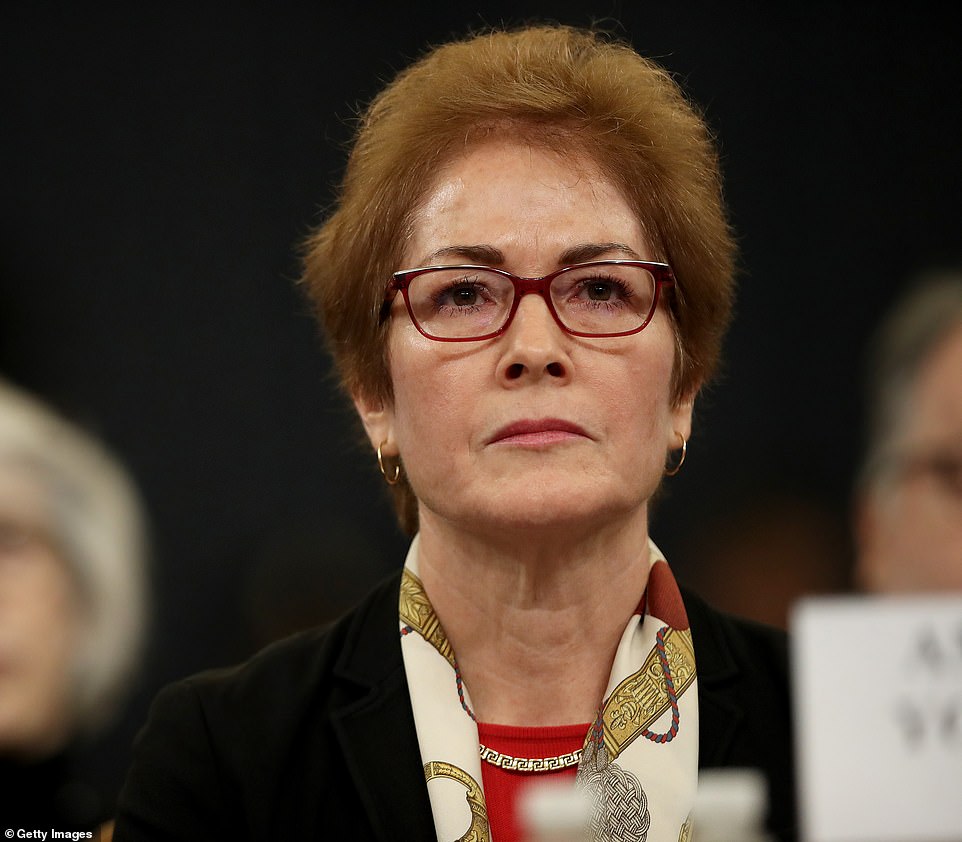
Marie Yovanovitch (Canadian-American Author, retired senior member of the US Foreign Service.)

Marie Yovanovitch is retired from the US Foreign Service but as is widely known she was fired in the first Trump administration as US Ambassador to Ukraine in 2019. A reported reason for her firing is she is said to have resisted Trump’s effort to pressure Ukraine to investigate former Vice President Joe Biden. One suspects that is partially true, but Yovanovitch shows she was a believer in equal rights for women and a supporter of Hilliary Clinton which may be additional reasons for Trump’s action to fire her. “Lessons from the Edge” is a memoir of Yovanovitch’s career as an American diplomat.

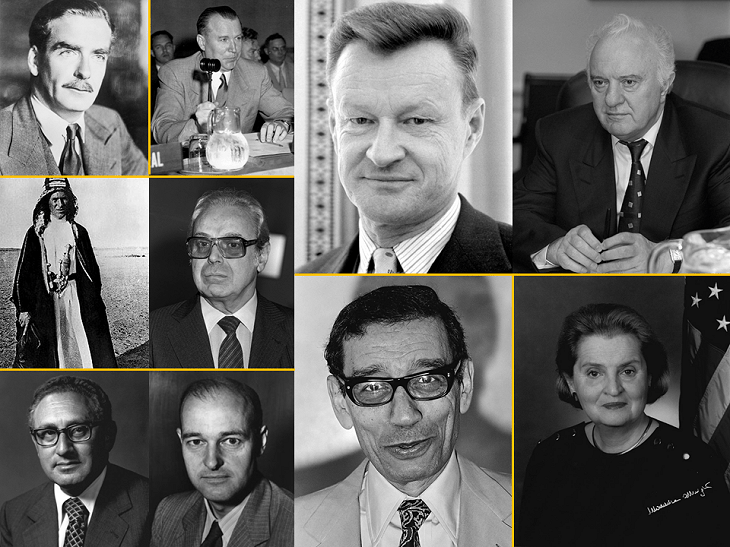
“Lessons from the Edge” is interesting because it reveals the history of how one becomes an American diplomat and what his/her role is as a representative of America. One may wonder what qualifies one to be a diplomat when some are appointed because of political connection rather than educational accomplishment or training.

Yovanovitch became a diplomat because of her education and personal ambition. Because of her background as the daughter of a Russian born father, she chooses to take classes in Russian which leads to her eventual assignment in Ukraine. Her memoir explains how her journey began and how it ended. It is a highly personal memoir that is enlightening. However, this mild journey explodes at its end. Yovanovitch comes across as a decent person caught up in the events of history, not as a giant of diplomacy but an honest and hard-working diplomat.

Marie Yovanovitch earned a BA in History and Russian Studies at Princeton. During her career she studied at the Pushkin Institute of Moscow and acquired a Master of Science in National Security Strategy from the National War College. Her background certainly qualified her for diplomatic posts. Her early assignments were in Africa which eventually led to Russian speaking countries like Russia, Kyrgyzstan, Armenia, and Ukraine.

Russian speaking countries.

An example of the difficulty of her job is when America wishes to maintain the American Kyrgyzstan’ Air Force base because of America’s role in Afghanistan in 2009. Kyrgyzstan offers closer logistic support for the American military.

The Kyger’ President demands an increase from a $17.4 million-dollar annual rent payment (Yovanovich indicated the rent payment was $2,000,000/yr) to $200,000,000 per year for the continuation of Kyrgyzstan’s American military base. Yovanovich implies Kyrgyzstan’s President, Mr. Bakiyev, demand for higher rent would be to line his pockets with stolen revenue, not help the citizens of Kyrgyzstan.

A final settlement increased annual rent to $60 million per year with additional payments of $37 million and $30 million for new aircraft slots and additional land for location of a new American navigation system.

Kyrgyzstan’s American Air Force Base.

Many questions come to mind in listening/reading Yovanovitch’s book. How important are the presence of American military bases around the world? What is the difference between isolationism and internationalism? Should America remain isolated from other nations or engage and collaborate with other countries of the world? Where is the line to be drawn between American influence and the cost of that influence? This last question is answered in the last chapters of “Lessons from the Edge”.

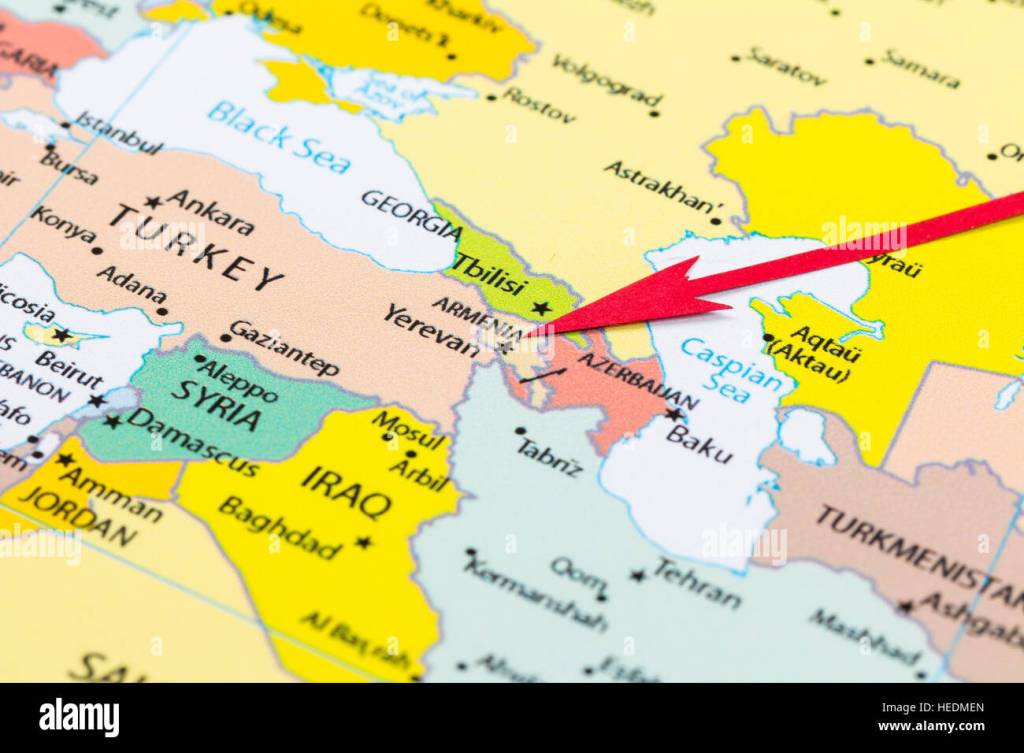
Yovanovich takes on the complicated role of American Ambassador to Armenia from 2008 to 2011.

Armenia and Azerbaijan are a source of political and territorial tension. There is a dispute over a region called Nagorno-Karabakh that is under the control of Armenia with a majority Armenian population. Turkey supports Azerbaijan while Armenia has a close relationship with Russia. Armenia and Turkey’s relationship is strained because of a WWI Armenian Genocide perpetrated by Turkey. An estimated 600,000 to 1.5 million Armenians were killed between 1915 and 1917. Turkey refuses to identify it as genocide which aggravates Turkey’s relationship with Armenia. Russia has a military base in Armenia and has tried to mediate the Nagorno-Karabakh conflict without much success. Because of energy projects and trade relations, Russia has managed a balanced relationship with Azerbaijan.

Yovanovitch decides to return to the U.S. because of her aging mother and an offer to take the role of Principal Deputy Assistant Secretary for the Bureau of European and Eurasian Affairs. However, as Ukraine becomes embroiled in a conflict with Russia and her previous assignment and knowledge of Ukraine, she returns as America’s Ambassador. Her mother’s decision to accompany her made the opportunity worth taking.

When Ukraine became independent of the U.S.S.R. in 1991, its transition to a market economy was marked by widespread corruption in the same way as alleged in Russia.

The assets of the country fell into the hands of Ukraine’s leaders who became wealthy oligarchs at the expense of the general population. Election to the leadership of Ukraine gave Presidents like Viktor Yanukovych, who served from 2010 to 2014, license to embezzle state funds. Compounding that corruption were Ukrainian bank owners who were equally corrupt. The fifth president of Ukraine, Petro Poroshenko faces allegations of corruption with his ownership of the International Investment Bank (IIB).

Rudy Giuliani (American politician, former NY mayor, former U.S. Associate Attorney General–now a disbarred lawyer.)

As if Rudy Giuliani needs no further damage to his reputation than his lies about election fraud, Yovanovitch reveals his role in discrediting her reputation with false accusations about badmouthing Trump as the new President of the United States. Judging from Yovanovitch’s book, Trump is unlikely to have been someone she admired. However, as an experienced diplomat, it is inconceivable that she would have undermined Trump or any U.S. President’s reputation. Trump ordered Yovanovitch’s removal. She is recalled in May 2019.

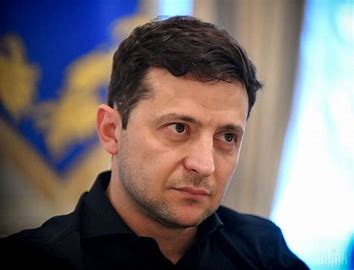
Volodymyr Zelensky became the President of Ukraine in May of 2019.

Zelensky soundly defeated the corrupt Vasily Poroshenko with 73% of the vote.

Though Yovanovitch had nothing to do with Poroshenko’s defeat by Zelensky, it seems clear that her tenure as Ambassador to Ukraine set the table for a change in direction for Ukraine. This is a very personal memoir of Yovanovitch’s career that is somewhat marred by a plaintive melancholy about life and an aging mother but “Lessons from the Edge” is highly informative about what it takes to be an American diplomat.

America makes a mistake if it chooses to isolate itself from allied countries that have similar economic and political aspirations. It may be time to reset America’s international relations, but isolation is not a rational alternative for an interdependent ecological and economic world.

WELL BEING

Dr. Gawande’s fundamental point in “Being Mortal” is to provide the elderly or medically challenged the help to live based on a person’s dignity, purpose for living, and as much autonomy as their conditions allow.

Books of Interest
 Website: chetyarbrough.blog

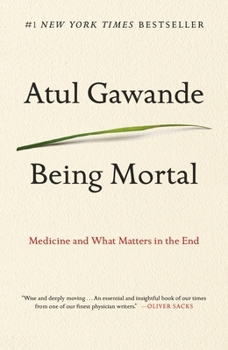
Being Mortal: Medicine and What Matters in the End

By: Atul Gawande 

Narrated By: Robert Petkoff

Atul Gawande (Author, physician-administrator-of-the-u.s.-agency-for-international-development-for-global-health.)

One who has been fortunate enough to have lived long will appreciate Doctor Atul Gawande’s explanation and experience with people of a certain age and the terminally ill of any age. He explains “…What Matters in the End” when one is nearing death is quality of life, not survival that matters.

Quality of life is defined by Gawande as dignity, purpose, and autonomy in one’s last days.

When one is nearing the end of their life, Dr. Gawande has found in his many surgical procedures and interviews that those who have time left to them can be helped by others who assist them as best they can to achieve dignity, purpose, and autonomy. As a physician, Gawande asks what a dying person’s fears are to know what might be done to help them work through those fears. Gawande explains the trade-offs from what care an older person or terminal patient may be given to achieve what is most important to them in their remaining life.

Whether healthy or unhealthy, rational people realize death is part of life.

What “Being Mortal” explains is that the aged or medically challenged wish for as much independence as can be provided by their care. Desired independence is the gold standard for the remaining days or years of one’s life. Whether old or young, healthy or ill, the thought of incontinence, mental confusion, medical or physical limitation makes one fear loss of independence. Each of these maladies can be remedied by family members or properly organized assisted living facilities. Of course, the rub is in the cost of that assistance.

When a family member can no longer be cared for by family members, the medically or age challenged are left with two choices. One is to be institutionalized. The other is to die.

What Gawande explains is that the first alternative can be better and the second is dependent upon family research, financial commitment, religious beliefs, and States’ laws. Gawande notes his choice in the case of his physician-father is a family commitment to offer care as needed with the goal of giving as much autonomy as his aged father can handle. That is a laudable commitment but not what many struggling American families have time or willingness to do.

America has institutionalized elder and medically challenged people’s care to reduce the burden on families.

Gawande recounts the history of institutionalized care in the United States. From family aid to hospitalization to assisted living to hospice to State sanctioned euthanasia, care has evolved for the elderly and medically challenged. What Dr. Gawande explains is that any of these ways of caring must offer dignity, purpose, and as much autonomy as possible to the dying and terminally ill.

Every family has its care limitations, either temporal or financial (sometimes both).

Gawande shows research and preparation is needed to help families adjust to the physical and mental care of a significant other who is too old or too sick to take care of themselves. If a family cannot provide the dignity, purpose, and an appropriate level of autonomy to an aged or ill loved one than the job becomes the work of finding an institutional facility that can. This is where the tire hits the road because there is a cost for that service. Gawande notes there are institutions that can offer the services that are needed but family research and investigation is required.

Once an acceptable care facility is found, the next task is finding how it can be financed.

Gawande does not address cost but infers there are care facilities that are affordable. Dr. Gawande’s fundamental point in “Being Mortal” is to provide the elderly or medically challenged the help to live based on a person’s dignity, purpose for living, and as much autonomy as their conditions allow.

DYING

One may ask oneself is hospice the only humane thing to do for a dying parent. If a parent is able to make a rational decision about continuation of life, would he/she choose to be treated in a hospice or choose to end life on their own terms?

Books of Interest
 Website: chetyarbrough.blog

Dying

By: Cory Taylor (A Memoir)

Narrated By: Larissa Gallagher

Cory Taylor (Australian author, died at age 61 on July 15, 2016, born in 1955.)

Dying: A Memoir author Cory Taylor passes away, aged 61 | The Australian

Cory Taylor confronts the complicated question of what to do when a person knows they are nearing the end of their life. Taylor is diagnosed with terminal brain cancer in 2005. Living with that diagnosis, Taylor recounts her life, religious beliefs, and a commemoration of her family relationships. She thinks of what her life means to herself and others. She waivers between living with her physical and mental deterioration or volitionally ending her life.

Taylor, though raised in a Christian household, identifies herself as agnostic.

In the 20th century, it is estimated that 200 to 240 million people identify themselves as atheists or agnostics. In 2013, that number increased to 450 to 500 million, about seven percent of the world population. Taylor chooses medically assisted death.

Having personally experienced a parent’s death and a parent’s physical and mental deterioration, a listener/reader will either condemn or condone a choice of assisted death.

Those with strong religious beliefs are likely to blame a person for killing themselves, while those who are agnostic or atheist are likely to have a different opinion. To some, life is hardship that is a human being’s obligation to either suffer or grow from, with conscious awareness of death’s inevitability. The fundamental question is–does one have the right to choose whether to live or die?

Seeing a parent’s life deteriorate despite the care of an attentive family member is heartbreaking.

Image result for hospice

An example is a son whose mother is dutifully cared for by her husband but recognizes the husband is too aged to handle the mother’s incapacities. What should a son or extended family do? There are hospice alternatives for the mother, but should she have a voice in deciding how she is to be treated? The husband realizes, a care facility is the only practical alternative for her needed care. The son or daughter is married and is consumed by their employment and making a living for their own career and family. The mother may or may not be able to express her opinion. The table is set for institutionalization.

The mother’s response may be to curl up in her new bed, refuse to eat and waste away in the eyes of a loving husband and a career consumed son or daughter.

One may ask oneself is hospice the only humane thing to do for a dying parent. If a parent is able to make a rational decision about continuation of life, would he/she choose to be treated in a hospice or choose to end life on their own terms?

SOCIAL BLINDNESS

Criminal imprisonment, gun control, and drug addiction solutions are elusive, just as America’s eradication of discrimination is, at best, only a work in progress.

Books of Interest
 Website: chetyarbrough.blog

Locking Up Our Own (Crime and Punishment in Black America) 

By: James Forman Jr.

Narrated By: Kevin R. Free

James Forman Jr. (Author, professor of law and education at Yale Law School)

James Forman Jr. argues Washington D.C. is a multi-ethnic democratic example of what is wrong with the American penal system, gun control, and an addiction crisis. Forman offers an eye-opening recognition of America’s social blindness. The 2019 estimated population of Black residents in D.C. is approximately 44%. Forman suggests D.C. constitutes a representative sample of what has happened and is happening to Black Americans in “Locking Up Our Own”.

Forman addresses three social issues with Washington D.C.s’ effort to legislate against the consequences of crime associated with a Black population’s gun possession, and drug addiction. America’s history of Black discrimination is well documented. The issues of gun control and drug addiction are top-of-mind issues in all American communities. What makes Forman’s book interesting is his analysis of what he argues is a nascent conservative movement in Black American society.

Forman’s argument is based on statistics and the history of Black discrimination. The American incarceration rates for Black citizens are six times higher than for white citizens. Today’s statistics show 33% percent of the prison population is Black when it is only 12% of the U.S. adult population. White prisoners account for 30% of America’s prisoners but amount to 64% of the adult population.

The fundamental issue of Forman’s book is that more Black Americans are being imprisoned for crimes of addiction and theft than those committed by white Americans.

Forman uses Washington D.C. as evidence for a Black conservative movement because of its high percentage of Black residents. He notes D.C.’s effort to legislate gun control and regulate drug addiction are arguably more restrictive than other parts of the country. Firearms must be registered with the police department. A permit is required to purchase a firearm. Concealed weapons require a license. Assault weapons are banned. Magazine capacities are limited. Safe storage requirements are mandated. In the case of addiction, the “Office of National Drug Control Policy”, ONDCP is established in D.C. The program is instituted to provide funding to support communities heavily impacted by drug trafficking. A “Drug-Free Communities Program” offers grants to community coalitions to prevent youth substance abuse. The city expands Naloxone access to citizens to reverse opioid overdose.

Forman explains these policies are supported by D.C. residents in the face of national opposition to gun control. Forman notes the proactive drug control programs of D.C.

The obvious irony of D.C.’s policies is that they do not reflect what white America promotes but suggests Black America is likely more victimized by lax gun controls and drug regulation. White America needs to get on board.

Several chapters of Forman’s book explain the difficulties of integrating minorities into local police forces.

Police department managers opened their hiring practices to Blacks based on growing Black neighborhoods and belief that police services would be improved with officers who would be more racially and culturally suited to understand policing in minority neighborhoods. Forman recounts 1940s through the 1960s police force integration. He notes police department integration is fraught with discriminatory treatment of Black recruits.

Of course, the idea of crime in a Black neighborhood being better understood by Black officers is just another form of discrimination.

Crime is crime, whether in a minority neighborhood or not. Relegating Black police to Black neighborhoods only reinforces racial discrimination. Integrating the police only became another example of racial discrimination in America. Paring white and Black policemen on petrol became difficult. Getting white and Black policemen to work together becomes even more problematic when promotions are denied qualified Black officers. As with all organizations, police promotions were based on experience and standardized testing. What police departments would typically do is promote white officers over Black officers whether their experience rating or test scores were better or not.

The irony of white resistance to gun control and ineffective drug addiction policies has had an adverse impact on Black-on-Black crime.

The culture created in formally white police departments adversely condones harsh treatment of minorities. Black officers buy into a police department’s culture and begin discriminating against Black residents in the same way as white policemen.

The 2003 brutal beating and killing of Tyre Nichols by 5 Black Police Officers.

Drug addiction is the scourge of our time. Its causes range from the greed of drug company executives to poor policy decisions by the government to escapist and addictive desires of the public. Addictive drugs are the boon and bane of society. On the one hand, they reduce uncontrollable pain and anxiety; on the other they are often addictive, causing incapacity or death.

Discrimination can only be ameliorated with education, understanding, and governmental regulations that are consistent with the rights written in the American Constitution.

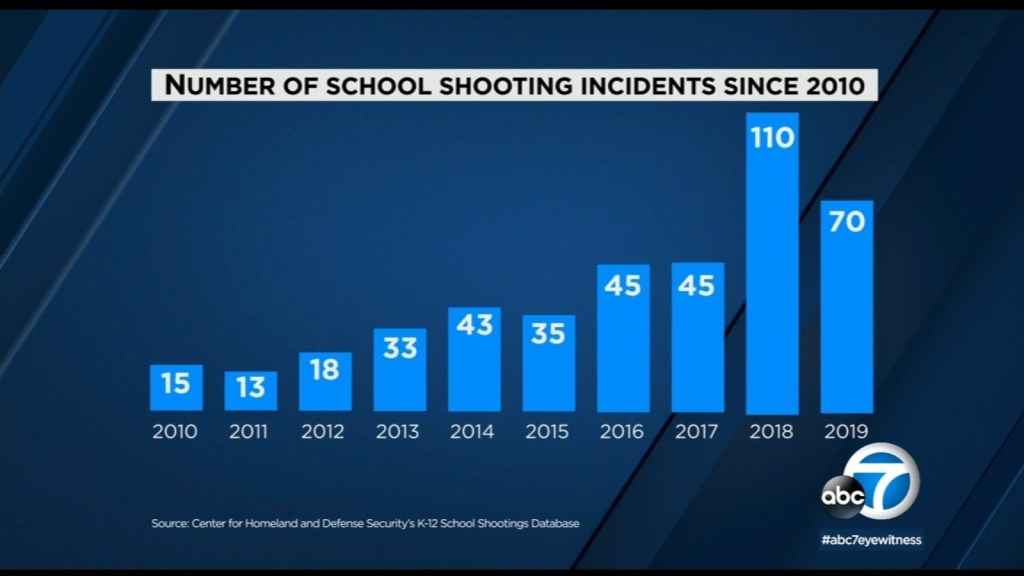
Criminal imprisonment, gun control, and drug addiction solutions are elusive, just as America’s eradication of discrimination is, at best, only a work in progress. Guns in the hands of American citizens are not guaranteed except as noted in the Constitution which infers “A well-regulated Militia…” is the only reason for “…people to keep and bear Arms…” How many more school children have to be killed by guns before the lie of American gun rights is dispelled.

The last chapters of Forman’s book address his experience as a public defender in Washington D.C. This is the weakest part of his story, but it points to the theme of an incarceration system in America that is broken. Prisons are not meant to reform criminals. They are overcrowded, violent, understaffed and, most damagingly, lack rehabilitative programs for re-education and vocational training that could reduce recidivism and return former prisoners to a socially productive society.

FAME

With the death of Riley’s brother from suicide, a spiraling downward seems inevitable for Lisa Marie Pressley. Surprisingly, Lisa Marie rallies after the suicide of her son, but the negative consequence of fame remain. The pressure of fame, like poverty, are equal opportunity killers.

Books of Interest
 Website: chetyarbrough.blog

From Here to the Great Unknown (A Memoir) 

By: Lisa Marie Presley, Riley Keough

Narrated By: Riley Keough, Julia Roberts

“From Here to the Great Unknown” begins rather shakily because it is unclear about who is narrating and being represented in the story. Listeners who stick with the story begin to see that Keough’s voice is of herself while the non-tape-recorded voice by Julia Roberts is Lisa Marie, telling and filling gaps in Danielle Riley’s story. The two photographs above are meant to show Lisa Marie in her prime and Riley in the present.

This memoir explains Danny Keough (Danielle’s father and Lisa Maries first husband) is an ever-present person in Riley Keough’s life.

The book reveals the thrills, fears, and tragedy of inheriting fame. Danielle Riley Keough assembles a memoir from tape recordings by her mother and recollections of Elvis Pressley’s only daughter, Lisa Marie Pressley. “From Here to the Great Uknown” infers genetics may have something to do with descendants’ lives but the consequence of fame magnifies life’s proclivities.

Lisa Marie is shown to idolize her father who loved her dearly.

As most know, Elvis descended into addiction. This is not a story about Elvis but about Lisa Marie who loved her father, struggled with her mother, and created a career for herself in the music industry. She never achieves the fame of her father but had some success with “Lights Out”, “You Ain’t Seen Nothin’ Yet”, “Dirty Laundry”, “S.O.B”, and “Over Me”. Keough briefly talks about traveling with her mother on tour. Keogh explains her mother dabbled with drugs in earlier years but seemed to kick the habit as she began establishing her own career. Lisa Marie meets and marries Danny Keough, and has two children with her, Riley and a son named Benjamin. Despite a divorce in 1994, Riley Keough and even her mother remained close with Danny.

Lisa Marie’s divorce seems precipitated by a growing intimate relationship between Lisa Marie and the famous King of Pop, Michael Jackson. After divorce, Lisa Marie marries Jackson in 1994.

Keough mentions Jackson’s pedophilia accusations in 1993 that makes one wonder if the marriage had anything to do with the accusations of five boys. Lisa Marie and Jackson divorced in 1996. Riley suggests Jackson’s desire to be in control created friction between the couple that led to the divorce. Jackson was acquitted of any pedophilia charges in 2005.

Lisa Marie marries again in 2002 to the actor, Nicolas Cage, but they are divorced two years later.

Despite three failed marriages, Riley explains her mother wishes to have more children and decides to marry Michael Lockwood in 2006. Through invitro fertilization, Lisa Marie becomes pregnant with twins. She has a cesarian delivery that births Harper and Finley who become Riley’s sisters. Riley explains her mother had quit drugs which she had gone through in her younger years but recovering from the cesarian operation led her back to drugs. She separates from Lockwood in 2016, and they divorce in 2021.

One begins to think about the famous film “Alfie” that came out in 1966.

Michael Caine, who is Alfie, looks back on his life and his famous line in the film is “What’s it all about Alfie?” Riley suggests Lisa Marie was a great mother because she had an instinct for caring about her children. Riley believes her mother slipped back into drugs because of the pain killers she took from the cesarean delivery of her twins.

Living a life of fame has consequences. One can argue that no singer in modern times has exceeded the fame of Elvis Pressley. Maybe Taylor Swift is nearing Elvis’s fame. Time will tell.

The price of fame is loss of privacy, mental strain to maintain an image, isolation, hangers-on self-interests, constant public exposure, and personal security concerns. Riley’s memoir of her mother’s life suggests fame influences Elvis’s, Lisa Marie Pressley’s, and Ben’s lives and deaths. All three had problems with drug use, but Elvis had a heart attack and Lisa Marie had a bowel obstruction thought to have caused excessive weight-loss and death.

With the death of Riley’s brother from suicide, a spiraling downward seems inevitable for Lisa Marie Pressley.

Surprisingly, Lisa Marie rallies after the suicide of her son, but the negative consequence of fame remain. The pressure of fame, like poverty, are equal opportunity killers.

LIBRARIES’ EVOLUTION

The well-made point of Orlean’s history of the Los Angeles Central Library is that a listener/reader can learn a great deal about the world and other people’s life experience from books. The loss of a book is not like human death, disease, or disability. A book is a liberation and broadening of life’s narrowness.

Books of Interest
 Website: chetyarbrough.blog

The Library Book 

By: Susan Orlean

Narrated By: Susan Orlean

Susan Orlean (Author, American journalist, tv writer, staff writer for The New Yorker.)

“The Library Book” is not a thriller, but it is an appreciation of a public service available in nearly every community of the United States. Libraries can be found in communities of less than 8,000 people or megalopolises of millions. Susan Orlean focuses her book on the great fire in 1986 at the Los Angeles Central Library where over 400,000 books were destroyed, and an estimated 700,000 were damaged. Though this was not the largest library in America, it was the largest library fire in U.S.’ history. Orlean’s research suggests the arsonist was a Wanna-Be actor named Harry Peak. However, there is no concrete evidence to confirm his guilt. No one is convicted for the library’s alleged arson. The cause remains undetermined.

It is interesting to note that Orlean admits there were electrical problems in the old building that had been recorded by building inspectors, but fire inspectors concluded it was arson.

It seems somewhat disingenuous for the City or Orlean to accuse Peak as an arsonist but that is not the primary message of her book. Her message is that many, including this reviewer, love the knowledge and experience of others who write books. Arguably, public libraries are one of the greatest public services in America, and at a cost much less than most public services in America.

The last chapters of her book address the history of the creation and renovation of the Los Angles Central Library. It reaches back to the 19th century. She recalls the liberal leaning of librarians and their early adoption of women in the workplace. Two women became Library’ managers in the 1800s. Orlean notes in a joking conversation with a manager of the library about the unlikely promotion of a political conservative as a head librarian.

An interesting note from the author is that the Los Angeles library has historically been a haven for the homeless, a problem that has dramatically risen in the 21st century. Some librarians have expanded their services to help the homeless. It seems noteworthy that the libraries in Las Vegas and those visited in other cities do not lock their bathroom doors the way private businesses like Starbucks choose to do.

The Los Angeles Library took six years to rebuild while workers carried on during the course of reconstruction. She notes that a new book generally requires a week before it hits the shelf because of time needed for proper cataloging. A somewhat distracting habit Orlean uses is recitation of a book’s Dewey Decimal’ number that begins most of the chapters. An interesting note from the author is that the library has historically been a haven for the homeless, a problem that has dramatically risen in the 21st century. Some librarians have expanded their services to help the homeless. It seems noteworthy that the Los Angeles Central library and libraries in Las Vegas do not lock their doors the way private businesses like Starbucks have chosen to do.

The Los Angeles Library is rebuilt to be better than it was before the fire.

Orlean explains library managers in LA are pushing to expand services their libraries provide. Having personal experience of traveling the world, countries like Finland show they have modernized libraries with a concept highly recommended in Orlean’s history of the Los Angeles’ library. Helsinki, Finland’s state-of-the-art library is a dramatic example of the services a library can provide. Everything from music instrument rentals, to recording studios, to sewing machine tables, and cooking kitchens are added to the library’s book inventory. All of these features have been created in Helsinki’s modernly designed library. It is a multi-purpose building that serves both children and adults.

The well-made point of Orlean’s history of the Los Angeles Central Library is that a listener/reader can learn a great deal about the world and other people’s life experience from books.

The loss of a book is not like human death, disease, or disability. A book is a liberation and broadening of life’s narrowness.

Many of the Los Angeles Library books were recovered but the process of recovery required the help of many of LA’s businesses. The books that got wet needed to be frozen to keep them from molding. City businesses made room for soaked books in their commercial freezers. The Los Angeles Central Library is rebuilt to be better than it was before the fire. Many of the books survived with the feint smell of smoke. The library continues to expand and enlighten Angeleno’s lives.

NARCISSISM

Jollett concludes his memoir by arguing his mother is a narcissist. Who is the narcissist in “Hollywood Park: A Memoir”? Mikel Jollett fails to understand how difficult it is for a single mother to raise children on her own.

Books of Interest
 Website: chetyarbrough.blog

Hollywood Park: A Memoir 

By: Mikel Jollett

Narrated By: Mikel Jollett

Mikel Jollett (Author, American musician, frontman for Airborne Toxic Event.)

Narcissism is an excessive sense of self-importance and a lack of empathy for others. Though Mikel Jollett shows skill as a writer, his assessment of life as a child grown-up exhibits a personal blindness about the hardship of single parents.

Every child has a story. This is a memoir of Mikel Jollet’s life. Jollett’s story is about his family that joined what became a cult in the 1960s. It was called Synanon, a rehab program in Santa Monica, California for addicts that began in the late 1950s. The rehab program evolved into a religious movement. As it became a religious movement, its harsh policies drove some residents to flee. Jollett’s story is about leaving with his mother and brother when he is five years old.

Jollett’s mother leaves the Synanon commune and the father of her children to return to her parent’s house to re-start her and her children’s lives.

To Mikel, leaving was a dramatic break from the Synanon way of life and a father he misses. Jollett’s father was an addict and former convict who lived what seems a vagabond life until he joins Synanon. Mikel’s mother decides to secretly escape with her two boys as the Synanon life became more and more harsh. Despite its growing religiosity and authoritarian milieu, Synanon survives until 1991 when it faces numerous legal issues related to forced sterilizations and violence toward members.

As a single parent, Mikel’s mother struggles to regain an identity and her own life.

Some of the religious teaching at Synanon appears to have remained with her. After living with her mother and father in California, she chooses to move to Salem, Oregon. The move is motivated by the high cost of living in California and a job she finds in Salem. After some time in Salem, she meets a reformed alcoholic who comes to live with her and the boys. Mikel grows to like the reformed alcoholic, but his mother’s new companion falls off the wagon and leaves the boys and their mother. He returns sometime later, only to leave again.

Bonnie who was close to Mikel when they lived in the Synanon community became a companion with Mikel’s father in California.

The boy’s paternal father remains in California and eventually looks up his wife’s children in Oregon. Upon visiting the boys in Salem, he tells them they will be invited to visit him in California, where he lives near the beach. In their first visit they become reacquainted with Bonnie who had been in the Synanon program. Mikel had been emotionally attached to the woman when at Synanon, so he was pleased to see her.

Mikel reminds reader/listeners that many children in America are not raised in “Leave to Beaver” families.

Life is a struggle for most children, even in unbroken families. Being raised in a single parent home, particularly when the single parent is a woman is harder because of societal inequality. Mikel and his brother are boys, so they have better chances for breaking poverty’s cycle, but their mother is faced with greater obstacles. Mikel’s story shows a better chance for success than some children raised by a single parent because of a precocity recognized by the principal at his school in Salem. Precocity is no guarantee of success but being a male and smart are significant advantages.

Mikel and his brother, Tony, had older brother/younger brother conflicts.

Tony, as the older brother, was sometimes cruel or uncaring about his younger sibling. As Mikel grew older, he found ways to punish his older brother for his cruelty. As they matured, they reconciled but both left their mother to live with their father in California. The baggage their mother had from her experience at Synanon, her husband’s abandonment, and the circumstances of poverty became too much for Mikel to understand the trials of being a single mother with two children. Mikel’s judgement is that his mother was too narcissistic.

Sexual inequality are two strikes against women in life. Some women overcome great odds to become economically independent; most do not.

Women struggle with life’s inequality in ways that escape understanding of masculine society, i.e., particularly male children who live with a single mother’s nurturing through the formative years of their lives. Divorced or abandoned mothers often do what they must do to raise children that fathers mostly neglect during the formative years of life. Male parents escape responsibility by leaving their children with mothers. Ex-husbands have the privilege of regaining an independent life in a world that offers better opportunities for men than women. They often re-marry which is what Mikel’s father does.

Jollett concludes his memoir by arguing his mother is a narcissist. Who is the narcissist in “Hollywood Park: A Memoir“? Mikel Jollett fails to understand how difficult it is for a single mother to raise children on her own.

AMBITION

It takes more than ambition to build a successful organization or company. Unless one is a genius who can continually innovate, it takes management structure that encourages others to innovate and work for a common organizational purpose.

Books of Interest
 Website: chetyarbrough.blog

Bad Blood (Secrets and Lies in a Silicon Valley Startup)

By: John Carreyrou

Narrated By: Will Damron

John Carreyrou (Author, French-American investigative reporter for the NY Times)

Ambition is the strong desire or drive to achieve something. The public story of Theranos is examined by investigative reporter, John Carreyrou. His subject is Elizabeth Holmes, a bright young woman who drops out of Yale to pursue an idea. Her idea is to create a blood testing system intended to diagnose medical conditions with potential for measuring effectiveness of drug treatment for existing disease. Her ability to sell an idea exceeded her ability to organize a company to create a product that accomplished that end.

Most companies or organizations will either fail or stagnate when led by only one innovator. There are exceptions but it requires an extraordinary leader, like a Steve Jobs, Ginni Rometty, Mary Barra, or Elon Musk. Their leadership skills may rub people the wrong way, but they have a superior perception of reality that is not singularly based on loyalty. They have the innate ability to offer enough innovation to grow their companies. (At the risk of offending supporters, loyalty is the threat of Trump’s management style. Trump principally bases his organizational decisions on loyalty.)

Elizabeth Holmes may have had a great idea, but her poor management skills are appallingly revealed in Carreyrou’s interviews with former employees of Theranos.

The only consistent management criteria practiced by Holmes is loyalty. If an employee appears disloyal to her vision of the company, they are fired. Any organization that principally relies on loyalty discourages innovation and becomes entirely dependent on orders of its leadership. Particularly in the tech industry, innovation is critical.

Elizabeth Holmes misled investors, patients, and doctors. She is convicted for fraud and conspiracy in 2022. She is serving an 11-year sentence in a Federal Prison Camp in Bryan, Texas.

Holmes’ ambition, in addition to her prison sentence, led to a $500,000 SEC’ fine and the return of 18.9 million shares of a company that no longer exists. Furthermore, the SEC ordered a ten-year ban on serving as an officer or director of a public company which, of course, becomes moot with her imprisonment. The irony of Carreyrou’s story is that Holme’s idea is presently being pursued by Babson Diagnostics, Stanford Researchers, and Becton Dickinson. Whether she will ever reap any reward from another company’s success seems remote, but it will presumably be based on patents filed, and licensing agreements based on former Theranos patents.

“Sunny” Balwani was also tried and convicted for Theranos’ misdeeds.

The 16th century phrase “birds of a feather flock together” comes to mind when Ramesh “Sunny” Balwani joins Theranos in 2009. He had loaned the company $13 million but he also knew Holmes from her days when she was learning Chinese in a Stanford summer program. At some point they became lovers despite a 19-year age difference. Carreyrou notes Balwani became a multi-millionaire with the sale of his tech company, Commerce One” in 2000. He was convicted of tax evasion for the sale but claimed the evasion was caused by his tax accountant which he sued for recovery for back taxes he had to pay. (There is a settlement amount between the tax accountant and Balwani, but it is not revealed.) Carreyrou explains Balwani was a martinet who brooked little disagreement when he became COO of Theranos in 2009. (Part of Holme’s defense was that Balwani was the principal behind Theranos misdeeds, but the court obviously disagreed.)

In 2022, Balwani was sentenced to 13 years in a federal prison for his involvement in what is characterized as Theranos fraudulent activities.

There are business management lessons in Carreyrou’s book about the misdeeds of Theranos. It takes more than ambition to build a successful organization or company. Unless one is a genius who can continually innovate, it takes management structure that encourages others to innovate and work for a common organizational purpose.

CATACLYSMIC EVENTS

The elephant in this room is damage to the Fukushima Daiichi nuclear plant that is considered among the worst nuclear disasters in history, i.e. right alongside Chernobyl.

Books of Interest
 Website: chetyarbrough.blog

Ghosts of the Tsunami: Death and Life in Japan’s Disaster Zone

By: Richard Lloyd Parry

Narrated By: Simon Vance

Richard Lloyd Parry (Author, British foreign correspondent, Asia Editor of “The Times of London”.)

In 2011 the 9.0 Tōhoku earthquake and its subsequent tsunami killed over 18,000 people with injuries to an estimated 6,000 more. Over 123,000 homes were destroyed. The estimated cost of the disaster is the equivalent of $220 billion American dollars. Richard Parry explains Japan’s Prime Minister lost his job because of the disaster and influenced the loss of a second Prime Minister’s position. The highest disaster cost in America was Hurricane Katrina at an estimated $125 billion in 2005. No natural disaster in America has caused as many deaths as Japan’s earthquake and tsunami.

Richard Parry offers a primer on what a person should expect when a natural disaster disrupts their lives. Every continent is subject to either natural or manmade cataclysmic events. In terms of the cost of human life and reconstruction, only war exceeds the loss of life that occurred in Japan’s 2011 earthquake and tsunami. Like recent wars in Ukraine and Gaza, the most heartbreaking consequence is the death and crippling of children. Parry explains what happened in a Miyagi Prefecture grade school that exemplifies the social and personal consequence of a natural event that rivals the bombing of Hiroshima and Nagasaki.

Though there are no wandering ant or alligator people from a nuclear bomb blast, there are thousands of Japanese who undoubtedly still suffer from the loss of their children, family, and friends from the 2011 tsunami. It is most clearly evident in Parry’s detailed story of the Okawa elementary school. Many survivors are shown to blame school administrators, and the government for their failure to protect their children. The truth is that every disaster is responded to by imperfect human beings. Blaming someone for the death of innocents is a natural human response to things beyond one’s control. It is simple to look back on a disastrous event and find the mistakes made by those who are the adults in charge. There is a human catharsis in being able to blame someone for the death of a loved one.

Humans will always make mistakes in dealing with disasters because they are human.

The decision by school administrators to not abandon the school for higher ground seems taken out of context. There is snow on the ground, it is cold outside, and the school’s location is approximately 2.5 miles from the sea. To the administrators, it appears protection of the building seemed more important than moving to higher ground, in the cold and snow, a mistake that caused the death of 74 children.

Perry interviews many who survive the disaster. Their stories are heartbreaking. Some parents have never found their children.

An estimated 132 bodies remain unidentified with at least 2 children’s remains are unfound.

The vision of survivors sifting through mud and debris to find layers of children’s bodies stays in one’s mind as they listen to Perry’s book.

The families of 23 children who died at the school were awarded compensation of $12.8 million equivalent U.S. dollars with a judgement saying the school failed to evacuate students to higher ground when the tsunami became knowingly imminent. The decision was based on a loud-speaker government warning for the school to be evacuated. Perry notes there were evacuation plans at the school, but they were inappropriate for a tsunami that requires high ground. The adult teachers were given enough time after the loud speaker noticeto evacuate the children to a nearby hill. They could have survived.

The court’s decision is based on the truck-delivered speaker’ warning that is ignored by the school’s adult supervisors.

Some argue the significance of that ruling in Japan is the mandated creation of disaster-preparedness’ plans for school evacuations in a crisis. This school had a written plan, but it did not properly prepare for the consequence of a tsunami. The final warning is the basis for the three-judge panel’s decision, but the truth is any plan still depends on the judgement of adult school’ supervisors.

The elephant in this room is damage to the Fukushima Daiichi nuclear plant that is considered among the worst nuclear disasters in history, i.e. right alongside Chernobyl.