BLACK & WHITE

One wonders if Abdulrazak Gurnah is proffering an opinion about race relations in the world or just leaving a lifeline for those disappointed by relationship failures.

Books of Interest
 Website: chetyarbrough.blog

Admiring Silence 

By: Abdulerazak Gurnah

Narrated By: Unnamed person from Zanzibar

Abdulerazak Gurnah (Author, Tanzanian-born British novelist and academic, moved to the UK in 1960.)

A little context for “Admiring Silence” will help understand Abdulerazak Gurnah’s interesting and troubling story. Gurnah received the Nobel Prize in Literature in 2021. “Admiring Silence” is the latest book published by Gurnah in 2020. He had written four earlier books: Memory of Departure (1987), Paradise (1994), By the Sea (2001), and Desertion (2005).

“Admiring Silence” is not a biography but an interesting story about a long-term relationship of a Black emigrant and a white woman who meet in Zanzibar (an island archipelago off the coast of Tanzania) and move to London. The two had met in a Zanzibar’ restaurant where they both worked. The Black emigrant leaves his native country with his restaurant mate.

Gurnah describes the two as lovers who are struggling restaurant workers who wish to improve their lives through higher education. An opportunity to attend a university leads the two to decide to emigrate to London because of their similar academic ambition. The two are enrolled at a university and both become teachers in England. Gurnah sets a table for understanding what life is like for an unwed mixed-race couple in mid-twentieth century England.

Their life together is complicated by the birth of a daughter and the father’s decision to visit his homeland when he is in his forties.

No one in Zanzibar knows he has a teenage daughter with an unmarried white woman he lives with in England. His mother wishes to fix him up with a future Black Muslim wife. The interest one has grows with the circumstances of Gurnah’s imaginative story.

  • What is it like to be in a racially mixed marriage in 1960s England?
  • How does a mixed-race child feel about her life in a predominantly white country?
  • What does a Black family think about their son having a mixed-race family?
  • Having lived together for 20 years and had a child, why haven’t they married?
  • How does the relationship between different races affect the feelings of a couple that chooses not to marry but have a child born to them?
  • Is Gurnah’s story representative enough to give one the answers?

The first question is largely unanswered. The last question is impossible to answer but the other four imply Gurnah’s opinion. Marriage is always a work in progress whether it is of a mixed-race couple or not. However, there is a distinction based on race when it comes to a man’s and woman’s personal relationship because of the dimension of racism. Every couple chooses to work through differences and become more or less committed to staying together but two people of different races face discrimination associated with racism, unequal treatment, and economic inequality existing in a country’s dominant racial profile.

Gurnah does not address how a mixed-race child deals with life in a predominantly white country, but one can imagine it depends in part on how distinctive a difference is in the color of their skin in relation to the dominate racial profile.

In terms of the daughter’s relationship with her parents, one presumes it is likely the same parent/child conflicts of all families. Some fathers are more distant than others just as some mothers range from helicopter to equally distant parents.

That these two lovers who have been together for so long without getting married, after their daughter is born, seems like a flashing yellow light, a cautionary notice of something is about to change.

When the father’s mother writes from Zanzibar to have him visit after being away for so long, flashes a yellow light that eventually turns red. He returns for a visit to Zanzibar at the encouragement of his partner. The partner’s encouragement seems disingenuous, i.e. more like a desire for a relationship break than a supportive gesture. The last chapters confirm that suspicion. A break-up occurs soon after the father returns. There is a brief father/daughter reconciliation, but the daughter also decides to separate from her father.

An interesting point is made by Gurnah about a Muslim Black person leaving a poverty-stricken country of his birth to a country of wealth and a different culture.

It is the wish of his Zanzibar’ family for the father to return to help with the disarray and economic disparity of his home country; as well as marry a local Black Muslim girl who wishes to become a doctor. The presumption is that if one leaves their poor country to become prosperous in a wealthy country, they have some magical power to help their poverty-stricken home-countries. It is of little concern to the family about his committed relationship to another but more about what his life is like in his newly adopted country and what he can offer to his homeland from what he has learned. The Muslim girl the mother wishes him to marry is twenty years old. Her son is in his 40s. Tt appears the primary reason for such a marriage is to help the young woman become a doctor. In the end, the son recognizes this is not practical but clearly understandable considering the poverty in Zanzibar.

Gurnah cleverly injects a conversation with a Nigerian Muslim woman on his plane ride back to London before his white lover’s rejection of their relationship.

The Nigerian woman has been divorced from her English husband for several years. It was an emotionally difficult divorce for her. A mix-up on a missing passport allows the father to find contact information for the divorcee. One wonders if Gurnah is proffering an opinion about race relations in the world or just leaving a lifeline for those disappointed by relationship failures.

.

THE WHITE HEGEMON

Muslim Palestinians, like the Indians of America and the Jews of Israel, believe they have the same rights to the lands of their ancestors. In history, that seems to have never been true for any indigenous or displaced culture.

Books of Interest
 Website: chetyarbrough.blog

One Day, Everyone Will Have Always Been Against This 

By: Omar El Akkad

Narrated By: Omar El Akkad

Omar El Akkad (Author, lives in Oregon, winner of the 2021 Giller Prize. Became a Egyptian Canadian citizen and now lives in Oregon.)

Omar El Akkad expresses the frustration of being an American citizen of an ethnicity and race that has little power as a minority in today’s world. He writes of life being out of one’s control. Akkad’s story is partly about his family’s life as they leave Egypt for Canada, and then America. However, his primary purpose is to write of the atrocity of the Palestinian/Israeli war. On the one hand it is a terrifying example of the domestic trials of his father and family in moving from Egypt to America. On the other, it is a heartbreaking review of slaughtered innocents in Gaza.

Ironically, the phrase “from God’s mouth to our ears” comes from a Jewish and Arabic religious expression.

Contrary to Omar El Akkad’s book title, the history of white society suggests the belief that “One Day Everyone Will Have Always Been Against This” will likely never come. The title of Akkad’s book is about how leadership in America and Israel has failed. As Lord Acton said in the 19th century “Power tends to corrupt, and absolute power corrupts absolutely”. President Trump, former President Biden, and Benjamin Netanyahu are proving Acton’s observation.

Social and cultural differences have always roiled world history.

Jews believe they have the right to live in peace in Israel because of their culture and the history of their settlement in the land of their forefathers. Muslim Palestinians, like the Indians of America and the Jews of Israel, believe they have the same rights to the lands of their ancestors. In history, that seems to have never been true for any indigenous or displaced culture.

The slaughter of Indians, enslavement of minorities by white America, and the slaughter of innocent Muslims by Netanyahu and his followers are all reprehensible examples of the misuse of government power. This is not to say Hamas is not guilty of crimes against humanity, but their evil acts do not warrant evil reactions. The power of Israel is being used for evil, not the return of peace.

Netanyahu’s refusal to settle with Hamas over unjustly murdered, imprisoned, and abused hostages does not justify the killing of Palestinian innocents in Gaza. The power of Netanyahu’s military actions and Trump’s support for taking Gaza land from the Palestinians is evil and unjust. That evil and injustice must be replaced with a negotiated settlement that releases Hamas’ hostages and returns Gaza to the Palestinian people. Humanity cannot wait until “…Everyone Will Have Always Been Against This”. Power lies in the hands of Israel’s leaders to negotiate a settlement.

The common denominator of the war in Gaza is the power being held by white people who refuse to believe all human beings are equal. It is partly a religious issue, but it is a human issue aggravated by religious difference and the self-interests of people of different races and cultures. The white world hegemon needs to come to its senses because at some point in the future, “being white” will not be where the power rests. Power will shift to other races and cultures just as Mesopotamians, Egyptians, Mongols, Chinese Dynasties, and Islamic Caliphates once changed the course of history.

Omar El Akkad pleads for peace and human equality in One Day, Everyone Will Have Always Been Against This. From El Akkad’s words, the white hegemon should hear and obey.

SEXUAL INEQUALITY

Emily Witt illustrates how undesirable sexual inequality is for the future of American society. Witt explains events in her life that have led her to become a successful author. Witt’s life experiences are like the events in every human’s life but without the unfair burden of sexual inequality.

Books of Interest
 Website: chetyarbrough.blog

Health and Safety (A Breakdown)

By: Emily Witt

Narrated By: Emily Witt

Emily Witt (Author, investigative journalist based in Brooklyn, worked as a staff writer for The New Yorker.)

Emily Witt is born two generations after this reviewer’s youth. It is a refreshing look at the great changes and similarities between my generation and Ms. Witt’s. The big difference is Ms. Witt is an attractive woman, not a man. Her life, in many ways, is unlike women of past generations but similar to men of my generation. She writes of her life, of experimenting with drugs, being in and out of serious and not-so-serious sexual relationships and striving for success in today’s America.

Witt is representative of societal change in America.

On the one hand she shows the independence and growing equality of the sexes. Liberated from the stereotypes of women as bearers of children and keepers of home and hearth, Witt’s story is like what American men’s lives were two generations ago. Her life today reminds one of a man’s life in the 1960s. She shows an understanding of the difference between love and sex but seems neither consumed nor controlled by either sex or love’s existence. She chooses her own path in life. There is strength and weakness in her character just as there is in all human beings.

The other side of her story is the consequence of sexual equality and its impact on culture.

In women’s liberation something is gained and lost. The gain is in women’s opportunity. It is time for men to step up and take equal responsibility for family comity, stability, and growth. One who did not come from an Ozzie and Harriet family but from a single parent family sees the strength of liberation of women but wonders what is lost by children raised by single parents in America. Do children become more or less dependent on others as a result of being raised by a single parent? In some ways they become more independent but in others they become socially isolated and culturally inept. That social isolation and ineptness has future consequences for children of single parent homes. Women are rightfully liberated from being the sole responsible parent for children’s care, but fathers are failing to pick up the slack.

Though juvenile delinquency is shown to have decreased in America, the education and success of children begins at home. More responsibility must be taken by fathers for teaching societal values and behavior to children. By taking equal responsibility, fathers will reinvigorate American society. Without a reorientation of men’s lives in American families, i.e., acceptance of family responsibility and women’s equality, American democracy’s economic and social success will be diminished.

The current political environment in America is trying to return the economy and society to the twentieth century, a fool’s errand.

Witt illustrates how undesirable sexual inequality is for the future of American society. Witt explains events in her life that have led her to become a successful author. Witt’s life experiences are like the events in every human’s life but without the unfair burden of sexual inequality.

Addendum: The most troubling part of Witt’s story is the feeling that her generation is failing American society by withdrawing into themselves with drugs to avoid dealing with the problems of the 21st century. Experimenting with drugs is one thing but using them to escape America’s problems is a disappointment to this aged survivor of the baby boom generation.

TIPPING POINT

Today, some look at the American government with concern. Are we at a tipping point in America?

Books of Interest
 Website: chetyarbrough.

Revenge of the Tipping Point (Overstories, Superspreaders, and the Rise of Social Engineering)

By: Malcolm Gladwell

Narrated By: Malcolm Gladwell

Malcolm Gladwell (Canadian Author, journalist, public speaker, staff writer for The New Yorker.)

Malcolm Gladwell returns to the subject of “…Tipping Point” that originally explored how small actions or events can trigger significant changes in society. “Revenge of the Tipping Point” provides several stories of tipping points that have had vengeful consequences for society.

One of the most consequential tipping point stories is about America’s attempt to engineer social equality.

America is struggling with social diversity. Gladwell infers social diversity is a great strength in American society. However, our government and domestic leaders have legislated discrimination, fought wars, murdered innocents, and promoted ethnic separation throughout its history as a nation. Despite our most famous statement of American value, i.e. “E pluribus unum” (Out of many, one), America has failed.

The value of social diversity is it allows Americans to achieve great things despite inequality that exists in America.

Gladwell tells the story of a community in Florida that prides itself on being an exemplar of American society because of its strong educational values, cultural pride, community support, and economic mobility. The people who live in this community focus on preserving and celebrating their ethnic heritage, traditions, and identity. They assemble an island of cultural sameness that overtly and covertly resists change. Those who are not of the right ethnic heritage or race who may have the same drive for high educational achievement, community participation, and relative wealth are not welcome. The tipping point revenge Gladwell notes is in the stress this community places on its children to excel academically and conform to expectation. Gladwell notes student suicides are disproportionately high because of the social pressure children feel to conform. The social pressure for conformity and educational expectation overwhelms some who live in the community. Some parents choose to send their children outside the community school system to allay the social pressure they feel.

Gladwell notes the 2023 Supreme Court rejection of college acceptance based on diversity. The Court denies the right of colleges to recruit students based on ethnicity or race.

On the face of it, that seems an unfair decision but Gladwell notes that the schools being challenged on their diversity policies refuse to explain how they determine who should be admitted based on a percentage figure of fair representation. Gladwell notes the primary criteria for college selection has little to do with a drive for diversity but are based on revenue producing university sports programs and donor money. Minority preference admissions are based on income potential for the university, not social diversity.

The Supreme Court ruling does not preclude consideration of an applicant’s personal life experience, but Gladwell notes it nevertheless has nothing to do with a drive for equality or diversity.

Unfortunately, the Supreme Court decision may cause a reevaluation of outreach to minorities who have been denied equal opportunity for personal success. Gladwell’s ironic point is that American diversity in the pre-Supreme Court decision was never based on creating diversity but on raising money for university foundations.

Gladwell explains the drug crises is more of an American problem than for most other nations of the world.

One asks oneself, what makes America the center of opioid addiction and death.

From the greed of drug dealers, medicine manufacturers and doctors who prescribe opioids, America has the highest opioid deaths in the world. Though Estonia has the highest opioid death’s per capita because of its smaller population, the manufacturers and doctor-prescribed synthetic opioids have greatly increased American’s deaths. Purdue Pharma aggressively marketed OxyContin with the owners, the Sackler family, reaching a multibillion-dollar settlement. Many doctors like Dr. Hsiu-Ying Tseng and Dr. Nelson Onaro have been prosecuted for overprescribing opioids or running “pill mills” that provided opioids to the public.

Gladwell suggests it is the superspreaders, worldwide legal and illegal manufacturers and sellers of opioids, and incompetent/greedy medical prescribers as tipping point causes of America’s addiction crises. However, he argues there are environmental and systemic societal factors that create a receptive user base in America. Economic stability is unattainable for many Americans because of economic, racial, and ethnic differences. He argues small actions and decisions lead to widespread consequences. Every human being has a tipping point based on their experience in the world. The ideals of America conflict with its reality. The pain of that realization leads some to relief through drugs, a step-by-step addiction that can lead to death.

Berlin Memorial to the Holocaust.

There are other tipping points Gladwell explains. One that resonates with my life experience is the ignorance many have of the history of the world. Some would argue, Americans became aware of the Holocaust after the end of the war in 1945. However, Gladwell argues most Americans remained ignorant of its reality until 1978 following the release of the NBC miniseries “Holocaust”. Until then, Gladwell argues there was little broad cultural understanding of its atrocity. Having graduated from high school in 1965, much of what Gladwell notes about ignorance of the Holocaust rings loudly and clearly.

I doubt that many were completely ignorant of the Holocaust, but its brutal reality was not taught in the high school I attended in the 60s. Having visited Auschwitz and viewed its gas chamber, piles of discarded shoes and clothes, and pictures of murdered human beings, the truth and guilt that one feels for being a part of humanity is overwhelming.

We have an FBI director that wants to have men and women of the agency coordinate training with the UFC (Ultimate Fighting Championship), headquartered in Las Vegas. We have a President who publicly chastises Ukraine’s President and suggests they caused Russia’s invasion of their country. We have a President that insists America is being taken advantage of by lower cost production of product of other countries and that tariffs are a way to balance the American budget. We have a Palestinian protester at Columbia University who is arrested for social disruption. The head of the Department of Health Services orders lie detector tests for employees to find any leaks about the current Administration’s actions.

Tariffs have historically been found to damage America’s economy. Is the FBI a military force that needs to be schooled in hand-to-hand combat? One need only read Adam Smith about free trade to understand the fallacy of Tariffs. Have we forgotten the invasions of Austria and Poland by Germany at the beginnings of WWII? Is free speech a crime because of tents that disrupt college life? Should we use lie detector tests to determine the loyalty of employees?

Are these incidents a tipping point for American Democracy to turn into something different and demonstrably less than the founding principles of American government?

HOMELESSNESS

The United States is the 7th richest nation in the world on a per capita basis. Why is homelessness a growing problem in outwardly prosperous American cities?

Books of Interest
 Website: chetyarbrough.blog

Seeking Shelter (A Working Mother, Her Children and a Story of Homelessness in America)

By: Jeff Hobbes

Narrated By: Julia Whelan

Jeff Hobbes (Author, graduate of Yale with a BA in English language and literature.)

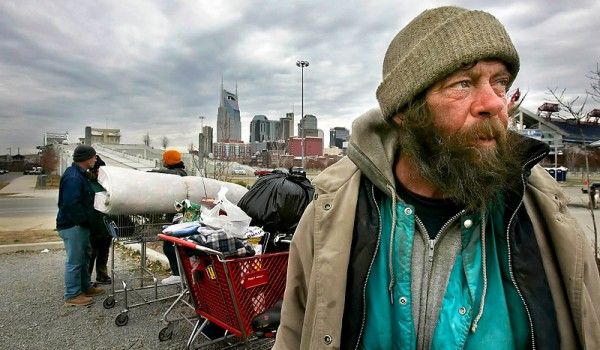
Homelessness can be seen in most large cities of the world. In personal travels to what look like prosperous cities like Vilnius, Lithuania, Hong Kong, China, and even Scandanavian countries, homelessness exists. However, the scope of homelessness does not compare to what is seen on the streets of Las Vegas, NV. and Seattle, WA, two larger American cities considered prosperous and growing. In 2024, there were an estimated 7,928 homeless in Clark County (the Las Vegas area) and 16,385 in King County (the Seattle area). Walking around these two cities, let alone reading or listening to the news, suggests those numbers are grossly undercounting the homeless. The United States is the 7th richest nation in the world on a per capita basis. Why is homelessness a growing problem in outwardly prosperous American cities?

Trump followers would argue homelessness is because of illegal immigration and laziness.

The real reasons are decades of underbuilding in major American cities, high cost of existing inventory, regulatory barriers for affordable housing, economic inequality, an attitude of “not in my back yard”, investment conglomerates that capture housing for rent, and the decline of federally funded affordable housing.

Jeff Hobbes brings all of these reasons for homelessness to light with the plight of working mothers and their children who are moving from one area of California to another because they cannot afford a place to live, school their children, and feed their family.

Hobbes’ example is of a family on the road with savings of $4,000 in a search for a job, a school for her children, and a place to live that they can afford. What is abundantly clear in Hobbes’ book is women hold broken families together more often than men. Misogyny is a reinforced truth in the world. Men spread their seed, begat children, and leave. Women take on the burden of the world’s future.

Homeless single parents with children to care for must often leave their children alone while seeking work to pay for the basic needs of life.

A woman faces greater obstacles than a homeless man because of unequal opportunities ranging from income for work to their presumed and assumed responsibility for children’s care. The general public often presumes they have their own lives to live and have no responsibility for others who have made foolish decisions in their lives. However, a rational person knows children are the future of the world. A child left on his/her own have diminishing opportunities for success without parental support. A child of a homeless single parent’s support is compromised when that single parent has to work to earn enough for the family to have a home and food to eat.

Having the personal experience of being raised by a single parent with an older brother, Hobbes’ history of a mother, on her own, fairly explains how difficult it is to avoid homelessness while looking for work and caring for her children.

The price paid for homelessness on the emotional and intellectual ability of a mother and her children is immeasurable. The cost to society is partly explained by Jeff Hobbes’ in “Seeking Shelter”. California’s system of caring for the homeless is encouraging but undoubtedly inadequate based on what one reads in the press.

Listening to the stories of homeless families is a harsh lesson for those who have escaped poverty and think if they can do it, why can’t every American do it?

Failure to address homelessness is a societal flaw. Whatever its cause, homelessness makes every citizen of prosperous nations guilty of neglect.

MICROCOSM

Islands are a microcosm of the world environment and a perfect example of what is wrong with the ecology and economics of the world.

Books of Interest
 Website: chetyarbrough.blog

Dark Laboratory

By: Tao Leigh Goffe 

Narrated By: Tao Leigh Goffe

Tao Leigh Goffe (Author, PhD from Yale, award-winning writer, theorist, and interdisciplinary artist, raised between the UK and New York City with a UK citizenship.)

Goffe has written a book about the complexity of discrimination and global warming with the risks they entail for humanity. She offers a sociological and environmental perspective.

Goffe’s book is an introduction to what she envisions as “The Dark Laboratory” to address inequality and global warming.

Puerto Rico

Stories of mongooses and marijuana confuse the clarity of Goffe’s subject. She addresses immersive technologies like virtual reality (VR) and augmented reality (AR) to help people understand the impacts of climate change and inequality. The hope is that books like hers and education of the public will change human behavior. She writes of a mongoose introduction to Puerto Rico which becomes an invasive species. She also writes of colonial exploitation of island natives who plant, harvest, sell, and distribute legalized marijuana.

The analogies she chooses are marginally relevant, but they are a distraction. The fundamental points of unintended consequences of an invasive species on the environment and colonial enslavement can be more impactfully explained with concrete evidence of ecological damage and employment inequality in native lives.

The introduction of the author’s book is disappointingly vague, but Goffe’s life experience, her advanced education and perspective are shaming and anxiety producing. The shaming and anxiety come from knowing that being white gives one advantage in life. That advantage has admittedly been squandered by human inequality and pursuit of wealth and power at the expense of the environment.

Listener/readers are introduced to slang for minorities by Goffe that are not widely known.

Commonly known and despicable derogatory names are wetback, chink, gook, redskin, and the “N-word” for people who do not appear white. However, Goffe notes names like maroon and eleven-o’clock minorities are less known. A maroon is a member of a community of runaway enslaved Africans in Jamaica. An Eleven-O’clock minority is someone who is considered an incomplete person because he/she is 1 hour short of 12.

The earth’s environment is in crises while many foolishly diminish human equality while ignorantly pursuing self-interests. The irony and incongruity of environmental destruction and inequality is that we are all in the same boat, living on spaceship earth. Goffe’s point is that society chooses to despoil earth for ephemeral profit while causing global warming and discriminating against minorities only because people are different. The “Dark Laboratory” is about the world climate crises and race relations.

Puerto Rico is a petri dish of Goffe’s “Dark Laboratory”. It shows how earth’s environment is being destroyed and how neglect of human equality has impoverished native island cultures.

Goffe argues (and hopes) with the help of storytelling (education) about human equality, technological innovation, and ecological care, the world can become a sustainable haven for humanity. However, Goffe takes two digressions that confuse, if not diminish, the importance of environmental degradation and human inequality.

Goff shows how islands are a microcosm of the world environment and a perfect example of what is wrong with the ecology and economics of the world.

NO EASY SOLUTION

“Everyone Who Is Gone Is Here” is an indictment of American foreign policy. There are no easy solutions for immigration, deportation, or human rights in the world.

Books of Interest
 Website: chetyarbrough.blog

Everyone Who Is Gone Is Here (The United States, Central America, and the Making of a Crises)

By: Johnathan Blitzer

Narrated By: Jonathan Blitzer, Andre Santana

Johnathan Blitzer (Author, American journalist, staff writer for The New Yorker.)

“Everyone Who Is Gone Is Here” is an indictment of American foreign policy. There seems a loss of a moral center in America with its support of other governments based solely on government type, national security, or economic interest. That is not to suggest national security and economic interest are not critically important but Blitzer’s history of America’s support of Central American governments is appalling. El Salvado, Guatemala, Honduras, and Nicaragua are democracies in title but not in reality.

Blitzer tells the story of migrants from El Salvadore and Guatemala who are imprisoned, tortured, and sometimes raped or murdered by their government’s functionaries.

El Salvadoran and Guatemalan governments purport to be representative democratic republics. They are not. They have been dictatorial and punitive victimizers of their citizens. The picture drawn by Blitzer is that both are highly autocratic and riven with exploitation and arbitrary treatment of their Latino populations.

Some immigrants came to roil American communities with the only tools they were familiar with in their native countries.

Many immigrants came to America to escape arbitrary treatment by their governments. America has benefited from its immigrant labor, but some turned to street drugs and violence because of their poverty and the experience their families lived with in their native countries. Driven by self-interest, a survival instinct, and ignorance, America has deported many Latino immigrants who chose the gang life in the California suburbs. Gang life offered identity and income. Gangs like MS-13, the 18th Street Gang and other street name gangs terrorized L.A. and Southern California. The police reacted with violence by rounding up Latinos based on gathered photographs and lists of their families and friends. Some who had proven records of crime were imprisoned or deported to their families’ countries even though they may have been born in America.

America has financially and militarily supported Central America without regard to human rights.

There is a taint of McCarthyism in America’s communist categorization of Central American countries because false categorizations hides the truth. The truth is that democratic countries like El Salvadore and Guatemala have treated citizens as harshly as yesterday’s Stalin, today’s Ayatollah in Iran, and the two Assads in Syria. Reagan’s willingness to sell arms to Iran in the 1980s for money to send to Nicaragua because communism was allegedly opposed by those in power is an example of America’s political blindness. Nicaraguan, Salvadorian, and Guatemalan leadership was as corrupt as many communist countries that practiced violence, imprisonment, torture, and murder of their citizens. Whether one’s government is communist or democratic, the important issue is how its citizens are treated, not its form of government. Bad forms of government will eventually fall from the weight of their citizens’ unequal treatment, just as Syria fell in 2024. The sufferers are always the oppressed citizens and, as interestingly noted by the author, the government perpetrators who live with the guilt they feel when they retire from their military or government jobs.

What Blitzer infers in his history of Central America is that human rights of citizens should be the primary criteria for American financial and/or military support for foreign governments whether democratic, communist, socialist, or other.

National stability comes from citizens’ support of their government. Stability is compromised when human rights are denied. Blitzer implies–America should only financially or militarily support another country only if the nativist nation and culture is working toward equal human rights for its citizens. The immigrant crises in America and the world is caused by nations that do not work toward equal human rights for their citizens.

One is somewhat conflicted by Blitzers’ argument. The conflict is in an outsiders’ understanding of a foreign countries’ culture.

Human rights may be universal, but culture is made of beliefs, values, norms, customs, language, art, literature, food, fashion, social institutions, and unique symbols and artifacts of particular nation-states. This great host of characteristics is not easily quantifiable. No nation can justify rape, torture, or murder but they do exist in all cultures. Ignorance of culture is at the heart of why any country that invades, or militarily and financially supports another country, risks failure.

There are no easy solutions for immigration, deportation, or human rights in the world.

LIFE

The eradication of inequality is in the eyes of beholders. We are mere humans struggling to be better than we are.

Books of Interest
 Website: chetyarbrough.blog

The Female Persuasion (A Novel)

By: Meg Wolitzer

Narrated By: Rebecca Lowman

Meg Wolitzer (Author)

Many “sexual awakening” books of the past are about men and boys. Nabokov’s Lolita, Lawrence’s “Lady Chatterley’s Lover, Baldwins “Giovanni’s Room” to name three. “The Female Persuasion” gives listener/readers a glimpse of what “sexual awakening” is for girls. That is not to say “The Female Persuasion” is only about sexual awakening. Wolitzer’s story illustrates there is little difference between young men’s and women’s interest in sex and their ambition for success in an adult world.

“The Female Persuasion” gives voice to the equality of women despite historical misogyny.

Two women roommates at a fictional college talk about their lives and explain their frustration with unequal treatment in society. One has sexual relations with women, the other with men but each feel their opportunities in life are limited by being women in a Mans’ world. Greer Kadetsky complains to the University about a male student who sexually assaults her and is ignored by the administration. She is characterized as an intelligent woman who is eligible for admission to Yale but is rejected because of her parents’ mistakes on a financial disclosure form about scholarship assistance. Her unhappiness about not getting into Yale is compounded by the student assault she reports that is essentially ignored by the local college she attends.

Men and women are equal and should be afforded all the rights and opportunities available to men.

The heroine of the story has a boyfriend, Cory Pinto, whom she met in high school. They became lovers at some point in their relationship. She notes in a college dorm where her boyfriend undresses her and expresses admiration of her body. She appreciates her lover’s comment. The author’s perception of beauty reinforces the similarity between men and women and their sexuality. Beauty is in the eye of the beholder, whether male or female, but every person appreciates positive comment about their appearance.

Another element of interest in “The Female Persuasion” is a reinforcement of the saying “Birds of a feather flock together”. Cory and Greer come from lower middleclass families while showing higher than average intelligence in high school that leads them to a college education. After graduation, Cory and Greer move-in together with Cory finding a job while Greer volunteers at a non-profit while pursuing a writing career. Is it a surprise that a person with a college degree has a hard time finding a job after graduating? No, but it seems men are luckier, or one might conclude men are beneficiaries of a built-in gender bias.

Not to read too much into Wolitzer’s story, it seems most job opportunities are better for men than women.

Greer has a chance meeting with a feminist who speaks at the university she attends. In that serendipitous contact, Greer makes a positive impression on the speaker. After graduation, Greer is contacted by the famous feminist with a possible job interview. However, the potential employer dies, and the interview never happens. Meanwhile, Cory has found a job and is pursuing his career. Greer is living at home with her parents to cut down on expenses.

Greer is contacted by a New York feminist organization and is offered an interview that results in a job in New York.

Cory is working outside the country for his company, but the couple continues a long-range relationship. Greer is gaining some success and experience in her job. An interesting incident is noted that gives listener/readers insight to women’s competitiveness when Greer exhibits reluctance to show a letter to her employer for her former gay friend looking for a job. Greer chooses not to proffer the letter to her employer and lies to her friend about having given it. This seems a petty incident, but it is present in all human beings, i.e., the feeling that a person who has found their step on the ladder of success should care about others when they might be competing with them if they go to work for the same company. This seems a matter of personal ambition, not a gender or sexual orientation issue.

The end of the book offers an unsatisfying “bow tie”. The ending has a fairy tale quality that will appeal to some, but the real world is different. Life happens, jobs change, people’s relationships fall apart; some mend, others do not. The eradication of inequality is in the eyes of beholders. We are mere humans struggling to be better than we are.

SOCIAL BLINDNESS

Criminal imprisonment, gun control, and drug addiction solutions are elusive, just as America’s eradication of discrimination is, at best, only a work in progress.

Books of Interest
 Website: chetyarbrough.blog

Locking Up Our Own (Crime and Punishment in Black America) 

By: James Forman Jr.

Narrated By: Kevin R. Free

James Forman Jr. (Author, professor of law and education at Yale Law School)

James Forman Jr. argues Washington D.C. is a multi-ethnic democratic example of what is wrong with the American penal system, gun control, and an addiction crisis. Forman offers an eye-opening recognition of America’s social blindness. The 2019 estimated population of Black residents in D.C. is approximately 44%. Forman suggests D.C. constitutes a representative sample of what has happened and is happening to Black Americans in “Locking Up Our Own”.

Forman addresses three social issues with Washington D.C.s’ effort to legislate against the consequences of crime associated with a Black population’s gun possession, and drug addiction. America’s history of Black discrimination is well documented. The issues of gun control and drug addiction are top-of-mind issues in all American communities. What makes Forman’s book interesting is his analysis of what he argues is a nascent conservative movement in Black American society.

Forman’s argument is based on statistics and the history of Black discrimination. The American incarceration rates for Black citizens are six times higher than for white citizens. Today’s statistics show 33% percent of the prison population is Black when it is only 12% of the U.S. adult population. White prisoners account for 30% of America’s prisoners but amount to 64% of the adult population.

The fundamental issue of Forman’s book is that more Black Americans are being imprisoned for crimes of addiction and theft than those committed by white Americans.

Forman uses Washington D.C. as evidence for a Black conservative movement because of its high percentage of Black residents. He notes D.C.’s effort to legislate gun control and regulate drug addiction are arguably more restrictive than other parts of the country. Firearms must be registered with the police department. A permit is required to purchase a firearm. Concealed weapons require a license. Assault weapons are banned. Magazine capacities are limited. Safe storage requirements are mandated. In the case of addiction, the “Office of National Drug Control Policy”, ONDCP is established in D.C. The program is instituted to provide funding to support communities heavily impacted by drug trafficking. A “Drug-Free Communities Program” offers grants to community coalitions to prevent youth substance abuse. The city expands Naloxone access to citizens to reverse opioid overdose.

Forman explains these policies are supported by D.C. residents in the face of national opposition to gun control. Forman notes the proactive drug control programs of D.C.

The obvious irony of D.C.’s policies is that they do not reflect what white America promotes but suggests Black America is likely more victimized by lax gun controls and drug regulation. White America needs to get on board.

Several chapters of Forman’s book explain the difficulties of integrating minorities into local police forces.

Police department managers opened their hiring practices to Blacks based on growing Black neighborhoods and belief that police services would be improved with officers who would be more racially and culturally suited to understand policing in minority neighborhoods. Forman recounts 1940s through the 1960s police force integration. He notes police department integration is fraught with discriminatory treatment of Black recruits.

Of course, the idea of crime in a Black neighborhood being better understood by Black officers is just another form of discrimination.

Crime is crime, whether in a minority neighborhood or not. Relegating Black police to Black neighborhoods only reinforces racial discrimination. Integrating the police only became another example of racial discrimination in America. Paring white and Black policemen on petrol became difficult. Getting white and Black policemen to work together becomes even more problematic when promotions are denied qualified Black officers. As with all organizations, police promotions were based on experience and standardized testing. What police departments would typically do is promote white officers over Black officers whether their experience rating or test scores were better or not.

The irony of white resistance to gun control and ineffective drug addiction policies has had an adverse impact on Black-on-Black crime.

The culture created in formally white police departments adversely condones harsh treatment of minorities. Black officers buy into a police department’s culture and begin discriminating against Black residents in the same way as white policemen.

The 2003 brutal beating and killing of Tyre Nichols by 5 Black Police Officers.

Drug addiction is the scourge of our time. Its causes range from the greed of drug company executives to poor policy decisions by the government to escapist and addictive desires of the public. Addictive drugs are the boon and bane of society. On the one hand, they reduce uncontrollable pain and anxiety; on the other they are often addictive, causing incapacity or death.

Discrimination can only be ameliorated with education, understanding, and governmental regulations that are consistent with the rights written in the American Constitution.

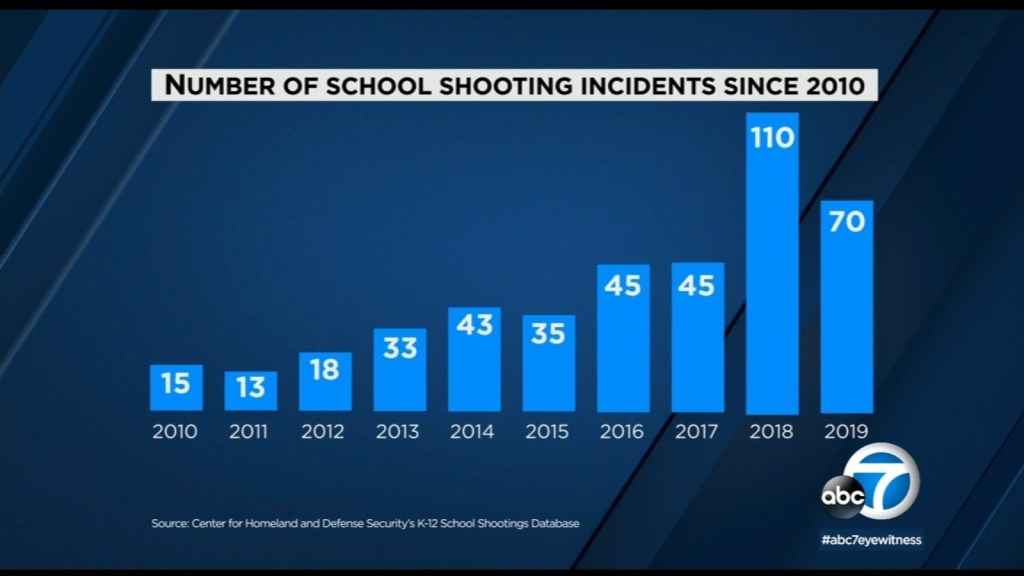
Criminal imprisonment, gun control, and drug addiction solutions are elusive, just as America’s eradication of discrimination is, at best, only a work in progress. Guns in the hands of American citizens are not guaranteed except as noted in the Constitution which infers “A well-regulated Militia…” is the only reason for “…people to keep and bear Arms…” How many more school children have to be killed by guns before the lie of American gun rights is dispelled.

The last chapters of Forman’s book address his experience as a public defender in Washington D.C. This is the weakest part of his story, but it points to the theme of an incarceration system in America that is broken. Prisons are not meant to reform criminals. They are overcrowded, violent, understaffed and, most damagingly, lack rehabilitative programs for re-education and vocational training that could reduce recidivism and return former prisoners to a socially productive society.

REAGANOMICS

Homelessness, illegal immigration, and America’s budget deficit will not be cured by reducing taxes on the rich or by tariffs that artificially increase the cost of living, or by cutting the labor force of farmers through mass deportations, or by making it easier to do business in the U.S.

Books of Interest
 Website: chetyarbrough.blog

Reagan (His Life and Legend) 

By: Max Boot

Narrated By: Graham Winton

Max Boot (Russian-born naturalized American author, editorialist, lecturer, and military historian, writer and editor for The Christian Science Monitor.)

Not being a fan of Ronald Reagan’s presidency, there is some reluctance in reviewing Max Boot’s biography of the man. However, Boot’s writing and research offer an understanding that makes one separate Reagan’s political life from his experienced life. Boot explains Reagan’s life during the years before and after the depression.

Reagan’s father was an alcoholic which reminds one of how one’s childhood is rarely idyllic. Boot’s biography of Reagan shows one becomes who they are–despite the human faults of their parents. The way a child matures is only partly defined by parents’ influence. Reagan’s father’s alcoholism did not carry through to his son.

Boot’s biography shows Reagan to be an affable, well-adjusted, teenager and young adult who has a strong sense of what he believes is right and wrong.

Reagan is a football athlete in high school that grows to become a 6′ 1″ handsome young man from a relatively poor middle-class family. He aspires to college and works to have enough money to attend Eureka College in Illinois. He graduates in 1932 with a BA in Economics and Sociology. Reagan is remembered by classmates and teachers as a smart student and determined football player that gave him the grit and experience to become a movie star in the 1940s.

The first chapters of Boot’s biography of Reagan are about his break into the entertainment industry as a sports caster.

Reagan had a nearly photographic memory. He used that skill to recall a football game he played in college to impress a radio station manager with broadcast details of a game. He recalls a game he played in college and purposefully embellishes his role in the game. Reagan’s skill as a radio announcer led to a screen test with Warner Brothers in 1937 that launched his film career.

As WWII approaches, Reagan enlists as a lieutenant in the U.S. Army Air Force. (The Air Force in these early days were not a separate branch of the service.)

Reagan’s experience in the entertainment industry led to producing training and propaganda films for the Army Air Force. Boot explains Reagan had significant vision problems with nearsightedness in his youth and presbyopia (difficulty of focusing on close objects) as he got older. Reagan never served in a combat role. He eventually adopted contact lenses to correct his vision; partly to please film producers who disliked the “coke bottle” lenses he needed to see properly.

Four issues that are interesting and informative in the first chapters of Boot’s biography of Reagan are 1) how affable, and well liked Reagan was to people who met him, 2) that he was well-read, 3) very handsome with a respect for women that carried through to several relationships, and 4) that though he had a sense of right and wrong, his moral center seemed to waiver between concern and indifference.

During the depression, Reagan was a strong supporter of Franklin Roosevelt’s efforts to resurrect the American economy.

Reagan seemed more like a liberal Democrat than the conservative Republican he came to be as Governor of California and President of the United States. The remainder of the book shows how that change came about. Boot notes several factors that influenced Reagan to change from a Roosevelt to Goldwater supporter. The movie industry and the growing anti-communist era of the fifties influenced many former liberals. Reagan’s experience in Hollywood reinforced conservativism.

Reagan became rich from his relationship with Gerneral Electric. The corporate culture of GE in the 1950s and 60s was decidedly conservative. When Reagan became the host of “General Electric Theater” that culture seeped into his consciousness.

In 1962, Reagan switched from the Democratic party to the Republican party. He supported the election of Goldwater who ran against President Lyndon Johnson who was mired in the Vietnam war while promoting big government social welfare programs. The influence of Goldwater and the liberalism of the Johnson polices drove Reagan to believe big government was ruining the wealth and opportunity of Americans. He adopted conservative beliefs for economic deregulation, tax cuts that largely benefited the rich, and promoted anti-communist foreign policies. Reagan’s support for conservative policies is exemplified by his “A Time for Choosing” speech supporting Barry Goldwater’s campaign for President in 1964.

In the political climate of the 1960s, Reagan, with the support of GE, runs for Govenor of California. His position as president of the Screen Actors Guild, support of Goldwater, and the public’s perception of inefficiency of state government provided a platform for Reagan to run. The civil rights movement, Vietnam protests, the free speech movement, the Watts riots in LA, and the hippie movement in San Francisco created an environment ripe for conservative reaction. Reagan is elected Governor of California twice, to serve from 1967 to 1975.

Reagan as the Governor of California.

Reagan described his time with GE as a “postgraduate course in political science”.

Reagan’s experience as Governor of California, his Hollywood image, the support of big companies like GE, and the economic issues confronting Carter, give him a platform to run for President of the United States. Todays’ Republicans hold Reagan in high regard. Some view Reagan as one of the best recent presidents of the United States. Those who hold him in high regard cite his economic policies, strong national defense and leadership during the cold war. He believed in small government, lower taxes, and conservative values. Some suggest Trump is Reaganomics second coming.

Reagan runs for President of the United States in 1976. He wins and is re-elected in 1980.

What is not fully understood by some Americans, is the accomplishments of Reagan held some very negative consequences. Some argue he was the prime mover in nuclear weapons reduction. The biography of Gorbachev suggests the prime mover was Gorbachev and his support of glasnost with an opening of Russia to western ideals.

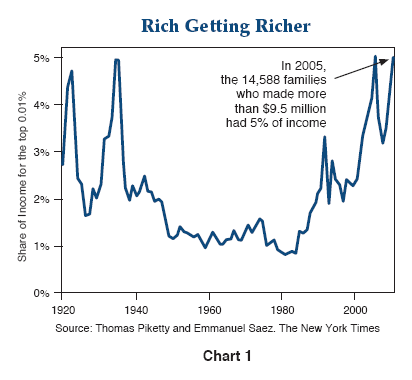
Some, like me, would argue Reagan accelerated economic inequality by giving tax cuts to the wealthy and deregulating the economy.

The federal deficit increased from $70 billion dollars to 152.6 billion dollars during the Reagan presidential years. In comparison to Carter’s administration, the deficit was less than half of Reagan’s at $74 billion dollars. Today’s deficit has grown to 1.83 trillion dollars. Four out of seven presidents (including Trump’s second term) since Reagan have been Republican. The deficit lays at the feet of both parties.

With the election of Trump, who emulates Reagan’s policies, one wonders–how much greater the deficit will be with reduced taxes for the rich and a renewal of economic deregulation.

Homelessness, illegal immigration, and America’s budget deficit will not be cured by reducing taxes on the rich or by tariffs that artificially increase the cost of living, or by cutting the labor force of farmers through mass deportations, or by making it easier to do business in the U.S.