TRAGEDY’S LESSON

The sharpened point of Slade’s story is that, like the sinking of the Edmund Fitzgerald and El Faro, it takes great tragedy before change takes place.

Books of Interest
 Website: chetyarbrough.blog

“Into the Raging Sea” Thirty-Three Mariners, One Megastorm, and the Sinking of the El Faro

By: Rachel Slade

Narrated By: Erin Bennett

Rachel Slade (Author, winner of the Maine Literary Award for non-fiction.)

Rachel Slade begins her book with the last words of a mariner calling for help from a sinking ship in the grip of a Hurricane. The ship is the El Faro. The author writes her story based on the El Faro’s written log during a severe storm somewhere between Florida and Puerto Rico. The storm was Hurricane Joaquin, a category 4 Hurricane that had recorded wave heights of 10 meters (over 32 feet). Winds ranged from 130 to 156 mph with rough seas, roiled by rogue waves. Rogue waves are twice the size of surrounding waves and appear unexpectedly.

Slade methodically sets a table for the El Faro on a “…Raging Sea”.

Slade writes about a mariner’s desperate call for help. In its beginning, the story lags but the author offers cultural insight to the life of merchant marines, the equipment they operate, and the business of international trade. Her story explains how important and dangerous the life of a merchant marine can be, why it is important, and how mariners are dependent on equipment they use, their shipmates’ qualifications, and business owners’ drive for success.

Every person makes decisions about what they are going to do to make their way in life.

Becoming a merchant marine, like every decision in life, is based on personal circumstances, ambitions, and choices. Slade describes the El Faro mariners as adventurous and interested in seeing the world and being paid for what they do. Some are educated, others not, but all learn what they need to do to be part of a mariners’ crew.

There are schools for mariners at all levels of education but like any job, one can start at the bottom as a laborer that learns by doing. What the story of the El Faro shows is that like in any chosen job in life, some become expert at what they do, others try and fail, try again or move on. What Slade infers is that the El Faro sinks because of its crew but also because of others, both on and off the sea. As John Donne wrote in 1624, “no man (or woman) is an island”–emphasizing the interconnectedness of society.
The crew of the El Faro wanted to be paid but to some it was adventure and/or escape from a humdrum of life. Undoubtedly, mariners were motivated for different reasons. Some wished to see the world, be recognized for good work, wished to crew on bigger and better vessels, or be promoted to higher position. Motivation and ambition are different for everyone. What is lost to history are details. Slade tries to reveal some of the details about the El Faro’ crew, its owners, the ship, and the business of international trade. Why did the El Faro sink? Who and what was lost? What is it like to be in a hurricane at sea? Is somewhat at fault?

Slade’s story gains momentum as sinking of the El Faro seems imminent.

The aftermath is a careful and detailed explanation of rescues at sea, why the El Faro sank, what rescue efforts were made, how families of the lost were affected, and what changes were demanded in the industry. The loss of 33 mariners, the entire crew of the El Faro, is a horrible tragedy for the families who lost their loved ones. The causes of the tragedy range from crew mistakes to ship design to corporate malfeasance. The common thread is human nature.
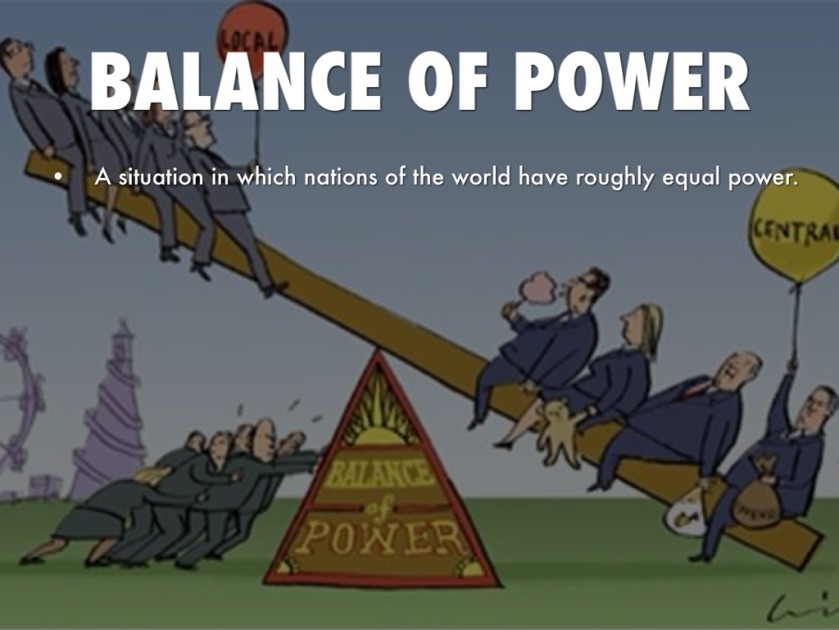
What this review suggests is that the fundamental issue in every form of government and society is balance between public and private good.

One will draw their own conclusions from Slade’s history of the loss of the El Faro. In a capitalist society, balance is dependent on prudent regulation. Prudence is meant to mean the use of human reason to balance the needs of the public with private interests. That balance is complicated by human nature that drives private interests to focus on money, power, and prestige rather than public need.

Slade shows regulation of international trade often conflicts with private interests that object to regulation and improvements in ship design.
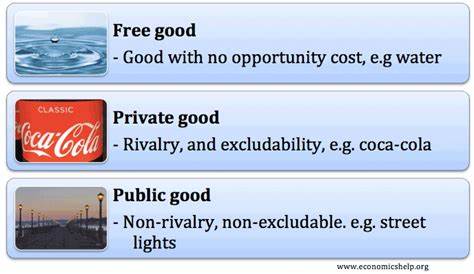
Conflict between public good and private interest is not a new discovery. Neither is the sinking of the El Faro. The sinking of the Edmund Fitzgerald in 1975 led to changes in international shipping. Business owners were required to provide survival suits for mariners in their employ, depth finders, positioning systems, improved ship design, and inspections by the Coast Guard became mandatory. These were regulations that increased costs of shipping that rippled through the economy and initially penalized private interests. The public benefits because mariners are safer, and families are less threatened by loss. The public also suffers because transported goods become more expensive. Balance eventually occurs as private interests are compelled to pay more for labor which is part of the public.
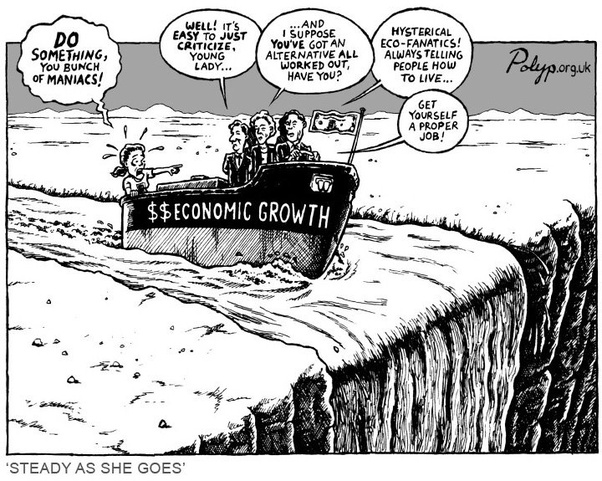
Capitalism works because it is a process that balances public need with private interests. Capitalism’s weakness is that the process takes time to balance public needs with private interests.

The sharpened point of Slade’s story is that, like the sinking of the Edmund Fitzgerald and El Faro, it takes great tragedy before change takes place.

KKK

American Democracy is a work in progress and remains at risk of failure.

Books of Interest
 Website: chetyarbrough.blog

“A Fever in the Heartland” 

By: Timothy Egan

Narrated By: Timothy Egan

Timothy Egan (American Author, journalist, former columnist for the New York Times, won the National Book Award, the Carnegie Medal, and a Pulitzer Prize for National Reporting.)

Timothy Egan’s “A Fever in the Heartland” is about the Ku Klux Klan and its growth in Indiana, the American Midwest, and Oregon in the early 1920s. Soon after the Civil War and death of Abraham Lincoln, a group of former Confederate veterans formed a social club in Pulaski, Tennessee.

The Ku Klux Klan grew into an underground movement that peaked in the 1920s with white American membership estimated at over 4 million.

Egan’s history is about the rise and fall of David Curtis “Steve” Stephenson who became the Grand Dragon of the Indiana Klan in 1923. Stephenson endorsed and promoted public hate toward immigrants and minorities. He became a proven liar who lied about his past and his actions as a leader. Egan’s history of Stephenson is an American political’ warning. Egan shows how character and honesty are as important in today’s politics as they were in the 1920s.

Egan’s choice of David Curtis Stephenson as a KKK’ leader illustrates how “A Fever in the Heartland” can grow to threaten American Democracy.

Stephenson is a man who smoothly lies his way to the top of a weak KKK’ chapter in Indiana by pandering to anti-immigration and anti-minority sentiments in the country. (The same sentiment seen in today’s America.) Stephenson became a rich man by recruiting the public into the KKK with a $10 fee for a white hooded garment ($4 for the garment, with $6 in his pocket) for membership to an exclusive group of American white men who would terrorize and murder non-whites, non-protestants, and immigrants. The KKK used secrecy to hide membership in this exclusive white American group.

The KKK hid their private reputations while (as an organization) publicly funding American celebrations and charities to feed its membership.

With membership dues and a persuasive personality, Stephenson (within 3 years) became a powerful and influential KKK’ leader. Stephenson convinced members of the KKK to become elected officials to gain control of government and public offices in Indiana. KKK’ members subsidized and promoted the election of like-minded white Americans. With control of government agencies, public services like the police and judiciary, the KKK controlled much of what happened in the State of Indiana. The wealth and influence of Indiana’s KKK planned a Presidential run in the late 1920s. The Indiana leader of the Republican Party was a member of the KKK and kowtowed to Stephenson as Grand Dragon of Indiana’s KKK.

Egan explains Stephenson was a persuasive carpetbagger who moved to Indiana from Texas while inferring he was an Indianan to become the Grand Dragon of Indiana’s KKK’ chapter.

Stephenson lied about his education and past but with success in increasing membership, he gained support of the National KKK’ organization. The truth of his background is that he abandoned his first wife and child when he left the lone star state. He was remarried to a second wife who leaves him. Stephenson beat his second wife who returned only to be beaten a second time when she attempted reconciliation. Egan noted Stephenson was a heavy drinker and abusive molester of women who worked for him. Stephenson was ultimately convicted of second-degree murder of Madge Oberholtzer, who was the creator and manager of a lending library.

Madge Oberholtzer (Stephenson is ultimately convicted of second-degree murder of Madge Oberholtzer for brutalization and rape.)

In the middle of the night, with the help of fellow Klansman, Madge Oberholtzer was kidnapped by Klansman working for Stephenson to take a train to Chicago. On the train, Stephenson rips Oberholtzer’ clothes off and rapes her. He used his teeth to bite her breast and parts of her body.

After being returned to Indianapolis, Overholtzer went to a drug store to buy bichloride of mercury, a slow acting poison. She chose to take the poison to end her life.

The taller man in this picture is Ephraim Inman, the defense attorney for Stephenson. He is standing next to Will Remy the prosecuting attorney, dubbed the “boy prosecutor” who successfully convicted Stephenson for 2nd degree murder.

Will Remy told the crowded courtroom that Stephenson “destroyed Madge’s body, tried to destroy her soul” and over the course of the trial tried to “befoul her character.” Overholtzer’s left breast and a bleeding right cheek were bitten by Stephenson when she was raped. Remy argues Stepheson’s teeth were a murder weapon. Attorney Asa Smith, a Overholtzer-family’ friend prepared a dying declaration for Madge Oberholzer that was placed into evidence.  Judge Sparks admitted the declaration and allowed Remy to read it to the jurors. (Sparks was not a Klansman.)

Stephenson considered himself, not only above the law, but as the law in Indiana. (That is a familiar refrain in the 21st century.) Stephenson was convicted for second degree murder. It was second degree murder because the cause of death was Madge Oberholzer’s decision to take her own life.

The Klan still exists in America.

James Alex Fields Jr. plowed into a crowd of demonstrators in Charlottsville, Va in 2017. He killed one of the protestors.

Fields admitted to being a member of the KKK. Though the Klan remained a political power in Indiana for some years after Stephenson’s trial and conviction, its Indiana’ power and influence was diminished. The national position of the Klan has declined in America as is believed in modern times, but it still exists.

Speaking about the white nationalist groups rallying against the removal of a Confederate statue, former President Trump said, “You had some very bad people in that group, but you also had people that were very fine people, on both sides.”

As Egan’s history of Grand Dragon Stephenson illustrates, American Democracy is a work in progress and remains at risk of failure. Honesty of elected officials and “there being no person or elected official above the law” remain important for America to remain a Democracy.

CIVILIZATIONS’ FUTURE

“…Western Civilization” and its Christian and democratic foundation gives little comfort to those who are worried about societies’ future.

Books of Interest
 Website: chetyarbrough.blog

“The Foundations of Western Civilization” 

By: Great Books Series

Lecturer: Professor Thomas F.X. Noble

Thomas F. X. Noble (Professor at Notre Dame, Ph.D. from Michigan State University, President of the American Society of Church History, received the Charles Sheedy Prize for Excellence in Teaching in 2011.)

Noble offers a distinctive view of the foundation of Western Civilization in 48-lectures sponsored by the Great Books Series. There is little doubt about the importance of religion in the world. Noble explains how the Bible is a seminal work underpinning one of the two largest religions of the world, Christianity. Noble explains the Bible, just as the Quran in the east, provides a contract between a singular God and humanity. However, the dialectic of religion is that it binds people together as well as rips them apart. On the one hand, religious belief brings people together with belief in something greater than themselves. On the other, Christian and Islamic believers have maimed and murdered millions.

Noble explains Christianity began in the same area of the world as the Muslim religion, but several centuries earlier.

The spread of Christianity begins in the 1st century while Muslimism spread in the 7th. The ministry of Jesus Christ spread Christianity in 30-33 AD. Some would argue the New Testament Gospels of Matthew, Mark, Luke, and John are extensions of the Hebrew Bible. The Jewish Torah and Hebrew Bible emphasize the oneness of God, which is consistent with Christian belief, but the difference is that Jesus was not considered a Messiah by Jews. Jesus was, at most, only a messenger of God to Jews, like Muhammed is considered to Muslims.

Noble notes the spread of Christianity began in the Middle East, centuries before Muhammad’s spread of Muslimism in Mesopotamia.

Noble suggests Christianity’s spread is associated with the advent of Zoroastrianism in Mesopotamia. The prophet Zoroaster believed in a monotheistic faith before the ministry of Jesus in Judea and before the record of Judaism in the Torah of 1400 BC, the later Holy Bible, New Testament, and Quran. The common factor in Judaism, Christianity, and Muslimism is belief in one Supreme Being. Of course, there are numerous differences in these religions after their “One God” similarity. The point is, they all originated in the Middle East according to Noble’s history.

The point Noble is making is that religion is an integral part of the foundation of civilization. Religion brought people together. At the same time, religion became a foundation for difference among people of similar and different cultures. Noble explains those differences helped and hindered the shape of western civilizations.

Religion is not the singular shaper of western civilization. Noble goes on to explain the early stages of democracy that began in Greece. Ironically, democracy was looked down upon by Greeks and much of their criticism holds true in modern times.

Greeks feared the tyranny of the majority and were concerned about the lack of expertise in governance and decision-making on the part of the general population. They saw the risk of demagogues. America and the western world have experienced all of these democratic risks. One could argue America is experiencing those risks in 2024.

As these risks play out in ancient Greece, they were mitigated by pragmatic Athenian leaders like Cleisthenes who respected special interests of his time in office. He introduced a lottery system that gave voice and some influence on policy to representatives of these special interests. The people being governed were recognized in public forums that allowed free expression. On the other hand, Cleisthenes instituted the principle of societal ostracism for aberrant behavior of people who advocated against what was perceived as the common good. Future leaders expanded political rights of Greek residents and created a council of special interests to have a direct role and influence in public policy. Public ostracism of Greek citizens for up to ten years was formalized to maintain government’ stability.

Rather than direct democracy, Rome established a representative system of democratic governance.

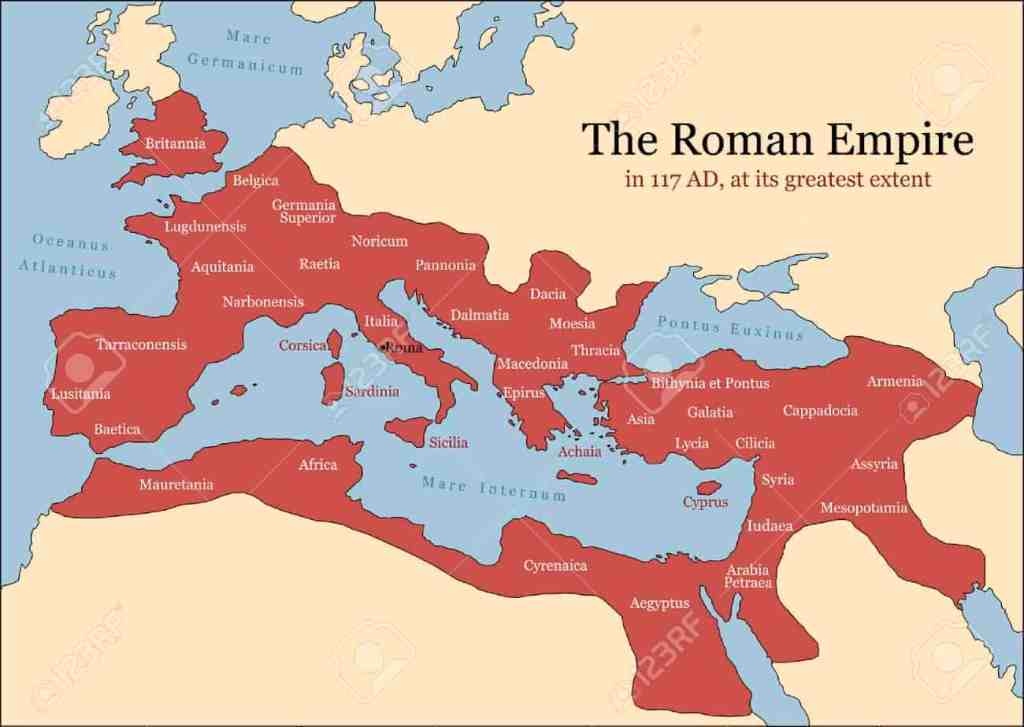
Noble moves on to the Roman Empire that adopted many of the principles that advanced Greek civil governance. However, rather than direct democracy, Rome established a representative system of democratic governance. Rome made wealth a more important criteria for serving as a representative of government. However, Rome did not use their citizen representatives to make law but only to give vent to their opinions about leadership’s decisions. Rome extended their empire by military conquest but when battles were won, they appointed governors of new territories that granted citizenship to the conquered. Military control is maintained by Rome for centuries, but a voice is given to the citizens of conquered territories. In a combination of military power, alliances with native rulers, and positive incentives, Rome assimilated foreign cultures into a vast empire.

The power and influence of Rome diminished in the 3rd century. Rome’s diminishing power comes from multiple directions. Noble explains the rise of disparate tribal groups challenged Roman authority. The growing influence of religion and diminished gravitas of its citizens accelerated Romes’s loss of power and influence.

However, it is clear the lessons of Greece’s and Rome’s democratic history are guides to the future of “…Western Civilization”.

One is drawn to a conclusion that America cannot abandon its military investment and strength or its economic support of foreign countries if it wishes to remain a hegemonic power in the world.

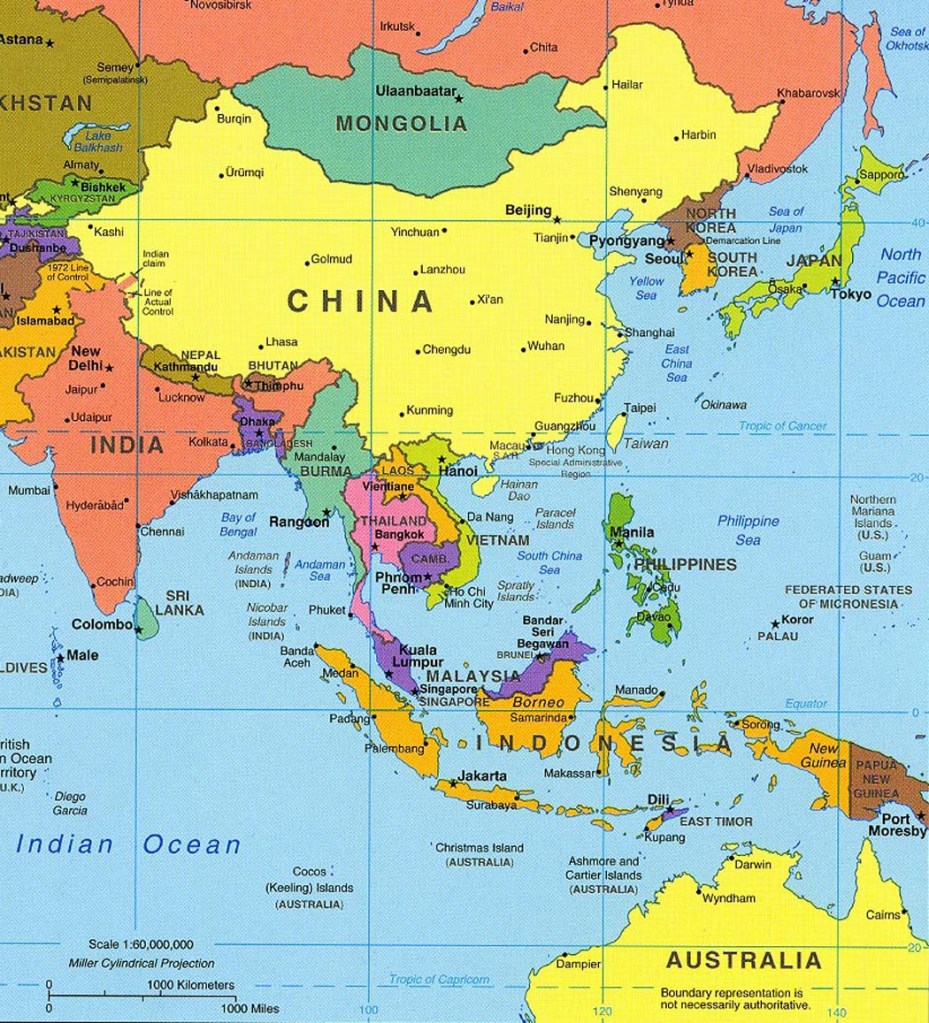
China recognizes the importance of investment in their military and its economic investment in other countries (e.g., Road and Belt program) to advance its influence and role in the world.

The difference is that China relies on centralized government control while America relies on the principle of “power to the people”. Dictatorships are inherently limited by military prowess and singular, autocratic leadership. In contrast, the ideals of democracy are humanly limitless. Today’s unknown seems to be religion. In theory, America’s founding fathers recognized religions’ powerful influence by legislating separation of church and state. Religion remains a great force in the world, let alone American society.

Religion brought societies together while splitting human society in ways that maimed and murdered millions of people.

Noble circles back to a more detailed history of religion. As the Roman Empire begins to collapse, dynasties were formed through the 3rd century AD.

As these dynasties collapsed, Christianity spreads across former Roman controlled lands. The Byzantine Empire formed in 395 CE; Christianity grew through the 15th century to become the largest religion in the world. The Frankish dynasty established itself between 750 and 887 CE, with Charlemagne as its most renown leader. In 774 CE., Charlemagne created a papal state in central Italy. A Frankish dynasty was formed by the Carolingian family (756-887 CE) that managed to stabilize and spread Christian religion throughout Western Europe. The Carolingian family constructed churches and schools to teach Christianity. They created a Carolingian army to protect and expand belief in a Christian God. Noble’s lectures show religious belief in a Supreme Being roils the world. From reading/listening to other histories, governments founded on religious belief are destined to fail.

The remaining lectures summarize the history of the Rennaissance, the Reformation, and the split of the Christian church. Noble’s lectures reflect his erudition, multi-lingual expertise, and understanding of the people of those historical events. The underpinning notion is that religion and its permutations will continue to impact the future of the world, let alone “…Western Civilization”.

“…Western Civilization” and its Christian and democratic foundation gives little comfort to those who are worried about societies’ future.

HEGEMONY

Every nation in the world can learn from nation-state’ mistakes in history but none can right the wrongs of the past.

Books of Interest
 Website: chetyarbrough.blog

“Empireworld” (How British Imperialism Shaped the Globe)

By: Sathnam Sanghera

Narrated by: Homer Todiwala

Sathnam Sanghera (Author, British journalist, born to Punjabi parents, graduate of Christ’s College, Cambridge with a degree in English Language and Literature.)

“Empireworld” offers a credible explanation of how the white race, which is a mere 16% of the world’s population, has dominated the world since the 17th century. That domination changed in the 21st century. It changed with the power and economic growth of the United States which is being challenged today by the Asian continent.

Prior to the 17th century, an empire’s influence is arguably more local because of transportation and communication limitations. What Sanghera infers is Great Britain’s growing power and influence surpassed others because of its domination of the sea and growing industrialization. The point is all of these 17th century nations were principally white with similar ambitions but only Great Britain influenced all foreign cultures of that period, with remnants extending into modern times.

France, Spain, the Dutch Republic, and Portugal were major 17th century players, but Sanghera argues the imperialist drive of Great Britain surpassed its rivals.

Sanghera focuses on GB, not only because it was white but because it represented a national power’s intent to shape the world in its own image. The image Sanghera creates is not egalitarian, democratic, or sanguine. GB is characterized as dominating, autocratic, and driven by self-interest. He suggests eleemosynary efforts by GB to aid other countries was principally to guild their own lily, not to offer other countries self-determination or freedom. Indigenous populations are inferred to be expendable in Sanghera’s “Empireworld”.

“Empireworld” is a harsh judgement of Great Britain’s history of enslavement, indigenous displacement, colonization, and confiscation of other countries’ natural resources. Sanghera systematically builds a case for GB’s attempt to English-size the world. Parenthetically, this is the same view held by some nations about America.

Sanghera recalls the history of the slave trade, Great Britain’s colonization of India, Nigeria, Australia, New Zealand, North America, and other countries of the world. He reminds listener/readers of the despoiling of the animal kingdom, confiscation of nation-state natural resources, enslavement of Africans, sexual discrimination, suppression of colonial sovereignty, displacement of indigenous peoples, and re-education or extermination of native countrymen who will not accept an English view of superiority and custom.

Sanghera tempers his harsh view of Great Britain in the conclusion of “Empireworld”. He does not deny G.B.’s history but acknowledges his countries’ measured efforts to right the wrongs of the past; which is of course not possible.

Sanghera cites G.B.’s belated effort to preserve animal and plant species, its acceptance of former colonies’ nation-state sovereignty, growing discussion about reparation for profiting from the slavery trade, endorsement of indigenous people’s rights, legislative action for sexual freedom, and support for improved health, education, and welfare of former colonial citizens. All are works in process, far from completion, but progressing. Sanghera’s history of Great Britain is the story of America. Though America avoided the colonial history of England, it has similar challenges.

Every nation in the world can learn from nation-state’ mistakes in history but none can right the wrongs of the past.

WHAT’S TO BE DONE

America cannot pass essential legislation that fairly addresses the burden and potential benefit of immigration.

Books of Interest
 Website: chetyarbrough.blog

“A Map of Future Ruins” (On Borders and Belonging)

By: Lauren Markham

Narrated by: Gilli Messer

Lauren Markham (Author, reporter on issues about migration and human rights.)

Immigration is a hot subject around the world.

Lauren Markham writes a somewhat disjointed book about immigration to a Greek island between Turkey and Greece.

Lauren Markham offers a report of a fire in a Lesbos refugee camp in the small town of Moria on September 9, 2010. There were no deaths from the fire but the conditions of the encampment and the government’s response to the crises tell of unfair and inadequate treatment of refugees–reminiscent of other countries dealings with unwanted immigrants.

The camp was designed to hold 3,000 people but grew to nearly 13,000. Seventy percent of the migrants were from Afghanistan. A fire of unknown origin destroyed the immigrant’s shelter that gave notice to the world of the inadequate care offered refugees fleeing crime, poverty, and displacement in their home countries.

Turkey and Greece have a storied history of conflict that is reminiscent of the Afghanis flight from Afghanistan. Turkey’s most revered leader, Mustafa Kemal Ataturk, ordered Greeks to leave Turkey in a mass exodus during his reign. Ethnic and religious differences between the Ottoman Empire and Greece came to a boil in 1923. Those differences are reminiscent of the escape of Afghanis from the restrictive life of the Taliban in Afghanistan. Afghanis chose a route from Afghanistan through Iran to Turkey to the Greek Island of Lesbos to escape the Taliban.

Markham shows the initial response of the Greeks was to aid the Afghanis in their flight but as the number of refugees grew, the burden became too great. The conditions of the encampment deteriorated, and the anger of the Greek government escalated. A fire of unknown origin began in the camp. Six Afghanis, two of which were minors under 18 years of age, were arrested and found guilty of setting the fire. Markham shows the evidence for conviction had nothing to do with truth but was manufactured by the Greek Court to find a verdict of guilt.

“Dallas, Texas, United States – May 1, 2010 a large group of demonstrators carry banners and wave flags during a pro-immigration march on May Day.”

The inference from Markam’s report is that America’s border state conflicts will, and undoubtedly have, resulted in unjust treatment of emigrants. The irony is that America needs emigrants to meet the needs of its economic future. America seems to be doing as poor a job of addressing immigration as the story of the Afghanis in Moria. America cannot pass essential legislation that fairly addresses the burden and potential benefit of immigration.

THE MARSHALL PLAN

NATO is not an American Marshall Plan but a bulwark for nation-state self-determination.

Books of Interest
 Website: chetyarbrough.blog

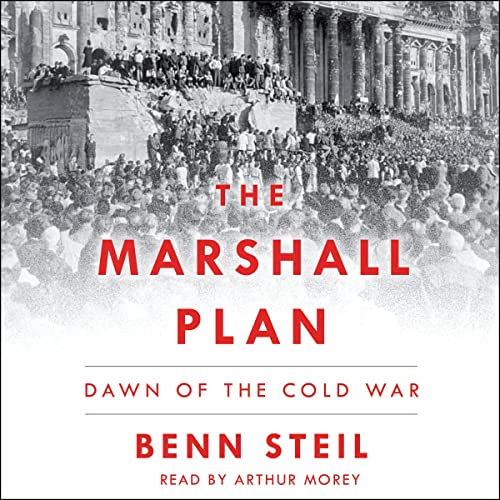
“The Marshall Plan” (Dawn of the Cold War)

By: Benn Steil

Narrated by: Arthur Morey

Benn Steil (Author, American economist, senior fellow and director of international economics at the Council on Foreign Relations.)

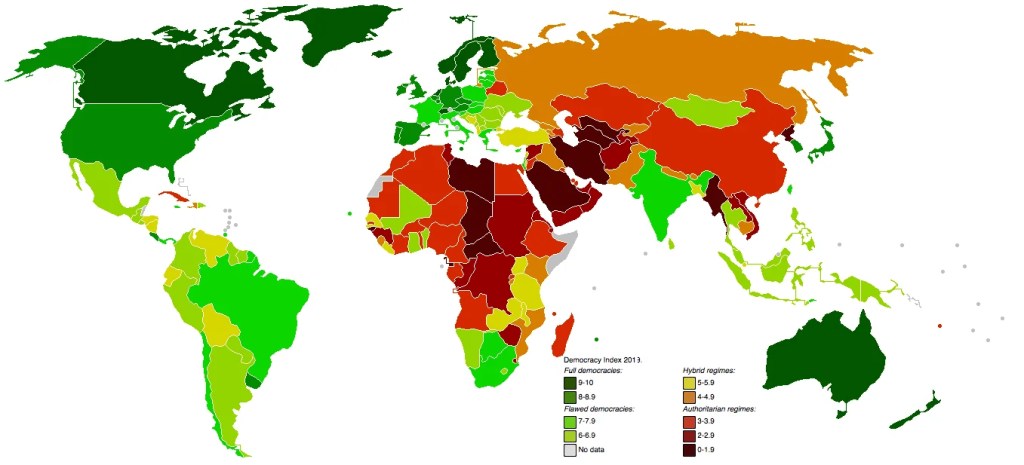
Along with an excellent history of America’s “…Marshall Plan”, there is an underlying message about two fundamental forms of government, i.e., one is democratic, and the other is authoritarian. By democratic, the point is not to suggest an idyllic understanding of American Democracy or Russian Authoritarianism. America and Russia have experienced government leadership that has been both authoritarian and democratic in the last 248 years.

One can justifiably argue America’s authoritarianism was experienced during the four years of the Trump administration (2017-2021).

In contrast Russia’s democratic experience was with Mikhail Gorbachev between 1985 and 1991. Before and after Gorbachev, democratic experience in Russia has been limited and largely authoritarian. What history of “The Marshall Plan” shows is the superior value of American democracy’s checks and balances that limit the power of authoritarian leadership by preserving deliberations of the many as opposed to the one. Trump is not the first U.S. President that was an authoritarian.

George Catlett Marshall Jr. (1880-1959, American army officer and statesman, became Secretary of State and Secretary of Defense during the Truman administration.)

History of “The Marshall Plan” shows the resilience of democratic versus authoritarian governance. Steil shows “The Marshall Plan” is created in a boiling cauldron of disagreement among branches of the American government. The conflicts between American political parties and departments of government hammered out a plan that improved the economies of both America and Europe after the war. America became the economic hegemon of the world as Russia’s economy collapsed in the early 60s.

One might argue the success of China came as a result of the more inclusive economic decision-making policies of Deng Xiaoping after Mao Zedong’s death. With Deng’s opening the economy to market-oriented reforms in 1978, worker efficiency and productivity created an economic boom in China. China’s danger today is the autocratic rule of Xi Jinping. His one-man rule nearly collapsed the economy during Covid 19. America certainly suffered from Covid, but Trump’s authoritarian character was mitigated by political resistance to unilateral Presidential decision-making.

Steil explains how Molotov delayed negotiations on “The Marshall Plan” with a clear understanding that only one person, Joseph Stalin, made decisions in Russia.

Steil notes “The Marshall Plan” is singularly disparaged and reviled by the Russian government. That disparagement is directed by one person, Joseph Stalin. There is no one to oppose the autocratic rule of Stalin’s leadership. Stalin’s opposition was either sent to the Gulag or murdered. A more balanced power structure in Russia could have taken advantage of “The Marshall Plan” but by singular fiat of one person (Stalin) implementation was impeded after WWII. The errors inherent in communism and authoritarian rule are being recreated by Putin in the 21st century.

What Steil shows is that many elected officials in America fought the principles of “The Marshall Plan”. However, the constant back and forth of government policy arguments in Congress aided European recovery after the war in a way that stabilized Europe and monumentally improved the economic growth of America.

Autocracies can certainly improve their economic growth at a pace that is superior to governments ruled by democratic ideals. However, autocracies have a much greater risk of following the wrong path because of their singular focus on one person’s decisions.

With an autocrat’s decision-making process, economic growth is either stultified or accelerated by one person’s decision. The give and take of democracies offer the benefit of different policy maker’s perspectives that may slow policy decisions but ultimately improve the odds of forward economic growth.

However, it is more than the availability of natural resources that made America economically successful. It is the give and take of a democratic process that protects America from the giant missteps that can come from autocratic rule. America has had some good to great rulers, but it has also had some ignorant, bigoted autocrats that offered minimal support for the ideals of freedom and equality. Checks and balances are the strength of American democracy. Presidents can make a difference, but they cannot destroy America’s future.

Ben Steil’s history of “The Marshall Plan” is not limited to an explanation of how important and difficult it is for America to pass important and consequential legislation.

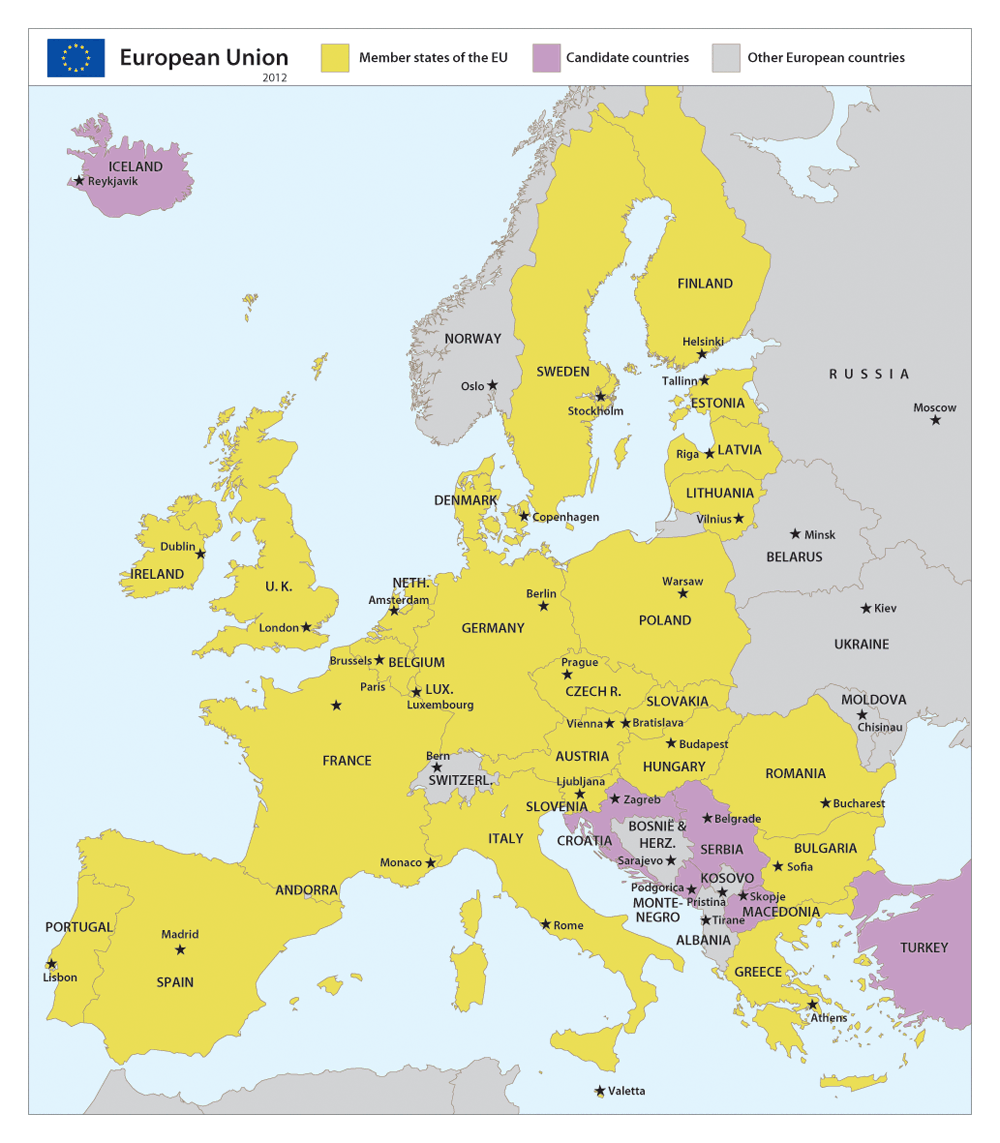
The last chapters of Steil’s history of the Marshall Plan explains why Russia, China, and North Korea resent American encroachment on their spheres of influence. From the era of Stalin, Mao, and Kim Jong II, there has been a growing concern over the expansion of America’s sphere of influence. Steil explains how the Marshall Plan has morphed into a deepening concern about NATO expansion in Europe. As noted in an earlier, the Marshall Plan is created to aid recovery of countries that were impacted by WWII’s destruction. In reality it aided America to become the hegemon of the world. Because of the economic stimulus that revived the countries damaged by WWII, America created new markets for their industrial growth and international trade.

NATO is viewed as another vehicle for America’s economic growth and ideological threat to Putin, Xi, and Kim Jong Un’s control of their countries.

NATO is viewed as another invidious way for America to expand their influence and power. That seems an unfair evaluation of NATO. NATO is a military defense plan saying one country within NATO that is attacked by another country is an attack on all NATO countries. Every nation that has managed to become an independent country should be able to pursue there own interests.

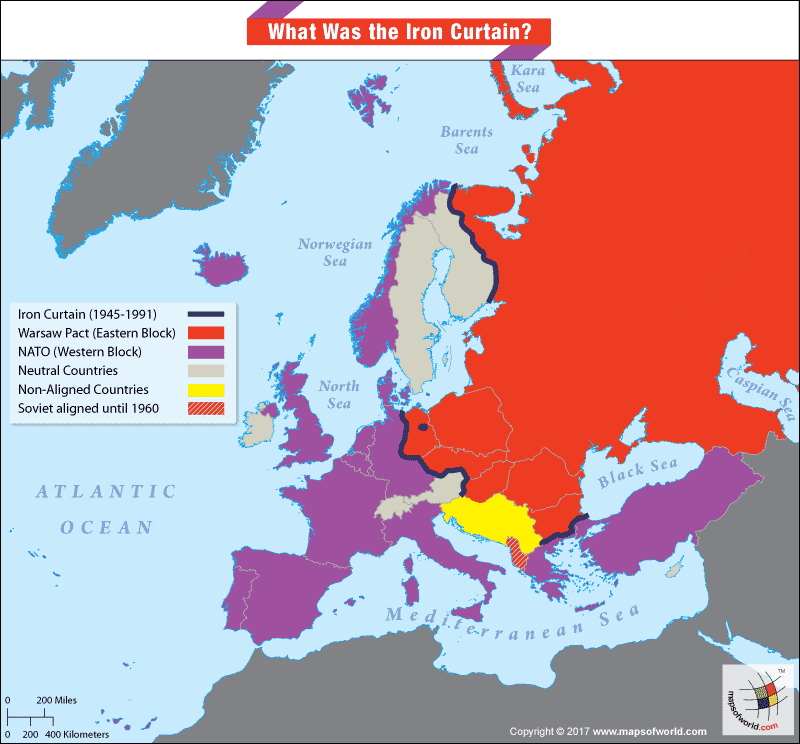
The iron curtain is rusting but its characteristic strength remains a barrier to international cooperation.

The rusting of the iron curtain comes from the tears of societies ruled by authoritarians. The authoritarians are leaders who believe their way of life is threatened. NATO is viewed as a trojan horse at the front gates of non-aligned countries.

One decries Putin’s slaughter of Ukrainians in an unjust war. Life of innocents have no value to today’s Russian leadership that believes their power and way of life is threatened.

The real-politic of authoritarian’s desire for stability and power outweigh the value of human life. The same is seen in the plight of Palestinians who are not part of the October 7th’ terrorists’ killings and kidnappings but are in the way of Israel’s retaliation against Hamas.

In my amateur opinion, China, Russia, North Korean, or other authoritarian governments have a right to rule their countries as they wish. Their citizens are the key to every leader’s longevity. NATO is an effort to offer freedom of choice to established independent countries but if the citizens of a country support their leaders, there is little NATO, or any alliance can do, except to support the sovereignty of all nations.

NATO is not an American Marshall Plan but a bulwark for nation-state self-determination.

Steil argues George Kennan is right in suggesting NATO expansion would be “the most fateful error of American policy in the entire post-Cold War era”. Kennan believed it would inflame nationalist beliefs and reinvigorate the Cold War. And so, it has–as evidenced by Russia’s invasion of Ukraine, China’s expressed intention and action toward Taiwan, and North Korea’s armaments support of Russia.

IMPERIAL ELITE

Kaplan’s last chapters make a powerful statement about what America should do to meet today’s and tomorrow’s challenges.

Books of Interest
 Website: chetyarbrough.blog

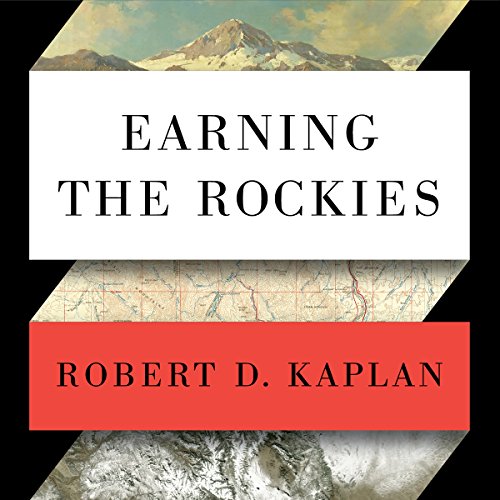
“Earning the Rockies” (How Geography Shapes America’s Role in the World)

By: Robert D. Kaplan

Narrated by: William Dufris

Robert Kaplan (American Author, freelance journalist and foreign correspondent.)

The first chapters of Robert Kaplan’s “Earning the Rockies” are a travel memoir about America’s growth from 13 colonies to 50 states, but the last two chapters are a considered view of America’s turbulent history and what its role should be in the world.

Kaplan explains he comes from a working-class family born in New York City.

Kaplan was raised on the East Coast. His father was a local truck driver. However, his son became a world traveler who served in the Israeli Army and worked as a freelance writer for major publications. His travels and professional reporting experience undoubtedly influence his opinions about America’s role in the world.

Kaplan’s book begins with memories of his beloved father who talked to him about many things, one of which is a belief that “Earning the Rockies” requires one to work to make a living before traveling across the country.

Kaplan writes an apocryphal story of traveling from the east to west coast of America. In reflecting on his journey, he recalls the history of America’s growth as a nation state. He writes of white settler’s displacement of Indian tribes, a journey to the northwest by leaders of the Mormon church, and America’s growth and assembly of 50 states.

In his travels, Kaplan recalls:

1) America’s territorial growth with the Louisiana purchase,

2) confrontation with Mexico to expand America’s southwestern border,

3) Civil War for union rather than separation, and

4) Mormon and other pioneer travels on the Oregon Trail to see and settle the Northwest.

America becomes an economic giant, protected from foreign interference by two oceans.

In the creation of this American geographic giant, many territorial, political, and economic conflicts were resolved. Kaplan’s suggests America’s economic growth is based on force and compromise, the keys to America’s future in the world.

Kaplan’s American heroes are George Washington, Abraham Lincoln, Theodore Roosevelt, and George H.W. Bush. He adds the extraordinary insight of Ambassador George Kennan in his analysis of Russia. Kaplan notes other great leaders, but these four Presidents and one diplomat are examples of how American leaders use force and compromise to enhance the power and prestige of democracy in the world.

Kaplan explains prudent use of force and compromise is how the west was won and how America became an economic hegemon, a power and influence in the world.

Union of America’s States was perpetuated with force, while compromise continues to ameliorate the wrongs done to Indians and Blacks in America. Those wrongs will never be removed but compromise inures to the benefit of future generations.

Kaplan argues there is an imperial elite in America, similar to what were the elite and influential intellectuals of ancient Greece.

Many of these elites graduated from Harvard or other ivy league schools. (There is an “echo chamber” risk when too many leaders are educated in the same ivy league school.) Along with this imperial elite, he suggests America’s sea power is as important today as it was for the Greeks in antiquity. Sea power widened the influence of Greece just as it widens the influence of America today.

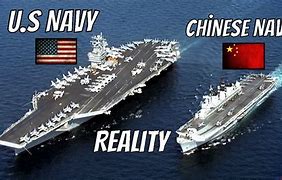
China is working toward a similar goal with its expansion of aircraft carrier and warship production.

Prudent use of power and compromise will expand the influence of every country that has hegemonic ambition. The operative word is “prudent”, i.e., navigating life with a thoughtful eye toward the future. Of course, there is a difference between China’s and America’s political prudence, but each is able to draw on resources that can change the course of history. The question becomes which has a system of government that can prudently use force and compromise to achieve peace and prosperity?

China’s and Russia’s education system leans toward communism which has not had the same level of success as capitalism.

America’s imperial elite is largely educated in American’ ivy league schools. Kaplan suggests, to the extent that these elitists grasp the importance of using force and compromise through democratic capitalism, the world has a chance for peace and prosperity.

Kaplan notes there is less geographic advantage for America today because of technological interconnectedness.

However, interconnectedness cuts both ways. Force and compromise have wider influence with technological interconnectedness. Whether today’s imperial elitists are prudent in their use of force and compromise is most important. Kaplan strongly suggests America should build the Navy to be a symbol of force and presence around the world. However, leadership of the many as opposed to the one as in in China, Russia, or any autocracy seems equally important.

Kaplan’s last chapters make a powerful statement about what America should do to meet today’s and tomorrow’s challenges.

BUSINESS MANAGEMENT

“Drucker” is an interesting book about an important 20th century professor and storied business consultant.

Books of Interest
 Website: chetyarbrough.blog

“Drucker” (The Man who Invented the Corporate Society)

By: John J. Tarrant

Published in 1980–No picture available of the author, John J. Tarrant.

Peter Drucker was a world-renowned business and government management consultant in the mid-twentieth century. John J. Tarrant’s personal memoir is about Peter Drucker’s business and government management beliefs. A lack of approval or acknowledgement of Tarrant’s book by Drucker reinforces one’s belief in Tarrant’s objectivity.

With my personal experience as a neophyte business manager in the 1970s, Peter Drucker was a business consultant we studied in management development classes.

There were several group meetings with other managers in the company for which I worked. In those meetings we discussed Drucker’s views on business management and practice. Drucker had a profound effect on me and how I managed my part of the business.

A fundamental point made by Drucker is that a business’ manager must focus on strengths, not weaknesses of people reporting to him or her.

The principle of that focus is that every manager is charged with setting goals while recognizing he/she needs to build around personal weaknesses with direct report’ employee’s strengths. The point is that a manager and/or employee in an organization is unlikely to know all there is to know to achieve a company’s goals. Drucker argues the purpose of business is to sustain itself by achieving determined objectives. It is not about profit but about sustaining a business’s future. That principle applies to government departments as long as they continue to serve the needs of the public. When businesses or government departments fail to preserve their future or purpose, they deserve dissolution.

What Tarrant notes in his memoir is that Drucker believes government departments do not have the same incentives as businesses and tend to become self-perpetuating when their original purpose is achieved. Businesses disappear or go bankrupt because they do not generate enough revenue to sustain their future. Drucker suggests government departments rarely disappear. They become self-perpetuating. They are protected by public taxes, not the principle of free market revenue. Tarrant infers Drucker believes government departments should be dissolved when their goals are achieved.

Tarrant categorizes Drucker as a conservative but not in a 21st century Republican sense but in a belief that government tends to waste public taxes because their goals tend to evolve from service to the public to employment-preservation. Government departments should not exist as an employment haven without public purpose.

Tarrant notes Drucker voted as a Democrat. As an Austrian born American, Tarrant notes, he only voted for a Republican President twice in his lifetime. Drucker is alleged to regret having voted Republican the two times he did. One was for Nixon and the second I can’t remember. This is not to suggest Drucker was partisan because his focus was on management, not politics. “Drucker” is an interesting book about an important 20th century professor and storied business consultant.

UNIONIZATION

Nolan clearly illustrates how important political power is in balancing corporate owner/managers’ disproportionate incomes and privileges with labor.

Books of Interest
 Website: chetyarbrough.blog

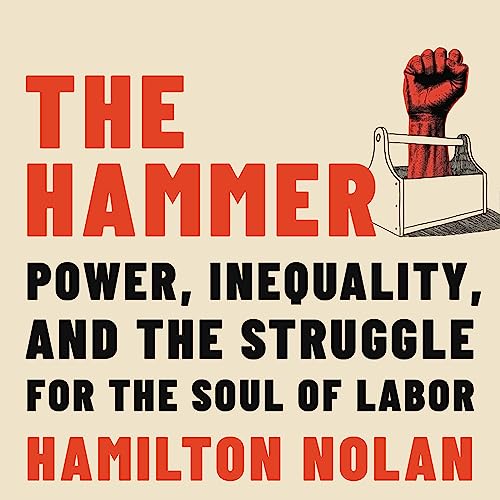
“The Hammer” (Power, Inequality, and the Struggle for the Soul of Labor)

By: Hamilton Nolan

Narrated by: Franklin Pierson

Hamilton Nolan (Author and free-lance Journalist)

“The Hammer” is a paean to unionization. Unions lost much of their political power in the early 1970s. Political power of labor was diminished by State governments, poor labor union management, and a diminishing number of labor union members. Nolan’s argument is workers have to reestablish political power to change their unfair and inequitable relationship with business.

The widening gap between rich and poor is traced to the era of President Reagan when the first deep cuts in corporate taxes occur.

Reagan fought unionization by firing air traffic controllers that sought better wages. Reagan’s supporters believed government social programs were out of control and their cost diminished the power of free enterprise. Much of the American public either agreed or were apathetic. However, as the gap between rich and poor accelerated, Americans began to complain about inequality. With extraordinary income increases for business owners and CEOs, and repressed wages for workers, the need for unionized political power became self-evident. Nolan introduces his book about unionization with a brief biography of Sara Nelson.

Sara Nelson (AFA president of the Association of Flight Attendants.)

Nolan writes about Sara Nelson who became a union member when she worked for United Airlines as a stewardess. Nelson was born and lived in Corvallis, Oregon. She applies for a job with United Airlines in St. Louis. She gets the job but her first paycheck is late. She couldn’t pay her rent. A check is given to her by a union employee to tide her over until her first check is delivered. From that day forward, according to Nolan, Nelson became a supporter of unions. Eventually Nelson becomes the president of the Association of Flight Attendants (AFA).

Liz Shuler (President of the AFL-CIO since 8/5/21.)

Ironically, the first woman President of the AFL-CIO is also from Oregon. Liz Shuler received a bachelor’s degree in journalism from U of O in Eugene, Oregon. She became a union activist after college and worked to organize clerical workers at Portland General Electric. She is elected as the President of the AFL-CIO in 2021 after serving as the first woman Secretary-Treasurer of the organization.

Nolan’s book addresses State conflicts with unionizers and family-income for low-income workers. The first states he addresses are South Carolina and California. Nolan notes South Carolina has become a haven for businesses wishing to avoid unions. South Carolina’ State laws discourage unionization which appeals to businesses wishing to relocate. Nolan notes South Carolina attracts businesses looking to improve profits by reducing labor costs. The consequence of business’s lower labor cost is to reduce South Carolina workers’ standard of living. South Carolina’s workers are among the lowest (19th out of 50 States) paid workers in the U.S. Nolan implies South Carolina’s income inequality is a consequence of the State’s policy of discouraging unionization.

California has the fourth largest income inequality in the U.S.

Nolan notes the cascading negative of unfair compensation for domestic labor. Though California now allows childcare servers to be unionized, their unionization efforts are discouraged by government regulation, as well as the fragmentation of its poorly compensated workers. The consequence of State government regulation keeps wages low and discourages entrepreneurs from starting childcare’ businesses. A compounding negative is created when users of childcare’ service, women in particular, are unable to work in regular work-day jobs. Workers are compelled to stay home to take care of their children, reducing family income and further impoverishing low-income childcare’ workers. It becomes a vicious cycle, hurting entrepreneurs trying to start a childcare service, employees wishing to increase family income, and employers needing more workers.

Nolan expands his argument by noting how service industries in Las Vegas, the State of Florida, New Orleans, and Mississippi are benefited by unionization.

Vacation and gambling meccas like Las Vegas, Florida, New Orleans and Mississippi need service industry employees. These vacation and gambling meccas depend on service quality for visiting tourists. Lack of representation for service employees diminishes employee’ standards of living which indirectly damages the reputation of the entertainment and vacation industry.

In Las Vegas, where Nolan lived for twenty years, the service industry is protected by the Culinary Union.

Nolan notes how strong the Culinary Union has become in Las Vegas and disparages casino owners like the Fertitta’s who have fought unionization. Numerous examples are given to show how union actions have improved the lives of Casino workers, many of which are immigrants from other countries.

Nolan’s argument for the value of unionization is compelling but his encomium for the union movement ignores America’s immigration crises.

The vast need for immigration reform is not being forcefully addressed by unions. Compensation inequity is a noble fight carried out by unionization, but it needs to broaden its role in immigration. Unions need to use their power and influence to change immigration policies to equitably treat a labor force that is sorely needed in America. Unions need to help educate and house legal immigrants, so they do not become a part of America’s growing homelessness. Additionally, unions could use their recruiting expertise to get Americans off the street by providing job training services and gainful employment.

Public perception of unions could be monumentally improved with a program to recruit and indoctrinate the homeless with training for jobs in the 21st century.

There is so much that unions could do to far exceed the minimalist goal noted in Liz Shuler’s plan to add a million union members over the next 10 years. Nolan pitches for Sara Nelson as a more dynamic leader for the union movement. Maybe Nelson would be better than Shuler, but growth, value, and public perception of union members could be monumentally improved with a program to recruit and indoctrinate the homeless with training and jobs for the 21st century.

Whomever the leaders of unionization may be in the future, Nolan clearly illustrates how important political power is in balancing corporate owner/managers’ disproportionate incomes and privileges with labor.

OCCUPATION

“Apeirogon” is a little too repetitive for this reviewer, but it is cleverly written and shows why political and military occupation is a fool’s leadership style.

Books of Interest
 Website: chetyarbrough.blog

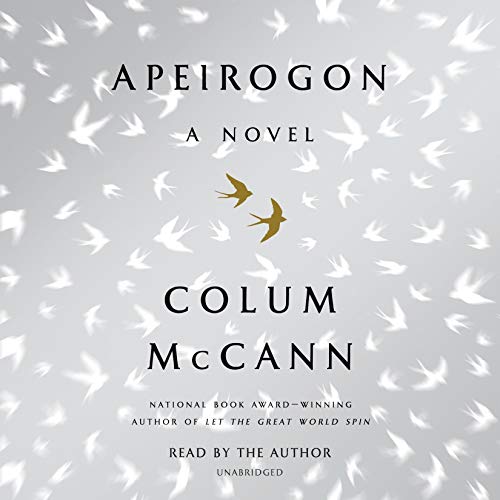
“Apeirogon” (A Novel)

By: Colum McCann

Narrated by: Colum McCann

Colum McCann (Author, Irish writer living in New York.)

At first the idea of an Irish author writing a book about Israel seems incongruous. After the first few paragraphs, one realizes Colum McCann grasps a truth about religious conflict that is far better than most because of Ireland’s “Troubles” between the 1960s and 1990s.

“Apeirogon” is timely novel in regard to Israel’s response to the October 7 Hamas attack in Gaza. A little history helps one understand the complexity and terrible consequence of the slaughter of innocents.

An estimated 30,228 people have been killed in Gaza, 12,000 of which are thought to be Hamas combatants.

Gaza dates back to Egyptian times, populated by Canaanites who share an ancestral connection to Israelites. Gaza later became part of the Assyrian Empire in 730 BC. Assyrians intermixed with Canaanites, Israelites, Philistines and undoubtedly Palestinians. History shows historical connection between ancient Assyrians and Palestinians just as there were with Israelites. However, Israelites were forcibly relocated to Assyria from the Kingdom of Israel. Because the Israelites were descendants of the Canaanites, they predated Palestinian settlement in Gaza. Ethnic precedent and the want of land area is a part of what complicates the idea of a separate Palestinian state. Where is a homeland for a Palestinian state going to come from?

McCann chose a perfect title for his novel. An apeirogon is a geometric shape that has an infinite number of sides; just like the many sides of Israeli/Palestinian arguments for a homeland. Column McCann cleverly explores these arguments in his novel. He creates a series of Israeli/Palestinian incidents that show how each ethnic culture believes and acts in their perceived self-interests. Every chapter is titled as a series of numbers that begin with the number 1, jumps from 500 to the number 1001; then jumps back to 500 and descends to number 1 to end his story. Revelation comes in 1001. Occupation is an evil that cannot stand.

America’s civil war carries some parallels to what is happening in Israel and Gaza.

What is revelatory about McCann’s novel is its similarities to America’s civil war that ended the lives of too many Americans. Today’s conflict in Gaza is instigated by Hamas just as the Civil War was instigated by southern slave holders. America eventually forgave southern slave holders, but Black Americans continue to suffer from institutional racism. Can a one state solution as demanded by Israel’s conservatives serve Palestinians any better than white America has served Black Americans? America’s civil war ended in 1865-1866, some 158 years later, Black Americans are still discriminated against. Can Palestinians wait more than 158 years to have equal rights in an Israeli nation?

McCann’s novel repeats, too many times, the unfairness of Israel’s occupation of Gaza. Hamas has its rebellious leaders like America had John Brown who killed one Marine, wounded another, and killed six civilians. Neither Brown nor the Hamas leaders can justify their murders though both argue with righteous conviction. The United States could have split between abolitionist and non-abolitionist states, or they could move toward reconciliation. Obviously, the U.S. government prevailed with reconciliation. It seems imperative for Israeli and Palestinian leaders to take the same road as Abraham Lincoln. Hamas is a splinter group like that led by America’s John Brown. Their objective is as horribly misguided as Brown’s. Hamas’s hostage taking and murder of Jewish settlers is as reprehensible as Brown’s murders of a Marine and six civilians.

ISRAEL’S OCCUPATION OF PALESTINE

As difficult as it may be, a two-state solution seems unlikely. What American history suggests is as difficult as America has found reconciliation to be for white America’s murder and unjust treatment of Black Americans. That reconciliation remains a work in progress. However, only union offers a way toward peace. America is not there yet but it is making progress.

Two political factions, bound by both religion and ethnicity, must learn to live with each other for peace to be achieved.

There is no other land for Palestinians. Israel may have the older of the two cultures, and both Israelites and Palestinians have a much longer history of religious and ethnic difference than America. America is founded on religious freedom and equality, though not perfect in either principle. In contrast, religion is a primary determinant in Palestinian and Israeli cultures while equality seems a less prominent concern. Peace will not come without hardship, but a beginning is dependent on Israel’s abandonment of occupation. It will be one country’s leaders’ imperative to provide equal opportunity for all its citizens. The struggle will be long as is shown by America’s history but what realistic alternative is there for the Israeli and Palestinian people? What neighboring country is likely to give up their land to create a two state solution?
“Apeirogon” is a little too repetitive for this reviewer, but it is cleverly written and shows why political and military occupation is a fool’s leadership style. Israel, like white America, needs to do better in reconciling ethnic differences.