ECONOMIC CRISES

Sorkin’s “1929” makes one think about 20th and 21st century American Presidents who may have set a table for a second economic crisis. As the Turkish proverb says “…fish stinks first at the head.”

Books of Interest
 Website: chetyarbrough.blog

1929 (Inside the Greatest Crash in Wall Street History–and How It Shattered a Nation)

AuthorAndrew Ross Sorkin

Narration by: Andrew Ross Sorkin

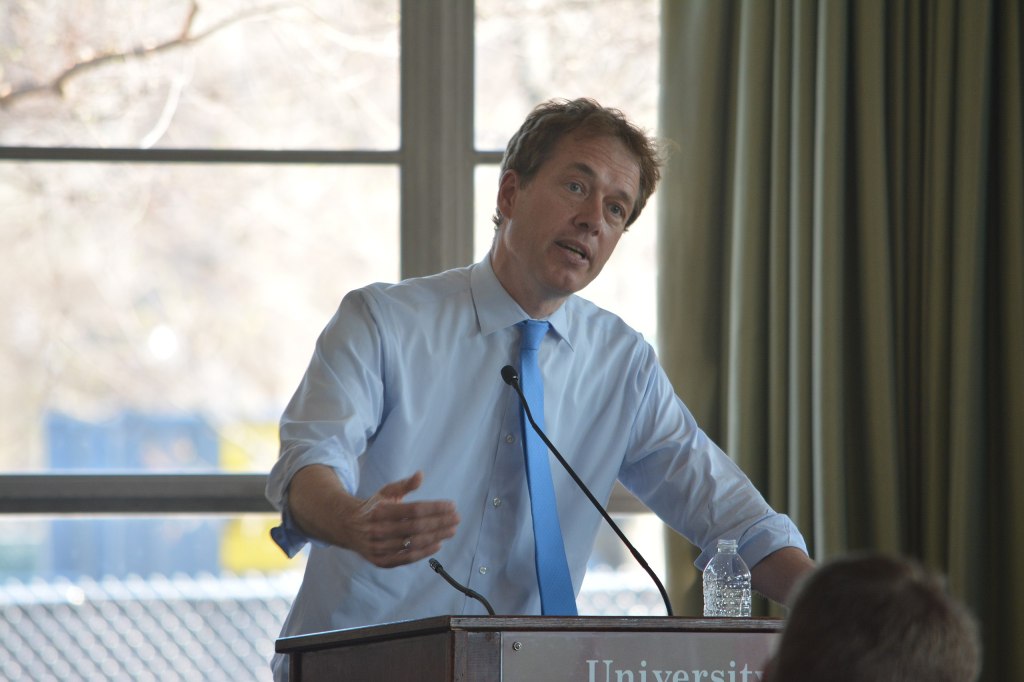
Andrew Sorkin (American author, journalist, and columnist for The New York Times.)

“1929” is a history of the build-up to the stock market crash and the advent of the depression with opinions about how today’s economy compares and what should be done to keep it from happening again. Though Sorkin is not an economist, he has written an interesting history of the build-up to the 1929 depression.

Faltering economies.

There is a sense of danger being felt by some today when reading/listening to Sorkin’s history of the 1920s. Few seem to have a clear understanding of world market forces and whether we are heading for an economic catastrophe or a mere hiccup in the growth of the economy. Neither bankers, regulators, nor politicians in the 1920s (or for that matter now) seem to have a clue about the economy’s trouble and what can be done to ameliorate risks. Like 1929, today’s insiders, power brokers, and rich have more options to protect themselves than most of the world’s population.

Increasing homelessness in America.

In America, it seems those in power have no concern about the rising gap between rich and poor or the immense increase in homelessness. Without a plan by those in power, there seems little concern about reducing inequality, the common denominator for the wealth gap and homelessness. Sorkin’s book outlines the reality of 1929 that gives reader/listeners a feel of history that may repeat itself.

Sorkin’s history seems credible as he notes human nature does not change.

Today’s leaders are like yesterday’s leaders. Not because they are venal but, like most if not all human beings, leaders in power are concerned about themselves and what there is in life that serves their personal needs and wants. Of course, the difference is that leaders that are power brokers affect others that do not have the same influence or options to protect themselves. We all have blinders that keep us from seeing the world as it is because human nature is to ask what is in it for me, i.e., whatever “it” is. The 1920s had a merger bubble in manufacturing and communication that is fed by the industrial revolution. Today, we have a merger bubble with mega-corporations like Tesla, Apple, Amazon and others that are mega-corporations capitalizing on a new revolution coming with A.I., the equivalent of the Industrial Revolution. Some critics argue mega-corporations, like what happened with the oil industry could be broken up to increase competition which is the hallmark of improved production, cost reduction, and lower consumer prices.

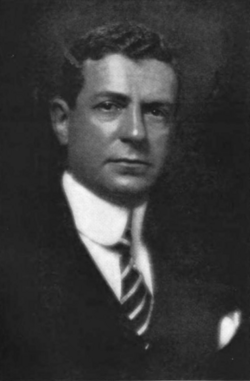
Charles E. Mitchell (American banker, led the First Nation City Bank which became Citibank.)

What makes this history interesting is Sorkin’s identification of the most responsible power brokers who bore responsibility for the stock market crash. Charles Mitchell of Nation City Bank is identified as the central driver of the stock market bubble. Mitchell denied the reality of the financial systems fragility. His ambition and unfounded optimism magnified the systemic risk of the financial crises. He openly defied the Federal Reserve’s warning to curb margin lending that risked other people’s money and their financial stability. He continued to promote purchase of stocks on credit that were fueling the stock market bubble. Mitchell appears to have misled the public in order to increase his power and protect his personal wealth by creating the illusion of market stability and his bank’s profitability. Though Mitchell is not the sole villain, he became the most powerful banker in the nation while breaking the financial backs of many Americans. In general, it is the self-interest of those who listened to him that have responsibility for their financial collapse, but it is always hard to know who is lying to you. Part of the blame is the hesitation of the Federal Reserve Board to act because the people in charge could not agree but that was more a matter of omission than commission which Mitchell was charged with but not convicted. Of course, the political leaders of that time also failed but hindsight is a lot easier than foresight.

Artificial Intelligence is today’s equivalent of the Industrial Revolution of the twentieth century.

Similar to the corporate mergers and investment from growing industrialization of the 1920s, today’s mania is mega corporation’ investment in Artificial Intelligence. Sorkin notes the ease of trading stocks, expectations of crypto investments, and A.I. hype may well move the market beyond its value. He argues for stronger guardrails on speculative investments, more limits on margin lending, and transparency on high-risk investments. He cautions easier credit as seen this Christmas season with buying based on delayed payment incentives and increasing credit card availability, card balance increases, and more liberal repayment terms. In general, Sorkin wants to see more, and better government oversight and regulation of credit offers. He believes too many lenders are overly optimistic about the future with the gap between rich and poor widening and trending to get worse. That inequality threatens the success of capitalism as a driver for shared prosperity, and economic growth.

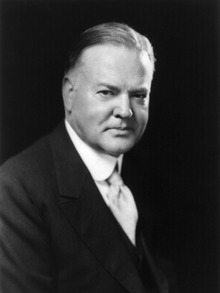
Herbert Hoover (President 1929-1933, though characterized as the primary villain for the depression, Sorkin identifies his role as one of omission rather than commission.)

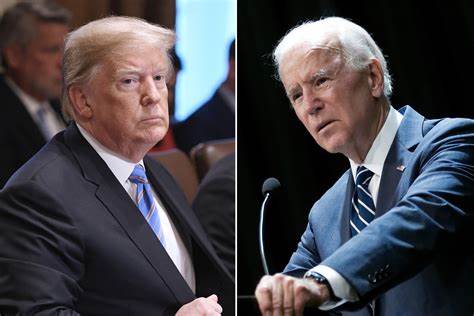
The Presidents shown below carry some responsibility for where the American economy is today but that would be another book.

Clinton, the first Bush, the second Bush, Obama, Biden, Trump.

Sorkin’s “1929” makes one think about 20th and 21st century American Presidents who may have set a table for a second economic crisis. As the Turkish proverb says “…fish stinks first at the head.”

CAPITALISM’S REFORM

Like abolition, women’s suffrage, labor, civil rights, LGBTQ, and MeToo movements of the distant and near past, capitalism’s reform is due.

Books of Interest
 Website: chetyarbrough.blog

SAVING CAPITALISM (For the Many, Not the Few)

Author: Robert B. Reich

Narration by: Robert B. Reich

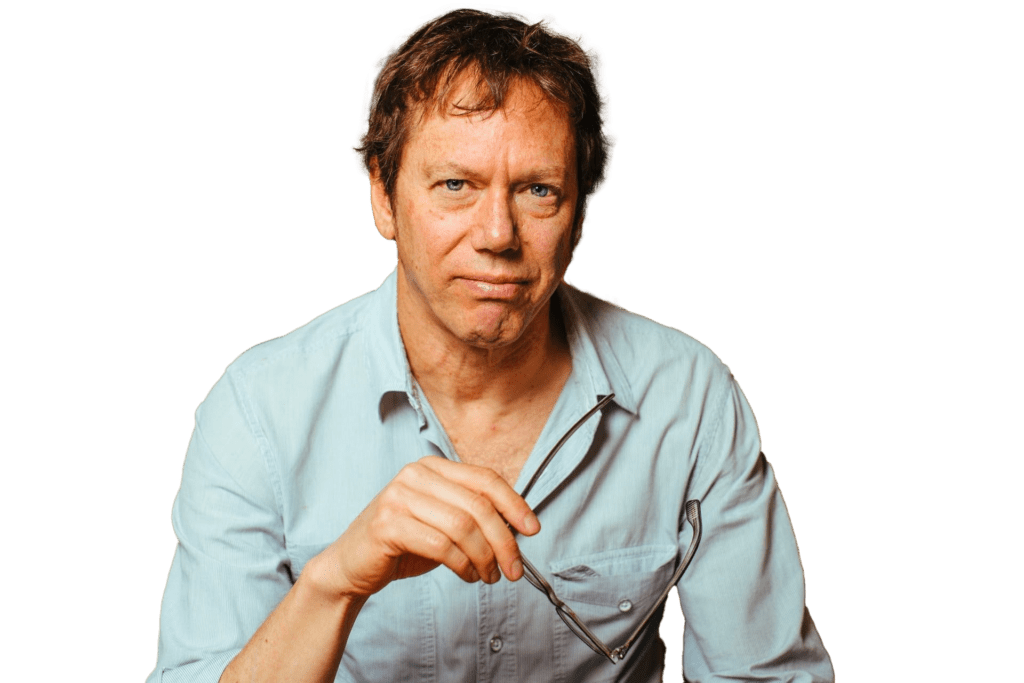
Robert Reich (Author, American professor, lawyer and political commentator that worked in the Geral Ford and Jimmy Carter administrations, and served as th secretary of labor in Bill Clinton’s administration.)

Robert Reich, as an advisor to Presidents of the United States is recognized by Time Magazine as one of the Ten Best Cabinet Members of the 21st Century and by the Wall Street Journal as one of the most influential business thinkers in 2008. In “Saving Capitalism” Reich criticizes corporate America for unethical and unfair capitalist practices that make a mockery of capitalist equality.

U.S. Rising Income Disparity.

Economic class warfare in America is a time worn argument by many economists in the 20th and 21st century. Reich’s topical analysis has some truth, but his analysis of wealth and markets oversimplifies the complexity of American capitalism. One cannot deny the harm that capitalist greed has done to increase wealth of the rich and decrease wealth of the poor in America. The political system is rigged by the influence of wealth over political policy and economic equality.

American capitalism’s rigging begins at birth, carries through public education, and ends in low-income opportunities for the poor.

The power of wealth feeds American capitalist Democracy’s circle of life. Money of the wealthy is spent to birth and educate their children with the best medical care and schools in America. The corporations and super rich of America hire and fund lobbyists who promote corporate agendas to support government representatives’ campaigns for office. The aspiring representatives are people who owe their allegiance to corporations and the rich who helped get them elected. That circle is biased toward making the rich richer.

Equality of opportunity is rigged in ever-larger corporations that reap super profits and pay CEO’s millions of dollars per year while low wage earners are left to fend for themselves. Mega corporations should be broken up like the oil industry dismantling in 1911. Like Standard Oil, today’s conglomerates have too much power over consumer purchasing, advertising, social media, medical industries, and (most importantly) the election process of America. The rigging begins with healthy birthing of children of the rich, extending to less qualified schooling for the poor, and ending with low-wage family’s children having unequal economic opportunity.

One cannot deny that Reich’s book and this biased review are an ideological belief that distorts and oversimplifies reality, but it carries an element of truth that cannot be denied. How can one person be worth a potential trillion-dollar net worth for service as CEO of one company that makes electric cars. Corporations like Amazon, Google, Facebook, UnitedHealth Group, and Cencora control markets through their size to capture disproportionate shares of advertising, social media, retail sales, and medication industries without competition to moderate their power, and influence. Add billionaires like Elon Musk, Larry Ellison, Mark Zukerberg, Larry Page, Steve Ballmer, Warren Buffett, and Michael Dell and others of great wealth–one is inclined to believe American capitalism is rigged.

As brilliant as Musk shows himself to be, his fragile ego diminishes his genius.

There is an unfairness in criticizing the wealthy for their success in America. They are not wealthy because of luck but because of their innate abilities, risk taking, and hard work but influence should not come from the power of their wealth to change government policies that focus on enriching themselves. Just as the robber barons had their influence curbed by antitrust legislation, the same should be done today. The influence of lobbyists and their support should be more publicly disclosed. The federal government should play more of a financial role in improving public education. Cries of inequality should be exposed, critiqued, and adjudicated fairly.

Capitalism remains the best economic system in the world, but it has its weaknesses. The best prescription for that weakness is equality of opportunity in the arena of employment competition. It begins with fair and equal access to medical care and access to a good education.

Like abolition, women’s suffrage, labor, civil rights, LGBTQ, and MeToo movements of the distant and near past, capitalism’s reform is due.

MEDIA PLATFORMS

Cory Doctorow shows how the American public is being taken advantage of by today’s major private media owners and manipulators.

Books of Interest
 Website: chetyarbrough.blog

Enshittification

AuthorCory Doctorow

Narrated By: Martin Sheen

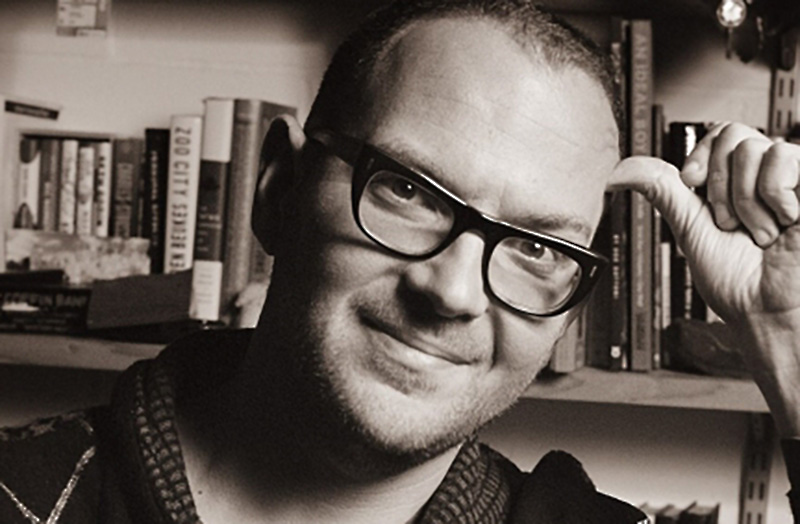
Cory Doctorow (Author, Canadian-British blogger, journalist)

Despite the poor choice of titles for Cory Doctorow’s book, his theme of internet corruption is inevitable because of the nature of human beings. The corruption of which Doctorow writes is evident in most mega-corporations and governments. The only difference is in their motivation, i.e. whether it is money, power, or both in world organizations.

Elon Musk (Businessman, billionaire, entrepreneur, leader of Tesla, SpaceX, Twitter, and xAI.)

The first part of Doctorow’s book is an evisceration of the famous Elon Musk. Not surprisingly, Doctorow is not a fan of Elon Musk. Musk is an example of the theme of Doctorow’s book. Musk’s acquisition and decimation of a widely used communication platform known as Twitter exemplifies “Enshittification”. Doctorow infers Musk’s desire to have a free speech forum is actually a betrayal of the principle of free speech. The reality is that Musk has only created a Megaphone for his personal biased beliefs. Musk’s first action in the Twitter acquisition is to fire essential employees to reduce costs of operation. One presumes from Doctorow’s theme that Musk’s first step results in “Enshittification” of Twitter. Twitter’s new name is “X”. “X”s value has plummeted just as the American government’s service to the poor has fallen. With Musk’s singular focus on reducing cost, without consideration of effectiveness, enshittification is virtually guaranteed by Musk’s actions.

(Though not mentioned by Doctorow, it seems to this critic, that Musk’s firing of government employees under Trump, is similar to the dismantling of Twitter. The firing of government employees results in citizen-service’ losses equivalent to Twitter’s loss of advertisers.)

Traditional media is a one-way broadcast of information whereas the Internet is two-way interactive communication. Anyone can publish on the internet while singular corporations or institutions that own traditional media have only a one-way form of communication. The internet is global, instant, and decentralized while traditional media is scheduled for delivery and centralized. Access with on-demand, 24/7 internet are not time-bound like traditional media. The cost of using the internet is low and often free while traditional media entails infrastructure costs.

Trouble arises with the internet because of its ubiquitous availability while traditional media is singularly targeted.

The internet is immediate while publications are period based. It is possible to precisely and instantaneously measure internet responses based on clicks, views, and engagement while traditional media relies on third party analysis by publishers or by hired companies like Nielsen. Doctorow shows how differences between internet and traditional media exacerbate loss of privacy and increase potential for massive societal disruption. The internet can immediately influence and potentially control social beliefs. In less capitalist and more authoritarian governments the danger of the internet is direct influence and control of its citizens.

In American capitalism, the danger lies more in the drive for profitability than the control of social and political belief.

Doctorow argues America’s social norms are being corrupted by disparate industries that are creating tech platforms to monopolize product consumption only for economic gain, not service to its users. The consequence erodes trust of the public, distorts accountability, and thwarts free choice. The ruling classes of American society can evade traditional checks and balances. The utility of the internet can be used to distort the truth. Corporate objective is to make more money, not to benefit public discourse, improve product, reduce product cost, or improve service, but to monopolize consumption.

On the one hand, Doctorow acknowledges social media platforms optimize engagement. However, these platforms become forums for outrage, and misinformation that tribalizes society.

Rather than improving connections between people, algorithms are created by users of a media platform to exacerbate outrage, foster conspiracy theories, stir up and ultimately exhaust the public. The objective is increase clicks to make buyers of advertising to purchase time on their platform. As a free society, Doctorow suggests Democracy can mitigate the “Enshittification” by regulating the internet. He argues that one’s use of a platform should not monopolize personal information by restricting one’s right to take their information with them if they become unhappy. Platforms should not be prisons that restrict users legal right to their personal information if they choose to change platform providers. He argues for a breakup of major providers like Amazon, Facebook, Google, X, and Adobe.

Doctorow argues for more transparency in the algorithms being used by media platforms.

The public should be informed about how a platform’s algorithms are being used to steer the public. Individuals should be given the opportunity to opt out of algorithmic categories if they wish. Regulatory agencies should be created with the right to enforce consumer protections. He notes the EU’s move to require platform accountability. In general, Doctorow argues that the internet should return to its roots as a space for mutual aid, free expression, and innovation.

Internet Moguls: CEO Google Pichai, CEO Meta Zuckerberg, CEO Apple Cook, Executive Chairman of Amazon Bezos

Doctorow is not the first to propose reform of the internet.

Some time back, Tim Wu, a Columbia law professor, notes that Amazon, Apple, Facebook, and Google had shifted from serving users to extracting value from them. He argued for antitrust enforcement, regulation, and restrictions on content and infrastructure. American Democracy is a safer environment for public media than what is being experienced in countries like China and Russia where all media is tightly controlled by the government. However, Doctorow shows how the American public is being taken advantage of by today’s major private media owners and manipulators.

Doctorow argues for the breakup of internet companies that have become too big. He believes returning the internet to the service of society requires a more level playing field to equitably serve the public.

HOUSING

Didion reminds one of Yeats Poem to warn society of civilization’s collapse. Yeats wrote “The Second Coming” after WWI and the Spanish Flu. Seems similar to today’s political war and the Covid pandemic.

Books of Interest
 Website: chetyarbrough.blog

Slouching Toward Bethlehem 

AuthorJoan Didion

Narrated By: Diane Keaton

Joan Didion (Author, American writer and journalist, published in The Saturday Evening Post, National Review, Life, Esquire, and The New Yorker. She also wrote screenplays for “The Panic in Needle Park”, “A Star is Born”, and “Upclose and Personal” as well as receiving a National Book Critics Circle Award and a Pulitzer. 1934-2021.)

Diane Keaton (Actor, Academy Award winner, BAFTA recipient, two-time Golden Globe, and Tony Award winner. 1946-2025.)

Diane Keaton died yesterday.

Several years ago, I purchased “Slouching Toward Bethlehem” without reading it until Keaton had done an audiobook’ narration of it. “Slouching Toward Bethlehem” illustrates Didion’s skill as an essayist and writer while Keaton’s many acclaimed movies show how accomplished both women have been in their lives.

“Slouching Toward Bethlehem” is interesting because it offers an interpretation of why homelessness is so much more obvious in America than other countries.

Having lived in different areas of the United States, the appearance of homelessness in the big cities of America is disgraceful. Visiting the Baltics, Norway, Finland, China, and Japan in the last few years illustrates how badly America is handling homelessness. With the exception of Norway, per capita incomes in the United States are more than twice the incomes of the aforementioned countries. Norway’s per capita income is $87,925 while America’s is $82,769. China’s per capita income is $13,122 but walking through major Chinese cities, there are no people sleeping on the streets. The Baltics per capita incomes range from $22,000 to a little more than $30,000. There is poverty in all these countries, but their leaders and societies have found a way to keep their citizens housed. This is not to argue their poor are not faced with hardship but to show how poorly American society is treating its homeless.

There seems a generational divide in Didion’s “Slouching Toward Bethlehem”.

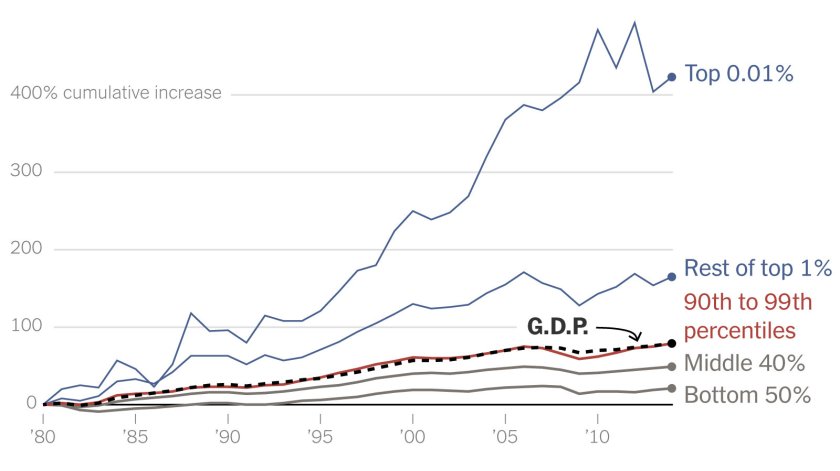
The beat generation of the 1960s for which Timothy Leary coined the phrase “Turn on, tune in, drop out” alluded to in Didion’s essays may offer a partial explanation. Many of us experimented with drugs in the 60s but there has to be more than that to explain what has happened to big cities in America. Part of the answer is the change in income for the middle-class. In the 1960s middle-class incomes were strong and broadly shared. In the 21st century, middle class incomes have stagnated. CEO’s income in the ’60s made 20 times middle class earners but in the 21st century the ratio rose to 300-1. The rich got richer and the middleclass got poorer. Power shifted from a voting middle class to a richer upper-class that accelerated income gaps that changed election results with an income class bias.

Housing costs accelerated to new highs in the 21st century. The 1960s price-to-income ratios were 2:1 while today they are 5:1 or higher. The effort during the Obama administration to weaken standards for home buyer qualification exacerbated the greed of mortgage companies which led to a near economic collapse of the finance industry. Instead of bailing out homebuyers that could not pay their mortgages, the Obama administration bailed out mortgage companies and their owners while endorsing eviction of buyers who could not afford their mortgage payments.

“Slouching Toward Bethlehem” writes of famous successful people like John Wayne, Howard Hughes, Joan Baez, and herself as symbols of the 1960s. She is effectively glorifying them and herself while showing how they mythologized success to a generation of young people who were turning on, tuning in, and dropping out. Image became more important than substance. Working to be great at acting, becoming wealthy by investing wisely, singing about peace, justice and non-violence to make money, and writing about societal dysfunction were money makers. Capitalizing on dysfunction of society did nothing to ameliorate it. John Wayne is only a symbol of justice in the movies and Howard Hughes inherited his wealth that allowed him to invest, sometimes unwisely and with poor personal management skills. He began investing in Las Vegas because management could be left to others. To be fair, Didion and Baez try to return something to society for their success but their efforts pale in comparison to America’s decline. Artists report facts of life but rarely offer solutions.

William Butler Yeats (1865-1939, Irish poet, dramatist, writer and literary critic.

W. B. Yeats Poem summarizes and exemplifies what Didion alludes to in her book.

Turning and turning in the widening gyre  
The falcon cannot hear the falconer;  
Things fall apart; the centre cannot hold;  
Mere anarchy is loosed upon the world,  
The blood-dimmed tide is loosed, and everywhere  
The ceremony of innocence is drowned;  
The best lack all conviction, while the worst  
Are full of passionate intensity.  

Surely some revelation is at hand;  
Surely the Second Coming is at hand.  
The Second Coming! Hardly are those words out  
When a vast image out of Spiritus Mundi  
Troubles my sight: somewhere in sands of the desert  
A shape with lion body and the head of a man,  
A gaze blank and pitiless as the sun,  
Is moving its slow thighs, while all about it  
Reel shadows of the indignant desert birds.  

The darkness drops again; but now I know  
That twenty centuries of stony sleep  
Were vexed to nightmare by a rocking cradle,  
And what rough beast, its hour come round at last,  
Slouches towards Bethlehem to be born?

Didion reminds one of Yeats Poem to warn society of civilization’s collapse. Yeats wrote “The Second Coming” after WWI and the Spanish Flu. Seems similar to today’s political war and the Covid pandemic.

THE WEST

Though Mahbubani’s book is quite provocative, it is short and interesting. “How the West Lost It” is certainly worth reading/listening to, but few Presidents of the United States have reversed the admittedly slow improvement of “equality of opportunity” in America.

Books of Interest
 Website: chetyarbrough.blog

How the West Lost It (A Provocation)

AuthorKishore Mahbubani

Narrated By: Jonathan Keeble

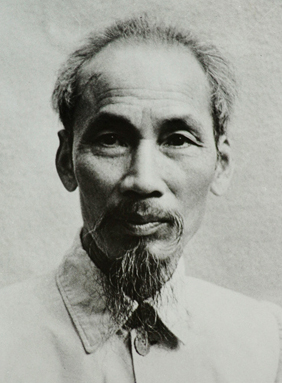
Kishore Mahbubani (Author, Singaporean diplomat and geopolitical consultant, former Fellow at Harvard University’s Center for International Relations, formally served as the United Nations Security Council President.)

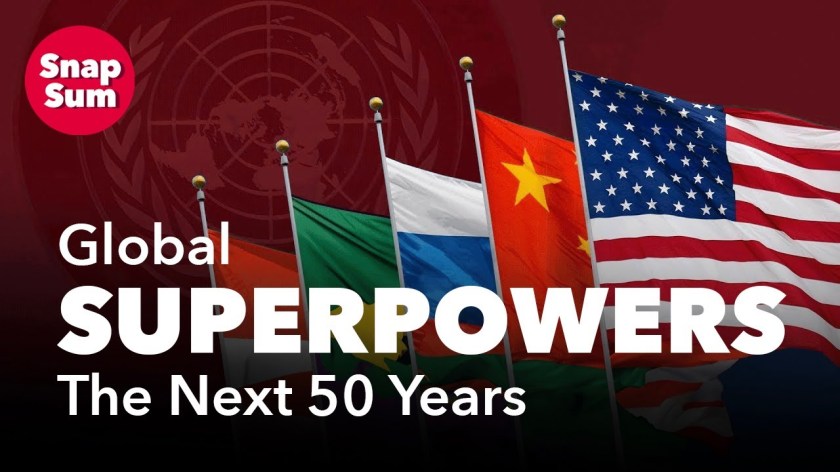
Mr. Mahbubani’s short book suggests the highly provocative belief that the West’s dominance of the world is giving way to Asia, particularly China and India. To mitigate the West’s decline, Mahbubani argues–the West needs to develop a more “coherent and competitive global strategy”. Paul Kennedy of Yale University praises Mahbubani’s assessment. The public commentator Fareed Zakaria endorses Mahbubani’s belief, and Hilton Root of “The Independent Review” acknowledges Mahbubani’s inference that “the West’s overperformance was a historical aberration and the East’s rise reflects a rebalancing of history”. Despite Root’s measured support of Mahbubani’s book, his analysis is nuanced. Root argues the decline of the West is oversimplified and that Mahbubani underestimates the resilience of Western economies.

Mahbubani argues Great Britain’s Brexit and Trump’s re-election are reactions to the West’s economic decline.

Edwad Luce argues Western liberalism needs to be reinvented by investment in a technological revolution for all Americans, not just those who have benefited from the industrial revolution. However, China seems to have read the future better than the West by building up their reserves of rare metals needed for advanced computer chips. In contrast, President Trump chooses to antagonize allies as well as competitors with a foolish trade war.

Root believes the innovative capacity and adaptability of the West will make adjustments to remain competitive, if not the dominant economic power of the world. Trump’s trade war suggests otherwise. Trump’s attitude is to ignore the years of built-up trust with Western allies and attack the world with destructive economic tariffs meant to right wrongs that are figments of real-politic’ imagination. However, some believe Mahbubani discounts political freedom and the drive of both the West and East to improve citizens’ living standards. That seems somewhat plausible, but Trump is attacking Americas most highly regarded universities with specious concerns with what he considers overactive recruitment of immigrants and minorities. The truth is American education for immigrants aids the strength and influence of Democracy in the world.

Yale University (American education for immigrants aids the strength and influence of Democracy in the world.)

The long cultural, educational, and technological influence of the West may be diminished by some of today’s political leaders but the trend over the last 200 years is unlikely to be reversed by Trump’s misguided authoritarianism. Trump’s significant risks are partially mitigated by publicly ingrained western democratic values. Though democracy is messy, it has demonstrated long-term stability and innovation that equals or exceeds the worst of what Trump’s authoritarianism is doing to the American economy and its institutions. Three more years of Trump’s presidency will not erase America’s legacy or destroy its future.

Though Mahbubani’s book is quite provocative, it is short, impactful, and interesting. “How the West Lost It” is certainly worth reading/listening to, but few Presidents of the United States have reversed the admittedly slow improvement of “equality of opportunity” in America. Mahbubani argues for a more diplomatic American policy with rising nations in the East because he believes China will ultimately replace America as the leading economy in the world.

The interpretation of the Constitution has changed over the last 200 years, but it stands for continuity for America’s present and future.

The direction of American society remains true to the fundamental beliefs of liberty, equality, sovereignty, rule of law, separation of powers, federalism, checks and balances, and individual rights. Trump is challenging some of those rights, but balance of power and term limits will ultimately rescue America from his misbegotten domestic and international blunders. These rights have been challenged at different times in America’s history but never permanently reversed.

BALANCE

It is ironic that Trump has suffered so much from America’s legal system and is unable to see NIMBY mentality and a return to the past will not “Make America Great”.

Books of Interest
 Website: chetyarbrough.blog

Breakneck (China’s Quest to Engineer the Future)

AuthorDan Wang

Narrated By:  Jonathan Yen

Feng Chen Wang aka Dan Wang (Author, Canadian technology analyst and writer, visiting scholar at Yale Law School.)

Dan Wang is a highly credible author of the 21st century economies of China and the United States. Mr. Wang’s mother and father were born in China when the one child policy was the law of the land. Mr. Wang was born in Canada in either 1991 or 1992. Though Mr. Wang may be an only child, his parents advised him that living in China was challenging because of its state control and family planning that restricted their human rights.

Dan Wang has lived in Canada, America, and China.

From 2017 to 2023 he worked as a technology analyst in Hong Kong, Beijing, and Shanghai. As a young man, Wang bicycled across China with young friends. Having been educated in Canada and the United States, growing up in Toronto and Ottawa and going to high school in Philadelphia, he has a broad understanding of the economies of all three nations. Of course, his specialty is technology which gives him a unique understanding of what is happening in America and China today. He graduated from the University of Rochester in 2014, studying philosophy and economics.

Trump’s apparent view of Xi.

After listening to Wang’s book, one begins to understand why President Trump’s perspective is that the world, with emphasis on China, has taken advantage of America’s economic wealth by eviscerating its industrial industries with less expensive product made in other countries. Wang presumes as a person who has an economics education that Adam Smith (the Father of Economics) and Donald Trump are right when they argue tariffs are justified in areas of national defense, or for retaliation. On the other hand, Adam Smith, noted “It is the maxim of every prudent master of a family, never to attempt to make at home what it will cost him more to make than to buy.”

Adam Smith (Father of Economic Theory)

Smith argued if another nation can provide the same product for less cost, a prudent buyer should buy the cheaper product and use money saved to produce a different product. Wang and Trump disagree with Smith because the revenue producer that America turns to is the service industry rather than product development. What is missed by Wang and Trump is that America is the third largest agricultural producer in the world with China and India being the largest. Of course, the difference is that America has 1/3rd the population of China and India, respectively. Lower population and high agricultural production in the United States hugely benefits its economy. More significantly, food, like water, is an essential need of life. The point is that non-food product production is not necessary for living life.
Loss of industrial production to China.

Wang’s and Trump’s argument is that America’s loss of industrial production has made it too dependent on other countries. They either infer or say Americans are forgetting how to manufacture product. They argue American industries are closing because of America’s inability to compete with other nations because of labor and material cost differences. History shows America fails to expand its industries because production of things is provided by other nations at a lower cost. And as Adam Smith noted, “It is the maxim of every prudent master of a family, never to attempt to make at home what it will cost him more to make than to buy.”

Wang decries America’s movement toward a service industry as the basis for economic growth.

America is the richest country in the world, but America has failed to eliminate poverty, house the homeless, feed the malnourished, and provide for the infrastructure needed to improve America lives. One may ask oneself-what is wrong with becoming a service industry nation? Why does America have to return to its past. As Adam Smith noted: “It is the maxim of every prudent master of a family, never to attempt to make at home what it will cost him more to make than to buy.” The future is about being healthy, being housed, fed, and clothed. It should not be about being the richest and fattest minority in the world, particularly when there is an inordinate gap between the rich and poor.

Wang argues America’s economy is diminished, not by reduced industrialization, but by its growth of legalism that reinforces nimby (not in my backyard) litigation.

Delays in public improvements in America are restrained by lawsuits that protect the rich and victimize the poor. An example is the long delays in mass transportation improvements which become more costly with every year that passes before completion. The delays are caused by litigation. When China can build rapid transit in 3 years while it takes 15 or more years in America, one wonders why. The huge investments China has made in massive infrastructure improvements have vastly improved their economy. In contrast, America wastes investment resources litigating mass transportation improvements in California, Washington, and other states by increasing costs from delays caused by litigation. It is like throwing the baby out with the bath water because the number of people who benefit from infrastructure improvement are largely discounted or ignored. Equally appalling is homelessness in America because of NIMBY’ objection to low-cost multifamily housing that could get the homeless off the street. Cost benefit analysis should prevail, not litigation based on interest group objection. In Wang’s terms, American infrastructure decisions should be based on science and engineering like, what he argues, China bases their infrastructure decisions upon.

The fundamental point is that America has lost sight of the importance of a balance between benefit to the public and individual rights. Equality of opportunity is split between the rich and poor with the middle class being too complacent while the rich reap unconscionable reward. Where are the Eisenhower-like Presidents who promoted an Interstate Highway System that created a 421,000-mile interstate highway system?

Trump is no Eisenhower because he wishes to return America to a past rather than look to its future. It is ironic that Trump has suffered so much from America’s legal system and is unable to see NIMBY mentality and a return to the past will not “Make America Great”. Wang’s book explains how China has succeeded in improving their economy while America’s economy is failing.

TWO OLD MEN

Age is an existential risk that can only be managed by the checks and balances of others which is why America’s government has survived and prospered despite good and ethically or morally corrupt Presidents.

Books of Interest
 Website: chetyarbrough.blog

Original Sin (President Biden’s Decline, Its Cover-Up, and His Disastrous Choice to Run Again)

AuthorJake Tapper, Alex Thompson

Narrated By:  Jake Tapper

“Original Sin” is a hard-hitting expose by two tough minded reporters that convincingly explain President Biden did not have the cognitive ability to be America’s President in the last two years of his Presidency. This is a particularly hard pill to swallow because the current President of the United States is old while being at the opposite end of the political spectrum. At 74, this book reviewer is old. Age undoubtedly has an impact on this reviewer’s cognitive abilities and the cogency of what he thinks and writes. President Trump is 79 years old. The difference is that what a critic writes means nothing in respect to governance of the United States and the impact it has on American citizens and world events.

Trump’s decisions and actions have had great impact on U.S. relationship with other countries, American public policy, and the economic future of Americans.

Trump has directed the firing of thousands of government employees. Because of Trump’s authoritarian characteristics, he surrounds himself with sycophants who are more interested in pleasing him than managing the government’s responsibility for America’s welfare and role in the world. Authoritarianism is untrue of Biden who throughout his public career has been a consensus builder, not an autocrat. This is not to suggest Biden is not fundamentally wrong in not immediately supporting an alternative candidate for the Presidency. The authors of “Original Sin” clearly explain Biden fails America by waffling on his candidacy for a second term.

Old age is a risk for every manager of other people’s lives and opportunities.

Biden is not at fault for getting old but people who worked with him are guilty of negligence in their service to the American people. Tapper and Thompson offer numerous examples of Biden’s intellectual decline. The importance of their assessment of Biden’s failing capabilities is a warning to all managers of other people’s lives, employment, and family responsibilities. Age is a life circumstance that affects every human being. One who is losing their cognitive ability cannot see it in themselves. It is the responsibility of others to help older people relinquish responsibility for those things they can no longer handle.

Relinquishment by a man or woman who has great responsibility is a hard thing to accept. Age effects people in different ways. The catch 22 is that loss of cognitive ability is unseen by the person who loses it. It is the responsibility of those who rely on one who is losing their reasoning ability to manage the circumstance of that decline.

Putting politics of government aside, President Trump is old. The concern one has is the risk of relying on those who work for Trump, like many who worked for Biden, may see loyalty as more important than the public interest of America. Age is an existential risk that can only be managed by the checks and balances of others which is why America’s government has survived and prospered despite good and ethically or morally corrupt Presidents.

America will survive Trump but it will take time to reset America’s relationship with the world. America has had good and bad Presidents in both political parties but its foundation of checks and balances have kept it on course for the betterment of society. It is nations with leaders that have no checks and balances that threaten social and economic equality.

INEPTITUDE

“The Mission” is a depressing view of American ineptitude that reminds one of the Bay of Pigs, Vietnam, Iraq, Afghanistan, and 9/11.

Books of Interest
 Website: chetyarbrough.blog

The Mission (The CIA in the 21st Century)

AuthorTim Weiner

Narrated By:  Stefan Rudnicki

Tim Weiner (Author, American reporter, awarded Pulitzer Prize and National Book Award for books on espionage, national security and foreign policy.)

This is a tough book to read/listen to because of its damning assessment of the American CIA. Weiner is not the only American writer to reveal failed operations of the CIA but his access to their files seems like America’s attempt to understand and improve CIA operations’ management. That is the best face one can put on Weiner’s highly critical assessment of CIA operations. The CIA’s official response is that Weiner is biased, and his research of CIA files misrepresents the complexity of intelligence work. Some historians suggest Weiner cites CIA’ failures without enough context to balance the need for a covert intelligence agency.

The more troubling concern inferred by Weiner is the Trump Presidency and his authoritarian character and tolerance for leaders like Putin who think “might makes right”. What use will Trump make of the CIA’s covert power?

As the Turkish proverb says, “fish stinks first at the head”. Weiner notes, along with the huge escalation of drone assassinations by a liberal Democrat like Obama, one wonders what Trump may do in his second term.

Weiner explains the second Bush administration uses the CIA to push for evidence of WMD in their desire for justification to invade Iraq. The facts did not matter because the President wanted action. Under the Bush administration, the CIA adopts “enhanced interrogation techniques” (brutal torture) of political prisoners kept at Bagram Air Base. Weiner argues the CIA mission of covert intelligence is distorted in a drift toward paramilitary operations causing civilian casualties. One gets a sense that the second Bush administration is reacting to the horrendous 9/11 attack because of his administration’s failure to acknowledge CIA’s evidence that Bin Laden planned an attack on the U.S. The evidence of an attack’s imminence is clearly reported to the President by CIA leadership. This is a tough pill to swallow because the intelligence purpose of the CIA seems subordinated by both Democrats and Republicans to political interest rather than nation-state security.

Weiner vilifies CIA leaders like George Tenet, Porter Goss, and Leon Panetta. Tenet assures President Bush of Iraq’s possession of WMD. Goss, a Republican appointed by Bush, and Panetta, appointed by Obama, transformed the CIA into a paramilitary force after 9/11. Obama authorized use of drones in covert killings of over 500 foreign agents based on CIA’ espionage and analysis of their activities. Weiner notes Michael Hayden authorized torture programs by the CIA. Wiener argues torture programs and authorized assassinations damaged CIA’s credibility and effectiveness. To Wiener, the CIA’s leadership decline reaches back to Allen Dulles’s Cold War and William Casey’s Iran-Contra entanglement during the Reagan years. Covert action became more important than intelligence gathering.

“The Mission” is a depressing view of American ineptitude that reminds one of the Bay of Pigs, Vietnam, Iraq, Afghanistan, and 9/11. Wiener offers a dim view of both Democratic and Republican leadership in America. One hopes America can be better than what Wiener reveals in “The Mission”. The jury may still be out, but Trump’s administration seems likely to continue America’s international decline.

EMIGREE

“The Sun is Also a Star” is a nicely written book that will keep reader/listeners interested in knowing what happens to two young lovers. One is left in suspense until its last chapters.

Books of Interest
 Website: chetyarbrough.blog

The Sun is Also a Star 

Author: Nicola Yoon

Narrated By: Bahni Turpin & 2 more

Nicola Yoon (Author, Jamaican American, NYT’s bestselling author, National Book Award finalist, electrical engineering undergraduate at Cornell, graduated from Emerson College with a Master of Creative Writing.)

Nicolo Yoon, the author, worked as a programmer in investment management for 20 years before publishing her first book, “Everything Everything”. It became a best seller. “The Sun is Also a Star” is her second published book which also became a best seller. Interestingly, the Jamaican born writer’s husband is a Korean American graphic designer. One presumes her book partly reveals her life experience in America. The credibility of her love story lies in the truth of the saying that “birds of a feather flock together”, an apocryphal Biblical saying that reaches back to the “Book of Ecclesiasticus” in the first century. Her hero and heroine are highly intelligent teenagers of immigrant parents who are influenced by their parent’s native cultures. Being children of immigrants, highly intelligent, high performers in academics, and living in America are why one thinks of the “birds of a feather…” analogy.

JAMAICA, SOUTH OF CUBA, OFF OF THE FLORIDA COAST.

“The Sun is Also a Star” is about a Jamaican girl, a South Korean boy, and the girl’s parents who are being deported because of their illegal immigration status. The heroine’s father comes to America illegally to pursue a career. His wife and daughter follow later in presumably the same illegal way. The girl’s father struggles as an unsuccessful aspiring actor. He and the girl’s mother work at menial jobs for the families’ survival. They are within a day of being deported by the American government. Their daughter loves her mother and is ambivalent about her father. She is a bright high school student nearing graduation. The daughter is seeking help from an immigration attorney to delay and hopefully stop their deportation. On her way to an immigration lawyer’s office, she meets a handsome South Korean boy near her age who is interviewing with an Ivy League school in the same building in which the lawyer practices his profession. They serendipitously meet and their lives become intertwined.

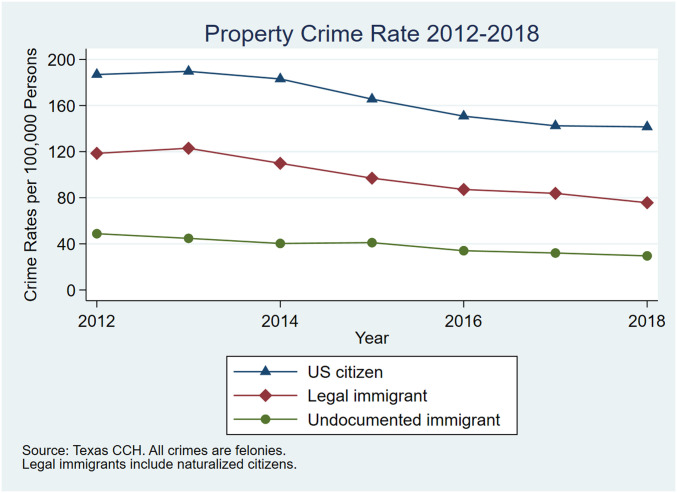
Over 200,000 immigrant arrests in America have been made as of August of 2025.

This is a fairy tale story that offers a truth about the iniquity of arbitrary enforcement and forced ejection of purported illegal immigrants in America. The second term of the Trump’ presidency shows how wrong it is to deport alleged illegal immigrants without judicial review. Obviously, if a legal review shows an immigrant is a criminal there is justification for immediate deportation. If the legal review shows an immigrant has always been a productive and law-abiding citizen of America, some may reasonably argue they should be directed to a program that allows them to eventually become legal residents of the United States.

Without legal review, a valuable source of American productivity is unnecessarily lost. To argue that loss is justified by jobs that will be filled by citizens of the United States is weak because many of the jobs taken are not taken by American citizens because the wages are too low, the physical demands too high, and the hospitality needs of much of America are unmet. It is true that many in America are unemployed because they have chosen to not get a good education and choose to remain unemployed by being unwilling to work for low wages. Their unemployment is not because of illegal immigrants but because of the choices they have made in their lives. Construction, agriculture, hospitality, retail, healthcare, and small businesses have been negatively impacted by the deportation of immigrant labor. In some industries, up to 40% of the workforce has been impacted by deportation.

Yoon’s story is a fairy tale of young love between an illegal and legal immigrant living in America.

Nicolo Yoon explains how love between two people occurs when they have similar life experiences and relate to those experiences with shared intelligence. The young girl and boy have similar life experiences in America. Both choose to educate themselves. The two young teenagers have parents that love them who have their own prejudices and life experiences in ways that influence their children to be ambivalent about the love they have for each parent.

Most parent’s, regardless of their culture, want a better life for their children.

Yoon illustrates the motivations and consequences of people who decide to emigrate. Whether emigrating legally or illegally, emigrees are faced with the difficulty of adjusting to a different culture that conflicts in good and bad ways with the culture they have left. Emigree’ parents wish well for their children but many fail to grasp the freedom offered by American culture to choose their own path in life. Even though life choices are influenced by one’s intellect, emotions, and (in America) a white majorities’ discrimination, most young people are able to choose their own path in life.

“The Sun is Also a Star” is a nicely written book that will keep reader/listeners interested in knowing what happens to two young lovers. One is left in suspense until its last chapters.

UNINTENDED CONSEQUENCE

Technology is a key to social need which has not been well served in the past or present and could become worse without pragmatic accommodation.

Books of Interest
 Website: chetyarbrough.blog

Daughters of the Baboo Grove (From Chian to America, a True Story of Abduction, Adoption, and Separated Twins)

Author: Barbara Demick

Narrated By: Joy Osmanski

Barbara Demick (Author, American journalist, former Beijing bureau chief for the Los Angeles Times.)

This is a brief and fascinating historical glimpse of a government policy gone awry. Like America’s mistaken policies on immigration, Barbara Demick’s story of China’s one-child policy traces the effects of government overreach. Demick tells the story of a rural Chinese family who births twin sisters during the time of China’s unjust enforcement of their one-child policy. One sister is abducted by Chinese government officials, and is adopted by a family in Texas. The ethics of an inhumane Chinese government policy and the perfidy of free enterprise are exposed in Demick’s true story of two children’s lives.

The territorial size of China in respect to continental America.

China’s one-child policy leads to a Chinese criminal enterprise to capitalize on kidnapping and selling children born to families that could not afford the fines for having more children than the law allows. Undoubtedly, most children born were cherished by their parents, but the hardship of life and human greed leads to unconscionable human trafficking. Kidnapping became a part of a legal and criminal enterprise in China. Government policy allowed bureaucrats and scofflaws to confiscate children from their parents and effectively deliver or sell children to orphanages or people wanting to adopt a child. Demick recounts stories of grieving parents and grandparents that cannot get their children back once they have been taken.

Child trafficking, broken families, loss of personal identity, human shame, and the immoral implication of other countries interest in adopting children are unintended consequences of a poorly thought out and implemented government policy.

Demick becomes interested in this story because of a message she receives from a stepbrother of an adopted Chinese sister that has a twin that lives in China. Because of Demick’s long experience in visiting and reporting on China, she had a network of people she could call. Using adoption records, Demick is able to find the Texas stepsister who had been kidnapped when she was 22 months old. She was trafficked to an orphanage in the Hunan Province of China. Years later, through messaging apps, the twins communicated with each other and shared their photographs. They eventually meet in China in 2019.

One is hesitant to argue a government policy is a unique act of China when every government makes policy decisions that have unintended consequences.

America’s policy decisions on immigration are a present-day fiasco that is as wrong as the one-child policy in China’s history. The one-child policy is eventually rejected by the Chinese’ government but Demick’s book shows how bad government policy has consequences that live on even when they are changed by future governments. America’s policy on immigration will be eventually reversed but its damage will live on.

Getting back to the story, Demick is instrumental in having the mother of Esther (aka E) and the twins meet in China.

One is hesitant to argue a government policy is a unique act of China when every government makes policy decisions that have unintended consequences. The twins are initially reticent but warm to each other in a way that bridges the cultural and language divide between the sisters. The two mothers see their respective roles in their daughter’s lives. E and her identical twin, Shuangjie, are reserved when they meet because of the cultural distance that was created by E’s adoption.

E. appears more confident than Shuangjie who is more reserved and less assured.

However, Demick suggests they seem to mirror each other in subsequent meetings. One feels a mix of emotions listening to this audiobook version of “Daughter’s of the Bamboo Grove”. They have grown up in different environments but seem to have been raised in similar economic circumstances, though the two economies are vastly different in income per household, the two appear to be raised in similar economic classes.

Every person who reads/listens to “Daughter’s of the Bamboo Grove” can view the story from different perspectives.

There is the perspective of identical twins raised in different families, cultures, and histories. How are identical twins different when they are raised by different parents and in different cultures? Another perspective is that Xi and Trump have had dramatic effects on the societies their policies have created. The Twin’s meeting in 2019 is one year after my wife and I had visited China. Xi had become President after his predecessor began opening China’s economic opportunities. Two incidents on the trip when Xi had become President come to mind. The first is the feeling one has of being monitored everywhere and the internet restrictions when used to ask questions. The second was an incident in a crowded Chinese market when I was approached by a beefy citizen who raised his arms and seemed to be angrily talking to me in Chinese which I sadly did not understand. The distinct impression is that I was not welcome. This was a singular incident that did not repeat in our 21-day tour, but it seemed like an expression of hostility toward America.

This listener/reader thinks of the unintended consequences of Trump’s treatment of alleged illegal immigrants.

Trump’s immigration policy is similar to China’s earlier mistake with the one-child policy. America’s, China’s, and Japan’s economies are highly dependent on youth which is diminished in two fundamental ways. One is by public policy that restricts birth, and the other is immigration. Freedom of choice is a foundational belief in democracy while considered a threat in autocracy. In America today, it seems there is little difference between America, Japan, or China in regard to government policy that threatens the future. All have an aging population that can only be aided by younger generations. Even though manufacturing may become less labor intensive, public need in the service industry will grow. Technology is a key to social need which has not been well served in the past or present and could become worse without pragmatic accommodation.