IRELAND’S TROUBLES

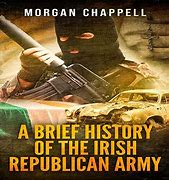
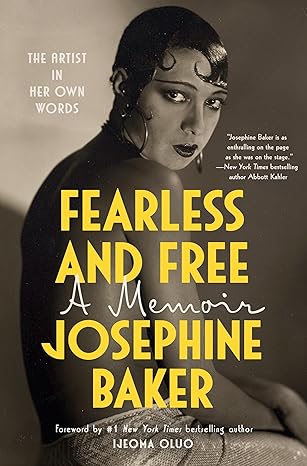
“Say Nothing” is an attempt to give listener/readers an understanding of Ireland’s “Troubles”. Patrick Radden Keefe helps one understand but it remains a complicated and confusing history because of its mix of religion and national sovereignty.

Books of Interest
 Website: chetyarbrough.blog

Say Nothing (A True Story of Murder and Memory in Northern Ireland) 

By: Patrick Radden Keefe

Narrated By: Mathew Blaney

Patrick Radden Keefe (Author, American writer and investigative journalist.)

“Say Nothing” is an attempt to give listener/readers an understanding of Ireland’s “Troubles”. Patrick Radden Keefe helps one understand but it remains a complicated and confusing history because of its mix of religion and national sovereignty. From the 1960s to the late 1980s, there were violent clashes between unionist/loyalists, who were largely protestant and wanted to be part of Great Britain; while Unionist/loyalists, who were largely Catholic wanted independence as the Republic of Ireland.

Bombings, sniper attacks, and violent confrontations caused an estimated 3600 deaths and tens-of-thousands injuries during the “Troubles”.

Not until 1998, with the “Good Friday Agreement” did the deadly conflicts cease. However, Great Britain’s Brexit, periods of political deadlock with the Northern Ireland Assembly, and debates over details of the “…Agreement” have occurred. Keefe tells a story of the build-up to the “…Agreement” in “Say Nothing”.

The Irish Republican Army that wished for Irish independence murdered Jean McConville, a mother of ten, in 1972.

The murder is puzzling because McConville is Catholic which suggests her death was either a mistake or that some Catholics were union/loyalists. Some in the IRA suggested she acted as a spy for the UK. That is a mystery Keefe fails to unravel while giving listener/readers some historical perspective on Ireland’s Troubles. Some say Marian Price was the murderer, but Keefe demurs and argues there is no concrete evidence.

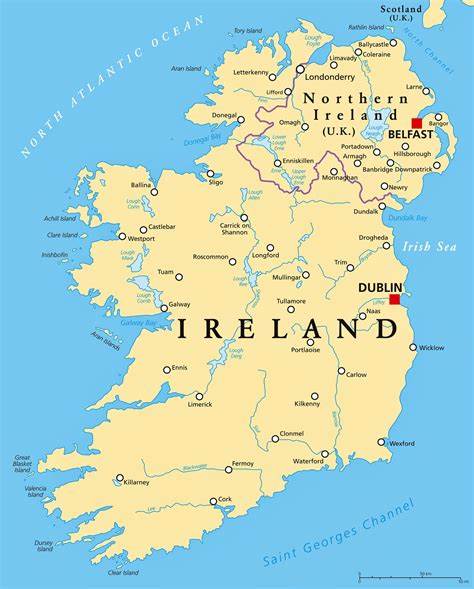
Northern Ireland is over 40% Catholic while the Republic of Ireland is over 60% Catholic.

Ireland’s troubles date back to the 16th and 17th centuries when English and Scottish Protestant settlers chose Ireland as their new home. The native population of Ireland was Catholic and religious differences and land acquisition by Protestants set the table for conflict. In 1921, Ireland was split in two with Northern Ireland remaining a part of the UK but with a 40% minority who remained Catholic. A Catholic movement for civil rights in Northern Ireland began in the 1960s. Violence and political conflict ensued with the formation of paramilitary groups like the IRA (Irish Republican Army) that began bombing and shooting Protestant followers. The IRA wished to end British rule, unify Ireland, accommodate religious difference, and create an independent nation.

Over the years, there were several leaders of the IRA. Michael Collins, Cathal Brugha, Liam Lynch, Sean Stiofain, Gerry Adams, and Martin McGuinness. Gerry Adams is the leader most often referred to in Keefe’s book.

The IRA never admitted to ordering the abduction and murder of Jean McConville. The author directly asks Adams if he ordered the murder, and his response is that he has no blood on his hands. Some suggest, her murder was a collective decision by leaders of the IRA.

Both Northern Ireland and the Republic of Ireland were ambivalent about Brexit and chose to neither entirely agree with separation from the EU nor entirely agree with the UK in its rejection of membership.

There remains a great deal of ambivalence about unification of Ireland as an independent nation but “The Good Friday Agreement” allows for a referendum on unification because of what appears to be a majority wishing to create one nation. However, Northern Ireland’s majority wishes to remain part of the UK while the Republic of Ireland wishes to remain independent. Unification seems unlikely because of their differences about being part of the UK.

It is interesting to note that the Catholic religion is the largest religious group in both Northern Ireland and the Republic of Ireland, but that Northern Ireland Catholics constitute 42.3% while the Republic of Ireland is 69.1% Catholic. Keefe’s story triggers an interest in understanding the history of Ireland, but it is too long in its telling to offer clarity.

TRAGEDY’S LESSON

The sharpened point of Slade’s story is that, like the sinking of the Edmund Fitzgerald and El Faro, it takes great tragedy before change takes place.

Books of Interest
 Website: chetyarbrough.blog

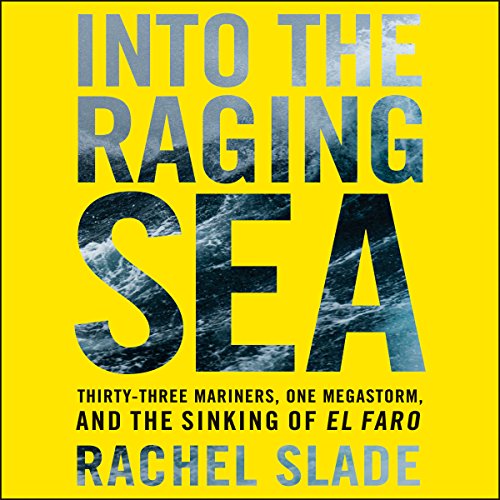
“Into the Raging Sea” Thirty-Three Mariners, One Megastorm, and the Sinking of the El Faro

By: Rachel Slade

Narrated By: Erin Bennett

Rachel Slade (Author, winner of the Maine Literary Award for non-fiction.)

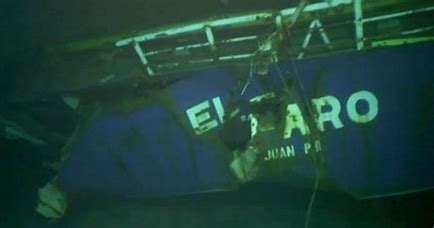
Rachel Slade begins her book with the last words of a mariner calling for help from a sinking ship in the grip of a Hurricane. The ship is the El Faro. The author writes her story based on the El Faro’s written log during a severe storm somewhere between Florida and Puerto Rico. The storm was Hurricane Joaquin, a category 4 Hurricane that had recorded wave heights of 10 meters (over 32 feet). Winds ranged from 130 to 156 mph with rough seas, roiled by rogue waves. Rogue waves are twice the size of surrounding waves and appear unexpectedly.

Slade methodically sets a table for the El Faro on a “…Raging Sea”.

Slade writes about a mariner’s desperate call for help. In its beginning, the story lags but the author offers cultural insight to the life of merchant marines, the equipment they operate, and the business of international trade. Her story explains how important and dangerous the life of a merchant marine can be, why it is important, and how mariners are dependent on equipment they use, their shipmates’ qualifications, and business owners’ drive for success.

Every person makes decisions about what they are going to do to make their way in life.

Becoming a merchant marine, like every decision in life, is based on personal circumstances, ambitions, and choices. Slade describes the El Faro mariners as adventurous and interested in seeing the world and being paid for what they do. Some are educated, others not, but all learn what they need to do to be part of a mariners’ crew.

There are schools for mariners at all levels of education but like any job, one can start at the bottom as a laborer that learns by doing. What the story of the El Faro shows is that like in any chosen job in life, some become expert at what they do, others try and fail, try again or move on. What Slade infers is that the El Faro sinks because of its crew but also because of others, both on and off the sea. As John Donne wrote in 1624, “no man (or woman) is an island”–emphasizing the interconnectedness of society.

The crew of the El Faro wanted to be paid but to some it was adventure and/or escape from a humdrum of life. Undoubtedly, mariners were motivated for different reasons. Some wished to see the world, be recognized for good work, wished to crew on bigger and better vessels, or be promoted to higher position. Motivation and ambition are different for everyone. What is lost to history are details. Slade tries to reveal some of the details about the El Faro’ crew, its owners, the ship, and the business of international trade. Why did the El Faro sink? Who and what was lost? What is it like to be in a hurricane at sea? Is somewhat at fault?

Slade’s story gains momentum as sinking of the El Faro seems imminent.

The aftermath is a careful and detailed explanation of rescues at sea, why the El Faro sank, what rescue efforts were made, how families of the lost were affected, and what changes were demanded in the industry. The loss of 33 mariners, the entire crew of the El Faro, is a horrible tragedy for the families who lost their loved ones. The causes of the tragedy range from crew mistakes to ship design to corporate malfeasance. The common thread is human nature.

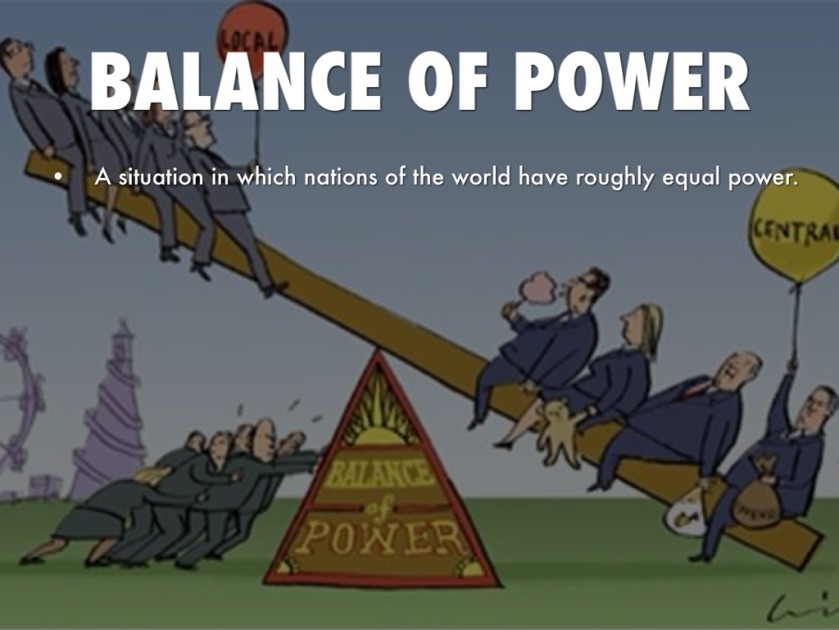
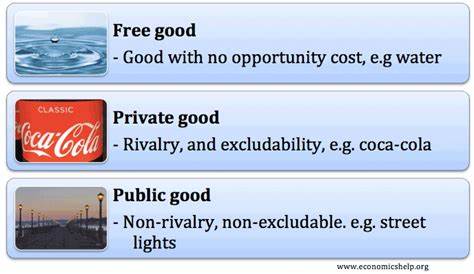
What this review suggests is that the fundamental issue in every form of government and society is balance between public and private good.

One will draw their own conclusions from Slade’s history of the loss of the El Faro. In a capitalist society, balance is dependent on prudent regulation. Prudence is meant to mean the use of human reason to balance the needs of the public with private interests. That balance is complicated by human nature that drives private interests to focus on money, power, and prestige rather than public need.

Slade shows regulation of international trade often conflicts with private interests that object to regulation and improvements in ship design.

Conflict between public good and private interest is not a new discovery. Neither is the sinking of the El Faro. The sinking of the Edmund Fitzgerald in 1975 led to changes in international shipping. Business owners were required to provide survival suits for mariners in their employ, depth finders, positioning systems, improved ship design, and inspections by the Coast Guard became mandatory. These were regulations that increased costs of shipping that rippled through the economy and initially penalized private interests. The public benefits because mariners are safer, and families are less threatened by loss. The public also suffers because transported goods become more expensive. Balance eventually occurs as private interests are compelled to pay more for labor which is part of the public.

Capitalism works because it is a process that balances public need with private interests. Capitalism’s weakness is that the process takes time to balance public needs with private interests.

The sharpened point of Slade’s story is that, like the sinking of the Edmund Fitzgerald and El Faro, it takes great tragedy before change takes place.

TRAVELING

Steve Hely’s travels give one a sense of adventure and camaraderie.

Books of Interest
 Website: chetyarbrough.blog

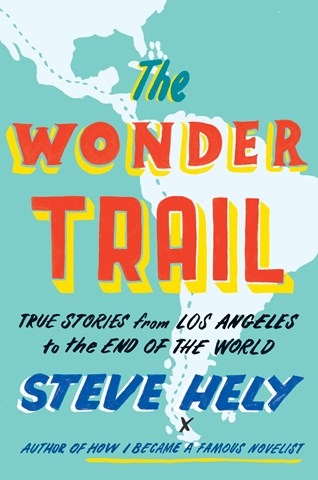
“The Wonder Trail”

By: Steve Hely

Narrated by: Steve Hely

Steve Hely (Author, screen writer, co-executive producer for the Veep tv series, also appeared as an actor on tv sitcoms like “The Office” and “30 Rock”.)

“The Wonder Trail” is an entertaining tale by a sitcom television writer who chooses to take a trip south. He travels through Mexico, the Panama Canal, and South America. He travels on the cheap to give the young an idea of what to do on a summer vacation. Hely’s writing profession is on display as he offers a “being there” experience and a laugh.

Traveling away from the U.S. should be in every young or old American’s experience. Those who visit other countries give perspective to life and how people are more alike than different.

“The Wonder Trail” shows human nature is the same, though the color of life is hued by the cultures in which we live. The desires of life or death are closely related, if not the same. As Hely travels, he recalls books he has read to give perspective and depth to the experiences of his journey. From Mexico, down through Chile and the southern tip of the Western Hemisphere, Hely tells of fellow travelers, the sites he visits, and the native citizens he meets. Every nation visited is accompanied by vignettes about its history. From the Mexican city of Oaxaca to Mayan ruins in Central America, to Patagonia, listeners are introduced to many of America’s southern border countries.

Hernan Cortes (1485-1547, died at the age of 61 or 62.)

Hely notes Hernan Cortes’s ruthless reputation for destroying temples of what was the Aztec capitol. Cortes became a ruthless symbol of conquest and European colonization.

Mexico City came from a city-state called Tenochtitlan which was a spec of land in the middle of a lake in 1325. Cortes, an infamous Spanish conquistador, razed Tenochtitlan to the ground in 1521 and created a Spanish colonial capital he named Mexico City.

Hely reflects on the lost language of the Aztecs and the many ruins buried beneath Mexico City’s thriving metropolis. Translators have deciphered some of the texts of the Aztecs that reveal the sophisticated pagan culture that was lost when Cortes colonized the country. Hely notes the Aztecs practiced human sacrifices to their gods.

Hely’s travels give one a sense of adventure and camaraderie. He notes how his favorite experiences are with other people, particularly Australian groups and some adventurous unattached women who choose to travel alone. Having traveled with an Aussie guide in Australia, I would agree with Hely’s suggestion that Aussies are among the best travelling companions.

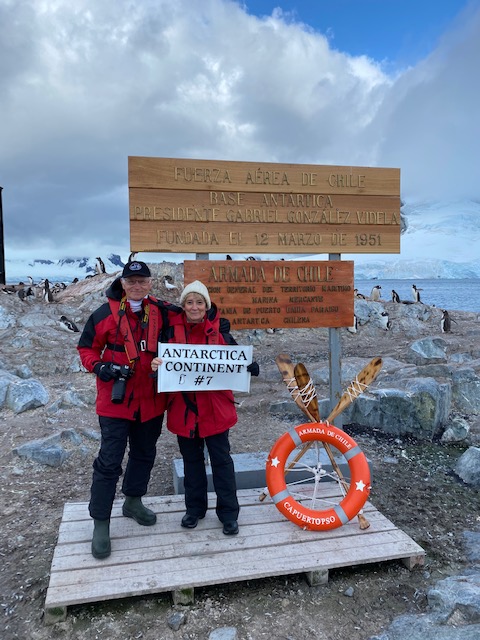
Hely’s journey ends in Patagonia, a territory under the control of Argentina and Chile. Having personally traveled to Antarctica, the point of debarkation is Ushuaia, the capital of Tiera del Fuego in Patagonia. Ushuaia is not mentioned in Hely’s book, but it is a beautiful village/city on the southernmost port of the world. The Drake Passage to Antarctica is not for the faint of heart because of the rolling sea. It’s worth the voyage because of the grandeur of ice flows, whale watching, and penguin excursions.