JAPAN

In planning a trip to Japan this year, it seems prudent to learn more about the history of Japan.

Books of Interest
 Website: chetyarbrough.

Great Courses-Understanding Japan (A Cultural History)

By: Mark J. Ravina

Narrated By: Mark J. Ravina

Mark Ravina (Scholar of Japanese history at the University of Texas at Austin)

Professor Ravina’s lectures are a little too heavy on Japan’s ancient history but offers some interesting opinion about the rise of the Samurai, the evolution of women’s roles in Japan, Emperor Hirohito and his role in WWII, the democratization of Japan after WWII, and the cause of Japan’s current economic stagnation.

As is well known, the Samurai were a warrior class in Japan. Their role in Japanese history grows between 794 and 1185.

They began as private armies for noble families with estates in Japan. They became a force in Japanese politics and have had an enduring effect on Japanese society. They evolved after 1185 into a ruling military government called shogun that exhibited political influence through 1333, emphasizing Bushido or what is defined as a strict code of loyalty, honor, and discipline. That discipline extended to ritual suicide in defeat or disgrace to preserve one’s honor. Zen Buddhism entered into the Samuria culture, exhibiting a time of peace under the Tokugawa shogunate that lasted until 1868. After 1868, the Samurai era came to an end, but its cultural influence remains in a modernized military that adheres to qualities of discipline, honor, and resilience.

Traditional Japanese Woman.

The role of women in Japan has evolved from great influence and freedom for the well-to-do to a life of restricted domesticity.

During the Samurai era, the influence of women declined and became more restricted. The rise of Confucian ideals emphasized male dominance with women being relegated to domestic duty. Women turned to art, calligraphy, and religion as their societal influence decreased. In the Meiji Era (1868-1912) women’s education somewhat improved and they began to participate in political movements like voting and equal rights. Finally, after WWII, a new constitution granted women equal rights like the right to vote and enter the workforce. However, like America, traditional gender roles persisted. In today’s Japan, like most of the world, equal rights remain a battle for women.

Hirohito is the 124th Emperor of Japan.

He reigned from 1926 to 1989. Professor Ravina notes that a question is raised about whether the emperor was a follower or leader in Japan’s role in WWII. Ravina argues history showed Hirohito’s role was as a leader. In defeat, Hirohito renounced his divine status to become a constitutional monarch under U.S. occupation. Hirohito, as the crown prince of Japan, strengthened Japan’s diplomatic ties on the world stage. He was instrumental in scientific research in marine biology. He emphasized Japan’s drive to become an industrial nation and player in international trade. He militarized Japan in preparation for war and territorial expansion. He authorized invasion of Manchuria in 1931 to establish it as a puppet of Japan. Hirohito aids the American occupation, after WWII, to de-militarize and re-industrialize Japan.

With creation of a new constitution for Japan in 1947, Japan became a constitutional monarchy that made the emperor a symbolic figurehead, and guaranteed freedom of speech, religion, and assembly.

The constitution formally denounced war as a means of settling disputes. Land reform redistributed agricultural production to tenant farmers that reduced the power of wealthy landlords and promoted economic equality in rural Japan. Women’s rights were codified to allow voting and participation in politics. The constitution guaranteed equality but, like the rest of the world, culture trumped reality. Japan’s military was reorganized as a defensive force for national security. War crimes trials convicted Hideki Tojo, Iwane Matsui, Hei taro Kimura, Kenji Doihara, and Koki Hirota and sentenced them to death. In total 17 leaders were executed, and 16 others were imprisoned.

Free-market economy.

The democratization of Japan entailed economic reforms that broke up large industrial conglomerates to promote a free-market economy and reduce economic monopolies. However, the culture of Japan replaced the industrial conglomerates with networks of interlinked companies that operated cooperatively in ways that reduced competition in pursuit of financial stability. The education system was reformed to promote democratic values, and equal access to education for all citizens.

A free press was encouraged to foster transparency and accountability.

The results allowed Japan to rapidly improve their industrial productivity. That productivity was defined and improved by the teachings of W. Edwards Deming, a statistician and quality-control expert in the 1950s. His contributions led to the Deming Prize in 1951, an annual award recognizing excellence in quality management. (This is a reminder of Peter Drucker and his monumental contribution to business practices in the United States.)

In Ravina’s final lectures, he addresses the economic stagnation that has overtaken modern society in Japan.

It began in the 1990s. A sharp decline in asset prices wiped out wealth and triggered a banking crisis. Banks had made too many bad loans that became non-performing. Deflation ensued with falling prices that discouraged spending and slowed economic growth. Company profits declined. The demographics of Japan reduced the size of the work force because of an aging population and declining births. One suspects this demographic change is further burdened by ethnic identity that mitigates against immigration.

Japan’s consumption tax increases in 1997 impeded recovery.

The close ties between government, banks, and corporations resist reforms. And, as is true in America, global competition from other countries with lower cost labor eroded international trade.

HOMELESSNESS

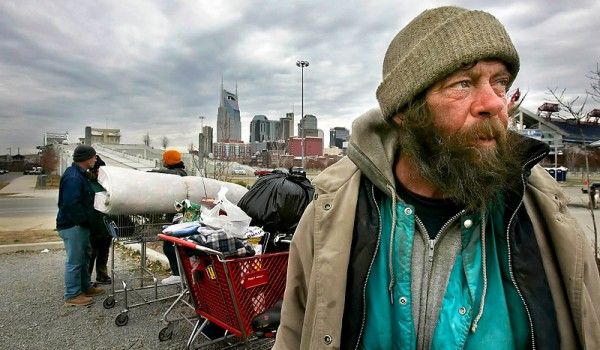
The United States is the 7th richest nation in the world on a per capita basis. Why is homelessness a growing problem in outwardly prosperous American cities?

Books of Interest
 Website: chetyarbrough.blog

Seeking Shelter (A Working Mother, Her Children and a Story of Homelessness in America)

By: Jeff Hobbes

Narrated By: Julia Whelan

Jeff Hobbes (Author, graduate of Yale with a BA in English language and literature.)

Homelessness can be seen in most large cities of the world. In personal travels to what look like prosperous cities like Vilnius, Lithuania, Hong Kong, China, and even Scandanavian countries, homelessness exists. However, the scope of homelessness does not compare to what is seen on the streets of Las Vegas, NV. and Seattle, WA, two larger American cities considered prosperous and growing. In 2024, there were an estimated 7,928 homeless in Clark County (the Las Vegas area) and 16,385 in King County (the Seattle area). Walking around these two cities, let alone reading or listening to the news, suggests those numbers are grossly undercounting the homeless. The United States is the 7th richest nation in the world on a per capita basis. Why is homelessness a growing problem in outwardly prosperous American cities?

Trump followers would argue homelessness is because of illegal immigration and laziness.

The real reasons are decades of underbuilding in major American cities, high cost of existing inventory, regulatory barriers for affordable housing, economic inequality, an attitude of “not in my back yard”, investment conglomerates that capture housing for rent, and the decline of federally funded affordable housing.

Jeff Hobbes brings all of these reasons for homelessness to light with the plight of working mothers and their children who are moving from one area of California to another because they cannot afford a place to live, school their children, and feed their family.

Hobbes’ example is of a family on the road with savings of $4,000 in a search for a job, a school for her children, and a place to live that they can afford. What is abundantly clear in Hobbes’ book is women hold broken families together more often than men. Misogyny is a reinforced truth in the world. Men spread their seed, begat children, and leave. Women take on the burden of the world’s future.

Homeless single parents with children to care for must often leave their children alone while seeking work to pay for the basic needs of life.

A woman faces greater obstacles than a homeless man because of unequal opportunities ranging from income for work to their presumed and assumed responsibility for children’s care. The general public often presumes they have their own lives to live and have no responsibility for others who have made foolish decisions in their lives. However, a rational person knows children are the future of the world. A child left on his/her own have diminishing opportunities for success without parental support. A child of a homeless single parent’s support is compromised when that single parent has to work to earn enough for the family to have a home and food to eat.

Having the personal experience of being raised by a single parent with an older brother, Hobbes’ history of a mother, on her own, fairly explains how difficult it is to avoid homelessness while looking for work and caring for her children.

The price paid for homelessness on the emotional and intellectual ability of a mother and her children is immeasurable. The cost to society is partly explained by Jeff Hobbes’ in “Seeking Shelter”. California’s system of caring for the homeless is encouraging but undoubtedly inadequate based on what one reads in the press.

Listening to the stories of homeless families is a harsh lesson for those who have escaped poverty and think if they can do it, why can’t every American do it?

Failure to address homelessness is a societal flaw. Whatever its cause, homelessness makes every citizen of prosperous nations guilty of neglect.

A UKRAINE BOMB SHELL

Though Yovanovitch had nothing to do with Poroshenko’s defeat by Zelensky, it seems clear that her tenure as Ambassador to Ukraine set the table for a change in direction for Ukraine.

Books of Interest
 Website: chetyarbrough.blog

Lessons from the Edge (A Memoir)

By: Marie Yovanovitch

Narrated By: Marie Yovanovitch

Marie Yovanovitch (Canadian-American Author, retired senior member of the US Foreign Service.)

Marie Yovanovitch is retired from the US Foreign Service but as is widely known she was fired in the first Trump administration as US Ambassador to Ukraine in 2019. A reported reason for her firing is she is said to have resisted Trump’s effort to pressure Ukraine to investigate former Vice President Joe Biden. One suspects that is partially true, but Yovanovitch shows she was a believer in equal rights for women and a supporter of Hilliary Clinton which may be additional reasons for Trump’s action to fire her. “Lessons from the Edge” is a memoir of Yovanovitch’s career as an American diplomat.

“Lessons from the Edge” is interesting because it reveals the history of how one becomes an American diplomat and what his/her role is as a representative of America. One may wonder what qualifies one to be a diplomat when some are appointed because of political connection rather than educational accomplishment or training.

Yovanovitch became a diplomat because of her education and personal ambition. Because of her background as the daughter of a Russian born father, she chooses to take classes in Russian which leads to her eventual assignment in Ukraine. Her memoir explains how her journey began and how it ended. It is a highly personal memoir that is enlightening. However, this mild journey explodes at its end. Yovanovitch comes across as a decent person caught up in the events of history, not as a giant of diplomacy but an honest and hard-working diplomat.

Marie Yovanovitch earned a BA in History and Russian Studies at Princeton. During her career she studied at the Pushkin Institute of Moscow and acquired a Master of Science in National Security Strategy from the National War College. Her background certainly qualified her for diplomatic posts. Her early assignments were in Africa which eventually led to Russian speaking countries like Russia, Kyrgyzstan, Armenia, and Ukraine.

Russian speaking countries.

An example of the difficulty of her job is when America wishes to maintain the American Kyrgyzstan’ Air Force base because of America’s role in Afghanistan in 2009. Kyrgyzstan offers closer logistic support for the American military.

The Kyger’ President demands an increase from a $17.4 million-dollar annual rent payment (Yovanovich indicated the rent payment was $2,000,000/yr) to $200,000,000 per year for the continuation of Kyrgyzstan’s American military base. Yovanovich implies Kyrgyzstan’s President, Mr. Bakiyev, demand for higher rent would be to line his pockets with stolen revenue, not help the citizens of Kyrgyzstan.

A final settlement increased annual rent to $60 million per year with additional payments of $37 million and $30 million for new aircraft slots and additional land for location of a new American navigation system.

Kyrgyzstan’s American Air Force Base.

Many questions come to mind in listening/reading Yovanovitch’s book. How important are the presence of American military bases around the world? What is the difference between isolationism and internationalism? Should America remain isolated from other nations or engage and collaborate with other countries of the world? Where is the line to be drawn between American influence and the cost of that influence? This last question is answered in the last chapters of “Lessons from the Edge”.

Yovanovich takes on the complicated role of American Ambassador to Armenia from 2008 to 2011.

Armenia and Azerbaijan are a source of political and territorial tension. There is a dispute over a region called Nagorno-Karabakh that is under the control of Armenia with a majority Armenian population. Turkey supports Azerbaijan while Armenia has a close relationship with Russia. Armenia and Turkey’s relationship is strained because of a WWI Armenian Genocide perpetrated by Turkey. An estimated 600,000 to 1.5 million Armenians were killed between 1915 and 1917. Turkey refuses to identify it as genocide which aggravates Turkey’s relationship with Armenia. Russia has a military base in Armenia and has tried to mediate the Nagorno-Karabakh conflict without much success. Because of energy projects and trade relations, Russia has managed a balanced relationship with Azerbaijan.

Yovanovitch decides to return to the U.S. because of her aging mother and an offer to take the role of Principal Deputy Assistant Secretary for the Bureau of European and Eurasian Affairs. However, as Ukraine becomes embroiled in a conflict with Russia and her previous assignment and knowledge of Ukraine, she returns as America’s Ambassador. Her mother’s decision to accompany her made the opportunity worth taking.

When Ukraine became independent of the U.S.S.R. in 1991, its transition to a market economy was marked by widespread corruption in the same way as alleged in Russia.

The assets of the country fell into the hands of Ukraine’s leaders who became wealthy oligarchs at the expense of the general population. Election to the leadership of Ukraine gave Presidents like Viktor Yanukovych, who served from 2010 to 2014, license to embezzle state funds. Compounding that corruption were Ukrainian bank owners who were equally corrupt. The fifth president of Ukraine, Petro Poroshenko faces allegations of corruption with his ownership of the International Investment Bank (IIB).

Rudy Giuliani (American politician, former NY mayor, former U.S. Associate Attorney General–now a disbarred lawyer.)

As if Rudy Giuliani needs no further damage to his reputation than his lies about election fraud, Yovanovitch reveals his role in discrediting her reputation with false accusations about badmouthing Trump as the new President of the United States. Judging from Yovanovitch’s book, Trump is unlikely to have been someone she admired. However, as an experienced diplomat, it is inconceivable that she would have undermined Trump or any U.S. President’s reputation. Trump ordered Yovanovitch’s removal. She is recalled in May 2019.

Volodymyr Zelensky became the President of Ukraine in May of 2019.

Zelensky soundly defeated the corrupt Vasily Poroshenko with 73% of the vote.

Though Yovanovitch had nothing to do with Poroshenko’s defeat by Zelensky, it seems clear that her tenure as Ambassador to Ukraine set the table for a change in direction for Ukraine. This is a very personal memoir of Yovanovitch’s career that is somewhat marred by a plaintive melancholy about life and an aging mother but “Lessons from the Edge” is highly informative about what it takes to be an American diplomat.

America makes a mistake if it chooses to isolate itself from allied countries that have similar economic and political aspirations. It may be time to reset America’s international relations, but isolation is not a rational alternative for an interdependent ecological and economic world.

AUTHORITARIANISM

Whether an idealist or humanist, the historical truth is that rising authoritarians believe power is all that matters. Today, the world seems at the threshold of authoritarianism.

Books of Interest
 Website: chetyarbrough.blog

Bronshtein in the Bronx 

By: Robert Littell

Narrated By: Adam Grupper

Image result for robert littell

Robert Littell (American author, former journalist in France.)

Robert Littell researches and imagines the 10 days of Leon Trotsky’s visit to New York City in 1917, just before the Russian revolution. His story offers humanizing and demeaning aspects of Trotsky’s personal and political life as a revolutionary.

Lev Davidovich Bronstein aka Leon Trotsky (1879-1940, Russian revolutionary, politician, political theorist, revolutionary military leader.)

Image result for leon trotsky

Littell explains Trotsky travels with his two young sons and a female companion (the mother of their two boys) to New York. His first wife is exiled in Siberia for helping him spread leaflets about terrible factory conditions in Czarist Russia. Trotsky escaped to England while leaving his first wife and their two young girls in Siberia. (Trotsky divorces his first wife and marries the woman that Littel calls his airplane companion, either before or after the trip to New York. This is not made clear in Littell’s story.)

Trotsky in New York, 1917 | Kenneth Ackerman

Littell explains Trotsky is a kind of celebrity in New York because of his association with socialist beliefs and his involvement in the failed 1905 Russian Revolution.

Trotsky is in his early twenties when he arrives in New York. Littell characterizes Trotsky as a libertine by introducing a female reporter in New York who becomes his lover. Littell reinforces that libertinism at the end of his story by suggesting Trotsky and Frida Kahlo had an affair while his second wife and he were exiled in Mexico.

Aside from Trotsky’s picadilloes, Littell shows how committed Trotsky was to his belief in Marxism and the plight of the working poor.

Trotsky gave several speeches that appealed to New York laborers and their families. An interesting sidelight is appended to Littell’s story when a Jewish industrialist meets with Trotsky after the 1917 revolution in Russia. Naturally, Trotsky is anxious to return to support Lenin and the Bolsheviks in the revolution. However, Trotsky is broke and doesn’t have the money to return to Russia. The industrialist offers an envelope with the money needed for the trip. Neither the industrialist nor Trotsky are believers in the Jewish faith but believe in the power of socialism and its benefit to society.

The political point being made by Littell is that the ideal of communism supersedes religious beliefs.

Trotsky is Jewish but not a believer in God. He is a political idealist. Littell notes Trotsky becomes a military leader in the communist movement. Littell infers Trotsky’s idealism gets in the way of humanism when he orders one in ten prisoners be shot for their opposition to the communist revolution. This is undoubtedly an apocryphal story but a way of explaining how a committed idealist can become a murderous tyrant.

Littell ends his story with a brief and somewhat inaccurate history of the Trotsky’ children. The two girls with his first wife died before they were 30. Zinada had mental health issues and died by suicide in 1933. Nina died at age 26 without any detailed information about her cause of death.

Rather than two boys noted in Littell’s story of the trip to New York, one was a girl named Zinaida. Zinaida, like her half-sister, died by suicide at age 32. Lev, born in 1906, is believed to have been poisoned by Stalinist agents in 1938. As some know, Trotsky was murdered by Stalin’s agents in Mexico City. In contrast to his children, Trotsky, the political idealist, is murdered as an exile at the age of 60. All-in-all, a tragic family history.

Whether an idealist or humanist, the historical truth is that rising authoritarians believe power is all that matters. Today, the world seems at the threshold of authoritarianism.

BEING OPINIONATED

Trump is threatening government employees with being fired for doing their job and Congress for being the third branch of the American government.

Personal Commentary
 Website: chetyarbrough.blog

Political Grandstanding

By: Chet Yarbrough

Those who have read book reviews in this blog know some of my political beliefs. The more I read, listen to, and review books written by others, the more I know I do not know what is true and not true. We all get trapped in our own world of experience, belief, and understanding. With concern over that personal trap, this personal opinion is written.

America’s current President is a man of inherited wealth and privilege.

Trump’s popularity comes from attracting attention, impressing followers with strong public stances on issues of which he has little understanding or willingness to educate himself about. His focus is on self-aggrandizement with hyperbolic misrepresentations of facts that appeal to those wishing for definitive answers to multifaceted social issues.

Trump is not the only elected representative or President to oversimplify issues to appeal to voters. Johnson’s war on poverty was used to justify policies that ineffectively addressed needs of the poor. Nixon’s “Southern Strategy” used coded language and policies that indirectly targeted African Americans. Reagan’s “War on Drugs” disproportionately affected minority communities and contributed to mass incarceration. George W. Bush emphasized the threat of weapons of mass destruction (WMD’s) to justify invasion of Iraq. Obama’s red line rhetoric threatened commitment to military intervention, which never happened when lethal gas was used to kill Syrian citizens. Trump’s rhetoric on immigration inferred most immigrants were criminals and a threat to national security. In all of these examples the common denominator is, at worst a lie or at best, a misrepresentation of truth to gain public support.

So, what is the difference? Trump does not care about the impact of his lies.

Image result for LIAR

Trump focuses on self-aggrandizement to promote himself as powerful and important. He is a school-yard bully who scared banks and subcontractors with the fear of handing a financially bankrupt casino back to the bank, and who threatened subcontractors’ pay who worked for him.

Now, Trump is threatening government employees with being fired for doing their job and Congress for being the third branch of the American government. In the end, Trump is threatening the American people who either did or did not vote for him.

AGGRESSION LOSES

The war in Ukraine will be settled through negotiation. The same can be true in Gaza with the creation of a Palestinian state. It certainly will not eliminate conflict, but it offers a path for peace.

Books of Interest
 Website: chetyarbrough.blog

All Quiet on the Western Front

By: Erich Maria Remarque

Narrated By: Frank Muller

Image result for erich maria remarque

Erich Maria Remarque (1898-1970, Author, German born novelist and survivor of WWI.)

Revisiting Erich Remarque’s “All Quiet on the Western Front” is a reminder of today’s wars in Ukraine and Gaza. As a former soldier in the German army of WWI, Remarque explains how brutal war is for soldiers and their families. He shows there are no winners in war. The victims of war are the same whether they are aggressors or defenders. Putin’s ambition to restore the empire of Russia appears as foolish as Hamas’s determination to destroy Israel. The result is injury and death for all. Neither Germany nor defending Allied Powers escaped the loss of soldiers and civilians in the two 20th century wars against Germany.

The estimated injury of 109,000 and killing of 46,000 Palestinian citizens is not justified by the atrocity of October 7, 2023, when 1,200 people were killed and 253 were taken hostage by Hamas in Isreal.

Israeli leadership disagrees because of factions in Palestine, Syria, and Lebanon that intend to eliminate Israel from the middle eastern world. Rather than killing and injuring indigenous peoples of the Gaza strip, a diplomatic solution should be pursued to establish a Palestinian State. Every nation-state in the world has militant factions within their borders. Palestine, as a nation-state, would have the responsibility for controlling their militant factions just like every nation-state in the world.

Twentieth century Isreal is formed out of Egypt, Jordan, and Syria after the 1948 Arab Israeli War.

Egypt lost the Gaza Strip, Jordan the West Bank, and Syria the Golan Heights with the formation of Israel. Palestinians, like Israelis, lived in those areas for centuries. With creation of a Palestinian State, International Law and UN Resolutions can aid and diplomatically pressure governments to address nation-state claims.

History of the 20th and now 21st century show war has defeated aggressor governments but at an unconscionable cost to humanity. War’s cost is illustrated by Remarque as injury and death of aggressors, defenders, parents, and children. No one wins and everyone loses. Neither peace nor war have ended human inhumanity. Remarque clearly illustrates the folly of war, but human nature infects peace with a war mentality and ferocity. Diplomacy and negotiation for the creation of a Palestinian state is the only pragmatic solution for peace in the Middle East.

Aggressor nations, as shown by 20th century history, are eventually defeated.

Israel’s military reaction is as dishonorable as the Hamas attack on October 7th. Both are unjustifiable. Creation of a Palestinian state offers a pragmatic solution to the control of Hamas. The need for nation-state control is equally true in Syria’s and Lebanon’s Hezbollah factions. International pressure can only be exerted with nation-state recognition. Only with the creation of ethnically viable nation-states is their hope for peace among peoples of different cultures.

The war in Ukraine will be settled through negotiation. The same can be true in Gaza with the creation of a Palestinian state. It certainly will not eliminate conflict, but it offers a path for peace.

WORKER ABANDONMENT

Trump is unlikely to help the middleclass and poor any more than some of America’s past Presidents, but he disrupts the status quo. That is Thomas Frank’s answer to why Trump was re-elected.

Books of Interest
 Website: chetyarbrough.blog

Listen Liberal (Or, What Ever Happened to the Party of the People?)

By: Thomas Frank

Narrated By: Thomas Frank

Thomas Carr Frank (Author, political analyst, historian, and journalist)

How could the American people elect a billionaire felon as President of the United States? Thomas Frank offers a compelling answer to that troubling question.

Since WWII, the American people have been misled by the words, policies, and deeds of both Democratic and Republican leaders. No post WWII leader escapes Frank’s frank explanation. Not since Franklin Roosevelt, and Harry Truman have any Presidents effectively reduced income inequality.

Frank embarrasses American voters for complicity in reducing the size of the middle class, ignoring the poor, and making the rich richer. He explains how Presidents of the last 70 years have made the middleclass smaller and the poor poorer. Frank particularly points to Bill Clinton and Barack Obama as examples of Ivy League’ wordsmiths that misled the public and instituted policies that moved America away from the working class and poor.

Clinton and Obama represented education as the primary measure of success in the 21st century. They largely ignored the working class that grew the American economy to be the most successful in the world. With that neglect the Democratic party became adjunct to the Republican party by diminishing the contribution and value of working Americans. Whichever party leads America no longer makes a difference to the middleclass’ and poor. Frank argues there is little difference between a Democratic or Republican President. The middleclass and poor realize those who are elected to lead make little difference in American worker’s lives.

Frank methodically dismantles Clinton and Obama administration’s policies to show how they diminished opportunity for the middleclass and poor. Clinton manages to balance the national governments debt on the backs of working America. Clinton’s welfare reform took many off of welfare by demanding employment as a requirement for any help by the welfare administration. That seems laudable but its impact on single parent households left children home alone and at the mercy of their neighborhoods. A child alone is left to the influence of neighborhoods festooned with gangs, drugs, guns and their societal consequences. In reducing the number of people on welfare, poverty increased.

Clinton’s programs for crime control massively increased prison building and prison populations that disproportionately affected African and Latino American communities.

Clinton repeals the Glass-Stegall Act and allows commercial banks to enter the derivative mortgage business that led to the near future financial collapse of America between 2007 and 2010.

Entry into the North American Free Trade Agreement (NAFTA) led to manufacturing job losses in America.

Frank admits Obama helped the middleclass and poor with Obama Care but argues he made the same mistakes as Clinton by supporting the rich at the expense of the middleclass and poor. Obama chose to follow the lead of George Bush’s plan to get America out of the economic ditch of the century by bailing out the financial industry while allowing the working class to fend for themselves. Many lost their homes as a result of banker’s lending greed and mortgage derivatives that came from Clinton’s decision to repeal Glass-Stegall. None of the banks were punished by bankruptcy because the federal government made a deal to keep them in business or subject to acquisition by bigger banks that became even larger. Poverty remained at the same level. Surprisingly homelessness was reduced by Obama’s “Opening Doors” initiative in 2010. However, the trend of aiding the rich at the expense of the working class is re-invigorated by emphasis on higher education and creativity rather than the nuts and bolts of economic prosperity that comes from job creation and a working public.

The trend of aiding the rich at the expense of the working class is re-invigorated by emphasis on higher education and creativity rather than the nuts and bolts of economic prosperity that comes from job creation.

The glaring irony of Frank’s observation led to the election of a billionaire who lauds wealth and power and cares little about the middleclass and poor. Donald Trump, Barack Obama, and Bill Clinton distorted the truth, partly by lying to themselves but also by purposely lying to the public with political policies and actions that did not make the lives of the middleclass and poor any better.

Trump directly distorts the truth but Obama and Clinton lie to themselves about the value of education as the singular path to improvement for the middleclass and poor. People are not only educated by school.

People are also educated by work and their experiences in life. Not every person in America or the world is interested in having a college degree. Shared economic productivity is the key to reducing income disparity. The brilliant oratorical skills of Obama and Clinton were refined by their intelligence and education but not everyone is blessed with the same skill. Trump is no Obama or Clinton, but he appeals to many who feel they have been left behind or can be benefited by his transactional view of the world.

One may agree that economic productivity comes from creativity, education, and work. However, it does not come from emphasis on one thing but on equality of opportunity for all to be employed.

Franks’ cynicism is overwhelming. By the end of his book, which is published before Hilliary Clinton’s political defeat by Trump, one is depressed by the truth of what he writes. The second election of Trump is proof of the failure of the Democratic party, and the Republican party, to live up to a belief in social equality and equal opportunity.

Creativity is an innate human quality. Education comes in many forms which are both formal and informal.

Being employed is a government, private enterprise, and personal responsibility. It is the job of governance to create public policies that support equality of opportunity for people to be creative, educated, and employed. Equality of opportunity ensures national economic growth and prosperity.

Trump is unlikely to help the middleclass and poor any more than some of America’s past Presidents, but he disrupts the status quo. That is Thomas Frank’s answer to why Trump was re-elected.

NO EASY SOLUTION

“Everyone Who Is Gone Is Here” is an indictment of American foreign policy. There are no easy solutions for immigration, deportation, or human rights in the world.

Books of Interest
 Website: chetyarbrough.blog

Everyone Who Is Gone Is Here (The United States, Central America, and the Making of a Crises)

By: Johnathan Blitzer

Narrated By: Jonathan Blitzer, Andre Santana

Johnathan Blitzer (Author, American journalist, staff writer for The New Yorker.)

“Everyone Who Is Gone Is Here” is an indictment of American foreign policy. There seems a loss of a moral center in America with its support of other governments based solely on government type, national security, or economic interest. That is not to suggest national security and economic interest are not critically important but Blitzer’s history of America’s support of Central American governments is appalling. El Salvado, Guatemala, Honduras, and Nicaragua are democracies in title but not in reality.

Blitzer tells the story of migrants from El Salvadore and Guatemala who are imprisoned, tortured, and sometimes raped or murdered by their government’s functionaries.

El Salvadoran and Guatemalan governments purport to be representative democratic republics. They are not. They have been dictatorial and punitive victimizers of their citizens. The picture drawn by Blitzer is that both are highly autocratic and riven with exploitation and arbitrary treatment of their Latino populations.

Some immigrants came to roil American communities with the only tools they were familiar with in their native countries.

Many immigrants came to America to escape arbitrary treatment by their governments. America has benefited from its immigrant labor, but some turned to street drugs and violence because of their poverty and the experience their families lived with in their native countries. Driven by self-interest, a survival instinct, and ignorance, America has deported many Latino immigrants who chose the gang life in the California suburbs. Gang life offered identity and income. Gangs like MS-13, the 18th Street Gang and other street name gangs terrorized L.A. and Southern California. The police reacted with violence by rounding up Latinos based on gathered photographs and lists of their families and friends. Some who had proven records of crime were imprisoned or deported to their families’ countries even though they may have been born in America.

America has financially and militarily supported Central America without regard to human rights.

There is a taint of McCarthyism in America’s communist categorization of Central American countries because false categorizations hides the truth. The truth is that democratic countries like El Salvadore and Guatemala have treated citizens as harshly as yesterday’s Stalin, today’s Ayatollah in Iran, and the two Assads in Syria. Reagan’s willingness to sell arms to Iran in the 1980s for money to send to Nicaragua because communism was allegedly opposed by those in power is an example of America’s political blindness. Nicaraguan, Salvadorian, and Guatemalan leadership was as corrupt as many communist countries that practiced violence, imprisonment, torture, and murder of their citizens. Whether one’s government is communist or democratic, the important issue is how its citizens are treated, not its form of government. Bad forms of government will eventually fall from the weight of their citizens’ unequal treatment, just as Syria fell in 2024. The sufferers are always the oppressed citizens and, as interestingly noted by the author, the government perpetrators who live with the guilt they feel when they retire from their military or government jobs.

What Blitzer infers in his history of Central America is that human rights of citizens should be the primary criteria for American financial and/or military support for foreign governments whether democratic, communist, socialist, or other.

National stability comes from citizens’ support of their government. Stability is compromised when human rights are denied. Blitzer implies–America should only financially or militarily support another country only if the nativist nation and culture is working toward equal human rights for its citizens. The immigrant crises in America and the world is caused by nations that do not work toward equal human rights for their citizens.

One is somewhat conflicted by Blitzers’ argument. The conflict is in an outsiders’ understanding of a foreign countries’ culture.

Human rights may be universal, but culture is made of beliefs, values, norms, customs, language, art, literature, food, fashion, social institutions, and unique symbols and artifacts of particular nation-states. This great host of characteristics is not easily quantifiable. No nation can justify rape, torture, or murder but they do exist in all cultures. Ignorance of culture is at the heart of why any country that invades, or militarily and financially supports another country, risks failure.

There are no easy solutions for immigration, deportation, or human rights in the world.

Truman

Truman’s presidential accomplishments were not done alone but he managed highly educated and experienced people who got things done. He had the respect of people who reported to him, and he was tough, pragmatic, and willing to make hard decisions when circumstances required leadership.

Books of Interest
 Website: chetyarbrough.blog

Truman

By: David McCullough

David McCullough (1933-2022, Author, historian, winner of a Pulitzer Prize, the National Book Award, and later given the Presidential Medal of Freedom in 2006.)

One of the great historians of the modern age, David McCullough received the National Book Award for “Truman” in 1982. As a biography of an American President, it is among the best ever written about a President whom few regard as being in the category of Washington, Lincoln, or FDR. Every chapter is a pleasure to read because it reminds one of why many consider America the best country in the world in which to live. This portrait of the 33rd President of the United States shows a man of modest means, without a college degree, who grows to become a great manager of others and leader of a post WWII world.

President Harry S. Truman (1884-1972, President from 1945-1953.)

Thrown into the Presidency after 82 days as Vice President of the United States, Truman became President. FDR died April 12, 1945. Germany was near defeat by the Allies. Within a month, on May 8th, the Allies celebrated what is known as V-E Day, Victory in Europe Day. Truman is faced with a decision on how best to end WWII by defeating Japan. Though when he rose to the Presidency, he had not been informed about the Manhattan Project. He was fully briefed on April 25, 1945, by Henry Stimson and General Leslie Groves, leaders of the Manhattan Project. In mid-July of 1945 the first atomic bomb was successfully tested and Truman described it as “the most terrible bomb in the history of the world”.

Captain Harry Truman November 1918.

As a former veteran and captain in WWI, Truman knew what continuing the war meant to the lives of American soldiers.

As a former veteran and captain in WWI, Truman knew what continuing the war meant to the lives of American soldiers if Japan were conventionally attacked by Allied forces. He ordered the use of two atom bombs, one on August 6, 1945, on Hiroshima and a second on Nagasaki on August 9, 1945. There was no official warning. Leaflets were dropped over some Japanese cities on August 6, but one suspects that was just a precedent to instill fear about further destruction if Japan refused to surrender.

TRUMAN’ CABINET IN 1945

President Harry S. Truman meets with Cabinet members in the White House. From left to right: Postmaster General Robert Hannegan; Secretary of War Henry Stimson; Secretary of State James Byrnes; the President; Secretary of the Treasury Fred Vinson; Attorney General Tom Clark; and Secretary of the Navy James Forrestal.

Truman took complete responsibility for the decision to drop the bombs.

As shown in the movie about Truman’s meeting with Oppenheimer after Hiroshima and Nagasaki, Truman was put-off by Oppenheimer’s concern over postwar use of nuclear weapons. Presumably, Truman’s feelings were that many lives were saved despite the loss of Japanese citizens from the use of atomic weapons. McCullough’s depiction of Truman is that he was tough, pragmatic, and willing to make hard decisions. He took personal responsibility for the use of atomic bombs to end the war.

Truman’s whistle-stop campaign in 1948.

McCullough goes on to explain Truman’s second term election effort that began when Dewey, his Republican opponent, looked like a sure winner. Truman campaigned across the country by train. Truman’s victory and what seemed an interminable train ride was a testament to the grit and determination of this 5-foot, 9-inch dynamo.

Truman’s character description is reinforced with McCullough’s history of Truman’s relationship with General McArthur. In the early days of the Korean war, McArthur took charge of American forces and made decisions that seemed to bode well for the end of the conflict. McArthur reversed the course of the war by insisting on a risky reinforcement of American forces. It was the right move and Truman admired McArthur’s grit in insisting on the reinforcement. However, McArthur overstepped his position when he insisted on bombing Chinese cities when China escalated the Korea war. McArthur publicly criticized Truman’s administrative opposition to escalation.

Truman relieved McArthur of his command in Korea and pursued a negotiated peace at the 38th parallel. This was another tough, pragmatic, and unpopular decision by Truman. In retrospect, one recognizes it was the right decision, but Truman was markedly criticized by the press and public for his decision.

In the early days of the Korean war, McArthur took charge of American forces and made decisions that seemed to bode well for the end of the conflict. McArthur reversed the course of the war by insisting on a risky reinforcement of American forces.

One can argue McCullough’s history places Truman in the pantheon of the greatest Presidents of the United States since Washington, Lincoln, and FDR. Truman ended WWII, agreed with and supported the Marshall plan that rebuilt Europe, created the Truman Doctrine to contain Soviet Expansion, desegregated the military, established the CIA, NSA, and NSC by signing the National Security Act of 1947, approved the Berlin airlift when the Soviets isolated West Berlin, and banned discrimination in the federal workforce. Truman managed some of the greatest minds of his 20th century administration to make America the preeminent leader of the western world.

Truman’s presidential accomplishments were not done alone but he managed highly educated and experienced people who got things done. He had the respect of people who reported to him, and he was tough, pragmatic, and willing to make hard decisions when circumstances required leadership in the face of public opposition.

PROGRAMMED

Every human being has their own story. Are we free if we choose to be free or are we all just programmed?

Books of Interest
 Website: chetyarbrough.blog

Washinton Black (A Novel) 

By: Esi Edugyan

Narrated By: Dion Graham

Esi Edugyan (Canadian novelist, two-time winner of the Giller Prize for “Half-Blood Blues” and “Washington Black”, the Giller Prize is a Canadian literary award of $100,000 for the winner.)

“Washington Black” is about a young slave growing to adulthood in the 19th century. It begins on a Barbados sugar plantation and ends in England and Morrocco after a journey that stretches one’s imagination to its limits.

“Washington Black” is an imaginative journey but it steps a bit too far when the author writes of a steerable airship carrying its two passengers into an Atlantic Ocean storm that luckily lands on a slave trader’s vessel instead of plunging into the ocean.

Despite Edugyan’s implausible rescue of Washington Black and his white English protector, there is enough interest in the main characters to keep listeners listening and readers reading. At five years of age, Washington Black who is called Wash, is rescued by a tall black slave named “Big Kit”. None of the slaves on the Barbados sugar plantation mess with Big Kit. Only the “big boss”, the manager of the plantation is powerful enough to bloody her nose without being intimidated. Big Kit becomes Wash’s protector. Wash has no idea who His real mother is, but Big Kit becomes his early guide through life.

When Wash reaches the age of 10 or 11, the plantation is visited by Christopher “Titch” Wilde who is the brother of Erasmus Wilde, both of which are the sons of John Wilde, a famous explorer-scientist who travels the world. “Titch is somewhat of a scientist himself. He meets with Wash and decides it would be good to have Wash as his aide while he pursues his scientific research.

Erasmus Wilde has responsibility for running the plantation which he dislikes but is ordered to because it supports the Wilde wealth for their father’s research. Erasmus and Titch have an older brother named Phillip that comes to the plantation to see his brothers. Phillip kills himself in front of Wash, presumably so Wash can show the brothers where his body can be found. Wash is devastated by the suicide and brings “Titch” to the site where it occurred. “Titch” realizes Wash will be accused of murdering the brother. “Titch” has found Wash to be a natural artist and can produce documentation for some of his science research. He does not want Erasmus to take Wash away and makes plans to escape. The escape is in the dirigible mentioned earlier.

The adventures of Wash accelerate from here.

As “Titch” had expected, Erasmus accuses Wash of murdering their older brother.

Both Wash and “Titch” become fugitives. The suicide of Phillip is a “red flag” that suggests the Wilde family is, at the very least, psychologically troubled. Those troubles revisit the Wilde family with events of the father, mother, Erasmus and “Titch”.

Titch’s father is declared dead because of a mistaken belief that a storm in Alaska killed him. He was not dead but chose to stay in Alaska despite the public reports of his death.

The father makes no effort to correct the mistake of his reported death. “Titch” finds that out and travels with Wash to find his father. His father is glad to see his son but is not inclined to return to civilization because of a comfort he feels in his new environment. “Titch” is pushed over the edge by his father’s lack of concern about others, including “Titch”, his mother, and remaining brother. “Titch” abandons Wash just like his father abandoned everyone in the family. “Titch” disappears in a storm and presumably dies. The father actually dies while Wash is there. Wash chooses to return to civilization and becomes a free man or at least a man who is free of slavery.

More surprises come toward the end of Edugyan’s story as Wash grows to manhood, but the author stretches one’s imagination a little too far for those who will be entertained by her creativity but disappointed by its implausibility.

Edugyan makes one wonder if anyone is truly free. Are we only programed by genetics and our experiences in life?

Every human being has their own story. Are we free if we choose to be free or are we simply programmed?