INFIDELITY

“The Silent Patient” deserves its popularity. The ending is a surprise and offers a credible picture of how extreme human behavior comes from both nature and nurture.

Books of Interest
 Website: chetyarbrough.blog

THE SILENT PATIENT 

Author: Alex Michaelides

Narration by: Jack Hawkins & 1 more

Alex Michaelides (Author, British-Cypriot writer, won the Goodreads Choice Award for “The Silent Patient”, studied psychotherapy, and worked at a mental health clinic.)

Michaelides wrote a clever mystery about a 33-year-old wife named Alicia Berenson who is accused, convicted, and committed to an asylum for shooting her husband in the face with his own rifle. Alicia becomes “The Silent Patient”. She is arrested by the police with blood on her clothes in a non-speaking catatonic state. A psychotherapist, Theo Faber, is hired by the asylum and becomes interested in Alicia’s silence. On the one hand, it reminds him of his troubled childhood and a reaction to his wife’s infidelity in his own life. On the other, there is an undisclosed reason for his interest in Berenson’s silence and her judicial’ commitment to an asylum. “The Silent Patient” implies infidelity is in the nature of all human beings but that it can lead to violence and, in extraordinary circumstances, murder.

Michaelides infers infidelity is an inherent quality of all human beings.

Maybe infidelity is because of human nature’s intent to preserve itself but the consequences of, when experienced personally, can lead to mayhem. The primary characters of “The Silent Patient” are Alicia Berenson, a 33-year-old painter accused of murdering her husband–Theo Faber, a psychotherapist who tells the story of Alicia’s life–and Alicia’s husband who appears to love his wife but chooses to have a passionate extramarital affair. In the course of Theo’s story, he writes about infidelity of his own wife and his response to her betrayal.

Who shot Alicia’s husband?

The principle mysteries are revealed at the end of Michaelides’ book. Who murdered Alicia’s husband and how infidelity affects humanity are primary subjects of “The Silent Patient”. The cleverness of the story is in its twists and turns and the truth it reveals about human nature. We grow up to be adults from parents who create us while instilling all the contradictions of life that no child, who becomes an adult, escapes. Every human being and all societies are flawed. Societies and individuals pass on both the good and bad qualities of life to their children.

Coming to grips with infidelity is different for every child grown to adulthood.

A younger person who falls in love with another sometimes searches for someone to live with through the experiences of their future lives. Those who choose to be together bring their own life experiences to the relationship that may or may not be the same. It seems those life experiences that are similar are likely to preserve a relationship while those that are different cause conflicts. Michaelides shows how those conflicts, as well as the nature of human beings, can lead to destructive human behavior.

“The Silent Patient” deserves its popularity. The ending is a surprise and offers a credible picture of how extreme human behavior comes from both nature and nurture.

HISTORY

Details are certainly important as McCullough observes in “History Matters”, but truth in history seems dependent on the passage of time and details selected by histories’ scribes. Therein lies revisionist history which may or may not be the truth of history.

Books of Interest
 Website: chetyarbrough.blog

History Matters

AuthorDavid McCullough & 3 more

Narrated By: John Bedford Lloyd & 1 more

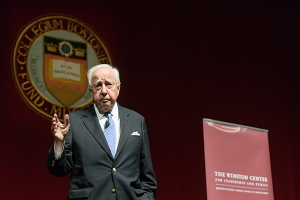
David McCullough (Two-time Pulitzer Prize winner for literature.)

As a tribute to David McCullough, his daughter compiled a list of several McCullough essays and public presentations. Though the readings are not narrated by McCullough, they illustrate his great range and understanding of history as a professional writer.

McCullough was 34 years old when “The Johnstown Flood” was released. Until then, he had worked as a writer for publications like the American Heritage magazine.

McCullough’s “History Matters” is a series of essays about famous people, books he has admired, and his success with historical biographies like “Truman”. McCullough’s first success was the story of the “Johnstown Flood”, published in 1968.  After McCullough’s success with the “…Flood”, he became a full-time writer. He notes—without support of his wife, the idea of becoming an independent writer would have been impossible. The risk of unemployment and no regular check would have undoubtedly been on McCullough’s mind when he discussed it with his wife.

McCullough’s public presentations in “History Matters” are of speaking engagements at universities and various organizations that asked McCullough to address their professional interests.

With the success of his books, in the 1980s, he became a popular and sought-after public speaker. He frequently gave commencement addresses to Universities and Colleges, wrote and presented what he wrote to historical societies and museums. He occasionally addressed government bodies and civic groups arguing for historical literacy to preserve the institutions of American government. One of his most well-known narrations was of Ken Burn’s “The Civil War” on PBS’s American Experience in 1990. McCullough passed away on August 7, 2022, at the age of 89.

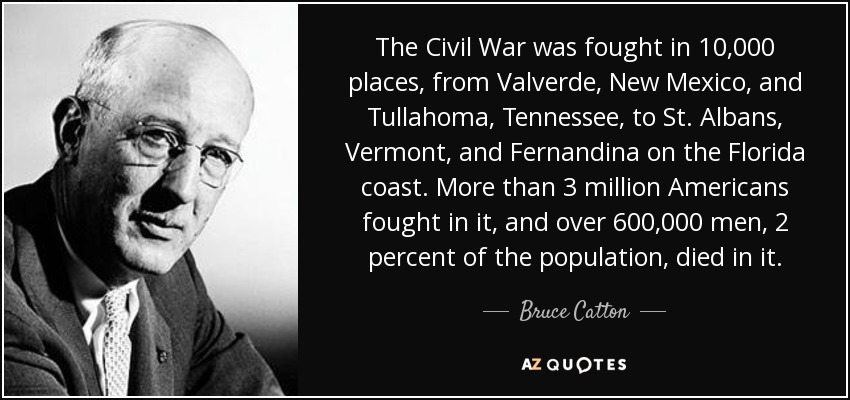
“History Matters” is a short book about a gifted writer who thoroughly researched his subject and wrote about the intimate details of history to give listener/readers the feeling they were “in the room”. He insisted on accuracy and clarity of what he wrote and advised writers to do the same if they wished to be historians. He cites the narrative power of Barbara Tuchman, Bruce Catton, and Paul Horgan as writers who vivified the dry analysis of history. The mix of history and fiction is blended by writers like these to give context to their audiences.

Like Caravaggio’s depiction of Saint Thomas’s doubt and faith in the resurrected Christ, McCullough argues historians must be relentlessly curious.

McCullough felt good historians had to see the world through the eyes and experience of their subjects to tell the truth of history. He argued good historians have to be relentlessly curious about the time of which they are writing. Without careful research and detail, the truth of history is lost.

To McCullough “History Matters” because it vivifies the past in ways that are forgotten and often taken out of the context of their time. He believed Tuchman, Catton, and Horgan practiced what he preached even though some (like me) would suggest even good historians change history of the past because of influences of the present. To minimize those influences, McCullough argues the details of history matter. Without details of the time when history is made, the truth can become distorted. McCullough infers admiring Washington, Lincoln, Grant, Roosevelt, Truman, and Presidents of this century without details of their time distorts the truth of history. From a book lovers’ perspective, this observation is two edged. Historians are human which suggests they have the same social blindness as everyone.

History is revised in every generation.
Abraham Lincoln, Ulysses Grant, Harry Truman and all Presidents have been vilified in their times and revised by future historians. Details are certainly important as McCullough observes in “History Matters”, but truth in history seems dependent on the passage of time and details selected by histories’ scribes. Therein lies revisionist history which may or may not be the truth of history.

CIVILIZATION

Will Durant’s “…Story of Civilization…” is a fascinating view of history, but not a true measure of Western civilization’s origin.

Books of Interest
 Website: chetyarbrough.blog

Our Oriental Heritage: The Story of Civilization, Volume 1 

AuthorWill Durant

Narrated By: Robin Field

WILLIAM AND ARIEL DURANT (Historians, researchers and writers of philosophy. William is born in 1885, graduated from Columbia University with a PhD in philosophy and humanities in 1917, dies in 1981. Ariel is born in 1898, also dies in 1981 but aided William Durant with research and editing.

This 40 plus hour audiobook about the origin of civilization is a daunting undertaking but an interesting perspective. Will Durant was not an anthropologist, but he was an erudite historian, philosopher, and engaging writer with a wife that helped him research, edit, and organize his work. His story telling and philosophical beliefs are certainly challengeable because of the speculative nature of ancient artifacts and cultural interpretations of ancient civilizations. Durant cleverly interprets the political and sociological history of civilizations and their historical and religious beliefs. With the aid of his wife, Durant assigns meaning to those beliefs which are plausible but, at times, he either confuses correlations with causes or stretches one’s imagination too far.

The oversimplification of history.

Professor Goldin has written a history of migration that reminds one of the well-known phrases attributed to Socrates: “I know that I know nothing”.

Anthropologists suggest the Durants oversimplify the complex multi-generation development of human societies. Some agree that an Afro-Asiatic language evolved into other languages, but linguists suggest there are many sources of language that have little to do with a singular origin of language. In the same vein, there is skepticism about their analysis of religious beliefs coming from the East because their presumptions are too deterministic for Eastern beliefs’ correlation with Greek rationalism and Christianity. Like David Hume and Karl Popper advise, “correlation does not imply causation”. Some anthropologists argue the Durants romanticize ancient wisdom and ignore political and brutal realities brought by internecine and external wars. Further, unique societal events and discoveries change civilizations as readily as past knowledge and experience, e.g., like the classical physics of Newton, relativity of Einstein, and quantum mechanics of today.

Eastern civilization’s influence on the West is the subject of the Durants’ expansive story.

It is interesting that Durant chooses Eastern civilizations as a precursor of Western society. That seems plausible based on early humans moving from Africa to eastern shores. He presumes the purpose, goal, and end results of Western society originated in Eastern cultures. Some anthropologists question belief that Western cultural beliefs evolved from Eastern cultures, but Durant argues foundational cultural, intellectual, and technological advance originated in Mesopotamia, Egypt, India, and China; long before the West is populated.

The Red Sea and a Peninsula that connects Africa to the East.

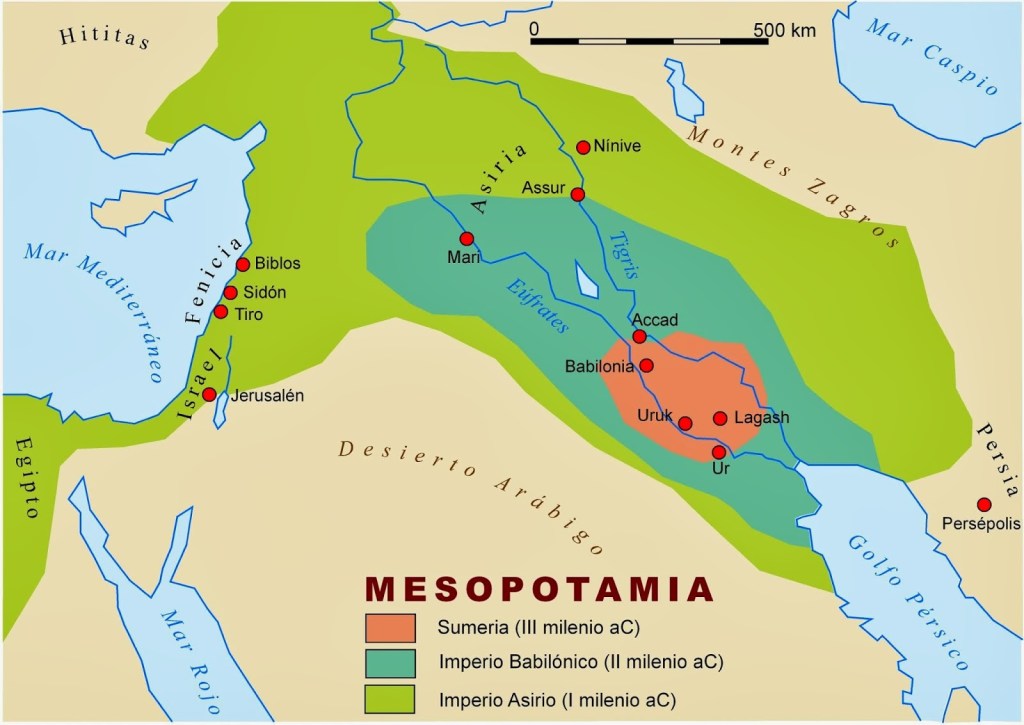
With the origin of human life in Africa, Durant suggests human beings crossed the Red Sea or the peninsula to the continent of Asia to settle the fertile lands of Mesopotamia. The Durants argue early humans developed the Afro-Asiatic Semitic language that evolved into Arabic, Aramaic, Amharic, and Hebrew dialects for Akkadian, Arab, Aramean, Israelites, Phoenician, Moabite, and Ethiopian peoples. Mesopotamia became known as “The Fertile Cresent” and the “Cradle of Civilization”.

Mesopotamia contains the future nation-states of Iraq, Syria, Lebanon, Israel, Palestine, Jordan, Egypt, southeastern Turkey and western Iran.

Durant is criticized for human life’s romanticization, generalization and simplification. His critics argue civilizations’ complexity and societal conflicts are not adequately supported by his opinions and research. Some suggest too much of his opinion is based on secondary sources rather than field work. These are reasonable criticisms, but they do not diminish one’s fascination with his interpretations of others’ field work and opinions. Durant offers an interesting and entertaining story of civilization, but his opinions are only partly right.

The fundamental argument of Durant’s view of civilization is that intellectual, religious, and technological innovations of Eastern societies are foundational beliefs of Western society.

The Durants argue that writing systems, legal codes, mathematics, and religious thought in the West came from the East, i.e. to Durant, the roots of Western thought, governance, philosophical belief, and culture had Eastern origins. Durant’s threads of connection between East and West are not wrong but misleading. Correlation is not proof of causation. If one sees ice cream sales are up and drowning incidents are down, one is obviously wrong to conclude eating ice cream would reduce one’s chance of drowning.

One can believe Eastern culture developed before Western culture because of proximity. To Africa. However, the advance of civilization is not linear. It seems a stretch to believe the East’s civilization laid the foundational beliefs of the West because they are distinctly different because of independent experiences. An African human is not an Asian person just as an Asian person is not a Greek, German, Frenchman, or American. Philosophical, political, and artistic innovations are arguably derivative, but genius offers origination and revolutionary changes in civilizations. Agriculture may have begun in Asia but to infer industrialization is a furtherance of Eastern civilization is as wrong as saying Quantum theory is the furtherance of Western civilization. Civilization is too complex to be characterized as a linear process.

Will Durant’s “…Story of Civilization…” is a fascinating view of history, but not a true measure of Western civilization’s origin.

LIFE’S JOURNEY

Millman’s Socratic story is about human patience and knowledge. He addresses knowledge as something of the greatest value that can keep one from resorting to violence. This is a message that resonates with those who are appalled by today’s international and domestic conflicts.

Books of Interest
 Website: chetyarbrough.blog

The Journeys of Socrates

Author: Dan Millman

Narrated By: Sam Tsoutsouvas

Dan Millman (Author, world champion athlete, martial arts instructor, and college professor.)

Dan Millman’s reasons for the title of his book “The Journeys of Socrates” is difficult to understand. The known facts of Socrates life do not seem remotely related to the life of a Jewish immigrant who lived in 19th century Russia. The story is almost too horrific to believe because of the tragic life of its hero Sergei Ivanov, a Jew in Tsarist Russia being raised in a camp of Cossack warriors. The only parallels one may make is that Socrates is characterized in ancient writings as a man who sought virtue and wisdom in his journey through life.

Socrates was known as a warrior in the Peloponnesian War between Athens and Sparta (431-404 BCE). He is better known as a teacher and student of the philosophy of life.

Socrates had gained a reputation for bravery, endurance, and moral fortitude in war, while a mentor of young men like Alcibiades who wanders through life with little self-understanding. (It is the ancient writings of Plato, Xenophon, and Aristophanes that reveal some of what is told of Socrates life.) This seems a slender thread of association with the title of Millman’s book. The story of Sergei Ivanov is of a man who introspectively examines the meaning of life after experiencing horrific violence. This is a Socratic interrogation of a Jew’s life in pre-1917, revolutionary Russia and Ukraine.

Hiding one’s identity as a Jew has been told many times by many authors. Ethnicity and religious belief, like the color of one’s skin, marks one as different.

Ethnicity is a marker of human beings as the “other”, i.e., someone different than themselves. Unlike the color of one’s skin, ethnicity is easier to hide. Sergei Ivanov becomes known as a Jew in a Cossack training camp. He decides to escape that life but is followed by a fellow trainee who catches him. They fight and Sergi’s antagonist is knocked unconscious and appears dead. Sergi escapes and plans to find what he believes is a treasure buried by his grandfather that will give him enough money to get passage to America from his grandfather’s Ukranian homeland.

Buried treasure.

Sergi finds the treasure that had been buried by his grandfather, but it was only a clock and five gold pieces, not enough for passage to America. However, there is an address on the clock that leads him to his grandfather’s house. What he finds is an aunt that he thought was dead. She has a daughter for whom he falls in love and asks for her hand in marriage. They are married and Sergi’s plan is to take his now pregnant wife to America when he has earned enough money for passage. However, fate intervenes.

The man Sergi thought he had killed when he escaped the training camp was alive and had become a leader of a Cossack gang that terrorized the country with a special hatred for Jews.

The gang comes across Sergi and his pregnant wife when they are out for a walk before their planned trip to America. His former enemy and his followers murder Sergi’s wife, rip the baby out of her womb and leave her husband unconscious on the ground after trying to defend his pregnant wife. The gang leader chooses to leave Sergi alive to remember the grief he would have for his wife and baby’s loss of life because he could not save them. Sergi recovers and prepares himself for revenge on his former training camp antagonist.

Deaths inevitability.

At this point, one presumes this is to remind listeners of Socrates reported bravery, endurance, and moral belief despite hardship in life and one’s inevitable death. However, this is only a small part of the author’s intent. What one draws from the story is how ethnic or racial discrimination exists in every nation in the world. Human nature is often brutish and violent despite a rational person’s search for truth and peaceful coexistence. One asks oneself why humans wage war, why we murder innocents, and why does revenge only begat more death.

Sergi recovers from his injuries and is counseled and educated by a believer of a different faith.

As one finishes Millman’s story, listener/readers realize Sergi’s teacher is educating him about human patience, ethnic understanding, and knowledge that can break the repeating cycle of discrimination and violence caused by racial, gender, and ethnic difference. It requires patience, preparation, and knowledge. Sergi spends many years with his teacher and gains great strength to prepare him for what is to happen next in his life. Knowledge of what happened when he was struck down after his wife was murdered is not clear to him. As the story develops, one finds his wife had two children in her womb and only one died in the confrontation. What happens when Sergi meets his wife’s murderer is the denouement and fundamental meaning of Millman’s story.

Millman’s Socratic story is about human patience and knowledge. He addresses knowledge as something of the greatest value that can keep one from resorting to violence. This is a message that resonates with those who are appalled by today’s international and domestic conflicts.

ERASMUS

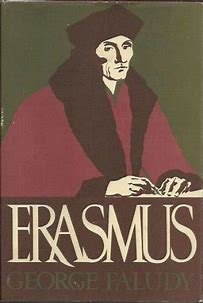
George Faludy suggests the most popular books written by Erasmus were “The Praise of Folly” and “Colloquies” which are similar in that they offer humorous and insightful stories of the human condition. One leaves Faludy’s biography of “Erasmus” with the thought that these two should be read, particularly because of the time in which we live today.

Books of Interest
 Website: chetyarbrough.blog

ERASMUS

By: George Faludy

György Bernát József Leimdörfer aka George Faludy (1910-2006) Author, Hungarian poet and translator.

George Faludy’s biography of Erasmus was published in 1970. A few years ago, I purchased a paperback edition of Faludy’s book because of an interest in a 16th century “man of the cloth” (an ordained Catholic priest) who became a devotee of Francesco Petraca (better known as Petrarch who is considered the father of humanism). Erasmus was born in 1466 and died in 1536. He believed in the value, dignity, and potential of human beings. Petrarch had been dead for a hundred years when Erasmus became a proponent of humanism at a time when Catholic’ Indulgences were challenged by Martin Luther. Luther’s Ninety-Five Theses led to a schism in the church leading to the establishment of Protestantism.

Martin Luther (1483-1546)

Luther’s Ninety-Five Theses led to a schism in the church leading to the establishment of Protestantism.

It is hard to imagine how Erasmus managed to become a leader in reforming the Catholic Church with his humanist beliefs. Erasmus walks a fine line between the schism fomented by Martin Luther and his belief in reform. Erasmus wrote the famous work “The Praise of Folly” that was a satirical critique of societal and ecclesiastical practices of the Catholic church without joining the movement started by Luther. On the one hand, Erasmus agreed with Luther on the importance of faith and the perfidy of “indulgences” sold by the Church. Indulgences were to raise money with alleged religious guaranties for a Catholic’s admittance to heaven. On the other, Erasmus insisted on faith in God and reform, not abandonment of the Catholic church. Erasmus’s academic and scholarly review and interpretation of religious texts convinced him that the Church only needed reform, not schism.

Faludy carefully explains the tumultuous relationship between Erasmus and Luther that at times seemed to break but survived their fundamental disagreement on reform versus schism.

Erasmus acknowledged many misrepresentations of religious text with an unwavering belief in the divinity of their origin. As one who is skeptical about the divinity of religious texts, it is encouraging to read of this highly respected scholar’s belief in their truth. Faludy’s biography of Erasmus may not change an agnostic’s mind about God, but it will give one pause because of Erasmus’s reported research of original religious works in Greek, Latin, and other languages, i.e., a skill beyond most peoples’ capabilities.

Faludy does not write of Erasmus as a saintly person but as a well-educated and diligent scholar.

A surprising note by Faludy is that Erasmus suffered from syphilis which suggests something less than perfection in Erasmus’s character. However, Faludy’s note is not corroborated by any other information known to this reviewer.

Faludy suggested the most popular books written by Erasmus were “The Praise of Folly” and “Colloquies” which are similar in that they offer humorous and insightful stories of the human condition. One leaves Faludy’s biography of “Erasmus” with the thought that these two should be read, particularly because of the time in which we live today.

LIFE’S JOURNEY

Every human being grows to be who they are alone. Life is a solo journey, influenced by birth, living, and death.

Books of Interest
 Website: chetyarbrough.blog

Solo (When the heart gets lost, let the music find you.)

By: Kwame Alexander with Mary Rand Hess

Narrated By: Kwame Alexander

“Solo” demonstrates an added value to listening rather than just reading a novel. Kwame Alexander and Mary Rand Hess tell a story of the struggle for personal identity. This is a journey of a young man whose father is a famous musician. It offers some insight to what it is like to be a boy growing to be a man in a family of a successful professional musician.

Image result for addiction

The boy’s father is a recovering addict who has had success as a guitar playing singer.

His mother died when he was seven. As a young man of 21, he is surprised to find he is an adopted son. He chooses to find his birth mother who lives in Africa to better understand where he came from and why his birth mother gave him up. He is estranged from his family for various reasons ranging from his father’s addictive behavior to the failure of his parents to have told him of his adoption.

In the boy’s journey to a remote area of Africa, he meets various natives who live in the poverty of a small village.

The boy’s birth mother is away from her village to help natives of another village in the hill country of the area. The young man decides to wait for her in his mother’s home village. He meets a young African girl who speaks English and is helpful in explaining what life is like for her in the village. They become friends with a sense of something more in their future. The boy’s waiting is interrupted by his father’s arrival with a film crew to vivify the story of their familial relationship.

His father’s arrival disrupts the boy’s plan of waiting for his birth mother’s return. A decision is made for the entire group to journey to the village where his birth mother is working.

The journey takes several hours and exhausts his father as well as the rest of the Americans in the group. The boy’s birth mother recognizes her son as soon as he arrives. She is young. She gave birth to her son at age 15. The hardship of raising a child appears to have been too much for her at her young age.

His father’s interruption in the boy’s journey to find his birth mother leads to a reconciliation with his father and a better understanding of his journey to become a man.

Top 10 Reconciliation Quotes - BrainyQuote

Musical interludes in the story entertain the listener and offer some understanding of what it is like to be raised by a famous musician who loves his family but is handicapped by drug addiction.

On their return to the birth mother’s village, a refrigerator is delivered at the expense of the boy’s father. This is a great benefit to the village. The boy’s father becomes ill and dies.

Every human being grows to be who they are alone. Life is a solo journey, influenced by birth, living, and death.

TO BE JEWISH

One hopes for more Leifer’s in this world of human tragedy.

Books of Interest
 Website: chetyarbrough.blog

Tablets Shattered (The End of an American Jewish Century and the Future of Jewish Life)

By: Joshua Leifer

Narrated By: Eli Schiff

Joshua Leifer (Author, journalist and scholar who explores the past and present of American Jewry, Leifer pursues a PhD at Yale on the history of modern moral and social thought.)

Joshua Leifer reflects on the Americanization of Jewish ethnicity in modern times. Leifer offers his personal view of modern events in Israel, including the terror of October 7th, 2023, and its aftermath.

In the last month, my wife and I journeyed to Poland, the Baltics, and Finland.

On the trip, we visited Auschwitz, the terror of Soviet occupation of the Baltics, and the tenuous relationship of Finland and Russia. More will be shared in a future review.

The holocaust is made present to anyone who chooses to visit Auschwitz.

This is a monument to the Holocaust, located in Germany.

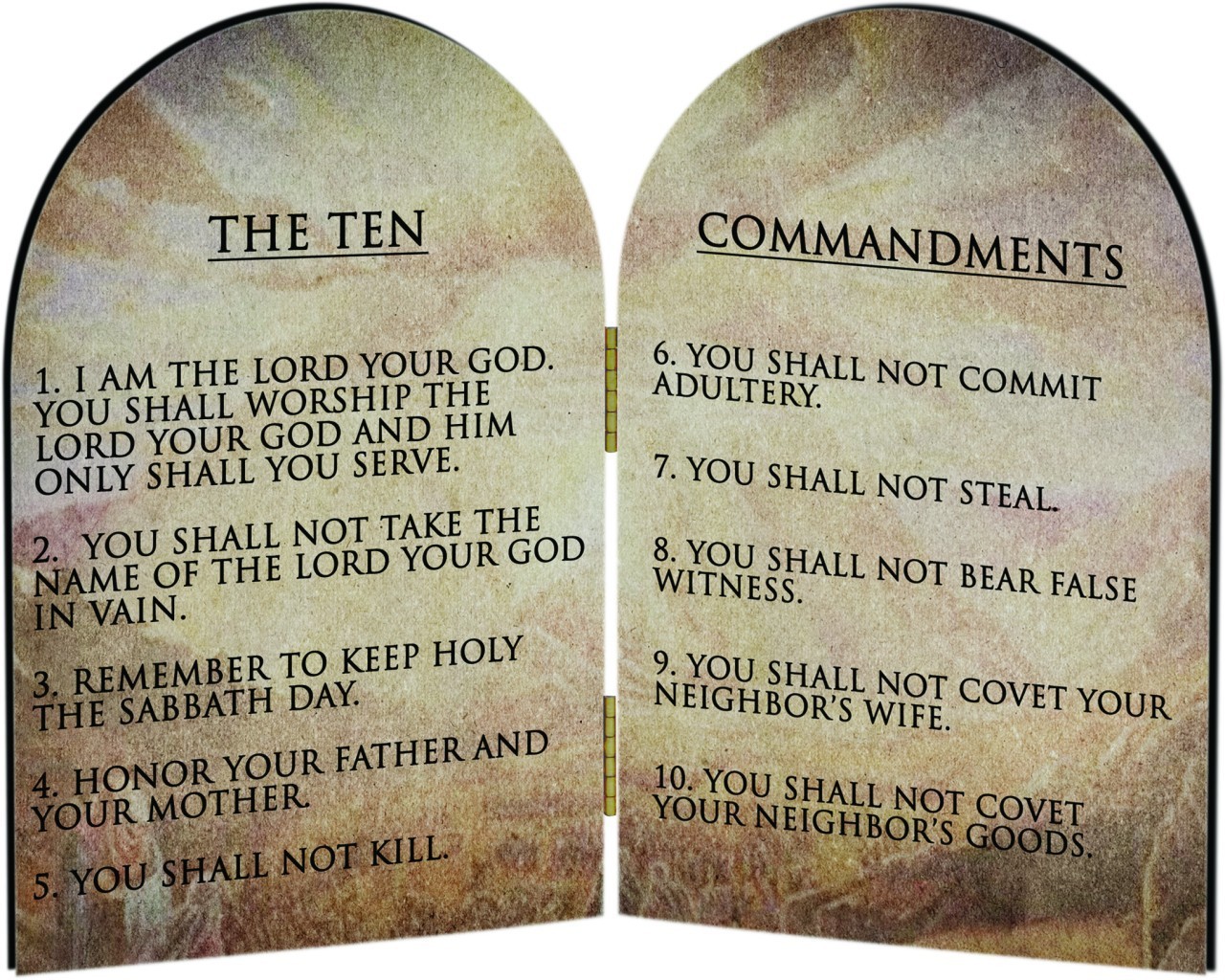
Leifer’s book is not about Auschwitz’s atrocity but about a diminishment of Jewish identity. One who reads or listens to Leifer’s view of Jewish ethnicity will look at Judaism in a different way. Regardless of one’s personal beliefs, Leifer argues Judaism is losing its way from what he believes is a fundamental tenet of the Jewish religion. That tenet is that Judaism will always be a minority within cultures of the world and, as a minority, Leiger argues it is critically important for followers to return to its Judaic roots. Leifer implies Americanization of Judaism is a social influence that threatens the Tablets of the Covenant, i.e., the Ten Commandments.

Leifer explains that Israel will continue to grow as an independent nation with an exodus of Jewish believers from America and the world. Leifer suggests that exodus is evident in the diminishing number of American Jews who have chosen to leave America to become Israeli citizens. His hope is that in Jews return to a nation of their own with a renewed belief and adherence to the Ten Commandments.

  1. I am the Lord your God: You shall have no other gods before Me.
  2. You shall not make for yourself a graven image: No idols or images.
  3. You shall not take the name of the Lord your God in vain.
  4. Remember the Sabbath day, to keep it holy.
    • Honor your father and your mother.
  5. You shall not murder.
  6. You shall not commit adultery.
  7. You shall not steal.
  8. You shall not bear false witness against your neighbor.
  9. You shall not covet: Do not desire your neighbor’s house, wife, or possessions.

Of particular note is the Haredim who adhere to traditional Jewish law and customs.

There is an underlying accusation in Leifer’s book that America reinforced want for money, power, and prestige that changed the nature of Judaism.

However, human nature is a failing in all cultures. The truth is that all forms of government and culture seduce human beings to violate the Ten Commandments: not only Jewish followers. Human nature is an equal opportunity exploiter of society and people.

Leifer does have a point in that any ethnicity that truly follows the ten commandments is better than one that ignores them.

The fault in Leifer’s belief is that the ten commandments will or can be universally accepted by any culture or ethnicity. Human nature can be improved upon, but one doubts it can be erased by either religious or secular teaching of the Commandments.

Leifer hopes for a two-state solution in Israel. That seems a laudable and achievable goal, but human nature remains the same. With statehood, both Israeli and Palestinian societies may become better but there will always be the threat of Commandment violation because of human nature. One hopes for more Leifer’s in this world of human tragedy.

BEING HUMAN

Robinson shows society treats people unequally, wages war for power, lacks control over behavior, and deceives itself about human nature.

Books of Interest
 Website: chetyarbrough.blog

Gilead

By: Marilynne Robinson

Narrated By: Tim Jerome

Marilynne Robinson (Author, received the 2005 Pulitzer Prize for fiction for “Gilead”.)

“Gilead” is a Pulitzer Prize winning novel. It is cleverly written by Marilynne Robinson and beautifully narrated by Tim Jerome. Some listeners may have a hard time getting through its religious point of view. It is largely about belief in God. However, it’s truth about human nature makes it a classic regardless of one’s religious beliefs.

In broad outline, it is about three generations of preachers, a grandfather, his son, and a grandson, who live in Gilead, Iowa.

There is the grandfather who fights on the Union side of the Civil War in Kansas, presumably because of belief in human equality and union. However, it appears his son cannot justify killing of any human being, for any reason. Later, a listener/reader finds there is a rift between the Civil War’ preacher and his son who also becomes a preacher. The son becomes a father who has his own son. This book is like a letter to his son to explain his journey through life and what he has learned. The story begins by recalling a trip he and his son take to discover the grandfather’s grave in Kansas.

The journey is in the late 19th century.

The grandson accompanies his father on the arduous journey from Gilead to Kansas. They begin in a horse drawn carriage but because of weather leave the horse and carriage to walk the last miles. It is hot. One realizes the father’s decision to travel with his son is for many reasons beyond companionship. One presumes the father is ambivalent about the grandfather’s decision to join union soldiers with a willingness to kill secessionists opposed to abolition. One wonders if the father is saying there is no justification for War. The story gains broader interest at this point.

KILLING IS NEVER JUSTIFIED.

After having found the grave, the father relates a story of burying his father’s gun and some shirts. The gun and clothing are dug up. The bloodied and dirty clothes are washed, but they do not come clean. The wife of the letter writer and preacher finally throws them away, but the gun is reburied, dug up again, dismantled and thrown into a lake by the preacher. The vignette suggests the father believes killing is never justified, even in a war meant to preserve union and abolish slavery.

Preachers.

The father’s writing suggests there is a gap in ages between him and his wife. We find he is 67 when he marries his wife who is in her 30s. The preacher is nearing death by the time of the letter to his son is written. With the gap in their ages, there is a hint of jealousy about a man raised by the preacher’s best friend, who is also a preacher of the cloth. The son is Jack Boughton. Jack often played baseball with the preacher’s son, but the preacher had been told by Jack Boughton’s father to be wary of Jack.

The carrot and stick of parenting.

The impact of neglectful parenting is referred to in a sermon noted in the preacher’s story. Jack Boughton’s intelligence and education combined with parental neglect is inferred to be a cause of atheism and a penchant for illicit behavior. This creates a tension between the preacher and his close friend’s son, particularly when the childhood friend visits the preacher’s wife and son.

One comes away from Robinson’s story with a summary of the flaws of humanity. At the end of the author’s story, Jack Boughton has created a second human nature crises that will resolve itself in either happiness or tragedy. Robinson shows society treats people unequally, wages war for power, lacks control over behavior, and deceives itself about human nature.

27 BOOKS

Like the number 47 in “Guardians of the Galaxy”, the 27 books of the New Testament offer no answer to the meaning of life.

Books of Interest
 Website: chetyarbrough.blog

“The History of the Bible” (The Great Book Lectures)

By: Bart D. Ehrman

Narrated by: Bart D. Ehrman Lectures

Bart Denton Ehrman (American New Testament Scholar, Wheaton College BA, Princeton Theological Seminary received a Master of Divinity and PhD.)

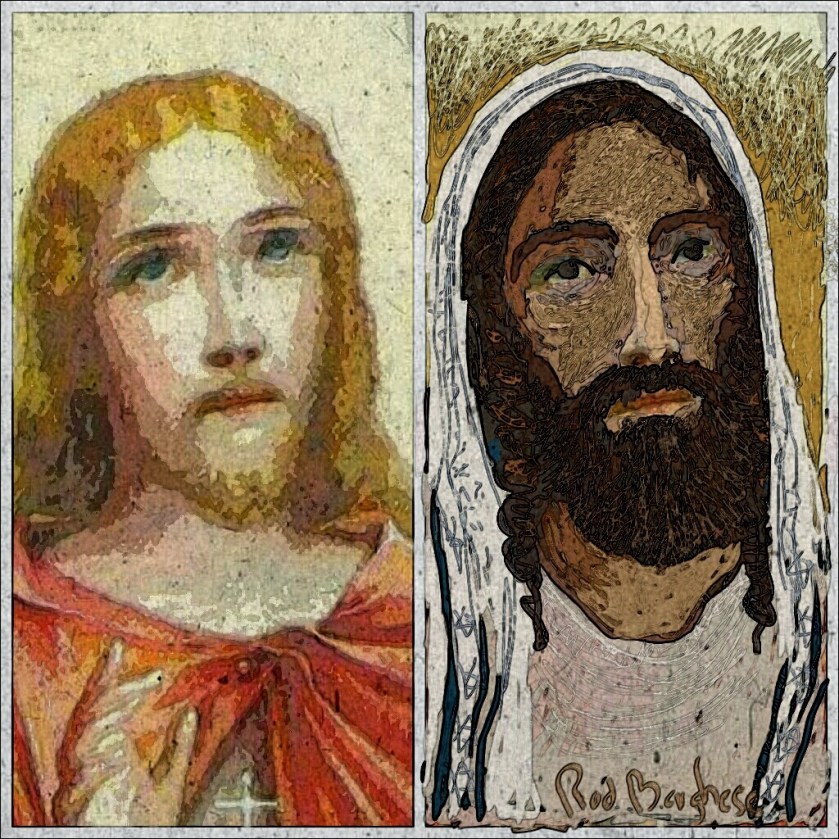
Bart D. Ehrman’s lectures are a revelation to one who knows little about either the Bible or the New Testament. As a scholar, Ehrman views the New Testament as history, not a religious covenant. The New Testament, as differentiated from the Holy Bible (a covenant with Israel), is a later covenant with Jesus that extends religion to all humankind.

Ehrman’s lectures are not about religious belief but about the history of the New Testament.

Removing the ideas of religious belief from his lectures will undoubtedly offend many who believe in God’s and/or Jesus’s divinity. What Ehrman does is explain how the New Testament is a flawed recollection of historical figures. The flaws come from scribes who interpret three contemporaries of Jesus–Matthew’s, John’s, and Peter’s fragmentary writings of Jesus’ ministry and teachings.

The 27 books of the New Testament are written by scribes of later centuries that are interpretations of Matthew’s, John’s, and Peter’s interpretations of Jesus’s beliefs and history on earth.

Because scribes and contemporaries’ recollection of Jesus are human, truth is in the eye and limitations of its beholders. The inference from Ehrman’s lectures is that truth is distorted by interpretations of interpretations.

Ehrman systematically reveals how the story of Jesus’s life and beliefs change over the centuries.

He gives listeners a better understanding of the complexity and false interpretations of religion that accompany the many atrocities committed by believers who foolishly murder fellow human beings. These great historical conflicts are based on interpreters’ interpretations of interpretations.

God may or may not exist, but human beings insist on their beliefs to the detriment of humanity.

History unreservedly shows–believing in religion, without concern for society leads to discrimination, mayhem, and murder. That is as clear today in the Israeli/Palestinian conflict as in the history of the Jewish holocaust and pogroms of the past.

Like the number 47 in “Guardians of the Galaxy”, the 27 books of the New Testament offer no answer to the meaning of life.