TOO LATE

Ideally, public good and ethics will be taught in advance of the melding of technology and government, i.e., not after mistakes are made. However, history suggests humans will blunder down the road of experience with A.I., making mistakes, and trying to correct them after they occur.

Books of Interest
 Website: chetyarbrough.

The Technological Republic (Hard Power, Soft Belief, and the Future of the West)

By: Alexander C. Karp and Nicholas W. Zamiska

Narrated By: Nicholas W. Zamiska

The authors are the founder and operations manager of the American software company, Palantir Technolgies. Palantir has been hired by the U. S. Department of Defense, the Intelligence Community, agencies of NATO countries, and Western corporations to provide analytic platforms for defense analysis, healthcare, finance, and manufacturing.

They believe artificial intelligence research and development has lost its way.

They argue Silicon Valley has lost focus on what is important for survival of society and Western values. They suggest A.I. should be focusing on serving humanity in ways that responsibly regulate nuclear weapons and protect society from existential risks like climate change, pandemics, asteroid collisions, etc., that threaten human extinction. The authors provide a powerful criticism of technology and its national purpose.

Karp and Zamiska argue that technology is focusing on consumerism rather nuclear annihilation or existential risk.

By focusing on convenience and entertainment for financial success, fundamental problems like the threat of nuclear war, homelessness, inequality, and climate change are ignored or relegated to the trash heap of history. (“Trash heap of history” is the belief that what happens, happens and society can do nothing about it.) The west has become complacent with short-term focus on profit and consumer demand. The authors argue that the greater good is no longer thought of as an important societal goal. The primary goal is making money that enriches creators and company owners by making purchases more convenient to and for consumers.

Aldous Huxley (English writer and philosopher, 1894-1963, author of “Brave New World”.)

Their argument is there should be more collaboration between tech and government. Historically, government is only as good as the information it has to make societal decisions. A computer program can be programmed with false information like the error of weapons of mass destruction that led to an invasion of Iraq that was a bad decision. The domino theory input that led to the Vietnam war; so, on and so on. There is also the threat of an elected President that uses the power of technology to do the wrong thing because of his/her incompetence. There is the risk of government gathering personal information and using it to cross the line into a “Brave New World” where innovation, free thought, and independent action are discouraged or legislated against so people can be sent to jail for breaking the law?

Possibly, melding technology with government is an answer, but it is a chicken and egg concern. Education about public good and ethical practices should begin as soon as the egg cracks, not after hatchlings are already old enough to work. Phrases that come to mind are “What’s done is done” or “The die is cast”.

The authors argue the West needs to up-its-game if it wishes to create a peaceful and prosperous future for a society that is founded on the ideal of human freedom.

Without future generations creating policies based on ethical purpose for the public good, one infers western culture will spiral into individual isolation and self-interest that diminishes western culture and ideals.

Ideally, public good and ethics will be taught in advance of the melding of technology and government, i.e., not after mistakes are made. However, history suggests humans will blunder down the road of experience with A.I., making mistakes, and trying to correct them after they occur.

TROJAN HORSE

Stanislas Dehaene’s research on the subconscious mind seems to reveal more about human weakness than strength. His research indirectly points to the danger of scientific discovery introducing subconscious human processing to machine learning.
Books of Interest
 Website: chetyarbrough.

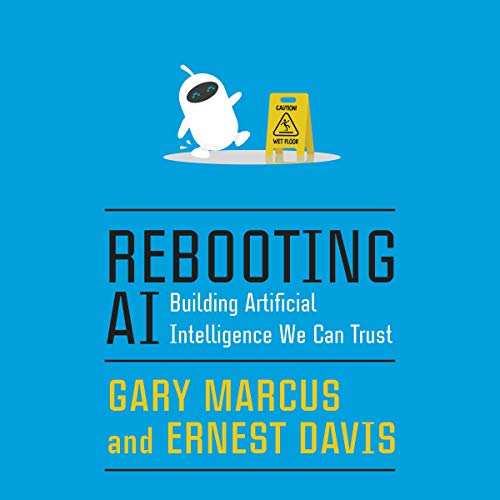
Consciousness and the Brain  (Deciphering how the brain codes our thoughts)

By: Stanislas Dehaene

Narrated By: David Drummond

Stanislas Dehaene (French author and cognitive neuroscientist.)

This is the second review of Dehaene’s book. It was reviewed in 2017 with an essay titled “Consciousness”. A second look is informative because it is a complicated subject implying brain function might one day be replicated by machine learning. He suggested machine learning is a long way into the future but with quantum technology that future seems less distant.

To recall information and report meaning is a definition of what Dehaene calls consciousness.

The complicating part of that definition is the subconscious and its role in conscious awareness. Dehaene argues the subconscious is outside of our conscious awareness but is an integral part of decisions and human behavior. He implies if the brain can be precisely mapped, it can be translated to machine learning that will make the subconscious an explicitly known influence on thought and action.

The ramifications of what is subconsciously understood being a part of conscious decision making and action is both positive and negative.

Theoretically decisions and actions will be more accurate and routine tasks and habits can be more efficiently executed. Unconscious bias could be eliminated. On the other hand, the mental shortcuts of the unconscious in a machine-mind may cause stereotyping or overconfidence that elicits inappropriate or harmful thoughts and actions.

Replicating the conscious and unconscious mind by mapping the brain and transferring those human functions to machine learning seems like a Trojan horse that offers a pyric victory. Dehaene’s research on the subconscious mind seems to reveal more about human weakness than strength. His research indirectly points to the danger of scientific discovery introducing subconscious human processing to machine learning.

MARS & BEYOND

Mahaffey is a supporter of nuclear energy and its potential for earth’s energy needs. He argues fission can be made a useful source of energy while fusion research holds the best opportunity for humanity’s future.

Books of Interest
 Website: chetyarbrough.blog

Atomic Adventures (Secret Islands, Forgotten N-Rays, and Isotopic Murder-A Journey into the Wild World of Nuclear Science.)

By: James Mahaffey

Narrated By: Keith Sellon-Wright

James Mahaffey (Author, Research scientist at Georgia Tech Research Institute)

“Atomic Adventures” is a reminder of the race for the atomic bomb, its wide pursuit by nations of the world, and research for the holy grail of atomic fusion. Mahaffey’s science explanations are tedious for non-scientists, but his history of the secrets and use of atomic energy are interesting and surprising.
The United States, with the help of the UK, may have been first to acquire the atom bomb in 1945, but eight more nations acquired it by 2006.

United States: Acquired in 1945.

Russia (formerly the Soviet Union): Acquired in 1949.

United Kingdom: Acquired in 1952.

France: Acquired in 1960.

China: Acquired in 1964.

India: Acquired in 1974.

Israel: Believed to have acquired in the late 1960s, though it maintains a policy of deliberate ambiguity.

Pakistan: Acquired in 1998.

North Korea: Acquired in 2006

It is somewhat ironic that Pakistan did not acquire the atom bomb until 1998 when Pakistan’s “father of the bomb”, Abdul Qadeer Khan, became a rich man by selling technological know-how of the bomb to nations like North Korea, Libya, and Iran.

Abdul Qadeer Khan

Abdul Qadeer Khan (1936-2021, father of Pakistan’s atomic weapons program, died at age 85.)

As a singular discovery, Einstein’s E = mc² offered a dual opportunity for the world, i.e., destruction and/or survival of the human race. The bomb suggests destruction while nuclear fusion offers an inexhaustible energy source that could reverse global warming and rocket human beings to other worlds.

ALBERT EINSTEIN (1879-1955, died at age 76.)

Mahaffey explains the immense potential of nuclear power as a principal source of energy. History shows nation-state and political conflicts may spin nuclear power out of control to kill millions and devastate the environment. On the other hand, nuclear research and power offer avenues for humanity’s survival and longevity.

Mahaffey notes there were Japanese, as well as better known German scientists, who were working on the creation of a nuclear bomb that could destroy Allied armaments and combatants. The rush to weaponize radiation during WWII surprisingly includes research being done by Japan as well as Germany during WWII. America won the research race because of superior human and financial resources that could be marshalled to complete the scientific research and experimentation needed to perfect a nuclear weapon.

Mahaffey explores the creation and destructive history of the atom bomb.

Surprising to some listeners, Mahaffey explains Argentina’s significant effort to increase its research and development of nuclear power after WWII. Argentina created the National Atomic Energy Commision in 1950. The chief researcher, hired by President Juan Perón, was Ronald Richter (1909-1991), an Austrian-born scientist who headed their plan to create a fusion power facility. Richter fails but nuclear energy remains an important part of Argentina’s history. In the 1960s they built their own research reactors and by 1974 built their first fission nuclear power reactor, Atucha I. By 1984, they had two heavy-water reactors with Atucha I and Atucha II.

Ronald Richter (1909-1991, Austrian-born German who became an Argentine citizen who headed up the Argentine Huemul Project to create a nuclear fusion power plant. He failed, despite the millions of dollars spent to build and rebuild fusion power plants.

Image result for ronald richter

Yoshio Nishina (the father of modern physics research), Bunsaku Arakatsu, and Masatoshi Okochi created the so-called Ni-Go and F-Go projects to develop an atom bomb. They did not get beyond the laboratory stage because of a lack of resources, the exigency of war, and the complexity of nuclear technology. The energy of nuclear power, as shown by history, is two edged.

Yoshio Nishina (1890-1945, the father of modern physics research during WWII.)

Image result for medical use of nuclear energy

On the other nuclear radiation can heal the sick

and potentially provide a clean renewable energy source.

Mahaffey explains how research in fusion can go awry. In a news article, two chemists reported in 1989 that fusion was created in their experiment by involving heavy water (deuterium oxide) and palladium electrodes. They reported excess heat production that they believed was nuclear fusion. As with all scientific experiment, their results had to be confirmed by other scientists testing of their results in the same experiment. Mahaffey, in his role at the Georgia Research Institute, was asked to replicate the experiment. Using the same tabletop experiment, Mahaffey initially confirmed Fleishmann’s and Pons’ findings. However, no other table-top experiments found the same results. What Mahaffey finally found was that the neutron counting device that was recording increased heat was the actual source of the heat increase, not the chemical interaction between heavy water and palladium electrodes. Further research is being conducted but the U.S. Department of Energy concluded in 2004 there is no convincing evidence to support cold fusion. Tests are still being done but Mahaffey infers that research is a scientific dead end. Mahaffey and a colleague tried again in a basement of his colleague’s house to try a similar experiment and failed.

NASA's Mars rover Perseverance landing: Everything you need to know | Space

Nuclear power has the potential to revolutionize interplanetary travel. The higher efficiency and power, particularly with the perfection of fusion, will shorten travel times and make trips to Mars and beyond more feasible.

Mahaffey explains how communication will be a challenge when interplanetary travel becomes common. The distance to other planets or galaxies will impede communication because of the limits of the “speed of light”. However, the solution may lie in quantum entanglement’s experimental proof found by Clauser, Aspect, and Zellinger. The complexity of entanglement makes the theory unprovable at the time of Mahaffey’s book.

In theory, quantum entanglement suggests information (communication) may be instantaneously transmitted across galaxies without the limitations of the speed of light.

Mahaffey goes on to explain the risk of radiation in a chapter about a “dirty bomb”. Security measures used to protect the public from radiation leaks make thieves believe something valuable is being secured by government laboratories. Thieves will steal these secure containers only to find they are risking death by opening their booty. Additionally, Mahaffey notes radioactive material is often disposed of illegally and irradiates innocent people who own dump sites that received inadequately contained radioactive material.

Mahaffey is a supporter of nuclear energy and its potential for earth’s energy needs. He argues fission can be made a useful source of energy while fusion research holds the best opportunity for humanity’s future.

FINANCIAL LITERACY

What Professor Fullenkamp makes clear is information is key to understanding financial markets, but human judgement is the difference between investor’ success or failure.

Books of Interest
 Website: chetyarbrough.blog

Financial Literacy (Finding Your Way in the Financial Markets)

By: The Great Courses

Lectures By: Professor Connel Fullenkamp

Professor Connel Fullenkamp (Lecturer at Duke University, economist and director of undergraduate studies in economics.)

“Financial Literacy” may put some listeners to sleep but there is a lot to be learned from Connel Fullenkamp’s lectures. He gives a lengthy description of financial markets extending from Stocks to Bonds, Forex, Commodity, and Derivative Markets. He offers information about how money is used and made in financial markets. Fullenkamp addresses banks, stocks, selling and buying securities, expected returns on investments, how they are priced, controlled, and how information about them is important for personal financial decisions.

It is no surprise to find that banks play a critical role in financial markets.

They provide personal banking services by accepting deposits and providing loans to individuals and businesses. They smooth the flow of money in the economy. Banks can help companies raise capital by offering advice and services for the issuance of stocks and bonds to finance businesses. They offer advisory services for mergers, acquisitions, and other financial strategies. Banks can act as market makers by buying and selling securities for their clients. They can provide asset management services, research and analysis, and ensure legal regulation and compliance with government and international laws. Banks are the backbone of financial markets when they provide efficient allocation of resources and ensure the smooth functioning of the financial system. All of this is true in concept.

However, banks, savings and loan companies, and mortgage lenders are run by human beings who are subject to all the risks of human nature that can lead to catastrophic financial collapse as it almost did in the 2007-2010 mortgage derivative crises.

To be fair to the professor’s presentation, the 2007-2010 crises is not only because of the bad mortgages generated by financial institutions like Countrywide, New Century and Ameriquest. Goldman Sachs, Lehman Brothers, Bear Stearns, and Merrill Lynch investment banks are equally guilty. They packaged bad mortgages with high-risk mortgages to be sold to the public as safe collateralized securities that were far from safe and ultimately unsound. The result was a near worldwide financial collapse.

The government compounded the failure of 2007-2010 by guaranteeing poorly justified mortgages that were included in the packaged securities.

Rating agencies like Moody’s Standard & Poor’s, and Fitch ratings misled investors about the risks of the packaged mortgage securities. Government oversight organizations like the Federal Reserve and Department of the Treasury did not adequately do their job. Ironically, banks like Wells Fargo resisted the mortgage derivatives while banks like JPMorgan Chase bought and sold them but was too big to fail. Ironically, both banks became vehicles for recovery by taking over some of the lenders that had to0 many mortgage derivatives in their portfolios. (As noted in earlier book reviews, many families lost their homes because of foreclosures caused by lenders who originated the mortgages in these securities.) Fullenkamp explains financial markets are based on information. However, as noted by information computer geeks, “garbage in, garbage out” sunk lenders and victimized many investors, lenders, and homebuyers.

In explaining the stock market, Fullenkamp notes an investor becomes a partial owner of a company which gives them a stake in a company’s future profits, either from dividends or market performance.

Stocks have a dual identity. The difficulty for the investor is in understanding the information provided by the company to predict company performance and reap the benefits of stock appreciation. Fullenkamp gives some insight on assessment of that information, but most listeners seem most likely to pay less attention to professors of finance than to their own judgement.

Fullenkamp goes on to discuss Forex (Foreign Exchange). This is a global marketplace for trading national currencies.

Unlike stock and bond markets, a Forex market operates 24 hours a day because currency is an international trading market with centers in different cities like New York, Tokyo, and London. In the case of Europe and the U.S., the trade would be in Euros and US Dollars or in Japan and the U.S., the trade would be in Dollars and Yen. Exchange Rates fluctuated based on nation-state events. Strategic buying and selling based on those events can create profits and losses for exchange traders. Unlike a singular centralized stock market, Forex is decentralized and conducted electronically over the counter (OTC) by a network of banks, brokers, and dealers.

Fullenkamp also defines commodities markets. There are hard and soft commodities. Hard are like gold, oil, and other naturally produced materials. Soft are agricultural products like wheat, coffee, or cotton.

Most commonly, trading in these products is done with futures contracts. Futures are agreements to buy or sell a commodity at a predetermined price on a future date. The investor is gambling on the commodity to be either worth more or less than what the product is expected to cost at the actual time of purchase or sale. There are several exchanges around the world. The participants are speculators that either take the commodities at the agreed upon price or simply gain or lose money based on the actual price of the commodity when it is deliverable.

There is a great deal to absorb from Fullenkamp’s lectures. The last lecture is on “The Future of Finance”.

He suggests the technology of mobile phones has expanded the lending industry to individuals from institutions. It has already begun in less successful economic societies. Mobile money platforms and digital financial services are being used in Africa. Users of these platforms store, send and receive money by mobile phone owners because traditional banking services are not available. Fintech companies are formed to assess creditworthiness of individuals and small businesses. The vast amount of personal information becoming available with the internet becomes a source of customer approval or rejection of small companies and individuals seeking loans.

What Professor Fullenkamp makes clear is information is key to understanding financial markets, but human judgement is the difference between investor’ success or failure.

Energy

Wysession explains coal and gasoline production costs will continue to rise making them too costly for most consumers. He believes energy production of wind, solar, hydro, and nuclear power will become more viable and less costly as science advances. From his lectures to our ears, listeners hope he is right.

Books of Interest
 Website: chetyarbrough.blog

The Science of Energy (Resources and Power Explained

By: The Great Courses

Narrated By: Michael E. Wysession

Michael E. Wysession (Brown University and Northwestern University PhD graduate in 1991, chair of the National Science Foundation (NSF).

Professor Wysession offers an overview of the world’s energy crises with a detailed history of “The Science of Energy”. It is a daunting series of lectures about the chemical nature and origin of energy with its evolving role in world economies. From a chemical perspective, energy is the capacity to do work or produce change. Wysession identifies the many forms of energy ranging from coal to oil to thermal to biological sources of fossil fuels. He reinforces the belief that global warming is largely the result of growth in carbon dioxide in the atmosphere exacerbated by the continued use of fossil fuels.

Wysession explains energy can be stored, transferred, and transformed by chemical reactions and processes. It is the bonding and breaking of atoms in molecules that create energy. He explains there are exothermic and endothermic reactions with combustion that create energy to move machinery and photosynthesis for plant growth.

To some, it is a surprise to hear of Wysession’s optimism about the future. He argues the world’s effort to sequester carbon dioxide and reduce dependency on fossil fuels will abate global warming, maintain, and sustain human life.

His optimism is based on a clear-eyed and educated understanding of how carbon dioxide increasingly damages the environment while fossil fuel use continues to pollute the air we breathe.

Wysession explains carbon dioxide is a greenhouse gas that traps heat in the Earth’s atmosphere.

That trapped heat is melting the ice caps, raising sea levels, and causing severe weather events like hurricanes, floods, and ironically, droughts. Higher carbon dioxide levels exacerbate respiratory and cardiovascular disease because of increased particulate matter in the air that causes heart attacks and strokes. Rising carbon dioxide levels increase ocean acidification that reduce biodiversity and threaten coral reefs and shellfish. Extreme weather events destroy farm crops and affect the food and water security of millions of people. Wysession notes the world economy suffers because of damaged infrastructure, increased health care costs, and loss of productivity from fossil fuel accidents and health consequences.

Greenhouse gases released by fossil fuels trap heat that causes the earth’s temperatures to rise.

The direct impacts of fossil fuel use and extraction are well known. Fossil fuels create air and water pollution that causes habitat destruction, and ocean acidification. Wysession notes both extraction and use of fossil fuels causes environmental damage from pollution’ accidents and methods of extraction from the earth.

Wysession notes some progress by world leaders in reducing the use of fossil fuels.

Wysession notes advances in renewable energy technology with solar, wind, and battery storage. He comments on the international cooperation in reducing greenhouse gas emissions and public awareness of the consequence of failure to address fossil fuel pollution. There are also economic benefits from the jobs created with solar, wind, and carbon capture manufacture. (One hopes but doubts our new President understands and acts on those job creation opportunities.)

Wysession believes it is important to keep in mind the potential of nuclear energy in the world’s future.

He revies the history of nuclear fission and fusion. As is widely known, our sun provides energy to the world with fusion that feeds photosynthesis which fuels plant growth by converting carbon dioxide and water into glucose and oxygen, both of which are critical needs for life on earth.

Fusion is a process where two nuclei combine to form a heavier nucleus which releases energy. The energy comes from the kinetic interaction of the nuclei. Though science has not successfully achieved the high temperatures of a sun-like process to make fusion a viable source of energy on earth, it has been done on a small scale. It has not achieved a sustained and economically viable form of energy but its potential as a clean energy source is limitless. In the meantime, fission has worked to destroy people and things while showing it can be harnessed to provide energy to the world. As of May 2024, there are 440 nuclear reactors in operation, with the U.S. having the most at 94.

Wysession acknowledges rising population demands more and more energy but he argues the average energy use of people in the United States has fallen to 10 KW per person and believes it will continue to drop in the future.

Wysession’s drop in energy use per person (whatever that means) may be correct, but the reality is that American population increases show energy use has risen in the 21st century to 94 quadrillion Btu. (Whatever a quadrillion Btu means.)

In the late 20th century, our consumption was 75-80 quadrillion Btus annually. American consumption has risen by 14 quadrillion Btu, i.e., a 17.5 percent increase in 23 years. Though the numbers are incomprehensible, energy consumption in America is rising, not falling.

He notes there are over 70 percent more people on earth than when he was born. The rising cost of gasoline will compel more transition to electric automobiles. He believes coal and gasoline use will continue to decrease for both environmental reasons and consumer costs. Wysession explains coal and gasoline production costs will continue to rise making them too costly for most consumers. He believes energy production of wind, solar, hydro, and nuclear power will become more viable and less costly as science advances. From his lectures to our ears, listeners hope he is right.

WORRY OR NOT

Artificial intelligence is an amazing tool for understanding the past but its utility for the future is totally dependent on its use by human beings. A.I. may be a tool for planting the seeds of agriculture or operating the tools of industry but it does not think like a human being.

Books of Interest
 Website: chetyarbrough.blog

Genesis (Artificial Intelligence, Hope, and the Human Spirit) 

By: Henry A. Kissinger, Eric Schmidt, Craig Mundie

Narrated By: Niall Ferguson, Byron Wagner

NOTED BELOW: Henry Kissinger (former Secretary of State who died in 2023), Eric Schmidt (former CEO of Google), and Craig Mundie (a Senior Advisor to the CEO of Microsoft).

“Genesis” is these three authors view of the threat and benefits of artificial intelligence. Though Kissinger is near the end of his life when his contribution is made to the book, his co-authors acknowledge his prescient understanding of the A.I. revolution and what it means to world peace and prosperity.

On the one hand, A.I. threatens civilization; on the other it offers a lifeline that may rescue civilization from global warming, nuclear annihilation, and an uncertain future. To this book reviewer, A.I. is a tool in the hands of human beings that can turn human decisions for the good of humanity or to its opposite.

A.I. gathers all the information in the known world, answers questions, and offers predictions based on human information recorded in the world’s past. It is not thinking but simply recalling the past with clarity beyond human capability. A.I. compiles everything originally noted by human beings and collates that information to offer a basis for future decision. Information comprehensiveness is not an infallible guide to the future. The future is and always will be determined by humans, limited only by human judgement, decision, and action.

The danger of A.I. remains in the thinking and decisions of humans that have often been right, but sometimes horribly wrong. One does not have to look far to see our mistakes with war, discrimination, and inequality. In theory, A.I. will improve human decision making but good and bad decisions will always be made by humans, not by machines driven by Artificial Intelligence. A.I.’s threat lies in its use by humans, not by A.I.’s infallible recall and probabilistic analysis of the past. Our worry about A.I. is justified but only because it is a tool of fallible human beings.

Artificial intelligence is an amazing tool for understanding the past but its utility for the future is totally dependent on its use by human beings. A.I. may be a tool for planting the seeds of agriculture or operating the tools of industry but it does not think like a human being. The limits of A.I. are the limits of human thought and action.

The authors conclude the Genie cannot be put back in the bottle. A.I. is a danger but it is a humanly manageable danger that is a part of human life.

The risk is in who the decision maker is when A.I. correlates historical information with proposed action. The authors infer the risk is in human fallibility, not artificial intelligence.

A.I.’ PROGRAMMING

A.I. machines do not think! It is critically important for users of A.I. to continually measure the human results of “A.I. based” decisions. Users must be educated to understand A.I. is a tool of humanity, not an oracle of truth. A.I. must be constantly reviewed and reprogrammed based on its positive contribution to society.

Books of Interest
 Website: chetyarbrough.blog

Prediction Machines (The Simple Economics of Artificial Intelligence) 

By: Ajay Agrawal, Joshua Gans, Avi Goldfarb

Narrated By: U Ganser

Authors, from left to right: Ajay Agrawal (Professor at Rotman School of Management @ University of Toronto), Joshua Gans (Chair in Technical Innovation and Entrepreneurship at the Rotman School), Avi Goldfarb (Chair in Artificial Intelligence, Healthcare, and Marketing at the Rotman School).

This is a tedious book about the mechanics of artificial intelligence and how it works, i.e., at least in its early stages of development.

Like in the early days of computer science, the phrase “garbage in, garbage out” comes to mind. “Prediction Machines” makes the point that A.I. is software creation for “…Machines” that are only as predictive as the ability of its programmers. Agrawal, Gans, and Goldfarb give a step-by-step explanation of a programmer’s thought process in creating a predictive machine that does not think but can produce predictions.

The obvious danger of A.I. is that users may believe computers think when in fact they only reproduce what they are programmed to reveal.

They can be horribly wrong based on misrepresentation or misunderstanding of the real world by programmers who are trapped in their own beliefs and prejudices. A. I.’s threat rests in the hands of those who view it as a “god-like” oracle of truth when it is only a tool of human beings.

The horrible and unjust murder of the United Health Care executive reminds one of how critical it is for all business managers to be careful about how A.I. is used and the way it affects its customers.

“Prediction Machines” is a poorly written book that illustrates how a programmer methodically organizes information with decisions and actions triggered by A.I.’ users who believe machines can be programmed to think. A.I. machines do not think!

Managers must be alert and always inspect what they expect.

It is critically important for users of A.I. to continually measure the human results of “A.I. based” decisions. Users must be educated to understand A.I. is a tool of humanity, not an oracle of truth. A.I. must be constantly reviewed and reprogrammed based on its positive contribution to society.

PATTERN ME

One may conclude from Hawkin’s research that human beings remain the smartest if not the wisest creatures on earth. The concern is whether our intelligence will be used for social and environmental improvement or self-destruction.

Books of Interest
 Website: chetyarbrough.blog

On Intelligence

By: Jeff Hawkins, Sandra Blakeslee

Narrated By: Jeff Hawkins, Stefan Rudnicki

Jeff Hawkins co-founder of Palm Computing and co-creator of PalmPilot, Treo, and Handspring.

Hawkins and Blakeslee have produced a fascinating book that flatly disagrees with the belief that computers can or will ever think.

Hawkins develops a compelling argument that A.I.’ computers will never be thinking organisms. Artificial Intelligence may mislead humanity but only as a tool of thinking human beings. This is not to say A.I. is not a threat to society but it is “human use” of A.I. that is the threat.

Hawkins explains A. I. in computers is a laborious process of one and zero switches that must be flipped for information to be revealed or action to happen.

In contrast to the mechanics of computers and A.I., human minds use pattern memory for action. Hawkins explains human memory comes from six layers of neuronal activity. Pattern memory provides responses that come from living and experiencing life while A.I. has a multitude of switches to flip for recall of information or a single physical action. In contrast, the human brain instantaneously records images of experience in six layers of neuronal brain tissue. A.I. has to meticulously and precisely flip individual switches to record information for which it must be programmed. A.I. does not think. It only processes information that it is programmed to recall and act upon. If it is not programmed for a specific action, it does not think, let alone act. A.I. acts only in the way it is programmed by the minds of human beings.

So, what keeps A.I. from being programmed to think in patterns like human beings? Hawkins explains human patterning is a natural process that cannot be duplicated in A.I. because of the multi-layered nature of a brain’s neuronal process. When a human action is taken based on patterning, it requires no programming, only the experience of living. For A.I., patterning responses are not possible because programming is too rigid based on ones and zeros, not imprecise pictures of reality.

What makes Jeff Hawkins so interesting is his broad experience as a computer scientist and neuroscientist. That experience gives credibility to the belief that A.I. is only a tool of humanity. Like any tool, whether it is an atom bomb or a programmed killing machine, human patterning is the determinate of world peace or destruction.

A brilliant example given by Hawkins of the difference between computers and the human brain is like having six business cards in one’s hand. Each card represents a complex amount of information about the person who is part of a business. With six cards, like six layers of neuronal receptors, a singular card represents a multitude of information about six entirely different things. No “one and zero” switches are needed in a brain because each neuronal layer automatically forms a model that represents what each card represents. Adding to that complexity, are an average of 100billion neurons in the human body conducting basic motor functions, complex thoughts, and emotions.

There are an estimated 100 trillion synaptic connections in the human body.

The largest computer in the world may have a quintillion yes and no answers programmed into its memory but that pales in relation to a brains ability to model existence and then think and act in response to the unknown.

This reminds one of the brilliant explanation of Sherlock Holmes’ mind palace by Sir Arther Conan Doyle. Holmes prodigious memory is based on recall of images recorded in rooms of his mind palace.

Hawkins explains computers do not “think” because human thought is based on modeling their experience of life in the world. A six layered system of image modeling is beyond foreseeable capabilities of computers. This is not to suggest A.I. is not a danger to the world but that it remains in the hands and minds of human beings.

What remains troubling about Hawkin’s view of how the brain works is the human brains tendency to add what is not there in their models of the world.

The many examples of eye-witness accounts of crime that have convicted innocent people is a weakness because people use models of experience to remember events. Human minds’ patterning of reality can manufacture inaccurate models of truth because we want our personal understanding to make sense which is not necessarily truth.

The complexity of the six layers of neuronal receptors is explained by Hawkins to send signals to different parts of the human body when experience’ models are formed.

That is why in some cases we have a fight or flight response to what we see, hear, or feel. It also explains why there are differences in recall for some whose neuronal layers operate better than others. It is like the difference between a Sherlock Holmes and a Dr. Watson in Doyle’s fiction. It is also the difference between the limited knowledge of this reviewer and Hawkins’ scientific insight. What one hopes science comes up with is a way to equalize the function of our neuronal layers to make us smarter, and hopefully, wiser.

One may conclude from Hawkin’s research that human beings remain the smartest if not the wisest creatures on earth. The concern is whether our intelligence will be used for social and environmental improvement or self-destruction.

AI TRANSITION

The potential of AI is akin to the Industrial Revolution, yet it could surpass it significantly if managed correctly by humans.

Books of Interest
 Website: chetyarbrough.blog

The AI-Savvy Leader (Nine Ways to Take Back Control and Make AI Work)

By: David De Cremer

Narrated By: David Marantz

David De Cremer (Author, Belgian born professor at Northeastern University in Boston, and behavioral scientist with academic studies in economics and psychology.)

“The AI-Savvy Leader” should be required reading for every organization investing in artificial intelligence for performance improvement. From government to business, to eleemosynary organizations, De Cremer offers a guide for organizational transition from physical labor to labor-saving benefits of AI.

AI offers the working world the opportunity to increase their productivity without the mind-numbing physical labor of assembly lines and administrative scut work.

Like assembly line production implemented by Ford and work report filing and writing during the industrial revolution, AI offers an opportunity to increase productivity without the mind-numbing physical labor of assembly line work and after-work’ analysis reports. With AI, more time is provided to workers to think and do what can be done to be more productive.

Arguably, AI is similar to the industrial revolutions transition to assembly line work. Assembly line work improved over time by changes that made it more productive. Why would one think that AI is any different? It is just another tool for improving productivity. The concern is that AI means less labor will be required and that workers will lose their jobs. De Cremer notes loss of employment is one of the greatest concerns of employees working for an organization transitioning to AI. Too many times organizations are looking at reducing costs with AI rather than increasing productivity.

The solution identified by De Cremer is to make AI transition human centered.

His point is that organizations need to understand the human impact of AI on employees’ work process. AI should not only be viewed as a cost-cutting process but as a process of reducing repetitive work for labor to make added contributions to an organization’s goals. AI does not guarantee continued employment, but reduced manual labor offers time and incentive to improve organization productivity through employee’ cooperation rather than opposition. AI is mistakenly viewed as an enemy of labor when, in fact, it is a liberator of labor that provides time to do more than tighten bolts on an auto body frame.

AI is not a panacea for labor and can be a threat just like industrialization was to many craftsmen.

But, like craftsman that went to work for industries, today’s labor will join organizations that have successfully transitioned to AI with a human-centered rather than cost-reduction mentality. Labor productivity is only a part of what any AI transition provides an organization. What is often discounted is customer service because labor is consumed by repetitive work. If AI improves labor productivity, more time can be provided to an organization’s customers.

When AI is properly human centered, the customer can be offered more personal attention by fellow human beings employed by an AI organization.

Too many organizations are using AI to respond to customer complaints. Human-centered AI becomes a win-win opportunity because labor is not consumed by production and has the time to understand customer unhappiness with service or product. AI does not think like a human. AI only responds based on the memory of what AI has been programmed to recall. With human handling of customer complaints, problems are more clearly understood. Opportunity for customer satisfaction is improved.

De Creamer acknowledges AI has introduced much closer monitoring of worker performance and carries some of the same mind-numbing work introduced in assembly line manufacturing.

De Creamer suggests negative consequences of AI should be dealt with directly with employees when AI becomes a problem. Part of a human-centered AI organization’s responsibility is allowing employees to take breaks during their workday without being penalized for slackening production. Repetitive tasks have always been a drain on productivity, but it has to be recognized and responded to in the light of overall productivity of an organization.

AI, like the industrial revolution, is shown as a great opportunity for human beings.

De Creamer suggests AI is not and will never be human. To De Creamer AI is a recallable knowledge accumulator and is only a programmed tool of human minds, not a replacement for human thought and understanding. The potential of AI is akin to the Industrial Revolution, yet it could surpass it significantly if managed correctly by humans.

CLICKS

Just as McCulloch’s history shows how the internet changed yesterday, it seems A.I. will change the future.

Books of Interest
 Website: chetyarbrough.blog

How the Internet Happened (From Netscape to the iPhone)

By: Brian McCullough

Narrated By: Timothy Pabon

Brian McCullough (Author, CEO of Resume Writers.com, entrepreneur.)

A book about the beginning of the internet is such old news, one is inclined to put this book aside. The internet was born in the 1960s and only became recognizable in the 1980s. However, even in 2024, it is interesting to hear about early users who became rich just by organizing information on an easily accessible and free media platform.

Like this blog, it is rewarding to write something that others are interested in reading.

The exercise of book reviews is a reward to one’s education and an ego boost for a writer from an audiences’ clicks. Brian McCullough tells the story of the founders of YAHOO, Jerry Yang and David Filo who were in college and became fascinated by the World Wide Web because of information it offered with clicks on a computer board. This was in the 1990s. Though there were many websites to choose from, they were disorganized and difficult to find if you were looking for specific information. Yang and Filo began organizing the websites by their offered information. YAHOO’S founders were looking for information of interest to them, and presumed others would like to know how they could use a keyboard to find information they might need or want.

Jerry Yang and David Filo were fascinated by what could be found on the internet.

They spent hours, days, weeks, months that grew into years organizing website addresses so others could find what was interesting to them. In these early years, making money was not their primary objective. They did not use their site to advertise products for income. They felt clicks were their reward and that clicks would be lost if advertisers were allowed to use their site. They chose to have users pay a fee to become members of their site. Their use and organization of the internet became an obsession for them and followers steadily increased. Their click numbers and users rose into the millions and advertisers were again knocking at their door. They resisted until they realized their idea could be worth something more than their interest in learning, gathering, and organizing knowledge. They relented, allowed advertising, and the clicks to their site kept on rising. YAHOO went public. The rest is history.

McCulloch goes on to describe the rise and fall of companies that capitalize on the internet.

The companies ranged from behemoth companies like Amazon, Microsoft, Google, Apple, and Ebay that rocketed to the stratosphere while Priceline.com, Netscape, Pets.com, Webvan and others plunged into the abyss. This is not to say today’s behemoths will continue to dominate the market or that some new company will replace their success with even greater appeal. A.I., like the internet, may be a killer discovery that makes or breaks today’s behemoths into tomorrow’s also-rans or hangers-on.

McCulloch’s history is interesting because it explains how winners understood the future better than losers understood the present.

It’s fascinating to find Apple’s Jobs resisted creation of the iPhone but employees worked secretly to refine the idea and Jobs eventually agreed. McCulloch also reveals the monopolistic nature of today’s winners and the threat they present to the future. Killer ideas of today’s tech companies capitalize on the internet’s information ubiquity, and how it can be organized to offer product to the world at a competitive price.

A.I. is a new idea that organizes information on its own with consequences to the public that are yet to be realized. Just as McCulloch’s history shows how the internet changed yesterday, it seems A.I. will change the future.