GUILT

A company and its employees can be convicted for insider trading and be sentenced to prison but a company’ owner can walk away with a fine and no criminal penalty or prison time.

Books of Interest
 Website: chetyarbrough.blog

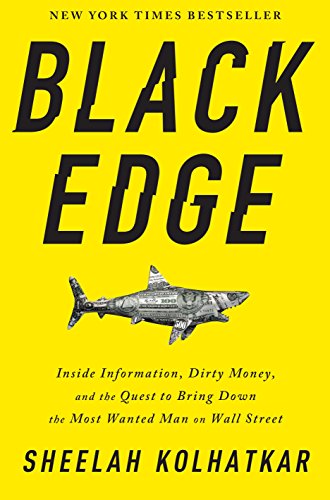
Black Edge (Inside Information, Dirty Money, and the Quest to Bring Down the Most Wanted Man on Wallstreet) 

Author: Sheelah Kohatkar

Narration by: Kaleo Griffith
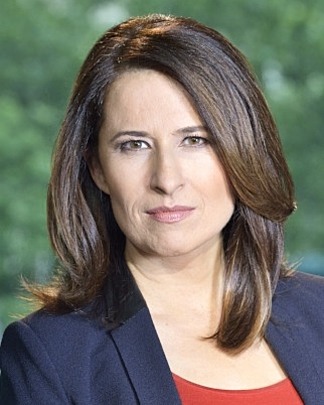
Sheelah Kohatkar (Author, staff writer for the New Yorker.)

“Black Edge” is about insider information that will give an advantage to a stock market’ investor. There is an elusive line crossed when an investor solicits information from an informed source that is not available to all investors. The line seems blurred by how the question is asked and whether the information given is available to everyone that is interested. Because the solicitation of information is not publicly provided information, the law defines it as illegal advantage to a singular investor rather than the general public. What makes this difficult to grasp is a diligent investor might do more research than the general public before investing in a stock. Is diligence a crime? Who is the criminal–the investor, the person who reveals proprietary company information, or the information pursuer? “Black Edge” implies all three are guilty but only one is criminally chargeable.

Steven A. Cohen (Former owner of SAC Capital.)

Sheelah Kohatkar researches the rise of Steven A. Cohen and SAC Capital to explain how complicated and difficult it is to prosecute an investor or his/her company for insider trading based on “Black Edge” information. One might argue Steven Cohen simply created an investment company focused on researching possible stock investments or sales based on the best information that can be found by diligent research on a company’s activities. Cohen gambled on that information by making large investments short sales or divestments of a subject company’s stock. SAC Capital became extraordinarily successful in buying, shorting, or selling publicly held stock based on that research. Kohatkar shows how those actions became criminal because of employee’ researchers that fed information to SAC Capital that is not readily available to the public. This became a violation of the law because Cohen’s company bet on what is classified as “insider information” found by SAC employees. Of course, that information may have been acquired by any investor who is willing to create an organization designed to research a target companies’ product before making a decision to invest in, short, or sell its stock.

SAC Capital is fined $1.8 billion dollars and is dismantled when found guilty of insider trading.

Cohen is never found personally guilty of insider trading, but SAC Capital is fined $1.8 billion dollars and is dismantled as part of a plea. The firm is found guilty with Cohen forbidden the right to manage outside money for two years with a payment of a $90 million dollar penalty. After expiration of the ban, he starts a new company, Point72 Asset Management, that manages billions of dollars for himself and his investors.

Cohen is never imprisoned for his investment activities but two of his employees were found guilty, fined, and imprisoned.

Cohen is never imprisoned for his investment activities but some of his employees were found guilty, imprisoned, and taken from their families. Cohen insulated himself from researchers in his firm and avoided direct communication with publicly held’ companies in which he chose to invest, short, or sell stock in. Cohen paid a penalty but served no time in prison for insider trading. In contrast, people he employed to get insider information went to prison, were fined, and endured family hardship caused by that imprisonment.

Kafka’s hell exists in today’s world just as it did when it was published in 1925.

Cohen’s attorneys manage to show prosecutors that he never knowingly participated in the collection of insider information. However, Mathew Martoma and Michael Steinberg, two of Cohen’s employees, were convicted because they were proven to have directly obtained non-public information, traded on it and personally profited from insider information. These two employees gathered (from personal conversations and private reports of publicly held companies) information not available to the general public. Their personal trades on non-public information made them guilty of “insider information” crime. In contrast, Cohen is not criminally prosecuted because he could not be affirmatively proven to have instructed his employees to gather insider information. Cohen is found to have failed to supervise his employees but that is only a civil, not criminal act.

This is a troubling history. “Black Edge” shows that an investment company’s structure can be set up to pressure employees to break the law without being held criminally liable for the use of insider information.
Even though an owner creates a company designed to solicit insider information, they shield themselves from criminal liability. The employees who actually gather insider information are guilty but the owner of a company who profits from their work is not guilty of the same crime. A company and its employees can be convicted for insider trading and be sentenced to prison but a company’ owner may walk away with a fine and no criminal penalty or prison time. As Lord Acton noted in 1887, “Power tends to corrupt, and absolute power corrupts absolutely”.

FINANCIAL LITERACY

What Professor Fullenkamp makes clear is information is key to understanding financial markets, but human judgement is the difference between investor’ success or failure.

Books of Interest
 Website: chetyarbrough.blog

Financial Literacy (Finding Your Way in the Financial Markets)

By: The Great Courses

Lectures By: Professor Connel Fullenkamp

Professor Connel Fullenkamp (Lecturer at Duke University, economist and director of undergraduate studies in economics.)

“Financial Literacy” may put some listeners to sleep but there is a lot to be learned from Connel Fullenkamp’s lectures. He gives a lengthy description of financial markets extending from Stocks to Bonds, Forex, Commodity, and Derivative Markets. He offers information about how money is used and made in financial markets. Fullenkamp addresses banks, stocks, selling and buying securities, expected returns on investments, how they are priced, controlled, and how information about them is important for personal financial decisions.

It is no surprise to find that banks play a critical role in financial markets.

They provide personal banking services by accepting deposits and providing loans to individuals and businesses. They smooth the flow of money in the economy. Banks can help companies raise capital by offering advice and services for the issuance of stocks and bonds to finance businesses. They offer advisory services for mergers, acquisitions, and other financial strategies. Banks can act as market makers by buying and selling securities for their clients. They can provide asset management services, research and analysis, and ensure legal regulation and compliance with government and international laws. Banks are the backbone of financial markets when they provide efficient allocation of resources and ensure the smooth functioning of the financial system. All of this is true in concept.

However, banks, savings and loan companies, and mortgage lenders are run by human beings who are subject to all the risks of human nature that can lead to catastrophic financial collapse as it almost did in the 2007-2010 mortgage derivative crises.

To be fair to the professor’s presentation, the 2007-2010 crises is not only because of the bad mortgages generated by financial institutions like Countrywide, New Century and Ameriquest. Goldman Sachs, Lehman Brothers, Bear Stearns, and Merrill Lynch investment banks are equally guilty. They packaged bad mortgages with high-risk mortgages to be sold to the public as safe collateralized securities that were far from safe and ultimately unsound. The result was a near worldwide financial collapse.

The government compounded the failure of 2007-2010 by guaranteeing poorly justified mortgages that were included in the packaged securities.

Rating agencies like Moody’s Standard & Poor’s, and Fitch ratings misled investors about the risks of the packaged mortgage securities. Government oversight organizations like the Federal Reserve and Department of the Treasury did not adequately do their job. Ironically, banks like Wells Fargo resisted the mortgage derivatives while banks like JPMorgan Chase bought and sold them but was too big to fail. Ironically, both banks became vehicles for recovery by taking over some of the lenders that had to0 many mortgage derivatives in their portfolios. (As noted in earlier book reviews, many families lost their homes because of foreclosures caused by lenders who originated the mortgages in these securities.) Fullenkamp explains financial markets are based on information. However, as noted by information computer geeks, “garbage in, garbage out” sunk lenders and victimized many investors, lenders, and homebuyers.

In explaining the stock market, Fullenkamp notes an investor becomes a partial owner of a company which gives them a stake in a company’s future profits, either from dividends or market performance.

Stocks have a dual identity. The difficulty for the investor is in understanding the information provided by the company to predict company performance and reap the benefits of stock appreciation. Fullenkamp gives some insight on assessment of that information, but most listeners seem most likely to pay less attention to professors of finance than to their own judgement.

Fullenkamp goes on to discuss Forex (Foreign Exchange). This is a global marketplace for trading national currencies.

Unlike stock and bond markets, a Forex market operates 24 hours a day because currency is an international trading market with centers in different cities like New York, Tokyo, and London. In the case of Europe and the U.S., the trade would be in Euros and US Dollars or in Japan and the U.S., the trade would be in Dollars and Yen. Exchange Rates fluctuated based on nation-state events. Strategic buying and selling based on those events can create profits and losses for exchange traders. Unlike a singular centralized stock market, Forex is decentralized and conducted electronically over the counter (OTC) by a network of banks, brokers, and dealers.

Fullenkamp also defines commodities markets. There are hard and soft commodities. Hard are like gold, oil, and other naturally produced materials. Soft are agricultural products like wheat, coffee, or cotton.

Most commonly, trading in these products is done with futures contracts. Futures are agreements to buy or sell a commodity at a predetermined price on a future date. The investor is gambling on the commodity to be either worth more or less than what the product is expected to cost at the actual time of purchase or sale. There are several exchanges around the world. The participants are speculators that either take the commodities at the agreed upon price or simply gain or lose money based on the actual price of the commodity when it is deliverable.

There is a great deal to absorb from Fullenkamp’s lectures. The last lecture is on “The Future of Finance”.

He suggests the technology of mobile phones has expanded the lending industry to individuals from institutions. It has already begun in less successful economic societies. Mobile money platforms and digital financial services are being used in Africa. Users of these platforms store, send and receive money by mobile phone owners because traditional banking services are not available. Fintech companies are formed to assess creditworthiness of individuals and small businesses. The vast amount of personal information becoming available with the internet becomes a source of customer approval or rejection of small companies and individuals seeking loans.

What Professor Fullenkamp makes clear is information is key to understanding financial markets, but human judgement is the difference between investor’ success or failure.