A listener/reader comes away from Pollan’s book with a feeling that there is as much at risk as reward in experimenting with hallucinogens without the aid of professionals. A bad trip can kill you.
Books of Interest Website: chetyarbrough.blog
How to Change Your Mind (What the New Science of Psychedelics Teaches Us About Consciousness, Dying, Addiction, Depression, and Transcendence)
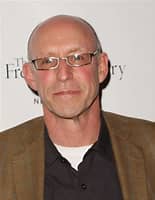
By: Michael Pollan
Narrated By: Michael Pollan
Michael Pollan (Author, journalist, professor and lecturer at Harvard and UC Berkeley, received a B.A. in English from Bennington College and M.A. in English from Columbia University.)
“How to Change Your Mind” is a slippery slope examination of hallucinatory drugs. The slipperiness comes from a concern about drug use even though hallucinatory drugs are not addictive. Written by a liberal art’s graduate rather than a physician, psychiatrist, or scientist makes one skeptical of the author’s review and perspective on LSD and other hallucinatory drugs. However, his story is interesting and has an appeal to anyone who has experimented with hallucinogens.
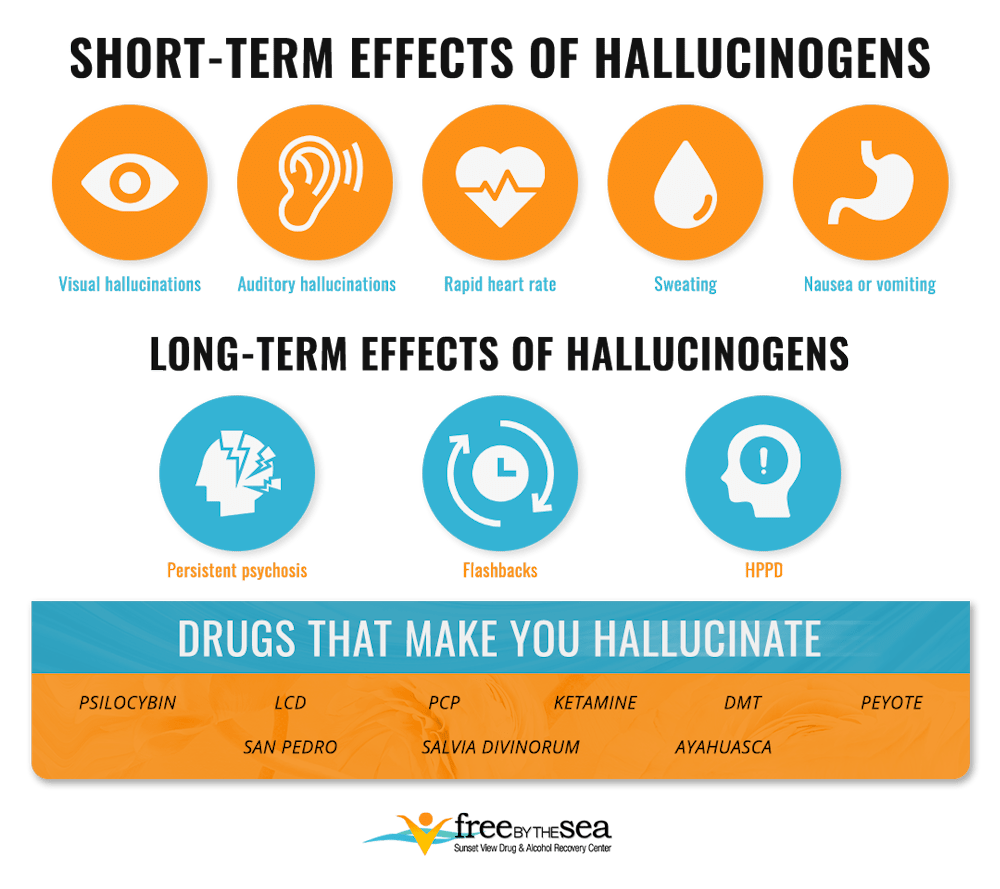
RISKS AND EFFECTS OF HALLUCINOGENS
Pollan’s subject is partly about mushroom drug derivatives, like psilocybin and psilocin, that have hallucinogenic effects. But he also reviews the history of LSD which is a semi-synthetic compound accidentally discovered by a chemist named Albert Hofmann in 1938. LSD is derived from ergot, a type of fungus that grows on rye and other grains.
Albert Hofmann (1906-2008, chemist who synthesized, ingested and studied the effects of LSD.)
Pollan recalls the history of hallucinogenic drugs that evolved from ancient native rituals to public experimentation. Today, medical analysis and treatment with hallucinogenic drugs is being recommended. The revised belief of hallucinogens as a scourge of society is reborn to a level of medical and social acceptance.
One who has lived a long life in the 20th and now 21st century recalls Pollan’s rollercoaster history. Pollan falls on the side of acceptance of the hallucinogenic experience as an aid to society. His reported revisionist belief begins at the age of 60 when he tries a hallucinogenic drug and begins a study of its history. One is somewhat skeptical of Pollan’s objectivity because he is in the business of making a living from writing.
Pollan features several experts in the field of psychedelic research. He refers to Roland Griffiths (upper left corner) now deceased, neuroscientist at Johns Hopkins University who conducted studies on psilocybin’s effect on consciousness and mental health. He meets with Paul Stamets (lower left corner), a mycologist who is a fungi guru who explains where psilocybin mushrooms can be found, how they can be identified, while selling hallucinatory mushrooms to become a wealthy entrepreneur. He writes about James Fadiman (right), a psychologist and researcher who conducted hallucinogenic microdosing experiments on patients to show their potential benefits.
Pollan’s history persuasively argues the benefits of hallucinogenic drugs. However, a bad trip can kill you. On the other hand, Pollan notes recent research shows hallucinogenic drugs have alleviated anxiety, depression, PTSD, addiction, and the fear of dying. He notes psychedelics disrupt the brain’s default modes that negatively affect human behavior.
A listener/reader comes away from Pollan’s book with a feeling that there is as much at risk as reward in experimenting with hallucinogens without the aid of professionals.
Migration is the movement of people to new areas of the world for work, better living conditions, and safety. In that process the world economy is strengthened. .
Books of Interest Website: chetyarbrough.blog
The Shortest History of Migration
By: Ian Goldin
Narrated By: Julian Elfer
Ian Andrew Goldin (South African born professor at the University of Oxford, specializes in globalization and development.)
Professor Goldin has written a history of migration that reminds one of the well-known phrases attributed to Socrates: “I know that I know nothing”. Goldin is born in South Africa to a Lithuanian father who fled his home country to escape political and social upheaval in Europe during the early 20th century. In retrospect, that migration saved the future of the Goldin’s from Stalinist suppression after WWII. It is ironic that Ian Goldin is raised in South Africa where white suppression of native South Africans was common. “The Shortest History of Migration” is no apologia, but it is a forthright history of the ubiquity of world migration.
Migration is an essential characteristic of civilization believed to have begun in Africa.
The obvious irony of human origin is the darker skin tone of our first ancestors who had higher levels of skin melanin to protect them from the harsh effects of the sun. Humanity began as a species of a black ancestor, an estimated 6 to 7 million years ago.
Neanderthal precursor of human beings.
Goldin implies humans moved from Africa to explore the world. They may have left to escape the harshness of their existence or because of the nature of species’ curiosity. Their change in environment led to changes in their physiognomy (facial features and expressions) caused by the evolutionary nature of life and the exigencies of environment. The point is that migration has been a part of history since the beginning of life on earth.
What may be forgotten by some is that migration was largely unregulated until WWI according to Goldin.
That seems largely true except the United States passed the Naturalization Act of 1790 that established rules for citizenship and an Immigration Act of 1891 that created the U.S. Bureau of Immigration; both of which implied regulation. Nevertheless, the fundamental point is that migration has been a part of society from the beginning of human life.
WWI generated many new laws and policies about migration.
Wartime measures required passports and border crossing cards to manage migration. National security increased scrutiny of immigrants. Broader societal and political concerns about migration spread across the world. Migration became more complicated.
Goldin argues the benefit of migration is misunderstood and misrepresented by leaders like Donald Trump.
Goldin suggests the economic impact of Trump’s anti-migrant beliefs and policies will undermine both the world and American economies. In 2023, an estimated 18% of the economic output of the American economy came from migration. The two industries most impacted are agriculture and construction but many immigrants work in caregiving and medical professions, all of which will be impacted by labor shortages. Goldin notes that migrants working in other countries send money back to their home countries that amount to more revenue than is provided by tourism and foreign aid. Many, if not most, economists would argue migration is a cornerstone of economic growth and stability. Trump’s false statements about migrant criminality are overblown and unsupported by economic statistics that show migrants contributed an estimated $25.7 billion in 2022 to the Social Security system in taxes that benefit aged American citizens (like myself).
Trump policies will not return American to the manufacturing prosperity of the twentieth century but to a possible depression like that of the 1930s or, at the very least, a recession like that of 2007-2009.
Migration is the movement of people to new areas of the world for work, better living conditions, and safety. In that process the world economy is strengthened.
What is the value of high IQ? If everyone was smarter, would they be happier? It seems the only real value of genetics is in the prevention of known diseases, not in improvement of IQs or creation of a perfect human being (whatever that is).
Books of Interest Website: chetyarbrough.blog
The Social Genome: The New Science of Nature and Nurture
By: Dalton Conley
Narrated By: Christopher Douyard
Dalton Clark Conley (Author, Princeton University professor, American sociologist.)
Dalton Conley offers a complex explanation of why one child intellectually and financially excels while others are left behind. The “Social Genome” is an attempt to explain the complexity and inadequacy of genetic research. Not too surprisingly, there seems a correlation between wealth and intellectual development, but its relationship includes familial and environmental nurturing in ways that are too complex for today’s science to measure.
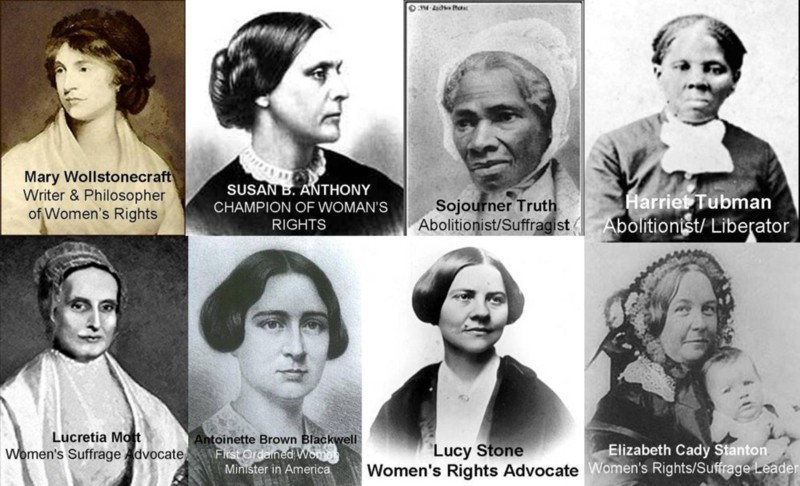
FAMOUS WOMEN IN HISTORY (Many women are as intellectually strong and mentally tough as men, e.g. Cleopatra, Sojourner Truth, Indira Gandhi, Golda Meir, Benazir Bhutto, Malala Yousafzai, and others.)
Dalton argues both genetics and environment shape human intellect and economic success. However, science’s current knowledge of genetic and environmental impact is not clearly understood in a way to aid human development. The current limitations of science make it impossible to determine the precise genetic and environmental factors that shape human development. Dalton offers many examples of how genetics and environment are relevant to human development, but neither are precisely measurable nor manageable.
The idea of clearly understanding the genetic and environmental causes of who humans become is a bit frightening.
Even if it were possible to achieve precise measurement of genetic and environmental influences, should that knowledge be used to create designer human beings?
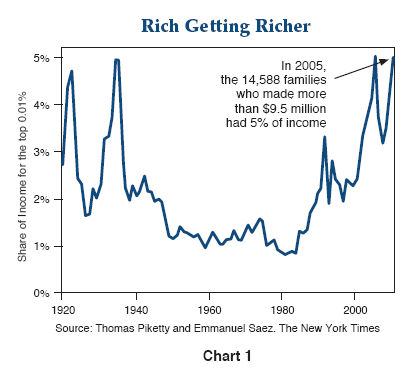
Piketty argues that the income gap widens after World War II. He estimates 60% of 2010’s wealth is held by less than 1% of the population.
Dalton does believe there is a correlation between economic well-being and IQ, but the correlation is affected by genetic inheritance. Dalton concludes economic well-being is a positive factor in IQ improvement. That raises questions about how one can improve the economic well-being of a society to improve IQ. Dalton infers there is no one size fits all solution for IQ improvement. Nurture and nature are too intimately intertwined to know how IQ of a society can be improved. A conclusion one may draw is that environmental and societal factors like human nutrition, general education and improved equal opportunity can mitigate IQ diminishment. Whether one should modify human genomes is a step too far.
In many ways, this is a frustrating book to listen to or read.
If all people looked more alike than different would there be less conflict in the world? No, but being of one race or another makes a difference in one’s opportunities in the world. What is the value of high IQ? If everyone was smarter, would they be happier? It seems the only real value of genetics is in the prevention of known diseases, not in improvement of IQs or creation of a perfect human being (whatever that is).
The only hope for Ukraine is a change in Russia’s leadership as a result of Putin’s foolish effort to return Russia to its past. It is the same effort and mistake Trump is making in trying to return America to the 20th century.
Books of Interest Website: chetyarbrough.blog
The Evil Hours: A Biography of Post-Traumatic Stress Disorder
By: David J. Morris
Narrated By: Mike Chamberlain
David J. Morris (Author, former Marine, reporter in Iraq, received Navy-Marine Corps Commendation Medal, M.A. from San Diego State University and the University of California, Irvine.)
In listening to “The Evil Hours”, the refrain “War, what is it good for, ABSOLUTLY NOTHING” from Edwin Starr’s song comes to mind. Ukraine’s and America’s current political position in ending the war are irreconcilable. Anyone who has read this blog knows I am not a fan of President Trump but his position on the war is sadly correct. It is sad because it is only Ukranian people who will suffer, not we who are isolated from the European continent.
Having recently visited the Baltics, and hearing of their experience under Stalin from a family we had dinner with makes one understand how horrible Trump’s decision will be for Ukraine’s citizens.
Trump’s decision is a Hobson’s choice because there seems no alternative. The potential for nuclear war is a threat from Putin who has an ego like Trump’s that cannot be assuaged. Putin appears not to be deterred by his followers or the Russian citizens.
What is left is the domination of a portion of Ukraine that will be forced to live under a dictatorship.
Hearing from Baltic citizens of how horrible their lives were under Stalin; one’s heart goes out to Ukrainian citizens who will have to live under Putin. Putin and Russia will pay a high price for their occupation because of citizen opposition that will take many forms. Though there is no comfort to the Ukranian people, Russia’s occupation will eventually end. The cost of Russia’s invasion of Ukraine has been high. It will be a reminder of the folly of unjust invasion and dictatorial control of an independent people.
America’s foolish Vietnam’ belief in a domino theory of Vietnam was wrong, just as the belief that Russia’s success in Ukraine will lead to further Russian expansion.
The relevance of “The Evil Hours” is the stress Ukrainians will face with Russian occupation. One hopes Russian occupation will not take as long as it did for the Baltic countries to regain independence.
PTSD is shown as the horrible consequence of internecine conflict that will continue after Russia’s occupation.
The only hope for Ukraine is a change in Russia’s leadership as a result of Putin’s foolish effort to return Russia to its past. It is the same effort and mistake Trump is making in trying to return America to the 20th century.
The immense downside of an unpredictive future is the many setbacks that will occur because of inept political leadership. Science is not an answer. It is only a tool for understanding.
Books of Interest Website: chetyarbrough.blog
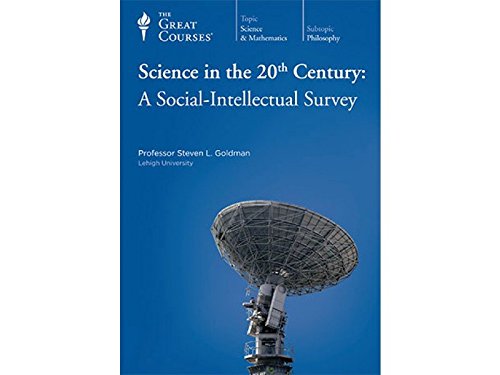
Science in the 20th Century (A Social-Intellectual Survey)
By: The Great Courses
Narrated By:Steven L. Goldman
Professor Steven L. Goldman.
Goldman’s review of 2oth century science identifies the fundamental change that has occurred in today’s perception of reality. One wonders if Albert Einstein was wrong about the predictability of science. Even at the end of Einstein’s life, he believed quantum mechanics was just a step in scientific research and not a basis for the truth of reality. Einstein insisted there was an undiscovered law about the nature of reality that would return life to predictability. The details of Goldman’s “Science in the 20th Century” infers otherwise.
Unpredictability of life’s existence is reinforced by Professor Goldman’s summary of scientific discoveries.
What is true of physics in the world, seems true for all the sciences. Whether reviewing the physical, biological, algorithmic, social, or applied sciences, unpredictability exists. Every science seems as unpredictable for the same reason as noted in the science of the quantum world. One cannot identity both position and momentum of an atomic particle at the same time. By the same measure, popularly elected representatives or authoritarian dictatorships cannot be measured by their position and direction of action. One can see a leader’s position but not measure their direction until the direction is past. Who would have thought Hitler would be the instigator of WWII? World leaders today are just as unpredictable. Citizens cannot measure leader’s positions and direction in advance. Citizens can only see one or the other at a specific point in time–never both position and direction at the same time.
What Goldman’s history of science implies is that if we live in a world of quantum mechanics, all life is, always has been, and always will be, unpredictable.
The solace in this possible truth is that, though there is still immense societal conflict and inequality in the world, science has improved society.
Technology has improved communication, transportation and daily life.
Vaccines, antibiotics, and surgical operations have drastically improved helath and life expectancy.
The world population has become more literate and has greater access to education than ever before.
Equality and justice show some progress in human rights, gender equality and social inclusion.
Enviornmental awareness has improved to combat climate change which has led to renewal energy innovations and conservation initiatives.
The world has increased connectivity to improve cultural exchange, economic collaboration and shared global interests.
Science is not an answer. It is only a tool for understanding.
The immense downside of an unpredictive future is the many setbacks that will occur because of inept political leadership. From the perspective of quantum mechanics, one hopes leadership means do not justify humanity’s end.
There is enough abundance in the world to create opportunity for all, but Ernaux’s history implies people must change their ways.
Books of Interest Website: chetyarbrough.blog
The Years
By: Annie Ernaux
Narrated by: Anna Bentinck
Annie Ernaux (Author, French writer, 2022 Nobel Prize winner, born in 1940.)
Annie Ernaux offers a perspective on history from the experience of her life as a French woman in the mid 20th to 21st century. Though born before the beginning of World War II, Ernaux matures as a young woman in the 1950s. A striking difference between the history of this time is the difference between Algeria’s drive for independence and American’s mistakes in Vietnam. French Algeria is less understood in American memories than its troubled history in Vietnam. Aside from misunderstanding France’s Algerian experience, the social changes Ernaux’s notes are similar to many Americans’ experiences in Vietnam.
Eisenhower’s, Kennedy’s, and Johnson’s leadership in the Vietnam war seem, in some respects, similar to Ernaux’s memory of Charles de Gaulle’s leadership in Algeria.
Eisenhower and Kennedy were veterans of war who became leaders of their countries. Though Eisenhower and Kennedy believed Vietnam was a threat as a communist Domino, de Gaulle believed Algeria was a threat to France’s right to colonize. These famous nationalist leaders were wrong. Southeast Asian countries had a right to choose their own form of government, and Algeria had a right to choose self-government.
Though Annie Ernaux was born just before 1946, she matured during great changes in the world.
Her experience of post-war reconstruction, the rise of consumerism, women’s rights, sexual liberation, social class differentiation, and societal norms changed in America, France, and most nations of the world.
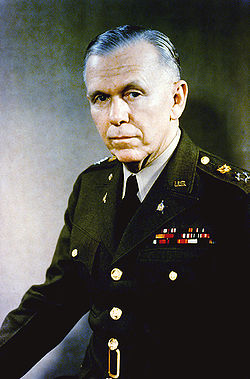
George Marshall was Secretary of State from 1947 to 49 and headed the Marshall Plan to reconstruct Europe after the war.
America played a great part in the financial reconstruction of Europe, Japan, and Germany after the end of WWII. America’s goal was to prevent future conflicts, promote economic recovery, and counter the influence of communism, but in that process, America influenced social norms throughout the world. Some of the influences created clear lines of opposition between communism, socialism, and capitalism. However, all economic systems influenced societal change. Whether communist, socialist, or capitalist there were changes in normative social values. Societies increased consumerism, instituted policies for equal rights to some degree, and made class distinctions based on money, or its equivalent, i.e., power. In capitalist and socialist societies, social position became more about money and the power of its influence. In communist societies, it was more about power and the influence of money. Political differences remained sharply divided in ways that influenced social norms, but the general direction was similar. Communism, socialism, capitalism, and all its derivations focused on consumerism, women’s rights, and class differences that changed the world during Annie Ernaux’s “…Years” of life.
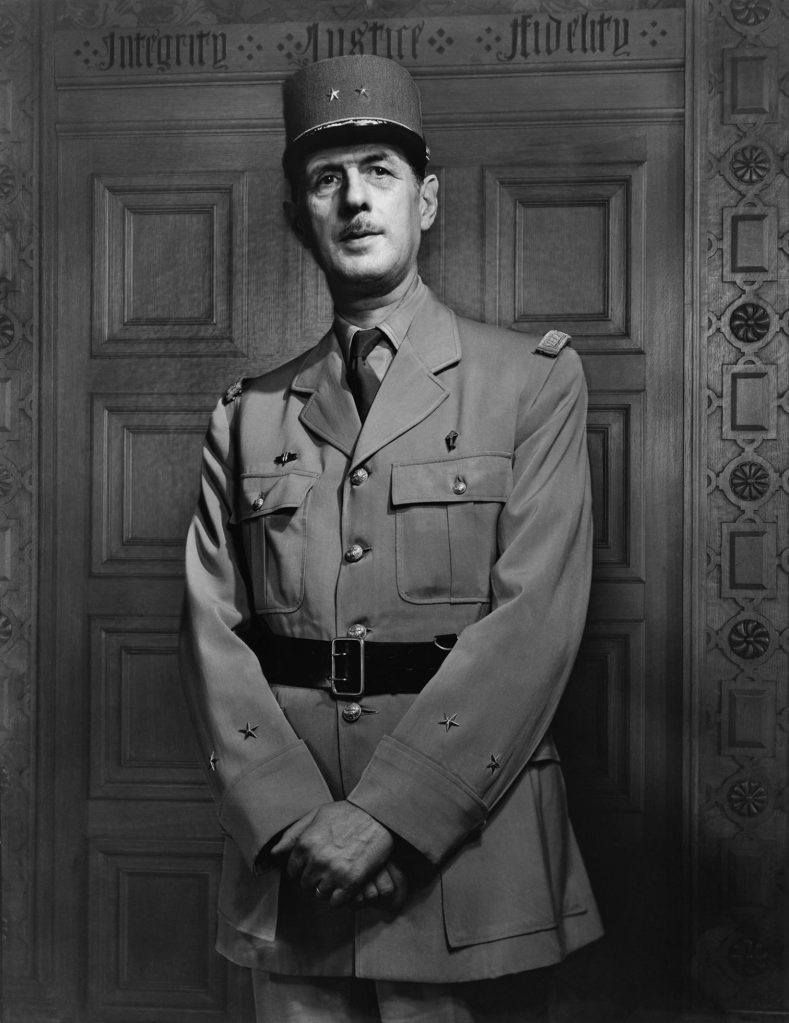
American President Harry Truman led the U.S. from 1945 to 1953.Emperor Hirohito next to MacArthur was emperor of Japan from 1926-1989. Mao was China’s leader from 1924 to 1953. Stalin led Russia from 1943 to 1976.Charles de Gaulle effectively led France from 1944 to 1959 with the last ten years as France’s President.
Feckless leaders, deluded authoritarians, and a few truly service-oriented leaders rose in every system of government, including American, English, Japanese, Chinese, French, Russian, and other nations. The main differences lay in leader’s longevity, and their economic policies. Leaders of China and Russia having fewer leadership changes between 1946 and 2006 than most nations were largely authoritarian. There were 6 leadership changes in China and 9 in the Soviet Union. Only 1 of 6 in China and only 1 of 9 in the Soviet Union leaned toward capitalism.
From 1946 to 2006, there were 11 presidents in America, 13 prime ministers in England, 32 prime ministers in Japan, and 6 presidents in France. All of these democratic nations exclusively leaned toward capitalism.
However, Ernaux’s history infers every nation shows social norms changing in similar ways. Even China and Russia show changes in consumerism, women’s rights, sexual liberation, and class differentiation. Unquestionably, the societal changes did not change to the same degree, but they were similar. Maladies of society are common in all forms of government, only the degree of change in societal norms is different. All nations have more or less consumer opportunities, more or less human equality, all have class distinctions, but normative change is a work in progress, not an end but a beginning process.
Annie Ernaux in earlier years of her life.
Ernaux’s trip down memory lane is interesting but not particularly revelatory. Her remembrance of the past is helpful because she shows how social change evolved in both good and bad ways in her own life. Consumerism seems on the edge of being out of control with money and wealth being the “sine qua non” of the good life. Without money, life seemed not worth living to some. Ernaux suggests America has become an arrogant example of wealth and privilege that diminishes civility. Ernaux is not suggesting she is above the fray of wealth as privilege and reveals her own character flaws by noting affairs with younger men in what seems a wasted attempt to reclaim youth. She implies a prejudice against Arabs and Africans who she believes wrongly consider themselves as French. She infers they are not French because they are not white Christians, even if they are born in France.
One comes away from “The Years” with a feeling that societies of the world are at a crossroad.
Wealth should not be the measure of one’s social value and privilege. Inequality is a sin against humanity. Prejudice is the cause of much of the world’s conflict. Immigration is a misunderstood value of societal comity. Tolerance of all religious beliefs has been an unresolvable puzzle but a desirable societal goal. There is enough abundance in the world to create opportunity for all, but Ernaux’s history implies people must change their ways.
Only with education and understanding of the past can society or the individual change their future.
Books of Interest Website: chetyarbrough.blog
Cowboy Apocalypse (Religion and the Myth of the Vigilante Messiah)
By: Rachel Wagner
Narrated by: Dina Pearlman
Rachel Wagner (Author, professor of religion and philosophy at Ithaca College in Ithaca New York.)
Rachel Wagner has written a highly personal book about American gun culture that will resonate with some and appall others. As an academic philosopher and professor of religion, Wagner analyzes gun violence and sexism and how belief in “might makes right” is deeply ingrained in American character.
There are so many stories of death and injury from gun violence in America that one becomes numbed by Wagner’s apocalyptic story.
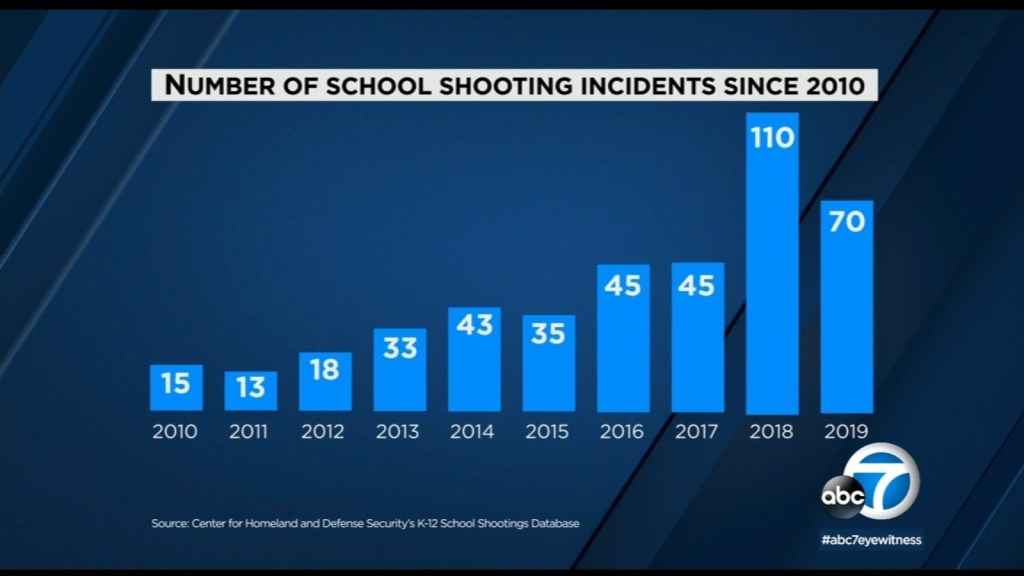
We were living in Las Vegas when 59 people were killed, and 527 were injured by one gunman in a hotel room less than 3 miles from our home. When one looks at statistics of children murdered in school rooms since 2010, a solution for gun violence should be urgent, but it appears not.
Rise in school shootings between 2010 and 2o19.
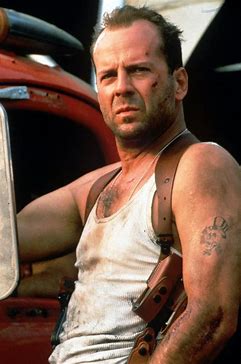
Wagner argues gun violence in the U.S. is viewed by much of the public as a belief in the myth of the “good guy with a gun” that is embedded in the history of America and reinforced by fictional stories, books, television, and the movies. She argues detective fiction like “The Big Sleep”, TV series like “Have Gun Will Travel”, and movies like “Die Hard” have lone heroes who defeat dastardly villains.
Think Alan Ladd in “Shane” or John Wayne in any of his westerns, and one believes gun-toting man-gods keep the world safe.
Wagner shows how malleable society is and why the gun lobby is rewarded and sustained by the myth of the “good guy with a gun”. Wagner argues gun-toting Americans have become gods in their own mind. What they really are is examples to potential killers of school children and unsuspecting tourists.
HAVE GUN WILL TRAVELDIE HARD
Wagner believes American gun obsession has wheedled its way into a religious narrative based on Christian apocalypticism and romanticization of American history. She notes the myths of armed vigilantes who are seen as saviors who can reset society when it goes astray. This myth seeps into American cultural shibboleths of white supremacy and patriarchal dominance that pervade video games, movies, and novels.
Wagner argues sexual and racial inequality are exacerbated by America’s gun culture. Wagner notes an experience in her personal life and her education in religion show how “might makes right” has been, and still is, a danger to society.
Wagner argues America needs to look in the mirror and quit glorifying firearms and vigilante justice. She suggests the January 6th attack on the capitol shows how widespread belief in vigilante justice is in America.
January 6, 2021, insurrection when a mob of supporters of then-President Trump stormed the U.S. Capitol.
The philosophical and religious beliefs of the author are made clear in her final chapters. Only with education and understanding of the past can society or the individual change their future.
Unless homelessness is addressed with affordable housing, America’s future looks bleak. A land of have and have-nots will grow to crush American prosperity.
Books of Interest Website: chetyarbrough.blog
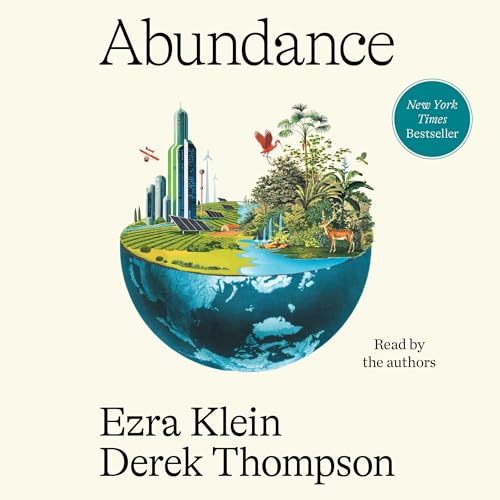
Abundance
By: Ezra Klein, Derek Thompson
Narrated by: The Authors
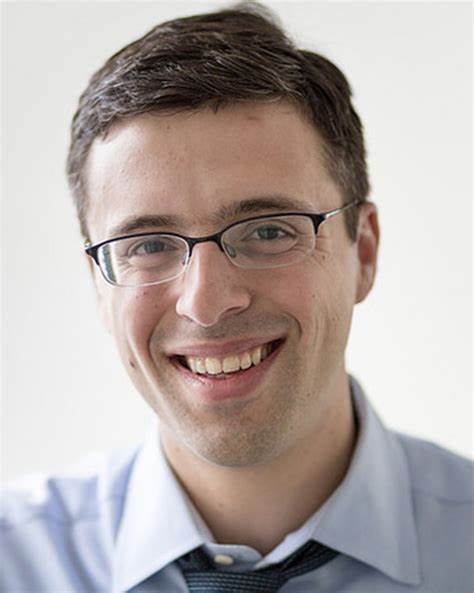
Ezra Klein (American political commentator and “NYT’ journalist.) Derek Thompson (American podcaster and journalist @ “The Atlantic”.)
These two young Americans offer an insightful view of politics and American government in the 21st century.
Donald TrumpKamela Harris
Klein or Thompson could have voted for either Trump or Harris in America’s last election. Their book argues American government is both a boon and bane for citizen “Abundance” in the 21st century. They note America has contradictory economic policies that have created great abundance among Americans while exacerbating inequality. Evidence for their opinion is growing homelessness, an immigration crisis, loss of manufacturing jobs, and government’s failure to creatively adjust public policies to provide solutions.
Those who have shared in the abundance of America have voted for candidates to preserve their privileges.
The authors note homelessness is a function of affordable housing that is denied by government policies that regulate zoning and construction requirements. Government policies make affordable housing too costly to build and impossible to locate because of zoning restrictions. The number of people living on the street is a self-inflicted American tragedy. Some of the homeless are young, some are old, some have mental or physical problems, and others are victims of drugs or their own weaknesses. What they have in common is unaffordable housing.
Historically, immigration has been a great boon to American economic growth.
Klien and Thompson note restrictive immigration policies have created obstacles for workers needed for manufacturing in key industries like agriculture, auto industry assembly, housing construction, and clean energy infrastructure. Rather than wasting money on building walls and deporting workers, the authors advocate immigration reform that meets the needs of American business. One can imply the authors meaning is that to “Make America Great Again” requires immigrants willing to work in agricultural and manufacturing jobs. The end of the baby boom requires help from immigrants to meet the needs of increased manufacturing and construction in the United States.
Some believe what Trump is doing is good for the American economy in the long run.
The criticism is that in the short run, the economy may collapse. Tariffs being used as a ham-fisted way of negotiating fair international trade is a fool’s errand. America needs labor and material in the short run to achieve equal and greater prosperity than it had in the 1970s. Added manufacturing will aid American prosperity, but it will be surpassed in the long run by automation. It is the automation race America needs to win or compete with to remain a world leader. Competing in that race depends on education, and scientific research. The irony is that Trump is firing government employees who have responsibility for public education, research, and funding that have been the engines of America’s prosperity.
The government employees discharged by the Trump administration to solely reduce costs is short sighted.
In the 1980s, 60% of basic research in the U.S. was funded by the government. In 2022 that funding dropped to 40%. Advances in semiconductors, global positions systems, biotechnology, and aeronautics were government-funded discoveries in the 1980s. American government-funded scientific research gave America the internet, GPS technology, mass production of penicillin, Space exploration, human genome project discoveries, and renewable energy innovations. The Department of Health and Human Services has lost 20,000 employees, the Department of Education 1,300, the National Oceanic and Atmospheric Administration 800, and the National Institutes of Health 1,200. One wonders how many of these employees may have been on the edge of scientific discoveries that could change the world.
The truth of “Abundance” is that America has caused many negative ecological impacts and aggravated the gap between rich and poor.
Klein and Thompson have written a provocative book. However, the truth of “Abundance” in America has caused many negative ecological impacts and aggravated the gap between rich and poor. Looking only to abundance does not address either social inequality or the environment. The NIMBY (not in my back yard) resistance to affordable housing aggravates inequality and increases homelessness. Unquestionably, higher density housing impacts the environment.
Klein and Thompson fail to address the increased power of corporations in America.
The 2010 Citizens United v. Federal Election Commission gave corporations the power to spend unlimited amounts of money on political campaigns. The influence of corporations on elections has disproportionate power in the election of government policy makers. That decision by the Court is a distortion of one person, one voter’s influence on public policy.
Aristotle emphasized the importance of “All things in moderation”. NIMBY communities must open their minds and hearts to homelessness and moderate their resistance to neighborhood accommodation. Government agencies must supervise and service higher density housing impacts wherever they are built and after they are completed.
Unless homelessness is addressed with affordable housing, America’s future looks bleak. A land of have and have-nots will grow to crush American prosperity.
In light of Donald Trump’s disruption of government employment, one wonders what foreign and domestic conspiracies are being missed?
Books of Interest Website: chetyarbrough.blog
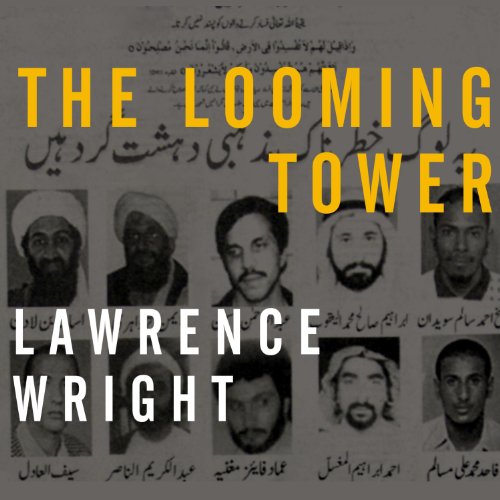
The Looming Tower (Al-Qaeda and the Road to 9/11)
By: Lawrence Wright
Edited By: Alan Sklar
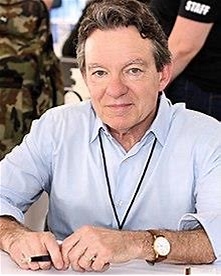
Lawrence Wright (Author, writer and journalist.)
Lawrence Wright won the Pulitzer Prize for his meticulous research and writing on the origin of Al-Qaeda and its lead up to the 9/11 attack on America. “The Looming Tower” is not a popular audiobook for some Americans. It tells listener/readers of America’s intelligence failure in the early 21st century. A militant Muslim religious organization is created in the Middle East with intent and successful execution of an attack on the United States in 2o01.
Sayyid Qutb (1906-1966, Egyptian Author, Educator, Islamic Theorist, Poet, former leading member of the Muslim Brotherhood.)
A name not well known by most Americans is Sayyid Qutb (pronounced koo-tube), a Muslim religious believer and scholar. Wright suggests Qutb laid the groundwork for Islamist extremism in a religious organization called the Brotherhood. Though Qutb was raised in Egypt and gained his education at a Cairo teacher’s school called Dar al-‘Ulum, he spent two years at the University of Northern Colorado between 1948 and 1950. Wright argues Qutb’s experience in America shaped his views of Western society and, in particular, America. He believed and wrote that the moral and cultural nature of non-Islamic society was decadent. Wright suggests Qutb warranted violence against the West because his experience in Colorado showed Western culture corrupted Islamic values.
The World Trade Center collapse killed 2,753 civilians, firefighters, and law enforcement officers.
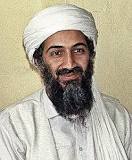
In The Looming Tower, Lawrence Wright suggests the primary motivation for 9/11 stemmed from ideological and cultural grievances rooted in extremist interpretations of Islam. Osama bin-Laden is shown to have adopted beliefs that were the same as those of Qutb, i.e. the belief that all who were not adherent to the Muslim religion were infidels and subject to damnation in this life and in their life after death. Wright emphasizes the influence of figures like Sayyid Qutb, who’s disdain for Western values and culture laid the philosophical groundwork for jihadist movements. Qutb, and subsequent al-Qaeda leaders like Osama bin Laden and Ayman al-Zawahiri, believed that Western influences were corrupting Islamic society and threatening Muslim values and beliefs.
Osama bin-Laden is estimated to have inherited $25 million to $30 million dollars from his father Mohammed bin Laden when he died. Osama chose to use his wealth to destroy American cultural and religious symbols he believed were contrary to Muslim beliefs.
The book outlines how bin Laden and his network were driven by anti-Western ideology to oppose U.S. foreign policies in the Middle East. Al Qaeda wished to assert power by attacking symbolic targets. The 9/11 attacks were meant to provoke a dramatic response from the U.S. and further polarize the world along ideological lines, feeding into their long-term vision of a global jihad. Wright meticulously explores how these motivations were cultivated over decades. “The Looming Tower” is a compelling and deeply researched account of the events leading up to 9/11 in 2001.
Abdullah Yusuf Azzam (1941-1989, father of global jihad, a Palestinian-Jordanian’ Islamist jihadist and theologian, is killed in a car bomb, along with his 2 sons, in Peshawar, Pakistan.)
Osama bin-Laden’s father was a billionaire construction magnet in Saudi Arabia. Osama bin Laden, and the many heirs of his father, enabled his many children to live lives in luxury if they chose. Osama chose to use his wealth to destroy American cultural and religious symbols he believed were contrary to Muslim beliefs. Abdullah Azzam was often referred to as the “father of global jihad,” Azzam was a mentor to bin Laden and played a significant role in shaping his ideology. He encouraged bin Laden to channel his resources into the Afghan jihad against the Soviet Union. The irony of bin Laden’s choice is that he was an incompetent military leader but an effective promoter and steward of jihad, the effort to live a righteous life, avoid sin and uphold the principles of Islam. A further irony is that bin Laden’s murder of innocents seems a sin of the highest degree.
Osama bin Laden was killed on May 2, 2011, during a U.S. military operation called Operation Neptune Spear.
The mission was carried out by SEAL Team Six, a special operations unit of the U.S. Navy, at bin Laden’s compound in Abbottabad, Pakistan. This was eleven years after the world trade center, Pentagon, and flight 93 crash. The Trade Center collapse killed 2,753 civilians, firefighters, and law enforcement officers. The Pentagon attack killed 184 military and civilian personnel. Flight 93 resulted in 40 passenger and crew deaths. In a complex web of influence and support, “The Looming Tower” emphasizes the attacks were the result of al-Qaeda’s planning and execution by followers of Osama bin Laden.
Wright notes Ayman al-Zawahiri became Bin Laden’s second-in-command and a key strategist for al-Qaeda. Zawahiri takes control of al-Qaeda after bin Laden’s death.
Ayman al-Zawahiri’s background in Egyptian Islamic Jihad and his partnership with bin Laden were pivotal in the group’s evolution. Ayman al-Zawahiri became the leader of al-Qaeda after Osama bin Laden was killed. An American operation that killed al-Zawahiri in 2022 was carried out by the CIA that targeted him on the balcony of a safe house in Kabul, Afghanistan.
Wright notes that bin Laden received financial support from members of the Saudi elite during the early stages of his jihadist activities, though this relationship soured over time.
Jamal al-Fadl was an al-Qaeda operative who helped establish the organization’s financial infrastructure. He later defected and provided critical intelligence to the U.S. about al-Qaeda’s operations. Many individuals and entities played pivotal roles in enabling bin Laden’s vision and the expansion of al-Qaeda. Wright’s book delves deeply into their motivations and actions. It’s a fascinating, albeit chilling, exploration of history.
John P. O’Neillwas an FBI counter-terrorism expert who tirelessly pursued bin Laden.
John P. O’Neillwas an FBI counter-terrorism expert who tirelessly pursued bin Laden. Tragically, O’Neill died in the 9/11 attack while serving as head of security at the World Trade Center. The FBI had gathered significant domestic intelligence on al-Qaeda operatives within the United States, including their movements and activities. However, the CIA, focused on foreign intelligence. They withheld crucial information about al-Qaeda’s overseas operations and connections because foreign intelligence was their exclusive responsibility. This lack of coordination with the FBI (limited to domestic terrorism), and rivalry between the agencies, meant that neither had a complete picture of the threat. The CIA had knowledge of al-Qaeda members Khalid al-Mihdhar and Nawaf al-Hazmi who were two team members for the attacks on 9/11. Because of a lack of cooperation between agencies, the FBI did not know they should be tracking these individuals. They became key players in hijacking American Airlines Flight 77 which plowed into the Pentagon.
In The Looming Tower, Lawrence Wright emphasizes the significance of John O’Neill, an FBI counterterrorism expert, as one of the most important figures who recognized the threat posed by Osama bin Laden. O’Neill was deeply committed to tracking al-Qaeda and warned about its intentions, but his efforts were often hindered by interagency conflicts and bureaucratic obstacles. Wright portrays O’Neill as a passionate and prescient individual who understood the gravity of al Qaeda’s threat long before many others did.
In The Looming Tower, Lawrence Wright highlights the CIA’s Alec Station, who tracked Osama bin Laden and al-Qaeda. This unit was led by Michael Scheuer, a CIA analyst who played a pivotal role in gathering intelligence on bin Laden during the 1990s. Alec Station was instrumental in understanding al-Qaeda’s operations, though the book criticizes the interagency conflicts that hindered surveillance effectiveness. Wright paints a vivid picture of the challenges faced by intelligence agencies in the lead-up to 9/11.
Michael Scheuer, a CIA analyst who played a pivotal role in gathering intelligence on bin Laden during the 1990s.
On the CIA side, Michael Scheuer, who led Alec Station (the CIA’s unit that was monitoring bin Laden), played a role in identifying the danger. However, Wright notes the lack of collaboration between the FBI and CIA, ultimately undermined their ability to prevent the attacks. The book paints a vivid picture of the challenges faced in navigating institutional rivalries while trying to protect the nation. Wright’s narrative is both compelling and sobering.
“The Looming Tower” highlights how some individuals connected to al-Qaeda faced legal consequences. For example, figures like Ali Mohamed, a former U.S. Army sergeant turned al-Qaeda operative, was prosecuted for his role in supporting terrorism. Mohamed provided critical intelligence and training to al-Qaeda and was eventually arrested and convicted in the U.S.
In light of Donald Trump’s disruption of government employment, one wonders what foreign and domestic conspiracies are being missed?
George Faludy suggests the most popular books written by Erasmus were “The Praise of Folly” and “Colloquies” which are similar in that they offer humorous and insightful stories of the human condition. One leaves Faludy’s biography of “Erasmus” with the thought that these two should be read, particularly because of the time in which we live today.
Books of Interest Website: chetyarbrough.blog
ERASMUS
By: George Faludy
György Bernát József Leimdörfer aka George Faludy (1910-2006) Author, Hungarian poet and translator.
George Faludy’s biography of Erasmus was published in 1970. A few years ago, I purchased a paperback edition of Faludy’s book because of an interest in a 16th century “man of the cloth” (an ordained Catholic priest) who became a devotee of Francesco Petraca (better known as Petrarch who is considered the father of humanism). Erasmus was born in 1466 and died in 1536. He believed in the value, dignity, and potential of human beings. Petrarch had been dead for a hundred years when Erasmus became a proponent of humanism at a time when Catholic’ Indulgences were challenged by Martin Luther. Luther’s Ninety-Five Theses led to a schism in the church leading to the establishment of Protestantism.
Martin Luther (1483-1546)
Luther’s Ninety-Five Theses led to a schism in the church leading to the establishment of Protestantism.
It is hard to imagine how Erasmus managed to become a leader in reforming the Catholic Church with his humanist beliefs. Erasmus walks a fine line between the schism fomented by Martin Luther and his belief in reform. Erasmus wrote the famous work “The Praise of Folly” that was a satirical critique of societal and ecclesiastical practices of the Catholic church without joining the movement started by Luther. On the one hand, Erasmus agreed with Luther on the importance of faith and the perfidy of “indulgences” sold by the Church. Indulgences were to raise money with alleged religious guaranties for a Catholic’s admittance to heaven. On the other, Erasmus insisted on faith in God and reform, not abandonment of the Catholic church. Erasmus’s academic and scholarly review and interpretation of religious texts convinced him that the Church only needed reform, not schism.
Faludy carefully explains the tumultuous relationship between Erasmus and Luther that at times seemed to break but survived their fundamental disagreement on reform versus schism.
Erasmus acknowledged many misrepresentations of religious text with an unwavering belief in the divinity of their origin. As one who is skeptical about the divinity of religious texts, it is encouraging to read of this highly respected scholar’s belief in their truth. Faludy’s biography of Erasmus may not change an agnostic’s mind about God, but it will give one pause because of Erasmus’s reported research of original religious works in Greek, Latin, and other languages, i.e., a skill beyond most peoples’ capabilities.
Faludy does not write of Erasmus as a saintly person but as a well-educated and diligent scholar.
A surprising note by Faludy is that Erasmus suffered from syphilis which suggests something less than perfection in Erasmus’s character. However, Faludy’s note is not corroborated by any other information known to this reviewer.
Faludy suggested the most popular books written by Erasmus were “The Praise of Folly” and “Colloquies” which are similar in that they offer humorous and insightful stories of the human condition. One leaves Faludy’s biography of “Erasmus” with the thought that these two should be read, particularly because of the time in which we live today.












































 REVIEWS AND VIEWS OF LIFE