UNIONIZATION

Nolan clearly illustrates how important political power is in balancing corporate owner/managers’ disproportionate incomes and privileges with labor.

Books of Interest
 Website: chetyarbrough.blog

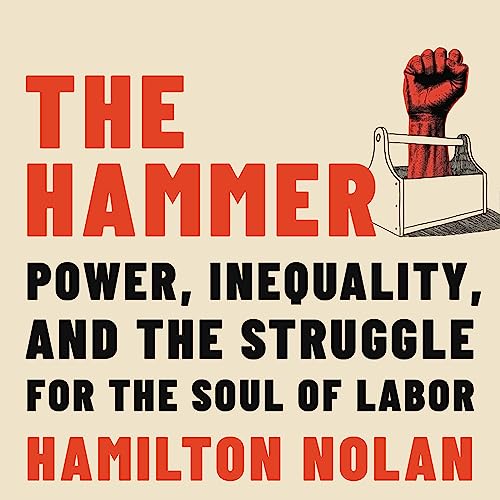
“The Hammer” (Power, Inequality, and the Struggle for the Soul of Labor)

By: Hamilton Nolan

Narrated by: Franklin Pierson

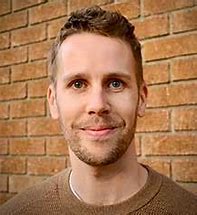
Hamilton Nolan (Author and free-lance Journalist)

“The Hammer” is a paean to unionization. Unions lost much of their political power in the early 1970s. Political power of labor was diminished by State governments, poor labor union management, and a diminishing number of labor union members. Nolan’s argument is workers have to reestablish political power to change their unfair and inequitable relationship with business.

The widening gap between rich and poor is traced to the era of President Reagan when the first deep cuts in corporate taxes occur.

Reagan fought unionization by firing air traffic controllers that sought better wages. Reagan’s supporters believed government social programs were out of control and their cost diminished the power of free enterprise. Much of the American public either agreed or were apathetic. However, as the gap between rich and poor accelerated, Americans began to complain about inequality. With extraordinary income increases for business owners and CEOs, and repressed wages for workers, the need for unionized political power became self-evident. Nolan introduces his book about unionization with a brief biography of Sara Nelson.
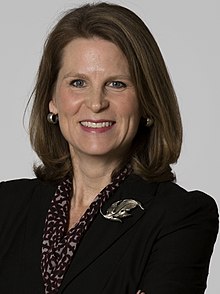
Sara Nelson (AFA president of the Association of Flight Attendants.)

Nolan writes about Sara Nelson who became a union member when she worked for United Airlines as a stewardess. Nelson was born and lived in Corvallis, Oregon. She applies for a job with United Airlines in St. Louis. She gets the job but her first paycheck is late. She couldn’t pay her rent. A check is given to her by a union employee to tide her over until her first check is delivered. From that day forward, according to Nolan, Nelson became a supporter of unions. Eventually Nelson becomes the president of the Association of Flight Attendants (AFA).

Liz Shuler (President of the AFL-CIO since 8/5/21.)

Ironically, the first woman President of the AFL-CIO is also from Oregon. Liz Shuler received a bachelor’s degree in journalism from U of O in Eugene, Oregon. She became a union activist after college and worked to organize clerical workers at Portland General Electric. She is elected as the President of the AFL-CIO in 2021 after serving as the first woman Secretary-Treasurer of the organization.

Nolan’s book addresses State conflicts with unionizers and family-income for low-income workers. The first states he addresses are South Carolina and California. Nolan notes South Carolina has become a haven for businesses wishing to avoid unions. South Carolina’ State laws discourage unionization which appeals to businesses wishing to relocate. Nolan notes South Carolina attracts businesses looking to improve profits by reducing labor costs. The consequence of business’s lower labor cost is to reduce South Carolina workers’ standard of living. South Carolina’s workers are among the lowest (19th out of 50 States) paid workers in the U.S. Nolan implies South Carolina’s income inequality is a consequence of the State’s policy of discouraging unionization.

California has the fourth largest income inequality in the U.S.

Nolan notes the cascading negative of unfair compensation for domestic labor. Though California now allows childcare servers to be unionized, their unionization efforts are discouraged by government regulation, as well as the fragmentation of its poorly compensated workers. The consequence of State government regulation keeps wages low and discourages entrepreneurs from starting childcare’ businesses. A compounding negative is created when users of childcare’ service, women in particular, are unable to work in regular work-day jobs. Workers are compelled to stay home to take care of their children, reducing family income and further impoverishing low-income childcare’ workers. It becomes a vicious cycle, hurting entrepreneurs trying to start a childcare service, employees wishing to increase family income, and employers needing more workers.
Nolan expands his argument by noting how service industries in Las Vegas, the State of Florida, New Orleans, and Mississippi are benefited by unionization.

Vacation and gambling meccas like Las Vegas, Florida, New Orleans and Mississippi need service industry employees. These vacation and gambling meccas depend on service quality for visiting tourists. Lack of representation for service employees diminishes employee’ standards of living which indirectly damages the reputation of the entertainment and vacation industry.

In Las Vegas, where Nolan lived for twenty years, the service industry is protected by the Culinary Union.

Nolan notes how strong the Culinary Union has become in Las Vegas and disparages casino owners like the Fertitta’s who have fought unionization. Numerous examples are given to show how union actions have improved the lives of Casino workers, many of which are immigrants from other countries.

Nolan’s argument for the value of unionization is compelling but his encomium for the union movement ignores America’s immigration crises.

The vast need for immigration reform is not being forcefully addressed by unions. Compensation inequity is a noble fight carried out by unionization, but it needs to broaden its role in immigration. Unions need to use their power and influence to change immigration policies to equitably treat a labor force that is sorely needed in America. Unions need to help educate and house legal immigrants, so they do not become a part of America’s growing homelessness. Additionally, unions could use their recruiting expertise to get Americans off the street by providing job training services and gainful employment.

Public perception of unions could be monumentally improved with a program to recruit and indoctrinate the homeless with training for jobs in the 21st century.

There is so much that unions could do to far exceed the minimalist goal noted in Liz Shuler’s plan to add a million union members over the next 10 years. Nolan pitches for Sara Nelson as a more dynamic leader for the union movement. Maybe Nelson would be better than Shuler, but growth, value, and public perception of union members could be monumentally improved with a program to recruit and indoctrinate the homeless with training and jobs for the 21st century.

Whomever the leaders of unionization may be in the future, Nolan clearly illustrates how important political power is in balancing corporate owner/managers’ disproportionate incomes and privileges with labor.
TIKTOK ENERGY

America and every nation must believe in themselves until, like all changes in society, the proof of an energy’s value becomes self-evident

Books of Interest
 Website: chetyarbrough.blog

“Energy” (A Human History)

By: Richard Rhodes

Narrated by: Jacques Roy

Richard Rhodes (American journalist, historian, and author.)

Richard Rhodes explains the many forms of “Energy” that have changed the course of history. The one constant is human ingenuity. The source of energy evolves over centuries of civilization. The source of energy has changed from human hands to fuel burning machines to atomic fission to fusion to information. The back and forth of human thought and action have used sources of energy to remake the world. Rhodes’ history shows progress is not always forward. Change is often resisted until results outweigh failures.
Having just gone through the first chapters of Rhode’s excellent history of energy, this review was prematurely completed because of the TikTok controversy noted in the news.

It is important to complete Rhodes’ history to have some understanding of why information is the energy of modern times. Citizens of the world are facing many of the same obstacles Rhodes wrote about in his book. That energy is information may seem incongruous to some but, Rhodes’ history about wood, coal, oil, electricity, nuclear power, and the current state of renewables is like the energy crises of information today. Rhodes does not consider what some argue is tomorrow’s energy source. Tomorrow’s energy source is information. The many trials, the fits and starts, of the energy sources Rhodes explains are the same trials facing today’s world with information as the most current iteration of “Energy”.

Energy is fuel for doing work. Its early forms are those noted in Rhodes’ history. Earlier forms of energy are still relevant, but their utility is being challenged by the immense growth of information and how information drives the future.

There are lessons to be learned about the challenges of information as energy from the experiences noted in Rhodes’ history. This is a bumpy time that shares the trials and tribulations of wood, coal, oil, electricity, nuclear power, and renewable energy of the past. Each energy source has improved the lives of its users but not without trial and error. The world is in the midst of a transition from the industrial age just as the industrial age transitioned from the agricultural age. The world is entering the information age.

The energy change today is information, most recently multiplied by artificial intelligence.

The paranoia of today is that foreign governments will use information to disrupt the progress of nations that have their own forms of government. The controversy of TikTok is a case in point. On the one hand TikTok is being used by small entrepreneurs in America to conduct their businesses. On the other, TikTok’ popularity is spreading the equivalent of porn to the public, distorting the perception and education of children. There is the added threat of influencing the public to overthrow governments. The question is would TikTok be any less a threat if it were owned and restricted to one country or another? Facebook offers the same potential as TikTok. Facebook, Google, and Amazon are energy sources for distorting truth and influencing the public in the same way as TikTok. Domestic ownership does not cure the negative potential of information distortion or abhorrent political influence.

Is TikTok going to change democratic capitalism or is it going to change Chinese communism? One suspects, it will change both. The information highway cannot be blocked. Information energy, like water, will find its own way through cracks in its environment.

The fundamental point made in the last two chapters of Rhode’s excellent history is that the world, and America, need to increase the number of nuclear energy plants based on the need to curb environmental pollution. His argument is based on learning from the nuclear accidents that have occurred, and designing nuclear power plants to mitigate the consequence of failure. He notes no energy source in the world has succeeded without learning from producer’s mistakes. Our mistakes at Chernobyl, 3-Mile Island, and Fukushima are correctable. Environmental degradation is the crises of the 21st century that threatens human existence.

America and every nation must believe in themselves until, like all changes in society, the proof of an energy’s value becomes self-evident.

CAPITALIST’ LESSONS

Capitalism is not a partisan issue but a social imperative for both Republicans and Democrats to work together to benefit all Americans.

Books of Interest
 Website: chetyarbrough.blog

“Capitalism in America” (A History)

By: Alan Greenspan, Adrian Wooldridge

Narrated by: Ray Porter

As one would expect, “Capitalism in America” begins with the British economist, Adam Smith, who defined capitalism in 1776 with “An inquiry into the Nature and Causes of the Wealth of Nations”.

Alan Greenspan (on the left) is an American economist who was chairman of the Federal Reserve from 1987-2006. Adrin Wooldridge (on the right) is a British economist and journalist who wrote for “The Economist”. Wooldridge has a doctorate in philosophy and has co-written several books with Richard Micklethwait, the editor-and-chief of Bloomberg News. One might argue Greenspan has a conservative bias but Wooldridge’s experience as a British journalist gives one a sense of balance in this informative and well-written history of American capitalism.

Smith’s concept of capitalism advocated leaving economic decisions to market forces, tempered by individual economic decision makers. What Greenspan and Wooldridge infer is that decision-makers’ discretion and interference are what roils capitalism’s history.

“Capitalism in America” reveals tumultuous times for the American economy but with positive forward momentum. The public in all countries have experienced hard times from market forces. Some countries, like Israel, India, and the U.K. have experimented with socialism as an alternative to capitalism. Communist countries like Russia and China flirt with capitalism and one may argue–benefited from its market results. The author’s history shows capitalism as the primary reason for America’s economic growth and success. However, that’s getting ahead of their story.

The authors begin at beginning with the story of Jefferson’s desire to emphasize agriculture as the primary driver of economic growth in America. In contrast, Alexander Hamilton believes the industrial revolution demands a broader view of economic policy. The key to tapping into the industrial revolution required capital which Hamilton clearly recognizes. Hamilton recommends the creation of a national bank. Hamilton is inspired by Great Britain’s Bank of England. It offered private capital and paper credit to businesses and entrepreneurs.

Hamilton, as Secretary of the Treasury, presented a “Report on a National Bank” to President Washinton and the House of representatives in 1790. This report notes that Congress, with its authority to collect taxes, could fund the bank and lend money to the government to pay foreign creditors, public services, and private businesses to grow the economy. Jefferson opposed the idea, but Hamilton’s broad interpretation of the Constitution allowed his idea of a national bank to be created. In 1791 the First Bank of the United States is established in Philadelphia and remained chartered for 20 years. This became a giant step for America’s economic growth.

Several future Presidents opposed an American national bank. Of course, Jefferson was one because of his belief in an agrarian future for America. Jefferson’s friend and future President, Madison (the 4th President of the U.S.) opposed the idea of a national bank, and Andrew Jackson (the 7th President of the U.S.) used his power as President to oppose the “Second Bank of the United States” in 1833.

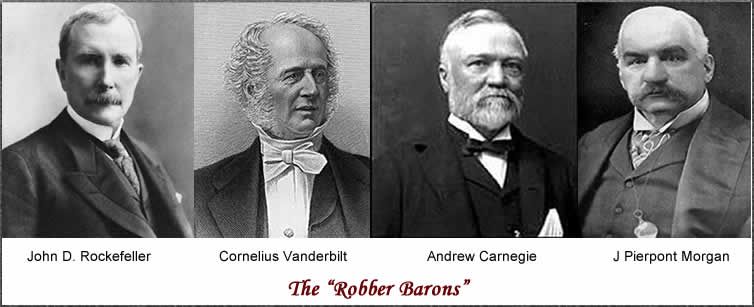
The authors note the successful industrialists of the 19th century capitalized on Hamiltonian creation of an American banking system. They became known as the robber barons of America. Rockefeller, Vanderbilt, Carnegie, and J.P. Morgan used capital to produce oil, expand rail transportation, make steel, and provide bank capital to grow the economy.

And then, WWI drew America into events that roil the course of its economic history.

An American economic boom occurs in the first two years of the war with America choosing neutrality. Exports surged from $2.4 billion to $6.2 billion in 1917. Everything from cotton, to wheat, to automobiles, to food, to machines were exported during those years. After joining the war, 3 million Americans were mobilized. When the war was over, the world and the American economy faltered. Recession (1918-1921) hit the world after the war, though America showed it had become a major world power.

As America recovered from WWI, their prowess as a producer of goods and services led to the roaring 20s and a runaway stock market that eventually crashed at the beginning of the Great Depression (1929-1939).

The authors note President Roosevelt is a great salesman who provides relief to many Americans with government employment programs during the depression. However, the authors note Roosevelt’s inept management delays America’s recovery by instituting price controls that distort market forces. Overt price control is a recurring mistake of national economies. The authors are not saying that price control is a singular cause of America’s continuing economic crisis, but it makes market recovery more difficult and longer to achieve.

The authors explain reparations for WWI’s winners helped set the table for WWII.

Germany’s inability to pay reparations, the growth of Antisemitism, and German inflation led to the rise of Hitler. Though not addressed by the authors, Japan felt threatened by American, Chinese, and Russian influence in Asia that led to Pearl Harbor and America’s entry into WWII.

The point is made that America’s depression before the war is not cured by Roosevelt’s economic intervention. The advent of war mobilized American industry.

The authors suggest market interference delayed recovery from the Great Depression. On the other hand, Roosevelt gave hope to the country with his speeches and employment programs. Citizens underlying faith in America’s ability to overcome hardship, and their response to Pearl Harbor reinvigorated the economy. Industries were retooled to meet the demands of war.

The authors argue mistakes in America’s capitalist history have been made by both Democratic and Republican Presidents who interfered with naturally occurring market forces. From Roosevelt to Nixon to Reagan to Obama to Trump, Presidents who institute price controls and/or tariffs interfere with free trade. America’s capitalist economy suffers from those actions. This is not to argue all legislation and federal action on the economy constitutes capitalist interference. Fundamental human rights that ensure freedom to vote, speak one’s mind, practice one’s own religion, work in industries one chooses, while seeking peaceful resolution of differences, are interferences that sustain capitalism.

When natural market forces are interfered with by business leaders and public legislators, capitalism suffers. An inference one may draw from the authors is that legislated programs that aid Americans who are unable or unwilling to participate in the capitalist economy are an interference with capitalism. That raises legislated issues of emigration, social security, health insurance, education, defense, transportation, veteran’s benefits, housing, environmental protection, occupational safety, and other public benefit programs. This is where there is continuing disagreement among Americans. These are not party issues because both Republican and Democratic leaders have both positive and negative arguments for and against these policies.

There is the law of unintended consequences that plague government policies. Some argue Reagan reinvigorated the American capitalist economy by reducing taxes, cutting government programs, reducing government employment, and busting union strikes. He did those things and government debt skyrocketed to a level greater than ever in the history of America. The gap between rich and poor was set on a path that beggared the poor and enriched business managers without comparable enrichment of labor. Like Roosevelt, Reagan sold ideas that had unintended consequences that were not in the long-term interest of Americans.

How can one measure the success of capitalism versus other economic systems? The author’s history of capitalism offers no answer but reveals what has benefitted and damaged American society since 1776. They illustrate failure of capitalism is in the hands of American leaders. Capitalism’s improvement is not a partisan issue but a social imperative for both Republicans and Democrats to work together to benefit all Americans.

CAPITALISM’S DEATH?

Democratic capitalism is the most likely form of government to assuage our worry and find a rational solution for our right to privacy.

Books of Interest
 Website: chetyarbrough.blog

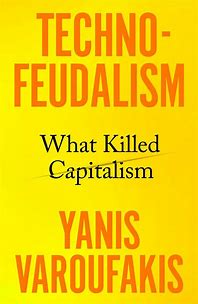
“TECHNO-FEUDALISM” (What Killed Capitalism)

By: Yanis Varoufakis

Narrated by: Yanis Varoufakis

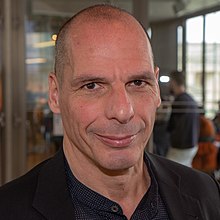
Yanis Varoufakis (Author, Greek economist and politician, Minister of Finance of Greece for 7 months in 2015, launched Diem25, the “Democracy in Europe Movement 2025” in February 2016.)

Yanis Varoufakis’s “Techno-Feudalism” argues the advance of technology is killing capitalism. Varoufakis’s argument is that democratic capitalism is either dying or dead. He suggests a survival plan in the last chapter of his book. This misguided book reminds one of Mark Twain’s response to news of his illness, i.e., “The reports of my death are greatly exaggerated”.

Varoufakis argues the advance of technology and its intrusion into private lives of citizens will destroy freedom of the individual and result in a government ruled by authoritarian, undemocratic, feudal oligarchs.

Varoufakis infers technology is the cause of the rise of new robber barons that have struck it rich in the internet era. He largely disparages the great wealth accumulation by the founders of Amazon, Google, Microsoft, Apple, and other tech leaders in the 21st century. His argument is based on belief that these new robber barons became rich without the hard work of laborers like those during the industrial revolution. The error in his argument is that labor is adjusting from work with one’s hands to work with one’s mind.

Freedom is the keystone of democracy.

Freedom and democracy have been limited and abused over the centuries but have ultimately led to the wealthiest countries in the world. When freedom is overregulated by democratic leadership, economic progress is diminished. Democracy has historically mitigated mistakes of overregulation with human nature’s desire for freedom. There is no reason to believe human nature will change.

In one sense, Varoufakis’s argument is correct. There is a greater risk of loss of freedom with the advance of technology, i.e., particularly with the rise of artificial intelligence. The evidence of that risk is seen in China and North Korea’s surveillance capabilities today.

As inferred by Varoufakis, authoritarian risk is greater in the 21st century because of surveillance technology and the predictive power of artificial intelligence. Surveillance does not change the nature of humankind. Democratic government only becomes more important. The juggernaut of technology will not be stopped, and our lives will be more intimately understood by strangers than ever before. That truth only means democracy, freedom of choice, and equal opportunity are made more consciously recognized as important.

All forms of government have winners and losers. What democracy does is level the playing field. It is a raucous governing system that leaves some out of success, but it beats any known alternative for broader human opportunity. Democracy will always be a work in progress. America needs better health care for all citizens. America needs improvement in equal rights and opportunity for all citizens. No Americans should be homeless or hungry. Few countries, if any, have adequate health care, equal rights, and opportunities for all its citizens. Most realize, America must do better.

The resurgence of labor unions in America is a good sign for American peace and prosperity.

Varoufakis suggests democracy can be saved by bringing it down to an individual level within companies that generate wealth for the country. In one sense, he is right but his idea of giving one vote to every employee in determining wages, and the direction of a company are a step too far. Labor is a critical part of yesterday’s, today’s, and tomorrow’s economic prosperity. Owners and managers of companies need to include union representation in their corporate decisions. Neither labor nor management have all the answers, but all have money, commitment, and labor in the game. Each should have their say. That is a part of Democracy’s success in the world.

The intimate knowledge of personal behavior is a valid concern in the modern world. In the hands of authoritarians, the risks of surveillance technology are multiplied. In democracy, risks are not eliminated but can be judiciously regulated. Democracy has the best chance of determining how a surveillance economy needs to be handled. Democracy will continue to make mistakes, but historically, its successes outweigh its failures.

Citizens should worry about what others know about their personal lives, but the advance of technology will not be stopped. Democratic capitalism is the most likely form of government to assuage our worry and find a rational solution for our right to privacy. Varoufakis’s “Techno-Feudalism” is more wrong than right, but he makes one think about our future.

RICH AND POOR

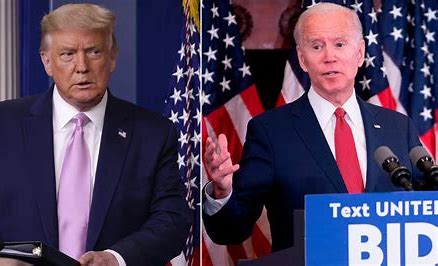
Contrary to Leonhardt’s optimism, whether the American power structure continues to shift toward a more equitable treatment of the poor remains to be seen.

Blog: awalkingdelight

Books of Interest
 Website: chetyarbrough.blog

“Ours Was the Shining Future”

By: David Leonhardt

Narrated by: Dan John Miller

David Leonhardt (Author, journalist and columnist, writes “The Morning” newsletter for the “New York Times”, received a BS from Yale in applied mathematics in 1994.)

David Leonhardt writes an encomium to Democratic Capitalism in “Ours Was the Shining Future”. Some of what Leonhardt writes will make conservative Americans gag while liberals will tend to praise his view of American history. The hot button issues of 21st century America are immigration and the rising gap between rich and poor.

“Dallas, Texas, United States – May 1, 2010 a large group of demonstrators carry banners and wave flags during a pro-immigration march on May Day.”

Leonhardt’s selected historical facts argue that immigration has a cost to America that is mitigated by its contribution to the economy by second and later generation immigrants. He resurrects John F. Kennedy’s oft quoted phase about America as “A Nation of Immigrants”. Leonhardt argues the rising gap between rich and poor accelerated with the election of Ronald Reagan and subsequent tax and spend decisions made by later government administrations.

The difficulty one may have with Leonhardt’s reporting is that historical facts do not speak for themselves.

It is the power of Leonhardt’s persuasion rather than the facts of history (and one’s own prejudices) that make a credible argument for

(1) the benefit of unionization in America,

(2) the benefit of intervention by the Franklin Roosevelt administration during the depression,

(3) the aggressive tax reduction for high income earners with government overspending (beginning with Ronald Reagan) that negatively affected the American economy and disproportionately increased the gap between the rich and poor, and

(4) the monumental economic benefits from second generation immigrants like Sundar Pichai (CEO of Google), Indra Nooyi (former CEO of PepsiCo), Elaine Chao (the U.S. Secretary of Transportation under Trump), and Lin-Manuel Miranda (the creator of the Broadway musicals “Hamilton” and “In the Heights”), and others.

Leonhardt recounts the history of the union movement in America that evolved into a political power that improved the income and lives of the working poor.

He touches on the corruption of the union movement but on balance suggests more good than bad came from its representation of labor. Leonhardt argues the decline of unionization and tax policy changes in the late 20th century increased the gap between rich and poor.

Leonhardt argues immigration needs reform and infers it should begin with acceptance of an estimated 340,000 children (dreamers) born in the U.S. to unauthorized immigrants.

He suggests new immigration should be limited to immediate relatives of legal immigrants that presently live in the U.S. He reiterates the value of second-generation immigrants while acknowledging the burden borne by the economy with first generation immigrants. New immigrants generally have a language deficiency, greater education needs, and a willingness to work at jobs for lower pay than non-immigrant workers who also need jobs.

Leonhardt suggests the gap between rich and poor is a function of an unequal distribution of political power.

Leonhard believes improvement is coming from a resurgent union movement and an evolving recognition by both conservatives and liberals of the consequence of inequitable tax treatment that favors the rich.

There is some evidence to support Leonhardt’s belief in a power shift with the recent union actions in automobile, teacher. and nursing services strikes that increased their income. Minimum wages have risen in 22 states that have affected an estimated 10 million workers. The highest are in California ($16), Massachusetts ($15.75), and Washington ($15.50).

However, one is inclined to be skeptical about income gap reduction with Trump’s Presidency that further reduced taxes on the rich and Biden’s reluctance to act on tax inequality.

Leonhardt receives a Pulitzer Prize for Commentary, the Gerald Loeb Award for excellence in reporting on business, finance, and the economy, a New York Time Book Review Editors’ Choice award, and The Atlantic’s Ten Best Books of the Year for the most notable and influential book of the year. These are nice academic rewards but whether Leonhardt’s arguments are anything more than a finger in a dike, near a breaking point, is yet to be revealed.

Contrary to Leonhardt’s optimism, whether the American power structure continues to shift toward a more equitable treatment of the poor remains to be seen. The continued popularity of Trump among conservatives is disheartening and suggests otherwise.

STONE THROWER

In the 21st century, actions and policies of one nation are not local. Like a ripple in water, the world can be changed by one stone thrower.

Blog: awalkingdelight
 Website: chetyarbrough.blog

Crashed: How a Decade of Financial Crises Changed the World

By: Adam Tooze

Narrated by: Simon Vance, Adam Tooze

Adam Tooze (British Author, Historian, professor at Columbia University, Director of the European Institute.)

“Crashed” is a book about the 2008 financial crash. Though it is old news, Adam Tooze offers historical perspective and a cautionary tale about America, the E.U., China, India, Russia, Spain, and other nations of the world. Interconnectedness is greater now than any time in history. The surprising realization in Tooze’s analysis of the financial crash is that America caught a fiscal infection like Covid19, and it spread across the world.

These securities were purchased and re-sold among big banks, wealthy investors, and investment houses. The lax oversight of the quality of the combined mortgages led to a cascade of bank and investment house failures that nearly collapsed the world financial system.

Though the western world was more directly affected by purchases of these mortgage packages, countries like China, Russia, South Korea, Ireland, Spain, and Greece were severely, if not equally, impacted.

Nations’ financial crises were not solely because of purchases of these mortgage packages but because of world economic interconnectedness. Nations of the world, as users of energy and product purchases, quit buying. At the same time, Tooze notes the American dollar was hoarded by some countries for protection from devaluation of local currencies. With America’s financial crises, the dollar became a source of devaluation rather than protection.

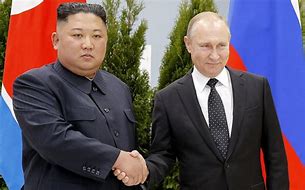
China chose to invest in domestic infrastructure projects like dams, high speed rail, and bridges. China chose to increase product production (at lower labor costs) for the worldwide market. In contrast, Russia reinforced kleptocracy, before, during, and after the 2008 crisis, by rewarding Russian oligarchs who became a wealthy and powerful cadre of supporters of the government. With favored treatment of the oligarchs, Vladimir Putin recognized he had the power to act as he wished whether it was in the best interest of Russian citizens or not. (This is similar to the repressive reign of Kim Jon-un who spreads the wealth of his nation on a relatively small cadre of North Korean protectors while many citizens live in poverty.)

Ben Bernanke (American economist, 14th chairman of the Federal Reserve.)

In America, Tooze deconstructed the complicated negotiation process between banking industry independence and federal government oversite by the Obama administration. The range of disagreement is from nationalization of the banking industry to a direct bailout of overextended banks. Though the government bluntly accused banking executives of overpaying themselves for the mistakes they made, Obama and Geitner recognized the importance of industry independence in making complicated decisions to get America out of its financial ditch. The decision is made to bailout the banks. The American government loaned enough money to banks and select companies to maintain American lenders’ and industries’ liquidity.

Timothy Geithner (Former central banker, 75th U.S Secretary of the Treasury under President Obama.)

The controversial decision made by the government to support banking and industry liquidity resulted in many American citizens loss of their homes; not to mention their jobs, because of business and industry cutbacks. The tranches of money to support lenders and businesses did nothing to help the poor who purchased houses on variable rate mortgages to qualify for a loan. Mortgage lenders received large bonuses for increased business but were never penalized for the harm they did to the public. When rates on their loans escalated, lower income buyers could no longer pay their mortgages. The choices of Obama’s administration reinforced the perception that those with enough money to cope with the economic downturn were favored over the poor because they had enough income to either pay the escalated mortgage payments or refinance their mortgages.

The financial rescue of Greece follows a similar path between 2008 and 2018. Greece is eventually bailed out but the citizens most hurt by the restructured financing are the poor.

In order to stabilize the economy, 320 billion euros were lent to Greece by the European Union and the IMF. As of 2019, only 41.6 billion had been paid back to reduce that debt. The E.U. and IMF imposed austerity measures that principally hurt the poor by reducing retirement pensions and employment opportunities. Greece fell into a recession that lasted until 2017. The poor became poorer because of pension reductions and loss of jobs. (Full repayment of the 320-billion-dollar loan is not expected until 2060.)

Tooze tells a similar story about Spain. The 2008 crises caused a 3.6% reduction in GDP in 2009. Spain’s response was similar to Greece’s in that the poor were more likely to have been hurt than the rich because of implemented austerity measures that reduced public spending, and job creation that impoverished a wide swarth of society.

The final chapters of Tooze’s history severely criticizes the rise of Trump and his extremist rhetoric about helping the working poor when in fact he is only interested in himself, his power, and his wealth. Tooze implies Trump uses American belief in free speech, and the power of public office to distort the truth of immigration, poverty, and equality to mislead the public. Historically, this is not a new American phenomenon but in this technological age, the damage political leaders can inflict on the public is multiplied.

In explaining the impact of the 2008 financial crises, Tooze shows how one nation’s actions and policies can roil the world. In the 21st century, actions and policies of one nation are not local. Like a ripple in water, the world can be changed by one stone thrower.

ECONOMIC EVOLUTION

The demographics of life demand better care of the human population and the environment. Power, whether from individual wealth or ruling authority, needs to be refocused on service.

Audio-book Review
 By Chet Yarbrough

Blog: awalkingdelight)
 Website: chetyarbrough.blog

Braiding Sweetgrass: Indigenous Wisdom, Scientific Knowledge and the Teachings of Plants

By: Robin Wall Kimmerer

Narrated by: Robin Wall Kimmerer

Robin Wall Kimmerer (Author, Professor of Environmental and Forest Biology, PhD from the University of Wisconsin-Madison.)

Robin Wall Kimmerer’s “Braiding Sweetgrass” channels a movement for economic change around the world. Capitalism and socialism are evolving in similar ways to respond to the world’s ecological crises. Neither economic system is capable of dealing with the crises because of the governing weaknesses of their evolution. Capitalism, like socialism, is driven by human nature’s self-interests. With capitalism, unbridled self-interest views individual wealth as a measure of success. Socialism views unbridled power as a measure of success. Neither freedom of capitalism nor the power exercised in socialism will stop earths’ despoliation.

Kimmerer tries to convince listeners to recognize their self-interest is in caring for the ecology of earth and its environmental and human diversity.

This is not a new argument. Sir David Attenborough, Jonnie Hughes, Joseph Marshall III, Charles Mann, Barry Lopez and others make similar arguments. Even though they may be right, human’ interest in balancing ecology and diversity will only happen with governance that is neither purely capitalist nor purely socialist.

Kimmerer, as a scientist and descendent of the Potawatomi Indian nation, has dedicated her life to nurturing the earth with her education as a botanist. She reflects on her spiritual beliefs, historic values of her heritage, and her education to change the direction of earth’s despoilation. Attenborough and Hughes write about the importance of rewilding the world. Joseph Marshall III argues science offers the opportunity to rebalance the relationship between humanity and nature. Charles Mann recalls the history of William Vogt and Norman Borlaug with Vogt arguing for conservation while Borlaug argues for scientific research to deal with overpopulation and hunger. A more sanguine view is taken by Barry Lopez who simply catalogues and implies the demise of earth because of human habitation.

At times, Kimmerer’s solutions are too mystical and spiritual. Some of her tales will dispirit listeners. On the other hand, some of the mythology she writes about is entertaining, if not actionable.

The character of “Windigo” is a representation of the weakness of capitalism and its extremity that entails the growth of greed. Her tales of the creation of humanity reflect on the strengths and weaknesses of human nature.

What Kimmerer offers listener’s is contemplation, if not realistic solutions for earth’s despoilation.

What is wrong with capitalism and/or socialism that can be corrected to stop earth’s deterioration? It is in a middle way where money and power are not ends in themselves but tools for improvement. Service to all species of life is an objective that can only be achieved with money and power. A cultural shift is required to understand what can be done. There needs to be a shift from manufacturing and industrial growth to a service-based economy. With the advent of technology, particularly A.I. that shift is happening.

Homelessness, hunger, disease, natural disasters, pollution, mental dysfunction, failing public education, racial and religious discrimination are all solvable problems in the world. Money and power are the tools that can be used to solve those problems, but it requires the will of governments to manage those tools to focus on service to society, not manufacture of things that do not conserve the environment. This is evident in the too-long story written by Kimmerer. There is an element of irony in her book because that is what her Indian heritage practiced hundreds of years ago. Indian tribes had no need for money, but their Chiefs used their power to care for land and its diversity that served their people’s needs.

Money has become synonymous with power in both capitalist and socialist economies.

Even Indian societies in America have adopted that reality with the building of Casinos. What is missing is how that power is being used. Kimmerer explains power should be used to serve the earth’s rebirth and the needs of all life. The obvious point is that without earth’s rebirth, human society ends. The future of the world is dependent on service, not manufacturing. The demographics of life demand better care of the human population and the environment. That job can be fulfilled with a reorientation of the world’s economic rewards and punishments. Power, whether from individual wealth or ruling authority, needs to be refocused on service.

V.A.T.

Audio-book Review
By Chet Yarbrough

(Blog: awalkingdelight)
 Website: chetyarbrough.blog

Rebellion, Rascals, and Revenue: Tax Follies and Wisdom Through the Ages

By: Michael Keen, Joel Slemrod

Narrated by: Walter Dixon

“Rebellion, Rascals, and Revenue” is a painful and laborious book to listen to, in part, because of its length but mostly because of its subject. Few citizens appreciate having their hard-earned wealth and income reduced by government taxation. However, the co-authors are well qualified and informative in explaining how important taxes are to every form of government to insure citizen’s peace, welfare, and protection. More importantly, they show how countries of the world have both aided and diminished prosperity of nation-state’ economies with good and bad tax policies.

Kevin McCarthy (Speaker of the House.)

As noted by McCarthy, the deficit exceeds the annual gross national product of the United States.

Keen’s and Slemrod’s book is timely. The wide gap between America’s two major political parties is partly because of America’s deficit, which has not been higher since WWII. The solution lies in the political will to increase taxes and reduce government expenditure. The difficulty is finding an equitable balance between tax revenues and the health, education, and welfare of America’s citizens.

However, America’s homelessness is evidence of a gap between rich and poor that belies America’s great wealth.

Keen’s and Slemrod’s book illustrate the folly of many nations that have inexpertly balanced tax policy with the health, education, and welfare of their citizens. From before the French revolution to modern times, the authors recount errors made by governments that bumble their way from forcing tax collection to passing confiscatory laws that support bureaucracies that beggar rather than serve the public. Along the way, the authors show how tax collection is conducted, how some improvements were made, and how citizens were both benefited and harmed by tax policies.

After wading through the author’s history of nation-state’ tax hijinks, Keen and Slemrod conclude America’s tax system should be overhauled. Their solution is a value added tax. This is an interesting conclusion that is reinforced by T. R. Reid’s book, “A Fine Mess” which suggests the same thing. However, Reid is a reporter for the “Washington Post”, not an economist with experience like Keen’s and Slemrod’s.

A value-added tax (VAT) is a consumption tax on goods and services that is levied at each stage of the supply chain where value is added, from initial production to the point of sale. The amount of VAT the user pays is based on the cost of the product minus any costs of materials in the product that have already been taxed at a previous stage1.

Keen and Slemrod do not clearly explain why they think a VAT is the solution to a better tax system than America’s current policy. Reid explains a VAT is a broad-based low-rate tax that will reduce the need for a tax collection bureaucracy because it eliminates corporate loopholes, broadens, and reduces tax rates, and equalizes citizens’ tax burden. Reid believes more revenue would be produced to reduce America’s debt. It would also reduce the expense of America’s tax collection bureaucracy. In theory both government expense and the deficit would be aided by a VAT tax policy.

A FARMER’S LIFE

Audio-book Review
By Chet Yarbrough

(Blog: awalkingdelight)
 Website: chetyarbrough.blog

Dirt to Soil (One Family’s Journey into Regenerative Agricultural

By: Gabe Brown

Narrated by: Gabe Brown

Gabe Brown (Author, farmer.)

“Dirt to Soil” offers a glimpse of a farmer’s life. Gabe Brown’s family manages a 5000-acre farm in North Dakota. Brown and his son’s farming experience offer insight to a branch of biology that addresses the relationship of a farm environment’s organisms. Brown is not a scientist or academic. He is a farmer.

Gabe Brown became an expert in soil conservation based on experience and insatiable curiosity. Though he went to college, it is four years of hardship that gave Brown an understanding of farming. From that experience, Brown reordered his practice of farming based on five principles.

  1. No soil disturbance (no-till, no-synthetics).
  2. Reinforce Soil’s Natural Defenses (the outer layer of soil protects all life)
  3. Promote biodiversity (marry species nature’s way to keep soil healthy)
  4. Keep living roots in the ground as long as possible and use cover crops with seasonal diversity.
  5. Animal & Insect integration (both predator and protector) to promote natural diversity.

Brown’s journey to understand and practice these farming principles increased the profitability and durability of farmland. “Dirt to Soil” is a record of Gabe Brown’s personal farming and educational journey. Though Brown admits to being a city boy, his experience in 4H, some academic classes, and visits to his future wife’s farm sparked a lifelong interest in farming. When his wife’s parents retired from their 1700-acre farm, Gabe Brown and his wife took over management.

Gabe Brown’s farming education came from 4 years of weather-related catastrophes that nearly ended his career as a farmer. He notes his wife appeared ready to give up farming life, but he refused to give up. His experience in those years re-focused his attention on the intimate relationship between nature and farming.

Brown explains, in “non-wilding” words, how it is necessary to rewild his farm. By watching how nature preserves itself, he changes his farming practices. Without plowing, furrowing, and fertilizing with chemicals designed by farming industry, Brown rejects practices that artificially enhance dry soil that exposes it to natural diseases and the exigencies of weather. He turns to observing nature to find how it replenishes soil’s natural nutritional condition. His objective is to turn “Dirt to Soil”.

Brown reasons that raising cattle on the farm would fertilize its soil. (A caveat to Brown’s observation is that fertilization by cow manure requires frequent grazing rotation, not industrial manure concentration.)  

(There is a concern about carbon dioxide increase and ground water contamination from livestock. In a 2019 overnight stay with a farm family in New Zealand, there was objection to the former Prime Minister’s attempt to burden farmers with the cost of better livestock control.)

With natural fertilizer and cultivation of different plant species, Brown finds soil nutrient value improves. That soil improvement is absorbed by newly planted crops that benefit both livestock and consumers. The planting is done without tilling the ground but planting seedlings in unplowed ground. After experimentation, Brown begins rotating crops based on soil enrichment objectives.

Brown experiments with different species of plants to find which types replenish the soil in his area of North Dakota. With these discoveries and changes in practice, Brown’s farm prospers.

Brown notes change in farming practices is a slow process because of a false belief that high productivity is more important than nutritive value. When a film crew interviews Brown, one of the film’s producers is asked to buy a dozen eggs at the market and bring them to the farm to show the difference between eggs from “free range” chickens vs. caged chickens.

This is a comparison of a cracked egg from a free-range farm and an egg from a caged chicken farm. Brown notes his rewilded farm shows a brighter yellow yoke.

“Dirt to Soil” goes on to become a teaching facility for future farmers. Brown’s son works on the farm and will inherit it when his mother and father pass. In the meantime, an internship program is started to pass on the educational experience of Gabe Brown’s farming life. Rewilding farms means paying attention to the diversity and value of nature. Brown explains the nutritive value of food has fallen in America because artificial fertilizers have replaced the natural processes of nature.

Brown’s story about eggs reminds one of a trip to a Norwegian fish farm last year. One of our fellow travelers asked the employee of the farm if there is any difference between fish-farm’ salmon and a wild salmon. His answer is there are very few wild salmon left in the sea. However, he notes wild salmon have more Omega-3 per serving than farmed salmon which have less protein.

Gabe Brown explains his goal has always been to make a good living at farming and pass that skill on to his family and every American interested in that life. He concludes the success of farmers should not be based on crop yield but on profitability. His experience shows there are many ways to make a profit in farming.

Brown explains that high crop yield is not a measure of success. With the creation of alternative income practices, he believes a small farm is as capable of making a profit as a large farm. Observing nature and farm diversity (both human and ecological) is Brown’s guide for farming success and profitability.

Rewilding farming appears to be as important as rewilding the planet.

DEMOCRACY’S STORM

Audio-book Review
           By Chet Yarbrough

(Blog: awalkingdelight)
 Website: chetyarbrough.blog

The Lies That Bind (Rethinking Identity)

By: Kwame Anthony Appiah

Narrated by: Kwame Anthony Appiah

Kwame Anthony Appiah (Author, philosopher of history, politics and social sciences.)

Kwame Appiah implies western democracy is the best form of government.

The democracy of which Appiah writes is one in which rule-of-law, freedom within the limits of rule-of-law, and equal opportunity are evident.

However, contrary to Langston Hughes’ poem, the sea is not calm. Democracies’ sea is stormy because its principles are inconsistently practiced.

Kwame Anthony Appiah casts a lifebuoy to those swimming in the stormy sea of democracy.

Appiah’s chapters on religion may be a slog for some but they offer understanding of the inconsistency of religious belief. Religious contradictions are legion. Sermonizers pick and choose paths they like rather than any truth biblical writings may impart.

“The Lies That Bind” examines the role of religion, culture, and government in society.

Agnosticism, and atheism grows with revelations of science, stultified freedom of thought, and (though not mentioned by Appiah) ecumenical abuse.

Appiah’s life story reinforces the importance of culture. Both his parents were highly accomplished people. His mother was a British artist, historian, and writer. His father, from Ghana, was a lawyer, diplomat, and politician. Both parents come from accomplished families. Their son chooses to marry a man when same sex marriage only slowly becomes culturally accepted.

Appiah’s history addresses the ascendence of the Mongol empire to illustrate the breadth of Mongol conquest while noting its style of government control. His point is that control is exercised with a level of tolerance for independence, cultural understanding, and religious belief among Khan’s descendants.

Genghis Khan (1162-1227 Leader of the Mongol Empire)

In summary, Appiah argues democratic societies need to rethink identity in terms of human equality. Whether a man or woman is a successful entrepreneur, CEO, server in a restaurant, or laborer in construction, all are equally human. Appiah notes Trump’s political success in America relates to his intuitive understanding of what many political aspirants ignored—the importance of American labor, whether highly educated, unschooled, rich, or poor.

A leader of an enterprise can be right, even damn right, but fail without the help of labor. Disrespecting labor ensures failure. This is a lesson Henry Ford understood when he raised the wages of his work force. This is a lesson Elon Musk will undoubtedly find in his acquisition of Twitter.

Appiah’s lifebuoy is meritocracy, a government holding of power by people selected on the basis of their ability. The idea of meritocracy came about in the 1960s. However, there are academicians, like Daniel Markovits who believe the concept of meritocracy increases inequality and causes decline in the middle class. Markovits argues middle-class families lose equal educational opportunity because of high cost. Without equal opportunity for education, too many Americans are left without Appiah’s lifebuoy.

Appiah does not directly address issues of equality of opportunity in a democratic-meritocratic society. Though Appiah may be a minority in white western culture, one doubts his educational opportunity was ever a question of cost.

On balance, Appiah offers insight to how democracy can be improved. The key is equality of opportunity which implies democracy needs to focus on safety-net’ issues which entail more help for lower- and middle-class income earners. The safety-net is one which provides equal access to education, health care, and employment, i.e., without regard to sex, race, religion, or ethnic qualification. In democracy, that means election of leaders who are willing to ensure equality of opportunity for all.