FINANCIAL LITERACY

What Professor Fullenkamp makes clear is information is key to understanding financial markets, but human judgement is the difference between investor’ success or failure.

Books of Interest
 Website: chetyarbrough.blog

Financial Literacy (Finding Your Way in the Financial Markets)

By: The Great Courses

Lectures By: Professor Connel Fullenkamp

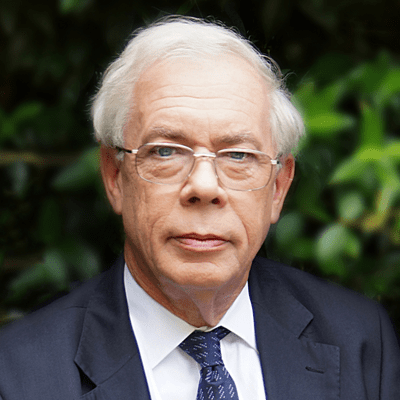
Professor Connel Fullenkamp (Lecturer at Duke University, economist and director of undergraduate studies in economics.)

“Financial Literacy” may put some listeners to sleep but there is a lot to be learned from Connel Fullenkamp’s lectures. He gives a lengthy description of financial markets extending from Stocks to Bonds, Forex, Commodity, and Derivative Markets. He offers information about how money is used and made in financial markets. Fullenkamp addresses banks, stocks, selling and buying securities, expected returns on investments, how they are priced, controlled, and how information about them is important for personal financial decisions.

It is no surprise to find that banks play a critical role in financial markets.

They provide personal banking services by accepting deposits and providing loans to individuals and businesses. They smooth the flow of money in the economy. Banks can help companies raise capital by offering advice and services for the issuance of stocks and bonds to finance businesses. They offer advisory services for mergers, acquisitions, and other financial strategies. Banks can act as market makers by buying and selling securities for their clients. They can provide asset management services, research and analysis, and ensure legal regulation and compliance with government and international laws. Banks are the backbone of financial markets when they provide efficient allocation of resources and ensure the smooth functioning of the financial system. All of this is true in concept.

However, banks, savings and loan companies, and mortgage lenders are run by human beings who are subject to all the risks of human nature that can lead to catastrophic financial collapse as it almost did in the 2007-2010 mortgage derivative crises.

To be fair to the professor’s presentation, the 2007-2010 crises is not only because of the bad mortgages generated by financial institutions like Countrywide, New Century and Ameriquest. Goldman Sachs, Lehman Brothers, Bear Stearns, and Merrill Lynch investment banks are equally guilty. They packaged bad mortgages with high-risk mortgages to be sold to the public as safe collateralized securities that were far from safe and ultimately unsound. The result was a near worldwide financial collapse.

The government compounded the failure of 2007-2010 by guaranteeing poorly justified mortgages that were included in the packaged securities.

Rating agencies like Moody’s Standard & Poor’s, and Fitch ratings misled investors about the risks of the packaged mortgage securities. Government oversight organizations like the Federal Reserve and Department of the Treasury did not adequately do their job. Ironically, banks like Wells Fargo resisted the mortgage derivatives while banks like JPMorgan Chase bought and sold them but was too big to fail. Ironically, both banks became vehicles for recovery by taking over some of the lenders that had to0 many mortgage derivatives in their portfolios. (As noted in earlier book reviews, many families lost their homes because of foreclosures caused by lenders who originated the mortgages in these securities.) Fullenkamp explains financial markets are based on information. However, as noted by information computer geeks, “garbage in, garbage out” sunk lenders and victimized many investors, lenders, and homebuyers.

In explaining the stock market, Fullenkamp notes an investor becomes a partial owner of a company which gives them a stake in a company’s future profits, either from dividends or market performance.

Stocks have a dual identity. The difficulty for the investor is in understanding the information provided by the company to predict company performance and reap the benefits of stock appreciation. Fullenkamp gives some insight on assessment of that information, but most listeners seem most likely to pay less attention to professors of finance than to their own judgement.

Fullenkamp goes on to discuss Forex (Foreign Exchange). This is a global marketplace for trading national currencies.

Unlike stock and bond markets, a Forex market operates 24 hours a day because currency is an international trading market with centers in different cities like New York, Tokyo, and London. In the case of Europe and the U.S., the trade would be in Euros and US Dollars or in Japan and the U.S., the trade would be in Dollars and Yen. Exchange Rates fluctuated based on nation-state events. Strategic buying and selling based on those events can create profits and losses for exchange traders. Unlike a singular centralized stock market, Forex is decentralized and conducted electronically over the counter (OTC) by a network of banks, brokers, and dealers.

Fullenkamp also defines commodities markets. There are hard and soft commodities. Hard are like gold, oil, and other naturally produced materials. Soft are agricultural products like wheat, coffee, or cotton.

Most commonly, trading in these products is done with futures contracts. Futures are agreements to buy or sell a commodity at a predetermined price on a future date. The investor is gambling on the commodity to be either worth more or less than what the product is expected to cost at the actual time of purchase or sale. There are several exchanges around the world. The participants are speculators that either take the commodities at the agreed upon price or simply gain or lose money based on the actual price of the commodity when it is deliverable.

There is a great deal to absorb from Fullenkamp’s lectures. The last lecture is on “The Future of Finance”.

He suggests the technology of mobile phones has expanded the lending industry to individuals from institutions. It has already begun in less successful economic societies. Mobile money platforms and digital financial services are being used in Africa. Users of these platforms store, send and receive money by mobile phone owners because traditional banking services are not available. Fintech companies are formed to assess creditworthiness of individuals and small businesses. The vast amount of personal information becoming available with the internet becomes a source of customer approval or rejection of small companies and individuals seeking loans.

What Professor Fullenkamp makes clear is information is key to understanding financial markets, but human judgement is the difference between investor’ success or failure.

WORKER ABANDONMENT

Trump is unlikely to help the middleclass and poor any more than some of America’s past Presidents, but he disrupts the status quo. That is Thomas Frank’s answer to why Trump was re-elected.

Books of Interest
 Website: chetyarbrough.blog

Listen Liberal (Or, What Ever Happened to the Party of the People?)

By: Thomas Frank

Narrated By: Thomas Frank

Thomas Carr Frank (Author, political analyst, historian, and journalist)

How could the American people elect a billionaire felon as President of the United States? Thomas Frank offers a compelling answer to that troubling question.

Since WWII, the American people have been misled by the words, policies, and deeds of both Democratic and Republican leaders. No post WWII leader escapes Frank’s frank explanation. Not since Franklin Roosevelt, and Harry Truman have any Presidents effectively reduced income inequality.

Frank embarrasses American voters for complicity in reducing the size of the middle class, ignoring the poor, and making the rich richer. He explains how Presidents of the last 70 years have made the middleclass smaller and the poor poorer. Frank particularly points to Bill Clinton and Barack Obama as examples of Ivy League’ wordsmiths that misled the public and instituted policies that moved America away from the working class and poor.

Clinton and Obama represented education as the primary measure of success in the 21st century. They largely ignored the working class that grew the American economy to be the most successful in the world. With that neglect the Democratic party became adjunct to the Republican party by diminishing the contribution and value of working Americans. Whichever party leads America no longer makes a difference to the middleclass’ and poor. Frank argues there is little difference between a Democratic or Republican President. The middleclass and poor realize those who are elected to lead make little difference in American worker’s lives.

Frank methodically dismantles Clinton and Obama administration’s policies to show how they diminished opportunity for the middleclass and poor. Clinton manages to balance the national governments debt on the backs of working America. Clinton’s welfare reform took many off of welfare by demanding employment as a requirement for any help by the welfare administration. That seems laudable but its impact on single parent households left children home alone and at the mercy of their neighborhoods. A child alone is left to the influence of neighborhoods festooned with gangs, drugs, guns and their societal consequences. In reducing the number of people on welfare, poverty increased.

Clinton’s programs for crime control massively increased prison building and prison populations that disproportionately affected African and Latino American communities.

Clinton repeals the Glass-Stegall Act and allows commercial banks to enter the derivative mortgage business that led to the near future financial collapse of America between 2007 and 2010.

Entry into the North American Free Trade Agreement (NAFTA) led to manufacturing job losses in America.

Frank admits Obama helped the middleclass and poor with Obama Care but argues he made the same mistakes as Clinton by supporting the rich at the expense of the middleclass and poor. Obama chose to follow the lead of George Bush’s plan to get America out of the economic ditch of the century by bailing out the financial industry while allowing the working class to fend for themselves. Many lost their homes as a result of banker’s lending greed and mortgage derivatives that came from Clinton’s decision to repeal Glass-Stegall. None of the banks were punished by bankruptcy because the federal government made a deal to keep them in business or subject to acquisition by bigger banks that became even larger. Poverty remained at the same level. Surprisingly homelessness was reduced by Obama’s “Opening Doors” initiative in 2010. However, the trend of aiding the rich at the expense of the working class is re-invigorated by emphasis on higher education and creativity rather than the nuts and bolts of economic prosperity that comes from job creation and a working public.

The trend of aiding the rich at the expense of the working class is re-invigorated by emphasis on higher education and creativity rather than the nuts and bolts of economic prosperity that comes from job creation.

The glaring irony of Frank’s observation led to the election of a billionaire who lauds wealth and power and cares little about the middleclass and poor. Donald Trump, Barack Obama, and Bill Clinton distorted the truth, partly by lying to themselves but also by purposely lying to the public with political policies and actions that did not make the lives of the middleclass and poor any better.

Trump directly distorts the truth but Obama and Clinton lie to themselves about the value of education as the singular path to improvement for the middleclass and poor. People are not only educated by school.

People are also educated by work and their experiences in life. Not every person in America or the world is interested in having a college degree. Shared economic productivity is the key to reducing income disparity. The brilliant oratorical skills of Obama and Clinton were refined by their intelligence and education but not everyone is blessed with the same skill. Trump is no Obama or Clinton, but he appeals to many who feel they have been left behind or can be benefited by his transactional view of the world.

One may agree that economic productivity comes from creativity, education, and work. However, it does not come from emphasis on one thing but on equality of opportunity for all to be employed.

Franks’ cynicism is overwhelming. By the end of his book, which is published before Hilliary Clinton’s political defeat by Trump, one is depressed by the truth of what he writes. The second election of Trump is proof of the failure of the Democratic party, and the Republican party, to live up to a belief in social equality and equal opportunity.

Creativity is an innate human quality. Education comes in many forms which are both formal and informal.

Being employed is a government, private enterprise, and personal responsibility. It is the job of governance to create public policies that support equality of opportunity for people to be creative, educated, and employed. Equality of opportunity ensures national economic growth and prosperity.

Trump is unlikely to help the middleclass and poor any more than some of America’s past Presidents, but he disrupts the status quo. That is Thomas Frank’s answer to why Trump was re-elected.

AMBITION

It takes more than ambition to build a successful organization or company. Unless one is a genius who can continually innovate, it takes management structure that encourages others to innovate and work for a common organizational purpose.

Books of Interest
 Website: chetyarbrough.blog

Bad Blood (Secrets and Lies in a Silicon Valley Startup)

By: John Carreyrou

Narrated By: Will Damron

John Carreyrou (Author, French-American investigative reporter for the NY Times)

Ambition is the strong desire or drive to achieve something. The public story of Theranos is examined by investigative reporter, John Carreyrou. His subject is Elizabeth Holmes, a bright young woman who drops out of Yale to pursue an idea. Her idea is to create a blood testing system intended to diagnose medical conditions with potential for measuring effectiveness of drug treatment for existing disease. Her ability to sell an idea exceeded her ability to organize a company to create a product that accomplished that end.

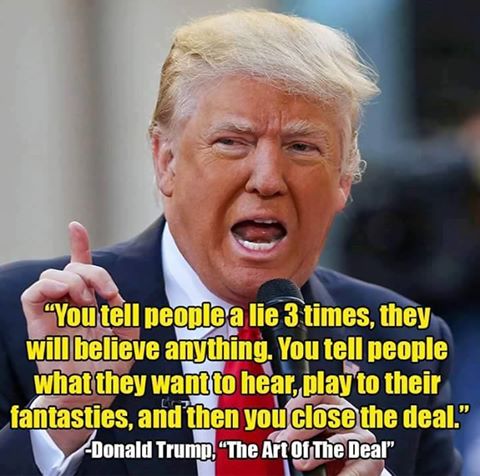
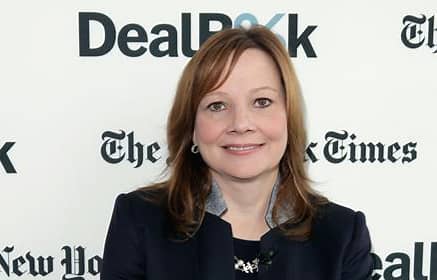
Most companies or organizations will either fail or stagnate when led by only one innovator. There are exceptions but it requires an extraordinary leader, like a Steve Jobs, Ginni Rometty, Mary Barra, or Elon Musk. Their leadership skills may rub people the wrong way, but they have a superior perception of reality that is not singularly based on loyalty. They have the innate ability to offer enough innovation to grow their companies. (At the risk of offending supporters, loyalty is the threat of Trump’s management style. Trump principally bases his organizational decisions on loyalty.)

Elizabeth Holmes may have had a great idea, but her poor management skills are appallingly revealed in Carreyrou’s interviews with former employees of Theranos.

The only consistent management criteria practiced by Holmes is loyalty. If an employee appears disloyal to her vision of the company, they are fired. Any organization that principally relies on loyalty discourages innovation and becomes entirely dependent on orders of its leadership. Particularly in the tech industry, innovation is critical.

Elizabeth Holmes misled investors, patients, and doctors. She is convicted for fraud and conspiracy in 2022. She is serving an 11-year sentence in a Federal Prison Camp in Bryan, Texas.

Holmes’ ambition, in addition to her prison sentence, led to a $500,000 SEC’ fine and the return of 18.9 million shares of a company that no longer exists. Furthermore, the SEC ordered a ten-year ban on serving as an officer or director of a public company which, of course, becomes moot with her imprisonment. The irony of Carreyrou’s story is that Holme’s idea is presently being pursued by Babson Diagnostics, Stanford Researchers, and Becton Dickinson. Whether she will ever reap any reward from another company’s success seems remote, but it will presumably be based on patents filed, and licensing agreements based on former Theranos patents.

“Sunny” Balwani was also tried and convicted for Theranos’ misdeeds.

The 16th century phrase “birds of a feather flock together” comes to mind when Ramesh “Sunny” Balwani joins Theranos in 2009. He had loaned the company $13 million but he also knew Holmes from her days when she was learning Chinese in a Stanford summer program. At some point they became lovers despite a 19-year age difference. Carreyrou notes Balwani became a multi-millionaire with the sale of his tech company, Commerce One” in 2000. He was convicted of tax evasion for the sale but claimed the evasion was caused by his tax accountant which he sued for recovery for back taxes he had to pay. (There is a settlement amount between the tax accountant and Balwani, but it is not revealed.) Carreyrou explains Balwani was a martinet who brooked little disagreement when he became COO of Theranos in 2009. (Part of Holme’s defense was that Balwani was the principal behind Theranos misdeeds, but the court obviously disagreed.)

In 2022, Balwani was sentenced to 13 years in a federal prison for his involvement in what is characterized as Theranos fraudulent activities.

There are business management lessons in Carreyrou’s book about the misdeeds of Theranos. It takes more than ambition to build a successful organization or company. Unless one is a genius who can continually innovate, it takes management structure that encourages others to innovate and work for a common organizational purpose.

AI TRANSITION

The potential of AI is akin to the Industrial Revolution, yet it could surpass it significantly if managed correctly by humans.

Books of Interest
 Website: chetyarbrough.blog

The AI-Savvy Leader (Nine Ways to Take Back Control and Make AI Work)

By: David De Cremer

Narrated By: David Marantz

David De Cremer (Author, Belgian born professor at Northeastern University in Boston, and behavioral scientist with academic studies in economics and psychology.)

“The AI-Savvy Leader” should be required reading for every organization investing in artificial intelligence for performance improvement. From government to business, to eleemosynary organizations, De Cremer offers a guide for organizational transition from physical labor to labor-saving benefits of AI.

AI offers the working world the opportunity to increase their productivity without the mind-numbing physical labor of assembly lines and administrative scut work.

Like assembly line production implemented by Ford and work report filing and writing during the industrial revolution, AI offers an opportunity to increase productivity without the mind-numbing physical labor of assembly line work and after-work’ analysis reports. With AI, more time is provided to workers to think and do what can be done to be more productive.

Arguably, AI is similar to the industrial revolutions transition to assembly line work. Assembly line work improved over time by changes that made it more productive. Why would one think that AI is any different? It is just another tool for improving productivity. The concern is that AI means less labor will be required and that workers will lose their jobs. De Cremer notes loss of employment is one of the greatest concerns of employees working for an organization transitioning to AI. Too many times organizations are looking at reducing costs with AI rather than increasing productivity.

The solution identified by De Cremer is to make AI transition human centered.

His point is that organizations need to understand the human impact of AI on employees’ work process. AI should not only be viewed as a cost-cutting process but as a process of reducing repetitive work for labor to make added contributions to an organization’s goals. AI does not guarantee continued employment, but reduced manual labor offers time and incentive to improve organization productivity through employee’ cooperation rather than opposition. AI is mistakenly viewed as an enemy of labor when, in fact, it is a liberator of labor that provides time to do more than tighten bolts on an auto body frame.

AI is not a panacea for labor and can be a threat just like industrialization was to many craftsmen.

But, like craftsman that went to work for industries, today’s labor will join organizations that have successfully transitioned to AI with a human-centered rather than cost-reduction mentality. Labor productivity is only a part of what any AI transition provides an organization. What is often discounted is customer service because labor is consumed by repetitive work. If AI improves labor productivity, more time can be provided to an organization’s customers.

When AI is properly human centered, the customer can be offered more personal attention by fellow human beings employed by an AI organization.

Too many organizations are using AI to respond to customer complaints. Human-centered AI becomes a win-win opportunity because labor is not consumed by production and has the time to understand customer unhappiness with service or product. AI does not think like a human. AI only responds based on the memory of what AI has been programmed to recall. With human handling of customer complaints, problems are more clearly understood. Opportunity for customer satisfaction is improved.

De Creamer acknowledges AI has introduced much closer monitoring of worker performance and carries some of the same mind-numbing work introduced in assembly line manufacturing.

De Creamer suggests negative consequences of AI should be dealt with directly with employees when AI becomes a problem. Part of a human-centered AI organization’s responsibility is allowing employees to take breaks during their workday without being penalized for slackening production. Repetitive tasks have always been a drain on productivity, but it has to be recognized and responded to in the light of overall productivity of an organization.

AI, like the industrial revolution, is shown as a great opportunity for human beings.

De Creamer suggests AI is not and will never be human. To De Creamer AI is a recallable knowledge accumulator and is only a programmed tool of human minds, not a replacement for human thought and understanding. The potential of AI is akin to the Industrial Revolution, yet it could surpass it significantly if managed correctly by humans.

CLICKS

Just as McCulloch’s history shows how the internet changed yesterday, it seems A.I. will change the future.

Books of Interest
 Website: chetyarbrough.blog

How the Internet Happened (From Netscape to the iPhone)

By: Brian McCullough

Narrated By: Timothy Pabon

Brian McCullough (Author, CEO of Resume Writers.com, entrepreneur.)

A book about the beginning of the internet is such old news, one is inclined to put this book aside. The internet was born in the 1960s and only became recognizable in the 1980s. However, even in 2024, it is interesting to hear about early users who became rich just by organizing information on an easily accessible and free media platform.

Like this blog, it is rewarding to write something that others are interested in reading.

The exercise of book reviews is a reward to one’s education and an ego boost for a writer from an audiences’ clicks. Brian McCullough tells the story of the founders of YAHOO, Jerry Yang and David Filo who were in college and became fascinated by the World Wide Web because of information it offered with clicks on a computer board. This was in the 1990s. Though there were many websites to choose from, they were disorganized and difficult to find if you were looking for specific information. Yang and Filo began organizing the websites by their offered information. YAHOO’S founders were looking for information of interest to them, and presumed others would like to know how they could use a keyboard to find information they might need or want.

Jerry Yang and David Filo were fascinated by what could be found on the internet.

They spent hours, days, weeks, months that grew into years organizing website addresses so others could find what was interesting to them. In these early years, making money was not their primary objective. They did not use their site to advertise products for income. They felt clicks were their reward and that clicks would be lost if advertisers were allowed to use their site. They chose to have users pay a fee to become members of their site. Their use and organization of the internet became an obsession for them and followers steadily increased. Their click numbers and users rose into the millions and advertisers were again knocking at their door. They resisted until they realized their idea could be worth something more than their interest in learning, gathering, and organizing knowledge. They relented, allowed advertising, and the clicks to their site kept on rising. YAHOO went public. The rest is history.

McCulloch goes on to describe the rise and fall of companies that capitalize on the internet.

The companies ranged from behemoth companies like Amazon, Microsoft, Google, Apple, and Ebay that rocketed to the stratosphere while Priceline.com, Netscape, Pets.com, Webvan and others plunged into the abyss. This is not to say today’s behemoths will continue to dominate the market or that some new company will replace their success with even greater appeal. A.I., like the internet, may be a killer discovery that makes or breaks today’s behemoths into tomorrow’s also-rans or hangers-on.

McCulloch’s history is interesting because it explains how winners understood the future better than losers understood the present.

It’s fascinating to find Apple’s Jobs resisted creation of the iPhone but employees worked secretly to refine the idea and Jobs eventually agreed. McCulloch also reveals the monopolistic nature of today’s winners and the threat they present to the future. Killer ideas of today’s tech companies capitalize on the internet’s information ubiquity, and how it can be organized to offer product to the world at a competitive price.

A.I. is a new idea that organizes information on its own with consequences to the public that are yet to be realized. Just as McCulloch’s history shows how the internet changed yesterday, it seems A.I. will change the future.

A.I.s’ CROSSROAD

The greatest threat of A.I. is that the ubiquity of information will turn people and countries against each other.

Books of Interest
 Website: chetyarbrough.blog

Feeding the Machine (The Hidden Human Labor Powering A.I.)

By: Mark Graham, Callum Cant, James Muldoon

Narrated By: Orlando Wells

Graham, Cant, and Muldoon have backgrounds that offer an educated opinion about the impact of artificial intelligence on the world labor market. Graham is a Professor of Internet Geography affiliated with the University of Oxford’s School of Geography and the Environment. Cant is a researcher and labor rights advocate for workers in the gig economy. Muldoon is an Associate Professor in Mangement and Head of Digital Research at a think tank on modern technologies.

“Feeding the Machine” reminds one of the Industrial Revolution in its early stages.

The fear of loss of jobs because of machine replacement led to the Luddite movement that destroyed machines manufacturing products. The quality of machine-produced product may not have met craftsman standards, but production cost was so much less, the public preferred the lower-cost product. As the industrial revolution grew, the quality of production improved, and many craftsmen lost their jobs. Many of these craftsmen had to find new jobs. Some became users of machines to produce product. The transition was undoubtedly difficult because it required changes in the way people work. Rather than working for themselves, they had to work for manufacturers that produced products with machines. Craftsman had to work regular hours for a wage rather than sell product based on their exclusive labor. Karl Marx in “Das Kapital” explained that capitalism devalued worker’s contribution to society because they were not compensated fairly for their work based on profits earned by company’ owners.

Workers began to unionize to increase their political power and influence on managers of companies owned by entrepreneurs.

The results of unionization have been to begin equalizing wages and company profits. That equalization is a battle between corporate profit needed to stay in business, reasonable return to company owners, and livable wages for workers. When any of these three are out of balance, companies either go bankrupt, or find an acceptable balance that serves the needs of all.

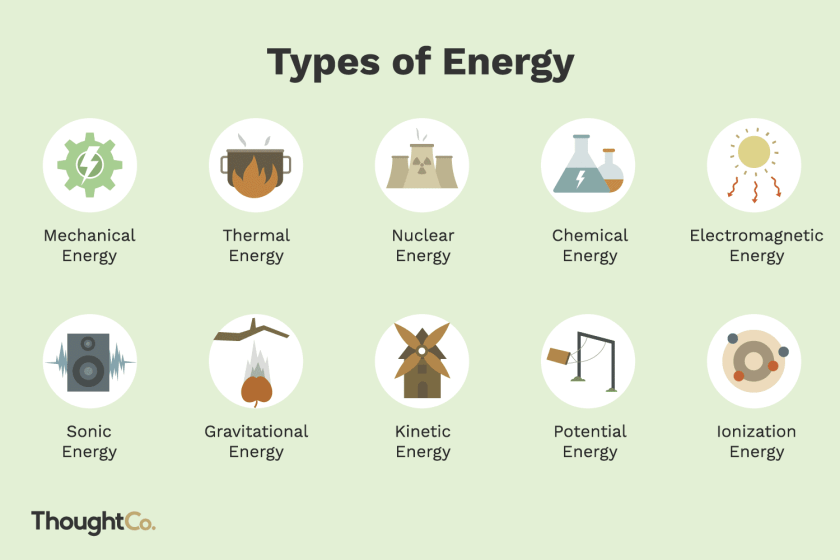
Information is energy in today’s A.I. world., just as steam was in the industrial revolution.

As one listens to “Feeding the Machine” which claims A.I. produces poor quality energy is like early steam engines that provided inadequate energy. Who can say that A.I. “energy” will not improve just as steam engines improved? One becomes skeptical about the authenticity of the authors’ opinion. It seems too soon to believe A.I. power will not improve human life, just as steam engine power improved product quality and lowered consumer prices.

The authors make valid points about the impact of A.I. on workers.

Workers are often paid a pittance for repetitive work that is mind numbing because of the need to monitor digital information for its accuracy and quality. Is that significantly different than the repetitive motions needed by workers on a production line for manufactured goods? Henry Ford changed the way cars are produced by creating assembly line work that gave repetitive jobs to workers. Is that repetitive work much different than digital inspection by workers of A.I. production?

The many examples the authors give of remote workers’ wages for digital accuracy in Africa and other poverty-stricken areas of the world is heart rending. These new laborers are paid small wages that assure continued poverty. Economic inequality is a crime against humanity. Improving education seems the only sure way of defeating economic inequality. Education is a long road to travel but there seems no solution for economic insecurity without it.

Having traveled to Africa, seeing firsthand a dedicated teacher in a class of school children, one feels there is hope that the world’s economic insecurity will end.

Ford was a conservative right-wing businessperson by any measure. He supported Hitler because he was an authoritarian that resurrected a faltering German economy. However, Ford recognized workers were consumers and despite low wages for automobile workers of his time, he chose to raise wages. Ford recognized workers were also consumers. That remains true today. It seems reasonable to presume, unlivable wages will rise for digital workers around the world for the same reason the conservative Ford raised his worker’s wages.

This is not to say, what the author’s write is wrong about workers in Africa that are exhausted from repetitive work at an A.I. company but that the world is at a crossroad similar to the industrial revolution.

The world will change based on the weight of people’s discontent. The greatest threat of A.I. is that information ubiquity will turn people and countries against each other. The result may be a nuclear holocaust that changes the world and societies in a way that is impossible to predict.

The war in Ukraine.

The authors go on to explains how A.I. dehumanizes society. Creating a world-wide’ assembly line for product production allows companies to reduce their production costs by hiring workers around the world who are eager to have an income to improve their lives. The consequences to companies in the host country are improved profits. The consequence to host countries’ workers are layoffs and loss of income. A country of wealth has tools to mitigate worker layoffs, poorer countries do not. Laid off workers have better chances of finding new jobs in wealthy countries. This is not to minimize the consequence but to suggest the world is benefited more than harmed by A.I.

A point made by the authors that played out in the actor strike in America is that actors should be compensated for any work generated by A.I. images or voices of actors.

A.I. that generates false images should be penalized for misrepresenting real people without their consent. Another caution suggested by the authors is that A.I. can recreate art that is equivalent to todays and past literary and visual artists. That seems somewhat hyperbolic but if it is true, society has the tools to penalize those who choose to use A.I. to deceive the public. A.I. is only a tool of society. It is a source of energy that can destroy but also improve the lives of humanity. The authors note only minds are truly creative. A.I. is a recreator of the past, not the future. The use of A.I. by humans improves creative potential.

IN THE LAST CHAPTERS OF “FEEDING THE MACHINE”, THE AUTHORS SOUND AN ALARM BY NOTING THE CONTROL EXCERCISED BY INTERNET MOGULS WHO DIRECT THEIR EMPLOYEES TO CODE ALGORITHMS TO MEET THE NEEDS OF THEIR COMPANIES. THIS IS A SMILAR POWER EXERCISED BY ROBBER BARONS OF THE LATE 19TH CENTURY. DEMOCRACRATIC CAPITALISM COPED WITH ROBBER BARON’S HEGEMONIC POWER THROUGH GOVERNMENT HEARINGS AND OVERSIGHT. ELECTED OFFICIALS SEEM WILLING TO COPE WITH MEDIA BARONS OF THIS CENTURY IN THE SAME WAY. PUBLIC HEARINGS AND GOVERNMENT OVERSIGHT OF MEDIA MOGULS ARE BEING CONDUCTED TODAY.

INTERCONNECTEDNESS

The concern one may have about the interconnected world is that it homogenizes society. Anand’s interconnected world implies free-will is a fiction.

Books of Interest
 Website: chetyarbrough.blog

“The Content Trap” A Strategist’s Guide to Digital Change

By: Bharat Anand

Narrated By: Jason Culp

Bharat Anand (Author, American economist, Professor of Business administration at Harvard Business School.)

Bharat Anand offers a compelling explanation of how connection has become as important as “…Content…” in the digital age. His point is not to say content is irrelevant but without understanding digital interconnectedness, Anand infers profits, personal achievement, and commercial success are diminished or lost.

In the digital age, Anand argues if success is measured by profit, longevity, or fame, the key to success is adapting to interconnectedness.

Anand argues business managers and companies will fail if they do not adjust to changes in the way the public sees, understands, and uses the digital world. To give examples of his point, Anand notes the adjustments made by Apple, Microsoft, Google, Amazon, and the Fox TV network that have changed their business models to adjust to a digital world. Anand explains the digital world is a ubiquitous force (interconnected by computers, smartphones, and the internet) used by insightful individuals and businesses to achieve their goals.

Apple initially focused on product design and utility and earned a reputation for excellent product.

However, as the product evolved, Anand notes Apple’s specialization in quality meant less to their success than the connectivity to sources of information, entertainment, and people. The iPhone became ubiquitous and highly profitable when they improved Apple connectivity among iPhone’ users. They expanded that connectivity with their iTunes creation, audio book features, and various internet media offerings.

Microsoft specializes in software development tools that can be used by individuals and businesses to improve their communication skills and connectedness inside and outside their business.

Microsoft’s software enhances interconnectedness and communication while providing useful information to banks, affiliates, and users to understand the value of their business and how they may or may not complement each other’s performance. Microsoft expands their interconnectedness with an annual subscription system that appeals to repeat users of Microsoft’s updated software.

Google substantially improves their reach into the digital age by choosing to pay Apple $20,000,000 a year to use their search engine.

Though that is challenged by the government as a monopolization of trade, it illustrates the truth of Anand’s observation about the value of interconnectedness among companies in today’s digital world as a way of improving profits, growing, and assuring longevity.

Amazon ranks as one of the leading retailers and suppliers of consumer goods in America.

Bezos introduces many marketing innovations based on interconnections with customers that include many consumer enhancements. Amazon created its own storage and delivery service to directly compete with same day availability of product that showed customers could get product as fast as they could by going to a box retailer. Amazon capitalized on book selling by creating a portable library with Kindle that lowered NY Times’ best-selling books at half or less than the recommended retail price.

Fox television rose to compete with the big three television networks by buying the rights to NFL football at a price far beyond what the networks at that time were willing to pay. Digital age football fan connectivity gave Fox the power and influence to become the 4th major tv network in America.

Anand’s point is that adaptation, rather than opposition to evolving human connectivity, is the key to success. Identifying what is happening in the world and adapting to societal inevitabilities offers opportunities to keep pace with change and prosper. Anand is not saying content does not matter but that content is improved by adapting, rather than resisting or fighting evolving societal norms.

Anand addresses a favorite publication of many, “The Economist”, an international newspaper that has weathered the storm of newspaper disappearance in the 20th and 21st century.

Anand notes “The Economist” has prospered since the 19th century, despite the collapse of the newspaper industry in the late 20th and early 21st centuries. He argues it survives and prospers because of editorial development of international’ news through consensus of its experienced and educated writers. One might accept his observation but with reservation because of a recent survey request from the “Economist” for reader response.

The “Economist” survey form is daunting because it infers a pricing scheme based on digitalization of its articles. Having received the survey, some (like me) choose to throw it away.

The appeal of “The Economist” is in its editorial opinion of the world. Those who have traveled around the world are fascinated by the editorial opinions of a group of educated generalist opinion writers. Their survey may have been to solicit better reader connectivity, but it read like a prescription for higher prices for publication.

The threat of digitization of the “Economist” may ruin its appeal to many readers. It seems the “Economist” would change if it follows what seems the intent of their survey. The “Economist” survey seems like a digitization of their work to make it more connected to an untraveled public. They risk falling into the trap of “breaking news” rather than an insightful editorial opinion about non-western cultural policies and beliefs. They would be following the lead of many newspapers that couldn’t adjust to the interconnected digital world and had to close their doors.

Anand’s book is interesting and seems largely correct about the road to economic success, i.e., people and companies adjusting to the reality and understanding of an increasingly interconnected world.

The concern one may have about the interconnected world is that it homogenizes society. Anand’s interconnected world implies free-will is a fiction.

TRAGEDY’S LESSON

The sharpened point of Slade’s story is that, like the sinking of the Edmund Fitzgerald and El Faro, it takes great tragedy before change takes place.

Books of Interest
 Website: chetyarbrough.blog

“Into the Raging Sea” Thirty-Three Mariners, One Megastorm, and the Sinking of the El Faro

By: Rachel Slade

Narrated By: Erin Bennett

Rachel Slade (Author, winner of the Maine Literary Award for non-fiction.)

Rachel Slade begins her book with the last words of a mariner calling for help from a sinking ship in the grip of a Hurricane. The ship is the El Faro. The author writes her story based on the El Faro’s written log during a severe storm somewhere between Florida and Puerto Rico. The storm was Hurricane Joaquin, a category 4 Hurricane that had recorded wave heights of 10 meters (over 32 feet). Winds ranged from 130 to 156 mph with rough seas, roiled by rogue waves. Rogue waves are twice the size of surrounding waves and appear unexpectedly.

Slade methodically sets a table for the El Faro on a “…Raging Sea”.

Slade writes about a mariner’s desperate call for help. In its beginning, the story lags but the author offers cultural insight to the life of merchant marines, the equipment they operate, and the business of international trade. Her story explains how important and dangerous the life of a merchant marine can be, why it is important, and how mariners are dependent on equipment they use, their shipmates’ qualifications, and business owners’ drive for success.

Every person makes decisions about what they are going to do to make their way in life.

Becoming a merchant marine, like every decision in life, is based on personal circumstances, ambitions, and choices. Slade describes the El Faro mariners as adventurous and interested in seeing the world and being paid for what they do. Some are educated, others not, but all learn what they need to do to be part of a mariners’ crew.

There are schools for mariners at all levels of education but like any job, one can start at the bottom as a laborer that learns by doing. What the story of the El Faro shows is that like in any chosen job in life, some become expert at what they do, others try and fail, try again or move on. What Slade infers is that the El Faro sinks because of its crew but also because of others, both on and off the sea. As John Donne wrote in 1624, “no man (or woman) is an island”–emphasizing the interconnectedness of society.

The crew of the El Faro wanted to be paid but to some it was adventure and/or escape from a humdrum of life. Undoubtedly, mariners were motivated for different reasons. Some wished to see the world, be recognized for good work, wished to crew on bigger and better vessels, or be promoted to higher position. Motivation and ambition are different for everyone. What is lost to history are details. Slade tries to reveal some of the details about the El Faro’ crew, its owners, the ship, and the business of international trade. Why did the El Faro sink? Who and what was lost? What is it like to be in a hurricane at sea? Is somewhat at fault?

Slade’s story gains momentum as sinking of the El Faro seems imminent.

The aftermath is a careful and detailed explanation of rescues at sea, why the El Faro sank, what rescue efforts were made, how families of the lost were affected, and what changes were demanded in the industry. The loss of 33 mariners, the entire crew of the El Faro, is a horrible tragedy for the families who lost their loved ones. The causes of the tragedy range from crew mistakes to ship design to corporate malfeasance. The common thread is human nature.

What this review suggests is that the fundamental issue in every form of government and society is balance between public and private good.

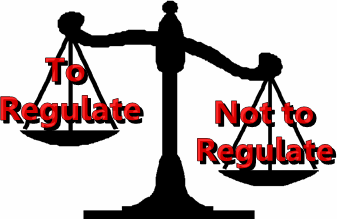
One will draw their own conclusions from Slade’s history of the loss of the El Faro. In a capitalist society, balance is dependent on prudent regulation. Prudence is meant to mean the use of human reason to balance the needs of the public with private interests. That balance is complicated by human nature that drives private interests to focus on money, power, and prestige rather than public need.

Slade shows regulation of international trade often conflicts with private interests that object to regulation and improvements in ship design.

Conflict between public good and private interest is not a new discovery. Neither is the sinking of the El Faro. The sinking of the Edmund Fitzgerald in 1975 led to changes in international shipping. Business owners were required to provide survival suits for mariners in their employ, depth finders, positioning systems, improved ship design, and inspections by the Coast Guard became mandatory. These were regulations that increased costs of shipping that rippled through the economy and initially penalized private interests. The public benefits because mariners are safer, and families are less threatened by loss. The public also suffers because transported goods become more expensive. Balance eventually occurs as private interests are compelled to pay more for labor which is part of the public.

Capitalism works because it is a process that balances public need with private interests. Capitalism’s weakness is that the process takes time to balance public needs with private interests.

The sharpened point of Slade’s story is that, like the sinking of the Edmund Fitzgerald and El Faro, it takes great tragedy before change takes place.

PRECISION

The human factor is at the heart of perfection with precision as the qualifying characteristic of craftsmanship or technology.

Books of Interest
 Website: chetyarbrough.blog

“The Perfectionists” How Precision Engineers Created the Modern World

By: Simon Winchester

Narrated by: Simon Winchester

Simon Winchester (British-American author, journalist, historian.)

Simon Winchester has a remarkable ability to simplify, detail, and vivify history’s complexity. Winchester is not new to this listener. His erudition, writing, and narration are a pleasure to read or hear. His story of the origin of the first Oxford English Dictionary, is a fascinating recollection of Dr. William Minor who shot and killed a stranger on a London street. Dr. Minor was imprisoned in an asylum for his aberrant behavior but became an important source of information for James Murray, the leading lexicographer of the “Oxford English Dictionary”.

“The Perfectionists” is about the advance of the world economy from the perspective of entrepreneurs driven to succeed. Their success, in Winchester’s opinion, is based on understanding and capitalizing on the value of precision.

Though one may go back to the first century to find the first steam engine, it is the invention of James Watt, and the improvements of Matthew Boulton, and Sir Charles Algernon Parsons in the 18th and later 19th centuries that perfected steam engine utility and power. Watt created the steam engine, Boulton helped Watt perfect the steam engine for industrial use, and Parsons expanded its utility by creating steam turbines to power the propellers of steamboats. Each played a role in making steam engines more efficient with precise design and milling refinements that provided more power and wider utility.

Luddites protested against the industrial revolution because machines were replacing jobs formerly done by laborers.  Just as the Luddites fomented arguments against mechanization, Nicholas Carr argues automation created unemployment and diminished craftsmanship.

With the advent of the industrial revolution, Winchester explains how speed and quality of production were geometrically improved by focusing on precision. He offers several industry examples, including weapon manufacture, automobile production, camera refinement, telescope resolution, airplane manufacture, watch making, and CPU design which now leads to the A.I. revolution.

Winchester notes the beginning of the industrial revolution starts with the perfection of energy production machines that power the manufacture of standardized parts for finished products.

Winchester tells the story of the French that insisted on standardizing parts for gun manufacture to increase the speed with which repairs could be made for damaged weapons. Winchester recounts the war of 1812 when Great Britain bloodied the nose of America by routing the capitol’s volunteer defense because of a lack of useable guns. He tells the story of an American rifleman with a broken trigger on his rifle who chooses to run from a British onslaught because trigger replacement would take two weeks for customization to fit his gun.

American guns were custom made which meant that when one was damaged it would take weeks for repair.

Honoré LeBlanc, a French gunsmith during the reigns of Louis XV and XVI, created the idea of interchangeable gun parts in the 18th century. Though it came to the attention of Thomas Jefferson, it did not catch hold in America until after the war of 1812. There was an effort by America to standardize parts in the early 1800s but Eli Whitney (the inventor of the cotton gin), hoodwinked the American government into a contract for standard gun parts that never materialized.

Winchester explains Eli Whitney flimflammed the American government to get a contract for standardized gun parts but never produced the product for which the government contracted.

Winchester notes Whitney knew nothing about guns and hired a crew of customizing gunsmiths who manufactured unique weapons that could not be repaired with standardized parts. Because the parts were manufactured by individual craftsman, the guns produced were not interchangeable. They did not have precisely manufactured parts that would allow interchangeability. Whitney gave a demonstration to the government with only one gun that he assembled in front of Jefferson and a government committee. He did not demonstrate any repair with standard parts. Jefferson fell for the false presentation and initially lauded Whitney. This demonstration was in 1801 which explains why a soldier might have fled because of a broken trigger in the War of 1812.

Henry Royce (1863-1933)

Winchester explains standardizing and precision making of gun parts were an essential step in the industrialization of America. Standardization and precision-made interchangeable parts became the touchstone of success in the automobile industry in the 20th century. Winchester tells the story of Rolls Royce and Ford Motor companies to make his point. Both Royce and Ford recognized the importance of precisely made standard automobile parts to garner their success in the automobile business. Though their route to success is precise manufacture of automobile parts, the wealth they created for themselves was quite different.

Henry Ford (1863-1947)

Ford became one of the richest people in the world while Royce became wealthy but not among the richest in the world. Royce chose to pursue perfection of every part of the automobile which limited his unit production and increased manufacturing cost. Though Ford perfected standardized mechanical parts, they were precisely designed only for functionality. Ford added the dimension of standardized labor to the manufacturing process. By creating an assembly line of laborers with precise replaceable mechanical parts, Ford could produce more automobiles than Royce in a shorter period of time.

The point Winchester makes is perfection of standardization (production of precisely tooled engine parts) is a cornerstone of successful industrialization. Royce expanded the concept to every part of an automobile while Ford focused on replaceable mechanical parts of the automobile.

Winchester tells a story of ball bearing manufacturing during Henry Ford’s reign when some automobiles were failing. The bearing manufacturer proved it was not their bearings with tests that showed the bearings were perfectly within precise measurement requirements. What Ford realizes is that the ball bearings were milled exactly the same and met the precise dimensions required. The problem was found to be the assembly line and human assembly mistakes. One thinks of the loss of precision in Boeing aircraft today and wonders what that means for Boeing’s future if it is not immediately corrected.

Winchester contextualizes the story of the ball bearings in recalling the history of a near catastrophic plane crash when a Rolls-Royce jet engine fails on a Qantas Airlines Airbus A380 in 2010.

Jet engines are precisely manufactured marvels of aviation. However, a tiny flaw in one oil pipe within the engine nearly caused the loss of over 400 passengers. Winchester explains Jet engines are dependent on superheated gas exchange that, if not properly cooled, will damage the engine. Every engine has a series of drilled holes that allow ambient air to cool the engine during flight. The holes are drilled in precise locations throughout the engine louvers and oil pipes to keep the engine from overheating. One of the oil pipes holes is in the wrong location which caused the engine to overheat after many flights. The failure of human oversight of the automated process and final checks by the manufacturer are the underlying cause of the near catastrophe.

More examples of the importance of precision are wonderfully offered by Winchester in “The Perfectionists”. His examination of the tech industry is as prescient as his analysis of the automotive industry and airline industry. He covers Moore’s law and how technology is advancing at an accelerating pace while inferring humanity may be at a turning point. That turning point is the crossroad between human and machine decisions about the future.

The human factor is at the heart of perfection with precision as the qualifying characteristic of craftsmanship or technology.

Winchester infers craftsmanship does not mean precision is to be sacrificed. He recalls the emphasis on precision in Japanese culture where many craftsmen assembled and repaired Seiko watches to revitalize the brand in the late 20th century. Precision is not a lost art whether work is done by machine or a craftsman, but the human factor remains a critical component of both processes. The point to this listener is that precision is only a part of what has advanced the welfare of society.

WHAT’S TO BE DONE

America cannot pass essential legislation that fairly addresses the burden and potential benefit of immigration.

Books of Interest
 Website: chetyarbrough.blog

“A Map of Future Ruins” (On Borders and Belonging)

By: Lauren Markham

Narrated by: Gilli Messer

Lauren Markham (Author, reporter on issues about migration and human rights.)

Immigration is a hot subject around the world.

Lauren Markham writes a somewhat disjointed book about immigration to a Greek island between Turkey and Greece.

Lauren Markham offers a report of a fire in a Lesbos refugee camp in the small town of Moria on September 9, 2010. There were no deaths from the fire but the conditions of the encampment and the government’s response to the crises tell of unfair and inadequate treatment of refugees–reminiscent of other countries dealings with unwanted immigrants.

The camp was designed to hold 3,000 people but grew to nearly 13,000. Seventy percent of the migrants were from Afghanistan. A fire of unknown origin destroyed the immigrant’s shelter that gave notice to the world of the inadequate care offered refugees fleeing crime, poverty, and displacement in their home countries.

Turkey and Greece have a storied history of conflict that is reminiscent of the Afghanis flight from Afghanistan. Turkey’s most revered leader, Mustafa Kemal Ataturk, ordered Greeks to leave Turkey in a mass exodus during his reign. Ethnic and religious differences between the Ottoman Empire and Greece came to a boil in 1923. Those differences are reminiscent of the escape of Afghanis from the restrictive life of the Taliban in Afghanistan. Afghanis chose a route from Afghanistan through Iran to Turkey to the Greek Island of Lesbos to escape the Taliban.

Markham shows the initial response of the Greeks was to aid the Afghanis in their flight but as the number of refugees grew, the burden became too great. The conditions of the encampment deteriorated, and the anger of the Greek government escalated. A fire of unknown origin began in the camp. Six Afghanis, two of which were minors under 18 years of age, were arrested and found guilty of setting the fire. Markham shows the evidence for conviction had nothing to do with truth but was manufactured by the Greek Court to find a verdict of guilt.

“Dallas, Texas, United States – May 1, 2010 a large group of demonstrators carry banners and wave flags during a pro-immigration march on May Day.”

The inference from Markam’s report is that America’s border state conflicts will, and undoubtedly have, resulted in unjust treatment of emigrants. The irony is that America needs emigrants to meet the needs of its economic future. America seems to be doing as poor a job of addressing immigration as the story of the Afghanis in Moria. America cannot pass essential legislation that fairly addresses the burden and potential benefit of immigration.