Graduate Oregon State University and Northern Illinois University,
Former City Manager, Corporate Vice President, General Contractor, Non-Profit Project Manager, occasional free lance writer and photographer for the Las Vegas Review Journal.
Psychiatric illness is disturbingly believable and terrifying. Human psychosis ruins lives if not properly diagnosed and treated.
Books of Interest Website: chetyarbrough.blog
The Night Guest
By: Hildur Ingveldardóttir Guðnadóttir
Narrated & Translated By: Mary Robinette Kowal
Hildur Ingveldardóttir Guðnadóttir (Icelandic Author, classical cellist, and composer –awarded an Academy Award, two Grammies, and an Emmy.)
The multi-talented Guðnadóttir has written a chilling tale of psychosis in “The Night Guest”. In one sense, it is a reflection of sexual equality, but it also reveals how complex and dangerous it is to be human. This fictional story is about an attractive single woman who is unable to peacefully sleep through the night. Every morning, she wakes up with a tiredness that sticks with her through the day. On some mornings she finds bruises or scratches on her arms and has no idea of why she feels so tired. She sees several doctors and finally finds one that takes her symptoms seriously.
Her doctor runs tests and finds nothing seems to explain the tiredness. The doctor asks her if she is depressed. The woman says she feels sad sometimes but not particularly depressed. The doctor recommends she see a psychiatrist, but she chooses to ignore the advice.
The tiredness, odd bruises, and scratches on her body continue to appear, i.e., after sleep and in the morning. She comes across an article that tells her of sleepwalkers that don’t realize they are sleepwalking at night after falling asleep. She is convinced that explains her symptoms and asks her doctor for sleeping pills. The doctor reluctantly agrees and provides a prescription. Initially, the treatment seems to help, and the young woman resumes her life, meets a new boyfriend, and begins to feel everything is okay.
The author explains the young woman is a lover of cats but notices that lately the cats in her neighborhood have become afraid of her.
When she approaches them, they hiss and raise their backs. She is mystified by their response. As the story progresses, listeners find she was involved with the owner of a company for which she works. He is married and the relationship is ended with some acrimony. The two avoid each other at the workplace but the still-married man tries to resurrect their relationship. The young woman is involved with another man and has no interest in resuming a relationship with a married man.
She returns to her belief that her sleeplessness is caused by her sleepwalking and decides to monitor her behavior with a video recording devise.
She reviews the recording to find she wakes up and leaves her bedroom for hours at a time. She is wearing a pedometer to measure the steps she takes and finds it is several thousand steps more than what it was at the end of her day. What makes her discovery ominous is that the recording shows a conscious and alert person that has to be her, but she feels that person is entirely different from herself.
The woman’s tiredness returns, and she finds one morning that all of her sleeping pills are gone. Her former married lover disappears. Her current lover tells her to never contact him again without an explanation. The denouement of the story is horrifying. Explanation of her psychiatric illness is disturbingly believable and terrifying. Human psychosis ruins lives if not properly diagnosed and treated.
Just as McCulloch’s history shows how the internet changed yesterday, it seems A.I. will change the future.
Books of Interest Website: chetyarbrough.blog
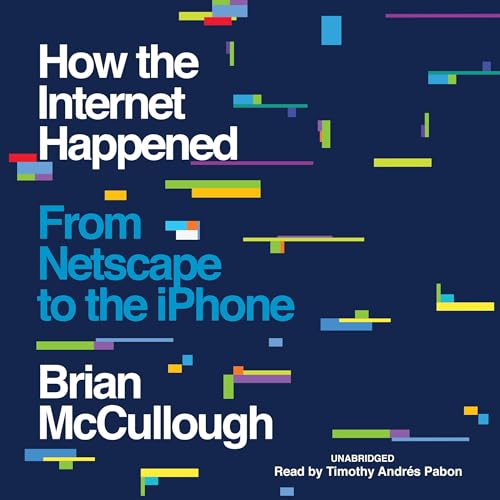
How the Internet Happened (From Netscape to the iPhone)
By: Brian McCullough
Narrated By: Timothy Pabon
Brian McCullough (Author, CEO of Resume Writers.com, entrepreneur.)
A book about the beginning of the internet is such old news, one is inclined to put this book aside. The internet was born in the 1960s and only became recognizable in the 1980s. However, even in 2024, it is interesting to hear about early users who became rich just by organizing information on an easily accessible and free media platform.
Like this blog, it is rewarding to write something that others are interested in reading.
The exercise of book reviews is a reward to one’s education and an ego boost for a writer from an audiences’ clicks. Brian McCullough tells the story of the founders of YAHOO, Jerry Yang and David Filo who were in college and became fascinated by the World Wide Web because of information it offered with clicks on a computer board. This was in the 1990s. Though there were many websites to choose from, they were disorganized and difficult to find if you were looking for specific information. Yang and Filo began organizing the websites by their offered information. YAHOO’S founders were looking for information of interest to them, and presumed others would like to know how they could use a keyboard to find information they might need or want.
Jerry Yang and David Filo were fascinated by what could be found on the internet.
They spent hours, days, weeks, months that grew into years organizing website addresses so others could find what was interesting to them. In these early years, making money was not their primary objective. They did not use their site to advertise products for income. They felt clicks were their reward and that clicks would be lost if advertisers were allowed to use their site. They chose to have users pay a fee to become members of their site. Their use and organization of the internet became an obsession for them and followers steadily increased. Their click numbers and users rose into the millions and advertisers were again knocking at their door. They resisted until they realized their idea could be worth something more than their interest in learning, gathering, and organizing knowledge. They relented, allowed advertising, and the clicks to their site kept on rising. YAHOO went public. The rest is history.
McCulloch goes on to describe the rise and fall of companies that capitalize on the internet.
The companies ranged from behemoth companies like Amazon, Microsoft, Google, Apple, and Ebay that rocketed to the stratosphere while Priceline.com, Netscape, Pets.com, Webvan and others plunged into the abyss. This is not to say today’s behemoths will continue to dominate the market or that some new company will replace their success with even greater appeal. A.I., like the internet, may be a killer discovery that makes or breaks today’s behemoths into tomorrow’s also-rans or hangers-on.
McCulloch’s history is interesting because it explains how winners understood the future better than losers understood the present.
It’s fascinating to find Apple’s Jobs resisted creation of the iPhone but employees worked secretly to refine the idea and Jobs eventually agreed. McCulloch also reveals the monopolistic nature of today’s winners and the threat they present to the future. Killer ideas of today’s tech companies capitalize on the internet’s information ubiquity, and how it can be organized to offer product to the world at a competitive price.
A.I. is a new idea that organizes information on its own with consequences to the public that are yet to be realized. Just as McCulloch’s history shows how the internet changed yesterday, it seems A.I. will change the future.
With rule by the one there are no checks and balances which threatens war and discounts peace.
Books of Interest Website: chetyarbrough.blog
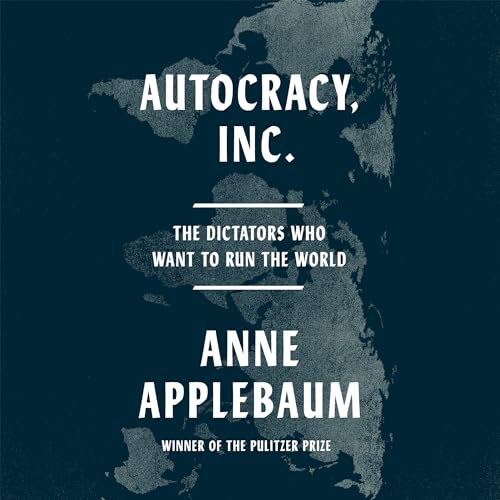
Autocracy, Inc. (The Dictators Who Want to Run the World)
By: Anne Applebaum
Narrated By: Anne Applebaum
Anne Applebaum (Author, journalist, historian, wrote Pulitzer Prize for Non-Fiction with “Gulag: A History” Also wrote “Red Famine”, both of which have been reviewed in this blog.)
“Autocracy, Inc.” infers there are two forms of government in the world, one is autocratic, the other democratic. Applebaum shows autocracies are often venal and kleptocratic. One might agree, but immorality and greed are a part of human nature in every form of government. This is not something Applebaum denies, but all forms of government have experienced excesses of wealth and power that have led to autocracy. What Applebaum argues is that autocracy is more threatening today than at any time in history.
The prestige of national leaders is by definition power.
As the British Lord Acton noted in 1887–“Power tends to corrupt, and absolute power corrupts absolutely”. Both democratic and autocratic leaders are subject to Acton’s aphorism. This is not to say Applebaum’s argument is not important, but no form of government, including democracy, has been found to fairly regulate the faults of human nature.
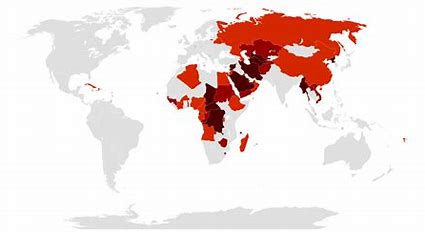
What Applebaum makes clear is that autocracy magnifies the faults of human nature because in countries like China, North Korea, Myanmar, Russia, parts of Africa, and similar autocracies, there are no checks and balances.
Imprisonment, torture, and murder for challenges to leadership are condoned, and commonplace. Applebaum’s added dimension is that many autocratic nations have begun aligning themselves to split the world between the lands of the relatively free and the chained.
Alexi NalvanyLiyu XiuaoboJang Song-thaekAung San Suu Kyi
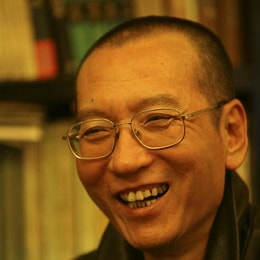
Applebaum offers many examples of imprisonment, torture, and murder in autocratic countries. Some of the most famous are Navalny in Russia, the Nobel Prize laureate Liu Xiaobo in China, Jang Song-thaek, the second most powerful leader in North Korea, and of course, Aung San Suu Kyi in Myanmar. However, what makes Applebaum’s history terrifying is the calculated and cooperative effort by aligned autocracies to subvert freedoms offered in America and other democratic countries.
The author argues many autocratic leaders have become so powerful that no fellow countryman, regardless of their location, is safe from incarceration or assassination.
Assassination of Kim Jon Un’s brother.
Vladimir Putin is believed to have ordered the assassination of a number of Russian citizens around the world. Autocracies use the tools of State to directly or indirectly threaten or assassinate dissidents anywhere in the world.
Facial recognition in China.
The advance of Artificial Intelligence has magnified the strength of autocratic rule with tools of surveillance, assassination, and indoctrination that reach around the world. Applebaum argues the line between democracies and autocracies is hardening to the point of irreconcilable difference, leading to wars between states and territories like Syria, Ukraine, Sudan, and Gaza.
Democracy has its problems which includes dalliance with autocracy, but rule by the one where there are no checks and balances threatens war and discounts peace.
What Kalifa shows is how alone every human being is in a country led by leaders who care only about their power.
Books of Interest Website: chetyarbrough.blog
Death is Hard Work
By: Khaled Khalifa, Leri Price-translator
Narrated By: Neil Shah
Khaled Khalifa (1964-2023, Syrian author, screenwriter, and poet, died at age 59.)
Conscience is an inner sense of voice that guides a person to understand the difference between right and wrong. The author is characterized by western publications as a critic of Baath party rule in Syria. Khaled Khalifa chose to remain in Syria despite the horrendous rule of Syria’s dictator, Bashar al-Assad. (Khalifa died of a heart attack at age 59 in 2023.)
Khalifa’s “Death is Hard Work”, published in 2016, seems a conscience driven criticism of Bashar’s rule during Syria’s 2011 civil war.
Though Khalifa is a Muslim, his novel appears to object to Assad’s rule during the war. Of course, there are five sects of the Muslim church in Syria, but al-Assad’s Alawites are only 10% of the population versus 74% Sunni Islam, of which the author is said to belong.
This is not to suggest Khalifa is anti-Assad because of religion but that Khalifa is noting in his book the muti-religious fabric of Syria. The novel is about the cruelty and lawlessness in Syria during the 2011 Civil War which is, at best, a frozen conflict in 2024. The country remains divided despite Assad’s continued rule and growing normalization of his regime among regional powers.
“Death is Hard Work” reflects on the many wars being waged today. The conflict in Gaza, the war in Ukraine, tribal conflicts in Sudan, the Sahel, Ethiopia, and Nigeria create societal tragedies that make America’s problems pale in comparison.
The overarching story is the main characters commitment to his father to bury him in his family village somewhere near Aleppo.
Khalifa explains some of the horrific consequences of the Syrian civil war in “Death is Hard Work”. The Civil War is raging in Damascus where the family patriarch dies from old age. There are checkpoints throughout the country that have to be crossed. Each checkpoint is a test of two brothers’ and a sister’s resolve to fulfill their father’s last wish.
The backstory is about a father who marries and has been a constant critic of Assad-rule. He recalls his life in the 1960s as much better. That is odd considering history shows the four Presidents during that period fostered political instability, revolt, and global tension. The point made by the author is memories often block out the truth of our past.
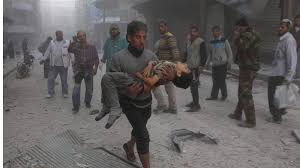
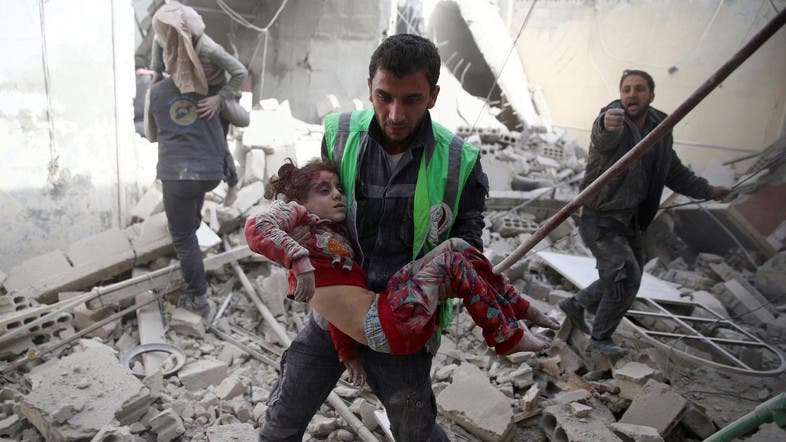
Assad’s murder of women and children is a reminder of today’s conflicts in Ukraine, Russia, Israel, several African nations, and Gaza. Leaders in these countries are fomenting war over land and ideas that only increase the suffering of their people.
The past is always present. Khalifa reflects on what he sees as Syria’s present. He writes of a Syrian woman raped to death by four men. He explains a story of a husband who sends his children to another country while he stays in Syria to plan the murder of the four rapists whom he knows. Khalifa writes of the poverty and hunger of Syria’s civil war. Citizens searching garbage cans and eating flowers and grass to stay alive. It makes no difference whether one is a college professor or bum, all were hungry. One is reminded of the chemical attack in Syria and the many bodies on the ground that President Obama called a red line for America when it was not.
The two brothers and sister risk their lives at each check point in their treacherous journey to bury their father in his ancestral graveyard.
At each check point, they explain the reasons for carrying a dead body cross country while it begins to smell. “You have to do something if you don’t want to die” becomes the mantra of Bolbol, i.e. the youngest son who is trying to fulfill his father’s last wish. Flash backs remind listeners of what happens to one’s beliefs about right and wrong when powerlessness against tyrannical leaders is the measure of life. The older brother, Hussein, is influenced by belief in power and is often in conflict with his younger brother as they take their father’s body to his home village.
The two brothers and a sister have lived sorrowful lives because of their country’s leadership. What Kalifa shows is how alone every human being is in a country led by leaders who care only about their power. Until or unless leaders in Syria, Ukraine, Russia, Israel, and Gaza come to understand the harm they are doing to their societies, only sorrow remains for their people.
The greatest threat of A.I. is that the ubiquity of information will turn people and countries against each other.
Books of Interest Website: chetyarbrough.blog
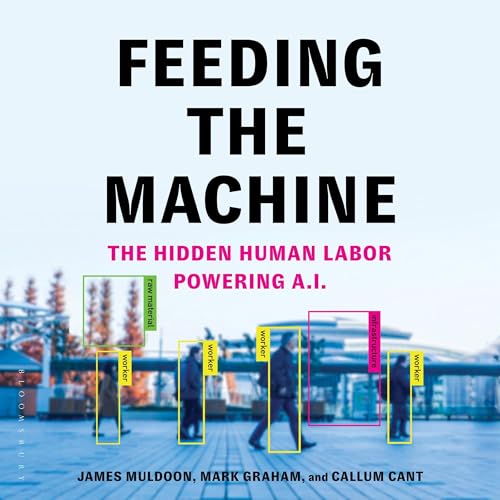
Feeding the Machine (The Hidden Human Labor Powering A.I.)
By: Mark Graham, Callum Cant, James Muldoon
Narrated By: Orlando Wells
Mark GrahamCallum CantJames Muldoon
Graham, Cant, and Muldoon have backgrounds that offer an educated opinion about the impact of artificial intelligence on the world labor market. Graham is a Professor of Internet Geography affiliated with the University of Oxford’s School of Geography and the Environment. Cant is a researcher and labor rights advocate for workers in the gig economy. Muldoon is an Associate Professor in Mangement and Head of Digital Research at a think tank on modern technologies.
“Feeding the Machine” reminds one of the Industrial Revolution in its early stages.
The fear of loss of jobs because of machine replacement led to the Luddite movement that destroyed machines manufacturing products. The quality of machine-produced product may not have met craftsman standards, but production cost was so much less, the public preferred the lower-cost product. As the industrial revolution grew, the quality of production improved, and many craftsmen lost their jobs. Many of these craftsmen had to find new jobs. Some became users of machines to produce product. The transition was undoubtedly difficult because it required changes in the way people work. Rather than working for themselves, they had to work for manufacturers that produced products with machines. Craftsman had to work regular hours for a wage rather than sell product based on their exclusive labor. Karl Marx in “Das Kapital” explained that capitalism devalued worker’s contribution to society because they were not compensated fairly for their work based on profits earned by company’ owners.
Workers began to unionize to increase their political power and influence on managers of companies owned by entrepreneurs.
The results of unionization have been to begin equalizing wages and company profits. That equalization is a battle between corporate profit needed to stay in business, reasonable return to company owners, and livable wages for workers. When any of these three are out of balance, companies either go bankrupt, or find an acceptable balance that serves the needs of all.
Information is energy in today’s A.I. world., just as steam was in the industrial revolution.
As one listens to “Feeding the Machine” which claims A.I. produces poor quality energy is like early steam engines that provided inadequate energy. Who can say that A.I. “energy” will not improve just as steam engines improved? One becomes skeptical about the authenticity of the authors’ opinion. It seems too soon to believe A.I. power will not improve human life, just as steam engine power improved product quality and lowered consumer prices.
The authors make valid points about the impact of A.I. on workers.
Workers are often paid a pittance for repetitive work that is mind numbing because of the need to monitor digital information for its accuracy and quality. Is that significantly different than the repetitive motions needed by workers on a production line for manufactured goods? Henry Ford changed the way cars are produced by creating assembly line work that gave repetitive jobs to workers. Is that repetitive work much different than digital inspection by workers of A.I. production?
The many examples the authors give of remote workers’ wages for digital accuracy in Africa and other poverty-stricken areas of the world is heart rending. These new laborers are paid small wages that assure continued poverty. Economic inequality is a crime against humanity. Improving education seems the only sure way of defeating economic inequality. Education is a long road to travel but there seems no solution for economic insecurity without it.
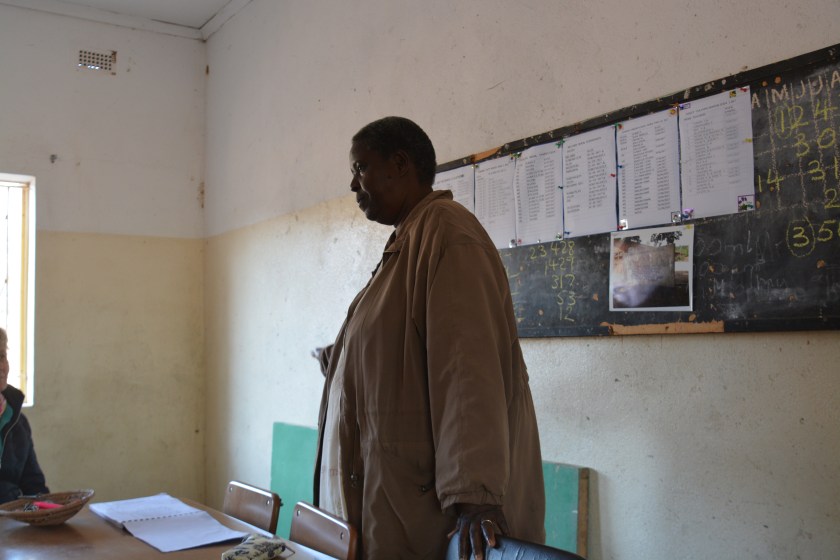
Having traveled to Africa, seeing firsthand a dedicated teacher in a class of school children, one feels there is hope that the world’s economic insecurity will end.
Ford was a conservative right-wing businessperson by any measure. He supported Hitler because he was an authoritarian that resurrected a faltering German economy. However, Ford recognized workers were consumers and despite low wages for automobile workers of his time, he chose to raise wages. Ford recognized workers were also consumers. That remains true today. It seems reasonable to presume, unlivable wages will rise for digital workers around the world for the same reason the conservative Ford raised his worker’s wages.
This is not to say, what the author’s write is wrong about workers in Africa that are exhausted from repetitive work at an A.I. company but that the world is at a crossroad similar to the industrial revolution.
The world will change based on the weight of people’s discontent. The greatest threat of A.I. is that information ubiquity will turn people and countries against each other. The result may be a nuclear holocaust that changes the world and societies in a way that is impossible to predict.
The war in Ukraine.
The authors go on to explains how A.I. dehumanizes society. Creating a world-wide’ assembly line for product production allows companies to reduce their production costs by hiring workers around the world who are eager to have an income to improve their lives. The consequences to companies in the host country are improved profits. The consequence to host countries’ workers are layoffs and loss of income. A country of wealth has tools to mitigate worker layoffs, poorer countries do not. Laid off workers have better chances of finding new jobs in wealthy countries. This is not to minimize the consequence but to suggest the world is benefited more than harmed by A.I.
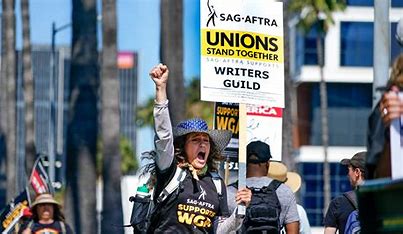
A point made by the authors that played out in the actor strike in America is that actors should be compensated for any work generated by A.I. images or voices of actors.
A.I. that generates false images should be penalized for misrepresenting real people without their consent. Another caution suggested by the authors is that A.I. can recreate art that is equivalent to todays and past literary and visual artists. That seems somewhat hyperbolic but if it is true, society has the tools to penalize those who choose to use A.I. to deceive the public. A.I. is only a tool of society. It is a source of energy that can destroy but also improve the lives of humanity. The authors note only minds are truly creative. A.I. is a recreator of the past, not the future. The use of A.I. by humans improves creative potential.
IN THE LAST CHAPTERS OF “FEEDING THE MACHINE”,THE AUTHORS SOUND AN ALARM BY NOTING THE CONTROL EXCERCISED BY INTERNET MOGULS WHO DIRECT THEIR EMPLOYEES TO CODE ALGORITHMS TO MEET THE NEEDS OF THEIR COMPANIES. THIS IS A SMILAR POWER EXERCISED BY ROBBER BARONS OFTHE LATE 19TH CENTURY. DEMOCRACRATIC CAPITALISM COPED WITH ROBBER BARON’S HEGEMONIC POWER THROUGH GOVERNMENT HEARINGS AND OVERSIGHT. ELECTED OFFICIALS SEEM WILLING TO COPE WITH MEDIA BARONS OF THIS CENTURY IN THE SAME WAY.PUBLIC HEARINGS AND GOVERNMENT OVERSIGHT OF MEDIA MOGULS ARE BEING CONDUCTED TODAY.
“2666” is a well written book by an author who has read and understood more about society than many who have lived long lives in America.
Books of Interest Website: chetyarbrough.blog
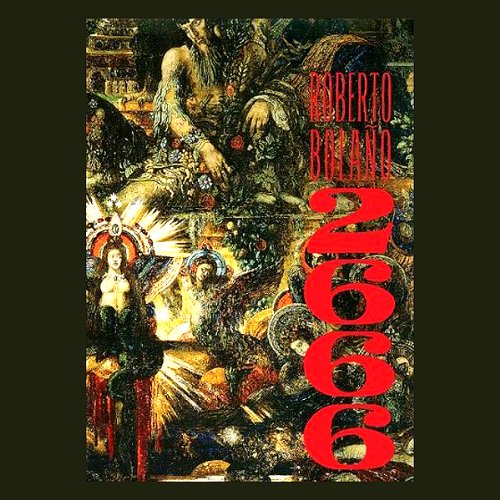
“2666”
By: Roberto Bolaño
Narrated By: John Lee, Armando Duran, G. Valmont Thomas, Scott Brick, Grover Gardner
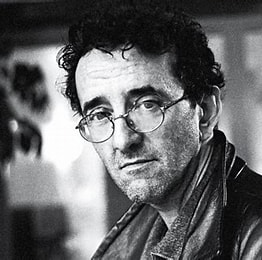
Roberto Bolaño (Author, 1953-2003, died at the age of 50, Chilean novelist, short-story writer, poet and essayist.)
“2666” is a journey around the world. One begins the journey as though one is sinking into inescapable quicksand. Roberto Bolaño dazzles one’s imagination. Its granular mix of western society captures one’s imagination. The book’s narrators trap “2666” listeners in a story of modern times.
Bolaño infers sex is an equal opportunity exploiter.
He suggests communism and socialism are distortions of Marxism and shows capitalism as a form of enslavement. Women’s societal inequality extends to physical abuse in many societies and, at an extreme, to murder. Bolaño’s many characters illustrate the way in which he believes these are societal truths.
The first part of Bolaño’s story tells of three highly educated people who travel for business and pleasure based on their professions and desires.
They are academics steeped in literature who lecture on poetry, philosophy, and great writers. They meet in different areas of Europe as a trinity of lovers, two men and one woman that form an emotional and sexual threesome. The woman appears the more dominant of the three with the two men abandoned for a time because of a younger lover in the woman’s life. The two men continue to travel together and apart but pursue a licentious life with women, some of which are paid for their sexual favors. The author seems to explain sexual desire is characteristic of all human beings, both male and female. Human desire can be exploitive, companionable, and/or a way to make a living.
Bolaño’s travels extend to Mexico and the United States after his literary journey through Europe.
He shows every form of government, whether communist, socialist, or capitalist fails to treat its citizens equally. He infers Marxist theory may hold an ideal of equality but suggests communism, socialism, and capitalism only distort the ideal of a classless society. Materialism, the struggle for recognition, and the value of labor are chimeras, i.e., wished for ends that are illusory in every known form of government.
Bolaño’s trek to Mexico reveals its poverty and the hard life of a country of the rich and many poor.
He focuses on a notorious record of women being murdered in Mexico by an unknown killer and rapist who may be one man or two. The grim view of Mexico dwells on the investigation of these horrific crimes. In the process, the listener is told about prison life in Mexico, a probable killer of the women and another that may still be on the loose. The murders of women continue. An FBI agent from America is involved in the investigation. This is a hard section of the book because of its repeated explanation of crimes against women, but it offers a view of Mexico’s poverty and the unfair, unequal treatment of women and others in the world.
The last chapters of Bolaño’s work are a flash back to WWII and Germany’s attack of Russia after Stalin’s mistaken alliance.
There are flashes of brilliance in this flashback, but the length of the novel begins to wear thin. “2666” is a well written book by an author who has read and understood more about society than many who have lived long lives in America, a land of opportunity with many of the faults noted in Europe and North America.
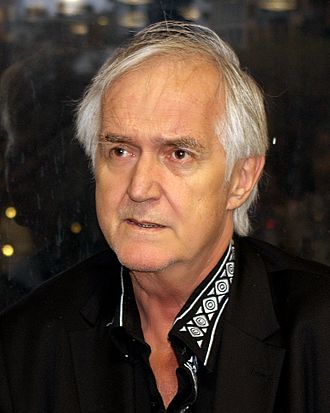
Having heard of Henning Mankell’s mysteries (of which there are many), Kurt Wallander is a reoccurring character as an investigative Swedish detective.
The relevance of “The Dogs of Riga” is in the transition that was occurring when Latvia, Lithuania, and Estonia achieved independence from the U.S.S.R. The Baltics had been a part of and controlled by the U.S.S.R. since 1940. Mankell’s book was first published in 1992, one year after the 1991′ dissolution of the U.S.S.R.
Riga Technical University (Engineering Center in the Baltics)
It is interesting to find in “The Dogs of Riga” that Wallander’s daughter chooses to go to Riga for her college education which makes one wonder why Riga would be chosen. Is it because of the quality of education or just to be further away from family? In any case, the reason these books are recommended is to give some perspective to new visitors of other countries. An interesting observation one makes about “The Dogs of Riga” is a sense of resentment from the Latvians about Russia and their former domination of the Baltic States.
Season 3, Episode 2 of “The Dogs of Riga” on Masterpiece Theater.
Going back to the story, two Russians were shot in the heart, and set adrift on a raft in Swedish waters. Autopsy shows the Russians were well dressed indicating wealth. It was found they had high concentrations of amphetamine in their bodies. In investigating the murders, Wallander finds they came from Riga, the capitol of Latvia. An officer from Latvia goes to Sweden to talk to Wallander. After the visiting officer returns to Riga, he is murdered and Wallander is asked to come to Riga to investigate his death.
With the opening of Latvia to the western world, freedom from communist controls is a mixed blessing.
Mankell begins to tell listener/readers something about Latvia and its suspicion of Russian residents in their country. Along with more freedom to pursue economic growth is the rise of a drug trade and criminal activity. Mankell’s story infers illegal activity is exacerbated by Russians who resent Latvia’s independence from the U.S.S.R. However, with greater freedom comes crime as well as improved economic opportunity. One reserves judgement about whether Russians are the primary cause of drug activity in Latvia because breaking the law is characteristic of all nationalities under all forms of government. The characterization of Russians as the cause of the illegal drug trade in Riga is possible. However, it is the same question one must ask themselves about America and the origins, causes, and persistence of its drug trade.
Freedom entails the pursuit of what one wants out of life. Money, power or prestige are goals of most (if not all) human beings.
However, those goals need to be based on equal opportunity. This is not to say those goals should include criminal activity, but only education offers a chance for all to understand the difference between right and wrong. When equal educational opportunity is available to every person in the world, they may pursue what they think is in their interests. This, of course, is not a world that exists or can exist because personal interest is not the same for everyone.
Getting back to Mankell’s story, Latvia is challenged by its new freedom from the U.S.S.R. The suspicion of Russians is undoubtedly a truth about Latvian culture based on Latvia’s former life as a part of the U.S.S.R. Whether Russians are the criminal master minds of the drug trade is not the point. The point is that human nature requires a reason for everything that happens in a culture. The bad experience of repression by the U.S.S.R. may make Latvians suspicious of every Russian in Latvia. It is similar to Trump’s vilification of immigrants and how that ignorance resonates with some Americans.
Mankell and the author of “The Lilac Girls” are worth reading or listening to if you plan a trip to the Balkans. Traveling to other countries is more interesting because of what writers of fiction and history have to say.
Caro’s facts do not prove truth, but they do reveal the means and consequence of political power and influence in American Democracy.
Books of Interest Website: chetyarbrough.blog
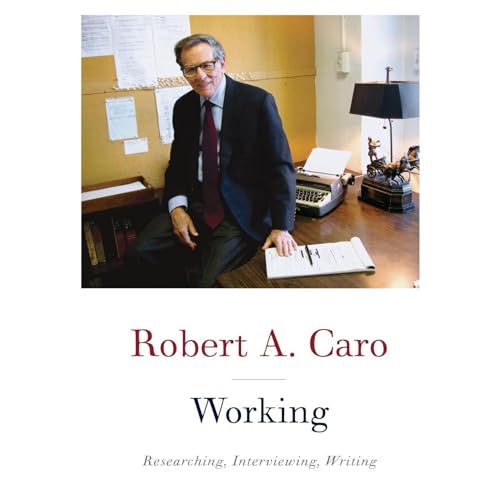
“Working”
By: Robert A. Caro
Narrated By: Robert A. Caro
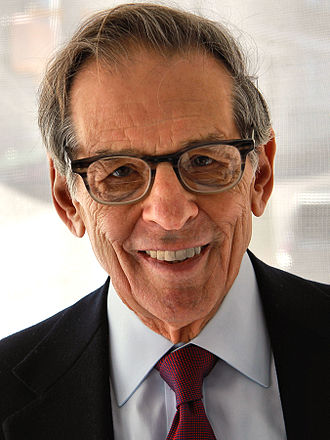
Robert Allan Caro (Author, journalist, winner of 2 Pulitzer Prizes in Biography and many other coveted literature awards.)
Every non-fiction writer can appreciate this erudite and entertaining audiobook, personally written and read by Robert Caro. Caro explains what “Working” means to a non-fiction writer. Caro artfully explains why and how researching, interviewing, and writing a biography is a revelatory experience.
In “Working”, Caro focuses on his two Pulitzer Prize winning books, “The Power Broker: Robert Moses and the Fall of New York” and “Master of the Senate”, one of his four books about Lyndon Johnson. Both biographies are about political power in America.
Robert Moses (1888-1981) was an American urban planner and public official in the New York metropolitan area during the early to mid-20th century.
Moses (among many titles) was the New York City Parks Commissioner and Chairman of the Triborough Bridge Tunnel Authority. His political power and influence are detailed in Caro’s book, “The Power Broker”. Though Moses was never elected to political office, he arguably shaped the infrastructure of New York City as much, if not more, than any elected person in New York. “Working” explains how a reporter from a small Long Island’ newspaper manages to write “The Power Broker” and become one of America’s most famous biographers.
After graduating from Princeton with a B.S. degree, Caro is hired by the Long Island, New York’ newspaper, “Newsday”.
Caro explains he had been a writer for many years as a young boy and college student before getting a scut-work job at “Newsday”. He tells of a breakthrough report he writes that gets attention from the editor of the paper. He is given advice by the editor who recognizes the quality of his writing. The advice is that when writing a piece for the public, be sure of your facts by “turning every page”. Caro takes that advice and explains how it became a mantra, a repeated aid, in his writing.
Caro explains how he and his wife work to “turn every page” in researching the Moses and Johnson biographies.
Even though one may have read Caro’s two Pulitzer Prize winning’ books, “Working” offers a nearly perfect introduction to his biographies of Moses and Johnson that are, to the extent humanly possible, researched by “turning every page”. Caro is hard on himself for taking years to research and write his biographic books. It is a financial hardship for his family, particularly before his first success with “The Power Broker”. They sell their house in Long Island to support his book research. After that first success, the financial insecurity is offset by grants and the support of literary agents. “Turning every page” is a laborious process but it assures and reinforces the facts revealed in his biographies.
Caro explains how he and his wife meticulously researched public documents to confirm facts that corroborate the victimization of some New Yorkers by monied interests that gave Moses the political power to destroy low-income neighborhoods for new thoroughfares through the New York City area.
With the construction of over 600 miles of road many residents, renters and homeowners, were evicted from their homes. Most were left to fend for themselves.
Caro and his wife were willing to disrupt their lives and neighborhood relationships to pursue his obsession with verification of facts. Caro explains that he needed to move to Texas to understand what it was like for Lyndon Johnson to be raised in the Texas Hill Country. He could not just visit because local Texans would not talk to him with the candor he sought to understand where Lyndon Johnson came from. Many revelations are in his book about Johnson that could not have been corroborated without interviews with people who knew the Johnson family.
Caro and his wife move to Austin, Texas to be near the Texas Hill Country to research and understand the society in which Lyndon Johnson is raised.
Many insights are a result of the move. Experiencing the loneliness of the Texas Hill country because of its sparse population helped Caro understand Johnson’s need to be bigger than life. Interviewing Johnson’s brother reveals the tensions that existed between Lyndon and his father. Johnson’s father was heir to the original Johnson ranch that was lost because of the soils’ unproductivity. It had too much caliche, a clay content that would not support a cash crop. When Johnson’s father repurchased the ranch after its loss by the family, he failed to understand the land could not provide enough income to pay its mortgage. The ranch is lost to the bank again. The relationship between Lyndon and his father deteriorated as Lyndon grew older because of Lyndon’s disappointment with his father’s ineptitude and domineering personality. Ironically, Caro notes it is a personality that Lyndon is heir to and for which he is criticized. On the other hand, Caro explains it is also a personality characteristic that makes Lyndon one of the greatest masters of the Senate. No Senate leader since Johnson has as successfully led the Senate in passing government legislation.
Samuel Ealy Johnson Jr. (Lyndon Johnsons’ father. 1877-1937.)
Lyndon’s brother implies Lyndon’s conflicts with his father became part of his drive to be more successful than his father.
Caro infers Johnson and Moses were forces of nature. Both were political power users that understood how to use it to get their way. Obviously political power can be used for ill or good. One can argue New York City open spaces and parks were a great benefit to the city. On the other hand, many people were displaced to provide those open spaces. The Civil Rights Act passed during the Johnson administration benefited millions of minorities in America. On the other hand, an estimated 2,000,000 Vietnamese were killed, 58,000 American soldiers died, and another 288,000 Americans were wounded and/or disabled. How many Vietnamese, and Cambodians were wounded or disabled and how many are still being hurt by leftover landmines?
Caro offers a great service to the public in his writing about political power in American Democracy. Democracy is not a perfect political system, and Caro reveals where that imperfection lies by “turning every page”. Caro’s facts do not prove truth, but they do reveal the means and consequence of political power and influence in American Democracy.
Science will lead or lose the “Real…” world of human beings.
Books of Interest Website: chetyarbrough.blog
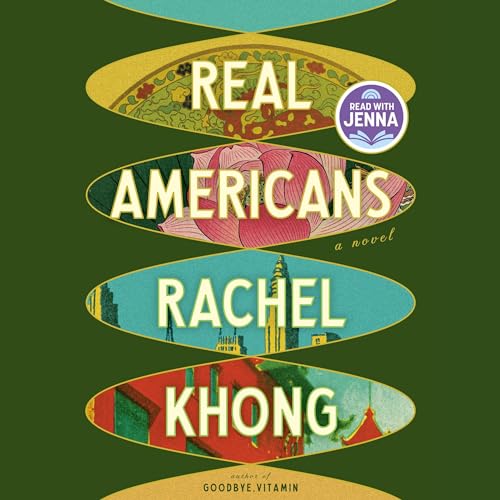
“Real Americans” A Novel
By: Rachel Khong
Narrated By: Louisa Zhu, Cric Yang, Eunice Wong
Rachel Khong (American writer and editor.)
(Ms. Khong’s book is an entertaining listen but a little too long except for listeners who are most interested in the story. Others are interested in its societal meaning and often discount its entertainment value.)
The main characters in Khong’s novel are Lily Chen, Matthew, Nick Chen, and May. In one sense, the author’s story is about the randomness of life. We are born from fertilization of a male sperm with a female egg. In our world, the randomness of being born is based on chance encounters of violence or seduction. (The reference to violence and seduction is not meant to suggest the nuance of relationship can be ignored, e.g. love comes from the act of seduction, not from violence.) In the 21st century, violence and seduction remain but in today’s science, state and institutional influence bear down on human procreation. The science and possible future of genetics is Khong’s theme in “Real Americans”.
“Real Americans” is about a young college graduate making her way in New York city, a capitol of opportunity in America.
As a poor young graduate, New York city is a ticketed opportunity for American success and failure. Khong’s story is particularly interesting because the main character, Lily Chen, is born American to well-educated parents who emigrated from China. She does not speak Chinese. She is living the life of a young, intelligent American trying to support herself by whatever job she can find in New York City.
Lily’s mother and father are geneticists.
Like the trials and rewards of Cinderella, the trials of Lily’s life are transformed by the wealth of a prince. What makes “Real Americans” more than a fairytale is its theme that life’s beginnings are a matter of violence or seduction, including state and institutional complicity. (“State and institutional complicity” refers to acts of government and business that discriminate based on prejudice or narrow emphasis on income rather than ethics.)
Lily seems to have luckily met Matthew; an immensely wealthy heir to an American medical conglomerate founded by his family. They marry after an on again, off again relationship.
After their marriage, Lily has two pregnancies that do not come to term and chooses to have invitro insemination to have a successful pregnancy with the birth of a son they name Nicco. Matthew and Lily go to China on a business trip where Lily chooses to visit the college where her mother became a geneticist. She meets a professor who knew her mother and is told a story that initially puzzles her about what her mother was like when she was young. She finds her mother, as a student geneticist, was a risk taker and magical thinker.
The next one learns is that Lily divorces her husband and moves from New York to Tacoma Washington, an island between Seattle and its capital to raise her son by herself.
Lily’s mother had met Matthew’s family before Matthew began dating Lily. She knew Matthew’s father who began a hugely successful medical company that researched genetics. (The significance of her mother’s knowledge of the genetic research of Matthew’s family is at the crux of Lily’s feeling of betrayal.) The theme of the author’s story begins to take a turn. Lily leaves Matthew. (She leaves because of the bias of Matthew’s family in using Lily as a surrogate for pregnancy without disclosing their personal interest.)
As her son grows to manhood, she refuses to tell him the name of his father, where he lives, or the history and wealth of the family in which he was born. The remainder of Khong’s book is the story of the circumstances surrounding the birth of her son, how he learns of his father, and what led to her divorce from Matthew.
Khong is writing about the pandora box of genetics which opens the world to designer babies. She seems to conclude, regardless of birth circumstance, care and nurture make people “Real…”. Science will lead or lose the “Real…” world of human beings. (Understanding the science of genetics and the potential for manipulation of human life is a god-like power with all the ramifications of genetic inheritance that can aid or destroy human life.)
The concern one may have about the interconnected world is that it homogenizes society. Anand’s interconnected world implies free-will is a fiction.
Books of Interest Website: chetyarbrough.blog
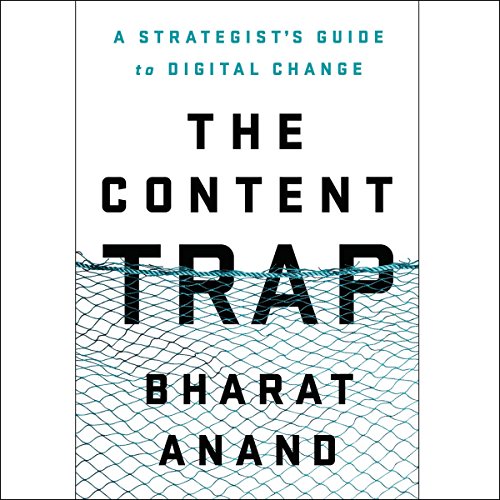
“The Content Trap” A Strategist’s Guide to Digital Change
By: Bharat Anand
Narrated By: Jason Culp
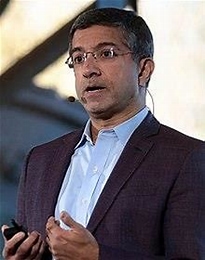
Bharat Anand (Author, American economist, Professor of Business administration at Harvard Business School.)
Bharat Anand offers a compelling explanation of how connection has become as important as “…Content…” in the digital age. His point is not to say content is irrelevant but without understanding digital interconnectedness, Anand infers profits, personal achievement, and commercial success are diminished or lost.
In the digital age, Anand argues if success is measured by profit, longevity, or fame, the key to success is adapting to interconnectedness.
Anand argues business managers and companies will fail if they do not adjust to changes in the way the public sees, understands, and uses the digital world. To give examples of his point, Anand notes the adjustments made by Apple, Microsoft, Google, Amazon, and the Fox TV network that have changed their business models to adjust to a digital world. Anand explains the digital world is a ubiquitous force (interconnected by computers, smartphones, and the internet) used by insightful individuals and businesses to achieve their goals.
Apple initially focused on product design and utility and earned a reputation for excellent product.
However, as the product evolved, Anand notes Apple’s specialization in quality meant less to their success than the connectivity to sources of information, entertainment, and people. The iPhone became ubiquitous and highly profitable when they improved Apple connectivity among iPhone’ users. They expanded that connectivity with their iTunes creation, audio book features, and various internet media offerings.
Microsoft specializes in software development tools that can be used by individuals and businesses to improve their communication skills and connectedness inside and outside their business.
Microsoft’s software enhances interconnectedness and communication while providing useful information to banks, affiliates, and users to understand the value of their business and how they may or may not complement each other’s performance. Microsoft expands their interconnectedness with an annual subscription system that appeals to repeat users of Microsoft’s updated software.
Google substantially improves their reach into the digital age by choosing to pay Apple $20,000,000 a year to use their search engine.
Though that is challenged by the government as a monopolization of trade, it illustrates the truth of Anand’s observation about the value of interconnectedness among companies in today’s digital world as a way of improving profits, growing, and assuring longevity.
Amazon ranks as one of the leading retailers and suppliers of consumer goods in America.
Bezos introduces many marketing innovations based on interconnections with customers that include many consumer enhancements. Amazon created its own storage and delivery service to directly compete with same day availability of product that showed customers could get product as fast as they could by going to a box retailer. Amazon capitalized on book selling by creating a portable library with Kindle that lowered NY Times’ best-selling books at half or less than the recommended retail price.
Fox television rose to compete with the big three television networks by buying the rights to NFL football at a price far beyond what the networks at that time were willing to pay. Digital age football fan connectivity gave Fox the power and influence to become the 4th major tv network in America.
Anand’s point is that adaptation, rather than opposition to evolving human connectivity, is the key to success. Identifying what is happening in the world and adapting to societal inevitabilities offers opportunities to keep pace with change and prosper. Anand is not saying content does not matter but that content is improved by adapting, rather than resisting or fighting evolving societal norms.
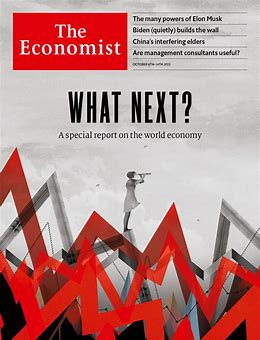
Anand addresses a favorite publication of many, “The Economist”, an international newspaper that has weathered the storm of newspaper disappearance in the 20th and 21st century.
Anand notes “The Economist” has prospered since the 19th century, despite the collapse of the newspaper industry in the late 20th and early 21st centuries. He argues it survives and prospers because of editorial development of international’ news through consensus of its experienced and educated writers. One might accept his observation but with reservation because of a recent survey request from the “Economist” for reader response.
The “Economist” survey form is daunting because it infers a pricing scheme based on digitalization of its articles. Having received the survey, some (like me) choose to throw it away.
The appeal of “The Economist” is in its editorial opinion of the world. Those who have traveled around the world are fascinated by the editorial opinions of a group of educated generalist opinion writers. Their survey may have been to solicit better reader connectivity, but it read like a prescription for higher prices for publication.
The threat of digitization of the “Economist” may ruin its appeal to many readers. It seems the “Economist” would change if it follows what seems the intent of their survey. The “Economist” survey seems like a digitization of their work to make it more connected to an untraveled public. They risk falling into the trap of “breaking news” rather than an insightful editorial opinion about non-western cultural policies and beliefs. They would be following the lead of many newspapers that couldn’t adjust to the interconnected digital world and had to close their doors.
Anand’s book is interesting and seems largely correct about the road to economic success, i.e., people and companies adjusting to the reality and understanding of an increasingly interconnected world.
The concern one may have about the interconnected world is that it homogenizes society. Anand’s interconnected world implies free-will is a fiction.




















































 REVIEWS AND VIEWS OF LIFE