LIBERALITY

The conclusion one may draw from “Eleanor Oliphant is Completely Fine” is that government liberality is better than authoritarianism

Books of Interest
 Website: chetyarbrough.blog

Eleanor Oliphant is Completely Fine

Author: Gail Honeyman

Narrated By: Cathleen McCarron

Gail Honeyman (Author, Scottish writer and novelist, won the 2017 Costa First Novel Award for “Eleanor Oliphant”.)

“Eleanor Oliphant Is Completely Fine” is a commentary on life’s loneliness which seems a self-imposed choice. There is a comic and mysterious quality to Honeyman’s story. Genetics and life experience inherent in every life is what the story of Oliphant is about. As an observer of life, one may believe experiences of life only reinforce genetic predisposition. If one accepts that belief, little of who we become is under our control. Honeyman’s story infers that is only partly true.

Waxing hair removal.

Life is a struggle for Eleanor. It is not that Eleanor does not make choices about life but that her choices appear other directed rather than inner directed. Life may be just a matter of chances and circumstances rather than inner directed motivation. Her story begins with a visit to a salon for an intimate waxing of her labia majora. (Hot or cold wax is applied to her intimate parts that pulls the roots of pubic hair off.) Eleanor is shocked by the experience. One presumes she is shocked because of the pain but surprisingly Eleanor explains it is because of the appearance it leaves of her naked woo-hoo. She thinks she now looks like an infant rather than a fully mature woman. This is a somewhat comic beginning to the author’s story. On the other hand, it shows Eleanor’s life seems more determined by society than inner direction.

Eleanor is a bookkeeper in a small business.

There is a mystery in this story that is slowly revealed by the details of Eleanor’s life. She lives alone in what is a subsidized apartment paid by social services. She is visited by a case worker and there appears some mysterious reason for her receiving help from the State. The mysterious reason is implied by the interview of Eleanor by a social case worker who pauses as she looks at the last part of a file as she interviews Eleanor. The case worker’s pause is about something written about Eleanor’s past. That past is made more mysterious as one finds Eleanor’s mother is institutionalized for some reason not disclosed.

Cultural differences.

The striking point made by this case worker’s visit to an American reader is the difference between Great Britain’s philosophical and cultural differences in regard to social policy. America rejects socialism while Great Britain endorses it. Great Britain practices democratic welfare capitalism while American democratic welfare is more limited. Healthcare is publicly funded in Great Britain while it is mostly private in America. These differences do not change the truth of Eleanor’s life story but it contextualizes Honeyman’s view of a life in a democratic socialist system rather than a democratic capitalist country.

The waxing incident is a comic beginning to Honeyman’s story, but it reflects on urban life as emotionally isolating despite being surrounded by other people.

Eleanor drinks half or more of a bottle of vodka alone in her apartment at the end of a work day. Her life is depressingly humdrum with hints of a trauma earlier in life. Whatever that trauma may have been urges one to keep listening or reading the author’s story. One’s interest is heightened by a young man that seems interested in Eleanor as a future companion. The young man is Raymond, a co-worker. Raymond is a loved son which is quite different from the family in which Eleanor appears to have been raised

Nearly half way through the book, one finds Eleanor has a scar on her face.

Like stepping into a darkened room, Honeyman shines a light on humanity. We become who we are from genetics and life experience. Honeyman gives many hints in her story that suggest there is a connection between Eleanor’s appearance, her reclusive and withdrawn behavior, her alcohol consumption, her mother’s confinement, and the aid she receives from Great Britain’s welfare system.

The perspective one gains from this story ranges from the horror of human selfishness to the value of caring for others.

One may compare American Capitalism with British Socialism thinking of their strengths and weaknesses or view the story of Oliphant as something that can occur in any social system of government.

Oliphant is rescued from a horrible family environment by Great Britain’s social welfare system to become an independent and productive British/Scottish citizen. One wonders if the same could happen in America with a less liberal system of welfare that relies on self-interest to change people’s lives. Of course, that is an unanswerable question because Oliphant could have been rescued in either country. On the other hand, would more citizens be saved by a more socialist system of democratic capitalism?

The details of Oliphant’s life are horrific. The cruelty of family life is real in every culture, whether authoritarian or democratic. The conclusion one may draw from “Eleanor Oliphant is Completely Fine” is that government liberality is better than authoritarianism.

TIPPING POINT

Today, some look at the American government with concern. Are we at a tipping point in America?

Books of Interest
 Website: chetyarbrough.

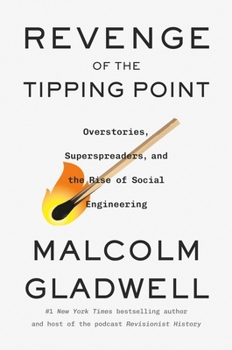
Revenge of the Tipping Point (Overstories, Superspreaders, and the Rise of Social Engineering)

By: Malcolm Gladwell

Narrated By: Malcolm Gladwell

Malcolm Gladwell (Canadian Author, journalist, public speaker, staff writer for The New Yorker.)

Malcolm Gladwell returns to the subject of “…Tipping Point” that originally explored how small actions or events can trigger significant changes in society. “Revenge of the Tipping Point” provides several stories of tipping points that have had vengeful consequences for society.

One of the most consequential tipping point stories is about America’s attempt to engineer social equality.

America is struggling with social diversity. Gladwell infers social diversity is a great strength in American society. However, our government and domestic leaders have legislated discrimination, fought wars, murdered innocents, and promoted ethnic separation throughout its history as a nation. Despite our most famous statement of American value, i.e. “E pluribus unum” (Out of many, one), America has failed.

The value of social diversity is it allows Americans to achieve great things despite inequality that exists in America.

Gladwell tells the story of a community in Florida that prides itself on being an exemplar of American society because of its strong educational values, cultural pride, community support, and economic mobility. The people who live in this community focus on preserving and celebrating their ethnic heritage, traditions, and identity. They assemble an island of cultural sameness that overtly and covertly resists change. Those who are not of the right ethnic heritage or race who may have the same drive for high educational achievement, community participation, and relative wealth are not welcome. The tipping point revenge Gladwell notes is in the stress this community places on its children to excel academically and conform to expectation. Gladwell notes student suicides are disproportionately high because of the social pressure children feel to conform. The social pressure for conformity and educational expectation overwhelms some who live in the community. Some parents choose to send their children outside the community school system to allay the social pressure they feel.

Gladwell notes the 2023 Supreme Court rejection of college acceptance based on diversity. The Court denies the right of colleges to recruit students based on ethnicity or race.

On the face of it, that seems an unfair decision but Gladwell notes that the schools being challenged on their diversity policies refuse to explain how they determine who should be admitted based on a percentage figure of fair representation. Gladwell notes the primary criteria for college selection has little to do with a drive for diversity but are based on revenue producing university sports programs and donor money. Minority preference admissions are based on income potential for the university, not social diversity.

The Supreme Court ruling does not preclude consideration of an applicant’s personal life experience, but Gladwell notes it nevertheless has nothing to do with a drive for equality or diversity.

Unfortunately, the Supreme Court decision may cause a reevaluation of outreach to minorities who have been denied equal opportunity for personal success. Gladwell’s ironic point is that American diversity in the pre-Supreme Court decision was never based on creating diversity but on raising money for university foundations.

Gladwell explains the drug crises is more of an American problem than for most other nations of the world.

One asks oneself, what makes America the center of opioid addiction and death.

From the greed of drug dealers, medicine manufacturers and doctors who prescribe opioids, America has the highest opioid deaths in the world. Though Estonia has the highest opioid death’s per capita because of its smaller population, the manufacturers and doctor-prescribed synthetic opioids have greatly increased American’s deaths. Purdue Pharma aggressively marketed OxyContin with the owners, the Sackler family, reaching a multibillion-dollar settlement. Many doctors like Dr. Hsiu-Ying Tseng and Dr. Nelson Onaro have been prosecuted for overprescribing opioids or running “pill mills” that provided opioids to the public.

Gladwell suggests it is the superspreaders, worldwide legal and illegal manufacturers and sellers of opioids, and incompetent/greedy medical prescribers as tipping point causes of America’s addiction crises. However, he argues there are environmental and systemic societal factors that create a receptive user base in America. Economic stability is unattainable for many Americans because of economic, racial, and ethnic differences. He argues small actions and decisions lead to widespread consequences. Every human being has a tipping point based on their experience in the world. The ideals of America conflict with its reality. The pain of that realization leads some to relief through drugs, a step-by-step addiction that can lead to death.

Berlin Memorial to the Holocaust.

There are other tipping points Gladwell explains. One that resonates with my life experience is the ignorance many have of the history of the world. Some would argue, Americans became aware of the Holocaust after the end of the war in 1945. However, Gladwell argues most Americans remained ignorant of its reality until 1978 following the release of the NBC miniseries “Holocaust”. Until then, Gladwell argues there was little broad cultural understanding of its atrocity. Having graduated from high school in 1965, much of what Gladwell notes about ignorance of the Holocaust rings loudly and clearly.

I doubt that many were completely ignorant of the Holocaust, but its brutal reality was not taught in the high school I attended in the 60s. Having visited Auschwitz and viewed its gas chamber, piles of discarded shoes and clothes, and pictures of murdered human beings, the truth and guilt that one feels for being a part of humanity is overwhelming.

We have an FBI director that wants to have men and women of the agency coordinate training with the UFC (Ultimate Fighting Championship), headquartered in Las Vegas. We have a President who publicly chastises Ukraine’s President and suggests they caused Russia’s invasion of their country. We have a President that insists America is being taken advantage of by lower cost production of product of other countries and that tariffs are a way to balance the American budget. We have a Palestinian protester at Columbia University who is arrested for social disruption. The head of the Department of Health Services orders lie detector tests for employees to find any leaks about the current Administration’s actions.

Tariffs have historically been found to damage America’s economy. Is the FBI a military force that needs to be schooled in hand-to-hand combat? One need only read Adam Smith about free trade to understand the fallacy of Tariffs. Have we forgotten the invasions of Austria and Poland by Germany at the beginnings of WWII? Is free speech a crime because of tents that disrupt college life? Should we use lie detector tests to determine the loyalty of employees?

Are these incidents a tipping point for American Democracy to turn into something different and demonstrably less than the founding principles of American government?

PARENTING

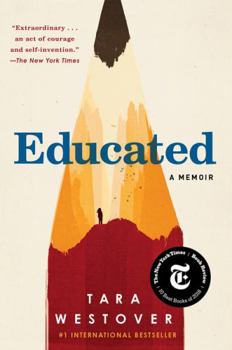
Tara Westover’s trials are distressing for a listener/reader of her memoir, but all children are born into a struggle to find their own identity. “Educated” is evidence of Tara’s escape from prejudice and ignorance. It is an encouraging story of recovery with an education she acquires from a lived life.

Books of Interest
 Website: chetyarbrough.blog

Educated (A Memoir)

By: Tara Westover

Narrated By: Julia Whelan

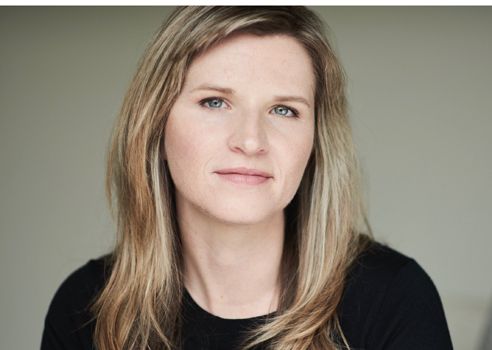
Tara Westover (Author, memoirist, essayist and historian.)

“Educated” is a memoir of Tara Westover’s childhood in America. Her story is personal but universal. Some children are born in caring and nurturing families, all are subject to parents’ strengths and weaknesses. Tara reflects on the life of her family with a father, mother, and siblings raised in a family with a survivalist father who has strong religious beliefs and antigovernment views of life. He raises his sons and a daughter with a wife who conforms to his wishes and a mother-in-law who believes he is wrong about public education and the value of extreme beliefs in independence.

Tara Westover reminds listener/readers that every culture in the world is blessed and cursed by diversity.

Westover’s father would be called an American “antigovernment extremist” and “survivalist”. He does not believe in institutions of government or public services and argues all forms of regulation outside the family distort the natural state of society. He believes it is necessary to hoard food, fuel, and human necessities to assure self-sufficiency in the event of natural disasters or government-imposed laws.

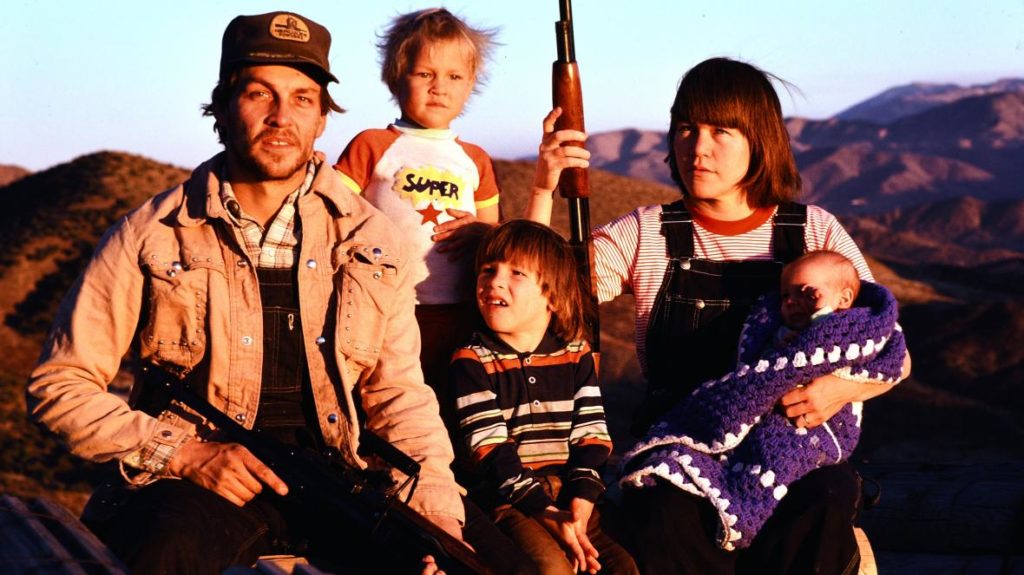
The Weaver Family Tragedy in August 1992 is an important symbol to Tara’s father.

Randy Weaver held antigovernment and white separatist views. His wife and son were killed by FBI agents on Ruby Ridge. A settlement of $3.1 million for wrongful deaths is awarded Weaver on August 15, 1995.

The Westover father grooms his children to support the family in a scrap metal business that evolves into a contracting company. As the children of the family mature, some leave while the father expands the family business with employment of outsiders. As Tara matures, she reluctantly becomes a worker in the family business to earn enough money to go to college. As Westover writes her story one wonders if her father will be the cause of the next Weaver Family Tragedy.

Westover shows how work and American life is not a fairy tale but for most a struggle for survival just as it is in every culture.

Desire has no limits. Freedom allows one to cope with life and, in some cases, exceed its limitations. Some cultures offer more freedom than others. Whether raised in America or somewhere else, one’s education comes from the culture in which they live. The circumstances of family are a part of a child’s education, but formal education varies within and between nations. Most nations have some form of public education, but education occurs whether publicly or privately pursued. The Westover family, in their children’s grade school and high school years rely on their mother’s home schooling.

The Westover’ family is neither a “Leave it to Beaver”, “My Three Sons”, or TV produced fantasy.

It is a reflection of a family dealing with the hardship of life in America that is sustained by a culture of independence and self-determination. Every child is impacted by the family in which they are raised. Whether government supported education or not, every child becomes an educated adult in different ways. Some like Tara Westover grow to adulthood with an education that comes from self-determination and grit despite her father’s influence and her sibling’s erratic behavior toward her.

Children do not choose their parents. Every child grows to adulthood in their own way.

There is always some level of care and nurturing in every family. The level of care they receive varies but ultimately it is how they deal with the circumstances in which they live that determines who they become. Two nearly fatal car accidents for Tara’s family and her near ejection from her family at age 16 seem to make her stronger. Her ability to write this memoir is a tribute to her determination to live a fulfilling life. The genetics of life have magnified and fortified the Westover children’s successes and failures in life.

Breaking free of prejudice and ignorance, whether one is formally educated or un-schooled, is difficult.

Prejudice is difficult because it is founded on emotional blindness shared by fellow travelers. Ignorance is founded on refusal of facts and knowledge of history. Two of the Westover sons and Tara seem to break the cycle. The first boy to leave the nest is on his way to Purdue after graduating from BYU. The second boy is believed by his father to be a genius and given license by his father to apply to BYU. One wonders whether the second boy will escape the curse of prejudice and ignorance of his remarkable family. Tara Westover’s trials are distressing for a listener/reader of her memoir, but all children are born into a struggle to find their own identity. “Educated” is evidence of Tara’s escape from prejudice and ignorance. It is an encouraging story of recovery with an education she acquires from a lived life.

BOOK LOVERS

In the end, “…History of the Book…”is brought together by Smyth’s review of book circulation. From early written manuscripts, small accumulations by the few grew into massive libraries for the general public.

Books of Interest
 Website: chetyarbrough.blog

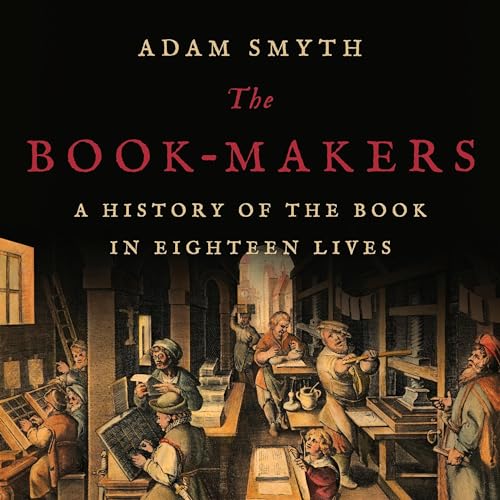
The Book-Makers (A History of the Book in Eighteen Lives) 

By: Adam Smith

Narrated By: Adam Smith

Adam Smyth (Author, Professor of English Literature and the History of the Book at Oxford University.)

The Gutenberg press is invented in the mid-15th century in Germany. Not surprisingly, the most widely printed book is the Christian Bible that began with the Guttenberg Bible, a 42-line Bible also called the Mazarin Bible, printed in 1455. Adam Smyth notes the first non-religious, widely popular book is printed in 1494, titled “Das Narrenschiff” or “Ship of Fools”.

“The Ship of Fools” is written by Sebastian Brant in 1494. It is a collection of satirical poems and illustrations depicting the foolish behavior of humans and the corruption of the church.

Printed originally in German in Basel, Switzerland, “The Ship of Fools” was lavishly illustrated and became a best seller in Europe. Its popularity came from its satirical content, wide translation, and visual appeal. Smyth explains the book critiques human folly and vice with 112 chapters, each of which is accompanied by a woodcut illustration.

Smyth explains how bookbinding and printing grew as an art.

Contributions to the art were made by both men and women. Elizabeth Collett and Sarah Benlowes were instrumental in improving the quality and continuity of noted books in the 17th century. They pioneered a “cut and paste” technique that made famous books more consistent, unique, and artistic without changing their author’s meaning.

John Baskerville (1706-1775) created and, with the management of his wife, distributed the Baskerville typeface. Not surprisingly, no picture is available on the internet of his wife Sarah Eaves.

John Baskerville and his future wife, Sarah Eaves, made significant contributions to the quality of the printed page. Baskerville created Baskerville typeface in 1757. The new typeface set a new standard for typography with sharp serifs, high contrast thick and thin strokes, and overall clarity. His future wife managed their print business and helped implement Baskerville’s innovations. Together, they improved ink color and sharpness to provide higher quality printing for books.

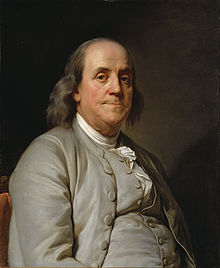
No story of the “History of the Book…” could be complete without addressing Benjamin Franklin (1706-1790).

Smyth reveals the contributions Franklin makes while using Caslon typeface created by Baskerville for the publication of newspapers, advertising, and the most successful non-religious book of the 18th century, “Poor Richard’s Almanac”. Franklin is the quintessential American by exemplifying the strengths and weakness of capitalism.

Money is important to Franklin in different ways.

Franklin used his newspaper to support and print paper money for the U.S. government. Franklin’s industriousness is well documented by historians, but Smyth notes a glaring flaw in Franklin’s character. Of course, this flaw is taken out of historical context and Franklin eventually changes his view, but he supported and brokered the slave trade between the 1750s and 60s. He is seduced by amorality, presumably because of the human desire for money, power, and/or prestige. Of course, this is being human; like all citizens of any economy or government.

Franklin’s views on slavery changed in the 1780s when he became a vocal abolitionist, but he certainly enriched himself in slavery’s earlier years.

Smyth flashes back to the invention of paper. The early beginning of paper is traced back to China in the 2nd century CE. Ts’al Lun (Cai Lun), a court official, is credited for developing papermaking techniques. Paper production spreads to the Islamic world in the 7th century with the printing of the Koran. It extends to Europe in the 12th century. The truly big jump in paper production came in the early 19th century with Louis-Nicolas Robert in France. The Fourdrinier machine could produce huge rolls of paper, but Louis-Nicolas Robert is unable to capitalize on the process because patenting was not available in France. Paper production process improves with John Gamble and Bryan Donkin in England. Paper production became faster, more efficient, and cost-effective.

The truly big jump in paper production came in the early 19th century with Louis-Nicolas Robert in France.

In the end, “…History of the Book…”is brought together by Smyth’s review of book circulation. From early written manuscripts, small accumulations by the few grew into massive libraries for the general public. Access to great and inane writings of genius and pulp producers reached wider and wider audiences. The final chapters address some of the great writers of modern times, particularly poets of which this reviewer is minimally interested and sadly ignorant.

One of the largest libraries in the world is in France, The Bibliothèque Nationale de France.

LIBRARIES’ EVOLUTION

The well-made point of Orlean’s history of the Los Angeles Central Library is that a listener/reader can learn a great deal about the world and other people’s life experience from books. The loss of a book is not like human death, disease, or disability. A book is a liberation and broadening of life’s narrowness.

Books of Interest
 Website: chetyarbrough.blog

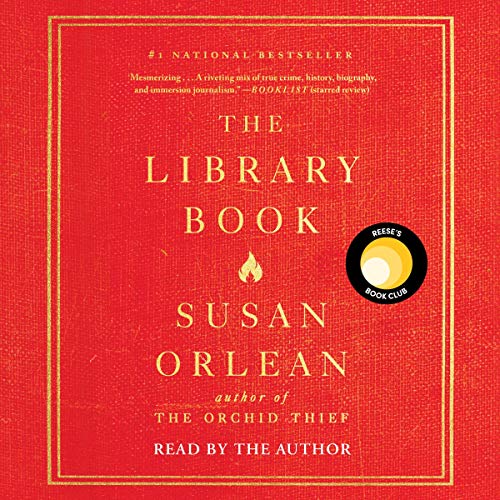
The Library Book 

By: Susan Orlean

Narrated By: Susan Orlean

Susan Orlean (Author, American journalist, tv writer, staff writer for The New Yorker.)

“The Library Book” is not a thriller, but it is an appreciation of a public service available in nearly every community of the United States. Libraries can be found in communities of less than 8,000 people or megalopolises of millions. Susan Orlean focuses her book on the great fire in 1986 at the Los Angeles Central Library where over 400,000 books were destroyed, and an estimated 700,000 were damaged. Though this was not the largest library in America, it was the largest library fire in U.S.’ history. Orlean’s research suggests the arsonist was a Wanna-Be actor named Harry Peak. However, there is no concrete evidence to confirm his guilt. No one is convicted for the library’s alleged arson. The cause remains undetermined.

It is interesting to note that Orlean admits there were electrical problems in the old building that had been recorded by building inspectors, but fire inspectors concluded it was arson.

It seems somewhat disingenuous for the City or Orlean to accuse Peak as an arsonist but that is not the primary message of her book. Her message is that many, including this reviewer, love the knowledge and experience of others who write books. Arguably, public libraries are one of the greatest public services in America, and at a cost much less than most public services in America.

The last chapters of her book address the history of the creation and renovation of the Los Angles Central Library. It reaches back to the 19th century. She recalls the liberal leaning of librarians and their early adoption of women in the workplace. Two women became Library’ managers in the 1800s. Orlean notes in a joking conversation with a manager of the library about the unlikely promotion of a political conservative as a head librarian.

An interesting note from the author is that the Los Angeles library has historically been a haven for the homeless, a problem that has dramatically risen in the 21st century. Some librarians have expanded their services to help the homeless. It seems noteworthy that the libraries in Las Vegas and those visited in other cities do not lock their bathroom doors the way private businesses like Starbucks choose to do.

The Los Angeles Library took six years to rebuild while workers carried on during the course of reconstruction. She notes that a new book generally requires a week before it hits the shelf because of time needed for proper cataloging. A somewhat distracting habit Orlean uses is recitation of a book’s Dewey Decimal’ number that begins most of the chapters. An interesting note from the author is that the library has historically been a haven for the homeless, a problem that has dramatically risen in the 21st century. Some librarians have expanded their services to help the homeless. It seems noteworthy that the Los Angeles Central library and libraries in Las Vegas do not lock their doors the way private businesses like Starbucks have chosen to do.

The Los Angeles Library is rebuilt to be better than it was before the fire.

Orlean explains library managers in LA are pushing to expand services their libraries provide. Having personal experience of traveling the world, countries like Finland show they have modernized libraries with a concept highly recommended in Orlean’s history of the Los Angeles’ library. Helsinki, Finland’s state-of-the-art library is a dramatic example of the services a library can provide. Everything from music instrument rentals, to recording studios, to sewing machine tables, and cooking kitchens are added to the library’s book inventory. All of these features have been created in Helsinki’s modernly designed library. It is a multi-purpose building that serves both children and adults.

The well-made point of Orlean’s history of the Los Angeles Central Library is that a listener/reader can learn a great deal about the world and other people’s life experience from books.

The loss of a book is not like human death, disease, or disability. A book is a liberation and broadening of life’s narrowness.

Many of the Los Angeles Library books were recovered but the process of recovery required the help of many of LA’s businesses. The books that got wet needed to be frozen to keep them from molding. City businesses made room for soaked books in their commercial freezers. The Los Angeles Central Library is rebuilt to be better than it was before the fire. Many of the books survived with the feint smell of smoke. The library continues to expand and enlighten Angeleno’s lives.

CYCLE OF ABUSE

“The Beauty in Breaking” is about life as an eternal recurrence that offers some peace of mind in a world troubled by its inhumanity.

Books of Interest
 Website: chetyarbrough.blog

“The Beauty in Breaking” (A Memoir)

By: Michele Harper

Narrated by: Nicole Lewis

Michele Harper (Physician, Author, Public Speaker.)

Leaves fall from the tree to expose the bark and bite of life. Michele Harper’s memoir shakes the tree of American life. Relying on the veracity of Harper’s story, she is raised in a family with a physically abusive father who divorces her mother, an art dealer.

Harper notes her paternal father was physically abusive.

After Harper’s paternal father leaves Harper’s mother, Harper notes he offers some financial assistance to Harper in college. Harper explains she passes some of that assistance on to her mother while attending Harvard. Harper earns a BA in psychology. She goes on to acquire a medical degree from a New York university to become an emergency room physician.

Harper’s story touches on the complexity of life as a Black American. She marries a white man while at Harvard, but they divorce at his choice. The failure of their marriage is shown to be hard for Harper, but she is driven to succeed and moves on to educate herself in her chosen field of work.

Harper’s experience of childhood abuse, her personal marriage break-up, and work as a physician in three different emergency room positions, are lessons for life and living.

Her focus is on overcoming her trials to be good at her job even though much is beyond her control. The notion of not knowing what crises you will face in a medical emergency room, let alone a doctor’s experience as a Black American, offers a unique perspective to Harper’s memoir.

Abuse comes in many forms.

There is child abuse that occurs in many homes throughout the world. There is being a minority in a culture controlled by a majority that discriminates against those who are different. There is inequality of opportunity that creates an underclass that is trapped in an eternal cycle of poverty. Harper is denied promotion to Administrator in her first hospital job because she is a woman. Her supervisor notes a woman, let alone a Black woman, has never had the Administrator’ job in that hospital. Misogyny triumphs once again.

Harper chooses to leave the hospital that denied her the promotion.

As an administrator in another hospital Harper sees the consequence of poverty. Poverty seeps into nearly every culture in the world with its accompanying violence, compounded by weak to non-existent gun control laws in the United States. Harper writes about her encounter with a young boy who has his sneakers stolen by a bully at school.

Harper interviews the young Black grade school child who is thinking about getting his shoes back with a gun.

Harper calls a child services employee to explain her concern about the child’s access to a gun at his home. The child service’s person explains she sees this in many children’s homes where poverty is one lost job away from a family being on the street. This young boy’s parents both work to keep the family housed and fed. The social services person explains gun accessibility and violence are common in poor black neighborhoods. Where poverty is a fact of life, child services can only go so far to change what is toxic in a child’s environment. Gun availability is beyond the control of Harper or child service’s employees. The extent of Harper’s intervention is limited to raising the issue with the young boy’s parents–with the hope that they will act to be sure no gun becomes available.

Harper finds a third job as a VA hospital administrator. She interviews a female patient seeking psychological help. In the interview, Harper is told by the patient she had been raped by her supervising sergeant and another soldier in Afghanistan.

She became pregnant and decided to have an abortion. That experience continues to traumatize her life. She seeks help to overcome its affects. Harper becomes the patient’s lifeline for the counseling she needs to overcome her abuse.

There seems no “…Beauty in Breaking” as one nears the end of Harper’s memoir but one begins to realize the “Beauty…” is “…in Breaking” the cycle of abuse.

The cycle can be broken with exposure, rehabilitation, caring, and acting to remove the causes of abuse. Harper’s memoir shows how it is done. Breaking the cycle of abuse is a long, laborious process that begins with people focusing on incidents of abuse and acting to mitigate its causes and consequences. “The Beauty in Breaking” is Harper’s way of exposing abuse and illustrating what can be done about it.

Harper’s ultimate theory for the resolution of human abuse is belief in Lifes’ recurrence. Her theory is that every life is eternal. When one dies, they will be reborn into another life. Harper comes to grips with her life as it is and makes it better through meditation. Her belief about life as an eternal recurrence offers her peace of mind about the people she saves or loses in a hospital emergency room.