LIBERAL DELUSION

Eubanks is wrong to think digitization ensures a future that will create a permanent underclass. The next four years may not show much progress in welfare, but American history has shown resilience in the face of adversity.

Books of Interest
 Website: chetyarbrough.blog

Automating Inequality (How Hich-tech Tools Profile, Police, and Punish the Poor

By: Virginia Eubanks

Narrated By: Teri Schnaubelt

Virginia Eubanks (Author, American political scientist, professor at the University at Albany, New York.)

At the risk of sounding like a “bleeding heart” liberal, Virginia Eubanks assesses the inefficient and harmful effects of technology on welfare, childcare services, and homelessness in America. Eubanks illustrates how technology largely reduced the cost of Indiana’s welfare. However, cost reduction came from removing rather than aiding Americans in need of help. She shows southern California is better organized in the 2000s than Indiana in their welfare reform movement in the 1990s. However, the fundamental needs of the poor and homeless are shown to be poorly served in both jurisdictions.

In the last chapters of the book, Eubanks looks at Pennsylvania’s childcare services (CCW). She argues her research shows digitization of personal information, societal prejudice, and inadequate financial investment as fundamental causes of America’s failure to help abused children. Eubanks implies the cause of that failure is the high-tech tools of the information age.

Eubanks offers a distressing evaluation of Indiana’s, California’s, and Pennsylvania’s effort to improve state welfare programs.

The diagnosis and cure for welfare are hard pills to swallow but Eubank’s research shows welfare’s faults without clarifying a cure. She clearly identifies symptoms of inequality and how it persists in America. Eubank infers America’s politicians cannot continue to ignore homelessness and inequality. America needs to reinforce its reputation as the land of opportunity and freedom. Eubank implies technology is the enemy of a more equal society by using collected information to influence Americans to be more than self-interested seekers of money, power, and prestige.

Eubank explains how Indiana welfare recipients were systematically enrolled in an information technology program meant to identify who receives welfare, why they are unemployed, and how they spend their money.

She argues this detailed information is not just used to categorize welfare recipients’ qualifications for being on welfare. The purported reason for gathering the information is to help those on welfare to get off welfare and become contributors to the American economy. What Eubank finds is the gathered information is used to justify taking citizens off of welfare, not improve its delivery. Poorly documented information became grounds for denying welfare payments. If someone failed to complete a form correctly, their welfare payments were stopped. The view from government policy makers was that welfare costs went down because of the State’s information gathering improvements. In reality welfare costs went down because recipients were rejected based on poorly understood rules of registration. Indiana did not have enough trained management personnel to educate or help applicants. Welfare applicants needed help to understand how forms were to be completed and what criteria qualified them for aid.

From Indiana State’s perspective, information technology reduced their cost of welfare. From the perspective of Americans who genuinely needed welfare, technology only made help harder to receive.

Eubank notes there are three points that had to be understood to correct Indiana’s welfare mistakes:

  1. information algorithms qualifying one for welfare must be truthful, fair, and accurate,
  2. the information must reflect reality, and
  3. training is required for welfare managers and receivers on the change in welfare policies.

Another point made by Eubank is the danger of computer algorithms that are consciously or subconsciously biased. A biased programmer can create an algorithm that unfairly discriminates against welfare applicants that clearly need help. This seems a legitimate concern, but Eubank misses the point of more clearly understanding the need of welfare for some because of the nature of American capitalism and the consequence of human self-interest. Contrary to Eubank’s argument, digitalization of information about the poor offers a road to its cure not a wreck to be avoided.

WELFARE CATEGORY ELIGIBILITY PERCENTAGES IN INDIANA

Eubank tells the story of a number of Indiana residents that had obvious medical problems making them unemployable but clearly eligible for welfare payments. They are taken off welfare because of mistakes made by government employees’ or welfare recipient’ misunderstandings of forms that had to be completed. From the government’s standpoint Indiana’ welfare costs went down, but many who needed and deserved help were denied welfare benefits. The rare but widely publicized welfare cheats became a cause celeb during the Reagan years that aggravated the truth of the need for welfare in America. The truth, contrary to Eubanks opinion, becomes evident with the digitization of information as a basis for legislative correction.

Eubank notes Skid Row in Los Angeles lost many of its welfare clients with gentrification of the neighborhood. The poor were moved out by rich Californians who rebuilt parts of Skid Row into expensive residences.

Eubank explains a different set of problems in the Los Angeles, California welfare system. The technological organization of the LA welfare system is better but still fails to fairly meet the needs of many citizens. The reasons are similar to Indiana’s in that algorithms that categorize information were often misleading. However, the data-gathering, management, and use of information is better. The more fundamental problem is in resources (money and housing) available to provide for the needs of those who qualify for welfare. It is not the digitization of the public that is causing the problem. Contrary to the author’s opinion, digitization of reality crystalizes welfare problems and offers an opportunity for correction.

Homelessness is complex because of its many causes. However, having affordable housing is a resource that is inadequately funded and often blocked by middle class neighborhoods in America. Even if the technological information is well organized and understood, the resources needed are not available. Here is where the social psychology of human beings comes into play. Those in the middle class make a living in some way. They ask why can’t everyone make a living like they have? Why is it different for any other healthy human being in America? Here is where the rubber meets the road and why homelessness remains an unsolved problem in America.

People are naturally self-interested. One person’s self-interest may be to get high on drugs, another to steal what they want, others to not care about how they smell, where they sleep, look, live, or die. Others have chosen to clean themselves up and get on with their life. Why should their taxes be used to help someone who chooses not to help themselves? Understanding the poor through digitization is the foundation from which a solution may be found.

Traveling around the world, one sees many things. In India, the extraordinary number of people contributes to homelessness. In France, it is reported that 300 of every 100,000 people are homeless. Even in Finland, though there are fewer homeless, they still exist.

It is a complex problem, but it seems solvable with the example of what Los Angles is trying to do. It begins with technology that works by offering a clear understanding of the circumstances of homelessness. A detailed profile is made of every person that is living on the street. They are graded on a scale of 1 to 17 based on the things they have done in their lives. That grade determines what help they may receive. Some may be disqualified because of a low number but the potential of others, higher on the scale, have an opportunity to break the cycle of poverty with help from welfare. It is the resources that are unavailable and social prejudice, not gathered personal digital information, that constrain solutions.

With informational understanding of a welfare applicant, it principally requires political will and economic commitment by welfare providers. There is no perfect solution but there are satisficing solutions that can significantly reduce the population of those who need a helping hand. American is among the richest countries in the world. Some of that wealth needs to be directed toward administrative management, housing, mental health, and gainful employment.

Like all countries of the world, as technological digitization improves, human services will grow to become a major employment industry in the world.

America, as an advanced technology leader, has the tools to create a service economy that is capable of melding industrial might with improved social services.

Eubanks travels to Pennsylvania to look at their child services program.

What Eubanks finds in Pennsylvania is similar to what she found in LA and, to a degree, Indiana. Children who are at risk of being abandoned, abused, or neglected are categorized in a data bank that informs “Child Services” of children who need help. The problem is bigger than what public services can handle but the structure of reporting offers hope to many children that are at risk. Like LA, it is a resource problem. But also, it is a problem that only cataloging information begins to address.

Parents abuse their children in ways that are often too complicated for a standardized report to reveal. Details are important and digitization of personal information helps define what is wrong and offers a basis for pragmatic response.

Computerized reports, even with A.I., are only a tip of the reality in which a child lives. This is not to argue child-services should be abandoned or that reports should not be made but society has an obligation to do the best it can to ensure equality of opportunity for all. Every society’s responsibility begins with childhood, extends through adulthood and old age–only ending with death. Understanding the problems of the poor is made clearer by digitization. Without digital visibility, nothing will be done.

Eubanks gives America a better understanding of where welfare is in America. She is wrong to think digitization ensures a future that will create a permanent underclass. The next four years may not show much progress in welfare, but American history has shown resilience in the face of adversity.

RE-ELECTION

We may be surprised by what Trump will do in four more years. The million or more voters who put him over the top deserve what good or bad comes from their choice.

Books of Interest
 Website: chetyarbrough.blog

A Higher Loyalty: Truth, Lies, and Leadership

By: James Comey

Narrated By: James Comey

James Comey (Author, director of the FBI from 2013 to 2017, fired by then President, Donald Trump.)

With the re-election of Donald Trump, it seems time for a review of James Comey’s book to better understand his perspective on the soon-to-be new/old leader of America. This review is admittedly biased. On the other hand, Comey’s and this book-reviewer’s mutual bias are reinforced by comments of other Americans who personally served in Trump’s first administration.

Mike Pence, Rex Tillerson, Jim Mattis, Mark Esper, William Barr, and John Kelly, were all former officials of President Trump’s first administration. As is widely known, all of these officials have guarded, if not negative, opinions about Trump’s position as the leader of the “free world”. What “freedom” is there when his former chief of staff categorizes Trump as a fascist?

John Kelly (Trump’s chief of staff from 2017-2019.)

Mike Pence refused to endorse Trump in his 2020 run for re-election. Rex Tillerson called Trump “pretty undisciplined” in 2018 and counseled Trump to not violate the laws of the land. The former Defense Secretary, Jim Mattis, warned Trump about “militarizing our response” to protests against the government. He is quoted to have said “Never did I dream that troops …would be ordered under any circumstance to violate the Constitutional rights…of fellow citizens.” Mark Esper, who succeeded Mattis, said January 6th’s run on the capitol “…threatens our democracy”. William Barr, Trump’s former Attorney General, said Donald Trump shouldn’t be near the Oval Office. John Kelly, Trump’s former chief of staff, notes Trump fits the definition of a fascist. We should remind ourselves–a fascist is a dictator who believes in centralized autocracy, militarism, suppression of opposition, nationalism, and economic control. “What freedom is there in an America led by a fascist”? America has chosen to re-elect Trump despite the aforementioned concerns by people who worked in his administration.

James Comey is fired by Trump for several reasons.

Comey is fired by Trump for several reasons. One, he mishandled the investigation of Hillary Clinton’s use of private email. He refused to admit the president was a part of the FBI’s investigation into Russia’s involvement in the 2016 presidential campaign. Additionally, Comey refuses, at the request of Trump, to drop the investigation into former National Security Advisor Michael Flynn. Trump dismisses Comey in 2017. (Ironically, Michael Flynn pled guilty in 2017 for making false statements to the FBI. President Trump pardoned him in 2020.) As a result, Trump’s Attorney General Jeff Sessions and Deputy Attorney General Rod Rosenstein recommended the firing of Comey.

The Attorney General Jeff Sessions and Deputy Attorney General Rod Rosenstein recommended the firing of Comey.

Comey’s biography is about his life from childhood to adulthood. The first chapters are about his parents and siblings. He recounts a burglary incident in his home when only he and a younger brother are in the house. The burglar enters the house with a gun and threatens both boys while looking for money and valuables. Though James grows to be six feet eight inches tall, he is not big when this incident occurs. He and his brother are naturally frightened. James tells the burglar where to look for money that he might find in the house. The boys are locked in a basement bathroom and the burglar leaves but sees the boys trying to escape through the bathroom window. The burglar returns. James runs to the neighbor’s house for help but the burglar escapes before the police arrive.

Comey notes he was bullied when in grade school.

The bullying eventually stops, and one wonders if it was because of his growth spurts or because of his ability to adjust to the social environment in which he lived. He had teachers and employers during his school years that became character models for him in life. He writes of incidents that he feels became examples that led him to become the person he became. From the perspective of this listener/reader, they were experiences that made Comey an ideal bureaucrat. This is not to demean bureaucratic positions but to suggest Comey matured to be a believer in systematic analysis of human behavior.

James Comey became an ideal bureaucrat for the Federal Government because he was a believer in systematic analysis before developing institutional policy or taking consequential action.

Comey starts his professional life as an attorney. His big break comes from the George W. Bush administration when he is offered the position of the U.S. Attorney for the Southern District of New York. Ironically, he went to work for Rudy Giuliani, an unprincipled but popular mayor of New York. Giuliani became President Trump’s personal lawyer and was later convicted for defamation. (Birds of a feather?) Bush asked Comey to serve as Deputy Attorney General for the U.S. government. He was confirmed by the Senate in 2003. In 2013, Barack Obama appointed James Comey as the Director of the Federal Bureau of Investigation.

A disturbing chapter in Comey’s book is his prosecution of Martha Stewart for insider trading.

Comey tries to negotiate a deal with Stewart to keep her out of jail if she would plead guilty. She refuses and Comey orders continuation of the prosecution. Stewart was convicted and sentenced to five months in a minimum-security prison. There is a “holier than thou” sense of Comey’s action but his side of the story is that fame and wealth are no excuse for illegal behavior. This is a feeling one may or may not agree with because fame and wealth should not be a license to violate the law. (The obvious irony is that President Trump will escape punishment for his law breaking because of re-election.) In Comey’s opinion, when Stewart would not plead guilty, she became the author of her own punishment.

Scooter Libby (American lawyer and former chief of staff to V.P. Dick Cheney.)

Scooter Libby’s prosecution brings up another incident that tests Comey’s character more than the effect of a person’s wealth and fame. Comey’s advance in the Federal Government came from the Republican Party led by Bush. Libby is indicted for lying to the FBI about divulging the name of a CIA officer (Valerie Plame). Libby is convicted because of Comey’s investigation despite his political appointment by the Bush administration. One might argue that Comey refuses to bias FBI’ investigations based on fame, wealth, or political affiliation with these investigations. That seems apparent, considering the title of his biography, i.e. “A Higher Loyalty”.

Comey’s biography offers insight to what Trump may or may not succeed in doing when he assumes office. Like the administration of George W. Bush, the bureaucracies of America’s government will have some influence on Trump’s agenda.

THE FOLLOWING IS TAKEN FROM THE AP INFO ABOUT TRUMP’S PLANS:

  • to empower the National Guard and domestic police forces to deport an estimated 11 million unauthorized immigrants,
  • leave abortion laws to the discretion of the American States with no federal mandate,
  • restructure the Food and Drug administration,
  • eliminate taxes on earned tips, eliminate taxes on social security income, and reduce taxes on corporations from 21% to 15%,
  • create tariffs of 10 to 20 percent on foreign goods,
  • reinstitute the 2020 executive order requiring the federal government buy “essential” medications only from U.S. companies,
  • block purchases of “any vital infrastructure” in the U.S. by Chinese buyers,
  • roll back societal emphasis on diversity and legal protection for LGBTQ citizens and Title IX civil rights protections for transgender students,
  • reduce the role of federal bureaucrats and regulations across the country,
  • target elimination of the federal Dept. of Education to promote privatization of schools, while increasing regulations on what can be taught in schools,
  • repeal and replace the Affordable Care Act,
  • deny the existence of global warming while discouraging fuel efficiency standards and incentives for fuel conservation,
  • make it harder for companies to unionize and discourage unionization dues payments,
  • withdraw from world affairs with a non-interventionist military policy while increasing defense spending for a missile defense shield.

Comey explains how overreaction to 9/11’s attack led to growing suspension of human rights in America.

Abu Ghraib prisoner abuse.

Legislation drawn by the Bush administration condoned CIA’ torture of foreign nationals and anti-American demonstrators. That proposed legislation was opposed by the Attorney General’s office and did not get passed. However, the CIA and some military personnel got ahead of government policy decision in their actions at Abu Ghraib and Guantanamo Bay. The Bush administration did not give up on their desire to allow torture.

Undoubtedly, some actions will be taken before Congressional or bureaucratic approvals but there is hope for restraint based on what the Attorney General’s office (John Ashcroft) objected to when it became aware of the CIA’s actions. The threat of mass resignation by the Attorney General’s office made Bush reconsider what his staff proposed to Congress. One presumes, there will be similar bureaucratic resistance to Trump’s extreme policy recommendations.

Alberto Gonzales (80th U.S. Attorney General from 2005-2007.)

However, despite objections to the torture system practiced by the CIA, Bush’s administration chose a new Attorney General, Alberto Gonzales. In that Presidential choice, bureaucratic policy changed, and torture became an acceptable form of interrogation. Changing bureaucracy leadership is the modus vivendi for Donald Trump’s threat to American Democracy and what can happen in the next four years.

Comey seems a decent person. He is no hero. He is obviously intelligent with a conscience that one would expect from a moral, if not always effective, attorney. Trump is a threat to American democracy but there have been many threats to democracy in our history. We may be surprised by what Trump will do in four more years. The million or more voters who put him over the top deserve what good or bad comes from their choice.

VENGEFUL IDEALIST

The election results are in, and Trump is our President once again. This is a sad commentary on the will of the American people and the threat America is to world economic comity.

Books of Interest
 Website: chetyarbrough.blog

People, Power, and Profits (Progressive Capitalism for an Age of Discontent)

By: Joseph E. Stiglitz

Narrated By: Sean Runnette

Joseph Stiglitz (Author, American economist, public policy analyst, received a Nobel Memorial Prize in Economic Sciences in 2001.)

With reservation, Joseph Stiglitz’s book “People, Power, and Profits” is reviewed here. The reservation is because of the risk of succumbing to echo-chamber’ belief. That belief is that corporations and wealthy individuals should not be able to pour as much money as they want into the American election process, that bankers unjustly escaped punishment for the 2008 financial crises, and that Donald Trump should never again be elected President of the United States.

Stiglitz is considered a “New Keynesian” economist which puts him at odds with famous economists like Milton Friedman and Friedrich Hayek. Friedman believes the most effective fiscal policies comes from monetary policy control by the government. Hayek believed in a market economy with as little government intervention as possible. Stiglitz flatly disagrees with Hayek and only agrees with Friedman in that government has a responsibility to intervene in government economic policy. Stiglitz identity as a “New” Keynesian is because, unlike Keynes’ economic theory, there is no waiting for an economic crisis for government to intervene but to intervene now to make future economic crises less likely.

John Maynard Keynes (English, Eton and King’s College graduate, mathematician, economist, 1883-1946, died at age 62.)

Why I am concerned about listening to Stiglitz’s book about the economy is that I am listening to some things I already believe. I believe the gap between rich, and poor is the greatest threat to, not only American democracy, but all forms of government. Stiglitz may be my echo chamber.

Stiglitz believes in democratic government intervention to ameliorate the wide gap between rich and poor.

Stiglitz has an idealist platform to cure what he views as the solution to narrowing the gap between rich and poor in America. Stiglitz makes five policy recommendations to reduce the gap between rich and poor in America.

  1. Increase taxes on income from capital gains and inheritance.
  2. Use tax revenues to improve public education in ways that equalize costs between the rich and poor.
  3. Refine anti-trust laws to prevent monopolies and promote competition.
  4. Intervene in corporate governance to ensure fairer compensation between management and labor.
  5. Regulate banks to prevent exploitation of the public.

These are defensible polices but they have to survive the give and take political process of American democratic government.

However, that process is unfairly biased by allowing corporations and the wealthy to pour disproportionate amounts of money into the American election process. Contribution by corporations and the wealthy should be limited because candidates are beholding to big financial donors with little concern for the poor.

Small donors driving 2020 presidential race

In the 2020 and 2024 election cycle, big donors contributed from 75 to 78 percent of campaign donations.

The problem with Stiglitz’s book is not in his recommendations but in his vengeful angel’ rhetoric. America is founded on freedom, not revenge. It is the give and take of differences of opinion and “checks and balances” of the Constitution that have made America great. Many mistakes have been made and are still being made by our government but even a horrible President like Trump cannot change the fundamental direction of our democracy.

John F. Kennedy’s belief that a rising tide lifts all boats has not provided life vests to the poor in America.

The gap between rich and poor in America must be resolved. Neither Harris nor Stiglitz may be the answer, but Trump is only going to try to resurrect a past that has led our government in the wrong direction. The unconscionable cost of medical services and drugs, extraordinary compensation for executives, regressive taxes, election financing bias, and financial industry greed must be addressed through the American political process.

American democracy’s failures will not be cured, but they must be addressed and ameliorated to remain a beacon for freedom in the world. The election results are in, and Trump is our President once again. This is a sad commentary on the will of the American people and the threat America is to world economic comity.

HUMAN EQUALITY

Darznik’s novel is based on a woman who believed and acted on a conviction that men and women are created equal.

Books of Interest
 Website: chetyarbrough.blog

Song of a Captive Bird

By: Jasmin Darznik

Narrated By: Mozhan Marno

Jasmin Darznik (Iranian born American author with a BA from the University of California and a PhD in English literature from Princeton.)

“…Captive Bird” is classified as a novel. However, it is loosely based on the life of Iranian poet, Forugh Farrokhzad, who defied the traditions of mid-twentieth century Iranian culture. Today’s Iranian culture would undoubtedly be as anti-Farrokhzad as the 1950’s culture in which she lived.

Forugh Farrokhzad

Iranian poet and painter born in Tehran in 1934, died at age 32 from a car accident in 1967.

If even a small part of Darznik’s novel is based on true events, Forugh Farrokhzad was an extraordinary human being who symbolized the truth of sexual equality. In one of the most patriarchal countries in the world, Ms. Farrokhzad rebelled against a conservative and myopic view of women’s rights.

Jasmin Darznik characterizes Farrokhzad as a trailblazer who believed and lived a life of sexual equality.

The story Darznik tells is of a human being choosing to livelife in whatever way her mind and emotions led. Darznik’s heroine fought the restrictions of women’s inequality in a country riven with militant patriarchy. Farrokhzad’s history is one of rebellion against her father, a colonel in the Iranian army, and the societal taboos of Iran, many of which are resurrected in today’s Iranian government.

Darznik’s story is of a woman who acts like a free man, chooses her sexual partners, leaves her husband and only child, and seeks fame as a poet in a land renowned for poetry.

Like a man or any human being, Farrokhzad has sexual desires and ambitions to be something more than a footnote in history. Like husbands who leave their children through divorce or separation, Farrokhzad leaves her son. It is the same habit of many absent fathers who may love their children, but choose, like Farrokhzad, to pursue life beyond being a mother or father.

The world is beginning to understand women and men are 99.9 percent the same with fractional differences for conception, and strength.

The desire for sex, money, power and/or prestige are the same for all human beings. What is remarkable about Farrokhzad life is that she seems to have recognized that belief in one of the most patriarchal countries in the world. The way Farrokhzad lived her life, as reflected by the author, shows why men and women should be treated equally.

This is not a lesson many men or women are willing to learn because it challenges societies definitions of masculinity and femininity. The value of learning that lesson is in the liberation of humanity.

What is not mentioned in Darsnik’s novel is that Farrkhzad was also an artist.

This is a painting done by Farrokhzad despite her principal feminist reputation as a poet in the conservative culture of Iran in the 1950s.

The author’s story suggests Farrokhzad’s father commits her to an asylum after estrangement from her family and her rejection of female inequality. In the asylum, Farrokhzad is heavily sedated and subjected to shock treatments that make her catatonic. She is rescued with her father’s decision to allow her to leave the asylum in the care of a rich Iranian woman. This benefactress is a fellow traveler in Farrokhzad’s belief about women. Farrokhzad eventually recovers from her catatonia and continues her liberated life.

Though the dates Farrokhzad’s real life do not match historical events in Iran, Darznik captures the essence of a remarkable Iranian woman.

The shah of Iran, Mohammad Pahlavi is deposed in 1979. The author conflates the history of the oil industry’s unfair monopolization by Great Britain, the King’s departure and Farrokhzad’s storied life. She tragically dies in a car accident in 1967 at the age of 32. (Some suggest the car accident is suspicious.)

Darznik’s novel is a compelling argument for sexual equality. It is based on a woman who believed and acted on a conviction that men and women are created equal. The author’s story is particularly impactful because the woman she alludes to is born in a country that is among the most patriarchal in the world.

POLITICAL CHAOS

Tariffs to restrict foreign production is shooting citizens in the foot by artificially increasing the cost of living.

Books of Interest
 Website: chetyarbrough.blog

Edge of Chaos: Why Democracy Is Failing to Deliver Economic Growth – and How to Fix It

By: Dambisa Moyo

Narrated By: Pamala Tyson

Dambisa Moyo (Zambian-born economist and author with a BS and MBA from Harvard, former World Bank consultant to Europe, Central Asia and Africa.)

“Edge of Chaos” is a revelatory and intelligent analysis of economic rewards and risks of democracies and dictatorships. Fundamentally, Moyo argues failures of government economies are related to societal instability and short-term government economic policies that are disproportionately influenced by monied interests and kleptocratic political leaders. Rich corporations and kleptocratic leaders distort economic opportunity, create chaos while producing and exacerbating economic inequality. She argues America is at the edge of chaos because of a flawed democratic election system that is biased toward short-term rather than long term economic policy.

Moyo identifies the Gini index of income inequality to show that there is little difference between the rich and poor in China and the United States despite their government leaders’ differences.

China is a dictatorship while America is a form of democracy. They are nearly the same on the Gini index scale of citizen inequality while South Africa, Zambia and Brazil are at the bottom. Slovenia, the Czech Republic, Slovakia, Belarus and most of the Scandinavian countries show the lowest differences in citizen’ economic inequality. Mayo argues the difference has little to do with their forms of government except in relation to their government policies. In her opinion, China and the United States could improve their citizen’s Gini index position if their government policies would focus on income equality.

Both China and America have relative stability but with different forms of government.

Unquestionably, freedom is the sine non quo (indispensable ingredient) of America, but it is income inequality that causes the chaos Moyo alludes to in her book. That chaos is not overtly apparent in China because of dictatorship but one who has traveled to China feels there is a similar level of discontent, if not chaos, among its citizens over economic inequality.

Moyo’s solution for reducing America’s growing chaos seems difficult but not impossible to implement.

Dambisa Moyo’s solution revolves around the following 8 recommendations.

  1. Make voting compulsory to increase voter participation more representative of the people.
  2. Make election to the House of Representatives a six-year term like the Senate to encourage longer term economic goals but limit the number of terms one can be in office. (Eliminate career politicians.)
  3. Increase the pay of politicians to what successful private sector leaders receive.
  4. Establish policy making agencies that can focus on long-term policies without being threatened by near term election cycles.
  5. Invest in the education of future leaders of the political system.
  6. Encourage public officials to focus on economic diversification with an educated understanding of technological change in the world.
  7. The wealth of the nation should be focused on reduction of economic inequality.
  8. Strategies to manage natural resources should be developed to focus on sustainability.

Fair trade is where America is on the wrong side of history according to the author.

Adam Smith believed in fair trade.

Adam Smith argued for removing trade barriers like tariffs and quotas because of limited natural resources. He explains resources are more efficiently allocated, product production is increased, and economic growth is improved with free trade. As inferred by Moyo, American chaos is partly a result of ignoring Adam Smith’s prescient understanding of economics.

America democracy has journeyed a long way since 1776.

America’s fundamental success came from its emphasis on freedom within rules-of-law organized around the “checks and balances” of three distinct branches of government, i.e., the executive, congressional, and judicial branches. This is the strength of American Democracy that has offered stability. The inference made in “Edge of Chaos” is that America’s stability is at risk if it does not adapt to technological change wrought by A.I. and global interconnectivity.

Technology is changing the nature of American productivity from material products to service. With the help of A.I., America can begin to address many of the service needs of its citizens. From aid to the homeless, to education for service to others, to drug treatment of the addicted, to improved health care for all, the prosperity and income of Americans can be more equitably shared.

Global interconnectivity requires greater acceptance of fair trade as originally described by Adam Smith.

Today’s alleged protection of worker employment by using tariffs to restrict foreign production is shooting citizens in the foot by artificially increasing the cost of living. Re-education for service to the public by using A.I. to make citizens more human-centered offers an alternative to 21st century American chaos.

These are intelligent observations by a very young and well-educated author.

IN THE ROOM

How close is the world to its next world war? The character of today’s leaders seems as threatening as Stalin and as unpredictable as Churchill.

Books of Interest
 Website: chetyarbrough.blog

The Stalin Affair (The Impossible Alliance That Won the War)

By: Giles Milton

Narrated By: Giles Milton

Giles Milton (Author, British writer and historian.)

Giles Milton offers a fascinating and well written account of the dynamics of the relationship between Churchill and Stalin with a brief analysis of Franklin Roosevelt that shows a difference of opinion about Stalin. There are some surprises in Milton’s history of the beginning and ending of WWII and the role of Joseph Stalin.

As is well known, Stalin and Hitler made a pact at the beginning of the war that made them allies with a plan to divide Europe between their two countries.

The pact falls apart when Hitler chooses to invade Russia on June 22, 1941. Germany made rapid progress and was nearing Moscow when winter struck, and Germany’s wheels of war were stuck in the mud. Stalin was psychologically paralyzed by Germany’s decision to turn against Russia. He hid in his dacha, his second home in the Russian countryside. A delegation of Russians went to the Stalin’s dacha and pleaded with him to direct the defense of Russia against Germany’s onslaught. Stalin is surprised that the delegation wanted him to return to the leadership of Russia in Milton’s telling of the story. One presumes that reluctance is because of Stalin’s mistake in believing Hitler could be a reliable ally in their mutual desire to expand their territories.
Milton’s history has a particular interest to me because of a planned personal visit to the Baltics next month.

In reading a book about the Baltics during WWII, there seems some confusion among the Baltic countries because their sovereignty is being usurped by Russia while the instigator of WWII is Germany. The guide on the trip suggests we read “between shades of gray”, a book written by Rusa Sepetys, a Lithuanian born American writer. Sepetys story is of Lithuania intellectuals being arrested by Stalin’s troops and carted off to Siberia. Brief mention of the Germans is mentioned but implies the Germans were not the enemy but an opposing force of the Russian attack on the Baltics. Having visited Finland last year, it is interesting to find the Finns allied themselves to Germany during WWII because of their fear of Russia’s aggression. Now, having read Sepetys novel of Russian aggression in early 1941, one begins to understand the complexity of which side of the war the Baltics chose to be on.

Ruta Sepetys (Lithuanian born American writer.)

It tells the story of Russia’s invasion of the Baltics soon after Hitler’s decision to attack Russia.

WWII in the Baltics is not Milton’s history, but Sepetys offers a footnote on its consequence in the Baltics.

Milton makes one feel they are in the room when decisions are made about the progress and ending of WWII. It is a fascinating story. Stalin is a villain in sheep’s clothing. His lust for power is unquenchable. Winston Chruchill is shown to be more aware of Stalin’s intent than Franklin Roosevelt. At Yalta, where the peace plan is agreed to and signed, Milton explains Roosevelt is feeble. The Yalta conference took place in February 1945. Roosevelt dies in April, two months later. Stalin’s ambition is the expansion of the U.S.S.R. and anything that gets in the way of that ambition is an obstacle to be overcome or removed.

Milton’s access to historical documents, reveals the many important roles of government leaders during WWII and after.

Of course, the most obviously impactful leaders are Churchill and Stalin, but the author notes the roles of lesser-known participants like Averell Harriman, Kathy Harriman, and Vyacheslav Molotov. There is also the role of Lavrentiy Beria, Stalin’s head of the NKVD (the Soviet secret police).

W. Averell Harriman (1891-1986, American politician, businessman, and diplomat.)

Averell Harriman, as the son of a wealthy railroad baron, becomes the founder of Brown Brothers Harriman & Co., an investment company. He became one of the richest men in America.

Harriman is asked by Roosevelt to become the America’s diplomatic contact with Great Britain to manage the Lend-Lease Program before America enters the war. As a personal envoy, he strengthens the alliance between Britain and America. Later he becomes Ambassador to the Soviet Union after Hitler’s betrayal of Stalin. Milton touches on the married Harriman’s attraction to women and his extramarital affairs. However, Harriman was revered by Churchill, and later Stalin, for the aid he coordinated for both countries during the war.

Kathleen Harriman (1917-2011, died at age 93.)

A lesser-known role is of Harriman’s daughter, Kathy Harriman. In the first years of contact between her father and Stalin, Ms. Harriman smooths America’s relationship with the Russian administration.

Ms. Harriman leaned to speak Russian and aided her father in his diplomatic contact with Soviet officials. She became a correspondent for the International News Service and Newsweek during her time in Russia. In 1944, Ms. Harriman exposes the mass murder of 22,000 Polish officers by the NKVD, at the order of Stalin. She plays a role in the Yalta Conference in assisting the American delegation with logistics and management.

Milton makes a listener feel like they are in the room at a dinner table with Stalin and Churchill when they exchange harsh words about the creation of a western front to aid the Russian army in the fight with German soldiers.

Stalin demeans the British army for their early failures in the war when they were outnumbered and outgunned by the Germans. Churchill is deeply offended by the disparagement and is on the verge of canceling a dinner with Stalin before leaving Russia. His anger is quelled by Harriman. Churchill changes his tone with the Russian leader and mends their relationship over cigars and alcohol. However, there is little doubt about their continued acrimony and Churchill’s unshaken belief in Stalin’s intent to expand his empire.

Milton offers the same “in the room” understanding of what happens at the Yalta Conference.

Germany is divided into four occupation zones which ended up being East and West Germany. The groundwork for the United Nations is formed with the aid of promoting international cooperation and prevention of future conflicts. A zone of influence is created between Eastern European Countries which were added to the U.S.S.R., to expand a buffer zone between Russia and the Western Powers. This iron curtain results in the cold war. The table is set at Yalta for the Nuremberg Trials of Nazi and Japanese leaders and for future reparations to rebuild Europe.

“The Stalin Affair” is an excellent reminder of WWII that makes one think about what is happening today with Russia in Ukraine and Israel in Gaza. How close is the world to its next world war? The character of today’s leaders seems as threatening as Stalin and as unpredictable as Churchill.

HOSTAGE

Over 230 human beings remain political hostages in this unpredictable world.

Books of Interest
 Website: chetyarbrough.blog

In the Shadows (True Stories of High-Stakes Negotiations to Free Americans Captured Abroad)

By: Mickey Bergman, Ellis Henican

Narrated By: Assaf Cohen, Mickey Bergman

Mickey Bergman tells a fascinating personal story about his life as a political hostage negotiator. He and a mysterious Lebanese friend he names “George” met at Georgetown University and became interested in political hostage negotiations. A precipitating event that led to their early friendship is the kidnapping of an Israeli soldier by a Palestinian Hamas faction in Lebanon. As a former Jewish military soldier, Bergman became friends with “George”, a Lebanese Muslim student at George Washington University. With similar beliefs about the unfairness and human tragedy of hostage taking for political purpose, they become partners in the release of the Israeli soldier from Hamas.

As a reminder of the of the October 7, 2023, kidnaping of over 100 Jewish hostages by Hamas, Israel has occupied Gaza and murdered an estimated 4o,000 Palestinians.

In the kidnaping of one Israeli soldier, Bergman explains that murder or kidnapping of 1 Israeli is viewed by some in the government and Israeli citizens as not 1–but six million and 1 atrocities.

A singular kidnaping, let alone the October 7th Hamas attack, gave warrant to some in Israel’s government to wage occupation and war on Gaza.

(This reasoning gives a sense of the current state of the Gaza war but also explains why hostage negotiation is such a complicated and lengthy process that can as easily end in failure as success.)

From Bergman’s friendship with “George”, he gathers interest in the pursuit of peace, regardless of social, religious, economic, or political difference. As a twenty something graduate, Bergman receives a call from the Clinton Global Initiative to join their organization after graduation. CGI was formed by former President Clinton and his family in 2005. Its stated purpose was to devise and implement solutions to world challenges like climate change, health equity, world economic growth, and peace among nations. It gave Bergman his first thoughts about what would become his mission in life, i.e., the liberation of hostages unjustly held by factions of countries or governments for political rather than criminal infraction. “In the Shadows” explains how suited Bergman is for the life he chooses. Raised in Israel, highly educated, experienced as a soldier, from a stable and loving family, Bergman understands the grief and joy of families dealing with and hoping for their mothers, fathers, sons or daughters release from a foreign prison.

Formed in 2005 to address world problems.

Bergman’s early experience as a go-between for the release of the Israeli soldier, with the help of his Lebanese friend from college, show how important non-governmental citizens can be in freeing political prisoners. Bergman and his friend’s families have important indirect contacts at high levels in the Israeli and Lebanese governments. The two young graduates create back-channel contacts to Jewish and Lebanese governments that eventually get Hamas to release the Israeli soldier. They found it a slow, tedious process of give and take allowing political points to be made by factions and governments while providing an opportunity to free a hostage who was only doing his government ordered job.

Bergman is everyman who wishes to be the best he can be within their natural gifts of birth, education, and experience.

Bergman is drawn into the circle of Governor Bill Richardson of New Mexico who formed the Richard Center in 2011. Bergman learns how to become a more effective hostage negotiator. Richardson’s methodology in negotiation is a post-graduate course in effective international negotiation.

The Richard Center was formed in 2011 to focus on promoting international peace and dialogue; particularly to negotiate hostage and prisoner releases. The Richard Center continues its work today.

Bill Richardson (1947-2023, died at age 75, a former Governor of New Mexico, 9th US Secretary of Energy, US Ambassador to the UN, who was elected to the U.S. House of Representatives for New Mexico.)

Richardson’s rules of negotiation:

  1. Never close the door to your contacts.
  2. Deflect attention from yourself with the people you take with you when you negotiate.
  3. As leader of a mission, observe reactions of your opposing audience to associates’ arguments, i.e. the same arguments you discussed with your associates before the meeting.
  4. Present a final pitch for hostage release based on what you have learned from the audiences’ reactions to your support staff’s arguments.

Richardson is shown by Bergman to be a master of negotiation and a great teacher of the art. You will not always win the argument, but you will have used the most persuasive details based on seeing and hearing the oppositions’ reactions to associates’ arguments.

“In the Shadows” tells the hostage stories of Brittney Griner, Danny Fenster, Otto Warmbier, Trevor Reed, Paul Whelan, and Kenneth Bae.

Bergman does a great job of explaining how difficult, dangerous, and often unsuccessful hostage negotiations can be. The release of Griner is heartwarming. The death of Warmbier is heart breaking. The delay of Paul Whelan’s release is frustrating and indicative of the complexity of hostage negotiation.

The many stories Bergman tells are interspersed with hardship in his own life that show how human and vulnerable we are despite our intelligence, experience, and education. Over 230 human beings remain political hostages in this unpredictable world. Though Governor Richardson recently died, Bergman carries on with the Richardson Center for Global Engagement.

PUTIN & UKRAINE

Without checks and balances, autocratic beliefs inevitably lead to conflict and mutually assured destruction, Donald Trump notwithstanding.

Books of Interest
 Website: chetyarbrough.blog

From Cold War to Hot Peace (An American Ambassador in Putin’s Russia)

By: Michael McFaul

Narrated By: L. J. Ganser

Michael McFaul (Author, American academic and diplomat, ambassador to Russia 2012-2014, former Professor of International Studies at Stanford.)

Not since George Kennan’s brief time as Ambassador to Russia in 1952 has an American ambassador been denied access to Russia. Michael McFaul became the second in 2016. McFaul joins the pre- and post-Obama election to become Obama’s ambassador to Russia from 2012 to 2o14. McFaul writes this book to explain his experience in the Obama administration, his understanding of Russia, and his tenure as Ambassador to Russia.

Interestingly, Condoleezza Rice recommends McFaul should join Obama because she was sure he, rather than McCain, would become the next President of the United States.

McFaul follows Rice’s recommendation and joins Obama’s campaign. Mcfaul’s grasp of Russian foreign affairs is insightful and relevant based on his personal experience. McFaul lived in Russia for a period of time when Gorbachev and Yeltsin attempted to liberalize Russia’s autocratic government. McFaul’s time living in Russia, his understanding of Russian language, and his study of Russian history at Stanford make his opinion in “From Cold War to Hot Peace” important.

Gorbachev’ biography shows he experienced the autocratic rule of Stalin’s U.S.S.R. as a young boy and found the courage to open the door to citizen’ freedom.

Mikhail Gorbachev was 22 when Stalin died. His ideal was to maintain the U.S.S.R. but with a system of government that rejected totalitarianism while freeing its citizens to improve their way of life. However, the shock of newfound freedom appeared an economic change too difficult and unfairly remunerative for the U.S.S.R. to survive as one hegemon.

A fundamental ingredient of independence is freedom.

When countries controlled by the U.S.S.R. were offered freedom, they looked to forms of democracy rather than autocracy. Gorbachev’s inability to accelerate economic growth to improve the lives of his country’s citizens doomed his goal to create a freer society within the U.S.S.R. Compounding his failure, Boris Yeltsin usurps Gorbachev’s power by arguing he has a better way of accelerating Russia’s economy to keep the U.S.S.R. together.

Boris Yeltsin talked the talk of democratic government but because of his inability to coopt the underlying authoritarian habits of former KGB operatives, he lost control of the government.

Yeltsin’s rise undermined the influence of Gorbachev, encouraged the departure of U.S.S.R.’ member countries, and gave an opening to Vladimir Putin, a former KGB officer. The KGB changed to the FSB in 1991 (along with Russia’s Foreign Intelligence Service) to become the right and left hand of Putin’s power and influence in the new Russia.

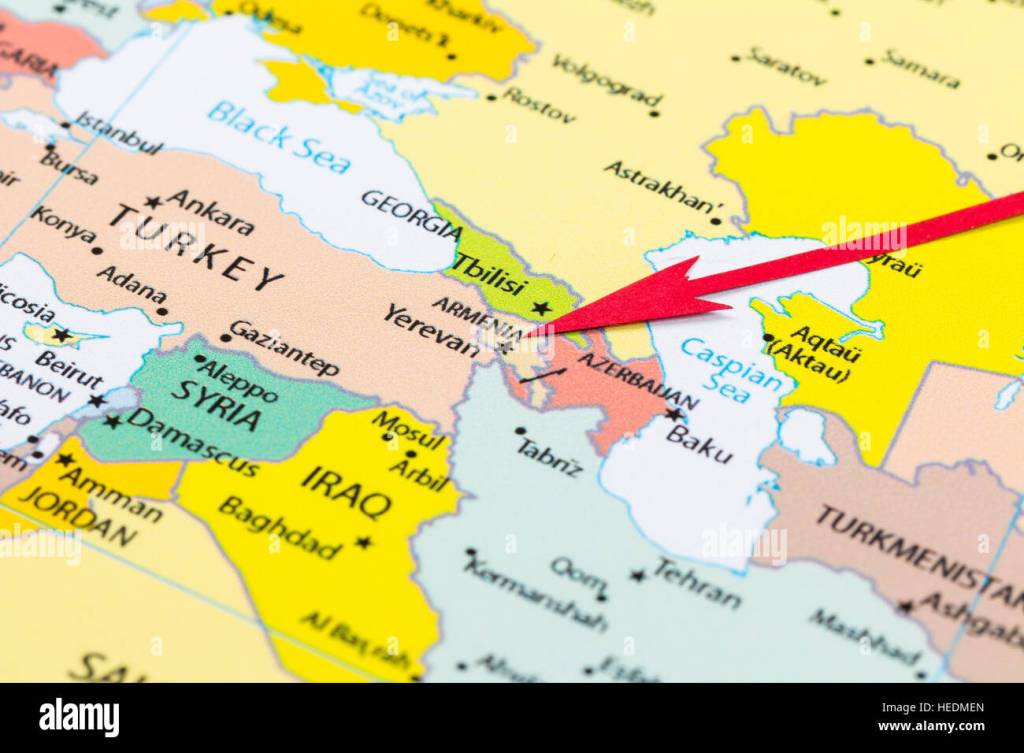
Fifteen countries leave the U.S.S.R. in 1991.

  1. Estonia: August 20, 1991
  2. Latvia: August 21, 1991
  3. Lithuania: March 11, 1990
  4. Armenia: September 21, 1991
  5. Azerbaijan: October 18, 1991
  6. Belarus: August 25, 1991
  7. Georgia: April 9, 1991
  8. Kazakhstan: December 16, 1991
  9. Kyrgyzstan: August 31, 1991
  10. Moldova: August 27, 1991
  11. Russia: December 12, 1991
  12. Tajikistan: September 9, 1991
  13. Turkmenistan: October 27, 1991
  14. Ukraine: August 24, 1991
  15. Uzbekistan: September 1, 1991

Gorbachev effectively ended the cold war, but McFaul argues the cold war turned into a “…Hot Peace”. Gorbachev was the last leader of the Union of Soviet Socialist Republics. His effort to democratize Russia fails even though he fully champions Valdimir Putin to become president of Russia in 2000.

Putin took control of Russia as Prime Minister under Yeltsin in 1999. He later effectively became President of Russia for life.

McFall explains Obama became President of the United States in 2o09. Obama revised America’s relationship with Russia with what became known as the U.S./Russia “Reset” policy.

Obama’s “Reset” policy had some early positive effects. The relationship between America and Russia arguably improved despite their significant political differences. When they disagreed, they agreed to disagree. There were halting steps toward nuclear bomb limitation and greater cooperation on America’s actions in Afghanistan when the Taliban had shown support for Osama bin Laden after 9/11.

Putin rose to the presidency in 2011 and has remained effectively in control of Russia since 1999. Though not argued by McFaul, Putin’s intimate understanding of Russia’s secret service has given him the power to exercise dictatorial control over Russia. The history of U.S.S.R. since the 1917 revolution has been maintained by a secret service used to jail, torture, and murder any opposition to leadership of Russia. Today, that autocratic leader is Putin. There seems little reason to believe kleptocratic control of a massive secret service apparatus will be overcome without revolution. Every Russian knows of the threat the secret service has to any opposition to Putin who controls and has an intimate relationship and understanding of the organizational capabilities of the former KGB.

Gorbachev’s legacy is hope for a better form of government in Russia. Change is possible just as Gorbachev’s history as the secretary of the Communist Party from 1985 to 1991 proved.

One is inclined to believe change will come to Russia from a disaffected communist party leader who rises in the party and taps discontented Russians looking for change. If all one’s life is lived and raised in Russia, a Russian born change-agent like Gorbachev may, once again, be born

As one completes McFaul’s book, the threat of masculine blindness in world leaders is made clear. Leadership entails a power that corrupts leaders who think they know what is best for their citizens. Autocracies concentrate that power in singular human beings. Without checks and balances, autocratic beliefs inevitably lead to conflict and mutually assured destruction, Donald Trump notwithstanding.

DEMOCRACY’S IMPERFECTION

There are many reasons why America continues to prosper despite elections of inept political leaders.

Books of Interest
 Website: chetyarbrough.blog

America’s Deadliest Election (The Cautionary Tale of the Most Violent Election in American History)

By: Dana Bash, David Fisher

Narrated By: Dana Bash

Dana Bash is an American journalist and news anchor for CNN. David Fisher is an accomplished author who has written twenty New York Times bestsellers.

“America’s Deadliest Election” reaches back to 1868 in Louisiana to tell the story of Henry C. Warmoth who was elected governor and later, a Congressional representative of Louisiana. Warmoth’s election in Louisiana reminds one of Donald Trump’s election in 2017. Warmoth manages to become the 23rd Governor of Louisiana in 1868. His election at the young age of 26 made him one of the youngest governors in U.S. history. Of course, age is not the reason one might compare Trump’s election to Warmoth’s, but it is Warmoth’s unrestrained rhetoric and purposeful lies that got him elected.

Henry C. Warmoth (1842-1931, died at age 89. He was the Reconstruction governor of Louisiana and later Louisian State Representative.)

In Louisiana a large unrepresented minority were black Americans. Warmoth’s term ended with allegations of corruption and dishonesty but his rhetoric for disenfranchised blacks gave him the governorship and later a position as Louisian State Representative in congress. His political career extended through 10 years of Civil War Reconstruction and corruption.

Depiction of a US Army Officer Meeting with African Americans in Louisiana after the Emancipation Proclamation.

As a wealthy American, Trump and many rich business leaders and industrialists believe lower taxes and less government regulation improves opportunity and raises the living standards of the poor. Many wealthy Americans believe John F. Kennedy’s 1963 line that “a rising tide lifts all boats”. History shows a different picture, i.e. with lower taxes, the rich got richer, the middle class remained middle class, and the poor increased. America is nearing the point where it will have its first trillionaires while this richest country in the world has an increasing number of poor and a burgeoning homeless crisis.

In modern times, Trump’s rhetoric disingenuously appeals to blue-collar workers but with an underlying appeal to the rich who believe in “trickle down” economics.

Freedom allows American citizens to lie as well as tell the truth. The problem with truth is “truth is in the eye of the beholder” or what Timothy Leary called a human’s “reality tunnel”. Warmoth and Trump had their own “reality tunnels” with the objective of getting them elected. Their objective is to gain power, money, or prestige. Both Warmoth and Trump are willing to lie to themselves and others to gain their objective.

In American democracy, freedom is the holy grail of its success.

As pointed out in “The Economist” earlier this week, Democracy is messy. Democracies like France, Great Britain, and the European Union are struggling to find their way in the 21st century. Representative government is difficult because voters cannot know if candidates for office are telling a follower only what they want to hear or if what is said is what the candidate believes. Additionally, voters cannot be sure an elected person is capable or willing to walk the talk after their election.

Recent Presidential elections in America before Biden replaces Trump.

Many Blacks had never been able to vote but Warmoth (a former Union Civil War’ veteran) became instrumental in supporting the 15th amendment that prohibited states from denying the vote based on race, color, or previous condition of servitude. For the first time in America, Blacks could vote. Naturally, Blacks voted for Warmoth despite his reputation for corruption. However, Warmoth’s support and actions create a split between his Republican followers and slavery proponent Democrats that remind listeners of today’s political party intransigence.

An irony of the story of Governor Warmoth is that he is clearly a scofflaw, but his lawlessness helped bring black Americans into the electoral process.

Warmoth was a criminal. He speculated in state bond and treasury notes which were a conflict of interest for a governor. He profited from a partnership given by a newspaper that had a contract for state printing. Warmoth created what was called the “State Returning Board” that had the authority to discard legitimate votes to keep Louisiana Republicans in power. One might suggest President Trump had similar conflicts of interest.

The authors explain what made Warmoth a crook. It was for the reward of money and power.

Inept and unethical practices are mitigated by the foresight of the framers of the Constitution. The acts of legislators since the beginning of America’s creation have bent the arc of history toward freedom and equality. Balance of power between branches of government, election of honest and ethical leaders, media that exposes political rhetoric for its understanding of truth and lies have helped Americans to live free and prosper. America is blessed with natural resources that have made America become a great Democratic success.

There are many reasons why American Democracy continues to prosper despite elections of inept and unethical political leaders.

The last chapters of Bash’s and Fisher’s book show what can happen when there is a sharp split between Democrats and Republicans that roils the American democratic process. What this history shows is that we have been at this crossroad before, and America pulled itself together. Warmoth was not the ideal representative of American Democracy, but he played a part in history that began the movement for Black freedom in the South and their right to vote.

Trump reminds one of Warmoth’s history. One hopes the split between political parties will be mended by the election of a President that can heal the vituperative factionalism of the Democratic and Republican parties in 2025.

SPINNERS

“All the Worst Humans” is a macabre but revealing look into the darkest corners of public relations.

Books of Interest
 Website: chetyarbrough.blog

All the Worst Humans (How I Made News for Dictators, Tycoons, and Politicians)

By: Phil Elwood

Narrated By: Holter Graham

Phil Elwood (Author, public relations operative, graduate of Georgetown University with graduate studies at the London School of Economics.)

“All the Worst Humans” is a macabre but revealing look into the darkest corners of public relations. It is an anecdotal story, with a ring of self-effacing truth by Phil Elwood who specializes in spinning news about morally corrupt people and bad events. A listener is skeptical of Elwood’s integrity because of the nature of what he does for a living. Elwood manipulates societies understanding by spinning the facts of current events to hide what truth there is in history.

The truth of history is purposeful or a choice and spin of facts to recreate a past that always has more facts than can be or are reported.

Reputable historians certainly try to accurately report the facts of history, but truth is malleable based on the facts that are chosen. Though Elwood profiles himself harshly as a troubled human being, he is like a disreputable historian who spins facts that have little to do with truth. Elwood’s job is to make facts tell a kind of “truth” that makes bad people and/or events look good or at least better than bad.

Elwood’s self-effacing story admits his weakness for alcohol and addictive drugs.

Elwood manages to become an intern for Congressional representatives like Senator Daniel Moynihan after failing to graduate from college. He corrects his college failure with the help of his congressional contacts to enter Georgetown University where he earns a college degree.

Elwood leaves his Congressional internships and the contacts they entailed to become a success as a public relations operative.

He becomes an operative who spins facts to change the public’s perception of people and events. Elwood is an “operative” because he contacts legitimate media writers/broadcasters and political influencers to change their minds about people and events that are or will become news of the day.

Elwood’s story begins with an FBI phone call that asks for the correct number of his and his wife’s apartment address.

He arranges for a meeting with the FBI in an hour after the call, purportedly to allow his wife time to leave with some of the files in their apartment. This is a puzzling beginning to a wild explanation of Elwood’s life. One is unsure of how much of what is written is spinning the truth of who Elwood is and what he believes. One wonders if Elwood’s story is just an entertaining vignette of a complex and intelligent writer, a public relations expert, or writer of fiction. (A brief review of the internet shows Elwood is not only a graduate of Georgetown University, but did graduate work at the London School of Economics.)

Peter Brown (American-based English businessman who became part of the Beatles’ management team.)

After Elwood’s stint as a congressional intern, he is hired by a public relations firm headed by a former Liverpool Beatles’ assistant, a man named Peter Brown. Brown became an officer of Apple Corps, the Beatles management company. Brown was instrumental in arranging the wedding of John Lennon to Yoko Ono in Gibraltar which is made famous in Lennon’s song “The Ballad of John and Yoko”.

Elwood offers examples of work that he does as an operative for Brown’s company. Brown, or someone from his office, calls Elwood to “baby sit” Libyan executives who work for Muammar Gaddafi in a trip to Las Vegas.

Elwood explains they carried millions of dollars in suitcases they kept in their hotel room. They lost thousands of dollars at the gaming tables and used Elwood to arrange private plane trips and ferry suitcases of money to pay their gambling bills and travel expenses. Elwood feared for his life and was relieved to see them off in their private jets after steering them away from what could have been a public scandal in Las Vegas.

Elwood explains how he is ordered by Brown to use his contacts in Congress and news publications to make Gaddafi look more like a statesman than thug in his 2009 United Nations Speech.

Elwood was tasked to make Gaddafi look humanitarian rather than venal by arranging interviews and media engagements that would emphasize his role as a revolutionary, not authoritarian leader. There seem to have been some successes but the speech at the UN and the debacle over a tent on Trump’s property made Elwood’s public relations effort a failure. Elwood is eventually fired by Brown and leaves with a sense of enmity toward Brown.

Elwood eventually slips into another morass when asked by his new public relations employer to make Nigeria look better than the Boko Haram kidnappers who took 276 schoolgirls from a Government Girls Secondary School.

Elwood is unsure of what he can do despite travelling to Nigeria to convince the government they needed to act in a way that looked like they were concerned. Elwood admits he fails and that the appearance of Malala Yousafzai, the Pakistani activist who was nearly assassinated by Pakistani thugs, entered to insist Nigeria must do something. Elwood is fired again.

In another incident where Elwood is working as a public relations operative, he consults with Antigua after the United States threatened to prosecute Antigua for online gambling services.

The Antiqua leader worries that it would destroy tourism in his country if they fought America’s threat. Elwood explained the loss of revenue from online gambling far exceeded tourism income and that he would plant a story in the media about restraint of trade as being un-American. Elwood suggests to the Antiqua government that they take America on with a complaint to the World Trade Organization. Antiqua follows the advice, and successfully remains an online gambling mecca. But Elwood, despite his successful spin of the facts loses the account and is fired again.

Elwood then slips into a very gray world where money is being laundered by the Israeli government.

Elwood becomes a conduit for the laundered money and is contacted by the FBI. The story comes full circle, and its ending adds to the value of Elwood’s story. Public relations are a sophisticated way of muddling the truth. Being smart is two edged when it comes to the truth. Ignorance is not bliss but spinning the truth can kill you or put you in jail.

Elwood considers suicide because of his dodgy reputation and fear of losing his marriage. Through treatment with ketamine, Elwood recovers some level of mental health. Treatment with ketamine is an ironic fact in view of the recent death of the comedic actor Matthew Perry. In a twist of fate, Elwood is spinning the benefit of ketamine while its use is being abused by the public today.