SPINNERS

“All the Worst Humans” is a macabre but revealing look into the darkest corners of public relations.

Books of Interest
 Website: chetyarbrough.blog

All the Worst Humans (How I Made News for Dictators, Tycoons, and Politicians)

By: Phil Elwood

Narrated By: Holter Graham

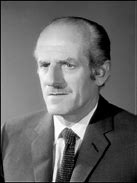
Phil Elwood (Author, public relations operative, graduate of Georgetown University with graduate studies at the London School of Economics.)

“All the Worst Humans” is a macabre but revealing look into the darkest corners of public relations. It is an anecdotal story, with a ring of self-effacing truth by Phil Elwood who specializes in spinning news about morally corrupt people and bad events. A listener is skeptical of Elwood’s integrity because of the nature of what he does for a living. Elwood manipulates societies understanding by spinning the facts of current events to hide what truth there is in history.

The truth of history is purposeful or a choice and spin of facts to recreate a past that always has more facts than can be or are reported.

Reputable historians certainly try to accurately report the facts of history, but truth is malleable based on the facts that are chosen. Though Elwood profiles himself harshly as a troubled human being, he is like a disreputable historian who spins facts that have little to do with truth. Elwood’s job is to make facts tell a kind of “truth” that makes bad people and/or events look good or at least better than bad.

Elwood’s self-effacing story admits his weakness for alcohol and addictive drugs.

Elwood manages to become an intern for Congressional representatives like Senator Daniel Moynihan after failing to graduate from college. He corrects his college failure with the help of his congressional contacts to enter Georgetown University where he earns a college degree.

Elwood leaves his Congressional internships and the contacts they entailed to become a success as a public relations operative.

He becomes an operative who spins facts to change the public’s perception of people and events. Elwood is an “operative” because he contacts legitimate media writers/broadcasters and political influencers to change their minds about people and events that are or will become news of the day.

Elwood’s story begins with an FBI phone call that asks for the correct number of his and his wife’s apartment address.

He arranges for a meeting with the FBI in an hour after the call, purportedly to allow his wife time to leave with some of the files in their apartment. This is a puzzling beginning to a wild explanation of Elwood’s life. One is unsure of how much of what is written is spinning the truth of who Elwood is and what he believes. One wonders if Elwood’s story is just an entertaining vignette of a complex and intelligent writer, a public relations expert, or writer of fiction. (A brief review of the internet shows Elwood is not only a graduate of Georgetown University, but did graduate work at the London School of Economics.)

Peter Brown (American-based English businessman who became part of the Beatles’ management team.)

After Elwood’s stint as a congressional intern, he is hired by a public relations firm headed by a former Liverpool Beatles’ assistant, a man named Peter Brown. Brown became an officer of Apple Corps, the Beatles management company. Brown was instrumental in arranging the wedding of John Lennon to Yoko Ono in Gibraltar which is made famous in Lennon’s song “The Ballad of John and Yoko”.

Elwood offers examples of work that he does as an operative for Brown’s company. Brown, or someone from his office, calls Elwood to “baby sit” Libyan executives who work for Muammar Gaddafi in a trip to Las Vegas.

Elwood explains they carried millions of dollars in suitcases they kept in their hotel room. They lost thousands of dollars at the gaming tables and used Elwood to arrange private plane trips and ferry suitcases of money to pay their gambling bills and travel expenses. Elwood feared for his life and was relieved to see them off in their private jets after steering them away from what could have been a public scandal in Las Vegas.

Elwood explains how he is ordered by Brown to use his contacts in Congress and news publications to make Gaddafi look more like a statesman than thug in his 2009 United Nations Speech.

Elwood was tasked to make Gaddafi look humanitarian rather than venal by arranging interviews and media engagements that would emphasize his role as a revolutionary, not authoritarian leader. There seem to have been some successes but the speech at the UN and the debacle over a tent on Trump’s property made Elwood’s public relations effort a failure. Elwood is eventually fired by Brown and leaves with a sense of enmity toward Brown.

Elwood eventually slips into another morass when asked by his new public relations employer to make Nigeria look better than the Boko Haram kidnappers who took 276 schoolgirls from a Government Girls Secondary School.

Elwood is unsure of what he can do despite travelling to Nigeria to convince the government they needed to act in a way that looked like they were concerned. Elwood admits he fails and that the appearance of Malala Yousafzai, the Pakistani activist who was nearly assassinated by Pakistani thugs, entered to insist Nigeria must do something. Elwood is fired again.

In another incident where Elwood is working as a public relations operative, he consults with Antigua after the United States threatened to prosecute Antigua for online gambling services.

The Antiqua leader worries that it would destroy tourism in his country if they fought America’s threat. Elwood explained the loss of revenue from online gambling far exceeded tourism income and that he would plant a story in the media about restraint of trade as being un-American. Elwood suggests to the Antiqua government that they take America on with a complaint to the World Trade Organization. Antiqua follows the advice, and successfully remains an online gambling mecca. But Elwood, despite his successful spin of the facts loses the account and is fired again.

Elwood then slips into a very gray world where money is being laundered by the Israeli government.

Elwood becomes a conduit for the laundered money and is contacted by the FBI. The story comes full circle, and its ending adds to the value of Elwood’s story. Public relations are a sophisticated way of muddling the truth. Being smart is two edged when it comes to the truth. Ignorance is not bliss but spinning the truth can kill you or put you in jail.

Elwood considers suicide because of his dodgy reputation and fear of losing his marriage. Through treatment with ketamine, Elwood recovers some level of mental health. Treatment with ketamine is an ironic fact in view of the recent death of the comedic actor Matthew Perry. In a twist of fate, Elwood is spinning the benefit of ketamine while its use is being abused by the public today.

RAISED FIST

American Democracy will either fail or evolve by choosing to ignore or address the stated purposes of the Constitution.

Books of Interest
 Website: chetyarbrough.blog

Solitary: Unbroken by four decades in solitary confinement. My story of transformation and hope

By: Albert Woodfox

Narrated By: JD Jackson

Albert Woodfox, (1947-2022) Author who spent 43 years in solitary confinement in Louisiana’s Angola prison.

Woodfox dies at the age of 75 after being released in 2016.

“Solitary” is about American injustice on many levels. Every societal injustice is magnified by America’s penal system. There is racial discrimination, healthcare disparity, legal system bias, and law enforcement use-of-force to name the most prominent magnifications. Albert Woodfox’s story is a lived life in prison that exposes those levels of societal injustice.

Woodfox’s book is about America’s prison system, but it addresses growing up in the baby-boom generation.

Woodfox, like every human being, is a prisoner of mind but he becomes a physical prisoner in Angola, one of many prisons in America. Woodfox’s tragic life appears emblematic of many poverty-stricken baby-boomer’ lives in the 1960s. His story tells the world what it was, and undoubtedly still is, to live life in America when you are poor, ill-educated, living in a broken home, and/or Black.

Albert is born in Louisiana to a Black father (who retires after 25 years in the Navy) and a loving illiterate Black mother.

When Albert is a young child, his mother is compelled to leave her husband because he becomes a violent abuser after retiring from the Navy. Albert is raised in New Orleans by a single parent. His mother struggles to feed and clothe Albert and his siblings. Albert’s life in New Orleans includes petty theft and the troubles of untethered youth in a home where a single parent is not present because he/she is working to feed and house the family.

After several releases and returns to Angola, in 1971 Albert becomes known as an acolyte of the Black Panthers.

Albert grows up tough and independent but without purpose in his life. He quits school and evolves from petty criminal to armed robber. He first becomes acquainted with the Black Panther movement when he is jailed in New York. Association with the Panther movement changes his life. He is arrested and imprisoned in New York. He becomes a participant in the New York prison riots and adopts much of the Black Panther philosophy, i.e., a belief in Black nationalism, socialism and armed self-defense in the face of white discrimination. Albert began to believe in himself, improving his education by reading, and more importantly, respecting what is right in his life rather than what is expedient.

Woodfox is released from the New York prison system but is remanded to Angola for escaping the Louisiana prison system from an earlier crime.

He finds Angola is the same pit of despair it was when he was first imprisoned in Louisiana. Angola remains poorly maintained and continues to treat inmates, particularly Black inmates, inhumanely. However, Albert’s life is changed by the Panther’ philosophy. He begins to feel there is purpose in his life. His purpose becomes uniting prisoners (the Black Panther’ symbol of a closed fist meaning a “coming together” like the 5 fingers of a hand). Black prisoners come together in an effort to improve their treatment and education in prison. He allies himself with another devotee to begin a chapter of the Panther’ movement in the Angola prison.

The Black Panther movement began in 1966 with Huey Newton and Bobby Seale. Their plan was to unify African Americans to challenge police brutality in Oakland, California.

The movement failed because of internal tension, the FBI’s successful effort to undermine the movement, and determined white American resistance. Despite the demise of the movement, the idea of unifying African Americans against white privilege and unequal treatment survived despite the fall of the Black Panther movement. The movement has had a lasting impact on prison reform, community programs to improve education, and health services in poor black communities.

In 1974, Albert Woodfox is tried and convicted for murdering Brent Miller, a prison guard who is a third-generation guard at the Angola prison farm on which inmates worked. There is no concrete evidence to show Woodfox murdered Miller

He is put in solitary and remains in solitary for 40 years where he spends 23 hours a day with 1 hour for prison-yard exercise per day. That one hour per day is reduced to 3 hours a week in his last year of imprisonment. Amazingly, Woodfox survives and after several appeals, delayed and fought by the State of Louisiana, Woodfox is released to die a free man.

“Solitary” is an amazing tribute to the strength and resilience of human beings.

Woodfox becomes a self-educated American despite his horrendous treatment in the American prison system. He, and other prisoners, expose the failure of the American penal system to be more than an incarceration system to separate criminals from the general public. In that exposure, Woodfox shows changes were made in Angola and other prisons but far from turning prison into the rehabilitative need of society.

The fundamental cause of America’s failure is not achieving the stated purpose of equal opportunity for all in the Constitution of the United States.

The inferences one draws from “Solitary” reinforces America’s need to address the root causes of failure in its prison system. All men are created equal. America must improve government policies that assure the health, education, and welfare of its citizens. Woodfox’s story of Angola suggests socialism will cure the ills of American society. The truth seems more to be whether American Democracy will evolve or fail by choosing to ignore or address the stated purposes of the Constitution.

GOVERNANCE

Machiavelli describes effective governance as brutal, manipulative, and amoral. St. Augustine infers good governance comes from belief in God and adhering to scripture.

Books of Interest
 Website: chetyarbrough.blog

On Grand Strategy

By: John Lewis Gaddis

Narrated By: Mike Chamberlain

John Lewis Gaddis (Author, historian, political scientist, professor of Military and Naval History at Yale University.)

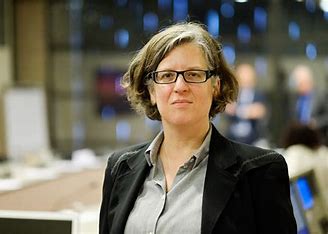
In a September 21, 2021 article in “The New York Times” Beverly Gage resigned as the course leader for “…Grand Strategy” (where Gaddis is a professor), “…saying the university failed to stand up for academic freedom…” She is noted to have said ‘I am not teaching “…Grand Strategy” the way Henry Kissinger would.’

Beverly Gage, in her resignation from Yale is noted to have said ‘I am not teaching “…Grand Strategy” the way Henry Kissinger would.’

The book author, John Lewis Gaddis, implies every accomplished political leader has a Grand Strategy. Historians can always criticize another’s study of political leaders or their place in history but having a strategy is a paramount requirement whether one is an American President or course leader at Yale. So here is a puzzle about the Gage’s resignation and her critical comment about Yale’s Grand Strategy for a teacher’s academic freedom.

One wonders what Ms. Gage meant in referring to Kissinger.

In any case, this is a review of John Lewis Gaddis’s book, “The Grand Strategy”. He begins with an animal analogy by suggesting good governance relies on being like a fox or a hedgehog when acting as a political leader. A fox characteristic is surreptitious and sly while the hedgehog is straightforward and aggressive. He argues governance that uses only one of these characteristics achieve singular objectives but balance between the two achieves the best results. The entire book is about the history of governments that have prospered or declined based on the presence or absence of balance.

In the beginning of “On Grand Strategy”, one becomes somewhat bored with Gaddis’s history of Athens’ and Sparta’s conflicts with Greece and its defeat of the Persian army (492 BCE and 449 BCE). However, mid-way through the book, one becomes engrossed in Gaddis’s evolutionary theory of nation-state’ governance.

In the Persian Army and its defeat by the Greeks and Spartans, Gaddis explains Xerxes neglected the common sense of moving his vast army across the Mediterranean, let alone feeding and supplying its needs. Xerxes was thinking like a hedgehog. Later, Gaddis explains Napoleon makes the same mistake as Xerxes by attacking Russia without considering the vast size of the country and logistic difficulties in feeding and supplying his army. Gaddis notes Tolstoy’s “War and Peace” chapters that explain how the battle of Borodino is a turning point in Napoleon’s hedgehog action.

Gaddis notes the need for political leaders to keep their eye on the prize. He gives the example of Civil War policies by Lincoln who sought end games for union of the States and emancipation.

When endorsing government policy or ordering military action, Gaddis suggests Lincoln was a leader who understood the need for common sense, i.e., always balancing what can be done with what could be done. Gaddis notes there are times when it appears Lincoln is contradicting himself when, in fact, he is being the fox rather than the hedgehog. For example, some argue Lincoln went back and forth on emancipation, but Gaddis infers he was being a fox because of the political heat surrounding the question and the government’s action.

At this mid-point, Gaddis’s history becomes more interesting. He recalls the history of two important characters in modern theory of society, i.e. St. Augustine and Machiavelli. Of course, they lived centuries apart, but each represent critical beliefs that impact nation-state governance. In the 4th century, St. Augustine wrote two influential works, “Confessions” and “City of God” that outline why God was important to him and why everyone should become followers of Christianity to save themselves for the reward of eternity in heaven. Christianity begins to replace leadership beliefs based on the Great Caesars of civilization. Rome does lead the world for another 70 years, but Christianity and other religions redefine the relationship between citizens and their rulers. The centralization of Catholicism by Emperor Constantine in the 4th century diminished the power of secular governments. Life on earth became secondary to the possibility of eternal life in St. Augustine’s “City of God”.

Jumping to the 15th century, Machiavelli’s concept of “The Prince” exemplifies power of governance by secular leaders.

Machiavelli returns political leadership to life on earth in “The Prince”. It is not an abandonment of the “City of God” but a recognition of leadership as it is in this world. Machiavelli experiences the power of political leaders in this world by being imprisoned and tortured for alleged conspiracy to overthrow the Medici family in Italy. Machiavelli’s “The Prince” explains a political theory and leadership of rulers in the “city of man”. “The Prince” returns the idea of governance to the beneficence and cruelty of life here, i.e. not in heaven.

Queen Elizabeth I is Gaddis’ s next example of the changing nature of governance.

Contrary to her half-sister, Mary Queen of Scots who supported Catholicism, Elizabeth reestablished the Protestant Church of England. Elizabeth recognizes the fundamental importance of England’s citizens to her reign as Queen of England. Elizabeth practices the less punitive aspects of “The Prince” to build a foundation for love and respect from England’s protestant, if not Catholic, citizens. The city of God is replaced by the city of man in Elizabeth’s rule.

One can think of many examples that reinforce Gaddis’s theme in “The Grand Strategy” as practiced in America. The senior Bush carefully planned the ejection of Sadam Hussein from Kuwait by building international support for America’s action in the first Iraq war. America’s generals carefully planned the movement of a massive military force, including supply lines, to remove Iraqi forces from Kuwait. The senior Bush did not make Xerxes mistakes. In contrast John F. Kennedy, Lyndon Johnson, and H. W. Bush’s son, failed to use common sense in America’s mistakes in Vietnam and Iraq. It took a sly fox in the Nixon administration to get America out of Vietnam. This is not to suggest any of these actions were wholly good or bad, but a reflection on the balance between using fox or hedgehog thought and actions to achieve common sense results.

Isaiah Berlin (1909-1997, Russian-British social and political theorist, philosopher, and historian of ideas.)

Gaddis takes reader/listeners through WWI and WWII from America’s perspective. On several occasions, Gaddis refers to Isaiah Berlin and his intellectual contributions to political theory and history. Berlin was born in Russia and educated in Great Britain. He spoke several languages and was particularly fluent in Russian, French, German, and Italian. He believed in individual freedom but explained conflicting values coexist and that there is no single universal truth in life. This reminds one of Machiavelli and makes one wonder if Berlin, who is alleged to have a strong sense of Jewish identify, was an atheist.

Gaddis suggests America has had a series of foxes and hedgehogs that have become American Presidents. Some have been intellectuals, others not. Considering President Wilson was a racist hedgehog while Lincoln and Franklin Roosevelt were at times foxes and hedgehogs, America survived and prospered through three disastrous wars. Gaddis’s point is that America’s best Presidents have been both foxes and hedgehogs, while most have been one or the other. It may be that America survives because, with the brief exception of Franklin Roosevelt, none have served more than two terms. One President may be a hedgehog while the next President is a fox.

Machiavelli describes effective governance as brutal, manipulative, and amoral. St. Augustine infers good governance comes from belief in God. Gaddis’s history of governance explains why and how both qualities are evident and have served America well.

EUGENICS

On the one hand, genetic science may cure the incurable. On the other, genetic science may destroy civilization.

Books of Interest
 Website: chetyarbrough.blog

Why Fish Don’t Exist” A Story of Loss, Love, and the Hidden Order of Life

By: Lulu Miller

Narrated By: Lulu Miller

Louisa Elizabeth Miller (Author, Peabody Award-winning science reporter for NPR.)

Lulu Miller’s “Why Fish Don’t Exist” reveals the flaw in believing intelligence or position are measures of admirability. David Star Jordan is a founding president of Stanford University. He served from 1891 to 1913 after being the Indiana University president from 1884 to 1891. Jordan gained his academic qualification as a recognized ichthyologist (a zoologist who specializes in studying fish species).

David Starr Jordan (1851-1931, Scientist, founding president of Stanford University.)

Miller begins her memoir in admiration of Jordan but ends in vilification. Jane Stanford appointed Jordan as the first President of Stanford. Their collaboration laid the foundation for what became a research powerhouse for engineering, business, humanities, and sciences. Ms. Stanford’s relationship with Jordan is reported as less than harmonious because in the University’s beginnings there were financial difficulties and differences of opinion about faculty.

Jane Elizabeth Lathrop Stanford (1828-1905, American philanthropist and co-founder of Stanford University.)

Jane Stanford rejects an economics professor’s contract renewal because of his politics and his criticism of immigration. (Ms. Stanford’s and her husband’s wealth came from the railroad industry which was hugely benefited by immigration.) It is alleged that she pressured Jordan to refuse the professor’s contract renewal. Five faculty members resigned after the professor’s termination. Ms. Stanford had a reputation for requiring total devotion to her beliefs which, at times, conflicted with Jordan’s management of the University. More significantly, Ms. Stanford’s drive alienates and makes enemies of many people associated with the University.

Ms. Stanford dies in Hawaii in her 70s. The cause of death is attributed by authorities to be poisoning from strychnine.

What makes her death an ongoing mystery is that Jordan hires a medical investigator who argues Ms. Stanford died from natural causes, a heart attack, brought on by overeating. In much of America, Jordan’s hired investigators’ cause of death is accepted. That is, until a book is written by Richard White in the 21st century, that reaffirms the authority’s earlier opinion. Miller does not suggest Jordan had anything to do with Stanford’s murder, but Miller’s inference is that he initiated a cover-up.

In one sense, Miller is Jordan’s character assassin. In another, Miller reveals the dark side of science.

Jordan is shown to believe in eugenics that advocates selective breeding of the human race. Eugenics is a science meant to selectively breed human beings. Miller explains Jordan believes in forced sterilization (which surprisingly exists in the United States until 1981). Eugenics is the same belief held by Adolf Hitler when he tried to exterminate Jews and create an exclusive Nordic or Aryan race. Hitler established laws for forced sterilization, euthanasia, and selective human breeding.

STANFORD UNIVERSITY

Miller’s memoir of David Starr Jordan shows how science is a mixed blessing. Jordan’s remarkable work in zoology and his role as the first President of Stanford is tainted by his expressed belief in eugenics. The threat of eugenics is greater today than in the past. On the one hand, genetic science may cure the incurable. On the other, genetic science may destroy civilization.

DEMOCRACY OR ELSE

“…saving America” will not come from “…ten easy steps” but from one vote at a time.

Books of Interest
 Website: chetyarbrough.blog

Democracy or Else” How to Save America in 10 Easy Steps

By: Jon Favreau, Jon Lovett, Tommy Vietor

Narrated By: Jon Favreau, Jon Lovett, Tommy Vietor

(Left to Right) Jon Favreau, Jon Lovett, Tommy Vietor

The suggestion that “Democracy or Else” comes from “…10 Easy Steps” on “How to Save America…” is an oversimplification of life and politics. Saving America takes hardened objective opinion, personal commitment, appreciation of the difficulty of being a political leader, and most importantly, the wisdom of Jesus Christ. Few, if any humans fit the bill. Voting is the only thing that everyone who believes in American Democratic leadership will agree upon in the author’s “…10 Easy Steps”. The steps are not easy. The authors appear to have committed some time and effort to fulfill some part of the 10 steps.

Many (not most) Americans may be willing to vote but working on a campaign for a candidate who wishes to be elected to public office will always be low on their list of commitments.

Human beings, let alone Americans, are an unruly lot. Making a living, waiting for a hand-out, hating or loving others, and experience of life come first in the minds of most, if not all, human beings. The nuts and bolts of what it takes to become an elected representative in Democracy are way down on the list of humans’ self-interest. American Democracy, like all known forms of government, have winners and losers. Democracy has the best odds for serving the self-interest of its citizens but remains far from the idealistic goals of the U.S. Constitution.

American Presidents have been good and bad throughout history. Only a few have earned the history of “good or great” for America. The checks and balances of American government, the ideals of the Constitution, capitalism, and expanded voting rights have saved American Democracy from tyranny. Anyone who has read this blog, knows there is an opinion about the next President’s election but “…saving America” will not come from “…ten easy steps” but from one vote at a time.

RUSSIAN SOCIETY

Alcohol consumption in Russia and a penchant for autocratic government are long-standing societal truths.

Books of Interest
 Website: chetyarbrough.blog

Dead Souls

By: Nikolai Gogol

Translated By: Richad Pevear and Larissa Volokhonsky

Nikolai Gogol (1809-1852, Ukranian novelist born in the Russian Empire, short story writer, and playwright.)

“Dead Souls” is not an enjoyable listening experience. Partly, because it is not a completed book. However, it is an insightful examination of a Russian culture in decline. It is an incomplete novel with its main character, Pavel Ivanovich Chichikov, who uses his looks, intelligence, and guile to appear prosperous in a society of rich and poor.

Agriculture is the economic foundation of society in mid-19th century Russia. The industrial revolution is at its beginning.

As a clerk in the government, Chichikov is familiar with government policy of charging a tax for deceased peasants that are owned but have died on Russian’ landowners’ farms. Social position is associated with land and peasant worker’ ownership, i.e., the more land and peasants one owned, the higher a Russian aristocrat is esteemed. Chichikov has no land but has earned and saved enough money through his work with the government to come up with a scheme to improve his status in society. His idea is to travel the country, buy dead souls, and purchase a farm to show society he is an aristocrat of substance. By buying peasant souls and land he creates an image of wealth and aristocracy. His plan is to buy land with the money he has saved over years of work as a clerk. He assumes his position in society will be secured by land ownership and owned peasant’ souls.

Chichikov’s false image is assumed to be true in a high society soiree.

Chichikov clownishly approaches the daughter of a regional governor because of her beauty. His attention is noticed by some of the wags at the social event. Similar to today’s social media, word spread about Chichikov’s bizarre purchase of dead souls. Rumors about Chichikov proliferate like Alex Jones spread of lies in the 2022 Uvalde school children murders.

Various stories about Chichikov’s history spread from people who were at the governor’s soiree.

Many reasons were given for Chichikov’s purchase of “Dead Souls”. One who was at the dance alleges the purchases were to show Chichikov’s intent to kidnap the daughter of the governor. Chichikov hears of these ludicrous accusations and flees the small town in which the ball had been held. In fleeing, Gogol’s story provides more examples of Chichikov’s nature and reasoning with the objective of showing the dysfunction of Russian society and its aristocratic governance.

Chichikov meets with a successful Russian farmer who capitalizes on what is known of agricultural science of that time and uses that knowledge as an aristocratic owner of many peasants who worked his land.

Chichikov persuades this prosperous farmer to lend him 10,000 rubles to finance the purchase of a failing nearby farm. However, Chichikov’s deceptions catch up with him. He is arrested and judged by a Prince of Russia who plans to make an example of him. The story obscurely ends with the prince inferring a way out of the mess Chichikov’s lies engendered. The story is never finished. Reader/listeners never learn the fate of Chichikov. The high praise of the book rests with its exposure of the societal faults of mid-ninetieth century Russia.

Every national society has strengths and weaknesses. America is as vulnerable to lies and misrepresentation as Gogol shows of Russia. The best one gets from “Dead Souls” is a vague understanding of Russian society. Alcohol consumption in Russia and a penchant for autocratic government are long-standing societal truths.

AMERICA’S DECISION

It is up to Americans to vote or not vote. The choice today is between two old men. American Democracy will not fail because of either man’s election.

America’s Presidential debate on June 27th, 2024, was a painful reminder of advancing age. Whether to choose Donald Trump or Joseph Biden to be the next President of the United States is a “Hobson’s Choice”. Americans are compelled to vote for one of these two men or stay home and do nothing. Doing nothing means other Americans will decide who will represent Democracy to the world for the next four years.

Getting old is a mixed blessing. On the one hand, living long may offer wisdom, experience, and relationship connections. On the other, living long engenders health issues, physical frailty, and diminished mental acuity. Underlying these mixed blessings are the way a person has lived their life, the decisions they have made, the way they have treated others, and the inner moral compass they have followed.

It is up to Americans to vote or not vote for a President of the United States. The choice today is between two old men. Either will have the help of the three branches of the American government to do their job. American Democracy will not fail because of either man’s election to the office of President of the United States.

DEMAGOGUERY

In 2025, the American election process may allow an adjudicated felon become President.

Books of Interest
 Website: chetyarbrough.blog

“It Can’t Happen Here” 

By: Sinclair Lewis

Narrated By: Grover Gardener

Sinclair Lewis (1885-1951, American novelist and playwright, first American to receive the Nobel Prize in Literature.)

“It Can’t Happen Here” was published in 1935. It is a novel about the election of a fascist to the American Presidency. Lewis was a recovering alcoholic who died at the age of 65 from advanced alcoholism. Though divorced in 1942, he was a father of a son who died in WWII in 1944. There is a sad irony in his son’s death when “It Can’t Happen Here” was written before America’s entry into war against the fascist nations of Germany and Italy.

Lewis describes a view of the 1930s in America when Roosevelt was dealing with the Great Depression and Hitler was martialing a nascent Nazi party in Germany.

Some Americans viewed Roosevelt as a fascist because of his centralization of power in the government. Famous people of that time, like V.P. John Nance Garner, Journalist Walter Lippmann, and Ambassador Joseph Kennedy turned against Roosevelt’s early administration. On the one hand, “It Can’t Happen Here” may be interpreted as a critique of the Roosevelt Administration.

Benito Mussolini (1883-1945, WWII Italian dictator who founded the National Fascist Party.)

However, historians suggest Lewis wrote “It Can’t Happen Here” as a warning to Americans that a reaction to Roosevelt’s interventionist economic policies could lead to a fascist American President’s election.

A fascist President’s policies would promote rich white Americans at the expense of the poor, particularly women and racial minorities. Lewis had reservations about extending Roosevelt’s New Deal policies but recognized it had alleviated much of the Depression’s suffering.

That control and influence hugely increased in the Roosevelt administration and roosted in the 1950s with Eisenhower’s mandated Interstate Highway System, and signature Civil Rights Legislation. Some would argue it blossomed with John Kennedy’s election, expanded in Johnson’s administration, and changed direction with Reagan’s election. Between 1789 and today, American political parties have increased federal government control on, and influence of, American society. Those controls changed human’ and economic’ rights of Americans.

Humans are naturally motivated by self-interest. In a capitalist economy, money and power are synchronized influences on freedom. Those influences are concentrated in an election process largely dependent on Americans who have money and power. Without money, one is unlikely to be elected to a political office. The consequence is a distortion of equality of opportunity. Corporations legally recognized as individuals carry greater influence on electability than “one person, one vote”.

“It Can’t Happen Here” and the American Presidential election process clearly shows “It Can Happen Here”, and it has happened here.

In 2025, the American election process may allow an adjudicated felon become President.

RELIGIOUS DIFFERENCE

Is belief in God worth it? Cook’s history of Muslimism and knowledge of Christianity makes one wonder.

Books of Interest
 Website: chetyarbrough.blog

“A History of the Muslim World From its origins to the Dawn of Modernity” 

By: Michael Cook

Narrated By: Ric Jerrom

Michael A. Cook (British historian, scholar of Islamic History)

Professor Cook overwhelms one with a voluminous examination of the Muslim World. His history really begins before the birth of the Arab prophet, Muhammad (570-632). However, it is after Muhammed’s revelations and his departure from Mecca in 610 CE, when he and his followers settle in Medina (622) that a more documented history is revealed. Arabs are identified as a nomadic tribe who occupied the Arabian Peninsula, Syrian Desert, North, and Lower Mesopotamia in the mid-9th century BCE. However, notable territorial regions first appeared in the 14th century BCE with the Assyrian and Neo-Assyrian Empires. Cook suggests it is in the 7th century CE that Islam became a force in the Middle East. After the Prophet Muhammad’s death in 1632, the Rashidun Caliphate established itself (632-661 CE).

The Rashidun Caliphate boundaries.

The messenger of Allah is Muhammed. Muhammed was an Arab. Born in 540 CE in Mecca, Arabia (now Saudi Arabia), Muhammed is considered by Muslim’s the last messenger of Allah. Though Muhammed could neither read nor write, his counsel with scribes resulted in the equivalent of the Christian Bible, called the Quran, which is alleged to reflect the word of the Supreme creator of life, the world, and the hereafter. This is different than the scribes of the Christian Holy Bible. However, the Holy Bible’ and Quran’ texts offer the same confusion about their meaning because these holy books have first, second, third, and later-hand writings of scribes.

(REVIEWER’S NOTE: Scribes recreated fragmentary writings and legends of long-dead contemporaries of Christ in the case of the Holy Bible, just as the thoughts of the “last messenger of Allah” were recorded by scribes. Modern science experiments explain human minds do not precisely record or recall the past. The human mind recreates the past and fills any gaps that may arise to complete the mind’s imprecise memory. That is why scribes of biblical or unbiblical history are interpretations of facts of the past, and not necessarily accurate facts of the past.)

With the Ottoman Empire’s dissolution, Turkey, Greece, Serbia, Bulgaria, Romania, Albania, Montenegro, and Macedonia were formed. Three Arab nation-states came out of the Ottoman Empire’ dissolution. They were Syria, Iraq, and Transjordan (now Jordan).

Interestingly, modern states with the highest number of Arab speaking residents are Egypt, Sudan, Algeria, Iraq, Morocco, Saudi Arabia, and Yemen. Only Egypt and Sudan have more than 10% of their population who use Arabic as their primary language. The point of this realization is that Professor Cook is writing a history of the Muslim religion, not Arab culture.

However, there seems little doubt that the 6 major Arab tribes of earlier centuries were the vessels of change for Muslim’ belief and practice. Arab tribes existed as far back as 6000 BCE. By 1200 BCE, they had established settlements and camps that formed into Kingdoms.

Arab tribal land extended from the Levant to Mesopotamia and Arabia.

Cook infers Arabs spread the Muslim religion to northern Africa and throughout the Asian continent while crossing the Mediterranean to influence, but not convert, southern Spain. Cook illustrates how Muslim’ belief shaped human history and culture. An estimated 55% of the world population identifies itself as Christian, or Muslim. Hinduism constitutes 15%, Buddhism 7%, with the remaining religions in lower single digits.

What Cook shows is how Muslim belief (24% of the world population) impacted the world.

Cook begins to explain the split between Sunni and Shia religious belief. In the modern world, only Iran, Bahrain, Yemen, and Iraq have Shia-majority populations with a significant Shia community in Lebanon and Afghanistan. Sunni religious belief is practiced by a majority population in nearly 20 countries with a mixture in Egypt, Turkey, Pakistan, Saudi Arabia, Yemen, Eritrea, Syria, Afghanistan, Lebanon, Turkmenistan, and Azerbaijan.

A surprising observation by Cook is the impact of a language change in the Middle East. Persian (aka Farsi) became a bridge connecting the diverse communities and histories of the Middle East. This change largely took place between the 9th and 11th centuries. It significantly impacted Muslim cultural beliefs and Iranian culture in general.

Cook implies the colloquialization of translations by Farsi (the language of Persia) of Arab Caliphate’ triumphs and failures molded beliefs of Middle Eastern nation-states. Countries like Iran either adopted or rejected Farsi’ stories of accomplishments and failures by Arab Caliphates. Some failure is associated with moral turpitude, a falling away from Qur’anic teaching, translated into Farsi language.

Cook’s next step in the history of Islam is to reveal the impact of Turkey and the Mongol empire’s spread of the Muslim religion. There is a confluence of tribal association and acceptance of the Islamic religion in the military campaigns of Genghis Kahn (1162-1227) followers, some of which were Turkish.

(Genghis Khan’s sons establish four kingdoms in the Middle East that lasted until 1368.)

Though none of the kingdoms practiced a particular religion, each influenced the course of religious acceptance. The environment they created allowed Christian religion to spread from Russian territory, while Turkish influence leaned toward Islam. Cook explains how young rebel leaders gained followers by successfully defeating and pillaging villages that had poor defenses. With each successful raid, more young people would join the raiders. This incremental growth led to the spread of Christian and Islamic religious influence, depending on the religious leaning of raiding parties.

Cook clearly illustrates how Arab culture lies at the heart of Islamic religion despite its nomadic existence. From the first madrasas (Islamic schools) in the Abbasid Caliphate in the 9th century, the teachings of the last messenger of Allah began with Arabs. Cook explains the religion is unlikely to have flourished without other cultures adoption. Without Persian, Turk, Uzbek, and Mongol societies adoption, the spread of Islam would have been minimized. Muslim belief evolved in a cauldron of conflict with Christianity, Judaism, and other indigenous religions but prevailed as a religion with two faces, i.e., the Suni and Shia Divide.

Like the schism between Catholics and Protestants, Sunni and Shia believe in one God but differ in ways that have roiled the world. In the case of Catholics and Protestants, there is the French wars of 1562-1598, the European thirty years war of 1618-1648, and the Troubles in Ireland in 1968-1998. In the case of Sunni and Shia, there was the battle of Karbala in 680 CE, the Safavid-Ottoman wars in the 16th-17th centuries, the Lebanese Civil War of 1975-1990, the Iraq War of 2003-2011, and the Syrian Civil War that began in 2011 and continues through today.

The forgoing were only human deaths within the two major religions of the world, while neglecting the atrocities incurred between Christianity and Islam. There were the Crusades between the 11th and 13th centuries, the Battle of Lepanto in 1571, The Siege of Vienna in 1683, and the Lebanese Civil War between 1975-1990.

Later chapters of Cook’s history reveal the conflicts between the Islamic religion and other major religions in the Middle East, besides Christianity. Many leaders are identified for historians who will be interested in knowing more, but the names become a blur to a dilatant of history.

Is belief in God worth it? Cook’s history of Muslimism and knowledge of Christianity makes one wonder.
HEGEMONY

Every nation in the world can learn from nation-state’ mistakes in history but none can right the wrongs of the past.

Books of Interest
 Website: chetyarbrough.blog

“Empireworld” (How British Imperialism Shaped the Globe)

By: Sathnam Sanghera

Narrated by: Homer Todiwala

Sathnam Sanghera (Author, British journalist, born to Punjabi parents, graduate of Christ’s College, Cambridge with a degree in English Language and Literature.)

“Empireworld” offers a credible explanation of how the white race, which is a mere 16% of the world’s population, has dominated the world since the 17th century. That domination changed in the 21st century. It changed with the power and economic growth of the United States which is being challenged today by the Asian continent.

Prior to the 17th century, an empire’s influence is arguably more local because of transportation and communication limitations. What Sanghera infers is Great Britain’s growing power and influence surpassed others because of its domination of the sea and growing industrialization. The point is all of these 17th century nations were principally white with similar ambitions but only Great Britain influenced all foreign cultures of that period, with remnants extending into modern times.

France, Spain, the Dutch Republic, and Portugal were major 17th century players, but Sanghera argues the imperialist drive of Great Britain surpassed its rivals.

Sanghera focuses on GB, not only because it was white but because it represented a national power’s intent to shape the world in its own image. The image Sanghera creates is not egalitarian, democratic, or sanguine. GB is characterized as dominating, autocratic, and driven by self-interest. He suggests eleemosynary efforts by GB to aid other countries was principally to guild their own lily, not to offer other countries self-determination or freedom. Indigenous populations are inferred to be expendable in Sanghera’s “Empireworld”.

“Empireworld” is a harsh judgement of Great Britain’s history of enslavement, indigenous displacement, colonization, and confiscation of other countries’ natural resources. Sanghera systematically builds a case for GB’s attempt to English-size the world. Parenthetically, this is the same view held by some nations about America.

Sanghera recalls the history of the slave trade, Great Britain’s colonization of India, Nigeria, Australia, New Zealand, North America, and other countries of the world. He reminds listener/readers of the despoiling of the animal kingdom, confiscation of nation-state natural resources, enslavement of Africans, sexual discrimination, suppression of colonial sovereignty, displacement of indigenous peoples, and re-education or extermination of native countrymen who will not accept an English view of superiority and custom.

Sanghera tempers his harsh view of Great Britain in the conclusion of “Empireworld”. He does not deny G.B.’s history but acknowledges his countries’ measured efforts to right the wrongs of the past; which is of course not possible.

Sanghera cites G.B.’s belated effort to preserve animal and plant species, its acceptance of former colonies’ nation-state sovereignty, growing discussion about reparation for profiting from the slavery trade, endorsement of indigenous people’s rights, legislative action for sexual freedom, and support for improved health, education, and welfare of former colonial citizens. All are works in process, far from completion, but progressing. Sanghera’s history of Great Britain is the story of America. Though America avoided the colonial history of England, it has similar challenges.

Every nation in the world can learn from nation-state’ mistakes in history but none can right the wrongs of the past.