PROJECT 2025

Only the Constitution of the United States stands between Trump’s authoritarianism and what has made America one of the wealthiest countries in the world.
Books of Interest
 Website: chetyarbrough.blog

The Project (How Project 2025 Is Reshaping America)

By: David A. Graham
Narrated By: Ari Fliakos

David A. Graham (Author, journalist, staff writer at The Atlantic.)

Graham has taken the time to dissect the policies proposed by the Heritage Foundation’s support and creation of Project 2025. Project 2025 is a political treatise that seems to outline many of the policies and objectives of the Trump administration.

As Graham notes, even though Trump is unlikely to have read Project 2025, its content seems to outline much of what Trump has done or is trying to do in his Presidency.

A priority in Project 2025 is downsizing the federal government. Interestingly, government employee firings began as soon as Trump entered the oval office. With Trump’s appointment of Elon Musk as the leader of DOGE (the Department of Government Efficiency) over 200,000 federal workers have been discharged. An estimated 10,000 employees were discharged from the Department of Health and Human Services. If all of these firings were to be permanent, an estimated $1.17 billion to $1.26 billion would be saved per year. With 2 million federal employees, less than 1 percent of the payroll cost of government has been SAVED.

Three things come to mind with the 1 percent cost reduction in government employee payroll.

One, is the effect of a job lost to a family who depends on gainful employment. Two, what public services are lost as a result of 2oo,000 fired government employees. And finally, what value is there to the public in reducing government payroll cost by less than 1 percent?

Of course, some will say that misses the point of the symbolic value of reducing the cost of government.

After all, America is founded on capitalism not socialist welfare. Yes and no. Yes, we are capitalists. No, we benefit from government employees who are gainfully employed because they buy things with the money they make while providing service to the public. Is the risk of unemployment in America worth the cost of some human inefficiency?

Project 2025 recommends tax system overhaul with the implementation of a flat income tax.

Trump has reduced jobs in the Department of the IRS. One should remind oneself that the present tax system takes the same maximum amount of money per year out of a family’s income for social security whether they make a million dollars per year or minimum wage. The social security tax rate is 6.2% of up to $176,100 of income per year. After one who is making more than $176,100, no further social security tax is taken. Americans pay that 6.2% whether they make minimum wage or millions of dollars per year. There is something wrong with that picture. Tax reform is needed in America, but the tax reform Trump is interested in is for rich capitalists, not minimum wage earners.

Trump wants to abolish the IRS and finance the government with tariffs and a sales tax.

He wants to have a national sales tax of 23% or roughly 30 cents per dollar spent. That tax will be a burden to the poor but nothing to the rich. Trump perceives an equal benefit to minimum wage workers because they would not have to pay taxes on tips, overtime, and social security. Is that tax benefit equal to corporate tax reductions of 21% to 20% and a reduced rate of 15% for U.S. manufacturers. More jobs may or may not be created, but who gains the most benefit?

Trump infers corporation owners and managers would not put tax savings in their pockets but would create more jobs.

Two entitlement programs Trump believes will be unnecessary as a result of his tax changes are Medicare and Medicaid. Trump supporters believe economic growth will offset the negative impact that his tax reform plan will have on the poor. Does that make it unnecessary to have Medicare or Medicaid for the poor?

Trump is making a mockery of the Constitution by indiscriminately arresting and deporting anyone who cannot prove their status as a legal resident of America.

Project 2025 insists on immigration enforcement with improved border security and tighter immigration policies. Trump endorses that plan, but it is a job for Congress, not an autocratic President. He is willing to pay immigrants with American tax dollars for them to return to their countries of birth. Whose money is it that Trump is choosing to use?

Trump believes global warming is just a seasonal event in the history of earth.

Project 2025 recommends rolling back environmental regulations and endorsing fossil fuels over renewable energy. Trump endorses that plan by rolling back environmental regulations because he believes global warming is a fiction. Science is a fiction to President Trump.

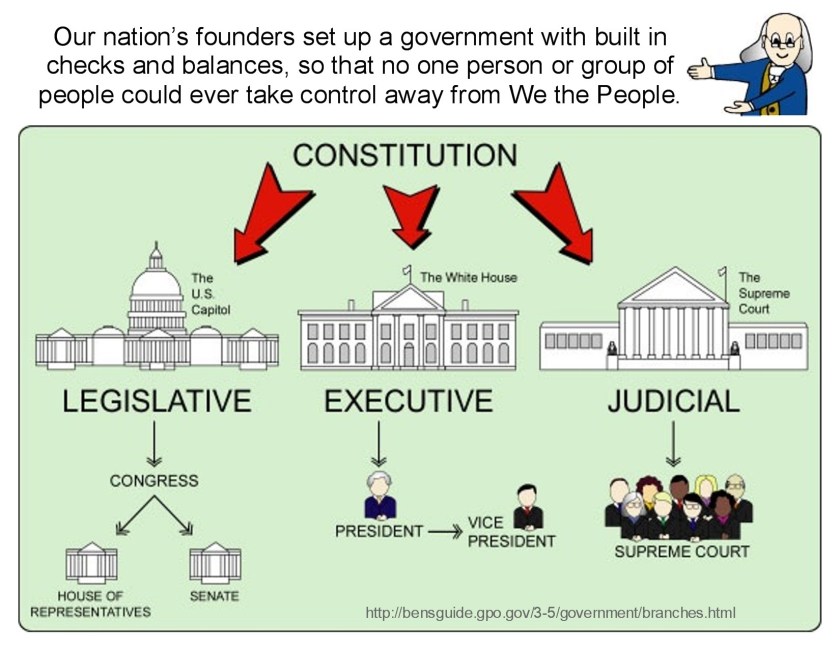
Project 2025 recommends strengthening the executive branch of government and decreasing the rolls of Congress and the courts.

Project 2025 recommends strengthening the executive branch of government and decreasing the rolls of Congress and the courts that are the basis upon which separation of powers were written into the Constitution. Trump is ignoring fundamental tenants of the Constitution like Due Process of Law in the deportation of immigrants.

Project 2025 recommends criminalizing pornography, removing legal protections for anti-LGBT discrimination, and ending diversity programs that drive for equality of all Americans. Trump is using the office of the Presidency to punish elite colleges that have DEI programs meant to address American social inequality.

Trump believes what he believes and acts on those beliefs. His sexual picadilloes are ok but pornography is not. The author shows Trump has support for his beliefs in Project 2025. His support is equally apparent in the free vote of a majority who voted for him in the last election. Only the Constitution of the United States stands between Trump’s authoritarianism and what has made America one of the wealthiest countries in the world.

HUMAN HOPE

Migration is the movement of people to new areas of the world for work, better living conditions, and safety. In that process the world economy is strengthened. .

Books of Interest
 Website: chetyarbrough.blog

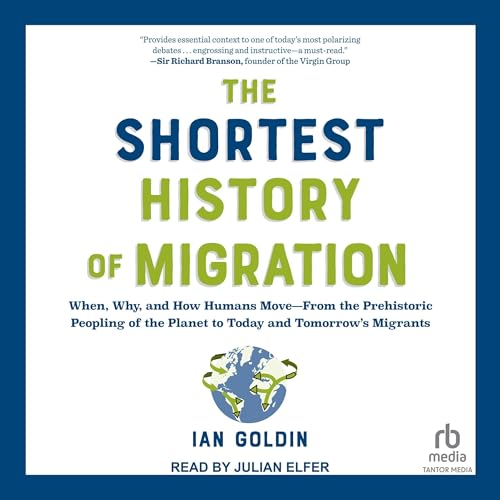
The Shortest History of Migration

By: Ian Goldin

Narrated By: Julian Elfer

Ian Andrew Goldin (South African born professor at the University of Oxford, specializes in globalization and development.)

Professor Goldin has written a history of migration that reminds one of the well-known phrases attributed to Socrates: “I know that I know nothing”. Goldin is born in South Africa to a Lithuanian father who fled his home country to escape political and social upheaval in Europe during the early 20th century. In retrospect, that migration saved the future of the Goldin’s from Stalinist suppression after WWII. It is ironic that Ian Goldin is raised in South Africa where white suppression of native South Africans was common. “The Shortest History of Migration” is no apologia, but it is a forthright history of the ubiquity of world migration.

Migration is an essential characteristic of civilization believed to have begun in Africa.

The obvious irony of human origin is the darker skin tone of our first ancestors who had higher levels of skin melanin to protect them from the harsh effects of the sun. Humanity began as a species of a black ancestor, an estimated 6 to 7 million years ago.

Neanderthal precursor of human beings.

Goldin implies humans moved from Africa to explore the world. They may have left to escape the harshness of their existence or because of the nature of species’ curiosity. Their change in environment led to changes in their physiognomy (facial features and expressions) caused by the evolutionary nature of life and the exigencies of environment. The point is that migration has been a part of history since the beginning of life on earth.

What may be forgotten by some is that migration was largely unregulated until WWI according to Goldin.

That seems largely true except the United States passed the Naturalization Act of 1790 that established rules for citizenship and an Immigration Act of 1891 that created the U.S. Bureau of Immigration; both of which implied regulation. Nevertheless, the fundamental point is that migration has been a part of society from the beginning of human life.

WWI generated many new laws and policies about migration.

Wartime measures required passports and border crossing cards to manage migration. National security increased scrutiny of immigrants. Broader societal and political concerns about migration spread across the world. Migration became more complicated.

Goldin argues the benefit of migration is misunderstood and misrepresented by leaders like Donald Trump.

Goldin suggests the economic impact of Trump’s anti-migrant beliefs and policies will undermine both the world and American economies. In 2023, an estimated 18% of the economic output of the American economy came from migration. The two industries most impacted are agriculture and construction but many immigrants work in caregiving and medical professions, all of which will be impacted by labor shortages. Goldin notes that migrants working in other countries send money back to their home countries that amount to more revenue than is provided by tourism and foreign aid. Many, if not most, economists would argue migration is a cornerstone of economic growth and stability. Trump’s false statements about migrant criminality are overblown and unsupported by economic statistics that show migrants contributed an estimated $25.7 billion in 2022 to the Social Security system in taxes that benefit aged American citizens (like myself).

Trump policies will not return American to the manufacturing prosperity of the twentieth century but to a possible depression like that of the 1930s or, at the very least, a recession like that of 2007-2009.

Migration is the movement of people to new areas of the world for work, better living conditions, and safety. In that process the world economy is strengthened.

MODERATION

Unless homelessness is addressed with affordable housing, America’s future looks bleak. A land of have and have-nots will grow to crush American prosperity.

Books of Interest
 Website: chetyarbrough.blog

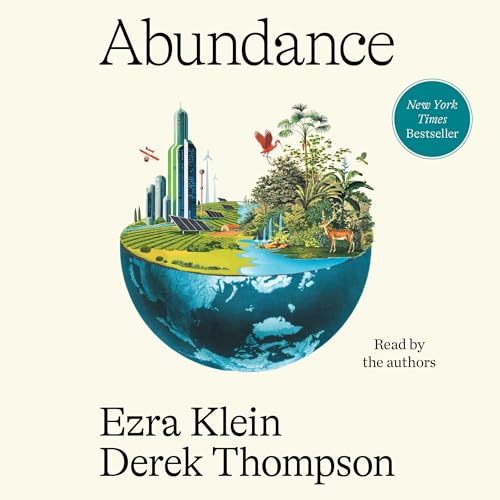
Abundance 

By: Ezra Klein, Derek Thompson

Narrated by: The Authors

These two young Americans offer an insightful view of politics and American government in the 21st century.

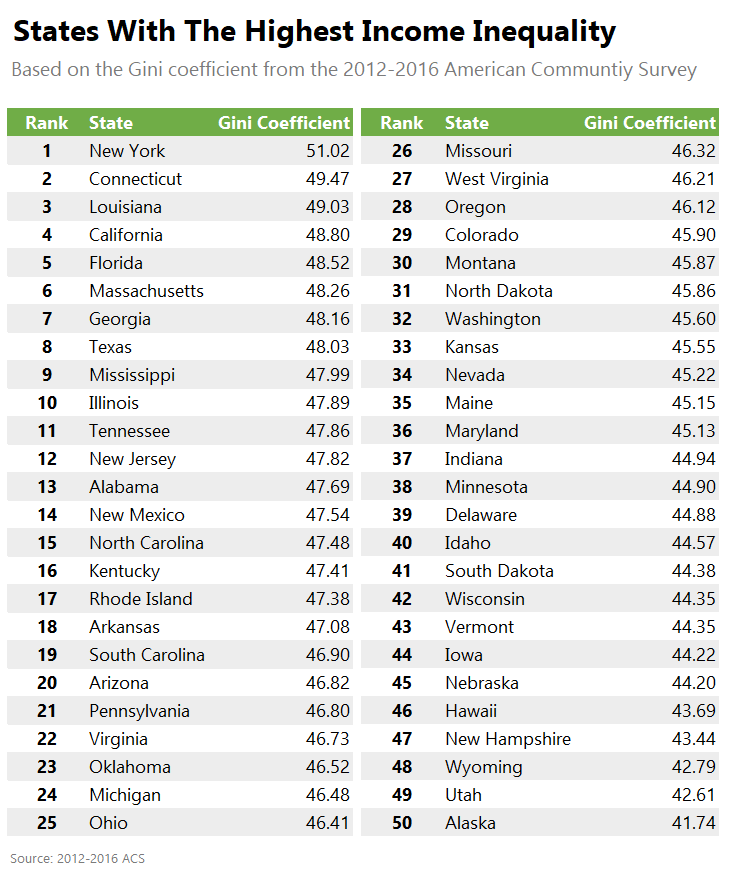
Klein or Thompson could have voted for either Trump or Harris in America’s last election. Their book argues American government is both a boon and bane for citizen “Abundance” in the 21st century. They note America has contradictory economic policies that have created great abundance among Americans while exacerbating inequality. Evidence for their opinion is growing homelessness, an immigration crisis, loss of manufacturing jobs, and government’s failure to creatively adjust public policies to provide solutions.

Those who have shared in the abundance of America have voted for candidates to preserve their privileges.

The authors note homelessness is a function of affordable housing that is denied by government policies that regulate zoning and construction requirements. Government policies make affordable housing too costly to build and impossible to locate because of zoning restrictions. The number of people living on the street is a self-inflicted American tragedy. Some of the homeless are young, some are old, some have mental or physical problems, and others are victims of drugs or their own weaknesses. What they have in common is unaffordable housing.

Historically, immigration has been a great boon to American economic growth.

Klien and Thompson note restrictive immigration policies have created obstacles for workers needed for manufacturing in key industries like agriculture, auto industry assembly, housing construction, and clean energy infrastructure. Rather than wasting money on building walls and deporting workers, the authors advocate immigration reform that meets the needs of American business. One can imply the authors meaning is that to “Make America Great Again” requires immigrants willing to work in agricultural and manufacturing jobs. The end of the baby boom requires help from immigrants to meet the needs of increased manufacturing and construction in the United States.

Some believe what Trump is doing is good for the American economy in the long run.

The criticism is that in the short run, the economy may collapse. Tariffs being used as a ham-fisted way of negotiating fair international trade is a fool’s errand. America needs labor and material in the short run to achieve equal and greater prosperity than it had in the 1970s. Added manufacturing will aid American prosperity, but it will be surpassed in the long run by automation. It is the automation race America needs to win or compete with to remain a world leader. Competing in that race depends on education, and scientific research. The irony is that Trump is firing government employees who have responsibility for public education, research, and funding that have been the engines of America’s prosperity.

The government employees discharged by the Trump administration to solely reduce costs is short sighted.

In the 1980s, 60% of basic research in the U.S. was funded by the government. In 2022 that funding dropped to 40%. Advances in semiconductors, global positions systems, biotechnology, and aeronautics were government-funded discoveries in the 1980s. American government-funded scientific research gave America the internet, GPS technology, mass production of penicillin, Space exploration, human genome project discoveries, and renewable energy innovations. The Department of Health and Human Services has lost 20,000 employees, the Department of Education 1,300, the National Oceanic and Atmospheric Administration 800, and the National Institutes of Health 1,200. One wonders how many of these employees may have been on the edge of scientific discoveries that could change the world.

The truth of “Abundance” is that America has caused many negative ecological impacts and aggravated the gap between rich and poor.

Klein and Thompson have written a provocative book. However, the truth of “Abundance” in America has caused many negative ecological impacts and aggravated the gap between rich and poor. Looking only to abundance does not address either social inequality or the environment. The NIMBY (not in my back yard) resistance to affordable housing aggravates inequality and increases homelessness. Unquestionably, higher density housing impacts the environment.

Klein and Thompson fail to address the increased power of corporations in America.

The 2010 Citizens United v. Federal Election Commission gave corporations the power to spend unlimited amounts of money on political campaigns. The influence of corporations on elections has disproportionate power in the election of government policy makers. That decision by the Court is a distortion of one person, one voter’s influence on public policy.

Aristotle emphasized the importance of “All things in moderation”. NIMBY communities must open their minds and hearts to homelessness and moderate their resistance to neighborhood accommodation. Government agencies must supervise and service higher density housing impacts wherever they are built and after they are completed.

Unless homelessness is addressed with affordable housing, America’s future looks bleak. A land of have and have-nots will grow to crush American prosperity.

SERVICE & PROFIT

Government is not a business for profit and should not be solely measured by its cost. America will survive the catastrophic mistakes being made by President Trump but American citizens, and the welfare of the world will suffer for years to come.

Books of Interest
 Website: chetyarbrough.blog

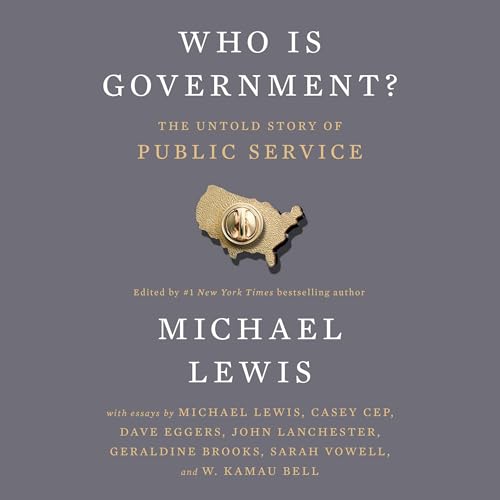
Who is Government (The Untold Story of Public Service)

By: Michael Lewis, Casey Cep, Dave Eggers, John Lanchester, Geraldine Brooks, Sarah Vowell, and Kamau Bell

Edited By: Michael Lewis

The stories of these writers are a tribute to those who have chosen careers in American government. Having personally earned a master’s degree in public administration, worked as a local government manager, then as a manager of a private business division, and finally, as a personal business owner, I have an opinion about President Trump. My experience is based on three different types of employment. All were rewarding experiences but in fundamentally different ways.

The writers of “Who is Government” show how ignorant business creators and managers like Donald Trump and Elon Musk are in discounting the contribution of employees of government organizations. Private corporations do not survive without profit to its owners. Public organizations do not survive without service to the public.

Profit is simple to measure. Public service is measurable but more abstract and difficult to quantify.

One can choose, like Musk did with Twitter, to reduce costs by firing employees. That may improve profitability but at a cost that may hurt or destroy the future of a business. In the case of Twitter, the company lost much of their advertising revenue because an unsupervised public forum could spread false and defamatory information that embarrasses advertisers who were protected by Twitter’ employees that were fired. No analysis was done by Musk about Twitter information’ controls provided by employees. The new entity, “X”, seems to have assuaged some advertisers’ concerns because they have started to use Musk’s new company. The point is that if Musk had taken more time to evaluate what fired employees were doing, he may have retained many of the advertisers who left the forum.

Trump’s employment of Musk to decimate the government employee workforce is following the same foolish path that was taken with Twitter.

No analysis of employee contributions is made. The goal is only to reduce government’ cost regardless of employee’ contribution to public need or service. The consequences have likely reduced health and welfare of American citizens; not to mention harm done to incomes of thousands of government employees’ families.

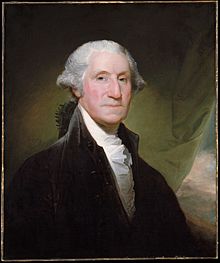
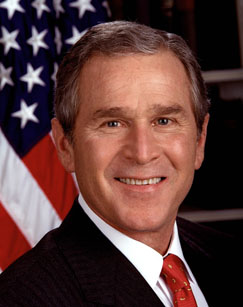
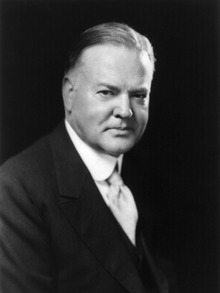
With exceptions of George Washington, Harry Truman, Carter, and the two Bush presidents, the worst former businessman that became President was Herbert Hoover who served as President before the greatest depression in America’s history. With Trump as President, one has to wonder whether he is leading America and the world toward its second great depression.

HERBERT HOOVER (31ST PRESIDENT OF THE U.S.)

“Who is Government” illustrates how government employees have contributed to the health and welfare of America. They are unknown and viewed by people like Trump and Musk as just a cost, without benefit to the public. How many science, medical, veteran, and welfare services are being decimated by their narrow vision of government management?

Government is not a business for profit and should not be solely measured by its cost. America will survive the catastrophic mistakes being made by President Trump but American citizens, and the welfare of the world will suffer for years to come.

MEDIA SELF-INTEREST

One may question William’s characterization of Facebook’s “Careless People” as more like calculating self-interested managers than careless employees.

Books of Interest
 Website: chetyarbrough.blog

Careless People (A Cautionary of Power, Greed, and Lost Idealism)

By: Sarah Wynn-Williams

Narrated By: Sarah Wynn-Williams

Sarah Wynn-Williams (Author, Ex-Meta executive, presently barred from criticism of Meta, formally known as Facebook.)

As noted in the sub-title of “Careless People”, Meta (formerly known as Facebook) is criticized as an international influencer of society that has lost its sense of ethics, i.e. the ability to see the difference between right and wrong. Facebook originally intended to be a forum for the connection of people interested in sharing ideas, communicating with others, and building positive social connection. Instead, the author’s experience as a Facebook’ executive found that expansion, profit, and political influence became an unethical pursuit by the major shareholders (particularly Mark Zukerberg) and managers of the corporation. She argues leadership of Facebook recklessly pursued income, expansion, and political influence around the world with little ethical oversight.

New Zealand (The birthplace of Sarah Wynn-Williams)

Ms. Williams was born in New Zealand but went to work for Facebook and became a U.S. citizen. Her work at Facebook led to a promotion that made her the Director of Global Public Policy which provided opportunity to travel the world soliciting business for Facebook in other countries. Her experience informs listeners of what Meta’s corporate goal: “give people the power to build community and bring the world closer together” became something less as a result of careless management oversight.

Williams begins with a story of a harrowing trip to Myanmar, presumably after their revolution in 2021.

The military coup that ousted the democratically elected government appears to have just begun when Williams had an audience to pitch the Facebook platform to its military government. Just getting to the building where the meeting was to be held was a trial but her position as a representative of Facebook ended with her arrival at a headquarters building of the new regime. It is an interesting story because it shows the power of Facebook association in a country that just had a coup d’état that ended civilian rule. Millions of Myanmar citizens were displaced by widespread human rights abuses with civilian arrests and violence. One wonders what “giving people the power to build community” means in what became a military totalitarian state. (When visiting the Baltics last year, our guide expressed a love for Myanmar’s citizens and the country but was told by Myanmar friends it is unsafe to visit since the coup.)

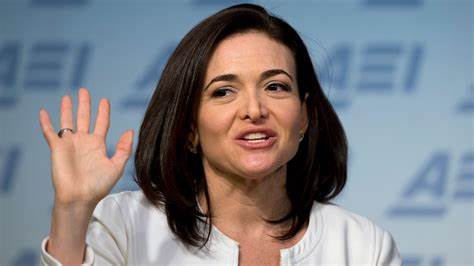
Williams worked directly with Sheryl Sandberg, the COO of Facebook.

Later, Williams explains a meeting with a Japanese official where Sandberg and Williams go to promote interest in Facebook which had not been a part of the Japanese media environment. The involvement of Williams was primarily to support Sandberg’s pitch. Williams indicates Sandberg was quite complementary of Williams’ assistance after the meeting which gives context to their relationship. A subsequent description of Sandberg’s strong, sometimes harsh, personality and influence on Facebook employees is given by Williams. The Japan’ meeting was successful because Facebook entered the market in 2010. Its popularity is said to have declined with Instagram and LINE being the dominant platforms, but Facebook maintains a presence in the country.

Societies interconnectedness is a boon and bane for 21st century society.

The pandering of Zukerberg, Bezos, Musk, Cook, and Pichai to world governments is made suspect by William’s experience as an employee of Facebook. Media companies have become too big to fail and too ungovernable to manage. Even though the internet more intimately connects the world, the platforms of today’s giants of information create a forum for control and conflict rather than a place to encourage social comity.

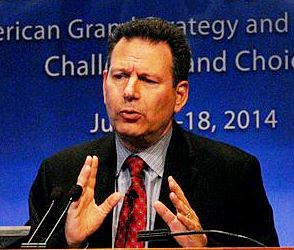
Robert Kaplan (Author of “Waste Land”.)

As noted by Robert Kaplan in “Waste Land”, the growing decline of Russia’s, China’s and America’s governments has been increased with world interconnectedness. It appears from William’s experience at Facebook, there is some truth in Kaplan’s observation. Kaplan’s solution is to dismantle these giants and encourage competition to defray their principal stockholder’s influence.

As the Turkish saying goes, “a fish rots from the head down”. Williams frequent contact with Mark Zuckerberg gives weight to her view of Facebook culture. Mr. Zuckerberg seems to carelessly lead Meta into the arena of politics by promoting Facebook’s media clout to political parties because it raises revenues with political advertising and influences government policy on media’ regulation. Frighteningly, Williams notes Zuckerberg considers running for President with the power of Meta to support his candidacy. One may question William’s characterization of Facebook’s “Careless People” as more like calculating self-interested managers than careless employees.

GOVERNMENT LIFE CYCLE

Robert Kaplan’s inference is that all nation-state governments are being challenged by an increasingly polarized society. The question is whether Trump is a symptom or cure for the decline of America.

Books of Interest
 Website: chetyarbrough.blog

Waste Land (A World of Permanent Crises)

By: Robert Kaplan

Narrated By: Robert Petkoff

Robert D. Kaplan (Author, writer for The Atlantic, Washinton Post, New York Times, The New Republic, Foreign Affairs, and the Wall Street Journal)

Robert Kaplan’s book makes one pessimistic about the future of democratic government. The wars in Gaza and Ukraine, along with the re-election of Donald Trump, and the economic retrenchment of Xi in China reinforce some of the themes of Kaplan’s “Waste Land”. One who reads or hears national news understands why Kaplan argues there is a growing decline in Russia’s, China’s and America’s governments. He argues the cause of that decline is increased world interconnectedness, and rising government instability. His biggest concern is what he believes is a nascent parallel to the rise of Naziism.

The advent of the internet has been a mixed blessing because it is used to spread false information as well as the truth.

The consequence has been to make societies more polarized. An example is a widespread opinion by Trump appointees that the rise in the number of government employees is wasting taxpayer dollars for public education, science research, foreign aid, veterans’ affairs, the national park service and the IRS. (For example, an estimated 76,000 employees–16% of the work force has been discharged from Veterans Affairs. The VA provides healthcare services for eligible veterans, handles disability compensation, pensions, education assistance, like the GI bill, and home loans to citizens who have honorably served America.) These reductions in workforce are not based on any analysis of work performance but solely to reduce the cost of government. Trump, like Xi and Putin, believe Thucydides’ observation that “The strong do what they can and the weak suffer what they must”.

Trump’s firings are being done by an appointed agent of the President who decimated the work force of Twitter in the same way he is arbitrarily discharging American government employees.

Kaplan argues today’s political atmosphere in America, Russia, and China are similar to the societal condition of Germany before the rise of Hitler. He points to the fragility of authoritarians and the rise of societal polarization in today’s world. He compares economic instability, social discontent, and political extremism of the Weimar Republic to what he implies is a growing condition in both Western democracies and Eastern autocracies. The last chapters of Kaplan’s book focus on urbanization of the world and its consequent polarization of society that is deconstructed governance in a way that reminds him of the Weimar Republic’s deterioration. He infers Trump’s re-election, the dismantling of the American government, and America’s social disruption is similar to what happened in Germany in the early 1930s.

An example of the disruption of which Kaplan writes is the Venezuela immigrants who were flown to El Salvador and frog-walked to an El Salvador prison without adjudication by America’s judicial system.

Kaplan’s argument is that President Trump is destabilizing the American government by violating the Constitution of the United States.

A federal judge ordered a plane full of alleged immigrants (identified as gang members) to be returned to the United States. The plane was in the air when the President in apparent defiance of a direct court order chose to not have the plane turned around. The deported were filmed as they were frog-walked into a foreign jail while being denied any hearing or adjudication of their alleged criminality. The President of the United States appears to have ignored a Federal Court, the Third Branch of American government, designed to balance arbitrary actions of either a President or Congress for denying due process of law.

America re-elected Trump despite his conviction on 34 counts of falsifying business records for paying “hush money” to Stormy Daniels when first elected in 2016.

Though Trump’s conviction does not rise to the level of Hitler’s high treason in the failed Beer Hall Putsch, willingness to lie under oath is a troubling characteristic for a President, let alone, any citizen of the United States. According to news reports, Trump says he did not know he had been asked to turn the plane around by a Federal Judge. One might ask why should America believe what he says?

Trump is challenging the authority of Congress and the Judiciary by taking actions without consideration of the Constitution of the United States.

This reminds one of human rights violations in the early days of Hitler’s rise in Germany. Hitler gathered sympathizers from disillusioned veterans, business leaders, the middle class, the German youth, and Far-Right Nationalists. Trump appears to have had similar support in his re-election. Trump decides to pardon all January 6, 2021, U.S. Capitol attackers. Those pardons are a diminishment of American democracy akin to Hitler’s support of Nazi sympathizers.

Attack on the Capitol on January 6, 2021–Trump pardons all attackers on 1/20/25, after being re-elected as President of the United States.

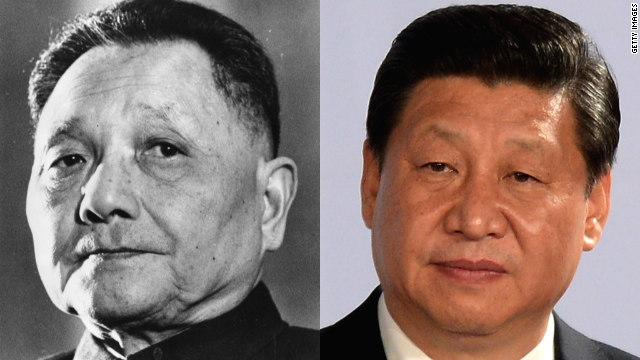
Deng led a transformative change in China’s economy after Mao’s death. With a pragmatic judgement that “It doesn’t matter whether a cat is black or white as long as it catches mice”

In the last third of Kaplan’s book, the incredible success of China under Deng Xiaoping is addressed. Kaplan explains Deng became the leader of China between 1978 and 1989. Though Deng was a contemporary leader during the Mao administration, Deng led a transformative change in China’s economy after Mao’s death. With a pragmatic judgement that “It doesn’t matter whether a cat is black or white as long as it catches mice” he opened China to the pursuit of personal, and individual citizen’ prosperity. The result of Deng’s pragmatism was the unprecedented economic growth and wealth of China. Much of what Deng started has been reversed by the Xi administration. In Kaplan’s opinion, the resurgence of the communist party has led to a reversal of economic growth in China. Kaplan infers a return to collectivism is a reflection of societal interconnectedness with a government-controlled internet that denies freedom of thought and action by China’s citizens.

Kaplan refers to Jane Jacobs (1916-2006) and the urbanization of America. He notes Oswald Spengler (1929-1936) recognized the implication of urbanization is government deterioration as a part of the natural lifecycle of every civilization. The point Kaplan makes is that nation-states have become like the early cities Jacobs refers to but with an interconnectedness that accelerates and shortens government lifecycles. Robert Kaplan’s inference is that all nation-state governments are being challenged by an increasingly polarized society caused by internet connectedness. The question is whether Trump is a symptom or cure for the decline of America.

MUSIC APPRECIATION

Listening to the examples of Professor Greenberg’s views on music make this audiobook an immense pleasure. It is a long audiobook but one who takes long walks will be highly entertained by the Professor’s insight to music of the world.

Books of Interest
 Website: chetyarbrough.

Great Courses-How to Listen to and Understand Great Music, 3rd Edition (A Cultural History)

By: Robert Greenberg

Narrated By: Professor Greenberg

Robert Greenberg (Great Courses Professor, historian, composer, pianist, speaker, and author.)

This is a history of Great Music by a remarkable professor who fully utilizes the value of audiobooks in his teaching. Though this is a long audiobook, every lecture is a pleasure for a listener who knows little about the history or styles of music. Professor Greenberg’s enthusiasm and pointed opinions about music and its evolution are informative, clearly explained, and fabulously entertaining, particularly for non-musicians.

The professor’s storytelling is highly entertaining. He reviews the history of music anecdotally, interspersed with musical examples (some of which are his own piano playing) and precise definitions of words used in music that offer clarity and entertainment to his audience.

The span of history which Greenberg covers is from ancient music traditions to the progressive development of Western music. He helps one understand what to listen for when attending musical presentations. He spans Renaissance, Baroque, Classical, Romantic, and 20th-century music. From Bach’s Baroque musical production to Shostakovich’s politically tinged symphonies, one learns how music is exemplified and amplified by history.

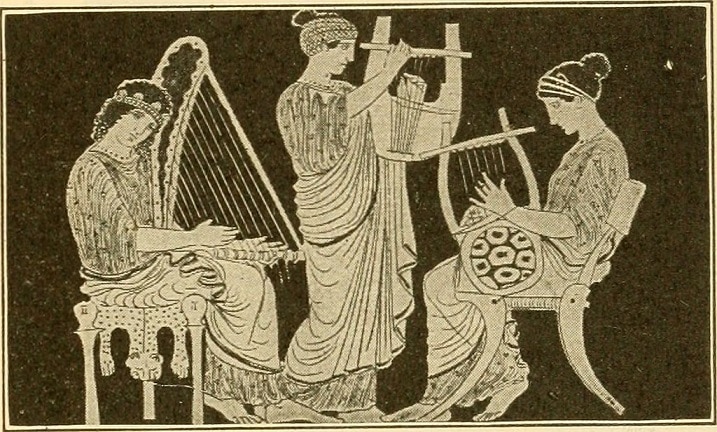
Greenberg begins with ancient Greek and Roman music.

He explains the role of music in Greek tragedies and offers examples of Gregorian chant and medieval polyphony (two or more independent melodies that are interconnected). He notes Bach’s fugues as polyphonic hallmarks of Western classical music that rose in the Renaissance and Baroque periods.

Johann Sebastian Bach (1685-1750, German composer and musician of the late Baroque period.)

Greenberg provides examples of a fugue and concerto. A fugue is a musical composition with a theme that is interwoven with overlapping voices. He offers the example of Bach’s music.

Antonio Vivaldi (1678-1741. Italian composer, virtuoso violinist of Baroque music.)

In contrast, concerto is a solo instrument (or a group of soloists) offering an orchestral presentation infused with dialogue. The Four Seasons by Vivaldi would be an example but the fascinating point is that the dialogue is in music, i.e. no words, but a clear representation of the seasons in an abstract way. You hear the sounds of spring, summer, fall, and winter.

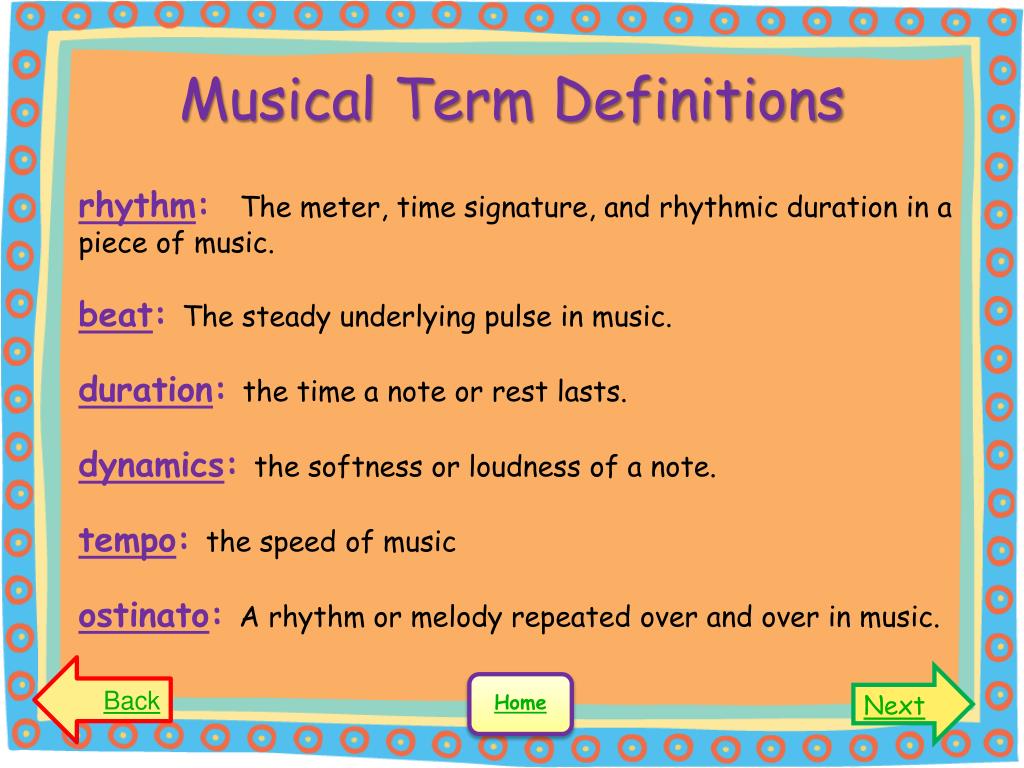
Greenberg offers definitions of musical terms.

Greenberg also defines a number of musical concepts and terms:

Melody: A sequence of musical notes that are perceived as a single entity, often referred to as the “tune.”

Harmony: The combination of different musical notes played or sung simultaneously to produce a pleasing sound.

Polyphony: Multiple independent melodies played or sung simultaneously, creating a complex and interwoven texture.

Sonata Form: A musical structure commonly used in the first movements of symphonies and sonatas, typically consisting of an exposition, development, and recapitulation.

The Professor notes the fundamental difference between German and Italian classical music.

The Italians created opera to illustrate the emotions of life through operatic story telling. Germans highlight intellectual depth and structural complexity. Greenberg notes Italians celebrate the melodic beauty and operatic flair of music. This difference is exemplified by the Catholic church’s sale of indulgences.

Martin Luther (1483-1546)

Greenberg recounts the history of the Reformation. He notes the impact of Martin Luther (1483-1546), the key German figure in the Protestant Reformation who posted the 95 Thesis that criticizes the Catholic Church’s practice of selling indulgences for sinners to get into heaven. The 95 Thesis was a direct challenge to the authority of the Pope to use indulgences to raise money for the Catholic Chruch. Luther believed only faith, an emotionally grounded intellectual belief, could pave one’s way to heaven.

Rather than an Italian Rossini or Puccini opera, German operas have complex narratives with composers like Wagner and Straus who are exploring ideas like destiny, heroism, and the human condition. Both German and Italian operas engage emotions, but German operas tend to explore philosophical, mythological, or psychological themes while Italians focus on heart-wrenching human emotions.

Listening to the examples of Professor Greenberg’s views on music make this audiobook an immense pleasure. It is a long audiobook but one who takes long walks will be highly entertained by the Professor’s insight to music of the world.

TOO LATE

Ideally, public good and ethics will be taught in advance of the melding of technology and government, i.e., not after mistakes are made. However, history suggests humans will blunder down the road of experience with A.I., making mistakes, and trying to correct them after they occur.

Books of Interest
 Website: chetyarbrough.

The Technological Republic (Hard Power, Soft Belief, and the Future of the West)

By: Alexander C. Karp and Nicholas W. Zamiska

Narrated By: Nicholas W. Zamiska

The authors are the founder and operations manager of the American software company, Palantir Technolgies. Palantir has been hired by the U. S. Department of Defense, the Intelligence Community, agencies of NATO countries, and Western corporations to provide analytic platforms for defense analysis, healthcare, finance, and manufacturing.

They believe artificial intelligence research and development has lost its way.

They argue Silicon Valley has lost focus on what is important for survival of society and Western values. They suggest A.I. should be focusing on serving humanity in ways that responsibly regulate nuclear weapons and protect society from existential risks like climate change, pandemics, asteroid collisions, etc., that threaten human extinction. The authors provide a powerful criticism of technology and its national purpose.

Karp and Zamiska argue that technology is focusing on consumerism rather nuclear annihilation or existential risk.

By focusing on convenience and entertainment for financial success, fundamental problems like the threat of nuclear war, homelessness, inequality, and climate change are ignored or relegated to the trash heap of history. (“Trash heap of history” is the belief that what happens, happens and society can do nothing about it.) The west has become complacent with short-term focus on profit and consumer demand. The authors argue that the greater good is no longer thought of as an important societal goal. The primary goal is making money that enriches creators and company owners by making purchases more convenient to and for consumers.

Aldous Huxley (English writer and philosopher, 1894-1963, author of “Brave New World”.)

Their argument is there should be more collaboration between tech and government. Historically, government is only as good as the information it has to make societal decisions. A computer program can be programmed with false information like the error of weapons of mass destruction that led to an invasion of Iraq that was a bad decision. The domino theory input that led to the Vietnam war; so, on and so on. There is also the threat of an elected President that uses the power of technology to do the wrong thing because of his/her incompetence. There is the risk of government gathering personal information and using it to cross the line into a “Brave New World” where innovation, free thought, and independent action are discouraged or legislated against so people can be sent to jail for breaking the law?

Possibly, melding technology with government is an answer, but it is a chicken and egg concern. Education about public good and ethical practices should begin as soon as the egg cracks, not after hatchlings are already old enough to work. Phrases that come to mind are “What’s done is done” or “The die is cast”.

The authors argue the West needs to up-its-game if it wishes to create a peaceful and prosperous future for a society that is founded on the ideal of human freedom.

Without future generations creating policies based on ethical purpose for the public good, one infers western culture will spiral into individual isolation and self-interest that diminishes western culture and ideals.

Ideally, public good and ethics will be taught in advance of the melding of technology and government, i.e., not after mistakes are made. However, history suggests humans will blunder down the road of experience with A.I., making mistakes, and trying to correct them after they occur.

HOMELESSNESS

The United States is the 7th richest nation in the world on a per capita basis. Why is homelessness a growing problem in outwardly prosperous American cities?

Books of Interest
 Website: chetyarbrough.blog

Seeking Shelter (A Working Mother, Her Children and a Story of Homelessness in America)

By: Jeff Hobbes

Narrated By: Julia Whelan

Jeff Hobbes (Author, graduate of Yale with a BA in English language and literature.)

Homelessness can be seen in most large cities of the world. In personal travels to what look like prosperous cities like Vilnius, Lithuania, Hong Kong, China, and even Scandanavian countries, homelessness exists. However, the scope of homelessness does not compare to what is seen on the streets of Las Vegas, NV. and Seattle, WA, two larger American cities considered prosperous and growing. In 2024, there were an estimated 7,928 homeless in Clark County (the Las Vegas area) and 16,385 in King County (the Seattle area). Walking around these two cities, let alone reading or listening to the news, suggests those numbers are grossly undercounting the homeless. The United States is the 7th richest nation in the world on a per capita basis. Why is homelessness a growing problem in outwardly prosperous American cities?

Trump followers would argue homelessness is because of illegal immigration and laziness.

The real reasons are decades of underbuilding in major American cities, high cost of existing inventory, regulatory barriers for affordable housing, economic inequality, an attitude of “not in my back yard”, investment conglomerates that capture housing for rent, and the decline of federally funded affordable housing.

Jeff Hobbes brings all of these reasons for homelessness to light with the plight of working mothers and their children who are moving from one area of California to another because they cannot afford a place to live, school their children, and feed their family.

Hobbes’ example is of a family on the road with savings of $4,000 in a search for a job, a school for her children, and a place to live that they can afford. What is abundantly clear in Hobbes’ book is women hold broken families together more often than men. Misogyny is a reinforced truth in the world. Men spread their seed, begat children, and leave. Women take on the burden of the world’s future.

Homeless single parents with children to care for must often leave their children alone while seeking work to pay for the basic needs of life.

A woman faces greater obstacles than a homeless man because of unequal opportunities ranging from income for work to their presumed and assumed responsibility for children’s care. The general public often presumes they have their own lives to live and have no responsibility for others who have made foolish decisions in their lives. However, a rational person knows children are the future of the world. A child left on his/her own have diminishing opportunities for success without parental support. A child of a homeless single parent’s support is compromised when that single parent has to work to earn enough for the family to have a home and food to eat.

Having the personal experience of being raised by a single parent with an older brother, Hobbes’ history of a mother, on her own, fairly explains how difficult it is to avoid homelessness while looking for work and caring for her children.

The price paid for homelessness on the emotional and intellectual ability of a mother and her children is immeasurable. The cost to society is partly explained by Jeff Hobbes’ in “Seeking Shelter”. California’s system of caring for the homeless is encouraging but undoubtedly inadequate based on what one reads in the press.

Listening to the stories of homeless families is a harsh lesson for those who have escaped poverty and think if they can do it, why can’t every American do it?

Failure to address homelessness is a societal flaw. Whatever its cause, homelessness makes every citizen of prosperous nations guilty of neglect.

AI REGULATION

As Suleyman and Bhaskar infer, ignoring the threat of AI because of the difficulty of regulation is no reason to abandon the effort.

Books of Interest
 Website: chetyarbrough.blog

The Coming Wave

By: Mustafa Suleyman with Michael Bhaskar

Narrated By: Mustafa Suleyman

This is a startling book about AI because it is written by an AI entrepreneur who is the founder and former head of applied AI at DeepMind. He is also the CEO of Microsoft AI. What the authors argue is not understood by many who discount the threat of AI. They explain AI can collate information that creates societal solutions, as well as threats, that are beyond the thought and reasoning ability of human beings.

“The Coming Wave” is startling because it is written by two authors who have an intimate understanding of the science of AI.

They argue it is critically important for AI research and development to be internationally regulated with the same seriousness that accompanied the research and use of the atom bomb.

Those who have read this blog know the perspective of this writer is that AI, whether it has greater risk than the atom bomb or not is a tool, not a controller, of humanity. The AI’ threat example given by Suleyman and Bhaskar is that AI has the potential for invention of a genetic modification that could as easily destroy as improve humanity. Recognizing AI’s danger is commendable but like the atom bomb, there will always be a threat of miscreant nations or radicals that have the use of a nuclear device or AI to initiate Armagedón. Obviously, if AI is the threat they suggest, there needs to be an antidote. The last chapters of “The Coming Wave” offer their solution. The authors suggest a 10-step program to regulate or ameliorate the threat of AI’s misuse.

Like alcoholism and nuclear bomb deterrence, Suleyman’s program will be as effective as those who choose to follow the rules.

There are no simple solutions for regulation of AI and as history shows neither Alcoholics Anonymous (AA) nor the Treaty on the Prohibition of Nuclear Weapons (TPNW) has been completely successful.

Suleyman suggests the first step in regulating AI begins with creating safeguards for the vast LLM capabilities of Artificial Intelligence.

This will require the hiring of technicians to monitor and adjust incorrect or misleading information accumulated and distributed by AI users. The concern of many will be the restriction on “freedom of speech”. Additionally, two concerns are the cost of such a bureaucracy and who monitors the monitors. Who draws the line between fact and fiction? When does information deletion become a distortion of fact? This bureaucracy will be responsible for auditing AI models to understand what their capabilities are and what limitations they have.

A second step is to slow the process of AI development by controlling the sale and distribution of the hardware components of AI to provide more time for reviewing new development impacts.

With lucrative incentives for new AI capabilities in a capitalist system there is likely to be a lot of resistance by aggressive entrepreneurs, free-trade and free-speech believers. Leaders in authoritarian countries will be equally incensed by interference in their right to rule.

Transparency is a critical part of the vetting process for AI development.

Suleyman suggests critics need to be involved in new developments to balance greed and power against utilitarian value. There has to be an ethical examination of AI that goes beyond profitability for individuals or control by governments. The bureaucracies for development, review, and regulation should be designed to adapt, reform, and implement regulations to manage AI technologies responsibly. These regulations should be established through global treaties and alliances among all nations of the world.

Suleyman acknowledges this is a big ask and notes there will be many failures in getting cooperation or adherence to AI regulation.

That is and was true of nuclear armament and so far, there has been no use of nuclear weapons to attack other countries. The authors note there will be failures in trying to institute these guidelines but with the help of public awareness and grassroots support, there is hope for the greater good that can come from AI.

As Suleyman and Bhaskar infer, ignoring the threat of AI because of the difficulty of regulation is no reason to abandon the effort.