MUSIC APPRECIATION

Listening to the examples of Professor Greenberg’s views on music make this audiobook an immense pleasure. It is a long audiobook but one who takes long walks will be highly entertained by the Professor’s insight to music of the world.
Books of Interest
 Website: chetyarbrough.
Great Courses-How to Listen to and Understand Great Music, 3rd Edition (A Cultural History)

By: Robert Greenberg

Narrated By: Professor Greenberg

Robert Greenberg (Great Courses Professor, historian, composer, pianist, speaker, and author.)

This is a history of Great Music by a remarkable professor who fully utilizes the value of audiobooks in his teaching. Though this is a long audiobook, every lecture is a pleasure for a listener who knows little about the history or styles of music. Professor Greenberg’s enthusiasm and pointed opinions about music and its evolution are informative, clearly explained, and fabulously entertaining, particularly for non-musicians.

The professor’s storytelling is highly entertaining. He reviews the history of music anecdotally, interspersed with musical examples (some of which are his own piano playing) and precise definitions of words used in music that offer clarity and entertainment to his audience.

The span of history which Greenberg covers is from ancient music traditions to the progressive development of Western music. He helps one understand what to listen for when attending musical presentations. He spans Renaissance, Baroque, Classical, Romantic, and 20th-century music. From Bach’s Baroque musical production to Shostakovich’s politically tinged symphonies, one learns how music is exemplified and amplified by history.

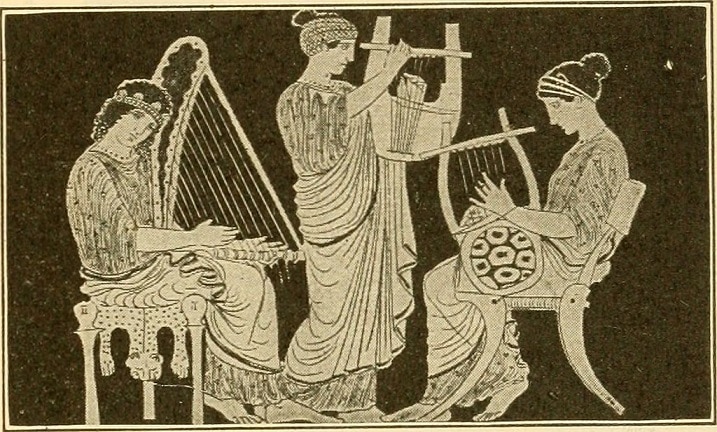
Greenberg begins with ancient Greek and Roman music.

He explains the role of music in Greek tragedies and offers examples of Gregorian chant and medieval polyphony (two or more independent melodies that are interconnected). He notes Bach’s fugues as polyphonic hallmarks of Western classical music that rose in the Renaissance and Baroque periods.

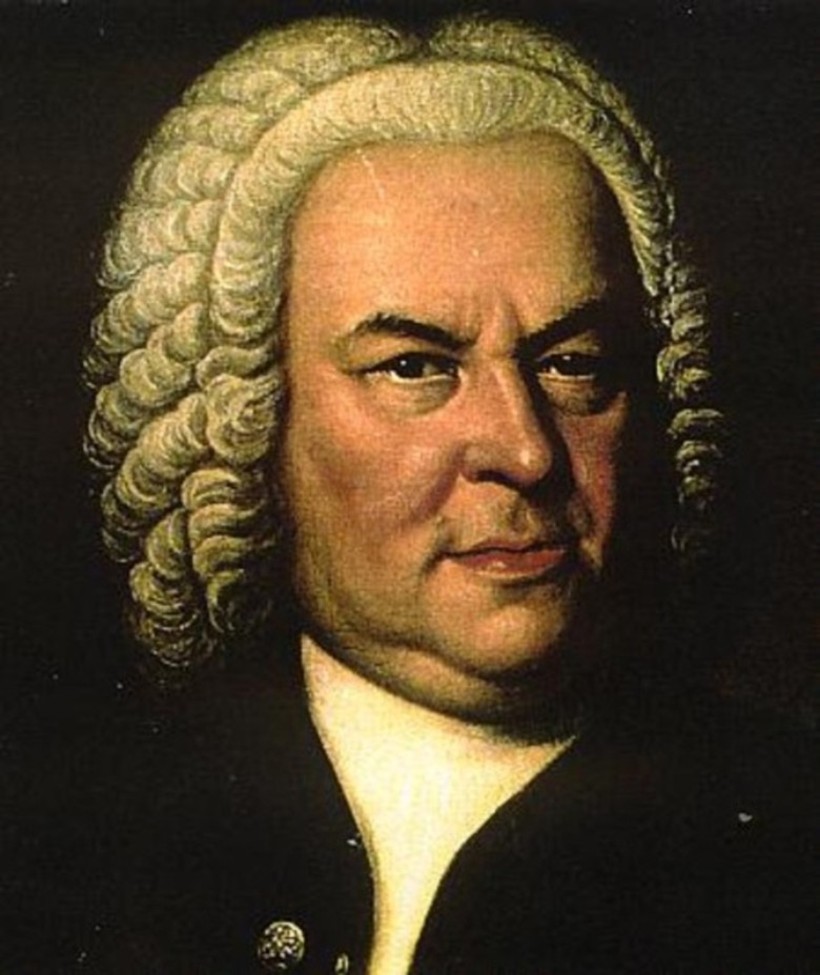
Johann Sebastian Bach (1685-1750, German composer and musician of the late Baroque period.)

Greenberg provides examples of a fugue and concerto. A fugue is a musical composition with a theme that is interwoven with overlapping voices. He offers the example of Bach’s music.

Antonio Vivaldi (1678-1741. Italian composer, virtuoso violinist of Baroque music.)

In contrast, concerto is a solo instrument (or a group of soloists) offering an orchestral presentation infused with dialogue. The Four Seasons by Vivaldi would be an example but the fascinating point is that the dialogue is in music, i.e. no words, but a clear representation of the seasons in an abstract way. You hear the sounds of spring, summer, fall, and winter.

Greenberg offers definitions of musical terms.

Greenberg also defines a number of musical concepts and terms:

Melody: A sequence of musical notes that are perceived as a single entity, often referred to as the “tune.”

Harmony: The combination of different musical notes played or sung simultaneously to produce a pleasing sound.

Polyphony: Multiple independent melodies played or sung simultaneously, creating a complex and interwoven texture.

Sonata Form: A musical structure commonly used in the first movements of symphonies and sonatas, typically consisting of an exposition, development, and recapitulation.

The Professor notes the fundamental difference between German and Italian classical music.

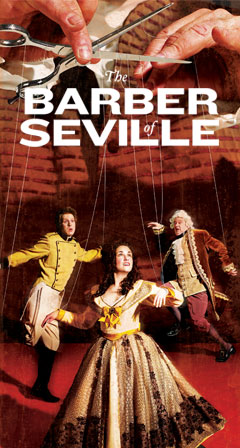
The Italians created opera to illustrate the emotions of life through operatic story telling. Germans highlight intellectual depth and structural complexity. Greenberg notes Italians celebrate the melodic beauty and operatic flair of music. This difference is exemplified by the Catholic church’s sale of indulgences.

Martin Luther (1483-1546)

Greenberg recounts the history of the Reformation. He notes the impact of Martin Luther (1483-1546), the key German figure in the Protestant Reformation who posted the 95 Thesis that criticizes the Catholic Church’s practice of selling indulgences for sinners to get into heaven. The 95 Thesis was a direct challenge to the authority of the Pope to use indulgences to raise money for the Catholic Chruch. Luther believed only faith, an emotionally grounded intellectual belief, could pave one’s way to heaven.

Rather than an Italian Rossini or Puccini opera, German operas have complex narratives with composers like Wagner and Straus who are exploring ideas like destiny, heroism, and the human condition. Both German and Italian operas engage emotions, but German operas tend to explore philosophical, mythological, or psychological themes while Italians focus on heart-wrenching human emotions.

Listening to the examples of Professor Greenberg’s views on music make this audiobook an immense pleasure. It is a long audiobook but one who takes long walks will be highly entertained by the Professor’s insight to music of the world.

TOO LATE

Ideally, public good and ethics will be taught in advance of the melding of technology and government, i.e., not after mistakes are made. However, history suggests humans will blunder down the road of experience with A.I., making mistakes, and trying to correct them after they occur.

Books of Interest
 Website: chetyarbrough.

The Technological Republic (Hard Power, Soft Belief, and the Future of the West)

By: Alexander C. Karp and Nicholas W. Zamiska

Narrated By: Nicholas W. Zamiska

The authors are the founder and operations manager of the American software company, Palantir Technolgies. Palantir has been hired by the U. S. Department of Defense, the Intelligence Community, agencies of NATO countries, and Western corporations to provide analytic platforms for defense analysis, healthcare, finance, and manufacturing.

They believe artificial intelligence research and development has lost its way.

They argue Silicon Valley has lost focus on what is important for survival of society and Western values. They suggest A.I. should be focusing on serving humanity in ways that responsibly regulate nuclear weapons and protect society from existential risks like climate change, pandemics, asteroid collisions, etc., that threaten human extinction. The authors provide a powerful criticism of technology and its national purpose.

Karp and Zamiska argue that technology is focusing on consumerism rather nuclear annihilation or existential risk.

By focusing on convenience and entertainment for financial success, fundamental problems like the threat of nuclear war, homelessness, inequality, and climate change are ignored or relegated to the trash heap of history. (“Trash heap of history” is the belief that what happens, happens and society can do nothing about it.) The west has become complacent with short-term focus on profit and consumer demand. The authors argue that the greater good is no longer thought of as an important societal goal. The primary goal is making money that enriches creators and company owners by making purchases more convenient to and for consumers.

Aldous Huxley (English writer and philosopher, 1894-1963, author of “Brave New World”.)

Their argument is there should be more collaboration between tech and government. Historically, government is only as good as the information it has to make societal decisions. A computer program can be programmed with false information like the error of weapons of mass destruction that led to an invasion of Iraq that was a bad decision. The domino theory input that led to the Vietnam war; so, on and so on. There is also the threat of an elected President that uses the power of technology to do the wrong thing because of his/her incompetence. There is the risk of government gathering personal information and using it to cross the line into a “Brave New World” where innovation, free thought, and independent action are discouraged or legislated against so people can be sent to jail for breaking the law?

Possibly, melding technology with government is an answer, but it is a chicken and egg concern. Education about public good and ethical practices should begin as soon as the egg cracks, not after hatchlings are already old enough to work. Phrases that come to mind are “What’s done is done” or “The die is cast”.

The authors argue the West needs to up-its-game if it wishes to create a peaceful and prosperous future for a society that is founded on the ideal of human freedom.

Without future generations creating policies based on ethical purpose for the public good, one infers western culture will spiral into individual isolation and self-interest that diminishes western culture and ideals.

Ideally, public good and ethics will be taught in advance of the melding of technology and government, i.e., not after mistakes are made. However, history suggests humans will blunder down the road of experience with A.I., making mistakes, and trying to correct them after they occur.

HOMELESSNESS

The United States is the 7th richest nation in the world on a per capita basis. Why is homelessness a growing problem in outwardly prosperous American cities?

Books of Interest
 Website: chetyarbrough.blog

Seeking Shelter (A Working Mother, Her Children and a Story of Homelessness in America)

By: Jeff Hobbes

Narrated By: Julia Whelan

Jeff Hobbes (Author, graduate of Yale with a BA in English language and literature.)

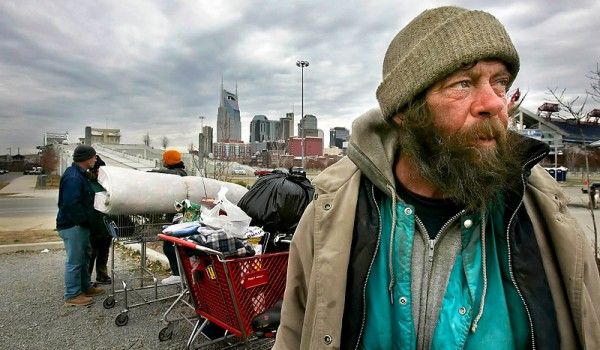
Homelessness can be seen in most large cities of the world. In personal travels to what look like prosperous cities like Vilnius, Lithuania, Hong Kong, China, and even Scandanavian countries, homelessness exists. However, the scope of homelessness does not compare to what is seen on the streets of Las Vegas, NV. and Seattle, WA, two larger American cities considered prosperous and growing. In 2024, there were an estimated 7,928 homeless in Clark County (the Las Vegas area) and 16,385 in King County (the Seattle area). Walking around these two cities, let alone reading or listening to the news, suggests those numbers are grossly undercounting the homeless. The United States is the 7th richest nation in the world on a per capita basis. Why is homelessness a growing problem in outwardly prosperous American cities?

Trump followers would argue homelessness is because of illegal immigration and laziness.

The real reasons are decades of underbuilding in major American cities, high cost of existing inventory, regulatory barriers for affordable housing, economic inequality, an attitude of “not in my back yard”, investment conglomerates that capture housing for rent, and the decline of federally funded affordable housing.

Jeff Hobbes brings all of these reasons for homelessness to light with the plight of working mothers and their children who are moving from one area of California to another because they cannot afford a place to live, school their children, and feed their family.

Hobbes’ example is of a family on the road with savings of $4,000 in a search for a job, a school for her children, and a place to live that they can afford. What is abundantly clear in Hobbes’ book is women hold broken families together more often than men. Misogyny is a reinforced truth in the world. Men spread their seed, begat children, and leave. Women take on the burden of the world’s future.

Homeless single parents with children to care for must often leave their children alone while seeking work to pay for the basic needs of life.

A woman faces greater obstacles than a homeless man because of unequal opportunities ranging from income for work to their presumed and assumed responsibility for children’s care. The general public often presumes they have their own lives to live and have no responsibility for others who have made foolish decisions in their lives. However, a rational person knows children are the future of the world. A child left on his/her own have diminishing opportunities for success without parental support. A child of a homeless single parent’s support is compromised when that single parent has to work to earn enough for the family to have a home and food to eat.

Having the personal experience of being raised by a single parent with an older brother, Hobbes’ history of a mother, on her own, fairly explains how difficult it is to avoid homelessness while looking for work and caring for her children.

The price paid for homelessness on the emotional and intellectual ability of a mother and her children is immeasurable. The cost to society is partly explained by Jeff Hobbes’ in “Seeking Shelter”. California’s system of caring for the homeless is encouraging but undoubtedly inadequate based on what one reads in the press.

Listening to the stories of homeless families is a harsh lesson for those who have escaped poverty and think if they can do it, why can’t every American do it?

Failure to address homelessness is a societal flaw. Whatever its cause, homelessness makes every citizen of prosperous nations guilty of neglect.

AI REGULATION

As Suleyman and Bhaskar infer, ignoring the threat of AI because of the difficulty of regulation is no reason to abandon the effort.

Books of Interest
 Website: chetyarbrough.blog

The Coming Wave

By: Mustafa Suleyman with Michael Bhaskar

Narrated By: Mustafa Suleyman

This is a startling book about AI because it is written by an AI entrepreneur who is the founder and former head of applied AI at DeepMind. He is also the CEO of Microsoft AI. What the authors argue is not understood by many who discount the threat of AI. They explain AI can collate information that creates societal solutions, as well as threats, that are beyond the thought and reasoning ability of human beings.

“The Coming Wave” is startling because it is written by two authors who have an intimate understanding of the science of AI.

They argue it is critically important for AI research and development to be internationally regulated with the same seriousness that accompanied the research and use of the atom bomb.

Those who have read this blog know the perspective of this writer is that AI, whether it has greater risk than the atom bomb or not is a tool, not a controller, of humanity. The AI’ threat example given by Suleyman and Bhaskar is that AI has the potential for invention of a genetic modification that could as easily destroy as improve humanity. Recognizing AI’s danger is commendable but like the atom bomb, there will always be a threat of miscreant nations or radicals that have the use of a nuclear device or AI to initiate Armagedón. Obviously, if AI is the threat they suggest, there needs to be an antidote. The last chapters of “The Coming Wave” offer their solution. The authors suggest a 10-step program to regulate or ameliorate the threat of AI’s misuse.

Like alcoholism and nuclear bomb deterrence, Suleyman’s program will be as effective as those who choose to follow the rules.

There are no simple solutions for regulation of AI and as history shows neither Alcoholics Anonymous (AA) nor the Treaty on the Prohibition of Nuclear Weapons (TPNW) has been completely successful.

Suleyman suggests the first step in regulating AI begins with creating safeguards for the vast LLM capabilities of Artificial Intelligence.

This will require the hiring of technicians to monitor and adjust incorrect or misleading information accumulated and distributed by AI users. The concern of many will be the restriction on “freedom of speech”. Additionally, two concerns are the cost of such a bureaucracy and who monitors the monitors. Who draws the line between fact and fiction? When does information deletion become a distortion of fact? This bureaucracy will be responsible for auditing AI models to understand what their capabilities are and what limitations they have.

A second step is to slow the process of AI development by controlling the sale and distribution of the hardware components of AI to provide more time for reviewing new development impacts.

With lucrative incentives for new AI capabilities in a capitalist system there is likely to be a lot of resistance by aggressive entrepreneurs, free-trade and free-speech believers. Leaders in authoritarian countries will be equally incensed by interference in their right to rule.

Transparency is a critical part of the vetting process for AI development.

Suleyman suggests critics need to be involved in new developments to balance greed and power against utilitarian value. There has to be an ethical examination of AI that goes beyond profitability for individuals or control by governments. The bureaucracies for development, review, and regulation should be designed to adapt, reform, and implement regulations to manage AI technologies responsibly. These regulations should be established through global treaties and alliances among all nations of the world.

Suleyman acknowledges this is a big ask and notes there will be many failures in getting cooperation or adherence to AI regulation.

That is and was true of nuclear armament and so far, there has been no use of nuclear weapons to attack other countries. The authors note there will be failures in trying to institute these guidelines but with the help of public awareness and grassroots support, there is hope for the greater good that can come from AI.

As Suleyman and Bhaskar infer, ignoring the threat of AI because of the difficulty of regulation is no reason to abandon the effort.

BEING OPINIONATED

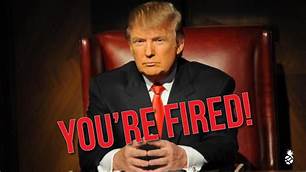
Trump is threatening government employees with being fired for doing their job and Congress for being the third branch of the American government.

Personal Commentary
 Website: chetyarbrough.blog

Political Grandstanding

By: Chet Yarbrough

Those who have read book reviews in this blog know some of my political beliefs. The more I read, listen to, and review books written by others, the more I know I do not know what is true and not true. We all get trapped in our own world of experience, belief, and understanding. With concern over that personal trap, this personal opinion is written.

America’s current President is a man of inherited wealth and privilege.

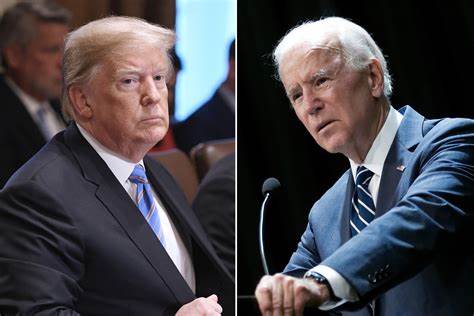
Trump’s popularity comes from attracting attention, impressing followers with strong public stances on issues of which he has little understanding or willingness to educate himself about. His focus is on self-aggrandizement with hyperbolic misrepresentations of facts that appeal to those wishing for definitive answers to multifaceted social issues.

Trump is not the only elected representative or President to oversimplify issues to appeal to voters. Johnson’s war on poverty was used to justify policies that ineffectively addressed needs of the poor. Nixon’s “Southern Strategy” used coded language and policies that indirectly targeted African Americans. Reagan’s “War on Drugs” disproportionately affected minority communities and contributed to mass incarceration. George W. Bush emphasized the threat of weapons of mass destruction (WMD’s) to justify invasion of Iraq. Obama’s red line rhetoric threatened commitment to military intervention, which never happened when lethal gas was used to kill Syrian citizens. Trump’s rhetoric on immigration inferred most immigrants were criminals and a threat to national security. In all of these examples the common denominator is, at worst a lie or at best, a misrepresentation of truth to gain public support.

So, what is the difference? Trump does not care about the impact of his lies.

Image result for LIAR

Trump focuses on self-aggrandizement to promote himself as powerful and important. He is a school-yard bully who scared banks and subcontractors with the fear of handing a financially bankrupt casino back to the bank, and who threatened subcontractors’ pay who worked for him.

Now, Trump is threatening government employees with being fired for doing their job and Congress for being the third branch of the American government. In the end, Trump is threatening the American people who either did or did not vote for him.

WORKER ABANDONMENT

Trump is unlikely to help the middleclass and poor any more than some of America’s past Presidents, but he disrupts the status quo. That is Thomas Frank’s answer to why Trump was re-elected.

Books of Interest
 Website: chetyarbrough.blog

Listen Liberal (Or, What Ever Happened to the Party of the People?)

By: Thomas Frank

Narrated By: Thomas Frank

Thomas Carr Frank (Author, political analyst, historian, and journalist)

How could the American people elect a billionaire felon as President of the United States? Thomas Frank offers a compelling answer to that troubling question.

Since WWII, the American people have been misled by the words, policies, and deeds of both Democratic and Republican leaders. No post WWII leader escapes Frank’s frank explanation. Not since Franklin Roosevelt, and Harry Truman have any Presidents effectively reduced income inequality.

Frank embarrasses American voters for complicity in reducing the size of the middle class, ignoring the poor, and making the rich richer. He explains how Presidents of the last 70 years have made the middleclass smaller and the poor poorer. Frank particularly points to Bill Clinton and Barack Obama as examples of Ivy League’ wordsmiths that misled the public and instituted policies that moved America away from the working class and poor.

Clinton and Obama represented education as the primary measure of success in the 21st century. They largely ignored the working class that grew the American economy to be the most successful in the world. With that neglect the Democratic party became adjunct to the Republican party by diminishing the contribution and value of working Americans. Whichever party leads America no longer makes a difference to the middleclass’ and poor. Frank argues there is little difference between a Democratic or Republican President. The middleclass and poor realize those who are elected to lead make little difference in American worker’s lives.

Frank methodically dismantles Clinton and Obama administration’s policies to show how they diminished opportunity for the middleclass and poor. Clinton manages to balance the national governments debt on the backs of working America. Clinton’s welfare reform took many off of welfare by demanding employment as a requirement for any help by the welfare administration. That seems laudable but its impact on single parent households left children home alone and at the mercy of their neighborhoods. A child alone is left to the influence of neighborhoods festooned with gangs, drugs, guns and their societal consequences. In reducing the number of people on welfare, poverty increased.

Clinton’s programs for crime control massively increased prison building and prison populations that disproportionately affected African and Latino American communities.

Clinton repeals the Glass-Stegall Act and allows commercial banks to enter the derivative mortgage business that led to the near future financial collapse of America between 2007 and 2010.

Entry into the North American Free Trade Agreement (NAFTA) led to manufacturing job losses in America.

Frank admits Obama helped the middleclass and poor with Obama Care but argues he made the same mistakes as Clinton by supporting the rich at the expense of the middleclass and poor. Obama chose to follow the lead of George Bush’s plan to get America out of the economic ditch of the century by bailing out the financial industry while allowing the working class to fend for themselves. Many lost their homes as a result of banker’s lending greed and mortgage derivatives that came from Clinton’s decision to repeal Glass-Stegall. None of the banks were punished by bankruptcy because the federal government made a deal to keep them in business or subject to acquisition by bigger banks that became even larger. Poverty remained at the same level. Surprisingly homelessness was reduced by Obama’s “Opening Doors” initiative in 2010. However, the trend of aiding the rich at the expense of the working class is re-invigorated by emphasis on higher education and creativity rather than the nuts and bolts of economic prosperity that comes from job creation and a working public.

The trend of aiding the rich at the expense of the working class is re-invigorated by emphasis on higher education and creativity rather than the nuts and bolts of economic prosperity that comes from job creation.

The glaring irony of Frank’s observation led to the election of a billionaire who lauds wealth and power and cares little about the middleclass and poor. Donald Trump, Barack Obama, and Bill Clinton distorted the truth, partly by lying to themselves but also by purposely lying to the public with political policies and actions that did not make the lives of the middleclass and poor any better.

Trump directly distorts the truth but Obama and Clinton lie to themselves about the value of education as the singular path to improvement for the middleclass and poor. People are not only educated by school.

People are also educated by work and their experiences in life. Not every person in America or the world is interested in having a college degree. Shared economic productivity is the key to reducing income disparity. The brilliant oratorical skills of Obama and Clinton were refined by their intelligence and education but not everyone is blessed with the same skill. Trump is no Obama or Clinton, but he appeals to many who feel they have been left behind or can be benefited by his transactional view of the world.

One may agree that economic productivity comes from creativity, education, and work. However, it does not come from emphasis on one thing but on equality of opportunity for all to be employed.

Franks’ cynicism is overwhelming. By the end of his book, which is published before Hilliary Clinton’s political defeat by Trump, one is depressed by the truth of what he writes. The second election of Trump is proof of the failure of the Democratic party, and the Republican party, to live up to a belief in social equality and equal opportunity.

Creativity is an innate human quality. Education comes in many forms which are both formal and informal.

Being employed is a government, private enterprise, and personal responsibility. It is the job of governance to create public policies that support equality of opportunity for people to be creative, educated, and employed. Equality of opportunity ensures national economic growth and prosperity.

Trump is unlikely to help the middleclass and poor any more than some of America’s past Presidents, but he disrupts the status quo. That is Thomas Frank’s answer to why Trump was re-elected.

NO EASY SOLUTION

“Everyone Who Is Gone Is Here” is an indictment of American foreign policy. There are no easy solutions for immigration, deportation, or human rights in the world.

Books of Interest
 Website: chetyarbrough.blog

Everyone Who Is Gone Is Here (The United States, Central America, and the Making of a Crises)

By: Johnathan Blitzer

Narrated By: Jonathan Blitzer, Andre Santana

Johnathan Blitzer (Author, American journalist, staff writer for The New Yorker.)

“Everyone Who Is Gone Is Here” is an indictment of American foreign policy. There seems a loss of a moral center in America with its support of other governments based solely on government type, national security, or economic interest. That is not to suggest national security and economic interest are not critically important but Blitzer’s history of America’s support of Central American governments is appalling. El Salvado, Guatemala, Honduras, and Nicaragua are democracies in title but not in reality.

Blitzer tells the story of migrants from El Salvadore and Guatemala who are imprisoned, tortured, and sometimes raped or murdered by their government’s functionaries.

El Salvadoran and Guatemalan governments purport to be representative democratic republics. They are not. They have been dictatorial and punitive victimizers of their citizens. The picture drawn by Blitzer is that both are highly autocratic and riven with exploitation and arbitrary treatment of their Latino populations.

Some immigrants came to roil American communities with the only tools they were familiar with in their native countries.

Many immigrants came to America to escape arbitrary treatment by their governments. America has benefited from its immigrant labor, but some turned to street drugs and violence because of their poverty and the experience their families lived with in their native countries. Driven by self-interest, a survival instinct, and ignorance, America has deported many Latino immigrants who chose the gang life in the California suburbs. Gang life offered identity and income. Gangs like MS-13, the 18th Street Gang and other street name gangs terrorized L.A. and Southern California. The police reacted with violence by rounding up Latinos based on gathered photographs and lists of their families and friends. Some who had proven records of crime were imprisoned or deported to their families’ countries even though they may have been born in America.

America has financially and militarily supported Central America without regard to human rights.

There is a taint of McCarthyism in America’s communist categorization of Central American countries because false categorizations hides the truth. The truth is that democratic countries like El Salvadore and Guatemala have treated citizens as harshly as yesterday’s Stalin, today’s Ayatollah in Iran, and the two Assads in Syria. Reagan’s willingness to sell arms to Iran in the 1980s for money to send to Nicaragua because communism was allegedly opposed by those in power is an example of America’s political blindness. Nicaraguan, Salvadorian, and Guatemalan leadership was as corrupt as many communist countries that practiced violence, imprisonment, torture, and murder of their citizens. Whether one’s government is communist or democratic, the important issue is how its citizens are treated, not its form of government. Bad forms of government will eventually fall from the weight of their citizens’ unequal treatment, just as Syria fell in 2024. The sufferers are always the oppressed citizens and, as interestingly noted by the author, the government perpetrators who live with the guilt they feel when they retire from their military or government jobs.

What Blitzer infers in his history of Central America is that human rights of citizens should be the primary criteria for American financial and/or military support for foreign governments whether democratic, communist, socialist, or other.

National stability comes from citizens’ support of their government. Stability is compromised when human rights are denied. Blitzer implies–America should only financially or militarily support another country only if the nativist nation and culture is working toward equal human rights for its citizens. The immigrant crises in America and the world is caused by nations that do not work toward equal human rights for their citizens.

One is somewhat conflicted by Blitzers’ argument. The conflict is in an outsiders’ understanding of a foreign countries’ culture.

Human rights may be universal, but culture is made of beliefs, values, norms, customs, language, art, literature, food, fashion, social institutions, and unique symbols and artifacts of particular nation-states. This great host of characteristics is not easily quantifiable. No nation can justify rape, torture, or murder but they do exist in all cultures. Ignorance of culture is at the heart of why any country that invades, or militarily and financially supports another country, risks failure.

There are no easy solutions for immigration, deportation, or human rights in the world.

SOCIAL BLINDNESS

Criminal imprisonment, gun control, and drug addiction solutions are elusive, just as America’s eradication of discrimination is, at best, only a work in progress.

Books of Interest
 Website: chetyarbrough.blog

Locking Up Our Own (Crime and Punishment in Black America) 

By: James Forman Jr.

Narrated By: Kevin R. Free

James Forman Jr. (Author, professor of law and education at Yale Law School)

James Forman Jr. argues Washington D.C. is a multi-ethnic democratic example of what is wrong with the American penal system, gun control, and an addiction crisis. Forman offers an eye-opening recognition of America’s social blindness. The 2019 estimated population of Black residents in D.C. is approximately 44%. Forman suggests D.C. constitutes a representative sample of what has happened and is happening to Black Americans in “Locking Up Our Own”.

Forman addresses three social issues with Washington D.C.s’ effort to legislate against the consequences of crime associated with a Black population’s gun possession, and drug addiction. America’s history of Black discrimination is well documented. The issues of gun control and drug addiction are top-of-mind issues in all American communities. What makes Forman’s book interesting is his analysis of what he argues is a nascent conservative movement in Black American society.

Forman’s argument is based on statistics and the history of Black discrimination. The American incarceration rates for Black citizens are six times higher than for white citizens. Today’s statistics show 33% percent of the prison population is Black when it is only 12% of the U.S. adult population. White prisoners account for 30% of America’s prisoners but amount to 64% of the adult population.

The fundamental issue of Forman’s book is that more Black Americans are being imprisoned for crimes of addiction and theft than those committed by white Americans.

Forman uses Washington D.C. as evidence for a Black conservative movement because of its high percentage of Black residents. He notes D.C.’s effort to legislate gun control and regulate drug addiction are arguably more restrictive than other parts of the country. Firearms must be registered with the police department. A permit is required to purchase a firearm. Concealed weapons require a license. Assault weapons are banned. Magazine capacities are limited. Safe storage requirements are mandated. In the case of addiction, the “Office of National Drug Control Policy”, ONDCP is established in D.C. The program is instituted to provide funding to support communities heavily impacted by drug trafficking. A “Drug-Free Communities Program” offers grants to community coalitions to prevent youth substance abuse. The city expands Naloxone access to citizens to reverse opioid overdose.

Forman explains these policies are supported by D.C. residents in the face of national opposition to gun control. Forman notes the proactive drug control programs of D.C.

The obvious irony of D.C.’s policies is that they do not reflect what white America promotes but suggests Black America is likely more victimized by lax gun controls and drug regulation. White America needs to get on board.

Several chapters of Forman’s book explain the difficulties of integrating minorities into local police forces.

Police department managers opened their hiring practices to Blacks based on growing Black neighborhoods and belief that police services would be improved with officers who would be more racially and culturally suited to understand policing in minority neighborhoods. Forman recounts 1940s through the 1960s police force integration. He notes police department integration is fraught with discriminatory treatment of Black recruits.

Of course, the idea of crime in a Black neighborhood being better understood by Black officers is just another form of discrimination.

Crime is crime, whether in a minority neighborhood or not. Relegating Black police to Black neighborhoods only reinforces racial discrimination. Integrating the police only became another example of racial discrimination in America. Paring white and Black policemen on petrol became difficult. Getting white and Black policemen to work together becomes even more problematic when promotions are denied qualified Black officers. As with all organizations, police promotions were based on experience and standardized testing. What police departments would typically do is promote white officers over Black officers whether their experience rating or test scores were better or not.

The irony of white resistance to gun control and ineffective drug addiction policies has had an adverse impact on Black-on-Black crime.

The culture created in formally white police departments adversely condones harsh treatment of minorities. Black officers buy into a police department’s culture and begin discriminating against Black residents in the same way as white policemen.

The 2003 brutal beating and killing of Tyre Nichols by 5 Black Police Officers.

Drug addiction is the scourge of our time. Its causes range from the greed of drug company executives to poor policy decisions by the government to escapist and addictive desires of the public. Addictive drugs are the boon and bane of society. On the one hand, they reduce uncontrollable pain and anxiety; on the other they are often addictive, causing incapacity or death.

Discrimination can only be ameliorated with education, understanding, and governmental regulations that are consistent with the rights written in the American Constitution.

Criminal imprisonment, gun control, and drug addiction solutions are elusive, just as America’s eradication of discrimination is, at best, only a work in progress. Guns in the hands of American citizens are not guaranteed except as noted in the Constitution which infers “A well-regulated Militia…” is the only reason for “…people to keep and bear Arms…” How many more school children have to be killed by guns before the lie of American gun rights is dispelled.

The last chapters of Forman’s book address his experience as a public defender in Washington D.C. This is the weakest part of his story, but it points to the theme of an incarceration system in America that is broken. Prisons are not meant to reform criminals. They are overcrowded, violent, understaffed and, most damagingly, lack rehabilitative programs for re-education and vocational training that could reduce recidivism and return former prisoners to a socially productive society.

REAGANOMICS

Homelessness, illegal immigration, and America’s budget deficit will not be cured by reducing taxes on the rich or by tariffs that artificially increase the cost of living, or by cutting the labor force of farmers through mass deportations, or by making it easier to do business in the U.S.

Books of Interest
 Website: chetyarbrough.blog

Reagan (His Life and Legend) 

By: Max Boot

Narrated By: Graham Winton

Max Boot (Russian-born naturalized American author, editorialist, lecturer, and military historian, writer and editor for The Christian Science Monitor.)

Not being a fan of Ronald Reagan’s presidency, there is some reluctance in reviewing Max Boot’s biography of the man. However, Boot’s writing and research offer an understanding that makes one separate Reagan’s political life from his experienced life. Boot explains Reagan’s life during the years before and after the depression.

Reagan’s father was an alcoholic which reminds one of how one’s childhood is rarely idyllic. Boot’s biography of Reagan shows one becomes who they are–despite the human faults of their parents. The way a child matures is only partly defined by parents’ influence. Reagan’s father’s alcoholism did not carry through to his son.

Boot’s biography shows Reagan to be an affable, well-adjusted, teenager and young adult who has a strong sense of what he believes is right and wrong.

Reagan is a football athlete in high school that grows to become a 6′ 1″ handsome young man from a relatively poor middle-class family. He aspires to college and works to have enough money to attend Eureka College in Illinois. He graduates in 1932 with a BA in Economics and Sociology. Reagan is remembered by classmates and teachers as a smart student and determined football player that gave him the grit and experience to become a movie star in the 1940s.

The first chapters of Boot’s biography of Reagan are about his break into the entertainment industry as a sports caster.

Reagan had a nearly photographic memory. He used that skill to recall a football game he played in college to impress a radio station manager with broadcast details of a game. He recalls a game he played in college and purposefully embellishes his role in the game. Reagan’s skill as a radio announcer led to a screen test with Warner Brothers in 1937 that launched his film career.

As WWII approaches, Reagan enlists as a lieutenant in the U.S. Army Air Force. (The Air Force in these early days were not a separate branch of the service.)

Reagan’s experience in the entertainment industry led to producing training and propaganda films for the Army Air Force. Boot explains Reagan had significant vision problems with nearsightedness in his youth and presbyopia (difficulty of focusing on close objects) as he got older. Reagan never served in a combat role. He eventually adopted contact lenses to correct his vision; partly to please film producers who disliked the “coke bottle” lenses he needed to see properly.

Four issues that are interesting and informative in the first chapters of Boot’s biography of Reagan are 1) how affable, and well liked Reagan was to people who met him, 2) that he was well-read, 3) very handsome with a respect for women that carried through to several relationships, and 4) that though he had a sense of right and wrong, his moral center seemed to waiver between concern and indifference.

During the depression, Reagan was a strong supporter of Franklin Roosevelt’s efforts to resurrect the American economy.

Reagan seemed more like a liberal Democrat than the conservative Republican he came to be as Governor of California and President of the United States. The remainder of the book shows how that change came about. Boot notes several factors that influenced Reagan to change from a Roosevelt to Goldwater supporter. The movie industry and the growing anti-communist era of the fifties influenced many former liberals. Reagan’s experience in Hollywood reinforced conservativism.

Reagan became rich from his relationship with Gerneral Electric. The corporate culture of GE in the 1950s and 60s was decidedly conservative. When Reagan became the host of “General Electric Theater” that culture seeped into his consciousness.

In 1962, Reagan switched from the Democratic party to the Republican party. He supported the election of Goldwater who ran against President Lyndon Johnson who was mired in the Vietnam war while promoting big government social welfare programs. The influence of Goldwater and the liberalism of the Johnson polices drove Reagan to believe big government was ruining the wealth and opportunity of Americans. He adopted conservative beliefs for economic deregulation, tax cuts that largely benefited the rich, and promoted anti-communist foreign policies. Reagan’s support for conservative policies is exemplified by his “A Time for Choosing” speech supporting Barry Goldwater’s campaign for President in 1964.

In the political climate of the 1960s, Reagan, with the support of GE, runs for Govenor of California. His position as president of the Screen Actors Guild, support of Goldwater, and the public’s perception of inefficiency of state government provided a platform for Reagan to run. The civil rights movement, Vietnam protests, the free speech movement, the Watts riots in LA, and the hippie movement in San Francisco created an environment ripe for conservative reaction. Reagan is elected Governor of California twice, to serve from 1967 to 1975.

Reagan as the Governor of California.

Reagan described his time with GE as a “postgraduate course in political science”.

Reagan’s experience as Governor of California, his Hollywood image, the support of big companies like GE, and the economic issues confronting Carter, give him a platform to run for President of the United States. Todays’ Republicans hold Reagan in high regard. Some view Reagan as one of the best recent presidents of the United States. Those who hold him in high regard cite his economic policies, strong national defense and leadership during the cold war. He believed in small government, lower taxes, and conservative values. Some suggest Trump is Reaganomics second coming.

Reagan runs for President of the United States in 1976. He wins and is re-elected in 1980.

What is not fully understood by some Americans, is the accomplishments of Reagan held some very negative consequences. Some argue he was the prime mover in nuclear weapons reduction. The biography of Gorbachev suggests the prime mover was Gorbachev and his support of glasnost with an opening of Russia to western ideals.

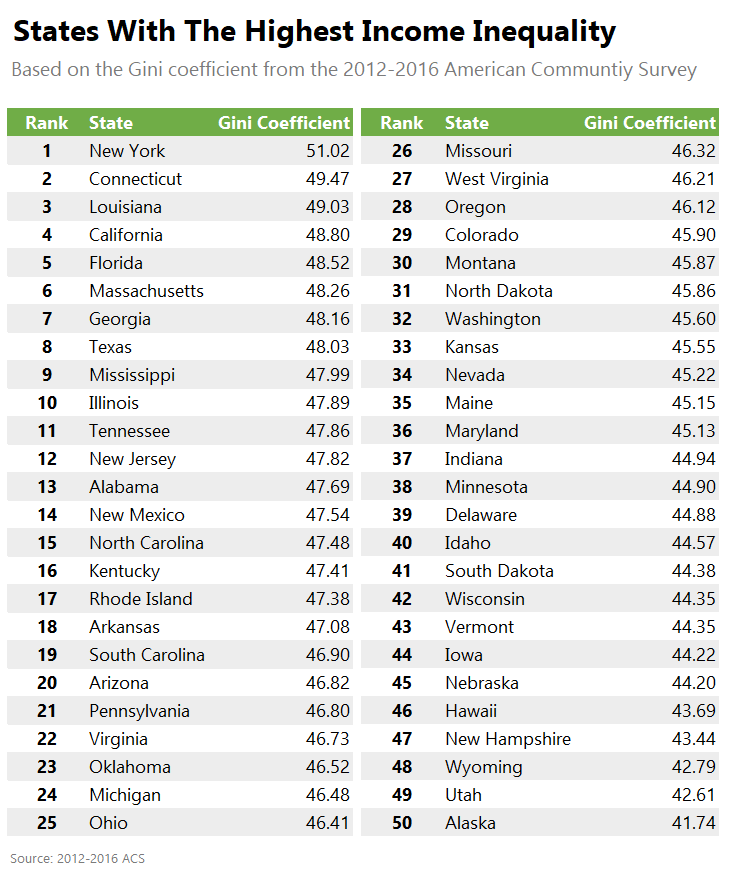
Some, like me, would argue Reagan accelerated economic inequality by giving tax cuts to the wealthy and deregulating the economy.

The federal deficit increased from $70 billion dollars to 152.6 billion dollars during the Reagan presidential years. In comparison to Carter’s administration, the deficit was less than half of Reagan’s at $74 billion dollars. Today’s deficit has grown to 1.83 trillion dollars. Four out of seven presidents (including Trump’s second term) since Reagan have been Republican. The deficit lays at the feet of both parties.

With the election of Trump, who emulates Reagan’s policies, one wonders–how much greater the deficit will be with reduced taxes for the rich and a renewal of economic deregulation.

Homelessness, illegal immigration, and America’s budget deficit will not be cured by reducing taxes on the rich or by tariffs that artificially increase the cost of living, or by cutting the labor force of farmers through mass deportations, or by making it easier to do business in the U.S.

FOR BETTER OR WORSE?

Trump’s purposefully uninformed knowledge of history will become a greater source of conflict in the world because he has a second term’ understanding of how the American government works and how it can be subverted with loyal followers.

Books of Interest
 Website: chetyarbrough.blog

Underground Empire (How America Weaponized the World Economy)

By: Henry Farrell, Abraham Newman

Narrated By: L. J. Ganser

“Underground Empire” is not a surprising revelation in today’s media-savvy era. Every person in the world is being surveilled by someone because of the power and influence of government. Whether a democracy that believes in freedom or an autocracy that believes in absolute control, Farrell and Newman explain how “Big Brother” is watching and acting in ways that affect your life.

The potential for ubiquitous surveillance was known and wished for by some government bureaucrats. Wide social surveillance was resisted by many in the American government until 9/11. After 9/11 that resistance weakened and surveillance of the world, more fully including American citizens, became indispensable. The creation of an “Underground Empire” has weaponized privacy and the fuel of money that can heat, cool, burn or freeze national economies.

The empire’s objective is to be in charge of the future. One may take issue with the word “…Empire”. The scale of an “Underground Empire” varies from nations like America, China, the UK, the EU, Russia, and others to a group of Al Qaeda’ terrorists, or a disparate group of Syrian freedom fighters. The common denominator is technological connection, i.e. the basis of “Underground…” organization for coordinated action that changes the world.

Ferrell and Newman’s primary focus becomes the use of surveillance to influence world policy.

Particularly, the surveillance of money, the source of power and prestige, is shown by the authors to be key to understanding what other countries and interests are planning and doing that affects society. They speculate that 9/11 could have been exposed before it happened with more surveillance of the money that was being accumulated by Al Qaeda and used by the terrorists who attacked the world trade center in New York. That might be true but there is a wider consequence of that level of surveillance. Surveillance has become a weapon in the hands of political leaders. Surveillance of the flow of money, the source of power and prestige, may make “America Great” as inferred by the pending second term President. The EU, NATO, and other international organizations are looked at differently by Trump than by former post-world war’ Presidents. Trump views the EU and NATO as users of American wealth without equivalent contribution to world defense.

On the one hand, Trump objects to NATO because of its disproportionate financial burden to the United States which pleases Putin and changes the perspective of America’s role in the world. On the other hand, the authors note Trump opposed Putin when it came to the Nord Stream 2 oil pipeline to the E.U. The difference has to do with the Trump’s transactional view of the world. Because of America’s vast gas supplies from fracking, Trump sided with Texas politicians who vociferously objected to the second Nord stream pipeline to Europe.

The “Underground Empire” is not exclusively focused on money, but the use of money is based on knowledge of what people are thinking, doing, and wanting. Accumulating information becomes actionable with money. The inference by the authors is that the government’s decision to track money, as well as private information, informs one of what will happen in the future. The problem with this narrow reasoning is that national interests of countries do not always line up with each other. The formation of the EU with its own currency becomes a competitor for America, not just a useful tool for exchange of goods between nations.

Today’s playing field is not limited to major powers. As the spread of technology is mastered by the public, anyone as small as an interest group or as large as an international alliance can influence and potentially change the world. Farrell and Newman offer important understanding of that invisible war. Obvious examples are 9/11, Ukraine’s invasion, and most recently, the overthrow and exile of Bashar al-Assad in Syria. But they also reveal another front for conflict between the U.S. and countries that have traditionally been allied with America.

Histories carriers of belief in information transparency are people like Edward Snowden, Daniel Ellsberg, Chelsea Manning, Mark Felt, and Reality Winner. Snowden, a former NSA contractor, leaked classified information about global surveillance, Ellsberg exposed the lies of Vietnam, Manning exposed the WikiLeaks, Felt exposed the Watergate scandal, and Winner exposed presidential election interference in 2016. Secrets frequently kill the truth.

Ferrell’s and Newman’s book will make many even more concerned about the Trump presidency. Trump’s purposefully uninformed knowledge of history will become a greater source of conflict in the world because he has a second term’ understanding of how the American government works and how it can be subverted with loyal followers.

To make the point clearer, Trump views the world transactionally. The measure of value is most easily understood as wealth and the influence of money. Appointing wealthy sycophants to the government ensure victimization of the poor.