FEAR & TREMBLING

America made many mistakes after the 9/11 terrorist attack. One hope’s Israel does not make the same mistakes after the 10/7/23 atrocity. Most Americans’ hearts go out to Israel despite fear and trembling for the world’s future.

Books of Interest
 Website: chetyarbrough.blog

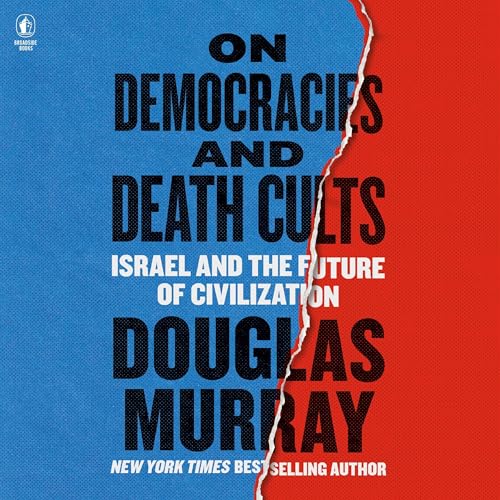
On Democracies and Death Cults (Israel and the Future of Civilization)

Author: Douglas Murray

Narrated By:  Douglas Murray

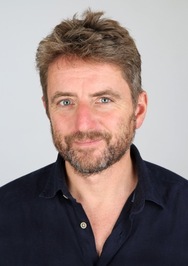
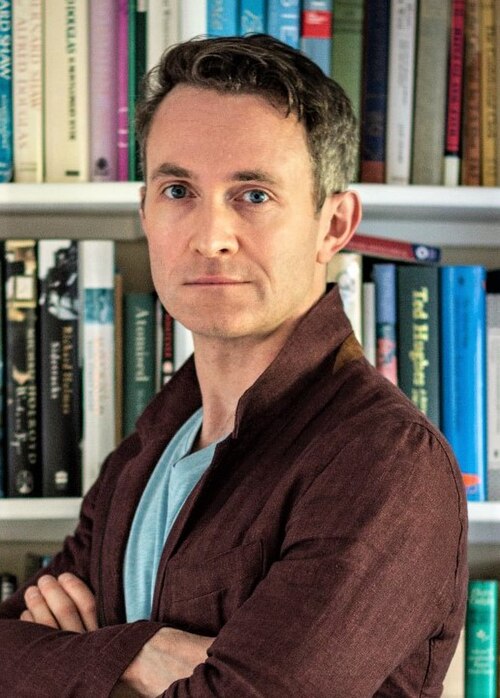
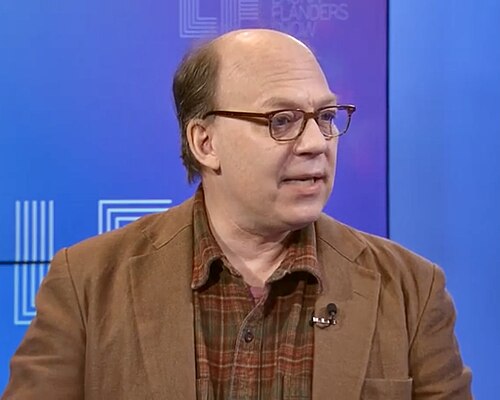
Douglas Murray (Author, Bristish political commentator, cultural critic, and journalist.)

“On Democracies…” is an important book because it offers perspective on what happened in Gaza on October 7, 2023, and the aftermath that leads to the bombing of Iran by Israel. In that October day, over 1,200 Israelis were killed including civilians, children, and elderly people. At least 251 hostages were taken. Photos of the aftermath show multiple signs of sexual assault. A woman survivor reports seeing Hamas fighters gang rape a woman before the last of her attackers shoots her in the head. The terror and destruction of the attack is as horrible as one can imagine. It reminds one of men and women jumping out of windows at the New York World Trade Center on 9/11.

As one listens to Murray’s book, one begins to understand why Israel is responding to the October 7th atrocity by attacking Gaza and bombing Iran.

Murray explains the idea of a proportional “tit for tat” response is absurd. Does a rational person expect Israel would respond to the Gaza atrocity by killing and/or raping 1,200 men, women, and children. What is not understood by many is that Israel recognizes October 7th as an attack on its existence as a nation. It is the same concern Ukrainians have in their war with Russia. The fundamental issue is sovereignty, not revenge.

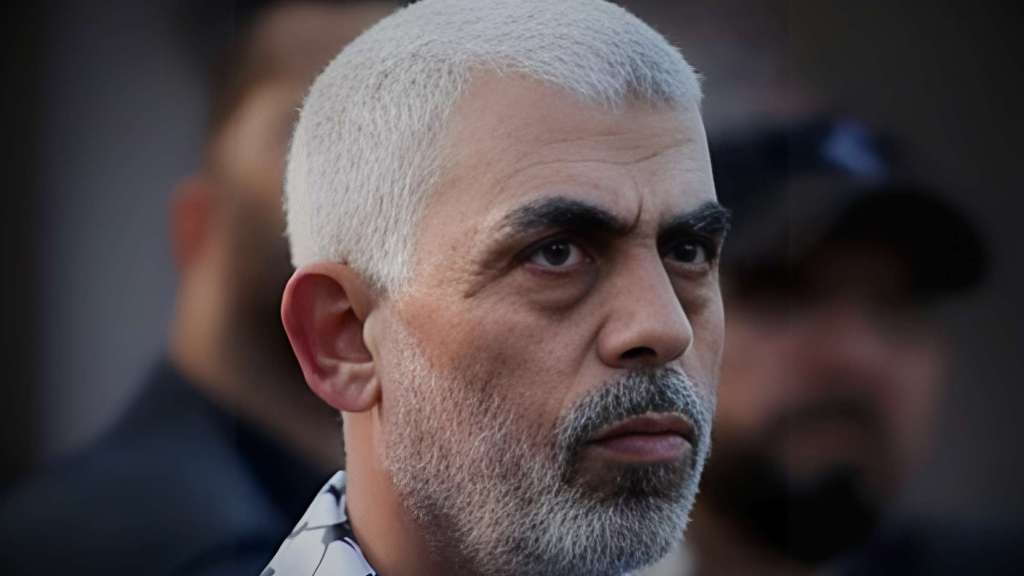
Like Osama bin Laden on his 9/11/01 attack on America, Yahya Ibrahim Hassan Sinwar, organized the massacre of 10/7/23. Both men were stateless terrorists who believed the U. S. and Isreal had no right to exist. Neither terrorist had an interest in the hard work of creating their own nation but only in destroying another. In the early days of the establishment of Israel, there was a drive to create an independent Palestinian state. Both Palestinian leaders and Arab states rejected proposals for a Palestinian state. In contrast, Israel chose to accept an opportunity to become an independent state in 1948. With the leadership of David Ben-Gurion, Israel declared independence and began the hard work of creating a nation. With a beginning population of 806,000, Israel grew to a prosperous nation of 9.7 million with over 73% being Jewish and the remainder being Arab or other nationalities. One must ask oneself, why have the Palestinians not taken the same path as Israel?

Murray makes one understand Israel is fighting for their lives to remain an independent nation.

It is the same fight Ukraine is waging. The bombing of Iran is based on Israel’s belief that Iran has supported Hamas throughout their terrorist war against Israel. Without honest recognition of Israel’s right to be an independent nation, there can be no peace. The continuing massacre in Gaza is a terrible consequence of the destructive intent of Hamas leadership that wishes to destroy Israel.

The sad realization coming from Murray’s book is that Palestinians and their supporters are not willing to do the hard work of creating an independent nation. The time may be past for that to ever occur because Israel is unlikely to agree to another neighboring nation being hostile to Israel’s existence.

America made many mistakes after the 9/11 terrorist attack. One hope’s Israel does not make the same mistakes after the 10/7/23 atrocity. Most Americans’ hearts go out to Israel despite fear and trembling for the world’s future.

BRUTALITY

What is so troubling about Grandin’s history is what appears to be the nature of human beings whether royalist, capitalist, socialist, or communist.

Books of Interest
 Website: chetyarbrough.blog

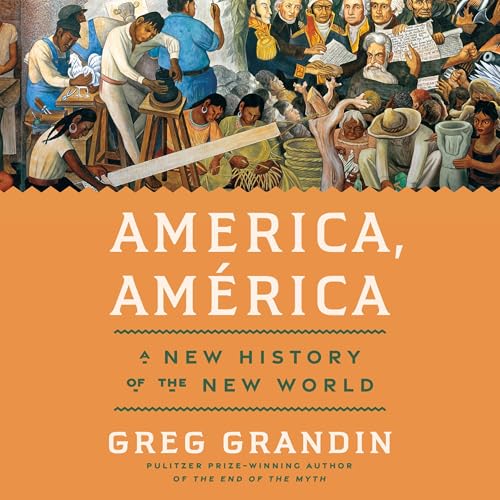
America, América (A New History of the New World)

Author: Greg Grandin

Narrated By:  Holter Graham

Greg Grandin (Author, American historian, professor of history at Yale University.)

Before Professor Grandin, most Americans presumed the United States came from the traditions of the British empire. After reading/listening to America, América, one recognizes the powerful influence of the Spanish empire on the settlement of North America, the attitude of colonists toward minorities, the growth of slavery, and the deep entanglement of Spain in the broader Americas. America, América is a book that widens one’s understanding of the history of the United States.

When being reminded of the many atrocities of colonization and the decimated indigenous natives of the Americas, one is appalled by man’s inhumanity to man. Grandin begins his history of colonization with the Spanish empires’ expansion into the Americas long before the Mayflower expedition to America. Conquistadors set the table for the way what became Americans way to colonize the New England territory. Hernán Cortés and Francisco Pizarro led expeditions that decimated the Aztecs in Mexico and the Incas in Peru. Looking for wealth Spanish conquistadors murdered, raped, and pillaged Latin American native populations. The conquistadors exemplified what became the modus vivendi of British colonists in America. Indigenous peoples were forced to work for Spanish landlords, later supplemented by imported African slaves. The atrocities of Spain in the 16th century are repeated by English settlers in the 17th and later centuries. An estimated 80% of the indigenous people of the Americas perished from disease, forced labor, and ethnic cleansing by Spanish settlers–a grim reminder of American settlers did to indigenous natives in America.

What is so troubling about Grandin’s history is what appears to be the nature of human beings whether royalist, capitalist, socialist, or communist. America, América shows the founding of the United States is a repeat of Spain’s early colonization of the southern part of North America. The human race appears driven by the desire for money, power, and prestige in a system that begins with attack on indigenous peoples and repeats as a perceived advance of civilization. There is some truth in that perception but one realizes indigenous peoples are equally driven and commit human atrocities among themselves in pursuit of value, power, and, or prestige.

This book is returned before completion because of its length. Its history is enlightening but its length is too much for this dilettante.

CRISIS

There is no religious, nationalist, or political justification for killing of innocents but the history of the world shows we are all killers.

Books of Interest
 Website: chetyarbrough.blog

Conquering Crises (Ten Lessons to Learn Before You Need Them)

By: Admiral William H. McRaven

Narrated By:  Willaim H. McRaven

William H. McRaven (Author, retired four-star admiral in the U.S. Navy, ninth commander of the U.S. Special Operations Command from 2011 to 2014, commanded special operations in Iraq and Afghanistan.)

Wisdom does not always come with experience or age. Though born in 1955, William McRaven spent 40 years as a special operations officer in the U.S. Navy. He retired from military service and became chancellor of the University of Texas System from 2015-2018. Now, as a writer, McRaven offers some insightful advice to those who manage others in response to crises. He offers his personal, corporate, and institutional experience as a crises’ manager.

Though McRaven’s experience comes from a military system of command, he offers a listen, learn, and plan approach to getting things done through others.

When faced with a reported crisis, he notes the first information one receives is usually inaccurate and misleading. He offers numerous examples like Pearl Harbor in 1941, Hurricane Katrina in 2005, and Covid-19 in the 21st century. The first reports of those crises were misleading and were found to be much more consequential and damaging than originally reported. The first step when faced with a crisis is to be sure of the facts. McRaven generally discounts first reports. He suggests one should confirm details from personal observation (if possible or practicable). If one cannot investigate facts of a crises personally, one must confirm details from other sources that are at, subject to, or near the crisis. The point is not to act on first reports but to seek more information.

McRaven receives a phone call in the middle of the night about a mistaken Taliban sympathizer carrying a weapon who is shot and killed by an American soldier during America’s intervention in Afghanistan.

It was found he was not a sympathizer but a cousin of the President of Afghanistan. McRaven calls General Petraeus in the middle of the night to report the incident. Petraeus thanks McRaven for contacting him immediately rather than waiting until the morning. Both recognize the urgency of the crises. They discuss details of what happened and plan a response. McRaven is ordered to contact the President of Afghanistan immediately to explain what happened and offer American support for the family of the murdered cousin. McRaven’s point is know the facts of a crises, create a plan to address what is known, react as quickly as the correct facts are known, plan a response agreed upon by those in authority, and act (as soon as possible) according to plan.

Taliban resurgence in Afghanistan.

A more complicated crisis noted by McRaven is also in Afghanistan. America’s ambassador to Afghanistan meets with McRaven to tell him the special forces reporting to him in Afghanistan are alienating local Afghan citizens with their military actions against the Taliban. The ambassador tells McRaven his operations are alienating Afghani citizens to the point of losing America’s war against the Taliban. The meeting becomes heated because McRaven believes his command is doing a great job of pacifying Taliban attacks on local citizens. Rather than acting like an ostrich with its head in the sand, McRaven calls for a meeting of colonels in the Afghanistan theater to investigate the Ambassador’s accusation. The team McRaven assembles finds the Ambassador’s concerns are justified. Though peaceful coexistence appeared to be improved with McRaven’s special forces’ actions, the alienation of Afghani’s was growing. As has been written by other authors, America’s special forces often acted based on one Afghani family’s personal anger at another family rather than for any concern about Taliban activity.

The group of colonels assembled by McRaven developed a plan to more judiciously act on alleged Taliban activity from Afghan informants.

Of course, America’s ignominious departure from Afghanistan, implies McRaven’s response was too little and too late. This is not to argue that McRaven’s response was wrong but only that the plan did not stop Taliban resurgence. The valid point McRaven is making is that one should systematically address a crisis, create a plan once the facts are known, and execute the plan. Obviously, not all crises are successfully resolved. In the case of America’s intervention in Afghanistan, McRaven’s plan may not have been right for the facts that were gathered, or the crises was just too culturally complex for a successfully executed response.

McRaven comes across as a highly competent leader and manager in a crises.

Where one may have reservations about any leader’s role in a crisis is whether they agree on the facts. McRaven believes it is right to assassinate a proven terrorist who has killed innocent people. That kind of decision goes beyond the principles of McRaven’s book about response to crises. “Judge not, lest ye be judged” is alleged to have been said by Jesus in his Sermon on the Mount.

McRaven believes assassination is justified.

In Ukraine and Gaza, innocents are being killed every day. There is no religious, nationalist, or political justification for killing of innocents but the history of the world shows we are all killers. In a crisis, you would want someone like McRaven to be the “beauty on duty”, but one must ask oneself if assassination is ever justified.

ABSOLUTION

History of the world has shown all forms of government are “equal opportunity” inhibitors, if not destroyers.

Books of Interest
 Website: chetyarbrough.blog

Secondhand Time (The Last of the Soviets)

By: Svetlana Alexievich

Narrated By: Amanda Carlin, Mark Bramhall, Cassandra Campbell & 8 more.

Svetlana Alexievich (Author, Belarusian investigative journalist, winner of the Nobel Prize in Literature in 2015.)

Svetlana Alexievich’s “Secondhand Time” is a remarkable and informative explanation of why Putin believes he is right and why many citizens of Russia seem to continue in their support of his administration.

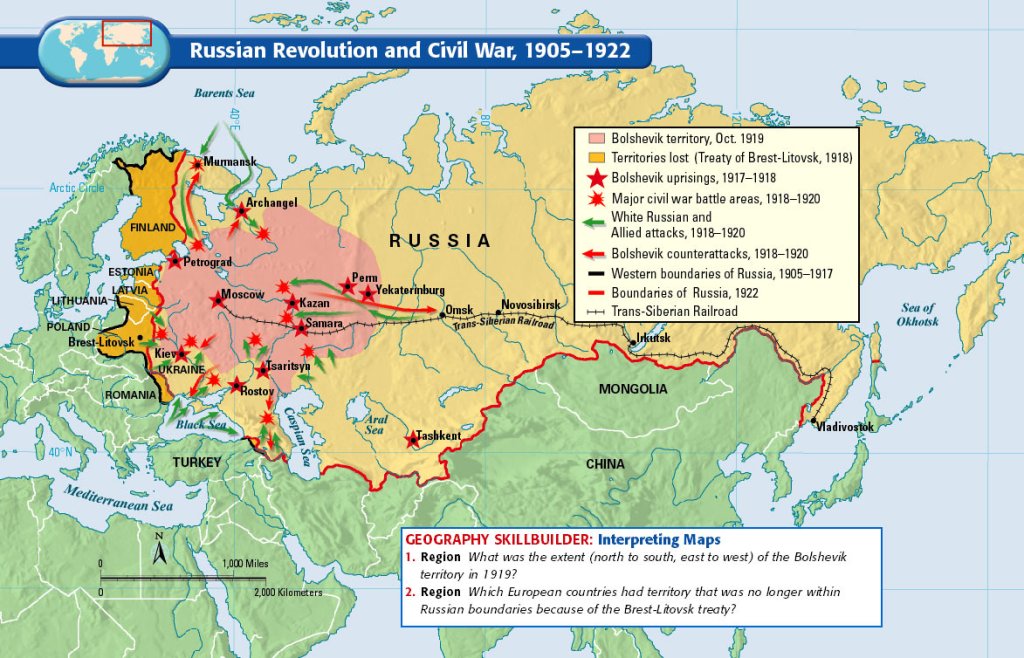
Map of the former U.S.S.R.

Alexievich conducts a series of interviews with Russian citizens of different generations about the U.S.S.R. and its return to the world stage as a Russian nation. The narrators of her book recite those interviews to give listener/readers a complex and enlightening picture of Russian culture. The clash of communist and capitalist ideals is at the foundation of the interviews and the narrators dramatically told stories.

The Russian Soviet Army is the first to arrive in the Battle of Berlin on April 16, 1945. Their flag was hoisted on May 1, 1945.

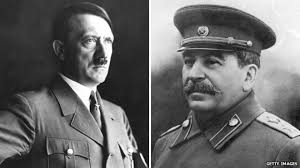
The citizens of Russia are justifiably proud of their role in WWII that turned the tide of Germany’s war of aggression. (Of course, that is putting aside Stalin’s Machiavellian decision to join Hitler at the beginning of the war.) Some Russian soldiers who fought in that war were disgusted with what they feel was a betrayal by Mikhail Gorbachev of communist ideals for which they lived and died for in the 20th century.

The rejection of communist ideals for capitalism is viewed by some Russians as a tyranny of greed that lays waste to the poor and creates a class of haves and have-nots.

Some Russian veterans of WWII see the seduction of capitalism destroying the ideal of a classless society. Some citizens see the ideal of a government is to demand the wealth of life be spread equally according to individual need. To these believers, enforcement of communist ideals would eliminate private property and greed that would create a classless society. Some believed Stalin exemplified leadership that would achieve that ideal. The hardship of life during Stalin’s rule is considered by some as justified means for the achievement of the Marxist ideal of communism.

Statue of the “Circle of Life” in Norway.

Cultures may be different, but all human life is the same.

The underlying point of these interviews is to show Russian culture is not monolithic, just as culture is not in any nation. All cultures are filled with diversity. There is no singular cultural mind but a range of interests among many factions that establish a nation’s culture. The evidence of that is the contrast of Gorbachev and Putin in Russia and FDR and Trump in America. All four leaders led their countries but represent completely different cultural beliefs.

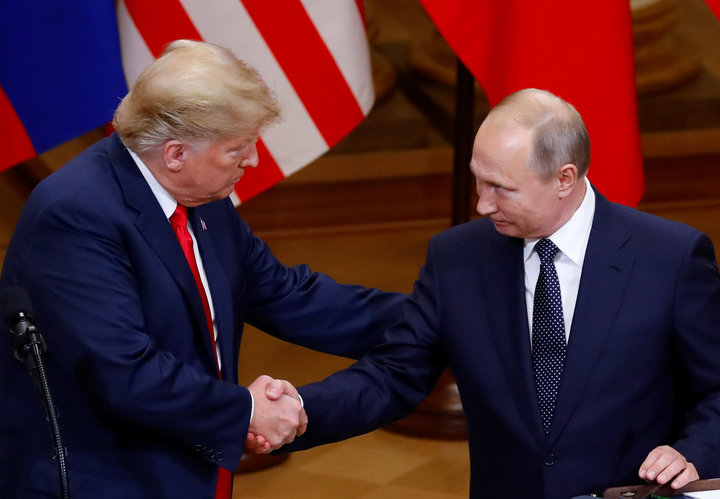
Conservatives, New York Governor Al Smith, Southern Democrats, and isolationists like Charles Beard opposed FDR in America. Putin and Trump have their cultural supporters in today’s national governments, but they also have their critics. The difference is that in Putin’s world, being killed or put in prison for opposition is culturally acceptable. In America, one is reminded of Trump’s deportation and imprisonment of migrants without due process.

The author’s interviews are not suggesting that either Russia or the West have good or bad governments but that every culture tests their leaders.

Many Russians, undoubtedly blame American Democracy for the dismantling of the U.S.S.R. Alexievich interviews Russians who believe the hardship that countries within the U.S.S.R. experienced were not the fault of Stalinist policies but the failure of citizens to live up to the ideals of communism. To anyone who has traveled to the Baltics, that opinion is founded on ignorance of the hostility expressed by citizens of the Baltics who were starved, displaced, jailed, and murdered during their occupation by Russia.

The other part of the story is the rise of the oligarchs in Russia as a result of the greed associated with capitalism.

The gap between rich and poor is accelerated in Russia just as it has been in America. Democracy does not have clean hands when it comes to equality of opportunity. Like the Jewish pogroms in Russia, America’s enslavement, murder, and discrimination of Blacks is proven history.

Siberian Exile during Stalin’s reign in Russia.

Alexievich draws from all sides of Russian beliefs. Those interviewed note the terrible conditions of those exiled to Siberia. Many Russians became disillusioned by the redistribution of wealth and privilege after Gorbachev and Yeltsin showed themselves to not be up to the task of leadership change. In fairness, one wonders who could have been up to the task when Russia had a long history of monarchal and tyrannical leadership?

A few Russians became immensely wealthy while the majority were somewhat better off but some struggled with the loss of State benefits and fewer jobs. The rising gap between rich and poor soured communist idealists. Even those who had been sent to Siberia by Stalin who toiled and suffered the experience of isolation, slave labor, and frigid weather felt they were no better off because of the loss of a socialist future.

The frightening truth of Alexievich’s book about the culture of Russia is that Putin may be absolved for his atrocities just as leaders of America have been absolved for their mistakes. History of the world has shown all forms of government are “equal opportunity” inhibitors, if not destroyers.

WAR

The only hope for Ukraine is a change in Russia’s leadership as a result of Putin’s foolish effort to return Russia to its past. It is the same effort and mistake Trump is making in trying to return America to the 20th century.

Books of Interest
 Website: chetyarbrough.blog

The Evil Hours: A Biography of Post-Traumatic Stress Disorder

By: David J. Morris

Narrated By: Mike Chamberlain

David J. Morris (Author, former Marine, reporter in Iraq, received Navy-Marine Corps Commendation Medal, M.A. from San Diego State University and the University of California, Irvine.)

In listening to “The Evil Hours”, the refrain “War, what is it good for, ABSOLUTLY NOTHING” from Edwin Starr’s song comes to mind. Ukraine’s and America’s current political position in ending the war are irreconcilable. Anyone who has read this blog knows I am not a fan of President Trump but his position on the war is sadly correct. It is sad because it is only Ukranian people who will suffer, not we who are isolated from the European continent.

Having recently visited the Baltics, and hearing of their experience under Stalin from a family we had dinner with makes one understand how horrible Trump’s decision will be for Ukraine’s citizens.

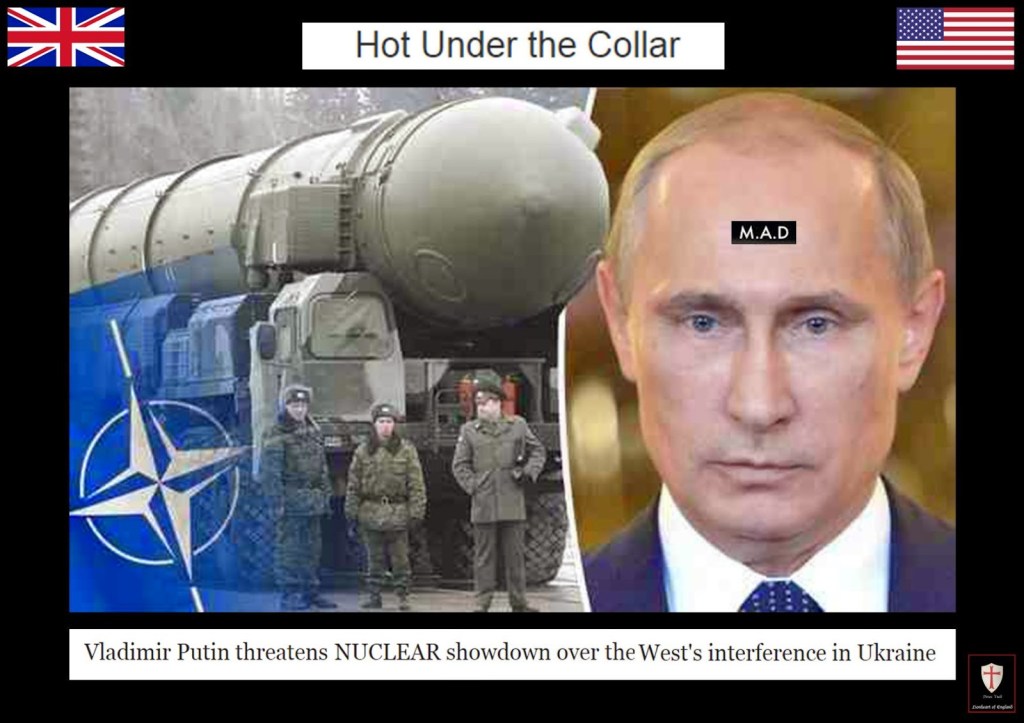
Trump’s decision is a Hobson’s choice because there seems no alternative. The potential for nuclear war is a threat from Putin who has an ego like Trump’s that cannot be assuaged. Putin appears not to be deterred by his followers or the Russian citizens.

What is left is the domination of a portion of Ukraine that will be forced to live under a dictatorship.

Hearing from Baltic citizens of how horrible their lives were under Stalin; one’s heart goes out to Ukrainian citizens who will have to live under Putin. Putin and Russia will pay a high price for their occupation because of citizen opposition that will take many forms. Though there is no comfort to the Ukranian people, Russia’s occupation will eventually end. The cost of Russia’s invasion of Ukraine has been high. It will be a reminder of the folly of unjust invasion and dictatorial control of an independent people.

America’s foolish Vietnam’ belief in a domino theory of Vietnam was wrong, just as the belief that Russia’s success in Ukraine will lead to further Russian expansion.

The relevance of “The Evil Hours” is the stress Ukrainians will face with Russian occupation. One hopes Russian occupation will not take as long as it did for the Baltic countries to regain independence.

PTSD is shown as the horrible consequence of internecine conflict that will continue after Russia’s occupation.

The only hope for Ukraine is a change in Russia’s leadership as a result of Putin’s foolish effort to return Russia to its past. It is the same effort and mistake Trump is making in trying to return America to the 20th century.

TERROR

In light of Donald Trump’s disruption of government employment, one wonders what foreign and domestic conspiracies are being missed?

Books of Interest
 Website: chetyarbrough.blog

The Looming Tower (Al-Qaeda and the Road to 9/11)

By: Lawrence Wright

Edited By: Alan Sklar

Lawrence Wright (Author, writer and journalist.)

Lawrence Wright won the Pulitzer Prize for his meticulous research and writing on the origin of Al-Qaeda and its lead up to the 9/11 attack on America. “The Looming Tower” is not a popular audiobook for some Americans. It tells listener/readers of America’s intelligence failure in the early 21st century. A militant Muslim religious organization is created in the Middle East with intent and successful execution of an attack on the United States in 2o01.

Sayyid Qutb (1906-1966, Egyptian Author, Educator, Islamic Theorist, Poet, former leading member of the Muslim Brotherhood.)

A name not well known by most Americans is Sayyid Qutb (pronounced koo-tube), a Muslim religious believer and scholar. Wright suggests Qutb laid the groundwork for Islamist extremism in a religious organization called the Brotherhood. Though Qutb was raised in Egypt and gained his education at a Cairo teacher’s school called Dar al-‘Ulum, he spent two years at the University of Northern Colorado between 1948 and 1950. Wright argues Qutb’s experience in America shaped his views of Western society and, in particular, America. He believed and wrote that the moral and cultural nature of non-Islamic society was decadent. Wright suggests Qutb warranted violence against the West because his experience in Colorado showed Western culture corrupted Islamic values.

The World Trade Center collapse killed 2,753 civilians, firefighters, and law enforcement officers.

In The Looming Tower, Lawrence Wright suggests the primary motivation for 9/11 stemmed from ideological and cultural grievances rooted in extremist interpretations of Islam. Osama bin-Laden is shown to have adopted beliefs that were the same as those of Qutb, i.e. the belief that all who were not adherent to the Muslim religion were infidels and subject to damnation in this life and in their life after death. Wright emphasizes the influence of figures like Sayyid Qutb, who’s disdain for Western values and culture laid the philosophical groundwork for jihadist movements. Qutb, and subsequent al-Qaeda leaders like Osama bin Laden and Ayman al-Zawahiri, believed that Western influences were corrupting Islamic society and threatening Muslim values and beliefs.

Osama bin-Laden is estimated to have inherited $25 million to $30 million dollars from his father Mohammed bin Laden when he died. Osama chose to use his wealth to destroy American cultural and religious symbols he believed were contrary to Muslim beliefs.

The book outlines how bin Laden and his network were driven by anti-Western ideology to oppose U.S. foreign policies in the Middle East. Al Qaeda wished to assert power by attacking symbolic targets. The 9/11 attacks were meant to provoke a dramatic response from the U.S. and further polarize the world along ideological lines, feeding into their long-term vision of a global jihad. Wright meticulously explores how these motivations were cultivated over decades. “The Looming Tower” is a compelling and deeply researched account of the events leading up to 9/11 in 2001.

Abdullah Yusuf Azzam (1941-1989, father of global jihad, a Palestinian-Jordanian’ Islamist jihadist and theologian, is killed in a car bomb, along with his 2 sons, in Peshawar, Pakistan.)

Osama bin-Laden’s father was a billionaire construction magnet in Saudi Arabia. Osama bin Laden, and the many heirs of his father, enabled his many children to live lives in luxury if they chose. Osama chose to use his wealth to destroy American cultural and religious symbols he believed were contrary to Muslim beliefs. Abdullah Azzam was often referred to as the “father of global jihad,” Azzam was a mentor to bin Laden and played a significant role in shaping his ideology. He encouraged bin Laden to channel his resources into the Afghan jihad against the Soviet Union. The irony of bin Laden’s choice is that he was an incompetent military leader but an effective promoter and steward of jihad, the effort to live a righteous life, avoid sin and uphold the principles of Islam. A further irony is that bin Laden’s murder of innocents seems a sin of the highest degree.

Osama bin Laden was killed on May 2, 2011, during a U.S. military operation called Operation Neptune Spear.

The mission was carried out by SEAL Team Six, a special operations unit of the U.S. Navy, at bin Laden’s compound in Abbottabad, Pakistan. This was eleven years after the world trade center, Pentagon, and flight 93 crash. The Trade Center collapse killed 2,753 civilians, firefighters, and law enforcement officers. The Pentagon attack killed 184 military and civilian personnel. Flight 93 resulted in 40 passenger and crew deaths. In a complex web of influence and support, “The Looming Tower” emphasizes the attacks were the result of al-Qaeda’s planning and execution by followers of Osama bin Laden.

Wright notes Ayman al-Zawahiri became Bin Laden’s second-in-command and a key strategist for al-Qaeda. Zawahiri takes control of al-Qaeda after bin Laden’s death.

Ayman al-Zawahiri’s background in Egyptian Islamic Jihad and his partnership with bin Laden were pivotal in the group’s evolution. Ayman al-Zawahiri became the leader of al-Qaeda after Osama bin Laden was killed. An American operation that killed al-Zawahiri in 2022 was carried out by the CIA that targeted him on the balcony of a safe house in Kabul, Afghanistan.

Wright notes that bin Laden received financial support from members of the Saudi elite during the early stages of his jihadist activities, though this relationship soured over time.

Jamal al-Fadl was an al-Qaeda operative who helped establish the organization’s financial infrastructure. He later defected and provided critical intelligence to the U.S. about al-Qaeda’s operations. Many individuals and entities played pivotal roles in enabling bin Laden’s vision and the expansion of al-Qaeda. Wright’s book delves deeply into their motivations and actions. It’s a fascinating, albeit chilling, exploration of history.

John P. O’Neill was an FBI counter-terrorism expert who tirelessly pursued bin Laden.

John P. O’Neill was an FBI counter-terrorism expert who tirelessly pursued bin Laden. Tragically, O’Neill died in the 9/11 attack while serving as head of security at the World Trade Center. The FBI had gathered significant domestic intelligence on al-Qaeda operatives within the United States, including their movements and activities. However, the CIA, focused on foreign intelligence. They withheld crucial information about al-Qaeda’s overseas operations and connections because foreign intelligence was their exclusive responsibility. This lack of coordination with the FBI (limited to domestic terrorism), and rivalry between the agencies, meant that neither had a complete picture of the threat. The CIA had knowledge of al-Qaeda members Khalid al-Mihdhar and Nawaf al-Hazmi who were two team members for the attacks on 9/11. Because of a lack of cooperation between agencies, the FBI did not know they should be tracking these individuals. They became key players in hijacking American Airlines Flight 77 which plowed into the Pentagon.

In The Looming Tower, Lawrence Wright emphasizes the significance of John O’Neill, an FBI counterterrorism expert, as one of the most important figures who recognized the threat posed by Osama bin Laden. O’Neill was deeply committed to tracking al-Qaeda and warned about its intentions, but his efforts were often hindered by interagency conflicts and bureaucratic obstacles. Wright portrays O’Neill as a passionate and prescient individual who understood the gravity of al Qaeda’s threat long before many others did.

In The Looming Tower, Lawrence Wright highlights the CIA’s Alec Station, who tracked Osama bin Laden and al-Qaeda. This unit was led by Michael Scheuer, a CIA analyst who played a pivotal role in gathering intelligence on bin Laden during the 1990s. Alec Station was instrumental in understanding al-Qaeda’s operations, though the book criticizes the interagency conflicts that hindered surveillance effectiveness. Wright paints a vivid picture of the challenges faced by intelligence agencies in the lead-up to 9/11.

Michael Scheuer, a CIA analyst who played a pivotal role in gathering intelligence on bin Laden during the 1990s.

On the CIA side, Michael Scheuer, who led Alec Station (the CIA’s unit that was monitoring bin Laden), played a role in identifying the danger. However, Wright notes the lack of collaboration between the FBI and CIA, ultimately undermined their ability to prevent the attacks. The book paints a vivid picture of the challenges faced in navigating institutional rivalries while trying to protect the nation. Wright’s narrative is both compelling and sobering.

“The Looming Tower” highlights how some individuals connected to al-Qaeda faced legal consequences. For example, figures like Ali Mohamed, a former U.S. Army sergeant turned al-Qaeda operative, was prosecuted for his role in supporting terrorism. Mohamed provided critical intelligence and training to al-Qaeda and was eventually arrested and convicted in the U.S.

In light of Donald Trump’s disruption of government employment, one wonders what foreign and domestic conspiracies are being missed?

HUMAN NATURE

Murakami is one of the great writers of modern times. In “after the quake”, Murakami reduces the great and horrid loss of the many to the feelings of the “one”

Books of Interest
 Website: chetyarbrough.blog

“after the quake”

By: Haruki Murakami

Narrated By: Rupert Degas, Teresa Gallagher, Adam Sims

The Kobe, Japan earthquake struck on January 17, 1995, at 5:46 AM. It killed 6,400 people and injured more than 40,000. Approximately 300,000 residents were displaced with over 240,000 homes, buildings, highways, and rail lines damaged with estimated repair cost of $200 billion in 1995. (The Kobe earthquake was actually less damaging than Japan’s 2011 Tōhoku earthquake and subsequent tsunami that killed over 18,000 people. Over 123,000 homes were destroyed. The estimated cost of that disaster was $220 billion dollars.)

Haruki Murakami offers a series of short stories in “after the quake” that remind one of the frailties of human beings. Humans lie, steal, cheat and war against each in ways that exceed natural disasters. Murakami’s short stories are funny, sad, and insightful views of humanity that show we often foment our own disasters.

Each short story revolves around the social implications of the Kobe’ earthquake. Murakami cleverly weaves his stories to reflect on events that change one’s direction in life. The events can be as great as an earthquake, a war, or a singular lost love. The first is nature’s way; the second and third are humans’ way.

Human relationships are as unpredictable and destructive as natural disasters. The human’ Lushan rebellion in 8th century China is estimated to have killed 13 million people, the Mongol invasion in the 13th and 14th century 20 to 60 million, the Taiping rebellion in mid-19th century China 20-30 million, and two world wars in the 20th century at 83-107 million. This is without noting China’s famine that killed millions because of Mao’s mistakes in the Great Leap Forward, Stalin’s repression in Russia, and today’s wars in Ukraine and Gaza. Natural disasters are horrendous events, but human nature has murdered more than earthquakes, floods, volcanoes, and other natural disasters.

The cataclysmic events of nature affect the many, but Murakami shows scale means nothing in respect to the effect it has on the “one”. He cleverly shows how singular events can overwhelm one relationship as portentously as natural or man-made disasters can overwhelm all relationships.

Murakami is one of the great writers of modern times. In “after the quake”, Murakami reduces the great and horrid loss of the many to the feelings of the “one”. His stories show that a personal loss of an imaginary friend or a real love is as catastrophic to the one as a natural disaster or war is to the many.

THE WHITE HEGEMON

Muslim Palestinians, like the Indians of America and the Jews of Israel, believe they have the same rights to the lands of their ancestors. In history, that seems to have never been true for any indigenous or displaced culture.

Books of Interest
 Website: chetyarbrough.blog

One Day, Everyone Will Have Always Been Against This 

By: Omar El Akkad

Narrated By: Omar El Akkad

Omar El Akkad (Author, lives in Oregon, winner of the 2021 Giller Prize. Became a Egyptian Canadian citizen and now lives in Oregon.)

Omar El Akkad expresses the frustration of being an American citizen of an ethnicity and race that has little power as a minority in today’s world. He writes of life being out of one’s control. Akkad’s story is partly about his family’s life as they leave Egypt for Canada, and then America. However, his primary purpose is to write of the atrocity of the Palestinian/Israeli war. On the one hand it is a terrifying example of the domestic trials of his father and family in moving from Egypt to America. On the other, it is a heartbreaking review of slaughtered innocents in Gaza.

Ironically, the phrase “from God’s mouth to our ears” comes from a Jewish and Arabic religious expression.

Contrary to Omar El Akkad’s book title, the history of white society suggests the belief that “One Day Everyone Will Have Always Been Against This” will likely never come. The title of Akkad’s book is about how leadership in America and Israel has failed. As Lord Acton said in the 19th century “Power tends to corrupt, and absolute power corrupts absolutely”. President Trump, former President Biden, and Benjamin Netanyahu are proving Acton’s observation.

Social and cultural differences have always roiled world history.

Jews believe they have the right to live in peace in Israel because of their culture and the history of their settlement in the land of their forefathers. Muslim Palestinians, like the Indians of America and the Jews of Israel, believe they have the same rights to the lands of their ancestors. In history, that seems to have never been true for any indigenous or displaced culture.

The slaughter of Indians, enslavement of minorities by white America, and the slaughter of innocent Muslims by Netanyahu and his followers are all reprehensible examples of the misuse of government power. This is not to say Hamas is not guilty of crimes against humanity, but their evil acts do not warrant evil reactions. The power of Israel is being used for evil, not the return of peace.

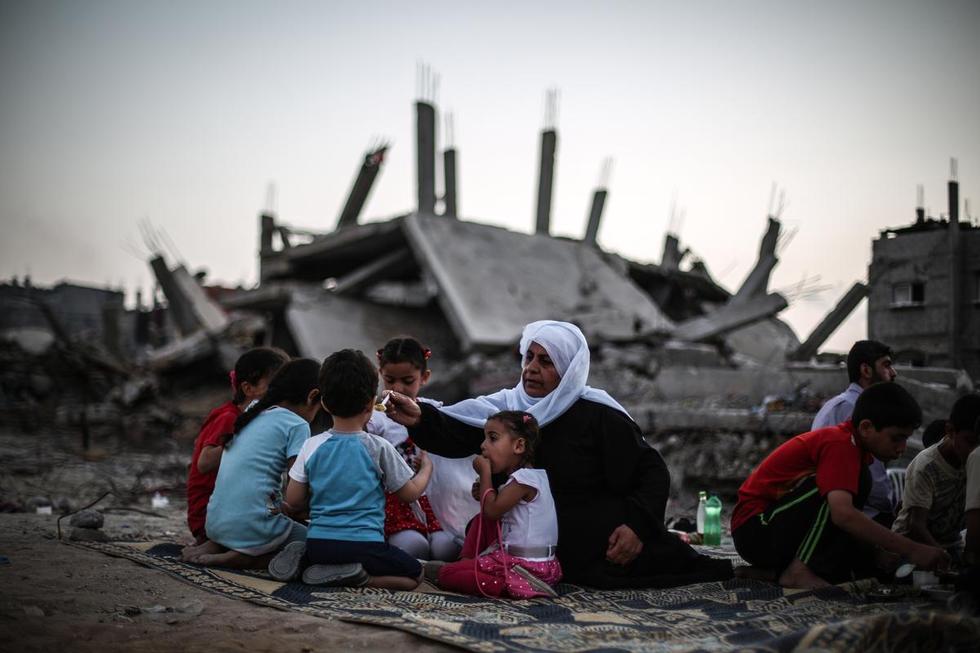
Netanyahu’s refusal to settle with Hamas over unjustly murdered, imprisoned, and abused hostages does not justify the killing of Palestinian innocents in Gaza. The power of Netanyahu’s military actions and Trump’s support for taking Gaza land from the Palestinians is evil and unjust. That evil and injustice must be replaced with a negotiated settlement that releases Hamas’ hostages and returns Gaza to the Palestinian people. Humanity cannot wait until “…Everyone Will Have Always Been Against This”. Power lies in the hands of Israel’s leaders to negotiate a settlement.

The common denominator of the war in Gaza is the power being held by white people who refuse to believe all human beings are equal. It is partly a religious issue, but it is a human issue aggravated by religious difference and the self-interests of people of different races and cultures. The white world hegemon needs to come to its senses because at some point in the future, “being white” will not be where the power rests. Power will shift to other races and cultures just as Mesopotamians, Egyptians, Mongols, Chinese Dynasties, and Islamic Caliphates once changed the course of history.

Omar El Akkad pleads for peace and human equality in One Day, Everyone Will Have Always Been Against This. From El Akkad’s words, the white hegemon should hear and obey.

WAR & PEACE

Trump’s effort to make peace is important. Putin will gain a pyrrhic victory, and many Ukrainians will suffer the same consequence as the Baltic citizens who were victimized by Stalin. It is likely that the price of peace is going to be the lives of Ukrainians who come under Putin’s rule. The only solace is that Putin, like Stalin, is near the end of his rule.

Books of Interest
 Website: chetyarbrough.blog

The Rise and Fall of the Third Reich (A History of Nazi Germany)

By: William L. Shirer

Narrated By: Grover Gardener

In thinking about Putin’s invasion of Ukraine, it seems prudent to revisit William Shirer’s studied history of Nazi Germany and the beginnings of WWII.

Reviewing the literature and history of Russia and Germany, one wonders if there are parallels between Hitler’s invasion of Poland and Putin’s invasion of Ukraine. Literature suggests few cultural parallels. Having read Dostoevsky and Tolstoy, one can hardly compare their themes of societal suffering and redemption to Kant and Nietzsche’s themes of individualism or Mein Kamph’s iteration of survival of the fittest. In the history of the Czars of Russia, society and class were of the greatest importance while in Germany, Goethe’s Faust and Hesse’s Siddhartha–the focus was on individualism–not the general condition of society.

It seems Putin is not like Hitler in his aim to acquire other countries. Putin is interested in expanding Russia’s territory to return to a Stalinist style of communism. Both Hitler and Putin are deluded but in different ways. William Shirer characterizes Hitler as ambitious, and fanatic but focused on gaining personal power through German conquest of other countries. Putin’s invasion of Ukraine is to return Russia to a Stalinist U.S.S.R., a nationalist power. Both are set on invading other countries, but Shirer shows Hitler’s desire is for personal power while Putin is more interested in nation-state power.

One must ask oneself, if there is a motivational difference, so what? The consequences to countries being invaded is the same.

Yes, the consequence to an invaded country is the same regardless of the motivation of the invader. Hearing the atrocity of Russian oppression is as though it happened yesterday when one visits the Baltic countries and talks to people who survived Stalin’s control of their countries. There is a palpable fear one hears from Baltic citizens when the invasion of Ukraine by Russia is discussed. The fear is in the possibility of the Baltics being next.

President Trump is attempting to quell the war between Russia and Ukraine, but the cost of peace looks like it will require appeasement at the expense of Ukrainian citizens.

The question is–will appeasement stop further encroachment by Russia on other former U.S.S.R. countries? Putin is 72 years old. Hitler was 45 years old when he became the Führer of Germany. It seems unlikely that the next leader of Russia will follow Putin’s lead in view of Russia’s atrocities in Ukraine and the history of former citizens, like those of the Baltics in Stalin’s U.S.S.R.

The invasion of Ukraine is not like Hitler’s invasion of Poland except in the tragedy of death of innocents.

There is little reason to believe Ukraine is a domino, as was the mistaken American belief in Vietnam by the Kennedy Administration. As all who have read this blog, I am not a fan of Donald Trump. However, in this realpolitik world, Trump’s effort to make peace is important. Putin will gain a pyrrhic victory, and many Ukrainians will suffer the same consequence as the Baltic citizens who were victimized by Stalin. It is likely that the price of peace is going to be the lives of Ukrainians who come under Putin’s rule. The only solace is that Putin, like Stalin, is near the end of his rule.

JAPAN

In planning a trip to Japan this year, it seems prudent to learn more about the history of Japan.

Books of Interest
 Website: chetyarbrough.

Great Courses-Understanding Japan (A Cultural History)

By: Mark J. Ravina

Narrated By: Mark J. Ravina

Mark Ravina (Scholar of Japanese history at the University of Texas at Austin)

Professor Ravina’s lectures are a little too heavy on Japan’s ancient history but offers some interesting opinion about the rise of the Samurai, the evolution of women’s roles in Japan, Emperor Hirohito and his role in WWII, the democratization of Japan after WWII, and the cause of Japan’s current economic stagnation.

As is well known, the Samurai were a warrior class in Japan. Their role in Japanese history grows between 794 and 1185.

They began as private armies for noble families with estates in Japan. They became a force in Japanese politics and have had an enduring effect on Japanese society. They evolved after 1185 into a ruling military government called shogun that exhibited political influence through 1333, emphasizing Bushido or what is defined as a strict code of loyalty, honor, and discipline. That discipline extended to ritual suicide in defeat or disgrace to preserve one’s honor. Zen Buddhism entered into the Samuria culture, exhibiting a time of peace under the Tokugawa shogunate that lasted until 1868. After 1868, the Samurai era came to an end, but its cultural influence remains in a modernized military that adheres to qualities of discipline, honor, and resilience.

Traditional Japanese Woman.

The role of women in Japan has evolved from great influence and freedom for the well-to-do to a life of restricted domesticity.

During the Samurai era, the influence of women declined and became more restricted. The rise of Confucian ideals emphasized male dominance with women being relegated to domestic duty. Women turned to art, calligraphy, and religion as their societal influence decreased. In the Meiji Era (1868-1912) women’s education somewhat improved and they began to participate in political movements like voting and equal rights. Finally, after WWII, a new constitution granted women equal rights like the right to vote and enter the workforce. However, like America, traditional gender roles persisted. In today’s Japan, like most of the world, equal rights remain a battle for women.

Hirohito is the 124th Emperor of Japan.

He reigned from 1926 to 1989. Professor Ravina notes that a question is raised about whether the emperor was a follower or leader in Japan’s role in WWII. Ravina argues history showed Hirohito’s role was as a leader. In defeat, Hirohito renounced his divine status to become a constitutional monarch under U.S. occupation. Hirohito, as the crown prince of Japan, strengthened Japan’s diplomatic ties on the world stage. He was instrumental in scientific research in marine biology. He emphasized Japan’s drive to become an industrial nation and player in international trade. He militarized Japan in preparation for war and territorial expansion. He authorized invasion of Manchuria in 1931 to establish it as a puppet of Japan. Hirohito aids the American occupation, after WWII, to de-militarize and re-industrialize Japan.

With creation of a new constitution for Japan in 1947, Japan became a constitutional monarchy that made the emperor a symbolic figurehead, and guaranteed freedom of speech, religion, and assembly.

The constitution formally denounced war as a means of settling disputes. Land reform redistributed agricultural production to tenant farmers that reduced the power of wealthy landlords and promoted economic equality in rural Japan. Women’s rights were codified to allow voting and participation in politics. The constitution guaranteed equality but, like the rest of the world, culture trumped reality. Japan’s military was reorganized as a defensive force for national security. War crimes trials convicted Hideki Tojo, Iwane Matsui, Hei taro Kimura, Kenji Doihara, and Koki Hirota and sentenced them to death. In total 17 leaders were executed, and 16 others were imprisoned.

Free-market economy.

The democratization of Japan entailed economic reforms that broke up large industrial conglomerates to promote a free-market economy and reduce economic monopolies. However, the culture of Japan replaced the industrial conglomerates with networks of interlinked companies that operated cooperatively in ways that reduced competition in pursuit of financial stability. The education system was reformed to promote democratic values, and equal access to education for all citizens.

A free press was encouraged to foster transparency and accountability.

The results allowed Japan to rapidly improve their industrial productivity. That productivity was defined and improved by the teachings of W. Edwards Deming, a statistician and quality-control expert in the 1950s. His contributions led to the Deming Prize in 1951, an annual award recognizing excellence in quality management. (This is a reminder of Peter Drucker and his monumental contribution to business practices in the United States.)

In Ravina’s final lectures, he addresses the economic stagnation that has overtaken modern society in Japan.

It began in the 1990s. A sharp decline in asset prices wiped out wealth and triggered a banking crisis. Banks had made too many bad loans that became non-performing. Deflation ensued with falling prices that discouraged spending and slowed economic growth. Company profits declined. The demographics of Japan reduced the size of the work force because of an aging population and declining births. One suspects this demographic change is further burdened by ethnic identity that mitigates against immigration.

Japan’s consumption tax increases in 1997 impeded recovery.

The close ties between government, banks, and corporations resist reforms. And, as is true in America, global competition from other countries with lower cost labor eroded international trade.