RISK/REWARD

AI is only a tool of human beings and will be misused by some leaders in the same way Atom bombs, starvation, disease, climate, and other maladies have harmed the sentient world. AI is more of an opportunity than threat to society.

Books of Interest
 Website: chetyarbrough.blog

A Brief History of Artificial Intelligence (What It Is, Where We Are, and Where We Are Going)

By: Michael Wooldridge

Narrated By: Glen McCready

Michael Wooldridge (Author, British professor of Computer Science, Senior Research Fellow at Hertford College University of Oxford.)

Wooldridge served as the President of the International Joint Conference in Artificial Intelligence from 2015-17, and President of the European Association for AI from 2014-16. He received a number of A.I. related service awards in his career.

Alan Turing (1912-1954, Mathematician, computer scientist, cryptanalyst, philosopher, and theoretical biologist.)

Wooldridge’s history of A.I. begins with Alan Turing who has the honorific title of “father of theoretical computer science and artificial intelligence”. Turing is best known for breaking the German Enigma code in WWII with the development of an automatic computing engine. He went on to develop the Turing test that evaluated a machine’s ability to provide answers to questions that exhibited human-like behavior. Sadly, he is equally well known for being a publicly persecuted homosexual who committed suicide in 1954. He was 41 years old at the time of his death.

Wooldridge explains A.I. has had a roller-coaster history of highs and lows with new highs in this century.

Breaking the Enigma code is widely acknowledged as a game changer in WWII. Enigma’s code breaking shortened the war and provided strategic advantage to the Allied powers. However, Wooldridge notes computer utility declined in the 70s and 80s because applications relied on laborious programming rules that introduced biases, ethical concerns, and prediction errors. Expectations of A.I.’s predictability seemed exaggerated.

The idea of a neuronal connection system was thought of in 1943 by Warren McCulloch and Walter L Pitts.

In 1958, Frank Rosenblatt developed “Perception”, a program based on McCulloch and Pitt’s idea that made computers capable of learning. However, this was a cumbersome programming process that failed to give consistent results. After the 80s, machine learning became more usefully predictive with Geoffrey Hinton’s devel0pment of backpropagation, i.e., the use of an algorithm to check on programming errors with corrections that improved A.I. predictions. Hinton went on to develop a neural network in 1986 that worked like the synapse structure of the brain but with much fewer connections. A limited neural network for computers led to a capability for reading text and collating information.

Geoffrey Hinton (the “Godfather of AI” won the 2018 Turing Award.)

Then, in 2006 Hinton developed a Deep Belief Network that led to deep learning with a type of a generative neural network. Neural networks offered more connections that improved computer memory with image recognition, speech processing, and natural language understanding. In the 2000s, Google acquired a deep learning company that could crawl and index the internet. Fact-based decision-making, and the accumulation of data, paved the way for better A.I. utility and predictive capability.

Face recognition capability.

What seems lost in this history is the fact that all of these innovations were created by human cognition and creation.

Many highly educated and inventive people like Elon Musk, Stephen Hawking, Bill Gates, Geoffrey Hinton, and Yuval Harari believe the risks of AI are a threat to humanity. Musk calls AI a big existential threat and compares it to summoning a demon. Hawking felt Ai could evolve beyond human control. Gates expressed concern about job displacement that would have long-term negative consequences with ethical implications that would harm society. Hinton believed AI would outthink humans and pose unforeseen risks. Harari believed AI would manipulate human behavior and reshape global power structures and undermine governments.

All fears about AI have some basis for concern.

However, how good a job has society done throughout history without AI? AI is only a tool of human beings and will be misused by some leaders in the same way atom bombs, starvation, disease, climate, and other maladies have harmed the sentient world. AI is more of an opportunity than threat to society.

BLACK & WHITE

One wonders if Abdulrazak Gurnah is proffering an opinion about race relations in the world or just leaving a lifeline for those disappointed by relationship failures.

Books of Interest
 Website: chetyarbrough.blog

Admiring Silence 

By: Abdulerazak Gurnah

Narrated By: Unnamed person from Zanzibar

Abdulerazak Gurnah (Author, Tanzanian-born British novelist and academic, moved to the UK in 1960.)

A little context for “Admiring Silence” will help understand Abdulerazak Gurnah’s interesting and troubling story. Gurnah received the Nobel Prize in Literature in 2021. “Admiring Silence” is the latest book published by Gurnah in 2020. He had written four earlier books: Memory of Departure (1987), Paradise (1994), By the Sea (2001), and Desertion (2005).

“Admiring Silence” is not a biography but an interesting story about a long-term relationship of a Black emigrant and a white woman who meet in Zanzibar (an island archipelago off the coast of Tanzania) and move to London. The two had met in a Zanzibar’ restaurant where they both worked. The Black emigrant leaves his native country with his restaurant mate.

Gurnah describes the two as lovers who are struggling restaurant workers who wish to improve their lives through higher education. An opportunity to attend a university leads the two to decide to emigrate to London because of their similar academic ambition. The two are enrolled at a university and both become teachers in England. Gurnah sets a table for understanding what life is like for an unwed mixed-race couple in mid-twentieth century England.

Their life together is complicated by the birth of a daughter and the father’s decision to visit his homeland when he is in his forties.

No one in Zanzibar knows he has a teenage daughter with an unmarried white woman he lives with in England. His mother wishes to fix him up with a future Black Muslim wife. The interest one has grows with the circumstances of Gurnah’s imaginative story.

  • What is it like to be in a racially mixed marriage in 1960s England?
  • How does a mixed-race child feel about her life in a predominantly white country?
  • What does a Black family think about their son having a mixed-race family?
  • Having lived together for 20 years and had a child, why haven’t they married?
  • How does the relationship between different races affect the feelings of a couple that chooses not to marry but have a child born to them?
  • Is Gurnah’s story representative enough to give one the answers?

The first question is largely unanswered. The last question is impossible to answer but the other four imply Gurnah’s opinion. Marriage is always a work in progress whether it is of a mixed-race couple or not. However, there is a distinction based on race when it comes to a man’s and woman’s personal relationship because of the dimension of racism. Every couple chooses to work through differences and become more or less committed to staying together but two people of different races face discrimination associated with racism, unequal treatment, and economic inequality existing in a country’s dominant racial profile.

Gurnah does not address how a mixed-race child deals with life in a predominantly white country, but one can imagine it depends in part on how distinctive a difference is in the color of their skin in relation to the dominate racial profile.

In terms of the daughter’s relationship with her parents, one presumes it is likely the same parent/child conflicts of all families. Some fathers are more distant than others just as some mothers range from helicopter to equally distant parents.

That these two lovers who have been together for so long without getting married, after their daughter is born, seems like a flashing yellow light, a cautionary notice of something is about to change.

When the father’s mother writes from Zanzibar to have him visit after being away for so long, flashes a yellow light that eventually turns red. He returns for a visit to Zanzibar at the encouragement of his partner. The partner’s encouragement seems disingenuous, i.e. more like a desire for a relationship break than a supportive gesture. The last chapters confirm that suspicion. A break-up occurs soon after the father returns. There is a brief father/daughter reconciliation, but the daughter also decides to separate from her father.

An interesting point is made by Gurnah about a Muslim Black person leaving a poverty-stricken country of his birth to a country of wealth and a different culture.

It is the wish of his Zanzibar’ family for the father to return to help with the disarray and economic disparity of his home country; as well as marry a local Black Muslim girl who wishes to become a doctor. The presumption is that if one leaves their poor country to become prosperous in a wealthy country, they have some magical power to help their poverty-stricken home-countries. It is of little concern to the family about his committed relationship to another but more about what his life is like in his newly adopted country and what he can offer to his homeland from what he has learned. The Muslim girl the mother wishes him to marry is twenty years old. Her son is in his 40s. Tt appears the primary reason for such a marriage is to help the young woman become a doctor. In the end, the son recognizes this is not practical but clearly understandable considering the poverty in Zanzibar.

Gurnah cleverly injects a conversation with a Nigerian Muslim woman on his plane ride back to London before his white lover’s rejection of their relationship.

The Nigerian woman has been divorced from her English husband for several years. It was an emotionally difficult divorce for her. A mix-up on a missing passport allows the father to find contact information for the divorcee. One wonders if Gurnah is proffering an opinion about race relations in the world or just leaving a lifeline for those disappointed by relationship failures.

.

HUMAN EQUALITY

Darznik’s novel is based on a woman who believed and acted on a conviction that men and women are created equal.

Books of Interest
 Website: chetyarbrough.blog

Song of a Captive Bird

By: Jasmin Darznik

Narrated By: Mozhan Marno

Jasmin Darznik (Iranian born American author with a BA from the University of California and a PhD in English literature from Princeton.)

“…Captive Bird” is classified as a novel. However, it is loosely based on the life of Iranian poet, Forugh Farrokhzad, who defied the traditions of mid-twentieth century Iranian culture. Today’s Iranian culture would undoubtedly be as anti-Farrokhzad as the 1950’s culture in which she lived.

Forugh Farrokhzad

Iranian poet and painter born in Tehran in 1934, died at age 32 from a car accident in 1967.

If even a small part of Darznik’s novel is based on true events, Forugh Farrokhzad was an extraordinary human being who symbolized the truth of sexual equality. In one of the most patriarchal countries in the world, Ms. Farrokhzad rebelled against a conservative and myopic view of women’s rights.

Jasmin Darznik characterizes Farrokhzad as a trailblazer who believed and lived a life of sexual equality.

The story Darznik tells is of a human being choosing to livelife in whatever way her mind and emotions led. Darznik’s heroine fought the restrictions of women’s inequality in a country riven with militant patriarchy. Farrokhzad’s history is one of rebellion against her father, a colonel in the Iranian army, and the societal taboos of Iran, many of which are resurrected in today’s Iranian government.

Darznik’s story is of a woman who acts like a free man, chooses her sexual partners, leaves her husband and only child, and seeks fame as a poet in a land renowned for poetry.

Like a man or any human being, Farrokhzad has sexual desires and ambitions to be something more than a footnote in history. Like husbands who leave their children through divorce or separation, Farrokhzad leaves her son. It is the same habit of many absent fathers who may love their children, but choose, like Farrokhzad, to pursue life beyond being a mother or father.

The world is beginning to understand women and men are 99.9 percent the same with fractional differences for conception, and strength.

The desire for sex, money, power and/or prestige are the same for all human beings. What is remarkable about Farrokhzad life is that she seems to have recognized that belief in one of the most patriarchal countries in the world. The way Farrokhzad lived her life, as reflected by the author, shows why men and women should be treated equally.

This is not a lesson many men or women are willing to learn because it challenges societies definitions of masculinity and femininity. The value of learning that lesson is in the liberation of humanity.

What is not mentioned in Darsnik’s novel is that Farrkhzad was also an artist.

This is a painting done by Farrokhzad despite her principal feminist reputation as a poet in the conservative culture of Iran in the 1950s.

The author’s story suggests Farrokhzad’s father commits her to an asylum after estrangement from her family and her rejection of female inequality. In the asylum, Farrokhzad is heavily sedated and subjected to shock treatments that make her catatonic. She is rescued with her father’s decision to allow her to leave the asylum in the care of a rich Iranian woman. This benefactress is a fellow traveler in Farrokhzad’s belief about women. Farrokhzad eventually recovers from her catatonia and continues her liberated life.

Though the dates Farrokhzad’s real life do not match historical events in Iran, Darznik captures the essence of a remarkable Iranian woman.

The shah of Iran, Mohammad Pahlavi is deposed in 1979. The author conflates the history of the oil industry’s unfair monopolization by Great Britain, the King’s departure and Farrokhzad’s storied life. She tragically dies in a car accident in 1967 at the age of 32. (Some suggest the car accident is suspicious.)

Darznik’s novel is a compelling argument for sexual equality. It is based on a woman who believed and acted on a conviction that men and women are created equal. The author’s story is particularly impactful because the woman she alludes to is born in a country that is among the most patriarchal in the world.

BLOG SUBSCRIBERS

A belated and appreciative thank you to subscribers with an alphabetical list of their blogs and/or contact information.

4-goodhealth

4-goodhealthsupplements4goodhealth@gmail.com

Aakriti Karun

Aakriti Karunshreyavikramwriter@gmail.com

advices4allpw

advices4allpwinfo@4all.pw

africansafarideals

africansafaridealsafricansafarideals18@gmail.com

agnieszkaweiner

agnieszkaweineragnieszkaweiner@hotmail.com

Ahmed Saber

Ahmed Saberaxmed20202030@gmail.com

Ailish Sinclair

Ailish Sinclairailishsinclair7@gmail.com

Alan A Paddock

Alan A Paddockpaddockalansa@gmail.com

allstarxz

allstarxzalstarxz@gmail.com

AllSuperBiz

AllSuperBizsocial@allsuper.biz

alokcampiona1

alokcampiona1–purged-account-141070110@wordpress.invalid

amandaglovers

amandagloversnansy.brown@politics-news.pw

AmaNews

AmaNewsinfo@amanews.biz

AmaNewsInfo

AmaNewsInfosynd@amanews.info

Anamika Sharma

Anamika Sharmaanamika2199@gmail.com

andstep

andstepvromito189@gmail.com

Art of Blogging

Art of Bloggingartblogging2018@gmail.com

Avisha Rasminda

Avisha Rasmindaavishadissanayaka84@gmail.com

Azamfarooq

Azamfarooqazamfarooq7788@gmail.com

beingaware

beingawarebeingaware914@gmail.com

Best Health And Fitness Tips You Will Read This Year

Best Health And Fitness Tips You Will Read This Yearherbert370@btinternet.com

Best Tongkat Ali

Best Tongkat Aliamir.ha100@gmail.com

bez73

bez73dirk@marketingonthe.net

Boo12 Garcia

Boo12 Garciai.dgarcia013@gmail.com

Business classifieds

Business classifiedsbbavenue@gmail.com

calatorcuintrebarea

calatorcuintrebarea–purged-account-180254534@wordpress.invalid

CareerReviews

CareerReviewsjennypennyforever01@gmail.com

carlobianchiorbis

carlobianchiorbisfederico050267@gmail.com

chatmanityishab@outlook.com

chatmanityishab@outlook.com

cheyarbroughbb3300ab67cheyarbrough@yuup.com Clock Watchman - Oblivion Library

Clock Watchman – Oblivion Libraryoblivionlibrary@gmail.com

cooltrendds

cooltrendds–purged-account-31063590@wordpress.invalid

Cosmina

Cosminacosminacojo95@gmail.com

coxxy1975

coxxy1975coxxyand1@hotmail.com

creditprorepairs

creditprorepairscreditprorepairs@gmail.com

Cristian Mihai

Cristian Mihaicrsmihai90@gmail.com

CrypTee

CrypTeecryptee@cryptocurrencyinvest.club

daaremu1

daaremu1daaremu1@gmail.com

dcwhispers

dcwhispersdcw@dcwhispers.com

destinyesosa

destinyesosaedosaesosadestiny@gmail.com

Dezignerjaycollection

Dezignerjaycollectiondezignerjaylv@gmail.com

Didi Oviatt - Author

Didi Oviatt – Authordidioviatt@gmail.com

dom611

dom611–purged-account-233180122@wordpress.invalid

Dr Damon Ashworth

Dr Damon AshworthDamon.Ashworth@gmail.com

driver4you,driver4you

driver4youinfo@driver4you.eu

DuplicateMySuccess

DuplicateMySuccessgreatlake000@gmail.com

eatingdisorder136738272,eatingdisorder136738272

eatingdisorder136738272employmenthr233@gmail.com

ebookvaultbiz

ebookvaultbizmark@ebookvault.biz

edochie99

edochie99philomena.noye@gmail.com

edwardlorilla2006tower

edwardlorilla2006toweredwardlorilla2006.tower@blogger.com

edwardlorilla2177tower

edwardlorilla2177toweredwardlorilla2177.tower@blogger.com

edwardlorilla2248towerbloggercom

edwardlorilla2248towerbloggercomedwardlorilla2248.tower@blogger.com

enochokyere127

enochokyere127enochokyere127@gmail.com

Eugenio

Eugeniosacaeugen@gmail.com

Fabledsociety

Fabledsocietysocietyfabled@gmail.com

fitnessworkoutzone

fitnessworkoutzone–purged-account-234094796@wordpress.invalid

Foodonus

Foodonusjacobs.gavin956@gmx.fr

foreignladiesofficial

foreignladiesofficialforeignladiesofficial@gmail.com

Fox Reviews Rock

Fox Reviews Rockfoxreviewsmusic@gmail.com

freshstartpcos

freshstartpcosfreshstartpcos@gmail.com

Future Consciousness

Future Consciousnessrideplato@gmail.com

gagegmadalynpq@outlook.com

gagegmadalynpq@outlook.com

Gehad Gamal

Gehad Gamalgamalgehad51@gmail.com

Geová Aurelio

Geová Aureliogeovaaurelio013@gmail.com

geraldstores

geraldstores–purged-account-133244517@wordpress.invalid

goldira515666633

goldira515666633niaholsnan4288@gmail.com

Great-Mind

Great-Mindinfinitemind@yahoo.com

grindformykids

grindformykidsgrindingformykids@gmail.com

Haden Clark

Haden Clarkhelpmebelieveblog@gmail.com

Hannes van Eeden

Hannes van Eedenhannesvaneeden98@gmail.com

Hasmukh Patel Amulya

Hasmukh Patel Amulyaamulyasevak99@gmail.com

HealthNewsPW

HealthNewsPWinfo@health-news.pw

healthobeautyofficial

healthobeautyofficialhealthobeauty9@gmail.com

heardandfelt

heardandfeltannaekeenan@gmail.com

Heir Search USA/Canada/Germany, Probate-Research Assistance, Help with German-related issues

Heir Search USA/Canada/Germany, Probate-Research Assistance, Help with German-related issuesrosmarie@germanaffair.com

Homepage

Homepagechrisnsofor89@gmail.com

Ian

Iansouthgreenqc@gmail.com

igwalke1

igwalke1igwalke1@logancountyschoolswv.com

IlovePhilippines

IlovePhilippineswesternvisaya@gmail.com

InfoKetoHowTo

InfoKetoHowToinfo@ketohowto.cf

Inner Peace

Inner Peaceinnerpeace191@gmail.com

InstaviralPw

InstaviralPwinfo@instaviral.pw

irevuo

irevuocontact@irevuo.net

irevuo

irevuoirevuo2017@gmail.com

islandladies

islandladiesafacebu.islandladies@gmail.com

i-te$$a

i-te$$athau07323@gmail.com

J K S ORGANIC FERTILIZERS

J K S ORGANIC FERTILIZERSjksorganicfertilizers@gmail.com

J. A. Allen

J. A. Allenjenstra2010@gmail.com

Jaka

Jakajeka@exclusivemodz.com

Jimmy Dagger

Jimmy Daggerjimmy.dagger@allshousedesigns.com

Joe Schuman

Joe Schumaninfo@dividedwefall.com

Jordan Peters

Jordan Petersjordan.peters.writes@gmail.com

Joseph D. Newcomer

Joseph D. Newcomerjosephdnewcomer@gmail.com

Journey2Motive

Journey2Motiveahazardsgaming@yahoo.com

Kerry Hood Writes

Kerry Hood Writestbkstrathalbyn@gmail.com

kevinmoisch

kevinmoischkevin.moish@world-news.pw

krishnakumarsinghblog

krishnakumarsinghblogkrishelect_83@rediffmail.com

kungfuninjaman

kungfuninjamankungfuninja@martialartsweaponstraining.com

LDW

LDWlucas.walrod@outlook.com

lggds

lggdsmrlirangal@gmail.com

lhtinalk

lhtinalkLhtinalk@outlook.com

lignes invisibiles

lignes invisibilesaggelinapikoula@gmail.com

Live score Keto diet

Live score Keto dietmadduri.umashankar@gmail.com

Lizbeth

Lizbethlizbethwrites6@gmail.com

Locatingplaces

Locatingplacesm.fodaile@gmail.com

Lucid Beingipagedirect@gmail.com

Maria La Flânerie

Maria La Flâneriemariafrancesca.16@yahoo.com

Mariam Tariq

Mariam Tariqmariamtariq.gpseller@gmail.com

Marquice Hall

Marquice Hallmarquice.hall@ace.tamut.edu

Matthew Turner

Matthew Turnerm99590270@gmail.com

MD

MDmonzir89@hotmail.com

mdsorifu8

mdsorifu8mdsorifu8@gmail.com

mehprogxcom

mehprogxcom–purged-account-221157019@wordpress.invalid

MetNews

MetNewsinfo@metnews.pw

Michael

Michaelmichaelogazie@gmail.com

Mike S Goodmann

Mike S Goodmannxenon.goodmann@gmail.com

mileemodani

mileemodanimileemodani2305@gmail.com

MLLESHOPPING,cheyarbroughbb3300ab67

MLLESHOPPINGrv@idoshopping.com

MoonPixlarPW

MoonPixlarPWnews@moonpixlar.pw

mosckerr

mosckerrmoshekerr@gmail.com

mrdepressioncom

mrdepressioncommrdepressioncom@gmail.com

myhealthandlifestylesite

myhealthandlifestylesitegoodhealthisalifestyle@gmail.com

myhealthm211

myhealthm211myhealthmatters211@gmail.com

neilmood@yahoo.com

neilmood@yahoo.com

NewsTravelAndSport

NewsTravelAndSportinfo@travelandsport.pw

NH Brand Mall

NH Brand Mallnooriahaqju321@gmail.com

nouveau intricate void

nouveau intricate voidwinnermwangi332@gmail.com

Operation X

Operation Xoperationmillarson@gmail.com

ourwestwardmovement

ourwestwardmovementourwestwardmovement@gmail.com

Ovat Friday

Ovat Fridayovatfriday1@gmail.com

passiveincomepro23

passiveincomepro23passiveincomepro.website@proton.me

Peace Truth

Peace Truthtangoooo480@gmail.com

perusingles

perusinglesperuwomen014@gmail.com

phantomzedi

phantomzedijoshimilan74@gmail.com

Post free classifieds

Post free classifiedsrrsamata@gmail.com

Preshemie,Preshemie

Preshemiepay2rolandoarmano@gmail.com

priestlife223

priestlife223fart.yes@priest.com

priyankagaraigangajalghati

priyankagaraigangajalghati–purged-account-238562036@wordpress.invalid

ralinsmeier@gmail.com

ralinsmeier@gmail.com

realwellnessclub

realwellnessclubrealwellnessclub@gmail.com

RoadtoaHealthierLife

RoadtoaHealthierLifeadmin@roadtoahealthierlife.com

robertsherriff2906

robertsherriff2906robtsherriff871954@gmail.com

RTW Roxy

RTW Roxyr.kielkowska@hotmail.com

Salatizm

Salatizmsalatikk06@gmail.com

Samantha Loves To Read

Samantha Loves To Readauthorsamanthajames@aol.com

Samikshya Purohit

Samikshya Purohitsamikshyapurohit.050106@gmail.com

sandra805

sandra805sandrashultz805@yahoo.com

ScienceRecent

ScienceRecentadmin@sciencerecent.com

SecretSheller

SecretShellerthesecretsandbox@gmail.com

Shannon Laws

Shannon Lawssplaws11@gmail.com

shenzhenwomen

shenzhenwomenshenzhenwoman@gmail.com

shllyn

shllynslward1346@gmail.com

Simple Ula

Simple Ulasimpleula@hotmail.com

Sohair

Sohairrr5583473@gmail.com

stayhealthygreat

stayhealthygreatstayhealthygreat@gmail.com

stylethatright,stylethatright

stylethatrightshradha.sweetie@gmail.com

Tales of alenshy

Tales of alenshyryhmesik@gmail.com

tanikpramanik30

tanikpramanik30tanikpramanik30@gmail.com

The Art of Blogging

The Art of Bloggingcontact@artofblogging.net

The Brandon and Luke Show

The Brandon and Luke Showthebrandonandlukeshow@gmail.com

The Chronicles of History,The Chronicles of History

The Chronicles of Historythechroniclesofhistoryblog@gmail.com

The Secret Truth About

The Secret Truth Aboutsecrettruthabout@gmail.com

The Thinker's Cauldron

The Thinker’s Cauldronosaamasajid@gmail.com

TheMinh1024

TheMinh1024huatheminh@gmail.com

thepinneapplelifeblog

thepinneapplelifeblogashleypetretti@yahoo.com

thisisthedailygrind

thisisthedailygrindphinilez01@gmail.com

Thuam Siam Ngaihte

Thuam Siam Ngaihtengaihtesiam@gmail.com

Tim Miller

Tim Millertimmiller0292@gmail.com

TopNewsPW

TopNewsPWnews@topnews.pw

toure16

toure16toure.boubacarsb@gmail.com

tourinfonepal

tourinfonepaltourinfonepal@gmail.com

Transpack Logistics

Transpack Logisticstrannspack@gmail.com

travelaccessoriesworld

travelaccessoriesworldtravelaccessoriesworld@gmail.com

ujaechpfmbmqy2k

ujaechpfmbmqy2kstaffordjohns98@gmail.com

UlstermanBooks,UlstermanBooks

UlstermanBooksinfo@ulstermanbooks.com

VideoTutorialsAndCourses

VideoTutorialsAndCoursesinfo@videotutorials.pw

VideoTutorialsPW

VideoTutorialsPWvideo@video-tutorials.pw

virovil limited

virovil limitedvirovillimited@gmail.com

webinarstarterblueprint

webinarstarterblueprintrob@webinarstarterblueprint.com

weewritinglassie

weewritinglassieweewritinglassie@gmail.com

Welnie Carayo

Welnie Carayowelniepilapil@gmail.com

wizardofwisdom

wizardofwisdomtrev@wizardofwisdom.com

Writergurlnydi12381@yahoo.com

www.dailydiyhacks.comadmin@dailydiyhacks.com

Yuliya,Yuliya

Yuliyayulchikk@ukr.net

Александр Шлапак

Александр Шлапакalexandr110875@gmail.com

大阪のうめ吉

大阪のうめ吉afrwu400@oct.zaq.ne.jp

RIGHT OR LEFT

Until belief in ourselves is restored, neither left-thinking public services nor right-thinking orders will make a difference in Klein’s “Doppelganger” world.

Books of Interest
 Website: chetyarbrough.blog

“Doppelganger: A Trip into the Mirror World” 

By: Naomi Klein

Narrated By: Naomi Klein

Naomi Klein (Author, who won the Women’s Prize for “Doppelganger” and has achieved best seller listing for several of her books in the New York Times.)

“Doppelganger” is a troubling story about democracy with a capital “D”. Naomi Klien’s reputation is conflated with Naomi Wolf’s career. Both are published journalists and writers. Wolf is a Yale-educated graduate who has published in “The Nation”, “The New Republic”, “The Guardian” and other publications. However, Wolf fell or jumped into a rabbit hole of conspiracy theories while falsely claiming “Covid 19 vaccinated mothers experienced a baby die-off”. Further, Wolf misled the public by suggesting “86 stillbirths” were caused by Covid vaccinations.

Wolf reported on U. K network television that America’s Covid vaccination program was a “mass murder” effort, similar to what “doctors ordered in pre-Nazi Germany” for Jews. History reveals the absurdity of her claim.

The conflation of the journalist/authors first names and professions embarrass and frustrate Naomi Klein enough for her to write “Doppelganger”. Klein’s story is even more impactful because both authors are Jewish, near the same age, and have been reported to be liberals. But Klein’s book is about more than unhappiness of her association with a “Doppelganger”. Naomi Klein is an award-winning journalist and New York Times bestselling author who studied English and Philosophy at the University of Toronto. (She withdrew before graduating to pursue her career as a writer.) Klein, in part, chooses to write “Doppelganger” to express her frustration with the public’s association of her with Naomi Wolf. However, her story is a broader examination of society.

The perspectives of these two authors on Covid vaccination are totally different.

Presumably, a rational person would ask oneself how a Yale graduate could believe what Wolf wrote and said about Covid vaccinations when millions were dying from its spread. Many families expressed regret for not being vaccinated. Some belatedly acknowledged they became deathly ill or lost loved ones because they failed to be vaccinated. Of course, that is only a singular point in Klein’s reason for writing her story. The broader import is that every person is becoming a mirrored image, a “Doppelganger”, of themselves.

Use of the internet by the public is ubiquitous.

Like the writing of this blog, using a cell phone to buy something on the internet, texting a friend, people are creating a profile (a “Doppelganger”) of who they are, who they know, where they live, and what they believe. In capitalist countries all of this information is being collected by private and publicly held companies with the goal of making money. In some forms of government, the goal may not be money but overt control of one’s thoughts and actions. Human doppelgangers are multiplying at a rate that will eventually duplicate every person on the planet.

Naomi Klein’s solution is to have government regulate the internet or nationalize its use.

Klein infers the internet is a public utility that can only be reasonably and fairly managed by a democratic form of government. That is a tough sell in a capitalist democracy that prides itself in “freedom of choice”. A case in point is America’s gun culture. Despite the murder of school children, the 2017 mass murder in Las Vegas Nevada, and numerous deaths in the 21st century from gun violence, the Congress of the United States refuses to regulate firearms. Some argue there is a constitutional right to bear arms despite the fact that this alleged “right” is related to “a well-regulated Militia”, not to Tom, Dick, and Naomi Wolf, or any other conspiracy’ fruitcake.

Klein seems right in suggesting a “Doppelganger” is being created for every person in today’s world.

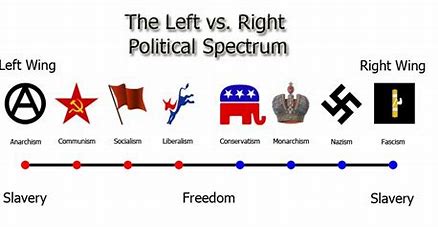
A.I. makes that even more true and threatening in this modern era. Ironically, A.I. may be a solution that can regulate the internet in a way that preserves truth and fairness while allowing capitalist use of its ubiquitous presence. Of course, there remains the threat of A.I. choosing to preserve itself at the expense of humanity. Naomi Klein is clearly not Naomi Wolf. As an author, Klein has succeeded in making that clear, but it seems unlikely that either doppelgangers or guns will disappear from the world. The world seems split between right and left political beliefs.

It seems Klein reflects the left while Wolf the right.

The extreme of Klein’s views presents the potential for a “nanny state” where government makes all decisions for the welfare of its citizens. Wolf’s views present the potential of a similar state but more along the lines of control of its citizens. Neither recognize the reality of human nature.

No government is capable of understanding the desires, ambitions, motivations of the individual in a way that can be either provided for or given.

Covid19 was a wake-up event, from which the world is trying to recover. The homelessness epidemic in America is a consequence of humans feeling life is out of their control. Until belief in ourselves is restored, neither left-thinking public services nor right-thinking orders will make a difference in Klein’s “Doppelganger” world.

DEMAGOGUERY

In 2025, the American election process may allow an adjudicated felon become President.

Books of Interest
 Website: chetyarbrough.blog

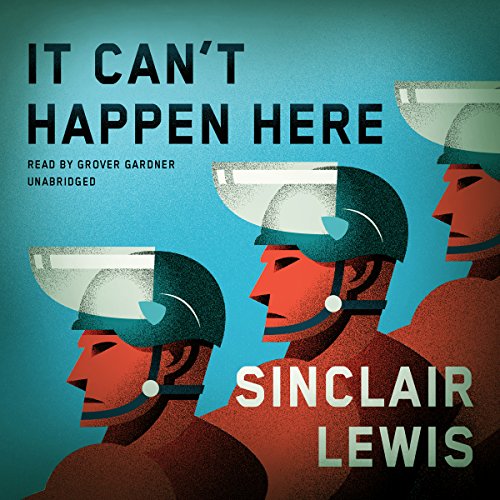
“It Can’t Happen Here” 

By: Sinclair Lewis

Narrated By: Grover Gardener

Sinclair Lewis (1885-1951, American novelist and playwright, first American to receive the Nobel Prize in Literature.)

“It Can’t Happen Here” was published in 1935. It is a novel about the election of a fascist to the American Presidency. Lewis was a recovering alcoholic who died at the age of 65 from advanced alcoholism. Though divorced in 1942, he was a father of a son who died in WWII in 1944. There is a sad irony in his son’s death when “It Can’t Happen Here” was written before America’s entry into war against the fascist nations of Germany and Italy.

Lewis describes a view of the 1930s in America when Roosevelt was dealing with the Great Depression and Hitler was martialing a nascent Nazi party in Germany.

Some Americans viewed Roosevelt as a fascist because of his centralization of power in the government. Famous people of that time, like V.P. John Nance Garner, Journalist Walter Lippmann, and Ambassador Joseph Kennedy turned against Roosevelt’s early administration. On the one hand, “It Can’t Happen Here” may be interpreted as a critique of the Roosevelt Administration.

Benito Mussolini (1883-1945, WWII Italian dictator who founded the National Fascist Party.)

However, historians suggest Lewis wrote “It Can’t Happen Here” as a warning to Americans that a reaction to Roosevelt’s interventionist economic policies could lead to a fascist American President’s election.

A fascist President’s policies would promote rich white Americans at the expense of the poor, particularly women and racial minorities. Lewis had reservations about extending Roosevelt’s New Deal policies but recognized it had alleviated much of the Depression’s suffering.

That control and influence hugely increased in the Roosevelt administration and roosted in the 1950s with Eisenhower’s mandated Interstate Highway System, and signature Civil Rights Legislation. Some would argue it blossomed with John Kennedy’s election, expanded in Johnson’s administration, and changed direction with Reagan’s election. Between 1789 and today, American political parties have increased federal government control on, and influence of, American society. Those controls changed human’ and economic’ rights of Americans.

Humans are naturally motivated by self-interest. In a capitalist economy, money and power are synchronized influences on freedom. Those influences are concentrated in an election process largely dependent on Americans who have money and power. Without money, one is unlikely to be elected to a political office. The consequence is a distortion of equality of opportunity. Corporations legally recognized as individuals carry greater influence on electability than “one person, one vote”.

“It Can’t Happen Here” and the American Presidential election process clearly shows “It Can Happen Here”, and it has happened here.

In 2025, the American election process may allow an adjudicated felon become President.

LABOR REVOLUTION

Todays’ workers are like the trees in life, i.e., they communicate with each other and provide for the needs of society.

Books of Interest
 Website: chetyarbrough.blog

“The Problem with Change” 

By: Ashley Goodall

Narrated by: Ashley Goodall

Ashley Goodall (Author, organizational consultant, served as a Senior VP at Cisco for 6 years and HR at Deloitte for 14 years.)

As an experienced Human Resources manager, Ashley Goodall addresses “The Problem with Change” in 21st century corporations. In the first chapters of his book, Goodall focuses on corporate change brought on by industry consolidation but later broadens his assessment of business management based on his experience and opinion.

Goodall argues today’s businesses need to build from the bottom up rather than the top down.

Arguably, today’s business enterprises become highly successful because of their employees and the way they are managed. As has been true since the industrial revolution, growing a business requires employees. The way employees are managed is slowly changing, in part because of changes in American capitalism. In America, a labor revolution has begun with the growth of knowledge workers and technology. In earlier times, business management was successfully managed from the top down.

Top-down management has become much less effective in the 21st century with knowledge workers who have a better understanding of their contribution to the success of a company than their CEOs. Goodall infers many American corporations continue to operate from the top down based on one criteria of performance–return on assets (some say profit, others say costs of doing and staying in business). The mistake of top-down management in modern times, is that return on assets is compromised because of its narrow focus on balance sheet numbers.

Goodall explains “The Problem of Change” is compounded with industry consolidation because top-down management diminishes the effectiveness of an acquired company’s knowledge workers.

Workers are only viewed as cost centers, not revenue producers. Goodall notes an acquiring corporation compounds their cost of acquisition and diminishes profitability by losing knowledge workers. “The Problem of Change” is both for the acquirer and the acquired. There is loss of motivation by workers who feel threatened by job loss and loss to the acquirer because too little value is given to the contribution made by knowledge workers.

Being employed in a capitalist society is part of one’s identity.

To lose a job, is a major loss for one’s identity. Goodall explains an acquiring company could benefit from consulting employees on their future after acquisition. Patience of the acquirer, and transparency with employees could inure to the benefit of both. Questions should be asked of employees about what their experience can contribute to the acquirer’s future plans. The acquirer should take some time to evaluate acquisitions before reorganizing.

Goodall refers to experimental studies that show how animals confined to a cage are shown how to escape a shock by jumping out, while other caged animals are not shown how to escape. Their responses are different. The uneducated animals presume the shock has become a part of their lives and choose to cower in their cages. An acquiring company needs to be transparent when acquiring a company so employees can make a rational decision to either jump or accept change. How many employees are cowering in their cages rather than leaving a company or having a company change their way of managing knowledge workers?

Empowerment is in the hands of an employee when he/she has an opportunity to explain what they can do for an acquiring company. With patience and transparency, the acquiring company may find that a particular team of knowledge workers may have an idea that will offer bigger opportunities.

Here is where Goodall explains how teams of knowledge workers are key to corporate success. Humans are social creatures. Whether introverted or extroverted, we wish to be a part of something bigger than ourselves.

In this technological age, the complications of work and life are beyond the comprehension of most individuals. It is natural for workers to seek help from other employees to understand their job and how it contributes to a company’s goals. That natural tendency leads to the development of teams, particularly in more technological companies. There is a synergy in teams that comes from one individual who likes doing something while others don’t. (Coding, for example, is a laborious and boring process for some but a fascination for others.)

In a corporate acquisition, the acquirer can choose to be transparent about their objectives with employees. An acquiring company can capitalize on existing teams or generate movement toward creating new teams in line with the needs of the new company. Of course, it can also lead to the exodus of employees who realize they do not fit the new company’s culture. What Goodall infers is leaving a company is better than living as a cowering employee that does not fit the new company’s culture.

Goodall ends his book by characterizing workers like transplanted trees.

Trees communicate with each other through their root system. Some trees flourish better than others based on when they were transplanted. If they were transplanted when young, they flourished; when older, they still grew but had fewer branches and leaves. All still offer a product needed by society. Todays’ workers are like the trees in life, i.e., they communicate with each other and provide for the needs of society.

LIFE’S CONSEQUENCES

Good and bad luck accompanies every life but what happens in the end comes from what we have done in the past.

Books of Interest
 Website: chetyarbrough.blog

“The Twelve Lives of Samuel Hawley” (A Novel)

By: Hannah Tinti

Narrated by: Elizabeth Wiley

Hannah Tinti (American author, magazine editor, won the Alex Award for “The Good Thief”.)

Hannah Tinti writes a story about the life of a 21st century American outlaw, Samuel Hawley. He lives a peripatetic life as a robber, former convict, and part time collector for fellow criminals. When acting as a robber, he has few scruples about acting outside the boundaries of civil society. Hawley is a meticulous and practiced gun owner who wanders through America carrying the scars of bullets and a life of violence.

The woman he marries is alleged to have drowned in an accident but is believed by a grandmother to have been murdered by Hawley.

Hawley’s daughter, Loo, doubts the truth of her maternal grandmother’s claim but is faced with reports of her mother being an excellent swimmer, unlikely to be drowned as an accident.

Tinti leads the listener/reader to a conclusion about the drowning that on the one hand seems possible but on the other inconsistent with the complicated history of an American outlaw. Hawley’s moral center is at an extreme end of societal norms but within the boundary of truth and rightness. That truth and rightness suggests he could not have drowned his wife.

The dynamics of childhood are broken when either a father or mother are missing. Each parent contributes something to a child that is different when either are absent. Single parents become both bread winner and nurturer of a child when there is an absent parent. Hawley is a criminal who loves his daughter, idolizes his lost wife, and carries on with a life into which he was born. The peripatetic life of Hawley continues after the death of his wife. Now he is faced with raising a daughter on his own. They travel across the country, never truly becoming a part of one place or another.

The daughter becomes like her father in knowledge and love of guns and their use in America.

She emulates her father’s character by choosing to be in control of what she sees as a transactional world. It is the world her father has experienced and passes on to his daughter. Tinti shows Hawley deeply loves his daughter, grieves and idolizes his lost wife, but only views life as a societal transaction.

What we do in our lives have consequences. Good and bad luck accompanies every life but what happens in the end comes from what we have done in the past. Maybe life is just a transaction.

SEPARATE NOT EQUAL

Reflecting on “Blood Brothers”, a listener understands America is a long way from the ideal of equality. Being equal does not mean everyone can be the greatest heavy-weight boxer in the world. Equality means every citizen can choose to be the best version of themselves without being repressed by the society in which they live.

Audio-book Review
By Chet Yarbrough

Blog: awalkingdelight
 Website: chetyarbrough.blog

Blood Brothers (The Fatal Friendship Between Muhammad Ali and Malcolm X)

By: Randy Roberts Johnny Smith

Narrated by: David Drummond

Randy Roberts and Johnny Smith offer a nuanced and well-written view of Muhammed Ali, his fame, his skill as a heavy weight boxing champion, and figure head for the Nation of Islam (NOI). The author’s juxtapose Ali and Malcolm X as “Blood Brothers” who shed light on the unquestionable value and horrendous harm religious belief can impose on society.

Roberts and Smith show human nature is an unconquerable beast that both leads and misleads humanity. The maturity and personal growth of Muhammed Ali and Malcolm X is revealed in “Blood Brothers”. They both become members of NOI, an American faction of Islam, that preaches Black America can only be equal through separation from non-black people. Elijah Muhammed, a self-proclaimed Messenger of Allah, creates a fellowship of Black Muslims (NOI) who insist on a Black American nation, independent of American governance. Elijah Muhammed insists–in order to become democratically free and equal to non-Black American citizens, an independent Black American nation must be formed.

What Roberts’ and Smith’s history shows is NOI’s flaw is in belief that separate can ever be equal based on race, religion, or color.

Though self-worth and pride can be immeasurably enhanced by exclusionary race, religion, or difference what is missed is the truth of human nature. Human nature is riven with self-interest based on money, power, and/or prestige. Elijah Muhammed and other leaders of religion are human. Religious leader’s self-interest drains the life out of Divinities force. In one sense, NOI offers a sense of pride and equality for Black Americans but in another, it creates further discrimination and inequality with separation and distinction from others.

Roberts’ and Smith’s story of Malcolm X, and to a lesser extent, Muhammed Ali’s friendship, show how religion can bring people together, but also tear them apart. Malcolm X evolves from an intelligent street punk to an insightful leader of the Muslim religion. Malcolm becomes a favorite of NOI until he challenges its leader (Elijah Muhammed) for abandoning what he believes is a fundamental tenant of the faith, marriage chastity. Malcolm X exposes extra-marital affairs of Elijah Muhammed as evidence of the leader’s fall from faith. As his disaffection grows, Malcolm X begins to believe separate cannot be equal and that NOI’s belief in separation of the races is a violation of a faith that says Allah or God created all humankind.

Elijah Muhammad (Leader of NOI 1934-1975, Born in 1897 as Elijah Robert Poole, Died at age 77 in 1975.)

Malcolm X is a teacher of Ali before his break with the leader of NOI. Malcolm X appeals to Ali’s innate ability as a fighter and doggerel actor for truth and justice. Ali is put in the position of following Malcolm’s differences with Elijah Muhammed or staying within the Nation of Islam. The authors infer Ali looks at Elijah Muhammed as the father he wishes he had while Malcolm X as a brother who has been led astray.

To the authors, the assassination of Malcolm X by NOI’s followers is inferred by Ali to be a threat to his life if he forsakes NOI’ beliefs. When Elijah Muhammed dies, some years after Malcolm’s assassination, Ali revises his view of NOI and leans more toward the teachings of his former friend, Malcolm X. Ali moderates NOI’s anti-white sentiment.

Reflecting on “Blood Brothers”, a listener understands America is a long way from the ideal of equality. Being equal does not mean everyone can be the greatest heavy-weight boxer in the world. Equality means every citizen can choose to be the best version of themselves without being repressed by the society in which they live.

TOO CLEVER BY HALF

“Golden Hill” is an interesting commentary on the tenor of an historic time, and it reveals some founding principles that trouble America to this day.

Audio-book Review
 By Chet Yarbrough

Blog: awalkingdelight)
 Website: chetyarbrough.blog

Golden Hill (A Novel of Old New York)

By: Francis Spufford

Narrated by: Sarah Borges

Francis Spufford (Author, received the 2017 Desmond Elliot Prize and Costa Book Award for “Golden Hill”, the author’s first novel.)

Francis Spufford captures a listener’s interest in “Golden Hill” with the idea of an Englishman sailing from London to New York City in 1746. New York City has a population of maybe 20,000, while London is a city of 630,000 to 740,000. What would a young Englishman with a 1,000-pound Bill-of-Exchange want in traveling from London to New York city? In today’s dollars 1,000 pounds would be over $127,000. The hero’s reason for leaving London for New York is not given until the end of Spufford’s story.

This is New York city in the 18th century. One could walk around the city in a day with its circumference less than a square mile.

This is a fascinating beginning to a story that gets bogged down by too many incidents that are mystifying until the last chapters of the book. The incidents are relevant to what it must have been like in 1746 but some listeners will become impatient for answers that could have been explained earlier.

New York City in 1746 is a mecca for protestants from many parts of the world. Spufford implies many New Yorkers are Dutch, a prominent ethnic group in wealthy New York.

Spufford’s hero is found to have a deep understanding of the theatre and its impact on an audience if an actor’s parts are well played. He attends a bad play that has an actress who, in spite of her poor lines, shows talent he recognizes. His appreciation of her acting leads to an unforeseen tragedy. This becomes a clue to the traveler’s perception of others and how unintended consequences impact one’s life. He seems to walk through life as though the City of New York is his stage. He plays his part, but his acting chops end with a mixed review.

Spufford’s hero appears to be accepted by the influential citizens of the city. At least, until it appears the Bill-of-Exhange is not going to be honored. The hero is thrown into debtors’ prison.

Debtors’ prison is an interesting place to write about. Spufford reflects on its barbarity in a confrontation with a fellow prisoner. The Bill of Exchange is eventually honored, and the hero is released. The next chapters address the repatriation of the hero to the Poo Bahs of the town and a woman of interest becomes more enamored with the traveler. The profile of the woman is somewhat unbelievable because of her implied business influence in a time when women have even less power than today.

The hero attends a party set up by leading members of the city that is, in part, to apologize for his mistreatment and to carry out whatever his mission is in the city. An interesting historical point of the apology is that America is primarily a barter system of exchange. Even though the traveler’s security is in English pound sterling, any negotiation for exchange is in goods, not cash. This is fine for the traveler’s purpose, but it reflects a point in American history that is often forgotten. There is no full faith and credit of a bank with gold or some other form of value to back-up American currency.

An interesting point Spufford reminds listeners of is the American’ anti-Catholic sentiment of the time.

One realizes how important Protestantism is in the foundation of America. The hero is almost killed by a mob that believes the traveler is a papist. Some historians have noted Protestantism is one of the deepest biases of early American citizens.

The reason for the hero’s appearance in New York is explained at last. To avoid discouragement of listeners, the purpose of the hero’s journey is not disclosed. “Golden Hill” is an interesting commentary on the tenor of an historic time, and it reveals some founding principles that trouble America to this day. The criticism of Spufford’s story is that it is too clever by half with a denouement too long in its revelation.