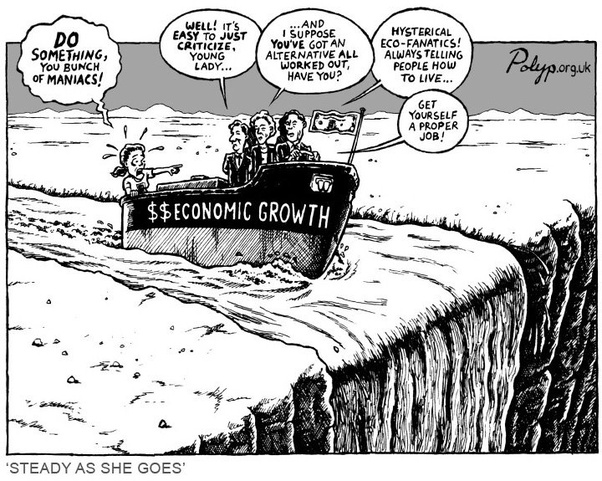
Energy

Wysession explains coal and gasoline production costs will continue to rise making them too costly for most consumers. He believes energy production of wind, solar, hydro, and nuclear power will become more viable and less costly as science advances. From his lectures to our ears, listeners hope he is right.

Books of Interest
 Website: chetyarbrough.blog

The Science of Energy (Resources and Power Explained

By: The Great Courses

Narrated By: Michael E. Wysession

Michael E. Wysession (Brown University and Northwestern University PhD graduate in 1991, chair of the National Science Foundation (NSF).

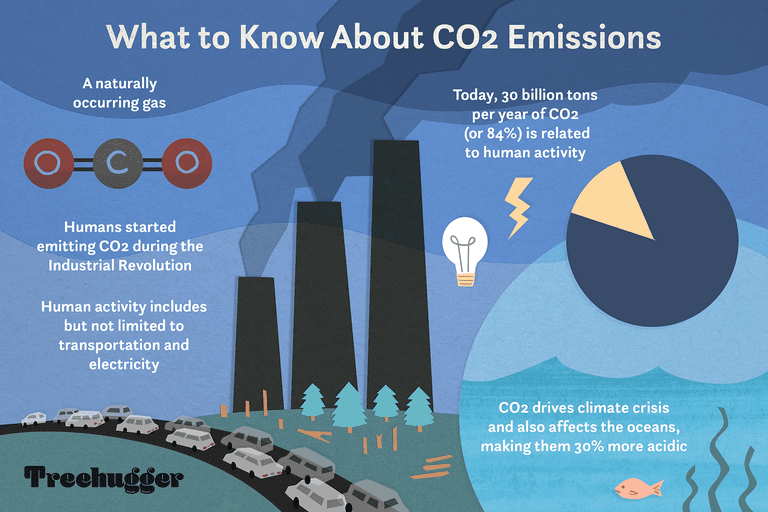
Professor Wysession offers an overview of the world’s energy crises with a detailed history of “The Science of Energy”. It is a daunting series of lectures about the chemical nature and origin of energy with its evolving role in world economies. From a chemical perspective, energy is the capacity to do work or produce change. Wysession identifies the many forms of energy ranging from coal to oil to thermal to biological sources of fossil fuels. He reinforces the belief that global warming is largely the result of growth in carbon dioxide in the atmosphere exacerbated by the continued use of fossil fuels.

Wysession explains energy can be stored, transferred, and transformed by chemical reactions and processes. It is the bonding and breaking of atoms in molecules that create energy. He explains there are exothermic and endothermic reactions with combustion that create energy to move machinery and photosynthesis for plant growth.

To some, it is a surprise to hear of Wysession’s optimism about the future. He argues the world’s effort to sequester carbon dioxide and reduce dependency on fossil fuels will abate global warming, maintain, and sustain human life.

His optimism is based on a clear-eyed and educated understanding of how carbon dioxide increasingly damages the environment while fossil fuel use continues to pollute the air we breathe.

Wysession explains carbon dioxide is a greenhouse gas that traps heat in the Earth’s atmosphere.

That trapped heat is melting the ice caps, raising sea levels, and causing severe weather events like hurricanes, floods, and ironically, droughts. Higher carbon dioxide levels exacerbate respiratory and cardiovascular disease because of increased particulate matter in the air that causes heart attacks and strokes. Rising carbon dioxide levels increase ocean acidification that reduce biodiversity and threaten coral reefs and shellfish. Extreme weather events destroy farm crops and affect the food and water security of millions of people. Wysession notes the world economy suffers because of damaged infrastructure, increased health care costs, and loss of productivity from fossil fuel accidents and health consequences.

Greenhouse gases released by fossil fuels trap heat that causes the earth’s temperatures to rise.

The direct impacts of fossil fuel use and extraction are well known. Fossil fuels create air and water pollution that causes habitat destruction, and ocean acidification. Wysession notes both extraction and use of fossil fuels causes environmental damage from pollution’ accidents and methods of extraction from the earth.

Wysession notes some progress by world leaders in reducing the use of fossil fuels.

Wysession notes advances in renewable energy technology with solar, wind, and battery storage. He comments on the international cooperation in reducing greenhouse gas emissions and public awareness of the consequence of failure to address fossil fuel pollution. There are also economic benefits from the jobs created with solar, wind, and carbon capture manufacture. (One hopes but doubts our new President understands and acts on those job creation opportunities.)

Wysession believes it is important to keep in mind the potential of nuclear energy in the world’s future.

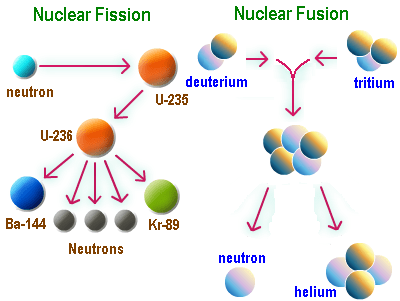
He revies the history of nuclear fission and fusion. As is widely known, our sun provides energy to the world with fusion that feeds photosynthesis which fuels plant growth by converting carbon dioxide and water into glucose and oxygen, both of which are critical needs for life on earth.

Fusion is a process where two nuclei combine to form a heavier nucleus which releases energy. The energy comes from the kinetic interaction of the nuclei. Though science has not successfully achieved the high temperatures of a sun-like process to make fusion a viable source of energy on earth, it has been done on a small scale. It has not achieved a sustained and economically viable form of energy but its potential as a clean energy source is limitless. In the meantime, fission has worked to destroy people and things while showing it can be harnessed to provide energy to the world. As of May 2024, there are 440 nuclear reactors in operation, with the U.S. having the most at 94.

Wysession acknowledges rising population demands more and more energy but he argues the average energy use of people in the United States has fallen to 10 KW per person and believes it will continue to drop in the future.

Wysession’s drop in energy use per person (whatever that means) may be correct, but the reality is that American population increases show energy use has risen in the 21st century to 94 quadrillion Btu. (Whatever a quadrillion Btu means.)

In the late 20th century, our consumption was 75-80 quadrillion Btus annually. American consumption has risen by 14 quadrillion Btu, i.e., a 17.5 percent increase in 23 years. Though the numbers are incomprehensible, energy consumption in America is rising, not falling.

He notes there are over 70 percent more people on earth than when he was born. The rising cost of gasoline will compel more transition to electric automobiles. He believes coal and gasoline use will continue to decrease for both environmental reasons and consumer costs. Wysession explains coal and gasoline production costs will continue to rise making them too costly for most consumers. He believes energy production of wind, solar, hydro, and nuclear power will become more viable and less costly as science advances. From his lectures to our ears, listeners hope he is right.

PROGRESS IN SCIENCE

The point of “The Structure of Science Revolution” is that a paradigm begins science exploration, new paradigms challenge old paradigms, old paradigms persist, new paradigms demonstrate improved knowledge over old paradigms, old paradigms are overturned, and a new paradigm begins further search for knowledge

Books of Interest
 Website: chetyarbrough.blog

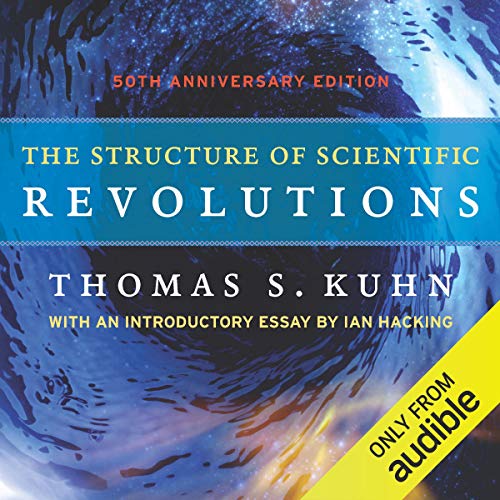
The Structure of Scientific Revolutions

By: Thomas S. Kuhn

Narrated By: Dennis Holland

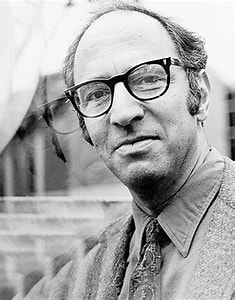
Thomas Kuhn (Author, 1922-1996 died at age 73, American historian and philosopher of science at Harvard and the University of California, Berkeley.)

This is a tough ten-hour listen. It does offer an overview of the evolution of science and how new discoveries have changed human understanding of the physical universe in a revolutionary way. Kuhn suggests every revolution in science begins with a paradigm, a model or framework that offers a clearer understanding of the physical universe.

Kuhn suggests every revolution in science begins with a paradigm.

The momentous discoveries of Newton, Einstein, Darwin, and Galileo are a few of the revolutionary leaders that Kuhn offers as examples. Newton developed a paradigm of earth’s laws of motion and universal gravitation that revolutionized understanding of forces and momentum on earth. Einstein developed a paradigm of the universe by introducing theories of special and general relativity that revolutionized our understanding of space, time, and gravity. Darwin developed a paradigm of animal evolution and natural selection that revolutionized biology and life’s diversity. Galileo developed a paradigm of our universe that revolved around the sun that revolutionized our view of the cosmos and humans place in it.

All of these geniuses created new, often more comprehensive, paradigms than predecessors like Aristotle, Ptolemy, and Democritus. New paradigms about air, the planets, and atoms improved predictability of results from new paradigms of thought, and experimentation that became more comprehensive and accurate than thoughts and experiments on older paradigms. Kuhn argues new paradigms foment science revolutions.

Kuhn explains how a new paradigm is challenged because of generally predictable results from older science discoveries.

The argument is made that the older discovery is better because it did have predictable results and the only reason there is an aberration is because of an undiscovered anomaly that will be discovered and explained by further thought, observation, and experimentation. However, as evidence from experiment grows to show older science discoveries are not as comprehensively predictable of results as the new paradigm, the new paradigm replaces the old one and a revolution ensues.

This is an insightful story but one gets bogged down by the number of examples that repeat similar revolutions.

The objections from old paradigm believers, failed old paradigm predictions, and ultimate revolution by new paradigms are repeated too many times.

The point of “The Structure of Science Revolution” is that a paradigm begins science exploration, new paradigms challenge old paradigms, old paradigms persist, new paradigms demonstrate improved knowledge over old paradigms, old paradigms are overturned, and a new paradigm begins further search for knowledge.

LEARNING

There are many brain discoveries and therapies to be discovered that will extend the ability of human beings beyond today’s capabilities. Those discoveries are like the discovery of fission. The science of brain plasticity has potential for either programing destruction or liberating the mind.

Books of Interest
 Website: chetyarbrough.blog

The Brain That Changes Itself: Personal Triumphs from the Frontiers of Brain Science

By: Norman Doidge, M.D.

Narrated By: Jim Bond

Norman Doidge (Author, Canadian psychiatrist, psychoanalyst, studied literary classics and philosophy at the University of Toronto.)

To an older person, there is a sense of disappointment and optimism from what Norman Doidge writes in “The Brain That Changes Itself”. The disappointment is the feeling of lost opportunity for some because of their ignorance of how the brain works. The optimism is that the past is passed while Doidge explains brain improvement is not completely lost with either age or injury. For older people, improving brain function is more difficult but not impossible. For the injured or medically challenged brain improvement is a dire necessity. For the young, improving brain function is at its best unless there are medical complications.

Doidge explains as one grows older or suffers from brain injury; the brain can be rewired to improve learning or restore bodily function.

.

Age slows the synaptic process of learning, but the brain is still receptive to synaptic improvement. Older brains simply have to work harder to compel new neuronal synaptic connections. With brain injury or disease, new connections must be made by different parts of the brain to restore the relationship between thought and action. A youthful brain is likely to improve faster than an older brain, but experimental studies show improvement is possible for both. Doidge explores brain plasticity in “The Brain That Changes Itself”.

Doidge explains medical or physical deterioration of brain function can be improved with repetitive effort.

What brain disfunction has in common is the ability to adapt to the circumstances of people’s lives. With the appropriate help of teacher, clinician, and self exercise, people can rewire their brain.

The difficulty is in societies willingness to invest in the professional needs of those who are affected by brain dysfunction. Treatment of the aged requires commitment to repetitive learning and relearning which can be done with personal commitment. It is not the same for those who lose motor control of their body from injury or medical conditions. The requirement Doidge and others have found for medical or physical brain injury is the training and availability of clinicians and physicians to provide the therapeutic treatment that will aid recovery. How many medical clinicians have been trained to aid brain-dysfunction’ patients to re-wire their brains to think, see, hear, or walk? How many patients can afford the treatment?

The potential of rewiring the brain extends to returning old brains to their childlike state of openness with drugs. It is a new frontier that illustrates how human brains are superior to A.I.

“The Brain That Changes Itself” reveals a lot about the science of re-wiring the brain. Re-wiring the brain for older people is possible with minimal assistance but it requires repetitive work. For the brain damaged, the need for neurologists, clinicians and other professionals are essential for treatment success. The difficulty is in balancing need with cost and the public’s ability to pay.

Brain plasticity can either aid or destroy society.

Doidge notes how North Korean children are taught from grade school through high school to see their leader as a god, not a fallible human being. The less formed minds of the young are more easily programed than adults. He shows brain plasticity is a new frontier in medicine that can be abused.

There are many brain discoveries and therapies to be discovered that will extend the ability of human beings beyond today’s capabilities. Those discoveries are like the discovery of fission. The science of brain plasticity has potential for either programing destruction or liberating the mind.

WORRY OR NOT

Artificial intelligence is an amazing tool for understanding the past but its utility for the future is totally dependent on its use by human beings. A.I. may be a tool for planting the seeds of agriculture or operating the tools of industry but it does not think like a human being.

Books of Interest
 Website: chetyarbrough.blog

Genesis (Artificial Intelligence, Hope, and the Human Spirit) 

By: Henry A. Kissinger, Eric Schmidt, Craig Mundie

Narrated By: Niall Ferguson, Byron Wagner

NOTED BELOW: Henry Kissinger (former Secretary of State who died in 2023), Eric Schmidt (former CEO of Google), and Craig Mundie (a Senior Advisor to the CEO of Microsoft).

“Genesis” is these three authors view of the threat and benefits of artificial intelligence. Though Kissinger is near the end of his life when his contribution is made to the book, his co-authors acknowledge his prescient understanding of the A.I. revolution and what it means to world peace and prosperity.

On the one hand, A.I. threatens civilization; on the other it offers a lifeline that may rescue civilization from global warming, nuclear annihilation, and an uncertain future. To this book reviewer, A.I. is a tool in the hands of human beings that can turn human decisions for the good of humanity or to its opposite.

A.I. gathers all the information in the known world, answers questions, and offers predictions based on human information recorded in the world’s past. It is not thinking but simply recalling the past with clarity beyond human capability. A.I. compiles everything originally noted by human beings and collates that information to offer a basis for future decision. Information comprehensiveness is not an infallible guide to the future. The future is and always will be determined by humans, limited only by human judgement, decision, and action.

The danger of A.I. remains in the thinking and decisions of humans that have often been right, but sometimes horribly wrong. One does not have to look far to see our mistakes with war, discrimination, and inequality. In theory, A.I. will improve human decision making but good and bad decisions will always be made by humans, not by machines driven by Artificial Intelligence. A.I.’s threat lies in its use by humans, not by A.I.’s infallible recall and probabilistic analysis of the past. Our worry about A.I. is justified but only because it is a tool of fallible human beings.

Artificial intelligence is an amazing tool for understanding the past but its utility for the future is totally dependent on its use by human beings. A.I. may be a tool for planting the seeds of agriculture or operating the tools of industry but it does not think like a human being. The limits of A.I. are the limits of human thought and action.

The authors conclude the Genie cannot be put back in the bottle. A.I. is a danger but it is a humanly manageable danger that is a part of human life.

The risk is in who the decision maker is when A.I. correlates historical information with proposed action. The authors infer the risk is in human fallibility, not artificial intelligence.

PATTERN ME

One may conclude from Hawkin’s research that human beings remain the smartest if not the wisest creatures on earth. The concern is whether our intelligence will be used for social and environmental improvement or self-destruction.

Books of Interest
 Website: chetyarbrough.blog

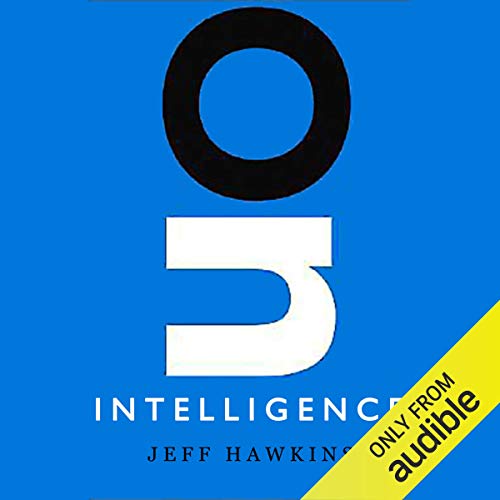
On Intelligence

By: Jeff Hawkins, Sandra Blakeslee

Narrated By: Jeff Hawkins, Stefan Rudnicki

Jeff Hawkins co-founder of Palm Computing and co-creator of PalmPilot, Treo, and Handspring.

Hawkins and Blakeslee have produced a fascinating book that flatly disagrees with the belief that computers can or will ever think.

Hawkins develops a compelling argument that A.I.’ computers will never be thinking organisms. Artificial Intelligence may mislead humanity but only as a tool of thinking human beings. This is not to say A.I. is not a threat to society but it is “human use” of A.I. that is the threat.

Hawkins explains A. I. in computers is a laborious process of one and zero switches that must be flipped for information to be revealed or action to happen.

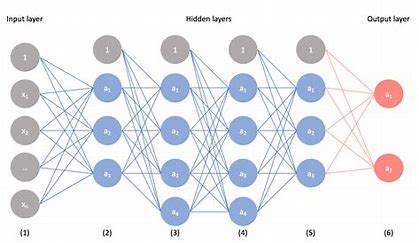
In contrast to the mechanics of computers and A.I., human minds use pattern memory for action. Hawkins explains human memory comes from six layers of neuronal activity. Pattern memory provides responses that come from living and experiencing life while A.I. has a multitude of switches to flip for recall of information or a single physical action. In contrast, the human brain instantaneously records images of experience in six layers of neuronal brain tissue. A.I. has to meticulously and precisely flip individual switches to record information for which it must be programmed. A.I. does not think. It only processes information that it is programmed to recall and act upon. If it is not programmed for a specific action, it does not think, let alone act. A.I. acts only in the way it is programmed by the minds of human beings.

So, what keeps A.I. from being programmed to think in patterns like human beings? Hawkins explains human patterning is a natural process that cannot be duplicated in A.I. because of the multi-layered nature of a brain’s neuronal process. When a human action is taken based on patterning, it requires no programming, only the experience of living. For A.I., patterning responses are not possible because programming is too rigid based on ones and zeros, not imprecise pictures of reality.

What makes Jeff Hawkins so interesting is his broad experience as a computer scientist and neuroscientist. That experience gives credibility to the belief that A.I. is only a tool of humanity. Like any tool, whether it is an atom bomb or a programmed killing machine, human patterning is the determinate of world peace or destruction.

A brilliant example given by Hawkins of the difference between computers and the human brain is like having six business cards in one’s hand. Each card represents a complex amount of information about the person who is part of a business. With six cards, like six layers of neuronal receptors, a singular card represents a multitude of information about six entirely different things. No “one and zero” switches are needed in a brain because each neuronal layer automatically forms a model that represents what each card represents. Adding to that complexity, are an average of 100billion neurons in the human body conducting basic motor functions, complex thoughts, and emotions.

There are an estimated 100 trillion synaptic connections in the human body.

The largest computer in the world may have a quintillion yes and no answers programmed into its memory but that pales in relation to a brains ability to model existence and then think and act in response to the unknown.

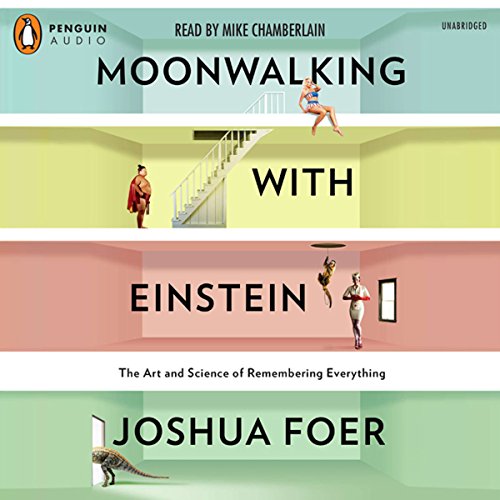
This reminds one of the brilliant explanation of Sherlock Holmes’ mind palace by Sir Arther Conan Doyle. Holmes prodigious memory is based on recall of images recorded in rooms of his mind palace.

Hawkins explains computers do not “think” because human thought is based on modeling their experience of life in the world. A six layered system of image modeling is beyond foreseeable capabilities of computers. This is not to suggest A.I. is not a danger to the world but that it remains in the hands and minds of human beings.

What remains troubling about Hawkin’s view of how the brain works is the human brains tendency to add what is not there in their models of the world.

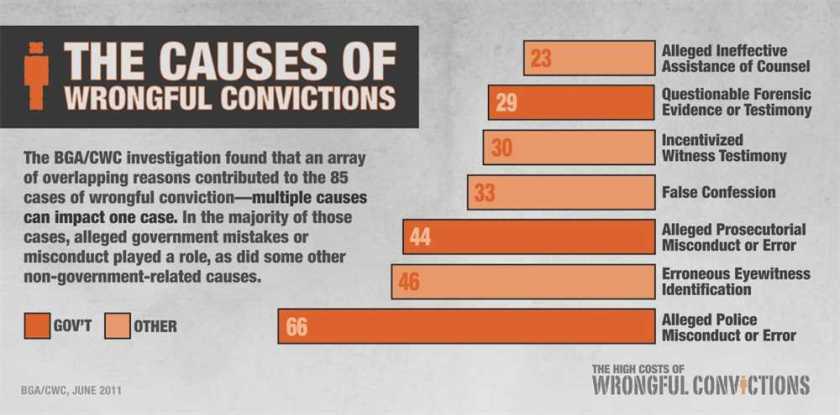
The many examples of eye-witness accounts of crime that have convicted innocent people is a weakness because people use models of experience to remember events. Human minds’ patterning of reality can manufacture inaccurate models of truth because we want our personal understanding to make sense which is not necessarily truth.

The complexity of the six layers of neuronal receptors is explained by Hawkins to send signals to different parts of the human body when experience’ models are formed.

That is why in some cases we have a fight or flight response to what we see, hear, or feel. It also explains why there are differences in recall for some whose neuronal layers operate better than others. It is like the difference between a Sherlock Holmes and a Dr. Watson in Doyle’s fiction. It is also the difference between the limited knowledge of this reviewer and Hawkins’ scientific insight. What one hopes science comes up with is a way to equalize the function of our neuronal layers to make us smarter, and hopefully, wiser.

One may conclude from Hawkin’s research that human beings remain the smartest if not the wisest creatures on earth. The concern is whether our intelligence will be used for social and environmental improvement or self-destruction.

CLICKS

Just as McCulloch’s history shows how the internet changed yesterday, it seems A.I. will change the future.

Books of Interest
 Website: chetyarbrough.blog

How the Internet Happened (From Netscape to the iPhone)

By: Brian McCullough

Narrated By: Timothy Pabon

Brian McCullough (Author, CEO of Resume Writers.com, entrepreneur.)

A book about the beginning of the internet is such old news, one is inclined to put this book aside. The internet was born in the 1960s and only became recognizable in the 1980s. However, even in 2024, it is interesting to hear about early users who became rich just by organizing information on an easily accessible and free media platform.

Like this blog, it is rewarding to write something that others are interested in reading.

The exercise of book reviews is a reward to one’s education and an ego boost for a writer from an audiences’ clicks. Brian McCullough tells the story of the founders of YAHOO, Jerry Yang and David Filo who were in college and became fascinated by the World Wide Web because of information it offered with clicks on a computer board. This was in the 1990s. Though there were many websites to choose from, they were disorganized and difficult to find if you were looking for specific information. Yang and Filo began organizing the websites by their offered information. YAHOO’S founders were looking for information of interest to them, and presumed others would like to know how they could use a keyboard to find information they might need or want.

Jerry Yang and David Filo were fascinated by what could be found on the internet.

They spent hours, days, weeks, months that grew into years organizing website addresses so others could find what was interesting to them. In these early years, making money was not their primary objective. They did not use their site to advertise products for income. They felt clicks were their reward and that clicks would be lost if advertisers were allowed to use their site. They chose to have users pay a fee to become members of their site. Their use and organization of the internet became an obsession for them and followers steadily increased. Their click numbers and users rose into the millions and advertisers were again knocking at their door. They resisted until they realized their idea could be worth something more than their interest in learning, gathering, and organizing knowledge. They relented, allowed advertising, and the clicks to their site kept on rising. YAHOO went public. The rest is history.

McCulloch goes on to describe the rise and fall of companies that capitalize on the internet.

The companies ranged from behemoth companies like Amazon, Microsoft, Google, Apple, and Ebay that rocketed to the stratosphere while Priceline.com, Netscape, Pets.com, Webvan and others plunged into the abyss. This is not to say today’s behemoths will continue to dominate the market or that some new company will replace their success with even greater appeal. A.I., like the internet, may be a killer discovery that makes or breaks today’s behemoths into tomorrow’s also-rans or hangers-on.

McCulloch’s history is interesting because it explains how winners understood the future better than losers understood the present.

It’s fascinating to find Apple’s Jobs resisted creation of the iPhone but employees worked secretly to refine the idea and Jobs eventually agreed. McCulloch also reveals the monopolistic nature of today’s winners and the threat they present to the future. Killer ideas of today’s tech companies capitalize on the internet’s information ubiquity, and how it can be organized to offer product to the world at a competitive price.
A.I. is a new idea that organizes information on its own with consequences to the public that are yet to be realized. Just as McCulloch’s history shows how the internet changed yesterday, it seems A.I. will change the future.

GENETICS FUTURE (CLARIFICATION)

Science will lead or lose the “Real…” world of human beings.

Books of Interest
 Website: chetyarbrough.blog

“Real Americans” A Novel

By: Rachel Khong

Narrated By: Louisa Zhu, Cric Yang, Eunice Wong

Rachel Khong (American writer and editor.)

(Ms. Khong’s book is an entertaining listen but a little too long except for listeners who are most interested in the story. Others are interested in its societal meaning and often discount its entertainment value.)

The main characters in Khong’s novel are Lily Chen, Matthew, Nick Chen, and May. In one sense, the author’s story is about the randomness of life. We are born from fertilization of a male sperm with a female egg. In our world, the randomness of being born is based on chance encounters of violence or seduction. (The reference to violence and seduction is not meant to suggest the nuance of relationship can be ignored, e.g. love comes from the act of seduction, not from violence.) In the 21st century, violence and seduction remain but in today’s science, state and institutional influence bear down on human procreation. The science and possible future of genetics is Khong’s theme in “Real Americans”.

“Real Americans” is about a young college graduate making her way in New York city, a capitol of opportunity in America.

As a poor young graduate, New York city is a ticketed opportunity for American success and failure. Khong’s story is particularly interesting because the main character, Lily Chen, is born American to well-educated parents who emigrated from China. She does not speak Chinese. She is living the life of a young, intelligent American trying to support herself by whatever job she can find in New York City.

Lily’s mother and father are geneticists.

Like the trials and rewards of Cinderella, the trials of Lily’s life are transformed by the wealth of a prince. What makes “Real Americans” more than a fairytale is its theme that life’s beginnings are a matter of violence or seduction, including state and institutional complicity. (“State and institutional complicity” refers to acts of government and business that discriminate based on prejudice or narrow emphasis on income rather than ethics.)

Lily seems to have luckily met Matthew; an immensely wealthy heir to an American medical conglomerate founded by his family. They marry after an on again, off again relationship.

After their marriage, Lily has two pregnancies that do not come to term and chooses to have invitro insemination to have a successful pregnancy with the birth of a son they name Nicco. Matthew and Lily go to China on a business trip where Lily chooses to visit the college where her mother became a geneticist. She meets a professor who knew her mother and is told a story that initially puzzles her about what her mother was like when she was young. She finds her mother, as a student geneticist, was a risk taker and magical thinker.

The next one learns is that Lily divorces her husband and moves from New York to Tacoma Washington, an island between Seattle and its capital to raise her son by herself.

Lily’s mother had met Matthew’s family before Matthew began dating Lily. She knew Matthew’s father who began a hugely successful medical company that researched genetics. (The significance of her mother’s knowledge of the genetic research of Matthew’s family is at the crux of Lily’s feeling of betrayal.) The theme of the author’s story begins to take a turn. Lily leaves Matthew. (She leaves because of the bias of Matthew’s family in using Lily as a surrogate for pregnancy without disclosing their personal interest.)

As her son grows to manhood, she refuses to tell him the name of his father, where he lives, or the history and wealth of the family in which he was born. The remainder of Khong’s book is the story of the circumstances surrounding the birth of her son, how he learns of his father, and what led to her divorce from Matthew.

Khong is writing about the pandora box of genetics which opens the world to designer babies. She seems to conclude, regardless of birth circumstance, care and nurture make people “Real…”. Science will lead or lose the “Real…” world of human beings. (Understanding the science of genetics and the potential for manipulation of human life is a god-like power with all the ramifications of genetic inheritance that can aid or destroy human life.)

TRUST

Trust is the most important characteristic of a patient’s relationship with their physician.

Books of Interest
 Website: chetyarbrough.blog

“How Medicine Works and When It Doesn’t” Leaning Who to Trust to Get and Stay Healthy

By: F. Perry Wilson MD

Narrated By: Shawn K. Jain, F. Perry Wilson

F. Perry Wilson MD (Author, Harvard graduate with honors in biochemistry, attended medical school at Columbia College of Physicians and Surgeons. He is a practicing nephrologist at Yale New Haven Hospital.)

Doctor F. Perry Wilson is a physician with a biochemistry degree from Harvard, and a medical degree from Columbia College of Physicians and Surgeons. Wilson works at Yale New Haven Hospital where he specializes in kidney issues. Wilson’s book is a problematic view of doctor/patient relationship and what a patient can or should believe about a physicians’ medical diagnosis and treatment. A problematic view is not Dr. Wilson’s intent, but it is a conclusion a reader/listener may arrive at as he/she completes “How Medicine Works and When It Doesn’t”.

Dr. Wilson argues any advice from medical professionals may be listened to with skepticism but not disdain.

In general, that argument seems logical and fairly balanced. Wilson infers skepticism extends to trained medical professionals and the medical industry in general. The reason a lay person may accept that conclusion is based on personal experience and rationality.

As one who has been diagnosed with heart trouble from blocked arteries and medical treatment for an alleged heart attack, the last ten years have been an educational journey.

The first cardiologist who reviewed details of a physical weakness felt while working, suggested the weakness may have been caused by a mild heart attack. After a heart scan, the cardiologist found an artery serving the heart had a blockage. The doctor recommended a stent be inserted to clear the blockage. After surgery, the cardiologist noted the stent could not get through the blockage. Changing cardiologists seemed a prudent action considering the doctor’s failure.

A new cardiologist recommended regular check-ups, stress tests, and medicine to address the cause of the blockage.

Ten years have passed and there have been no further incidents, but relocation required finding a third cardiologist who reviewed medications, conducted further tests. The new cardiologist recommended continued medical treatment largely based on statin prescriptions and further tests. Here is where Dr. Wilson’s book becomes problematic to a patient seeking medical advice from trained medical specialists.

As noted by Thomas Hager in “Ten Drugs”, the relationship between statins and blocked arteries as a cause of heart attacks is somewhat unclear. The unclearness is not that taking stains reduce cholesterol but that statins have side effects. Science-based tests show statins do reduce cholesterol but inhibit memory, reduce cognition, and may cause liver and kidney damage. To add to negative side effects, there is medicine producing industry’ bias that promote statins because they are big revenue producers.

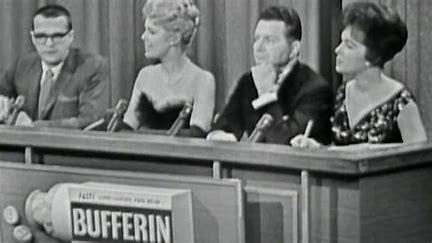
What Doctor Wilson’s book reminds one of is the mid twentieth century game show “Who Do You Trust”. Wilson infers truth is only science-based probability, not certainty.

What both doctor and patient know is based on experience and education, not certainty. For both doctor and patient, it comes down to “Who Do You Trust”.

Wilson’s book is an important example of why patients should use their intuition to trust or change doctors when their health is at risk.

Doctors have spent the greater part of their lives understanding human medical problems and the effect of drugs in treating patients. Patients are unlikely to have had the same level of training or understanding about their own health or the health of the general population. What a patient is left with is the principle of trust. If one trusts the doctor who is prescribing and/or treating one for their illness, the probability of good outcome is logically better.

Doctor Wilson acknowledges profit motive for pharmaceutical companies drives their relationship with the medical profession and the public.

He offers concrete examples of mistakes that have been made by the pharmaceutical companies like the Thalidomide prescriptions that harmed unborn children. Of course, mistakes get made in every discipline of life. The other side of mistakes are the incredible success of vaccines for polio, smallpox, and our world’s most recent crises, Covid 19.

The conclusion one draws from Wilson’s book is trust is the most important characteristic of a patient’s relationship with a physician.

This is not meant to suggest one should shop for a doctor that tells one what they want to hear but to depend on the education and experience of a person who knows more about medicine and its effects than you.

PUBLIC BENEFIT

Hager’s history of the drug industry illustrates the strength and weakness of human nature whether one is a capitalist, socialist, or communist.

Books of Interest
 Website: chetyarbrough.blog

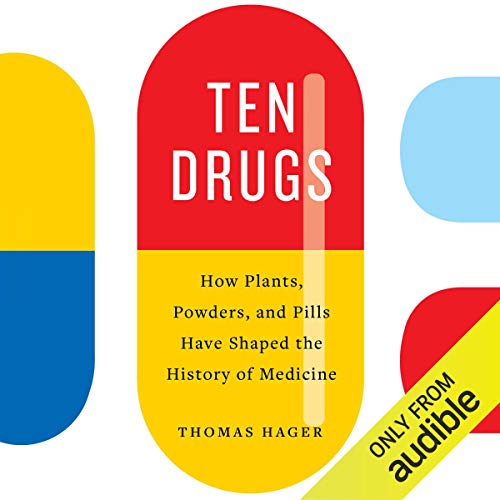
“Ten Drugs” How Plants, Powders, and Pills Have Shaped the History of Medicine

By: Thomas Hager

Narrated By: Angelo Di Loreto

Thomas Hager (Author, science historian, editor, publisher, Oregon native, received master’s degree in medical microbiology and immunology from the Oregon Health Sciences University.)

“Ten Drugs” is a critical view of today’s drug industry, its drug discoverers, the medical profession, and its manufacturers. Hager explains opium is proven to have been used by Mesopotamian Sumerians in 3400 BCE but older than its known cultivation. The Sumerians called it “hul gil” which means “joy plant”.

Thomas Hager begins with opium and its discovery thousands of years ago when the bitter taste of a poppy seed capsule is tasted by a curious African’, Egyptian’, Greek’, or Roman’ Homo erectus.

Wide use grew to affect national relations between China and the western world in the opium wars of 1856-1860. China’s Qing dynasty lost territorial control of Hong Kong to Great Britain when opium became a cash cow for international trade.

Hager explains how opium offered both risk and reward to the world. It threatened society with addiction and overdose while offering surcease of pain for the wounded or health afflicted.

Addiction significantly increased among the Chinese during and after the opium wars. After many tries to prohibit opium, it was in the early 20th century that addiction was internationally condemned. It was the People’s Republic of China in 1949 that launched an aggressive anti-opium campaign that dramatically reduced opium purchase and use in China. Later, Hager infers China’s success in eliminating the trade is by murdering its dealers and penalizing its users. Ironically, Hager notes former President Trump called for the death penalty for drug dealers to combat America’s drug crises, a policy only likely to be implemented in an authoritarian country.

The first opium war in China, 1841.

Hager infers China’s success in eliminating the trade is by murdering its dealers and penalizing its users.

Hager explains the history of opium evolved into drug derivatives like morphine, laudanum, and codeine to offer pain relief from a variety of medical maladies. These derivatives were effective but still carried the risk of addiction. Hager explains later that addiction is related to nerve system receptors at a molecular level that create a craving for the effects of particular drugs. Opium and its derivatives eventually became regulated because of their addictive character. In America, the Harrison Narcotics Tax Act of 1914 marked the beginning of strict control of opium’s derivative prescriptions in the U.S.

Edward Jenner (1749-1823, English physician and scientist who discovered the use of cowpox to inoculate against smallpox.)

Hager moves on to vaccination. Interestingly, Hager explains the discoverer of inoculation by transfer is not Edward Jenner (1749-1823), a British physician called the Father of Immunology. It was a wealthy English woman named Lady Mary Worley Montague who learned of the use, of what became known as vaccination, in Turkey. She had survived a smallpox infection. Ms. Montague accompanied her husband, who was the British ambassador to the Ottoman empire in 1716.

Ms. Montague learned of a Turkish custom of transferring infected smallpox exudate to healthy children to give them a milder form of smallpox. That transferred exudate inoculated the young from getting a fatal dose of the disease in later life. Smallpox is estimated to have killed over 300,000,000 people (a statistic roughly equivalent to every person alive in the U.S. in the in the 1990s). The Turkish custom of inoculation was found highly effective.

Lady Mary Worley Montague who learned of the use of vaccination in Turkey. Earlier in her life, she had survived a smallpox infection.

In her return to England, Ms. Montague widely disseminated information about the success of the Turkish custom to prevent smallpox. Edward Jenner chose to use cowpox as a substitute tissue for smallpox vaccination of his patients. Jenner found cowpox infected tissue was equally effective in immunization and less dangerous than the using smallpox exudate. Jenner’s discovery of cowpox vaccination in 1796 became widely accepted but nearly 80 years after Ms. Montague’s worldwide promotion of Turkey’s vaccination procedure. Jenner’s vaccination success led to the World Health Organization’s claim that smallpox eradication could be achieved through an international inoculation program. Smallpox is alleged to have been eradicated as a disease in 1980.

The next drug identified as important by Hager is sulfa, a major cause of death from infected open wounds.

The common cause is a bacteria called Streptococcus. Bayer Corporation, a dye manufacturer in Germany, decides to enter the drug industry because their investment, facilities, and research scientists were ideal for entry into research and manufacture of drugs. They compound a drug called Prontosil that is discovered as a sulfa based chemical compound that successfully kills Streptococcal bacteria that cause fatal infections from open wounds. Bayer’s discovery saved many lives as WWII was gathering in the 1930s. Ironically, one of the saved lives is FDR’s son who had a severe streptococcal infection in 1936.

Hager notes personal mental illness and social dysfunction are perennial maladies that plague society through the 21st century.

Isolation and various therapies have been used to address mental illness. In early days, asylums were created to isolate patients who could not cope with daily life. Palliative treatment ranged from isolation to Freudian consultation, to electroshock, to newly discovered drug treatments. Though not mentioned by Hager, a little research shows the first significant breakthrough drug was lithium in 1949.

John Cade (1912-1980, An Australian psychiatrist discovered the effects of lithium carbonate as a mood stabilizer in 1948.)

Lithium was actually discovered in 1817 but did not get used for mental illness until 1948 when John Cade, an Australian psychiatrist, found that lithium carbonate stabilized mo0d and reduced the severity of manic episodes in patients.

Though Hager doesn’t mention lithium, he notes the French chemist Paul Charpentier identified antihistamine in 1950 as an antipsychotic to aid his patients’ erratic behavior. The use of Thorazine became a common drug synthesized by Rhone-Poulenc Laboratories in France. It was released in the 1950s and considered a major breakthrough in psychiatric treatment. It had a calming effect on severely schizophrenic patients by attacking excess dopamine production in the brain.

The major criticism Hager has of drug manufacturers and the medical industry is in the inherent influence of money, power, and prestige that distorts honest evaluation of drug effectiveness and side effects.

The drug industry depends on the success of their research for new drug discoveries to maintain the cost and improve the value of their businesses. However, human nature gets in the way of every human being. The lure of more money, power, and prestige enter into evaluative judgements and descriptions of tests for new drugs. The financial success of a drug that mitigates or cures particular societal ills make millions, if not billions, of dollars for drug manufacturers. Drug manufacturers are not eleemosynary institutions. They are in the business of making money and preserving their longevity while enriching themselves and their stockholders. Hager argues human nature distorts the truth of drug efficacy with tailored reports of a drug’s true benefit and potential for harm. He offers statins as an example of drug manufacturers’ misleading promotions.

Hager reviews the history of statins and correlations drawn by the medical industry about their efficacy in reducing heart ailments.

He suggests clinical studies by manufacturers often distort the entire effect of statins in preventing heart attacks. Statins are designed to reduce cholesterol in the blood stream. However, many studies that correlate cholesterol with heart disease are only partly related to heart attacks while having measurable side effects that diminish human cognition, memory, and potential organ damage, i.e, liver and kidney damage. Hager cautions those who take statins not to stop without discussing it with their physicians. However, Hager recounts an unsolicited personal contact that suggested he should be taking a statin because he is over 60 and had a brain vessel bleed in his earlier medical history. The contact recommended Hager take a statin based on that history. Hager notes that he felt his private medical history had been hacked, and that the contact is evidence of drug industry promotion of statins for profit more than public benefit.

In Hager’s last chapters, he explains how the drug industry is being attacked for influence peddling. In drug manufacturers drive for profits, they offer incentives to the medical profession (e.g. trips to conferences in exotic resorts, personal solicitations from sales reps, etc.) to use specific drugs in their practices.

In the end, Hager argues there are exceptions to the medical industries drive for profits by telling the story of British researchers Georges Kohler and Cesar Milstein who made a discovery in 1975 that changed the focus of drug manufacturer to what is called monoclonal antibody drug development. Kohler and Milstein found a process for creating drugs that have fewer side effects by creating antibody drugs that exclusively attack diseases at a molecular level. The irony of their discovery is Kohler and Milstein chose not to patent their discovery. If they had patented their discovery, they could have gained income for every company who chose to create monoclonal antibody drugs.

British researchers Georges Kohler and Cesar Milstein

Research is growing to create drugs that more precisely address the known molecular cause of disease without affecting the general health of patients. Not surprisingly, today’s manufacturers of monoclonal drugs use Kohler’s and Milstein’s process while requiring patents for their drugs.

Hager’s history of the drug industry illustrates the strength and weakness of human nature whether one is a capitalist, socialist, or communist.

LIFE’S LOTTERY

Eugenics and the fickle political nature of human beings outweighs the benefits of Harden’s idea of choosing what is best for society.

Books of Interest
 Website: chetyarbrough.blog

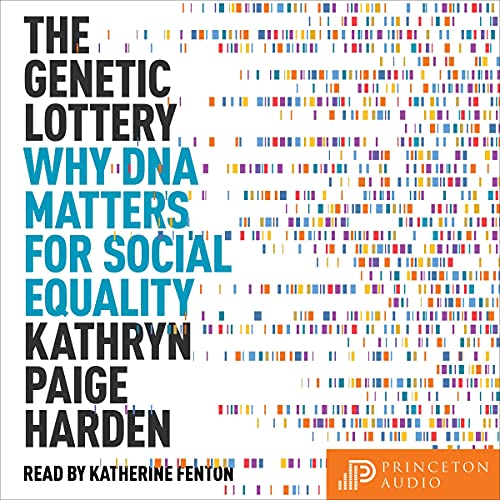
“The Genetic Lottery” Why DNA Matters for Social Equality

By: Kathryn Paige Harden

Narrated By: Katherine Fenton

Kathryn Paige Harden (Author, American psychologist and behavioral geneticist, Professor of Psychology at the University of Texas at Austin.)

“The Genetic Lottery” is an important book that may be easily misinterpreted. Hopefully, this review fairly summarizes its meaning. Fundamentally, Kathryn Paige Harden concludes all human beings are subject to a genetic lottery and the culture in which they mature. It is not suggesting all human beings are equal but that all can develop to their potential as long as he/she has an equal opportunity to become what their genetic inheritance, education, and life’s luck allow.

Harden explains racial identity is a false flag signifying little about human capability.

Every human being is born within a culture and from a mother and father who have contributed genetic DNA they inherited from previous generations. DNA carries genetic instructions for development, growth, and reproduction of living organisms. Those instructions are a blueprint for an organism’s growth. However, the genetic information passed on to future generations varies with each birth and is subject to a lottery of DNA instructions.

The lottery of genetics extends a multitude of characteristics ranging from intelligence to height to the color of one’s skin.

One may become an Einstein, or a slow-witted dolt. One may be born healthy or destined to die from an incurable disease. The growing understanding of genetics suggests the potential for human intervention to prevent disease, but also the possibility of creating a master race of human beings. That second possibility is a Hitlerian idea that lurks in the background of science and political power. It revolves around the theory of eugenics.

Harden suggests an ameliorating power of eugenics is its potential for offering equal opportunity for all to be the best version of themselves within whatever culture they live.

Putting aside the potential of human genetic theory’s risk, Harden explains every human is born within a culture that reflects the genetic inheritance of the continent on which they are born. The combination of the human genetic lottery and the culture in which humans live create ethnic identity and difference. Differences are the strengths and weaknesses of society. Strengths are in the diversity of culture that adds interest and dimension to life. The weakness of society is its tendency to look at someone who is different as a threat or obstacle to a native’s ambition or cultural identity.

Harden suggests every human being’s genetic code should be identified to aid human development by creating an environmental support system that capitalizes on genetic strengths and minimizes weaknesses.

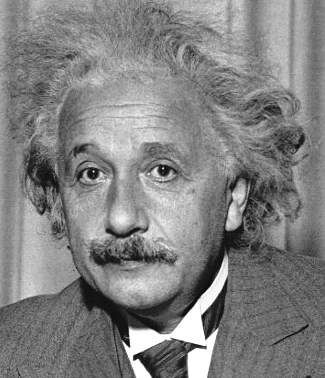
This idealistic view of genetics is fraught with a risk to human freedom of thought and action. Science is generations away from understanding genetics and its relationship to the weaknesses and strengths of human thought and action. Understanding what gave Einstein a genetic inheritance that could see and understand E=MC squared is not known and may never be known. The luck of genetic inheritance and the lottery of life experiences are unlikely to ever be predictable. One interesting note in the forensic examination of Einsteins brain (recorded in another book) is that he had a higher-than-normal gilia cell ratio, non-normal folding patterns in his parietal lobe, and a missing furrow in the parietal lobe that may have allowed better connectivity between brain regions.

The threat of eugenic determinism and the fickle political nature of human beings outweighs the benefits of Harden’s idea of choosing what is best for society.