The tragedy of cultural conflict fills the pages of Frazer’s history of the Mayflower adventure. Listeners are numbed by the many mistakes made by both Americanized English and indigenous natives in an interminable cultural war, a war that is still being played and paid for today.
Books of Interest Website: chetyarbrough.blog
Hollywood Park: The Mayflower
By: Rebecca Fraser
Narrated By: Kate Reading
Rebecca Fraser (Author, British writer and broadcaster, former president of the Bronte Society.)
In the early years of the 17th century, Puritans fled to America to escape persecution by King James I of England and his mother, Mary Queen of Scots. Though King James was not as much of a doctrinarian as his mother, it was dangerous for non-Catholics to live in England or Scotland. Fraser explains many English Puritans sought refuge in Holland. “The Mayflower” is a history of the first years of the Kingdom of England’s and Scottland’s Puritan settlements in America. Three of the most famous Mayflower’ passengers were William Bradford, Myles Standish, and William Brewster. Both Bradford and Brewster sailed from the Netherlands to England to board the Mayflower. Bradford became the first governor of the Plymouth Colony in America. Myles Standish became the military leader of the settlers. William Brewster was the spiritual leader of Puritan followers.
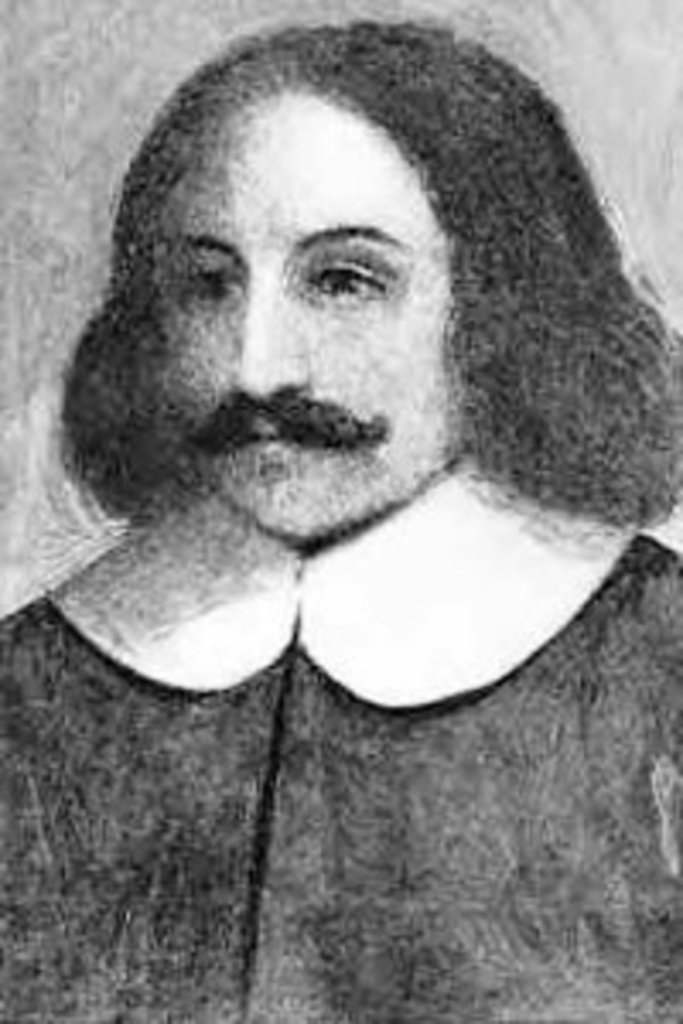
William Bradford (1590-1657)Myles Standish (1584-1656)William Brewster (1566-1644)
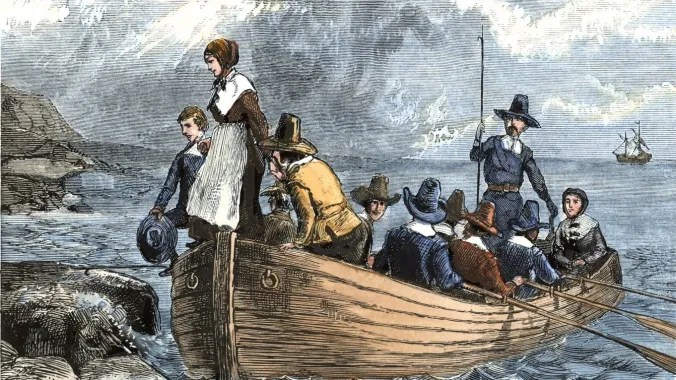
Fraser explains how Standish became important in the Mayflower’s cramped quarters, rough seas, and limited food. Standish maintained a level of discipline while Brewster provided spiritual support to the Pilgrims and non-religious separatists. The author reveals how shoddy the accommodations were on the Mayflower and how poorly prepared the ship was for such a perilous voyage. Provisioning was inadequate and the ship became overloaded when their sister ship had to return to England because of its unseaworthiness. More passengers were added to the Mayflower when the sister ship headed back to England. There were no doctors on board. A baby was born with the help of a mid-wife. Fraser gives one a picture of a two-month voyage that was hellish. Five of 102 passengers died at sea.
Upon arrival, survivors were faced with November winter conditions.
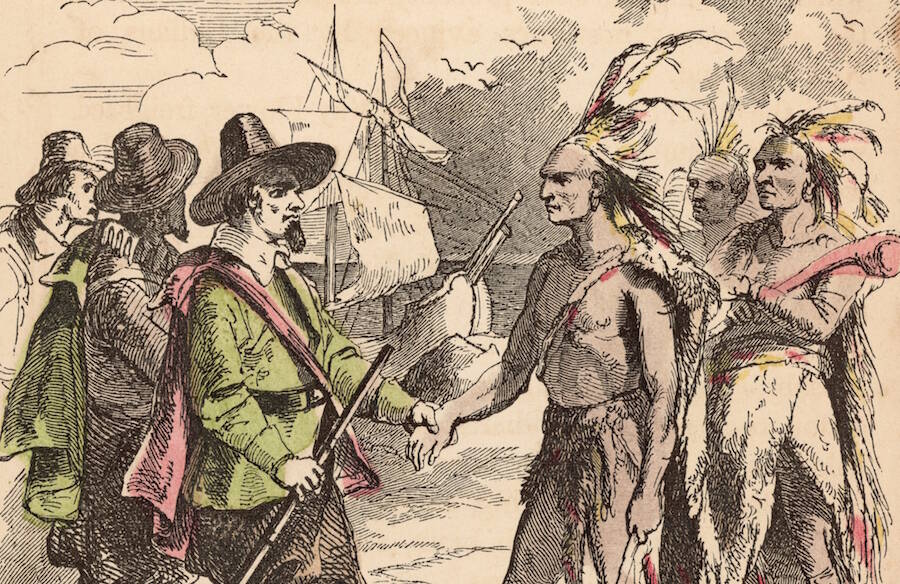
Forty-five of the 102 passengers died from a lack of shelter, poor rationing, and cold temperatures. The Mayflower was used as a shelter for much of the winter. No Native Americans greeted the travelers when they landed. It was March before an English-speaking Native named Samoset from the Wampanoag tribe met and talked to the settlers. Samoset introduced another English-speaking Native named Tisquantum, aka Squanto. Squanto taught the newcomers how to grow corn, catch fish, and find edible plants. Without that help, one doubts even these 57 settlers would have survived.
Fraser reveals the complicated relationship between settlers and indigenous natives.
As Fraser continues her history of America’s newcomers, differences in cultural beliefs, whether religious or secular, show why all nations in the world are challenged by difference.
Two indigenous natives, Samoset and Squanto, opened the door of communication between cultures. Squanto learned English because of his capture by John Smith’s men in 1614-15 with the intent of enslavement. Squanto escapes and returns to his native land. Because he could speak English, despite his kidnapping, he used what he learned to help settlers know how to plant corn, fish, and hunt beaver for survival.
Indigenous native cultures evolve with the influence of the Puritan settlers. They adopt a conception of Kings that rule over others.
Two Indian brothers rose to the level of kings in the Wampanoag tribe of New England. They were the sons of chief Massasoit who saved the pilgrims from starvation by helping them understand how to cultivate the land and fish for survival. As the pilgrims multiplied, human nature led to conflicts between indigenous natives and themselves. Though the initial source of value exchange began as wampum (shell bead), it evolved to printed currency which changed the nature of life, labor, and trade.
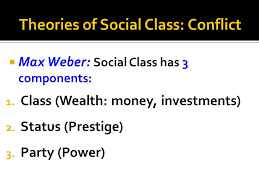
Human nature is freighted with the desire for money, power, and prestige.
Those desires lead to conflicts between native cultures and the Pilgrims. The desire for land began to infringe on the culture of native tribes. Soon, these conflicts escalated to war between English settlers and leaders of native tribes. Fraser details the rise of King Alexander and King Phillip of the Wampanoag tribe that began to organize against the settler’s encroachment on native lands. Alexander is killed but his brother becomes a great leader among many indigenous natives and begins what seems an interminable and savage war against the settlers. The savagery on both sides escalates with scalping, dismemberment, and pilloried heads on spikes.
The tragedy of cultural conflict fills the pages of Frazer’s history of the Mayflower adventure. Listeners are numbed by the many mistakes made by both Americanized English and indigenous natives in an interminable cultural war, a war that is still being played and paid for today.
One may conclude from Hawkin’s research that human beings remain the smartest if not the wisest creatures on earth. The concern is whether our intelligence will be used for social and environmental improvement or self-destruction.
Books of Interest Website: chetyarbrough.blog
On Intelligence
By: Jeff Hawkins, Sandra Blakeslee
Narrated By: Jeff Hawkins, Stefan Rudnicki
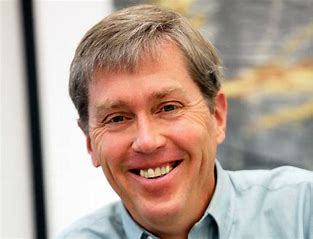
Jeff Hawkins (Author, American neuroscientist and engineer)Sandra Blakeslee (American science correspondent, writer specializing in neuroscience.)
Jeff Hawkins co-founder of Palm Computing and co-creator of PalmPilot, Treo, and Handspring.
Hawkins and Blakeslee have produced a fascinating book that flatly disagrees with the belief that computers can or will ever think.
Hawkins develops a compelling argument that A.I.’ computers will never be thinking organisms. Artificial Intelligence may mislead humanity but only as a tool of thinking human beings. This is not to say A.I. is not a threat to society but it is “human use” of A.I. that is the threat.
Hawkins explains A. I. in computers is a laborious process of one and zero switches that must be flipped for information to be revealed or action to happen.
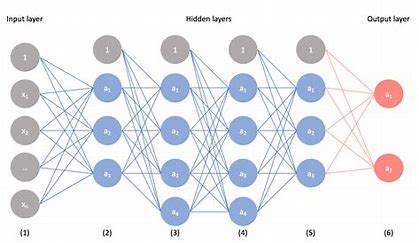
In contrast to the mechanics of computers and A.I., human minds use pattern memory for action. Hawkins explains human memory comes from six layers of neuronal activity. Pattern memory provides responses that come from living and experiencing life while A.I. has a multitude of switches to flip for recall of information or a single physical action. In contrast, the human brain instantaneously records images of experience in six layers of neuronal brain tissue. A.I. has to meticulously and precisely flip individual switches to record information for which it must be programmed. A.I. does not think. It only processes information that it is programmed to recall and act upon. If it is not programmed for a specific action, it does not think, let alone act. A.I. acts only in the way it is programmed by the minds of human beings.
So, what keeps A.I. from being programmed to think in patterns like human beings? Hawkins explains human patterning is a natural process that cannot be duplicated in A.I. because of the multi-layered nature of a brain’s neuronal process. When a human action is taken based on patterning, it requires no programming, only the experience of living. For A.I., patterning responses are not possible because programming is too rigid based on ones and zeros, not imprecise pictures of reality.
What makes Jeff Hawkins so interesting is his broad experience as a computer scientist and neuroscientist. That experience gives credibility to the belief that A.I. is only a tool of humanity. Like any tool, whether it is an atom bomb or a programmed killing machine, human patterning is the determinate of world peace or destruction.
A brilliant example given by Hawkins of the difference between computers and the human brain is like having six business cards in one’s hand. Each card represents a complex amount of information about the person who is part of a business. With six cards, like six layers of neuronal receptors, a singular card represents a multitude of information about six entirely different things. No “one and zero” switches are needed in a brain because each neuronal layer automatically forms a model that represents what each card represents. Adding to that complexity, are an average of 100billion neurons in the human body conducting basic motor functions, complex thoughts, and emotions.
There are an estimated 100 trillion synaptic connections in the human body.
The largest computer in the world may have a quintillion yes and no answers programmed into its memory but that pales in relation to a brains ability to model existence and then think and act in response to the unknown.
This reminds one of the brilliant explanation of Sherlock Holmes’ mind palace by Sir Arther Conan Doyle. Holmes prodigious memory is based on recall of images recorded in rooms of his mind palace.
Hawkins explains computers do not “think” because human thought is based on modeling their experience of life in the world. A six layered system of image modeling is beyond foreseeable capabilities of computers. This is not to suggest A.I. is not a danger to the world but that it remains in the hands and minds of human beings.
What remains troubling about Hawkin’s view of how the brain works is the human brains tendency to add what is not there in their models of the world.
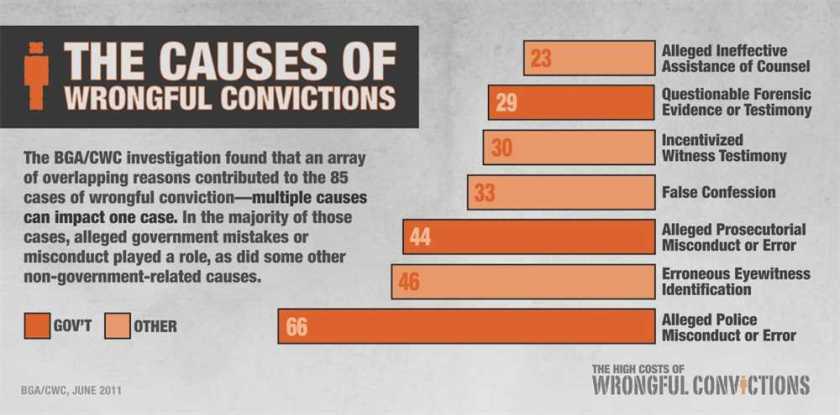
The many examples of eye-witness accounts of crime that have convicted innocent people is a weakness because people use models of experience to remember events. Human minds’ patterning of reality can manufacture inaccurate models of truth because we want our personal understanding to make sense which is not necessarily truth.
The complexity of the six layers of neuronal receptors is explained by Hawkins to send signals to different parts of the human body when experience’ models are formed.
That is why in some cases we have a fight or flight response to what we see, hear, or feel. It also explains why there are differences in recall for some whose neuronal layers operate better than others. It is like the difference between a Sherlock Holmes and a Dr. Watson in Doyle’s fiction. It is also the difference between the limited knowledge of this reviewer and Hawkins’ scientific insight. What one hopes science comes up with is a way to equalize the function of our neuronal layers to make us smarter, and hopefully, wiser.
One may conclude from Hawkin’s research that human beings remain the smartest if not the wisest creatures on earth. The concern is whether our intelligence will be used for social and environmental improvement or self-destruction.
Eubanks is wrong to think digitization ensures a future that will create a permanent underclass. The next four years may not show much progress in welfare, but American history has shown resilience in the face of adversity.
Books of Interest Website: chetyarbrough.blog
Automating Inequality (How Hich-tech Tools Profile, Police, and Punish the Poor
By: Virginia Eubanks
Narrated By: Teri Schnaubelt
Virginia Eubanks (Author, American political scientist, professor at the University at Albany, New York.)
At the risk of sounding like a “bleeding heart” liberal, Virginia Eubanks assesses the inefficient and harmful effects of technology on welfare, childcare services, and homelessness in America. Eubanks illustrates how technology largely reduced the cost of Indiana’s welfare. However, cost reduction came from removing rather than aiding Americans in need of help. She shows southern California is better organized in the 2000s than Indiana in their welfare reform movement in the 1990s. However, the fundamental needs of the poor and homeless are shown to be poorly served in both jurisdictions.
In the last chapters of the book, Eubanks looks at Pennsylvania’s childcare services (CCW). She argues her research shows digitization of personal information, societal prejudice, and inadequate financial investment as fundamental causes of America’s failure to help abused children. Eubanks implies the cause of that failure is the high-tech tools of the information age.
Eubanks offers a distressing evaluation of Indiana’s, California’s, and Pennsylvania’s effort to improve state welfare programs.
The diagnosis and cure for welfare are hard pills to swallow but Eubank’s research shows welfare’s faults without clarifying a cure. She clearly identifies symptoms of inequality and how it persists in America. Eubank infers America’s politicians cannot continue to ignore homelessness and inequality. America needs to reinforce its reputation as the land of opportunity and freedom. Eubank implies technology is the enemy of a more equal society by using collected information to influence Americans to be more than self-interested seekers of money, power, and prestige.
Eubank explains how Indiana welfare recipients were systematically enrolled in an information technology program meant to identify who receives welfare, why they are unemployed, and how they spend their money.
She argues this detailed information is not just used to categorize welfare recipients’ qualifications for being on welfare. The purported reason for gathering the information is to help those on welfare to get off welfare and become contributors to the American economy. What Eubank finds is the gathered information is used to justify taking citizens off of welfare, not improve its delivery. Poorly documented information became grounds for denying welfare payments. If someone failed to complete a form correctly, their welfare payments were stopped. The view from government policy makers was that welfare costs went down because of the State’s information gathering improvements. In reality welfare costs went down because recipients were rejected based on poorly understood rules of registration. Indiana did not have enough trained management personnel to educate or help applicants. Welfare applicants needed help to understand how forms were to be completed and what criteria qualified them for aid.
From Indiana State’s perspective, information technology reduced their cost of welfare. From the perspective of Americans who genuinely needed welfare, technology only made help harder to receive.
Eubank notes there are three points that had to be understood to correct Indiana’s welfare mistakes:
information algorithms qualifying one for welfare must be truthful, fair, and accurate,
the information must reflect reality, and
training is required for welfare managers and receivers on the change in welfare policies.
Another point made by Eubank is the danger of computer algorithms that are consciously or subconsciously biased. A biased programmer can create an algorithm that unfairly discriminates against welfare applicants that clearly need help. This seems a legitimate concern, but Eubank misses the point of more clearly understanding the need of welfare for some because of the nature of American capitalism and the consequence of human self-interest. Contrary to Eubank’s argument, digitalization of information about the poor offers a road to its cure not a wreck to be avoided.
WELFARE CATEGORY ELIGIBILITY PERCENTAGES IN INDIANA
Eubank tells the story of a number of Indiana residents that had obvious medical problems making them unemployable but clearly eligible for welfare payments. They are taken off welfare because of mistakes made by government employees’ or welfare recipient’ misunderstandings of forms that had to be completed. From the government’s standpoint Indiana’ welfare costs went down, but many who needed and deserved help were denied welfare benefits. The rare but widely publicized welfare cheats became a cause celeb during the Reagan years that aggravated the truth of the need for welfare in America. The truth, contrary to Eubanks opinion, becomes evident with the digitization of information as a basis for legislative correction.
Eubank notes Skid Row in Los Angeles lost many of its welfare clients with gentrification of the neighborhood. The poor were moved out by rich Californians who rebuilt parts of Skid Row into expensive residences.
Eubank explains a different set of problems in the Los Angeles, California welfare system. The technological organization of the LA welfare system is better but still fails to fairly meet the needs of many citizens. The reasons are similar to Indiana’s in that algorithms that categorize information were often misleading. However, the data-gathering, management, and use of information is better. The more fundamental problem is in resources (money and housing) available to provide for the needs of those who qualify for welfare. It is not the digitization of the public that is causing the problem. Contrary to the author’s opinion, digitization of reality crystalizes welfare problems and offers an opportunity for correction.
Homelessness is complex because of its many causes. However, having affordable housing is a resource that is inadequately funded and often blocked by middle class neighborhoods in America. Even if the technological information is well organized and understood, the resources needed are not available. Here is where the social psychology of human beings comes into play. Those in the middle class make a living in some way. They ask why can’t everyone make a living like they have? Why is it different for any other healthy human being in America? Here is where the rubber meets the road and why homelessness remains an unsolved problem in America.
People are naturally self-interested. One person’s self-interest may be to get high on drugs, another to steal what they want, others to not care about how they smell, where they sleep, look, live, or die. Others have chosen to clean themselves up and get on with their life. Why should their taxes be used to help someone who chooses not to help themselves? Understanding the poor through digitization is the foundation from which a solution may be found.
Traveling around the world, one sees many things. In India, the extraordinary number of people contributes to homelessness. In France, it is reported that 300 of every 100,000 people are homeless. Even in Finland, though there are fewer homeless, they still exist.
It is a complex problem, but it seems solvable with the example of what Los Angles is trying to do. It begins with technology that works by offering a clear understanding of the circumstances of homelessness. A detailed profile is made of every person that is living on the street. They are graded on a scale of 1 to 17 based on the things they have done in their lives. That grade determines what help they may receive. Some may be disqualified because of a low number but the potential of others, higher on the scale, have an opportunity to break the cycle of poverty with help from welfare. It is the resources that are unavailable and social prejudice, not gathered personal digital information, that constrain solutions.
With informational understanding of a welfare applicant, it principally requires political will and economic commitment by welfare providers. There is no perfect solution but there are satisficing solutions that can significantly reduce the population of those who need a helping hand. American is among the richest countries in the world. Some of that wealth needs to be directed toward administrative management, housing, mental health, and gainful employment.
Like all countries of the world, as technological digitization improves, human services will grow to become a major employment industry in the world.
America, as an advanced technology leader, has the tools to create a service economy that is capable of melding industrial might with improved social services.
Eubanks travels to Pennsylvania to look at their child services program.
What Eubanks finds in Pennsylvania is similar to what she found in LA and, to a degree, Indiana. Children who are at risk of being abandoned, abused, or neglected are categorized in a data bank that informs “Child Services” of children who need help. The problem is bigger than what public services can handle but the structure of reporting offers hope to many children that are at risk. Like LA, it is a resource problem. But also, it is a problem that only cataloging information begins to address.
Parents abuse their children in ways that are often too complicated for a standardized report to reveal. Details are important and digitization of personal information helps define what is wrong and offers a basis for pragmatic response.
Computerized reports, even with A.I., are only a tip of the reality in which a child lives. This is not to argue child-services should be abandoned or that reports should not be made but society has an obligation to do the best it can to ensure equality of opportunity for all. Every society’s responsibility begins with childhood, extends through adulthood and old age–only ending with death. Understanding the problems of the poor is made clearer by digitization. Without digital visibility, nothing will be done.
Eubanks gives America a better understanding of where welfare is in America. She is wrong to think digitization ensures a future that will create a permanent underclass. The next four years may not show much progress in welfare, but American history has shown resilience in the face of adversity.
The truth Everett reveals in “James” is that men and women of color are neither the same nor different than other people of the world.
Books of Interest Website: chetyarbrough.blog
James (A Novel)
By: Percival Everett
Narrated By: Dominic Hoffman
Percival Everett (Author, Distinguished Professor of English at University of Southern California, winner of the Booker Prize in 2024 for “James”.)
The Booker Prize is a prestigious British literary award for “…the best sustained work of fiction written in English”. The award was first created in 1969. Percival Everett’s “James” is an imaginative work well-deserved of the award. Everett recalls a version of Samuel Clemen’s (Mark Twain’s) character Huckleberry Finn and makes him a white-boy companion of a self-educated slave in the American South. The slave’s name is “James”, called Jim in Everett’s story.
Jim and his family are about to be separated with his sale to a New Orleans slave owner.
Jim finds out that he is to be sold by his owner. Jim chooses to leave the family he loves to avoid separation from his wife and daughter in Hannibal, Missouri. His hope is to reunite with his family by somehow earning enough money to buy his family from their slave owner, i.e. an unrealistic prospect considering the owner’s loss of a slave’s sale. Jim escapes on a raft to an island on the Mississippi river and comes across Huck, a young boy who also escapes to the island. Jim is acquainted with Huck from a friendship he has with Tom Sawyer who plays tricks on people in the neighborhood.
Huck is characterized as Mark Twain described him, i.e., the son of a white father who abuses him. In Jim’s escape to the island, he finds Huck’s father’s body. Huck’s father is dead. Huck is unaware of his father’s death and Jim chooses not to tell him. Huck and Jim decide to leave together on a raft. Jim leaves for obvious reasons. Huck presumably leaves with him because of his troubled relationship with a father who beats him and a mother who has been dead for years.
What is cleverly explained by Percival Everett is how Jim is a teacher to black children in his Hannibal neighborhood.
The essence of Jim’s teaching is to hide the intelligence of black people by teaching children how to hide their intelligence. Jim explains they should talk in the patois of black slang while keeping their own council, appearing respectful to their white enslavers. Everett is symbolically illustrating how slaves were the equals of their slave holders by showing they hid their innate intelligence. Everett’s hero understands the truth of slavery’s iniquity with the story of Jim’s escape and eventual triumph.
What makes Everett’s book an award winner is its pacing and descriptive events that draw reader/listeners into the history of American slavery and the advent of the Civil War.
Everett clearly shows the horror of being a slave. Men and women are beaten, raped, and murdered at the discretion of white people who believe the color-of-one’s-skin marks human beings as property, qualifies them for enslavement, and proves their inequality.
There are a number of incredible surprises at the end of Everett’s story. The Civil War has begun and the fight between North and South are made clear in Jim’s apocryphal return to Hannible with Huck. Huck’s relationship with Jim grows into something Twain never suggests.
The truth Everett reveals in “James” is that men and women of color are neither the same nor different than other people of the world. They are simply human beings.
Everett shows how powerful social interests can grow to treat powerless cultures as property and make them think and feel inferior.
One hopes for more Leifer’s in this world of human tragedy.
Books of Interest Website: chetyarbrough.blog
Tablets Shattered (The End of an American Jewish Century and the Future of Jewish Life)
By: Joshua Leifer
Narrated By: Eli Schiff
Joshua Leifer (Author, journalist and scholar who explores the past and present of American Jewry, Leifer pursues a PhD at Yale on the history of modern moral and social thought.)
Joshua Leifer reflects on the Americanization of Jewish ethnicity in modern times. Leifer offers his personal view of modern events in Israel, including the terror of October 7th, 2023, and its aftermath.
In the last month, my wife and I journeyed to Poland, the Baltics, and Finland.
On the trip, we visited Auschwitz, the terror of Soviet occupation of the Baltics, and the tenuous relationship of Finland and Russia. More will be shared in a future review.
The holocaust is made present to anyone who chooses to visit Auschwitz.
This is a monument to the Holocaust, located in Germany.
Leifer’s book is not about Auschwitz’s atrocity but about a diminishment of Jewish identity. One who reads or listens to Leifer’s view of Jewish ethnicity will look at Judaism in a different way. Regardless of one’s personal beliefs, Leifer argues Judaism is losing its way from what he believes is a fundamental tenet of the Jewish religion. That tenet is that Judaism will always be a minority within cultures of the world and, as a minority, Leiger argues it is critically important for followers to return to its Judaic roots. Leifer implies Americanization of Judaism is a social influence that threatens the Tablets of the Covenant, i.e., the Ten Commandments.
Leifer explains that Israel will continue to grow as an independent nation with an exodus of Jewish believers from America and the world. Leifer suggests that exodus is evident in the diminishing number of American Jews who have chosen to leave America to become Israeli citizens. His hope is that in Jews return to a nation of their own with a renewed belief and adherence to the Ten Commandments.
I am the Lord your God: You shall have no other gods before Me.
You shall not make for yourself a graven image: No idols or images.
You shall not take the name of the Lord your God in vain.
Remember the Sabbath day, to keep it holy.
Honor your father and your mother.
You shall not murder.
You shall not commit adultery.
You shall not steal.
You shall not bear false witness against your neighbor.
You shall not covet: Do not desire your neighbor’s house, wife, or possessions.
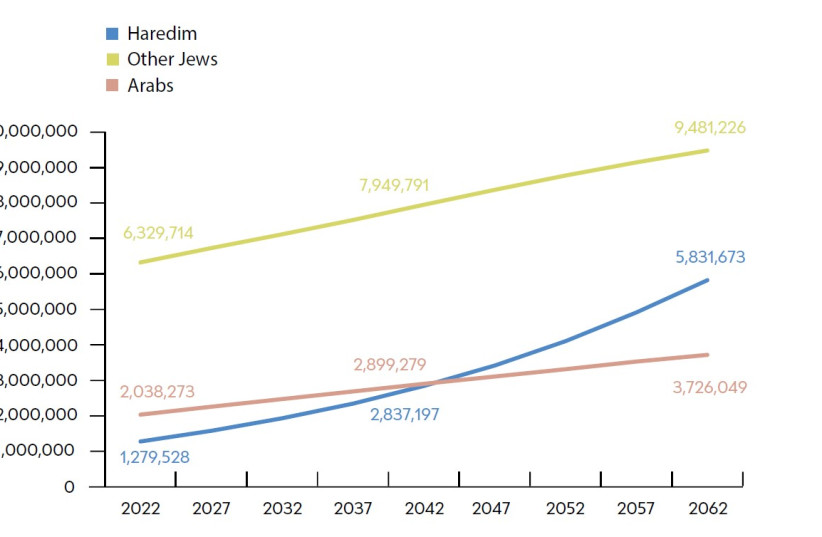
Of particular note is the Haredim who adhere to traditional Jewish law and customs.
There is an underlying accusation in Leifer’s book that America reinforced want for money, power, and prestige that changed the nature of Judaism.
However, human nature is a failing in all cultures. The truth is that all forms of government and culture seduce human beings to violate the Ten Commandments: not only Jewish followers. Human nature is an equal opportunity exploiter of society and people.
Leifer does have a point in that any ethnicity that truly follows the ten commandments is better than one that ignores them.
The fault in Leifer’s belief is that the ten commandments will or can be universally accepted by any culture or ethnicity. Human nature can be improved upon, but one doubts it can be erased by either religious or secular teaching of the Commandments.
Leifer hopes for a two-state solution in Israel. That seems a laudable and achievable goal, but human nature remains the same. With statehood, both Israeli and Palestinian societies may become better but there will always be the threat of Commandment violation because of human nature. One hopes for more Leifer’s in this world of human tragedy.
Over 230 human beings remain political hostages in this unpredictable world.
Books of Interest Website: chetyarbrough.blog
In the Shadows (True Stories of High-Stakes Negotiations to Free Americans Captured Abroad)
By: Mickey Bergman, Ellis Henican
Narrated By: Assaf Cohen, Mickey Bergman
Mickey Bergman (American Israeli.)Ellis Henican (American co-author, political analyst for Fox News Channel.)
Mickey Bergman tells a fascinating personal story about his life as a political hostage negotiator. He and a mysterious Lebanese friend he names “George” met at Georgetown University and became interested in political hostage negotiations. A precipitating event that led to their early friendship is the kidnapping of an Israeli soldier by a Palestinian Hamas faction in Lebanon. As a former Jewish military soldier, Bergman became friends with “George”, a Lebanese Muslim student at George Washington University. With similar beliefs about the unfairness and human tragedy of hostage taking for political purpose, they become partners in the release of the Israeli soldier from Hamas.
As a reminder of the of the October 7, 2023, kidnaping of over 100 Jewish hostages by Hamas, Israel has occupied Gaza and murdered an estimated 4o,000 Palestinians.
In the kidnaping of one Israeli soldier, Bergman explains that murder or kidnapping of 1 Israeli is viewed by some in the government and Israeli citizens as not 1–but six million and 1 atrocities.
A singular kidnaping, let alone the October 7th Hamas attack, gave warrant to some in Israel’s government to wage occupation and war on Gaza.
(This reasoning gives a sense of the current state of the Gaza war but also explains why hostage negotiation is such a complicated and lengthy process that can as easily end in failure as success.)
From Bergman’s friendship with “George”, he gathers interest in the pursuit of peace, regardless of social, religious, economic, or political difference. As a twenty something graduate, Bergman receives a call from the Clinton Global Initiative to join their organization after graduation. CGI was formed by former President Clinton and his family in 2005. Its stated purpose was to devise and implement solutions to world challenges like climate change, health equity, world economic growth, and peace among nations. It gave Bergman his first thoughts about what would become his mission in life, i.e., the liberation of hostages unjustly held by factions of countries or governments for political rather than criminal infraction. “In the Shadows” explains how suited Bergman is for the life he chooses. Raised in Israel, highly educated, experienced as a soldier, from a stable and loving family, Bergman understands the grief and joy of families dealing with and hoping for their mothers, fathers, sons or daughters release from a foreign prison.
Formed in 2005 to address world problems.
Bergman’s early experience as a go-between for the release of the Israeli soldier, with the help of his Lebanese friend from college, show how important non-governmental citizens can be in freeing political prisoners. Bergman and his friend’s families have important indirect contacts at high levels in the Israeli and Lebanese governments. The two young graduates create back-channel contacts to Jewish and Lebanese governments that eventually get Hamas to release the Israeli soldier. They found it a slow, tedious process of give and take allowing political points to be made by factions and governments while providing an opportunity to free a hostage who was only doing his government ordered job.
Bergman is everyman who wishes to be the best he can be within their natural gifts of birth, education, and experience.
Bergman is drawn into the circle of Governor Bill Richardson of New Mexico who formed the Richard Center in 2011. Bergman learns how to become a more effective hostage negotiator. Richardson’s methodology in negotiation is a post-graduate course in effective international negotiation.
The Richard Center was formed in 2011 to focus on promoting international peace and dialogue; particularly to negotiate hostage and prisoner releases. The Richard Center continues its work today.
Bill Richardson (1947-2023, died at age 75, a former Governor of New Mexico, 9th US Secretary of Energy, US Ambassador to the UN, who was elected to the U.S. House of Representatives for New Mexico.)
Richardson’s rules of negotiation:
Never close the door to your contacts.
Deflect attention from yourself with the people you take with you when you negotiate.
As leader of a mission, observe reactions of your opposing audience to associates’ arguments, i.e. the same arguments you discussed with your associates before the meeting.
Present a final pitch for hostage release based on what you have learned from the audiences’ reactions to your support staff’s arguments.
Richardson is shown by Bergman to be a master of negotiation and a great teacher of the art. You will not always win the argument, but you will have used the most persuasive details based on seeing and hearing the oppositions’ reactions to associates’ arguments.
Brittany Griner (released in Russia 2022)Danny Fenster (released in Myanmar 2021)Otto Warmbier (released 2o17 in N. Korea, died 2017)Trevor Reed (Released in Russia 2022)Paul Whelan (Released in Russia 2024)Kenneth Bae (Released in N. Korea 2014)
“In the Shadows” tells the hostage stories of Brittney Griner, Danny Fenster, Otto Warmbier, Trevor Reed, Paul Whelan, and Kenneth Bae.
Bergman does a great job of explaining how difficult, dangerous, and often unsuccessful hostage negotiations can be. The release of Griner is heartwarming. The death of Warmbier is heart breaking. The delay of Paul Whelan’s release is frustrating and indicative of the complexity of hostage negotiation.
The many stories Bergman tells are interspersed with hardship in his own life that show how human and vulnerable we are despite our intelligence, experience, and education. Over 230 human beings remain political hostages in this unpredictable world. Though Governor Richardson recently died, Bergman carries on with the Richardson Center for Global Engagement.
The potential of AI is akin to the Industrial Revolution, yet it could surpass it significantly if managed correctly by humans.
Books of Interest Website: chetyarbrough.blog
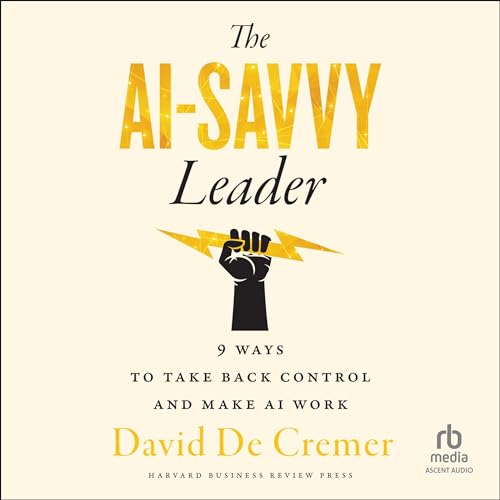
The AI-Savvy Leader (Nine Ways to Take Back Control and Make AI Work)
By: David De Cremer
Narrated By: David Marantz
David De Cremer (Author, Belgian born professor at Northeastern University in Boston, and behavioral scientist with academic studies in economics and psychology.)
“The AI-Savvy Leader” should be required reading for every organization investing in artificial intelligence for performance improvement. From government to business, to eleemosynary organizations, De Cremer offers a guide for organizational transition from physical labor to labor-saving benefits of AI.
AI offers the working world the opportunity to increase their productivity without the mind-numbing physical labor of assembly lines and administrative scut work.
Like assembly line production implemented by Ford and work report filing and writing during the industrial revolution, AI offers an opportunity to increase productivity without the mind-numbing physical labor of assembly line work and after-work’ analysis reports. With AI, more time is provided to workers to think and do what can be done to be more productive.
Arguably, AI is similar to the industrial revolutions transition to assembly line work. Assembly line work improved over time by changes that made it more productive. Why would one think that AI is any different? It is just another tool for improving productivity. The concern is that AI means less labor will be required and that workers will lose their jobs. De Cremer notes loss of employment is one of the greatest concerns of employees working for an organization transitioning to AI. Too many times organizations are looking at reducing costs with AI rather than increasing productivity.
The solution identified by De Cremer is to make AI transition human centered.
His point is that organizations need to understand the human impact of AI on employees’ work process. AI should not only be viewed as a cost-cutting process but as a process of reducing repetitive work for labor to make added contributions to an organization’s goals. AI does not guarantee continued employment, but reduced manual labor offers time and incentive to improve organization productivity through employee’ cooperation rather than opposition. AI is mistakenly viewed as an enemy of labor when, in fact, it is a liberator of labor that provides time to do more than tighten bolts on an auto body frame.
AI is not a panacea for labor and can be a threat just like industrialization was to many craftsmen.
But, like craftsman that went to work for industries, today’s labor will join organizations that have successfully transitioned to AI with a human-centered rather than cost-reduction mentality. Labor productivity is only a part of what any AI transition provides an organization. What is often discounted is customer service because labor is consumed by repetitive work. If AI improves labor productivity, more time can be provided to an organization’s customers.
When AI is properly human centered, the customer can be offered more personal attention by fellow human beings employed by an AI organization.
Too many organizations are using AI to respond to customer complaints. Human-centered AI becomes a win-win opportunity because labor is not consumed by production and has the time to understand customer unhappiness with service or product. AI does not think like a human. AI only responds based on the memory of what AI has been programmed to recall. With human handling of customer complaints, problems are more clearly understood. Opportunity for customer satisfaction is improved.
De Creamer acknowledges AI has introduced much closer monitoring of worker performance and carries some of the same mind-numbing work introduced in assembly line manufacturing.
De Creamer suggests negative consequences of AI should be dealt with directly with employees when AI becomes a problem. Part of a human-centered AI organization’s responsibility is allowing employees to take breaks during their workday without being penalized for slackening production. Repetitive tasks have always been a drain on productivity, but it has to be recognized and responded to in the light of overall productivity of an organization.
AI, like the industrial revolution, is shown as a great opportunity for human beings.
De Creamer suggests AI is not and will never be human. To De Creamer AI is a recallable knowledge accumulator and is only a programmed tool of human minds, not a replacement for human thought and understanding. The potential of AI is akin to the Industrial Revolution, yet it could surpass it significantly if managed correctly by humans.
The greatest threat of A.I. is that the ubiquity of information will turn people and countries against each other.
Books of Interest Website: chetyarbrough.blog
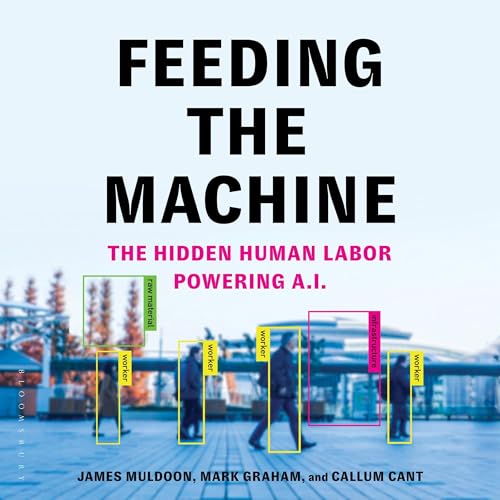
Feeding the Machine (The Hidden Human Labor Powering A.I.)
By: Mark Graham, Callum Cant, James Muldoon
Narrated By: Orlando Wells
Mark GrahamCallum CantJames Muldoon
Graham, Cant, and Muldoon have backgrounds that offer an educated opinion about the impact of artificial intelligence on the world labor market. Graham is a Professor of Internet Geography affiliated with the University of Oxford’s School of Geography and the Environment. Cant is a researcher and labor rights advocate for workers in the gig economy. Muldoon is an Associate Professor in Mangement and Head of Digital Research at a think tank on modern technologies.
“Feeding the Machine” reminds one of the Industrial Revolution in its early stages.
The fear of loss of jobs because of machine replacement led to the Luddite movement that destroyed machines manufacturing products. The quality of machine-produced product may not have met craftsman standards, but production cost was so much less, the public preferred the lower-cost product. As the industrial revolution grew, the quality of production improved, and many craftsmen lost their jobs. Many of these craftsmen had to find new jobs. Some became users of machines to produce product. The transition was undoubtedly difficult because it required changes in the way people work. Rather than working for themselves, they had to work for manufacturers that produced products with machines. Craftsman had to work regular hours for a wage rather than sell product based on their exclusive labor. Karl Marx in “Das Kapital” explained that capitalism devalued worker’s contribution to society because they were not compensated fairly for their work based on profits earned by company’ owners.
Workers began to unionize to increase their political power and influence on managers of companies owned by entrepreneurs.
The results of unionization have been to begin equalizing wages and company profits. That equalization is a battle between corporate profit needed to stay in business, reasonable return to company owners, and livable wages for workers. When any of these three are out of balance, companies either go bankrupt, or find an acceptable balance that serves the needs of all.
Information is energy in today’s A.I. world., just as steam was in the industrial revolution.
As one listens to “Feeding the Machine” which claims A.I. produces poor quality energy is like early steam engines that provided inadequate energy. Who can say that A.I. “energy” will not improve just as steam engines improved? One becomes skeptical about the authenticity of the authors’ opinion. It seems too soon to believe A.I. power will not improve human life, just as steam engine power improved product quality and lowered consumer prices.
The authors make valid points about the impact of A.I. on workers.
Workers are often paid a pittance for repetitive work that is mind numbing because of the need to monitor digital information for its accuracy and quality. Is that significantly different than the repetitive motions needed by workers on a production line for manufactured goods? Henry Ford changed the way cars are produced by creating assembly line work that gave repetitive jobs to workers. Is that repetitive work much different than digital inspection by workers of A.I. production?
The many examples the authors give of remote workers’ wages for digital accuracy in Africa and other poverty-stricken areas of the world is heart rending. These new laborers are paid small wages that assure continued poverty. Economic inequality is a crime against humanity. Improving education seems the only sure way of defeating economic inequality. Education is a long road to travel but there seems no solution for economic insecurity without it.
Having traveled to Africa, seeing firsthand a dedicated teacher in a class of school children, one feels there is hope that the world’s economic insecurity will end.
Ford was a conservative right-wing businessperson by any measure. He supported Hitler because he was an authoritarian that resurrected a faltering German economy. However, Ford recognized workers were consumers and despite low wages for automobile workers of his time, he chose to raise wages. Ford recognized workers were also consumers. That remains true today. It seems reasonable to presume, unlivable wages will rise for digital workers around the world for the same reason the conservative Ford raised his worker’s wages.
This is not to say, what the author’s write is wrong about workers in Africa that are exhausted from repetitive work at an A.I. company but that the world is at a crossroad similar to the industrial revolution.
The world will change based on the weight of people’s discontent. The greatest threat of A.I. is that information ubiquity will turn people and countries against each other. The result may be a nuclear holocaust that changes the world and societies in a way that is impossible to predict.
The war in Ukraine.
The authors go on to explains how A.I. dehumanizes society. Creating a world-wide’ assembly line for product production allows companies to reduce their production costs by hiring workers around the world who are eager to have an income to improve their lives. The consequences to companies in the host country are improved profits. The consequence to host countries’ workers are layoffs and loss of income. A country of wealth has tools to mitigate worker layoffs, poorer countries do not. Laid off workers have better chances of finding new jobs in wealthy countries. This is not to minimize the consequence but to suggest the world is benefited more than harmed by A.I.
A point made by the authors that played out in the actor strike in America is that actors should be compensated for any work generated by A.I. images or voices of actors.
A.I. that generates false images should be penalized for misrepresenting real people without their consent. Another caution suggested by the authors is that A.I. can recreate art that is equivalent to todays and past literary and visual artists. That seems somewhat hyperbolic but if it is true, society has the tools to penalize those who choose to use A.I. to deceive the public. A.I. is only a tool of society. It is a source of energy that can destroy but also improve the lives of humanity. The authors note only minds are truly creative. A.I. is a recreator of the past, not the future. The use of A.I. by humans improves creative potential.
IN THE LAST CHAPTERS OF “FEEDING THE MACHINE”,THE AUTHORS SOUND AN ALARM BY NOTING THE CONTROL EXCERCISED BY INTERNET MOGULS WHO DIRECT THEIR EMPLOYEES TO CODE ALGORITHMS TO MEET THE NEEDS OF THEIR COMPANIES. THIS IS A SMILAR POWER EXERCISED BY ROBBER BARONS OFTHE LATE 19TH CENTURY. DEMOCRACRATIC CAPITALISM COPED WITH ROBBER BARON’S HEGEMONIC POWER THROUGH GOVERNMENT HEARINGS AND OVERSIGHT. ELECTED OFFICIALS SEEM WILLING TO COPE WITH MEDIA BARONS OF THIS CENTURY IN THE SAME WAY.PUBLIC HEARINGS AND GOVERNMENT OVERSIGHT OF MEDIA MOGULS ARE BEING CONDUCTED TODAY.
Science will lead or lose the “Real…” world of human beings.
Books of Interest Website: chetyarbrough.blog
“Real Americans” A Novel
By: Rachel Khong
Narrated By: Louisa Zhu, Cric Yang, Eunice Wong
Rachel Khong (American writer and editor.)
(Ms. Khong’s book is an entertaining listen but a little too long except for listeners who are most interested in the story. Others are interested in its societal meaning and often discount its entertainment value.)
The main characters in Khong’s novel are Lily Chen, Matthew, Nick Chen, and May. In one sense, the author’s story is about the randomness of life. We are born from fertilization of a male sperm with a female egg. In our world, the randomness of being born is based on chance encounters of violence or seduction. (The reference to violence and seduction is not meant to suggest the nuance of relationship can be ignored, e.g. love comes from the act of seduction, not from violence.) In the 21st century, violence and seduction remain but in today’s science, state and institutional influence bear down on human procreation. The science and possible future of genetics is Khong’s theme in “Real Americans”.
“Real Americans” is about a young college graduate making her way in New York city, a capitol of opportunity in America.
As a poor young graduate, New York city is a ticketed opportunity for American success and failure. Khong’s story is particularly interesting because the main character, Lily Chen, is born American to well-educated parents who emigrated from China. She does not speak Chinese. She is living the life of a young, intelligent American trying to support herself by whatever job she can find in New York City.
Lily’s mother and father are geneticists.
Like the trials and rewards of Cinderella, the trials of Lily’s life are transformed by the wealth of a prince. What makes “Real Americans” more than a fairytale is its theme that life’s beginnings are a matter of violence or seduction, including state and institutional complicity. (“State and institutional complicity” refers to acts of government and business that discriminate based on prejudice or narrow emphasis on income rather than ethics.)
Lily seems to have luckily met Matthew; an immensely wealthy heir to an American medical conglomerate founded by his family. They marry after an on again, off again relationship.
After their marriage, Lily has two pregnancies that do not come to term and chooses to have invitro insemination to have a successful pregnancy with the birth of a son they name Nicco. Matthew and Lily go to China on a business trip where Lily chooses to visit the college where her mother became a geneticist. She meets a professor who knew her mother and is told a story that initially puzzles her about what her mother was like when she was young. She finds her mother, as a student geneticist, was a risk taker and magical thinker.
The next one learns is that Lily divorces her husband and moves from New York to Tacoma Washington, an island between Seattle and its capital to raise her son by herself.
Lily’s mother had met Matthew’s family before Matthew began dating Lily. She knew Matthew’s father who began a hugely successful medical company that researched genetics. (The significance of her mother’s knowledge of the genetic research of Matthew’s family is at the crux of Lily’s feeling of betrayal.) The theme of the author’s story begins to take a turn. Lily leaves Matthew. (She leaves because of the bias of Matthew’s family in using Lily as a surrogate for pregnancy without disclosing their personal interest.)
As her son grows to manhood, she refuses to tell him the name of his father, where he lives, or the history and wealth of the family in which he was born. The remainder of Khong’s book is the story of the circumstances surrounding the birth of her son, how he learns of his father, and what led to her divorce from Matthew.
Khong is writing about the pandora box of genetics which opens the world to designer babies. She seems to conclude, regardless of birth circumstance, care and nurture make people “Real…”. Science will lead or lose the “Real…” world of human beings. (Understanding the science of genetics and the potential for manipulation of human life is a god-like power with all the ramifications of genetic inheritance that can aid or destroy human life.)
One chooses how they live life, but death is nature’s or God’s choice, a thing beyond human’ control.
Books of Interest Website: chetyarbrough.blog
“The Theater of War” What Ancient Greek Tragedies Can Teach Us Today
By: Bryan Doerries
Narrated By: Adam Driver
Bryan Doerries (Author, Artistic Director of Theater of War Productions, an evangelist for classical literature and its relevance to today’s lives.)
The title and book cover of “The Theater of War” is as puzzling as Bryan Doerries’ beginning vignette of his personal life. Doerries graduates from Kenyon College where he majors in the classics. He goes on to earn a Master of Fine Arts in Directing from the University of California. “The Theater of War” recounts Doerries’ journey to become cofounder, artistic director, and historian for creation of a theatrical teaching tool about life and death. The trigger for his understanding comes from the last days of his personal relationship with Laura Rothenberg who dies at 22 from cystic fibrosis. Her death is the introduction to why “The Theater of War” is created.
Doerries and Phyllis Kaufman are co-founders of “The Theater of War” Productions. Ms. Kaufman was the producing director from 2009 to 2016. She died at the age of 92 in 2023 but was instrumental in organizing production events, coordinating actors, and ensuring practical aspects of theatrical presentations.
“The Theater of War” is about the living and how to deal with permanent disability or death. Death comes in many forms from different causes but as the Latin expression says “Memento mori”, “Remember you must die” because death is a part of every life. Doerries explains how famous Greek tragedies were, and still are, teaching tools for those who have life and death influence over others. What “The Theater of War” creates are acted reproductions of classic Greek tragedies for living life when you or someone you know is permanently disabled or killed.
With the help of actors like Adam Driver (who narrates the book), the great tragedies of Sophocles and Aeschylus are presented to military, penal, and nursing audiences across America.
Combat veterans, prisoners, and terminally ill patients face extreme conditions of life. Combat may end in death or future disability. Prison life is about loss of control of oneself and being under the control of others. Terminal illness is also about loss of control of oneself when one is diagnosed as destined for death.
The suicide of Ajax as depicted on an ancient vase in the British museum in London.
Sophocle’s tragedy, “AJax”, offers the truth of psychological trauma and moral injury from battle. In despair, Ajax kills himself because he feels deeply humiliated by the gods for not being given the armor of Achilles who is killed in the Trojan war. Achilles’ armor was given to Odysseus rather than him.
Sophocle’s “Philoctetes” explains the pain and personal isolation that comes from the physical and emotional damage from war. Today, it is diagnosed as PTSD.
Sophocles “Antigone” deals with civil disobedience, justice, and conflict between personal and state ethics. These conflicts are reflected in mobs of unruly citizens demonstrating against what they perceive is wrong.
Aeschylus’s “Prometheus Bound” reflects on the unfairness of a penal system that infringes on human rights.
The recited dramas offer cathartic release and potential change to those who are personally affected by their situational experience. That is the purpose of the presentations. Doerries creates theatrical readings of these classics before military, penal, and nursing personnel.
The presentations lead to questions and answers about the truth of societal disagreement, death’s inevitability, and how to live with their consequences.
Some military generals and prison guards are offended by the implications of their mistakes, but the plays recitals provide a forum for discussion that offer potential for improved human understanding and societal decisions and action.
The Greeks understood dying is part of life. One chooses how they live life, but death is nature’s or God’s choice, a thing beyond human’ control.



























































 REVIEWS AND VIEWS OF LIFE
