UNDERSTANDING CHINA

Audio-book Review
            By Chet Yarbrough

(Blog: awalkingdelight)
 Website: chetyarbrough.blog

The China Challenge: Shaping the Choices of a Rising Power

By: Thomas Christensen

Narrated by: Alan Sklar

Thomas J. Christensen (Author, American political scientist, professor of international relations at Columbia University, advisor to U.S. Presidents.)

Thomas Christensen addresses “The China Challenge” with a capsulized history of communist party’ leadership from Mao to Xi. Christensen offers perspective to China’s support of North Korea, Syria, Iran, and Russia in the 21st century.

North Korea is losing the war when Mao commits the Chinese Army that pushes American troops back to the 38th parallel. That demarcation became part of a peace agreement that created two nation-states, North and South Korea. Despite the obvious domestic mistakes of the Great Famine and Cultural Revolution, Mao’s entry to the Korean war made him a revered hero to China and the communist party. Mao’s nearly divine adoration is evident to anyone who visits Beijing’s Memorial Hall Mausoleum in Tiananmen Square.

Nationalism and history are at the heart of China’s support of non-western countries. Though “The China Challenge” is published in 2015, before Ukraine’s invasion, it offers insight to China’s response to international events that seem irrational to many western citizens. Christensen’s history disabuses reader/listeners of Xi’s irrationality. Mao’s resolve in the Korean war reinforces President Xi’s belief in the utility and strength of the Chinese Communist Party.

North Korea—The brutality of the Korean war killed an estimated 1,500,000 North Koreans, and 716,000 Chinese

Development difference between South and North Korea exemplified by light projection at night.

Christensen notes the importance of China’s tempering influence on North Korean provocation while refusing to treat North Korean leadership as either rogue or irrational.

Contrary to George Bush’s monumental mistakes in Iraq, Christensen shows the American administration’s concerted effort to stop North Korea’s nuclear bomb ambitions. Along with Bush’s successful diplomatic effort to reduce tension with China over Taiwan by speaking of a “one China policy”, the Bush administration puts an economic initiative together for American economic support of North Korea in return for denuclearization. China supports the effort, but North Korea turns it down.

Christensen is unable to disclose the details of an economic package for North Korea in return for denuclearization but George Bush’s success in getting China’s support is remarkable and largely unrealized by the public.

Syria—Despite the brutality of Bashar al-Assad in Syria, China maintains close ties with Syria because of Xi’s belief in defending Syria’s independence, sovereignty, and territorial integrity. This is a consistent posture of China regarding other nations hostile to democracy.

Bashar al-Assad, President of Syria

Xi consistently supports authoritarian rulers’ right to rule without interference from outside interests.

Iran—Xi criticizes President Trump’s withdrawal from the nuclear non-proliferation agreement. Christensen notes China, like other nuclear powers in the world, believes in non-proliferation of nuclear bomb capability. Xi consistently supports Iran’s independence for the same reason noted for Syria.

Ali Khamenei (Iran Supreme Leader)

Xi believes every nation has a right to rule without interference from outside interests. An added economic reason is Iran’s supply of oil and petrochemicals to China.

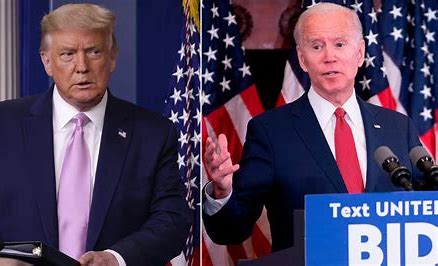
Russia— Russia’s invasion of Ukraine Xi is not considered. The invasion is not addressed by Christensen because it had not happened at the time of this book. Russia’s invasion seems a violation of the sovereignty principal Xi endorses. Ukraine’s history as once being a part of the U.S.S.R. gives  political spin to Xi. Of course, this relates to China’s interest in repatriating Taiwan. An interesting point noted by Christensen about Taiwan is America’s choice to provide F-16s for their defense during George Bush ‘s administration, contrasting with President Biden’s statement that any supply of arms by China to Russia will have consequences. Biden reminds Xi of the many corporations that left Russia when they invaded Ukraine. One wonders about America’s threat to Xi if China chooses to provide arms to Russia. In light of America’s supply of F-16s to Taiwan, Xi might not care about the economic consequence of American companies leaving China.

Ukraine War

Christensen implies there is a love/hate relationship between Russia and China. The love is Xi’s policy of non-intervention in a countries sovereignty. The hate is the history of Chinese leaders who chose the path of communism and found Russia abandoned Stalinist beliefs that Mao supported. Xi is an authoritarian. He believes in the importance of the communist party and uses it to achieve nationalist objectives.

MAO AND STALIN

Christensen goes on to write about global warming and the world’s inadequate response.

Over 60% of the world’s pollution is caused by four government jurisdictions, i.e., America, China, the E.U., and India. China and America alone cause 40% of the pollution. On a per-capita basis, America is the worst, but China shows the most visible impact, measured by air quality and water. In a trip to China, one can see the main rivers in China are loaded with refuse.

At times, air pollution is so thick in Beijing that one cannot safely drive a car because drivers are unable to see the road or other vehicles.

Christensen does not believe either China or America or any nation-state will be singular hegemons of the world. Christensen implies “balance of power” will always be the guiding principle of international relations. China is faced with problems greater than America because of demographics (high population and aging statistics) and its early stage of economic development. China’s present economy and environmental conditions create a longer road for China’s rise to broad citizen prosperity.

The fundamental theme of Christensen’s book is American leadership needs to understand China better. Only with understanding will respect be engendered and comity restored. Both China’s and America’s leaders realize humanity lives on spaceship earth. Without nation-state respect and comity, all nations (not to mention humans) are destined for the grave.

OPPORTUNITY & FAILURE

Audio-book Review
By Chet Yarbrough

(Blog: awalkingdelight)
 Website: chetyarbrough.blog

Out of the Gobi (My Story of China and America)

By: Weijian Shan

Narrated by: David Shih

Weijian Shan (Author, CEO of a private equity firm PAG, former partner in TPG Asia, holds a Ph.D. from Univ. of CA.)

Weijian Shan is a capitalist, a Chinese economist, CEO of an Asian investment company, and former professor at the University of Pennsylvania, Wharton School. Weijian Shan was born and raised in China during the Mao era.

Shan has written a memoir of his experience in the Chinese Cultural Revolution which began in 1966 and ended with the death of Mao Zedong in 1976. Shan writes about China’s and America’s economic and political differences.
In 1966, Shan is barely a teenager, having only completed his grade school years. Shan, and many other teenagers, are sent to the Gobi Desert during the Cultural Revolution in China. Shan’s compelling story tells of his experience during the Revolution with an explanation of how he is chosen, at the age of 21, to go to college in Beijing. “Out of the Gobi” is published in 2019. Shan offers insight to Mao’s communist political ideas and gives listeners some thoughts about what Mao’s politics mean in the age of Xi Jinping’s rule of China.

Shan’s experience in the Gobi Desert is among many Chinese citizens who are ordered to leave their city homes to experience rural China’s farm life. The irony is that neither China’s Gobi Desert farmers, the bourgeoise, nor displaced youth were culturally, intellectually, or financially benefited. Rural farmers were victimized because citizen relocations impacted food availability for what were subsistence farms. Many farmers were barely able to feed themselves, let alone thousands of relocated city dwellers. Relocated youth were denied higher education and forced into labor camps that had a negative effect on rural prosperity.

From a political perspective, Mao’s Cultural Revolution is a brilliant idea.

This is not to praise Mao as an intellectual but as a pragmatic politician who understood the value of the Cultural Revolution’s youth-relocations to advance his vision of Chinese communism. Mao cleverly instills a sense of discipline and teamwork by indoctrinating China’s next generation with Maoist communism. Today’s Xi benefits from Mao’s Cultural relocation with a generation raised in the time of the 1966 Revolution.

Shan’s story is the triumph of Weijian Shan’s intellectual development without a structured pre-college education.

(Uighur re-education camp in the 21st century.)

Shan’s memoir is a tribute to his personal strength and determination. Reaching the age of 21 in the Gobi Desert did not impede his intellectual development. Through work experience, social engineering among peers, and a commitment to read everything he could find, Shan overcame his Gobi Desert relocation and lack of a high school education.

With little English language skill, Shan begins his education at a Beijing college to become a student of foreign trade relations.

This educational opportunity is presented to Shan at the time of Nixon’s opening of Mao’s China to the world. Shan had firsthand experience of Mao’s communist mistakes. Shan tells the story of lost prosperity and peace for Gobi Desert dwellers and intruders.

In the Gobi Desert, Shan experiences the deficiency of a government system based on bureaucratic control that distorts productivity reports to make superiors look good. The disconnect between real progress and reports of progress hides the truth of economic waste and deterioration. Shan shows how orders from above depress productivity in two ways. One, by government superiors being ignorant of true productivity, and two, by discouraging the value of competition.

Shan reveals the strength and weakness of Deng Xiaoping’s opening of China after the death of Mao.

Without question, Deng contributed to China becoming the world’s second largest economy by GDP in 2010. On the other hand, Shan suggests Deng’s decision to crush the Tiananmen Square demonstration is the Communist Party’s misreading of demonstrators’ intent and support of economic revisionism. Deng (though reported to have given the order to jail or kill demonstrators) is revealed as a foil to Mao’s dictatorial beliefs in communism. Shan points to the odd fact that Mao removes Deng from leadership but refuses to remove Deng from the Party. The inference is that Mao may have understood the value of capitalism as a communist precursor (as noted by Marx).

XI JINPING (GENERAL SECRETARY OF THE COMMUNIST PARTY OF CHINA AND PRESIDENT OF THE PEOPLE’S REPUBLIC OF CHINA)

President Xi is reestablishing communist party authoritarianism and may make the same mistakes Mao made, without a foil like Deng. Singular authoritarian leaders in the 21st century often deny the merits of democratic free enterprise that reduces the threat of kleptocratic bureaucracy.

FINANCIAL TRUST

Audio-book Review
By Chet Yarbrough

(Blog: awalkingdelight)
 Website: chetyarbrough.blog

The Future of Money (How the Digital Revolution is Transforming Currencies and Finance.)

By: Eswar S. Prasad

Narrated by: Stephen R. Thorne

Eswar Prasad (Author, Economist.)

“The Future of Money” offers a short history and long explanation of the strengths and weaknesses of filthy lucre.

Prasad begins with the often-told story of how money began as a precious metal transforming to paper for easier exchange between seller and purchaser. The value of money has always been malleable. Its value changed in early times based on authoritarian rule and later in ways Prasad’s book explains as an evolutionary trust of money.

Genghis Khan is at one end of the spectrum where currency value is based on the value set by the ruler. If one disagrees with money’s mandated value, you are executed. Later the value of money is supported by full faith and credit of respective governments, inferring execution is less likely.

In modern times, value of money is turning to technology. Still, in every case, Prasad notes money’s value is based on trust.

Eswar Prasad explains money’s transformation from coin to paper to digital exchange. Prasad shows digital money is less tactilely filthy, but its form and value is as impactful as ever. In the remainder of Prasad’s long book, reader/listeners find how difficult it is to provide foundational legitimacy for digital currencies.

A number of chapters of Prasad’s book reveals the many financial transaction rails (electronic payment methods) that have been created with the widening use of the internet.

A cashless society began with credit cards and has proliferated to where “coin of the realm” is not accepted by some vendors. Prasad explains transaction fees on credit cards have led to alternative payment rails to reduce costs to both vendors and buyers.

As of 2021, the most commonly used alternative methods of payment are PayPal, Apple Pay, Google Pay, Bizum, WeChat, and Alipay. The number of users of these payment rails is increasing because of credit card’ fees.

Two with the most customers, WeChat and Alipay have over a billion users each.

Today, particularly after the FTX fiasco, digital money’s value has lost trust. All forms of value in money are subject to human fallibility. The fallibility of any form of money is in humankind’s nature which is subject to ignorance, greed, and power.

An attempt is made to mitigate greed and power with bitcoin. One suspects ignorance of digital currency remains for most of the public. Anyone can access the bitcoin platform. Theoretically no one can identify a singular person’s account without that person’s personal access code that can only be entered from the owner’s computer device. However, there remain fundamental reasons for one to be skeptical of a bitcoin owner’s security. Trust continues to be a concern for cryptocracy’s utility and value.

Aside from business ineptitude, having one’s own key to a bitcoin entity is no guarantee of security, even if any entry from another computer cannot use the key? What keeps a hacker from capturing a user’s code in blockchain and cloning a bitcoin computer to use the key to steal bitcoin value?  

Theft of passwords and private keys is hackable if information is kept anywhere in a computer file. This is not to mention the capability of social engineering by smooth-talking hackers.

FTX is in court today. Value of bitcoin assets has fallen to the point of FTX’s possible bankruptcy. It is unclear if the FTX collapse is from weakness of bitcoin transparency or its founder’s ineptitude. In any case, there is a precipitous loss of trust in bitcoin value.

How is bitcoin blockchain security significantly different in today’s tech-savvy world? One argument is that its control is decentralized rather than centralized. So what? Decentralized control carries its own set of risks.

The reality is bitcoin’ blockchain use and creation is part of what has led to the FTX mess. The so-called strength of not having centralized regulation of digital currency is shown to be a weakness. The pitch is that bitcoin is designed and intended not to require government regulation because of the mystical belief that regulation magically appears because of user transparency. Blockchain security does not appear to be any more trustworthy than a paper dollar in a tech-savvy world.

Another issue raised by Prasad is value instability of bitcoin.

Crypto currency is being tested by different governments around the world. These governments are trying to widen crypto currencies trust and value through greater diversification of support from nation-state’ assets. The idea may reduce instability, but there remains a question of oversight. Yes, oversight–that dreaded function labeled government regulation. User transparency is not enough as is proven by the failure of FTX.

Prasad tackles the complexity of inflation and the difficulty of controlling its negative impact on public welfare and economic health. Inflation often leads to a cycle of impoverishment that hits those who are poorest the most.

When inflation occurs, the cost of living (particularly food and shelter) is disproportionally lost by the poor. What is called helicoptering of money to families below a certain income level mitigated the worst consequence of unemployment during Covid in the United States. Covid’s impact and the decision to helicopter money caused a cycle of inflation in America, but it also reduced hardship and stabilized the economy.

Prasad notes inflation is being mitigated by Federal Reserve’s tightening of monetary policy by raising interest rates. The risk of that action is that those at the lowest end of the income market may lose their jobs because of industry layoffs. Prasad explains rising interest rates reduce business investment which can trigger a downward spiral in the economy.

It seems no coincidence that homelessness has become a national problem in America at the time of monetary policy disruption. Some argue change in monetary policy and Covid recovery have nothing to do with homelessness. Some argue citizens have just lost their motivation to work. Believing it is a loss of motivation seems ridiculous when one looks at conditions in which the homeless live. Whatever the cause, America is the wealthiest nation in the world and can reduce homelessness by acting responsibly.

Though not addressed by Prasad, homelessness is a national problem that should be funded by the national government at a local level so cities can adequately attack its multiple causes.

Prasad notes helicopter funding is only one arrow in monetary policies government quiver. Digital currency has made some people rich, but its control needs to be regulated to serve the needs of society more broadly.

One idea Prasad explains is the idea of a central bank digital currency (aka CBDC), presently being studied by the Federal Government.

Bitcoin, under the supervision of government, is a contradiction of the original inventor’s intent. However, the idea of blockchain, technology, and bitcoin opens a door to improving economic conditions of the poor around the world. The potential for CBDC, in concert with today’s access to internet payment rails, is a growing 21st century economic opportunity. It is not because of the idea of CBDC alone, but CBDC in concert with the internet and mobile phones could change the course of economic history. The evidence Prasad points to is Africa and the creation of a mobile phone service that offers the poor a way to pay bills without a checking account and collect income for product created for sale.

Prasad explains how people in the lowest economic classes have gained access to money for pay and income by using features of mobile phones.

Prasad explains the many experiments with digital currency are changing the world’s economy. Prasad notes the general concern is the amount of influence and regulation a government digital currency might have on its country of origin. On the one hand it offers opportunity for economic improvement. On the other, it creates a vehicle for an intrusive invasion of privacy. Anything entered into a computer potentially becomes public knowledge.

Further, Prasad notes the American dollar is already the most influential currency in the world. The idea of an American controlled digital currency is threatening to many countries, both in western and eastern blocs.

One who reads Prasad’s book is likely to conclude America will eventually create a digital currency. FTX shows digital currency cannot regulate itself without oversight. Whether America will remain the big dog in currency influence depends on an unknown future. No government’s digital currency has been successful as of this date.

ECHO, ECHO, ECHO

Indochina is changing based on its own history. America’s war is only a small part of that history. Sadly, that small part killed more than 50,000 Americans and indirectly resulted in deaths of many more Indochina citizens.


Website: chetyarbrough.blog

Written by Chet Yarbrough

There are no excuses for one to be uninformed about the world in this era of “phone-net” access. However, what is at issue is an echo chamber that traps unwary reader/listeners and fellow travelers in false beliefs.

An echo chamber is a media repeater that only reaffirms one’s beliefs, whether true or false.

An echo chamber is populated with tailored information that only reinforces what one already believes.

Facts of an echo chamber are tailored to its audience, rather than to truth.

To avoid the echo chamber trap, one must diversify what they read and hear. One must become a skeptic. Personal experience, reading of other’s experience, and listening to different news sources are essential requirements of the skeptic. Diversification begins by reading books of history, and periodicals with different political views. Like all books of history, truth is distorted by a writer’s chosen facts. It is impossible to precisely contextualize the complexity of the past.

History is infected by experiences of the present and fact-choices of the past.

Television news reports, local and national newspapers, and news magazines offer subtlety different views of world events. They may report on the same issue but often show different facts and perspectives. Those differences refine and expand one’s understanding of events. Few writers or news reports are perfectly right but each have a perspective that can be measured by the education and experience of reader/listeners.

Diversification of information does not guarantee truth, but it gives reader/listeners choice. In that choosing, we become ourselves.

A case in point is Jim Webb’s interview in the Wall Street Journal, 1/21/23. The title of the article is “Echoes of Vietnam”. Webb is a veteran of America’s Vietnam war. The interviewer asks Webb if the war was worth fighting. The reported response is “…America won–only a different way. We stopped communism, which didn’t advance in Indochina any further than it reached in 1975. We enabled other countries to develop market economic and governmental systems that were basically functional and responsive to their people. The model stayed and I like to think it will advance in Vietnam.”

Jim Webb (Former U.S. Senator from Va., 66th U.S. Secy. of the Navy, Age 76.)

This is a powerful statement by Webb with a view based on Vietnam war experience and the interviewee’s reported Vietnamese language skill. However, it seems Webb’s and the interviewer’s truth is only a snapshot of Indochina from the perspective of one who risked his life in America’s war.

Having traveled recently to Indochina (specifically Vietnam, Cambodia, Laos, and Thailand) what Webb quoted seems partly true. What the interview does not reveal is an uneasiness felt by Laos and Cambodia about a Vietnamese communist threat to borders of adjacent countries.

Communism and Democracy are changing.

As Webb notes communism has elements of capitalism throughout Indochina. Democracy’s form of capitalism is becoming more socialist, which is particularly true in Scandinavian countries and to a lesser extent America.

The striking concern expressed by Vietnam’ and Cambodian’ guides is the fear of China and its authoritarian form of communism, even though it incorporates elements of capitalism.

It seems the American war in Vietnam had little to do with today’s Indochina’ governments. America’s war seems to have had some effect on Indochina’s governmental evolution but not as much as their own history.

Indochina has its own history of authoritarianism, ranging from monarchy to colonialization to its present form of authoritarian capitalism.

Indochina is changing based on its own history. America’s war is only a small part of that history. Sadly, that small part killed more than 50,000 Americans and indirectly resulted in deaths of many more Indochina citizens.

KISSINGER

Ferguson’s book is an excellent biography of an American WWII veteran, a hero, an intellectual giant, and a flawed human being. Ferguson shows Henry Kissinger certainly is the first three, but also a flawed human being-just like the rest of us.

Audio-book Review
           By Chet Yarbrough

(Blog: awalkingdelight)
 Website: chetyarbrough.blog

Kissinger: Volume I: 1923-1968: The Idealist

By: Niall Ferguson

Narrated by: Malcolm Hillgartner

Niall Ferguson (Author, Scottish American historian, former professor at Harvard University, London School of Economics, and New York University.)

It is a tribute to Kissinger’s intelligence to have chosen Ferguson as his biographer. However, in some ways Ferguson’s story reminds one of Shakespeare’s characterizations of Marc Anthony’s speech at the burial of Caesar. “I came to bury Caesar, not to praise him”.

“Kissinger: Volume I” is as objective as seems possible for the biography of an important man of history. It is written by an historian of erudition and intellect.

Niall Ferguson’s biography begins with Volume I that covers Henry Kissinger’s life from 1923 to 1968.

Ferguson’s erudite assessment of Kissinger seems so comprehensive that little is left to be known for a second volume.

One’s view of Kissinger will be changed by this detailed biography. Many who lived through the 60s and the Vietnam war think of Kissinger as a primary influence in Nixon’s withdrawal from war and America’s belated welcome of communist China.

Ferguson reinforces belief in Kissinger’s influence but implies Nixon is the prime mover. Nixon directs the end of the American war in Vietnam and opens communist China to the world of diplomacy and trade.

Kissinger is revealed as a brilliant teenage boy who lives in and experiences the beginnings of WWII in Germany. Along with his immediate family, he escapes Nazi Germany before the holocaust. When he returns as a soldier in the U.S. Army, he bares the consequence of relatives lost in his home country.

HOLOCAUST MEMORIAL IN BERLIN

Ferguson shows Kissinger to be a good soldier. He is promoted to staff sergeant and awarded a medal for his work in exposing Nazi sympathizers in post-war Germany. Many believe Kissinger’s recommendations as adviser to American politicians is Machiavellian in the sense that fear is the best form of diplomatic control of adversaries. Ferguson suggests that labeling is a mischaracterization of Kissinger’s view of diplomacy.

Ferguson infers Kissinger’s experience in Germany were formative in respect to what is characterized as an idealized view of power in the politics of diplomacy. That experience is reinforced by Kissinger’s research and education at Harvard, after the war.

Ferguson explains Kissinger is an idealist. Like the founding fathers envision the structure of American government, Kissinger focuses on balance of power. Kissinger advises American leaders to adopt international policies based on balance of power among adversaries.

Ferguson’s evidence is Kissinger’s doctoral thesis on the history of Metternich and the Austro-Hungarian empire in the mid-19th century. In Kissinger’s thesis, he explains Metternich withstood Russian and Ottoman incursions by using censorship, a spy network, and armed suppression against rebellion to maintain a balance of power between opposing forces interested in dismantling the Austrian empire. When Bonapart and Russia covet the Austrian empire, Metternich influences Napoleon to marry Austrian archduchess Marie Louise rather than the sister of the Russian Tsar. Ferguson explains the approach Kissinger uses in nation-state diplomacy is Metternich’s balance of power idea, not Machiavellian fear.

Kissinger, like Metternich, looks at balancing power among vying nations to achieve stability within one’s own state.

However, Ferguson infers there is a flaw in Kissinger’s reliance on balance of power diplomacy. America’s support of Pol Pot makes some sense in respect to Kissinger’s “balance of power” argument, but its cost exceeds its value. Cambodia fell to communism whether either warring party would prevail. America’s support of Pol Pot did not stabilize or improve America’s position in Vietnam.

Some might characterize America’s support of Pol Pot is Machiavellian. However, another way of looking at it is America’s support balanced two warring factions (the Vietnamese army and the Khmer Rouge who are both opposed to American hegemonic influence) to maintain America’s national stability. If anything, it increased American instability by inflaming anti-war demonstrations in the U.S.; not to mention the horrific human consequence of Pol Pot’s directed murder of 1.5 to 2 million Cambodians. Pol Pot is never tried or executed for these crimes against humanity.

A memorial is filled with the skulls of men, women, and children murdered by Pol Pot in the Cambodian “killing fields”.

What Ferguson makes clear is Kissinger focuses on the ideal of “balance of power” when recommending actionable political policy to American leaders. Kissinger focuses on stability, not equity or fairness when recommending American political policy. Cambodian massacre of its own citizens shows the weakness of Kissinger’s idealization.

Where “balance of power” becomes even more difficult as a diplomatic tool is in a nuclear age where annihilation of a nation becomes a zero-sum game. There is no balance of power. There is only mutual destruction and end times.

Ferguson shows Kissinger believes there is a place for limited nuclear bombing in war. Ferguson infers Kissinger agrees with those who believe nuclear weapons can be used as a strategic weapon. Kissinger believes diplomacy based on “balance of power” can ameliorate Armageddon. It seems a faith-based conclusion from a diplomat who is driven by intellect, not emotion. The problem is political leadership is often driven by emotion, not intellect.

Is Putin driven by emotion or intellect? Western support of Ukraine is a test that will answer the question.

Human emotion makes the idea of “balance of power” in a nuclear age chimerical and useless.

Ferguson shows, like all great leaders in history, there is education, experience, and often a mentor that influence one’s intellect. Education and experience are clearly evident in Ferguson’s story of Kissinger’s life. Ferguson reveals two influential people, one clearly identified as a mentor: the other as a great influencer.

Kissinger’s early mentor is Fritz Kramer whom he met when serving in the U.S. Army (Kramer is pictured below in a conference with President Nixon). Ferguson explains, Nelson Rockefeller, the governor of New York, former V.P. of the U.S., and candidate for President becomes a great influence in Kissinger’s life. Rockefeller’s influence is personal as well as professional.

Kissinger promotes the idea of limited nuclear war as a tool for balance of power. This is an argument inferred by Putin in Ukraine’s invasion. To some Americans, and to Ferguson, that seems a slippery slope.

Ferguson’s book is an excellent biography of an American WWII veteran, a hero, an intellectual giant, and a flawed human being. Ferguson shows Henry Kissinger certainly is the first three, but also a flawed human being-just like the rest of us.

DIVERSITY

Audio-book Review
           By Chet Yarbrough

(Blog: awalkingdelight)
 Website: chetyarbrough.blog

The Hidden History of Burma (Race, Capitalism, and the Crisis of Democracy in the 21st Century)

By: Thant Myint-U

Narrated by: Assaf Cohen

Author, Thant Myint-U, is the son of the former secretary-general of the UN, U Thant (1961-1971). His circle of acquaintances ranges from Presidents to diplomats to people on the street.

U Thant (Secretary-General of the United Nations 1961-1971, died in 1974 at the age of 65.)

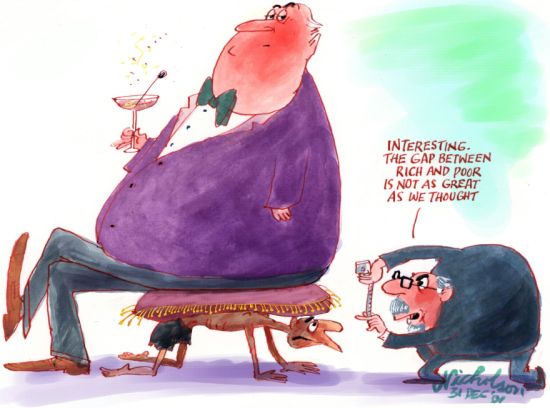
Thant Myint-U’s report on Burma (aka today’s Myanmar) reveals a capitalist’s “canary in a coal mine”. “The Hidden History of Burma” reveals what can happen in capitalist countries that ignore the rising gap between rich and poor.

Like canaries, all people are not the same.

Thant Myint-U resurrects the reputation of Aung Suu Kyi, a leader of conscience. He exposes Myanmar’s 2021 military revolution and its unfair trial of Burma’s storied and unfairly maligned national patriot. Thant Myint-U’s history implies no leader of conscience could withstand the inept Burmese government’s management of human diversity that led to the accusation of Rohingya genocide in 2020.

Aung San Suu Kyi (Burmese politician, diplomat, author and 1991 Nobel Peace Prize Laureat. She is the daughter of Aung San, the Father of Independent Burma.)

Aung San (Burmese politician, Father of Burma independence from British rule, assassinated six months before independence granted.)

All capitalist economies are threatened by human greed when capitalism is unregulated. Capitalism falters when it fails to provide an adequate safety net to its citizens. When countries fail to offer an opportunity to acquire the basic needs of life, the poor disproportionately die. When the poor are not treated equitably by society, they have two choices. One is to bare unfair treatment and die. The other is to fight unfair treatment and die. (Note that is not to suggest hand-outs but to suggest hand-ups to jobs, income, and opportunity.)

Human nature compels a turn to God when one feels out of control.

One reason the Islamic religion is the fastest growing religion in the world is because many Muslims are poor. They live in countries where governments fail to treat diversity as a strength, not a burden.

Burma’s return to military autocracy is shown by Thant Myint-U to be a consequence of the gap between rich and poor, largely caused by an unregulated capitalist economy. Lack of capitalist regulation in autocracies or democracies make the rich richer and the poor poorer, the twain do meet but mostly in conflict.

Diversity in countries of the world is not new. Some level of diversity exists in every country.

Democracy is a form of government that can offer a voice to diversity. When democracy fails to respond to that voice, it risks revolution, and its consequence-autocracy. In “The Hidden History of Burma, Thant Myint-U shows Myanmar’s government is not listening to the voices of diversity.

Myanmar

There is a lesson for America in the story of Burma. The gap between rich and poor is rising. American Democratic capitalism is listening but struggling with its response. America does not have the history of Burma, but government leaders can learn something from Burma’s inept reaction to diversity.

SYRIA’S FAMILY BUSINESS

Audio-book Review
           By Chet Yarbrough

(Blog: awalkingdelight)
 Website: chetyarbrough.blog

No Turning Back (Life, Loss, and Hope in Wartime Syria)

By: Rania Abouzeid

Narrated by: Susan Nezami

Rania Abouzeid (Author, Lebanese Australian journalist based in Beirut.)

“No Turning Back” is a “just the facts” reveal of the Syrian civil war that began in 2011 and still simmers in 2022.

General Hafez al-Assad, (seated to the right), the father of Bashar, created a military dictatorship which became a totalitarian police state run by the Asad family business.

Rania Abouzeid interviews many sides of the war which seems to imply the Syrian civil war is not over. The president of Syria, Bashar al-Assad, remains. The Assad family business has ruled Syria since 1971.

Abouzeid’s picture of the Syrian civil war infers authoritarianism is the only way for Syria to survive as an independent nation. This sticks in the throat of democracies’ idealists. Checks and balances in America imperfectly regulate the excesses of capitalist enterprise. There seems nothing in Syria’s autocracy that even tries to moderate government leader’s self-interest.

Abouzeid shows disparate religious beliefs and ethnic diversity make Syrian democracy highly improbable. Factional leaders during the Syrian civil war demonstrate it is only “their way or the highway”. Without government checks and balances, today’s Syria is only manageable as an autocracy. Sadly, one family and a religious minority choose to victimize Syrian citizens who are not part of the “in” group. Abouzeid infers that is the proximate cause of the 2011 revolution.

The western world seems incapable of understanding that democracy is not a universal need or desire of all nations.

There are differences that cannot be resolved by votes of constituents in an environment that has few of the hard-won tools of democracy. That is particularly true in non-secular countries with strong religious beliefs. The slaughter of innocents and torture of prisoners noted by Abouzeid during Syria’s civil war is appalling.

Bashar al-Assad or some demented faction in war-torn Syria choose to use poison gas to murder Syrian men, women, and children.

Abouzeid’s stories rend one’s heart. The worst parts of human nature are unleashed to torture and mutilate many who only desire peace and fair treatment. This is an unforgivable tragedy compounded by President Obama’s empty “red line” speech that further alienated Syrian people from the ideal of democracy.

What is often missed in reports of Syrian atrocity is the leaders who led factions in Syria.

Some factions plan to erase Syria from the map and create a religious state to replace the Assad family business with their view of the Islamic religion. This is not to say suppression is not an Assad tool to benefit the Alawite sect of Shia Islam, but that outside Islamic zealots want to install their own form of authoritarianism.

The Syrian government manages to draw on foreign powers (particularly Putin’s Russia) to help strengthen the Assad family’s autocratic control. Though Abouzeid does not address Russia’s assistance, one doubts Assad would have survived.

What Abouzeid reveals with her facts is that one autocracy could have been replaced by another. The question becomes would Syrian citizens be better or worse off under a different autocracy?

Obama’s “red line” is an empty promise that may have been made in good faith but is viewed by Syrians as a betrayal. In one sense, Obama is right in not having America become directly involved in Syria’s civil war. America has made too many mistakes in recent history to warrant invasion in another country’s sovereign independence.

Abouzeid suggests Russia acts as a more reliable friend to the Syrian people than America. In view of the factional nature of Syria’s population, Abouzeid has a point. Syria, and all nation states are on their own in working out what their citizens feel is right. The inference one draws from Abouzeid’s facts is that in Syria’s stage of social development, democracy will not work. Democracy is a choice, not an inevitability. The success of a democracy depends upon the will of the general population to accept diversity as a strength, not a weakness.

The Assad family and the Alawite sect remain autocratic rulers of Syria. The best one can hope is that Assad’s autocracy will more equitably treat all Syrian citizens, whether they are a part of the family business or not. If Assad has not learned that lesson, civil war will return with greater force, and possibly a more repressive autocracy.

COLLEGE OR NOT

Audio-book Review
           By Chet Yarbrough

(Blog: awalkingdelight)
 Website: chetyarbrough.blog

Excellent Sheep (The Miseducation of the American Elite and the Way to a Meaningful Life)

By: William Deresiewicz

Narrated by: Mel Foster

William Deresiewicz (American author, essayist and literary critic.)

William Deresiewicz offers a view of life and education in “Excellent Sheep”. The author begins by arguing students of the Ivy League are disadvantaged in their acceptance by the best universities in the world. One presumes Deresiewicz comes from a wealthy family because he is a student, and later, professor at Yale.

One thinks about eight of the nine Supreme Court Justices being graduates of Harvard. It is difficult to feel sorry for an American who has guaranteed life employment in one of the most prestigious jobs in the world.

When listening to any audiobook, one thinks of titles of a review for what one hears. In the first few chapters of “Excellent Sheep”, Deresiewicz’s book might be titled “Mostly Baloney”. However, “Mostly Baloney” is disrespectful, and somewhat unfair, as becomes clear in later chapters.

Lack motivation or ability to sustain effective action. Rigid. Unyielding, unable to accept new ideas, etc… Intemperate. Lack self-control and enabled by followers. Callous. In uncaring or unkind, ignores needs of followers. Corrupt. Lie, cheat, and steal; put self-interest ahead of public interest. Insular. Draws clear boundaries between welfare of organization and outsiders. Evil. Use power to inflict severe physical or psychological harm. Incompetent. Lack motivation or ability to sustain effective action. Rigid. Unyielding, unable to accept new ideas, etc.. Intemperate. Lack self-control and enabled by followers. Callous. In uncaring or unkind, ignores needs of followers. Corrupt. Lie, cheat, and steal; put self-interest ahead of public interest. Insular. Draws clear boundaries between welfare of organization and outsiders. Evil. Use power to inflict severe physical or psychological harm.

Toward the end of his book, one finds Deresiewicz is raised in an upper middle-class family but with no college graduates. A listener begins to realize Deresiewicz’s acceptance at Yale comes from hard work, and good grades, even if his family could afford the Ivy League. The author’s presumed hard work and good grades demands respect and fairer evaluation of what he has to say.

Many (if not most) Americans go to college because it is a ticket to better paying jobs, not to become better educated citizens.

To a large extent, this critic went to college to get a ticket for better pay—of course, not to the ivy league but to a State University and graduate education at a midwestern university. The point being most American’s purpose in higher education is to get a ticket for higher paying jobs, and only secondarily, to become better educated. The “ticket mentality” is part of what Deresiewicz is trying to explain.
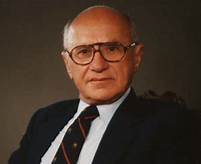
Deresiewicz explains Ivy League students are pushed throughout their lives to strive for admittance, not to become better educated but to have the best job opportunities in America.

The author suggests that push makes them unsure of themselves because they are constantly measured at every point of their life by the artificiality of SATs, class grades, student activity, and the wealth and influence of their families. What Deresiewicz misses is that despite these student pressures, those who go to any school beyond high school have more tools to help them cope with life. College, contrary to Deresiewicz’s opinion, is not a transition from childhood to adulthood. College is only a continuation of childhood.

Deresiewicz is prescient when he explains how important it is for students to follow their passion.

However, not all people are motivated by passion. Most follow paths of least resistance. The path of least resistance is influenced by education, but not formed by it. To infer that is a bad thing is unreasonable because most of society follows rather than leads. The followers are not motivated by passion. It is leaders who have passion. That, of course, is a two-edged value because leaders can lead to the worst, as well as the best outcomes in life.

An added criticism by Deresiewicz is that upper income families push their children to achieve good grades for admittance to the Ivy League and are damaged by the experience. That seems false.

Basic liberal arts and sciences for adolescents (before college) are exposure that may or may not become passions for the geniuses of life. Parents should encourage, if not push, their children to get good grades in school. That is where passion is born.

No one would deny Sir Isaac Newtons, Einsteins, and Diracs are needed as much as the George Eliots, Dostoyevskys, and Tolstoys of life. Without knowing if they were pushed by their parents is not the point. It is the passion each had for a discipline they were exposed to early in life. Undoubtedly that exposure is either encouraged tacitly or directly by parents or guardians.

What Deresiewicz attacks in his last chapters is the nobles oblige of Ivy League graduates who dominate America’s leadership class. That domination reinforces class distinction and exacerbates the gap between rich and poor.

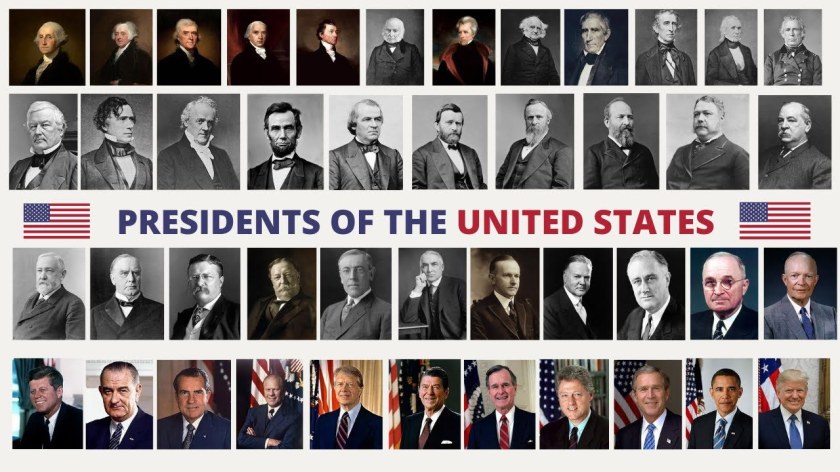
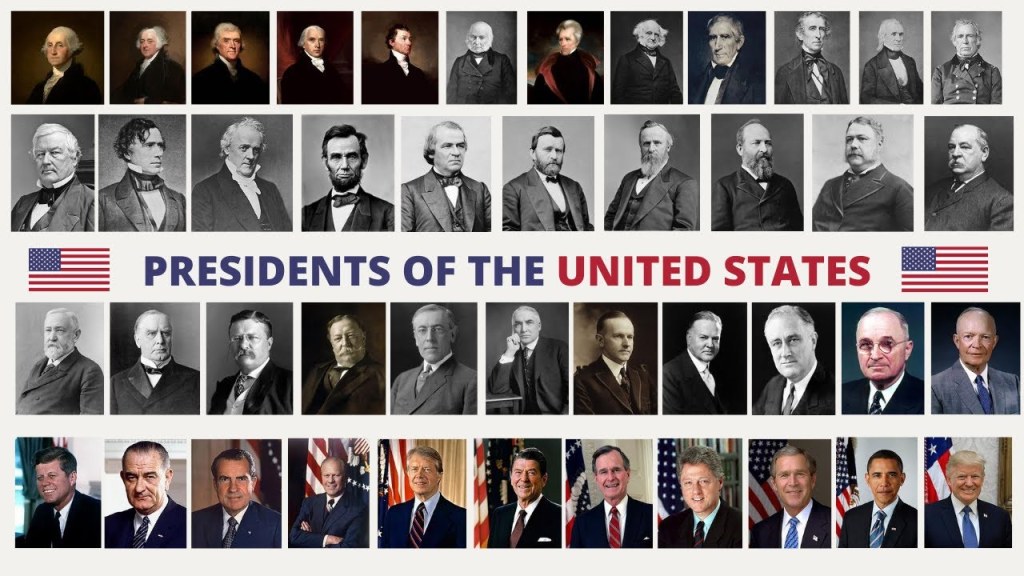
The author notes many Presidents of the U.S., before the mid-twentieth century did not go to Ivy League universities. With few exceptions, a majority of American Presidents after the 1970s are Ivy League graduates. Deresiewicz suggest the Ivy League aggravates class distinctions in the U.S.

More importantly, Deresiewicz argues Ivy League education narrows the thinking of American leadership because graduates fall into a camaraderie trap and fail to understand the needs of most Americans.

Deresiewicz suggests higher education fails to teach the value of liberal arts. Whether true or not, emphasis on liberal arts seems superfluous. Most who listen to the author’s book cannot feel sorry for Ivy League students that are fearful of what life has in store for them. Every student transitioning to adulthood has that fear. Teaching liberal arts is not going to change that fearfulness. Of course, that is not Deresiewicz’s point, but America’s attention needs to be focused on improving liberal arts and science education for all, not just Ivy League students.  

DEMOCRACY’S STORM

Audio-book Review
           By Chet Yarbrough

(Blog: awalkingdelight)
 Website: chetyarbrough.blog

The Lies That Bind (Rethinking Identity)

By: Kwame Anthony Appiah

Narrated by: Kwame Anthony Appiah

Kwame Anthony Appiah (Author, philosopher of history, politics and social sciences.)

Kwame Appiah implies western democracy is the best form of government.

The democracy of which Appiah writes is one in which rule-of-law, freedom within the limits of rule-of-law, and equal opportunity are evident.

However, contrary to Langston Hughes’ poem, the sea is not calm. Democracies’ sea is stormy because its principles are inconsistently practiced.

Kwame Anthony Appiah casts a lifebuoy to those swimming in the stormy sea of democracy.

Appiah’s chapters on religion may be a slog for some but they offer understanding of the inconsistency of religious belief. Religious contradictions are legion. Sermonizers pick and choose paths they like rather than any truth biblical writings may impart.

“The Lies That Bind” examines the role of religion, culture, and government in society.

Agnosticism, and atheism grows with revelations of science, stultified freedom of thought, and (though not mentioned by Appiah) ecumenical abuse.

Appiah’s life story reinforces the importance of culture. Both his parents were highly accomplished people. His mother was a British artist, historian, and writer. His father, from Ghana, was a lawyer, diplomat, and politician. Both parents come from accomplished families. Their son chooses to marry a man when same sex marriage only slowly becomes culturally accepted.

Appiah’s history addresses the ascendence of the Mongol empire to illustrate the breadth of Mongol conquest while noting its style of government control. His point is that control is exercised with a level of tolerance for independence, cultural understanding, and religious belief among Khan’s descendants.

Genghis Khan (1162-1227 Leader of the Mongol Empire)

In summary, Appiah argues democratic societies need to rethink identity in terms of human equality. Whether a man or woman is a successful entrepreneur, CEO, server in a restaurant, or laborer in construction, all are equally human. Appiah notes Trump’s political success in America relates to his intuitive understanding of what many political aspirants ignored—the importance of American labor, whether highly educated, unschooled, rich, or poor.

A leader of an enterprise can be right, even damn right, but fail without the help of labor. Disrespecting labor ensures failure. This is a lesson Henry Ford understood when he raised the wages of his work force. This is a lesson Elon Musk will undoubtedly find in his acquisition of Twitter.

Appiah’s lifebuoy is meritocracy, a government holding of power by people selected on the basis of their ability. The idea of meritocracy came about in the 1960s. However, there are academicians, like Daniel Markovits who believe the concept of meritocracy increases inequality and causes decline in the middle class. Markovits argues middle-class families lose equal educational opportunity because of high cost. Without equal opportunity for education, too many Americans are left without Appiah’s lifebuoy.

Appiah does not directly address issues of equality of opportunity in a democratic-meritocratic society. Though Appiah may be a minority in white western culture, one doubts his educational opportunity was ever a question of cost.

On balance, Appiah offers insight to how democracy can be improved. The key is equality of opportunity which implies democracy needs to focus on safety-net’ issues which entail more help for lower- and middle-class income earners. The safety-net is one which provides equal access to education, health care, and employment, i.e., without regard to sex, race, religion, or ethnic qualification. In democracy, that means election of leaders who are willing to ensure equality of opportunity for all.

SLAVERY

Audio-book Review
           By Chet Yarbrough

(Blog:awalkingdelight)
 Website: chetyarbrough.blog

The Other Slavery (The Uncovered Story of Indian Enslavement in America)

By: Andrés Reséndez

                                                           Narrated by: Eric Jason Martin

Andrés Reséndez (Author, Historian, Ph.D. in history from the University of Chicago.)

One suspects “The Other Slavery” is unknown or misremembered by most Americans. “The Other Slavery” is not about America’s civil war, the Emancipation Proclamation, or Abraham Lincoln. It is about indigenous peoples and their adaptation to a world turned upside down by newcomers from foreign lands.

Andrés Reséndez mostly focuses on the North American continent, particularly west and southwestern American territories and Mexico, but he also touches on slavery in Chile.

As is well known, slavery has been a societal constant since the beginning of recorded history. Today, it appears in pornography, low wage peonage, so-called re-education camps, and political/social incarcerations. What Reséndez explains is that Indian tribes of the west are increasingly incentivized by slavery with the arrival of foreigners. Though slavery may have been used by Indians earlier in history, it became a significant source of revenue for warring tribes.

Hernán Cortés de Monroy y Pizarro Altamirano (aka Cortez), 1st Marquess of the Valley of Oaxaca.

Reséndez reminds listeners of internecine wars of early America when conquistadores and Indians ruled the American southwest.

One Indian tribe captures a different tribes’ sons, and daughters to trade for money, horses, guns, and butter from the Spanish or later settlers who need cheap labor or who seek domestic help and/or carnal pleasure. Reséndez notes young women’s slavery prices are higher than young men’s because of their dual service as domestic laborers and sex objects. Over time, as Spanish land holders are replaced by American land holders, Indians remain a source and victim of the slave industry.

Men, women, and children are used by land holders and competing Indian tribes as barter for trade.

Though slavery is the primary story, Reséndez notes wars between Spanish land barons and Pueblo Indians occur over rights to the land.

Santa Fe, New Mexico becomes a focal point of conflict between Pueblo Indians and the Spanish. The victimization of Pueblo Indian slaves leads to a rebellion that removes Spain from the New Mexico territory, at least for several years. However, the lure of silver brings Spain back with a slave trade resurgence in southwestern territories of America. Reséndez  explains the slave trade becomes endemic as silver is discovered in Mexico and the southwest territories.

The need for cheap labor in silver mines multiplies the value of Indian slaves in the southwest.

The slave trade never dies. Greed drives Indian tribes to steal people from different Indian’ tribes to profit from human sales to landowners looking for cheap labor. Reséndez notes it is not just Indians victimizing Indians but American and Spanish landowners buying young men and women Indians and other human victims to serve as low-cost labor for silver mining, farming, and domestic service.

Reséndez notes male slaves were more difficult to manage than women slaves but for strength males were coveted for their labor in silver mining. Some of the mines were deep in the earth, all were dangerous. Underground mines were flooded with carcinogenic mercury tailings that shortened the lives of those who worked there.

Slavery goes by many names. As is known by historians, the Dawes act further victimizes native Americans.

Reséndez reveals how slavery has always been a part of society. Self-interest is a motive force of human nature. Slavery is found in penal colonies of authoritarian governments to provide cheap labor. Slavery is also found in democratic governments that legislatively reduce the cost of labor based on corporate influence on public policy. A free market, not lobbyist influence, should determine public policy.

The hope for elimination of slavery lies in government policy that reinforces belief in human equality and a balance between corporate profit and cost of labor as determined by a free market.