AUTHORITARIANISM

Audio-book Review
           By Chet Yarbrough

(Blog:awalkingdelight)
 Website: chetyarbrough.blog

East West Street (On the Origins of “Genocide” and “Crimes Against Humanity”)

By: Philippe Sands

                                        Narrated by: David Rintoul, Philippe Sands

Philippe Sands (British Author, attorney, specialist in international law.)

“East West Street” is narrated by two people, the first narrator defines the origin and legal definition of “Genocide” and “Crimes Against Humanity”. The second narrator recounts real-life’ details that relate to those definitions.  

The defendants at the Nuremberg Nazi trials. Pictured in the front row are: Hermann Goering, Rudolf Hess, Joachim Von Ribbentrop, Wilhelm Keitel and Ernst Kaltenbrunner. In the back row are: Karl Doenitz, Erich Raeder, Baldur von Schirach, and Fritz Sauckel.

The first public use of “genocide” is introduced in the Nuremberg Trials of former Nazi administrators. Raphael Lemkin (1900-1959) wrote a book, “Axis Rule in Occupied Europe”, that introduces the term “genocide” in 1944. He becomes a needling gadfly in the Nuremberg trials. The word “genocide” is initially rejected but becomes a part of the trial as it proceeds.
Sands suggests Lemkin’s role is diminished by his uncooperative behavior when first selected to serve on the Nuremberg’ adjudication team. Lemkin is relegated to a lesser role as a consulting attorney, in part because of his insistence on the use of “genocide” in the Nuremberg trials.

Raphael Lemkin (1900-1959, Polish lawyer, coined the word-genocide.)

Regardless of Lemkin’s alleged attitude, one is compelled to agree–the perpetrators of the holocaust committed both “genocide” and “crimes against humanity”. Individual men, women, and children were murdered. At the same time, specifically identified groups of people were murdered by the Nazis. The largest group is Jewish, but many groups were not affiliated with religion. Poland lost an estimated 3 million Polish Jews, but Poland also lost an estimate 1.8 million Poles with no Jewish heritage. An estimated 3,000,000 Ukrainians were enslaved and/or murdered, some undoubtedly were Jews, many were not.

Hans Frank (German governor of Poland 1939-1945).

On several occasions, the son of Hans Frank (the German governor of Poland during WWII) is interviewed. Frank’s son believes his father knew nothing of the atrocities of Poland’s concentration camps when first interviewed. In subsequent interviews, Frank’s son realizes his father enforces orders of the Third Reich to exterminate the Jews of Poland. His son begins to realize his father is not who he thought him to be. The former governor of Poland is convicted and executed after his Nuremberg trial.

Ironically, Governor Frank essentially confesses to his crime against humanity and suggests Germany will suffer for his crime for the next 1000 years. His fellow German defendant’s scoff. One wonders if that disrespect for Frank’s opinion is because of their belief that what they did is right or that Germany should feel no guilt for what they personally chose to do. Susan Neiman suggests Germany does feel guilty but is diligently trying to make amends. If she is right, one wonders if it will take a hundred years?

In the end, defendants in Nuremberg are accused of “crimes against humanity”. “Genocide” is a group accusation while “crimes against humanity” is a person-specific indictment. What makes “East West Street” more than a definition of words and indictment is the detailed research that illustrates war’s personal consequence to innocent men, women, and children who suffer from war.

The author notes “Genocide” has become international law used for the first time in 1998 to convict Jean-Paul Akayesu for Rwandan murders. Sands suggests the concept of genocide remains controversial in the sense that it magnifies potential for conflict between groups.

There is no question that Jews were the largest singular group to be systematically tortured and murdered by the Nazis, but Lemkin’s definition of “genocide” is a label applicable to other groups of humanity. We have ample examples in the 21st century. There are the examples of indigenous Indians and Black slaves in America, and Uighurs and Tibetans in China.

The truth that Sands reveals is that every rape, torture, enslavement, and murder is individual, personal, and tragic. Sands meticulous research shows how brutal and singular “crimes against humanity” are to the individual. He finds his family is torn apart by Hitler’s Jewish obsession. The wounds engendered by Hitler’s leadership are shown unhealable to generations of Jews.

Hitler’s abhorrent beliefs festers in the 21st century.

Sands captures the true threat of authoritarianism in “East West Street”. One person can enslave, torture, or kill another person. More ominously, one person can influence a government to become an enslaver, torturer, and killer of millions. The first is a crime against humanity; the second portends genocide. Of course, today we see Putin’s attempt to eradicate the Ukranian nation and its people. One must ask oneself, is this not the genocide of which Lemkin wrote?

THEY ARE US

Audio-book Review
By Chet Yarbrough

(Blog:awalkingdelight)
 Website: chetyarbrough.blog

The Storm is Here: An American Crucible

By: Luke Mogelson

 Narrated by: Rob Shapiro

Luke Mogulson (Author, reporter for various national and international publications.)

Luke Mogelson’s “The Storm is Here” carries the risk of being an echo chamber for those who believe Trump is the worst thing to have happened to the Republican Party and politics of the United States.

One must ask oneself, who is this author? The following is a brief review of Mogelson’s life, noted on the internet.

  1. Luke Mogelson is an American reporter who is known for shooting the riot footage of the US Capitol video.
  2. He was born in 1982 in St Louis, Missouri, United States of America. Fogelson is of American nationality having a white ethnic background.
  3. Currently, Luke Mogelson’s age is 38 at the time of this writing.
  4. Luke Mogelson does not have an official Wikipedia and bio made in his name.
  5. As such, there is not much information about his family and educational qualifications.
  6. Luke is a daring and brave reporter and has covered reports for the New Yorker on the Syrian War and West Africa’s Ebola epidemic.
  7. He has lived in places such as Paris and Mexico. On the other hand; Luke Mogelson has not officially revealed to us his wife‘s name and her current whereabouts.
  8. Luke is also a famed contributing writer at The New York Times Magazine and won the prestigious National Magazine Award in 2014. His work has appeared and allegedly been well-appreciated in The New Yorker, The Hudson ReviewThe Paris Review, The Kenyon Review, and many more.
  9. He has written books titled; These Heroic, Happy Dead: Stories which was released worldwide in 2016.

At the least, Mogelson is a respected, brave, and well-travelled reporter, published in several national and international publications. If “The Storm is Here” is viewed as only an echo chamber for Trump haters, one should measure Mogelson’s credibility as a reporter and respected writer, published by notable national and international papers and magazines.

Governor of Michigan, Gretchen Whitmer.

Mogelson begins his book with freedom loving Americans who resent Michigan Governor Whitmer’s autocratic response to the Covid 19 pandemic. She orders businesses to be closed and mandates masks to protect Michiganders from spread of the virus. The consequence devastates local businesses that needed income to survive during the pandemic.

Karl Manke (Michigan barber.)

Mogelson focuses on an elderly barber’s business and his refusal to close his doors during the pandemic. His business becomes a rallying cry for freedom fighters who believe freedom is more important than what became over 1,000,000 American deaths from Covid19.

Mogelson recounts the tumultuous years of the Trump presidency. Every listener will have a visceral response to Mogelson’s reporting. In the end, all one can conclude is that “They are Us”. America, like all countries of the world, has a flawed form of government.

The flaw is universal because citizens of every country and government are flawed by the insecurities and prejudices of being human.

Trump is a proven liar, a showman with the ability to martial support of some of the smartest and honest Republicans in America.

They know who they are and still hope to be vindicated by history. Mogelson reveals how misled the Republican party has been by a showman. Trump has no understanding or concern about how destructive his actions have been to the potential of democratic equality and freedom. America has taken two steps back from the one step forward. The last step forward is in the Obama years of governance. This is not to suggest Obama is an exemplar of the best America can be but that he advanced democratic equality and freedom by one step forward.

Mogelson leaves judgement of activists who support Trump’s lies and incitement to the facts of history.

We must be judges of ourselves by clearing understanding “they are us”. Many of these activists who support Trump believe in white supremacy, and the inferiority of others based on skin color or place of birth. It is not a matter of forgiveness but recognition of the threat of authoritarianism in democracy. Trump is not the first President (Democrat or Republican) of the United States to martial the hate of Americans for others. He will not be the last.

Mogelson’s facts are here for all to hear, believe, or disbelieve. The real message is “they are us” and democracy is, and always will be, a work in progress.

SCANDINAVIA

Audio-book Review
By Chet Yarbrough

(Blog:awalkingdelight)
 Website: chetyarbrough.blog

The Almost Nearly Perfect People

By: Michael Booth

 Narrated by: Ralph Lister

Michael Booth (British Author, food and travel writer.)

Later this month, we will travel to Scandinavia and Finland. As a suggestion by our guide, “The Almost Nearly Perfect People” is a fascinating introduction to Denmark, Norway, Finland, Sweden, and Iceland. To be fair to indigenous people of the Nordic countries, one might keep in mind the author is British while living for ten or more years in Denmark with his Danish wife and family. The author notes they moved from Denmark for a short time, but his wife convinces him to return.

Booth is a travel and food writer. He explains that an extra motive for writing this book is because a wide part of the world knows little about Scandinavia and much of what they think they know is wrong. I am more in the first than second category but have an interest in the subject because of my Finnish grandparents.

On a per capita basis, Norway is among the ten richest nations in the world. America is around 11th. Sweden and Denmark are not far behind.

In contrast Finland is a laggard at 21st position but Booth claims Finland is his favorite among the five countries.

For public education systems, Finland is historically ranked among the best in the world while Norway, Sweden, and Denmark are among the top ten. To give perspective, America is around 27th place.

The Danish-Swedish company Arla Foods is the 7th largest dairy company in the world. The industrial transportation and shipping company Maersk is a Danish company. IKEA, Volvo, Assa Abloy (key card locking systems for hotels), Electrolux, Ericsson, and H&M are Swedish conglomerates. Denmark and Sweden are industry power houses in the world.

Booth notes Norway became rich with the discovery of oil. Denmark’s and Sweden’s wealth lies in different strengths and weaknesses revolving around their respective international businesses.  

What makes Booth’s book interesting, and entertaining is his view and contrast of Nordic societies. Booth suggests both Danes and Swedes are somewhat cliquish and standoffish but act differently among themselves. Both prefer working with their own countrymen and women. Danes revel in individualism whereas Swedes are more clannish. Neither particularly welcome outsiders but Swedes like working together with fellow Swedes as teams with common purpose. In contrast, Danes work within a hierarchical structure that relies on positional direction. Finns are characterized as less ambitious with a live and “let be” view of life. A Finn works to live rather than lives to work. Booth suggests Norwegians appear standoffish to many but its more from a wish to be self-reliant and reserved. The idea is to preserve personal space among themselves and to have respect for others who may or may not be Norwegian.

Iceland is not a part of the trip we are taking, and Booth only skims Icelandic culture but suggests Danish influence is the predominant characteristic of their population. (Iceland was founded by Danes.) Booth’s primary story of Iceland is in their errant decision to rely on banking system managers that nearly collapse the economy in the 2008 economic crises. Belief in hierarchal structure and positional direction nearly bankrupted Iceland because of unwise risks taken by bank managers.

A listener’s general impression from Booth’s book is that the Nordic countries are uniquely different but generally socialist with the highest tax rates in the world.

Those tax rates provide the best education and health systems in the world. However, their socialism does not impede their innovative entrepreneurial and capitalist interests. In Booth’s opinion, the Nordic countries represent the future of the world by melding capitalism with socialism.

Booth infers the success of Nordic countries begins with their education system. Teaching is an honored profession that is difficult for potential employees to join.

Teaching positions and teachers are highly educated and respected by the general population. Contrary to what one would presume, classes for students are medium size (20 to 23 students), teacher salaries are middle class, class days are limited to 4 hours, and every family has access to any school in their area. Tutoring is widely practiced for students needing help. There are no private schools.

As is true in all countries of the world, immigration is being horribly mishandled. Fair immigration policy in Norway and the world remains a work in progress.

Booth notes Nordic countries have not achieved perfection. With the threat of authoritarianism that diminishes the value of human life, histories of these countries show mistakes were made in WWII and are still being made in the 21st century. On the other hand, Booth shows native Nordic residents endorse and practice equal rights for men and women, a laudable example for the rest of the world.

RISE OF TYRANTS

Audio-book Review
By Chet Yarbrough

(Blog:awalkingdelight)
 Website: chetyarbrough.blog

Tyrant

By: Stephen Greenblatt

Narrated by: Edoardo Ballerini

Stephen Jay Greenblatt (Writer, Harvard University Professor.).

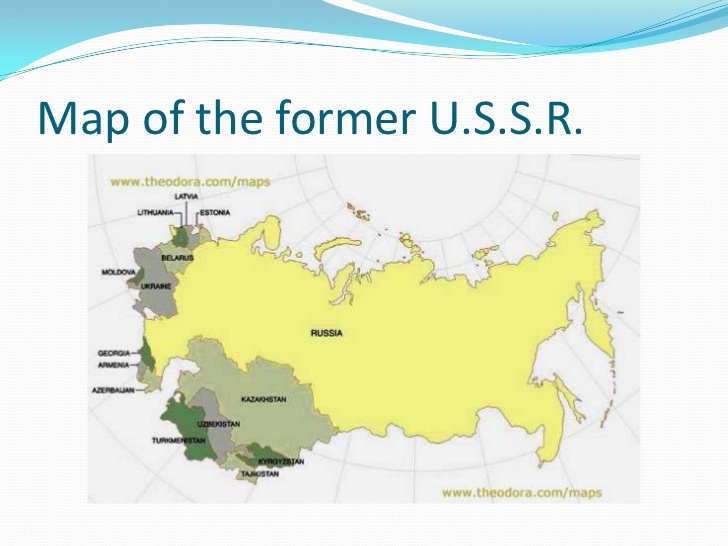
Shakespeare’s plays expose the perfidy of tyrants that reminds one of Vladmir Putin’s actions in 2022.  Greenblatt notes Shakespeare explains tyrants rise when governments show weakness at their center. One can conclude the economic collapse of the U.S.S.R. is the proximate cause of Putin’s ascension.

Stephen Greenblatt offers a clever summary of tyrants in Shakespeare’s plays. Greenblatt’s book is published in 2018.  

Shakespeare’s tyrants are destined to fail in a variety of ways. One must remember that Shakespeare’s plays are not history but have elements of history in their story. Dramatic affect and a livable wage are what motivate Shakespeare to write for the theatre.

Prescient insight to the nature of human beings is what makes Shakespeare a seer whose prose and plays survive centuries of analysis and earned adulation.

King Richard III is a martinet who barks orders for little reason other than to exercise power. He acts with the arrogance of a narcissist. He murders brothers, nephews, and subordinates who get in his way or refuse to obey his orders. He expects loyalty first, with any opposition viewed as disloyalty.

King Richard cares nothing for rules or human life. His followers are sycophants at best and enablers at least. King Richard III murders brothers and confidents to secure the throne.

He marries for lust and control, murders King Henry VI, marries the assassinated King’s widow, and dies in an ignominious battle. Having killed everyone near him, he grows paranoid of those around him. That paranoia cripples his effectiveness as a sovereign. He may have lost his crown in battle, but his murder of followers and managerial incompetence destine him for failure.

Russian Kleptocrats

Greenblatt recounts the many tyrants exposed in Shakespeare’s plays but none, other than Richard III, seem comparable to Putin. Putin gathered support of kleptocratic sycophants that are beginning to recognize their wealth and success is threatened by Putin’s foolish attempt to re-annex Ukraine.

Like Shakespeare’s Richard III, Putin is alienating followers and murdering or imprisoning competitors who challenge his leadership.

Greenblatt summarizes events of Shakespeare’s plays to show how tyrants are editors of their own defeat. One hopes there is enough Russian resistance to forestall a nuclear war caused by a tyrant who cares nothing for human life, other than his own.

MODI’S INDIA

Audio-book Review
By Chet Yarbrough

(Blog:awalkingdelight)
 Website: chetyarbrough.blog

The Association of Small Bombs

By: Karan Mahajan

 Narrated by: Neil Shah

Karan Mahajan (Indian American novelist.)

“The Association of Small Bombs” ticks slowly but makes a loud noise as its message becomes clear. Karan Mahajan explains something about India that is only marginally understood by most Americans. It is no surprise that terrorism comes from racial, religious, and ethnic difference, magnified by inequality. What is a surprise is India’s terrorist acts are local events, poorly prosecuted and soon forgotten by those not directly involved.

Mahajan’s story is about perpetrators of terrorism, who they are, where they come from, why, and how they become terrorists. The President of India is Hindu. An estimated 80 percent of India is Hindu with 13% Islamic, 2.3% Christian and other religions at less than 2% each.

(Mahatma) Mohandas Karamchand Gandhi (1869-1948, Lawyer, Leader of India’s independence from British Rule.)

As most know, during the time of Mahatma Gandhi, there was a concerted effort to secularize India and keep two predominate religions in India, Hindu, and Islam. Gandhi fails and Pakistan becomes a separate Islamic state in 1947.

Modi, the current President of India, is said to believe–India’s Muslims must prove their Indianness to be citizens of the country.

Modi effectively dismantles Gandhi’s effort to secularize India. Like the stain of slavery in America, Modi pollutes India’s secularization at the expense of a restive Muslim population.

Mahajan’s story begins with a terrorist bomb explosion. The bomb is set by a Muslim terrorist that kills two Muslim boys and wounds a third.

The irony is that Muslims are killing Muslims to undermine a government that already discriminates against Muslims. “The Association of Small Bombs” is meant to destabilize the government regardless of who is being killed.

“The Association of Small Bombs” explains how one Muslim youth becomes a terrorist and how another, who is a victim of a bombing, is falsely accused and convicted for terrorism.

Mahajan explains how injustice is compounded by an inept prosecution system, biased against Muslims who are often victims of the bombings. India’ residents, whether Muslim or Hindu, are victimized in two ways. One, actual perpetrators are rarely caught, and two, victims are rarely compensated for their loss.

India-protest in Kolkata, India against Indian citizenship for Muslims.

Mahajan illustrates how inequality is an equal opportunity victimizer in India. The wider point of Mahajan’s story is that denial of equal opportunity for all races, religions, and ethnicities in any nation-state is a crime against humanity.

EMPIRES

Audio-book Review
By Chet Yarbrough

(Blog:awalkingdelight)
 Website: chetyarbrough.blog

The Vanquished

By: Robert Gerwarth

Narrated by: Michael Page

Robert Gerwarth (German Author, historian, specializing in European history, graduate of University of Oxford.)

At times, a reader/listener becomes jaded by books written about war. However, Robert Gerwarth’s “…Vanquished” is a timely review of the origin of war, particularly with Vladmir Putin’s invasion of Ukraine.

Vladmir Putin’s invasion of Ukraine.

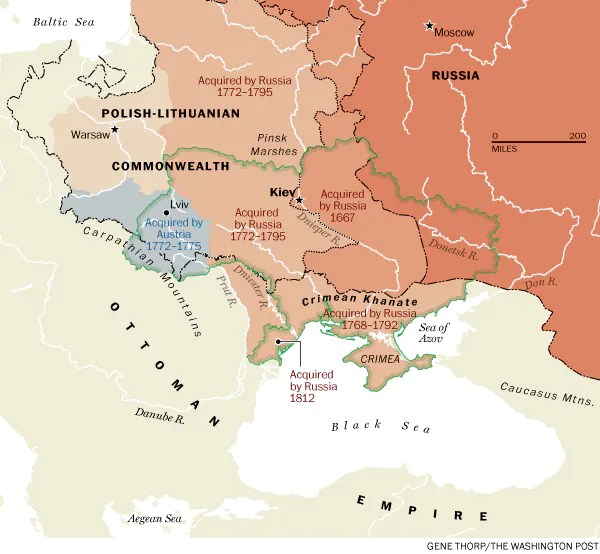
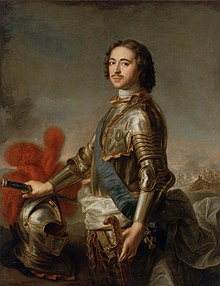
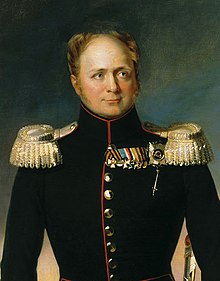
Gerwarth implies all wars come from unravelling empires. He argues post 20th century wars are a result of the Austro-Hungarian, Ottoman, Japanese, French, Romanov (Russian), and British empires demise. Gerwath explains future generations of fighters from these former empires live on. Many continue to bare grudges for their lost existence as part of an empire. This reminds one of Vladimir Putin’s life as a KGB agent in the former U.S.S.R.

Gerwarth implies all wars come from unravelling of empires.

Gerwarth explains in detail the wandering fighters of dismantled empires who do not accept their defeat. They raid, rape, and pillage countries (often as mercenaries) that were part of their former empire. Of course, there are other circumstances that motivate these fighters, but loss of empire demeans and unmoors identity which energizes anger, motivates reprisal, and initiates atrocity.

Few historians disagree about the unfair reparations demanded from Germany after WWI. That unreasonableness weakens the post war German government which is soon overrun by Nazis; ironically, not led by a German citizen, but by an Austro-Hungarian citizen named Adolph Hitler. Hitler is a former fighter for the Austro-Hungarian empire.

Hitler’s extraordinary ability to martial rage with his rabid antisemitism rallies German extremists to believe Germany can establish a new European empire.

Hitler’s success is largely made possible by a weak German government and Germany’s war-ravaged poverty, exacerbated by worldwide depression.

Vladimier Putin is not Hitler. However, Putin’s view of the world is that of a former KGB agent of the U.S.S.R.

Putin is a fighter for an empire that lives in his heart and mind but not in reality. One might conclude from Gerwarth’s view of history that Putin will fail in his effort to make Ukraine a part of Russia.

British Empire–Empires are passe in the 21st century. Colonization is the history of the past.

None of the 20th century empires have been resurrected, and like Thomas Wolfe’s novel, “You Can’t Go Home Again”, only force of arms can hold empires together. Empires are too big and culturally diverse to remain one entity.

Though Gerwarth does not address China, it seems China’s effort to gain control of outlying China interests is limited to government will and martial suppression.

Uighur Re-education camp in China.

The suppression of Uighurs is a first step to concentration camps.

It seems cultural difference and interests between Xi’s followers, and Uighurs, Tibetans, Hong Kong residents, and Taiwanese will require suppression to make them part of the supersized Chinese nation-state. It is likely that future generations of fighters will resist China’s enforcement if it pursues its present course.

Map of the United States of America with state names.

Gerwarth offers an interesting historical perspective; supported by a lot of detail. It would seem the only hope for peaceful empires is through federalism. There needs to be an acknowledgement of cultural difference, with access to equality of treatment and opportunity for all citizens, regardless of race, religion, or ethnicity. Of course, that is what America has tried, and only partly achieved, among States. It would seem a greater task for empire, or within large multi-ethnic nation-states like China.

REPARATION

Audio-book Review
By Chet Yarbrough

(Blog:awalkingdelight)
 Website: chetyarbrough.blog

Learning from the Germans (Race and the Memory of Evil)

By: Susan Neiman

Narrated by: Christa Lewis

Susan Neiman (Author, Moral Philosopher).

Not many authors are more qualified than Susan Neiman to write about “Learning from the Germans”. As an American moral philosopher and cultural commentator who lives in Germany, Neiman offers an analysis of race and evil. One may disagree with her conclusion but not with her understanding of the subject.

Neiman notes being raised in Atlanta, Georgia by her Jewish mother, and father. Regarding race and evil, Neiman understands what it is like to be white in America and Jewish in Germany. Southern discrimination and religious persecution are vivified by Neiman’s experience in both cultures.

What comes as a surprise to some is Neiman’s argument that Germany handles guilt and shame for the holocaust better than America handles guilt and shame for racism, slavery, unequal treatment, and murder of people of color.

The primary theme of Neiman’s book is that post WWII Germany dealt with the history of the holocaust more forthrightly than America has dealt with racism and its evil.

Neiman explains memory of the holocaust is memorialized in Germany after the war. It has only been in the twentieth century that America has begun to memorialize 200 years of black slavery, lynching, and murder.

Pictures below are German sites preserved showing concentration camps, a prison, a museum, as monuments and reminders of holocaust atrocities. In Germany, by 1950, reparation for holocaust survivors is being negotiated.

With the exception of the Thomas Ball memorial to Emancipation in 1876, no monuments of slavery’s horrendous history are noted in America until the mid-1900s. What Neiman shows is that, only in this American generation, have reparations for slavery been seriously considered.

In the 1950s Germany began to deal with financial reparations for holocaust victims. In the 21st century, America is just beginning to discuss reparation for slavery. Even in 2022, most Americans reject reparations. However, a well-known American, David Brooks, changed his mind in 2019.

David Brooks (Writer, conservative political and cultural commentator, reporter, editor.)

Brooks writes:

“Nearly five years ago I read Ta-Nehisi Coates’s Atlantic article “The Case for Reparations,” with mild disagreement. All sorts of practical objections leapt to mind. What about the recent African immigrants? What about the poor whites who have nothing of what you would call privilege? Do we pay Oprah and LeBron?”

“The need now is to consolidate all the different narratives and make them reconciliation and possibility narratives, in which all feel known. That requires direct action, a concrete gesture of respect that makes possible the beginning of a new chapter in our common life. Reparations are a drastic policy and hard to execute, but the very act of talking about and designing them heals a wound and opens a new story.”

Robert Jones, the Founder of the Public Religion Institute, and a graduate of the Baptist Theological Seminary, wrote a book suggesting reparations are the only way white America can find forgiveness. Neiman acknowledges the high cost of determining fair reparations for American slavery but implies money spent on defense would be a good place to search for money to invest in white America’s forgiveness for slavery. Neiman notes Germany rebuilt itself after WWII. Her inference is that America has enough wealth to do the same with reparations for slavery.

Neiman notes Germany, like America, has right wing extremists who continue to vilify ethnic minorities, but discrimination is institutionally rejected by German government leadership while American leaders like former President Donald Trump say there are very fine people on both sides of racial discrimination.

Trump refers to the 2017, Charlottesville, Va. alt-right and white nationalist rally where a white supremacist plowed his car into a group of counter-protesters to the racist rally, one of which is killed.

Neiman recalls the murder and torture of a  Black 14-year-old boy, Emmitt Till, in Mississippi for allegedly whistling at a white woman in 1955.

Two white Americans admitted their guilt in Till’s torture and murder, after being acquitted for the crime by an all-white jury. The murderers went free to live their remaining lives in Mississippi.

Neiman reflects on the murders of nine African Americans in Shelby, North Carolina by Dylann Roof in 2015. Roof self-identifies as a white supremacist and neo-Nazi.

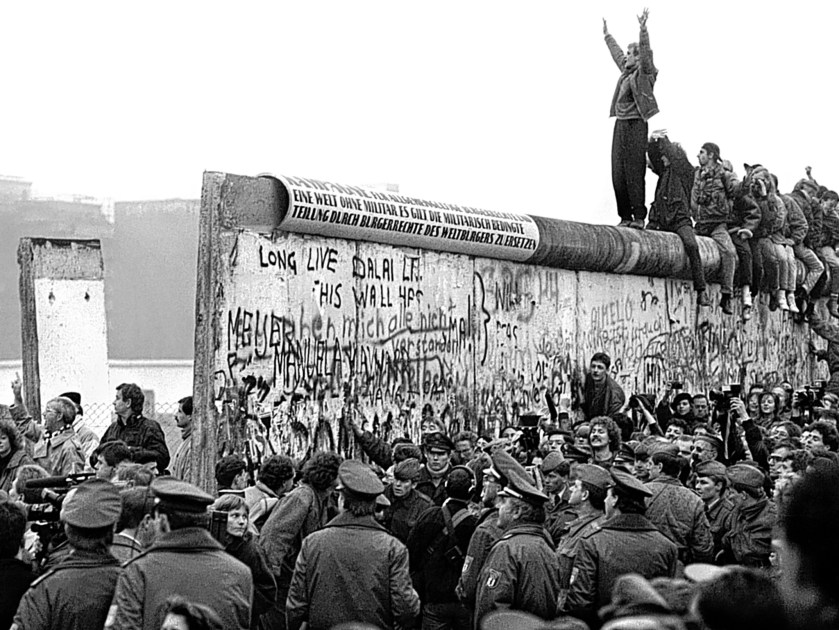
Neiman’s point is that Germany has done better to acknowledge and repair their relationship with holocaust survivors than America has done in reconciling its racist and evil actions regarding slavery and what has become institutionalized racism. Germany’s success has been in the face of an east and west Germany reconciliation after the fall of the Berlin wall.

Neiman notes the difference in east and west German survivors’ beliefs while showing they acted to reconcile their Nazi past with memorialization, and demonstration of shame and guilt for the holocaust. A significant part of that reconciliation is legislated reparation for holocaust survivors.

Neiman explains, just as there remain Nazi collaborators in the East and West, there are racist collaborators in the northern and southern United States. Neiman infers if Germany could reunify within 40 years after WWII, the U.S. should be able to reunify after the end of the civil war. Why is it taking the U.S. over 150 years to get to the point of just talking about reparations for slavery, let alone memorializing its evil?

BEING BRILLIANT

Audio-book Review
By Chet Yarbrough

(Blog:awalkingdelight)
 Website: chetyarbrough.blog

You Can’t Be Neutral on a Moving Train: A personal History of Our Times

By: Howard Zinn

Narrated by: David Strathairn

Howard Zinn (1922-2010, died at age 87, Author, Historian, Pacifist.)

Howard Zinn’s personal biography suggests being brilliant does not mean being good. Zinn is a controversial historian who grew up during the depression. He became a famous anti-war activist during Vietnam and wrote a controversial book about American history.

Zinn characterizes his family as poor with a father and mother who were factory workers with little formal education. He tells of his early life and how it influenced his political and social beliefs. He joins the Army Air Force during WWII and becomes a bombardier. That experience reifies Zinn’s early anti-war beliefs that become a consuming passion during Vietnam.

In some ways, Zinn’s enlistment in the Air Force seems a contradiction but the fascist nature of Nazi Germany, subsequent realization of the holocaust, and his Jewish heritage undoubtedly influence his decision to join the military.

Zinn’s role in bombing civilians creates an ambivalence about WWII; particularly when the atom bomb is dropped on Japan.

“You Can’t Be Neutral on a Moving Train” is a codification of Zinn’s ambivalence. Zinn suggests there is no “Good War” (as WWII is sometimes characterized) because bombing of civilians, even in a war against fascism, is a step too far.

One wonders what Zinn would write about the Russia-Ukrainian war?

Howard Zinn’s fundamental objection to WWII is American bombing of innocent citizens of Germany and Japan. Now, it is the indiscriminate bombing of innocent citizens by Russia in Ukraine.

America did not militarily enter WWII when Poland was invaded. Similarly. America has not militarily entered the Russia-Ukraine war. However, in both circumstances America financially invested in a western alliance against war. Eventually that financial investment turned into American military participation. One wonders how Zinn would view America’s financial investment in the Russian-Ukrainian war. Is our investment a prelude to military intervention?

Returning to the biography, the nuclear attack on Japan is considered barbaric and unjustified by Zinn.

Some, like President Truman reason the Hiroshima and Nagasaki bombings avoided loss of thousands of Americans and Japanese that would have been killed in an invasion of Japan.

A question is whether those thousands are different than the thousands killed immediately and later from radioactive fallout? To some Americans, the answer is yes because none of the added deaths would have been American. Presumably, Zinn would say using an atomic bomb is a step too far.

Zinn survives WWII and uses the GI Bill to get a college education. He becomes a professor at Spelman College, a Black women’s college in Atlanta, Georgia.

Roslyn Zinn (1922-2008, Artist, Activist, Social Worker, Teacher)

Howard Zinn and his wife live in a low-income, largely Black neighborhood.

The Zinn’s become political activists for equal rights. In the 50s and early 60s, the Zinn’s become acquainted with SNCC (Student Nonviolent Coordinating Committee) and civil rights activism in the South.

Later, Zinn tells the story of his life as a professor at Boston University. He becomes a tenured professor, having written some novels and a controversial academic book about American history.

In his life at the University, Zinn continues political activism against the war in Vietnam. This is in the 70s. Nixon is bombing North Vietnam and Cambodia in an effort to get Ho Chi Minh to the table for a negotiated peace. Daniel Ellsberg becomes one of Zinn’s acquaintances. Zinn also becomes friends with Reverend Daniel Berrigan and his brother who become jailed activists because of the Vietnam war.

Daniel Ellsberg (analyst who became famous for Pentagon Papers disclosure about American government lies about Vietnam. Shown here at age 91.)

Daniel Joseph Berrigan SJ (May 9, 1921 – April 30, 2016) on the left–an American Jesuit priest, opposed the Vietnam war, (1923-1979 his brother Phillip equally opposed the war.)

A theme of Zinn’s anti-war story is reflected in his experience at Boston University in conflicts with the President of the University. Zinn’s reputation with students is characterized as a highly popular. That popularity and his political activity put him in direct conflict with the President of the University.

John Silber is the seventh President of Boston University. He is from Texas but earned a PhD in philosophy from Yale University. Though Zinn does not mention this, Boston University is having financial problems at the time of Silber’s hiring. Zinn’s story is that Silber is overpaid for his work and disliked by several professors and their staffs.

Zinn characterizes Silber as a misogynist who denies tenure to women professors. A female professor takes Silber to court over denial of tenure. She wins her case, and the Judge requires Silber to give her tenure. The judge fines the University and orders a $200,000 settlement for Silber’s unfair treatment. (Despite Zinn’s proof of Silber’s misogyny, a brief review of Silber’s Boston University’ history suggests the faculty and financial picture of the school substantially improved under Silber’s management.)

The fundamental point made by Zinn is that history is filled with brilliant political, military, and academic leaders but they, like all of us, are flawed human beings.

Misogyny, inequality, and war are unforgivable human tragedies to Zinn and most rational human beings. It seems the smart ones are the greatest perpetrators of these tragedies.

Brilliance takes many forms. No leader of any country is dim witted. Each has their own kind of brilliance, or they would not be leaders.

DIGNITY

Audio-book Review
By Chet Yarbrough

(Blog:awalkingdelight)
 Website: chetyarbrough.blog

Identity: The Demand for Dignity and the Politics of Resentment

By: Francis Fukuyama

Narrated by: P. J. Ochlan

Francis Fukuyama (American author, political scientist, political economist, graduate of Cornell and Harvard.)

Having reviewed Francis Fukuyama’s “The Origins of Political Order” and “Political Order and Political Decay”, his view of “…Dignity and the Politics of Resentment” during the Trump years is important. Fukuyama’s earlier books offer impressive insight to the strengths of democratic government.

Fukuyama’s political support and participation in the Reagan administration and his association with neo-conservatism give weight to his opinion.

Though Fukuyama’s broad view of political “Identity” is mind-numbingly complex, his criticism of Trump shows how consequential democracy’s loss of “…Dignity…” is to America and nascent democracies.

Fukuyama shows how America has lost its way with the election of Donald Trump. Trump is not the cause of American democracy’s disruption, but he represents its symptoms.

Trump is shown as an unrepentant narcissist who panders to those who have been underserved, under-represented, and ignored by most Americans. The rising tide of violence and discontent of ignored Americans is ignited by a President concerned with personal power and prestige, not betterment of democracy or service to the unrepresented.

Fukuyama is not a bleeding-heart liberal that believes in handouts like a minimum wage for the underemployed or unemployed.

He endorses importance of work and fair pay for fair performance. He acknowledges the rising gap between haves and have nots in America but infers the answer is political reform that endorses dignity and discourages inequity.

“Identity” is lost among Americans who do not have jobs or are grossly underpaid for the work they do.

Fukuyama implies American culture has lost its way. With inequity, people revert to tribes that fight for tribal rather than national interests. Whether the tribe is a union of teachers or Starbucks’ employees who are underpaid or disrespected, they look to their tribe rather than the interest of their students, company executives, or owners.

Fukuyama endorses diversity and, presumably, prudent immigration policy.

However, Fukuyama notes there is another aspect of “Identity” that cannot be ignored. He strongly argues for acceptance of nationalist “Identity” by those who request citizenship. One who emigrates to a new country must learn to read and write the adopted country’s language, be willing to defend the country for which one accepts an oath of citizenship and must adhere to laws of the land.

Fukuyama notes concern for equal treatment within a country is as important as fair treatment between nations.

The rise of nationalism reaches a point of destruction when authoritarians like Saddam Hussein and Vladimir Putin invade other countries. What becomes clear from Fukuyama’s book is democracies can lose their way with an authoritarian, narcissistic leader. Leaders like Trump have no concern for equity.

The demand for equity and the rise of resentment splits people into tribes when not being addressed by government leaders. Fukuyama reaches into ancient and modern history to identify how “…Demand for Dignity…” is often accompanied by “…Resentment…” which leads to political unrest, or revolution.

Fukuyama reviews policies of government that mitigate the causes of “tribal” identity and resentment that roils America. Fukuyama’s ideas may be up for debate, but he clearly believes in democracy.

Fukuyama expresses some concern over “tribal” identity within America when it violates the interests of the country. He endorses diversity while indicting Trump for inciting “tribal” difference.

In the last chapter, Fukuyama addresses the effect of the internet on the “…Demand for Dignity…” and “…The Politics of Resentment…”. He argues the internet’s impact is both negative and positive. The negative is the internet’s use to spread falsehood and its potential for invading privacy. The positive is its potential for telling truth to power.

Fukuyama optimistically implies the internet’s spread of truth will outweigh its spread of lies.

Fukuyama implies the internet’s potential for gathering tribes for the betterment of government policy is greater than its present-day disruptions. This seems more likely in a democratic than authoritarian society.

The fundamental value of Fukuyama’s peregrination is that America has managed to survive and prosper for over 200 years, even in the face of “tribal” identity and resentment. Surely, America will survive Trump.

AUTOCRACY

Audio-book Review
By Chet Yarbrough

(Blog:awalkingdelight)
 Website: chetyarbrough.blog

The Cold War (A World History)

By: Odd Arne Westad

Narrated by: Julian Eifer

Odd Arne Westad (Norwegian author, historian, professor of History and Global Affairs Yale University.)

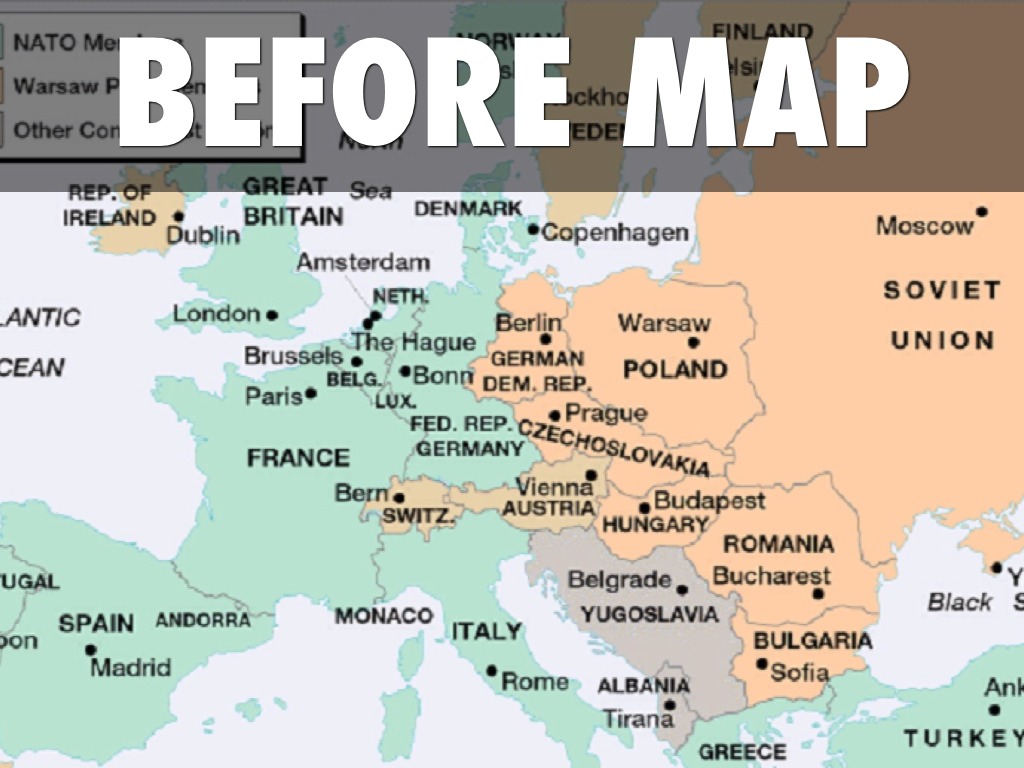
Westad argues “The Cold War” rises from the industrial revolution.

Od Arne Westad’s book is summarized here but not fairly assessed based on his erudition and the book’s voluminous facts and opinions. He argues the industrial revolution improves economic conditions of the world’s population via two fundamental forms of government, i.e., one Democratic and the other Socialist.

Westad notes America and the U.S.S.R. are principal representatives and antagonists of “The Cold War” because of their way of capitalizing on the industrial revolution.

Westad implies communism is a form of extreme Socialism. Some might argue America is a form of extreme Democracy. The facts Westad reveals show both countries have autocratic tendencies and have made historical mistakes that have cost millions of lives. The irony of those mistakes is that America became a more socialist-capitalist country and the U.S.S.R., now Russia, became a more capitalist-socialist country.

In broad outline, Westad’s historical facts define “The Cold War” as it developed in the 20th century. Westad covers most of the world in recounting the consequence of “The Cold War”. He notes key players like Indira Gandhi, Mikhail Gorbachev, Nikita Khrushchev, Mao Zedong, Richard Nixon, John Kennedy, Lyndon Johnson, Ayatollah Ruhollah Khomeini, Joseph Stalin, Josip Broz Tito, Jomo Kenyatta, Patrice Lumumba, Kwame Nkrumah, Yasser Arafat, David Ben-Gurion, Gamal Abdel Nasser, and others.

There are so many stories of so many leaders, one may lose sight of Westad’s argument–“The Cold War” is defined by the industrial revolution. In some ways, Westad gives short shrift to the significance of one person’s impact on “The Cold War”. However, historians choose their facts to make their point.

The importance of Gorbachev is perfectly identified by Westad’s characterization of the Gorbachev era. The impact of glasnost on world history is a book by itself.

When Khrushchev gave his speech that revealed Stalin’s atrocities, Mao lost all respect for U.S.S.R. leadership. President Xi is a strong proponent of the ideals of Maoist communism which implies Russian/Chinese’ relationship is utilitarian more than ideological. The same might be said of Russia’s and China’s support of North Korea.

Westad implies Mao considered Stalin a near God.

The rift between China and Russia that developed when Khrushchev demeans Stalin’s role in the growth of U.S.S.R.’ communism will never be mended even in the era of reproachment between Xi and Putin.

The importance of Gamal Abdul Nasser to the Arab world is exemplified by Westad’s explanation of Nasser in Egypt. A similar misreading of history is dispelled about Indira Gandhi and the lack of respect given by Nixon and Kissinger of her role in India.

Westad’s explanation of Stalin’s disrespect of Tito is enlightening. Tito idolizes Stalin but that feeling is not reciprocated by Stalin because, to Stalin, there could only be one leader of the communist movement.

In a trip to the countries formed out of Yugoslavia, it is interesting to note the respect the older generation had for Tito. That respect for authoritarian leaders is noted by Wested when he writes of Stalin. In spite of the millions of Russians murdered or incarcerated by Stalin, improvement in living standards of many Russians endeared him to many citizens.

Wested’s history reminds one that autocracy is not limited to any particular form of government. Just as Tito was an autocrat of Yugoslavia, one might view Trump as a Wanna-Be autocrat of America. Both had their committed followers.

In the modern age, Russia’s hegemonic role in the world has been replaced by China. Like Russia, China adopted a more socialist/capitalist economic system. “The Cold War” continues but the major representatives have changed.

The only political ideal that saves humanity from tyranny is freedom within rule-of-law.

Russian People protest the Ukrainian war.

A peaceful settlement of the #RussianUkrainianWar will be difficult. It is not America’s or other countries’ job to pick winners and losers. Ultimately, it will be Ukraine’s decision whether the #PutinWarCriminal prevails or fails.

What one is left with after finishing Westad’s history is the belief that neither Democracy, Socialism, nor Communism offer final answers for the future. Autocracy infects all three systems of government.