STONE THROWER

In the 21st century, actions and policies of one nation are not local. Like a ripple in water, the world can be changed by one stone thrower.

Blog: awalkingdelight
 Website: chetyarbrough.blog

Crashed: How a Decade of Financial Crises Changed the World

By: Adam Tooze

Narrated by: Simon Vance, Adam Tooze

Adam Tooze (British Author, Historian, professor at Columbia University, Director of the European Institute.)

“Crashed” is a book about the 2008 financial crash. Though it is old news, Adam Tooze offers historical perspective and a cautionary tale about America, the E.U., China, India, Russia, Spain, and other nations of the world. Interconnectedness is greater now than any time in history. The surprising realization in Tooze’s analysis of the financial crash is that America caught a fiscal infection like Covid19, and it spread across the world.

These securities were purchased and re-sold among big banks, wealthy investors, and investment houses. The lax oversight of the quality of the combined mortgages led to a cascade of bank and investment house failures that nearly collapsed the world financial system.

Though the western world was more directly affected by purchases of these mortgage packages, countries like China, Russia, South Korea, Ireland, Spain, and Greece were severely, if not equally, impacted.

Nations’ financial crises were not solely because of purchases of these mortgage packages but because of world economic interconnectedness. Nations of the world, as users of energy and product purchases, quit buying. At the same time, Tooze notes the American dollar was hoarded by some countries for protection from devaluation of local currencies. With America’s financial crises, the dollar became a source of devaluation rather than protection.

China chose to invest in domestic infrastructure projects like dams, high speed rail, and bridges. China chose to increase product production (at lower labor costs) for the worldwide market. In contrast, Russia reinforced kleptocracy, before, during, and after the 2008 crisis, by rewarding Russian oligarchs who became a wealthy and powerful cadre of supporters of the government. With favored treatment of the oligarchs, Vladimir Putin recognized he had the power to act as he wished whether it was in the best interest of Russian citizens or not. (This is similar to the repressive reign of Kim Jon-un who spreads the wealth of his nation on a relatively small cadre of North Korean protectors while many citizens live in poverty.)

Ben Bernanke (American economist, 14th chairman of the Federal Reserve.)

In America, Tooze deconstructed the complicated negotiation process between banking industry independence and federal government oversite by the Obama administration. The range of disagreement is from nationalization of the banking industry to a direct bailout of overextended banks. Though the government bluntly accused banking executives of overpaying themselves for the mistakes they made, Obama and Geitner recognized the importance of industry independence in making complicated decisions to get America out of its financial ditch. The decision is made to bailout the banks. The American government loaned enough money to banks and select companies to maintain American lenders’ and industries’ liquidity.

Timothy Geithner (Former central banker, 75th U.S Secretary of the Treasury under President Obama.)
The controversial decision made by the government to support banking and industry liquidity resulted in many American citizens loss of their homes; not to mention their jobs, because of business and industry cutbacks. The tranches of money to support lenders and businesses did nothing to help the poor who purchased houses on variable rate mortgages to qualify for a loan. Mortgage lenders received large bonuses for increased business but were never penalized for the harm they did to the public. When rates on their loans escalated, lower income buyers could no longer pay their mortgages. The choices of Obama’s administration reinforced the perception that those with enough money to cope with the economic downturn were favored over the poor because they had enough income to either pay the escalated mortgage payments or refinance their mortgages.

The financial rescue of Greece follows a similar path between 2008 and 2018. Greece is eventually bailed out but the citizens most hurt by the restructured financing are the poor.

In order to stabilize the economy, 320 billion euros were lent to Greece by the European Union and the IMF. As of 2019, only 41.6 billion had been paid back to reduce that debt. The E.U. and IMF imposed austerity measures that principally hurt the poor by reducing retirement pensions and employment opportunities. Greece fell into a recession that lasted until 2017. The poor became poorer because of pension reductions and loss of jobs. (Full repayment of the 320-billion-dollar loan is not expected until 2060.)

Tooze tells a similar story about Spain. The 2008 crises caused a 3.6% reduction in GDP in 2009. Spain’s response was similar to Greece’s in that the poor were more likely to have been hurt than the rich because of implemented austerity measures that reduced public spending, and job creation that impoverished a wide swarth of society.

The final chapters of Tooze’s history severely criticizes the rise of Trump and his extremist rhetoric about helping the working poor when in fact he is only interested in himself, his power, and his wealth. Tooze implies Trump uses American belief in free speech, and the power of public office to distort the truth of immigration, poverty, and equality to mislead the public. Historically, this is not a new American phenomenon but in this technological age, the damage political leaders can inflict on the public is multiplied.

In explaining the impact of the 2008 financial crises, Tooze shows how one nation’s actions and policies can roil the world. In the 21st century, actions and policies of one nation are not local. Like a ripple in water, the world can be changed by one stone thrower.

ECONOMIC EVOLUTION

The demographics of life demand better care of the human population and the environment. Power, whether from individual wealth or ruling authority, needs to be refocused on service.

Audio-book Review
 By Chet Yarbrough

Blog: awalkingdelight)
 Website: chetyarbrough.blog

Braiding Sweetgrass: Indigenous Wisdom, Scientific Knowledge and the Teachings of Plants

By: Robin Wall Kimmerer

Narrated by: Robin Wall Kimmerer

Robin Wall Kimmerer (Author, Professor of Environmental and Forest Biology, PhD from the University of Wisconsin-Madison.)

Robin Wall Kimmerer’s “Braiding Sweetgrass” channels a movement for economic change around the world. Capitalism and socialism are evolving in similar ways to respond to the world’s ecological crises. Neither economic system is capable of dealing with the crises because of the governing weaknesses of their evolution. Capitalism, like socialism, is driven by human nature’s self-interests. With capitalism, unbridled self-interest views individual wealth as a measure of success. Socialism views unbridled power as a measure of success. Neither freedom of capitalism nor the power exercised in socialism will stop earths’ despoliation.

Kimmerer tries to convince listeners to recognize their self-interest is in caring for the ecology of earth and its environmental and human diversity.

This is not a new argument. Sir David Attenborough, Jonnie Hughes, Joseph Marshall III, Charles Mann, Barry Lopez and others make similar arguments. Even though they may be right, human’ interest in balancing ecology and diversity will only happen with governance that is neither purely capitalist nor purely socialist.

Kimmerer, as a scientist and descendent of the Potawatomi Indian nation, has dedicated her life to nurturing the earth with her education as a botanist. She reflects on her spiritual beliefs, historic values of her heritage, and her education to change the direction of earth’s despoilation. Attenborough and Hughes write about the importance of rewilding the world. Joseph Marshall III argues science offers the opportunity to rebalance the relationship between humanity and nature. Charles Mann recalls the history of William Vogt and Norman Borlaug with Vogt arguing for conservation while Borlaug argues for scientific research to deal with overpopulation and hunger. A more sanguine view is taken by Barry Lopez who simply catalogues and implies the demise of earth because of human habitation.

At times, Kimmerer’s solutions are too mystical and spiritual. Some of her tales will dispirit listeners. On the other hand, some of the mythology she writes about is entertaining, if not actionable.

The character of “Windigo” is a representation of the weakness of capitalism and its extremity that entails the growth of greed. Her tales of the creation of humanity reflect on the strengths and weaknesses of human nature.

What Kimmerer offers listener’s is contemplation, if not realistic solutions for earth’s despoilation.

What is wrong with capitalism and/or socialism that can be corrected to stop earth’s deterioration? It is in a middle way where money and power are not ends in themselves but tools for improvement. Service to all species of life is an objective that can only be achieved with money and power. A cultural shift is required to understand what can be done. There needs to be a shift from manufacturing and industrial growth to a service-based economy. With the advent of technology, particularly A.I. that shift is happening.

Homelessness, hunger, disease, natural disasters, pollution, mental dysfunction, failing public education, racial and religious discrimination are all solvable problems in the world. Money and power are the tools that can be used to solve those problems, but it requires the will of governments to manage those tools to focus on service to society, not manufacture of things that do not conserve the environment. This is evident in the too-long story written by Kimmerer. There is an element of irony in her book because that is what her Indian heritage practiced hundreds of years ago. Indian tribes had no need for money, but their Chiefs used their power to care for land and its diversity that served their people’s needs.
Money has become synonymous with power in both capitalist and socialist economies.

Even Indian societies in America have adopted that reality with the building of Casinos. What is missing is how that power is being used. Kimmerer explains power should be used to serve the earth’s rebirth and the needs of all life. The obvious point is that without earth’s rebirth, human society ends. The future of the world is dependent on service, not manufacturing. The demographics of life demand better care of the human population and the environment. That job can be fulfilled with a reorientation of the world’s economic rewards and punishments. Power, whether from individual wealth or ruling authority, needs to be refocused on service.

V.A.T.

Audio-book Review
By Chet Yarbrough

(Blog: awalkingdelight)
 Website: chetyarbrough.blog

Rebellion, Rascals, and Revenue: Tax Follies and Wisdom Through the Ages

By: Michael Keen, Joel Slemrod

Narrated by: Walter Dixon

“Rebellion, Rascals, and Revenue” is a painful and laborious book to listen to, in part, because of its length but mostly because of its subject. Few citizens appreciate having their hard-earned wealth and income reduced by government taxation. However, the co-authors are well qualified and informative in explaining how important taxes are to every form of government to insure citizen’s peace, welfare, and protection. More importantly, they show how countries of the world have both aided and diminished prosperity of nation-state’ economies with good and bad tax policies.

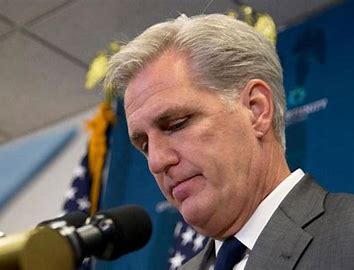
Kevin McCarthy (Speaker of the House.)

As noted by McCarthy, the deficit exceeds the annual gross national product of the United States.

Keen’s and Slemrod’s book is timely. The wide gap between America’s two major political parties is partly because of America’s deficit, which has not been higher since WWII. The solution lies in the political will to increase taxes and reduce government expenditure. The difficulty is finding an equitable balance between tax revenues and the health, education, and welfare of America’s citizens.

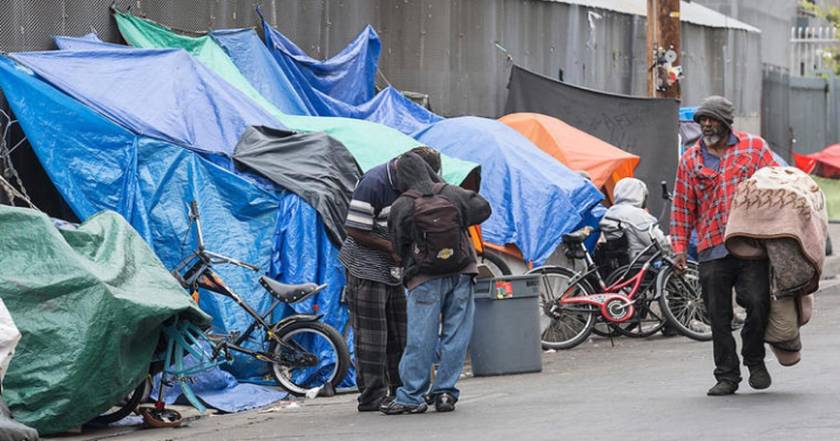
However, America’s homelessness is evidence of a gap between rich and poor that belies America’s great wealth.

Keen’s and Slemrod’s book illustrate the folly of many nations that have inexpertly balanced tax policy with the health, education, and welfare of their citizens. From before the French revolution to modern times, the authors recount errors made by governments that bumble their way from forcing tax collection to passing confiscatory laws that support bureaucracies that beggar rather than serve the public. Along the way, the authors show how tax collection is conducted, how some improvements were made, and how citizens were both benefited and harmed by tax policies.

After wading through the author’s history of nation-state’ tax hijinks, Keen and Slemrod conclude America’s tax system should be overhauled. Their solution is a value added tax. This is an interesting conclusion that is reinforced by T. R. Reid’s book, “A Fine Mess” which suggests the same thing. However, Reid is a reporter for the “Washington Post”, not an economist with experience like Keen’s and Slemrod’s.

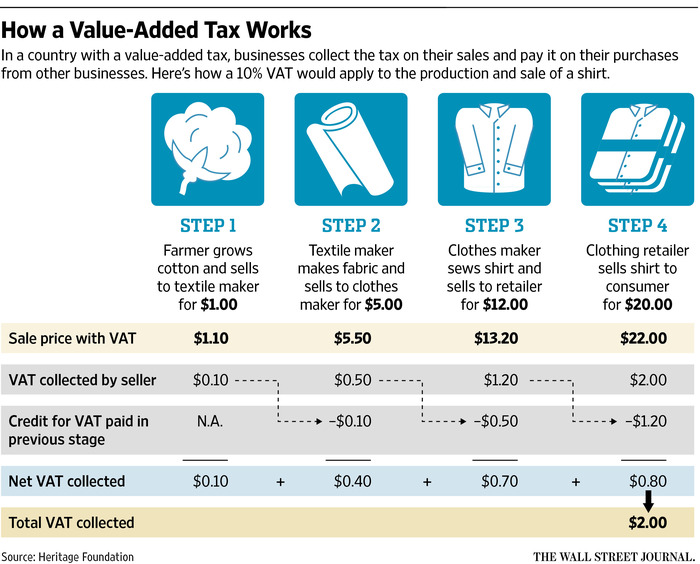
A value-added tax (VAT) is a consumption tax on goods and services that is levied at each stage of the supply chain where value is added, from initial production to the point of sale. The amount of VAT the user pays is based on the cost of the product minus any costs of materials in the product that have already been taxed at a previous stage1.

Keen and Slemrod do not clearly explain why they think a VAT is the solution to a better tax system than America’s current policy. Reid explains a VAT is a broad-based low-rate tax that will reduce the need for a tax collection bureaucracy because it eliminates corporate loopholes, broadens, and reduces tax rates, and equalizes citizens’ tax burden. Reid believes more revenue would be produced to reduce America’s debt. It would also reduce the expense of America’s tax collection bureaucracy. In theory both government expense and the deficit would be aided by a VAT tax policy.

A FARMER’S LIFE

Audio-book Review
By Chet Yarbrough

(Blog: awalkingdelight)
 Website: chetyarbrough.blog

Dirt to Soil (One Family’s Journey into Regenerative Agricultural

By: Gabe Brown

Narrated by: Gabe Brown

Gabe Brown (Author, farmer.)

“Dirt to Soil” offers a glimpse of a farmer’s life. Gabe Brown’s family manages a 5000-acre farm in North Dakota. Brown and his son’s farming experience offer insight to a branch of biology that addresses the relationship of a farm environment’s organisms. Brown is not a scientist or academic. He is a farmer.

Gabe Brown became an expert in soil conservation based on experience and insatiable curiosity. Though he went to college, it is four years of hardship that gave Brown an understanding of farming. From that experience, Brown reordered his practice of farming based on five principles.

  1. No soil disturbance (no-till, no-synthetics).
  2. Reinforce Soil’s Natural Defenses (the outer layer of soil protects all life)
  3. Promote biodiversity (marry species nature’s way to keep soil healthy)
  4. Keep living roots in the ground as long as possible and use cover crops with seasonal diversity.
  5. Animal & Insect integration (both predator and protector) to promote natural diversity.

Brown’s journey to understand and practice these farming principles increased the profitability and durability of farmland. “Dirt to Soil” is a record of Gabe Brown’s personal farming and educational journey. Though Brown admits to being a city boy, his experience in 4H, some academic classes, and visits to his future wife’s farm sparked a lifelong interest in farming. When his wife’s parents retired from their 1700-acre farm, Gabe Brown and his wife took over management.

Gabe Brown’s farming education came from 4 years of weather-related catastrophes that nearly ended his career as a farmer. He notes his wife appeared ready to give up farming life, but he refused to give up. His experience in those years re-focused his attention on the intimate relationship between nature and farming.

Brown explains, in “non-wilding” words, how it is necessary to rewild his farm. By watching how nature preserves itself, he changes his farming practices. Without plowing, furrowing, and fertilizing with chemicals designed by farming industry, Brown rejects practices that artificially enhance dry soil that exposes it to natural diseases and the exigencies of weather. He turns to observing nature to find how it replenishes soil’s natural nutritional condition. His objective is to turn “Dirt to Soil”.

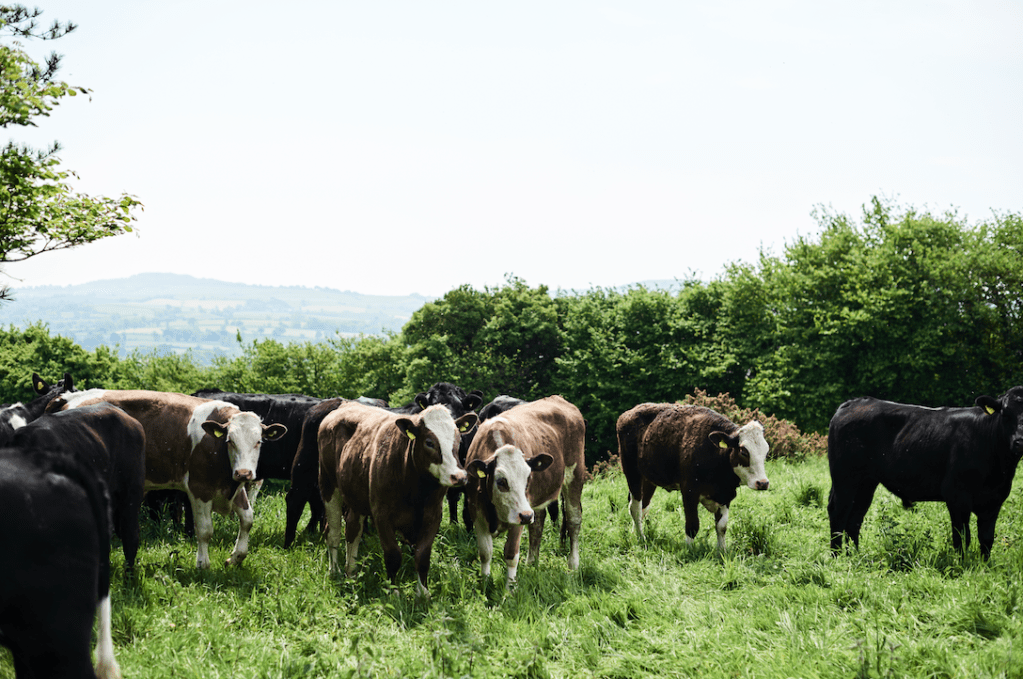
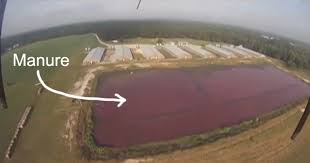
Brown reasons that raising cattle on the farm would fertilize its soil. (A caveat to Brown’s observation is that fertilization by cow manure requires frequent grazing rotation, not industrial manure concentration.)  

(There is a concern about carbon dioxide increase and ground water contamination from livestock. In a 2019 overnight stay with a farm family in New Zealand, there was objection to the former Prime Minister’s attempt to burden farmers with the cost of better livestock control.)

With natural fertilizer and cultivation of different plant species, Brown finds soil nutrient value improves. That soil improvement is absorbed by newly planted crops that benefit both livestock and consumers. The planting is done without tilling the ground but planting seedlings in unplowed ground. After experimentation, Brown begins rotating crops based on soil enrichment objectives.

Brown experiments with different species of plants to find which types replenish the soil in his area of North Dakota. With these discoveries and changes in practice, Brown’s farm prospers.

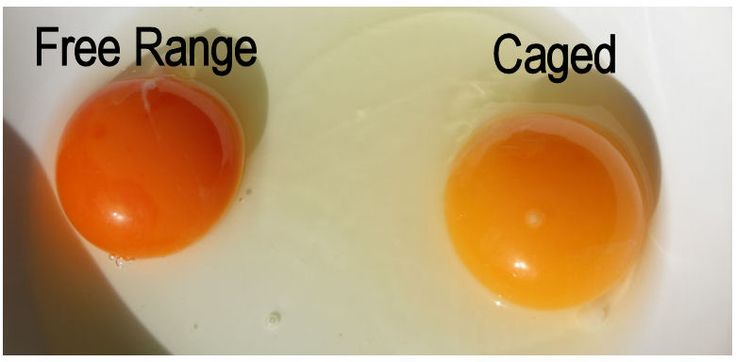
Brown notes change in farming practices is a slow process because of a false belief that high productivity is more important than nutritive value. When a film crew interviews Brown, one of the film’s producers is asked to buy a dozen eggs at the market and bring them to the farm to show the difference between eggs from “free range” chickens vs. caged chickens.

This is a comparison of a cracked egg from a free-range farm and an egg from a caged chicken farm. Brown notes his rewilded farm shows a brighter yellow yoke.

“Dirt to Soil” goes on to become a teaching facility for future farmers. Brown’s son works on the farm and will inherit it when his mother and father pass. In the meantime, an internship program is started to pass on the educational experience of Gabe Brown’s farming life. Rewilding farms means paying attention to the diversity and value of nature. Brown explains the nutritive value of food has fallen in America because artificial fertilizers have replaced the natural processes of nature.

Brown’s story about eggs reminds one of a trip to a Norwegian fish farm last year. One of our fellow travelers asked the employee of the farm if there is any difference between fish-farm’ salmon and a wild salmon. His answer is there are very few wild salmon left in the sea. However, he notes wild salmon have more Omega-3 per serving than farmed salmon which have less protein.

Gabe Brown explains his goal has always been to make a good living at farming and pass that skill on to his family and every American interested in that life. He concludes the success of farmers should not be based on crop yield but on profitability. His experience shows there are many ways to make a profit in farming.

Brown explains that high crop yield is not a measure of success. With the creation of alternative income practices, he believes a small farm is as capable of making a profit as a large farm. Observing nature and farm diversity (both human and ecological) is Brown’s guide for farming success and profitability.

Rewilding farming appears to be as important as rewilding the planet.

DEMOCRACY’S STORM

Audio-book Review
           By Chet Yarbrough

(Blog: awalkingdelight)
 Website: chetyarbrough.blog

The Lies That Bind (Rethinking Identity)

By: Kwame Anthony Appiah

Narrated by: Kwame Anthony Appiah

Kwame Anthony Appiah (Author, philosopher of history, politics and social sciences.)

Kwame Appiah implies western democracy is the best form of government.

The democracy of which Appiah writes is one in which rule-of-law, freedom within the limits of rule-of-law, and equal opportunity are evident.

However, contrary to Langston Hughes’ poem, the sea is not calm. Democracies’ sea is stormy because its principles are inconsistently practiced.

Kwame Anthony Appiah casts a lifebuoy to those swimming in the stormy sea of democracy.

Appiah’s chapters on religion may be a slog for some but they offer understanding of the inconsistency of religious belief. Religious contradictions are legion. Sermonizers pick and choose paths they like rather than any truth biblical writings may impart.

“The Lies That Bind” examines the role of religion, culture, and government in society.

Agnosticism, and atheism grows with revelations of science, stultified freedom of thought, and (though not mentioned by Appiah) ecumenical abuse.

Appiah’s life story reinforces the importance of culture. Both his parents were highly accomplished people. His mother was a British artist, historian, and writer. His father, from Ghana, was a lawyer, diplomat, and politician. Both parents come from accomplished families. Their son chooses to marry a man when same sex marriage only slowly becomes culturally accepted.

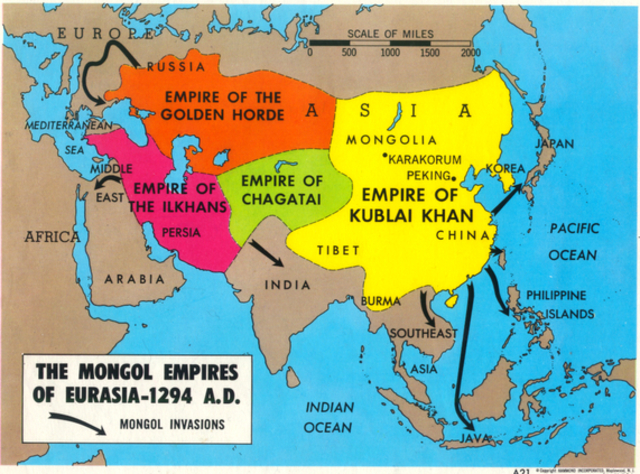
Appiah’s history addresses the ascendence of the Mongol empire to illustrate the breadth of Mongol conquest while noting its style of government control. His point is that control is exercised with a level of tolerance for independence, cultural understanding, and religious belief among Khan’s descendants.

Genghis Khan (1162-1227 Leader of the Mongol Empire)

In summary, Appiah argues democratic societies need to rethink identity in terms of human equality. Whether a man or woman is a successful entrepreneur, CEO, server in a restaurant, or laborer in construction, all are equally human. Appiah notes Trump’s political success in America relates to his intuitive understanding of what many political aspirants ignored—the importance of American labor, whether highly educated, unschooled, rich, or poor.

A leader of an enterprise can be right, even damn right, but fail without the help of labor. Disrespecting labor ensures failure. This is a lesson Henry Ford understood when he raised the wages of his work force. This is a lesson Elon Musk will undoubtedly find in his acquisition of Twitter.

Appiah’s lifebuoy is meritocracy, a government holding of power by people selected on the basis of their ability. The idea of meritocracy came about in the 1960s. However, there are academicians, like Daniel Markovits who believe the concept of meritocracy increases inequality and causes decline in the middle class. Markovits argues middle-class families lose equal educational opportunity because of high cost. Without equal opportunity for education, too many Americans are left without Appiah’s lifebuoy.

Appiah does not directly address issues of equality of opportunity in a democratic-meritocratic society. Though Appiah may be a minority in white western culture, one doubts his educational opportunity was ever a question of cost.

On balance, Appiah offers insight to how democracy can be improved. The key is equality of opportunity which implies democracy needs to focus on safety-net’ issues which entail more help for lower- and middle-class income earners. The safety-net is one which provides equal access to education, health care, and employment, i.e., without regard to sex, race, religion, or ethnic qualification. In democracy, that means election of leaders who are willing to ensure equality of opportunity for all.

SLAVERY

Audio-book Review
           By Chet Yarbrough

(Blog:awalkingdelight)
 Website: chetyarbrough.blog

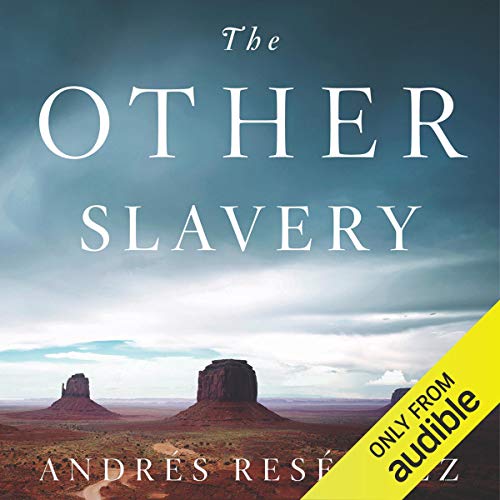
The Other Slavery (The Uncovered Story of Indian Enslavement in America)

By: Andrés Reséndez

                                                           Narrated by: Eric Jason Martin

Andrés Reséndez (Author, Historian, Ph.D. in history from the University of Chicago.)

One suspects “The Other Slavery” is unknown or misremembered by most Americans. “The Other Slavery” is not about America’s civil war, the Emancipation Proclamation, or Abraham Lincoln. It is about indigenous peoples and their adaptation to a world turned upside down by newcomers from foreign lands.

Andrés Reséndez mostly focuses on the North American continent, particularly west and southwestern American territories and Mexico, but he also touches on slavery in Chile.

As is well known, slavery has been a societal constant since the beginning of recorded history. Today, it appears in pornography, low wage peonage, so-called re-education camps, and political/social incarcerations. What Reséndez explains is that Indian tribes of the west are increasingly incentivized by slavery with the arrival of foreigners. Though slavery may have been used by Indians earlier in history, it became a significant source of revenue for warring tribes.

Hernán Cortés de Monroy y Pizarro Altamirano (aka Cortez), 1st Marquess of the Valley of Oaxaca.

Reséndez reminds listeners of internecine wars of early America when conquistadores and Indians ruled the American southwest.

One Indian tribe captures a different tribes’ sons, and daughters to trade for money, horses, guns, and butter from the Spanish or later settlers who need cheap labor or who seek domestic help and/or carnal pleasure. Reséndez notes young women’s slavery prices are higher than young men’s because of their dual service as domestic laborers and sex objects. Over time, as Spanish land holders are replaced by American land holders, Indians remain a source and victim of the slave industry.

Men, women, and children are used by land holders and competing Indian tribes as barter for trade.

Though slavery is the primary story, Reséndez notes wars between Spanish land barons and Pueblo Indians occur over rights to the land.

Santa Fe, New Mexico becomes a focal point of conflict between Pueblo Indians and the Spanish. The victimization of Pueblo Indian slaves leads to a rebellion that removes Spain from the New Mexico territory, at least for several years. However, the lure of silver brings Spain back with a slave trade resurgence in southwestern territories of America. Reséndez  explains the slave trade becomes endemic as silver is discovered in Mexico and the southwest territories.

The need for cheap labor in silver mines multiplies the value of Indian slaves in the southwest.

The slave trade never dies. Greed drives Indian tribes to steal people from different Indian’ tribes to profit from human sales to landowners looking for cheap labor. Reséndez notes it is not just Indians victimizing Indians but American and Spanish landowners buying young men and women Indians and other human victims to serve as low-cost labor for silver mining, farming, and domestic service.

Reséndez notes male slaves were more difficult to manage than women slaves but for strength males were coveted for their labor in silver mining. Some of the mines were deep in the earth, all were dangerous. Underground mines were flooded with carcinogenic mercury tailings that shortened the lives of those who worked there.

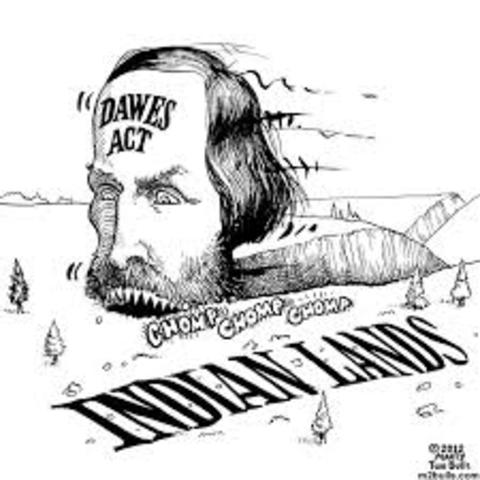
Slavery goes by many names. As is known by historians, the Dawes act further victimizes native Americans.

Reséndez reveals how slavery has always been a part of society. Self-interest is a motive force of human nature. Slavery is found in penal colonies of authoritarian governments to provide cheap labor. Slavery is also found in democratic governments that legislatively reduce the cost of labor based on corporate influence on public policy. A free market, not lobbyist influence, should determine public policy.

The hope for elimination of slavery lies in government policy that reinforces belief in human equality and a balance between corporate profit and cost of labor as determined by a free market.

FREEDOM’S LIMITS

Audio-book Review
           By Chet Yarbrough

(Blog:awalkingdelight)
 Website: chetyarbrough.blog

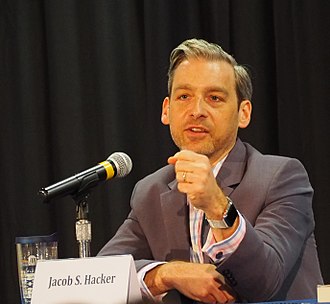
Let Them Eat Tweets: How the Right Rules in an Age of Extreme Inequality

By: Jacob S. Hacker, Paul Pierson

Narrated by: Peter Berkrot

One doubts this book will be read or listened to by most Americans based on its clear allusion to the 18th century phrase “Qu’ils mangent de la brioche” (“let them eat bread”–allegedly said by Marie Antoinette during the French revolution).

Marie Antoinette (1755-1793, Louis XVI’s Queen Consort of France.)

Just as Marie Antoinette is unlikely to have said “Qu’ils mangent de la brioche”, it is an allusion unworthy of Hacker’s and Pierson’s ivory-tower educations.

The co-authors detail a current crisis in America that is well detailed by others in this century.

There is an appalling and growing gap between rich and poor in America. However, though the gap is real, most rational Americans have no interest in beggaring their neighbor.

In the 17th century, Hobbes clearly recognized the pitfall of democracy when not constrained by rule of law. Freedom is a harsh master and has been recognized as such from American Democracy’s beginnings.

Human beings are driven by the desire for money, power, and prestige. Hacker and Pierson note many actions taken by American politicians, appointees, government bureaucrats, and corporate moguls have had the unintended consequence of beggaring their neighbors.

Rule of law has simply not kept up with the fundamental tenant of American freedom.

Four relevant issues raised by Hacker and Pierson are

  1. Taxation,

Congressional leaders focus on re-election as a part of their right to freely choose a profession. To be re-elected requires a campaign funding. That funding largely comes from wealthy Americans and corporations interested in reducing their taxes. Corporate taxes have been legislatively reduced with the rationalization that reinvestment by private industry and the wealthy will create more income for wage-dependent Americans. This is “trickle down” economics that is a fiction. History shows the effect has been to reduce American wages and increase income for the wealthy.

2. Rule-of-Law,

Corporations in the Supreme Court’s decision in “Citizens United v. Federal Election Commission” expanded rights of Corporations as individuals to finance candidates of their choice that compounds elected official bias for reduced corporate taxes.

3. Extremism,

Frustration by the rising gap between rich and poor in America increases extremism because wage-earners see cost-of-living exceeding their ability to accumulate wealth.

4. Institutionalization of Tyranny

Elective office is not serving the public because congressional self-interest is based on a cycle of re-election dependent on wealthy donors who are equally self-interested.

Unless or until a more equitable relationship between the rich and poor is achieved, extremism will continue to roil American Democracy. Freedom is an essential ingredient in America’s economic history, but freedom has always been limited. Only with rebalance between the rich and poor will extremism and institutional tyranny be ameliorated.

CHINA’S FUTURE

Audio-book Review
           By Chet Yarbrough

(Blog:awalkingdelight)
 Website: chetyarbrough.blog

   China’s Great Wall of Debt (Shadow Banks, Ghost Cities, Massive Loans, and the End of the Chinese Miracle.)

By: Dinny McMahon

         Narrated by: Jaimie Jackson

Dinny McMahon (Author, former reporter for the Wall Street Journal, Dow Jones Newswires, and former fellow of the Woodrow Wilson International Center for Scholars.)

Dinny McMahon lived in China for ten years before writing “China’s Great Wall of Debt”. He is neither the first nor undoubtedly the last chronicler of modern China’s future.

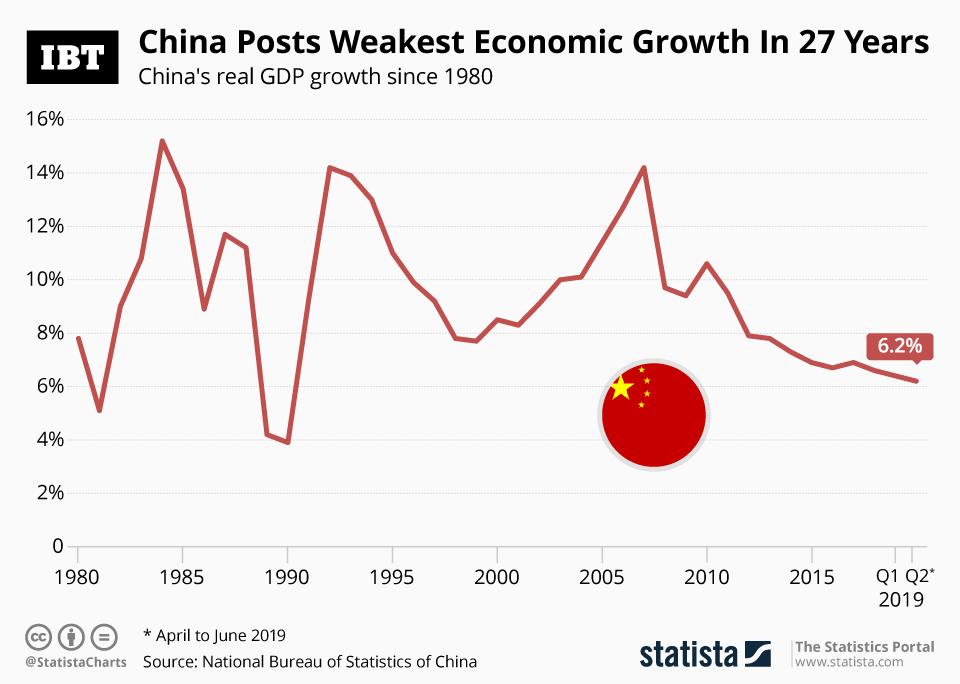
Taking his observation of China’s remarkable advance in the last 27 years, McMahon joins others who argue China is at the precipice of a cyclical economic trough.
Visiting China for the first time, one is amazed at the modern look of Beijing. Its bullet trains, wide boulevards, and streetscapes remind one of model cities like other storied capitols of the world.
On the other hand, outlying suburbs, and cities fit the description of McMahon’s “Ghost Cities” with block-to-block, mid-rise apartment buildings, no tenants, and slap-dash HVAC wall-units.

Wealth is a function of the have and have-nots in China. This is a familiar refrain to many who believe it equally describes America’s economy.

McMahon explains how the last twenty years of economic growth in China is a function of real-estate monetization that has reached a mortgage nadir, teetering on the edge of collapse. McMahon notes the difference between America’s real estate booms and busts and China’s is that it has taken America two hundred years to reach its present prosperity while China has done it in less than 3o years. He implies that time difference has benefited America by giving it more tools than China for dealing with economic inequality.

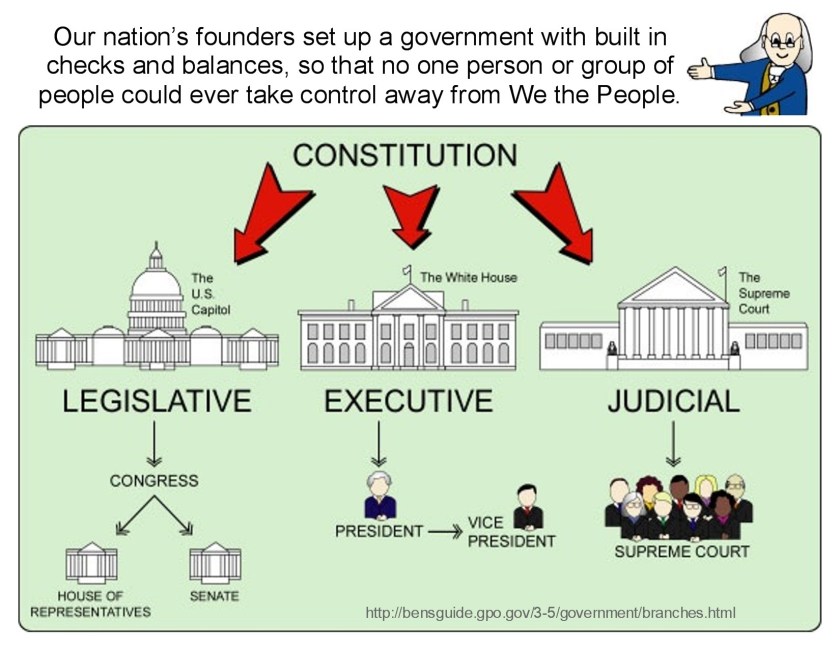
Adding to McMahon’s note about the time difference is the political difference between America and China.  America’s political system is tested by checks and balances, both by party and governmental organization.

China has a singular party with one leader who has few checks and balances, with a singularly authoritarian governmental organization.

When leadership changes in America, political and economic policies are only incrementally adjusted. In leadership change in China, political and economic policies may be dramatically altered or even abandoned. That truth is evident in China’s transition from Chiang Kai-shek to Mao to Deng Xiaoping, to Xi Jinping.

McMahon’s fundamental point is China’s rapid economic growth is founded on a financial structure dependent on real estate financed by the state and a poorly governed semi-private banking system that artificially inflates China’s assets.

McMahon notes there was pent-up demand for private real estate ownership when all land was owned by the government. That pent-up demand is the source of China’s rapid economic growth. However, in the current market, McMahon suggests real value in that real estate is diminished by a public that is not wealthy enough to afford it. A kind of Ponzi scheme is growing with consumers that are buying land without real collateral but with a ghost banking system that is condoned, if not supported, by the state.

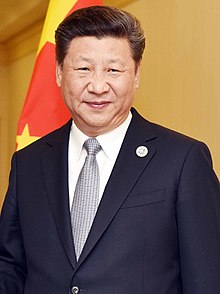
McMahon leaves some doubt about China’s near future collapse because of adjustments President Xi is making in reducing bureaucratic corruption that allows ghost banks to prosper. McMahon also notes that President Xi is addressing the domestic needs of China’s citizens by emphasizing economic growth within China to make them less dependent on international trade. However, McMahon notes Xi Jinping is a singular leader. The question is—what happens when Xi Jinping is no longer China’s leader?

McMahon is not alone in suggesting China may be headed for trouble. Whether shadow banks, ghost cities, and massive loans will be the end of the Chinese Miracle seems less important than what a Chinese economic collapse would mean to the rest of the world.

ECONOMIC EVOLUTION

Audio-book Review
           By Chet Yarbrough

(Blog:awalkingdelight)
 Website: chetyarbrough.blog

Karl Marx (Philosophy and Revolution)

By Shlomo Avineri

           Narrated by: Roger Clark

Shlomo Avineri (Author, Professor of political science at Hebrew University of Jerusalem.)

Is economic evolution about mind or matter?

Shlomo Avineri offers a more studied view of one of the three most influential economist in history, Karl Marx. Marx’s influence extends to philosophy, history, sociology, and politics.  

Avieneri illustrates how categorization of Marx as an influential economist minimizes his historical significance. Marx is born in Trier, Germany.

His father, Hirschel HaLevi (aka Heinrich Marx), is a practicing lawyer, the son of Marx HaLevi Mordechai and Eva Lwow.

In Trier, after Napoleon is defeated at Waterloo, Germany returns to a highly discriminatory Prussian attitude toward Judaism. Karl Marx’s father, and eventually his mother, are compelled to convert to a Christian religion to advance Marx’s father’s career as a lawyer. Karl Marx’s grandfather is the rabbi of Trier who passes on that title to Karl Marx’s brother.

Avineri gives this brief family history to explain Marx’s Jewish heritage. It offers some insight to why Marx outwardly discounts his religious heritage while putting him on an intellectual journey toward political and economic reform.

Marx’s father might be considered a classical liberal because he promoted constitutional reform of the Prussian government’s denial of equal rights. Avineri implies the experience of his father leads Karl to pursue the study of history and philosophy because of discriminatory treatment of his family. The act of discrimination naturally makes one class conscious. Karl Marx’s political and economic ideas grow from that familial background.

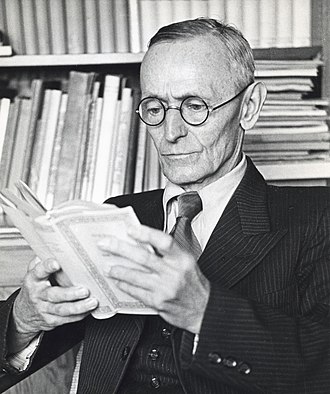
Avineri suggests Hermann Hesse and Hegel are significant influences in Karl Marx’s life. Hesse is a contemporary of Marx. Hesse is influenced by Rousseau who believed in natural equality. Hesse’s literature addresses the inequality of workers and the capitalist class. He sensed the growing political danger of that inequality and, in writing about it, became an influence on Karl Marx’s view of capitalism.

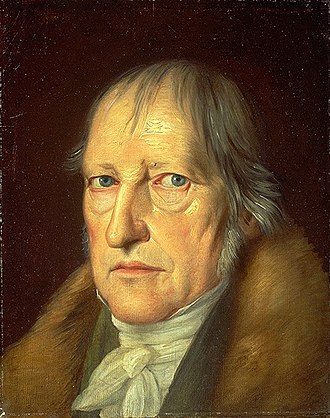
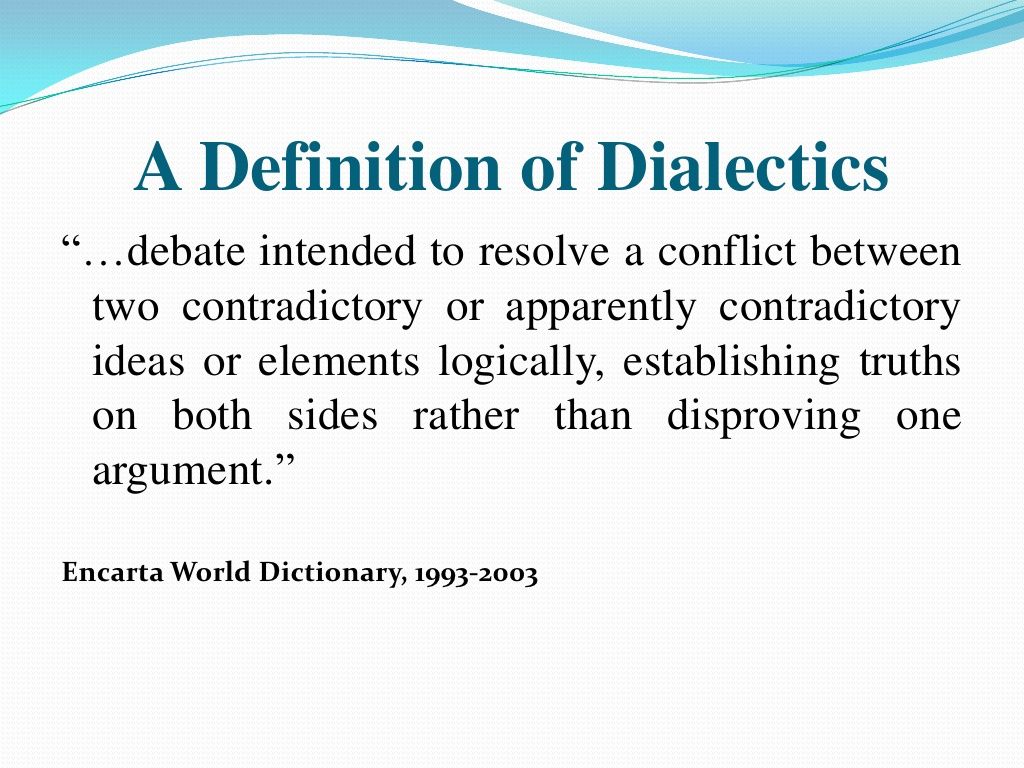
Avineri’s explanation of Hegel’s influence on Karl Marx is a little more complicated. Fundamentally Hegel believes social development is an evolution of one’s mind to recognize that all humans are created equal. In contrast Marx believes social development is an evolutionary process of society’s actions in regard to material things. Marx believes the haves of the society recognize the inequity of the have-nots and will evolve to establish common good in the distribution of material things. Both Hegel and Marx agree that there is a dialectic process, but Hegel thinks it is a state of mind that changes while Marx suggests it’s a state of equal distribution of concrete goods.

It is impossible to deny Marx’s notes about inequality. One can argue that this was truer in Marx’s lifetime than it is today. The advent of social security and national health care, and welfare programs have reduced human inequality.  However, human inequality remains a serious social problem in every society and all government systems of the present day.

Whether Marx or Hegel’s evolutionary dialectic is true remains unknown. Neither capitalism, socialism, or communism have evolved to solve the problem of inequality, whether it is the dialectic of mind or matter.

Avineri’s biography of Marx is better than the previous biography reviewed in this blog. He offers a more intimate understanding of Karl Marx’s life and how he came to believe what he believed. The answer to the question of whether economic evolution is one of mind or matter is, of course—both. Human brains must evolve, and matter must be equally available.

AMERICAN MALAISE

Audio-book Review
           By Chet Yarbrough

(Blog:awalkingdelight)
 Website: chetyarbrough.blog

The Retreat of Western Liberalism

By: Edward Luce

Narrated by: Julian Eifer

Edward Luce (Author, English journalist, Financial Times columnist and US commentator.)

Edward Luce offers a troubling picture of 21s century America.    His argument depends on one’s definition of “…Western Liberalism”.  If the definition is belief in human individuality and a relaxation of public custom, law, and authority, there is evidence to support Luce’s argument. 

Luce notes the election of Donald Trump is not an American aberration but a symptom of “The Retreat of Western Liberalism”.

The advent of the internet has reinforced a group think driven by belief in alternative facts that create conspiracy theories.  It is a discontent coming from many Americans ignored by rising wealth of a nation controlled by special interests.  Trump taps into that discontent.   

The irony of Trump’s rise is his personal wealth when the American gap between rich and poor is skyrocketing.  Putting that irony aside, Trump suggests America can be “Great Again” by returning to a past.

Trump creates a false hope of re-industrializing America with new jobs. The falseness of Trump’s pitch is that new jobs in America are not being created by industrialization but by technology and human services.  Trump’s appeal is loaded with false representations, amplified by media trolls.  Public custom, law, and authority are undermined by conspiracy theories that convince Americans they have been cheated out of their fair share of America’s wealth.  In truth, they have, and that is why Trump’s false pitch about “Making America Great Again” got him elected.

Trump’s anti-immigrant falsehoods feed conspiracy theories about jobs being taken from poor Americans.  Equal opportunity is a function of rising wealth in the hands of the few.  Public education and health care are unequally distributed in America.  The wealthy can afford higher education and the best health care, the poor cannot. 

Americans are poor because they are being denied equal opportunity, not because of immigration. 

Education and health care are critical for American labor’s adjustment to a changing world.  Private industry and the government have equal responsibility for assisting all Americans, not just those who have benefited from the technological revolution.

Job transition requires re-education and on-job training by employers that offer decent wages and health care. 

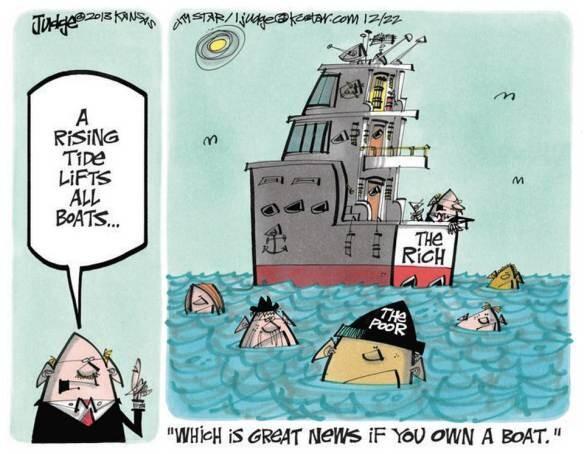
Luce’s point is a “rising tide has not lifted all boats”.  The technological revolution offers the same potential for western liberalism as the industrial revolution.  The election of Donald Trump was America’s “wake up” call. 

A large part of America’s population has been left out of the American Dream of western liberalism that came from opportunities provided by the industrial revolution. 

Western liberalism needs to be reinvented by investment in a technological revolution for all Americans, not just those who have benefited from the industrial revolution.  The question is whether private industry and the government are up to the task.  Will western liberalism be reinvented and promoted by ossified industrial leaders and elected representatives?  Most industry leaders and elected representatives are satisfied with the status quo while too many Americans struggle to make mortgage or rent payments.  Luce defines the problem but offers no solution.