Government is not a business for profit and should not be solely measured by its cost. America will survive the catastrophic mistakes being made by President Trump but American citizens, and the welfare of the world will suffer for years to come.
Books of Interest Website: chetyarbrough.blog
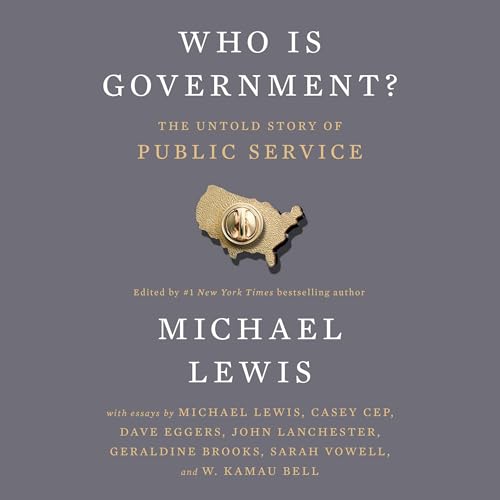
Who is Government (The Untold Story of Public Service)
By: Michael Lewis, Casey Cep, Dave Eggers, John Lanchester, Geraldine Brooks, Sarah Vowell, and Kamau Bell
Edited By: Michael Lewis
The stories of these writers are a tribute to those who have chosen careers in American government. Having personally earned a master’s degree in public administration, worked as a local government manager, then as a manager of a private business division, and finally, as a personal business owner, I have an opinion about President Trump. My experience is based on three different types of employment. All were rewarding experiences but in fundamentally different ways.
DONALD TRUMPELON MUSK
The writers of “Who is Government” show how ignorant business creators and managers like Donald Trump and Elon Musk are in discounting the contribution of employees of government organizations. Private corporations do not survive without profit to its owners. Public organizations do not survive without service to the public.
Profit is simple to measure. Public service is measurable but more abstract and difficult to quantify.
One can choose, like Musk did with Twitter, to reduce costs by firing employees. That may improve profitability but at a cost that may hurt or destroy the future of a business. In the case of Twitter, the company lost much of their advertising revenue because an unsupervised public forum could spread false and defamatory information that embarrasses advertisers who were protected by Twitter’ employees that were fired. No analysis was done by Musk about Twitter information’ controls provided by employees. The new entity, “X”, seems to have assuaged some advertisers’ concerns because they have started to use Musk’s new company. The point is that if Musk had taken more time to evaluate what fired employees were doing, he may have retained many of the advertisers who left the forum.
Trump’s employment of Musk to decimate the government employee workforce is following the same foolish path that was taken with Twitter.
No analysis of employee contributions is made. The goal is only to reduce government’ cost regardless of employee’ contribution to public need or service. The consequences have likely reduced health and welfare of American citizens; not to mention harm done to incomes of thousands of government employees’ families.
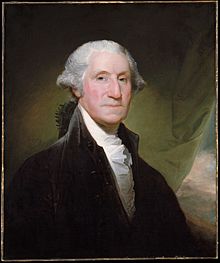
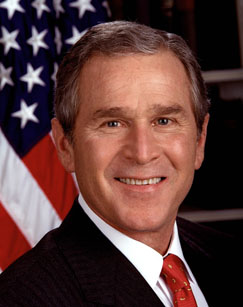
GEORGE WASHINGTONHARRY TRUMANJIMMY CARTERGEORGE WALKER BUSH (43RD PRES. OF THE UNITED STATES)
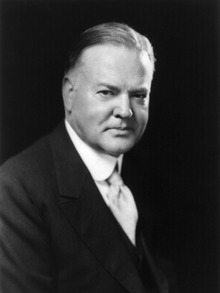
With exceptions of George Washington, Harry Truman, Carter, and the two Bush presidents, the worst former businessman that became President was Herbert Hoover who served as President before the greatest depression in America’s history. With Trump as President, one has to wonder whether he is leading America and the world toward its second great depression.
HERBERT HOOVER (31ST PRESIDENT OF THE U.S.)
“Who is Government” illustrates how government employees have contributed to the health and welfare of America. They are unknown and viewed by people like Trump and Musk as just a cost, without benefit to the public. How many science, medical, veteran, and welfare services are being decimated by their narrow vision of government management?
Government is not a business for profit and should not be solely measured by its cost. America will survive the catastrophic mistakes being made by President Trump but American citizens, and the welfare of the world will suffer for years to come.
Harmony and pragmatism undoubtedly remain important characteristics of Chinese society. Time will tell whether societal harmony can be maintained by an increasingly authoritarian leader.
Books of Interest Website: chetyarbrough.blog
The Chinese Looking Glass (The most illuminating book yet written on China and her enigmatic people.)
By: Dennis Bloodworth
Dennis Bloodworth (1919-2005) Author, journalist, British writer at The Observer, first British journalist allowed to visit China in 1955.
“The Chinese Looking Glass” is a whirlwind journey across the vast history of China by the first British writer allowed to visit China in 1955. It is a primer for a general understanding of China that was originally published in 1966 and updated in 1980. The author’s marriage to Liang Ching Ping adds credibility to his view of Chinese culture.
One reads Bloodworth’s book and is somewhat overwhelmed by its breadth. So many generations of Chinese culture are too much to cover in a 400+page book.
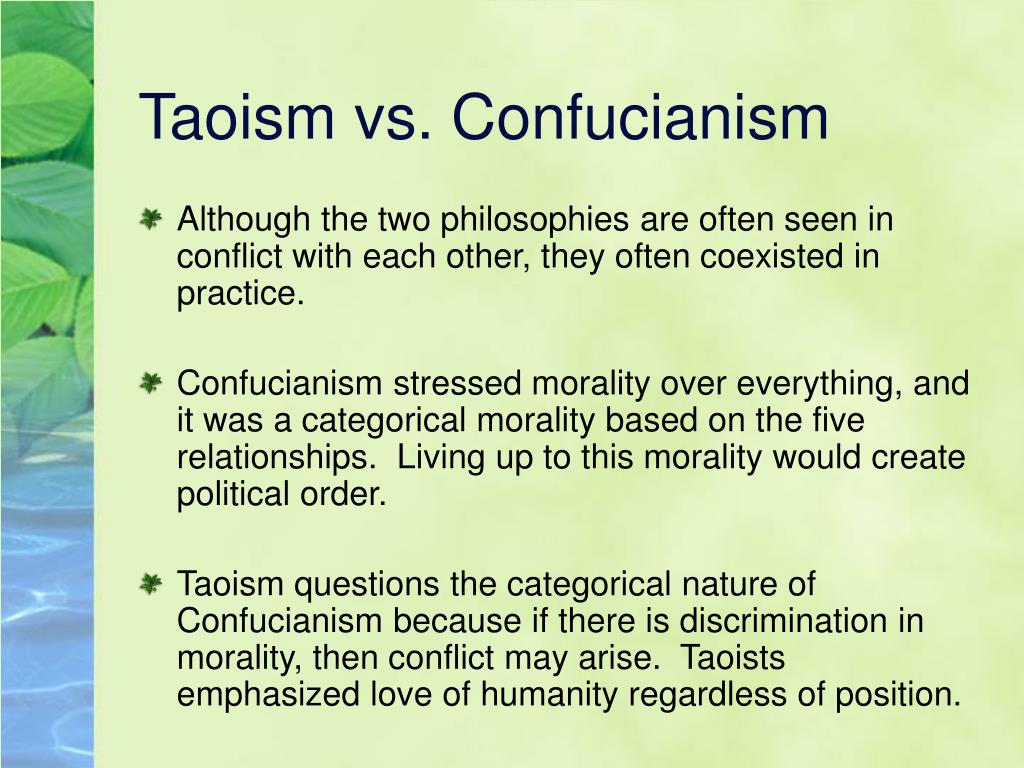
The author manages to give a broad understanding of a Chinese worldview that is shaped by Confucian and Taoist history, a collective identity that often conflicts with the Western culture of individualism. He notes Chinese traditions are based on filial piety (meaning duties, respect and devotion of children to their parents). Bloodworth notes, through many generations of Chinese culture, behavior and decision-making there is a focus on social harmony. Both Confucianism and Taoism play significant roles in shaping Chinese society.
Bloodworth notes Confucianism and Taoism shape Chinese society.
Piety, respect for hierarchy, education, and a focus on societal harmony were philosophical foundations of Chinese governance. Piety led governance toward strict rules and centralized authority. Historical figures like Confucius, Laozi, and Sun Tzu influenced Chinese culture and thought. The spiritual tradition of Buddhism reinforced the teaching of these cultural influencers. Buddhism emphasizes the suffering of life is caused by desire, and attachment. Buddhist teaching is that desire and attachment must be replaced by understanding and rejection of both through meditation and mindfulness.
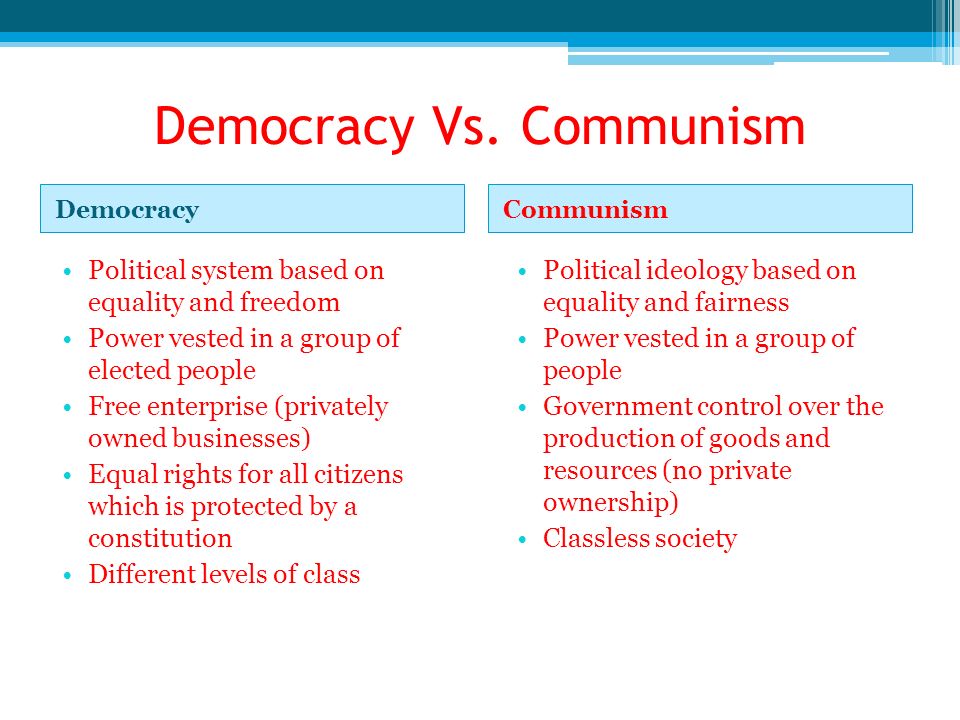
Because democracy focuses on individual rights and freedoms, the ideals of collective harmony, hierarchical structure, and centralize authority make communism a better fit for Chinese culture.
Mao Zedong (1893-1976)
Mao unified China after decades of war and instability. Bloodworth suggests Mao Zedong had a nuanced impact on China.
However, Mao’s centralized power resulted in big economic mistakes like the famine of the Great Leap Forward that caused misleading food production reports meant to please the government when production was much less than what was needed to sustain life for Chinese citizens. With famine, the Cultural Revolution is unleashed, and China’s growth and stability were set back. Bloodworth had observed China’s governing always included pragmatism and adaptability to their drive for cultural harmony.
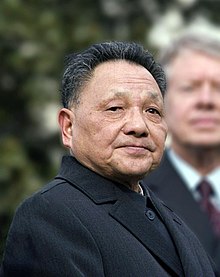
Though Bloodworth mentions Deng Xiaoping in the last chapters of his expanded edition of “The Chinese Looking Glass”, he does not foresee the opening of the Chinese economy and its rapid economic expansion.
The pragmatic realization that collectivization of farming led to misleading information about production compelled Deng to open agricultural production to a more market-driven incentive to preserve social stability. Deng was an authoritarian as is evidenced by his decision on the Tienanmen Square crises.
Though Bloodworth did not live to see the next iteration of China’s leadership, an element of recidivism enters with Xi’s control of the government.
Harmony and pragmatism undoubtedly remain important characteristics of Chinese society. Time will tell whether societal harmony can be maintained by an increasingly authoritarian leader.
From Fukuyama’s intellectual musing to our eyes and ears, one hopes he is correct about America’s future in the technological age.
Books of Interest Website: chetyarbrough.blog
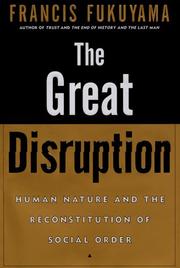
The Great Disruption (Human Nature and the Reconstitution of Social Order)
By: Francis Fukuyama
Francis Fukuyama (Author, political scientist, political economist, international relations scholar.)
Francis Fukuyama argues America is at the threshold of a social reconstitution. Fukuyama believes we are at Gladwell’s “Tipping Point” that is changing social norms and rebuilding America’s social order. He argues the innovation of technology, like the industrial revolution, is deconstructing social relationships and economics while reconstructing capitalist democracy.
The immense power of big technology companies like Amazon, Google, and Facebook have outsized influence on American society. They change the tone of social interaction through their ability to disseminate both accurate and misleading information. They erode privacy and create algorithms tailored to disparate interest groups that polarize society. The media giant’s objective is to increase clicks on their platforms to attract more advertisers who pay for public exposure of their service, merchandise, and brand.
To reduce outsize influence of big tech companies, Fukuyama suggests more technology has an answer.
There should be more antitrust measures instituted by the government to break monopolistic practices and encourage competition with large technology companies. Algorithms created by oversight government organizations can ensure transparency and reduce harmful content to reduce big tech companies influence on society. (One doubts expansion of government agencies is a likely scenario in today’s government.)
On the one hand, technology has improved convenience, communication, and a wider distribution of information.
On the other, technology has flooded society with misinformation, invaded privacy, and polarized society. Technology has created new jobs while increasing loss of traditional industry jobs with automation. Trying to return to past labor-intensive manufacturing companies is a fool’s errand in the age of technology.
Luddites during the Industrial Revolution.
Like the industrial revolution, the tech revolution’s social impact is mixed with a potential for greater social isolation, and job displacement with the addition of wide distribution of misinformation. The positives of new technology are improvements in healthcare product and services, renewable energy, and climate understanding with potential for improved control.
Face-to-face interactions become less and less necessary. Children’s access to technology impacts parental supervision and relationship. Fukuyama suggests setting boundaries for technology use needs to be a priority in American families. Technology can open the door to better education, but it also becomes a source of misinformation that can come from the internet of things. Employers have the opportunity to help with work-life balance by encouraging flexible hours and remote work. (Oddly, that suggestion is being undermined by the current government administration and many American companies.)
Economic growth, access to information, and global connectivity have been positively impacted by technology. However, the concentration of power, misinformation, and surveillance of social media has diminished privacy and eroded individual freedom. There are concerns about technology and how it is good and bad for democratic capitalism.
The good lies in increased efficiency, innovation and creation of new markets, through globalization. However, today’s American government shows how tariffs are a destroyer of globalization. Fukuyama implies A.I. and automation is displacing workers and aggravating economic inequality because it is being misunderstood for its true potential and also being misused. Personal data is used to manipulate consumers in ways that challenge the balance between corporations and consumers.
Fukuyama argues private parties will grow in America to create software that will filter and customize online services.
With that effort control of the influence of big tech companies will be diminished. With decentralization of big tech power and influence, society will theoretically become less polarized and more consensus oriented. The capitalist opportunity for tech savvy startups that diminish influence of big tech companies will re-create diversification like that which the matured industrial revolution gave to new manufacturers. Like Standard Oil and other conglomerates of the industrial revolution, businesses like Amazon, Google, and Facebook will have competition that diminishes their power and influence.
American Government will grow to regulate the internet of things just as it has grown to regulate banks, industries, and social services.
Today, some look at the American government with concern. Are we at a tipping point in America?
Books of Interest Website: chetyarbrough.
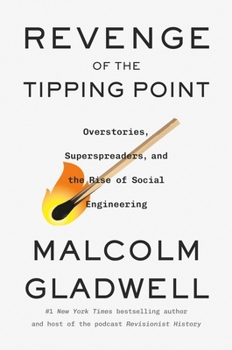
Revenge of the Tipping Point (Overstories, Superspreaders, and the Rise of Social Engineering)
By: Malcolm Gladwell
Narrated By: Malcolm Gladwell
Malcolm Gladwell (Canadian Author, journalist, public speaker, staff writer for The New Yorker.)
Malcolm Gladwell returns to the subject of “…Tipping Point” that originally explored how small actions or events can trigger significant changes in society. “Revenge of the Tipping Point” provides several stories of tipping points that have had vengeful consequences for society.
One of the most consequential tipping point stories is about America’s attempt to engineer social equality.
America is struggling with social diversity. Gladwell infers social diversity is a great strength in American society. However, our government and domestic leaders have legislated discrimination, fought wars, murdered innocents, and promoted ethnic separation throughout its history as a nation. Despite our most famous statement of American value, i.e. “E pluribus unum” (Out of many, one), America has failed.
The value of social diversity is it allows Americans to achieve great things despite inequality that exists in America.
Gladwell tells the story of a community in Florida that prides itself on being an exemplar of American society because of its strong educational values, cultural pride, community support, and economic mobility. The people who live in this community focus on preserving and celebrating their ethnic heritage, traditions, and identity. They assemble an island of cultural sameness that overtly and covertly resists change. Those who are not of the right ethnic heritage or race who may have the same drive for high educational achievement, community participation, and relative wealth are not welcome. The tipping point revenge Gladwell notes is in the stress this community places on its children to excel academically and conform to expectation. Gladwell notes student suicides are disproportionately high because of the social pressure children feel to conform. The social pressure for conformity and educational expectation overwhelms some who live in the community. Some parents choose to send their children outside the community school system to allay the social pressure they feel.
Gladwell notes the 2023 Supreme Court rejection of college acceptance based on diversity. The Court denies the right of colleges to recruit students based on ethnicity or race.
On the face of it, that seems an unfair decision but Gladwell notes that the schools being challenged on their diversity policies refuse to explain how they determine who should be admitted based on a percentage figure of fair representation. Gladwell notes the primary criteria for college selection has little to do with a drive for diversity but are based on revenue producing university sports programs and donor money. Minority preference admissions are based on income potential for the university, not social diversity.
The Supreme Court ruling does not preclude consideration of an applicant’s personal life experience, but Gladwell notes it nevertheless has nothing to do with a drive for equality or diversity.
Unfortunately, the Supreme Court decision may cause a reevaluation of outreach to minorities who have been denied equal opportunity for personal success. Gladwell’s ironic point is that American diversity in the pre-Supreme Court decision was never based on creating diversity but on raising money for university foundations.
Gladwell explains the drug crises is more of an American problem than for most other nations of the world.
One asks oneself, what makes America the center of opioid addiction and death.
From the greed of drug dealers, medicine manufacturers and doctors who prescribe opioids, America has the highest opioid deaths in the world. Though Estonia has the highest opioid death’s per capita because of its smaller population, the manufacturers and doctor-prescribed synthetic opioids have greatly increased American’s deaths. Purdue Pharma aggressively marketed OxyContin with the owners, the Sackler family, reaching a multibillion-dollar settlement. Many doctors like Dr. Hsiu-Ying Tseng and Dr. Nelson Onaro have been prosecuted for overprescribing opioids or running “pill mills” that provided opioids to the public.
Gladwell suggests it is the superspreaders, worldwide legal and illegal manufacturers and sellers of opioids, and incompetent/greedy medical prescribers as tipping point causes of America’s addiction crises. However, he argues there are environmental and systemic societal factors that create a receptive user base in America. Economic stability is unattainable for many Americans because of economic, racial, and ethnic differences. He argues small actions and decisions lead to widespread consequences. Every human being has a tipping point based on their experience in the world. The ideals of America conflict with its reality. The pain of that realization leads some to relief through drugs, a step-by-step addiction that can lead to death.
Berlin Memorial to the Holocaust.
There are other tipping points Gladwell explains. One that resonates with my life experience is the ignorance many have of the history of the world. Some would argue, Americans became aware of the Holocaust after the end of the war in 1945. However, Gladwell argues most Americans remained ignorant of its reality until 1978 following the release of the NBC miniseries “Holocaust”. Until then, Gladwell argues there was little broad cultural understanding of its atrocity. Having graduated from high school in 1965, much of what Gladwell notes about ignorance of the Holocaust rings loudly and clearly.
I doubt that many were completely ignorant of the Holocaust, but its brutal reality was not taught in the high school I attended in the 60s. Having visited Auschwitz and viewed its gas chamber, piles of discarded shoes and clothes, and pictures of murdered human beings, the truth and guilt that one feels for being a part of humanity is overwhelming.
We have an FBI director that wants to have men and women of the agency coordinate training with the UFC (Ultimate Fighting Championship), headquartered in Las Vegas. We have a President who publicly chastises Ukraine’s President and suggests they caused Russia’s invasion of their country. We have a President that insists America is being taken advantage of by lower cost production of product of other countries and that tariffs are a way to balance the American budget. We have a Palestinian protester at Columbia University who is arrested for social disruption. The head of the Department of Health Services orders lie detector tests for employees to find any leaks about the current Administration’s actions.
Tariffs have historically been found to damage America’s economy. Is the FBI a military force that needs to be schooled in hand-to-hand combat? One need only read Adam Smith about free trade to understand the fallacy of Tariffs. Have we forgotten the invasions of Austria and Poland by Germany at the beginnings of WWII? Is free speech a crime because of tents that disrupt college life? Should we use lie detector tests to determine the loyalty of employees?
Are these incidents a tipping point for American Democracy to turn into something different and demonstrably less than the founding principles of American government?
In planning a trip to Japan this year, it seems prudent to learn more about the history of Japan.
Books of Interest Website: chetyarbrough.
Great Courses-Understanding Japan (A Cultural History)
By: Mark J. Ravina
Narrated By: Mark J. Ravina
Mark Ravina (Scholar of Japanese history at the University of Texas at Austin)
Professor Ravina’s lectures are a little too heavy on Japan’s ancient history but offers some interesting opinion about the rise of the Samurai, the evolution of women’s roles in Japan, Emperor Hirohito and his role in WWII, the democratization of Japan after WWII, and the cause of Japan’s current economic stagnation.
As is well known, the Samurai were a warrior class in Japan. Their role in Japanese history grows between 794 and 1185.
They began as private armies for noble families with estates in Japan. They became a force in Japanese politics and have had an enduring effect on Japanese society. They evolved after 1185 into a ruling military government called shogun that exhibited political influence through 1333, emphasizing Bushido or what is defined as a strict code of loyalty, honor, and discipline. That discipline extended to ritual suicide in defeat or disgrace to preserve one’s honor. Zen Buddhism entered into the Samuria culture, exhibiting a time of peace under the Tokugawa shogunate that lasted until 1868. After 1868, the Samurai era came to an end, but its cultural influence remains in a modernized military that adheres to qualities of discipline, honor, and resilience.
Traditional Japanese Woman.
The role of women in Japan has evolved from great influence and freedom for the well-to-do to a life of restricted domesticity.
During the Samurai era, the influence of women declined and became more restricted. The rise of Confucian ideals emphasized male dominance with women being relegated to domestic duty. Women turned to art, calligraphy, and religion as their societal influence decreased. In the Meiji Era (1868-1912) women’s education somewhat improved and they began to participate in political movements like voting and equal rights. Finally, after WWII, a new constitution granted women equal rights like the right to vote and enter the workforce. However, like America, traditional gender roles persisted. In today’s Japan, like most of the world, equal rights remain a battle for women.
Hirohito is the 124th Emperor of Japan.
He reigned from 1926 to 1989. Professor Ravina notes that a question is raised about whether the emperor was a follower or leader in Japan’s role in WWII. Ravina argues history showed Hirohito’s role was as a leader. In defeat, Hirohito renounced his divine status to become a constitutional monarch under U.S. occupation. Hirohito, as the crown prince of Japan, strengthened Japan’s diplomatic ties on the world stage. He was instrumental in scientific research in marine biology. He emphasized Japan’s drive to become an industrial nation and player in international trade. He militarized Japan in preparation for war and territorial expansion. He authorized invasion of Manchuria in 1931 to establish it as a puppet of Japan. Hirohito aids the American occupation, after WWII, to de-militarize and re-industrialize Japan.
With creation of a new constitution for Japan in 1947, Japan became a constitutional monarchy that made the emperor a symbolic figurehead, and guaranteed freedom of speech, religion, and assembly.
The constitution formally denounced war as a means of settling disputes. Land reform redistributed agricultural production to tenant farmers that reduced the power of wealthy landlords and promoted economic equality in rural Japan. Women’s rights were codified to allow voting and participation in politics. The constitution guaranteed equality but, like the rest of the world, culture trumped reality. Japan’s military was reorganized as a defensive force for national security. War crimes trials convicted Hideki Tojo, Iwane Matsui, Hei taro Kimura, Kenji Doihara, and Koki Hirota and sentenced them to death. In total 17 leaders were executed, and 16 others were imprisoned.
Free-market economy.
The democratization of Japan entailed economic reforms that broke up large industrial conglomerates to promote a free-market economy and reduce economic monopolies. However, the culture of Japan replaced the industrial conglomerates with networks of interlinked companies that operated cooperatively in ways that reduced competition in pursuit of financial stability. The education system was reformed to promote democratic values, and equal access to education for all citizens.
A free press was encouraged to foster transparency and accountability.
The results allowed Japan to rapidly improve their industrial productivity. That productivity was defined and improved by the teachings of W. Edwards Deming, a statistician and quality-control expert in the 1950s. His contributions led to the Deming Prize in 1951, an annual award recognizing excellence in quality management. (This is a reminder of Peter Drucker and his monumental contribution to business practices in the United States.)
In Ravina’s final lectures, he addresses the economic stagnation that has overtaken modern society in Japan.
It began in the 1990s. A sharp decline in asset prices wiped out wealth and triggered a banking crisis. Banks had made too many bad loans that became non-performing. Deflation ensued with falling prices that discouraged spending and slowed economic growth. Company profits declined. The demographics of Japan reduced the size of the work force because of an aging population and declining births. One suspects this demographic change is further burdened by ethnic identity that mitigates against immigration.
Japan’s consumption tax increases in 1997 impeded recovery.
The close ties between government, banks, and corporations resist reforms. And, as is true in America, global competition from other countries with lower cost labor eroded international trade.
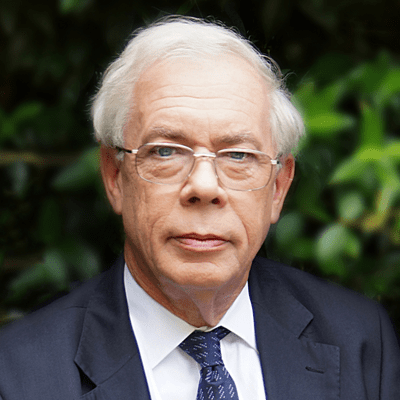
Sir John Anderson Kay calls for more training in ethical behavior and fiduciary responsibility in the financial industry. Kay believes “too big to fail” financial institutions should be broken up to reduce risk and encourage competition.
Books of Interest Website: chetyarbrough.
Other People’s Money (The Real Business of Finance)
By: John Kay
Narrated By: Walter Dixon
Sir John Anerson Kay (Author, CBE, FRSE, FBA, FAcSS, British economist, dean of Oxford’s Said Business School.)
John Kay explains how the world’s finance system was designed to support national economies and international trade. However, he argues the world’s financial system, though designed to improve the lives of everyone, has evolved into a system that primarily benefits those within the financial industry, not everyone.
Kay offers the example of Ponzi schemes like that created by Bernie Madoff, and mortgage derivatives created by financial quants. Unlike Madoff’s personal enrichment, the financial industry’s’ mortgage derivatives enriched mortgage lenders, banks and brokers who sold them to other financial institutions like hedge funds, investment banks, mutual funds, foreign and retail investors. Mortgage derivatives were a national Ponzi scheme, greater than Madoff’s, that only enriched the financial industry. In 2008, the financial industry nearly bankrupted the world. The finance managers served no jail time while poorly qualified homeowners were thrown into the street because they could not afford their home mortgages.
What is puzzling is how so many people lost their homes in 2008 despite government regulation of the financial industry, which was ostensibly designed to protect consumers and stabilize the housing market.
“Other People’s Money” is managed by financial institutions that have nothing to lose if other people’s money is lost. A poor finance industry manager might lose his/her job because of poor sales received for selling financial products to other financial companies. However, if their sales are good, huge bonuses are given to top earners. Kay notes three faults in this system. One, it is a closed system that primarily feeds on itself as an industry. Two, the product of sale can as easily be worthless as valuable. And three, the money that is being used is primarily the public’s money, not the financial industries’ money. Mortgage derivatives became weapons of mass financial destruction. The public suffered more than the financial industry for the obvious reason that it was the public’s money.
In theory client funds are kept separate from a firm’s own assets. Though that may be true, the equity of lenders is small in relation to the loans made to others because the loan actually comes from “Other People’s Money”, i.e., those who deposit their paychecks in a financial institution. There are government entities like the SEC in the US that enforce separation of a lender’s equity from other people’s money but so what? Other people’s money is the bulk of what is lent out to others.
Government regulations require record-keeping, transparency and risk management. So why did so many people lose their homes in 2008 while lenders were bailed out? If the Government regulated how other people’s money was being invested, how did the 2008 mortgage crises occur? It occurred because of the way the financial industry is regulated and the greed of financial institutions in selling a product that had less value than realized until it was too late. The fault within the industry grew bigger based on the packaging and resale of other people’s money in a product that became worthless.
The point is that there is little equity from money lenders that use “Other People’s Money” to invest in the economy. Financial institutions are required to have as little as 4.5 percent to 6 percent equity in loans for what they lend to others. The remainder is “Other People’s Money”. Most of the risk of institutionally loaned money is born by the public. Of course, there are insurance guarantees from the government, but they are limited.
Kay notes financial industries are motivated to expand their businesses by capitalizing on short-term gains for profit rather than long-term stability and growth.
Kay goes on to explain that financial institutions are the biggest contributors to candidates for public office. Just as the Supreme Court’s decision to give corporations personhood, the influence of corporate America distorts the influence of American citizens. Naturally, financial institutions push for favorable regulations designed to benefit owners and managers of the finance industry. He explains how financial risk is designed to fall back on taxpayers and less informed investors. Because financing institution managers are using other people’s money, they are more concerned about lender profit and their bonuses than loan default. Kay suggests there is a lack of transparency that hides the exploitive nature of lending that has minimal personal risk to lending institutions, its managers, and loan officers.
Kay argues financial products and services need to be simplified and made more transparent so consumers can understand how lending institutions and insiders are benefiting from their transactions.
Kay explains the primary functions of the financial industry should be focused on making payments simple with clearer explanations of risks so that capital is efficiently and wisely allocated. Government oversight should be exercised to promote transparency, accountability and long-term stability of the economy. Training in ethical behavior and financial responsibility is needed for agents of the financial industry so that incentives and rewards balance with the needs of the economy.
Kay suggests regulatory reform is necessary with greater transparency, and accountability for long term financial stability. He calls for more training in ethical behavior and fiduciary responsibility in the financial industry. Kay believes “too big to fail” financial institutions should be broken up to reduce risk and encourage competition.
The United States is the 7th richest nation in the world on a per capita basis. Why is homelessness a growing problem in outwardly prosperous American cities?
Books of Interest Website: chetyarbrough.blog
Seeking Shelter (A Working Mother, Her Children and a Story of Homelessness in America)
By: Jeff Hobbes
Narrated By: Julia Whelan
Jeff Hobbes (Author, graduate of Yale with a BA in English language and literature.)
Homelessness can be seen in most large cities of the world. In personal travels to what look like prosperous cities like Vilnius, Lithuania, Hong Kong, China, and even Scandanavian countries, homelessness exists. However, the scope of homelessness does not compare to what is seen on the streets of Las Vegas, NV. and Seattle, WA, two larger American cities considered prosperous and growing. In 2024, there were an estimated 7,928 homeless in Clark County (the Las Vegas area) and 16,385 in King County (the Seattle area). Walking around these two cities, let alone reading or listening to the news, suggests those numbers are grossly undercounting the homeless. The United States is the 7th richest nation in the world on a per capita basis. Why is homelessness a growing problem in outwardly prosperous American cities?
Trump followers would argue homelessness is because of illegal immigration and laziness.
The real reasons are decades of underbuilding in major American cities, high cost of existing inventory, regulatory barriers for affordable housing, economic inequality, an attitude of “not in my back yard”, investment conglomerates that capture housing for rent, and the decline of federally funded affordable housing.
Jeff Hobbes brings all of these reasons for homelessness to light with the plight of working mothers and their children who are moving from one area of California to another because they cannot afford a place to live, school their children, and feed their family.
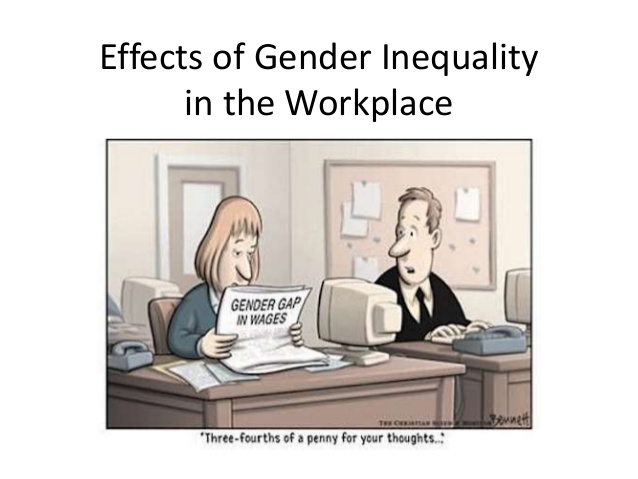
Hobbes’ example is of a family on the road with savings of $4,000 in a search for a job, a school for her children, and a place to live that they can afford. What is abundantly clear in Hobbes’ book is women hold broken families together more often than men. Misogyny is a reinforced truth in the world. Men spread their seed, begat children, and leave. Women take on the burden of the world’s future.
Homeless single parents with children to care for must often leave their children alone while seeking work to pay for the basic needs of life.
A woman faces greater obstacles than a homeless man because of unequal opportunities ranging from income for work to their presumed and assumed responsibility for children’s care. The general public often presumes they have their own lives to live and have no responsibility for others who have made foolish decisions in their lives. However, a rational person knows children are the future of the world. A child left on his/her own have diminishing opportunities for success without parental support. A child of a homeless single parent’s support is compromised when that single parent has to work to earn enough for the family to have a home and food to eat.
Having the personal experience of being raised by a single parent with an older brother, Hobbes’ history of a mother, on her own, fairly explains how difficult it is to avoid homelessness while looking for work and caring for her children.
The price paid for homelessness on the emotional and intellectual ability of a mother and her children is immeasurable. The cost to society is partly explained by Jeff Hobbes’ in “Seeking Shelter”. California’s system of caring for the homeless is encouraging but undoubtedly inadequate based on what one reads in the press.
Listening to the stories of homeless families is a harsh lesson for those who have escaped poverty and think if they can do it, why can’t every American do it?
Failure to address homelessness is a societal flaw. Whatever its cause, homelessness makes every citizen of prosperous nations guilty of neglect.
It appears to this listener/reader, the rise of authoritarianism in the world today lays at the feet of Marx and, to a lesser extent, von Mises’ economic theories.
Books of Interest Website: chetyarbrough.blog
Human Action: A Treatise on Economics
By: Ludwig von Mises
Narrated By: Jeff Riggenbach
Ludwig von Mises (Austrian-American economist, logician, sociologist, and philosopher. 1881-1973, died at age 92.)
Economics is defined as a social science that studies how individuals, businesses, governments, and societies allocate resources to satisfy the needs and desires of a community of people. Historically, one of the greatest explainers of this social science is Ludwig von Mises. Maturing at a time of the communist revolution, the advance of capitalism and both world wars, von-Mises offers one of the greatest books about economics since Adam Smith. The only economist of greater significance is Adam Smith (1723-1790) because of his origination of the principles of economics. Close behind are Karl Marx (1818-1883), and John Maynard Keynes (1883-1946).
KARL MARX (BORN TRIER, GERMANY 1818-DIED LONDON, ENGLAND 1883)JOHN MAYNARD KEYNES (1883-1946)
Of course, all economists are beholding to Adam Smith with his original conception of the dismal science. Smith conceived of the “invisible hand” of economics that postulated self-interest as the primary contributor to the overall good of society. Von Mises seems to guardedly agree but suggests self-interest’ market pricing can artificially distort distribution of economic resources. Von Mises infers the “invisible hand” is inefficient at the least and may artificially distort prices in the hands of authoritarian governments and business monopolies. Karl Marx suggests the invisible hand would evolve into a production system that would be owned by the public to ensure equality of distribution in an evolutionary economy that passes from capitalism to socialism, and finally communism. Marx argues self-interest will evolve into a common interest for all. Marx’s idea of change in the nature of human beings beggars the imagination.
Smith supported limited government intervention to maintain justice, defense, and public works.
Both Smith and Marx believed in a “labor theory of value” which argues the value of a commodity is determined by the labor required to produce it. Where Smith and Marx depart is in government enforcement of a balance between labor and the cost of goods. Von Mises opposed most forms of governmental intervention in the economy. However, Keynes argues government intervention is necessary during economic downturns. After WWII, Keynes theory became an important part of the American government’s support of European reconstruction.
Von Mises believed in human individualism which carries the risk of authoritarian domination.
Von Mises believed in human individualism while Smith and Keynes support limited government intervention. Marx argues human nature could be shaped by a melding of government dictatorship with societal pressures to support communal goals.
At extremes, von Mises endorses individualism and Marx endorses dictatorship. The middle ground seems held by Adam Smith and John Maynard Keynes that endorse limited government intervention. It appears to this listener/reader, the rise of authoritarianism in the world today lays at the feet of Marx and, to a lesser extent, von Mises’ economic theories.
The length and value of von Mises’ book overwhelms a non-economist listener with his esoteric statistical and lengthy explanations of economic theory. However, comparison with a dilatant’s understanding of other renown economists is enlightening.
What Professor Fullenkamp makes clear is information is key to understanding financial markets, but human judgement is the difference between investor’ success or failure.
Books of Interest Website: chetyarbrough.blog
Financial Literacy (Finding Your Way in the Financial Markets)
By: The Great Courses
Lectures By: Professor Connel Fullenkamp
Professor Connel Fullenkamp (Lecturer at Duke University, economist and director of undergraduate studies in economics.)
“Financial Literacy” may put some listeners to sleep but there is a lot to be learned from Connel Fullenkamp’s lectures. He gives a lengthy description of financial markets extending from Stocks to Bonds, Forex, Commodity, and Derivative Markets. He offers information about how money is used and made in financial markets. Fullenkamp addresses banks, stocks, selling and buying securities, expected returns on investments, how they are priced, controlled, and how information about them is important for personal financial decisions.
It is no surprise to find that banks play a critical role in financial markets.
They provide personal banking services by accepting deposits and providing loans to individuals and businesses. They smooth the flow of money in the economy. Banks can help companies raise capital by offering advice and services for the issuance of stocks and bonds to finance businesses. They offer advisory services for mergers, acquisitions, and other financial strategies. Banks can act as market makers by buying and selling securities for their clients. They can provide asset management services, research and analysis, and ensure legal regulation and compliance with government and international laws. Banks are the backbone of financial markets when they provide efficient allocation of resources and ensure the smooth functioning of the financial system. All of this is true in concept.
However, banks, savings and loan companies, and mortgage lenders are run by human beings who are subject to all the risks of human nature that can lead to catastrophic financial collapse as it almost did in the 2007-2010 mortgage derivative crises.
To be fair to the professor’s presentation, the 2007-2010 crises is not only because of the bad mortgages generated by financial institutions like Countrywide, New Century and Ameriquest. Goldman Sachs, Lehman Brothers, Bear Stearns, and Merrill Lynch investment banks are equally guilty. They packaged bad mortgages with high-risk mortgages to be sold to the public as safe collateralized securities that were far from safe and ultimately unsound. The result was a near worldwide financial collapse.
The government compounded the failure of 2007-2010 by guaranteeing poorly justified mortgages that were included in the packaged securities.
Rating agencies like Moody’s Standard & Poor’s, and Fitch ratings misled investors about the risks of the packaged mortgage securities. Government oversight organizations like the Federal Reserve and Department of the Treasury did not adequately do their job. Ironically, banks like Wells Fargo resisted the mortgage derivatives while banks like JPMorgan Chase bought and sold them but was too big to fail. Ironically, both banks became vehicles for recovery by taking over some of the lenders that had to0 many mortgage derivatives in their portfolios. (As noted in earlier book reviews, many families lost their homes because of foreclosures caused by lenders who originated the mortgages in these securities.) Fullenkamp explains financial markets are based on information. However, as noted by information computer geeks, “garbage in, garbage out” sunk lenders and victimized many investors, lenders, and homebuyers.
In explaining the stock market, Fullenkamp notes an investor becomes a partial owner of a company which gives them a stake in a company’s future profits, either from dividends or market performance.
Stocks have a dual identity. The difficulty for the investor is in understanding the information provided by the company to predict company performance and reap the benefits of stock appreciation. Fullenkamp gives some insight on assessment of that information, but most listeners seem most likely to pay less attention to professors of finance than to their own judgement.
Fullenkamp goes on to discuss Forex (Foreign Exchange). This is a global marketplace for trading national currencies.
Unlike stock and bond markets, a Forex market operates 24 hours a day because currency is an international trading market with centers in different cities like New York, Tokyo, and London. In the case of Europe and the U.S., the trade would be in Euros and US Dollars or in Japan and the U.S., the trade would be in Dollars and Yen. Exchange Rates fluctuated based on nation-state events. Strategic buying and selling based on those events can create profits and losses for exchange traders. Unlike a singular centralized stock market, Forex is decentralized and conducted electronically over the counter (OTC) by a network of banks, brokers, and dealers.
Fullenkamp also defines commodities markets. There are hard and soft commodities. Hard are like gold, oil, and other naturally produced materials. Soft are agricultural products like wheat, coffee, or cotton.
Most commonly, trading in these products is done with futures contracts. Futures are agreements to buy or sell a commodity at a predetermined price on a future date. The investor is gambling on the commodity to be either worth more or less than what the product is expected to cost at the actual time of purchase or sale. There are several exchanges around the world. The participants are speculators that either take the commodities at the agreed upon price or simply gain or lose money based on the actual price of the commodity when it is deliverable.
There is a great deal to absorb from Fullenkamp’s lectures. The last lecture is on “The Future of Finance”.
He suggests the technology of mobile phones has expanded the lending industry to individuals from institutions. It has already begun in less successful economic societies. Mobile money platforms and digital financial services are being used in Africa. Users of these platforms store, send and receive money by mobile phone owners because traditional banking services are not available. Fintech companies are formed to assess creditworthiness of individuals and small businesses. The vast amount of personal information becoming available with the internet becomes a source of customer approval or rejection of small companies and individuals seeking loans.
What Professor Fullenkamp makes clear is information is key to understanding financial markets, but human judgement is the difference between investor’ success or failure.
Trump is unlikely to help the middleclass and poor any more than some of America’s past Presidents, but he disrupts the status quo. That is Thomas Frank’s answer to why Trump was re-elected.
Books of Interest Website: chetyarbrough.blog
Listen Liberal (Or, What Ever Happened to the Party of the People?)
By: Thomas Frank
Narrated By: Thomas Frank
Thomas Carr Frank (Author, political analyst, historian, and journalist)
How could the American people elect a billionaire felon as President of the United States? Thomas Frank offers a compelling answer to that troubling question.
Since WWII, the American people have been misled by the words, policies, and deeds of both Democratic and Republican leaders. No post WWII leader escapes Frank’s frank explanation. Not since Franklin Roosevelt, and Harry Truman have any Presidents effectively reduced income inequality.
Frank embarrasses American voters for complicity in reducing the size of the middle class, ignoring the poor, and making the rich richer. He explains how Presidents of the last 70 years have made the middleclass smaller and the poor poorer. Frank particularly points to Bill Clinton and Barack Obama as examples of Ivy League’ wordsmiths that misled the public and instituted policies that moved America away from the working class and poor.
Clinton and Obama represented education as the primary measure of success in the 21st century. They largely ignored the working class that grew the American economy to be the most successful in the world. With that neglect the Democratic party became adjunct to the Republican party by diminishing the contribution and value of working Americans. Whichever party leads America no longer makes a difference to the middleclass’ and poor. Frank argues there is little difference between a Democratic or Republican President. The middleclass and poor realize those who are elected to lead make little difference in American worker’s lives.
Frank methodically dismantles Clinton and Obama administration’s policies to show how they diminished opportunity for the middleclass and poor. Clinton manages to balance the national governments debt on the backs of working America. Clinton’s welfare reform took many off of welfare by demanding employment as a requirement for any help by the welfare administration. That seems laudable but its impact on single parent households left children home alone and at the mercy of their neighborhoods. A child alone is left to the influence of neighborhoods festooned with gangs, drugs, guns and their societal consequences. In reducing the number of people on welfare, poverty increased.
Clinton’s programs for crime control massively increased prison building and prison populations that disproportionately affected African and Latino American communities.
Clinton repeals the Glass-Stegall Act and allows commercial banks to enter the derivative mortgage business that led to the near future financial collapse of America between 2007 and 2010.
Entry into the North American Free Trade Agreement (NAFTA) led to manufacturing job losses in America.
Frank admits Obama helped the middleclass and poor with Obama Care but argues he made the same mistakes as Clinton by supporting the rich at the expense of the middleclass and poor. Obama chose to follow the lead of George Bush’s plan to get America out of the economic ditch of the century by bailing out the financial industry while allowing the working class to fend for themselves. Many lost their homes as a result of banker’s lending greed and mortgage derivatives that came from Clinton’s decision to repeal Glass-Stegall. None of the banks were punished by bankruptcy because the federal government made a deal to keep them in business or subject to acquisition by bigger banks that became even larger. Poverty remained at the same level. Surprisingly homelessness was reduced by Obama’s “Opening Doors” initiative in 2010. However, the trend of aiding the rich at the expense of the working class is re-invigorated by emphasis on higher education and creativity rather than the nuts and bolts of economic prosperity that comes from job creation and a working public.
The trend of aiding the rich at the expense of the working class is re-invigorated by emphasis on higher education and creativity rather than the nuts and bolts of economic prosperity that comes from job creation.
The glaring irony of Frank’s observation led to the election of a billionaire who lauds wealth and power and cares little about the middleclass and poor. Donald Trump, Barack Obama, and Bill Clinton distorted the truth, partly by lying to themselves but also by purposely lying to the public with political policies and actions that did not make the lives of the middleclass and poor any better.
Trump directly distorts the truth but Obama and Clinton lie to themselves about the value of education as the singular path to improvement for the middleclass and poor. People are not only educated by school.
People are also educated by work and their experiences in life. Not every person in America or the world is interested in having a college degree. Shared economic productivity is the key to reducing income disparity. The brilliant oratorical skills of Obama and Clinton were refined by their intelligence and education but not everyone is blessed with the same skill. Trump is no Obama or Clinton, but he appeals to many who feel they have been left behind or can be benefited by his transactional view of the world.
One may agree that economic productivity comes from creativity, education, and work. However, it does not come from emphasis on one thing but on equality of opportunity for all to be employed.
Franks’ cynicism is overwhelming. By the end of his book, which is published before Hilliary Clinton’s political defeat by Trump, one is depressed by the truth of what he writes. The second election of Trump is proof of the failure of the Democratic party, and the Republican party, to live up to a belief in social equality and equal opportunity.
Creativity is an innate human quality. Education comes in many forms which are both formal and informal.
Being employed is a government, private enterprise, and personal responsibility. It is the job of governance to create public policies that support equality of opportunity for people to be creative, educated, and employed. Equality of opportunity ensures national economic growth and prosperity.
Trump is unlikely to help the middleclass and poor any more than some of America’s past Presidents, but he disrupts the status quo. That is Thomas Frank’s answer to why Trump was re-elected.