MARK TWAIN

Chernow’s biography is a mirror of Twain’s time and life. Chernow implies Twain could see imperfections of society without seeing his own. Twain’s genius to entertain America and readers around the world is not diminished by Chernow’s well written book.

Books of Interest
 Website: chetyarbrough.blog

Mark Twain 

Author: Ron Chernow

Narrated By: Jason Culp

Ron Chernow (Author, journalist, biographer, winner of the 2011 Pulitzer Prize for Biography and the American History Prize for his 2010 book “Washington: A Life”.

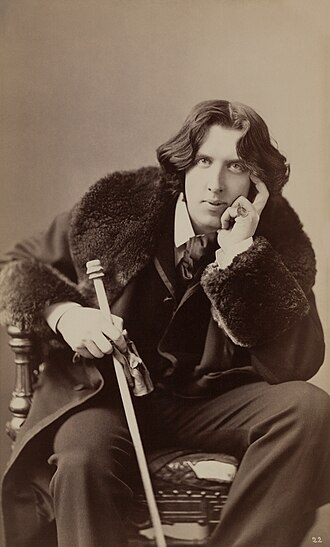
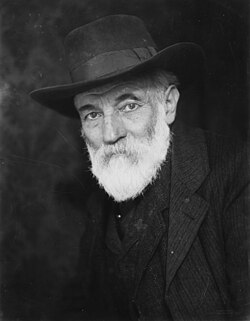
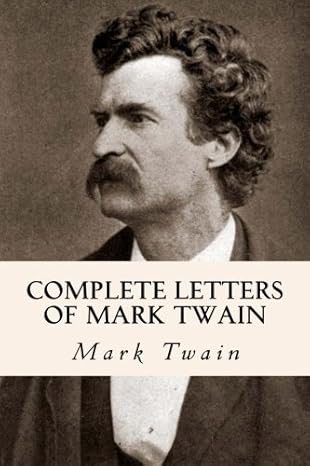
No stranger to historical biographies, Ron Chernow has written an interesting biography of the peripatetic humorist Samuel Clemens, aka Mark Twain. Samuel Clemens was born in Florida, Missouri, two weeks after Hailley’s Comet passed Earth in 1835, he died in 1910 when Hailey’s Comet made its closest approach to Earth in 1910. Chernow’s biography explains how Clemens became a steamboat pilot, frontier journalist, author, and American gadfly in his journey through 74 plus years of life.

Chernow’s biography of Mark Twain reminds one of Donald Trump without the power of the Presidency.

Clemens is noted as a stretcher of truth who told stories of his time that illustrated the contradictions of race, slavery, and morality that live through today. Twain is shown to express himself in humorist ways that challenged racial norms and societal conflicts which made some laugh, and others cringe with disgust or anger. Chernow argues Twain’s use of language shaped American literature. He gave American literature a unique voice that blended humor with criticism. Twain humanized the Black community and the iniquity of slavery, but Twain’s upbringing suggests he did not escape the false belief of innate Black’ inequality. Chernow painted a picture of Twain that showed how society was filled with the promise and pitfalls of Americans’ character.

Chernow shows how Clemens reinvents himself, not from formal education but from life experience.

At 21, Clemens begins training himself as a steamboat pilot on the Mississippi river, a highly praised, prized, and well-compensated position. Chernow suggests Clemens found his nom deplume, Mark Twain, based on the language of riverboat pilots. (“Mark Twain” is the 12 feet of depth needed for safe navigation of a riverboat.) As material transport changed after the steamboat era, Twain had to find a new career. He traveled to Nevada with the hope to become rich as a silver baron during the gold and silver rushes of the late 1850s. However, he never struck it rich, lost other people’s money, and turned to earlier work experience in newspapers when he lived in Missouri. He had learned the typesetting business and had written a few articles for the paper in his hometown. He settled in Carson City, Nevada, eventually becoming a journalist. On the one hand his stretching of the truth got him in trouble as a journalist but, on the other, it opened him to another career. His wit and way with words led to a role as lecturer and performer.


Chernow shows Twain changes jobs based on his innate abilities and external events.

The development of mass media, America’s Civil War, the industrialization of America, and the growth of a celebrity’ culture influence Twain’s life and made him a cultural symbol of America in the same way Dickens, Dostoevsky, and Chinua Achebe became symbols of their countries. Twain exemplified American life, its contradictions, its greed, and its biases that were blended into the personal tragedies and experiences of his own life. He turned his life experience into an art that reflected America’s growth as a nation. He became a writer and lecturer.

Chernow explains how Twain did not just read his lectures, i.e., he performs and acts their meaning to an audience.

Twain blends storytelling with satire and theater to entertain his audience. His reputation as a public speaker is made in California, but he becomes a global star. He performs in London, Berlin, and Bombay with what became cultural events about American humor and American foibles. His lectures are folksy with tinges of intellectualism that make him revered, respected, and laughed about by his audiences. Chernow believes he created an image of one who speaks truth to power about imperialism, religion, and human folly.

Chernow does not sugar coat truth about Twain.

Like all human beings, Twain had his blind spots. He was silent about lynching and its immorality, and he was trapped in his vision of racism by treating it as a troubling fact of American life despite his championing of civil rights. At best, he appears to be an agnostic when it comes to religion. There is criticism of Twain’s close relationship with teenage girls that he dismisses as a public concern by saying “It isn’t the public’s affair”. Twain is reckless with other people’s and his own money and investment. He exhibits behavior that suggests a gambler’s view about getting rich quickly. Twain could be vindictive, and melancholic because of his gloomy view of humanity. His family life suffers from his impulsivity and emotional distancing toward his wife and daughters. In one sense, Chernow makes Twain more human by noting he is like most of us except for his insightful sense of humor and talent for extemporaneous public speaking.

The archive of Twain’s letters is in the thousands which spans his entire adult life.

Chernow gathers much of his understanding of Twain from his personal letters rather than his books. He does note a number of Twain’s family members and friends are models for characters in his novels. However, Chernow’s focus is on Twain the man who appears morally inconsistent, a poor manager of other people’s money, and prone to anger when aggravated by other’s opinions. Whether this is fair or not, it describes many people today.

Chernow’s biography is a mirror of Twain’s time and life. Chernow implies Twain could see imperfections of society without seeing his own. Twain’s genius to entertain America and readers around the world is not diminished by Chernow’s well written book.

HUMAN FLAW

A not surprising irony in “They Made America” is that great innovators like the rest of us are flawed. Ford is widely considered an antisemite, Edison is too opinionated to countenance differences of opinion, Rockefeller is an elitist, Singer is a misogynist and so and so on

Books of Interest
 Website: chetyarbrough.blog

They Made America (From the Steam Engine to the Search Engine: Two Centuries of Innovators)

Author: Harold Evans, Gail Buckland & 1 more

Narrated By: Harold Evans

Harold Evans (Author, 1928-2020, British journalist died at age 92.)

“They Made America” is partly about inventions but mostly about innovations that transform society. He writes of America but his explanation of making any successful economy requires innovation. Invention may be a beginning while innovation has no end. He writes of mostly American men whose imagination leads to innovations that transform America’s economy. The generation of power, and advances in communication, transportation, finance, and culture are the consequence of innovation that may or may not be based on original invention. Some of a nation’s economic and social advancement is from unique invention but all of a nation’s success is a result of innovation.

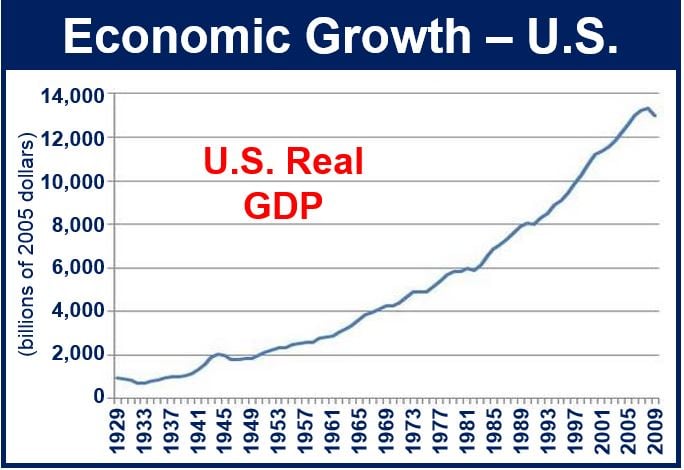
During the Obama administration, America’s economic growth began to decline and accelerated with the Covid 19 pandemic.

Evans and his co-authors identify many who have contributed to the success of America’s economic growth. Most of those he identifies are Americans but a few like Leo Baekeland, Reginald Fessenden, and Herbert Boyer show that innovation is not just an American phenomenon. Baekeland is a Belgian who invented Bakelite and became a U.S. citizen. Bakelite is the first fully synthetic plastic that revolutionized design and manufacture of consumer goods. Fessenden was a Canadian who pioneered radio transmission technology and Herbert Boyer and Robert Swanson were Americans who collaborated with many international scientists to create Genetech, the first biotech firm in the world that commercialized recombinant DNA for life-saving medicines like insulin.

Though British innovator, James Watt, did not invent the steam engine he radically improved it by adding a separate steam condenser.

The invention and innovational changes of the steam engine led innovators like Robert Fulton to see how a steam engine could power a steamboat. The invention of the automobile led to Henry Ford’s innovations in assembly line work that reduced the cost of production to make cars available to almost every working American. Ford also increased wages of his workers so they could buy Ford products. The founder of Bank of America, A.P. Giannini, innovated lending with idea of consumer banking giving workers a way to secure their paychecks in a bank that could provide a means to pay for services and possible credit based on accumulated wealth in their checking account. Innovations in communication by Ted Turner, Page and Brin, and Jobs and Wozniak changed the media communications industry.

Thomas Edison (1847-1931).

The recounting of the many American innovators in “They Made America” is not a picture of idealized human beings. Thomas Edison, who is among the greatest innovators in America, created a team of experimenters at Menlo Park in New Jersey. Edison created an “Invention Factory” that led to the electrification of the world. Though he did not believe in alternating current (AC) as an improvement over direct current (DC) in the use of electricity, he envisioned an electrical system that would light the dark streets of the world. Edison is a perfect representation of inventor and innovator in Evans’ American story. Edison’s belief in himself, his drive for accomplishment, and risks he was willing to take, exemplify the best an American entrepreneur can be.

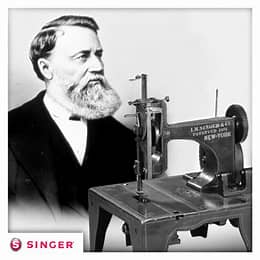
Isaac Merritt Singer (1811-1875).

Isaac Singer innovated sewing machine manufacturing and sale but led a profligate life as a seducer of women with a volatile reputation that often erupted in anger toward others. Singer is alleged to have fathered 24 children from wives and girlfriends. Like his name, Singer was a showman who demonstrated his machines and built a brand that remains popular today. He was flamboyant and accused of bigamy and adultery but is noted to have created a global sales and service company with an installment purchasing plan for his machines. He carries the same force of nature as Edison but with the development of a singular product.

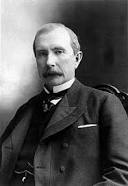
John D. Rockefeller (1839-1937).

In contrast to either Edison or Singer, Rockefeller is primarily focused on increasing his wealth and power. He revolutionizes the oil industry through monopolization while raising prices of oil to increase his wealth. He brands his product, reduces his costs of operation by building oil pipelines to reduce delivery costs and develops a corporate strategy to eliminate competition. His focus is on creating an industrial empire.

Evans notes other innovators like Ted Turner and Malcolm McLean and their innovations in media and global shipping. The lesser-known McLean introduced and launched the first container ship in 1956 that dramatically reduced loading times, labor costs, and cargo theft in the shipping industry. Ted Turner created CNN and TBS to revolutionize the news and entertainment industries. Page and Brin, and Jobs and Wozniak unleashed the internet to offer wider knowledge to the world but also provided a network that spread lies and misrepresentations of truth.

Dr. He Jiankui is an example of human blind spots. (Jiankui claims to have conducted the first human genome-editing of a human embryo with no oversight and a botched process that embarrassed the scientific community.)

The common denominator of these and many more innovators described in Evans’ book (though Jiankui is not mentioned) is their ambition, ego, and human blind spots. Edison is domineering and ruthlessly competitive. Ford’s antisemitism is reflected in his support for Adolph Hitler and being the only American cited in “Mein Kampf” as a model of antisemitism. Rockefeller shows the same traits as Edison as a corporate hegemon while using his innovative skill to dominate competitors and corner the market price for oil. Singer improves the utility of sewing machines through innovation and salesmanship while living life as though his personal ego is all that matters.

A not surprising irony in “They Made America” is that great innovators (like all of us) are flawed. Ford is widely considered an antisemite, Edison is too opinionated to countenance differences of opinion, Rockefeller is an elitist, Singer is a misogynist, Jiankui is a scofflaw, and so and so on. On balance however, innovators make a contribution to the success of America while most of us go along to get along.

BECOMING god-LIKE

Before the invention and advance of science, Fry’s reminders of mythological beliefs level up to the brilliance of science in the world. One leans on the hope left in Pandora’s jar to arrive at a time when all human beings are treated equally.

Books of Interest
 Website: chetyarbrough.blog

Mythos (The Greek Myths Reimagined.)

Author: Stephen Fry

Narrated By: Stephen Fry

Stephen Fry (Author, British actor and comedian.)

Most reader/listeners are familiar with the Greek gods associated with Zeus and some with his domicile on the island of Crete. It seems odd that Crete would be his chosen home unless one has been there and seen the beautiful island, walked the hills. and felt the warm breeze from the Mediterranean Sea. Stephen Fry fascinates his audience with cultural tales of Greece that meld the myths of gods before and after the birth of Zeus. His writing and narration are like a dramatic, terrifying, unfolding movie in one’s mind.

The origin of life myth is that earth and sky are married in human forms named Gaia (earth) and a father, born of Gaia, named Uranus (sky). They are the calm and storm of human life that is yet to be created. Gaia, the source of life, prophesizes the loss of power by Uranus at the hands of one of his children. To avoid the prophesy, when two of their offspring are ferocious beasts, Uranus forces them back into Gaia’s body to keep himself safe. Gaia is outraged by his cruelty and forges a sharpened sickle and chooses Cronus, a later son, to use it to kill Uranus. Cronus accepts Gaia’s order and attacks Uranus who defends himself but is castrated rather than killed by the first swing of the weapon. That castration severs Uranus’ rule of the cosmos with the dispersal of his privates and sperm that become today’s universe. He no longer rules the cosmos.

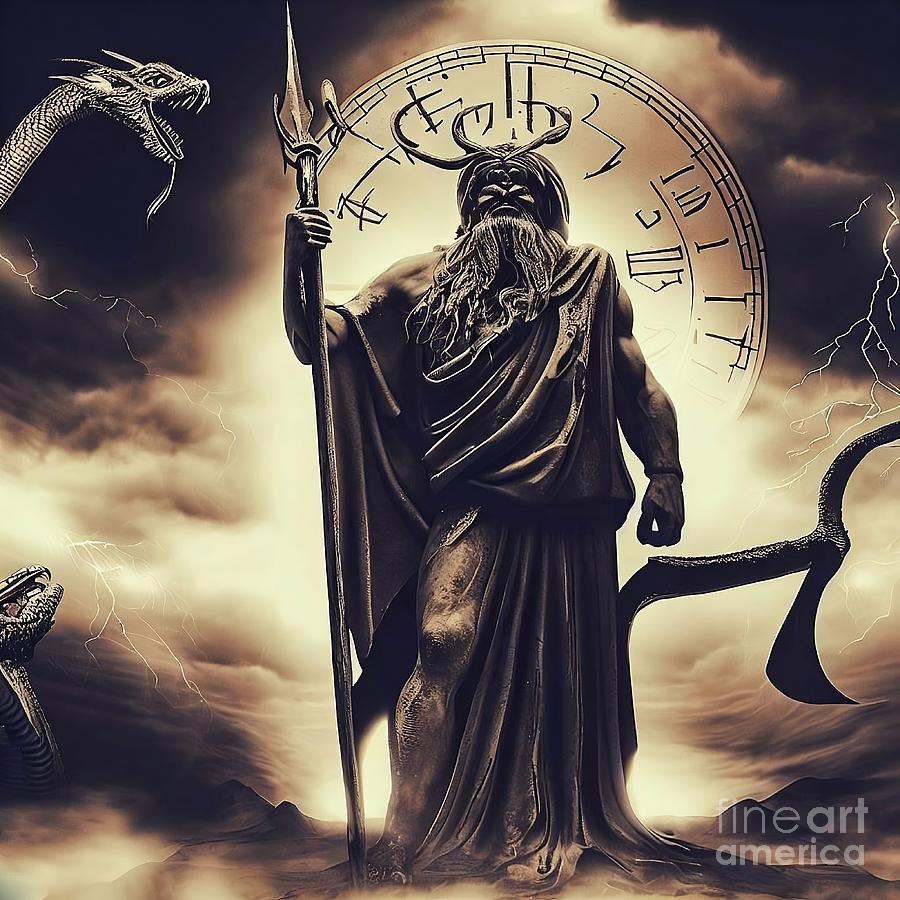
Cronus, the son of Gaia is the God of Time in Greek Mythology.

Cronus now becomes ruler of the universe but is also prophesized to fall at the hands of his offspring. Cronus marries Rhea, the sister of Gaia. Cronus knows of the prophesy and chooses to eat every child born by Rhea to avoid his fate. Rhea secretly wraps a stone in a blanket when she births Zeus and Cronus swallows the stone thinking another who might kill him is gone. Of course, Rhea is angry because of her lost children in Cronus’s stomach. Zeus plans to have Cronus drink a specially prepared potion that will cause Cronus to vomit up the siblings he has swallowed. Zeus imprisons Cronus after the freed siblings are returned to life. This begins the rise of the Olympian’ gods with Zeus as their leader.

One of the many gods of Zeus’s time is Athena, the goddess of wisdom and power. Athena’s father was the Titan of wisdom. Zeus had swallowed Athena’s father because of a fear that a child would be born that would surpass him as the all-powerful leader of the gods. There is a story of Athena’s birth from a blow to Zeus’s head because of a headache that would not go away. Athena bursts full grown out of Zeus’s head.

Fry explains Zeus is now becoming bored with his all-powerful life. He and Prometheus, another child of the gods, discuss creating mortal human life as a way of providing a new source of adventure and entertainment for the gods. These created humans become toys of the gods. Zeus and Prometheus search for the best source of clay to create humanity. Prometheus explains Zeus must provide some spit to create these new forms of life. So, humanity is formed from the spit of Zeus and the clay of earth. Prometheus is an artist who is described as a god of forethought and crafty counsel.

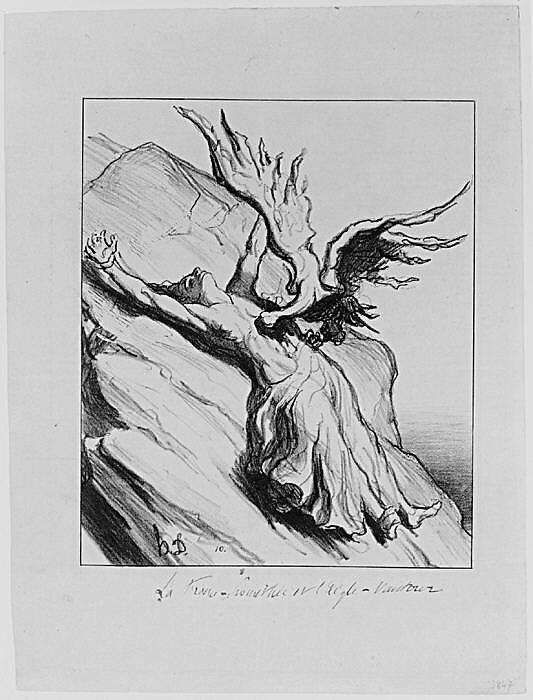
Prometheus and the Vulture.

However, Prometheus exceeds his authority by giving fire from the gods to man. Zeus is incensed and punishes Prometheus by chaining him to a rock. An eagle is initially planned to tear Prometheus apart every day to feast on his liver, but Zeus decides an eagle is too majestic for the task and turns the fowl to a buzzard. This occurs every night because of Prometheus’s immortality. Zeus treats people as toys for his amusement because he is incensed by their arrogance for having a power that only gods were to have. At this point, there are no female humans. With the creation of women, Zeus becomes threatened by humankind from increased procreation and capabilities that might grow to compete with the power of the gods.

Zeus (Leader of the Olympus gods.)

Zeus asks other gods to create woman, in part to complicate human life, which is a myth one could argue sets the table for gender inequality. The first woman is Pandora. This newly created woman is given a jar by Zeus and told not to open it for any reason without telling her what is inside the jar. She marries Prometheus’s brother and buries the jar under a sundial. However, her curiosity which is a “gift” given to her by Hermes, overturns the sundial, digs up the jar, opens it and releases the evils of life on the world. The only thing remaining in the jar is hope.

Before the invention and advance of science, Fry’s reminders of mythological beliefs level up to the brilliance of science in the world. One doubts life will ever be fully explained by science. One leans on the hope left in Pandora’s jar to arrive at a time when all human beings are treated equally.

CARTOON

Nadel reports Robert Crumb’s life and antics without criticism which seems appropriate because he is simply recounting a human beings’ life. Nadel does not act as a judge but as a reporter of a lived life.

Books of Interest
 Website: chetyarbrough.blog

Crumb 

Author: Dan Nadel

Narrated By: Ron Shapiro

Dan Nadel (Author, curator-at-large for the Lucas Museum of Narrative Art in Los Angeles.)

“Crumb” is a well written biography of Robert Crumb, the cartoonist. The subject matter is of interest to me because of the remarkable talent of a disheveled young man with coke bottle glasses that has a gift of drawing. That gift provides him wealth and success despite coming from a troubled household that gives him an eye for the weirdness of life. He and his brother, Charles who was 1 year older, began a monthly hand-drawn comic book when he is 15 years old. They sold it door to door in the late 1950s. Charles wrote the stories and Robert illustrated them. Nadel shows how that early life experience sharpened Robert’s artistic skills and planted the seeds for his future success.

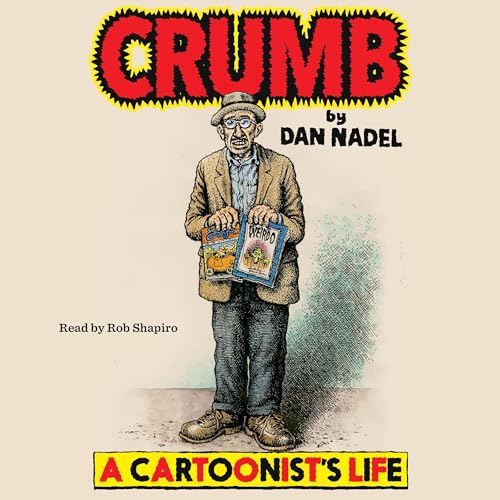
R. Crumb drawing of himself.

Nadel notes how Crumb’s drawings are deeply personal and sometimes disturbing because they capture the inner conflicts within Crumb’s life while tapping into the undercurrents of postwar America. Crumb’s work delves into the male id and its impulses exposing sexual obsession, neurosis, and human alienation. Crumb’s life story borders on a confessional and makes one confront their own obsessions. His comics delve into consumerism and conformity about race and gender with a biting satire that makes one realize the absurdity of American, if not all, human life. Nadel suggests Crumb’s work is an unfiltered chronical of the life he lived and lives.

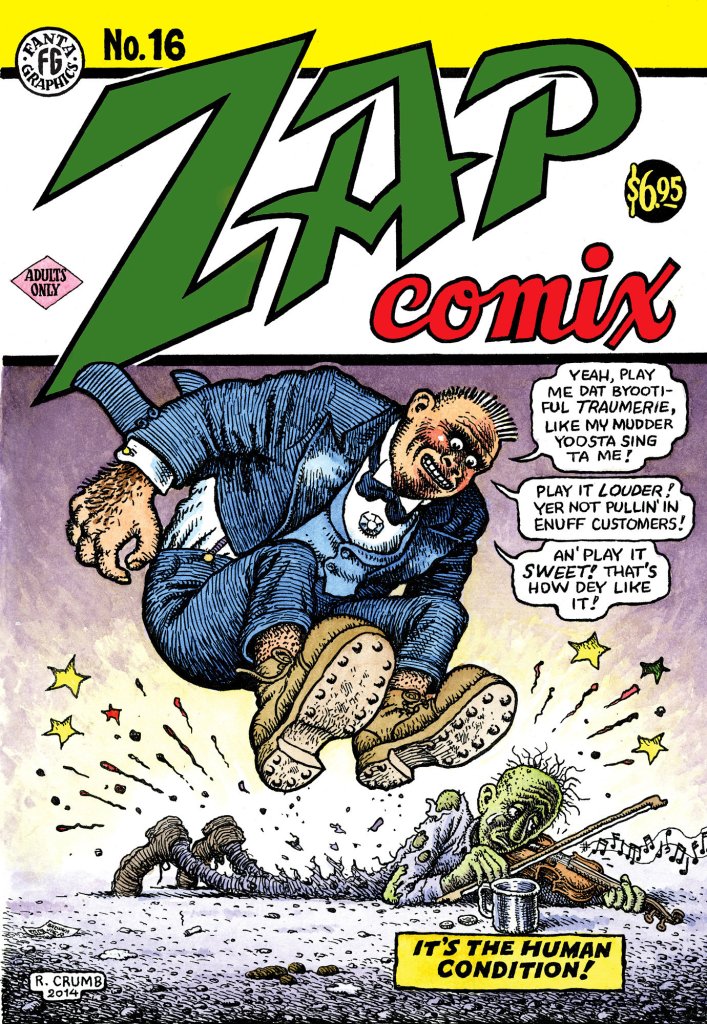
Robert Crumb gained fame in the 1960s counterculture when Zap Comix was released in 1967.

“Mr. Natural” and “Fritz the Cat” became cult icons illustrating the absurdity of life. Nadel suggests Crumb’s subjects are expressions of his working through his personal demons. Some of his images are racist and misogynistic which paints a picture of a troubled society. His subject matter ranges from popular music, counterculture, the history of comics, to graphic satire.

Nadel explains Crumb is married twice. His first marriage to Dana Morgan falls apart in part because of Crumb’s emotional volatility, but also because of the cultural upheaval of the 1960s. Nadel explains Morgan was the first woman Crumb had sex with which is complicated by Crumb’s confusion about sex. Crumb’s fame increases. He experiments with LSD. These dramatic changes in his life increase his discontent. There seems no single reason for the divorce. Crumb moves to San Franciso in 1967 to immerse himself in a counterculture and the comix scene.

Crumb meets Alaine Kominsky in 1972, and they marry in 1978. Their creative partnership blossoms with the creation of autobiographical comics that reveal the quirks, conflicts, and affections of their relationship. Their joint work is “Dirty Laundry Comics”. Ms. Kominsky dies in 2022.

Nadel notes that Crumb insisted on honesty when he agreed to have his biography written. Aline Kominsky is acknowledged as a stabilizing force in Crumb’s life. Crumb lived through America’s wars, the psychedelic age of the 60s and has now has reached the age of 81. Nadel explains much about Crumb’s turbulent life and how that turbulence shaped him and his art. Nadel offers a layered and empathetic portrait of R. Crumb, the ups and downs of his life, without excusing or condemning the beliefs, actions, or art of his long life.

Crumb’s behavior like jumping on the backs of women for piggyback rides and his racially charged imagery is uncritically reported.

Some of what Crumb illustrated in his art and what he did with his piggyback rides undoubtedly insults the public. In many ways, Crumb marginalizes society with his racist and misogynistic comics. Nadel reports Robert Crumb’s life and antics without criticism which seems appropriate because he is simply recounting a human beings’ life. Nadel does not act as a judge but as a reporter of a lived life.

Crumb’s parents were poor. He lived in poverty but overcame its limitations with the art of drawing that opened the world of commerce to him. From comics to greeting card drawings and back to comics, Crumb became a maven of the art of irreverent behavior.

WITTGENSTEIN

Wittgenstein’s philosophical belief is that words matter. To Wittenstein, words are not just sounds and symbols–they are the scaffolding of humanity’s shared reality and continuing search for truth.

Books of Interest
 Website: chetyarbrough.blog

Wittgenstein 

Author: Hans Sluga

Narrated By: Ken Maxon

Hans Sluga (Author, Professor Emeritus of Philosophy at U of C.)

Ludwig Wittgenstein (1889-1951, considered by some as one of the greatest philosophers of the twentieth century)

This is a difficult introduction to the philosophy of Ludwig Wittgenstein. One is unsure of whether it is difficult because of the author’s explanation or the abstruse nature of Wittgenstein’s writing. Sluga notes there is an early Wittgenstein philosophy and a later Wittgenstein philosophy. There is the 1921 “Tractatus Logico-Philosophicus” published in 1921 and a later “Philosophical Investigations” published in 1953.

In both publications, Wittgenstein’s philosophy is about language and its use to explain reality. The 1921 publication argues what can be said clearly can be said by all and when it cannot be said clearly the speaker should be silent. In 1953, Wittgenstein argues reality only has meaning as language is used to describe it.

The difficulty of grasping Wittgenstein’s later philosophy is knowing whether what one says about reality is true or false.

Wittgenstein notes problems arise when language is pushed beyond its utility for understanding. Wittgenstein implies there are realities that cannot be meaningfully described by language. He is redefining philosophy as a matter of understanding how language works rather than understanding some objectively understood reality.

If language is the source of reality, how can one know what is true or false based on how one’s language explains it?

The argument is that Wittgenstein is saying there is no reality except that which one can identify through language. Reality and truth exist but it is defined by public, practical, and embedded use of one’s common language. Truth is based on precise language broadly accepted by those who use language to explain reality. The difficulty of that idea is in fundamental science that changes because of newly discovered knowledge.

This later philosophical belief of Wittgenstein’s means truth is no longer absolute but contextual based on words used to describe it through science, law, and ethics of the time in which it is explained.

Wittgenstein’s philosophy is troubling. What is to keep humans from one country creating language that suggests they are a superior species and can destroy cultures other than their own? Wittgenstein’s answer is that languages are not hierarchical so words of another culture or nation have equal weight. His meaning is that reality is based on all public languages, not a private nationalist language. He writes “Philosophy is a battle against the bewitchment of our intelligence by means of language”. Further, he notes a singular culture cannot weaponize words because words are a universal medium for understanding reality.

Wittgenstein’s philosophical belief is that words matter. To Wittenstein, words are not just sounds and symbols–they are the scaffolding of humanity’s shared reality and continuing search for truth.

LANGUAGE

Spinney makes some interesting points that may or may not be the principal origin and evolution of language difference. Her ideas seem plausible, just as Newton’s physics seemed entirely correct until Einstein proved otherwise.

Books of Interest
 Website: chetyarbrough.blog

Proto (How One Language Went Global)

Author: Laura Spinney

Narrated By:  Emma Spurgin-Hussey

Laura Spinney (British science journalist, novelist, and non-fiction writer.)

Laura Spinney has written a challenging book for non-linguistic learners. Her book, “Proto”, focuses on a single ancient language she calls Proto-Indo European (PIE) that is said to have spread across the world to form half of the world’s spoken languages. She is not suggesting a new origin theory but argues languages around the world are synthesized by language structure and use. She suggests genetics, human cooperative effort, and recurring mythological beliefs are the basis of adopted languages.

A contrast between the way Spinney’s theory of the spread of a language and others is that it is based on wide use of peoples’ words in daily activity rather than a dictation by leaders who exercise control over a gathered group of people.

Spinney’s historical view for language development is in a people’s events of the day, repeated word use, and changing mythological stories that cultivate and spread a language. The language grows, changes, and spreads based on wider adoption by those who are communicating daily experiences to others. As inventions like horseback riding and wheeled transport show their value to an individual, its descriptions spread new words to one person that grows to many in that culture who communicate its value to others.

As one reads/listens to Spinney’s story, the reasons for differences in language appear based on the timing of ancient cultures growth when one area of the world is populated longer than another.

Every populated area creates their own mythologies. Mythologies are different because they are created by local events, burial rituals, and the desire to explain the “not understood” to others. Additionally, people live in environmentally different areas of the world. A native American has no reason to precisely or creatively describe snow whereas an Eskimo who deals with snow on a daily basis uses more precise and creative words to describe snow’s characteristics and its effect on their lives.

Whether true or not, this is an interesting hypothesis on the growth of language.

PIE, of course, is only one family of languages but her idea of its spread seems applicable to other equally important languages. As in all stories of ancient cultures, there is misrepresentation or misunderstanding because of not being there as languages are formed. Spinney acknowledges the fragmentary evidence of her theory which makes her conclusions tentative, if not suspect. Human nature is to relate facts that make sense of one’s own beliefs and may not accurately recall or report actual experience because of research bias. Power of leaders is diminished or discounted by Spinney’s theory of the spread of language.

Spinney believes PIE originated among the Yamnaya people, north of the Black Sea in what is now eastern Ukraine and southern Russia.

From there it spread westward into Europe, southward into Antolia, eastward into Central and South Asia, and into the Tarim Basin in western China. She believes PIE expansion is primarily because of technological innovations like the wheel and domestication of horses. This is interesting because it suggests the spread of language did not come from conflicts among warring regions but the utility of new technological discoveries.

Will today’s technology bring nations together or reinforce the silos of our differences?

Spinney makes some interesting points that may or may not be the principal origin and evolution of language difference. Her ideas seem plausible, just as Newton’s physics seemed entirely correct until Einstein proved otherwise.

MADNESS

Whether one is of a particular gender, good looking, unattractive, fat, thin, so on and so on, is superfluous. What is not different is we are all human. Murray infers that if leaders can keep humanness in mind, equality is the only thing that matters.

Books of Interest
 Website: chetyarbrough.blog

The Madness of Crowds (Gender, Race and Identity)

Author: Douglas Murray

Narrated By:  Douglas Murray

Douglas Murray (Author, Bristish political commentator, cultural critic, and journalist.)

All humans deserve equal treatment, rights, and opportunities. No known form of government achieves that ideal. Douglas Murray shows liberal and social democracies show concern about equality, while other forms of government don’t seem to care. What Murray argues is that western nations and educational institutions are not doing enough and what they are doing is maddeningly ineffectual.

Initially, Murray writes about gay rights which are not top of mind for many listener/readers.

However, the point is that sexual preference is a human right that harkens back to the age of ancient Mesopotamia (2000 BCE) and Greece (300 BCE). Mesopotamian law treated marriage as a legal contract. Men were allowed to have secondary wives or concubines with legal codes regulating inheritance rights. Women then, as now, were treated unequally. In Mesopotamia, marriage was tied to economic, social, and legal agreements to ensure social stability through male control. Interestingly, women had some legal rights in Mesopotamia while Greece was more patriarchal with limited legal independence for women. Mesopotamia artwork shows same-sex relationships existed, but contractual agreements in marriage were only for heterosexual relations.

In Plato’s time, legal codes in marriage were less important but social stability and male domination remained in both jurisdictions.

Ancient Greek history shows same-sex relationships were widely accepted but without any legal recognition like that required in heterosexual marriages. Same sex relationships go back to the beginnings of pictographic and written history. So, why is there so much Sturm and Drang about same sex relationships?

American democracy began a civil war in 1865 over the issue of slavery.

American democracy began a civil war in 1865 over the issue of slavery, passed the 14th Amendment in 1868 to provide equal protection for all, passed a Civil Rights Act in 1964 prohibiting discrimination based on race, color, religion, sex, or national origin, passed the Voting Rights Act in 1965, passed the Americans with Disabilities Act in 1990, and the Marriage Equality Act in 2015. Despite all of this history, in 2025, America continues to discriminate against same sex relationships and often violates the aforementioned laws. If a male or female wishes to have sex with a consenting person of the same sex, why should any American care? America has fought and died over equal rights for all Americans. It is maddening to keep reading about Democracies continuing violation of equal rights.

Murray offers numerous examples of protest in western society that reinforce his argument about the madness of crowds.

He reflects on Ivy League colleges like Yale and a small liberal arts college in Olympia, Washington where a crowd of students caused resignations of their professors. In 2015, a Yale faculty member questioned the university’s stance on culturally sensitive Halloween costumes. A crowd of students accused the faculty of failing to create a “safe space” because their professor raised the issue of identity as culturally insensitive. He and his wife who were professors at Yale chose to resign. In 2017, a professor objected to a campus event at Evergreen College in Olympia, Washington. White students and faculty were asked to leave for a day to highlight racial issues. The student protest against the professor for a “day off” event became a threat to his safety. He resigned. Murray’s point is that public discourse is increasingly driven by emotional reactions rather than reasoned debate.

Murray touches on the negative consequence of technology on the growing “…Madness of Crowds”. More than ever, the reach and size of crowds who object to human equality can spread social chaos. America experienced the power of technology with the attack on the Capitol on January 6, 2021.

The re-election of Donald Trump is a harbinger of a future where the emotion of crowds who have the right to vote is magnified by media paid for by the richest people in America.

Murray touches on the negative consequence of technology on the growing "...Madness of Crowds". More than ever, the reach and size of crowds who object to human equality can spread social chaos. America experienced the power of technology with the attack on the Capitol on January 6, 2021.

Emotions of crowd-think distort the difficult and personal trials of people with gender dysphoria.

The myth of Tiresias embodies the truth that humans are different but equal.

Tiresias is a figure in Greek mythology that was punished by Hera, the wife of Zeus, to be turned into a woman after he struck two mating snakes. He remained a woman for seven years when he was changed back into a man by Zeus. Zeus and Hera debated on whether experience of sex as a man or woman was more pleasurable. Tiresias agreed with Zeus who believed women experienced greater pleasure and Hera struck him blind for siding with Zeus. The debate goes on with Murray noting it occurs in crowd emotion that refuses to deal with the facts of gender dysphoria. One thinks of the many people that struggle with gender identity and how difficult it must be to live life with one’s own confusion, let alone the stupidity of people’s emotional reactions.

And then there is the issue of race.

Nearly 50% of the world is classified as Caucasoid with the remainder of three racial categories being no more than 33.5%. Unique physical characteristics of race are hair color and texture, facial features, average height, eye color, blood type, and skin color. Of course, there are differences beyond these features within each racial group. Whether one is of a particular gender, good looking, unattractive, fat, thin, so on and so on, is superfluous. What is not different is we are all human. Murray infers that if leaders can keep humanness in mind, equality is the only thing that matters.

MUSK

Musk, like all human beings, is imperfect. His association with a President who feels money is more important than humanity only feeds Musk’s ineptitude as a manager of people.

Books of Interest
 Website: chetyarbrough.blog

Hubris Maximus  (The Shattering of Elon Musk)

By: Faiz Siddiqui

Narrated By:  André Santana

Faiz Siddiqui (Author, technology reporter for The Washington Post)

Faiz Siddiqui exposes the character of Elon Musk as a brilliant entrepreneur with an outsized pride in his ability that reflects an arrogance that diminishes his genius. Musk’s success with Tesla and SpaceX accomplishments are equal, and in some ways exceed, the business successes of John D. Rockefeller and Steve Jobs. In wealth, Musk exceeds Rockefeller and in inventiveness, he competes with Steve Jobs.

As brilliant as Musk shows himself to be, his fragile ego diminishes his genius.

Siddiqui reveals how petty Musk can be while balancing that pettiness with his contribution to creative ideas that will live far beyond his mortal life. Musk’s development of space travel and communication satellites for the world with a non-governmental, free enterprise operation is a tribute to the power of capitalism. His next immense contribution, though controversial and a work in progress, will be self-driving transportation.

Elon Musk’s Successful Return of Rockets Launched into Space.

Siddiqui’s picture of Musk’s flawed personality is somewhat balanced by the image of a person driven to succeed. However, that drive is not something that naturally translates to organizational performance. Musk is not a developer of people and should not be in charge of an organization’s management. Like Apple employees that kept some of their work undisclosed to Steve Jobs when the mobile phone was being considered, Musk needs to leave management of employees to others. People management is a skill set that Musk does not have as was made quite clear with his acquisition of Twitter and his work with DOGE. DOGE feeds Musk’s managerial weaknesses with President Trump’s mistaken belief that cost of government is more important than effectiveness. DOGE is a growing tragedy of American governance.

Musk is right about the value of self-driving vehicles, but he is trying to produce the wrong product to prove his belief.

Self-driving vehicles will reduce traffic accidents, injuries, and death but the product to achieve that goal is what Musk should be working on. The game of Go is estimated to have 10 to the 172nd power of possible positions. Self-driving cars probably have a similar astronomical number of possible causes of accidents.

Musk, or someone with his creative genius, needs to create a product that can be sold to all vehicle manufacturers.

This newly invented product would use AI to learn, reinforce understanding of vehicular movements, accidents, and incidents. That accumulated information would allow creative play in the same way GO became an unbeatable game for human beings playing against a programed computer. Musk is putting the cart before the horse by building cars and then making them safe, self-driving vehicles. The first step is to gather information from as many driven vehicles as possible, collate that information, and use computer power to creatively play with the information. That information, like learning the moves of GO would create self-driving algorithms that would reduce self-driving vehicle’ accidents, injuries, and deaths.

A sad reveal in “Hubris Maximus” is that an American treasure, Elon Musk, is being vilified for the wrong reasons.

Musk’s contribution to the reduction of air pollution has benefited the world. His vision of interstellar travel may be the next step in human expedition, exploration, and habitation of the universe. Earth’s interconnectedness is vitally enhanced by Musk’s satellite system. The universe is humanity’s next frontier.

Musk, like all human beings, is imperfect. His association with a President who feels money is more important than humanity only feeds Musk’s ineptitude as a manager of people.

RIGHT & WRONG

The story of “…Belle Lettres…” inelegantly reminds one of the effects of Trump on America’s reputation.

Books of Interest
 Website: chetyarbrough.blog

The Belles Lettres Papers (A Novel)

By: Charles Simmons

Narrated By:  Alex Hyde-White

Charles Paul Simmons (1924-2017, Author and former American editor for The New York Times Book Review, graduate of Columbia University in 1948.)

“The Belles Lettres Papers” is a fictional account about the destruction of an American book review company. Written by a person who worked as the editor for the NY Times Book Review gives credibility to its author. One wonders how the nationally famous paper felt about his book. Simmons writes a story of a magazine company that exclusively reviews new books that become literary successes, sometimes bestsellers, or dead or dying dust gatherers.

To this book critic, Simmons certainly seems to know what he is writing about but “The Belles Lettres Papers” falls into a dust gatherer category of books.

Book reading or listening is an educational, sometimes entertaining, experience. There are so many books written that it is impossible to know what to read or listen to without someone’s review of what has been newly or recently published. Of course, there are genres that a reader/listener will choose that influences their book choices. Even when one limits themselves to a genre, there are too many choices that require a way of limiting one’s choice.

Experience reveals “best seller” is not a consistently reliable way of choosing a book, but it is one of the most commonly used methods of selection.

What “…Belles Lettres…” reveals is the potential corruption that can inflate a books placement on a best seller list. Book review publications, like all business enterprises, have owners and employees that have various levels of honesty, capability, and ethical standards. What Simmons shows is how every business owner and employee is subject to the influence of money and power.

The potential weaknesses of humanity play out in every organization that provides service or material to the public.

Simmons shows how a fictional book review company has employees who are corrupted by the power of their positions and the money they make. The fictional company has a male business manager who thinks his female secretary wishes to have sex with him because of natural attraction. Ethically, no employee reporting to a manager they work for should have sexual relations with a direct report. This is particularly egregious in Simmon’s story because of sexual inequality that permeates society. As Lord Acton’s observation about power (power corrupts, absolute power corrupts absolutely), a person who has power over another is always at risk of self-delusion.

Simmons goes on to explain how undercompensating employees can corrupt an organization by incentivizing theft and other ways of undermining a company’s integrity.

Simmons addresses the incentive of owners or those in power of an organization to cut personnel employment to save money at the cost of product quality or service. America is experiencing that today with the actions of the Trump Administration in arbitrarily firing federal employees, regardless of what they do for American citizens.

In a last chapter, Simmons addresses the revisions that can occur in a company that decides on a wholesale turnover in employees.

The integrity of a company’s mission can be sorely challenged. In the case of “…Belle Lettres…” a decision for publication of salacious books replaces the company’s former studied reviews of good writers. The organization loses its reputation as a reviewer of high-quality publications.

Trump’s assessment of immigration.

The story of “…Belle Lettres…” inelegantly reminds one of the effects of Trump on America’s reputation as a supporter of western society by reducing foreign aid, undermining university independence, denying global warming, arbitrarily firing government employees, and expelling American immigrants.

FUTURE A.I.

Human nature will not change but A.I. will not destroy humanity but insure its survival and improvement.

Books of Interest
 Website: chetyarbrough.blog

Human Compatible (Artificial Intelligence and the Problem of Control)

By: Stuart Russell

Narrated By: Raphael Corkhill

Stuart Johnathan Russell (British computer scientist, studied physics at Wadham College, Oxford, received first-class honors with a BA in 1982, moved to U.S. and received a PhD in computer science from Stanford.)

Stuart Russell has written an insightful book about A.I. as it currently exists with speculation about its future. Russell in one sense agrees with Marcus’s and Davis’s assessment of today’s A.I. He explains A.I. is presently not intelligent but argues it could be in the future. The only difference between the assessments in Marcus’s and Davis’s “Rebooting AI” and “Human Compatible” is that Russell believes there is a reasonable avenue for A.I. to have real and beneficial intelligence. Marcus and Davis are considerably more skeptical than Russell about A.I. ever having the equivalent of human intelligence.

Russell infers A.I. is at a point where gathered information changes human culture.

Russell argues A.I. information gathering is still too inefficient to give the world safe driverless cars but believes it will happen. There will be a point where fewer deaths on the highway will come from driverless cars than those that are under the control of their drivers. The point is that A.I. will reach a point of information accumulation that will reduce traffic deaths.

A.I. will reach a point of information accumulation that will reduce traffic deaths.

After listening to Russell’s observation, one conceives of something like a pair of glasses on the face of a person being used to gather information. That information could be automatically transferred by improvements in Wi-Fi to a computing device that would collate what a person sees to become a database for individual human thought and action. The glasses will become a window of recallable knowledge to its wearer. A.I. becomes a tool of the human mind which uses real world data to choose what a human brain comprehends from his/her experience in the world. This is not exactly what Russell envisions but the idea is born from a combination of what he argues is the potential of A.I. information accumulation. The human mind remains the seat of thought and action with the help of A.I., not the direction or control by A.I.

Russell’s ideas about A.I. address the concerns that Marcus and Davis have about intelligence remaining in the hands of human’s, not a machine that becomes sentient.

Russell agrees with Marcus, and Davis–that growth of A.I. does have risk. However, Russell goes beyond Marcus and Davis by suggesting the risk is manageable. Risk management is based on understanding human action is based on knowledge organized to achieve objectives. If one’s knowledge is more comprehensive, thought and action is better informed. Objectives can be more precisely and clearly formed. Of course, there remains the danger of bad actors with the advance of A.I., but that has always been the risk of one who has knowledge and power. The minds of a Mao, Hitler, Beria, Stalin, and other dictators and murderers of humankind will still be among us.

The competition and atrocities of humanity will not disappear with A.I. Sadly, A.I. will sharpen the dangers to humanity but with an equal resistance by others that are equally well informed. Humanity has managed to survive with less recallable knowledge so why would humanity be lost with more recallable knowledge? As has been noted many times in former book reviews, A.I. is, and always will be, a tool of human beings, not a controller.

The world will have driverless cars, robotically produced merchandise, and cultures based on A.I.’ service to others in the future.

Knowledge will increase the power and influence of world leaders to do both good and bad in the world. Human nature will not change but A.I. will not destroy humanity. Artificial Intelligence will insure human survival and improvement. History shows humanity has survived famine, pestilence, and war with most cultures better off than when human societies came into existence.