Mother Emanuel

Dylan Roof is not South Carolina, and neither are the preachers who believe in the divinity and eternity of God. All people of the world are subject to the sins of living life.

Books of Interest
 Website: chetyarbrough.blog

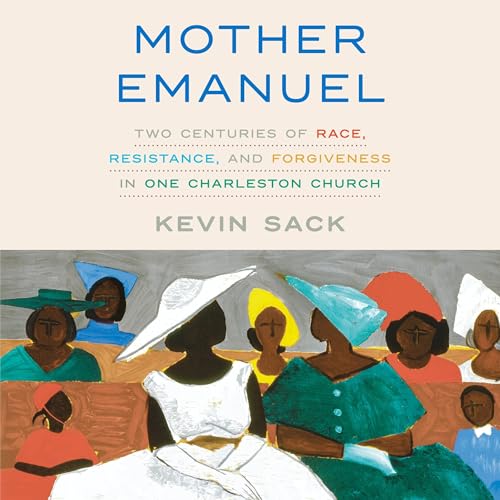
Mother Emanuel (Two Centuries of Race, Resistance, and Forgiveness in One Charleston Church)

AuthorKevin Sack

Narration by: William DeMeritt

Kevin Sack (Author, American journalist, senior reporter for The New York Times who shared a Pulitzer Prize for National Reporting in 2001.)

South Carolina is the underlying subject of Mother Emanuel. It focuses on a State that shows the very best and worst of what it can mean to be born in America. South Carolina is the home of Americans who fought on the side of the confederacy in the Civil War. The confederates of the south did not believe in human equality but in the superiority of the white race and the rightness of slavery.

Mother Emanuel is an African Methodist Episcopal Church located at 110 Calhoun Street in Charleston, South Carolina.

Mother Emanuel was built in 1891 and has capacity to seat 2,500 congregates. The church is considered a symbol of Black autonomy and resistance to some South Carolinians. On June 17, 2015, the senior pastor of the church and 8 African American parishioners were shot by a white 21-year-old American name Dylann Storm Roof. Roof, when he came to the church service, is invited into a Bible study group. He sits in the study group for nearly an hour before drawing a 45-caliber Glock handgun to murder 9 people, including the pastor of the church. The author and journalist Kevin Sack explains Dylann Roof was not a dumb white American but a person of above average intelligence who believed Black Americans were an imminent danger to white Americans’ way of life. Roof intended to motivate a Black American uprising that could be crushed by an American white majority.

Dylan Roof (At the time of his trial.)

A listener/reader is unlikely to believe Sack is writing this book to suggest all white Americans, let alone South Carolinians, are like Dylann Roof. Sack is not suggesting all humans have equal capabilities but that all people are influenced by the environment in which they live, their genetic inheritance, and their psychological development. What the author shows is that one’s intelligence can as easily lead to horrific acts of violence, dishonesty, theft, and social hate as belief in the truth of human equality.

Reverend Eric Manning navigated multiple difficulties when he became the pastor of the church after the massacre.

As a church, Mother Emanuel has existed for well over 100 years. It has had many pastors who are subject to the same strengths and weaknesses of all human beings. Sack infers some pastors in Mother Emanuel’s long life have been seduced by the money, power, and prestige of their office while preaching belief in God. Sack infers every human being, including pastors, can be led astray in life. A few, like Dylan Roof, become corrupted by life for reasons that are incomprehensible to one who believes in something greater than themselves, whether that something is the moral, communal, or cosmic reality of human life, or a fervent belief in God and redemption.

Dylan Roof’s verdict for execution is appealed to the U.S. Supreme Court but is rejected. He remains on federal death row.

Dylan Roof is not South Carolina, and neither are the preachers who believe in the divinity and eternity of God. All people of the world are subject to the sins of living life. Roof is shown by Sack to be an unremorseful murderer of human beings for little other reason than the color of their skin. A lesson of life that the murders explain is that forgiveness is not for the sake of Roof’s peace of mind but a mindful reconciliation for those who lost their loved ones.

As of the writing of this book, Dylan roof remains in prison, without personal remorse and a remaining verdict that warrants execution.
BOYS TO MEN

The most judgmental part of Szalay’s story is that a boy raised in wealth can be spoiled by drug addiction while a poor “go along to get along” boy may end up just as dissolute from sexual addiction.

Books of Interest
 Website: chetyarbrough.blog

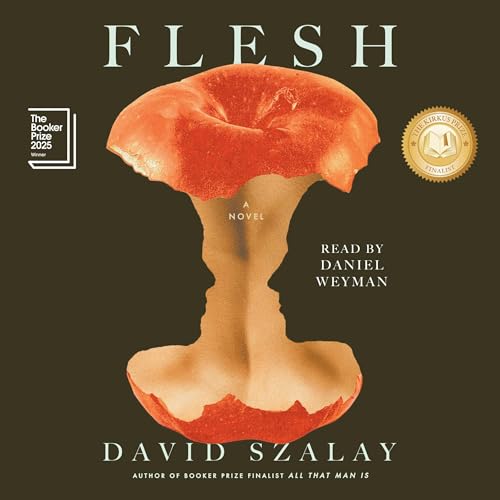
FLESH (A Novel)

AuthorDavid Szalay

Narration by: Daniel Weyman

David Szalay (Canadian Author, winner of the Booker Prize in 2025 for “Flesh”.)

Every child is raised in different circumstances. The variables are legion ranging from genetics to economic environment to parenting and the experiences of life. David Szalay tells of a young boy growing to manhood. Every male will have some experience that relates to his primary character’s life. That explains the popularity and literary acclaim that “Flesh” achieves.

Szalay captures different pathways for “every boy’s” journey through the physical and mental anxieties of life.

The specific circumstances of the life for boys (and undoubtedly girls) show how complicated growth to adulthood can become. The father of one boy is a very wealthy businessman who has married a woman many years younger than him. They have a son named Thomas who has been raised in wealth and privilege. The second boy is, István, a poor Hungarian who lives a “go along to get along” life. This poor Hungarian grows to be a handsome man who is attractive to women because of his life experience and attitude about life and relationships.

Effects of inherited wealth.

István and a wealthy husband meet as a result of an attack by street thugs who beat the wealthy husband and nearly kill him. István happens to be passing by when the thugs are scared away by his sudden appearance. István calls 911 or its equivalent to get an ambulance. The wealthy husband is taken to a hospital and is grateful to István which he feels has saved his life. He offers István a job in his security firm as a protector of wealthy clients. István shows himself to be a very competent bodyguard. The wealthy husband decides to have him become his personal family guard and driver.

The wealthy husband’s much younger wife falls in love with the bodyguard and they become lovers.

The wealthy husband dies, and István marries the wife of her former wealthy husband. The son of the wealthy husband is destined for college when István marries the deceased husband’s wife. This college bound son will inherit all of the family wealth when he reaches the age of 25 based on a Trust that allows his mother and her new husband to use the Trust to make investments for the future until the son reaches 25. István becomes a land investor and developer with the wealth of the trust.

Human differences.

The table is set for comparison of two sons who are different with one raised in great wealth and another in the lower middleclass. A crisis occurs when an 80-million-dollar investment by István is needed from the trust that requires disclosure to the son who is to inherit the trust. This son raises enough public objection to the investment that it is not made, and the investment deal falls apart. To this reviewer, the dynamics of the genetic influence of two boys from different economic classes is the most insightful value of the novel.

The influence of genetics, wealth, and poverty.

One can judge from the life of István what influence genetics, wealth, and poverty may have had on the life of a boy growing to become a man. The author seems to have an opinion about boys raised by a family of wealth versus those raised by a family with a “go along to get along” belief in life. At the books end, one wonders if being born in wealth is as likely to make an adult male better or worse. István seems sympathetically written into life by the author. He is true to his character throughout the story, but his sexual life is a mess. Though he appears to be a resourceful, hardworking, and decent human being, he is led through life by his libido.

The most judgmental part of Szalay’s story is that a boy raised in wealth can be spoiled by drug addiction while a poor “go along to get along” boy may end up just as dissolute from sexual addiction.

LIFE’S JOURNEY

Every human being grows to be who they are alone. Life is a solo journey, influenced by birth, living, and death.

Books of Interest
 Website: chetyarbrough.blog

Solo (When the heart gets lost, let the music find you.)

By: Kwame Alexander with Mary Rand Hess

Narrated By: Kwame Alexander

“Solo” demonstrates an added value to listening rather than just reading a novel. Kwame Alexander and Mary Rand Hess tell a story of the struggle for personal identity. This is a journey of a young man whose father is a famous musician. It offers some insight to what it is like to be a boy growing to be a man in a family of a successful professional musician.

Image result for addiction

The boy’s father is a recovering addict who has had success as a guitar playing singer.

His mother died when he was seven. As a young man of 21, he is surprised to find he is an adopted son. He chooses to find his birth mother who lives in Africa to better understand where he came from and why his birth mother gave him up. He is estranged from his family for various reasons ranging from his father’s addictive behavior to the failure of his parents to have told him of his adoption.

In the boy’s journey to a remote area of Africa, he meets various natives who live in the poverty of a small village.

The boy’s birth mother is away from her village to help natives of another village in the hill country of the area. The young man decides to wait for her in his mother’s home village. He meets a young African girl who speaks English and is helpful in explaining what life is like for her in the village. They become friends with a sense of something more in their future. The boy’s waiting is interrupted by his father’s arrival with a film crew to vivify the story of their familial relationship.

His father’s arrival disrupts the boy’s plan of waiting for his birth mother’s return. A decision is made for the entire group to journey to the village where his birth mother is working.

The journey takes several hours and exhausts his father as well as the rest of the Americans in the group. The boy’s birth mother recognizes her son as soon as he arrives. She is young. She gave birth to her son at age 15. The hardship of raising a child appears to have been too much for her at her young age.

His father’s interruption in the boy’s journey to find his birth mother leads to a reconciliation with his father and a better understanding of his journey to become a man.

Top 10 Reconciliation Quotes - BrainyQuote

Musical interludes in the story entertain the listener and offer some understanding of what it is like to be raised by a famous musician who loves his family but is handicapped by drug addiction.

On their return to the birth mother’s village, a refrigerator is delivered at the expense of the boy’s father. This is a great benefit to the village. The boy’s father becomes ill and dies.

Every human being grows to be who they are alone. Life is a solo journey, influenced by birth, living, and death.