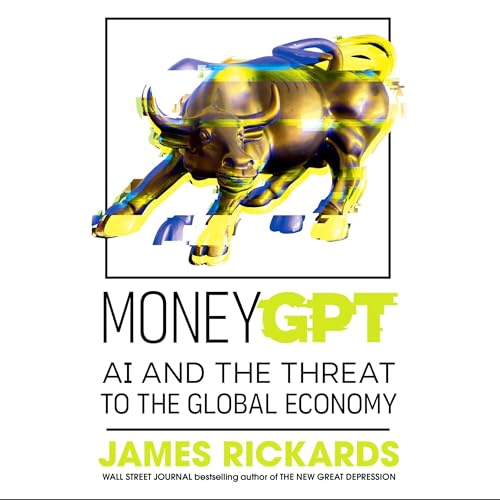
The essence of Rickard’s book is that the use of GPT is a threat to the financial world and to world peace. If the war on Iran continues, there is increased risk of wider conflict, further financial stress, reduced human judgement, and greater potential for world conflagration in a nuclear war.
Books of Interest Website: chetyarbrough.blog
MONEY GPT (AI and the Threat to the Global Economy)
Author: James Rickards
Narration by: James Rickards
James G. Rickards (Author, American lawyer, investment banker, media commentator.)
Though Mr. Rickards has something valuable to tell his audience, his writing leaves room for improvement. The initials “GPT” stand for “Generative Pre-trained Transformer”. They are an abbreviation for massive datasets gathered by artificial intelligence to aid one’s understanding of complex predictions about finance and military conflict based on collected language used to explain the world.
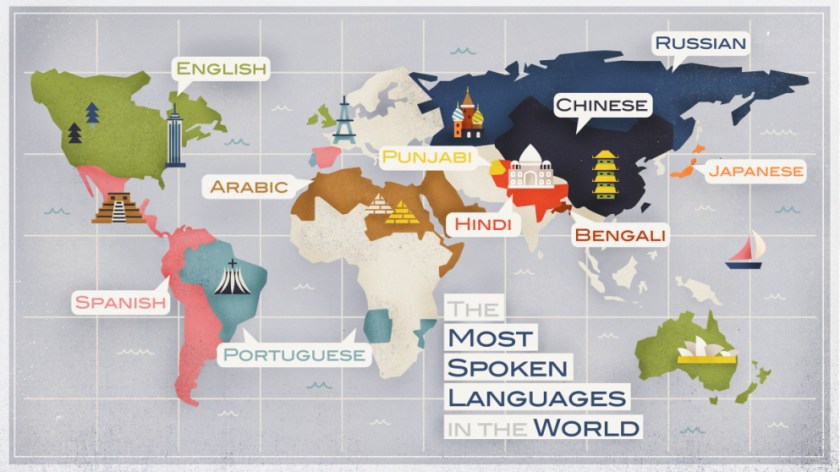
Languages of the world.
What Rickards intellectually recognizes is that collected language about the real world lacks human judgement which can accelerate human actions, weaponize misinformation, and increase conflict because AI lacks human reasoning. Without judgement, facts imparted by language collection may as quickly make wrong as right decisions. Optimum answers to complex problems require human judgement. Optimum answers may be aided by AI collated language, but human judgement is key to appropriate action. Rickards notes how stock market investors who rely on AI for decisions about what to do with their investments can as easily be misled when the market is in crisis because collected language is as likely to lead one further into crisis as toward a reasoned investment response.
Rickard explains a financial decision based on GPT carries the same threat in regard to war. One wonders whether President Trump’s escalation of the war on Iran is not based on GPT that compresses decisions and amplifies the volatility of America’s actions. Is the war escalating because of GPT and inadequate human judgement? America is faced with incomplete information on a purpose for bombing Iran and what goals are intended for ending the conflict. What GPT predicts is more U.S. strikes, further Iranian retaliation, and prolonged conflict that will continue to roil the economies and citizens of the world. Regional war, let alone a World War, is increasingly likely to cause a global shock to financial markets.
Uses of GTP aka GPT.
The essence of Rickard’s book is that the use of GPT is a threat to the financial world and to world peace. If the war on Iran continues, there is increased risk of wider conflict, further financial stress, reduced human judgement, and greater potential for world conflagration in a nuclear war.
Iran and the U.S. conflicts will likely become more strident and publicly revealed by news headlines than what Crist calls the “Twilight War”. The twilight war has become sunlit.
Books of Interest Website: chetyarbrough.blog
The Twilight War (The Secret History of America’s Thirty-Year Conflict with Iran)
Author: David Crist
Narration by: Peter Berkrot
David Crist (Author, Lieutenant Colonel in the U.S. Marine Corps Reserve.)
David Crist argues Iran and the U.S. have been in an undeclared war for decades that has been hidden and little understood by the American public. The CIA has been involved in a low-grade conflict with Iran since the late 1970s. Iran’s Quds combatants and proxies from other middle eastern countries have targeted U.S. interests in Lebanon, Iraq, and the Gulf for over 50 years. These conflicts have been cloaked by the use of allied militias and partners of both the United States and Iran. They have rarely been publicly acknowledged. One can reasonably argue today’s bombing of Iran by the United States is a public exposure of what has been happening covertly between Iran and America for many years. At the heart of the conflict is the importance of oil to the economies of the world.
President Trump impedes the influence of freedom in Europe by dismantling surveillance oversight, undermining the EU-U.S. relationship, mishandling America’s data privacy framework, and shutting down the GEC (Global Engagement Center) which is designed to counter foreign disinformation.
Crist alludes to U.S. intelligence actions that supported anti-regime factions that put Ayatollahs in charge of Iran in the 1979 revolution. Though they are characterized as small, fragmented, and ineffective, they represent America’s unsuccessful effort to weaken and/or depose Iran’s Ayatollah. America’s relationship with the Shah of Iran was an illusion in Crist’s opinion. Crist argues American overinvested in the Shah’s rule because of a false belief that Iran would be a shield against Soviet expansion. The perception of the Shah was that he could modernize and stabilize the region with weapons Iran purchased from America. American leaders fail to understand the Shah’s domestic weakness and the importance of Shite belief in the Islamic faith. The misreading of the Shah’s weakness and a widely held belief in Islamic faith led to the rise of Iran as a theocratic state.
Like the bombing of Dresden in WWII, today’s America is senselessly bombing Iran.
American leadership’s ignorance of Iran’s public discontent, the worsening illness of the Shah, and the Islamic belief of the Iranian people create what Crist describes as the “Twilight War”. Up until President Trump’s decision to bomb Iran, the U.S.-Iran relationship was in a gray zone, i.e. neither overtly hostile nor peaceful but a twilight between the dark and light of day. Crist infers the Shah is a bit player representing an ancient culture that no longer works for the Iranian people. The rise of Ayatollahs became Iran’s alternative to a government of a privileged few to what has become an economic crisis for the many. Accepting religious leadership disrupted the King’s royal leadership of Iran and diminished the wealth of most Iranian citizens.
Iranian and American conflicts will likely become more strident and publicly revealed by news headlines than what Crist calls the “Twilight War”. The twilight war has become sunlit.
Crist notes the underlying frustration America has in responding to terrorist’ attacks by agents of Iran or any hostile opponent of America. The terrorist’ bombing that killed 220 U.S. Marines, 21 American service members, and 58 French military personnel in 1983 is never directly responded to by an American military action. President Reagan and his staff could not agree on a military response. The difficulty of determining precisely who was responsible and what would be an equivalent response could not be agreed upon. That scruple seems erased by today’s American President.
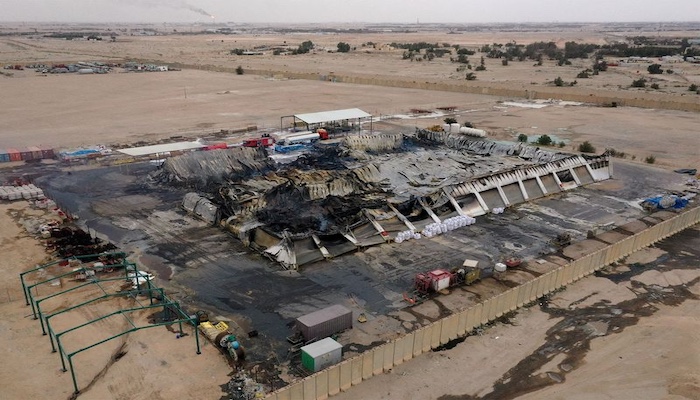
Water plant bombed by the U.S. called a desperate and inappropriate act by some who believe American bombing of Iran is a crime.
Because “The Twilight War” is written before Trump’s bombing, the author argues the hostility between Iran and American would continue to be managed by covert operations, proxy clashes, and secret negotiations that will never achieve a formal peace. Oddly, despite Trump’s actions in Iran, it seems Crist’s opinion will continue to be America’s modus vivendi, with a difference. Iran and the U.S. conflicts will likely become more strident and publicly revealed by news headlines than what Crist calls the “Twilight War”. The twilight war has become sunlit.
The split among the Iranian people about domestic life and religion is only magnified by America’s failure to understand Iranian culture. Bombing will not resolve social differences in Iran.
Books of Interest Website: chetyarbrough.blog
King of Kings (The Iranian Revolution: A Story of Hubris, Delusion and Catastrophic Miscalculation)
Author: Scott Anderson
Narration by: Malcolm Hillgartner & 1 more
Scott Anderson is a novelist and veteran war correspondent. His previous novels include Moonlight Hotel and The Man Who Tried to Save the World.
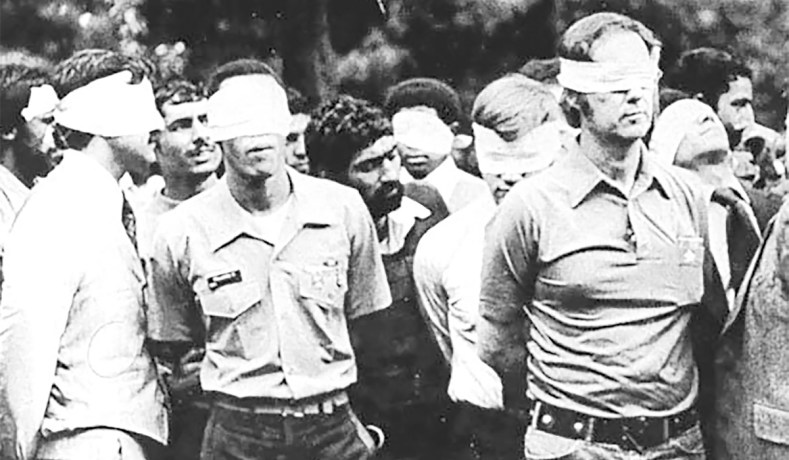
The antipathy America has about the Ayatollah’s takeover of Iran is exemplified by the young followers of his rule who chose, on their own, to attack the American embassy in Iran and take representatives of the United States as political hostages. Initially, the Ayatollah rejected the hostage taking but began to see its potential for dealing with the American government.
On November 4, 1979, 66 Americans were seized, 13 were released early, 1 was released later. That left 52 Americans that were held for 444 days. None were killed but were physically and psychologically abused during their captivity in Iran.
Anderson tells the story of Marine Corps Colonel Charles “Chuck” Scott’s as the most openly defiant, confrontational, and unbowed of the American hostages. His lifetime of military service gave him the strength to show no weakness and to refuse the students hypocritical abuse of their power over him. He became a respected and undoubtedly feared captive of the students. Scott was a symbol of calm for the hostages, some of which were overwhelmed by their imprisonment.
Colonel “Chuck” Scott–died at age 90 in 2023.
Anderson characterizes the hostage crisis as America’s misperception of the religious-populist character of Iran which seems as true today as when the Shah of Iran was deposed. President Trump’s decision to bomb Iran is a clear example of America’s continuing misperception of the complexity of Iranian society.
The split among the Iranian people about domestic life and religion is only magnified by America’s failure to understand Iranian culture.
Bombing will not resolve social differences in Iran. Like Colonel Scott’s reaction to being imprisoned by Iran, America must be steadfast in its resistance to Iran’s religious zealotry and deal with whatever actions taken by Iran that directly harm American interests. The killing of innocent Iranians is no answer to a government that cannot resolve conflicts in their own society.
One’s heart goes out to the citizens of Iran and wonders what hope there is for their future. Iran seems trapped between rock and a hard place, a choice between the bombs of war and religious fundamentalism.
Books of Interest Website: chetyarbrough.blog
King of Kings (The Iranian Revolution: A Story of Hubris, Delusion and Catastrophic Miscalculation)
Author: Scott Anderson
Narration by: Malcolm Hillgartner & 1 more
Scott Anderson is a novelist and veteran war correspondent. His previous novels include Moonlight Hotel and The Man Who Tried to Save the World.
“King of Kings” is an informative historical account of the collapse of Iran as a former monarchy and current theocracy. The hubris of the King and the Ayatollahs have no one to blame but themselves for their government’s failure. What Anderson shows is that what royal and theological leaders have in common. Both neglect the wellbeing of the Iranian people. The King squandered the wealth created by the oil industry to buy a false sense of security. The “King of Kings” made excessive investments in weapons and a spy service called SVAK rather than invest in Iran’s economy for the betterment of its citizens. The King’s SVAK turned into MOIS in the Ayatollah’ regimes. Neither regime invested in the people’s welfare. Both secret services were designed to spy on Iran’s citizens and reinforce the delusion of serving the people when in fact they were designed to preserve their governments’ power and control.
Iran’s leadership as a monarchy and theocracy have failed its people.
Anderson shows the “King of Kings” initially improves the general welfare of Iran’s citizens but because of inept leadership and the privileges of power, the Shah failed the Iranian people. The Shah’s incompetence as a manager of Iran’s great oil wealth is a wasted opportunity that could have provided a better life for its citizens. Rather than encouraging economic growth, the Shah chose to invest in weaponry and other countries products to sustain Iran’s economy.
The Iranian people were not farming or creating their own industries to sustain and grow their economy.
The King’s failure to invest oil revenues in the economy and Ayatollahs who cared little about economic investment, impoverished the Iranian people. When other countries like Saudi Arabia flooded the market with oil, the economy of Iran collapsed. That loss of oil income impoverished the people of Iran. Iran had become dependent on other countries produce rather than the work of their own farmers and industrialists to support their lives and families. That impoverishment drove many back to the ideal of a Muslim religion that believes hardships of life are only preparation for heaven.
The rule of the Ayatollahs seems as incompetent as the Shah’s.
The Ayatollahs fail to improve the economy and rely on a secret service that victimizes all who criticize their rule. It seems they believe the hardship of life is no concern because heaven awaits all those who believe in the Ayatollah’s governance. Anyone who fails to support the Shia Muslim autocracy is murdered or imprisoned based on the Ayatollahs’ belief in the hereafter. Iranians may believe in the Ayatollahs’ teaching and are willing to support their government, but a substantial portion of the Iranian people are discontented with their poverty and hunger.
Iranian oil fields supported the wealth of Iran before Saudi Arabia’s entry into the market.
Anderson explains how Iran became a troubled country. Neither rule as a monarchy or theocracy offered a solution to poverty and hunger. The answer may not be capitalism or democracy, but the present and past Iranian governments have not served the needs of its people. One’s heart goes out to the citizens of Iran and wonders what hope there is for their future. Iran seems trapped between rock and a hard place, a choice between the bombs of war and religious fundamentalism.
America’s self-interest is to see Iran as an independent State that does not murder Americans. Regime change may be a small step toward that goal or a step into quicksand that will only swallow more American lives.
Books of Interest Website: chetyarbrough.blog
King of Kings (The Iranian Revolution: A Story of Hubris, Delusion and Catastrophic Miscalculation)
Author: Scott Anderson
Narration by: Malcolm Hillgartner & 1 more
Scott Anderson (Author, novelist, non-fiction writer, war correspondent who has written for the New York Times Magazine, GQ, Esquire, and Vanity Fair. Was raised in Taiwan and Korea, received an M.F.A. in creative writing from University of Iowa Writer’s Workshop.)
This review is only a glimpse of Anderson’s book, but the bombing of Iran gives this reviewer a sense of urgency about President Trump’s decision to bomb and kill the current leader of Iran.
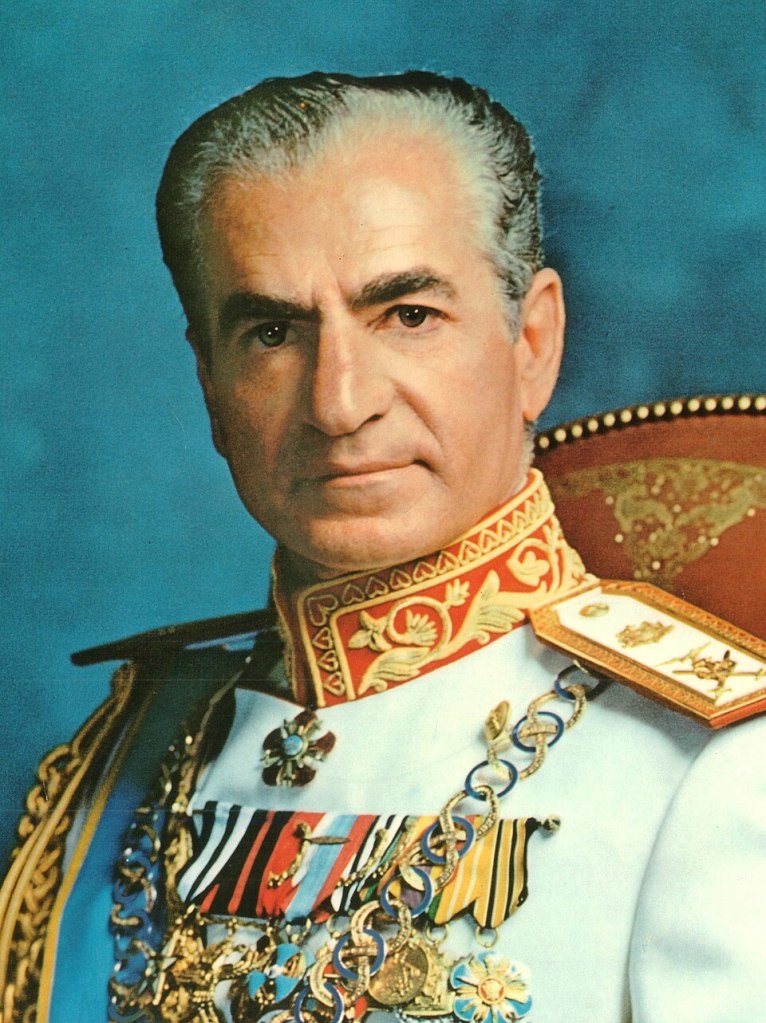
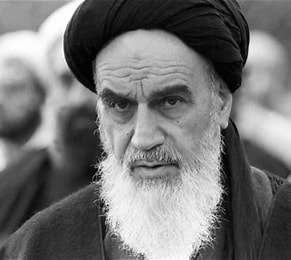
Anderson, having been raised in a non-American culture, has written an interesting history of Iran that offers some perspective on Iran’s Persian culture and its tumultuous transition from royal leadership to an Islamic Republic. Iran’s monarchy had survived for 2500 years. Ayatollah Ruhollah Khomeini deposed the “King of Kings”, Mohammad Reza Shah Pahlavi, in 1979.
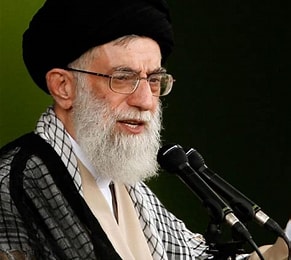
In 2024, President Trump directed America’s bombing of Iran that killed Iran’s second leader, Ayatollah Ali Khamenei. The purported reason for the bombing is to save the Iranian people from the tyranny of its current leader, Ayatollah Ali Khamenei. Khamenei had become Iran’s leader after the death of Ayatollah Ruhollah Khomeini.
Mohammad Reza Shah PahlaviAyatollah Ruhollah KhomeiniAyatollah Ali Khamenei
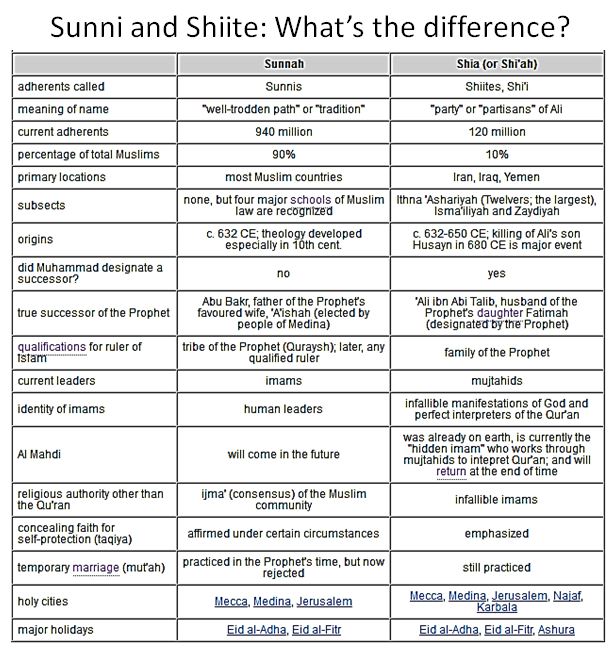
Anderson infers Mohammad Reza Shah Pahlavi, though a Shia Muslim himself, was too detached from the Muslim religion practiced by a majority of Iranian society. The Shah pursued modernization without bringing Iran’s Shia Muslim believers into the “Sturm and Drang” of modernity. Despite improving the economic condition of Iran’s citizens, the Shah ignored the importance of a religion that reaches back to 651 CE with the Arab Muslim conquest of Persia. Even though the economic benefit of modernization is documentable, the gap between rich and poor, along with belief in a religion that emphasizes an afterlife, made too many citizens of Iran unhappy with the Shah.
Muslimism began in the early 7th century and spread across the Arabian Peninsula. An estimated 68 million Iranians, approximately 89% of the country, are Shia Muslim believers. Anderson believes the Shah’s failure to understand the importance of his own religion led to the 1979 revolution that toppled the “King of Kings”. Anderson suggests too little effort was made to bring religion into the Shah’s management of the Iranian people. Putting aside that failure, one wonders could any leader bring his people to believe in life today when their religion emphasizes an afterlife is the only goal of existence. Whether any leader of Iran could have ameliorated citizen discontent in Iran is hard to argue. Because of America’s decision to kill Iran’s leader, that speculation is moot.
It is not a matter of being or not being Religious but a matter of having a pragmatic and compassionate understanding of humanity.
Now, America is faced with the Shah of Iran’s dilemma of bringing religion into the administration of Iran’s government. Americans have solved that problem with the separation of church and state. Is that possible in Iran? That separation is something Anderson suggests is the mistake made by the Shah. Is America more or less likely to solve that problem than an Iranian? President Trump believes he should have the power to approve the next leader of Iran. Problem solved???????
America’s self-interest is to see Iran as an independent State that does not murder Americans. Regime change may be a small step toward that goal or a step into quicksand that will only swallow more American lives. Just doing something is not an answer to the complications of international relations.
Like in Solomon’s parable, the baby must be saved. That is the mind-set required for a negotiated peace between Israelites and Palestinians in Agha’s and Malley’s “Tomorrow is Yesterday”.
Books of Interest Website: chetyarbrough.blog
Tomorrow is Yesterday (Life, Death, and the Pursuit of Peace in Israel/Palestine)
Author: Hussein Agha, Robert Malley
Narration by: Imani Jade Powers
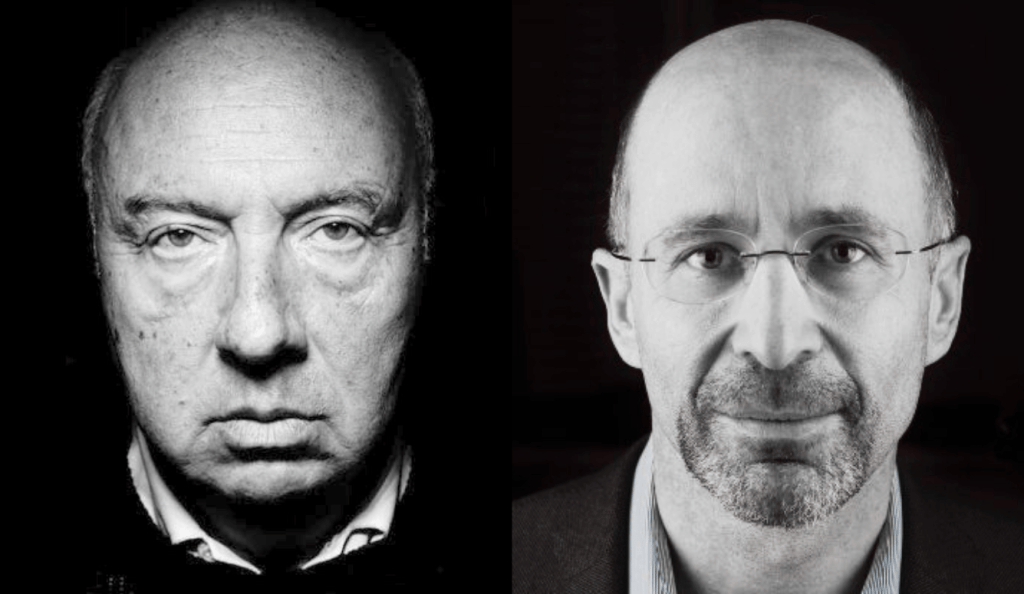
Hussein Agha (on the left) is a senior associate of Oxford University and was part of the Palestinian team that negotiated the Oslo II agreement in 1994-95. Robert Malley (on the right) is an American lawyer, political scientist and specialist in conflict resolution.
Imani Jade Powers (Actor, writer, and singer based in New York City and London.)
It is interesting that a female actor is asked to narrate “Tomorrow is Yesterday”. There is a harshness in Agha’s and Malley’s assessment of negotiations for peace between Jews and Palestinians in what seems an unresolvable conflict. It is the conflict between two peoples’ desire to live in a land that has historically been occupied by two different ethnicities. Presumably, a female narrator takes some (but not much) of the edge off the strong opinions expressed by the authors about the intransigence of Israeli/Palestinian leaders in coming to an agreement on their territorial rights in the Middle east. There is an irony in the choice of a woman narrator for the two men who wrote the book. One might presume a woman is chosen because of a woman’s longer association with nurturing rather than roiling humanity.
King Solomon ruled for 40 years in the Kingdom of Israel and built the First Temple in Jerusalem.
One may ask themselves of these two men’s history of the Israeli/Palestinian conflict–where is the wisdom of Solomon that challenged two women who claimed the same baby? Solomon orders the baby be cut in half, giving each woman one half. One woman agrees and the other begs the king to spare the child and give him to her rival. This seems the essence of the conflict between the State of Israel and the stateless Palestinians. What Agha and Malley imply is the leadership of the Israelites and Palestinians refuse to agree on sharing their land and choose to kill each other instead. There are no leaders that seem to have the compassion to save their progeny by either sharing or dividing the disputed territory upon which they live.
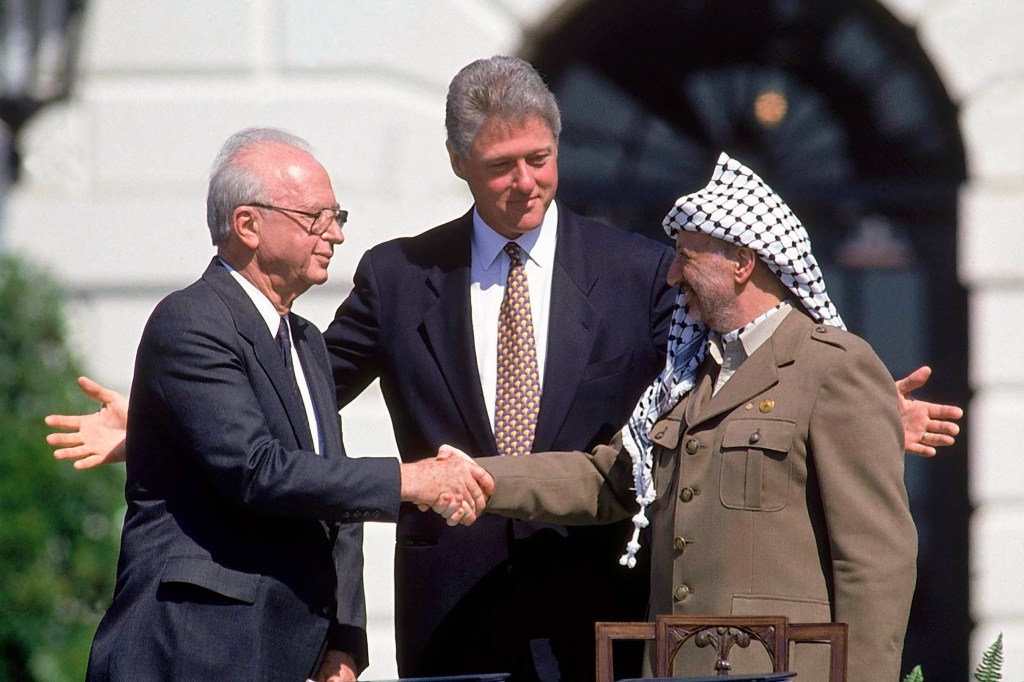
The Oslo Accord with Clinton, Rabin and Arafat in its first iteration.
The authors suggest the only negotiation that had any success was in the Oslo accords in which one of the negotiators is Hussein Agha (the co-author of this book). His experience with both sides of the negotiation offers some surprising and interesting profiles of the participants. Yasser Arafat is the symbolic father of the Palestinians, but he is shown as an ambiguous negotiator who is charismatic but contradictory which makes him both indispensable and obstructive. It is his identity as a leader of the Palestinians, rather than any negotiating skill, that makes him a player in the negotiations. In the second iteration of the Oslo Accords, the pragmatic Palestinian is Mahmoud Abbas (Abu Mazen) but he did not have the legitimacy of Arafat in the authors’ opinions. On the Israeli side there is Barak, Olmert, and Netanyahu. The first two seem to be rationalist pragmatists but Netanyahu, not surprisingly, is characterized as a skeptic who believed the Oslo Accords were a threat to Israel. On the American side is Clinton who focused on closing a deal which fails to confront the historical and emotional roots of the conflict.
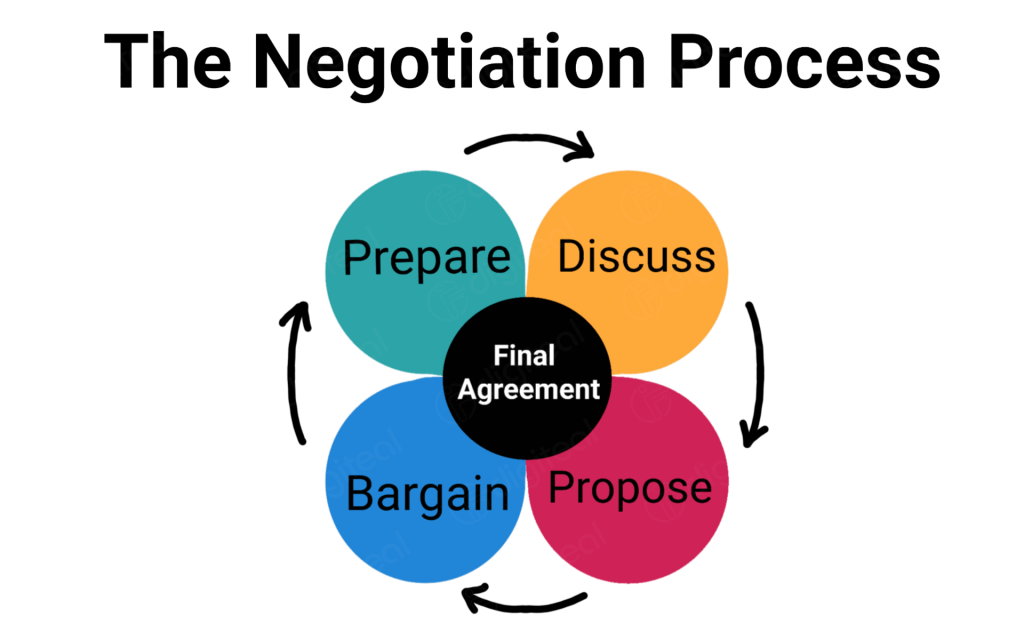
In the end, at best, the authors argue Oslo creates a process for negotiating but not peace.
The process allows both sides to avoid confronting the deeper issues of their conflict. The Oslo Accords gave the illusion of progress without any real movement on either side. October 7th is clear evidence of the truth of that observation.
World superpowers of the future.
None of the world’s most powerful leaders, including America, China, Russia, the UK, Germany, South Korea, France, Japan, Saudi Arabia, or Israel show the wisdom of a Soloman. All the leaders on both sides of the negotiation appear to have their heads in the sand with agendas that fail to understand or address the fundamental concerns of the opposing sides. The results have been to allow events to unfold where Israeli’ and Palestinian’ families are torn apart, kidnapped, imprisoned, raped or murdered.
“Tomorrow is Yesterday” is a painful recitation of the failure of the world to understand and resolve the conflict between the Israelites and the Palestinian people. These two authors have an opinion about how “Tomorrow…” can be different than “…Yesterday”. They argue steps toward peace can only occur with a better understanding of what drives their conflict. The writers note there needs to be a mutual understanding of the trauma and injustice of their conflicts. Their respective suffering, and a sense of injustice needs to be accountably recognized by both Israeli and Palestinian leaders for a chance of a negotiated peace.
The authors do not show a plan, roadmap, or political structure that will settle disagreement between Israelis and Palestinians.
What they explain is why previous plans have failed. They diagnose the disease which is revealed in the history of failed plans for reconciliation. There seem to be only two options. One is a two-state solution, and the other is one state with equal representation, along the lines of the relative peace between Irish Catholics and Protestants in Ireland. Like in Solomon’s parable, the baby must be saved. That is the mind-set required for a negotiated peace between Israelites and Palestinians in Agha’s and Malley’s “Tomorrow is Yesterday”.
The boon and bane of a brilliant mind is that it can correlate facts with causes to reveal the mysteries of the universe but also the demons of false correlation and belief.
Books of Interest Website: chetyarbrough.blog
The Best Minds (A Story of Friendship, Madness, and the Tragedy of Good Intentions)
Author: Jonathan Rosen
Narration by: Jonathan Rosen
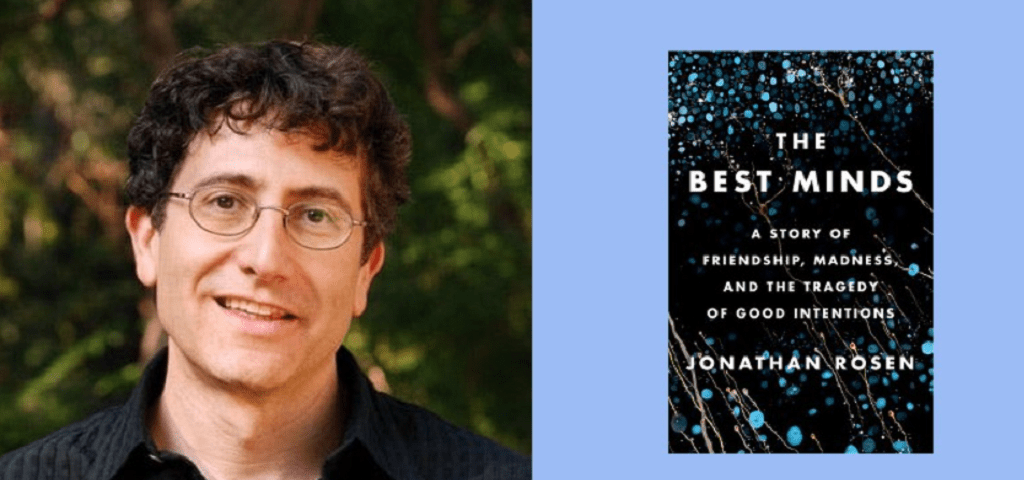
Jonathan Rosen (Author, Yale graduate, writes for The Jewish Daily Forward, and the Free Press.)
As a person who has lived through the same generation as Jonathan Rosen, his story is interesting partly because it tells what it is like to be born a Jew in America. In many ways, one finds life as a Jew is no different than it is for any American. Most Americans are born into a family that cares for them and influences who they become as adults. Children are born with innate abilities that are either cultivated or ignored by their parents. Some parents are too busy with their own lives to offer care a child may benefit from with more attention. It appears Jonathan Rosen is born into a family that cultivates his abilities despite their busy lives. One wonders if that is a matter of ethnic tradition or inherent nature. One suspects it is a little of both.
In “The Best Minds”, an important part of being raised a Jew is education that encourages and reinforces Jewish identity through rituals like the bar mitzva.
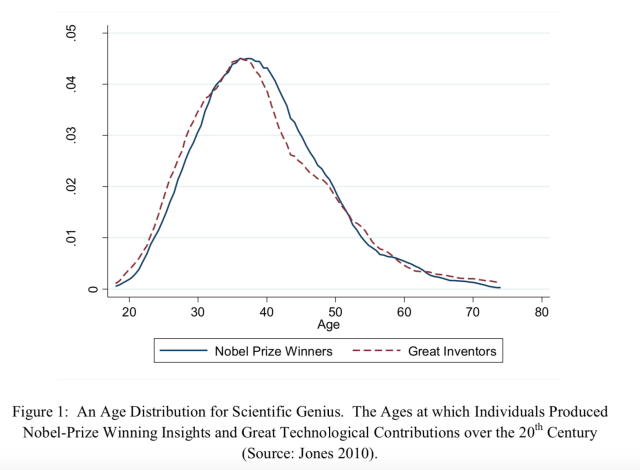
The bar mitzva and bat mitzva (for girls) is a coming-of-age ceremony at age 13 (sometimes 12 for girls) where a Jewish child memorizes and recites passages from the Torah. On the one hand it reinforces one’s identity with a particular ethnicity. On the other, it is one of many exercises of memory that reinforces one’s ability to succeed academically. Much of one’s success as an accomplished adult is recall of information whether a doctor, lawyer, or merchant chief. From a young age, memorization is an important skill for Jewish children. One wonders how much tradition has to do with the brilliance of Einstein, Oppenheimer, Salk and so many other Jews of the world. This is not to suggest being raised in a Jewish family is not as traumatic and unpredictable as any child born but to recognize ethnic customs make a difference in children’s lives. The great contributions to science and art by Jews makes one wish they might live life over again with more positively ritualized cultivation.
Michael Laudor (Yale graduate, subject of “The Best Minds)
However, there is much more to Rosen’s story. His life is intertwined with the life of Michael Laudor, a close childhood friend who is raised in a similar environment and recognized as a prodigy. However, Lauder succumbs to schizophrenia. This is not to suggest Jews or any ethnicity is prone to psychological imbalance. Psychiatric imbalance is not defined by ethnicity but exists as a potential for every human being. One doubts there is any defense against psychological abnormality whether Jew, gentile, or other.
Laudor and Rosen as childhood friends.
Laudor and Rosen were close friends. Rosen recognizes his friend has a superior mind, i.e., one of “The Best Minds” of Rosen’s high school’ years. Rosen struggles to understand what happened to his childhood friend. Both Rosen and Laudor are accepted at Yale. Laudor chooses law as his course of study. Rosen goes on to California to get a PhD in literature. Their dual biographies make Rosen’s story impactful. Rosen explains how intelligence, ambition, and success can be destroyed by mental illness.
Yale University in New Haven, Connecticut.
Laudor is a wunderkind who performs at a level far beyond his age group. He graduates from Yale and decides wealth is a goal to be achieved. He is hired by an investment consulting firm which offers him an opportunity to become super-rich. Rosen infers Laudor succeeds. From the outside, Laudor appears to be highly successful, but he becomes dissatisfied with his life and quits the firm that hired him. Rosen stays in touch with Laudor and writes “The Best Minds” to reveal what he thinks he knows about what happened to his childhood friend. The beginning of Laudor’s imbalance appears to Rosen when Laudor explains he is being followed, monitored and targeted by unknown malefactors. Before that conversation, the erratic behavior of Rosen’s friend seemed like a matter of burnout from his high-flying experience as an investment consultant. The intensity of Laudor’s paranoia makes Rosen believe something more serious is at the root of his friend’s behavior.
Rosen stays in touch with Laudor–talking to him about what is going on in his life. He tries to get Laudor to see the falseness of his delusions without triggering defensiveness. Rosen avoids contradicting Laudor by trying to be supportive and encouraging him to seek help. On the one hand one wonders what more could Rosen do. How else could he intervene in Laudor’s spiral into what is later diagnosed as schizophrenia? A reader/listener wonders what they would or could have done.
Michael Laudor murders his fiancée, Carrie Costello, in 1998. She is pregnant at the time of her death.
Laudor had grown to believe his girlfriend had become a part of a conspiracy to harm him and that he needed to defend himself despite her trying to care for him. His brilliant mind manufactured a false reality. His delusion leads to the fatal stabbing of Ms. Costello. After the homicide, Laudor calls 911. He is arrested and transferred to a psychiatric facility and later found guilty by reason of insanity. He died in 2022 at the age of 56 in a New York State psychiatric hospital, never recovering from severe schizophrenia.
“The Best Minds” is Rosen’s effort to understand how genius and madness can be intertwined. The boon and bane of a brilliant mind is that it can correlate facts with causes to reveal the mysteries of the universe but also the demons of false correlation and belief. Correlation is not causation without objective and repeatable experimental proof.
The question one asks oneself after finishing Rosen’s book is what one can do differently to keep someone from losing their way in life whether he/she is a genius or not?
Like America’s Civil War and the issues of slavery and independence, peace will only come to Israel with a political and territorial agreement based on human equality.
Books of Interest Website: chetyarbrough.blog
BEING JEWISH AFTER THE DESTRUCTION OF GAZA (A Reckoning)
Author: Peter Beinart
Narration by: Malcolm Gladwell
Peter Beinart (Author, journalist, political commentator, professor, former editor of the New Republic, born in Cambridge, Mass. to Jewish immigrants from S. Africa.)
This is a surprising Jewish author’s analysis of Israel’s response to the horror of Hamas’ murders/rapes of 1200 people and the taking of 251 Jewish hostages on October 7, 2023. Peter Beinart appears to be a devout Jew and journalist who criticizes Israel’s response to Hamas’s brutal attack and hostage taking. He believes, as current news reports confirm, Hamas will return to control and influence Gaza and West Bank Palestinians after Israel’s brutal response to the Hamas’ atrocity.
NYT’s Picture of Grief over the Hamas attack on October 7th, 2023.
Without reservation, Beinart condemns Hamas for their war crime on October 7th. However, his book equally condemns Netanyahu’s response. Beinart points to the Israeli government’s destruction, murder, and starvation of thousands of Palestinian men, women, and children who had nothing to do with the planning or execution of the Hamas horror of October 7th. The author argues Israel must focus on a political, non-military solution to Palestinian human rights. He believes Netanyahu’s actions only perpetuate a cycle of violence in Israel which will not achieve security for either the Israeli or Palestinian people.
One wonders how unpopular Beinart’s opinion may be among Israel’s Jewish population. As a blogger who received written comments from a devout Jewish person who supports Trump and Netanyahu’s actions in Israel, it is surprising to hear Beinart’s analysis of the Gaza war and his criticism of Israel’s actions. As the reviewer of this book who admittedly has little respect for religion and its history of atrocities, it is encouraging to hear from one who believes in their religion and condemns those who have no empathy for other religions. God is a universal concept with religions that worship His existence in different ways. Beinart makes one wonder why there is so little room for a “let it be” attitude toward different religious beliefs.
Empathy.
Beinart argues for Jewish empathy toward Palestinians while condemning Hamas’ actions in Israel. He believes long-term peace requires political compromise and a recognition of Palestinian rights. Military actions only guarantee rather than deter future violence and injustice. Beinart’s plan is to end Israeli’ occupation of Gaza and expand the rights of Palestinians to control Gaza and the West Bank. He argues it can be either a one-state or two-state solution. Beinart argues ground invasion by Israel in Gaza must stop. He recommends forthrightly engaging the humanitarian crises in Gaza by providing aid and rebuilding what has been destroyed.
Pursuit of peace is not easy.
None of this is easy because of the enmity that remains. The complications of political opposition, and security are ongoing concerns for Israelites and Palestinians, but Beinart believes the risks of a negotiated political, religious, and territorial settlement is worth it. Human equality is a work in progress for all nations in the world. Beinart persuasively argues a political and territorial agreement between Palestinians and Israelites is the only possible path to peace. Like America’s Civil War and the issues of slavery and independence, peace will only come to Israel with a political and territorial agreement based on human equality. Of course, the drive for equality remains a work in progress for America. That will be true in Israel for generations to come, but peace can be restored with pursuit of equality for Palestinians and Jews.
One asks oneself, what leaders in the world today have remorse for the incarcerations, torture, and killings for which they are responsible? What remorse is there in Putin’s, Ayatollah Ali Khamenei’s, Prime Minister Netanyahu’s, and even our American President’s thoughts?
Books of Interest Website: chetyarbrough.blog
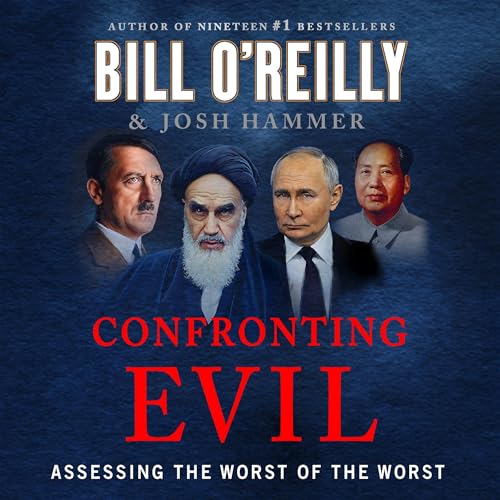
CONFRONTING EVIL (Assessing the Worst of the Worst)
Author: Bill O’Reilly, Josh Hammer
NarratedBy: Robert Petkoff
Bill O’Reilly, American conservative commentator, journalist, author, and television host. Josh Hammer, American conservative commentator, attorney, co-author, and columnist.
History taken out of the context of its time often distorts the reality of the past.
“Confronting Evil” is an interesting if not nuanced history of the most notorious leaders in the world. They were responsible for the torture, incarceration, and death of millions. As is true of most if not all histories of famous and infamous leaders, historians and pundits choose facts that reinforce their view of world’ history. Even the best historian is influenced by the time in which they write and their choice of facts.
Nathan Bedford Forest (1821-1877, General in the Confederate States of America during the Civil War.)
One is appalled by the truth of Nathan Bedford Forest’s view of slavery during America’s Civil War. Forest directed the slaughter of people based on the color of their skin. Forest condoned the murder of all who believed in equality of human beings. Forest is considered a hero to some but with the passage of time and a growing belief in human equality, Forest is recognized as a despicable human being by those who know the history of his life and profession. The evidence of science and human accomplishment show that the color of one’s skin is no measure of intelligence or capability. Forest’s mistreatment of slaves and the wealth he created from trading in slaves is reported in this history. By many measures, Forest is shown as an evil person by O’Reilly and Hammer.
The rule of Genghis Kahn is said to have caused the death of 40 million people, an estimated 11% of the global population at his time in history.
Presumed image of Genghis Kahn (1162-1227, Founder and first Khan of the Mongol Empire.)
By some measures, Mao doubled that 40 million number with his “Great Leap Forward”, the “Cultural Revolution”, his labor camp creations, and political purges. Hitler is estimated to have caused the death of 17 million with his genocidal policies while casualties from WWII are estimated at 85 million. Hitler’s antisemitism is born of the same stupidity exhibited by Nathan Bedford Forest in America’s Civil War. The contribution of Jewish society to the world is incalculable.
Mao Zedong (1893-1976) Father of the Peoples Republic of China)
There are many other evil characters in “Confronting Evil”. In the mind of westerners, the current leaders of Iran and Russia are evil. The leader of Iran, Ruhollah Khomeini is estimated to have ordered deaths of Iranians that exceed 250,000 since his takeover in 1979. Though he has passed, the succession of Ayatollah Ali Khamenei has carried on with tens of thousands who have died in Iran’s involvement with Hamas in Palestine, Syria, Iraq, Yemen, and Lebanon. The predecessor of the religious leaders of Iran was Mohammad Reza Shah Pahlavi who reigned from 1941-1970. Pahlavi is estimated to have murdered 3,000 to 20,000 during his reign. These leaders ruled over an impoverished state but incomes per capita fell from $34,660 during the Shah’s reign to $3,150 under Khomeini’s rule. An irony is that income inequality hugely increased in Iran during Khomeini’s rule. Nuanced reality is that poverty and victimization of Iranians is more widely spread under Khomeini than under the former Shah. On an economic scale it appears Khomeini’s evil as a leader exceeds the Shah’s rule. Added to the economic difference is the religious zealotry of Khomeini which widened the gap of sexual inequality in Iran.
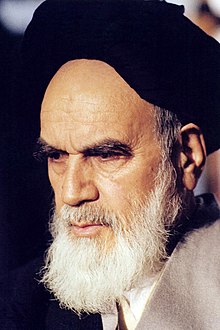
Ruhollah Khomeini (1st Supreme Leader of Iran, 1979-1989)
Ayatollah Ali Khamenei (Current leader of Iran.)
The authors address the illicit drug industry and the evil of Pablo Escobar in Columbia and “El Chapo” Guzmán in Mexico. Escobar was killed in 1993 when pursued by drug enforcement officers while Guzmán is serving a life sentence in the U.S. The drug industry continues to thrive despite the harm it is doing to America and the world. The leaders of the criminal drug industry care nothing for the consequence of their actions because of the wealth and power the illicit trade offers.
Pablo Escobar (now deceased) noted on the left with “El Chapo”(arrested and imprisoned in America) on the right.
The last two chapters of “Confronting Evil” offer a pithy definition of evil. Evil is defined as doing harm without remorse. One doubts any of the leaders noted by the authors have or had any remorse for the atrocities they have committed. Whether they rationalize their behavior for the good of their people, their religion, or their country—they are evil by O’Reilly and Hammer’s definition. One doubts any of the leaders noted in “Confronting Evil” are remorseful.
One asks oneself, what leaders in the world today have remorse for the incarcerations, torture, and killings for which they are responsible? What remorse is there in Putin’s, Ayatollah Ali Khamenei’s, Prime Minister Netanyahu’s, and even our American President’s thoughts?
Unless or until our prejudices are eradicated, man’s inhumanity to man will continue. The truth is that “The World After Gaza” will be the same as “the world before Gaza” but with a different order of prejudice.
Books of Interest Website: chetyarbrough.blog
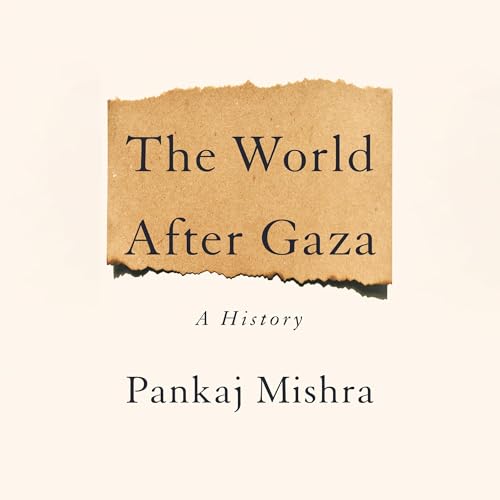
The World After Gaza (A History)
Author: Pakaj Mishra
NarratedBy: Mikhail Sen
Pakaj Mishra (Author, Indian essayist. He wrote “Age of Anger” reviewed in this blog.)
As pointed out in a previous review of Mishra’s book “Age of Anger”, “…unless or until human beings see themselves as part of the same society, the world will end in the Armageddon of biblical imagination.”
Leadership prejudice.
Mishra is born in a prosperous Brahmin family that becomes poor after India’s land distribution in 1947 which was meant to reform feudal landholding practices in India. Undoubtedly, the harshness of that reform has some influence on Mishra’s expressed views in “The World After Gaza”. Mishra’s father has a Brahmin Hindu background which suggests his son is raised in an upper caste in Hindu society that falls into hard times.
“The World After Gaza” is categorized by Mishra as a history.
Mishra recalls the horrendous past of Germany’s holocaust where 6,000,000 Jews were murdered by Hitler’s followers. He infers that horrendous event is reminiscent of what Israel is doing to Palestinians in Gaza. His point is not to vilify Israel but to suggest societies are inherently prejudiced and inclined to discriminate against those who are not a part of their belief system. In essence, Mishra offers a view of history that corroborates Mark Twain’s belief that “History never repeats itself, but it does rhyme”.
Whether one agrees with Mishra’s view of Israel’s actions in Gaza or not, prejudice is an undeniable truth of human societies.
There are many Jews who are undoubtedly appalled by what is happening in Gaza but there are Israeli’ leaders who believe what they are doing is in the best interest of their country. One may associate Israel’s, America’s, or any country’s leadership as either right or wrong from a personal perspective, but the nature of humanity is what it is. Prejudice is an equal opportunity exploiter of human’ equality. Unless or until our prejudices are eradicated, man’s inhumanity to man will continue. The truth is that “The World After Gaza” will be the same as “the world before Gaza” but with a different order of prejudice.









































 REVIEWS AND VIEWS OF LIFE