

Books of Interest
Website: chetyarbrough.blog
Admiring Silence
By: Abdulerazak Gurnah
Narrated By: Unnamed person from Zanzibar

Abdulerazak Gurnah (Author, Tanzanian-born British novelist and academic, moved to the UK in 1960.)
A little context for “Admiring Silence” will help understand Abdulerazak Gurnah’s interesting and troubling story. Gurnah received the Nobel Prize in Literature in 2021. “Admiring Silence” is the latest book published by Gurnah in 2020. He had written four earlier books: Memory of Departure (1987), Paradise (1994), By the Sea (2001), and Desertion (2005).
“Admiring Silence” is not a biography but an interesting story about a long-term relationship of a Black emigrant and a white woman who meet in Zanzibar (an island archipelago off the coast of Tanzania) and move to London. The two had met in a Zanzibar’ restaurant where they both worked. The Black emigrant leaves his native country with his restaurant mate.

Gurnah describes the two as lovers who are struggling restaurant workers who wish to improve their lives through higher education. An opportunity to attend a university leads the two to decide to emigrate to London because of their similar academic ambition. The two are enrolled at a university and both become teachers in England. Gurnah sets a table for understanding what life is like for an unwed mixed-race couple in mid-twentieth century England.

Their life together is complicated by the birth of a daughter and the father’s decision to visit his homeland when he is in his forties.
No one in Zanzibar knows he has a teenage daughter with an unmarried white woman he lives with in England. His mother wishes to fix him up with a future Black Muslim wife. The interest one has grows with the circumstances of Gurnah’s imaginative story.
- What is it like to be in a racially mixed marriage in 1960s England?
- How does a mixed-race child feel about her life in a predominantly white country?
- What does a Black family think about their son having a mixed-race family?
- Having lived together for 20 years and had a child, why haven’t they married?
- How does the relationship between different races affect the feelings of a couple that chooses not to marry but have a child born to them?
- Is Gurnah’s story representative enough to give one the answers?
The first question is largely unanswered. The last question is impossible to answer but the other four imply Gurnah’s opinion. Marriage is always a work in progress whether it is of a mixed-race couple or not. However, there is a distinction based on race when it comes to a man’s and woman’s personal relationship because of the dimension of racism. Every couple chooses to work through differences and become more or less committed to staying together but two people of different races face discrimination associated with racism, unequal treatment, and economic inequality existing in a country’s dominant racial profile.
Gurnah does not address how a mixed-race child deals with life in a predominantly white country, but one can imagine it depends in part on how distinctive a difference is in the color of their skin in relation to the dominate racial profile.

In terms of the daughter’s relationship with her parents, one presumes it is likely the same parent/child conflicts of all families. Some fathers are more distant than others just as some mothers range from helicopter to equally distant parents.

That these two lovers who have been together for so long without getting married, after their daughter is born, seems like a flashing yellow light, a cautionary notice of something is about to change.
When the father’s mother writes from Zanzibar to have him visit after being away for so long, flashes a yellow light that eventually turns red. He returns for a visit to Zanzibar at the encouragement of his partner. The partner’s encouragement seems disingenuous, i.e. more like a desire for a relationship break than a supportive gesture. The last chapters confirm that suspicion. A break-up occurs soon after the father returns. There is a brief father/daughter reconciliation, but the daughter also decides to separate from her father.

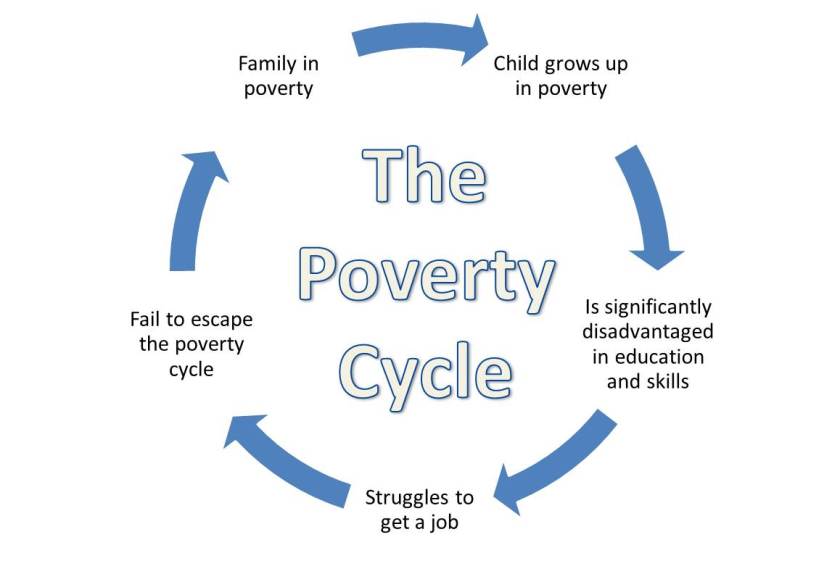
An interesting point is made by Gurnah about a Muslim Black person leaving a poverty-stricken country of his birth to a country of wealth and a different culture.
It is the wish of his Zanzibar’ family for the father to return to help with the disarray and economic disparity of his home country; as well as marry a local Black Muslim girl who wishes to become a doctor. The presumption is that if one leaves their poor country to become prosperous in a wealthy country, they have some magical power to help their poverty-stricken home-countries. It is of little concern to the family about his committed relationship to another but more about what his life is like in his newly adopted country and what he can offer to his homeland from what he has learned. The Muslim girl the mother wishes him to marry is twenty years old. Her son is in his 40s. Tt appears the primary reason for such a marriage is to help the young woman become a doctor. In the end, the son recognizes this is not practical but clearly understandable considering the poverty in Zanzibar.

Gurnah cleverly injects a conversation with a Nigerian Muslim woman on his plane ride back to London before his white lover’s rejection of their relationship.
The Nigerian woman has been divorced from her English husband for several years. It was an emotionally difficult divorce for her. A mix-up on a missing passport allows the father to find contact information for the divorcee. One wonders if Gurnah is proffering an opinion about race relations in the world or just leaving a lifeline for those disappointed by relationship failures.
.






































 REVIEWS AND VIEWS OF LIFE