INFIDELITY

“The Silent Patient” deserves its popularity. The ending is a surprise and offers a credible picture of how extreme human behavior comes from both nature and nurture.

Books of Interest
 Website: chetyarbrough.blog

THE SILENT PATIENT 

Author: Alex Michaelides

Narration by: Jack Hawkins & 1 more

Alex Michaelides (Author, British-Cypriot writer, won the Goodreads Choice Award for “The Silent Patient”, studied psychotherapy, and worked at a mental health clinic.)

Michaelides wrote a clever mystery about a 33-year-old wife named Alicia Berenson who is accused, convicted, and committed to an asylum for shooting her husband in the face with his own rifle. Alicia becomes “The Silent Patient”. She is arrested by the police with blood on her clothes in a non-speaking catatonic state. A psychotherapist, Theo Faber, is hired by the asylum and becomes interested in Alicia’s silence. On the one hand, it reminds him of his troubled childhood and a reaction to his wife’s infidelity in his own life. On the other, there is an undisclosed reason for his interest in Berenson’s silence and her judicial’ commitment to an asylum. “The Silent Patient” implies infidelity is in the nature of all human beings but that it can lead to violence and, in extraordinary circumstances, murder.

Michaelides infers infidelity is an inherent quality of all human beings.

Maybe infidelity is because of human nature’s intent to preserve itself but the consequences of, when experienced personally, can lead to mayhem. The primary characters of “The Silent Patient” are Alicia Berenson, a 33-year-old painter accused of murdering her husband–Theo Faber, a psychotherapist who tells the story of Alicia’s life–and Alicia’s husband who appears to love his wife but chooses to have a passionate extramarital affair. In the course of Theo’s story, he writes about infidelity of his own wife and his response to her betrayal.

Who shot Alicia’s husband?

The principle mysteries are revealed at the end of Michaelides’ book. Who murdered Alicia’s husband and how infidelity affects humanity are primary subjects of “The Silent Patient”. The cleverness of the story is in its twists and turns and the truth it reveals about human nature. We grow up to be adults from parents who create us while instilling all the contradictions of life that no child, who becomes an adult, escapes. Every human being and all societies are flawed. Societies and individuals pass on both the good and bad qualities of life to their children.

Coming to grips with infidelity is different for every child grown to adulthood.

A younger person who falls in love with another sometimes searches for someone to live with through the experiences of their future lives. Those who choose to be together bring their own life experiences to the relationship that may or may not be the same. It seems those life experiences that are similar are likely to preserve a relationship while those that are different cause conflicts. Michaelides shows how those conflicts, as well as the nature of human beings, can lead to destructive human behavior.

“The Silent Patient” deserves its popularity. The ending is a surprise and offers a credible picture of how extreme human behavior comes from both nature and nurture.

RELIGION

As a mirror and catalyst for change and hope, Professor Mark Bergson offers an excellent review of the world’s religions.

Books of Interest
 Website: chetyarbrough.blog

Cultural Literacy for Religion (Everything a Well-Educated Person Should Know)

Lecturer: Mark Berkson

By:  The Great Courses

Mark Berkson (Professor and Chair in the Department pf Religion at Hamline University)

Professor Berkson provides an excellent overview of the most important religions in the world in his lectures. Though this reviewer is not a person who follows any religion, Professor Berkson offers a broad understanding of religious beliefs and their differences in his lecture series.

CHRISTIAN, ISLAMIC, AND HINDUIST RELIGIONS HAVE THE MOST FOLLOWERS

The three religions with the greatest number of followers are Christian, Islamic, and Hinduist which are categorized as a transcendent group of religions. In broad terms, their beliefs are in salvation, divine revelation, moral law, and a soul’s journey toward a divine being as the ultimate truth and value of life. These religions reflect on both the first and second categories of religion because they transcend the self to either a divine or a more centered understanding of oneself.

A third category would be followers of a sect of Buddhists adherents, Jainists, or Confucianists which believe in enlightenment, discipline, meditation, and moral cultivation of oneself in relation to nature, the cosmos, and everyday life. This third category is not centered around a divine being but around self-effort to create ethical harmony among human beings that will offer peace to all.

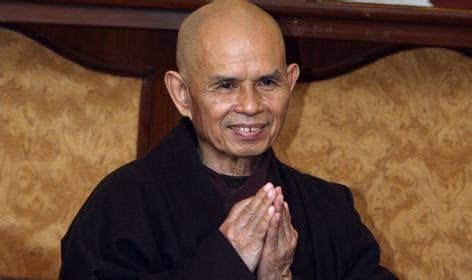
Thích Nhất Hạnh was a most famous Vietnamese Thiền Buddhist monk who believed and taught self-effort to create ethical harmony in oneself. (Died at age 95 in 2022.)

Berkson notes Daoist’s, Shinto’s, and some Buddhists (like Thích Nhất Hạnh) believe in the balance, flow, and interconnectedness of living in accordance with nature. He categorizes these religions as “religions of immanence”.

Tenzin Gyatso (the 14th Tibetan Dalai Lama, exiled in India from his native land in China, represents the Buddhist idea of self-transcendence.)

Berkson explains religion became important to civilization because they made living life more important than just survival. Religion gave meaning to life. Religion also provided social and moral order to life. Religion gave comfort in time of grief, fear, and uncertainty. Religion inspired societies to be creative to build cities, and create art. Religion provided a belief in something greater than oneself and the possibility of transcendence beyond earthly existence.

As one listens to Berkson’s lectures, one wonders whether religion has been more positive than negative in civilization’s development.

Berkson tries to sit on a fence between two extreme opinions. One is the positive contributions of religion to human moral and ethical belief. On the other, religion has aggravated social comity by creating differences. Different religious beliefs have murdered or demeaned millions of human beings who believe only their religion is important. If you defile the truth of my religious belief, you are not one of us. On the one hand, religion brings people together and grows cultural and artistic beliefs. On the other hand, religious belief creates silos that suppress inquiry, reinforce prejudices, and delegitimize political authority. Belief in a religion can advance understanding of human nature but at the same time suppress any inquiry into faith or science.

One will better understand specific religious beliefs as a result of Bergson’s lectures.

Bergson notes tensions between religious beliefs are the basis upon which many social and human atrocities have occurred. Christianity notes that no one comes to God except through Chistian belief while Hinduism believes there are many paths to the divine. Exclusivity in religion may not cause a war, but it certainly creates tension. The core beliefs of Judaism, Christianity, and Islam have led to millions of deaths because of distinctions made between the word of God in the Hebrew Bible, Christian old and new testaments, and the Qur’an.

As a mirror and catalyst for change and hope, Bergson offers an excellent review of the world’s religions.

However, in the history of yesterday and today, the Jewish holocaust of WWII and slaughter of Palestinians in Gaza rend one’s heart. To quote Rodney King amid the Los Angeles riots, “Can we all get along?”– apparently not.

ERASMUS

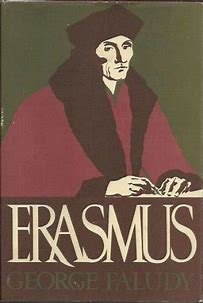
George Faludy suggests the most popular books written by Erasmus were “The Praise of Folly” and “Colloquies” which are similar in that they offer humorous and insightful stories of the human condition. One leaves Faludy’s biography of “Erasmus” with the thought that these two should be read, particularly because of the time in which we live today.

Books of Interest
 Website: chetyarbrough.blog

ERASMUS

By: George Faludy

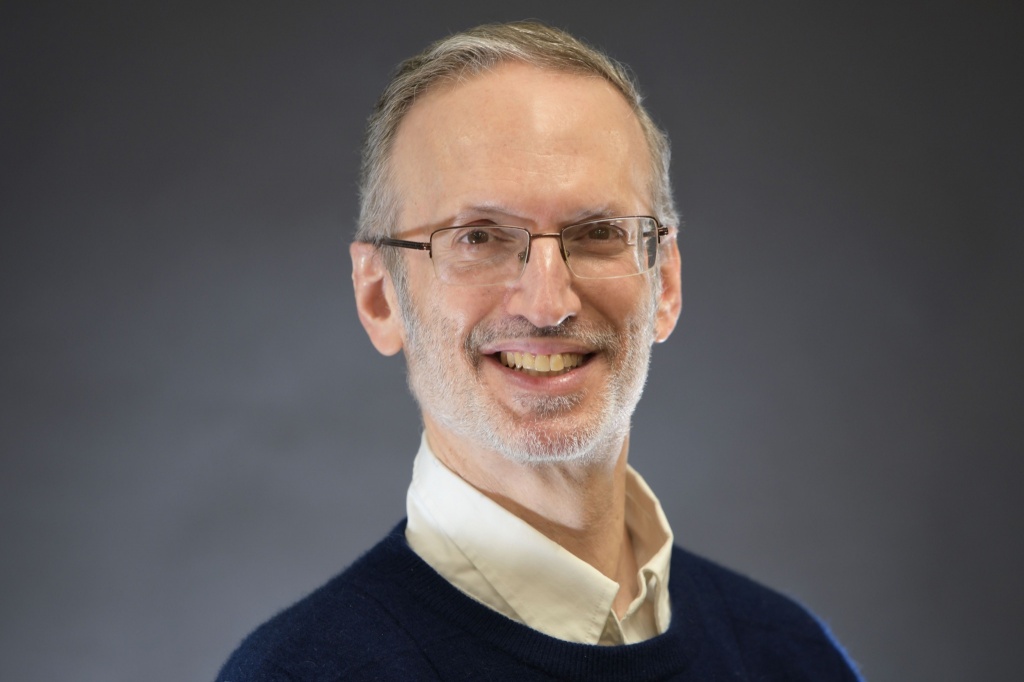
György Bernát József Leimdörfer aka George Faludy (1910-2006) Author, Hungarian poet and translator.

George Faludy’s biography of Erasmus was published in 1970. A few years ago, I purchased a paperback edition of Faludy’s book because of an interest in a 16th century “man of the cloth” (an ordained Catholic priest) who became a devotee of Francesco Petraca (better known as Petrarch who is considered the father of humanism). Erasmus was born in 1466 and died in 1536. He believed in the value, dignity, and potential of human beings. Petrarch had been dead for a hundred years when Erasmus became a proponent of humanism at a time when Catholic’ Indulgences were challenged by Martin Luther. Luther’s Ninety-Five Theses led to a schism in the church leading to the establishment of Protestantism.

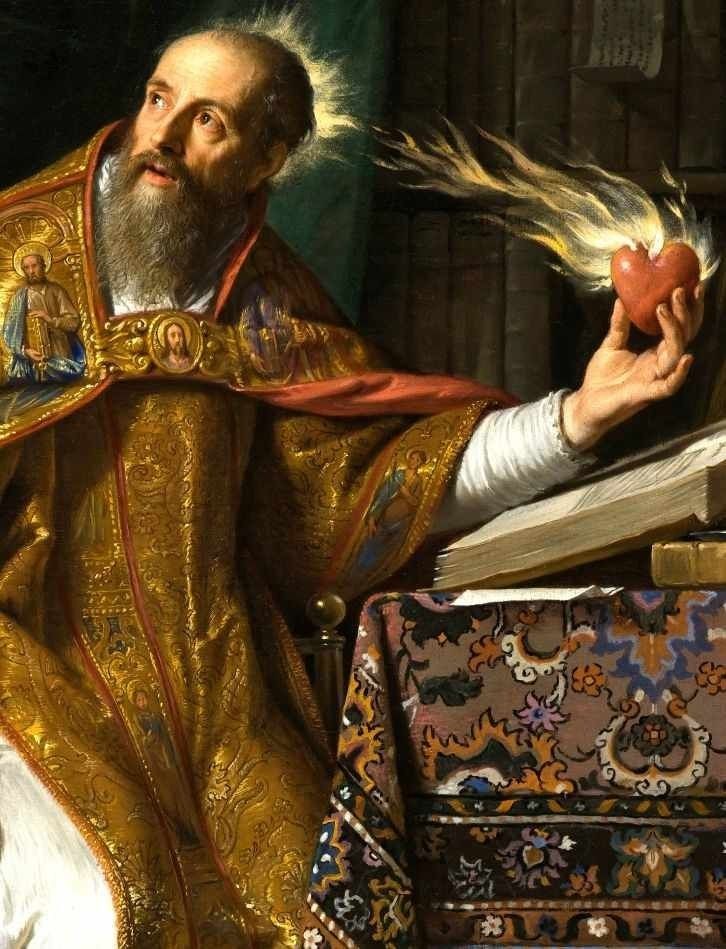
Martin Luther (1483-1546)

Luther’s Ninety-Five Theses led to a schism in the church leading to the establishment of Protestantism.

It is hard to imagine how Erasmus managed to become a leader in reforming the Catholic Church with his humanist beliefs. Erasmus walks a fine line between the schism fomented by Martin Luther and his belief in reform. Erasmus wrote the famous work “The Praise of Folly” that was a satirical critique of societal and ecclesiastical practices of the Catholic church without joining the movement started by Luther. On the one hand, Erasmus agreed with Luther on the importance of faith and the perfidy of “indulgences” sold by the Church. Indulgences were to raise money with alleged religious guaranties for a Catholic’s admittance to heaven. On the other, Erasmus insisted on faith in God and reform, not abandonment of the Catholic church. Erasmus’s academic and scholarly review and interpretation of religious texts convinced him that the Church only needed reform, not schism.

Faludy carefully explains the tumultuous relationship between Erasmus and Luther that at times seemed to break but survived their fundamental disagreement on reform versus schism.

Erasmus acknowledged many misrepresentations of religious text with an unwavering belief in the divinity of their origin. As one who is skeptical about the divinity of religious texts, it is encouraging to read of this highly respected scholar’s belief in their truth. Faludy’s biography of Erasmus may not change an agnostic’s mind about God, but it will give one pause because of Erasmus’s reported research of original religious works in Greek, Latin, and other languages, i.e., a skill beyond most peoples’ capabilities.

Faludy does not write of Erasmus as a saintly person but as a well-educated and diligent scholar.

A surprising note by Faludy is that Erasmus suffered from syphilis which suggests something less than perfection in Erasmus’s character. However, Faludy’s note is not corroborated by any other information known to this reviewer.

Faludy suggested the most popular books written by Erasmus were “The Praise of Folly” and “Colloquies” which are similar in that they offer humorous and insightful stories of the human condition. One leaves Faludy’s biography of “Erasmus” with the thought that these two should be read, particularly because of the time in which we live today.

LIFE’S JOURNEY

Every human being grows to be who they are alone. Life is a solo journey, influenced by birth, living, and death.

Books of Interest
 Website: chetyarbrough.blog

Solo (When the heart gets lost, let the music find you.)

By: Kwame Alexander with Mary Rand Hess

Narrated By: Kwame Alexander

“Solo” demonstrates an added value to listening rather than just reading a novel. Kwame Alexander and Mary Rand Hess tell a story of the struggle for personal identity. This is a journey of a young man whose father is a famous musician. It offers some insight to what it is like to be a boy growing to be a man in a family of a successful professional musician.

Image result for addiction

The boy’s father is a recovering addict who has had success as a guitar playing singer.

His mother died when he was seven. As a young man of 21, he is surprised to find he is an adopted son. He chooses to find his birth mother who lives in Africa to better understand where he came from and why his birth mother gave him up. He is estranged from his family for various reasons ranging from his father’s addictive behavior to the failure of his parents to have told him of his adoption.

In the boy’s journey to a remote area of Africa, he meets various natives who live in the poverty of a small village.

The boy’s birth mother is away from her village to help natives of another village in the hill country of the area. The young man decides to wait for her in his mother’s home village. He meets a young African girl who speaks English and is helpful in explaining what life is like for her in the village. They become friends with a sense of something more in their future. The boy’s waiting is interrupted by his father’s arrival with a film crew to vivify the story of their familial relationship.

His father’s arrival disrupts the boy’s plan of waiting for his birth mother’s return. A decision is made for the entire group to journey to the village where his birth mother is working.

The journey takes several hours and exhausts his father as well as the rest of the Americans in the group. The boy’s birth mother recognizes her son as soon as he arrives. She is young. She gave birth to her son at age 15. The hardship of raising a child appears to have been too much for her at her young age.

His father’s interruption in the boy’s journey to find his birth mother leads to a reconciliation with his father and a better understanding of his journey to become a man.

Top 10 Reconciliation Quotes - BrainyQuote

Musical interludes in the story entertain the listener and offer some understanding of what it is like to be raised by a famous musician who loves his family but is handicapped by drug addiction.

On their return to the birth mother’s village, a refrigerator is delivered at the expense of the boy’s father. This is a great benefit to the village. The boy’s father becomes ill and dies.

Every human being grows to be who they are alone. Life is a solo journey, influenced by birth, living, and death.

NARCISSISM

Jollett concludes his memoir by arguing his mother is a narcissist. Who is the narcissist in “Hollywood Park: A Memoir”? Mikel Jollett fails to understand how difficult it is for a single mother to raise children on her own.

Books of Interest
 Website: chetyarbrough.blog

Hollywood Park: A Memoir 

By: Mikel Jollett

Narrated By: Mikel Jollett

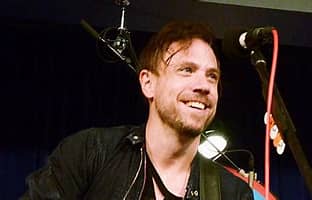
Mikel Jollett (Author, American musician, frontman for Airborne Toxic Event.)

Narcissism is an excessive sense of self-importance and a lack of empathy for others. Though Mikel Jollett shows skill as a writer, his assessment of life as a child grown-up exhibits a personal blindness about the hardship of single parents.

Every child has a story. This is a memoir of Mikel Jollet’s life. Jollett’s story is about his family that joined what became a cult in the 1960s. It was called Synanon, a rehab program in Santa Monica, California for addicts that began in the late 1950s. The rehab program evolved into a religious movement. As it became a religious movement, its harsh policies drove some residents to flee. Jollett’s story is about leaving with his mother and brother when he is five years old.

Jollett’s mother leaves the Synanon commune and the father of her children to return to her parent’s house to re-start her and her children’s lives.

To Mikel, leaving was a dramatic break from the Synanon way of life and a father he misses. Jollett’s father was an addict and former convict who lived what seems a vagabond life until he joins Synanon. Mikel’s mother decides to secretly escape with her two boys as the Synanon life became more and more harsh. Despite its growing religiosity and authoritarian milieu, Synanon survives until 1991 when it faces numerous legal issues related to forced sterilizations and violence toward members.

As a single parent, Mikel’s mother struggles to regain an identity and her own life.

Some of the religious teaching at Synanon appears to have remained with her. After living with her mother and father in California, she chooses to move to Salem, Oregon. The move is motivated by the high cost of living in California and a job she finds in Salem. After some time in Salem, she meets a reformed alcoholic who comes to live with her and the boys. Mikel grows to like the reformed alcoholic, but his mother’s new companion falls off the wagon and leaves the boys and their mother. He returns sometime later, only to leave again.

Bonnie who was close to Mikel when they lived in the Synanon community became a companion with Mikel’s father in California.

The boy’s paternal father remains in California and eventually looks up his wife’s children in Oregon. Upon visiting the boys in Salem, he tells them they will be invited to visit him in California, where he lives near the beach. In their first visit they become reacquainted with Bonnie who had been in the Synanon program. Mikel had been emotionally attached to the woman when at Synanon, so he was pleased to see her.

Mikel reminds reader/listeners that many children in America are not raised in “Leave to Beaver” families.

Life is a struggle for most children, even in unbroken families. Being raised in a single parent home, particularly when the single parent is a woman is harder because of societal inequality. Mikel and his brother are boys, so they have better chances for breaking poverty’s cycle, but their mother is faced with greater obstacles. Mikel’s story shows a better chance for success than some children raised by a single parent because of a precocity recognized by the principal at his school in Salem. Precocity is no guarantee of success but being a male and smart are significant advantages.

Mikel and his brother, Tony, had older brother/younger brother conflicts.

Tony, as the older brother, was sometimes cruel or uncaring about his younger sibling. As Mikel grew older, he found ways to punish his older brother for his cruelty. As they matured, they reconciled but both left their mother to live with their father in California. The baggage their mother had from her experience at Synanon, her husband’s abandonment, and the circumstances of poverty became too much for Mikel to understand the trials of being a single mother with two children. Mikel’s judgement is that his mother was too narcissistic.

Sexual inequality are two strikes against women in life. Some women overcome great odds to become economically independent; most do not.

Women struggle with life’s inequality in ways that escape understanding of masculine society, i.e., particularly male children who live with a single mother’s nurturing through the formative years of their lives. Divorced or abandoned mothers often do what they must do to raise children that fathers mostly neglect during the formative years of life. Male parents escape responsibility by leaving their children with mothers. Ex-husbands have the privilege of regaining an independent life in a world that offers better opportunities for men than women. They often re-marry which is what Mikel’s father does.

Jollett concludes his memoir by arguing his mother is a narcissist. Who is the narcissist in “Hollywood Park: A Memoir“? Mikel Jollett fails to understand how difficult it is for a single mother to raise children on her own.