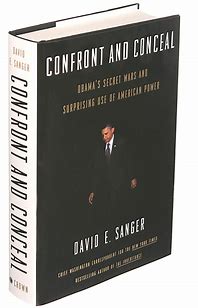
“Confront and Conceal” is a depressing examination of the American Presidency.
Books of Interest Website: chetyarbrough.blog
“Confront and Conceal“
By: David Sanger
David Sanger (Author, American journalist for the New York Times, Harvard graduate. Co-winner of 3 Pulitzer Prizes.)
David Sanger offers a journalist eye view of the first four years of the Obama Administration in “Confront and Conceal”. The most impactful impression a reader gets of a U.S. presidential office is that it is a difficult and complex job. Sanger’s observations imply the best a voter can hope for in electing a President is that he/she is a good student of the politics of life and government. Sanger shows Obama has the skill of both while the President who follows only understands the first and cares nothing about the second. This is not to suggest Sanger shows Obama as a perfect President but that his skill in governing far exceeds his successor.
Obama eschewed American intervention in foreign governments but inherited American presence in Iraq and Afghanistan.
At the same time, the American economy was in free fall. A mortgage crisis was born from the greed of human nature. The cure for the mortgage crisis is initiated by the Bush administration. However, like many Presidents before, American foreign government intervention plagues Obama throughout his tenure.
The horrible consequence and resolution of the mortgage crises fell largely on the poor in America.
The rich generally escaped its devastating impact because they had the resources to cash out debts carrying rising interest rates. An estimated 861,664 families lost their homes to foreclosure. The lending institution’ managers who approved loans to the poor on false pretenses were largely forgiven for their greed. Obama’s administration succeeded in stabilizing the American economy, but the fairness of the process is grossly inequitable.
With the exception of the first Bush’s invasion of Iraq, American military intervention in foreign governments has been a failure in every circumstance since WWII.
One might argue this is less true in the case of Korea but the continued belligerence of North Korea and foreign relations conflicts with China and Russia are a direct result of past American military interventions. Obama attempts to improve relations with China but is unsuccessful. Sanger shows that lack of success is because of suspicion of America’s past history and because of a belief that Obama is simply trying to isolate China’s influence in the world. Russia’s invasion of Ukraine speaks for itself. It will ultimately fail but at the consequence of many lost Russian and Ukrainian lives.
“Confront and Conceal” is no pean to the Obama administration. It is a revealing examination of a well-educated and prudent President who wishes to do what is best for America but is trapped by history and human nature.
Obama, like all 21st century Presidents, has the power to kill individual human beings by remote control and direct covert actions that can and do have unintended consequences. Obama is the first President to wheel the power of drone death to eliminate enemy combatants. Even though Obama martials western powers to participate in the overthrow of the Libyan government, Quaddaffi is not given a trial but murdered by rebel Libyan forces. Libya remains a failed government in search of stability. The idea of an incompetent and revengeful elected President of the United States with the power of drone murder is frightening.
“Confront and Conceal” is a depressing examination of the American Presidency because it shows a decent and intelligent President is only slightly better than an incompetent, dishonest, and poorly educated human being like Donald Trump. President Obama’s biggest contribution to America is in providing better health care for the poor but even that is being challenged by his successors.
Gabriel Bump (Author, MFA in fiction from the University of Massachusetts, grew up in Chicago, Asst. Professor U of M.)
In “The New Naturals” Gabriel Bump shows why societal unity with racial separation is unlikely to be achieved. Without the power and influence of money, leadership is not enough. Bump’s story reminds one of Hamas in Palestine and their deluded belief that they can unify the Palestinian people by creating an underground movement to unify Palestine. Hamas fools themselves just as the leaders of “The New Naturals” show unity fails when the influence and power of money is lost. Of course, the two issues are different because Middle Eastern religion is an element of the fundamental difference between Palestine and Israel. However, money’s influence and power are a major contributor to the Middle East’s conflict.
Bump writes of a Black American movement to create an independent society financed by a donor with great wealth. The donor finances the vision of two Black academics who choose a mountain in Massachusetts to create a literal underground community for Black American citizens. The dream of “The New Naturals” disappears when the financial backer quits her support of the movement. As the donor’s financing disappears, a “smash and grab” mentality infects the movement’s leadership. Loss of financing criminalizes the movement. What could not be achieved with the influence and power of money, led to “smash and grab” criminalization of the movement.
The vision of “The New Naturals” founders is a hope to educate and establish a group of like-minded Black Americans, independent of America’s white dominated culture.
Like the waste of money in building the Hamas’ tunnels in Palestine, these Black separatists choose to use their financial support for tunnels and rooms bored into a mountain. The Black movement is peopled with relatively well-educated Black families wishing for a better life. It devolves with its loss of funding into a group of thugs who insist on separation.
In America, the political choice has been made, i.e., regardless of race, religion, or ethnicity, all who have citizenship in America are Americans.
America has been one nation since 1776. American unity among its citizens is sorely challenged during America’s civil war but it remains the law of the land. Bump’s story explains why, despite continued American inequality, all who have citizenship are Americans. Equality in America is a work in progress. What informs our future is that American identity is a socially and legally enforceable fact.
As noted in 1954 by the U. S. Supreme Court in “Brown v. Board of Education”, the idea of “separate but equal” perpetuates injustice and inequality.
Palestine is considered the birthplace of Ancient Egypt, Israel and the Persian Empire. Though Palestine’s independence was not recognized until 1988, Israel only became a nation-state in 1948. Both societies have a long history as nationalist movements with their own beliefs. Israel and Palestine have earned a right to their own identity. The holocaust was a turning point for the right of a Jewish nation to be created. The current slaughter of innocents in Palestine may be the turning point for Palestine’s right to nationhood.
Civil wars are a lesson to the world. One hopes both Israel and Palestine come to an agreement to either create two nations or one; with unity as separated or as one unified nation-state.
Appelbaum infers no American President has found the magic formula for balancing the needs of its citizens with the concept of Adam Smith’s free enterprise.
Books of Interest Website: chetyarbrough.blog
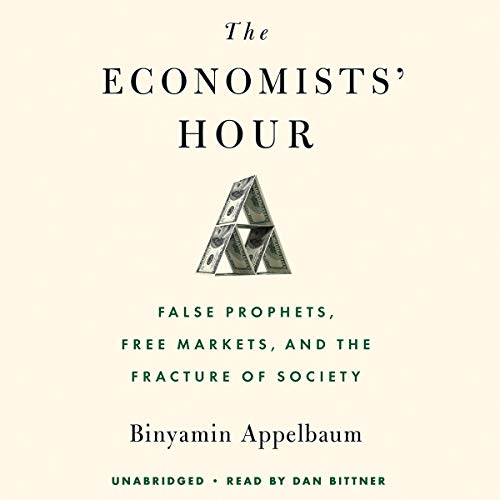
“The Economists’ Hour: False Prophets, Free Markets, and the Fracture of Society“
By: Binyamin Appelbaum
Narrated by: Dan Bittner
Binyamin Appelbaum (Author, winner of a George Polk Award and a finalist for the 2008 Pulitzer Prize, lead writer on economics and business for The New York Times Editorial Board)
Binyamin Appelbaum has written an interesting summary of a difficult but immensely important subject. Economic policy and theory are boring, but they touch every aspect of life. Appelbaum shows economic policy magnifies or diminishes the welfare of every American, let alone every economy in the world.
Adam Smith’s foundational theory of economics.
Though only briefly mentioned by Appelbaum, American economic policy begins with Adam Smith (1723-1790), the Scottish philosopher who wrote “The Wealth of Nations”. Smith advocated free trade and argued against parochial maximization of exports and imports that is manipulated by strict governmental regulation meant only to accumulate gold and silver.
JOHN MAYNARD KEYNES (1883-1946, CONSIDERED FOR NOBEL 3 TIMES FOR DIPLOMACY BUT NEVER AWARDED.)MILTON FRIEDMAN (1912-2006, 1976 NOBEL PRIZE FOR ECOOMIC SCIENCES.)
Appelbaum illustrates how American policy violated the entrepreneurial freedom that Adam Smith advocated. In contrast to Smith, John Maynard Keynes (1883-1946) advocates government intervention whenever there is an economic downturn. Equally interventionist is Milton Freidman’s (1912-2006) belief that government should increase or decrease the money supply for national economic stability. The point seems to be that every economist thinks they have a magic bullet that will cure the ills of a faltering economy.
To be fair, Friedman did believe in free enterprise in regard to nation-state currencies. He argued for a floating currency rate that ultimately led to President Nixon’s abandonment of the gold standard. However, the nature of human beings led to speculation and manipulation of nation-state’ currencies that exacerbated trade tariffs and defeated the policy’s free-enterprise objective.
FRANKLIN ROOSEVELT (32ND PRESIDENT OF THE UNITED STATES, INTHE DEPRESSION, BANKS FAILED, UNEMPLOYMENT AND POVERTY SKYROCKEDTED.GEORGE W. BUSH (43RD PRESIDENT OF THE U.S. 3 MILLION JOBS LOST IN THE 2001 RECESSION)
One concludes from “The Economists’ Hour…”, there is no magic solution for an economy in crises. Neither Franklin Roosevelt, George W. Bush, Barack Obama, or any American President cured what ails an American economy that succumbs to economic crises. Adam Smith would argue an economic crisis is caused by a governments’ interference with free enterprise.
Applebaum explains how every 20th and 21st century President of the United States placed their faith in economists’ economic assessments of their day. All Presidents have found intervention by the government has unintended consequences.
President Nixon adopted Freidman’s monetary policy by imposing a freeze on prices and wages that squeezed the life out of the business economy and beggared the wage-earning public with job loss.
A decade of stagflation (high inflation and slow growth) followed Nixon’s administration. Stagflation is attacked by the Reagan administration with mixed results. A myth from economists like Arthur Laffer grew in 1974. Laffer believes taxation is either too high or too low for any benefit to society. Laffer argued zero tax and maximum taxation are equally harmful and produce economic stagnation and/or collapse.
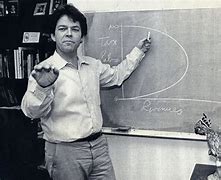
ARTHUR LAFFER (American economist and author, served on President Reagan’s Economic Policy Advisory Board 1981-1989, Here illustrating the “Laffer Curve”.)
Laffer argued every government that reduces tax revenue decreases the stimulative effect of government spending. On the other hand, he suggested every tax cut increases income for taxpayers that will stimulate business and increase employment while encouraging higher production. He laughably created the “Laffer curve” to imply there is an optimum balance of tax reduction that would stimulate economic growth with proportionate increases in government revenue to provide for better government services. That balance has never been found. President Ronald Reagan experimented with Laffer’s idea, but it fails from unintended consequences. The principal consequence is to increase the gap between rich and poor.
BENEFIT OF TAX REDUCTION
Reagan accelerated a movement for government tax reduction that ultimately reduced income taxes from 70% to 28%. The result of government tax reduction during the Reagan years increased the U.S. budget deficit from $78.9 billion to $1.412 trillion. The benefit of that tax reduction went to the wealthy while school lunches were cut, subsidized housing declined by 8%, and poor families lost $64 a month in welfare payments. In 2023, the budget deficit stood at $1.70 trillion, an imbalance that shows why the “Laffer curve” is sardonically laughable.
President Reagan’s administration (1981-1989) was influenced by Laffer’s curve.
The joke is “There is no perfect balance on the curve because of the nature of human beings.”
Roosevelt, George W. Bush, and Obama choose to follow Keynesian policy. Roosevelt bloated government employment. All three increased the government deficit.
Some suggest the idea of “Cost benefit analysis” (CBA) is recommended to the federal government by two law professors, Michael Livermore and Richard Revesz during the George H. Bush administration but Reagan initiated it with an Executive Order in 1981.
Appelbaum notes that “cost benefit analysis” for government is first used during the administration of Ronald Reagan. However, Bill Clinton reifies its use with an Executive Order in 1993 that required covered agencies to do a CBA on “economically significant” government regulations. Ironically, Clinton was the first President in the post 19th century to balance the budget. Andrew Jackson manages to do it in his term between 1829 and 1837.
An irony of using “cost benefit analysis” is that it required a determination of of a human life’s value. Presidents Nixon, Ford, Carter, and future Presidents use value per statistical life during their administrations. High-income earners were worth $10 million to $15 million, middle-income earners $1 million to $2 million, and low-income earners $100,00 to $200,000. Of course, these values were always litigable. The point is that CBA became a tool for government to regulate the costs of government policies, ranging from military expense to the health, safety, and welfare of American citizens.
The remainder of Appelbaum’s book reflects on the experience of America, Chile, and Taiwan in the 20th century. The implication of his review of economic policy is that those countries that align with the free enterprise beliefs of Adam Smith have made mistakes. However, America’s, Chile’s, and Taiwan’s economic policies seem to have had more economic success when following Smith’s beliefs.
No American President has found the magic formula for balancing the needs of its citizens with the concept of Adam Smith’s free enterprise.
Along with CBA, Appelbaum notes the ongoing controversy is about regulation by government when it tries to balance American health, education, and welfare with Adam Smith’s concept of free enterprise. Appelbaum infers no American President has found the magic formula for balancing the needs of its citizens with the concept of Adam Smith’s free enterprise.
Total recall does not make humans more intelligent or necessarily more informed about the world.
Books of Interest Website: chetyarbrough.blog
“Moon walking with Einstein: The Art and Science of Remembering Everything“
By: Joshua Foer
Narrated by: Mike Chamberlain
Joshua Foer (Author, freelance journalist, 2006 USA Memory Champion.)
Joshua Foer offers an interesting explanation of human memory. Foer became the 2006 USA memory champion. Foer explains how he achieved that distinction. What is interesting and surprising about Foer’s achievement is that he argues extraordinary memory is a teachable skill.
Arthur Conan Doyle (1859-1930)
Fans will remember Sir Arthur Conan Doyles’ explanation of Sherlock Homes’ prodigious memory technique called the “mind palace”.
Foer explains the idea is not a fiction but an historically proven method for improving one’s memory through association. “Mind palace” is traced back to ancient Greece as a memory tool of the Greek poet Simonides of Ceos. The idea is to associate facts with familiar features of a house in which one has lived, or of which one has intimate knowledge. The idea of memory being associated with something is not revelatory to anyone who tries to remember someone’s name. Many people, particularly good salespeople, use association to remember a customer’s name. They might remember Fred as a “red” tie or Monica as a “harmonica” and so on.
Foer suggests nothing is forgotten but only stored in one’s mind.
The problem is recalling a mind’s recorded information. If one makes a point of associating a fact with something that is familiar, say like a space in your own house, it is more likely to be recallable. Foer notes experimental studies show human brains record memories of events but may be unable to consciously recall details. In “show and tell” experiments, humans show evidence of a recorded memory by expressing familiarity, if not specificity. (“MIT research explains how our brain helps us remember what we’ve seen, even as visual information shifts around within our visual system.” See MIT NEWS Feb. 8, 2021.)
Foer suggests the history of memory began naturally with tales told and re-told before writing became a way of record keeping.
Foer explains history shows that philosophers like Socrates rejected the idea of recording information as a way of revealing truth. To Socrates, truth comes from conversational exploration of nature as it is. Foer suggests society is fortunate that Plato and Archimedes partly disagreed and chose to provide a written record of Socrates thought.
A larger picture of Foer’s view of memory and recall implies a leveling of knowledge in the world.
From an oral tradition to the written word to radio to television to the internet of things to microchips in one’s brain–the recall of facts become more widely shared. The complication of improving “knowledge leveling” is in how recalled facts are assembled by the brain of the receiver.
Foer illustrates how much effort must be put into memorizing information if one wishes to excel as a technologically unplugged person who wishes to recall more facts. It requires concentrated effort to create a mnemonic device like rooms in a house to associate a series of facts or numbers that can be recalled. On the other hand, advances in technology could make that exercise moot.
In the near future, recollection from an implanted human chip could improve correlation of facts for thought and action.
This is not to diminish the accomplishments of the author in training his mind to recall facts better than others. In the near future, recalling and collating facts may be more efficiently managed by an A.I. microchip that complements human thought and action.
Having eidetic memory or technological total recall does not make humans more intelligent or necessarily more informed about the world. Recall of facts is only a means to an end that may as easily destroy as improve society.
The question raised by “The Sun Does Shine”–is death row a necessary function of society? Anthony Ray Hinton’s life story challenges its efficacy.
Books of Interest Website: chetyarbrough.blog
“The Sun Does Shine“
By: Anthony Ray Hinton with Lara Love Hardin
Narrated by: Kevine R. Free
Anthony Ray Hinton, AuthorLara Love Hardin, Editorial Director of Idea Architects
Anthony Ray Hinton’s life experience argues the death penalty for any crime should be abolished. Hinton states 1 in 10 people on death row have been wrongfully convicted. He spent 28 years on death row for crimes he could not have committed. His legal representation is poorly executed, in part, because he did not have enough money to pay for his defense.
Anthony Ray Hinton
Hinton’s 1 in 10 ratio of wrongful conviction is questioned but not denied by:
The “Death Penalty Information Center”
DNA evidence that has exonerated sentenced death row prisoners, and
statistical studies that show 1 in 25 criminal defendants sentenced to death have been found innocent.
Hinton’s “The Sun Does Shine” tells of his conviction by an Alabama court for robbery and murder of two fast-food restaurant managers in Birmingham, Alabama.
Appointment of a defense attorney is required by law, but their compensation and the accused’s poverty deny an adequate defense. Hinton’s story shows how the State of Alabama’s law enforcement and judicial system manufactured false evidence to convict and put him on death row.
Hinton’s motherHinton’s Friend Lester Bailey on Left
Hinton’s mother, childhood friend, and religious belief support him through his false imprisonment and pending death by electrocution. His electrocution is postponed because of repeated challenges, but he remains on death row for 28 years. Hinton’s imagination and good will sustain him through his ordeal. He imagines traveling the world, marrying and divorcing beautiful women, and meeting the Queen of England.
Hinton gains the respect of his jailers and fellow death row prisoners. He mentally catalogues the many executions that occur in his 30 years of incarceration.
He remembers the blinking electric lights and smell of burning human flesh when each prisoner is electrocuted. He recalls the first woman to be electrocuted. He acknowledges many of the death-row’ prisoners committed horrible crimes but suggests they are victims of society because of their upbringing, and/or untreated or incurable mental dysfunctions. Hinton does not believe the guilty deserve execution for what he believes are societies’ failures.
It is the Executive Director of the Equal Justice Initiative, attorney Bryan Stevenson, who comes to Hinton’s aid and eventually gets his case before the U.S. Supreme Court in 2014. Stevenson works on Hinton’s case for over 20 years with numerous blocks thrown up by the Alabama legal system. The original judge in the case insists throughout his life that Hinton was guilty even though falsified evidence convicted him of the crime.
After release, Hinton becomes a world-wide celebrity, acquainted with famous people like President Obama, Queen Elizabeth II, Nelson Mandela, and Oprah Winfrey.
His book suggests he was entertained by some famous actors and billionaires who wished to have his story told to audiences that presumably might affect a change in the American judicial system.
The question raised by “The Sun Does Shine”–is death row a necessary function of society? Anthony Ray Hinton’s life story challenges its efficacy.
The Craft’s story is an inspiration for the anti-slavery movement before and after the civil war. Their story reinforces the principle of equality of opportunity for all.
Books of Interest Website: chetyarbrough.blog
“Master, Slave, Husband, Wife“
By: Ilyon Woo
Narrated by: Janina Edwards & Leon Nixon
Ilyon Woo (American author, Received BA in Humanities from Yale College and has a PhD in English from Columbia University.)
“Master, Slave, Husband, Wife” will disabuse any listener who may think the American Civil War was not about slavery. Ilyon Woo’s detailed research of Ellen and William Craft reveals the many reasons why no one can deny the fundamental cause of the Civil War in America, i.e. it was slavery.
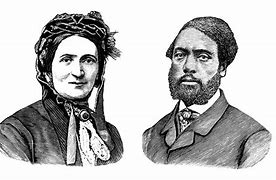
Ellen and William Craft
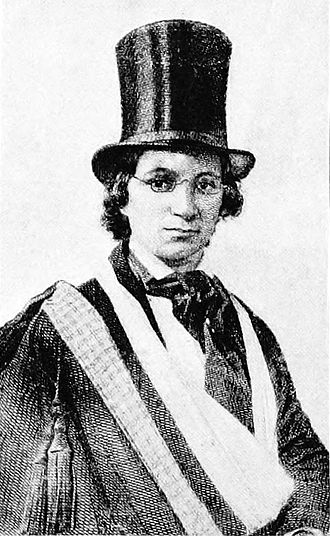
Ellen and William Craft were slaves until escape from their slave master in 1848. William was enslaved by a white land holder named Robert Collins who held a half interest in Craft’s ownership with another southerner. Ellen was the child of a white owner and black slave that gave her a fair-skinned white racial appearance. However, Ellen was classified as a slave because of her mixed racial parentage. Her mother was a slave to a white slaveholder who was her putative father. At the age of eleven, Ellen was gifted as a valued piece of property to a sister who later became Collin’s wife.
Ellen missed her birth mother but only after years of being on the run, did she manage to re-unite with her mother, Maria Smith.
In 1846, Ellen reached the age of 20 and agreed to marry William who was a skilled cabinet maker.
William was allowed to work for a portion of his wages in return for a cut of his income to be paid to his owners. In 1848, with the money William saved from his outside work, the married slaves planned an escape from Collin’s household. The plan was for Ellen to dress herself as a white man with William as her slave on a journey to Philadelphia, Boston, and possibly Canada.
Ellen Craft dressed as a white man with an accompanying slave who is actually her husband.
The fugitives succeed in their escape, but their success is challenged. The challenge came from the morally misguided attempt by the American government to avoid a war between the North and South by passing the “Fugitive Slave Act of 1850”.
That act would allow capture and return of runaway slaves to their putative owners. The Act was a compromise between the north and south, supported by President Millard Fillmore, who was willing to sacrifice black Americans to slavery in order to preserve the Union. Storied and respected leaders of America like Daniel Webster, who had freed his slaves, supported the “Fugitive Slave Act”. Webster believed, like the majority of a white Congress, that union was more important than human equality.
Woo’s detailed research reveals how Ellen and William had both black and white supporters who recognized the iniquity of slavery and helped them escape bounty hunters hired by Robert Collins to return the Crafts to slavery. Ellen and William were in Boston. They were helped to escape by Boston’s anti-slavery Americans of conscience.
The anti-slavery movement extended into some of the city of Boston’s government officials. Some local government officials refused to cooperate with bounty hunters trying to fulfill the legal requirements for recovery of escaped slaves. Woo infers Boston boiled with demonstrations against the “Fugitive Slave Act”.
WILLIAM WELLS BROWN
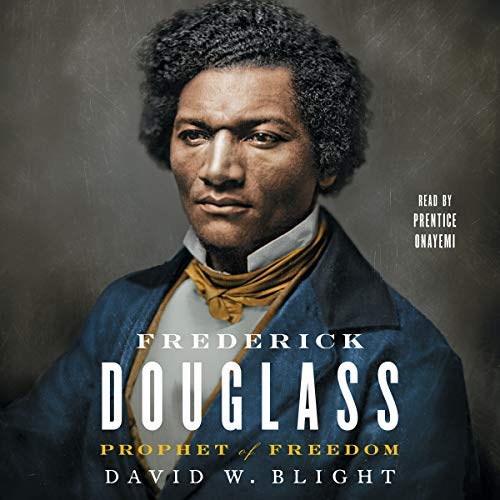
The danger of recapture remained palpable because some officials were concerned more about preservation of the union than the iniquity of slavery. Ellen and William chose to flee to England. Their escape is aided by Quakers and the support of famous black Americans like Fredrick Douglass and William Wells Brown. Douglas publicized the story of the Crafts. William Wells Brown, an equally famous slave escapee, supported the Crafts by using them in traveling presentations that spoke of the iniquity of slavery and how they escaped its clutches. Ellen and William remained in England for 18 years. With the support of Lady Byron and Harriet Martineau, the Crafts learned how to read and write.
The Crafts spent three years at Ockham School in Surrey, England where they taught handicrafts and carpentry.
The Crafts respected each other in ways that defy simple explanation. Though they strongly supported each other, they were often separated for long periods of time. William and Ellen became self-educated writers and teachers who started schools. William traveled to Africa on his own and started a school without his wife. He was gone for months at a time but never broke with his wife who stayed in England.
After 18 years, Ellen and William return to the U.S. The civil war was over. They had five children together with two who remained in England. The Crafts started Woodville Cooperative Farm School in Bryan County, Georgia. The school failed but they continued to farm and wrote a book about their lives titled “Running a Thousand Miles for Freedom…” which became popular in both England and the U.S.
The Craft family’s story of their flight to freedom.
Ellen Craft died in 1891. She was buried in Bryan County, Georgia. William Craft died in 1900 but was denied burial in Bryan County next to his wife. William was buried in Charleston, South Carolina. Though separated in death, they seem as tied to each other as they were in life. The Craft’s story is an inspiration for the anti-slavery movement before and after the civil war. Their story reinforces the principle of equality of opportunity for all.
The two edges of nuclear physics that may save or destroy the world is still with us. The best humanity can hope for is balance between human nature and science.
Blog: awalkingdelight
Books of Interest Website: chetyarbrough.blog
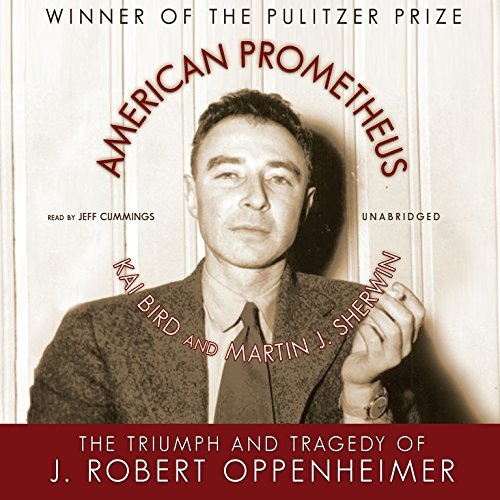
“American Prometheus” The Triumph and Tragedy of J. Robert Oppenheimer
By: Kai Bird and Martin J. Sherwin
Narrated by: Jeff Cummings
Kai Bird (American author and columnist who wrote about the atomic bombings of Hiroshima and Nagasaki. Born in 1951.)Martin J. Sherwin (American historian who wrote about the history of nuclear weapons. Died in 2021.)
Kai Bird and Martin Sherwin tell the story of America’s “god of fire”. Like the myth of Prometheus who reveals Olympian gods’ knowledge of fire, J. Robert Oppenheimer reveals physicists’ secrets of nuclear fission that give atomic power to humanity. Their history tells listeners of the risk entailed in research and production of nuclear bombs.
J. Robert Oppenheimer (1904-1967, Died at the age of 62.)
Bird and Sherwin offer an intimate and revealing story of J. Robert Oppenheimer that reveals his genius, his human frailty, his growth as a project manager, and the abysmal way American government treated his historic achievements.
Though Bird’s and Sherwin’s history is more about Oppenheimer’s life than his discoveries, it seems prudent to note Oppenheimer discovered the Born-Oppenheimer molecular wave functions about how electrons and positrons work. Oppenheimer also worked with fellow physicist William Phillips on the Oppenheimer-Phillips process in nuclear fusion with work on what is called quantum tunneling. Though Oppenheimer was nominated for a Nobel Prize three times, he never won. Phillips and Steven Chu receive the Nobel in 1997.
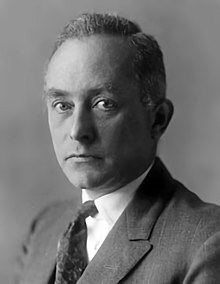
Max Born (German/British physicist, 1882-1970)William Daniel Phillips (American physicist, Nobel Prize 1997 with Steven Chu.)
The great controversy surrounding Oppenheimer is his association with communism. Bird and Sherwin clearly acknowledge the association but convincingly argue Oppenheimer was an American patriot who contributed to communist social welfare programs without being a card-carrying member of the CP.
“American Promethius” illustrates Oppenheimer’s growth as a consummate manager of a complex organization that could successfully develop a weapon of mass destruction, an atomic bomb that can end war. However, as history shows, the atom bomb may end a world war, but nuclear bombs become a threat to human existence by any nation that acquires the same technology.
Los Alamos National Laboratory entrance located a short distance NW of Santa Fe, NM
The first atomic bomb exploded on July 16, 1945 in Alamogordo, New Mexico.
The authors show Oppenheimer’s understanding of an atom bomb’s threat by quoting the Bhagavad Gita. “Now I am become Death, the destroyer of worlds.” Oppenheimer refuses to continue research on Edward Teller’s plan to create a fusion bomb of even greater destructive potential. Teller succeeds in creating that bomb. Oppenheimer recognizes any small or large nation that gains fusion bomb technology increases a threat to humanity.
The second atomic bomb test at Bikini Atoll was a fusion bomb released on July 25, 1946. The Marshall Islands, where Bikini is located, is suing the U.S. for what it calls a violation of the Nuclear Non-Proliferation Treaty.
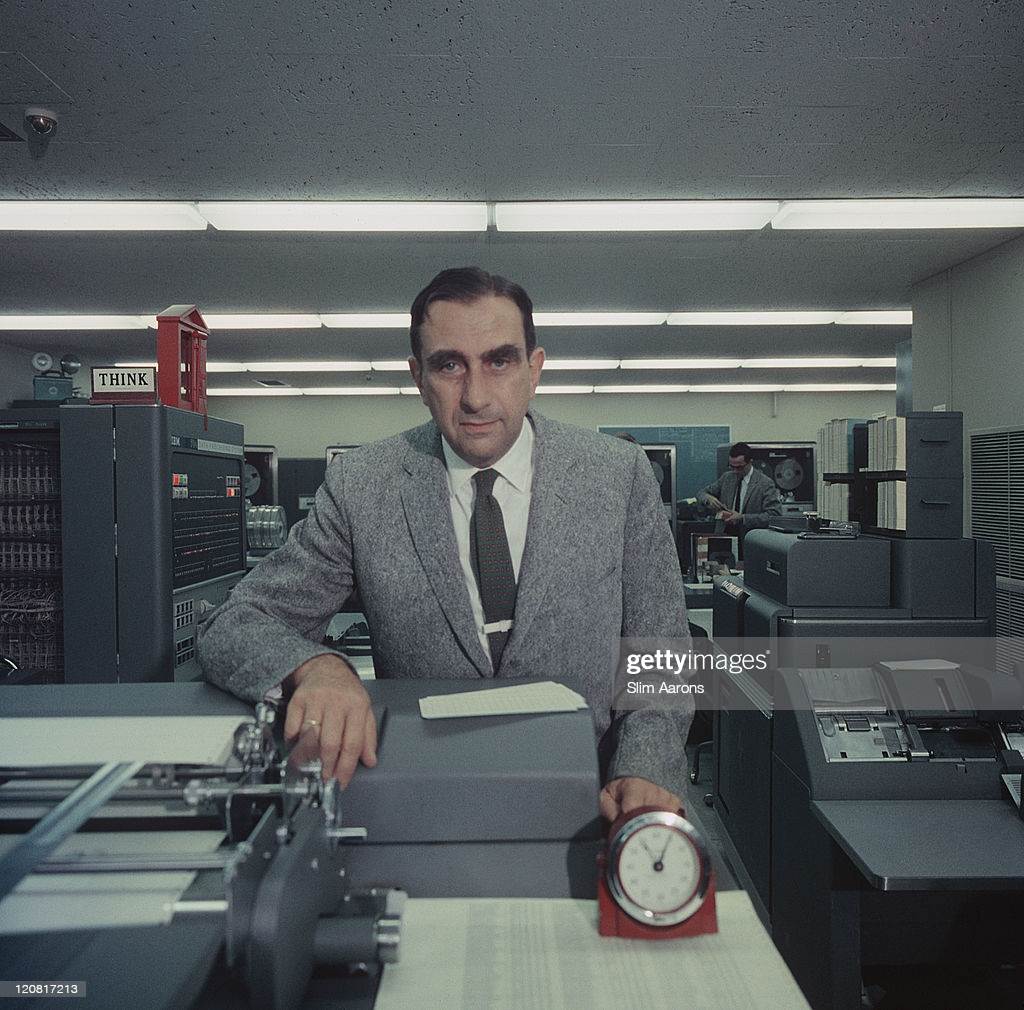
Edward Teller was a leading physicist who worked on the Los Alamos project. Teller’s difficult interpersonal relations and volatile personality made him an important influencer, and defamer of Oppenheimer. Oppenheimer refuses to continue research on a fusion bomb because of its destructive potential and its potential influence in an arms race.
Edward Teller (1908-2003) Hungarian American, theoretical physicist who was the principal inventor of the hydrogen bomb based on the principle of fusion. It’s destructive potential from heat and light are substantially greater than the two nuclear bombs dropped on Japan.)
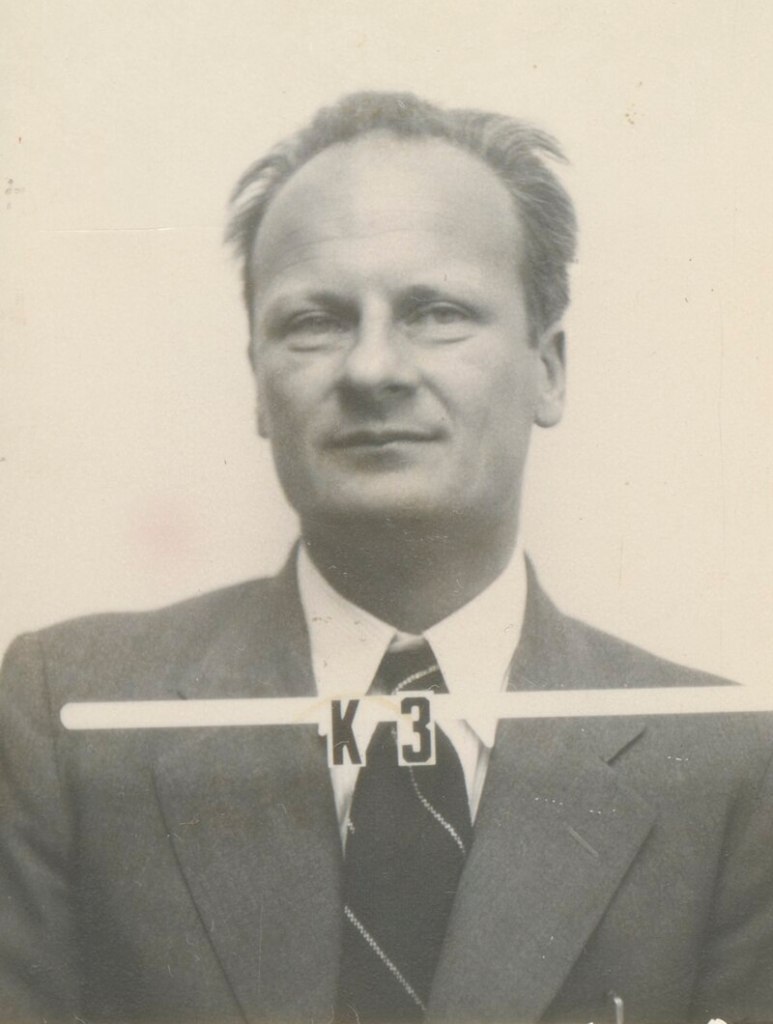
Teller and an American German physicist, Hans Bethe a team leader, come to lager heads when Bethe agrees with Oppenheimer’s’ focus on a fission rather than fusion bomb. Teller fell out with his team leader, as well as Oppenheimer, over the disagreement.
Hans Bethe (1906-2005, received a Nobel Prize in 1967 for the theory of stellar nucleosynthesis.)
The arrival of Niels Bohr (1885-1962) at Los Alamos in 1943 raises a fundamental concern about creation of a weapon of mass destruction. Bohr’s concern is a nation’s failure to share nuclear physics technology about the bomb with allied forces, particularly Russia, to avoid an international arms race.
Bohr believes scientific cooperation would reduce the probability of an arms race. Bohr’s view seems idealistic in light of today’s history, but the idea is adopted by Oppenheimer. Nuclear weapons have become widely coveted by weaker economic nations of the world because of their political systems failure to improve the lives of their citizens.
Human nature is not overcome by technological sharing because of differences in fundamental religious and political beliefs.
Pursuit of the bomb is just another tool to accelerate national leaders’ political or religious beliefs. Niels Bohr’s noble idea and Oppenheimer’s acknowledgement of the value of sharing science is victim to national leaders’ beliefs and human nature.
A nation like North Korea covets the bomb because it gives them the ability to punch (negotiate or fight) above their weight. A nation like Iran is led by a religious leader who only views the modern world in light of a beneficent afterlife.
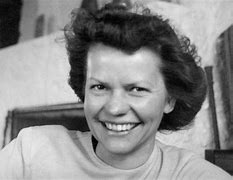
Katherine Oppenheimer. Robert’s wife (1910-1972, German American biologist, botanist, and member of the Communist Party.)
A disturbing note about Oppenheimer is his marriage to his wife, Katherine “Kitty” Puening whom he married in 1940. Kitty became pregnant before they married. They had two children, a boy and girl. This is Kitty’s fourth marriage. Neither parent seems to show much interest in their children. Kitty is shown to be a free spirit, beautiful and charming who generally supports Oppenheimer in his job at Los Alamos. One wonders how their children were affected by their parents’ neglect. Their daughter committed suicide in 1977. The boy still lives in New Mexico and makes a living as a carpenter.
In 1947, Oppenheimer is recruited by Princeton to head a new organization that is called the Institute for Advanced Study. Because of frequent trips to Washington D.C. and the attraction of running a broad organization for the study of science and humanities, Oppenheimer chooses to take the position. His team management experience at Los Alamos and his broad interest in the humanities make Oppenheimer a perfect match for the position. With millions of dollars set aside for the Institute, Oppenheimer attracts the best and brightest science and humanities luminaries from around the world. Einstein, Kurt Godel, John von Neumann, George Kennan, T.S. Eliot, and too many more to mention, were recruited by Oppenheimer. Some were at the height of their professions and became Nobel Prize winners.
The last chapters of “American Prometheus” address the investigation of Oppenheimer’s communist associations during the McCarthy era.
His greatest initial concern was for his brother, Frank, who had joined the communist party. However, the wide range of the investigation and the zealous pursuit of Lewis Strauss, a former shoe salesman who chaired the Atomic Energy Commission (AEC), results in Oppenheimer’s security clearance being stripped. His reputation is unfairly diminished by overzealous politicians and investigators ranging from the FBI director to the AEC chairman.
One leaves this history with a feeling of shame about how Oppenheimer is treated by some and over-praised by others. No human being is without faults, regardless of their intelligence and ability. Oppenheimer was an American patriot who served America with what it needed in the circumstances of his time.
J. Robert Oppenheimer (center) receives the 1963 Enrico Fermi Award from President Lyndon B. Johnson at a White House ceremony on December 2, 1963, as then AEC chairman Glenn Seaborg (left) looks on. (Photo: DOE). He died at age 62 in 1967.
The significance of Becker’s book is in his explanation of Bell’s theory that disagrees with Einstein’s theory of locality.
Blog: awalkingdelight
Books of Interest Website: chetyarbrough.blog
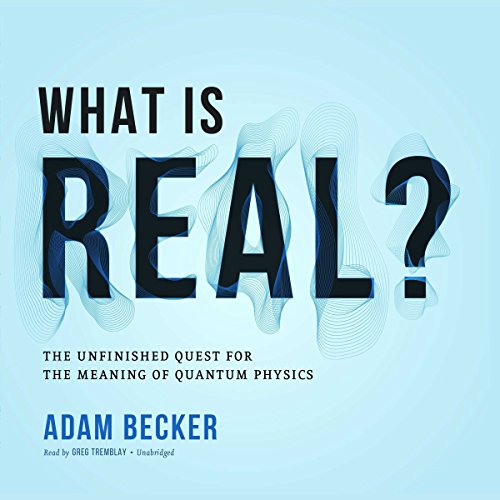
“What is Real” The Unfinished Quest for the Meaning of Quantum Physics
By: Adam Becker
Narrated by: Greg Tremblay
Adam Becker (Author, American astrophysicist, philosopher with BA’s from Cornell, and a PhD in the philosophy of physics from University of Michigan.)
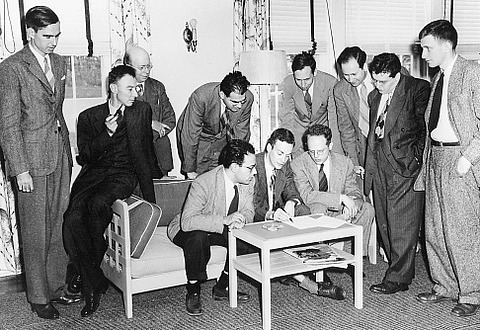
Adam Becker explains a mystery that surrounds the concept of quantum mechanics. The theory of quantum mechanics continues to confound Einstein’s disagreements about quantum physics. No one, including Albert Einstein’s and Niels Bohr’s discussions, has fully agreed on the fundamentals of quantum mechanics. There are theories about quantum mechanics but proof about “What is Real” remains a mystery.
Niels Bohr (1885-1962)Werner Heisenberg (1901-1976)Max Born (1882-1970)
Becker explains in broad terms the Copenhagen interpretation of quantum mechanics. The Copenhagen interpretation came from the work of Niels Bohr, Werner Heisenberg, and Max Born. Study of the sub-atomic world is based on the Copenhagen mathematical theory created in 1925-1927. The theory argues quantum mechanics is inherently probabilistic, not deterministic. (The term probabilistic is only reference to a collapse or disappearance of an expected proton when sent through a split screen. It is not suggesting that quantum physics results are not reliable tools. Quantum physics has been found to be a reliable, accurate, and dependable tool for the desired effects when applied in the tech world.)
Interestingly, Becker suggests Werner Heisenberg tried to cover up his support and belief in Nazism. Becker suggests Heisenberg’s ineptitude as a manager of the research and experimentation process is the cause of Germany’s failure, not any sympathy for holocaust victims.
Einstein argues the only reason quantum mechanics appears probabilistic is because of an undiscovered fundamental law about the sub-atomic world. Einstein believes all physics theory must obey the law of locality which postulates physics laws must be based directly on related and surrounding causes.
Becker notes John Stewart Bell experimentally proves Einstein is wrong and that quantum effects violate the principle of locality.
Bell’s proof is mathematical and based on experiment. His calculations and experiment show two light particles can have spin characteristics that correlate with each other at a distance, non-locally. This quantum entanglement is dubbed “spooky action at a distance” by Einstein. Einstein, Boris Podolsky and Nathan Rosen argue entanglement (“spooky action at a distance”) is not proof of non-locality. Einstein believes there is an undiscovered cause for the appearance of non-locality’s entanglement. The argument against locality is called the EPR paradox after its theorists’ last names. Bell proves through experiment that “spooky action at a distance” is real and that the Copenhagen interpretation of quantum mechanics is wrong.
John Stewart Bell (1928-1990)
Bell’s theorem verifies that “spooky action at a distance” is no paradox by proving that quantum mechanics reflect a non-local phenomenon.
Hugh Everett, a physicist who studied under John Wheeler, published a paper with the idea that non-locality is evidence of another reality, another world with the same people experiencing a different course of life. The collapse or disappearance of a quantum particle is evidence of another reality, another world. For example, an incident of a near drowning would be survival in another reality that simultaneously exists in a different world.
Hugh Everett (1930-1982, died at age 51)
Hugh Everett proposed a many worlds theory of quantum mechanics based on Bell’s theorem of non-locality.
Everett was a student of physics professor John Wheeler who had worked with Niels Bohr.
John Wheeler (1911-2008)
Wheeler became an early supporter of Everett’s many worlds theory.
Wheeler popularized the terms “black hole”, quantum foam”, “neutron moderator”, and “it from bit”. He participated in the Manhattan Project during WWII and worked at the Hanford Site where he helped Dupont build a nuclear reactor in Richland, Washington. Wheeler became skeptical of the many worlds’ hypothesis in later years because of what he called its “metaphysical baggage”.
The significance of Becker’s book is in his explanation of Bell’s theory that disagrees with Einstein’s theory of locality. Einstein presumes missing variables will explain “spooky action at a distance”. Becker notes most physicists still believe in the Copenhagen theory of quantum mechanics despite Bell’s theory and proof that quantum mechanics allow for non-local affects. All the answers for “What is Real” proposed by Becker seem to contradict themselves or lack common sense. However, they still may be true or valid. They are just unproven or unobservable by repeated experiment.
One leaves this novel hoping Russia leaves Ukraine in peace, Palestine and Israel with an acceptable agreement for both countries, and a war that does not widen.
Blog: awalkingdelight
Books of Interest Website: chetyarbrough.blog
“The Winter Soldier” A Novel
By:Daniel Mason
Narrated by: Laurence Dobiesz
Daniel Mason (Author, physician, winner of 2021 Guggenheim Fellowship, the Joyce Carol Oates Prize.)
Daniel Mason’s “The Winter Soldier” is a reminder of WWI and the heartbreak of war. It is a love story created out of the horror of injuries, desperation of commanders for recruits, and the collateral damage of civilians. All of this is a reminder of what is happening today in Israel/Palestine, Ukraine, and Russia. Told from the losing side of war, it makes one think of WWI’s history and the aftermath of today’s military actions.
The well-known triggering incident that led to WWI was the assassination of Archduke Franz Ferdinand of Austria-Hungary.
There are many other fundamental reasons for the war ranging from mutual defense alliances to imperialism to national security and disputed borders but as in all wars there are no winners, only losers. The losers are disabled combatants, children, and the survivors who cannot forget what they have been through. For the dead, life is simply over.
Mason’s story is about an Austro-Hungarian’ medical student from an aristocratic family who is thrown into the maelstrom of war. By circumstance, he is recruited into a field hospital in Poland because he is the only academically trained medical person. He is still a student, but his sketchy understanding of medicine and the human body give him some guidance on how to amputate limbs and treat life threatening diseases. The field hospital is in a former church that is managed by a nun who worked with former doctors and had some practical knowledge of medical treatment. Lucius, the hero, a 22-year-old is introduced to Margareta, a nun who is one year older. She has much more firsthand experience with war’s casualties. Her judgment sustains much of what Lucius does that tempers his novitiate understanding of medical practice.
It is a “…Winter Soldier” who survives the war that offers a surprising ending to Mason’s imaginative and well-written novel.
The precursor to the story’s surprising ending is that Lucius falls in love with Margareta, but they are separated by the invasion of Russian soldiers. They find each other after Lucius marriage and pending divorce to another woman. Lucius travels back to where Margareta lived and finds she has moved to another town. He travels to the new town and finds Margareta at a local hospital. This is not the end of the story. A surprise remains.
Mason’s story is an entertaining novel of particular interest today because of the truth of Mark Twain’s observation: “History never repeat itself, but it does often rhyme”. One leaves this novel hoping Russia leaves Ukraine in peace, Palestine and Israel with an acceptable agreement for both countries, and a war that does not widen.
Being one of “The Best Minds” is of little help in coping with schizophrenia’s symptoms.
Blog: awalkingdelight
Books of Interest Website: chetyarbrough.blog
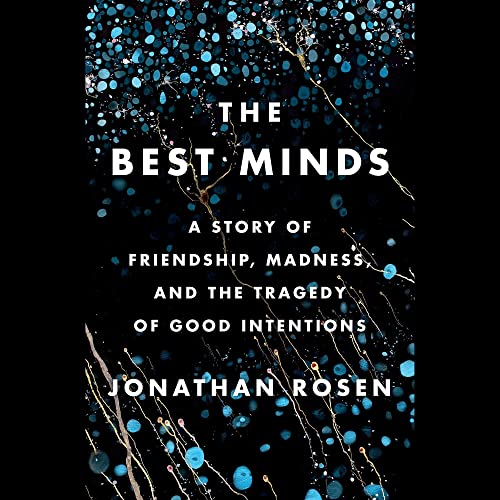
“The Best Minds” A Story of Friendship, Madness, and the Tragedy of Good Intentions
By:Jonathan Rosen
Narrated by: Jonathan Rosen
Jonathan Rosen (Author, Yale graduate–Accepted but dropped out of a PhD English program at Berkeley.)
Jonathan Rosen tells the story of his boyhood and adult friendship with Michael, a boy of his age who excels academically and professionally as a young graduate of Yale. Michael has a mental breakdown in his early twenties. He is diagnosed as schizophrenic. Rosen compares his years of adolescence with Michael’s.
Rosen’s stricken friend excels in every academic and business pursuit he undertakes before his slip into schizophrenia. In reflecting on the boy’s relationship, Rosen explains his perception of himself is as a grade school and high school plodder who prefers literature to math and the sciences. In contrast, Rosen suggests Michael’s academic qualities give him the ability to read, understand, and recite literary and science subjects with the ease of a savant. Michael reads everything with speed and understanding while Rosen labors over his studies.
The irony of Rosen’s perception of himself is that despite their differences, both he and Michael are accepted at Yale.
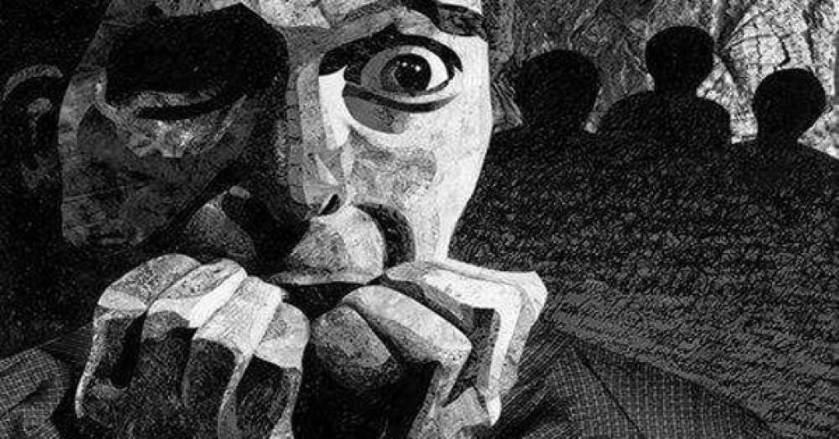
Rosen becomes an editor of the University’ newspaper, and later, a published author. Michael aspires to the editorship of the Yale paper, tries to become a published author, but is unsuccessful. Before graduation, Michael is recruited by a prestigious publicly held investment firm and seems on his way to great wealth and success. Instead, Rosen explains Michael leaves the investment company and begins to lose his way in life. Michael slips into a schizophrenic state that diminishes his eidetic memory and gives him a combination of debilitating psychological symptoms. At the height of Michael’s illness, he threatens his mother with a knife. With the persuasion of his father, Michael agrees to admit himself to a psychological ward which finally diagnosis his schizophrenia.
Michael, Rosen’s brilliant childhood friend, is admitted to a psychiatric ward for treatment designed to isolate and medicate its patients into a fog of confusion that is designed to lessen paranoid depression.
Rosen’s long introduction of himself and Michael seems prelude to an explanation of the ineptitude of the American psychiatric industry. Michael’s journey is an indictment of the American system of treatment for mental dysfunction. Michael is eventually discharged but is placed in a group home with other patients suffering from mental dysfunction. They share bedrooms with medications designed to isolate and offer palliative care that deadens their psychological symptoms.
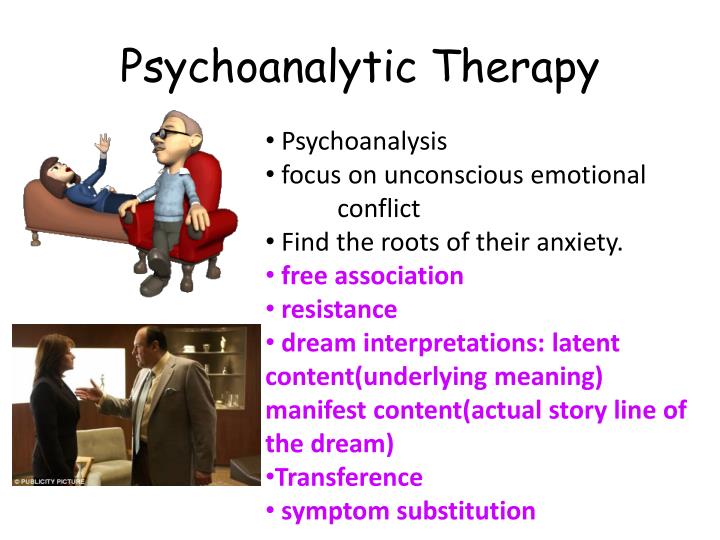
Michael continues his treatment with the aid of minimal income from a government disability program that helps pay for his accommodation and psychoanalytic therapy.
He is directed to reengage life by his therapist with work as a clerk at a Macy’s Department Store. Michael’s father is incensed by the therapist’s diminishment of his son’s accomplishments and begins a campaign to have Yale reengage his son in pursuit of a law degree. With the help of Yale’s faculty, Michael is readmitted to the University.
Ironically, the Yale faculty and students become a caring haven that helps Michael cope with his medical condition.
However, Yale’s help is only palliative, not curative. Michael remains schizophrenic, only ameliorated by drugs and the calming influence of Yale students and faculty. His paranoia continues and becomes more severe when his father dies.
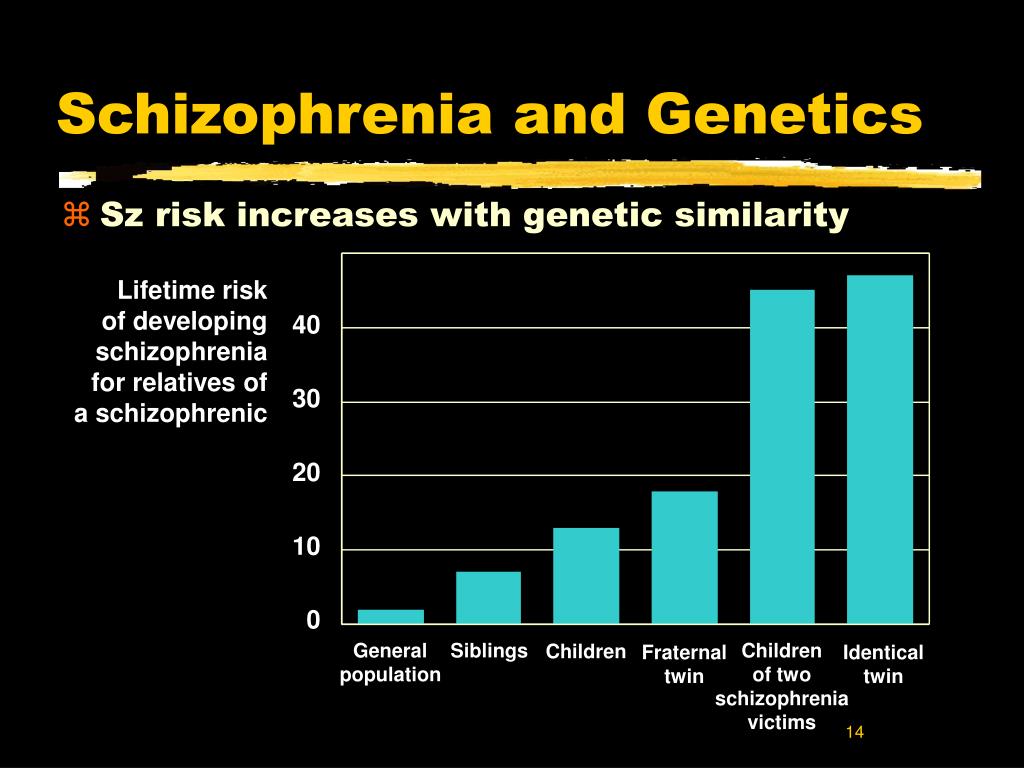
Schizophrenia affects only 1% of the population but has a higher risk of contraction from first degree relatives. (Michael’s grandmother was diagnosed with the disease.)
Michael seems on a road toward managed recovery with a detailed intellectual explanation of what schizophrenia is to him and how it creates delusional images that threaten his existence. His intellectual ability to explain his illness to the public attracts book publishers and the film industry to offer him over a million dollars for a book and film about his life. As this financial windfall becomes real, Michael and his fiancé plan to marry.
On June 17, 1998 Michael B. Laudor stabs his pregnant fiancé, Caroline Costello.
In a schizophrenic episode, Michael grabs his fiancé from behind, stabs her several times, and cuts her throat. Michael leaves her to die on their kitchen floor. Rosen notes that Michael quit taking his medication. He lost control in an episode of paranoia that viewed his fiancé as a maleficent alien presence. It seems a recurrence of what happened with his mother when he was thankfully convinced by his father to voluntarily commit himself to a hospital ward.
What becomes increasingly clear in Rosen’s biographical story is that there is no cure for schizophrenia.
Schizophrenic treatment is a life-long process that requires medication and a support system from caring caregivers, both professional and familial. Being one of “The Best Minds” is of little help in coping with schizophrenia’s symptoms. It requires lifelong assistance because it affects a person’s thinking, emotions, and interactions with the world.
Michael is charged with second-degree murder but is found not guilty by reason of mental defect. He is eventually committed to the Mid-Hudson Forensic Psychotherapy Center in New Hampton, New York in which he remains as of 2023.
(This is a terrible and tragic story. Rosen’s detailed research shows Caroline Costello was a good person, willing to help others, intending to adopt her husband’s faith, and trying to care for Michael in his struggle with an incurable brain dysfunction.)















































 REVIEWS AND VIEWS OF LIFE