BOOK LOVERS

In the end, “…History of the Book…”is brought together by Smyth’s review of book circulation. From early written manuscripts, small accumulations by the few grew into massive libraries for the general public.

Books of Interest
 Website: chetyarbrough.blog

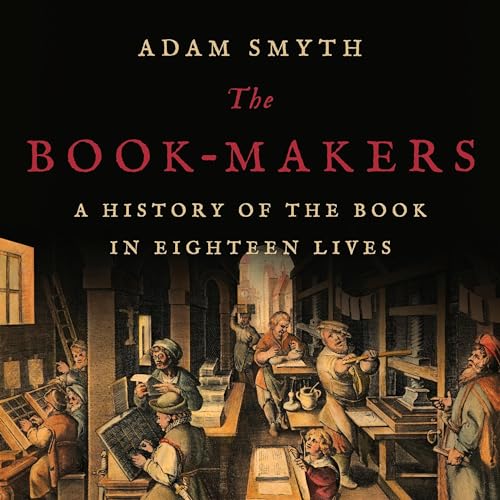
The Book-Makers (A History of the Book in Eighteen Lives) 

By: Adam Smith

Narrated By: Adam Smith

Adam Smyth (Author, Professor of English Literature and the History of the Book at Oxford University.)

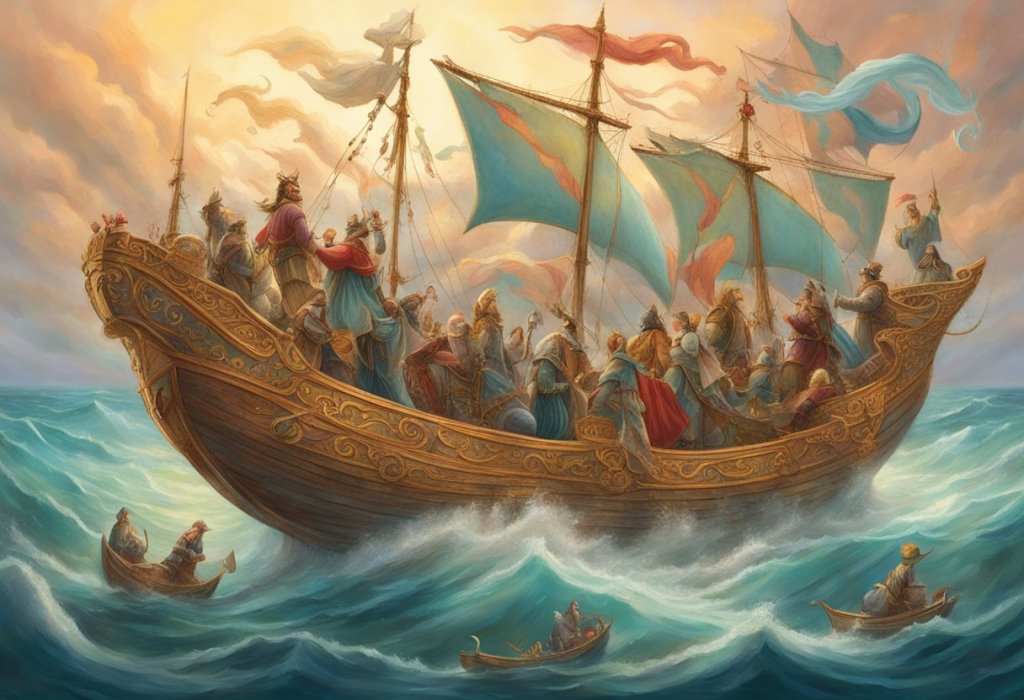
The Gutenberg press is invented in the mid-15th century in Germany. Not surprisingly, the most widely printed book is the Christian Bible that began with the Guttenberg Bible, a 42-line Bible also called the Mazarin Bible, printed in 1455. Adam Smyth notes the first non-religious, widely popular book is printed in 1494, titled “Das Narrenschiff” or “Ship of Fools”.

“The Ship of Fools” is written by Sebastian Brant in 1494. It is a collection of satirical poems and illustrations depicting the foolish behavior of humans and the corruption of the church.

Printed originally in German in Basel, Switzerland, “The Ship of Fools” was lavishly illustrated and became a best seller in Europe. Its popularity came from its satirical content, wide translation, and visual appeal. Smyth explains the book critiques human folly and vice with 112 chapters, each of which is accompanied by a woodcut illustration.

Smyth explains how bookbinding and printing grew as an art.

Contributions to the art were made by both men and women. Elizabeth Collett and Sarah Benlowes were instrumental in improving the quality and continuity of noted books in the 17th century. They pioneered a “cut and paste” technique that made famous books more consistent, unique, and artistic without changing their author’s meaning.

John Baskerville (1706-1775) created and, with the management of his wife, distributed the Baskerville typeface. Not surprisingly, no picture is available on the internet of his wife Sarah Eaves.

John Baskerville and his future wife, Sarah Eaves, made significant contributions to the quality of the printed page. Baskerville created Baskerville typeface in 1757. The new typeface set a new standard for typography with sharp serifs, high contrast thick and thin strokes, and overall clarity. His future wife managed their print business and helped implement Baskerville’s innovations. Together, they improved ink color and sharpness to provide higher quality printing for books.

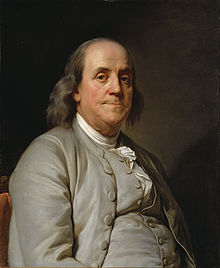
No story of the “History of the Book…” could be complete without addressing Benjamin Franklin (1706-1790).

Smyth reveals the contributions Franklin makes while using Caslon typeface created by Baskerville for the publication of newspapers, advertising, and the most successful non-religious book of the 18th century, “Poor Richard’s Almanac”. Franklin is the quintessential American by exemplifying the strengths and weakness of capitalism.

Money is important to Franklin in different ways.

Franklin used his newspaper to support and print paper money for the U.S. government. Franklin’s industriousness is well documented by historians, but Smyth notes a glaring flaw in Franklin’s character. Of course, this flaw is taken out of historical context and Franklin eventually changes his view, but he supported and brokered the slave trade between the 1750s and 60s. He is seduced by amorality, presumably because of the human desire for money, power, and/or prestige. Of course, this is being human; like all citizens of any economy or government.

Franklin’s views on slavery changed in the 1780s when he became a vocal abolitionist, but he certainly enriched himself in slavery’s earlier years.

Smyth flashes back to the invention of paper. The early beginning of paper is traced back to China in the 2nd century CE. Ts’al Lun (Cai Lun), a court official, is credited for developing papermaking techniques. Paper production spreads to the Islamic world in the 7th century with the printing of the Koran. It extends to Europe in the 12th century. The truly big jump in paper production came in the early 19th century with Louis-Nicolas Robert in France. The Fourdrinier machine could produce huge rolls of paper, but Louis-Nicolas Robert is unable to capitalize on the process because patenting was not available in France. Paper production process improves with John Gamble and Bryan Donkin in England. Paper production became faster, more efficient, and cost-effective.

The truly big jump in paper production came in the early 19th century with Louis-Nicolas Robert in France.

In the end, “…History of the Book…”is brought together by Smyth’s review of book circulation. From early written manuscripts, small accumulations by the few grew into massive libraries for the general public. Access to great and inane writings of genius and pulp producers reached wider and wider audiences. The final chapters address some of the great writers of modern times, particularly poets of which this reviewer is minimally interested and sadly ignorant.

One of the largest libraries in the world is in France, The Bibliothèque Nationale de France.

CLICKS

Just as McCulloch’s history shows how the internet changed yesterday, it seems A.I. will change the future.

Books of Interest
 Website: chetyarbrough.blog

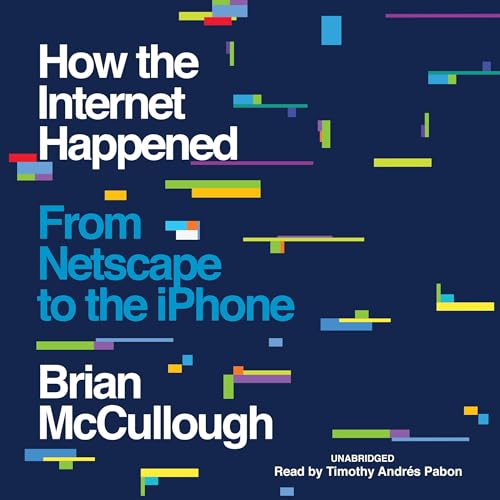
How the Internet Happened (From Netscape to the iPhone)

By: Brian McCullough

Narrated By: Timothy Pabon

Brian McCullough (Author, CEO of Resume Writers.com, entrepreneur.)

A book about the beginning of the internet is such old news, one is inclined to put this book aside. The internet was born in the 1960s and only became recognizable in the 1980s. However, even in 2024, it is interesting to hear about early users who became rich just by organizing information on an easily accessible and free media platform.

Like this blog, it is rewarding to write something that others are interested in reading.

The exercise of book reviews is a reward to one’s education and an ego boost for a writer from an audiences’ clicks. Brian McCullough tells the story of the founders of YAHOO, Jerry Yang and David Filo who were in college and became fascinated by the World Wide Web because of information it offered with clicks on a computer board. This was in the 1990s. Though there were many websites to choose from, they were disorganized and difficult to find if you were looking for specific information. Yang and Filo began organizing the websites by their offered information. YAHOO’S founders were looking for information of interest to them, and presumed others would like to know how they could use a keyboard to find information they might need or want.

Jerry Yang and David Filo were fascinated by what could be found on the internet.

They spent hours, days, weeks, months that grew into years organizing website addresses so others could find what was interesting to them. In these early years, making money was not their primary objective. They did not use their site to advertise products for income. They felt clicks were their reward and that clicks would be lost if advertisers were allowed to use their site. They chose to have users pay a fee to become members of their site. Their use and organization of the internet became an obsession for them and followers steadily increased. Their click numbers and users rose into the millions and advertisers were again knocking at their door. They resisted until they realized their idea could be worth something more than their interest in learning, gathering, and organizing knowledge. They relented, allowed advertising, and the clicks to their site kept on rising. YAHOO went public. The rest is history.

McCulloch goes on to describe the rise and fall of companies that capitalize on the internet.

The companies ranged from behemoth companies like Amazon, Microsoft, Google, Apple, and Ebay that rocketed to the stratosphere while Priceline.com, Netscape, Pets.com, Webvan and others plunged into the abyss. This is not to say today’s behemoths will continue to dominate the market or that some new company will replace their success with even greater appeal. A.I., like the internet, may be a killer discovery that makes or breaks today’s behemoths into tomorrow’s also-rans or hangers-on.

McCulloch’s history is interesting because it explains how winners understood the future better than losers understood the present.

It’s fascinating to find Apple’s Jobs resisted creation of the iPhone but employees worked secretly to refine the idea and Jobs eventually agreed. McCulloch also reveals the monopolistic nature of today’s winners and the threat they present to the future. Killer ideas of today’s tech companies capitalize on the internet’s information ubiquity, and how it can be organized to offer product to the world at a competitive price.

A.I. is a new idea that organizes information on its own with consequences to the public that are yet to be realized. Just as McCulloch’s history shows how the internet changed yesterday, it seems A.I. will change the future.

TRAVEL

Understanding our place in the world as a democratic nation is the real value of travel.

Books of Interest
 Website: chetyarbrough.blog

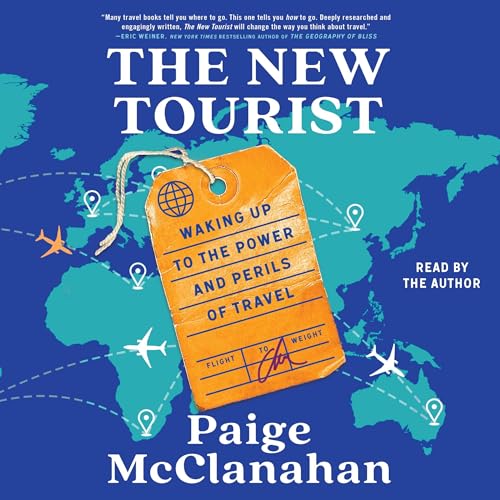
“The New Tourist” Waking Up to the Power and Perils of Travel

By: Paige McClanahan

Narrated By: Paige McClanahan

Paige McClanahan (Author, journalist, world traveler.)

“The New Tourist” offers a mixed message about travel outside of one’s own country. As a journalist, paid for her travel, Paige McClanahan explains the power and peril of travel in a way that misses the point. She explains the power of travel as an economic benefit to travel writers and countries which travelers visit. One peril she notes is the destruction from tourists who damage pristine natural environments because citizens of a host country are often not accustomed to crowds of travelers. One who travels and writes of their adventures encourages travel to exotic places that may or may not be prepared for high tourist traffic. Unpreparedness is partly due to host countries interest in the economic benefit of tourist visits but are disinclined to spend potential profits on preparation for high tourist traffic that may not arrive.

Like the Maui wildfires in 2o23, better Hawaiian’ preparation may have saved 102 lives and the beautiful town of Lahaina.

Ironically, travel writers like McClanahan are partly to blame for writing of great travel experiences they have had as tourists. They make a living by writing about their travels around the world.

There is a balance between tourist satisfaction and host countries’ benefit but finding the balance is a work in progress that may not begin before damage is done.

What McClanahan misses in her book, is the great benefit of traveling to learn about other cultures.

From personal experience, I have been surprised by natives of other countries who know so much about life and what their personal experiences have meant to them. In Africa, a native guide explains the night sky in a way that reminds one of a college astronomy course. In the former Yugoslavia, an older person explains how much she misses Tito as the ruler of her country. Visiting Turkey’s Cappadocia, one visits an underground “city” meant to protect Christians from people of another faith. In China, the incident of Tiananmen Square is told by a young man in a way that makes one understand authoritarianism carries a threat. In India, one is overwhelmed by the gap between the rich and poor, the monuments of a great nation’s antiquity, and the remnants of British colonization. In Thailand, you find there are citizens who admire their king, others that revile the army that is running the country, and youth that want change. A traveler learns of the killing fields of Cambodia and the mine fields left behind by America and Vietnam as a reminder of America’s folly in believing the lie of falling dominoes. These are a few examples of what can be learned by travel to other countries.

McClanahan briefly alludes to some of cultural benefits of travel, but her book focuses more on travels’ economic benefits for writers and host countries.

Understanding our place in the world as a democratic nation is the real value of travel.

VACUITY

Audio-book Review
 By Chet Yarbrough

Blog: awalkingdelight)
 Website: chetyarbrough.blog

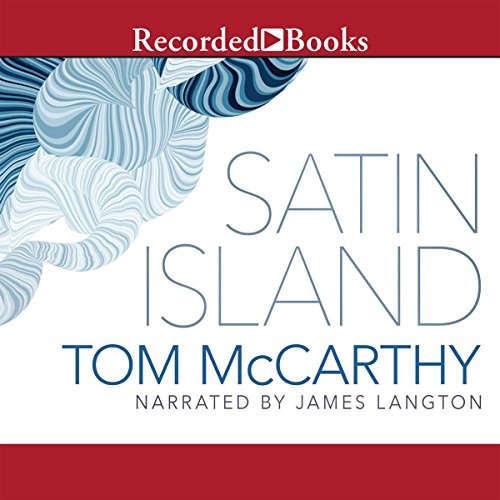
Satin Island

By: Tom McCarthy

Narrated by: James Langton

(Tom McCarthy, British Novelist, Nominated for the Booker Prize twice, One of which was for “Satin Island”.)

To this listener, “Satin Island” is an intellectual journey to nowhere. Obviously, others who determined McCarthy should be nominated for a Booker Prize for “Satin Island” disagree. Anthropology is the scientific study of human behavior, cultures, societies, and languages of the past.

Tom McCarthy seems to have sat at a desk and thought of an idea to write about, i.e., namely anthropology.

McCarthy’s main character is an anthropologist working for a fictional think tank that analyzes companies wishing to have some insight to an unknown future. His employer gives the anthropologist an assignment to write a paper that capsulizes the world’s future based on an understanding of the past and known present.

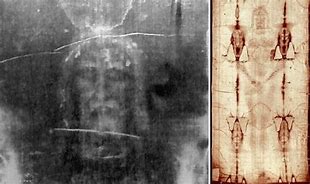
McCarthy’s story begins in Turin Italy with a brief explanation of the shroud of Turin which is alleged to have been wrapped around Jesus’s body after crucifixion.

The shroud could never have had the imprint of the remains of Jesus. The anthropologist notes it is proven fake because the shroud’s fabric is manufactured centuries after Christ’s crucifixion. The fake of the shroud is an inartful premonition to the course of the story.

The anthropologist’s assignment is a fool’s errand.

Whatever he writes in his report will be like the shroud of Turin. McCarthy tirelessly offers a series of vignettes to reinforce his message. A singular insight that one finds in McCarthy’s story is that anthropology is a science split into two disciplines. One is the acquisition of artifacts that tell an anthropologists’ interpretive story and two, anthropology is a search for written records and interviewed descendants that have first hand recollection of their ancestors’ societies. The first is clouded by interpretation. The second is clouded by understanding of language and descendants’ memories.

A recuring mystery in McCarthy’s story is of a parachutist that dies from a failed, presumably silk (like satin), parachute with nylon strings that were purposely cut.

The nylon strings holding the parachute are the threads of life’s history, like the fabric of the Shroud of Turin, and/or artifacts left for an anthropologist’s interpretation. McCarthy notes the cause of death may have been murder but it might have been suicide. Suspects are arrested. No one is convicted. The person who died is not suicidal. It becomes another mystery of the past.

The anthropologist realizes the report requested by his employer can be based on whatever he chooses to write. He begins to believe his report can be written and widely believed like the story of the shroud of Turin.

The story ends with the death of the owner who hired the anthropologist. The irony of the story is that the anthropologist is widely acclaimed for his final report meant to tell the future of life when he knows his story is like the shroud of Turin.

To this listener, there is too much intellectualism and not enough story. That may be why it did not win the Booker Prize. That is reason enough to me.

COWBOY TALES

Audio-book Review
By Chet Yarbrough

(Blog:awalkingdelight)
Website: chetyarbrough.blog

The Trail to Crazy Man

By: Louis L’Amour

Narrated by: Jim Gough, Christopher Lane

Louis L’Amour (LaMoore) (1908-1988, Author.)

Louis L’Amour has been gone for many years but “The Tale of Crazy Man” is a good introduction to an entertaining storyteller.  L’Amour tells two short stories. Christopher Lane’s narration and twists of the second story make it the better of the two, but L’Amour’s skill pleases reader/listeners in both.

Recalling L’Amour’s Sackett family saga (seventeen stories) makes a reader/listener appreciate cowboy tales where honest, upright heroes always win.  

L’Amour’s stories are of an idealized American west where good always overcomes evil.  Though his heroes are preternaturally perfect, L’Amour satisfies a human desire for wholesomeness.

The first story in “The Trail..” is about a wild west gang leader’s adopted son who is to take over his criminal empire.  L’Amour infers the putative father lives in the American west when only the strong survive by being the most ruthless in the era in which they live.  The adopted son is shielded from that early western belief by being formally educated while being taught to be a great tracker who is fast and accurate with a gun.  As the father grows older, he grooms his adopted son to takeover the gang and a ranch that covers a wide area of the country.

The adopted son chooses not to follow his mentor’s outlaw ways. L’Amour implies the west is evolving, with education making a difference. By the end of the story, the father appears reconciled to the change. The adopted son seems destined to make future use of the former outlaw’s acquired wealth for peace and an improved society.

The second tale is about two cowboys that have been drugged and indentured by a tyrannical sea captain docked in San Francisco.  One cowboy dies on the ship with a commitment from the other cowboy to take care of his wife and daughter who he left in Wyoming. Before being highjacked, the dying cowboy had gone to San Francisco to pay off a mortgager on the ranch on which his wife and daughter were living.

When the deceased cowboy’s friend and some fellow captives escape their indenture, two of the cowboys stay together to travel from the west coast to Wyoming to fulfill the dead father’s last wish.  What the friends find is a small town, in which the wife and daughter live, is controlled by two men.  One of the men is the mortgage lender that had been paid off. He pocketed the payment without telling the wife and daughter that the mortgage had been paid. Then, he arranged for the dead father’s kidnapping by the San Francisco Sea captain. 

These two town leaders are evil men but their evilness is different.  One is an uneducated thug who relies on violence to control the town.  The other is an educated thug who relies on stealth and cleverness to control the town.  The two thugs do not like each other but are partners in control of the town. 

The deceased father’s wife is dead.  The educated thug plans to marry the daughter who views the lying mortgage lender as a benefactor by not foreclosing on their ranch.  The uneducated thug plans to take the daughter by force. There are several plots in this second short story.    Both thugs are indirectly and directly dealt with by the cowboy who had made the commitment to the deceased father.

L’Amour writes with clarity and concreteness.  His stories are simple allegorical tales about good and evil.  They are wonderfully entertaining and leave one happy with the thought that good always overcomes evil.

WRITING

Audio-book Review
By Chet Yarbrough
(Blog:awalkingdelight)
Website: chetyarbrough.blog

Stein on Writing
By Sol Stein
Narrated by Christopher Lane

Sol Stein (Author, Publisher, and Editor-in-Chief for Stein and Day Publishers)

Sol Stein’s book offers a road map to readers and writers. In reviewing books, one begins to understand what makes one better than another. One also realizes how much easier it is to be critical than objective about those who write..

Readers/Listeners/Writers will find the crossroads of commercial and literary success in “Stein on Writing”. Not all literary classics are commercially successful and not all commercially successful books are literary classics.

Stein’s book is a writer’s road map. Stein’s map reveals where a story begins, which roads to follow, and where a story ends. He explains how to write action-ably.

Writers that follow Stein’s map see the highways and streets of writing a good story. An interpretation of what Stein explains would be: Do not write “he was upset”, write, “He hurled an ash tray through a living room window, sprinkling wet shards of glass across a brown patch of grass”.

The first line, “he was upset” is vague. It tells the reader what to think. The second line, “He hurled an ashtray…”, lets a reader come to their own conclusion. It makes the reader decide about a character’s mood. It offers a scene that stimulates a reader’s imagination.

The action of the line above uses what Stein calls “particularity” to focus a reader’s attention. The scene offers clues about a character’s life (an ashtray and a brown patch of grass). The value of using “particularity” sparks interest in knowing more about the ash tray thrower.

Sol notes that a good writer is emoting readers. A good writer wants the reader to feel a character’s emotion. To Stein, a good writer does not tell the reader what to think. Stein wants the writer to make the reader feel what the character feels. On Stein’s map, this is the beginning of good story telling.

Think about Charles Dickens and “David Copperfield” and how a reader becomes invested in David’s life; i.e. how David’s sad and happy feelings invest in the reader’s emotions.

Stein acknowledges some writing details may be lost in commercially successful books but no highways and few streets are lost by a great writer. Interestingly, Stein suggests the techniques of commercially successful and literary writers are the same.

  1. A cohesive theme ties a story together.
  2. The use of particularity provides a trail of clues to a story’s theme.
  3. The use of suspense draws a reader deeper into a story.

Stein notes differences between commercial and literary writing appear in accurate use of language, in universal emotive qualities of story, and in insight to human nature. However, Stein argues that a commercially successful book can miss many of these characteristics; while a classic misses few.

Stein explains the craft of writing is a store owner’s job; always there because he/she owns the business.

  • Write every day.
  • Rewrite every day.
  • Use the dictionary.
  • Use the thesaurus.
  • Look for the perfect word that precisely defines the meaning of the idea.
  • Strive for perfection by finding the right hook to begin a report, a book, or story; keep striving with each paragraph.

Stein offers more and says it better.  This is a book for the reference shelf; to be read; to be listened to; again and again.