SAPIEN RELATIONSHIP

There is much to be learned about human behavior and relationship from Leary’s lectures.

Books of Interest
 Website: chetyarbrough.blog

“Understanding the Mysteries of Human Behavior” 

By: Mark Leary

Great Books Lecture: Professor Mark Leary

Mark Richard Leary (Professor of psychology and neuroscience at Duke University.)

Professor Leary offers an introduction to the psychology of who we are and why we act the way we do. Leary takes a Darwinian, as well as clinical, view of human nature. He attempts to unravel the mystery of personality, why humans are different, what self-esteem is and why it is important, and how understanding psychological process may help us become more self-aware, and emotionally healthy.

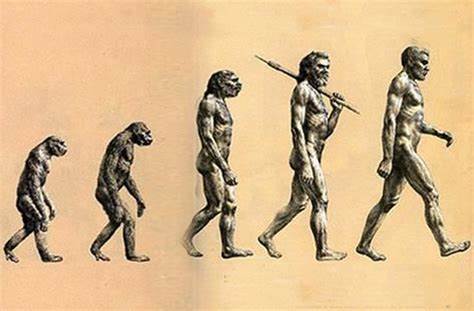
Homo sapiens have only been on earth an estimated 300,000 years on a planet estimated to be 4.6 billion years old.

Leary suggests the psychology of homo sapiens is probably not much different today than when they first became sentient. The inference made is that our emotional and intellectual framework evolved from ontological experience and genetic inheritance. The history of human nature is written in our genes and the memes created by the nurturing of human life. Our nervous system evolved through Darwinian natural selection intent on preserving itself. Along with genetic evolution of the human neurological system, social and emotional responses to the environment were formed by inherited memes. (Richard Dawkins, an evolution biologist, defined “meme” as an inheritable behavior.)

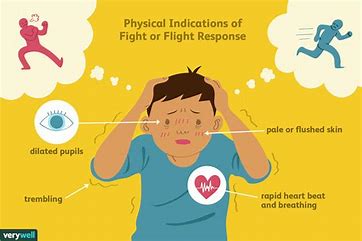
Leary explains fear, fight, or flight responses are heritable behaviors.

Dawkins suggests they are inherited memes and Leary suggests they are why most humans fear snakes, the dark, approaching strangers, and the unknown. Leary goes on to explain emotional responses like embarrassment, stress, and hurt feelings are inheritable physiological responses to inter and intra social relationships. He also explains more people, more noise, more urbanization subliminally affects human behavior.

Interestingly, Leary notes hurt feelings are shown to stimulate portions of the human nervous system that literally register physical pain.

That pain can make mountains out of mole hills and cause disproportionate physical response and verbal abuse. He notes human’ self-control is often difficult to exercise when feelings are hurt.

Somewhat bizarrely, Leary notes California tried to legislate self-esteem in school curriculum.

California reasoned feeling good about oneself would instill confidence and self-worth. The mistake is that self-esteem does not mean the same thing to everyone. It is not like gas that powers an automobile. Self-esteem comes from the many experiences children have with parents, teachers, other people, and personal accomplishment. Government cannot legislate all of the interactions in one’s life. It is not that self-esteem is unimportant, but it comes from broad societal experience and personal accomplishment. A classroom education is only a small part of life’s experience, let alone accomplishment.

Leary touches on memory and why we forget. Humans see an event but only recall events by reconstructing their occurrence. In that reconstruction, details are often manufactured rather than accurately recalled. Reconstruction rather than precise memory is the reason for mistakes made by eyewitnesses to events, and more particularly, crime.

There are many more insights to human behavior in Leary’s lectures.

He suggests dreams are not a source of discovery but a way of clearing one’s brain of errant, inconsequential fragments of synaptic events. A surprising lecture suggests there is experimentally proven existence of humans having psychic abilities. There is much to be learned about human behavior and relationship from Leary’s lectures.

A REWIRED GENERATION

“The Anxious Generation” is a much-needed warning to America and the world.

Books of Interest
 Website: chetyarbrough.blog

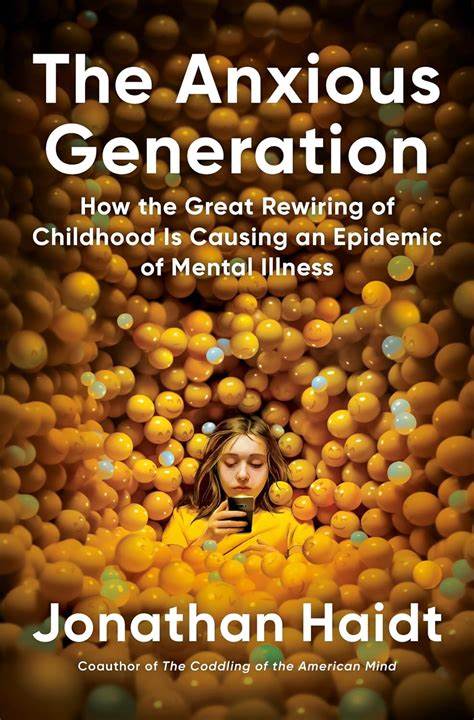
“The Anxious Generation” (How the Great Rewiring of Childhood is Causing an Epidemic of Mental Illness)

By: Jonathan Haidt

Narrated by: Sean Pratt & Jonathan Haidt

Jonathan Haidt (Author, American social psychologist, Professor of Ethical Leadership NY University Stern School of Business.)

“The Anxious Generation” is a well-documented and disturbing analysis of the impact of the internet on American children. It undoubtedly reflects a similar but undocumented impact on children with internet access around the world.

Anxiety is defined as apprehensive uneasiness or nervousness that exhibits itself either physically and/or mentally.

The internet is an information vehicle that can create anxiety in every human being, but Haidt shows its generational significance in the young, i.e., those of 18 years of age or younger. Haidt argues the internet is particularly harmful to girls but suggests it has significant social consequence for boys. Whether male or female, the formative years of children are significantly changed by the ubiquitous presence of cell phone’ internet access.

Haidt implies the role of girls in American society is particularly affected by the internet because of social inequities between the sexes. Physical appearance for women is weighted with more significance than other qualities of being human in America. The point is that rather than innate human capability, perceived beauty becomes a dominant desire of most young American girls.

Haidt notes the internet offers a constant reminder of how one looks to others.

Young American girls are bombarded with internet information about how they look and what others think of their looks. Heidt argues the barrage of information from mobile phone’ access to the internet creates extraordinary anxiety among girls. They become anxious about how others measure their appearance. Some become depressed. Some exhibit anorexic behavior. Some choose to cut themselves. Some withdraw from society. At an extreme, some commit suicide.

Additionally, Haidt notes the allure of internet sexual predation of young girls by men who use the internet to lure young girls and women into compromising pictorial positions by appealing to their desire to be recognized as desirable and beautiful. Added to this sexual predation is the power of the internet to demean, ridicule, and abuse young girls concerned about their place in the world.

Haidt argues boys are also deeply affected by the ubiquitous internet, but their anxiety is caused by growing isolation. Rather than making boyhood friends, participating in sports, attending parties, they become addicted users of the internet who are driven to improve their scores on Fortnite, Halo, or Call of Duty. At the same time, the availability of porn exacerbates misogyny and reinforces a distorted view of society. Their growing isolation in imagined worlds interrupts their psychological growth in the real world of success and failure. Computer gaming reduces social connection. Haidt speculates the availability of free porn decreases boy’s interest in risking the complications and potential of dating. Young boys have the risk of being turned down when asking a girl for a date. There is no risk of being turned down by a free porn site.

(One wonders if young boys associate success in gaming with success in life without understanding the importance of education and gainful employment for socially recognized identities. Without an education and employment, a spiral of homelessness and despair consumes young men’s lives. This is not a Haidt conclusion, but it seems plausible.)

Haidt suggests increases in suicides for young men is caused by the early life’ allure of the internet age.

Haidt explores the possibility of a loss of faith or spirituality as a consequence of internet addiction. Haidt speculates distraction of the internet replaces the camaraderie created by religious services. This seems reasonable in one way but too speculative in another. History shows religion has been as much a cause of social destruction as social benefit.

In the last chapters of Haidt’s book, he addresses constructive ways of dealing with cell phone ubiquity and the negative consequence of internet addiction.

The most reasonable suggestions are for cell phone programing to include internet restrictions based on the age of the user. He goes on to argue cell phones should be placed in lock bags or secured by school administrations during classes. The burden of age verification should be put on internet providers and phone manufacturers with penalties for failure to comply with mandated requirements.

A fundamental point of Haidt’s book is that free play time is an essential part of childhood development.

That play time should be for socialization, not internet exploration. A fundamental flaw in Haidt’s prescription is in the need for better parent supervision when many families are broken, or too burdened by gainful employment to reasonably care for their children. This is not to argue Haidt is incorrect in identifying what should and could be done to address the negative impact of cell phone addiction. “The Anxious Generation” is a much-needed warning to America and the world.

MEMORY & INTELLIGENCE

Total recall does not make humans more intelligent or necessarily more informed about the world.

Books of Interest
 Website: chetyarbrough.blog

“Moon walking with Einstein: The Art and Science of Remembering Everything

By: Joshua Foer

Narrated by: Mike Chamberlain

Joshua Foer (Author, freelance journalist, 2006 USA Memory Champion.)

Joshua Foer offers an interesting explanation of human memory. Foer became the 2006 USA memory champion. Foer explains how he achieved that distinction. What is interesting and surprising about Foer’s achievement is that he argues extraordinary memory is a teachable skill.

Arthur Conan Doyle (1859-1930)

Fans will remember Sir Arthur Conan Doyles’ explanation of Sherlock Homes’ prodigious memory technique called the “mind palace”.

Foer explains the idea is not a fiction but an historically proven method for improving one’s memory through association. “Mind palace” is traced back to ancient Greece as a memory tool of the Greek poet Simonides of Ceos. The idea is to associate facts with familiar features of a house in which one has lived, or of which one has intimate knowledge. The idea of memory being associated with something is not revelatory to anyone who tries to remember someone’s name. Many people, particularly good salespeople, use association to remember a customer’s name. They might remember Fred as a “red” tie or Monica as a “harmonica” and so on.

Foer suggests nothing is forgotten but only stored in one’s mind.

The problem is recalling a mind’s recorded information. If one makes a point of associating a fact with something that is familiar, say like a space in your own house, it is more likely to be recallable. Foer notes experimental studies show human brains record memories of events but may be unable to consciously recall details. In “show and tell” experiments, humans show evidence of a recorded memory by expressing familiarity, if not specificity. (“MIT research explains how our brain helps us remember what we’ve seen, even as visual information shifts around within our visual system.” See MIT NEWS Feb. 8, 2021.)

Foer suggests the history of memory began naturally with tales told and re-told before writing became a way of record keeping.

Foer explains history shows that philosophers like Socrates rejected the idea of recording information as a way of revealing truth. To Socrates, truth comes from conversational exploration of nature as it is. Foer suggests society is fortunate that Plato and Archimedes partly disagreed and chose to provide a written record of Socrates thought.

A larger picture of Foer’s view of memory and recall implies a leveling of knowledge in the world.

From an oral tradition to the written word to radio to television to the internet of things to microchips in one’s brain–the recall of facts become more widely shared. The complication of improving “knowledge leveling” is in how recalled facts are assembled by the brain of the receiver.

Foer illustrates how much effort must be put into memorizing information if one wishes to excel as a technologically unplugged person who wishes to recall more facts. It requires concentrated effort to create a mnemonic device like rooms in a house to associate a series of facts or numbers that can be recalled. On the other hand, advances in technology could make that exercise moot.

In the near future, recollection from an implanted human chip could improve correlation of facts for thought and action.

This is not to diminish the accomplishments of the author in training his mind to recall facts better than others. In the near future, recalling and collating facts may be more efficiently managed by an A.I. microchip that complements human thought and action.

Having eidetic memory or technological total recall does not make humans more intelligent or necessarily more informed about the world. Recall of facts is only a means to an end that may as easily destroy as improve society.

SCHIZOPHRENIA

Being one of “The Best Minds” is of little help in coping with schizophrenia’s symptoms.

Blog: awalkingdelight

Books of Interest
 Website: chetyarbrough.blog

“The Best Minds” A Story of Friendship, Madness, and the Tragedy of Good Intentions

By: Jonathan Rosen

Narrated by: Jonathan Rosen

Jonathan Rosen (Author, Yale graduate–Accepted but dropped out of a PhD English program at Berkeley.)

Jonathan Rosen tells the story of his boyhood and adult friendship with Michael, a boy of his age who excels academically and professionally as a young graduate of Yale. Michael has a mental breakdown in his early twenties. He is diagnosed as schizophrenic. Rosen compares his years of adolescence with Michael’s.

Rosen’s stricken friend excels in every academic and business pursuit he undertakes before his slip into schizophrenia. In reflecting on the boy’s relationship, Rosen explains his perception of himself is as a grade school and high school plodder who prefers literature to math and the sciences. In contrast, Rosen suggests Michael’s academic qualities give him the ability to read, understand, and recite literary and science subjects with the ease of a savant. Michael reads everything with speed and understanding while Rosen labors over his studies.

The irony of Rosen’s perception of himself is that despite their differences, both he and Michael are accepted at Yale.

Rosen becomes an editor of the University’ newspaper, and later, a published author. Michael aspires to the editorship of the Yale paper, tries to become a published author, but is unsuccessful. Before graduation, Michael is recruited by a prestigious publicly held investment firm and seems on his way to great wealth and success. Instead, Rosen explains Michael leaves the investment company and begins to lose his way in life. Michael slips into a schizophrenic state that diminishes his eidetic memory and gives him a combination of debilitating psychological symptoms. At the height of Michael’s illness, he threatens his mother with a knife. With the persuasion of his father, Michael agrees to admit himself to a psychological ward which finally diagnosis his schizophrenia.

Michael, Rosen’s brilliant childhood friend, is admitted to a psychiatric ward for treatment designed to isolate and medicate its patients into a fog of confusion that is designed to lessen paranoid depression.

Rosen’s long introduction of himself and Michael seems prelude to an explanation of the ineptitude of the American psychiatric industry. Michael’s journey is an indictment of the American system of treatment for mental dysfunction. Michael is eventually discharged but is placed in a group home with other patients suffering from mental dysfunction. They share bedrooms with medications designed to isolate and offer palliative care that deadens their psychological symptoms.

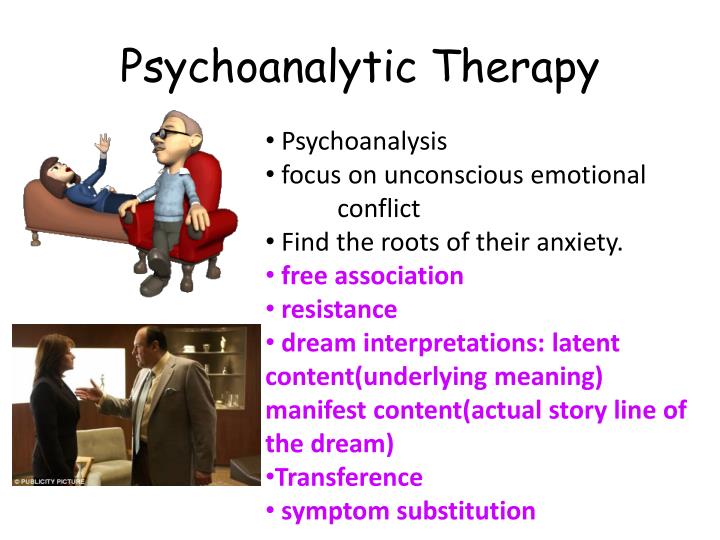
Michael continues his treatment with the aid of minimal income from a government disability program that helps pay for his accommodation and psychoanalytic therapy.

He is directed to reengage life by his therapist with work as a clerk at a Macy’s Department Store. Michael’s father is incensed by the therapist’s diminishment of his son’s accomplishments and begins a campaign to have Yale reengage his son in pursuit of a law degree. With the help of Yale’s faculty, Michael is readmitted to the University.

Ironically, the Yale faculty and students become a caring haven that helps Michael cope with his medical condition.

However, Yale’s help is only palliative, not curative. Michael remains schizophrenic, only ameliorated by drugs and the calming influence of Yale students and faculty. His paranoia continues and becomes more severe when his father dies.

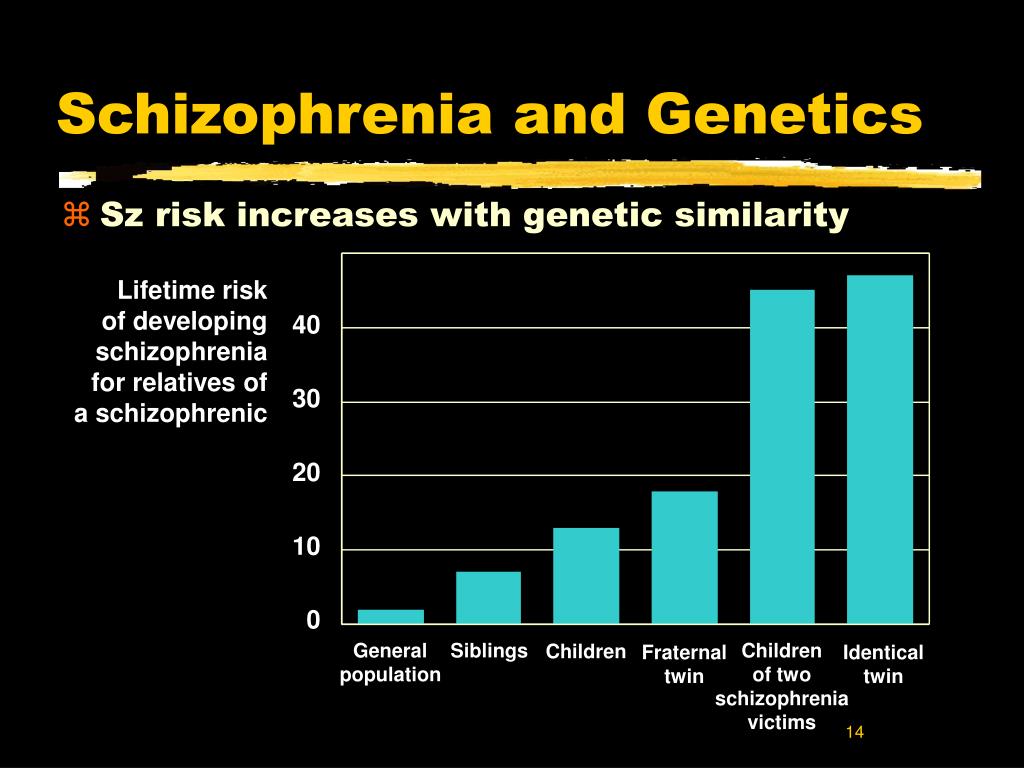
Schizophrenia affects only 1% of the population but has a higher risk of contraction from first degree relatives. (Michael’s grandmother was diagnosed with the disease.)

Michael seems on a road toward managed recovery with a detailed intellectual explanation of what schizophrenia is to him and how it creates delusional images that threaten his existence. His intellectual ability to explain his illness to the public attracts book publishers and the film industry to offer him over a million dollars for a book and film about his life. As this financial windfall becomes real, Michael and his fiancé plan to marry.

On June 17, 1998 Michael B. Laudor stabs his pregnant fiancé, Caroline Costello.

In a schizophrenic episode, Michael grabs his fiancé from behind, stabs her several times, and cuts her throat. Michael leaves her to die on their kitchen floor. Rosen notes that Michael quit taking his medication. He lost control in an episode of paranoia that viewed his fiancé as a maleficent alien presence. It seems a recurrence of what happened with his mother when he was thankfully convinced by his father to voluntarily commit himself to a hospital ward.

What becomes increasingly clear in Rosen’s biographical story is that there is no cure for schizophrenia.

Schizophrenic treatment is a life-long process that requires medication and a support system from caring caregivers, both professional and familial. Being one of “The Best Minds” is of little help in coping with schizophrenia’s symptoms. It requires lifelong assistance because it affects a person’s thinking, emotions, and interactions with the world.

Michael is charged with second-degree murder but is found not guilty by reason of mental defect. He is eventually committed to the Mid-Hudson Forensic Psychotherapy Center in New Hampton, New York in which he remains as of 2023.

(This is a terrible and tragic story. Rosen’s detailed research shows Caroline Costello was a good person, willing to help others, intending to adopt her husband’s faith, and trying to care for Michael in his struggle with an incurable brain dysfunction.)

LETTING GO

One can choose the life of Buddha, Muhammed, Jesus Christ, Zoroaster, Rishabhanatha, Maimonides, Saint Francis of Assisi, Confucious or some other spiritual figure but it is one’s individual memories and our ability in “letting go” that will give one peace of mind and happiness in life.

Audio-book Review
 By Chet Yarbrough

Blog: awalkingdelight
 Website: chetyarbrough.blog

The Untethered Soul (The Journey Beyond Yourself)

By: Michael A. Singer

Narrated by: Peter Berkrot

Michael Alan Singer (American Author, journalist, motivational speaker, software developer.)

Michael Alan Singer’s audiobook is a reification of “Letting Go” written by David Hawkins. Hawkins, a medical practitioner, and Singer, a successful tech entrepreneur, come to similar conclusions about how to live life. Singer offers a more spiritual and ritualistic approach in working through remembered, and often suppressed, experiences of life by confronting them and letting them go.

Dr. David Hawkins posits the idea of a cosmic mind that can be tapped into by one’s thoughts to mitigate negative feelings. Singer’s approach is more direct and based on actual experience revealed by conscious thought and conscious rejection.

Singer believes every experience in one’s life is recorded by the mind, either correctly or falsely.

Singer suggests, through meditation, harmful or distorted memories can be revealed and discarded as inconsequential by the process of “letting go”. This is the same “letting go” referred to by Hawkins but located in a cosmic mind (the totality of human thought) rather than the individual mind argued by Singer.

Singer’s idea for treatment seems more therapeutically practical than Hawkins.

Both writers offer a solution to many human problems, but Singer suggests a therapeutic process exercisable by the individual, without the mysticism of a cosmic mind.

Singer introduces the idea that every experience in an individual’s life is consciously or subconsciously recorded in one’s mind.

Singer’s suggestion is that all negative feelings from life experience can be eradicated by letting them go. By “letting go” of accurate or inaccurate memory, Singer suggests one’s peace of mind, energy, and happiness improves.

One can choose the life of Buddha, Muhammed, Jesus Christ, Zoroaster, Rishabhanatha, Maimonides, Saint Francis of Assisi, Confucious or some other spiritual figure but it is one’s individual memories and our ability in “letting go” that will give one peace of mind and happiness in life.

BEHAVIORAL HOPE

Audio-book Review
 By Chet Yarbrough

Blog: awalkingdelight)
 Website: chetyarbrough.blog

Of Fear and Strangers (A History of Xenophobia)

By: George Makari

Narrated by: Paul Heitsch

George Jack Makari (American author, psychiatrist and historian, professor at Weill Cornell Medical College.)

George Makari notes his family emigrated from Lebanon to the United States when he was a young boy. This is an interesting note because of the diverse cosmopolitan history of Lebanon that reaches back more than 5,000 years. Lebanon is a country of many cultural, religious, and ethnic groups including Arabs & Syriac, Armenians, Kurds, Turks, and others.

Makari’s education and family background are well-suited for his explanation and history of the psychology of race and ethnicity. For Beirut to have become a cultural center for a period of time must have required high tolerance for difference among its residents.

Beirut got the name “Paris of the Middle East” following WWII when it became a vibrant cultural and intellectual center, largely influenced by the French.

Makari notes WWII’s end and implies society’s relief ameliorated conflict between Lebanon’s disparate cultures. However, that relief falls away in the 1970’s Lebanese civil war.

Beirut, Lebanon’s capitol, is a city some 40 miles from Makari’s hometown. It became a graveyard and failed state after the Lebanese civil war.

As Franklin Delano Roosevelt said in his 1933 inauguration, “The only thing we have to fear is fear itself.” Roosevelt is, of course, referring to fear felt by Americans during the Great Depression.

In “Of Fear and Strangers”, Makari suggests fear is at the heart of race and ethnic discrimination. Undoubtedly, the end of WWII reduced fear in the people of Lebanon. Reduction in fear might be the motivation for Beirut’s acceptance of cultural diversity, peace, and prosperity between 1945 and the 70s.

As a psychiatrist and historian, Makari offers a theory of how and why people become xenophobic.

He suggests it begins early in life. Makari argues the rise of Hitler and the horrid reality of the Holocaust lay at the feet of an authoritarian culture that suppressed freedom, demanded conformity, and used vilification of the “other” to reinforce a false belief in superiority.

Makari explains discrimination is largely based on fear of those who are different from us, i.e., us being anyone of a different race or ethnicity.

Makari’s history is about xenophobia, i.e., the fear or hatred of people who are different. The definition of xenophobia is first noted in 1880 with the combination of two ancient Greek words, i.e., “Xenos” meaning stranger and “Phobos” meaning fight or fear.

Makari argues the key to ameliorate fear of strangers or the “other” lies in the way parents raise their children.

Realigning fear of the stranger will not change the past and seems unlikely to change the future. However, Makari argues the key to ameliorate fear of strangers or the “other” lies in the way parents raise their children. He argues parenting that is less authoritarian and more open and nurturing will fundamentally change society to be more empathetic. Makari persuasively argues the rise of Hitler is partially related to German culture and the relationship between parents and their offspring. He suggests only with childhood experience of freedom will equal rights and equal opportunities be realized by society.

Makari suggests that family dynamic before WWII created German psychological projections for distrust of “others” and displacement that exhibits itself as anger and sometimes rage.

Makari suggests German family’ dynamics are culturally stricter and more demanding than those of many countries. He implies relationship change between parents and children would create a more empathetic generation in Germany.

Makari’s theory goes beyond individual psychological projection (an ego defense mechanism against unconscious impulses) by explaining how group psychology works to heighten rage against the “other”. Displacement (a redirection of a negative emotion) takes the form of rage against the “other”. Makari argues distrust of the “other” and rage is magnified by group hysteria. That hysteria is exhibited by Hitler’s followers. German rage led to the genocidal murder of Jews. Makari suggests one who is empathetic no longer fears the stranger and welcomes others as fellow humans–living lives, both different and the same as themselves. There is no motivation for displacement rage among those who are empathetic.

(Before this book was published, America experienced group rage in the January 6, 2021 attack on the capitol.)

The last chapters of Makari’s history of xenophobia explain how psychiatric and philosophical theories of mostly men (like Kraepelin, Freud, Adorno, Marx, Locke, Sartre, Camus, Foucault, and Simone de Beauvoir) provide a basis for his beliefs about histories’ recurrence of xenophobia.

Humanity will never become egalitarian without a common purpose.

What is ironic about Makari’s theory of the history of xenophobia is that it offers hope for the future. The experience of Lebanon after WWII suggests global warming, like WWII, may give common purpose to many, if not all, peoples of the world. (An exception would be those nations that insist on adherence to myths of hegemonic power and religious zealotry.)

According to Kamari’s theory, it begins with parenting. If he is right, change will begin with how future generations are raised. Might does not make right. Less authoritarianism will allow the world to more constructively address global warming’s world-wide risk.

Of course, this book was written before Russia invaded Ukraine. Kamari notes the rise of Trump, and his supporters implies group rage and xenophobia remain a clear and present danger in America.

In listening/reading Kamari’s book, one chooses to either be a pessimist or optimist about our world’s future.

The hope is that an interregnum (a gap in government and social order) is created to allow Makari’s theory of improving parental care of children is implemented. If Makari is right about how parents should raise their children, a more empathetic society may emerge to proffer a more egalitarian society. On the other hand, humanity may continue down the road of self-destruction, fueled by unregulated self-interest and diminishing human empathy.

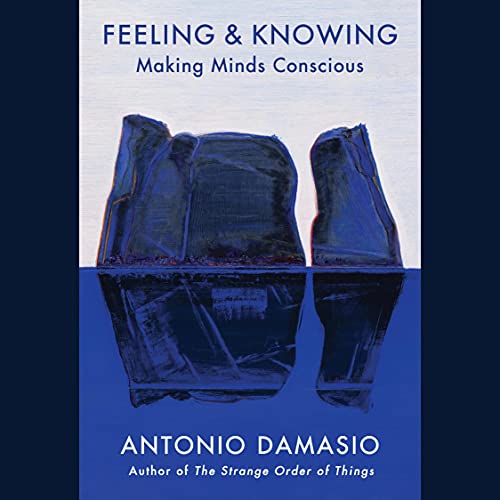
FEELING & KNOWING

Audio-book Review
 By Chet Yarbrough

Blog: awalkingdelight)
 Website: chetyarbrough.blog

Feeling & Knowing

By: Antonio Damasio

Narrated by:  Julian Morris

Antonio Damasio (Author, Portuguese American neurologist, Professor at the University of Souther California.)

Antonio Damasio refines the definition of consciousness in “Feeling & Knowing”. Damasio offers a more science based, experiment driven, view of consciousness than Helen Thompson’s “Unthinkable…” “Feeling and Knowing” is a shorter version of Anil Seth’s book “Being You” that also addresses consciousness.

Both Damasio and Seth argue consciousness comes from feelings.

Thompson offers a less science driven view of consciousness based on patient interviews that reinforce Damasio’s and Seth’s views. There seems a slight difference between Damasio’s and Seth’s view of consciousness in the belief that emotions or feelings are the source of thought and knowledge origination. Seth argues emotions originate in the organs of the body and inform the brain. Damasio is more circumspect and seems to argue emotions come from the body and brain in a synchronous way.

However, Damasio’s and Seth’s beliefs about consciousness seem entirely compatible. That composite view changes with additional input which suggests consciousness is not a precise representation of reality.

To Damasio, one’s view and understanding of the world comes from feelings processed and imprinted on, and by, the brain. This is not to say that the brain is only a processor but that it works synchronously with the organs of the body.

Damasio emphasizes feelings as the primary knowledge source of the human experience. Damasio’s theory suggests artificial intelligence will always be artificial because it relies on the logic of ones and zeros rather than the dynamic process of emotion interface with brain processing.

If Damasio is correct, for A.I. to become a learning machine, emotion must be a part of its programming.

If emotion can be and is programmed into a machine, there seems a probability that humanity will become servant rather than master of the universe.

APPARITION & NUISANCE

Audio-book Review
 By Chet Yarbrough

Blog: awalkingdelight)
 Website: chetyarbrough.blog

Out of Mesopotamia

By: Salar Abdoh

Narrated by: Sean Rohani

Salar Abdoh (Author, Iranian American, family forced to leave Iran when he was 14, Graduated from U.C. Berkley and City College of New York.)

Salar Abdoh’s book title, “Out of Mesopotamia”, implies an opinion about the Middle East. Abdoh entertains a listener/reader with his wry sense of humor, colored by the tragedy of political turmoil, murder, and martyrdom in the Middle East. His personal life and academic education infer a better understanding of western and middle eastern cultures than most Americans.

Abdoh’s novel idealizes a belief in pan Arabism with return of a borderless Middle Eastern area like Mesopotamia. His novel expresses love for Arab culture.

Whether Mesopotamia may have been a land of erudition, agriculture, domesticated animals, and social classes its culture changed with the creation of nation-states rather than singular settled communities. But, that change is unlikely to have been as quiescent as Abdoh implies.

Mesopotamia means between rivers which are known today as the Tigris and Euphrates. It was originally made of city states peopled by Sumerians between the sixth and fifth millennium BC. These city states each had their own king which implies there were borders and undoubtedly periodic conflicts.

As noted by Abdoh, the level of conflict remains today. The difference is, rather than combat with words, fists, and clubs, today’s nation-states use guns, bombs, and weapons of mass destruction to resolve disputes.

Abdoh’s main character is a reporter, sometimes combatant, who decries Iranian religious rule and Syrian slaughter of innocents. One senses the author’s visceral love for Arab culture and a yearning for return to his native country.

A large part of Abdoh’s story is to explain martyrdom to its listeners.

Most understand religious beliefs are the proximate and most obvious reason for martyrdom. Participants of a holy war are memorialized by dedicated monuments to their deaths. Their belief is that they arrive in paradise while being memorialized by those remaining in life. Abdoh explains paradise and earthly memorialization are only two of many reasons people seek martyrdom.

For some, martyrdom is penitence for a sinful life. For others, it is to escape from what they view as a meaningless existence. For a few, it is a choice to end one’s life for what they believe is a meaningful purpose.

From soldiers, to sinners, to artists, and the remaining living, Abdoh infers martyrdom is a wasted life.

Abdoh’s writing is engaging, in part because of its substance but also because of his sense of humor and point of view. He weaves a story of emotion, and disgust by using irony, humor, affection, love, disgust, and intellect of characters who keep one entertained and engaged. The engagement comes from agreement and disagreement with his character’s point of view.

The relationship between America and the Middle East is complicated.

America and the Middle East’s relationship is challenged by cultural differences that seem irreconcilable because of national and individual self-interests, made even more difficult by language. The failure of most Americans to understand more than their own language breeds ignorance and arrogance. As noted by other authors, the story of the Arab world is tightly woven into the fabric of their language.

Abdoh’s story reflects the ignorance of American policy and how it deals with the Middle East.

He does not suggest it is because of malevolence but infers it is from not caring enough and being consumed by American national self-interest. America is described by Abdoh as an apparition and nuisance to the Middle East. Without mutual cultural understanding, there is, nor will there be, peace in the Middle East or world.

BEAST MACHINE

Audio-book Review
 By Chet Yarbrough

Blog: awalkingdelight)
 Website: chetyarbrough.blog

Being You (A New Science of Consciousness)

By: Anil Seth

Narrated by: Anil Seth

Anil Seth (British professor of Cognitive and Computational Neuroscience at the University of Sussex.)

Anil Seth’s “Being You” is a difficult book to understand, in part because of its subject, but also because it requires a better educated reviewer. Consciousness is defined as an awareness of yourself and the world, a state of being awake and aware of one’s surroundings that emerges from one’s brain. Seth explains neuronal activity of the brain correlates with what “Being You” is you. Seth argues that without neuronal activity, there is no you.

Seth suggests the conscious self operates with a Bayesian view of the world.

Bayes’ theory is that decision making is based on rules used to predict one’s decisions. The example Seth gives is a person living in the desert who sees droplets of water on his lawn and presumes it either rained, or his sprinkler was left on when it should have been turned off. He looks outside and sees his neighbor’s lawn is wet and, with that added information, decides it must have rained. Then he notes his window is dirty and maybe he is not seeing water on his neighbor’s lawn. This reduces the possibility that it rained but not enough to change his mind about it having rained last night. The point is that one continually changes their state of understanding (their consciousness) based on added information.

The difficulty of a Bayesian view of consciousness is that human decisions are a function of human perception of data that is never 100 percent complete.

There are three fundamental weaknesses with a Bayesian view of the world as the prime mover of consciousness. One, humans do not always see clearly. Two, all that is seen is never all that there is to be seen. And three, human minds tend to pattern what they see to conform to their personal bias. The third is the most troubling weakness because, like in police line-ups used for eyewitnesses to identify perps when a crime is committed, mistakes are made. Eyewitnesses are no guarantee for identification of a criminal’s crime. None of this is to suggest Seth is wrong about what consciousness is but it shows consciousness is eminently fallible and only probabilistic.

Seth’s theory of consciousness reinforces the public danger of social websites that influence the public, particularly young adolescents trying to find their way in life. Their search for social acceptance leads them to internet sites that may lead or mislead their lives.

Another fascinating argument by Seth is that the mind is not the source of emotion. He suggests the mind is informed by the organs of the body. The heart begins to race, and adrenalin is released as somatic markers that send signals to an area of the brain that makes fight or flight decisions. Emotions do not originate in the brain. The brain responds to the cumulative effect of the body’s physical and chemical signals.

Seth notes various studies of human decision making that are based on external stimuli with a belief that the primary purpose of consciousness is to survive. Two methods of consciousness measurement are IIT (Integrated Information Theory) and PHI, a number meant to measure quality interconnections between bits of information of a given entity. The resulting number — the Phi score — corresponds directly to a measurement of an entities level of consciousness. A reader/listener should not be discouraged by this technical digression. Much remains in Seth’s book that is more comprehensible and interesting.

Seth explores some of the tests used for consciousness. The mirror test is one in which a living thing is shown itself in a mirror to see if it recognizes the image of itself.

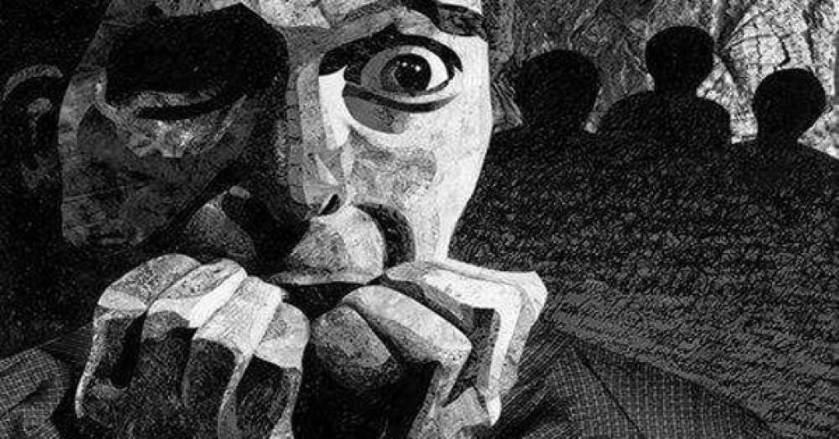
Monkeys show some signs of recognition (dogs do not) which suggests a greater level of consciousness among primates. He notes the evolution of human perception of the world through the eyes of artists like Monet, Mach, and Picasso who see nature’s colors and planes of the face or body in the material world. One thinks of Monch’s insightful “Scream” that reminds some of life’s terror. He shows how a stationary drawing seems to have movement because of a trick of consciousness.

Seth shows how an inanimate rubber hand can be made to feel like a part of the human anatomy by stroking one’s real hand at the same time the experimenter strokes a rubber hand.

Seth expands that principle to show how consciousness can create a full body illusion like that of a Star Trek transporter that sends their body to another planet. A whole host of social problems can be created by image teleportation. Being able to create a perfect duplicate of one person that is televising false information might start a rebellion or start a war.

Seth argues humans have free will and that the brain’s pre-cognition for action is not because of pre-determination of life but a delay inherent in consciousness which is gathering information before acting, just like the sprinkler story alluded to earlier. As noted earlier, to Seth, consciousness is a Bayesian process, not a predetermination of action.

The end of “Being You” addresses Ray Kurzweil’s “singularity”, “a future period during which the pace of technological change will be so rapid, its impact so deep, that human life will be irreversibly transformed. Seth expresses concern and an element of optimism. The evolution of the beast machine bodes a possible end, an adaptation, or an evolutionary change of humanity.

Seth touches on research being done on cerebral organoids, artificially grown miniature organs resembling the brain.

Presently they are being used to model the development of brain cancer to aid in its cure but how far is this from the next step in machine learning, supplemented by the implantation of cerebral organoids?

The beast machine is consciousness.

Genetics discoveries and research hold the potential for creation, manipulation, and destruction of human life. Artificial Intelligence is on the precipice of a marriage between all information in the world and sentient existence of beast machines. The beast machine will have greater potential for creation, manipulation, and destruction of life.

Human consciousness has created the agricultural age, the industrial revolution and now the information age. Humans have nuclear weapons of mass destruction that can end our world’s human habitation. The only note of optimism is that the history of human consciousness has generally led to positive changes for humanity, i.e., longer life spans, improved economic and social conditions, and new discoveries about life and living. The world is at its next great social and economic change.

MINDS MATTER

Audio-book Review
By Chet Yarbrough

(Blog: awalkingdelight)
 Website: chetyarbrough.blog

Unthinkable: An Extraordinary Journey Through the World’s Strangest Brains

By: Helen Thompson

Narrated by: Helen Thompson

Helen Thompson (British Author, journalist with a bachelor’s degree in Neuroscience.)

“Unthinkable” is a series of interviews of people who have a reputation for seeing the world and their place in it, differently. The author is a journalist.

As an investigative reporter, Helen Thompson elicits human perceptions of the world that are different from what most people perceive.

Thompson argues perception of the world comes from the mind. As synaptic activity of the mind is better understood, she infers what is real or false may become more universally understood.

Though Thomson’s interviews are anecdotal, they suggest the mystery of consciousness holds a key to mental health.

An interesting highlight of Thompson’s investigation is the existence of synesthesia in some people. Synesthesia is a neurological condition where information meant to stimulate one of your senses, actually stimulates more than one of your senses. Thompson notes people who have synesthesia may be able to hear colors, feel sound, or taste shapes. Two people with the same diagnosis may not perceive the world in the exact same way but their brains are stimulated to see more than what most people see, hear, or feel.

Synesthesia may be a mixed blessing in that it can overwhelm one’s senses, but it implies a more multifaceted view of reality.

One of Thompson’s last interviews is of a doctor who has a form of synesthesia that magnifies his empathy for patients. He actually feels some of what a patient is experiencing. Presuming the doctor’s senses are not overloaded by empathy, the patient seems more likely to be better served. If the mind’s neurological pathways for synesthesia can be identified, could empathy become instilled in every thinking being? Possibly, but the question remains whether that would enhance or burden humanity by making people who serve society emotionally drained, tired, and demotivated.

An earlier chapter addresses people who can develop “mind palaces” like the fictional character Sherlock Holmes.

They can recall the minutest details of an incident and compare it with information and experience they have acquired over the breadth of their life. If neurological pathways of a mind palace can be replicated in every human mind, could humans use those pathways to recall what they have learned from past experience and education to solve human problems?

One wonders if that is not the direction of A.I. in the future. This leads to concern of life becoming more machine-like than human with the added dimension of life as machine.

A third story is of the man who believes he is dead. His conception of himself is reinforced by brain scans that show very little neuronal activity though he continues to wake up every morning and function like a human during the day. He has little emotion or hunger and feels comfortable spending the day in a cemetery among those whom he feels are fellow travelers. Through medication, his neuronal activity is re-established, and he becomes more aware of his existence among the living.

A third story is of the man who believes he is dead. This anecdotal story reinforces belief that life is all in the mind.

There are more bizarre stories, but the underlying theme is life is defined by consciousness. Examples are given to show how parts of the brain are interconnected by neurons that pass information to the body about human existence in the world. The inference is that as humanity gains knowledge of how this interconnection works and which parts of the brain control neuronal activity, it will be possible to change human life. The impossible question to answer is whether that change will have good or ill effects on society. Of course, that may be moot if humanity cannot come to grips with the harm that is being done to the world’s environment.

This is a book one may set aside as an anecdotal journey into bizarre human anomalies.  On the other hand, it affirms the importance of understanding everyone is part of humanity. It seems search for understanding of consciousness is essential for the continuation of human beings, whether mentally disabled, psychotic, neurotic, or diagnostically normal.