Just as McCulloch’s history shows how the internet changed yesterday, it seems A.I. will change the future.
Books of Interest Website: chetyarbrough.blog
How the Internet Happened (From Netscape to the iPhone)
By: Brian McCullough
Narrated By: Timothy Pabon
Brian McCullough (Author, CEO of Resume Writers.com, entrepreneur.)
A book about the beginning of the internet is such old news, one is inclined to put this book aside. The internet was born in the 1960s and only became recognizable in the 1980s. However, even in 2024, it is interesting to hear about early users who became rich just by organizing information on an easily accessible and free media platform.
Like this blog, it is rewarding to write something that others are interested in reading.
The exercise of book reviews is a reward to one’s education and an ego boost for a writer from an audiences’ clicks. Brian McCullough tells the story of the founders of YAHOO, Jerry Yang and David Filo who were in college and became fascinated by the World Wide Web because of information it offered with clicks on a computer board. This was in the 1990s. Though there were many websites to choose from, they were disorganized and difficult to find if you were looking for specific information. Yang and Filo began organizing the websites by their offered information. YAHOO’S founders were looking for information of interest to them, and presumed others would like to know how they could use a keyboard to find information they might need or want.
Jerry Yang and David Filo were fascinated by what could be found on the internet.
They spent hours, days, weeks, months that grew into years organizing website addresses so others could find what was interesting to them. In these early years, making money was not their primary objective. They did not use their site to advertise products for income. They felt clicks were their reward and that clicks would be lost if advertisers were allowed to use their site. They chose to have users pay a fee to become members of their site. Their use and organization of the internet became an obsession for them and followers steadily increased. Their click numbers and users rose into the millions and advertisers were again knocking at their door. They resisted until they realized their idea could be worth something more than their interest in learning, gathering, and organizing knowledge. They relented, allowed advertising, and the clicks to their site kept on rising. YAHOO went public. The rest is history.
McCulloch goes on to describe the rise and fall of companies that capitalize on the internet.
The companies ranged from behemoth companies like Amazon, Microsoft, Google, Apple, and Ebay that rocketed to the stratosphere while Priceline.com, Netscape, Pets.com, Webvan and others plunged into the abyss. This is not to say today’s behemoths will continue to dominate the market or that some new company will replace their success with even greater appeal. A.I., like the internet, may be a killer discovery that makes or breaks today’s behemoths into tomorrow’s also-rans or hangers-on.
McCulloch’s history is interesting because it explains how winners understood the future better than losers understood the present.
It’s fascinating to find Apple’s Jobs resisted creation of the iPhone but employees worked secretly to refine the idea and Jobs eventually agreed. McCulloch also reveals the monopolistic nature of today’s winners and the threat they present to the future. Killer ideas of today’s tech companies capitalize on the internet’s information ubiquity, and how it can be organized to offer product to the world at a competitive price.
A.I. is a new idea that organizes information on its own with consequences to the public that are yet to be realized. Just as McCulloch’s history shows how the internet changed yesterday, it seems A.I. will change the future.
With rule by the one there are no checks and balances which threatens war and discounts peace.
Books of Interest Website: chetyarbrough.blog
Autocracy, Inc. (The Dictators Who Want to Run the World)
By: Anne Applebaum
Narrated By: Anne Applebaum
Anne Applebaum (Author, journalist, historian, wrote Pulitzer Prize for Non-Fiction with “Gulag: A History” Also wrote “Red Famine”, both of which have been reviewed in this blog.)
“Autocracy, Inc.” infers there are two forms of government in the world, one is autocratic, the other democratic. Applebaum shows autocracies are often venal and kleptocratic. One might agree, but immorality and greed are a part of human nature in every form of government. This is not something Applebaum denies, but all forms of government have experienced excesses of wealth and power that have led to autocracy. What Applebaum argues is that autocracy is more threatening today than at any time in history.
The prestige of national leaders is by definition power.
As the British Lord Acton noted in 1887–“Power tends to corrupt, and absolute power corrupts absolutely”. Both democratic and autocratic leaders are subject to Acton’s aphorism. This is not to say Applebaum’s argument is not important, but no form of government, including democracy, has been found to fairly regulate the faults of human nature.
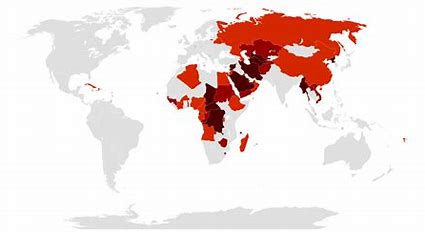
What Applebaum makes clear is that autocracy magnifies the faults of human nature because in countries like China, North Korea, Myanmar, Russia, parts of Africa, and similar autocracies, there are no checks and balances.
Imprisonment, torture, and murder for challenges to leadership are condoned, and commonplace. Applebaum’s added dimension is that many autocratic nations have begun aligning themselves to split the world between the lands of the relatively free and the chained.
Alexi NalvanyLiyu XiuaoboJang Song-thaekAung San Suu Kyi
Applebaum offers many examples of imprisonment, torture, and murder in autocratic countries. Some of the most famous are Navalny in Russia, the Nobel Prize laureate Liu Xiaobo in China, Jang Song-thaek, the second most powerful leader in North Korea, and of course, Aung San Suu Kyi in Myanmar. However, what makes Applebaum’s history terrifying is the calculated and cooperative effort by aligned autocracies to subvert freedoms offered in America and other democratic countries.
The author argues many autocratic leaders have become so powerful that no fellow countryman, regardless of their location, is safe from incarceration or assassination.
Assassination of Kim Jon Un’s brother.
Vladimir Putin is believed to have ordered the assassination of a number of Russian citizens around the world. Autocracies use the tools of State to directly or indirectly threaten or assassinate dissidents anywhere in the world.
Facial recognition in China.
The advance of Artificial Intelligence has magnified the strength of autocratic rule with tools of surveillance, assassination, and indoctrination that reach around the world. Applebaum argues the line between democracies and autocracies is hardening to the point of irreconcilable difference, leading to wars between states and territories like Syria, Ukraine, Sudan, and Gaza.
Democracy has its problems which includes dalliance with autocracy, but rule by the one where there are no checks and balances threatens war and discounts peace.
“2666” is a well written book by an author who has read and understood more about society than many who have lived long lives in America.
Books of Interest Website: chetyarbrough.blog
“2666”
By: Roberto Bolaño
Narrated By: John Lee, Armando Duran, G. Valmont Thomas, Scott Brick, Grover Gardner
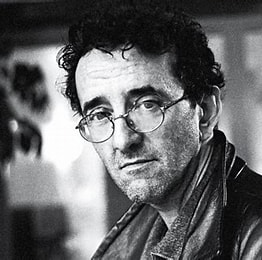
Roberto Bolaño (Author, 1953-2003, died at the age of 50, Chilean novelist, short-story writer, poet and essayist.)
“2666” is a journey around the world. One begins the journey as though one is sinking into inescapable quicksand. Roberto Bolaño dazzles one’s imagination. Its granular mix of western society captures one’s imagination. The book’s narrators trap “2666” listeners in a story of modern times.
Bolaño infers sex is an equal opportunity exploiter.
He suggests communism and socialism are distortions of Marxism and shows capitalism as a form of enslavement. Women’s societal inequality extends to physical abuse in many societies and, at an extreme, to murder. Bolaño’s many characters illustrate the way in which he believes these are societal truths.
The first part of Bolaño’s story tells of three highly educated people who travel for business and pleasure based on their professions and desires.
They are academics steeped in literature who lecture on poetry, philosophy, and great writers. They meet in different areas of Europe as a trinity of lovers, two men and one woman that form an emotional and sexual threesome. The woman appears the more dominant of the three with the two men abandoned for a time because of a younger lover in the woman’s life. The two men continue to travel together and apart but pursue a licentious life with women, some of which are paid for their sexual favors. The author seems to explain sexual desire is characteristic of all human beings, both male and female. Human desire can be exploitive, companionable, and/or a way to make a living.
Bolaño’s travels extend to Mexico and the United States after his literary journey through Europe.
He shows every form of government, whether communist, socialist, or capitalist fails to treat its citizens equally. He infers Marxist theory may hold an ideal of equality but suggests communism, socialism, and capitalism only distort the ideal of a classless society. Materialism, the struggle for recognition, and the value of labor are chimeras, i.e., wished for ends that are illusory in every known form of government.
Bolaño’s trek to Mexico reveals its poverty and the hard life of a country of the rich and many poor.
He focuses on a notorious record of women being murdered in Mexico by an unknown killer and rapist who may be one man or two. The grim view of Mexico dwells on the investigation of these horrific crimes. In the process, the listener is told about prison life in Mexico, a probable killer of the women and another that may still be on the loose. The murders of women continue. An FBI agent from America is involved in the investigation. This is a hard section of the book because of its repeated explanation of crimes against women, but it offers a view of Mexico’s poverty and the unfair, unequal treatment of women and others in the world.
The last chapters of Bolaño’s work are a flash back to WWII and Germany’s attack of Russia after Stalin’s mistaken alliance.
There are flashes of brilliance in this flashback, but the length of the novel begins to wear thin. “2666” is a well written book by an author who has read and understood more about society than many who have lived long lives in America, a land of opportunity with many of the faults noted in Europe and North America.
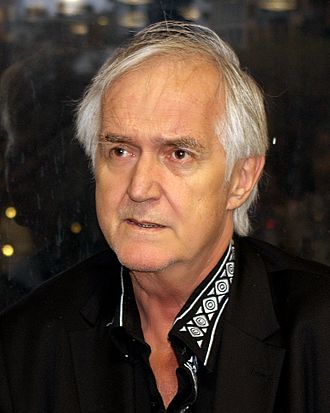
Having heard of Henning Mankell’s mysteries (of which there are many), Kurt Wallander is a reoccurring character as an investigative Swedish detective.
The relevance of “The Dogs of Riga” is in the transition that was occurring when Latvia, Lithuania, and Estonia achieved independence from the U.S.S.R. The Baltics had been a part of and controlled by the U.S.S.R. since 1940. Mankell’s book was first published in 1992, one year after the 1991′ dissolution of the U.S.S.R.
Riga Technical University (Engineering Center in the Baltics)
It is interesting to find in “The Dogs of Riga” that Wallander’s daughter chooses to go to Riga for her college education which makes one wonder why Riga would be chosen. Is it because of the quality of education or just to be further away from family? In any case, the reason these books are recommended is to give some perspective to new visitors of other countries. An interesting observation one makes about “The Dogs of Riga” is a sense of resentment from the Latvians about Russia and their former domination of the Baltic States.
Season 3, Episode 2 of “The Dogs of Riga” on Masterpiece Theater.
Going back to the story, two Russians were shot in the heart, and set adrift on a raft in Swedish waters. Autopsy shows the Russians were well dressed indicating wealth. It was found they had high concentrations of amphetamine in their bodies. In investigating the murders, Wallander finds they came from Riga, the capitol of Latvia. An officer from Latvia goes to Sweden to talk to Wallander. After the visiting officer returns to Riga, he is murdered and Wallander is asked to come to Riga to investigate his death.
With the opening of Latvia to the western world, freedom from communist controls is a mixed blessing.
Mankell begins to tell listener/readers something about Latvia and its suspicion of Russian residents in their country. Along with more freedom to pursue economic growth is the rise of a drug trade and criminal activity. Mankell’s story infers illegal activity is exacerbated by Russians who resent Latvia’s independence from the U.S.S.R. However, with greater freedom comes crime as well as improved economic opportunity. One reserves judgement about whether Russians are the primary cause of drug activity in Latvia because breaking the law is characteristic of all nationalities under all forms of government. The characterization of Russians as the cause of the illegal drug trade in Riga is possible. However, it is the same question one must ask themselves about America and the origins, causes, and persistence of its drug trade.
Freedom entails the pursuit of what one wants out of life. Money, power or prestige are goals of most (if not all) human beings.
However, those goals need to be based on equal opportunity. This is not to say those goals should include criminal activity, but only education offers a chance for all to understand the difference between right and wrong. When equal educational opportunity is available to every person in the world, they may pursue what they think is in their interests. This, of course, is not a world that exists or can exist because personal interest is not the same for everyone.
Getting back to Mankell’s story, Latvia is challenged by its new freedom from the U.S.S.R. The suspicion of Russians is undoubtedly a truth about Latvian culture based on Latvia’s former life as a part of the U.S.S.R. Whether Russians are the criminal master minds of the drug trade is not the point. The point is that human nature requires a reason for everything that happens in a culture. The bad experience of repression by the U.S.S.R. may make Latvians suspicious of every Russian in Latvia. It is similar to Trump’s vilification of immigrants and how that ignorance resonates with some Americans.
Mankell and the author of “The Lilac Girls” are worth reading or listening to if you plan a trip to the Balkans. Traveling to other countries is more interesting because of what writers of fiction and history have to say.
Caro’s facts do not prove truth, but they do reveal the means and consequence of political power and influence in American Democracy.
Books of Interest Website: chetyarbrough.blog
“Working”
By: Robert A. Caro
Narrated By: Robert A. Caro
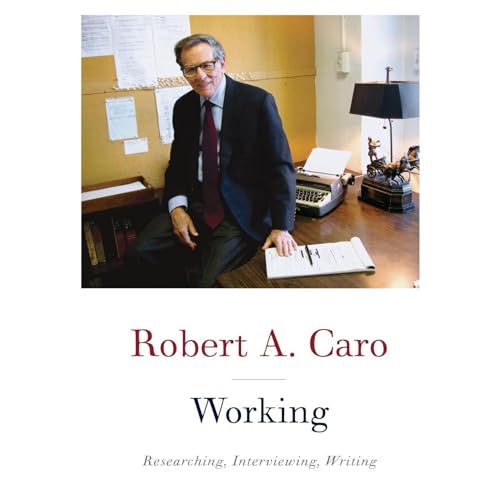
Robert Allan Caro (Author, journalist, winner of 2 Pulitzer Prizes in Biography and many other coveted literature awards.)
Every non-fiction writer can appreciate this erudite and entertaining audiobook, personally written and read by Robert Caro. Caro explains what “Working” means to a non-fiction writer. Caro artfully explains why and how researching, interviewing, and writing a biography is a revelatory experience.
In “Working”, Caro focuses on his two Pulitzer Prize winning books, “The Power Broker: Robert Moses and the Fall of New York” and “Master of the Senate”, one of his four books about Lyndon Johnson. Both biographies are about political power in America.
Robert Moses (1888-1981) was an American urban planner and public official in the New York metropolitan area during the early to mid-20th century.
Moses (among many titles) was the New York City Parks Commissioner and Chairman of the Triborough Bridge Tunnel Authority. His political power and influence are detailed in Caro’s book, “The Power Broker”. Though Moses was never elected to political office, he arguably shaped the infrastructure of New York City as much, if not more, than any elected person in New York. “Working” explains how a reporter from a small Long Island’ newspaper manages to write “The Power Broker” and become one of America’s most famous biographers.
After graduating from Princeton with a B.S. degree, Caro is hired by the Long Island, New York’ newspaper, “Newsday”.
Caro explains he had been a writer for many years as a young boy and college student before getting a scut-work job at “Newsday”. He tells of a breakthrough report he writes that gets attention from the editor of the paper. He is given advice by the editor who recognizes the quality of his writing. The advice is that when writing a piece for the public, be sure of your facts by “turning every page”. Caro takes that advice and explains how it became a mantra, a repeated aid, in his writing.
Caro explains how he and his wife work to “turn every page” in researching the Moses and Johnson biographies.
Even though one may have read Caro’s two Pulitzer Prize winning’ books, “Working” offers a nearly perfect introduction to his biographies of Moses and Johnson that are, to the extent humanly possible, researched by “turning every page”. Caro is hard on himself for taking years to research and write his biographic books. It is a financial hardship for his family, particularly before his first success with “The Power Broker”. They sell their house in Long Island to support his book research. After that first success, the financial insecurity is offset by grants and the support of literary agents. “Turning every page” is a laborious process but it assures and reinforces the facts revealed in his biographies.
Caro explains how he and his wife meticulously researched public documents to confirm facts that corroborate the victimization of some New Yorkers by monied interests that gave Moses the political power to destroy low-income neighborhoods for new thoroughfares through the New York City area.
With the construction of over 600 miles of road many residents, renters and homeowners, were evicted from their homes. Most were left to fend for themselves.
Caro and his wife were willing to disrupt their lives and neighborhood relationships to pursue his obsession with verification of facts. Caro explains that he needed to move to Texas to understand what it was like for Lyndon Johnson to be raised in the Texas Hill Country. He could not just visit because local Texans would not talk to him with the candor he sought to understand where Lyndon Johnson came from. Many revelations are in his book about Johnson that could not have been corroborated without interviews with people who knew the Johnson family.
Caro and his wife move to Austin, Texas to be near the Texas Hill Country to research and understand the society in which Lyndon Johnson is raised.
Many insights are a result of the move. Experiencing the loneliness of the Texas Hill country because of its sparse population helped Caro understand Johnson’s need to be bigger than life. Interviewing Johnson’s brother reveals the tensions that existed between Lyndon and his father. Johnson’s father was heir to the original Johnson ranch that was lost because of the soils’ unproductivity. It had too much caliche, a clay content that would not support a cash crop. When Johnson’s father repurchased the ranch after its loss by the family, he failed to understand the land could not provide enough income to pay its mortgage. The ranch is lost to the bank again. The relationship between Lyndon and his father deteriorated as Lyndon grew older because of Lyndon’s disappointment with his father’s ineptitude and domineering personality. Ironically, Caro notes it is a personality that Lyndon is heir to and for which he is criticized. On the other hand, Caro explains it is also a personality characteristic that makes Lyndon one of the greatest masters of the Senate. No Senate leader since Johnson has as successfully led the Senate in passing government legislation.
Samuel Ealy Johnson Jr. (Lyndon Johnsons’ father. 1877-1937.)
Lyndon’s brother implies Lyndon’s conflicts with his father became part of his drive to be more successful than his father.
Caro infers Johnson and Moses were forces of nature. Both were political power users that understood how to use it to get their way. Obviously political power can be used for ill or good. One can argue New York City open spaces and parks were a great benefit to the city. On the other hand, many people were displaced to provide those open spaces. The Civil Rights Act passed during the Johnson administration benefited millions of minorities in America. On the other hand, an estimated 2,000,000 Vietnamese were killed, 58,000 American soldiers died, and another 288,000 Americans were wounded and/or disabled. How many Vietnamese, and Cambodians were wounded or disabled and how many are still being hurt by leftover landmines?
Caro offers a great service to the public in his writing about political power in American Democracy. Democracy is not a perfect political system, and Caro reveals where that imperfection lies by “turning every page”. Caro’s facts do not prove truth, but they do reveal the means and consequence of political power and influence in American Democracy.
Hager’s history of the drug industry illustrates the strength and weakness of human nature whether one is a capitalist, socialist, or communist.
Books of Interest Website: chetyarbrough.blog
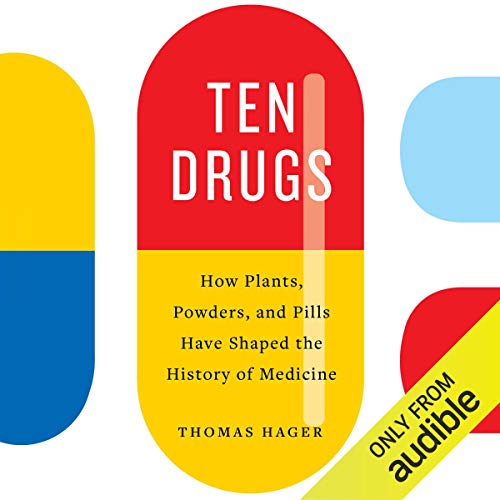
“Ten Drugs” How Plants, Powders, and Pills Have Shaped the History of Medicine
By: Thomas Hager
Narrated By: Angelo Di Loreto
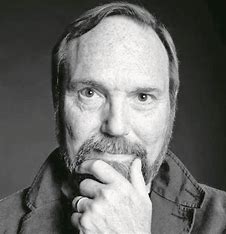
Thomas Hager (Author, science historian, editor, publisher, Oregon native, received master’s degree in medical microbiology and immunology from the Oregon Health Sciences University.)
“Ten Drugs” is a critical view of today’s drug industry, its drug discoverers, the medical profession, and its manufacturers. Hager explains opium is proven to have been used by Mesopotamian Sumerians in 3400 BCE but older than its known cultivation. The Sumerians called it “hul gil” which means “joy plant”.
Thomas Hager begins with opium and its discovery thousands of years ago when the bitter taste of a poppy seed capsule is tasted by a curious African’, Egyptian’, Greek’, or Roman’ Homo erectus.
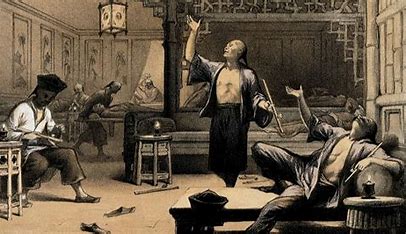
Wide use grew to affect national relations between China and the western world in the opium wars of 1856-1860. China’s Qing dynasty lost territorial control of Hong Kong to Great Britain when opium became a cash cow for international trade.
Hager explains how opium offered both risk and reward to the world. It threatened society with addiction and overdose while offering surcease of pain for the wounded or health afflicted.
Addiction significantly increased among the Chinese during and after the opium wars. After many tries to prohibit opium, it was in the early 20th century that addiction was internationally condemned. It was the People’s Republic of China in 1949 that launched an aggressive anti-opium campaign that dramatically reduced opium purchase and use in China. Later, Hager infers China’s success in eliminating the trade is by murdering its dealers and penalizing its users. Ironically, Hager notes former President Trump called for the death penalty for drug dealers to combat America’s drug crises, a policy only likely to be implemented in an authoritarian country.
The first opium war in China, 1841.
Hager infers China’s success in eliminating the trade is by murdering its dealers and penalizing its users.
Hager explains the history of opium evolved into drug derivatives like morphine, laudanum, and codeine to offer pain relief from a variety of medical maladies. These derivatives were effective but still carried the risk of addiction. Hager explains later that addiction is related to nerve system receptors at a molecular level that create a craving for the effects of particular drugs. Opium and its derivatives eventually became regulated because of their addictive character. In America, the Harrison Narcotics Tax Act of 1914 marked the beginning of strict control of opium’s derivative prescriptions in the U.S.
Edward Jenner (1749-1823, English physician and scientist who discovered the use of cowpox to inoculate against smallpox.)
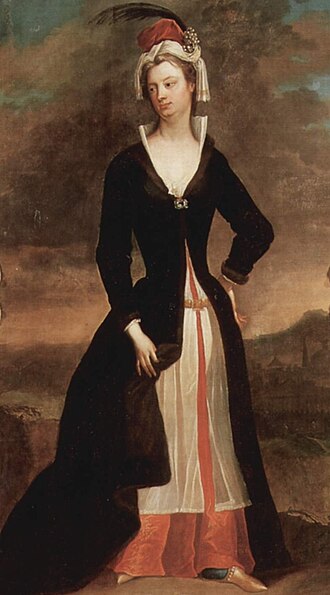
Hager moves on to vaccination. Interestingly, Hager explains the discoverer of inoculation by transfer is not Edward Jenner (1749-1823), a British physician called the Father of Immunology. It was a wealthy English woman named Lady Mary Worley Montague who learned of the use, of what became known as vaccination, in Turkey. She had survived a smallpox infection. Ms. Montague accompanied her husband, who was the British ambassador to the Ottoman empire in 1716.
Ms. Montague learned of a Turkish custom of transferring infected smallpox exudate to healthy children to give them a milder form of smallpox. That transferred exudate inoculated the young from getting a fatal dose of the disease in later life. Smallpox is estimated to have killed over 300,000,000 people (a statistic roughly equivalent to every person alive in the U.S. in the in the 1990s). The Turkish custom of inoculation was found highly effective.
Lady Mary Worley Montague who learned of the use of vaccination in Turkey. Earlier in her life, she had survived a smallpox infection.
In her return to England, Ms. Montague widely disseminated information about the success of the Turkish custom to prevent smallpox. Edward Jenner chose to use cowpox as a substitute tissue for smallpox vaccination of his patients. Jenner found cowpox infected tissue was equally effective in immunization and less dangerous than the using smallpox exudate. Jenner’s discovery of cowpox vaccination in 1796 became widely accepted but nearly 80 years after Ms. Montague’s worldwide promotion of Turkey’s vaccination procedure. Jenner’s vaccination success led to the World Health Organization’s claim that smallpox eradication could be achieved through an international inoculation program. Smallpox is alleged to have been eradicated as a disease in 1980.
The next drug identified as important by Hager is sulfa, a major cause of death from infected open wounds.
The common cause is a bacteria called Streptococcus. Bayer Corporation, a dye manufacturer in Germany, decides to enter the drug industry because their investment, facilities, and research scientists were ideal for entry into research and manufacture of drugs. They compound a drug called Prontosil that is discovered as a sulfa based chemical compound that successfully kills Streptococcal bacteria that cause fatal infections from open wounds. Bayer’s discovery saved many lives as WWII was gathering in the 1930s. Ironically, one of the saved lives is FDR’s son who had a severe streptococcal infection in 1936.
Hager notes personal mental illness and social dysfunction are perennial maladies that plague society through the 21st century.
Isolation and various therapies have been used to address mental illness. In early days, asylums were created to isolate patients who could not cope with daily life. Palliative treatment ranged from isolation to Freudian consultation, to electroshock, to newly discovered drug treatments. Though not mentioned by Hager, a little research shows the first significant breakthrough drug was lithium in 1949.
John Cade (1912-1980, An Australian psychiatrist discovered the effects of lithium carbonate as a mood stabilizer in 1948.)
Lithium was actually discovered in 1817 but did not get used for mental illness until 1948 when John Cade, an Australian psychiatrist, found that lithium carbonate stabilized mo0d and reduced the severity of manic episodes in patients.
Though Hager doesn’t mention lithium, he notes the French chemist Paul Charpentier identified antihistamine in 1950 as an antipsychotic to aid his patients’ erratic behavior. The use of Thorazine became a common drug synthesized by Rhone-Poulenc Laboratories in France. It was released in the 1950s and considered a major breakthrough in psychiatric treatment. It had a calming effect on severely schizophrenic patients by attacking excess dopamine production in the brain.
The major criticism Hager has of drug manufacturers and the medical industry is in the inherent influence of money, power, and prestige that distorts honest evaluation of drug effectiveness and side effects.
The drug industry depends on the success of their research for new drug discoveries to maintain the cost and improve the value of their businesses. However, human nature gets in the way of every human being. The lure of more money, power, and prestige enter into evaluative judgements and descriptions of tests for new drugs. The financial success of a drug that mitigates or cures particular societal ills make millions, if not billions, of dollars for drug manufacturers. Drug manufacturers are not eleemosynary institutions. They are in the business of making money and preserving their longevity while enriching themselves and their stockholders. Hager argues human nature distorts the truth of drug efficacy with tailored reports of a drug’s true benefit and potential for harm. He offers statins as an example of drug manufacturers’ misleading promotions.
Hager reviews the history of statins and correlations drawn by the medical industry about their efficacy in reducing heart ailments.
He suggests clinical studies by manufacturers often distort the entire effect of statins in preventing heart attacks. Statins are designed to reduce cholesterol in the blood stream. However, many studies that correlate cholesterol with heart disease are only partly related to heart attacks while having measurable side effects that diminish human cognition, memory, and potential organ damage, i.e, liver and kidney damage. Hager cautions those who take statins not to stop without discussing it with their physicians. However, Hager recounts an unsolicited personal contact that suggested he should be taking a statin because he is over 60 and had a brain vessel bleed in his earlier medical history. The contact recommended Hager take a statin based on that history. Hager notes that he felt his private medical history had been hacked, and that the contact is evidence of drug industry promotion of statins for profit more than public benefit.
In Hager’s last chapters, he explains how the drug industry is being attacked for influence peddling. In drug manufacturers drive for profits, they offer incentives to the medical profession (e.g. trips to conferences in exotic resorts, personal solicitations from sales reps, etc.) to use specific drugs in their practices.
In the end, Hager argues there are exceptions to the medical industries drive for profits by telling the story of British researchers Georges Kohler and Cesar Milstein who made a discovery in 1975 that changed the focus of drug manufacturer to what is called monoclonal antibody drug development. Kohler and Milstein found a process for creating drugs that have fewer side effects by creating antibody drugs that exclusively attack diseases at a molecular level. The irony of their discovery is Kohler and Milstein chose not to patent their discovery. If they had patented their discovery, they could have gained income for every company who chose to create monoclonal antibody drugs.
British researchers Georges Kohler and Cesar Milstein
Research is growing to create drugs that more precisely address the known molecular cause of disease without affecting the general health of patients. Not surprisingly, today’s manufacturers of monoclonal drugs use Kohler’s and Milstein’s process while requiring patents for their drugs.
Hager’s history of the drug industry illustrates the strength and weakness of human nature whether one is a capitalist, socialist, or communist.
Communism has failed in every country that has tried to institute what their rulers believe is in the best interest of their citizens.
Books of Interest Website: chetyarbrough.blog
“Red Famine” Stalin’s War on Ukraine
By: Anne Applebaum
Narrated By: Suzanne Toren
Anne Applebaum (Author, journalist, historian, wrote Pulitzer Prize for Non-Fiction with “Gulag: A History”.)
As an accomplished historian, Anne Applebaum offers an insightful view of the 1917 Russian Revolution and its rule over Ukraine, the breadbasket of Europe. Her history is a reminder of the Stalin’ atrocity which is being reinvented by Vladimir Putin in his invasion of Ukraine. The striking difference is that Putin, unlike Stalin, cares less about stealing Ukraine’s agricultural productivity than Russia’s return to a dead past. Applebaum’s history leads one to conclude that Russia’s twenty first century youth, its oil wealth, and political influence are being wasted by Putin. The past never precisely repeats itself, but Putin is committing many of the same mistakes made by Lenin and Stalin in the early 20th century.
Ukraine is an independent nation with its own evolving culture.
Applebaum’s history shows that only through covert and overt repression could Ukraine become a part of the Russian nation. Putin’s war may succeed in the short term, but Ukrainian independence will reassert itself when Russia’s leadership realizes the cost of repression is greater than the benefit of colonialization. Just as Israel will realize it cannot eradicate an idea by cutting off heads of its leaders, Russia will not erase a culture by murdering nationalist defenders.
Holodomor, The Ukrainian Famine That Killed Millions in 1932-33.
Applebaum addresses the history of the 1921′ and early 1930s’ famines in Ukraine to reveal the anguish felt by some, if not all, native Ukrainians. The Russification of Ukraine began with the 1917 revolution. Lenin, and later Stalin, were dealing with the many difficulties of establishing a new form of government in a nation accustomed to monarchal control. They viewed communism through the eyes of a people accustomed to totalitarian control. Lenin, with the help of associates like Stalin, preached the fiction of social and economic equality that gives every citizen compensation according to their abilities and needs. That impossible objective melded with Russia’s history of monarchal control of its citizens.
Lenin, and then Stalin, use their power to lead and govern, like the Russian Czars of its past, but with the curtain of communism to hide their ambition.
Applebaum’s story of Ukraine’s treatment in the Lenin’ and Stalin’ years (and today’s Putin’ years) reveals the cruelty and consequence of totalitarian rule. Applebaum focuses on two famines in Ukraine’s history, the famines of 1921-23 and 1932-33. The first famine is caused by drought, consequences of WWI and the complicated change in Russian governance after the 1917 revolution. By the time of the so-called famine in1932-33, Russia’s new form of government had stabilized with one ruler exercising control over the interpretation and actions of a communist government. By 1927, Stalin had become the undisputed leader of Russia.
Ukraine is considered the breadbasket of Europe.
In 1922, Stalin views Ukraine as a source of food to stabilize Russian control of what became known as the U.S.S.R.
Stalin, like Mao in China, believed collectivization of farmland and its cultivation would improve agricultural production in Ukraine. Like the experience in China, farm collectivization had the opposite effect. It reduced production and demotivated farmers. When production declined in Ukraine, Stalin ordered Russian troops to confiscate grain and the livestock of Ukraine citizens in the 1932-33 so-called famine. Arguably, that famine is manmade, not caused by nature but by Stalin’s decision. Stalin ordered confiscation of Ukrainian food and livestock provisions for the Russian people. Stalin created a famine and caused the death of an estimated 4,000,000 Ukrainian citizens.
Like Stalin in 1932, Putin chooses to murder Ukrainian citizens without concern about war’s inhumanity.
Communism has failed in every country that has tried to institute what their rulers believe is in the best interest of their citizens.
Social change for human equality is a long and arduous process. The election of 2025 will either be a step forward or backward.
Books of Interest Website: chetyarbrough.blog
“Unexampled Courage” The blinding of Sgt Isaac Woodard and the Awakening of President Harry S. Truman and Judge J. Waties Waring
By: Richard Gergel
Narrated By: Tom Zingarelli
Richard Gergel (Author, American lawyer, assumed office 2010 as US District Court Judge for the District of South Carolina, graduate of Duke University School of Law in 1979.)
The Emancipation Proclamation was issued on January 1, 1863, as an executive order by Abraham Lincoln. It purportedly ended slavery, but it was only the beginning of a generational fight that is still being waged. “Unexampled Courage” is a history of a twentieth century turning point in the fight for equal treatment of Black Americans. The blinding of a Black veteran of WWII, Sergeant Isaac Woodard, in 1946 signified another major turning point for equal treatment of former American slaves. On July 26, 1948, President Harry Truman signed Executive Order 9981 which banned racial discrimination in the military. The blinding of Woodard by a white Sheriff in South Carolina and Harry Truman’s executive action are connected by Gergel’s history of Woodard’s horrid and brutal experience.
In 1946, a South Carolina police chief beat Sergeant Isaac Woodard’s head and used the butt of a Blackjack handle to gouge Woodard’s eye sockets.
Sergeant Woodard was beaten and blinded by a Batesburg, South Carolina police chief for drinking (and alleged disorderly conduct) on a Greyhound bus. Several white and Black soldiers were drinking and talking among themselves while returning from the service after the end of World War II. Woodard asked for a bathroom break from the bus driver and was refused. At a Batesburg, South Carolina bus stop, the driver left the bus to report Woodard to the police chief. The police chief attacked Woodard and beat him around his head and eyes with a leather Blackjack similar to the one shown above. Gergel reports Woodard’s eyes were directly poked and grinded by the butt of the police chief’s Blackjack before being thrown unconscious in a jail cell. The next morning, a local physician examined Woodard and he was taken to a veteran’s hospital, but any care provided was ineffectual. The assault on Woodard’s eyes is later determined to have caused an incurable blindness.
Orson Wells becomes aware of the horrid treatment of Woodard and chooses to broadcast the incident to American listeners. Orson had become famous for his 1938 “…War of the Worlds” radio broadcast.
When Wells broadcast the Woodard’ incident on public radio, he mistakenly identified the wrong South Carolina’ town in which the incident occurred. However, he continued investigating the incident and committed to correcting his error and identifying the police chief who battered Woodard to the point of blindness. The police chief and the town of Batesburg were correctly identified, and the wheels of justice slowly turned toward injustice, rather than justice.
Julius Waties Waring (1880-1968, U.S. District Court judge for the Eastern District of South Carolina.)
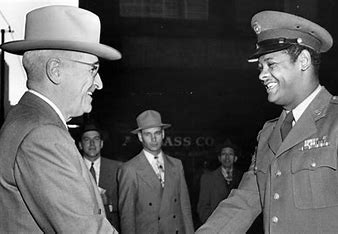
Though the police chief was tried for beating Woodard, he was acquitted by a South Carolina’ court. The story of Woodard’s blinding was prosecuted in the U.S. District court of Judge, J. Waites Waring. Waring was outraged by the inept prosecution by the federal prosecutors. After the acquittal, Waring began a movement in South Carolina for Black Americans’ equal rights. Waring’s outrage was supplemented by President Harry Truman who convened a commission on civil rights. After the report from the commission, Truman arranged a speech before the NAACP to reveal the findings of the commission and actions the Federal Government would take to address unequal treatment of Black Americans.
Harry S. Truman (1884-1972, 33rd President of the U.S.)
Truman is in the midst of a campaign to be re-elected as President of the United States in 1948. Gergel argues Truman decides to use his speech before the NAACP to announce his plan to fight for Negro equal rights, in part because of the blinded Woodard, but also because of many unjust southern murders and discriminatory actions against Black Americans.
Thomas E. Dewey (1902-1971, American lawyer and politician, 47th governor of New York 1943 to 1954.)
As most Americans know, President Truman was expected to lose to Thomas Dewey in his re-election campaign. A major reason for that belief was because of executive action to integrate the military and the opposition from southern voters who insisted on the inequality of Black Americans. From a coalition of labor, Blacks, Jews, mid-western farmers, and some number of southern states, Truman won re-election by a slim margin.
Gergel makes it clear that a fight for equal rights is not won and in fact was resisted by military leaders who tried to stop integration of the military after Truman’s executive action.
The military leaders fail to change Truman’s mind and military leaders finally took the required steps to integrate and assure a level of equality among white and Black Americans. Of course, equal treatment remains an issue in the military, as well as throughout America. Social change seems to conflict with genetic inheritance, compounded and multiplied by human ignorance.
Gergel shows social change for human equality is a long and arduous process.
The Civil War only dated the beginning of the American fight for equality. It has become a broader effort, including racial, gender, LGBTQ, marriage, civil, economic, natural, and political equality. One wonders if humans, let alone Americans, will ever get there. The election of 2025 will either be a step forward or backward.
Orange’s book shows how culture can kill. What citizens of the world need to do is understand how a broader culture can be built.
Books of Interest Website: chetyarbrough.blog
“There There: A Novel”
By: Tommy Orange
Narrated By: Darrell Dennis, Shaun Taylor-Corbett, Alma Ceurvo, Kyla Garcia
Tommy Orange (Author, received a Master of Fine Arts from the Institute of American Indian Arts, winner of the 2019 American Book Award for “There There…”)
Tommy Orange illustrates how culture is the god of creation and destruction. “There There…” offers a glimpse of what it is like to be poor and indigenous in Oakland, California. The name “Indians” for the indigenous of America is said to have been created by Christopher Columbus in the 1400s. Orange has the idea at a gathering of native Americans to have each write their stories, i.e., their memories of what life has been for them in Oakland, California in the 20th and 21st centuries. Their stories are the substance of Orange’s book. They reveal the crushing reality of being descendants of the indigenous in Oakland, and believably all of America. A grant from Oakland becomes the funding source for Orange’s idea. Fighting to making a living as an author is at the core of “There There…” Orange undoubtedly calls “There There…” a novel to protect the story tellers.
Orange shows recycling-poverty, addiction, and misogynistic abuse are big problems for “Indians” in Oakland. The stories reveal an underlying frustration, if not anger, of indigenous Americans who are being molded by government programs that ignore native traditions and emphasize integration into whatever American society has become. There is justification for anger among American minorities. However, there is a fundamental misunderstanding when suggesting government programs are meant to mold Americans. The goal of government is not to mold its citizens but to create cultural norms for a diverse culture. Government fails because ethnic norms of minorities protect American citizens who are treated unequally.
Names like “Two Shoes”, “Red Feather” and the “Indian symbol” that once tested color on televisions are interesting examples of the significance of native influence in American culture.
Though America has and continues to try to Americanize natives, cultural influence is a two-way street. The stories in “There There…” illustrate how everything from influence of addiction to spousal abuse to abortion to overeating to violence are revealed as problems in native American’ lives. This is a hard novel to listen to because it denigrates Indian heritage and justifiably blames American culture.
One is drawn to wonder what can be done to correct the truth of American culture’s blame. The answer is in the Constitution of the United States.
All men are created equal, and the job of government is to provide for the health, education, and welfare of its citizens. American government is struggling to find a way of doing what it is meant to do because of the nature of human beings. Neither capitalism, utopianism, socialism, or communism change human nature. Ironically, only culture has the potential for achieving the goal of equality and fraternity.
Orange’s stories illustrate how Indian poverty is destructive and ethnic cultural inheritance is destroying native Americans.
One presumes Orange would object to the category of American when referring to indigenous peoples. However, it is only with change in culture that all citizens become more socially cohesive than one ethnic identity. If America can institute policies that genuinely provide equality for health, education, and welfare of all, culture will heal itself. When that is achieved, one can be Black, white, Latino, indigenous, or whatever ethnic group one wishes–but within broader American culture.
Orange’s book shows how culture can kill. What citizens of the world need to do is understand how a broader culture can be built.
The near assassination of Trump is a harbinger of a world unduly influenced by today’s technology and media influence.
Books of Interest Website: chetyarbrough.blog
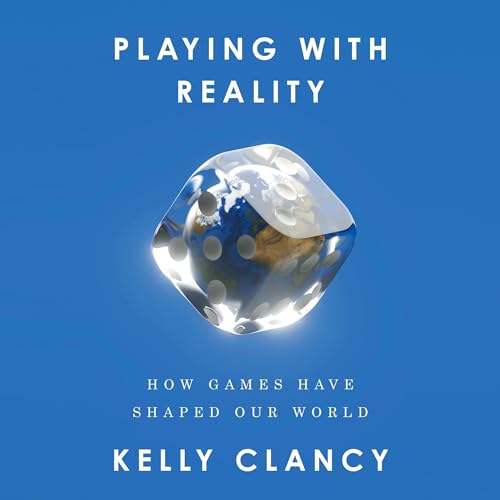
“Playing with Reality”
By: Kelly Clancy
Narrated By: Patty Nieman
Kelly Clancy (Author, graduate of MIT in physics with a Ph.D. in biophysics from U.C. Berkley.)
Kelly Clancy has a distinct point of view as a scientist. Her understanding of game theory and the mathematics of probability may steer reader/listeners away from her interesting book. “Playing with Reality” is less like playing and more like hard work, at least in the first chapters. Clancy begins by defining game theory and its permutations. Then she explains how it is a flawed tool for understanding human behavior. As one gets through the first chapters of her book, a reader/listener realizes Clancy is offering more than gaming theory history.
Clancy offers a detailed history of the growth of computer technology through the use of gaming programs designed to educate, entertain, and enrich private companies, public conglomerates, and individuals.
Clancy reveals the growth of chess playing gaming programs like Deep Thought, Big Blue, and Deep Blue to expose the battle line between human and artificial intelligence. Clancy is a skeptic of gaming technology–with a warning.
Clancy’s skepticism lies in mistaking game-theory’ studies as proof of predictive human behavior.
Clancy notes human behavior is not predictable for many reasons; one of which is human irrationality, and another is a human’s sense or understanding that he/she is being manipulated for prescribed responses. For example, in the first instance, a person may be irrationally afraid of all snakes even though there are no poisonous snakes in their State. In the second instance, a person who knows the theory of something like the “Prisoner’s Dilemma” can choose to modify their behavior and respond based on knowledge of previous experimental studies.
John von Neumann (1903-1957, Hungarian American mathematician, physicist, computer scientist, engineer and polymath.)
The troubling part (the warning) revealed by Clancy is that brilliant people like John von Neumann, an intellectual giant of the twentieth century, can have bad ideas. Clancy notes von Neuman considered preemptively nuking the Soviet Union because he reasoned it would (and it did) successfully create a nuclear bomb soon after America’s bombing of Nagasaki and Hiroshima. Neuman presumably considered this a rational option based on game-theory thinking.
Today, one wonders what Russia’s leader is capable of with nuclear weapons if he considers them just another tool of war.
Clancy notes Putin, like the President of the United States, is legislatively authorized to unilaterally choose to use nuclear weapons to protect what they believe is a threat to their countries. The gaming industry and the growth of A.I. are not the problem. Human nature is the problem. There are not enough checks and balances to keep well intentioned Presidents or bad actors from making bad decisions.
Clancy shows how the computer gaming industry has obscured the tragic consequence of violence by returning murdered life in a game back to life so they can play the game again. The game is not real, but the lesson is that gun violence is ok because it is just a game that can be replayed. Computer gaming has become a gateway to violence in the world. Easy access to guns is a problem in America but guns are instruments of violence, not the cause of violence. Among the causes are, poor education, poverty, mental dysfunction, and gaming that distorts reality.
Political position and power are dangerous in the face of human irrationality, a not uncommon characteristic of intelligent, ill-informed, or uncaring political leaders. In this age of computer drones and face recognition, three American citizens, one Iranian citizen, and an Egyptian’ Al Quada leader were killed by drone strikes at the order of American Presidents.
These murders may or may not have been justified but they exemplify the danger of gaming, face recognition, and the future of artificial intelligence. Clancy tempers her assessment of gaming in the last chapters of her book, but some will come away from her positive comments with a sick feeling in their stomach.
The near assassination of former President Trump is a harbinger of a world unduly influenced by today’s technology and media influence.
















































 REVIEWS AND VIEWS OF LIFE