With the death of Riley’s brother from suicide, a spiraling downward seems inevitable for Lisa Marie Pressley. Surprisingly, Lisa Marie rallies after the suicide of her son, but the negative consequence of fame remain. The pressure of fame, like poverty, are equal opportunity killers.
Books of Interest Website: chetyarbrough.blog
From Here to the Great Unknown (A Memoir)
By: Lisa Marie Presley, Riley Keough
Narrated By: Riley Keough, Julia Roberts
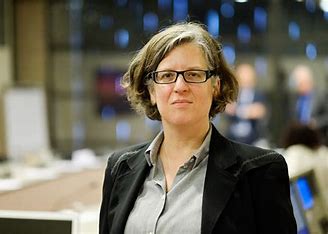
Lisa Marie Presley (Singer, song writer, daughter of Elvis)Danielle Riley Keough (Actress, eldest grandchild of Elvis)
“From Here to the Great Unknown” begins rather shakily because it is unclear about who is narrating and being represented in the story. Listeners who stick with the story begin to see that Keough’s voice is of herself while the non-tape-recorded voice by Julia Roberts is Lisa Marie, telling and filling gaps in Danielle Riley’s story. The two photographs above are meant to show Lisa Marie in her prime and Riley in the present.
This memoir explains Danny Keough (Danielle’s father and Lisa Maries first husband) is an ever-present person in Riley Keough’s life.
The book reveals the thrills, fears, and tragedy of inheriting fame. Danielle Riley Keough assembles a memoir from tape recordings by her mother and recollections of Elvis Pressley’s only daughter, Lisa Marie Pressley. “From Here to the Great Uknown” infers genetics may have something to do with descendants’ lives but the consequence of fame magnifies life’s proclivities.
Lisa Marie is shown to idolize her father who loved her dearly.
As most know, Elvis descended into addiction. This is not a story about Elvis but about Lisa Marie who loved her father, struggled with her mother, and created a career for herself in the music industry. She never achieves the fame of her father but had some success with “Lights Out”, “You Ain’t Seen Nothin’ Yet”, “Dirty Laundry”, “S.O.B”, and “Over Me”. Keough briefly talks about traveling with her mother on tour. Keogh explains her mother dabbled with drugs in earlier years but seemed to kick the habit as she began establishing her own career. Lisa Marie meets and marries Danny Keough, and has two children with her, Riley and a son named Benjamin. Despite a divorce in 1994, Riley Keough and even her mother remained close with Danny.
Lisa Marie’s divorce seems precipitated by a growing intimate relationship between Lisa Marie and the famous King of Pop, Michael Jackson. After divorce, Lisa Marie marries Jackson in 1994.
Keough mentions Jackson’s pedophilia accusations in 1993 that makes one wonder if the marriage had anything to do with the accusations of five boys. Lisa Marie and Jackson divorced in 1996. Riley suggests Jackson’s desire to be in control created friction between the couple that led to the divorce. Jackson was acquitted of any pedophilia charges in 2005.
Lisa Marie marries again in 2002 to the actor, Nicolas Cage, but they are divorced two years later.
Despite three failed marriages, Riley explains her mother wishes to have more children and decides to marry Michael Lockwood in 2006. Through invitro fertilization, Lisa Marie becomes pregnant with twins. She has a cesarian delivery that births Harper and Finley who become Riley’s sisters. Riley explains her mother had quit drugs which she had gone through in her younger years but recovering from the cesarian operation led her back to drugs. She separates from Lockwood in 2016, and they divorce in 2021.
One begins to think about the famous film “Alfie” that came out in 1966.
Michael Caine, who is Alfie, looks back on his life and his famous line in the film is “What’s it all about Alfie?” Riley suggests Lisa Marie was a great mother because she had an instinct for caring about her children. Riley believes her mother slipped back into drugs because of the pain killers she took from the cesarean delivery of her twins.
Living a life of fame has consequences. One can argue that no singer in modern times has exceeded the fame of Elvis Pressley. Maybe Taylor Swift is nearing Elvis’s fame. Time will tell.
The price of fame is loss of privacy, mental strain to maintain an image, isolation, hangers-on self-interests, constant public exposure, and personal security concerns. Riley’s memoir of her mother’s life suggests fame influences Elvis’s, Lisa Marie Pressley’s, and Ben’s lives and deaths. All three had problems with drug use, but Elvis had a heart attack and Lisa Marie had a bowel obstruction thought to have caused excessive weight-loss and death.
With the death of Riley’s brother from suicide, a spiraling downward seems inevitable for Lisa Marie Pressley.
Surprisingly, Lisa Marie rallies after the suicide of her son, but the negative consequence of fame remain. The pressure of fame, like poverty, are equal opportunity killers.
The well-made point of Orlean’s history of the Los Angeles Central Library is that a listener/reader can learn a great deal about the world and other people’s life experience from books. The loss of a book is not like human death, disease, or disability. A book is a liberation and broadening of life’s narrowness.
Books of Interest Website: chetyarbrough.blog
The Library Book
By: Susan Orlean
Narrated By: Susan Orlean
Susan Orlean (Author, American journalist, tv writer, staff writer for The New Yorker.)
“The Library Book” is not a thriller, but it is an appreciation of a public service available in nearly every community of the United States. Libraries can be found in communities of less than 8,000 people or megalopolises of millions. Susan Orlean focuses her book on the great fire in 1986 at the Los Angeles Central Library where over 400,000 books were destroyed, and an estimated 700,000 were damaged. Though this was not the largest library in America, it was the largest library fire in U.S.’ history. Orlean’s research suggests the arsonist was a Wanna-Be actor named Harry Peak. However, there is no concrete evidence to confirm his guilt. No one is convicted for the library’s alleged arson. The cause remains undetermined.
It is interesting to note that Orlean admits there were electrical problems in the old building that had been recorded by building inspectors, but fire inspectors concluded it was arson.
It seems somewhat disingenuous for the City or Orlean to accuse Peak as an arsonist but that is not the primary message of her book. Her message is that many, including this reviewer, love the knowledge and experience of others who write books. Arguably, public libraries are one of the greatest public services in America, and at a cost much less than most public services in America.
The last chapters of her book address the history of the creation and renovation of the Los Angles Central Library. It reaches back to the 19th century. She recalls the liberal leaning of librarians and their early adoption of women in the workplace. Two women became Library’ managers in the 1800s. Orlean notes in a joking conversation with a manager of the library about the unlikely promotion of a political conservative as a head librarian.
An interesting note from the author is that the Los Angeles library has historically been a haven for the homeless, a problem that has dramatically risen in the 21st century. Some librarians have expanded their services to help the homeless. It seems noteworthy that the libraries in Las Vegas and those visited in other cities do not lock their bathroom doors the way private businesses like Starbucks choose to do.
The Los Angeles Library took six years to rebuild while workers carried on during the course of reconstruction. She notes that a new book generally requires a week before it hits the shelf because of time needed for proper cataloging. A somewhat distracting habit Orlean uses is recitation of a book’s Dewey Decimal’ number that begins most of the chapters. An interesting note from the author is that the library has historically been a haven for the homeless, a problem that has dramatically risen in the 21st century. Some librarians have expanded their services to help the homeless. It seems noteworthy that the Los Angeles Central library and libraries in Las Vegas do not lock their doors the way private businesses like Starbucks have chosen to do.
The Los Angeles Library is rebuilt to be better than it was before the fire.
Orlean explains library managers in LA are pushing to expand services their libraries provide. Having personal experience of traveling the world, countries like Finland show they have modernized libraries with a concept highly recommended in Orlean’s history of the Los Angeles’ library. Helsinki, Finland’s state-of-the-art library is a dramatic example of the services a library can provide. Everything from music instrument rentals, to recording studios, to sewing machine tables, and cooking kitchens are added to the library’s book inventory. All of these features have been created in Helsinki’s modernly designed library. It is a multi-purpose building that serves both children and adults.
The well-made point of Orlean’s history of the Los Angeles Central Library is that a listener/reader can learn a great deal about the world and other people’s life experience from books.
The loss of a book is not like human death, disease, or disability. A book is a liberation and broadening of life’s narrowness.
Many of the Los Angeles Library books were recovered but the process of recovery required the help of many of LA’s businesses. The books that got wet needed to be frozen to keep them from molding. City businesses made room for soaked books in their commercial freezers. The Los Angeles Central Library is rebuilt to be better than it was before the fire. Many of the books survived with the feint smell of smoke. The library continues to expand and enlighten Angeleno’s lives.
Katherine Eban infers the lure of money, power, and prestige, continues to incentivize fudging, if not outright lies, about the effectiveness and safety of generic drugs.
Books of Interest Website: chetyarbrough.blog
Bottle of Lies (The Story of the Generic Drug Boom
By: Katherine Eban
Narrated By: Katherine Eban
Katherine Eban (Author, American investigative journalist focused on public health issues.)
Katherine Eban’s book is tedious, but it tells a story that challenges the generic drug industry and exposes the strength and weakness of capitalism. Eban makes one suspicious of the efficacy of generic drug treatments. Society depends on drug discoveries that can return one to health when struck by known and unknown malefactors. At the same time, Eban indirectly attacks capitalism as a primary force for discovery of life saving drug treatments. Capitalism is motivation for drug manufacturers to discover new drugs, but profit motive and human nature incentivize deception that can harm the public.
America’s police department for the drug industry is the Food and Drug Administration.
The difficulty of a policing function is in human nature and an investigators’ effort to find incriminating evidence that proves guilt. The consequences of poor policing in the generic drug industry are loss of health, and sometimes, life. The FDA is responsible for protecting public health by ensuring the safety, efficacy, and security of human and veterinary drugs manufactured or imported to the U.S.
Just as every police force is not perfect, the FDA has made mistakes and failed to uncover evidence for crime. There have been instances of drug manufacturers around the world, including America, that have adulterated approved generic drugs. (A U.S. generic drug manufacturer, KVK Research Inc in Pennsylvania, pled guilty in 2024.) Generic manufacturers and distributors around the world have misled the public on the efficacy and/or addictive qualities of drugs. A primary source of generic drug manufacturing crimes is the lure of increased profitability.
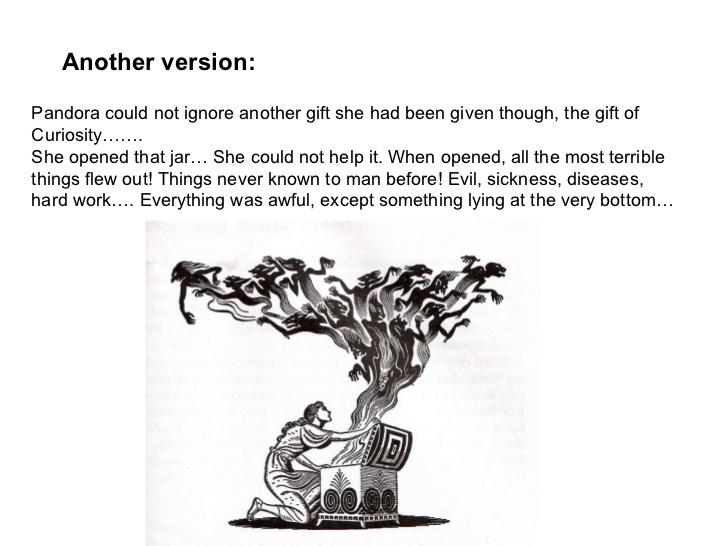
Eban focuses on a pandora’s box opened when the world’s generic drug industry began producing substitutes for previously patented drugs.
Patents for new drugs have a determinate shelf life but expire after a stipulated period of time. One can complain and challenge the price of patented drugs, but patented drugs require a level of scientific experiment and reporting to prove efficacy. When patents expire, there is a rush by generic manufacturers to produce the same drug at a lower cost. The trouble arises when a generic drug’s lower cost is achieved with substituted or reduced ingredients; also, it may be adulterated by poor manufacturing practices.
Eban offers the history of the AIDS’ epidemic to illustrate how generic drugs became supercharged in the 1980s.
Three companies in India and one in South Africa began working with the Clinton Foundation to offer an AIDS’ generic drug that fell to a cost of $.40 per day when patented AIDS’ drugs cost as much as $8,000 per year. Millions of people were at risk, none more than those who live in Africa. However, the effectiveness of the generic drug came under suspicion. It was found that data was being falsely created by India and Africa. It was manufactured data that falsely reported generic drugs effectiveness in treating AIDS. The generic African and India manufacturers were cutting corners in production to increase profits. No one checked the effectiveness of the produced drugs and posted false patient reports. Because the data was not based on patient experience but on falsely created data, it became unclear whether the drug was working. Without any reports showing the generic drug’s effectiveness, incentive grew to continue reducing costs. Manufacturers pushed production, compromised AIDS ingredients, and falsely reported treatment results of patients.
Dinesh S. Thakur (Received the Joe A. Callaway award for Civic Courage in 2014.)
Eban explains how Dinesh Thakur. a former executive at Ranbaxy Laboratories, became a whistle blower who “spilled the beans” on falsely created data sent to the FDA.
Thakur was the Director and Global Head of Research information & Portfolio Management at the Ranbaxy company. He began asking questions of the people reporting the generic AIDS Drug efficacy data. Thakur found that 50% to 100% of information on generic AIDS drug’ efficacy was manufactured and not related to actual use by AIDS sufferers. Ranbaxy Laboratories pleaded guilty of falsifying information in 2003. Ranbaxy agreed to pay $500 million to settle their guilty plea.
Despite the Ranbaxy settlement, the author shows generic drug misinformation is still being produced. Further reviews by FDA inspectors found continuing violations of protocol and testing of generic drug manufacturing and reporting.
Ranbaxy is no longer an independent company. It was purchased by Sun Pharmaceutical Industries Ltd in 2014. Eban explains how FDA inspectors fell victim to India manufacturers malfeasance by accepting luxury hotel accommodations and gifts that clouded their judgement about the companies they were investigating. A bad report from an FDA inspector could and did cost millions of dollars to companies that produced tainted generic drugs.
Eban explains the FDA has changed their policy of giving advance notice of inspections while inferring inspectors are advised to avoid conflicts of interest in their inspections. One takes this inference with reservation because human nature is an immutable force.
The incentive for increased profitability by reducing the cost of manufacturing generic drugs continues to threaten the public. Eban infers the lure of money, power, and prestige, continues to incentivize fudging, if not outright lies, about the effectiveness and safety of generic drugs.
Two points that offer the greatest value in Schwartz’s history of brain surgery is that those who survive become different human beings, sometimes disabled or cognitively impaired. The second–those who need a neurological operation should look for an empathetic doctor who limits his/her excision of brain matter to what science knows of its consequence.
Books of Interest Website: chetyarbrough.blog
Gray Matters (A Biography of Brain Surgery)
By: Theodore H. Schwartz
Narrated By: Sean Pratt
The largest part of Dr. Schwartz’s book is about the history of brain surgery. The first chapters address his education for brain surgery and the history of well-known Americans who died or might have survived from its practice. It addresses the consequences of brain trauma of modern times but leaves tumor and disease treatment for the remaining chapters. “Gray Matters” is about the 19th and 20th century history of brain surgery, how it evolved, and the pioneers who most influenced the author. Schwartz personalizes brain surgery by explaining how he treated what he estimates to be over 10,000 patients.
William Macewen (1848-1924) Scottish surgeon who pioneered neurosurgery,
Harvey Cushing (1869-1939) American neurosurgeon–father of modern neurosurgery,
Wilder Penfield, (1891-1976) American-Canadian neurosurgeon–noted for mapping the brain,
Carl-Olof Nylén (1892-1978) Swedish otologist who pioneered microsurgery with a surgical microscope he designed,
Wolfgang Draf (1940-2011) German otolaryngologist who pioneered Skull Base Surgery using sinuses as the avenue of entry to the brain.
Schwartz identifies Wiliam Macewen (upper left photo) as the pioneer of neurosurgery. He notes Harvey Cushing (upper right photo) is referred to as the “Father of Modern Neurosurgery”. Cushing was the first to employ X-rays to diagnose brain tumors and introduced the use of the elector-cautery device to minimize blood loss during surgery. Dr Wilder Penfield (middle left photo), a Canadian neurosurgeon pioneered brain mapping by stimulating the brain with mild electrical shocks. Brain mapping gave neurosurgeons a guide that let them know what areas of the brain would be affected when making decisions on diseased tissue removal. Microsurgery on the brain is pioneered by Carl Nylen (middle right photo) in the early 1900s. In modern times, Dr. Wolfgang Draf (bottom photo) began using a skull cap microsurgery device to remove brain tumors through nasal passage access. This less intrusive form of brain surgery is used and detailed by the author.
Dr. Kris S. Moe (Board certified surgeon at UW Medical Center, University of Washington Facial Plastics and Reconstructive Surgery.)
Schwartz explains one of his most important training experiences was in Seattle Washington with Dr. Kris S. Moe. Moe pioneered what is called transorbital neuroendoscopic surgery (TONES) that influenced the field of minimally invasive neurosurgery. Schwartz explains how Moe would test patients during an operation to identify areas of the brain being affected during treatment for tumor removal. Schwartz gave the example of a series of pictures shown on a monitor seen by the patient during surgery. The patient is asked to name the object in the picture as the surgeon is operating to determine whether the tumor being excised affects his/her ability to identify the image. In Schwartz first attendance at one of these surgeries, he accidentally spilled the pictures across the operating floor. Moe directed him to reassemble the pictures and went on with the surgery when they were reassembled. The embarrassed Schwartz admired Moe because he never brought the incident up after it happened and completed the operation without criticizing Schwartz.
Two points that offer the greatest value in Schwartz’s history of brain surgery is that those who survive become different human beings, sometimes disabled or cognitively impaired. The second–those who need a neurological operation should look for an empathetic doctor who limits his/her excision of brain matter to what science knows of its consequence.
Schwartz’s book implies the NFL’s prevention and protocols for brain trauma are a cost of doing business. Sadly, this seems similar to the American public’s misinterpretation of the “right to bear arms” and its resistance to gun control.
Books of Interest Website: chetyarbrough.blog
Gray Matters (A Biography of Brain Surgery)
By: Theodore H. Schwartz
Narrated By: Sean Pratt
Theodore H. Schwartz (Author, American medical scientist, academic physician and neurosurgeon.)
“Gray Matters” feeds a curiosity for those interested in the human brain. Written by a brain surgeon, it offers a clearer understanding of brain function while offering insight to the causes and consequences of brain trauma. The author has treated many patients with brain infections and trauma and offers analysis of athletic, gun-related, and accident injuries of people who have died from or survived brain trauma.
Schwartz explains the arduous education for one to become a brain surgeon and how physicians surgically treat brain disease and trauma.
He explains how long hours as an intern are required after spending years to become an academically qualified physician, let alone surgeon. Not only are the hours long but acceptance into an internship is highly competitive and difficult to achieve. That seems counterintuitive in view of the public’s need for qualified medical help. One suspects the fundamental cause is the cost to the hiring hospital and the staffing required to teach new physicians.
The brain is protected by a skull, three layers of membrane, cerebral spinal fluid, a blood barrier, skin, and a scalp.
These structures, cells, and tissues protect the brain from physical damage and infections so the brain can provide organic function, thought, and action. Physical or infectious damage to the brain can affect any one of these natural human’ functions.
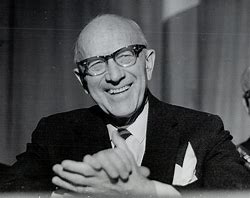
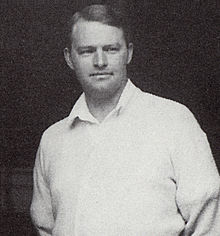
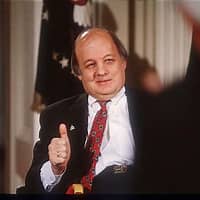
ABRAHAM LINCOLNJOHN F. KENNEDYROBERT F. KENNEDYJAMES BRADYGABIELLE GIFFORDS
Schwartz reviews incidents of gun-shot brain trauma of famous figures like Abraham Lincoln, John F. Kennedy, Robert Kennedy, James Brady, and Gabrielle Giffords. He notes the differences in the bullets used as well as the power of the weapons to explain the damage done. He argues John Kennedy had no chance of survival while suggesting Lincoln, because of a lower power weapon, might have survived with today’s advances in treatment. However, he suggests Lincoln would have lost much of his skill as an orator and political theorist because of damage to a particular part of his brain from Booth’s attack. Schwartz believes Robert Kennedy might have lived with more rapid and qualified treatment but would have been physically and mentally disabled. James Brady, Ronald Reagan’s press secretary, lost speech clarity and physical mobility because of his brain trauma. Similar consequences occurred with Gabriell Giffords’ injuries, but she relearned how to walk, talk, and perform basic tasks. Schwartz notes the only positive political accomplishment to come out of these violent acts was the Brady Handgun Violence Reform Act.
Schwartz goes on to explain non-traumatic brain injury from infection and stroke to traumatic brain injury from Shaken Baby Syndrome (SBS) to Chronic Traumatic Encephalopathy (CTE) with Second-Impact Syndrome often seen in athletes. Diagnosis of SBS from a shaken baby’s head has changed to include the shaking accompanied by impact with a hard surface.
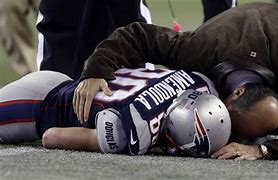
Diagnosis of CTE and Second-Impact Syndrome in sports are still being defined. The return of football players to the field of play is a judgement call by a sideline physician which raises questions about qualifications, let alone judgement.
The NFL initially objected to the brain trauma threat of their sport based on improved protective equipment.
However, Schwartz writes they have increased their protocol for injured players and have paid over a billion dollars to former athletes suffering from symptoms of brain trauma. Some big names in football like Junior Seau, Frank Gifford, Ken Stabler, and Tommy Nobis were autopsied after their death to show they suffered from CTE.
The lure of fame and money are unlikely to change elite athletes desire to compete despite the threat of brain injury. Schwartz’s book implies the NFL’s prevention and protocols for brain trauma are a cost of doing business. Sadly, this seems similar to the American public’s misinterpretation of the “right to bear arms” and its resistance to gun control.
Eubanks is wrong to think digitization ensures a future that will create a permanent underclass. The next four years may not show much progress in welfare, but American history has shown resilience in the face of adversity.
Books of Interest Website: chetyarbrough.blog
Automating Inequality (How Hich-tech Tools Profile, Police, and Punish the Poor
By: Virginia Eubanks
Narrated By: Teri Schnaubelt
Virginia Eubanks (Author, American political scientist, professor at the University at Albany, New York.)
At the risk of sounding like a “bleeding heart” liberal, Virginia Eubanks assesses the inefficient and harmful effects of technology on welfare, childcare services, and homelessness in America. Eubanks illustrates how technology largely reduced the cost of Indiana’s welfare. However, cost reduction came from removing rather than aiding Americans in need of help. She shows southern California is better organized in the 2000s than Indiana in their welfare reform movement in the 1990s. However, the fundamental needs of the poor and homeless are shown to be poorly served in both jurisdictions.
In the last chapters of the book, Eubanks looks at Pennsylvania’s childcare services (CCW). She argues her research shows digitization of personal information, societal prejudice, and inadequate financial investment as fundamental causes of America’s failure to help abused children. Eubanks implies the cause of that failure is the high-tech tools of the information age.
Eubanks offers a distressing evaluation of Indiana’s, California’s, and Pennsylvania’s effort to improve state welfare programs.
The diagnosis and cure for welfare are hard pills to swallow but Eubank’s research shows welfare’s faults without clarifying a cure. She clearly identifies symptoms of inequality and how it persists in America. Eubank infers America’s politicians cannot continue to ignore homelessness and inequality. America needs to reinforce its reputation as the land of opportunity and freedom. Eubank implies technology is the enemy of a more equal society by using collected information to influence Americans to be more than self-interested seekers of money, power, and prestige.
Eubank explains how Indiana welfare recipients were systematically enrolled in an information technology program meant to identify who receives welfare, why they are unemployed, and how they spend their money.
She argues this detailed information is not just used to categorize welfare recipients’ qualifications for being on welfare. The purported reason for gathering the information is to help those on welfare to get off welfare and become contributors to the American economy. What Eubank finds is the gathered information is used to justify taking citizens off of welfare, not improve its delivery. Poorly documented information became grounds for denying welfare payments. If someone failed to complete a form correctly, their welfare payments were stopped. The view from government policy makers was that welfare costs went down because of the State’s information gathering improvements. In reality welfare costs went down because recipients were rejected based on poorly understood rules of registration. Indiana did not have enough trained management personnel to educate or help applicants. Welfare applicants needed help to understand how forms were to be completed and what criteria qualified them for aid.
From Indiana State’s perspective, information technology reduced their cost of welfare. From the perspective of Americans who genuinely needed welfare, technology only made help harder to receive.
Eubank notes there are three points that had to be understood to correct Indiana’s welfare mistakes:
information algorithms qualifying one for welfare must be truthful, fair, and accurate,
the information must reflect reality, and
training is required for welfare managers and receivers on the change in welfare policies.
Another point made by Eubank is the danger of computer algorithms that are consciously or subconsciously biased. A biased programmer can create an algorithm that unfairly discriminates against welfare applicants that clearly need help. This seems a legitimate concern, but Eubank misses the point of more clearly understanding the need of welfare for some because of the nature of American capitalism and the consequence of human self-interest. Contrary to Eubank’s argument, digitalization of information about the poor offers a road to its cure not a wreck to be avoided.
WELFARE CATEGORY ELIGIBILITY PERCENTAGES IN INDIANA
Eubank tells the story of a number of Indiana residents that had obvious medical problems making them unemployable but clearly eligible for welfare payments. They are taken off welfare because of mistakes made by government employees’ or welfare recipient’ misunderstandings of forms that had to be completed. From the government’s standpoint Indiana’ welfare costs went down, but many who needed and deserved help were denied welfare benefits. The rare but widely publicized welfare cheats became a cause celeb during the Reagan years that aggravated the truth of the need for welfare in America. The truth, contrary to Eubanks opinion, becomes evident with the digitization of information as a basis for legislative correction.
Eubank notes Skid Row in Los Angeles lost many of its welfare clients with gentrification of the neighborhood. The poor were moved out by rich Californians who rebuilt parts of Skid Row into expensive residences.
Eubank explains a different set of problems in the Los Angeles, California welfare system. The technological organization of the LA welfare system is better but still fails to fairly meet the needs of many citizens. The reasons are similar to Indiana’s in that algorithms that categorize information were often misleading. However, the data-gathering, management, and use of information is better. The more fundamental problem is in resources (money and housing) available to provide for the needs of those who qualify for welfare. It is not the digitization of the public that is causing the problem. Contrary to the author’s opinion, digitization of reality crystalizes welfare problems and offers an opportunity for correction.
Homelessness is complex because of its many causes. However, having affordable housing is a resource that is inadequately funded and often blocked by middle class neighborhoods in America. Even if the technological information is well organized and understood, the resources needed are not available. Here is where the social psychology of human beings comes into play. Those in the middle class make a living in some way. They ask why can’t everyone make a living like they have? Why is it different for any other healthy human being in America? Here is where the rubber meets the road and why homelessness remains an unsolved problem in America.
People are naturally self-interested. One person’s self-interest may be to get high on drugs, another to steal what they want, others to not care about how they smell, where they sleep, look, live, or die. Others have chosen to clean themselves up and get on with their life. Why should their taxes be used to help someone who chooses not to help themselves? Understanding the poor through digitization is the foundation from which a solution may be found.
Traveling around the world, one sees many things. In India, the extraordinary number of people contributes to homelessness. In France, it is reported that 300 of every 100,000 people are homeless. Even in Finland, though there are fewer homeless, they still exist.
It is a complex problem, but it seems solvable with the example of what Los Angles is trying to do. It begins with technology that works by offering a clear understanding of the circumstances of homelessness. A detailed profile is made of every person that is living on the street. They are graded on a scale of 1 to 17 based on the things they have done in their lives. That grade determines what help they may receive. Some may be disqualified because of a low number but the potential of others, higher on the scale, have an opportunity to break the cycle of poverty with help from welfare. It is the resources that are unavailable and social prejudice, not gathered personal digital information, that constrain solutions.
With informational understanding of a welfare applicant, it principally requires political will and economic commitment by welfare providers. There is no perfect solution but there are satisficing solutions that can significantly reduce the population of those who need a helping hand. American is among the richest countries in the world. Some of that wealth needs to be directed toward administrative management, housing, mental health, and gainful employment.
Like all countries of the world, as technological digitization improves, human services will grow to become a major employment industry in the world.
America, as an advanced technology leader, has the tools to create a service economy that is capable of melding industrial might with improved social services.
Eubanks travels to Pennsylvania to look at their child services program.
What Eubanks finds in Pennsylvania is similar to what she found in LA and, to a degree, Indiana. Children who are at risk of being abandoned, abused, or neglected are categorized in a data bank that informs “Child Services” of children who need help. The problem is bigger than what public services can handle but the structure of reporting offers hope to many children that are at risk. Like LA, it is a resource problem. But also, it is a problem that only cataloging information begins to address.
Parents abuse their children in ways that are often too complicated for a standardized report to reveal. Details are important and digitization of personal information helps define what is wrong and offers a basis for pragmatic response.
Computerized reports, even with A.I., are only a tip of the reality in which a child lives. This is not to argue child-services should be abandoned or that reports should not be made but society has an obligation to do the best it can to ensure equality of opportunity for all. Every society’s responsibility begins with childhood, extends through adulthood and old age–only ending with death. Understanding the problems of the poor is made clearer by digitization. Without digital visibility, nothing will be done.
Eubanks gives America a better understanding of where welfare is in America. She is wrong to think digitization ensures a future that will create a permanent underclass. The next four years may not show much progress in welfare, but American history has shown resilience in the face of adversity.
The potential of AI is akin to the Industrial Revolution, yet it could surpass it significantly if managed correctly by humans.
Books of Interest Website: chetyarbrough.blog
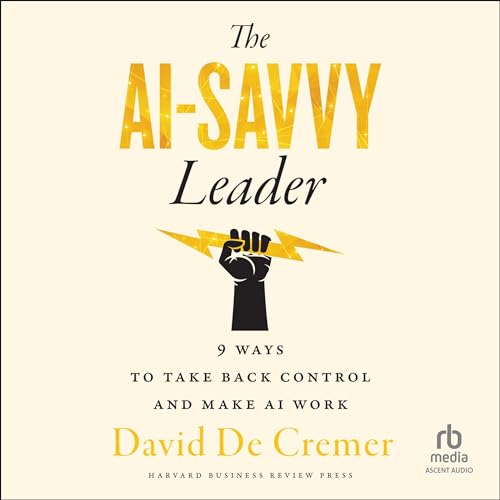
The AI-Savvy Leader (Nine Ways to Take Back Control and Make AI Work)
By: David De Cremer
Narrated By: David Marantz
David De Cremer (Author, Belgian born professor at Northeastern University in Boston, and behavioral scientist with academic studies in economics and psychology.)
“The AI-Savvy Leader” should be required reading for every organization investing in artificial intelligence for performance improvement. From government to business, to eleemosynary organizations, De Cremer offers a guide for organizational transition from physical labor to labor-saving benefits of AI.
AI offers the working world the opportunity to increase their productivity without the mind-numbing physical labor of assembly lines and administrative scut work.
Like assembly line production implemented by Ford and work report filing and writing during the industrial revolution, AI offers an opportunity to increase productivity without the mind-numbing physical labor of assembly line work and after-work’ analysis reports. With AI, more time is provided to workers to think and do what can be done to be more productive.
Arguably, AI is similar to the industrial revolutions transition to assembly line work. Assembly line work improved over time by changes that made it more productive. Why would one think that AI is any different? It is just another tool for improving productivity. The concern is that AI means less labor will be required and that workers will lose their jobs. De Cremer notes loss of employment is one of the greatest concerns of employees working for an organization transitioning to AI. Too many times organizations are looking at reducing costs with AI rather than increasing productivity.
The solution identified by De Cremer is to make AI transition human centered.
His point is that organizations need to understand the human impact of AI on employees’ work process. AI should not only be viewed as a cost-cutting process but as a process of reducing repetitive work for labor to make added contributions to an organization’s goals. AI does not guarantee continued employment, but reduced manual labor offers time and incentive to improve organization productivity through employee’ cooperation rather than opposition. AI is mistakenly viewed as an enemy of labor when, in fact, it is a liberator of labor that provides time to do more than tighten bolts on an auto body frame.
AI is not a panacea for labor and can be a threat just like industrialization was to many craftsmen.
But, like craftsman that went to work for industries, today’s labor will join organizations that have successfully transitioned to AI with a human-centered rather than cost-reduction mentality. Labor productivity is only a part of what any AI transition provides an organization. What is often discounted is customer service because labor is consumed by repetitive work. If AI improves labor productivity, more time can be provided to an organization’s customers.
When AI is properly human centered, the customer can be offered more personal attention by fellow human beings employed by an AI organization.
Too many organizations are using AI to respond to customer complaints. Human-centered AI becomes a win-win opportunity because labor is not consumed by production and has the time to understand customer unhappiness with service or product. AI does not think like a human. AI only responds based on the memory of what AI has been programmed to recall. With human handling of customer complaints, problems are more clearly understood. Opportunity for customer satisfaction is improved.
De Creamer acknowledges AI has introduced much closer monitoring of worker performance and carries some of the same mind-numbing work introduced in assembly line manufacturing.
De Creamer suggests negative consequences of AI should be dealt with directly with employees when AI becomes a problem. Part of a human-centered AI organization’s responsibility is allowing employees to take breaks during their workday without being penalized for slackening production. Repetitive tasks have always been a drain on productivity, but it has to be recognized and responded to in the light of overall productivity of an organization.
AI, like the industrial revolution, is shown as a great opportunity for human beings.
De Creamer suggests AI is not and will never be human. To De Creamer AI is a recallable knowledge accumulator and is only a programmed tool of human minds, not a replacement for human thought and understanding. The potential of AI is akin to the Industrial Revolution, yet it could surpass it significantly if managed correctly by humans.
Trust is the most important characteristic of a patient’s relationship with their physician.
Books of Interest Website: chetyarbrough.blog
“How Medicine Works and When It Doesn’t” Leaning Who to Trust to Get and Stay Healthy
By: F. Perry Wilson MD
Narrated By: Shawn K. Jain, F. Perry Wilson
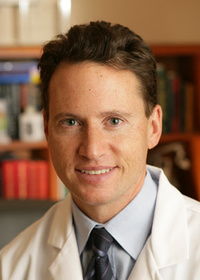
F. Perry Wilson MD (Author, Harvard graduate with honors in biochemistry, attended medical school at Columbia College of Physicians and Surgeons. He is a practicing nephrologist at Yale New Haven Hospital.)
Doctor F. Perry Wilson is a physician with a biochemistry degree from Harvard, and a medical degree from Columbia College of Physicians and Surgeons. Wilson works at Yale New Haven Hospital where he specializes in kidney issues. Wilson’s book is a problematic view of doctor/patient relationship and what a patient can or should believe about a physicians’ medical diagnosis and treatment. A problematic view is not Dr. Wilson’s intent, but it is a conclusion a reader/listener may arrive at as he/she completes “How Medicine Works and When It Doesn’t”.
Dr. Wilson argues any advice from medical professionals may be listened to with skepticism but not disdain.
In general, that argument seems logical and fairly balanced. Wilson infers skepticism extends to trained medical professionals and the medical industry in general. The reason a lay person may accept that conclusion is based on personal experience and rationality.
As one who has been diagnosed with heart trouble from blocked arteries and medical treatment for an alleged heart attack, the last ten years have been an educational journey.
The first cardiologist who reviewed details of a physical weakness felt while working, suggested the weakness may have been caused by a mild heart attack. After a heart scan, the cardiologist found an artery serving the heart had a blockage. The doctor recommended a stent be inserted to clear the blockage. After surgery, the cardiologist noted the stent could not get through the blockage. Changing cardiologists seemed a prudent action considering the doctor’s failure.
A new cardiologist recommended regular check-ups, stress tests, and medicine to address the cause of the blockage.
Ten years have passed and there have been no further incidents, but relocation required finding a third cardiologist who reviewed medications, conducted further tests. The new cardiologist recommended continued medical treatment largely based on statin prescriptions and further tests. Here is where Dr. Wilson’s book becomes problematic to a patient seeking medical advice from trained medical specialists.
As noted by Thomas Hager in “Ten Drugs”, the relationship between statins and blocked arteries as a cause of heart attacks is somewhat unclear. The unclearness is not that taking stains reduce cholesterol but that statins have side effects. Science-based tests show statins do reduce cholesterol but inhibit memory, reduce cognition, and may cause liver and kidney damage. To add to negative side effects, there is medicine producing industry’ bias that promote statins because they are big revenue producers.
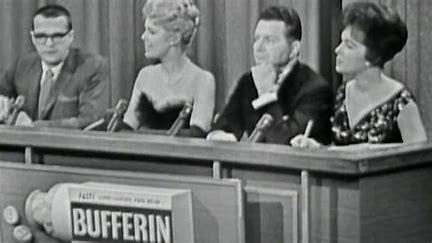
What Doctor Wilson’s book reminds one of is the mid twentieth century game show “Who Do You Trust”. Wilson infers truth is only science-based probability, not certainty.
What both doctor and patient know is based on experience and education, not certainty. For both doctor and patient, it comes down to “Who Do You Trust”.
Wilson’s book is an important example of why patients should use their intuition to trust or change doctors when their health is at risk.
Doctors have spent the greater part of their lives understanding human medical problems and the effect of drugs in treating patients. Patients are unlikely to have had the same level of training or understanding about their own health or the health of the general population. What a patient is left with is the principle of trust. If one trusts the doctor who is prescribing and/or treating one for their illness, the probability of good outcome is logically better.
Doctor Wilson acknowledges profit motive for pharmaceutical companies drives their relationship with the medical profession and the public.
He offers concrete examples of mistakes that have been made by the pharmaceutical companies like the Thalidomide prescriptions that harmed unborn children. Of course, mistakes get made in every discipline of life. The other side of mistakes are the incredible success of vaccines for polio, smallpox, and our world’s most recent crises, Covid 19.
The conclusion one draws from Wilson’s book is trust is the most important characteristic of a patient’s relationship with a physician.
This is not meant to suggest one should shop for a doctor that tells one what they want to hear but to depend on the education and experience of a person who knows more about medicine and its effects than you.
Hager’s history of the drug industry illustrates the strength and weakness of human nature whether one is a capitalist, socialist, or communist.
Books of Interest Website: chetyarbrough.blog
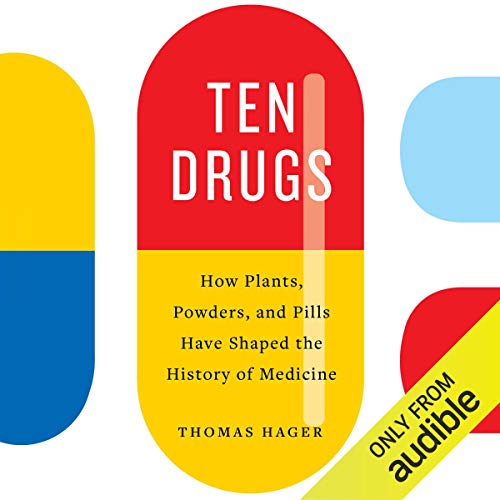
“Ten Drugs” How Plants, Powders, and Pills Have Shaped the History of Medicine
By: Thomas Hager
Narrated By: Angelo Di Loreto
Thomas Hager (Author, science historian, editor, publisher, Oregon native, received master’s degree in medical microbiology and immunology from the Oregon Health Sciences University.)
“Ten Drugs” is a critical view of today’s drug industry, its drug discoverers, the medical profession, and its manufacturers. Hager explains opium is proven to have been used by Mesopotamian Sumerians in 3400 BCE but older than its known cultivation. The Sumerians called it “hul gil” which means “joy plant”.
Thomas Hager begins with opium and its discovery thousands of years ago when the bitter taste of a poppy seed capsule is tasted by a curious African’, Egyptian’, Greek’, or Roman’ Homo erectus.
Wide use grew to affect national relations between China and the western world in the opium wars of 1856-1860. China’s Qing dynasty lost territorial control of Hong Kong to Great Britain when opium became a cash cow for international trade.
Hager explains how opium offered both risk and reward to the world. It threatened society with addiction and overdose while offering surcease of pain for the wounded or health afflicted.
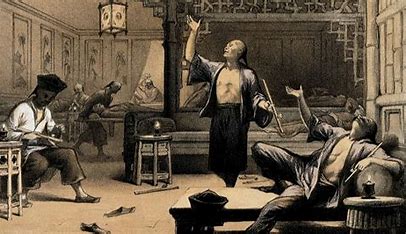
Addiction significantly increased among the Chinese during and after the opium wars. After many tries to prohibit opium, it was in the early 20th century that addiction was internationally condemned. It was the People’s Republic of China in 1949 that launched an aggressive anti-opium campaign that dramatically reduced opium purchase and use in China. Later, Hager infers China’s success in eliminating the trade is by murdering its dealers and penalizing its users. Ironically, Hager notes former President Trump called for the death penalty for drug dealers to combat America’s drug crises, a policy only likely to be implemented in an authoritarian country.
The first opium war in China, 1841.
Hager infers China’s success in eliminating the trade is by murdering its dealers and penalizing its users.
Hager explains the history of opium evolved into drug derivatives like morphine, laudanum, and codeine to offer pain relief from a variety of medical maladies. These derivatives were effective but still carried the risk of addiction. Hager explains later that addiction is related to nerve system receptors at a molecular level that create a craving for the effects of particular drugs. Opium and its derivatives eventually became regulated because of their addictive character. In America, the Harrison Narcotics Tax Act of 1914 marked the beginning of strict control of opium’s derivative prescriptions in the U.S.
Edward Jenner (1749-1823, English physician and scientist who discovered the use of cowpox to inoculate against smallpox.)
Hager moves on to vaccination. Interestingly, Hager explains the discoverer of inoculation by transfer is not Edward Jenner (1749-1823), a British physician called the Father of Immunology. It was a wealthy English woman named Lady Mary Worley Montague who learned of the use, of what became known as vaccination, in Turkey. She had survived a smallpox infection. Ms. Montague accompanied her husband, who was the British ambassador to the Ottoman empire in 1716.
Ms. Montague learned of a Turkish custom of transferring infected smallpox exudate to healthy children to give them a milder form of smallpox. That transferred exudate inoculated the young from getting a fatal dose of the disease in later life. Smallpox is estimated to have killed over 300,000,000 people (a statistic roughly equivalent to every person alive in the U.S. in the in the 1990s). The Turkish custom of inoculation was found highly effective.
Lady Mary Worley Montague who learned of the use of vaccination in Turkey. Earlier in her life, she had survived a smallpox infection.
In her return to England, Ms. Montague widely disseminated information about the success of the Turkish custom to prevent smallpox. Edward Jenner chose to use cowpox as a substitute tissue for smallpox vaccination of his patients. Jenner found cowpox infected tissue was equally effective in immunization and less dangerous than the using smallpox exudate. Jenner’s discovery of cowpox vaccination in 1796 became widely accepted but nearly 80 years after Ms. Montague’s worldwide promotion of Turkey’s vaccination procedure. Jenner’s vaccination success led to the World Health Organization’s claim that smallpox eradication could be achieved through an international inoculation program. Smallpox is alleged to have been eradicated as a disease in 1980.
The next drug identified as important by Hager is sulfa, a major cause of death from infected open wounds.
The common cause is a bacteria called Streptococcus. Bayer Corporation, a dye manufacturer in Germany, decides to enter the drug industry because their investment, facilities, and research scientists were ideal for entry into research and manufacture of drugs. They compound a drug called Prontosil that is discovered as a sulfa based chemical compound that successfully kills Streptococcal bacteria that cause fatal infections from open wounds. Bayer’s discovery saved many lives as WWII was gathering in the 1930s. Ironically, one of the saved lives is FDR’s son who had a severe streptococcal infection in 1936.
Hager notes personal mental illness and social dysfunction are perennial maladies that plague society through the 21st century.
Isolation and various therapies have been used to address mental illness. In early days, asylums were created to isolate patients who could not cope with daily life. Palliative treatment ranged from isolation to Freudian consultation, to electroshock, to newly discovered drug treatments. Though not mentioned by Hager, a little research shows the first significant breakthrough drug was lithium in 1949.
John Cade (1912-1980, An Australian psychiatrist discovered the effects of lithium carbonate as a mood stabilizer in 1948.)
Lithium was actually discovered in 1817 but did not get used for mental illness until 1948 when John Cade, an Australian psychiatrist, found that lithium carbonate stabilized mo0d and reduced the severity of manic episodes in patients.
Though Hager doesn’t mention lithium, he notes the French chemist Paul Charpentier identified antihistamine in 1950 as an antipsychotic to aid his patients’ erratic behavior. The use of Thorazine became a common drug synthesized by Rhone-Poulenc Laboratories in France. It was released in the 1950s and considered a major breakthrough in psychiatric treatment. It had a calming effect on severely schizophrenic patients by attacking excess dopamine production in the brain.
The major criticism Hager has of drug manufacturers and the medical industry is in the inherent influence of money, power, and prestige that distorts honest evaluation of drug effectiveness and side effects.
The drug industry depends on the success of their research for new drug discoveries to maintain the cost and improve the value of their businesses. However, human nature gets in the way of every human being. The lure of more money, power, and prestige enter into evaluative judgements and descriptions of tests for new drugs. The financial success of a drug that mitigates or cures particular societal ills make millions, if not billions, of dollars for drug manufacturers. Drug manufacturers are not eleemosynary institutions. They are in the business of making money and preserving their longevity while enriching themselves and their stockholders. Hager argues human nature distorts the truth of drug efficacy with tailored reports of a drug’s true benefit and potential for harm. He offers statins as an example of drug manufacturers’ misleading promotions.
Hager reviews the history of statins and correlations drawn by the medical industry about their efficacy in reducing heart ailments.
He suggests clinical studies by manufacturers often distort the entire effect of statins in preventing heart attacks. Statins are designed to reduce cholesterol in the blood stream. However, many studies that correlate cholesterol with heart disease are only partly related to heart attacks while having measurable side effects that diminish human cognition, memory, and potential organ damage, i.e, liver and kidney damage. Hager cautions those who take statins not to stop without discussing it with their physicians. However, Hager recounts an unsolicited personal contact that suggested he should be taking a statin because he is over 60 and had a brain vessel bleed in his earlier medical history. The contact recommended Hager take a statin based on that history. Hager notes that he felt his private medical history had been hacked, and that the contact is evidence of drug industry promotion of statins for profit more than public benefit.
In Hager’s last chapters, he explains how the drug industry is being attacked for influence peddling. In drug manufacturers drive for profits, they offer incentives to the medical profession (e.g. trips to conferences in exotic resorts, personal solicitations from sales reps, etc.) to use specific drugs in their practices.
In the end, Hager argues there are exceptions to the medical industries drive for profits by telling the story of British researchers Georges Kohler and Cesar Milstein who made a discovery in 1975 that changed the focus of drug manufacturer to what is called monoclonal antibody drug development. Kohler and Milstein found a process for creating drugs that have fewer side effects by creating antibody drugs that exclusively attack diseases at a molecular level. The irony of their discovery is Kohler and Milstein chose not to patent their discovery. If they had patented their discovery, they could have gained income for every company who chose to create monoclonal antibody drugs.
British researchers Georges Kohler and Cesar Milstein
Research is growing to create drugs that more precisely address the known molecular cause of disease without affecting the general health of patients. Not surprisingly, today’s manufacturers of monoclonal drugs use Kohler’s and Milstein’s process while requiring patents for their drugs.
Hager’s history of the drug industry illustrates the strength and weakness of human nature whether one is a capitalist, socialist, or communist.
Eugenics and the fickle political nature of human beings outweighs the benefits of Harden’s idea of choosing what is best for society.
Books of Interest Website: chetyarbrough.blog
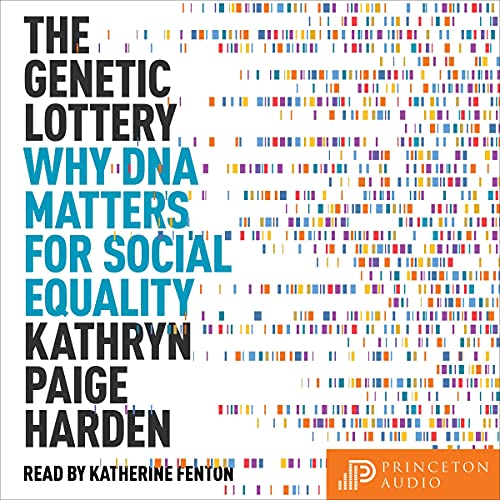
“The Genetic Lottery” Why DNA Matters for Social Equality
By: Kathryn Paige Harden
Narrated By: Katherine Fenton
Kathryn Paige Harden (Author, American psychologist and behavioral geneticist, Professor of Psychology at the University of Texas at Austin.)
“The Genetic Lottery” is an important book that may be easily misinterpreted. Hopefully, this review fairly summarizes its meaning. Fundamentally, Kathryn Paige Harden concludes all human beings are subject to a genetic lottery and the culture in which they mature. It is not suggesting all human beings are equal but that all can develop to their potential as long as he/she has an equal opportunity to become what their genetic inheritance, education, and life’s luck allow.
Harden explains racial identity is a false flag signifying little about human capability.
Every human being is born within a culture and from a mother and father who have contributed genetic DNA they inherited from previous generations. DNA carries genetic instructions for development, growth, and reproduction of living organisms. Those instructions are a blueprint for an organism’s growth. However, the genetic information passed on to future generations varies with each birth and is subject to a lottery of DNA instructions.
The lottery of genetics extends a multitude of characteristics ranging from intelligence to height to the color of one’s skin.
One may become an Einstein, or a slow-witted dolt. One may be born healthy or destined to die from an incurable disease. The growing understanding of genetics suggests the potential for human intervention to prevent disease, but also the possibility of creating a master race of human beings. That second possibility is a Hitlerian idea that lurks in the background of science and political power. It revolves around the theory of eugenics.
Harden suggests an ameliorating power of eugenics is its potential for offering equal opportunity for all to be the best version of themselves within whatever culture they live.
Putting aside the potential of human genetic theory’s risk, Harden explains every human is born within a culture that reflects the genetic inheritance of the continent on which they are born. The combination of the human genetic lottery and the culture in which humans live create ethnic identity and difference. Differences are the strengths and weaknesses of society. Strengths are in the diversity of culture that adds interest and dimension to life. The weakness of society is its tendency to look at someone who is different as a threat or obstacle to a native’s ambition or cultural identity.
Harden suggests every human being’s genetic code should be identified to aid human development by creating an environmental support system that capitalizes on genetic strengths and minimizes weaknesses.
This idealistic view of genetics is fraught with a risk to human freedom of thought and action. Science is generations away from understanding genetics and its relationship to the weaknesses and strengths of human thought and action. Understanding what gave Einstein a genetic inheritance that could see and understand E=MC squared is not known and may never be known. The luck of genetic inheritance and the lottery of life experiences are unlikely to ever be predictable. One interesting note in the forensic examination of Einsteins brain (recorded in another book) is that he had a higher-than-normal gilia cell ratio, non-normal folding patterns in his parietal lobe, and a missing furrow in the parietal lobe that may have allowed better connectivity between brain regions.
The threat of eugenic determinism and the fickle political nature of human beings outweighs the benefits of Harden’s idea of choosing what is best for society.






























































 REVIEWS AND VIEWS OF LIFE