RISK OF DEMOCRACY

Audio-book Review
 By Chet Yarbrough

Blog: awalkingdelight)
 Website: chetyarbrough.blog

Hubert Humphrey (The Conscience of the Country)

By: Arnold A. Offner

Narrated by: Jonathan Yen
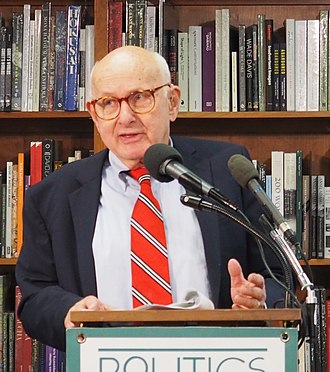
Arnold A. Offner (Author, American historian, president of the Society for Historians of American Foreign Relations.)

Arnold Offner offers a biography of Hubert Humphrey, a former Minneapolis, Minnesota Mayor, U.S. Senator, and Vice President of the United States. Offner notes Humphrey ran for President in 1960 but was defeated by John F. Kennedy.

Hubert Humphrey (1911-1978, died at age 66, V.P. 1965-1969, Senator 1971-78)

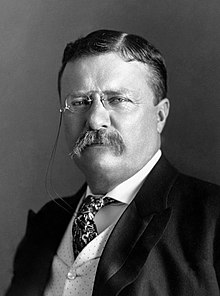
What makes this biography interesting is that few American V.P.s are remembered, let alone biographized. The V.P.s who are remembered are only those who become Presidents. Even then, most American Vice Presidents are not remembered. Three exceptions are Theodore Roosevelt, Harry Truman, and Lyndon Johnson.
There are 16 V.P.s to become Presidents of the United States. Out of 46 Presidents, 16 V.P.s (approximately 34%) became President. Eight became President because of a President’s death in office.

  1. John Tyler-Only 1 month as V.P. when William Harrison died from an illness contracted at his inauguration.
  2. Millard Fillmore became President after the death 1.5 years into Zachary Taylor’s presidency.
  3. Andrew Johnson replaced Abraham Lincoln.
  4. Chester A. Arthur replaced James Garfield after he was assassinated by Charles Guiteau, only 6 months after serving as President.
  5. Theodore Roosevelt replaced William McKinley in his second term when he was assassinated by an anarchist.
  6. Calvin Coolidge replaced Warren Harding who died halfway through in first term.
  7. Harry S. Truman replaced Franklin Roosevelt after he had served 3 months in his 3rd term.
  8. Lyndon B. Johnson replaced John Kennedy after his assassination.

The strength of democracy is in a candidates’ skill in representing the will of his/her supporters. The weakness of democracy is in a candidates’ dependence on the wealth of special interests that contribute to their candidacy.

Humphrey’s biography is an interesting example of the strength and weakness of American Democracy. On the one hand, one person can change the course of democratic government.  On the other hand, a candidate for President cannot be elected without the support of people and businesses that contribute a lot of money.

Money comes with strings. The influence of special interests and the power of elected representatives distort objectivity.
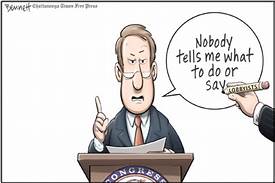
Offner shows the choice of running mates for Vice President in an American democracy is based on two qualities. The first is how a V.P. candidate increases voter base for the prospective President. The second is the skill that a V.P. may have in rallying political support for the President’s ticket. V.P.s in their positions as possible President replacements have little visibility to the public. Vice Presidents are forgotten in public memory unless they become President. Even as Presidents, if they fail to become impactful, they are forgotten.

Offner shows Humphrey wished to be President, but he had little chance of achieving that goal for two reasons.

One, he did not come from a wealthy family and two, his political base came from his experience as a mayor of Minneapolis, Minnesota and as a relatively new Senator for the State. Though Offner shows Humphrey had great political skill, his only realistic avenue to the Presidency is by being Vice President.

Offner shows Humphrey as a prime mover in civil rights.
Fight for civil rights is not shown as a singular political maneuver but a lifelong pursuit by Humphrey. Offner shows how Humphrey became a civil rights leader in his home State. After becoming Vice President, Humphrey successfully pushed for the greatest civil rights legislation since Reconstruction after the civil war.
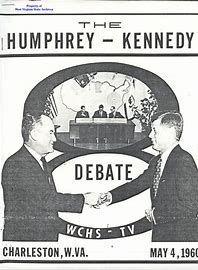
The importance of money in American elections is made clear when Humphrey runs for President against John Kennedy. The wealth of the Kennedy family doomed Humphrey’s chances.

Humphrey is characterized as an indefatigable debater and negotiator in a Congress held hostage by a 2/3’s cloture rule that gave civil rights legislation little chance of passage because of southern opposition. With the help of Mike Mansfield, the Democratic Senate Majority Leader, Humphrey maneuvers the Senate to approve the Civil Rights Act of 1964 despite the 2/3s cloture rule. It prohibited discrimination in public places, provided for integration of schools and other public facilities. It also made employment discrimination illegal.  

Then Offner’s subject becomes the great escalation of American involvement in Vietnam. Offner explains Lyndon Johnson made the decision to turn America’s military role into a pro-active rather than defensive action. Johnson deployed over 23,000 soldiers to Vietnam.

American involvement in Vietnam did not begin with Johnson. America’s entry into Vietnam began soon after WWII because of America’s paranoia over Russian Communist infiltration in Asia and the 1950s growth of the Viet Minh’ guerillas. The Viet Minh were a guerrilla force led by Ho Chi Minh to contest French colonization of Vietnam. The Viet Minh were supported by both Stalin and Mao and their respective communist beliefs.

After Johnson’s American expansion into North Vietnam, Offner notes Ho Chi Minh demanded total withdrawal of America, the right of South Vietnam to vote on whether they wished to be a part of one country, and Vietnam to be left to govern their own territory.

Ho Chi Minh (1890-1969, died at age 79, President of the Democratic Republic of Vietnam.)

These terms were unacceptable to Johnson. Retrospectively, that would have been the best, least costly, and most diplomatic action that could have been taken by America.

Offner explains President Johnson requires his Vice President, above all, to be loyal. Offner shows Humphrey was loyal, at least until 1965, when he sent a memorandum to Johnson recommending an exit strategy. Johnson ignores Humphrey’s memorandum. The rest is history. Therein lies the risk of Democracy in America.
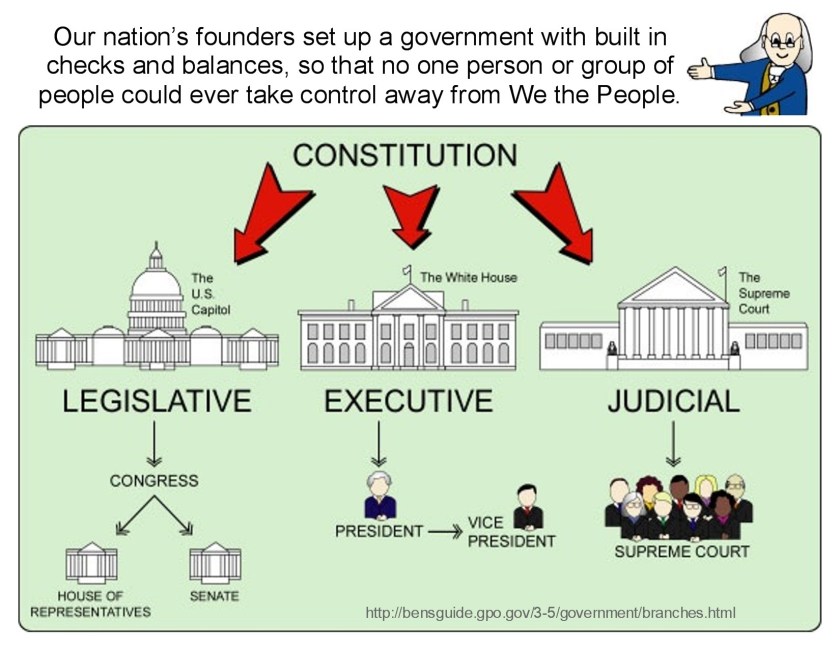
The checks and balances of Democracy fail to protect America from the mistakes of Vietnam, Iraq, and Afghanistan because money and power influence Democratic elections, policies, and Presidents. This is the risk both Republican and Democratic Presidents have noted. (Dwight Eisenhower’s comments about the Military/Industrial Complex, and Barack Obama’s address to the Senate on campaign finance reform.)

The last chapters of Offner’s book recount the race for the Presidency after Johnson’s speech saying he will not run for another term. Humphrey chooses to run for President with Muskie as his choice for V.P. In the end, Humphrey and Muskie are defeated with the return to political office of Richard Nixon and his soon to be revealed corrupt V.P., Spiro Agnew.

As Churchill noted in 1947, “Democracy is the worst form of government, except for all the others.”
HINDSIGHT (G.W.’S LEGACY)

Audio-book Review
 By Chet Yarbrough

Blog: awalkingdelight)
 Website: chetyarbrough.blog

Landfall (A Novel)

By: Thomas Mallon

Narrated by: Robert Petkoff

Thomas Mallon (Author, novelist, essayist, and critic.)

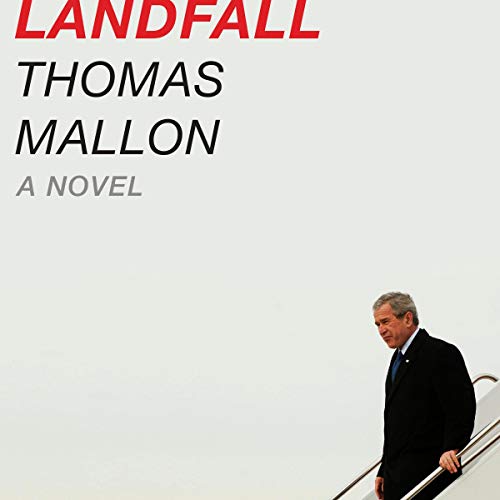
Thomas Mallon’s book is a fictionalized account of George W. Bush’s administration. Mallon cleverly includes a fictional love story that adds some drama to his story. What one should be wary of is Mallon’s political bias and how it might color the story.

In listening to a book of fiction that uses the names of the known, it is difficult to separate fact from fiction.

Fictionalizing history-making characters is particularly difficult when it is written about events of the near past. What helps is the knowledge that all history books are partly fictionalized by choice of an author’s facts. Revisionist history is why past Presidents have both risen and fallen in the eyes of historians and the public.

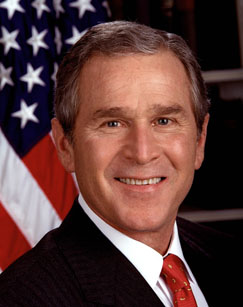
George W. Bush makes some bad decisions as a young man, but more importantly and significantly, as a two-term President.

The son of former President H. W. Bush comes across as a decent and flawed human being. America’s consequence from Iraq and Afghanistan invasions and George W.s response to Katrina show American government hubris and failure. Mallon’s story shows American’s fallibility as a democratic government. Both Republican and Democratic parties in America have made good and bad domestic and international decisions; some of which have been reversed, others not.

Mallon writes of the difficulty of working through America’s deadly mistakes in Iraq.

Mallon chooses to write a fictional account of the bad decisions made by President George W. Bush. Some of us have short memories but Mallon reminds listeners of the last four years of George W.’s Presidency. Some in Bush’s administration reluctantly suggest America must withdraw from the mess America created by removing Iraq’s autocratic and brutal dictator, Saddam Hussein. Some of George W.’s leaders were misled (or lied to themselves) about Iraq’s threat of weapons of mass destruction (WMD). No one in George W.’s administration manages to persuade policy makers that American nation-building in foreign cultures is a fool’s errand.  

Autocratic governments know little about what it means to be free, or at least free within the rule of law.

Mallon creates a story that implies there is a great deal of descension in the second term of George W.’s administration. This is particularly evident in the intellectual conflict between the Secretary of Defense, Donald Rumsfeld, and Secretary of State, Condoleezza Rice. There is a growing recognition by leaders in the administration, that America could not re-build Iraq’s government. Rumsfeld may have suggested immediate withdrawal of American troops from Iraq with political spin that infers America’s job is done.  The President and Secretary of State Rice realize the Presidency and American resolve is tarnished by withdrawal, whether it is militarily or diplomatically accomplished. Mallon’s novel concludes G.W.’s legacy is the Iraq debacle and the mishandling of the Katrina disaster in Louisiana.

Katrina disaster in Louisiana

As time passes and history is rewritten, Mallon’s conclusions are likely to be repeated. Neither George W. Bush, Secretary of Defense Rumsfeld, nor Secretary Rice will be remembered as great leaders. It is not judgement about their patriotism or their desire to make America safer or better, but a consequence of political mistakes.

George W’s administration fails to understand nation-building is folly, and natural disasters are not about the dead but about quick and organized aid to survivors. Mallon’s book is a reminder of how difficult it is for any organization’s leader to become great in the eyes of history.

V.A.T.

Audio-book Review
By Chet Yarbrough

(Blog: awalkingdelight)
 Website: chetyarbrough.blog

Rebellion, Rascals, and Revenue: Tax Follies and Wisdom Through the Ages

By: Michael Keen, Joel Slemrod

Narrated by: Walter Dixon

“Rebellion, Rascals, and Revenue” is a painful and laborious book to listen to, in part, because of its length but mostly because of its subject. Few citizens appreciate having their hard-earned wealth and income reduced by government taxation. However, the co-authors are well qualified and informative in explaining how important taxes are to every form of government to insure citizen’s peace, welfare, and protection. More importantly, they show how countries of the world have both aided and diminished prosperity of nation-state’ economies with good and bad tax policies.

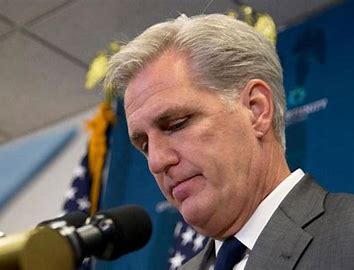
Kevin McCarthy (Speaker of the House.)

As noted by McCarthy, the deficit exceeds the annual gross national product of the United States.

Keen’s and Slemrod’s book is timely. The wide gap between America’s two major political parties is partly because of America’s deficit, which has not been higher since WWII. The solution lies in the political will to increase taxes and reduce government expenditure. The difficulty is finding an equitable balance between tax revenues and the health, education, and welfare of America’s citizens.

However, America’s homelessness is evidence of a gap between rich and poor that belies America’s great wealth.

Keen’s and Slemrod’s book illustrate the folly of many nations that have inexpertly balanced tax policy with the health, education, and welfare of their citizens. From before the French revolution to modern times, the authors recount errors made by governments that bumble their way from forcing tax collection to passing confiscatory laws that support bureaucracies that beggar rather than serve the public. Along the way, the authors show how tax collection is conducted, how some improvements were made, and how citizens were both benefited and harmed by tax policies.

After wading through the author’s history of nation-state’ tax hijinks, Keen and Slemrod conclude America’s tax system should be overhauled. Their solution is a value added tax. This is an interesting conclusion that is reinforced by T. R. Reid’s book, “A Fine Mess” which suggests the same thing. However, Reid is a reporter for the “Washington Post”, not an economist with experience like Keen’s and Slemrod’s.

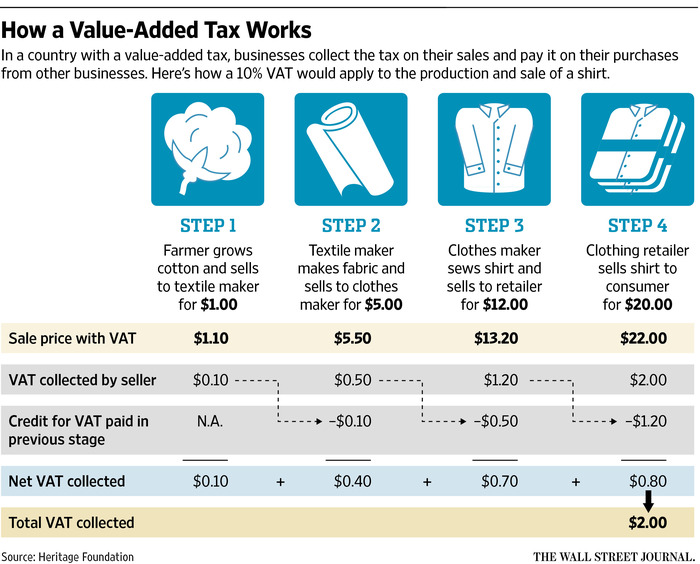
A value-added tax (VAT) is a consumption tax on goods and services that is levied at each stage of the supply chain where value is added, from initial production to the point of sale. The amount of VAT the user pays is based on the cost of the product minus any costs of materials in the product that have already been taxed at a previous stage1.

Keen and Slemrod do not clearly explain why they think a VAT is the solution to a better tax system than America’s current policy. Reid explains a VAT is a broad-based low-rate tax that will reduce the need for a tax collection bureaucracy because it eliminates corporate loopholes, broadens, and reduces tax rates, and equalizes citizens’ tax burden. Reid believes more revenue would be produced to reduce America’s debt. It would also reduce the expense of America’s tax collection bureaucracy. In theory both government expense and the deficit would be aided by a VAT tax policy.

THE PRESIDENT

Audio-book Review
By Chet Yarbrough

(Blog: awalkingdelight)
 Website: chetyarbrough.blog

The Fifth Risk

By: Michael Lewis

Narrated by: Victor Bevine

Michael Lewis (American Author.)

“The Fifth Risk” is an inadequate reveal of President Donald Trump’s administration. It barely scratches the surface of the incompetence and ineptest of an American President’s view of government, let alone world affairs.

Trump is not the only American president who prized loyalty above competence, but he unfairly degraded federal government managers and employees who serve America.

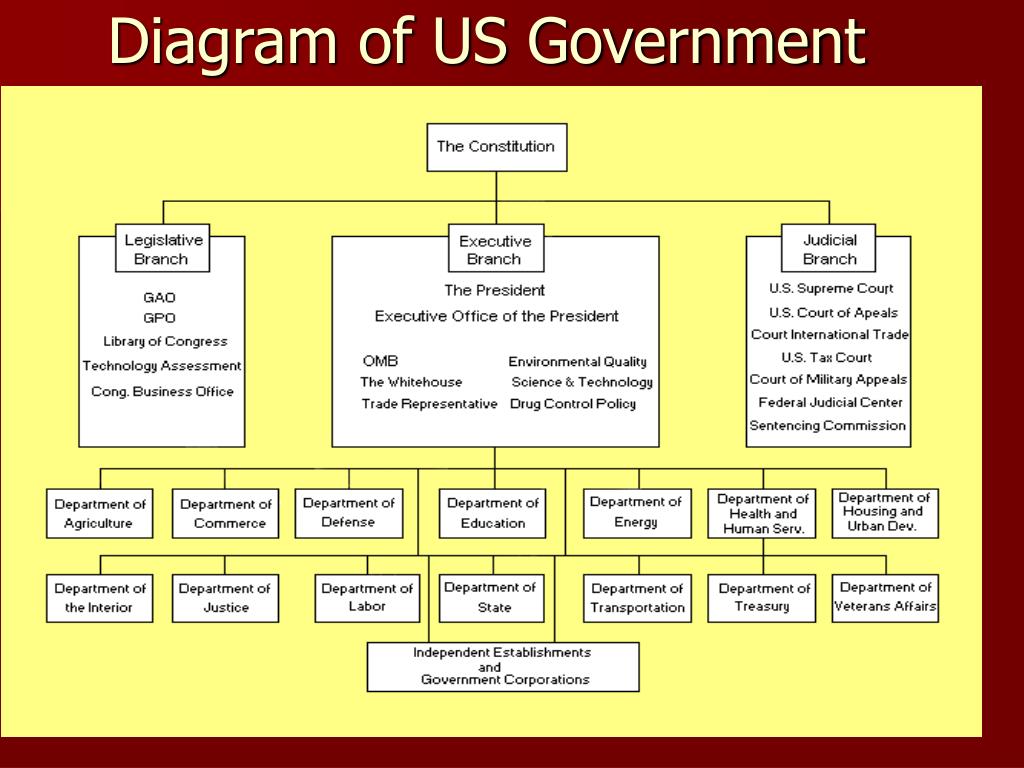
Lewis implies “The Fifth Risk” for American government is distrust of the founding tenants of American government. The American Constitution relies on a balance of power between three branches of government. Trump sees and acts like there is only an Executive branch that counts. His appointment of department heads in the Executive branch is largely based on private business experience and loyalty to one person, without any understanding of government purpose.

The American Constitution relies on a balance of power between three branches of government.

To avoid the principle of monarchy, three branches of government were created to balance the power of a singular President. What Lewis reminds reader/listeners of is that many government employees have spent their life in government to serve the needs of the American people. Just as in any organization, some government employees do a better job than others. Lewis cherry-picks a few government employees to illustrate how great a job they have done in serving Americans.

The American Federal Government is not a business. It was never organized as a business but as representative and aid to the people of the United States.

Trump’s decisions for choice of leaders of various Executive Branch offices were based on their success as business leaders that understood the importance of reduced cost and loyalty. These business leaders did not look at the bureaucracy of government as a consistent and dependable way of providing service to American people. Businesses survive based on dollars and cents. Government is not a dollar and cents enterprise where profit is its only reason for existence and survival.

Trump’s greatest failure as a President is in not understanding or caring about the difference between running a government and running a business.

Lewis infers much more than he explains. One may question whether Trump is a good business manager, but it is quite clear he was not a good American government leader. Trump had no appreciation of the difficulty of being a server of the American people while being the leader of a democratic country.

BE CURIOUS

Audio-book Review
 By Chet Yarbrough

(Blog: awalkingdelight)
 Website: chetyarbrough.blog

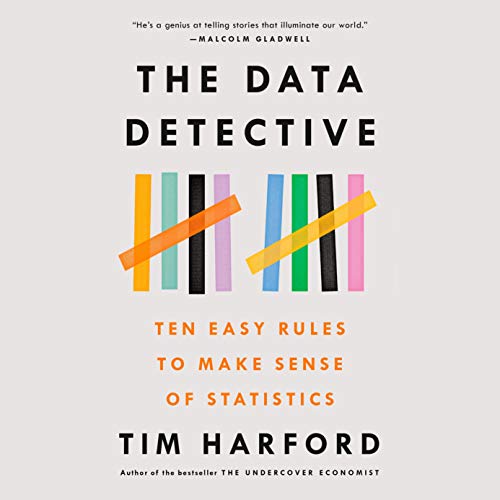
The Data Detective

By: Tim Harford

Narrated by: Tim Harford

Tim Harford (British Author, Master’s degree in economics, journalist.)

Tim Harford gives listeners a practical application of “Thinking Fast and Thinking Slow” in the art of statistical analysis. Sounds boring, just as the title “The Data Detective” but in this day of media overload Harford castes a warning. Be skeptical of conclusions drawn by statistical data, whether accumulated by business interests, science nerds, or algorithms. Think slow because thinking fast obscures understanding of statistical analysis. Above all, be curious when reading a statistical analysis that either adds or subtracts from your understanding. With that admonition, Harford offers ten ways to question the veracity and truthfulness of statistical analysis.

Tim Harford gives listeners a practical application of “Thinking Fast and Thinking Slow” in the art of statistical analysis.

Harford argues it is important to investigate a writer’s qualifications as an analyst, and the “how, why, and when” data is collected. As the famous economist Milton Friedman said, “Statistics do not speak for themselves.” Or, as Mark Twain made famous, “There are three kinds of lies: lies, damned lies, and statistics.” It appears Harford agrees with Friedman, but not Twain, because he believes understanding a statistical study can reveal possible or at least probable truth.
Dr. Cuyler Hammond and Dr. Daniel Horn were smokers up until they finished their statistical report that correlated smoking with cancer.

Harford gives an example of statistical reports that correctly correlated smoking with lung cancer. Cuyler Hammond’s and Daniel Horn’s 1952 statistical study led to the 1964 Surgeon General report that confirmed cancer’s correlation with smoking. The disheartening story Harford tells is the tobacco industry’s purposeful effort to deny correlation. The tobacco industry’s methods were to suggest other causes, like auto exhaust or other carcinogens, as likely causes of lung cancer. They created doubt, whether true or false, which poisons belief in statistical studies.

Like the cowboy Marlboro smoker demonstrating a healthy image of a smoker, advertising obscures facts. The smoking industry successfully created doubt.

Harford explains personal investigation based on curiosity and detective work is necessary if one is looking for a probability of truth.

American free enterprise is created to produce product, service and jobs while making enough profit to stay in business. Sometimes those goals interfere with truth.

As human nature would have it, some businesses care less about truth than profit. This is not meant as a criticism but as an affirmation of human nature.

Harford explains there are many statistical studies purporting rises in crime, inequality, poverty, and medical health that need to be closely examined for validity. He argues every conclusion drawn from statistical surveys that contradict interest-group’ or individual’ belief should be closely examined. The methodology of a good statistical study must be understood within its era, its compiler’s biases, its stipulated human cohort, its conclusion, and its tested repeatability by others.

Harford challenges the supposition that violence has increased in America. This is undoubtedly music to the ears of elected officials who resist national gun control measures. Harford and the famed psychologist, Steven Pinker, suggest statistical analysis shows violence of earlier history is greater than in the 21st century. Harford acknowledges this is no comfort to the heart-rending reality of a child lost to suicide by gun or the horrendous school shootings of the last 3 years. As Horford explains statistics do not register human grief. Statistics are an impersonal unfeeling view of human life.

Harford does not read statistical surveys as truth but as a roadmap for discovery. He looks at a statistical survey like a detective searching for details. Who are the gatherers of the statistics? How were they collected? Why are they relevant? What period do statistics represent and do they relate the present to the past? Without answers, Harford argues statistical surveys are no better than propaganda.

Harford offers a graphic example of the context needed to clearly illustrate the value of statistical studies. The history of America’s invasion of Iraq and its human cost is dramatically and comprehensively revealed in one statistical picture.

Harford’s story shows how graphics can capsulize a statistical truth that shocks one’s senses. Simon Scarr summarizes a statistical report on deaths from the Iraq war with one graph.

Harford advances his view of the metaverse and its growing role in the world. He gives examples of Target’ and Costco’ algorithms that tells a father his daughter is pregnant, and infers a wife’s husband is cheating. A Target algorithm sends a note to a father about the pending birth of a baby based on his daughter’s purchases at the store. Costco sends a rebuy message for condoms to a wife when she calls and explains they never use condoms. Both stores apologize for sending their notes and say their stores made auto-response mistakes. Harford notes email apologies are a common response of stores that use similar algorithms.

Harford notes the irony of a metaverse that invades privacy with algorithms that can easily mislead or affirm societal trends or personal transgressions.

The last chapters of Harford’s book reinforce the importance of statistical studies by recounting the history of Florence Nightingale’s heroic hospital service in Turkey during the Crimean war (1853-1856). Harford explains Nightingale’s interest in mathematics and association with luminaries like Charles Babbage (an English polymath that originated the concept of a digital programmable computer). Nightingale’s hospital service and interest in mathematics lead her to correlate patient’ diseases with causes. The hospital to which she was assigned by the U. K. was without proper food and water. The hospital was dirty, and disease ridden. She had two objectives. First to have food and water supplied, and second to clean the hospital. Her statistical analysis made her realize cleaning was as important as food and clean water in reducing contagion among her patients. Like the statistical analysis of smoking and cancer changed smokers, Nightingale changed nursing.

Florenvce Nightingale (1820-1910, English social reformer born in Italy, Founder of modern nursing.)

“The Data Detective” is a disturbing book that shows the power of media and how it can mislead as well as inform the public.

This is a disturbing book that shows the power of media and how it can mislead as well as inform the public. With poorly or intentionally misleading statistical studies, opposing interest groups harden their political beliefs.

Harford concludes with an appeal to discordant interest groups to be curious about why they disagree with each other.  Reputable statistical analysis can improve one’s belief in probable truth and decrease echo chamber‘ adherence of disparate interest groups.

WHITMAN’S MASTERWORK

Audio-book Review
            By Chet Yarbrough

(Blog: awalkingdelight)
 Website: chetyarbrough.blog

Leaves of Grass (1855 Edition)

By: Walt Whitman

Narrated by: Edoardo Ballerini

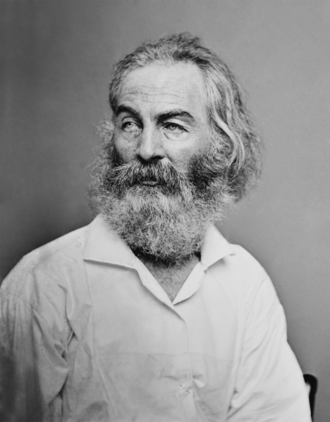
Walt Whitman (Poet, 1819-1892)

“Leaves of Grass” is perfectly rendered by Edoardo Ballerini. Walt Whitman’s masterpiece shines in Ballerini’s narration. Whitman lived in one of America’s most tumultuous times. He lived through the build-up of the civil war, worker displacement from American industrialization, and the assassination of Abraham Lincoln. Despite the horrors of his time, Whitman celebrated life.

Today is a good time to listen to Whitman’s masterwork. Living in the time of Covid19, Russia’s attack on Ukraine, January 6 violence in the nation’s capital, probable arrest of a former President, natural disasters, climate change, threat of Armageddon, American poverty, immigration, and homelessness—all can overwhelm one’s senses. Whitman understood the difficulties of his time but rises above them by celebrating what being American means.

Being American means having a written Constitution.
Being American means balance of power based on independent judicial, legislative, and executive branches of government.

Being American means being free within the context of rule-of-law. Being American means freedom to vote for representative government. Being American means freedom of speech and the press within the bounds of slander toward others.

Just as was true in the time of Walt Whitman, there is no guarantee of peace and tranquility, but his blank verse reflects on the many positive values of living life as an American. Whitman implies Americans should celebrate what they have, not what they want.

LEADERSHIP

Audio-book Review
By Chet Yarbrough

(Blog: awalkingdelight)
 Website: chetyarbrough.blog

Be Like the Fox (Machiavelli in His World)

By: Erica Benner

Narrated by: Karen Saltus

Erica Benner (Author, British political philosopher and historian)

Erica Benner gives context to Machiavelli and his role as a diplomat and advisor to leaders of the 15th and early 16th century. Machiavelli is not depicted as a supporter but as a clever advisor to tyrannic leaders of Florence and city-state regions of Italian power. What Benner reminds one of is that there is no country called Italy at this point in history.

There are three centers of power in the country now known as Italy. One is Florence where Machiavelli is born and raised, the second is in city-state regions, and the third is the Catholic Church in Rome. All are centers of power.

Benner’s history infers most of Machiavelli’s life is a duel with the Medici family’s power. The Medici family initially controls Florence when Machiavelli is a young man. The Medici family is dethroned in 1494. Machiavelli comes under suspicion as a possible co-conspirator. In August 1512, the Medici’s return to control of Florence.

Nicolo Machiavelli lives (1469-1527) in interesting times. The Renaissance occurs between the 1300s and 1700s. Benner infers Machiavelli is like a fox with nine lives.

When the Medici family is overthrown, Florence comes under the rule of a Dominican friar in 1494. The new leader is Girolamo Savonarola. Savonarola is an ascetic who unwisely ridicules the Pope’s Catholic Church leadership and influence. He accuses the bishops of simony, mismanagement, and greed. Pope Alexander VI, a Borgia family descendent, becomes Pope and has Savonarola beheaded. Savonarola’s experience undoubtedly influences Machiavelli to keep his own counsel when dealing with power.

Girolamo Savonarola (1452-1498, Ruled Florence from 1494-1498

Benner explains Machiavelli counsels the Borgia’s but only serves in a way that seems supportive. Benner suggests Machiavelli’s advice to the Borgias hides his real beliefs about city-state’ leadership. Machiavelli is in his twenties when serving the Borgias. These seem the formative years of Machiavelli’s future book, “The Prince”.

Cesare Borgia (1475-1507, died at the age of 31)

There are three Borgias that become Popes. It is the second, Pope Alexander VI, which has a son named Cesare Borgia which appears to be a model for Machiavelli’s “…Prince”. Benner suggests interpretation of Machiavelli is often wrong. After the Borgias, Machiavelli’s leadership beliefs are shown by Benner to be more nuanced. One might consider Machiavelli a political genius, ahead of his time. Benner explains “The Prince” is filled with irony while appearing to laud tyrannic power while his true belief is in just treatment of the ruled. Machiavelli warns of tyranny’s negative consequence.

Caterina Sforza (Noblewoman of Forli.)

An interesting acquaintance of Machiavelli in 1499, before the Medici restoration, is Caterina Sforza, an Italian noblewoman who succeeds her husband as a leader of an area identified as Forli. Women are shown as a force, even in the 15th century. She shows herself to be a tigress by facing down Borgia’s martial control of the town. The reason this is an interesting note is because Benner refers to a dream Machiavelli has of a forceful woman who counsels him to confront the new Medici rulers of Florence and offer his services as an experienced diplomat.

A not widely known contribution in Benner’s history is that Machiavelli promotes the idea of drafting citizens of a city-state into an army for defense of their homeland.

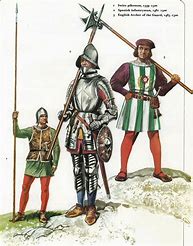
Most Italian city-states hired mercenaries to fight their battles and expand their fiefdoms. Machiavelli recognizes the concomitant risk with mercenaries who can turn on their benefactors for their own interests. Machiavelli convinces Florence’s leaders of the folly of using mercenaries because of their loyalty to whomever pays them best. Machiavelli is charged with raising what we today call a national guard. Soldiers would spend several days for training, and later be called-up when there is a threat to their country. By being citizens of their homeland, Machiavelli argues a home-grown army is more effective and reliable than a mercenary military force when defending their homeland.

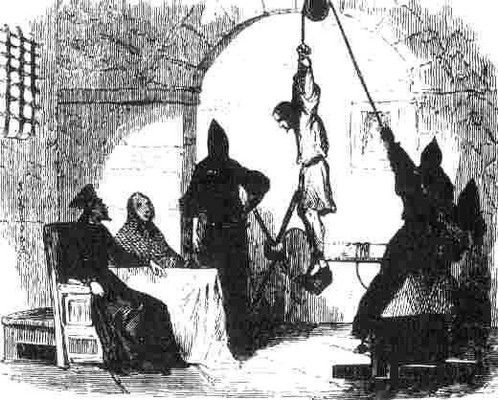
Machiavelli is imprisoned and tortured when the Medici’s return to power. He is implicated in an effort to keep the Medici’s out of power in Florence.

With the support of Spain, and a Medici Pope, the Medici family returns to power in Florence. In 1513, a Medici Pope is elected by the Catholic Church. The Medici family returns to rule in the 16th century. Machiavelli’s career is partly resurrected when he writes to the Medici’s about how foreign powers should be handled. He is known to be speaking from personal experience. Though the Medici’s mistrust Machiavelli, they note the value of his understanding of negotiation and diplomacy.  Machiavelli is now in his 40s. “The Prince” is generally thought to have been published in 1513.

Another interesting note in Benner’s history is that Machiavelli becomes an accomplished playwright when the Medici family returns to Florence. His plays are comedies, dramas, and satires about Florentine customs and habits,

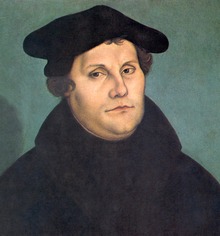
Two other momentous occurrences happen during Machiavelli’s life. One is Martin Luther’s attack on the Catholic Church and its purposeful belief that one can buy their way to heaven with indulgences offered for sale (aka simony) by the Church. The second momentous occurrence is the rise of the Muslim religion with the advance of Sulieman the Magnificent. Both were viewed as direct threats to the Church and Catholic faith. Machiavelli is near the end of his eventful life.

Martin Luther’s attack on the Catholic Church with the 95 Thesis in 1517.

Sulieman the Magnificent captures much of the middle east and spreads belief in the Muslim religion. (6 November 1494 – 6 September 1566)

Benner implies “The Prince” is a compilation of Machiavelli’s life as a diplomat. She suggests “The Prince” reflects on the dual nature of leadership with one side beneficent, the other maleficent. Bennet’s history suggests Machiavelli dies penniless and in obscurity because of his sly political fencing with great powers like the Borgia’s and Medici’s.

Machiavelli’s life story shows two leadership styles that effectively lead Italy’s city-states. In Benner’s opinion, Machiavelli’s life experience reinforces belief that beneficent (more democratic and enabling) rather than maleficent (autocratic, and top down) leadership is best. She argues “The Prince” satirically criticizes the second and extolls the first.

HUMANITY’S LEAKY BOAT

Audio-book Review
            By Chet Yarbrough

(Blog: awalkingdelight)
 Website: chetyarbrough.blog

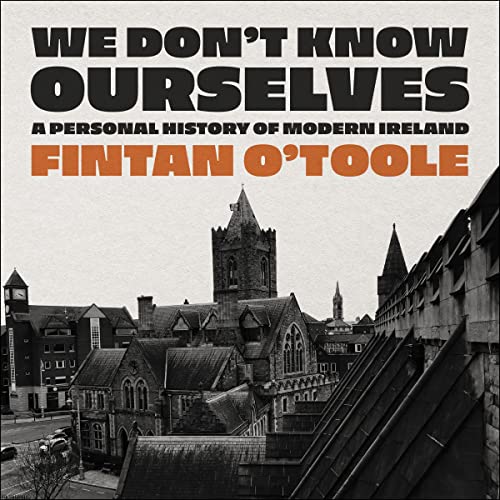
We Don’t Know Ourselves: A Personal History of Modern Ireland

By: Fintan O’Toole

Narrated by: Aidan Kelly

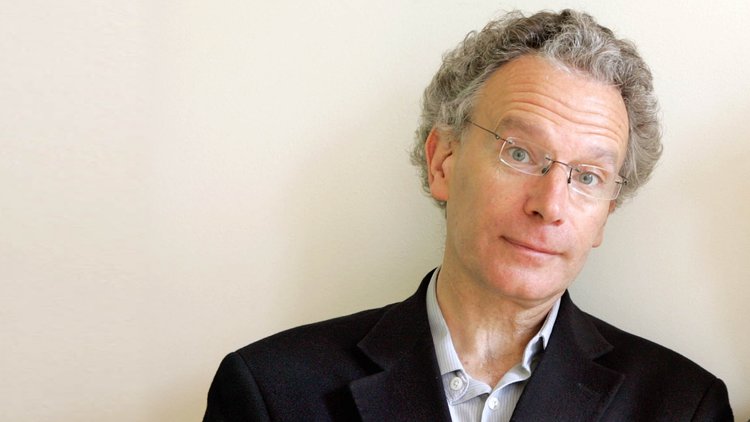
Fintan O’Toole (Author, award winning Irish journalist and political comentator for The Irish Times)

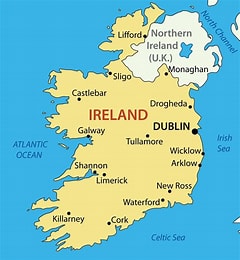
Fintan O’Toole helps one understand something about mid-20th century Ireland. O’Toole is born in Northern Ireland in 1958. That year becomes the beginning of his story. O’Toole touches on pre-1958 Ireland but only through literature and brief mentions of earlier history.

O’Toole’s story is fascinating but knowing an Irish population as an “…Ourselves…” is elusive. O’Toole is an excellent writer who reveals his self-understanding, but it is a vain effort to understand a singular society’s self-understanding. No population in the world can understand itself because of its complexity.

O’Toole explains post-WWII’ aid did not come to Ireland because of its neutrality during the war. The hardship in Ireland is difficult in years before and after WWII.

One suspects most Americans do not know that Ireland remained neutral in WWII. (This is not to say the Irish did not side with the west because thousands joined Allied forces on their own.) Education levels in Ireland were low because of little industrialization that would provide taxes or revenues needed for teachers and classrooms. The teaching available is through the Catholic Church in Northern Ireland and it is only after 1958 that the church began to fund education beyond grade school.

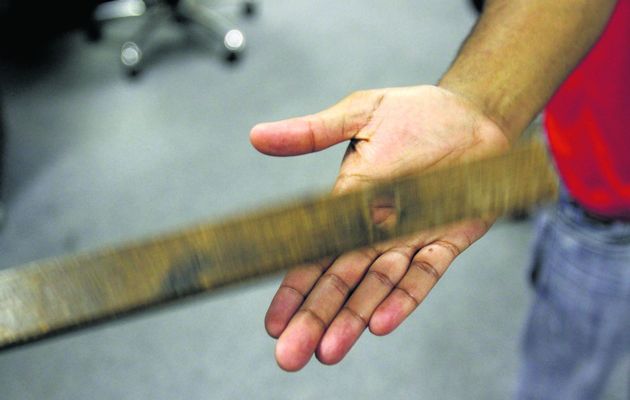
Great emphasis is placed on classroom order in Catholic schools with a ruler or open hand slap at young students who have wrong answers or who act in what is considered disruptive behavior.

Conditions of school in Northern Ireland were harsh with Catholic brethren who severely punished students for minor classroom disruptions. O’Toole notes many who experience that disciplinary environment retrospectively praise it as a character builder. However, O’Toole notes some students were sexually abused by their Catholic school masters. Pedophilia is a festering sore in Catholic church’ history. O’Toole implies it is a pox spread in Ireland’s 1960s Catholic schools. As history has shown, Catholic pedophilia extends far beyond Ireland.

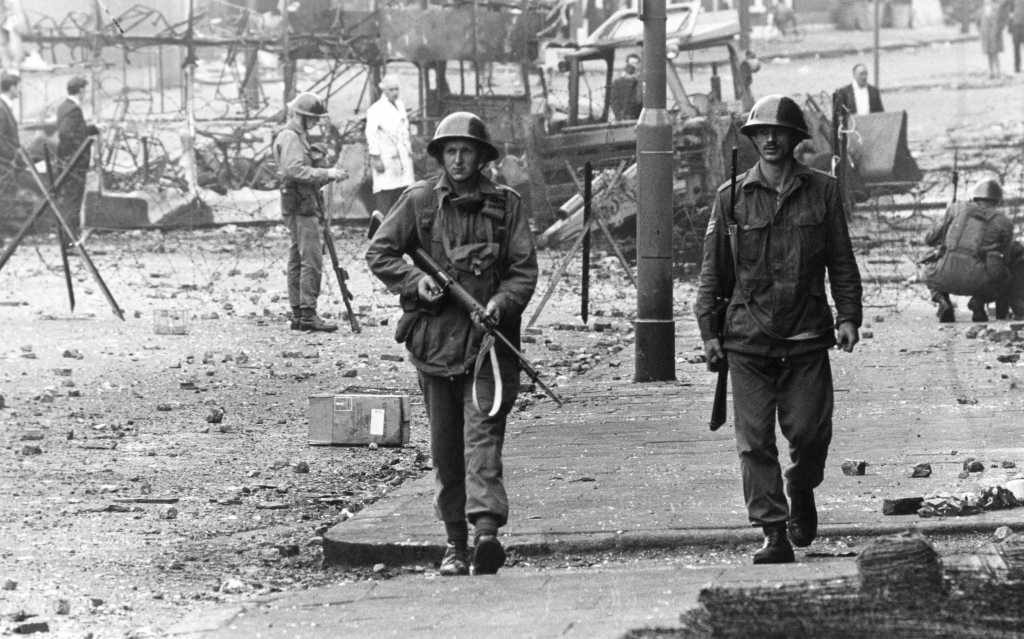
O’Toole tells of many conflicts in the sixties through the nineties, without enough context. Because there is a mixture of religious conflict and Irish independence, it is difficult for a reader/listener to have perspective on O’Toole’s history of 30 years of “Troubles”.

Even we self-centered and ignorant Americans know one of the great conflicts of the world is between Irish Catholic’s and Protestant’s. The violence of each against the other is unfathomable to most Americans. O’Toole underestimates American knowledge of the causes and consequences of the “Troubles” in Ireland.

It seems most religions argue there is no God but God or Allah but Allah. Whether one calls themselves Catholic or Protestant, God seems the only concept upon which the largest religions agree. Religious conflict in Ireland is made more complex by the desire of some Irish to be independent of England while others wish for union. It would have been helpful to have a clearer explanation of the origin of the “Troubles”.

The cruelty during the time of the “Troubles” is horrendous. O’Toole’s stories of IRA atrocity are mind-numbing, including children in the wrong place at the wrong time. At the same time, captured IRA prisoners are as poorly clothed and cared for as though they were abandoned dogs. Many lived in their sweat, and excrement which made them either sick or dead. Some went on hunger strikes to resist with death as their end.

The Ireland of which O’Toole writes is Catholic because he is raised Catholic.

O’Toole explains “don’t ask, don’t see, don’t say” is a mantra of those who plan and do wrong. It applies to Irelands loosely explained “Troubles”, but he argues it also applies to the Catholic Church, and later the financial industry in Ireland in the late 1980s and early 1990s. As wealth accumulates among those who benefit from Ireland’s economic growth, they look for ways to hide their earnings. The earnings are sometimes legitimately earned, sometimes not, but all wish to evade taxation and/or incarceration. O’Toole explains Ireland’s banking industry colludes with those money makers who wish to hide their income.

On February 6, 2002, Allied Irish Bank – Ireland’s second-biggest bank was investigated for apparent currency fraud at its Baltimore-based subsidiary, Allfirst, perpetrated by a trader named John Rusnak. 

Irish bankers and businessmen colluded to make it appear Irish residents lived abroad and should not be taxed for their income in Ireland. O’Toole explains the Irish government loses millions of pounds that could have been used for public services because of that collusion.

O’Toole’s notes women in Ireland of the 1950s and 60s are treated as child bearers and servers to men. They could not sue for divorce for any reason. They could not work outside the home. Women could not practice any form of birth control. Women were subject to their husband’s desires and could not object to either beatings or sexual intimacy.

O’Toole shows that any intelligent human being will overcome denied rights by fighting, fleeing, or subverting unequal treatment. Many Irish emigrate, some surreptitiously rebel. The example O’Toole gives is Irish doctors and pharmacists provide birth control pills to women based on falsely claimed menstrual problems to hide their real intent of avoiding pregnancy. Women had to fight unequal treatment or flee.

Misogyny in Ireland seems even more pernicious than in the earlier years of America.

O’Toole explains how prosperity comes to Ireland with acceptance into the European Union. (Northern Ireland later rejects the E.U. along with Great Britain.)

Eliminating trade barriers enriches farmers and begins industrializing the country while broadening economic diversification. To the church, O’Toole explains there is a concern over the loss of Catholic influence on the population. To the public there is great hope for an improvement in the Irish standard of living.

The benefit to farming is significant because of the price paid for goods within the E.U. O’Toole explains success in industrial growth is less significant, undoubtedly because of lack of infrastructure. There were also displaced workers in trades that could not compete with European prices. However, O’Toole notes women were significantly benefited by job opportunities created in a growing economy. Women were finally liberated from only working at home.

O’Toole explains economic improvement did not cure all Ireland’s ills and in fact created new 20th century problems beyond sexual inequality.

The gap between rich and poor did not change with economic wealth. Drugs became a serious health problem that O’Toole compares to the slums of New York. The biggest beneficiaries of joining the European Union were Irish farmers who were able to get better prices for their produce. Industry lagged and craftsmen disappeared. The truth of O’Toole’s view is that human nature is the same everywhere. America, China, Russia, Ukraine, North Korea- all are motivated by money, power, and/or prestige. Human nature corrupts us all, regardless of government form, rule of law, or intent.

O’Toole chooses to become a journalist despite discouragement by a local paper that might have hired him out of college. O’Toole explains his life in a way that infers he is smarter than many of his peers. That intelligence paves his way through college and on to a successful career as an investigative journalist and author.

Neither Ireland nor the world have reason to believe they are morally or economically better or worse than other nations of the world. We are all in the same leaky boat. Only time and societal evolution will cure or kill us.

UNDERSTANDING CHINA

Audio-book Review
            By Chet Yarbrough

(Blog: awalkingdelight)
 Website: chetyarbrough.blog

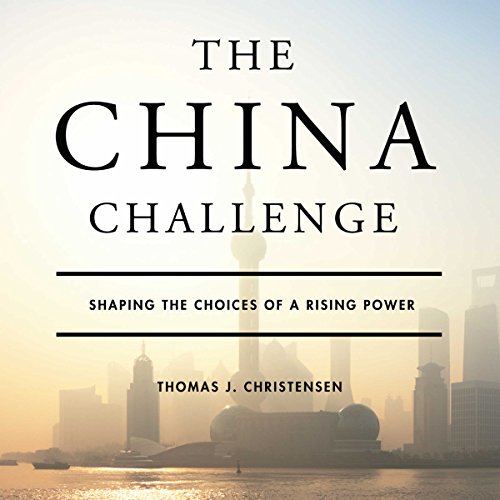
The China Challenge: Shaping the Choices of a Rising Power

By: Thomas Christensen

Narrated by: Alan Sklar

Thomas J. Christensen (Author, American political scientist, professor of international relations at Columbia University, advisor to U.S. Presidents.)

Thomas Christensen addresses “The China Challenge” with a capsulized history of communist party’ leadership from Mao to Xi. Christensen offers perspective to China’s support of North Korea, Syria, Iran, and Russia in the 21st century.

North Korea is losing the war when Mao commits the Chinese Army that pushes American troops back to the 38th parallel. That demarcation became part of a peace agreement that created two nation-states, North and South Korea. Despite the obvious domestic mistakes of the Great Famine and Cultural Revolution, Mao’s entry to the Korean war made him a revered hero to China and the communist party. Mao’s nearly divine adoration is evident to anyone who visits Beijing’s Memorial Hall Mausoleum in Tiananmen Square.

Nationalism and history are at the heart of China’s support of non-western countries. Though “The China Challenge” is published in 2015, before Ukraine’s invasion, it offers insight to China’s response to international events that seem irrational to many western citizens. Christensen’s history disabuses reader/listeners of Xi’s irrationality. Mao’s resolve in the Korean war reinforces President Xi’s belief in the utility and strength of the Chinese Communist Party.

North Korea—The brutality of the Korean war killed an estimated 1,500,000 North Koreans, and 716,000 Chinese

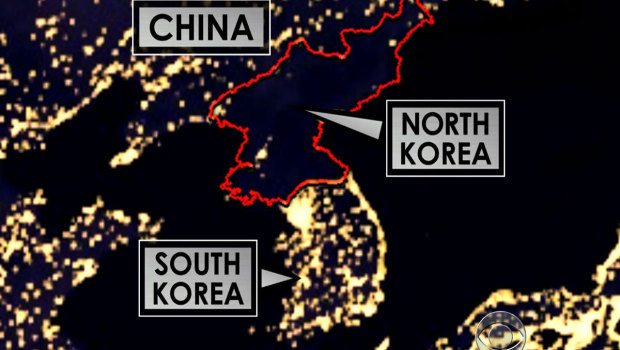
Development difference between South and North Korea exemplified by light projection at night.

Christensen notes the importance of China’s tempering influence on North Korean provocation while refusing to treat North Korean leadership as either rogue or irrational.

Contrary to George Bush’s monumental mistakes in Iraq, Christensen shows the American administration’s concerted effort to stop North Korea’s nuclear bomb ambitions. Along with Bush’s successful diplomatic effort to reduce tension with China over Taiwan by speaking of a “one China policy”, the Bush administration puts an economic initiative together for American economic support of North Korea in return for denuclearization. China supports the effort, but North Korea turns it down.

Christensen is unable to disclose the details of an economic package for North Korea in return for denuclearization but George Bush’s success in getting China’s support is remarkable and largely unrealized by the public.

Syria—Despite the brutality of Bashar al-Assad in Syria, China maintains close ties with Syria because of Xi’s belief in defending Syria’s independence, sovereignty, and territorial integrity. This is a consistent posture of China regarding other nations hostile to democracy.

Bashar al-Assad, President of Syria

Xi consistently supports authoritarian rulers’ right to rule without interference from outside interests.

Iran—Xi criticizes President Trump’s withdrawal from the nuclear non-proliferation agreement. Christensen notes China, like other nuclear powers in the world, believes in non-proliferation of nuclear bomb capability. Xi consistently supports Iran’s independence for the same reason noted for Syria.

Ali Khamenei (Iran Supreme Leader)

Xi believes every nation has a right to rule without interference from outside interests. An added economic reason is Iran’s supply of oil and petrochemicals to China.

Russia— Russia’s invasion of Ukraine Xi is not considered. The invasion is not addressed by Christensen because it had not happened at the time of this book. Russia’s invasion seems a violation of the sovereignty principal Xi endorses. Ukraine’s history as once being a part of the U.S.S.R. gives  political spin to Xi. Of course, this relates to China’s interest in repatriating Taiwan. An interesting point noted by Christensen about Taiwan is America’s choice to provide F-16s for their defense during George Bush ‘s administration, contrasting with President Biden’s statement that any supply of arms by China to Russia will have consequences. Biden reminds Xi of the many corporations that left Russia when they invaded Ukraine. One wonders about America’s threat to Xi if China chooses to provide arms to Russia. In light of America’s supply of F-16s to Taiwan, Xi might not care about the economic consequence of American companies leaving China.

Ukraine War

Christensen implies there is a love/hate relationship between Russia and China. The love is Xi’s policy of non-intervention in a countries sovereignty. The hate is the history of Chinese leaders who chose the path of communism and found Russia abandoned Stalinist beliefs that Mao supported. Xi is an authoritarian. He believes in the importance of the communist party and uses it to achieve nationalist objectives.

MAO AND STALIN

Christensen goes on to write about global warming and the world’s inadequate response.

Over 60% of the world’s pollution is caused by four government jurisdictions, i.e., America, China, the E.U., and India. China and America alone cause 40% of the pollution. On a per-capita basis, America is the worst, but China shows the most visible impact, measured by air quality and water. In a trip to China, one can see the main rivers in China are loaded with refuse.

At times, air pollution is so thick in Beijing that one cannot safely drive a car because drivers are unable to see the road or other vehicles.

Christensen does not believe either China or America or any nation-state will be singular hegemons of the world. Christensen implies “balance of power” will always be the guiding principle of international relations. China is faced with problems greater than America because of demographics (high population and aging statistics) and its early stage of economic development. China’s present economy and environmental conditions create a longer road for China’s rise to broad citizen prosperity.

The fundamental theme of Christensen’s book is American leadership needs to understand China better. Only with understanding will respect be engendered and comity restored. Both China’s and America’s leaders realize humanity lives on spaceship earth. Without nation-state respect and comity, all nations (not to mention humans) are destined for the grave.

OPPORTUNITY & FAILURE

Audio-book Review
By Chet Yarbrough

(Blog: awalkingdelight)
 Website: chetyarbrough.blog

Out of the Gobi (My Story of China and America)

By: Weijian Shan

Narrated by: David Shih

Weijian Shan (Author, CEO of a private equity firm PAG, former partner in TPG Asia, holds a Ph.D. from Univ. of CA.)

Weijian Shan is a capitalist, a Chinese economist, CEO of an Asian investment company, and former professor at the University of Pennsylvania, Wharton School. Weijian Shan was born and raised in China during the Mao era.

Shan has written a memoir of his experience in the Chinese Cultural Revolution which began in 1966 and ended with the death of Mao Zedong in 1976. Shan writes about China’s and America’s economic and political differences.

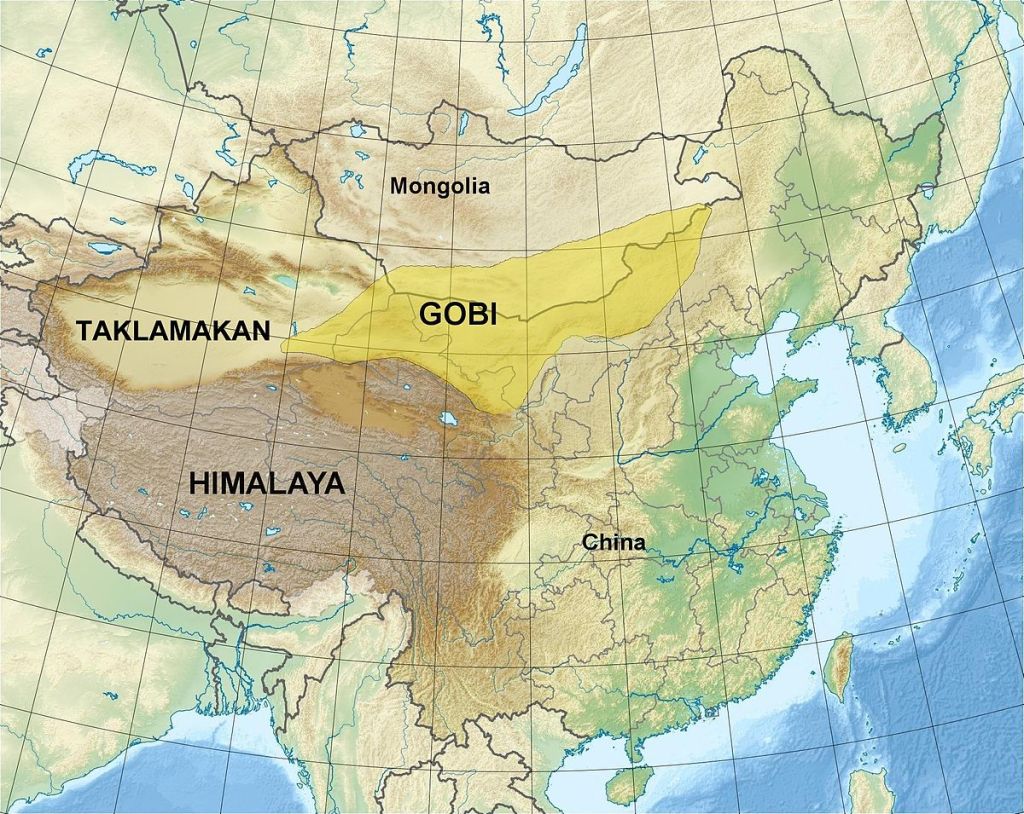
In 1966, Shan is barely a teenager, having only completed his grade school years. Shan, and many other teenagers, are sent to the Gobi Desert during the Cultural Revolution in China. Shan’s compelling story tells of his experience during the Revolution with an explanation of how he is chosen, at the age of 21, to go to college in Beijing. “Out of the Gobi” is published in 2019. Shan offers insight to Mao’s communist political ideas and gives listeners some thoughts about what Mao’s politics mean in the age of Xi Jinping’s rule of China.

Shan’s experience in the Gobi Desert is among many Chinese citizens who are ordered to leave their city homes to experience rural China’s farm life. The irony is that neither China’s Gobi Desert farmers, the bourgeoise, nor displaced youth were culturally, intellectually, or financially benefited. Rural farmers were victimized because citizen relocations impacted food availability for what were subsistence farms. Many farmers were barely able to feed themselves, let alone thousands of relocated city dwellers. Relocated youth were denied higher education and forced into labor camps that had a negative effect on rural prosperity.

From a political perspective, Mao’s Cultural Revolution is a brilliant idea.

This is not to praise Mao as an intellectual but as a pragmatic politician who understood the value of the Cultural Revolution’s youth-relocations to advance his vision of Chinese communism. Mao cleverly instills a sense of discipline and teamwork by indoctrinating China’s next generation with Maoist communism. Today’s Xi benefits from Mao’s Cultural relocation with a generation raised in the time of the 1966 Revolution.

Shan’s story is the triumph of Weijian Shan’s intellectual development without a structured pre-college education.

(Uighur re-education camp in the 21st century.)

Shan’s memoir is a tribute to his personal strength and determination. Reaching the age of 21 in the Gobi Desert did not impede his intellectual development. Through work experience, social engineering among peers, and a commitment to read everything he could find, Shan overcame his Gobi Desert relocation and lack of a high school education.

With little English language skill, Shan begins his education at a Beijing college to become a student of foreign trade relations.

This educational opportunity is presented to Shan at the time of Nixon’s opening of Mao’s China to the world. Shan had firsthand experience of Mao’s communist mistakes. Shan tells the story of lost prosperity and peace for Gobi Desert dwellers and intruders.

In the Gobi Desert, Shan experiences the deficiency of a government system based on bureaucratic control that distorts productivity reports to make superiors look good. The disconnect between real progress and reports of progress hides the truth of economic waste and deterioration. Shan shows how orders from above depress productivity in two ways. One, by government superiors being ignorant of true productivity, and two, by discouraging the value of competition.

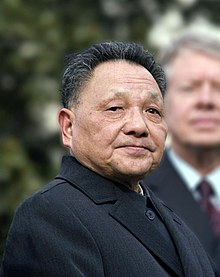
Shan reveals the strength and weakness of Deng Xiaoping’s opening of China after the death of Mao.

Without question, Deng contributed to China becoming the world’s second largest economy by GDP in 2010. On the other hand, Shan suggests Deng’s decision to crush the Tiananmen Square demonstration is the Communist Party’s misreading of demonstrators’ intent and support of economic revisionism. Deng (though reported to have given the order to jail or kill demonstrators) is revealed as a foil to Mao’s dictatorial beliefs in communism. Shan points to the odd fact that Mao removes Deng from leadership but refuses to remove Deng from the Party. The inference is that Mao may have understood the value of capitalism as a communist precursor (as noted by Marx).

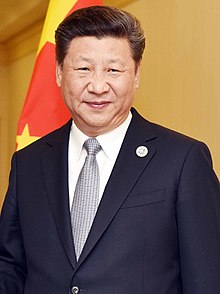
XI JINPING (GENERAL SECRETARY OF THE COMMUNIST PARTY OF CHINA AND PRESIDENT OF THE PEOPLE’S REPUBLIC OF CHINA)

President Xi is reestablishing communist party authoritarianism and may make the same mistakes Mao made, without a foil like Deng. Singular authoritarian leaders in the 21st century often deny the merits of democratic free enterprise that reduces the threat of kleptocratic bureaucracy.