A CLASSIC’S TRUTH

Audio-book Review
By Chet Yarbrough

(Blog:awalkingdelight)
Website: chetyarbrough.blog

The Road to Serfdom

By Friedrich A. Hayek

 Narrated by William Hughes
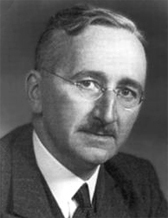
FRIEDRICH AUGUST von HAYEK (1899-1992)

Hayek wrote “The Road to Serfdom” during WWII.  His observation was that Nazi Germany and its rise to power had a direct relationship with the growth of socialism, a belief that central planning and control are keys to national prosperity. 

Hayek suggests that America and Great Britain suffer a similar strain of belief.  He argues that central planning and control leads to totalitarianism.  “The Road to Serfdom” is a prescient vision of the dangers of socialism.

The dilemma of government is in drawing the line between central planning and public service. It is particularly complicated by what the intent of Article 1, Section 8 of the Constitution meant when it said a part of the purpose of government is to “promote the general welfare”

It seems common that authors of popular, sometimes classic, books are often interpreted by people who have not read them.  Authors like Harriet Beecher Stowe, Richard Wright, Ayn Rand, Vladimir Nabokov, and Friedrich Hayek are frequently commented on but content often becomes a surprise to actual readers.

Friedrich Hayek’s book is frequently lauded by American conservatives and vilified by American liberals. 

classic liberalism

In truth, Hayek is a seer for both ignorant American’ conservatives and liberals; i.e. Hayek is neither a spokesman for modern American conservatism or liberalism but a strong proponent of classic liberalism.

To be clear, today’s conservatism and liberalism are not defined in the same way Hayek defines them in his 1944 publication.  Liberalism in 1944 meant belief in freedom of choice and endorsement of laissez-faire economic principles.  1944 conservatism meant a rejection of the principles of equality with an aristocratic, “rank has privileges”, ideology.

subsidization
Contrary to Hayek’s conservatism, modern conservatives and liberals endorse subsidization of private enterprise.  Subsidization comes from tariffs, tax incentives, and other preferential treatment for private business and industry.
Principles of equality and laissez-fair economic principles are less doctrinaire in the 21st century because American political parties blur the difference.  Modern liberals are closely associated with government regulation and intervention but not necessarily laissez-faire principles. 

Modern conservatives are opposed to government in most forms of regulation and intervention, but only in principle; not in practice.  Modern conservatives, as well as liberals, endorse subsidization of private enterprise.  Subsidization comes from tariffs, tax incentives, and other preferential treatment for private business and industry.

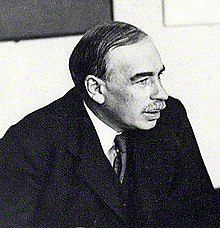
JOHN MAYNARD KEYNES (1883-1946)

Contrary to a wide perception that John Maynard Keynes (a liberal economist in today’s parlance) denigrated “The Road to Serfdom”; Keynes, in fact, praised it.  John Maynard Keynes believed in government intervention when a state’s economy is in crisis.

According to Thomas Hazlett in the July 1992 issue of “Reason Magazine”, Keynes wrote “In my opinion it  (Road to Serfdom) is a grand book…Morally and philosophically I find myself in agreement with virtually the whole of it; and not only in agreement with it, but in deeply moved agreement”. 

Though Keynes praised “The Road to Serfdom”, he did not think Hayek’s economic’ liberalism practical; i.e. Keynes infers that Hayek could not practically draw a line between a safety net for the poor, uninsured-sick, and unemployed (which Hayek endorsed) while denying government intervention in a competitive, laissez-faire economy.

When businesses have an unfair advantage that denies competition, Hayek suggests government regulation is required.

GOVERNMENT REGULATION

Where modern conservatives get “The Road to Serfdom” wrong is where Hayek writes that government has an important role in a nation’s economy that goes beyond a simplistic notion of laissez-faire. 

Where modern liberals misunderstand “The Road to Serfdom” is where Hayek explains that freedom of choice is essential within the bounds of safe pursuit of economic success.  When human safety issues from uncontrolled industrial pollution threatens the safety of society (which most modern scientific opinion calls global warming) Hayek writes government intervention is necessary.

After listening to “The Road to Serfdom”, one cannot help but believe that Hayek would be as appalled by “private” industry’s greed in the 21st century. 

Hayek wrote that big business is not bad in itself but big business that fails to compete on a level playing field because of government subsidy, through tax concession and special treatment, should be regulated by government to ensure fair play.
REGULATING BIG BUSINESS
TRUMP AND CLIMATE CHANGE

In the face of overwhelming evidence to the contrary, Trump denies the reality of global warming.

One is compelled to agree with Hayek when he observes that government programs interfere with free choice when government officials create social programs they think are good for someone else.  Hayek is not saying that government should not care for the poor, work-disabled, or technologically unemployed.  He writes: “Where, as in the case of sickness and accident, neither the desire to avoid such calamities nor the efforts to overcome their consequences are as a rule weakened by the provision of assistance – where, in short, we deal with genuinely insurable risks – the case for the state’s helping to organize a comprehensive system of social insurance is very strong.” 

Hayek goes on to suggest that technological change that causes unemployment warrants government assistance.  The danger Hayek tries to make clear is that government interferes with free choice when social programs try to create false equalities.
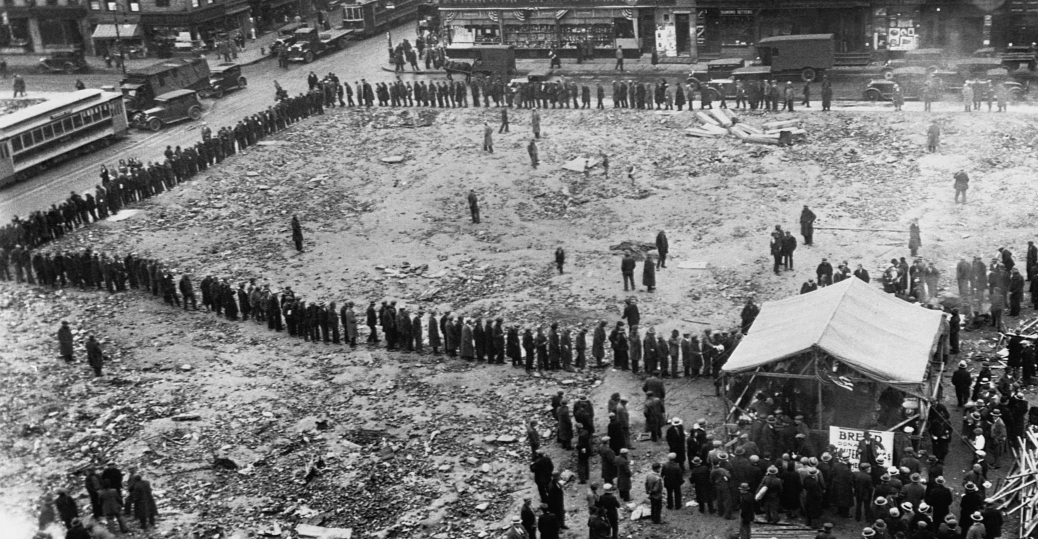
BREAD LINES IN NEW YORK 1933
BREAD LINES IN NEW YORK 1933–Hayek is not saying that government should not care for the poor, work-disabled, or technologically unemployed. 

Hayek writes: “Where, as in the case of sickness and accident, neither the desire to avoid such calamities nor the efforts to overcome their consequences are as a rule weakened by the provision of assistance – where, in short, we deal with genuinely insurable risks – the case for the state’s helping to organize a comprehensive system of social insurance is very strong.”

Hayek is acknowledging a role for government.  The role is to regulate private enterprise in those areas where freedom of choice or equal opportunity is infringed upon. 

HEALTH INSURANCE
If insurance is not available to all in a land of prosperity, then government has a role in creating a program that will offer insurance to all. 

Hayek’s only caveat is that the insurance be offered as an affordable, free enterprise, and individual choice, not as an entitlement.

FREE TRADE IDEAL

Hayek opposes government programs that interfere with free competition among similar businesses. 

The weakness of Hayek’s argument is in idealization of humanity; i.e. human nature is that leaders in government and the private sector will drive for advantage.  In the case of one country, that advantage may theoretically be mitigated by impartial government regulation but, in a world of sovereign nations, power is inherently limited.

If China wants to subsidize steel exports, American options are limited to creating import tariffs that further distort market competition. This is the mistaken route that President Trump has taken. Further, Hayek’s idealization presumes that politicians cannot be bribed, human beings are not prejudiced, populations have an equal opportunity to succeed, and humanity is inhumanly perfect when left in a state of grace.

Hayek correctly points out the importance of money as a measure of success in a free society.  However, in today’s America, “Moneyocracy” has become an American form of government.  “Moneyocracy” is the aristocracy of the 21st century that elects public officials, denies equality of opportunity—for education, economic mobility, and employment.
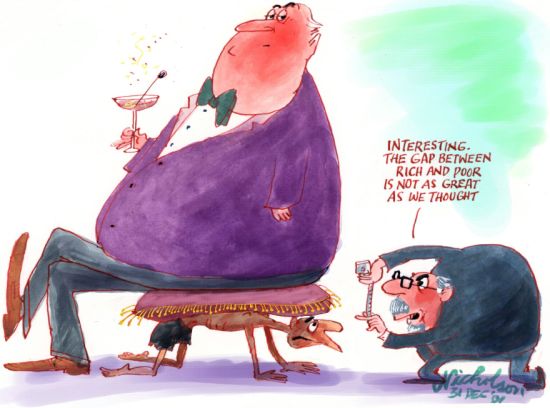
GAP BETWEEN RICH & POOR

The gap between the rich and poor is widening by degrees that may bankrupt America because of an enlarging safety net for the old, the sick, the unemployed, and the unemployable.

 The field of competition for free enterprise is becoming more unequal.  Hayek observes that government intervention slips into socialism when free enterprise is artificially manipulated.  The fear is that America will begin looking for their Hitler to manage a sick economy.

Conservatives that rant against government regulation based on Hayek’s “Road to Serfdom” are as incorrect as liberals that argue Hayek wrote against social government programs for the poor, disabled, and unemployed.

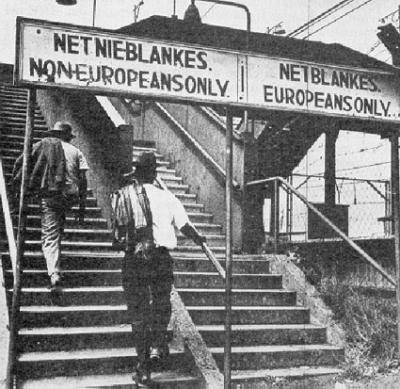
APARTHEID

Audio-book Review
By Chet Yarbrough

(Blog:awalkingdelight)
Website: chetyarbrough.blog

Cry, the Beloved CountryCry, the Beloved Country

By Alan Paton 

Narrated by Michael York

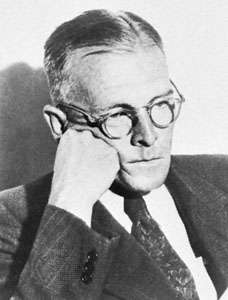
ALAN PATON (1903-1988, SOUTH AFRICAN AUTHOR)
ALAN PATON (1903-1988, SOUTH AFRICAN AUTHOR) “Cry, the Beloved Country” is less brutal than Wright’s “Native Son” or Morrison’s “Beloved” but it strikes at the heart of apartheid and the insidious nature of discrimination and slavery.

In reading “Cry, the Beloved Country”, one should remember it was published in 1948. Alan Paton’s book updates Stowe’s “Uncle Tom’s Cabin”. It is less brutal than Wright’s “Native Son” or Morrison’s “Beloved” but it strikes at the heart of apartheid and the insidious nature of discrimination and slavery.

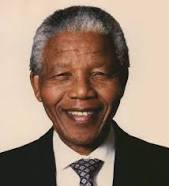
Paton was a South African white man who lived the life he wrote about. Paton, among other things, managed a black reform school in South Africa in the early 40s. One is reminded, in some ways, of Nelson Mandela’s life in Paton’s main character, Stephen Kumalo. In other ways, Mandela moves way beyond Kumalo.

uncle tom's cabin
One can argue Paton’s main character, Kumalo, deserves the pejorative meaning of a modern “Uncle Tom”.  Maybe Kumalo is a black man considered to be excessively obedient or servile. On the other hand, Kumalo is a hero—the best of what a black person can be in the circumstance of apartheid.

Contrary to one’s belief about Mandela, Kumalo is like Uncle Tom in Harriet Beecher Stowe’s book. He is a good man; a wise man, but he fails to understand the terrible truths of discrimination and its insidious effect on society–both on the discriminated and the discriminator. One doubts that Mandela ever had any misunderstanding of discrimination’s effect on society.

One can argue Kumalo deserves the pejorative meaning of a modern “Uncle Tom” definition. But Paton makes the reader or listener walk in Kumalo’s shoes. Maybe Kumalo is “a black man considered to be excessively obedient or servile”; on the other hand, Kumalo is a hero—the best of what human beings can be in the circumstance of history. Therein lays a comparison with Mandela and his decision to invite a suppressive white government into his administration. The goal of Paton, his character Kumalo, and Mandela was to preserve a beloved country.

The execution of Kumalo’s son, the prostitution of his sister, the corruption of his brother are consequent behaviors of discrimination; Kumalo sees but fails to act because he is seduced by faith and constrained by white suppression.

SOUTH AFRICAN APARTHIED
Apartheid (Discrimination is shown by Paton to be a complex evil.)

Life is full of compromise; full of good and evil. The fictional Kumalo and real Mandela did the best they could in the circumstance of their lives; which seems better than can be said of 99% of the human race.

NELSON MANDELA (1918-2013)

“Cry, the Beloved Country” begs the question of what is right by inferring much of South Africa’s suppression was driven by white’ fear.  More succinctly, discrimination is shown by Paton to be a complex evil.

Paton creates characters with a growing white understanding of the damage caused by discrimination while subtly injecting a more militant black movement. Again, one is reminded of Mandela’s early life which led to imprisonment.

“Cry the Beloved Country” gives one some sense of what life must have been like for Nelson Mandela.

A PHILOSOPHY OF LIFE

Audio-book Review
By Chet Yarbrough

(Blog:awalkingdelight)
Website: chetyarbrough.blog

The Complete Essays of Montaignethe complete essays of montaigne

By: Michel Eyquem de Montaigne, Donald M. Frame (translator)

Narrated by Christopher Lane

MICHEL DE MONTAIGNE (1533-1592)

Michel Eyquem de Montaigne, a sixteenth century philosopher and writer, wrote and re-wrote “Essays”, originally published in the 1580s.  Essay was a new form of writing.  Montaigne’s subject is the philosophy of life and death.

Montaigne writes his collection of essays while cloistered in a château in southwest France.  Donald Frame translates and compiles three volumes of Montaigne’ essays into one book–“The Complete Essays of Montaigne”, first published in 1957.

contemplation
Montaigne, born into a family of wealth, affords the luxury of time for personal reflection and contemplation.

Montaigne, born into a family of wealth, affords the luxury of time for personal reflection and contemplation.  Not surprisingly, Aristotle wrote that life depends upon awareness and the power of contemplation.  In one respect, this quiet life is a contradiction in Montaigne’s philosophy.  Montaigne reflects on history and ancient times to explain how life should be lived when his life seems a shadow of most people’s reality, the reality of a day-to-day fight for survival.  There is reader skepticism about the 1% life of Montaigne versus the 99% life of most people.

Montaigne, with great family wealth and a storied education, becomes a Mayor of Bordeaux.  He draws on a privileged life and recorded lives of great philosophers and leaders to create insight about lives of those that “do”, and have little time, or no time, to contemplate.

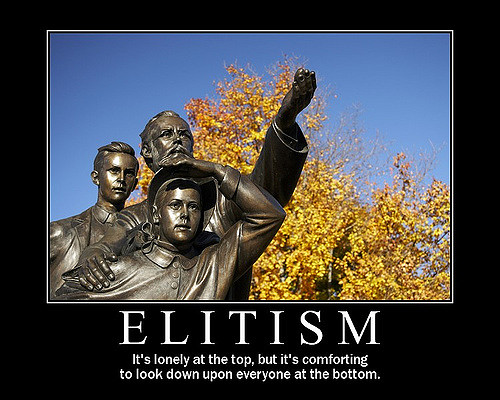
ELITISM
Montaigne is modest about his erudition but there is an elitist odor that clings to his self-effacing commentary.

Montaigne suggests the appeal of his essays lies in the middle of the human population.  Montaigne suggests the in-between are those who are not highly intelligent, who are abysmally ignorant; preferentially plebeian, and ordinary.  In other words, people of course nature and manner, like this critic.  In spite of this elitist leaning, the wisdom noted in Monsieur Montaigne’s essays is enlightening.

This is a one thousand page journey with something for everyone.  Montaigne suggests humans need to embrace life and eschew tragic interpretations of death.  Life and death are only stories of being.  Death is inevitable and should not be feared.  Death should be embraced like life; it is merely a final act, a denouement of life; well or poorly lived.  In Montaigne’s opinion there are justifications for ending one’s life volitionally but only for valued reason.

LIFE AND DEATH
Montaigne suggests humans need to embrace life and eschew tragic interpretations of death. Death should be embraced like life; it is merely a final act, a denouement of life; well or poorly lived.

euthanasia
The interpretation of justification and value are lines un-clearly drawn by Montaigne.

Montaigne suggests women may choose to kill themselves rather than be raped.  Men may choose to kill themselves and murder their families to avoid enslavement by an enemy.  The defeated may kill themselves if mortally ill or wounded.  To Montaigne, euthanasia is permissible at death’s door.  Today, the lines are only slightly more clearly drawn and only in a few of the American States (like Washington, Oregon, Montana, Vermont, and California).

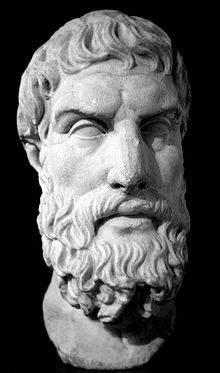
EPICURUS (341 BCE-270BCE).jpg died at age 72
EPICURUS (341 BCE-270BCE). Founder of one who believes living life is meant to be the pursuit of pleasure.

Montaigne is Epicurean in the sense that he believes living life is meant to be a pursuit of pleasure.  However, the pursuit of pleasure is not defined by money, power, or prestige.  Those pleasures are diminished by their attainment because they are insatiable human desires.

HUMAN NATURE HANDCUFFS
“Not-needed” things become human’ handcuffs. Life becomes an unending accumulation of things that fail to satiate desire.

When one makes more money than needed to sustain life, he/she buys more of what is not needed.  Those “not-needed” things become human’ handcuffs. Owners worry about losing things; worry about replacing things; worry about keeping up with neighbors. Life becomes an unending accumulation of things that fail to satiate desire.

Power never rests.  Power is always moving like an electron around a nucleus of followers.  Leaders are enslaved by followers.

Leaders worry about followers, worry about competition for position, worry about their place in history; they die alone just like every human being.  Power is an ephemeral pleasure that never rests in one place.

LEADERSHIP
Leaders with power are targets for support or destruction. Power is an ephemeral pleasure that never rests in one place.

Prestige comes from respect of fellow human beings.  It is outside the control of the seekers or the chosen; it is limited by the opinion of others; it changes like the direction of the wind or the habits of the culture within which one lives.

PRESIDENTS 4
Life is not an either/or proposition despite Kierkegaard’s philosophy. Humans are good and bad; no one is totally one or the other–not even America’s challenged leaders.

habit
Montaigne disdains habit because it contains un-grounded reason that distorts nature.

Montaigne attacks cultural shibboleths that are based on unfounded reason.  Because one says the earth is the center of the universe does not make it so but a universe of fiction may grow around a culture of mysticism that defies the natural state of being.  Montaigne insists on skepticism when confronted with culturally reinforced habit that is not bound by nature.

MirrorWhoAmIWoman
To Montaigne, pleasure lies in self-understanding; doing what one is best at; and letting go of life when it fails to improve self-understanding or keeps one from valuing existence.

Pleasure lies in self-understanding; doing what one is best at; and letting go of life when it fails to improve self-understanding or keeps one from valuing existence. Montaigne cites many ancient philosophers like Plato, Aristotle, Epicurus, and Lucretius that reinforce his arguments.

Plato drives the point of virtue as the human characteristic of doing what one is best at doing.  Montaigne notes that both Plato and Aristotle emphasize the importance of education for self-understanding.  Self-understanding inures to the benefit of humankind by revealing to each what they are best at and giving them tools (through education) to be the best they can be.  Montaigne insists on learning; not rote memorization, but clear understanding.  Montaigne argues that it is not reciting what someone has said but understanding what is meant by what is said.  This is a somewhat ironic statement in view of Montaigne’s voluminous quotes from dead philosophers.

EDUCATION
Montaigne infers education opens all doors to self-understanding and the pleasures of a good life and honorable death.

Montaigne reflects on his upbringing and his Father’s drive to educate his son by making Latin Montaigne’s first language, the language of scholarship in the 16th century.  Montaigne did not only live the life of a scholar.  He was elected mayor of Bordeaux before retiring to his cloistered existence as a writer of the “…Essays…”  Montaigne applauds his father for providing him an education and infers that every family is obligated to support education of their children.

Montaigne died from complications of tonsillitis at the age of 59.  Frame’s translation of Montaigne’s essays offers a philosophy of life in a horse-size pill.  It encourages the old but escapes the young because life happens too fast.

As George Bernard Shaw notes, youth is wasted on the young; probably because they are too busy for contemplation.  “The Complete Essays of Montaigne” is an insightful guide for the conduct of life and the acceptance of death.

POLITICS AND ECONOMICS

Audio-book Review
By Chet Yarbrough

(Blog:awalkingdelight)
Website: chetyarbrough.blog

The Wealth of Nations

By Adam Smith

Narrated by Gildart Jackson

ADAM SMITH (1723-1790, AUTHOR OF -THE WEALTH OF NATIONS)

ADAM SMITH (1723-1790, AUTHOR OF -THE WEALTH OF NATIONS)

“The Wealth of Nations” is often referred to but rarely read or listened to in the 21st century. Thirty Six hours of an audio book is punishing. However, one is surprised by Adam Smith’s prescient understanding of the value of freedom and his appreciation of the American and British conflict over American’ colonization. 

“The Wealth of Nations” is not only about economics.  It is about politics as an essential ingredient of economics.

INDUSTRIAL REVOLUTION

Britain was among the mercantile leaders of the world when his book was published in 1776, the year of American Independence. 

Dutch dominance had receded; Spain and France were vying for monarchical rule of Western Europe while Napoleon was soon to dominate the east and west European continent.  British imperialism was on the rise. Britain became the dominant moral and economic power of the 19th century.

Adam Smith’s publication defined and codified economics while recognizing the economic limitation of imperialist expansion. Long before Britain’s ascension to the moral and economic leader of the world, Smith noted the error of denying self-determination to distant colonies.

TRUMP AND FREE TRADE

Contrary to President Trump’s “America First”, Smith believed that whatever is produced at the cheapest price and best quality for the consumer is the guiding principle of “The Wealth of Nations”. 

Smith argued that business regulation should begin with the best interest of the consumer at the forefront of legislation.

In general, Smith argues that trade monopolies are bad and competition is good.  Governments that restrict trade hurt the consumer; therefore, tariffs on foreign goods should be abolished.  To Smith, anything that restricts free trade is bad.

Former Secretary of the Treasury, Jacob Lew agrees with the father of economics–eliminating tariffs imposed on goods…would help ease inflation (Nov 3o, 2021 CNBC article). Concern over job loss in America if trade tariffs are eliminated is absurd when looked at through the eyes of an economy transitioning from industrialization to technology.

Freedom was a big deal to Adam Smith.  The essence of Smith’s view of economics is that the consumer should be the beginning and end point of all economic decisions and actions. In some respect, this narrow interpretation of “The Wealth of Nations” suffers from the same nearsightedness of a more contemporary author, Ayn Rand.

Rand argues that competition, without government interference, is essential to progress.  Both authors ignore weaknesses inherent in human nature that demand some level of government regulation.

On the other hand, government regulation is subject to the same human frailties as business. Laws of “unintended consequence” play out in both political and business decisions.  The consumer is an employee as well as an employer.

The economic consequences of wages that do not meet the basic needs of family survival because of foreign competition, technology, industrial obsolescence, etc. have real consequence to employers as well as employees.  Bankruptcies occur, unemployment rises, the rich become less rich and the poor starve.  Just as Smith’s reviled monopolies, free markets have consequences.

Smith is right.  Rand is right.  But, both are idealistic rather than realistic because of the nature of humankind. They both infer everything works out in the long run when humankind is left alone. 

JOHN MAYNARD KEYNES (1883-1946)

JOHN MAYNARD KEYNES (1883-1946)

John Maynard Keynes noted, we are all dead in the long run.  (In fairness, Smith does acknowledge limited circumstances in which government regulation is justified.)

What is fascinating about Smith’s work is its historical context.  He infers that American colonies have reason for discontent because of British taxation without representation.  He also suggests Britain’s imperialist decisions and actions should be tempered by a cost benefit analysis of what British subjects receive in respect to costs of managing economies thousands of miles away. 

Smith effectively introduced rationality to economics.  Capitalism became a marriage between politics and economics.

One can argue that Britain followed Smith’s advice about imperialism through the 18th and 19th centuries to become the most powerful nation in the world.  But Britain’s grasp of the cost of imperialism began to slip in the 20th century and a decline in economic strength began.  The cost of imperialist policy exceeded the benefit; not to mention, the inherent immorality and unfairness of cultural subjugation.

Visiting “The Wealth of Nations” is a worthwhile journey into history. Is there a 21st century Adam Smith in America’s future or is he/she pottering around Asia, Europe, the Middle East or Africa and not yet recognized?

A BRADBURY CLASSIC

Audio-book Review
By Chet Yarbrough

(Blog:awalkingdelight)
Website: chetyarbrough.blog

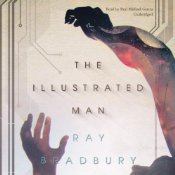
The Illustrated Manthe illustrated man
By Ray Bradbury

Narrated by Paul Michael Garcia

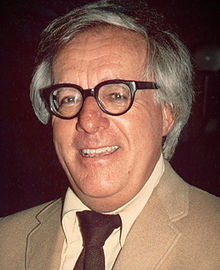
RAY BRADBURY (1920-2012)

Flights of imagination sparkle and spin in this updated 1950s  Ray Bradbury classic.  This compendium of Bradbury’ tales is titled “The Illustrated Man”.

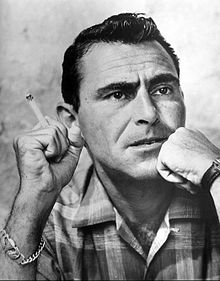
ROD SERLING (1924-1975, SCREENWRITER, TV PRODUCER, NARRATOR)

Bradbury spins stories; reminding one of late night re-runs of Rod Serling’s “Twilight Zone”.  Every episode sparkles with stars and planets, habitable by man but riddled with fear, death, and destruction.  Bradbury grasps human nature and turns it against itself by writing stories that illustrate man’s selfishness, insecurity, wantonness, and aggression.

Tattoos come alive on rippling skin to act out a series of plays about mankind’s future.  Everyone fears the illustrated man because his tattoos expose the worst in man.  Belief that nuclear cataclysm will end life on earth blooms like a mushroom cloud.  Traveling to other planets changes mankind’s environment but man’s nature remains the same.

THE ILLUSTRATED MAN (PLAYED BY ROD STEIGER)
THE ILLUSTRATED MAN (PLAYED BY ROD STEIGER IN A 1969 MOVIE) Tattoos come alive on rippling skin to act out a series of plays about mankind’s future.

AYN RAND (1905-1982)
AYN RAND (1905-1982, AUTHOR WHO FIRMLY BELIEVED IN THE VIRTUE OF SELF-INTEREST) Unregulated self-interest is a dangled reward stolen by one to keep it from the many; in the end the reward is destroyed by the selfishness of each against the other.)

These are not happy stories but they are great flights of imagination.  Bradbury tells a story of human exile and deprivation that exacerbates selfishness when personal reward is dangled in front of exiled and deprived human beings.  The dangled reward is stolen by one to keep it from the many; in the end the reward is destroyed by the selfishness of each against the other.

Insecurity is a devouring beast in the story of a planet blessed by an appearance of a Visitor (presumably Jesus) just before a rocket ship lands on the planet that has been visited.  The captain disbelieves it has happened and is driven to track down this Visitor rather than settle in the insecure surroundings of a unblessed world.  The captain is left to wander the universe, never to arrive in time to actually see the Visitor.

INSECURITY
Insecurity is a devouring beast in the story of a planet blessed by an appearance of a Visitor (presumably Jesus) just before a rocket ship lands on the planet that has been visited.  The captain disbelieves it has happened and is driven to track down this Visitor rather than settle in the insecure surroundings of a unblessed world.

INFIDELITY
Wantonness is illustrated by Bradbury’s story of an unhappily married man. 

Wantonness is illustrated by the husband that is unhappily married.  He duplicates himself.  His duplicate takes his place beside his wife so he can buy a ticket to Rio to exercise his fantasy.  The duplicate is so perfect it becomes as human as the husband.  The duplicate places the wanton husband in a box to die, and buys a ticket to Rio for his wife to accompany it in its fantasy.

Human kind is aggressive.  Humans conquer and destroy civilizations.  One world of the future prepares for a second visit from mankind by becoming the image of a City.  This image devours the men of the second visit and assumes their bodies; i.e. the City image is transformed into the bodies of the humans from this second visit.  The City image plans to return to earth to destroy those who had destroyed them.

NUCLEAR DETONATION ABOVE TEST TARGET 1986
Human kind is aggressive.  When human’s conquer or destroy others, others rise to  destroy those who had destroyed them. An endless circle of life where agression eats itself.

Bradbury is a master story-teller.  Paul Michael Garcia’s narration is a tribute to Bradbury’s skill.

TOTALITARIANISM

Audio-book Review
By Chet Yarbrough

(Blog:awalkingdelight)
Website: chetyarbrough.blog

The Trial

By Franz Kafka, David Whiting (translator)

Narrated by Rupert Degas

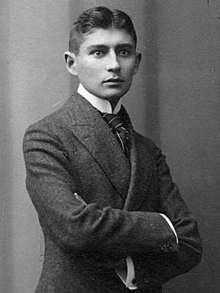
FRANZ KAFKA (1883-1924, AUTHOR, NOVELIST)

FRANZ KAFKA (1883-1924, AUTHOR, NOVELIST)

“The Trial” is a Franz Kafka picture of hell; i.e. a totalitarian nightmare, ruled by bureaucracy and controlled through human despair. “The Trial” is a book to listen to because it mesmerizes when narrated by an artist but numbs when read by an undisciplined mind.

Imagine arbitrary arrests, undefined accusations, and undisclosed trials; i.e. trials operating in obscurity that secretly sentence the accused to mental purgatory or death; add shadows of human beings, dark rooms of judgment, stifling closeness, and oppressive anxiety.  This is Kafka’s world in “The Trial”.

There is no lightness in Kafka’s tale; no human redemption.  The main character, Ka (in this version of the book), is the only person that seems to seek self-understanding.  

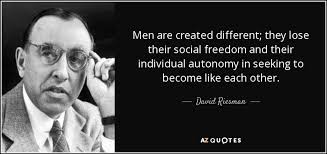
All other characters are “other directed”, trying to be what someone else expects them to be by playing whatever role they need to play to survive.

BUREAUCRACY

Kafka imagines a country of directionless people, subsumed in a bureaucracy that feeds on itself.

This is a country of directionless people, subsumed in a bureaucracy that feeds on itself.  Citizens of this country are either a part of the bureaucracy or they are controlled by its administration. 

Control is exercised by creating fear and anxiety.  This characterization reminds one of Donald Trump and his current attempt to overthrow over 200 years of American government history.

Trump’s tacit support by the Republican party is a crime against democracy. Patriotic Republicans are diminished by Trump’s abhorrent behavior.

Should Trump be impeached a second time? It’s complicated. On the one hand, incitement by Trump on January 6th is obvious to most Democrats. On the other, Republicans now represent 70,000,000 Americans who think Trump is good for America.

There is no societal objective; there is only bureaucracy’s perpetuation.  Lawyers, bankers, judges, business moguls, landlords, artists, servers and assistants of this society, though rarely singled out for terror or torture, are consumed with anxiety from an ever-present threat of arrest.  The working public enriches itself by taking bribes to subvert bureaucratic action.  The working public’s subversion is not destruction of the bureaucracy but a tacit acceptance of its hegemony.

Ka attempts to break the cycle of bureaucracy’s self-perpetuation.  His attempt fails.

The redeeming quality of Kafka’s story is the human desire for freedom that is not extinguished even in the darkest times of a country’s repression.  Against all obstacles, Ka insists on freedom.  In Ka’s case freedom means death just as it did for many who died in Auschwitz, Dachau, and Treblinka.

FRANZ KAFKA QUOTE

Kafka’s hell exists in today’s world just as it did when it was published in 1925.

HEARTACHES, HEARTBREAKS, AND BELIEF

Audio-book Review
By Chet Yarbrough

(Blog:awalkingdelight)
Website: chetyarbrough.blog

The Canterbury Talesthe canterbury talesBy Geoffrey Chaucer
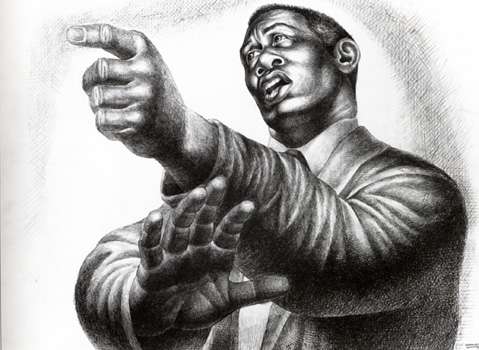
Narrated by Charlton Griffin

What value does a 14th century book have for a 21st century person?

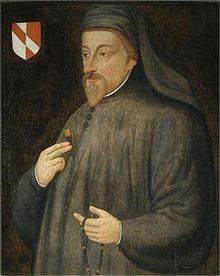
GEOFFREY CHAUCER (1343-1400)
GEOFFREY CHAUCER (1343-1400, AUTHOR, POET)

“The Canterbury Tales” is a rhyming entertainment (except for Christian preaching at the tales end) that recalls romantic heartaches, heartbreaks, and belief in divine justice that is as present today as yesterday.  The unchanging nature of men’s lust for women and women’s superiority is comically and tragically told and repeated in Chaucer’s travelers’ tales. Though women play a primary focus in “The Canterbury Tales”, belief in Christianity and its power to heal and destroy is a paramount subject.

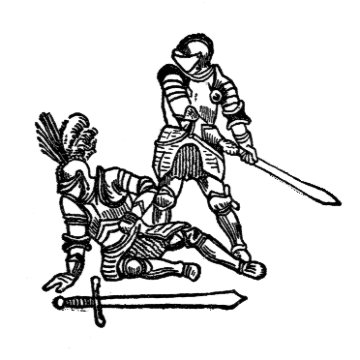
FIGHTING KNIGHTS
In the Knight’s tale, two brothers lust for the same woman.  They plan to fight each other to the death but are interrupted by the King

In the Knight’s tale, two brothers lust for the same woman.  They plan to fight each other to the death but are interrupted by the King.  The woman wishes to retain her maidenhood and appeals to her deity to insure continued chastity.  The two brothers and the woman have different agendas with each agenda appealed to a different god.  The tale progresses with the three appellant deities determining the brothers and woman’s fates.  It is an ironic pagan tale of Chaucer’s disbelief in many gods rather than the One.

In Chaucer’s tales, men are shown to be the weaker and dumber sex.  Old rich men marry young beautiful women and become cuckolds.  Powerful and rich young men choose poor and beautiful women to be their wives and treat them horribly to test their love and loyalty.  Male insecurity and desire drive men to make foolish decisions about whom they should marry and how they might measure their worth through earth-bound pleasure.  Men foolishly seek revenge at any cost while women seek justice through diplomacy and prudence.

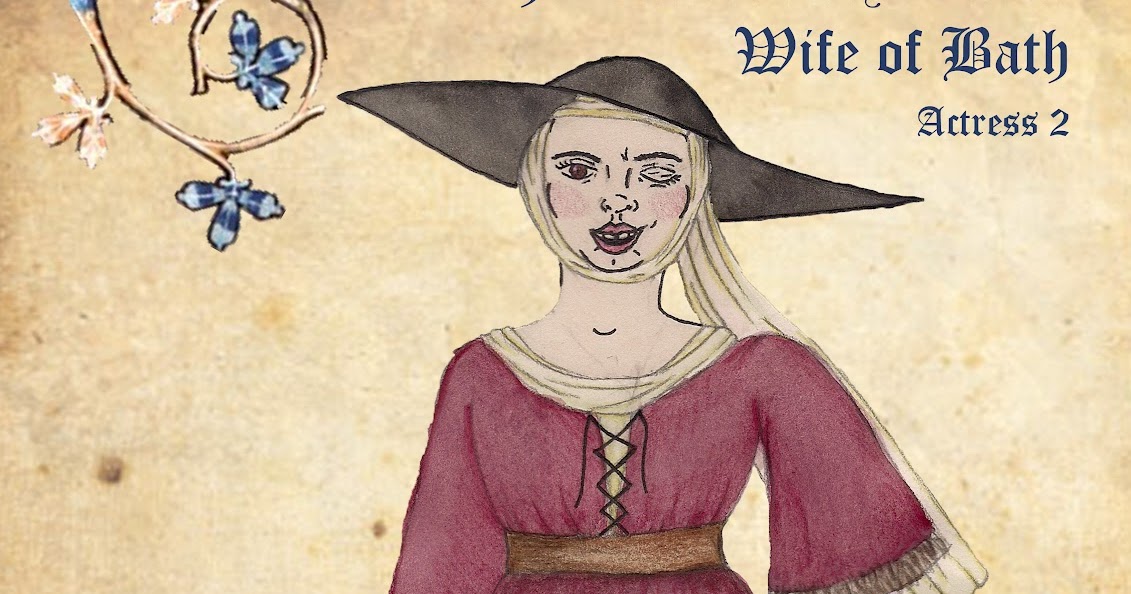
WIFE OF BATH
In Chaucer’s tales, men are shown to be the weaker and dumber sex.

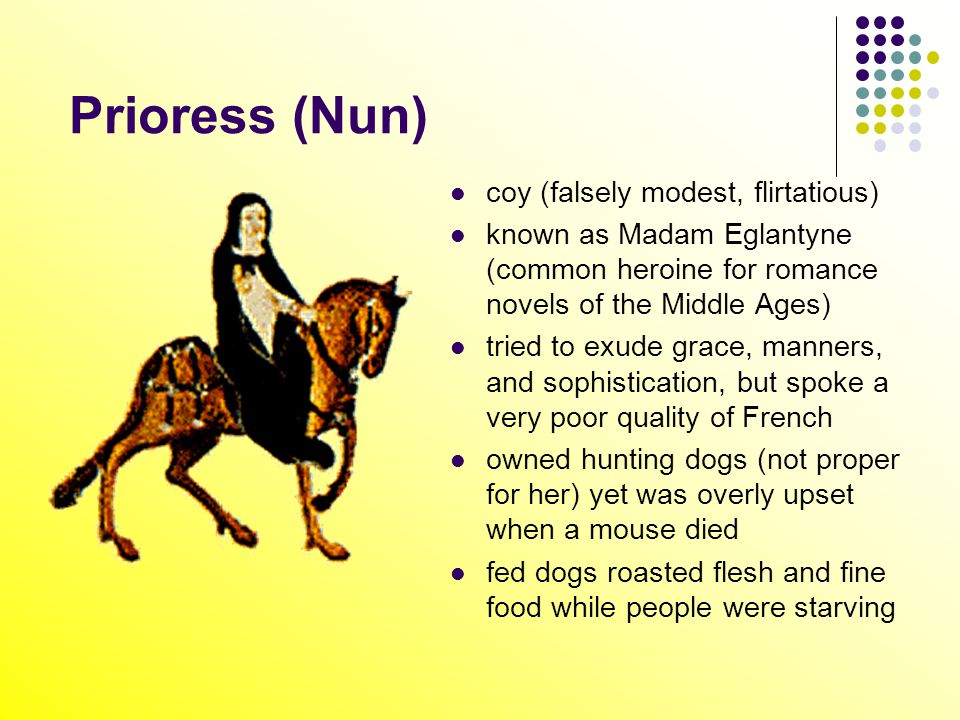
THE NUN'S TALE
THE NUN’S TALE–The incredible power of religion in Chaucer’s time is illustrated in the Nun’s tale of a chaste bride that convinces her betrothed to forego conjugal relations for the sake of eternal life in heaven.

The incredible power of religion in Chaucer’s time is illustrated in the Nun’s tale of a chaste bride that convinces her betrothed to forgo conjugal relations for the sake of eternal life in heaven.

The husband asks for proof of an angel that visits his wife and, if he can see the angel, he agrees to forever forego sex with her.  She refers her husband to the Pope.

The Pope convinces the husband to become a Christian; he returns home and sees the angel and agrees to his wife’s demand.  The husband then convinces his brother to meet with the Pope and the brother also becomes a Christian.  Her husband and his brother are executed because they refuse to obey their Overlord when he insists that they sacrifice to pagan idols.

After the brothers’ execution, the Overload summons the wife.  The chaste wife is sentenced to be burned in her house because she also refuses to sacrifice to her Overlord’s deities.  The fire fails to kill the wife so the ruler has an executioner sent to cut-off her head.  The executioner strikes her neck with an ax three times but is unable to remove her head; a fourth strike is not allowed and she continues to preach her beliefs.

Neither mammon nor the Pope seem the equal of this wife. 

JEWISH PREJUDICE
PERMITTED PREJUDICE

Prejudice comes through Chaucer’s strong Christian beliefs; i.e. “The Canterbury Tales” endorses Christianity as the salvation of mankind with vilification of Jews which is presumably justified by Christian’ belief in Jewish betrayal of Christ.

It is perplexing to think that much of what Chaucer says about Christian believers remains true today but Chaucer’s understanding of women’s superiority to men in the 14th century seems quite enlightened in the 21st.

A WOMAN OF SUBSTANCE

Audio-book Review
By Chet Yarbrough

(Blog:awalkingdelight)
Website: chetyarbrough.blog

Jane EyreJane Eyre
By Charlotte Bronte
Narrated by Lucy Scott

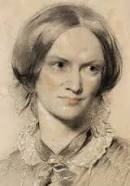
CHARLOTTE BRONTE (1816-1855)

“Jane Eyre” replays the tautology of “life is not fair; i.e., it just is”.

Charlotte Bronte’s story comes alive with the voice of Lucy Scott. Lucy Scott becomes Jane Eyre in this audio book presentation.

MORALS
Bronte’s story emphasizes the importance of having an inner moral compass to guide one to choose between right and wrong

The author, Charlotte Bronte, captures life’s joy and hardship. The story emphasizes the importance of having an inner moral compass to guide one to choose between right and wrong. By making right choices, fulfillment comes from working through good and bad things in life.

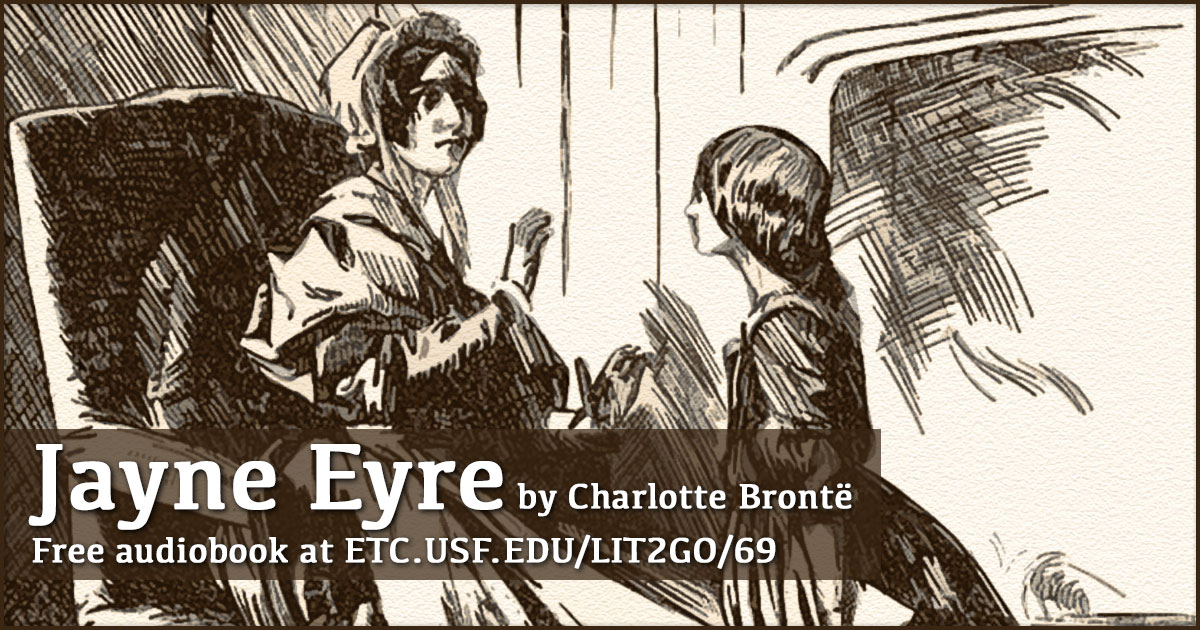
Jane is an orphaned girl raised by an uncaring Aunt that feels burdened by her filial obligation. The orphaned girl directly confronts her Aunt’s resentment. To escape further confrontation and embarrassment, the Aunt boards Jane Eyre in an indigent’s school.

JANE EYRE AS AN ORPHAN
Jane is an orphaned girl raised by an uncaring Aunt that feels burdened by her filial obligation.

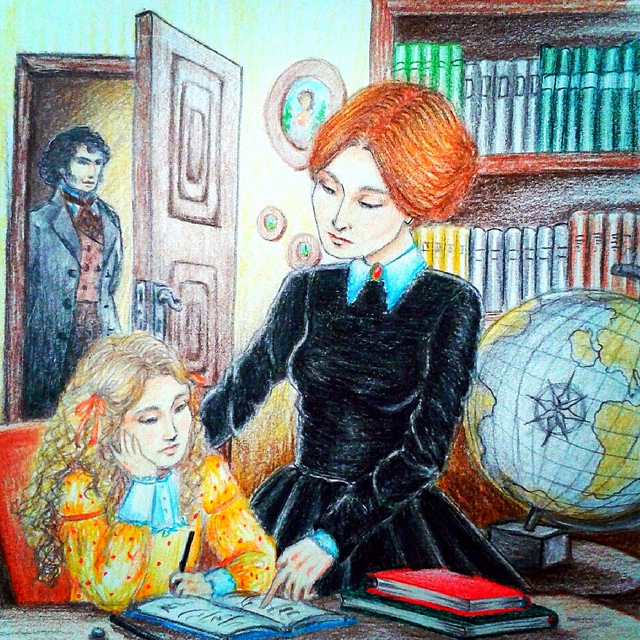
JANE EYRE DEPICTION WITH MR. ROCHESTER IN THE BACKGROUND
JANE EYRE becomes a teacher at the school she is sent to by her uncaring Aunt. Later, she is hired by a wealthy landowner to tutor a young girl alleged to be the landowner’s illegitimate daughter.

Jane Eyre is formally educated.  She becomes a teacher at the school. Later, she is hired by a wealthy landowner to tutor a young girl that is alleged to be the landowner’s illegitimate daughter. The wealthy landowner is revealed as a man with too many secrets. Jane Eyre, driven by her inner compass, flees to endure new hardship and temptation.

At the end, Jane Eyre returns to marry the wealthy landowner. She finds him blind, chastened, and older, but still in love with the Jane Eyre he had hired as his daughter’s tutor.

One might surmise a future hardship that remains to be revealed; i.e. when Eyre’s husband is ravaged by the inevitable infirmities of old age, Jane will be in the bloom and health of life. Considering the tenor of the story, Jane will deal with her husband’s infirmities and grow into her new role as caregiver with the strength of her convictions.

© Copyright 2010 CorbisCorporation
“life is not fair; i.e., it just is” (Considering the tenor of Bronte’s story, Jane will deal with her husband’s infirmities and grow into her new role as caregiver with the strength of her convictions.)                                                                                                                                                    © Copyright 2010 CorbisCorporation


An ever-present refrain in “Jane Eyre” is that all life decisions and actions have consequences. The many themes that run through Charlotte Bronte’s book are what make it a classic. Every listener will identify with some part of Charlotte Bronte’s story.

Audiobook’s version of “Jane Eyre” is a tribute to Charlotte Bronte’s story telling skill.

DISTURBING CLASSICS

Audio-book Review

By Chet Yarbrough

(Blog:awalkingdelight)

Website: chetyarbrough.blog

Native Son & Lolita 

Native Son

By Richard Wright                                                                         

Narrated by Peter Francis James                                                

The review of these books is combined because they are disturbing classics about the nature of man and society.  They are alike in regard to their genius, but their stories are difficult to write in one review; let alone two.

Native Son

“Native Son” was published in the 1940s and “Lolita” in the 1950s but either could have been written earlier or later because their stories are not of the past but of today and tomorrow.

RICHARD WRIGHT (1908-1960 WROTE-NATIVE SON)

RICHARD WRIGHT (AMERICAN/FRENCH WRITER,1908-1960 WROTE-NATIVE SON)

Story lines have many origins but Wright and Nabokov have tapped into some of the darkest parts of human nature with themes of mayhem, murder, misogyny, and misanthropy.  They created characters that reflect human nature; inherent in mankind and affected (or infected) by society.

The main character in Native Son is Bigger Thomas, an impoverished, unemployed, African-American, 20-year-old living in a 1930’s Chicago ghetto.  He lives with his mother, sister, and brother in a rat infested one room tenement, owned by a wealthy family that is about to offer him a job.

Bigger Thomas considers himself rich if he has 50 cents in his pocket.  However, he does not want to work for a living because he sees it as a dead-end street, controlled by rich white people who will never let him follow any road beyond a limit set by white America.  Bigger Thomas’s understanding is shaped by 20 years of living in substandard housing, ghettoized isolation from white society, and an education that did not go beyond the 8th Grade.

Thomas is given an opportunity to work for the owner of the tenement in which he lives.  The offer is $35 per week ($10 more than average) to be a chauffeur for the family.  Bigger takes the job but on the same night of the day he is hired, he murders his new employer’s daughter.  It shocks the listener because the listener’s anticipation is that Bigger Thomas is on his way to breaking the cycle of poverty and becoming a part of the American Dream.  But no, he chooses to kill his employer’s daughter.

The shock of the murder is so overwhelming that there is an inclination to stop listening.  The shock becomes a Richter scale earthquake when Bigger rapes, bludgeons, and throws his black girl friend down an elevator shaft (while still alive) because she can finger him for the crime.  Bigger Thomas is a rapist and a double murderer.  What redemption can there be?  What is Wright’s point?

WATTS RIOTS 8.11 TO 8.16 IN 1965. MARQUETTE FRYE, AN AFRICAN-AMERICAN MOTORIST ON PAROLE FOR ROBBERY IS PULLED OVER FOR RECKLESS DRIVING.)

WATTS RIOTS 8.11 TO 8.16 IN 1965. MARQUETTE FRYE, AN AFRICAN-AMERICAN MOTORIST ON PAROLE FOR ROBBERY IS PULLED OVER FOR RECKLESS DRIVING. THE RIOTS RESULT IN 34 DEATHS AND 40 MILLION DOLLARS IN ESTIMATED DAMAGES.) The credibility of Wright’s observation is visited in America’s future (25 years later) by the Watts’ riots of 1965, and the 2020 George Floyd Murder by Derek Chauvin.

The answer is difficult and not entirely comprehensible to a privileged majority.  But Wright’s story explains that a person who lives a minorities’ life creates an environment that breeds anger, frustration, and violent action; i.e. violent action that can be directed at an ignorant majority, or anyone who threatens one’s inner-directed life. 

Bigger Thomas is convicted and sentenced to death.  Thomas is defended by a technically persuasive lawyer but prosecuted by a rebel rousing, emotionally righteous, prosecuting attorney who inflames public fear and anger. The prosecutor ignites public condemnation, and effectively dictates a judge’s decision.

Native Son is mostly written and spoken in one and two-syllable words (the only exception is Bigger Thomas’ intellectualized legal defense). Thomas’s defender pricks a listener’s conscious. One begins to feel some sympathy for this terrible criminal.

Peter Francis James’ bass voice brings Richard Wright’s characters to life, but this is not a story to listen to for pleasure. It is a story that improves understanding of discrimination, isolation, and poverty (social ills still evident in the world) and their unintended consequences.

Lolita

By Vladimir Nabokov

lolita

VLADMIR NABOKOV (RUSSIAN AUTHOR, 1899-1977, WROTE LOLITA)

VLADMIR NABOKOV (RUSSIAN AUTHOR, 1899-1977, WROTE LOLITA)

An equally reprehensible story is told in Nabokov’s book, Lolita.  Lolita burns in your mind like Native Son, with a kindred repulsiveness.  Lolita sears your conscience because it speaks like an apology for pedophilia.

Jeremy Irons’ spoken interpretation of Lolita is breath-taking.  His voice captures the licentious nature of the main character, Humbert Humbert.  He reads Nabokov’s lines with a beautiful alliteration that reveals the poetry in Nabokov’s prose.

The subject is inherently repulsive.  The rationalizations of a confessed pedophile who admits his guilt, is difficult, if not impossible, to understand.  As with Bigger Thomas’ murder of two women, Humbert Humbert’s seduction of a 12-year-old girl makes the listener want to quit listening.  Iron’s skillful narration seductively draws the listener into an intimate appreciation of Nabokov’s prose.  But, it’s a life of a truly despicable and tragic human being.

There is no justification for pedophilia though Humbert Humbert makes his plea.  Humbert’s observation that pedophilia has been present since time began is not a plausible justification for its continuation.  The argument that some psychological trauma in one’s youth takes control of one’s libido is “psycho-babble”.  The argument that some 12 year olds are what Humbert Humbert classifies as “nymphet’s” is in the mind of a sick person. 

Humbert’s unbalanced mind projects an ignorance of the difference between a child and an adult.  The argument that Humbert Humbert truly loved Lolita, even after she is 31 years old, and married to a person of her own age, is preposterous. Based on the character’s own explanation of his child fixation, Humbert’s characterization of love is despicable.

So, what is the point of the book?  The best face is that Nabokov reveals the depth of a pedophile’s sickness, some of its causes and consequences, and the utter futility of psychological examination; the worst face is that Nabokov justifies pedophilia based on human nature.  For my own conscience, and for respect to a literary genius, I pick the first rather than the second reason for Nabokov’s decision to write this book.

justification

The story is enlightening as well as repulsive.  It tells the story of the length that a pedophile will go to satisfy an abhorrent sexual desire.  It suggests that a psychiatric examination of an intelligent psychopath is a waste of time.  It gives a face to pedophilia and evidence of how it permeates human culture, from advertising, to magazines, to movies.  And, it shows, with a character like “Q” (a movie producer), how salacious and jaded a human being can become.

Both of these books are brilliantly written.  Native Son is a masterpiece of simple and direct prose that is a literary lesson for aspiring writers.  Richard Wright is an efficient user of words to tell a story with brutal clarity.

Both are horrific stories of human nature.  Listening to them is enlightening but only our future will demonstrate whether enlightenment leads to improvement in human nature or a repeat of the bestiality we have shown so many times during, before and after the 20th century.

GOD IS NOT THERE

Audio-book Review
By Chet Yarbrough

(Blog:awalkingdelight)
Website: chetyarbrough.blog

Go Tell It on the MountainGo Tell It On the Mountain

Written by: James Baldwin

Narrated by: Adam Lazarre-White

JAMES BALDWIN (1924-1987 AMERICAN NOVELIST & SOCIAL CRITIC)
JAMES BALDWIN (1924-1987 AMERICAN NOVELIST, SOCIAL CRITIC)

Go Tell It on the Mountain because God is not there.  Go Tell It on the Mountain because no one listens.  Go Tell It on the Mountain because no one cares.  James Baldwin rages against culture that makes one, what one is not.  Baldwin wins fame from a book that defines the chains of discrimination.  He explains why and how culture is a curse.  Baldwin tells a story that explains why being different denies equal opportunity.

Go Tell It on the Mountain is partly auto biographical.  It tells of the author’s remembrance of his childhood and formative years.  In broad perspective, Go Tell It on the Mountain shows how Americans are born as equals but deprived of potential by culture.  Though published in 1953, the truth of Baldwin’s observations about culture is institutionalized in America.

Baldwin writes a story about three economic opportunities for early 20th century black Americans.  They are announced by Baldwin as robber, pimp, or preacher.  Today, some believe blacks are still not suited for more.

STEREOTYPING
Only when human beings are treated as equal will stereotypes disappear.

Baldwin’s story is about two fathers of the same boy.  One is the natural father; the other is a stepfather.  The birth father is characterized as naturally smart.  He moves from the rural south to the urban north with a woman he does not marry.  The father is arrested for being at a store when two black men rob it.  Because the father is in the wrong place at the wrong time, he is sent to jail for trial.  The father is accused but not convicted.  He is so shaken by the experience; he slits his wrists and dies.  What would this father have become if he had not been arrested and jailed?  The innate skill of a human being may be a combination of genetics and environment but if one’s color says you can only be a robber, a pimp, a preacher, a sports star, or an entertainer; being smart is not enough.  Only when human beings are treated as equal will stereotypes disappear.

BLACK PREACHER
The irony of a stepfather/ preacher’s abuse is that he is biblically as sinful as most human beings.  (In retrospect, knowing that Baldwin is gay, one surmises how abusive a religious stepfather might be.)

The second father of the same boy, a stepfather, also gravitates from the rural south to the north but he is older and knows success as a preacher.  He is not characterized as particularly smart but he believes in God and talks the talk of a good man who will rescue an unwed mother and her child from a life of despair.  However, the stepfather is a martinet.  He severely punishes his wife and children for what he considers sin or disrespect.  The irony of the preacher’s abuse is that he is biblically as sinful as most human beings.  (In retrospect, knowing that Baldwin is gay, one surmises how abusive a religious stepfather might be.)

What makes Baldwin’s book important is its reflection on a part of American culture that denies equal opportunity for all.  A smart man kills himself because he is black and has experienced the hate and inequality of discrimination.  A preacher beats his wife and sons because he believes he has a right, given by God, to assay sin and punish those who violate his limited understanding.

EQUAL OPPORTUNITY
What makes Baldwin’s book important is its reflection on a part of American culture that denies equal opportunity for all.

INSTITUTIONAL DISCRIMINATION

Being smart or being religious is not enough; particularly if you are a minority or a woman because cultures stultify individuality and restrict opportunity.  Individuality and opportunity are hindered by poor education and biases that are eternally engendered (institutionalized) by discrimination.  Blacks have shown they are more than criminals, preachers, sports stars, and entertainers.  And women have shown they are more than child bearers and housewives but America continues to struggle with equal opportunity for all.  Baldwin exemplifies America’s struggle in Go Tell It on the Mountain.