Graduate Oregon State University and Northern Illinois University,
Former City Manager, Corporate Vice President, General Contractor, Non-Profit Project Manager, occasional free lance writer and photographer for the Las Vegas Review Journal.
The question raised by “The Sun Does Shine”–is death row a necessary function of society? Anthony Ray Hinton’s life story challenges its efficacy.
Books of Interest Website: chetyarbrough.blog
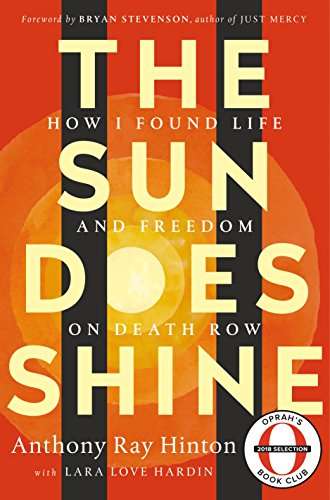
“The Sun Does Shine“
By: Anthony Ray Hinton with Lara Love Hardin
Narrated by: Kevine R. Free
Anthony Ray Hinton, AuthorLara Love Hardin, Editorial Director of Idea Architects
Anthony Ray Hinton’s life experience argues the death penalty for any crime should be abolished. Hinton states 1 in 10 people on death row have been wrongfully convicted. He spent 28 years on death row for crimes he could not have committed. His legal representation is poorly executed, in part, because he did not have enough money to pay for his defense.
Anthony Ray Hinton
Hinton’s 1 in 10 ratio of wrongful conviction is questioned but not denied by:
The “Death Penalty Information Center”
DNA evidence that has exonerated sentenced death row prisoners, and
statistical studies that show 1 in 25 criminal defendants sentenced to death have been found innocent.
Hinton’s “The Sun Does Shine” tells of his conviction by an Alabama court for robbery and murder of two fast-food restaurant managers in Birmingham, Alabama.
Appointment of a defense attorney is required by law, but their compensation and the accused’s poverty deny an adequate defense. Hinton’s story shows how the State of Alabama’s law enforcement and judicial system manufactured false evidence to convict and put him on death row.
Hinton’s motherHinton’s Friend Lester Bailey on Left
Hinton’s mother, childhood friend, and religious belief support him through his false imprisonment and pending death by electrocution. His electrocution is postponed because of repeated challenges, but he remains on death row for 28 years. Hinton’s imagination and good will sustain him through his ordeal. He imagines traveling the world, marrying and divorcing beautiful women, and meeting the Queen of England.
Hinton gains the respect of his jailers and fellow death row prisoners. He mentally catalogues the many executions that occur in his 30 years of incarceration.
He remembers the blinking electric lights and smell of burning human flesh when each prisoner is electrocuted. He recalls the first woman to be electrocuted. He acknowledges many of the death-row’ prisoners committed horrible crimes but suggests they are victims of society because of their upbringing, and/or untreated or incurable mental dysfunctions. Hinton does not believe the guilty deserve execution for what he believes are societies’ failures.
It is the Executive Director of the Equal Justice Initiative, attorney Bryan Stevenson, who comes to Hinton’s aid and eventually gets his case before the U.S. Supreme Court in 2014. Stevenson works on Hinton’s case for over 20 years with numerous blocks thrown up by the Alabama legal system. The original judge in the case insists throughout his life that Hinton was guilty even though falsified evidence convicted him of the crime.
After release, Hinton becomes a world-wide celebrity, acquainted with famous people like President Obama, Queen Elizabeth II, Nelson Mandela, and Oprah Winfrey.
His book suggests he was entertained by some famous actors and billionaires who wished to have his story told to audiences that presumably might affect a change in the American judicial system.
The question raised by “The Sun Does Shine”–is death row a necessary function of society? Anthony Ray Hinton’s life story challenges its efficacy.
The Craft’s story is an inspiration for the anti-slavery movement before and after the civil war. Their story reinforces the principle of equality of opportunity for all.
Books of Interest Website: chetyarbrough.blog
“Master, Slave, Husband, Wife“
By: Ilyon Woo
Narrated by: Janina Edwards & Leon Nixon
Ilyon Woo (American author, Received BA in Humanities from Yale College and has a PhD in English from Columbia University.)
“Master, Slave, Husband, Wife” will disabuse any listener who may think the American Civil War was not about slavery. Ilyon Woo’s detailed research of Ellen and William Craft reveals the many reasons why no one can deny the fundamental cause of the Civil War in America, i.e. it was slavery.
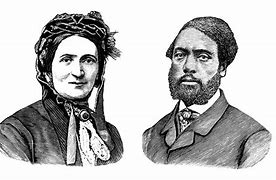
Ellen and William Craft
Ellen and William Craft were slaves until escape from their slave master in 1848. William was enslaved by a white land holder named Robert Collins who held a half interest in Craft’s ownership with another southerner. Ellen was the child of a white owner and black slave that gave her a fair-skinned white racial appearance. However, Ellen was classified as a slave because of her mixed racial parentage. Her mother was a slave to a white slaveholder who was her putative father. At the age of eleven, Ellen was gifted as a valued piece of property to a sister who later became Collin’s wife.
Ellen missed her birth mother but only after years of being on the run, did she manage to re-unite with her mother, Maria Smith.
In 1846, Ellen reached the age of 20 and agreed to marry William who was a skilled cabinet maker.
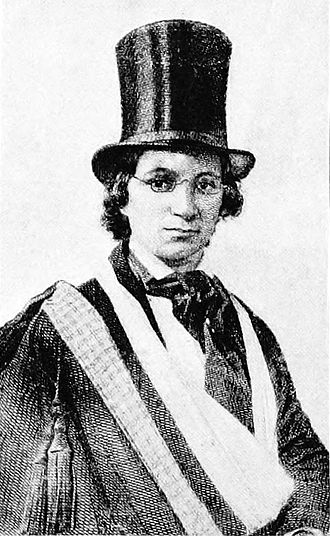
William was allowed to work for a portion of his wages in return for a cut of his income to be paid to his owners. In 1848, with the money William saved from his outside work, the married slaves planned an escape from Collin’s household. The plan was for Ellen to dress herself as a white man with William as her slave on a journey to Philadelphia, Boston, and possibly Canada.
Ellen Craft dressed as a white man with an accompanying slave who is actually her husband.
The fugitives succeed in their escape, but their success is challenged. The challenge came from the morally misguided attempt by the American government to avoid a war between the North and South by passing the “Fugitive Slave Act of 1850”.
That act would allow capture and return of runaway slaves to their putative owners. The Act was a compromise between the north and south, supported by President Millard Fillmore, who was willing to sacrifice black Americans to slavery in order to preserve the Union. Storied and respected leaders of America like Daniel Webster, who had freed his slaves, supported the “Fugitive Slave Act”. Webster believed, like the majority of a white Congress, that union was more important than human equality.
Woo’s detailed research reveals how Ellen and William had both black and white supporters who recognized the iniquity of slavery and helped them escape bounty hunters hired by Robert Collins to return the Crafts to slavery. Ellen and William were in Boston. They were helped to escape by Boston’s anti-slavery Americans of conscience.
The anti-slavery movement extended into some of the city of Boston’s government officials. Some local government officials refused to cooperate with bounty hunters trying to fulfill the legal requirements for recovery of escaped slaves. Woo infers Boston boiled with demonstrations against the “Fugitive Slave Act”.
WILLIAM WELLS BROWN
The danger of recapture remained palpable because some officials were concerned more about preservation of the union than the iniquity of slavery. Ellen and William chose to flee to England. Their escape is aided by Quakers and the support of famous black Americans like Fredrick Douglass and William Wells Brown. Douglas publicized the story of the Crafts. William Wells Brown, an equally famous slave escapee, supported the Crafts by using them in traveling presentations that spoke of the iniquity of slavery and how they escaped its clutches. Ellen and William remained in England for 18 years. With the support of Lady Byron and Harriet Martineau, the Crafts learned how to read and write.
The Crafts spent three years at Ockham School in Surrey, England where they taught handicrafts and carpentry.
The Crafts respected each other in ways that defy simple explanation. Though they strongly supported each other, they were often separated for long periods of time. William and Ellen became self-educated writers and teachers who started schools. William traveled to Africa on his own and started a school without his wife. He was gone for months at a time but never broke with his wife who stayed in England.
After 18 years, Ellen and William return to the U.S. The civil war was over. They had five children together with two who remained in England. The Crafts started Woodville Cooperative Farm School in Bryan County, Georgia. The school failed but they continued to farm and wrote a book about their lives titled “Running a Thousand Miles for Freedom…” which became popular in both England and the U.S.
The Craft family’s story of their flight to freedom.
Ellen Craft died in 1891. She was buried in Bryan County, Georgia. William Craft died in 1900 but was denied burial in Bryan County next to his wife. William was buried in Charleston, South Carolina. Though separated in death, they seem as tied to each other as they were in life. The Craft’s story is an inspiration for the anti-slavery movement before and after the civil war. Their story reinforces the principle of equality of opportunity for all.
The two edges of nuclear physics that may save or destroy the world is still with us. The best humanity can hope for is balance between human nature and science.
Blog: awalkingdelight
Books of Interest Website: chetyarbrough.blog
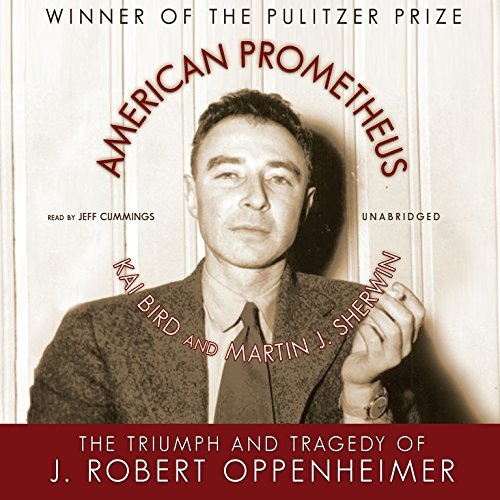
“American Prometheus” The Triumph and Tragedy of J. Robert Oppenheimer
By: Kai Bird and Martin J. Sherwin
Narrated by: Jeff Cummings
Kai Bird (American author and columnist who wrote about the atomic bombings of Hiroshima and Nagasaki. Born in 1951.)Martin J. Sherwin (American historian who wrote about the history of nuclear weapons. Died in 2021.)
Kai Bird and Martin Sherwin tell the story of America’s “god of fire”. Like the myth of Prometheus who reveals Olympian gods’ knowledge of fire, J. Robert Oppenheimer reveals physicists’ secrets of nuclear fission that give atomic power to humanity. Their history tells listeners of the risk entailed in research and production of nuclear bombs.
J. Robert Oppenheimer (1904-1967, Died at the age of 62.)
Bird and Sherwin offer an intimate and revealing story of J. Robert Oppenheimer that reveals his genius, his human frailty, his growth as a project manager, and the abysmal way American government treated his historic achievements.
Though Bird’s and Sherwin’s history is more about Oppenheimer’s life than his discoveries, it seems prudent to note Oppenheimer discovered the Born-Oppenheimer molecular wave functions about how electrons and positrons work. Oppenheimer also worked with fellow physicist William Phillips on the Oppenheimer-Phillips process in nuclear fusion with work on what is called quantum tunneling. Though Oppenheimer was nominated for a Nobel Prize three times, he never won. Phillips and Steven Chu receive the Nobel in 1997.
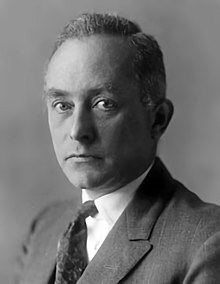
Max Born (German/British physicist, 1882-1970)William Daniel Phillips (American physicist, Nobel Prize 1997 with Steven Chu.)
The great controversy surrounding Oppenheimer is his association with communism. Bird and Sherwin clearly acknowledge the association but convincingly argue Oppenheimer was an American patriot who contributed to communist social welfare programs without being a card-carrying member of the CP.
“American Promethius” illustrates Oppenheimer’s growth as a consummate manager of a complex organization that could successfully develop a weapon of mass destruction, an atomic bomb that can end war. However, as history shows, the atom bomb may end a world war, but nuclear bombs become a threat to human existence by any nation that acquires the same technology.
Los Alamos National Laboratory entrance located a short distance NW of Santa Fe, NM
The first atomic bomb exploded on July 16, 1945 in Alamogordo, New Mexico.
The authors show Oppenheimer’s understanding of an atom bomb’s threat by quoting the Bhagavad Gita. “Now I am become Death, the destroyer of worlds.” Oppenheimer refuses to continue research on Edward Teller’s plan to create a fusion bomb of even greater destructive potential. Teller succeeds in creating that bomb. Oppenheimer recognizes any small or large nation that gains fusion bomb technology increases a threat to humanity.
The second atomic bomb test at Bikini Atoll was a fusion bomb released on July 25, 1946. The Marshall Islands, where Bikini is located, is suing the U.S. for what it calls a violation of the Nuclear Non-Proliferation Treaty.
Edward Teller was a leading physicist who worked on the Los Alamos project. Teller’s difficult interpersonal relations and volatile personality made him an important influencer, and defamer of Oppenheimer. Oppenheimer refuses to continue research on a fusion bomb because of its destructive potential and its potential influence in an arms race.
Edward Teller (1908-2003) Hungarian American, theoretical physicist who was the principal inventor of the hydrogen bomb based on the principle of fusion. It’s destructive potential from heat and light are substantially greater than the two nuclear bombs dropped on Japan.)
Teller and an American German physicist, Hans Bethe a team leader, come to lager heads when Bethe agrees with Oppenheimer’s’ focus on a fission rather than fusion bomb. Teller fell out with his team leader, as well as Oppenheimer, over the disagreement.
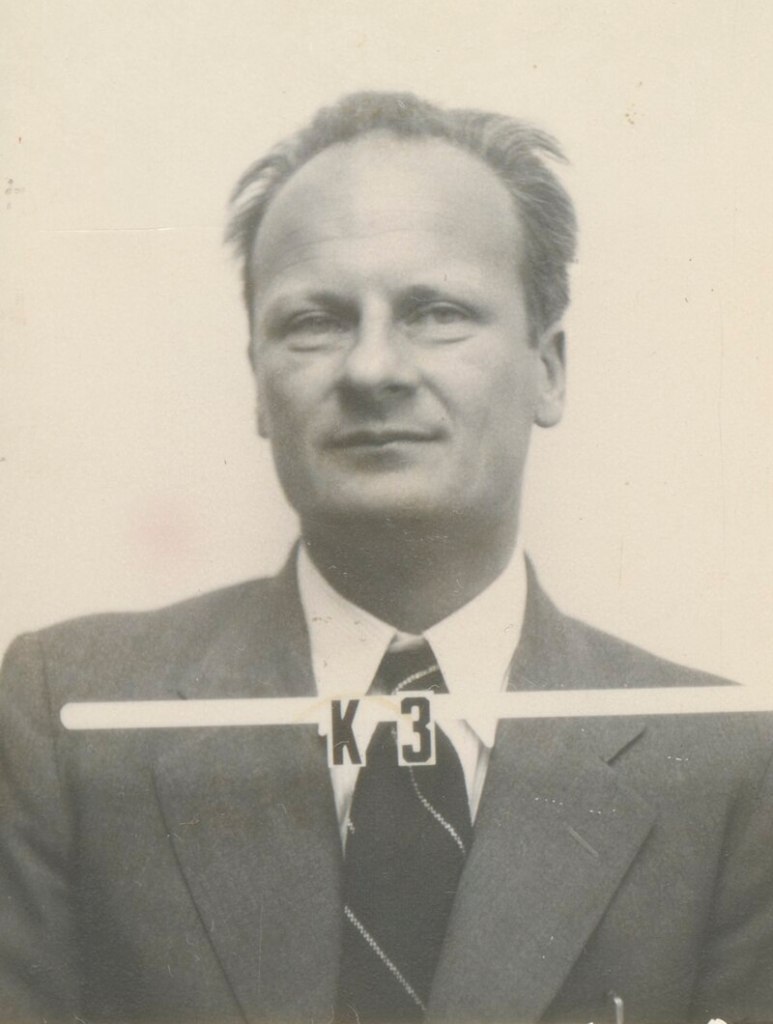
Hans Bethe (1906-2005, received a Nobel Prize in 1967 for the theory of stellar nucleosynthesis.)
The arrival of Niels Bohr (1885-1962) at Los Alamos in 1943 raises a fundamental concern about creation of a weapon of mass destruction. Bohr’s concern is a nation’s failure to share nuclear physics technology about the bomb with allied forces, particularly Russia, to avoid an international arms race.
Bohr believes scientific cooperation would reduce the probability of an arms race. Bohr’s view seems idealistic in light of today’s history, but the idea is adopted by Oppenheimer. Nuclear weapons have become widely coveted by weaker economic nations of the world because of their political systems failure to improve the lives of their citizens.
Human nature is not overcome by technological sharing because of differences in fundamental religious and political beliefs.
Pursuit of the bomb is just another tool to accelerate national leaders’ political or religious beliefs. Niels Bohr’s noble idea and Oppenheimer’s acknowledgement of the value of sharing science is victim to national leaders’ beliefs and human nature.
A nation like North Korea covets the bomb because it gives them the ability to punch (negotiate or fight) above their weight. A nation like Iran is led by a religious leader who only views the modern world in light of a beneficent afterlife.
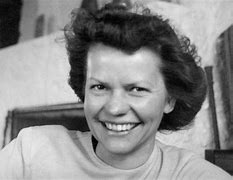
Katherine Oppenheimer. Robert’s wife (1910-1972, German American biologist, botanist, and member of the Communist Party.)
A disturbing note about Oppenheimer is his marriage to his wife, Katherine “Kitty” Puening whom he married in 1940. Kitty became pregnant before they married. They had two children, a boy and girl. This is Kitty’s fourth marriage. Neither parent seems to show much interest in their children. Kitty is shown to be a free spirit, beautiful and charming who generally supports Oppenheimer in his job at Los Alamos. One wonders how their children were affected by their parents’ neglect. Their daughter committed suicide in 1977. The boy still lives in New Mexico and makes a living as a carpenter.
In 1947, Oppenheimer is recruited by Princeton to head a new organization that is called the Institute for Advanced Study. Because of frequent trips to Washington D.C. and the attraction of running a broad organization for the study of science and humanities, Oppenheimer chooses to take the position. His team management experience at Los Alamos and his broad interest in the humanities make Oppenheimer a perfect match for the position. With millions of dollars set aside for the Institute, Oppenheimer attracts the best and brightest science and humanities luminaries from around the world. Einstein, Kurt Godel, John von Neumann, George Kennan, T.S. Eliot, and too many more to mention, were recruited by Oppenheimer. Some were at the height of their professions and became Nobel Prize winners.
The last chapters of “American Prometheus” address the investigation of Oppenheimer’s communist associations during the McCarthy era.
His greatest initial concern was for his brother, Frank, who had joined the communist party. However, the wide range of the investigation and the zealous pursuit of Lewis Strauss, a former shoe salesman who chaired the Atomic Energy Commission (AEC), results in Oppenheimer’s security clearance being stripped. His reputation is unfairly diminished by overzealous politicians and investigators ranging from the FBI director to the AEC chairman.
One leaves this history with a feeling of shame about how Oppenheimer is treated by some and over-praised by others. No human being is without faults, regardless of their intelligence and ability. Oppenheimer was an American patriot who served America with what it needed in the circumstances of his time.
J. Robert Oppenheimer (center) receives the 1963 Enrico Fermi Award from President Lyndon B. Johnson at a White House ceremony on December 2, 1963, as then AEC chairman Glenn Seaborg (left) looks on. (Photo: DOE). He died at age 62 in 1967.
The significance of Becker’s book is in his explanation of Bell’s theory that disagrees with Einstein’s theory of locality.
Blog: awalkingdelight
Books of Interest Website: chetyarbrough.blog
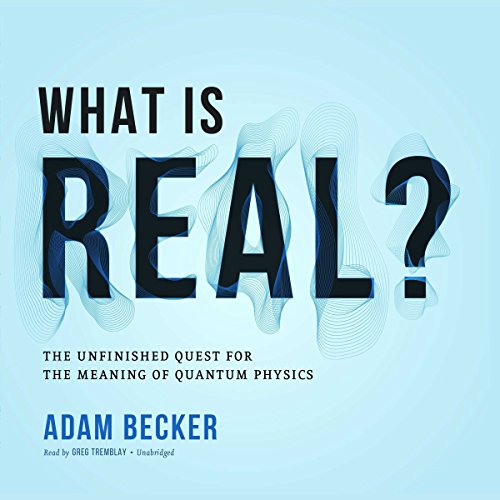
“What is Real” The Unfinished Quest for the Meaning of Quantum Physics
By: Adam Becker
Narrated by: Greg Tremblay
Adam Becker (Author, American astrophysicist, philosopher with BA’s from Cornell, and a PhD in the philosophy of physics from University of Michigan.)
Adam Becker explains a mystery that surrounds the concept of quantum mechanics. The theory of quantum mechanics continues to confound Einstein’s disagreements about quantum physics. No one, including Albert Einstein’s and Niels Bohr’s discussions, has fully agreed on the fundamentals of quantum mechanics. There are theories about quantum mechanics but proof about “What is Real” remains a mystery.
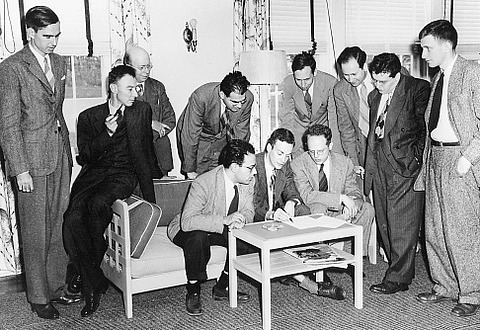
Niels Bohr (1885-1962)Werner Heisenberg (1901-1976)Max Born (1882-1970)
Becker explains in broad terms the Copenhagen interpretation of quantum mechanics. The Copenhagen interpretation came from the work of Niels Bohr, Werner Heisenberg, and Max Born. Study of the sub-atomic world is based on the Copenhagen mathematical theory created in 1925-1927. The theory argues quantum mechanics is inherently probabilistic, not deterministic. (The term probabilistic is only reference to a collapse or disappearance of an expected proton when sent through a split screen. It is not suggesting that quantum physics results are not reliable tools. Quantum physics has been found to be a reliable, accurate, and dependable tool for the desired effects when applied in the tech world.)
Interestingly, Becker suggests Werner Heisenberg tried to cover up his support and belief in Nazism. Becker suggests Heisenberg’s ineptitude as a manager of the research and experimentation process is the cause of Germany’s failure, not any sympathy for holocaust victims.
Einstein argues the only reason quantum mechanics appears probabilistic is because of an undiscovered fundamental law about the sub-atomic world. Einstein believes all physics theory must obey the law of locality which postulates physics laws must be based directly on related and surrounding causes.
Becker notes John Stewart Bell experimentally proves Einstein is wrong and that quantum effects violate the principle of locality.
Bell’s proof is mathematical and based on experiment. His calculations and experiment show two light particles can have spin characteristics that correlate with each other at a distance, non-locally. This quantum entanglement is dubbed “spooky action at a distance” by Einstein. Einstein, Boris Podolsky and Nathan Rosen argue entanglement (“spooky action at a distance”) is not proof of non-locality. Einstein believes there is an undiscovered cause for the appearance of non-locality’s entanglement. The argument against locality is called the EPR paradox after its theorists’ last names. Bell proves through experiment that “spooky action at a distance” is real and that the Copenhagen interpretation of quantum mechanics is wrong.
John Stewart Bell (1928-1990)
Bell’s theorem verifies that “spooky action at a distance” is no paradox by proving that quantum mechanics reflect a non-local phenomenon.
Hugh Everett, a physicist who studied under John Wheeler, published a paper with the idea that non-locality is evidence of another reality, another world with the same people experiencing a different course of life. The collapse or disappearance of a quantum particle is evidence of another reality, another world. For example, an incident of a near drowning would be survival in another reality that simultaneously exists in a different world.
Hugh Everett (1930-1982, died at age 51)
Hugh Everett proposed a many worlds theory of quantum mechanics based on Bell’s theorem of non-locality.
Everett was a student of physics professor John Wheeler who had worked with Niels Bohr.
John Wheeler (1911-2008)
Wheeler became an early supporter of Everett’s many worlds theory.
Wheeler popularized the terms “black hole”, quantum foam”, “neutron moderator”, and “it from bit”. He participated in the Manhattan Project during WWII and worked at the Hanford Site where he helped Dupont build a nuclear reactor in Richland, Washington. Wheeler became skeptical of the many worlds’ hypothesis in later years because of what he called its “metaphysical baggage”.
The significance of Becker’s book is in his explanation of Bell’s theory that disagrees with Einstein’s theory of locality. Einstein presumes missing variables will explain “spooky action at a distance”. Becker notes most physicists still believe in the Copenhagen theory of quantum mechanics despite Bell’s theory and proof that quantum mechanics allow for non-local affects. All the answers for “What is Real” proposed by Becker seem to contradict themselves or lack common sense. However, they still may be true or valid. They are just unproven or unobservable by repeated experiment.
One leaves this novel hoping Russia leaves Ukraine in peace, Palestine and Israel with an acceptable agreement for both countries, and a war that does not widen.
Blog: awalkingdelight
Books of Interest Website: chetyarbrough.blog
“The Winter Soldier” A Novel
By:Daniel Mason
Narrated by: Laurence Dobiesz
Daniel Mason (Author, physician, winner of 2021 Guggenheim Fellowship, the Joyce Carol Oates Prize.)
Daniel Mason’s “The Winter Soldier” is a reminder of WWI and the heartbreak of war. It is a love story created out of the horror of injuries, desperation of commanders for recruits, and the collateral damage of civilians. All of this is a reminder of what is happening today in Israel/Palestine, Ukraine, and Russia. Told from the losing side of war, it makes one think of WWI’s history and the aftermath of today’s military actions.
The well-known triggering incident that led to WWI was the assassination of Archduke Franz Ferdinand of Austria-Hungary.
There are many other fundamental reasons for the war ranging from mutual defense alliances to imperialism to national security and disputed borders but as in all wars there are no winners, only losers. The losers are disabled combatants, children, and the survivors who cannot forget what they have been through. For the dead, life is simply over.
Mason’s story is about an Austro-Hungarian’ medical student from an aristocratic family who is thrown into the maelstrom of war. By circumstance, he is recruited into a field hospital in Poland because he is the only academically trained medical person. He is still a student, but his sketchy understanding of medicine and the human body give him some guidance on how to amputate limbs and treat life threatening diseases. The field hospital is in a former church that is managed by a nun who worked with former doctors and had some practical knowledge of medical treatment. Lucius, the hero, a 22-year-old is introduced to Margareta, a nun who is one year older. She has much more firsthand experience with war’s casualties. Her judgment sustains much of what Lucius does that tempers his novitiate understanding of medical practice.
It is a “…Winter Soldier” who survives the war that offers a surprising ending to Mason’s imaginative and well-written novel.
The precursor to the story’s surprising ending is that Lucius falls in love with Margareta, but they are separated by the invasion of Russian soldiers. They find each other after Lucius marriage and pending divorce to another woman. Lucius travels back to where Margareta lived and finds she has moved to another town. He travels to the new town and finds Margareta at a local hospital. This is not the end of the story. A surprise remains.
Mason’s story is an entertaining novel of particular interest today because of the truth of Mark Twain’s observation: “History never repeat itself, but it does often rhyme”. One leaves this novel hoping Russia leaves Ukraine in peace, Palestine and Israel with an acceptable agreement for both countries, and a war that does not widen.
Being one of “The Best Minds” is of little help in coping with schizophrenia’s symptoms.
Blog: awalkingdelight
Books of Interest Website: chetyarbrough.blog
“The Best Minds” A Story of Friendship, Madness, and the Tragedy of Good Intentions
By:Jonathan Rosen
Narrated by: Jonathan Rosen
Jonathan Rosen (Author, Yale graduate–Accepted but dropped out of a PhD English program at Berkeley.)
Jonathan Rosen tells the story of his boyhood and adult friendship with Michael, a boy of his age who excels academically and professionally as a young graduate of Yale. Michael has a mental breakdown in his early twenties. He is diagnosed as schizophrenic. Rosen compares his years of adolescence with Michael’s.
Rosen’s stricken friend excels in every academic and business pursuit he undertakes before his slip into schizophrenia. In reflecting on the boy’s relationship, Rosen explains his perception of himself is as a grade school and high school plodder who prefers literature to math and the sciences. In contrast, Rosen suggests Michael’s academic qualities give him the ability to read, understand, and recite literary and science subjects with the ease of a savant. Michael reads everything with speed and understanding while Rosen labors over his studies.
The irony of Rosen’s perception of himself is that despite their differences, both he and Michael are accepted at Yale.
Rosen becomes an editor of the University’ newspaper, and later, a published author. Michael aspires to the editorship of the Yale paper, tries to become a published author, but is unsuccessful. Before graduation, Michael is recruited by a prestigious publicly held investment firm and seems on his way to great wealth and success. Instead, Rosen explains Michael leaves the investment company and begins to lose his way in life. Michael slips into a schizophrenic state that diminishes his eidetic memory and gives him a combination of debilitating psychological symptoms. At the height of Michael’s illness, he threatens his mother with a knife. With the persuasion of his father, Michael agrees to admit himself to a psychological ward which finally diagnosis his schizophrenia.
Michael, Rosen’s brilliant childhood friend, is admitted to a psychiatric ward for treatment designed to isolate and medicate its patients into a fog of confusion that is designed to lessen paranoid depression.
Rosen’s long introduction of himself and Michael seems prelude to an explanation of the ineptitude of the American psychiatric industry. Michael’s journey is an indictment of the American system of treatment for mental dysfunction. Michael is eventually discharged but is placed in a group home with other patients suffering from mental dysfunction. They share bedrooms with medications designed to isolate and offer palliative care that deadens their psychological symptoms.
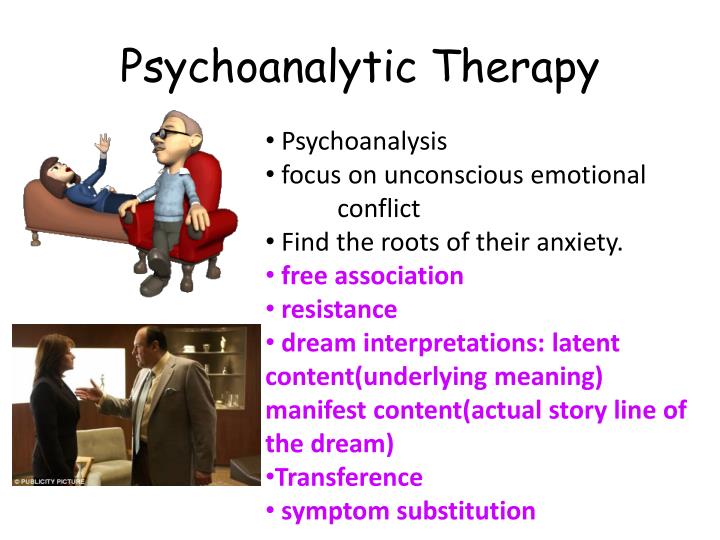
Michael continues his treatment with the aid of minimal income from a government disability program that helps pay for his accommodation and psychoanalytic therapy.
He is directed to reengage life by his therapist with work as a clerk at a Macy’s Department Store. Michael’s father is incensed by the therapist’s diminishment of his son’s accomplishments and begins a campaign to have Yale reengage his son in pursuit of a law degree. With the help of Yale’s faculty, Michael is readmitted to the University.
Ironically, the Yale faculty and students become a caring haven that helps Michael cope with his medical condition.
However, Yale’s help is only palliative, not curative. Michael remains schizophrenic, only ameliorated by drugs and the calming influence of Yale students and faculty. His paranoia continues and becomes more severe when his father dies.
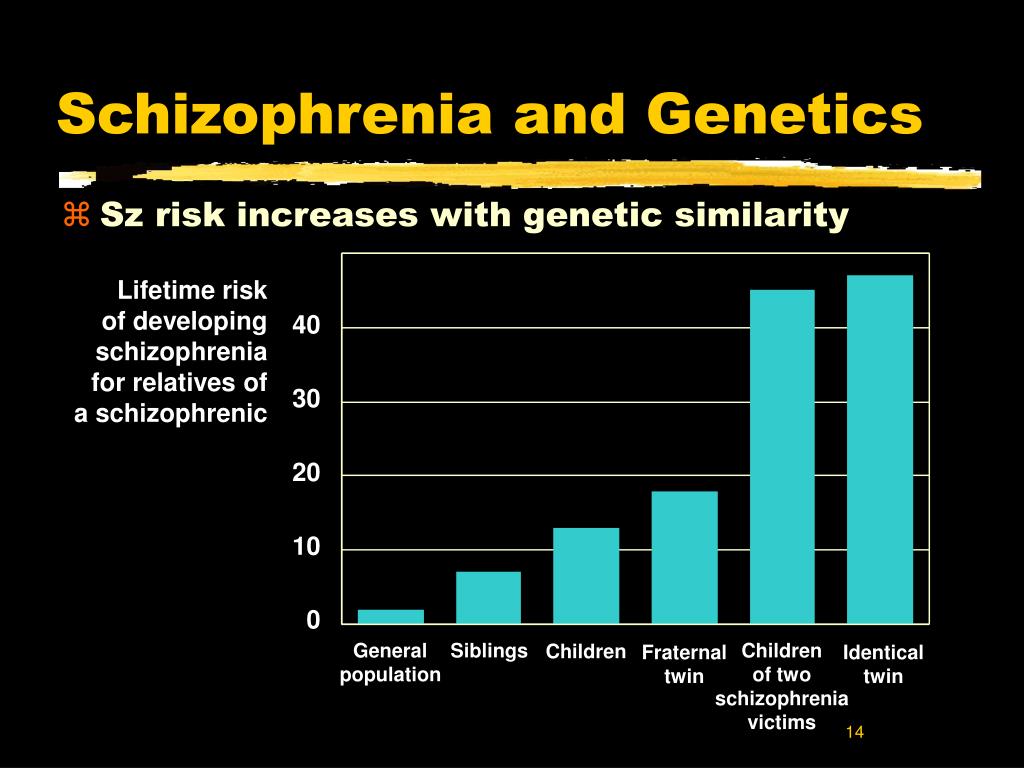
Schizophrenia affects only 1% of the population but has a higher risk of contraction from first degree relatives. (Michael’s grandmother was diagnosed with the disease.)
Michael seems on a road toward managed recovery with a detailed intellectual explanation of what schizophrenia is to him and how it creates delusional images that threaten his existence. His intellectual ability to explain his illness to the public attracts book publishers and the film industry to offer him over a million dollars for a book and film about his life. As this financial windfall becomes real, Michael and his fiancé plan to marry.
On June 17, 1998 Michael B. Laudor stabs his pregnant fiancé, Caroline Costello.
In a schizophrenic episode, Michael grabs his fiancé from behind, stabs her several times, and cuts her throat. Michael leaves her to die on their kitchen floor. Rosen notes that Michael quit taking his medication. He lost control in an episode of paranoia that viewed his fiancé as a maleficent alien presence. It seems a recurrence of what happened with his mother when he was thankfully convinced by his father to voluntarily commit himself to a hospital ward.
What becomes increasingly clear in Rosen’s biographical story is that there is no cure for schizophrenia.
Schizophrenic treatment is a life-long process that requires medication and a support system from caring caregivers, both professional and familial. Being one of “The Best Minds” is of little help in coping with schizophrenia’s symptoms. It requires lifelong assistance because it affects a person’s thinking, emotions, and interactions with the world.
Michael is charged with second-degree murder but is found not guilty by reason of mental defect. He is eventually committed to the Mid-Hudson Forensic Psychotherapy Center in New Hampton, New York in which he remains as of 2023.
(This is a terrible and tragic story. Rosen’s detailed research shows Caroline Costello was a good person, willing to help others, intending to adopt her husband’s faith, and trying to care for Michael in his struggle with an incurable brain dysfunction.)
The future of the Metaverse is unwritten. Ball’s book about the Metaverse is somewhat enlightening but not comforting.
Blog: awalkingdelight
Books of Interest Website: chetyarbrough.blog
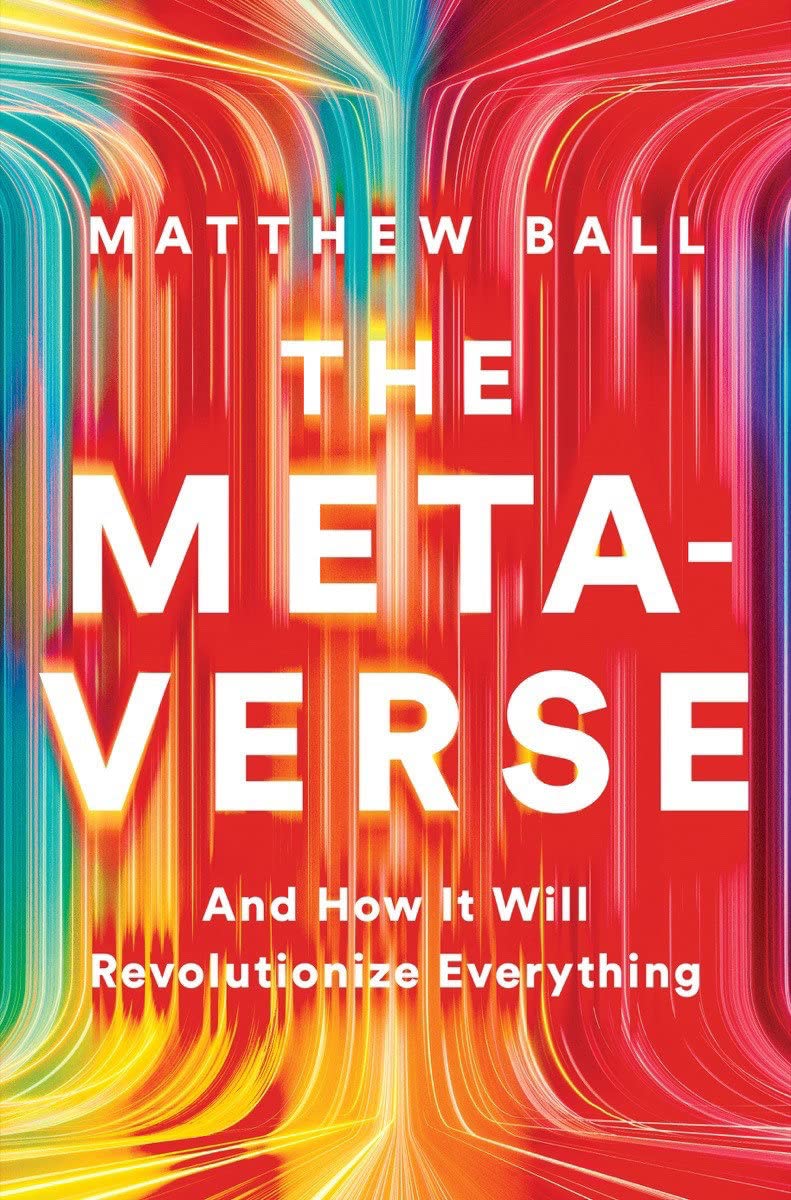
“The Metaverse” And How It Will Revolutionize Everything
By:Matthew Ball
Narrated by: Luis Moreno
Matthew Ball (Canadian Author, CEO of Epyllion an investment and consulting firm.)
As many tech people know, the word Metaverse originated in the 1992 science fiction novel “Snow Crash”. The idea of “The Metaverse” has influenced big tech businesses like Amazon, Google, Facebook, Microsoft, and smaller start-ups with the idea of linking the virtual and physical worlds into an extended, and some argue, a new world of reality. The reality is considered new because it is a view of converging perceptions of reality by combining the digital world with the natural world of things.
Ball explains gaming is the digital world’s laboratory for virtual reality.
Gamers create virtual universes with big tech adding real world experience to create a new, and different understanding of reality. The power and potential of this new understanding bends the future in ways that may be good or bad for society. The potential for good is illustrated by virtual training for everything from teaching pilots with flight simulators to a general contractor’s and land planner’s design for environmentally friendly cities. The bad is illustrated by the expanded potential for misleading and damaging society by distorting basic truths about human equality, fraternity, religion, and politics. Pundits and bad actors can use lies and partial truths to recruit and foment violence that influences the public to act against societal interests.
LAS VEGAS, NV.
The potential of the Metaverse is partially realized when one experiences an event at the Las Vegas Sphere. The creator’s presentation of earth’s environment is an immersive (near 3-dimensional) experience that immerses an audience in a virtual world that reminds one of real-world travel. One envisions the potential for the Metaverse to give one a personal experience of life and world travel while sitting in the comfort of a theater chair. The Sphere’s experience overwhelms the senses. It demonstrates the educational power of a Metaverse experience.
The bad that can be generated by the Metaverse is the aberrant destructive potential for training and development of terrorists around the world.
The idea of the Metaverse can be used for training and solicitation of terrorists who can disrupt and harm society. On the other hand, the metaverse can be a persuasive, and positive influence for environmental recruitment and action, as inferred by the Las Vegas’ Sphere experience.
Ball notes the future of the Metaverse is as unknown as the future was for the internet when the Department of Defense first created ARPANET that allowed multiple computers to communicate on a single network.
The World Wide Web became a phenomenon that revolutionized the way society communicates, works, and lives. Ball notes the same can be said of the invention of the iPhone that magnified use of the internet. The power of the iPhone changed society in both good and bad ways. On the one hand, it put a world of information at our fingertips. On the other, it provided a vehicle to disrupt society through recruitment of bad, as well as good, societal influencers.
VIEWING THE METAVERSE
The future of the Metaverse is unwritten. Ball’s book about the Metaverse is somewhat enlightening but not comforting.
Contrary to Leonhardt’s optimism, whether the American power structure continues to shift toward a more equitable treatment of the poor remains to be seen.
Blog: awalkingdelight
Books of Interest Website: chetyarbrough.blog
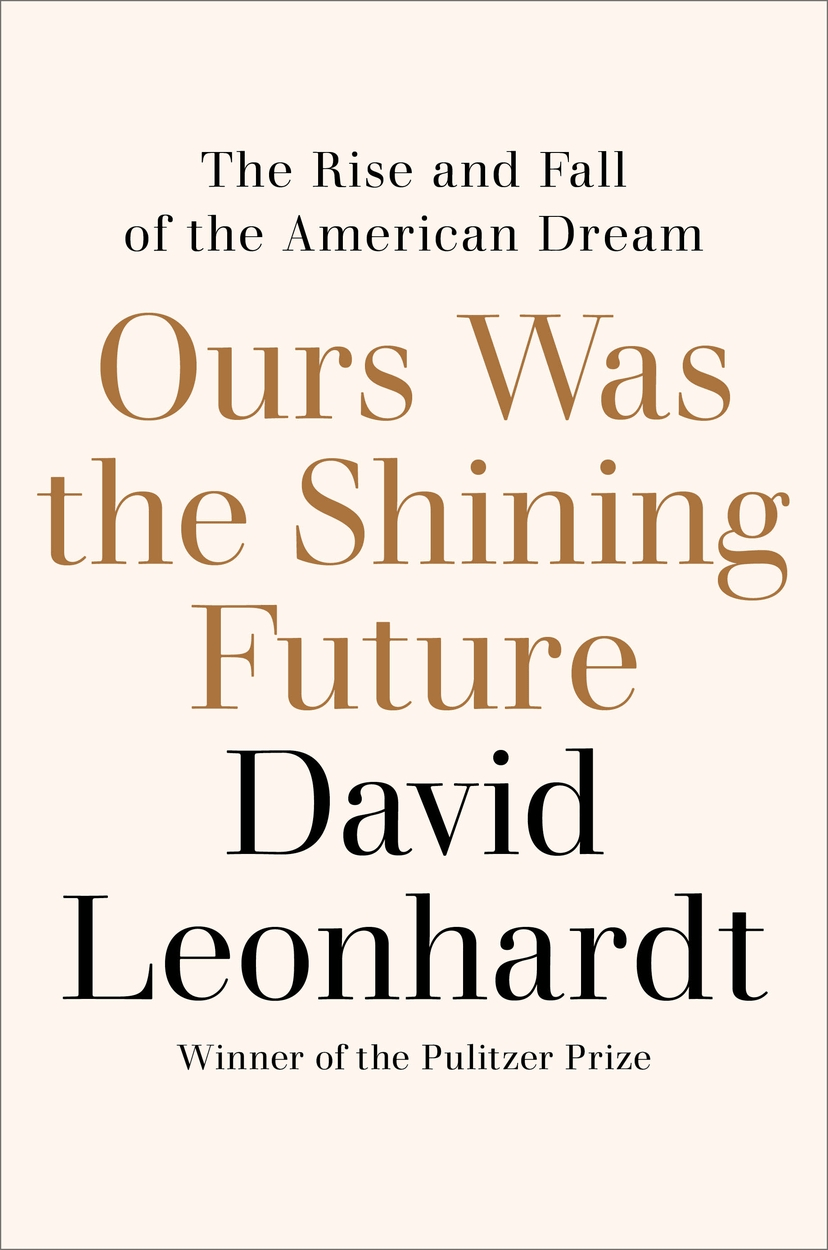
“Ours Was the Shining Future”
By:David Leonhardt
Narrated by: Dan John Miller
David Leonhardt (Author, journalist and columnist, writes “The Morning” newsletter for the “New York Times”, received a BS from Yale in applied mathematics in 1994.)
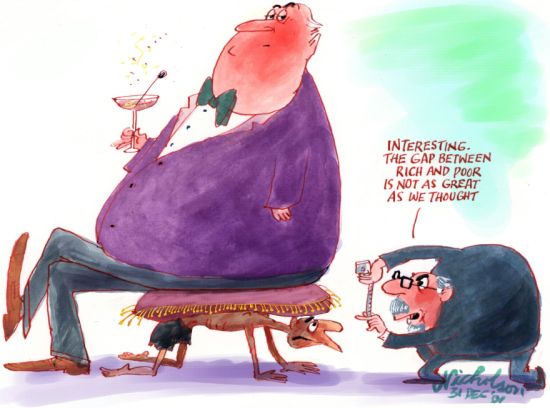
David Leonhardt writes an encomium to Democratic Capitalism in “Ours Was the Shining Future”. Some of what Leonhardt writes will make conservative Americans gag while liberals will tend to praise his view of American history. The hot button issues of 21st century America are immigration and the rising gap between rich and poor.
“Dallas, Texas, United States – May 1, 2010 a large group of demonstrators carry banners and wave flags during a pro-immigration march on May Day.”
Leonhardt’s selected historical facts argue that immigration has a cost to America that is mitigated by its contribution to the economy by second and later generation immigrants. He resurrects John F. Kennedy’s oft quoted phase about America as “A Nation of Immigrants”. Leonhardt argues the rising gap between rich and poor accelerated with the election of Ronald Reagan and subsequent tax and spend decisions made by later government administrations.
The difficulty one may have with Leonhardt’s reporting is that historical facts do not speak for themselves.
It is the power of Leonhardt’s persuasion rather than the facts of history (and one’s own prejudices) that make a credible argument for
(1) the benefit of unionization in America,
(2) the benefit of intervention by the Franklin Roosevelt administration during the depression,
(3) the aggressive tax reduction for high income earners with government overspending (beginning with Ronald Reagan) that negatively affected the American economy and disproportionately increased the gap between the rich and poor, and
(4) the monumental economic benefits from second generation immigrants like Sundar Pichai (CEO of Google), Indra Nooyi (former CEO of PepsiCo), Elaine Chao (the U.S. Secretary of Transportation under Trump), and Lin-Manuel Miranda (the creator of the Broadway musicals “Hamilton” and “In the Heights”), and others.
Leonhardt recounts the history of the union movement in America that evolved into a political power that improved the income and lives of the working poor.
He touches on the corruption of the union movement but on balance suggests more good than bad came from its representation of labor. Leonhardt argues the decline of unionization and tax policy changes in the late 20th century increased the gap between rich and poor.
Leonhardt argues immigration needs reform and infers it should begin with acceptance of an estimated 340,000 children (dreamers) born in the U.S. to unauthorized immigrants.
He suggests new immigration should be limited to immediate relatives of legal immigrants that presently live in the U.S. He reiterates the value of second-generation immigrants while acknowledging the burden borne by the economy with first generation immigrants. New immigrants generally have a language deficiency, greater education needs, and a willingness to work at jobs for lower pay than non-immigrant workers who also need jobs.
Leonhardt suggests the gap between rich and poor is a function of an unequal distribution of political power.
Leonhard believes improvement is coming from a resurgent union movement and an evolving recognition by both conservatives and liberals of the consequence of inequitable tax treatment that favors the rich.
There is some evidence to support Leonhardt’s belief in a power shift with the recent union actions in automobile, teacher. and nursing services strikes that increased their income. Minimum wages have risen in 22 states that have affected an estimated 10 million workers. The highest are in California ($16), Massachusetts ($15.75), and Washington ($15.50).
However, one is inclined to be skeptical about income gap reduction with Trump’s Presidency that further reduced taxes on the rich and Biden’s reluctance to act on tax inequality.
Leonhardt receives a Pulitzer Prize for Commentary, the Gerald Loeb Award for excellence in reporting on business, finance, and the economy, a New York Time Book Review Editors’ Choice award, and The Atlantic’s Ten Best Books of the Year for the most notable and influential book of the year. These are nice academic rewards but whether Leonhardt’s arguments are anything more than a finger in a dike, near a breaking point, is yet to be revealed.
Contrary to Leonhardt’s optimism, whether the American power structure continues to shift toward a more equitable treatment of the poor remains to be seen. The continued popularity of Trump among conservatives is disheartening and suggests otherwise.
Every human being has a life story. A few human beings like those in Verghese’s book show that respect for every life carries the hope of civilization.
Blog: awalkingdelight
Books of Interest Website: chetyarbrough.blog
“The Covenant of Water”
By:Abraham Verghese
Narrated by: Abraham Verghese
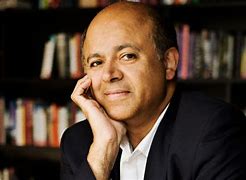
Abraham Verghese (Author, American physician, Professor of the Theory and Practice of Medicine @ Stanford University Medical School.)
As an immigrant, Abraham Verghese began working in America as a hospital orderly. His hospital experience led him to pursue a medical degree. His experience as a world traveler and physician gives weight to his writing about medical diagnosis, brutal loss of life, societal norms, the importance of belief, and human vulnerability. Verghese tells a story from the beginning of the twentieth century through two world wars. Its story is of two physicians (one from Sweden another from Scotland), and a resolute lower caste family in India.
Water surrounds the world like an agreement that ties all people together, for better or worse.
The author of “The Covenant of Water” emigrated to America when Haile Selassie was replaced by a Marxist military government in Ethiopia. One wonders if cultural conflict of interest may be more pernicious when land masses are separated by bodies of water. “The Covenant of Water” implies otherwise. Like any lasting covenant between parties, respective self-interests must be addressed and respected. When they are not, all parties suffer. At one point, Verghese suggests “The Covenant of Water” washes away life’s troubles. The tragedies he recounts suggest the real truth is that life’s troubles never wash away. Troubles remain within us in memory and only truly disappear in death.
India’s Saint Thomas Christians date back to the 3rd century. An estimated 4,000,000 St. Thomas Christians live in 21st century India.
Verghese’s story holds together through the generations of an Indian Christian family from the early 1900s through two world wars and the beginning of the 70s. Part of the story’s interest is in Great Britain’s colonization of India and its historical perspective. At the forefront of the story, there is the inevitable cultural conflict in any countries’ colonialization of another. Verghese shows no clear line can be drawn between exploitation and improvement of a colonized society whether its native American in North America, Aboriginal in Australia or of a lower caste family of a minority religion in India. Verghese interweaves an insightful story that magnifies reasons why cultural difference is only overcome on a person-to-person basis. India will always be India to its native citizens. Today, a similar truth is being played out in Gaza and Israel. Palestine will always be Palestinian just as Israel will always be Israeli.
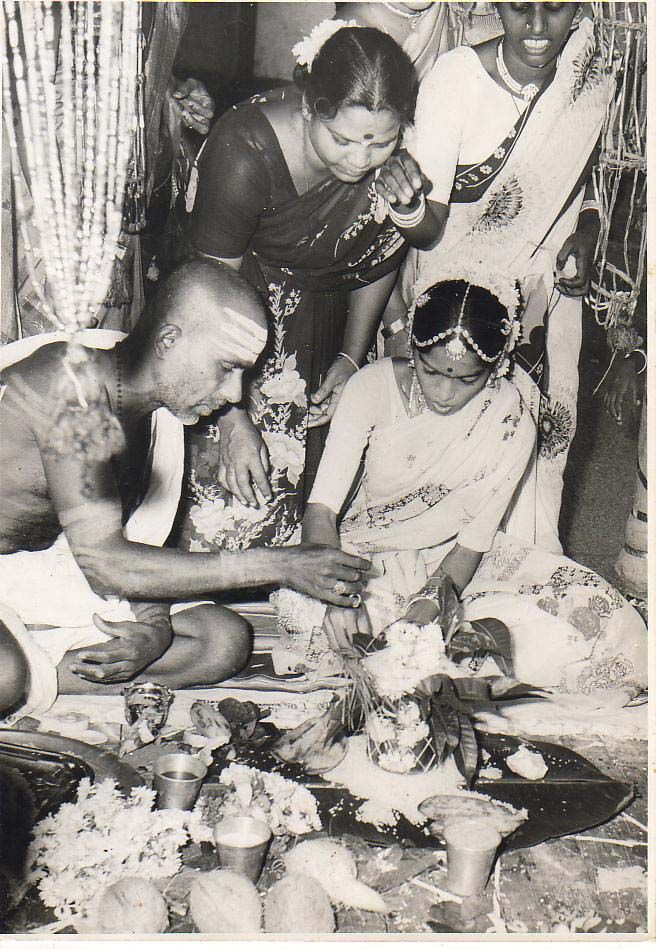
Verghese’s story begins with an India wedding betrothal of a 12-year-old girl to a 40 something widow who has lost his wife to illness.
The betrothal is made at the recommendation of the husband’s relative who as a matchmaker researches the background of the betrothed’s family. The chosen bride is naturally afraid to leave her family and the groom is unsure of what he wishes to do. The matchmaker assures the groom the betrothal is a good one for him, and the marriage is consummated. The young girl travels from her home to her new husband’s property many miles away. Her greatest unhappiness is in leaving her mother but she is greeted by her new household by a helpful older woman. The young girl is comforted by her Christian beliefs and receives an omen of welcome by a massive bull elephant that had been saved by her new husband.
The incongruity of ages in this marriage is disconcerting to many listener/readers. Verghese non-judgmentally explains the culture of India in the early 1900s.
(World travelers will recognize remnants of that betrothal culture exist in India today.) The husband has a two-year-old son from his former marriage. He is a landowner as a result of personal ambition and hard work. He is not rich but is well respected by the people that know him. The husband treats his new bride with respect, and she begins to care for the household and her new stepson. They first have intimate relations when she turns 17. Their first child is a daughter who has a developmental problem that limits her intellectual growth. After two miscarriages, she has a boy who is a binding connection for the story. She grows to love her husband who dies when his child wife reaches her thirties. She becomes the matriarch of the clan.
This sets the tenor of Verghese’s story. It is a long, long, some might say too long story that repeatedly reminds one of how important it is to respect other people’s cultural beliefs while all life is filled with hardship and change.
Listener/readers will get a glimpse of India’s, as well as Great Britain’s, and Sweden’s cultures with the introduction of a Scottish and Swedish surgeon. What the main characters hold in common is that they have underlying respect for the life of others in any culture, whether rich, poor, educated, or unschooled. The two doctors, the child bride and her son are heroes and victims of their times.
Each of the main characters in Verghese’s book have unique life stories but a common thread of belief is respect for the life of all, cultural acceptance and understanding, and life-long pursuit of education.
The Swedish doctor travels the world to settle in a remote part of India to recreate a refuge for victims of leprosy. The Scottish doctor, after a life-threatening injury, becomes a patient of the Swedish doctor to be figuratively reborn by his experience after the Swede’s death. As true of the India family, the Scottish doctor’s life is dramatically changed by tragedy. The Swede dies at the refuge after having rehabilitated the Scottish physician’s burned hands. The Scott has been introduced to supporters of the Swede’s practice at the Leper colony and he evolves into a business owner/manager that makes him wealthy.
The son of the India child-bride saves a young child from drowning in a flood that whisks him and a nearly dead victim to the Swedish doctor’s clinic where the physically unable Scottish surgeon directs the boy in how to incise the babies throat to save the baby from asphyxiation. The young boy saved the babies life and overcame a hearing deficiency to become a social leader of his village in India during and after WWII.
The young boy, now a man, falls in love with a woman of his age that he had met when he saved the nearly drowned baby. They marry and have a child of their own. The child dies in a tragic accident. The loss of the child is felt to be the fault of each parent which tears their relationship apart. It never mends as the tragedy of their relationship continues to unfold. Their marriage falls apart. At this point the Scottish doctor re-enters the story with an unexpected revelation about the wife who leaves and returns because of the loss of their child. What is meant by “…loss of their child” is an added chapter to this tragedy that extends the story beyond one’s imagination.
Verghese shows himself to be an excellent writer but to some listener/readers the denouement of his story is a step too far for one’s imagination.
Every human being has a life story. A few human beings in Verghese’s book show that respect for every life carries the hope of civilization. Without respect between those who are different, Verghese shows why human dysfunction and tragedy will remain a condition of human society.
Do humans upset nature or are they another victim of nature’s balance?
Blog: awalkingdelight
Books of Interest Website: chetyarbrough.blog
“Drive Your Plow Over the Bones of the Dead”
By:Olga Tokarczuk, Antonia Lloyd-Jones
Narrated by: Beata Pozniak
“Drive Your Plow Over the Bones of the Dead” is well narrated, but its appeal seems lost in translation. The book is written with financial support from the Czech Republic. It makes a fundamental point about the animal world, but its story is diminished by its main character’s representation.
WINTER IN THE CZECH REPUBLIC
The heroine of the story believes in astrology. Those who are non-believers are distracted by the heroine’s constant reference to what many, if not most, consider a pseudo-science. Janina is an older woman who lives in a small settlement in the Czech Republic. She is a schoolteacher who has responsibility for the caring of second homes in a wilderness settlement when not in use by their owners. There are only a handful of residents that stay in the settlement during harsh winters.
The story begins with the death of a year-round resident. It appears the death is an accident from choking on a deer bone, but several mysterious deaths occur in that winter that make the local police realize a murderer is in the area.
The schoolteacher argues the deaths are a result of a rebellion against hunters by deer and wolves that have been indiscriminately hunted and killed for sport. She supports her argument with evidence of deer and wolf tracks near the death scenes. She reinforces her unwavering belief with astrological observations of the planets, human’ dates of birth, and the solar system’s orbital interference with each other.
The schoolteacher argues to all who would listen that indiscriminate human predation is causing an animal rebellion in their remote location.
She has mysteriously lost two pet dogs in this winter of death. The truth of her theory of rebellion becomes less believable and more mundane with the discovery of more human deaths and her characterization of her pets as lost daughters. Her dogs may have just run away or been eaten by wolves. With more human deaths, the police are convinced there is a human murderer in their midst. The story becomes a murder mystery, not a conspiracy foretold by the heavens.
What actually happened to her dogs is the clue that solves the case.
One surmises the underlying meaning of the story is that human beings are indiscriminate murderers of nature.
How many buffalo, elephants, lions, wildebeests, rhinos, tigers, boar, elk, and deer have been hunted and killed by humans for their ivory or trophies with carcasses left to rot?
In one sense, all predation is simply a way of keeping nature in balance. In another, human predation upsets the balance of nature by volitional choice. To the author, it is the second sense that tells listeners–humans do not preserve but arbitrarily upset the balance of nature.
The murder mystery is solved in the end, but the question lingers. Do humans upset nature or are they just another victim of nature’s balance? Time, not religion, science, or fiction, will tell.
















































 REVIEWS AND VIEWS OF LIFE