RESPONSIBILITY

Adults need to be present, honest, and emotionally available to children under their care. It is a big job for which most of us fail, but children are the world’s future.

Books of Interest
 Website: chetyarbrough.blog

A Beautiful Family (A Novel)

Author: Jennifer Trevelyan 

Narrated By: Ruby Hansen

Jennifer Trevelyan (Author, lives in Wellington, New Zealand.)

Set in the beautiful island nation of New Zealand, Jennifer Trevelyan writes a coming-of-age story of a ten-year-old girl named Alix. Through Alix’s eyes, a listener/reader is reminded of their youth and the many events in childhood that show the truth of human nature. What we see and interpret when we are young is clouded by our ignorance and struggle to appreciate life as it is rather than what we think it should be. Ignorance is usually dispelled as we grow older, lose our innocence, and begin to understand life’s struggles are universal.

Humans are animals with advanced abilities to think and communicate.

Humans cooperate, compete, and adapt to their environment to survive. Our imperfections are legion beginning in childhood and multiplying throughout our lives. As a child, we see the world and interpret what we see with innocent eyes. Whether raised by an institution, two parents or one, a child sees through inexperienced eyes which are only interpretations of a real world that only time and maturity will reveal. Trevelyan shows how a child sees more than adults realize but often interpret what they see incorrectly. Eventually a child loses his/her innocence as they mature and reinterpret past experiences, but the fog of memory often interferes with truth.

Trevelyan’s main character, Alix is you, me, and every child raised in a world of married and unmarried parents or institutions.

Trevelyan offers concrete examples of the fragility and complexity of caring for children of the future. Many examples are given of Alix’s seeing life happen with interpretations that are as often wrong as right. Alix has had explanations of the difference between right and wrong but sees her sister steal make-up from a store, get drunk as a teenager, and befriend others who encourage bad behavior. She sees her mother at a distance who appears to be amorously kissing a stranger. Her mother and father are often confrontational with each other. Her mother takes long solitary walks, and her father shows passive detachment from the family.

Alix is on a vacation with her family at a New Zealand’ beach resort. She is an excellent swimmer who often swims alone.

The risk of swimming in the sea introduces the reality of danger in the world even when the environment is beautiful. One thinks about the many shark incidents on the coasts of the world and Malcolm-Jamal Warner’s death from a riptide while swimming in Costa Rica.

Trevelyan offers many lessons for adults who are raising children in this world. Children see more than adults realize and they interpret what they see in ways that can be as easily wrong as right. They incorporate what they see into their perception of the world. Parents are models of who children become as adults. As parents, or institutions that influence and raise children, it is important to be emotionally available, not just present to children. Keeping secrets or being silent about something is human. However, what a child sees or hears can be harmful when not discussed with a parent or guardian. Parents and institutions need to provide age-appropriate transparency to build trust with children. Those children with siblings should have sibling relationships nurtured by responsible adults. Adults need to take responsibility for the environment in which children are raised.

Being on vacation in an idyllic setting does not mean there are no dangers.

Trevelyan story explains why raising children is important. Adults need to be present, honest, and emotionally available to children under their care. It is a big job for which most of us fail, but children are the world’s future.

WHO ARE YOU?

Greene explains self-awareness of introversion or extroversion is key to understanding one’s social limitations and blind spots in being a constructive part of society.

Books of Interest
 Website: chetyarbrough.blog

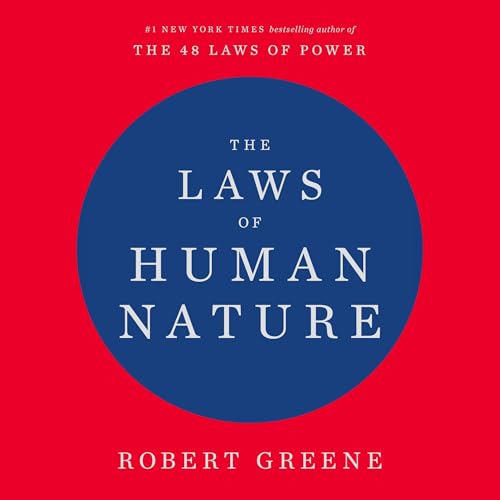
The Laws of Human Nature

Author: Robert Greene

Narrated By: Paul Michael & 1 more

Robert Greene (Author, with several NYT’s bestsellers addressing human nature, graduated with a degree in classical studies.)

“The Laws of Human Nature” is a tour deforce of what one learns in life about being a good manager. The difference between a technically excellent employee and a manager is that the first has skill in doing things while the second has skill in managing those who do things. Occasionally, one can be both, but as the complexity of life increases, the likelihood becomes rarer. Human nature revolves around behavior and one’s psychological characteristics. Greene argues there are fundamental laws of human nature that can enlighten listener/readers about themselves and others.

Aristotle’s, Hobbes’, Rousseau’s, and Darwin’s views of human nature have different perspectives. Aristotle believes human nature is teleological with a belief that we all have purpose that is revealed by reason and virtue. Hobbes believes humans are innately self-interested and capable of both good and bad behavior. Rousseau believes humans are inherently good but corrupted by society. Darwin believes humans evolve through natural selection and will do whatever is necessary to survive. Of the four perspectives, Aristotle seems the most idealistic while the other three account for human nature’s irrationality.

Greene suggests humans can be irrational, narcissistic, misleading, and sometimes repressive.

What one can draw from his book is how those characteristics exhibit and what one can do about it. The potential of irrationality exists in everyone. It can cause fear, envy, insecurity, and desire. Bias is at the heart of these emotions. He turns to ancient history to give the example of the war between Spartans and Greeks that may have been avoided if heightened emotions had not been aggravated by a plague in Greece and the death of Pericles who had a rational plan to avoid war. Greene suggests Augustus defeats Anthony to become ruler of Rome because of Anthony’s neglect of his duty as leader of Rome for the desire of the Egyptian Queen, Cleopatra. Greene notes irrationality is a universal characteristic of humanity. The anecdote is to calm one’s emotions, clearly understand what it is that you fear, and to mirror back that clear understanding to yourself and change your behavior.

One can see narcissism in themselves or others when one seeks admiration, overreacts to criticism, has no interest in others perspective, or manipulates others by ignoring or emotionally withdrawing attention.

Married people often do this with their significant other. Greene explains self-awareness, seeing others through their eyes, redirecting your energy to something more important, and being more disciplined can abate narcissism. He notes narcissism is not a flaw but a force that can be turned to good. The history of Oppenheimer, considered by some to be narcissistic, is noted as an example of someone who saw the big picture of life and the consequence of war. He came to understand something bigger than himself and successfully manages other scientists to create the first nuclear bomb. The contrary of a narcissist who could not see the big picture is the story of Howard Hughes who could not manage his father’s company or his entry into the film industry because he could not get things done through other people. He believed only he could handle the complexity of a film production and plane manufacturing company. No one could work under him because of his uncontrolled narcissism that interfered with others he hired to help him manage businesses bigger than one mind could control. His managers resigned because he would not allow them to do the job they were hired to do. Hughes failed as a movie producer and plane manufacturer because of his narcissism.

Bernie Madoff (Born 1938, died in Federal Medical Center in 2021)

History is festooned with misleading information by people who distort the truth in order to achieve their personal goals. Greene recalls the history of swindlers like Bernie Madoff that lied to his investors about investments that were Ponzi schemes that fed his investment company’s growth, not from honest investment in publicly traded stocks or business enterprises.

Stalin in Russia, is the penultimate example of a psychological characteristic of repression. One suspects the same is true of Putin. Even America’s President Trump could be characterized as a narcissist. He used federal power to investigate and punish political opponents. Trump politicized the civil service by conducting mass firings to replace employees that were loyal to his agenda. Justice Department’ independence has similarly been restructured. Trump suppresses dissent and free expression by cracking down on student protests, detained and deported not only illegal immigrants but U.S. citizens. He ended asylum protections and militarized crackdowns with the use of the National Guard and U.S. marines to aid ICE in deporting undocumented immigrants and quelling public opposition. All of these actions are examples of an increasingly repressive American President. There were similar arguments about Franklin Roosevelt in his early actions to rescue America from the pre-WWII’ depression.

Greene goes on to explore personality types that are a combination of extroversion and introversion characteristics.

He notes both characteristics have strengths and weaknesses. Extroverts generally have more social fluency, have a more charismatic presence and higher social visibility. They can also become subjects of envy or derision because of their high profile. Greene suggests they are more vulnerable to manipulation because their habits reveal too much about themselves. They become more susceptible to groupthink rather than individual judgement. On the other hand, introversion has equivalent but different strengths and weaknesses. Introverts have more control over themselves because they reveal less of themselves to others. They are naturally less likely to succumb to groupthink. On the other hand, they tend to misread socially valuable influences because of their isolated view of the world. They fail to offer their opinion because of fear of self-exposure and ridicule which diminishes their understanding of beneficial social norms.

Greene explains self-awareness of introversion or extroversion is key to understanding one’s social limitations and blind spots in being a constructive part of society. However, his analysis of “The Laws…” of human nature becomes tedious because it offers too many examples and views of biases and their anecdotes for most listener/readers to be patient enough to complete his book. Nevertheless, Greene’s first chapters are enlightening and worth one’s time.

RELATIONSHIP EVOLUTION

Modern marriage expectation has become a way to provide security and freedom with stability and novelty. In Perel’s opinion, these paradoxical expectations were of less concern in the past but of central concern today.

Books of Interest
 Website: chetyarbrough.blog

The State of Affairs

Author: Esther Perel

Narrated By: Esther Perel

Esther Perel (Author, Belgian-American psychotherapist.)

Esther Perel has written a difficult book to listen to. It is about human relationship, focusing on love, desire, and sexual behavior. Perel begins with a history of the evolution of marriage in prosperous western nations. Though equality of women is far from accomplished, their entry into the postindustrial world is dramatically changing sexual relationships. The days of men treating women as objects is not over but gradually moving toward sexual equality.

Sexual inequality.

Normal human beings (whatever that means) experience some form of love or desire that elicits sexual behavior. Perel’s book is difficult because she holds a mirror up to every human being that exposes their inner failings as adults and maturing children. The difficulty comes from reviewing one’s own life when listening to her clinical analysis of infidelity, affairs, a victim-villain analysis, and sexual desire that permeates most human lives.

Traditional moral beliefs are zero-sum judgements of sexual desire and experience.

Perel tries to remove judgement by not saying infidelity is not a sin but a psychological and relational failing of human beings. She suggests infidelity is caused by unmet emotional needs, personal identity struggles, and/or a search for eternal vitality. This, in many ways, is no less devastating to one’s relationship even if it is characterized as a sin. Infidelity is a personal failure whether one is judged by a religious person or a psychotherapist who may not believe in divine judgement.

Perel believes humans are constantly seeking meaning in their lives.

We don’t just want to survive. Our cultures and histories have shaped us. We are erotic human beings, searching for security, vitality, imagination, and joy. Perel recognizes people can love their partners and still have a sexual desire for others. Recognizing the lure of sexual desire, Perel notes fidelity becomes a choice that offers an anchor and depth of understanding in a committed relationship. She notes betrayal has consequences while fidelity is a powerful container for sexual pleasure, if not love, and another kind of relationship growth.

Fundamentally, Perel is saying fidelity is important despite a marriage partner’s sexual desire for others.

She gives examples of therapeutic sessions of couples who have extramarital affairs that violate their presumptive marriage covenants. A betrayal can be by either partner, but the loss of trust is often irreparable. Because marriage has become less about economics and social stability, though both are still present, Perel infers married partners are emotionally more devastated by betrayal.

In modern times, Perel argues people marry for love, intimacy and personal growth more than economic security.

She suggests communal structures have weakened and community support is lost when a marriage falls apart. That rings true based on the mobility of people in the modern age. It has become much more common for people to leave the areas in which they were raised. Modern marriage expectation has become a way to provide security and freedom with stability and novelty. In Perel’s opinion, these paradoxical expectations were of less concern in the past but of central concern today.

This listener is inclined to have reservations about Perel’s assessment of present-day marriage and infidelity because of women’s inequality of opportunity, i.e., the same reality that exists for many in America.

BLACK & WHITE

One wonders if Abdulrazak Gurnah is proffering an opinion about race relations in the world or just leaving a lifeline for those disappointed by relationship failures.

Books of Interest
 Website: chetyarbrough.blog

Admiring Silence 

By: Abdulerazak Gurnah

Narrated By: Unnamed person from Zanzibar

Abdulerazak Gurnah (Author, Tanzanian-born British novelist and academic, moved to the UK in 1960.)

A little context for “Admiring Silence” will help understand Abdulerazak Gurnah’s interesting and troubling story. Gurnah received the Nobel Prize in Literature in 2021. “Admiring Silence” is the latest book published by Gurnah in 2020. He had written four earlier books: Memory of Departure (1987), Paradise (1994), By the Sea (2001), and Desertion (2005).

“Admiring Silence” is not a biography but an interesting story about a long-term relationship of a Black emigrant and a white woman who meet in Zanzibar (an island archipelago off the coast of Tanzania) and move to London. The two had met in a Zanzibar’ restaurant where they both worked. The Black emigrant leaves his native country with his restaurant mate.

Gurnah describes the two as lovers who are struggling restaurant workers who wish to improve their lives through higher education. An opportunity to attend a university leads the two to decide to emigrate to London because of their similar academic ambition. The two are enrolled at a university and both become teachers in England. Gurnah sets a table for understanding what life is like for an unwed mixed-race couple in mid-twentieth century England.

Their life together is complicated by the birth of a daughter and the father’s decision to visit his homeland when he is in his forties.

No one in Zanzibar knows he has a teenage daughter with an unmarried white woman he lives with in England. His mother wishes to fix him up with a future Black Muslim wife. The interest one has grows with the circumstances of Gurnah’s imaginative story.

  • What is it like to be in a racially mixed marriage in 1960s England?
  • How does a mixed-race child feel about her life in a predominantly white country?
  • What does a Black family think about their son having a mixed-race family?
  • Having lived together for 20 years and had a child, why haven’t they married?
  • How does the relationship between different races affect the feelings of a couple that chooses not to marry but have a child born to them?
  • Is Gurnah’s story representative enough to give one the answers?

The first question is largely unanswered. The last question is impossible to answer but the other four imply Gurnah’s opinion. Marriage is always a work in progress whether it is of a mixed-race couple or not. However, there is a distinction based on race when it comes to a man’s and woman’s personal relationship because of the dimension of racism. Every couple chooses to work through differences and become more or less committed to staying together but two people of different races face discrimination associated with racism, unequal treatment, and economic inequality existing in a country’s dominant racial profile.

Gurnah does not address how a mixed-race child deals with life in a predominantly white country, but one can imagine it depends in part on how distinctive a difference is in the color of their skin in relation to the dominate racial profile.

In terms of the daughter’s relationship with her parents, one presumes it is likely the same parent/child conflicts of all families. Some fathers are more distant than others just as some mothers range from helicopter to equally distant parents.

That these two lovers who have been together for so long without getting married, after their daughter is born, seems like a flashing yellow light, a cautionary notice of something is about to change.

When the father’s mother writes from Zanzibar to have him visit after being away for so long, flashes a yellow light that eventually turns red. He returns for a visit to Zanzibar at the encouragement of his partner. The partner’s encouragement seems disingenuous, i.e. more like a desire for a relationship break than a supportive gesture. The last chapters confirm that suspicion. A break-up occurs soon after the father returns. There is a brief father/daughter reconciliation, but the daughter also decides to separate from her father.

An interesting point is made by Gurnah about a Muslim Black person leaving a poverty-stricken country of his birth to a country of wealth and a different culture.

It is the wish of his Zanzibar’ family for the father to return to help with the disarray and economic disparity of his home country; as well as marry a local Black Muslim girl who wishes to become a doctor. The presumption is that if one leaves their poor country to become prosperous in a wealthy country, they have some magical power to help their poverty-stricken home-countries. It is of little concern to the family about his committed relationship to another but more about what his life is like in his newly adopted country and what he can offer to his homeland from what he has learned. The Muslim girl the mother wishes him to marry is twenty years old. Her son is in his 40s. Tt appears the primary reason for such a marriage is to help the young woman become a doctor. In the end, the son recognizes this is not practical but clearly understandable considering the poverty in Zanzibar.

Gurnah cleverly injects a conversation with a Nigerian Muslim woman on his plane ride back to London before his white lover’s rejection of their relationship.

The Nigerian woman has been divorced from her English husband for several years. It was an emotionally difficult divorce for her. A mix-up on a missing passport allows the father to find contact information for the divorcee. One wonders if Gurnah is proffering an opinion about race relations in the world or just leaving a lifeline for those disappointed by relationship failures.

.