TWO OLD MEN

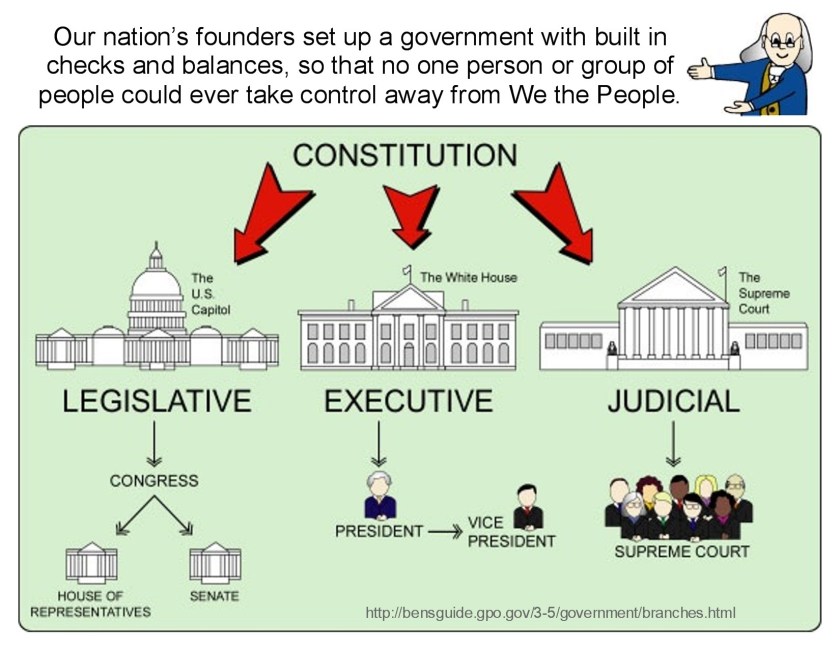
Age is an existential risk that can only be managed by the checks and balances of others which is why America’s government has survived and prospered despite good and ethically or morally corrupt Presidents.

Books of Interest
 Website: chetyarbrough.blog

Original Sin (President Biden’s Decline, Its Cover-Up, and His Disastrous Choice to Run Again)

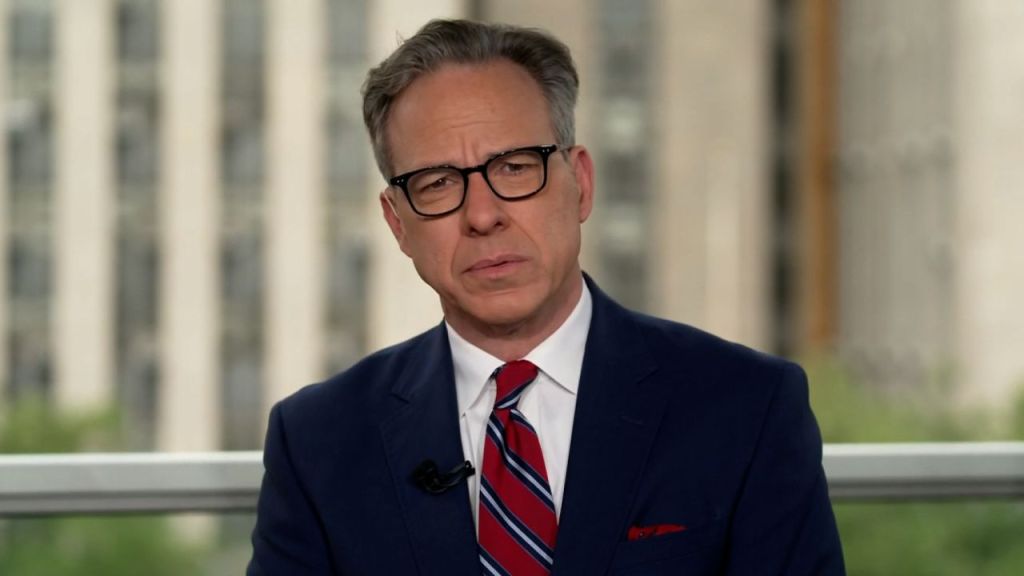
AuthorJake Tapper, Alex Thompson

Narrated By:  Jake Tapper

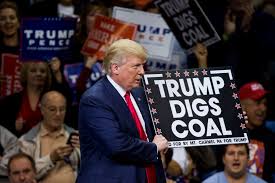
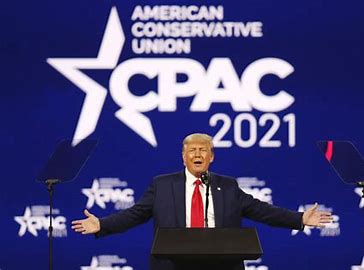
“Original Sin” is a hard-hitting expose by two tough minded reporters that convincingly explain President Biden did not have the cognitive ability to be America’s President in the last two years of his Presidency. This is a particularly hard pill to swallow because the current President of the United States is old while being at the opposite end of the political spectrum. At 74, this book reviewer is old. Age undoubtedly has an impact on this reviewer’s cognitive abilities and the cogency of what he thinks and writes. President Trump is 79 years old. The difference is that what a critic writes means nothing in respect to governance of the United States and the impact it has on American citizens and world events.

Trump’s decisions and actions have had great impact on U.S. relationship with other countries, American public policy, and the economic future of Americans.

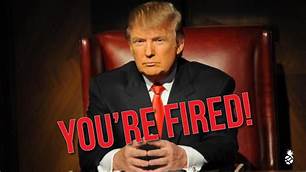
Trump has directed the firing of thousands of government employees. Because of Trump’s authoritarian characteristics, he surrounds himself with sycophants who are more interested in pleasing him than managing the government’s responsibility for America’s welfare and role in the world. Authoritarianism is untrue of Biden who throughout his public career has been a consensus builder, not an autocrat. This is not to suggest Biden is not fundamentally wrong in not immediately supporting an alternative candidate for the Presidency. The authors of “Original Sin” clearly explain Biden fails America by waffling on his candidacy for a second term.

Old age is a risk for every manager of other people’s lives and opportunities.

Biden is not at fault for getting old but people who worked with him are guilty of negligence in their service to the American people. Tapper and Thompson offer numerous examples of Biden’s intellectual decline. The importance of their assessment of Biden’s failing capabilities is a warning to all managers of other people’s lives, employment, and family responsibilities. Age is a life circumstance that affects every human being. One who is losing their cognitive ability cannot see it in themselves. It is the responsibility of others to help older people relinquish responsibility for those things they can no longer handle.

Relinquishment by a man or woman who has great responsibility is a hard thing to accept. Age effects people in different ways. The catch 22 is that loss of cognitive ability is unseen by the person who loses it. It is the responsibility of those who rely on one who is losing their reasoning ability to manage the circumstance of that decline.

Putting politics of government aside, President Trump is old. The concern one has is the risk of relying on those who work for Trump, like many who worked for Biden, may see loyalty as more important than the public interest of America. Age is an existential risk that can only be managed by the checks and balances of others which is why America’s government has survived and prospered despite good and ethically or morally corrupt Presidents.

America will survive Trump but it will take time to reset America’s relationship with the world. America has had good and bad Presidents in both political parties but its foundation of checks and balances have kept it on course for the betterment of society. It is nations with leaders that have no checks and balances that threaten social and economic equality.

ALEXANDER HAMILTON

It is interesting to be reminded of the danger of a strong executive branch and the consequence of rule by an authoritarian President. Trump shows loyalty to his beliefs, rather than competence, as the primary qualification for appointment to America’s federal government bureaucracy.

Books of Interest
 Website: chetyarbrough.blog

Alexander Hamilton

Author: Ron Chernow

Narrated By: Scott Brick

Ron Chernow (Author, biographer of Alexander Hamilton, George Washington, Ulysses Grant, and Mark Twain.)

Though this critic did not care for Chernow’s biography of Washington, his examination of Alexander Hamilton is of some value. Chernow’s attention to detail is impressive. Considering the detail of Chernow’s biographies, it is quite an achievement for Chernow to have had the time to fully research and write histories of one, let alone four, important American’ leaders and influencers.

Traditionally, Alexander Hamilton’s father has been identified as James A. Hamilton, a largely unsuccessful Scottish trader in the British West Indies (approximately 1,000 miles from the American’ continent–made up of the islands of Cuba, Jamaica, and the Lesser Antilles.)

However, Chernow suggests James Hamilton may not have been the father of Alexander because his mother, Rachel Faucette, may have had sexual relations with other men. Ms. Faucette had become James’ lover while being married to Johann Lavien. Faucette had become unhappy and left Lavien in 1750 to take up with James Hamilton. Lavien had Faucette imprisoned for adultery. Lavien eventually divorces Faucette in 1759.

Chernow suggests Faucette, at some point, may have had an affair with Thomas Stevens, a successful merchant and landlord, while living with James Hamilton.

Chernow’s evidence is primarily from reports of Alexander’s close physical appearance to a son of Thomas Stevens. These two young men, Alexander and Thomas Steven’s son, Edward, were about a year apart in age with Edward being the older. Alexander and Edward became close friends, and Thomas Stevens played an important role in Alexander’s life when his mother died. Stevens took Hamilton into his household on St. Croix. Alexander became part of the Stevens’ family.

In Hamilton’s time with the Stevens family, he became educated by reading books and being employed in the mercantile trades of the West Indies.

By any measure, whether Alexander is the son of Stevens or Hamilton makes little difference. By definition, Alexander’s paternity is illegitimate. One asks oneself–so what? Alexander’s genetic inheritance from Faucette and either father leads him to become one of the most important historical influences in the creation of the American Constitution.

Hamilton arrives in New York City in 1772. Hamilton is only 17. The American Constitution is adopted, signed and ratified on September 17, 1787, and implemented on March 4, 1789.

Hamilton’s influence as a representative of New York is to create a centralized government with taxation authority.

This national government is to have the right to enforce national laws that apply to all citizens according to enumerated powers of a federal government under the direction of a President and Congress elected by American citizens. Chernow notes that George Clinton, the governor of New York, is opposed to the strengthening of the federal government because of his interest in maintaining his power as Governor of New York. Hamilton is one of the three representatives of New York at the convention, two of which were opposed to strengthening the federal government.

Chernow explains how the convention succeeded in strengthening the federal government.

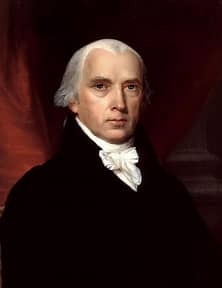
The two framers that are shown to have the greatest impact on the draft of the Constitution are Alexander Hamilton and James Madison. Chernow explains Hamilton pushed for a strong centralized government with broad powers to tax, regulate commerce, and enforce laws. Madison supports a strong federal government but argues for states’ rights and strict limits on federal authority. Hamilton wishes for broad flexibility for the federal government in the interpretation of implied powers while Madison insists on an explicit statement of the powers of the federal government to limit its implied powers. Hamilton looks to America as an industrializing nation that should be supported by a national bank with federal support for infrastructure improvements while Madison sees America as the agrarian breadbasket for the world with limited banking and industrial’ support by the federal government. Hamilton believes in rule by an educated elite while Madison is concerned about concentration of power in an elitist aristocracy. In the end, Madison takes on the role as the principal author of the Constitution which is intended to limit Hamilton’s expansive interpretation of federal government control of State governance.

It is interesting to be reminded of the danger of a strong executive branch and the consequence of rule by an authoritarian President.

Trump shows loyalty to his beliefs, rather than competence, as the primary qualification for appointment to America’s federal government bureaucracy. Chernow successfully reminds listener/readers of the history of early American government creation, but “Hamilton” is not a page turner like his biography of Mark Twain.

DANGER WILL ROBINSON

Trump’s push to hugely increase government debt at the expense of the poor and middle class, along with a tariff war, look to some like paths toward an economic Armageddon.

Books of Interest
 Website: chetyarbrough.blog

On Tyranny (Twenty Lessons from the Twentieth Century)

Author: Timothy Snyder

Narrated By: Timothy Snyder

Timothy Snyder (Author, graduated from Brown University with a degree in history and political science, received a Doctor of Philosophy in modern history from the University of Oxford.)

“On Tyranny” makes one research Timothy Snyder’s education because of his allusion to the rise of Hitler and America’s rising authoritarianism in the 21st century. His short book “On Tyranny” is disconcerting. He infers Trump’s presidency is an early sign of American democracy’s deterioration. He recounts the rise of German complacency when Hitler came to power and Nazi’ support for victimization of Jews and invasion of Poland are the beginning of a plan to reorganize spheres of influence in Europe.

Snyder’s observation is undoubtedly to create a sense of moral urgency on the part of American listener/readers to do more than just observe what is happening in America. Not that it is about Jewish discrimination but about American government rounding up and deporting alleged illegal immigrants without due process and sending them to prisons in other countries. Snyder is a scholar who specialized in Eastern European totalitarianism which suggests he knows something about the precursors of authoritarianism.

It seems the comparison of Trump to Hitler is hyperbolic when one considers the dire financial condition of Germany in the late 1920s. However, Trump’s push to hugely increase government debt at the expense of the poor and middle class, along with a tariff war, look to some like paths toward an economic Armageddon. If the economy falters, would America fall into Germany’s past? One doubts that will happen, but with a President who believes his own lies and Americans who accept them gives listener/readers of “On Tyranny” a chill. The power of Snyder’s argument gains some credibility.

It seems with the history of the United States, federal government checks and balances, and the limited tenure of elected Presidents, a Nazification of America seems unlikely. However, the danger is there because Trump has strong support from his party and many Americans who voted for him who choose to ignore his lies.

SUPREME COURT

To Leah Litman, Trump’s election seems a setback but not a reversal of the ideal of balancing equal rights with private interests. As Alexander Pope wrote in his poem, in the 18th century “Hope springs eternal in the human breast”.

Books of Interest
 Website: chetyarbrough.blog

Lawless (How the Supreme Court Runs Conservative Grievance, Fringe Theories, and Bad Vibes)

Author: Leah Litman

Narrated By:  Leah Litman

Leah Litman (Author, BA in Chemistry & Chemical Biology, constitutional law scholar with Doctorate from University of Michigan Law School.)

One doubts Leah Litman would suggest there are no biological differences between men and women considering her education as a science major and legal scholar. As a science major, she knows there are chromosomal, hormonal, physical, and reproductive system differences between the sexes. However, Litman is spot on in arguing women do not have equal rights with men just as all races and ethnicities do not in the ideals of American Democracy. Litman argues that legally, equality is not being enforced in America today and is being diminished by today’s Supreme Court of the United States.

American Supreme Court

Litman persuasively argues today’s Supreme Court has eroded women’s rights by supporting legal theories that are ideologically promoted by political conservatives but not by precedents set by an earlier Supreme Court. Today’s majority at the Supreme Court has succumbed to the influence of conservative theories about the sexes rather than precedents set by an earlier Supreme Court.

It is not that the sexes are not different but that they deserve equal treatment under the law.

The point made by Litman is that the Supreme Court has found that in “all forms of discrimination”, equality of opportunity is mandated by the 14th amendment which provides equal protection under the law to all citizens with assurance that no person should be deprived of life, liberty, or property without due process. Further, the Civil Rights Act of 1964 prohibits discrimination based on race, color, religion, sex, or national origin in employment, education, and public accommodation. Previously settled law by the Supreme Court is being ignored in reversing Roe v. Wade, criminalizing same sex intimacy and marriage, and denying equal rights to the LGBTQ community.

What Litman is pointing to is the politicalization of the Supreme Court.

One might argue the Court has always been a political body. America’s history of discrimination has been reinforced and attacked in different eras of the Court. As the Turkish saying, “A fish rots from the head down”, today’s Justices of the Supreme Court are reversing precedents set in former rulings. America elects a President every four years. Even though Supreme Court justices are appointed for a lifetime, they decide to retire at some point in their careers and are replaced by recommendations of a current President with acceptance or rejection by Congress. If a conservative is in the office of the Presidency, then the recommendation will be based on candidates who reinforce a President’s political leaning. The same, of course, is true for a more liberal President.

Litman infers a politicalization of the Supreme Court lies at the feet of those who choose to vote, promote, and support candidates of their choice.

America is at a conservative revisionist point in the history of the Court with Donald Trump’s election. America has only itself to blame or praise for that revisionism. The obvious leaning of Litman is liberal in that she strongly believes in equal rights for all Americans. Her plea is for Americans to wake up to the importance of voting, promoting, and supporting candidates for public office.

American Democracy remains the best form of government despite wavering on balancing equal rights and private interests.

A perfect society will balance equal rights with private interests. America is not there, but it has a greater possibility of getting there than any other form of governance. To Leah Litman, Trump’s election seems a setback but not a reversal of the ideal of balancing equal rights with private interests. As Alexander Pope wrote in his poem, in the 18th century “Hope springs eternal in the human breast”.

PROJECT 2025

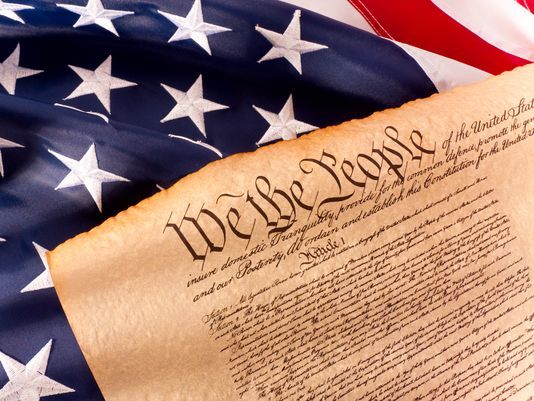
Only the Constitution of the United States stands between Trump’s authoritarianism and what has made America one of the wealthiest countries in the world.

Books of Interest
 Website: chetyarbrough.blog

The Project (How Project 2025 Is Reshaping America)

By: David A. Graham

Narrated By: Ari Fliakos

David A. Graham (Author, journalist, staff writer at The Atlantic.)

Graham has taken the time to dissect the policies proposed by the Heritage Foundation’s support and creation of Project 2025. Project 2025 is a political treatise that seems to outline many of the policies and objectives of the Trump administration.

As Graham notes, even though Trump is unlikely to have read Project 2025, its content seems to outline much of what Trump has done or is trying to do in his Presidency.

A priority in Project 2025 is downsizing the federal government. Interestingly, government employee firings began as soon as Trump entered the oval office. With Trump’s appointment of Elon Musk as the leader of DOGE (the Department of Government Efficiency) over 200,000 federal workers have been discharged. An estimated 10,000 employees were discharged from the Department of Health and Human Services. If all of these firings were to be permanent, an estimated $1.17 billion to $1.26 billion would be saved per year. With 2 million federal employees, less than 1 percent of the payroll cost of government has been SAVED.

Three things come to mind with the 1 percent cost reduction in government employee payroll.

One, is the effect of a job lost to a family who depends on gainful employment. Two, what public services are lost as a result of 2oo,000 fired government employees. And finally, what value is there to the public in reducing government payroll cost by less than 1 percent?

Of course, some will say that misses the point of the symbolic value of reducing the cost of government.

After all, America is founded on capitalism not socialist welfare. Yes and no. Yes, we are capitalists. No, we benefit from government employees who are gainfully employed because they buy things with the money they make while providing service to the public. Is the risk of unemployment in America worth the cost of some human inefficiency?

Project 2025 recommends tax system overhaul with the implementation of a flat income tax.

Trump has reduced jobs in the Department of the IRS. One should remind oneself that the present tax system takes the same maximum amount of money per year out of a family’s income for social security whether they make a million dollars per year or minimum wage. The social security tax rate is 6.2% of up to $176,100 of income per year. After one who is making more than $176,100, no further social security tax is taken. Americans pay that 6.2% whether they make minimum wage or millions of dollars per year. There is something wrong with that picture. Tax reform is needed in America, but the tax reform Trump is interested in is for rich capitalists, not minimum wage earners.

Trump wants to abolish the IRS and finance the government with tariffs and a sales tax.

He wants to have a national sales tax of 23% or roughly 30 cents per dollar spent. That tax will be a burden to the poor but nothing to the rich. Trump perceives an equal benefit to minimum wage workers because they would not have to pay taxes on tips, overtime, and social security. Is that tax benefit equal to corporate tax reductions of 21% to 20% and a reduced rate of 15% for U.S. manufacturers. More jobs may or may not be created, but who gains the most benefit?

Trump infers corporation owners and managers would not put tax savings in their pockets but would create more jobs.

Two entitlement programs Trump believes will be unnecessary as a result of his tax changes are Medicare and Medicaid. Trump supporters believe economic growth will offset the negative impact that his tax reform plan will have on the poor. Does that make it unnecessary to have Medicare or Medicaid for the poor?

Trump is making a mockery of the Constitution by indiscriminately arresting and deporting anyone who cannot prove their status as a legal resident of America.

Project 2025 insists on immigration enforcement with improved border security and tighter immigration policies. Trump endorses that plan, but it is a job for Congress, not an autocratic President. He is willing to pay immigrants with American tax dollars for them to return to their countries of birth. Whose money is it that Trump is choosing to use?

Trump believes global warming is just a seasonal event in the history of earth.

Project 2025 recommends rolling back environmental regulations and endorsing fossil fuels over renewable energy. Trump endorses that plan by rolling back environmental regulations because he believes global warming is a fiction. Science is a fiction to President Trump.

Project 2025 recommends strengthening the executive branch of government and decreasing the rolls of Congress and the courts.

Project 2025 recommends strengthening the executive branch of government and decreasing the rolls of Congress and the courts that are the basis upon which separation of powers were written into the Constitution. Trump is ignoring fundamental tenants of the Constitution like Due Process of Law in the deportation of immigrants.

Project 2025 recommends criminalizing pornography, removing legal protections for anti-LGBT discrimination, and ending diversity programs that drive for equality of all Americans. Trump is using the office of the Presidency to punish elite colleges that have DEI programs meant to address American social inequality.

Trump believes what he believes and acts on those beliefs. His sexual picadilloes are ok but pornography is not. The author shows Trump has support for his beliefs in Project 2025. His support is equally apparent in the free vote of a majority who voted for him in the last election. Only the Constitution of the United States stands between Trump’s authoritarianism and what has made America one of the wealthiest countries in the world.

MODERATION

Unless homelessness is addressed with affordable housing, America’s future looks bleak. A land of have and have-nots will grow to crush American prosperity.

Books of Interest
 Website: chetyarbrough.blog

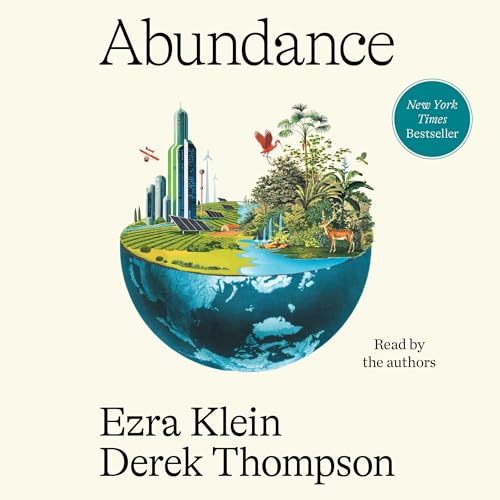
Abundance 

By: Ezra Klein, Derek Thompson

Narrated by: The Authors

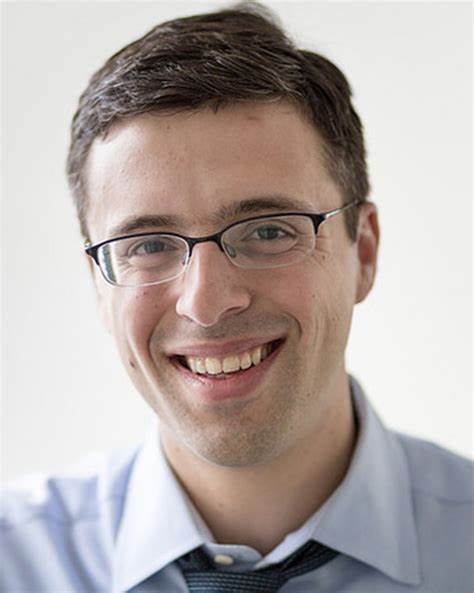
These two young Americans offer an insightful view of politics and American government in the 21st century.

Klein or Thompson could have voted for either Trump or Harris in America’s last election. Their book argues American government is both a boon and bane for citizen “Abundance” in the 21st century. They note America has contradictory economic policies that have created great abundance among Americans while exacerbating inequality. Evidence for their opinion is growing homelessness, an immigration crisis, loss of manufacturing jobs, and government’s failure to creatively adjust public policies to provide solutions.

Those who have shared in the abundance of America have voted for candidates to preserve their privileges.

The authors note homelessness is a function of affordable housing that is denied by government policies that regulate zoning and construction requirements. Government policies make affordable housing too costly to build and impossible to locate because of zoning restrictions. The number of people living on the street is a self-inflicted American tragedy. Some of the homeless are young, some are old, some have mental or physical problems, and others are victims of drugs or their own weaknesses. What they have in common is unaffordable housing.

Historically, immigration has been a great boon to American economic growth.

Klien and Thompson note restrictive immigration policies have created obstacles for workers needed for manufacturing in key industries like agriculture, auto industry assembly, housing construction, and clean energy infrastructure. Rather than wasting money on building walls and deporting workers, the authors advocate immigration reform that meets the needs of American business. One can imply the authors meaning is that to “Make America Great Again” requires immigrants willing to work in agricultural and manufacturing jobs. The end of the baby boom requires help from immigrants to meet the needs of increased manufacturing and construction in the United States.

Some believe what Trump is doing is good for the American economy in the long run.

The criticism is that in the short run, the economy may collapse. Tariffs being used as a ham-fisted way of negotiating fair international trade is a fool’s errand. America needs labor and material in the short run to achieve equal and greater prosperity than it had in the 1970s. Added manufacturing will aid American prosperity, but it will be surpassed in the long run by automation. It is the automation race America needs to win or compete with to remain a world leader. Competing in that race depends on education, and scientific research. The irony is that Trump is firing government employees who have responsibility for public education, research, and funding that have been the engines of America’s prosperity.

The government employees discharged by the Trump administration to solely reduce costs is short sighted.

In the 1980s, 60% of basic research in the U.S. was funded by the government. In 2022 that funding dropped to 40%. Advances in semiconductors, global positions systems, biotechnology, and aeronautics were government-funded discoveries in the 1980s. American government-funded scientific research gave America the internet, GPS technology, mass production of penicillin, Space exploration, human genome project discoveries, and renewable energy innovations. The Department of Health and Human Services has lost 20,000 employees, the Department of Education 1,300, the National Oceanic and Atmospheric Administration 800, and the National Institutes of Health 1,200. One wonders how many of these employees may have been on the edge of scientific discoveries that could change the world.

The truth of “Abundance” is that America has caused many negative ecological impacts and aggravated the gap between rich and poor.

Klein and Thompson have written a provocative book. However, the truth of “Abundance” in America has caused many negative ecological impacts and aggravated the gap between rich and poor. Looking only to abundance does not address either social inequality or the environment. The NIMBY (not in my back yard) resistance to affordable housing aggravates inequality and increases homelessness. Unquestionably, higher density housing impacts the environment.

Klein and Thompson fail to address the increased power of corporations in America.

The 2010 Citizens United v. Federal Election Commission gave corporations the power to spend unlimited amounts of money on political campaigns. The influence of corporations on elections has disproportionate power in the election of government policy makers. That decision by the Court is a distortion of one person, one voter’s influence on public policy.

Aristotle emphasized the importance of “All things in moderation”. NIMBY communities must open their minds and hearts to homelessness and moderate their resistance to neighborhood accommodation. Government agencies must supervise and service higher density housing impacts wherever they are built and after they are completed.

Unless homelessness is addressed with affordable housing, America’s future looks bleak. A land of have and have-nots will grow to crush American prosperity.

SERVICE & PROFIT

Government is not a business for profit and should not be solely measured by its cost. America will survive the catastrophic mistakes being made by President Trump but American citizens, and the welfare of the world will suffer for years to come.

Books of Interest
 Website: chetyarbrough.blog

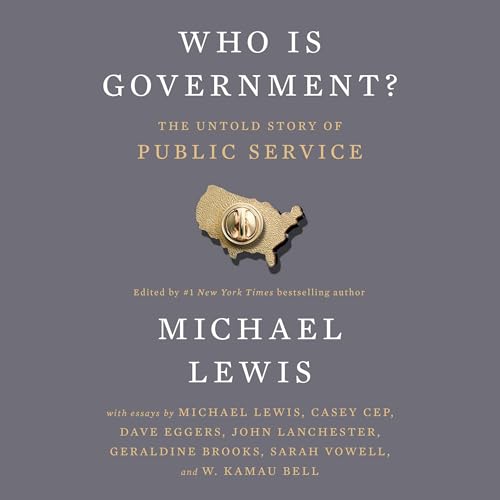
Who is Government (The Untold Story of Public Service)

By: Michael Lewis, Casey Cep, Dave Eggers, John Lanchester, Geraldine Brooks, Sarah Vowell, and Kamau Bell

Edited By: Michael Lewis

The stories of these writers are a tribute to those who have chosen careers in American government. Having personally earned a master’s degree in public administration, worked as a local government manager, then as a manager of a private business division, and finally, as a personal business owner, I have an opinion about President Trump. My experience is based on three different types of employment. All were rewarding experiences but in fundamentally different ways.

The writers of “Who is Government” show how ignorant business creators and managers like Donald Trump and Elon Musk are in discounting the contribution of employees of government organizations. Private corporations do not survive without profit to its owners. Public organizations do not survive without service to the public.

Profit is simple to measure. Public service is measurable but more abstract and difficult to quantify.

One can choose, like Musk did with Twitter, to reduce costs by firing employees. That may improve profitability but at a cost that may hurt or destroy the future of a business. In the case of Twitter, the company lost much of their advertising revenue because an unsupervised public forum could spread false and defamatory information that embarrasses advertisers who were protected by Twitter’ employees that were fired. No analysis was done by Musk about Twitter information’ controls provided by employees. The new entity, “X”, seems to have assuaged some advertisers’ concerns because they have started to use Musk’s new company. The point is that if Musk had taken more time to evaluate what fired employees were doing, he may have retained many of the advertisers who left the forum.

Trump’s employment of Musk to decimate the government employee workforce is following the same foolish path that was taken with Twitter.

No analysis of employee contributions is made. The goal is only to reduce government’ cost regardless of employee’ contribution to public need or service. The consequences have likely reduced health and welfare of American citizens; not to mention harm done to incomes of thousands of government employees’ families.

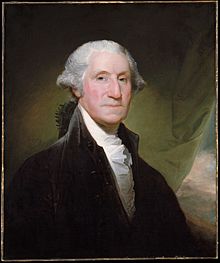
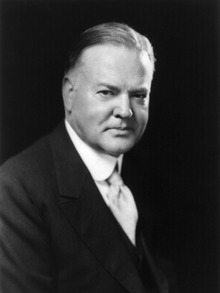
With exceptions of George Washington, Harry Truman, Carter, and the two Bush presidents, the worst former businessman that became President was Herbert Hoover who served as President before the greatest depression in America’s history. With Trump as President, one has to wonder whether he is leading America and the world toward its second great depression.

HERBERT HOOVER (31ST PRESIDENT OF THE U.S.)

“Who is Government” illustrates how government employees have contributed to the health and welfare of America. They are unknown and viewed by people like Trump and Musk as just a cost, without benefit to the public. How many science, medical, veteran, and welfare services are being decimated by their narrow vision of government management?

Government is not a business for profit and should not be solely measured by its cost. America will survive the catastrophic mistakes being made by President Trump but American citizens, and the welfare of the world will suffer for years to come.

GOVERNMENT LIFE CYCLE

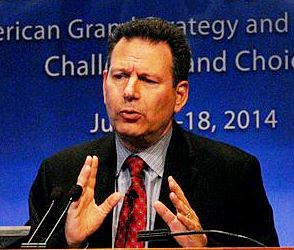
Robert Kaplan’s inference is that all nation-state governments are being challenged by an increasingly polarized society. The question is whether Trump is a symptom or cure for the decline of America.

Books of Interest
 Website: chetyarbrough.blog

Waste Land (A World of Permanent Crises)

By: Robert Kaplan

Narrated By: Robert Petkoff

Robert D. Kaplan (Author, writer for The Atlantic, Washinton Post, New York Times, The New Republic, Foreign Affairs, and the Wall Street Journal)

Robert Kaplan’s book makes one pessimistic about the future of democratic government. The wars in Gaza and Ukraine, along with the re-election of Donald Trump, and the economic retrenchment of Xi in China reinforce some of the themes of Kaplan’s “Waste Land”. One who reads or hears national news understands why Kaplan argues there is a growing decline in Russia’s, China’s and America’s governments. He argues the cause of that decline is increased world interconnectedness, and rising government instability. His biggest concern is what he believes is a nascent parallel to the rise of Naziism.

The advent of the internet has been a mixed blessing because it is used to spread false information as well as the truth.

The consequence has been to make societies more polarized. An example is a widespread opinion by Trump appointees that the rise in the number of government employees is wasting taxpayer dollars for public education, science research, foreign aid, veterans’ affairs, the national park service and the IRS. (For example, an estimated 76,000 employees–16% of the work force has been discharged from Veterans Affairs. The VA provides healthcare services for eligible veterans, handles disability compensation, pensions, education assistance, like the GI bill, and home loans to citizens who have honorably served America.) These reductions in workforce are not based on any analysis of work performance but solely to reduce the cost of government. Trump, like Xi and Putin, believe Thucydides’ observation that “The strong do what they can and the weak suffer what they must”.

Trump’s firings are being done by an appointed agent of the President who decimated the work force of Twitter in the same way he is arbitrarily discharging American government employees.

Kaplan argues today’s political atmosphere in America, Russia, and China are similar to the societal condition of Germany before the rise of Hitler. He points to the fragility of authoritarians and the rise of societal polarization in today’s world. He compares economic instability, social discontent, and political extremism of the Weimar Republic to what he implies is a growing condition in both Western democracies and Eastern autocracies. The last chapters of Kaplan’s book focus on urbanization of the world and its consequent polarization of society that is deconstructed governance in a way that reminds him of the Weimar Republic’s deterioration. He infers Trump’s re-election, the dismantling of the American government, and America’s social disruption is similar to what happened in Germany in the early 1930s.

An example of the disruption of which Kaplan writes is the Venezuela immigrants who were flown to El Salvador and frog-walked to an El Salvador prison without adjudication by America’s judicial system.

Kaplan’s argument is that President Trump is destabilizing the American government by violating the Constitution of the United States.

A federal judge ordered a plane full of alleged immigrants (identified as gang members) to be returned to the United States. The plane was in the air when the President in apparent defiance of a direct court order chose to not have the plane turned around. The deported were filmed as they were frog-walked into a foreign jail while being denied any hearing or adjudication of their alleged criminality. The President of the United States appears to have ignored a Federal Court, the Third Branch of American government, designed to balance arbitrary actions of either a President or Congress for denying due process of law.

America re-elected Trump despite his conviction on 34 counts of falsifying business records for paying “hush money” to Stormy Daniels when first elected in 2016.

Though Trump’s conviction does not rise to the level of Hitler’s high treason in the failed Beer Hall Putsch, willingness to lie under oath is a troubling characteristic for a President, let alone, any citizen of the United States. According to news reports, Trump says he did not know he had been asked to turn the plane around by a Federal Judge. One might ask why should America believe what he says?

Trump is challenging the authority of Congress and the Judiciary by taking actions without consideration of the Constitution of the United States.

This reminds one of human rights violations in the early days of Hitler’s rise in Germany. Hitler gathered sympathizers from disillusioned veterans, business leaders, the middle class, the German youth, and Far-Right Nationalists. Trump appears to have had similar support in his re-election. Trump decides to pardon all January 6, 2021, U.S. Capitol attackers. Those pardons are a diminishment of American democracy akin to Hitler’s support of Nazi sympathizers.

Attack on the Capitol on January 6, 2021–Trump pardons all attackers on 1/20/25, after being re-elected as President of the United States.

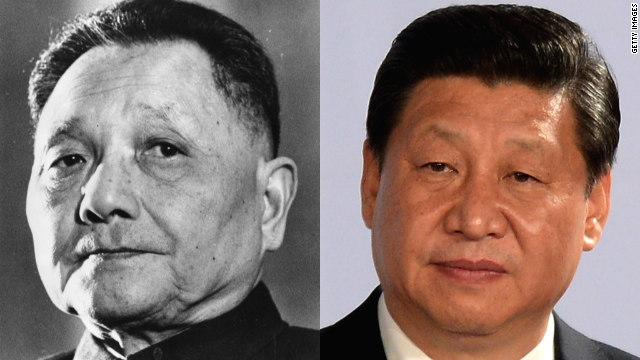
Deng led a transformative change in China’s economy after Mao’s death. With a pragmatic judgement that “It doesn’t matter whether a cat is black or white as long as it catches mice”

In the last third of Kaplan’s book, the incredible success of China under Deng Xiaoping is addressed. Kaplan explains Deng became the leader of China between 1978 and 1989. Though Deng was a contemporary leader during the Mao administration, Deng led a transformative change in China’s economy after Mao’s death. With a pragmatic judgement that “It doesn’t matter whether a cat is black or white as long as it catches mice” he opened China to the pursuit of personal, and individual citizen’ prosperity. The result of Deng’s pragmatism was the unprecedented economic growth and wealth of China. Much of what Deng started has been reversed by the Xi administration. In Kaplan’s opinion, the resurgence of the communist party has led to a reversal of economic growth in China. Kaplan infers a return to collectivism is a reflection of societal interconnectedness with a government-controlled internet that denies freedom of thought and action by China’s citizens.

Kaplan refers to Jane Jacobs (1916-2006) and the urbanization of America. He notes Oswald Spengler (1929-1936) recognized the implication of urbanization is government deterioration as a part of the natural lifecycle of every civilization. The point Kaplan makes is that nation-states have become like the early cities Jacobs refers to but with an interconnectedness that accelerates and shortens government lifecycles. Robert Kaplan’s inference is that all nation-state governments are being challenged by an increasingly polarized society caused by internet connectedness. The question is whether Trump is a symptom or cure for the decline of America.

A UKRAINE BOMB SHELL

Though Yovanovitch had nothing to do with Poroshenko’s defeat by Zelensky, it seems clear that her tenure as Ambassador to Ukraine set the table for a change in direction for Ukraine.

Books of Interest
 Website: chetyarbrough.blog

Lessons from the Edge (A Memoir)

By: Marie Yovanovitch

Narrated By: Marie Yovanovitch

Marie Yovanovitch (Canadian-American Author, retired senior member of the US Foreign Service.)

Marie Yovanovitch is retired from the US Foreign Service but as is widely known she was fired in the first Trump administration as US Ambassador to Ukraine in 2019. A reported reason for her firing is she is said to have resisted Trump’s effort to pressure Ukraine to investigate former Vice President Joe Biden. One suspects that is partially true, but Yovanovitch shows she was a believer in equal rights for women and a supporter of Hilliary Clinton which may be additional reasons for Trump’s action to fire her. “Lessons from the Edge” is a memoir of Yovanovitch’s career as an American diplomat.

“Lessons from the Edge” is interesting because it reveals the history of how one becomes an American diplomat and what his/her role is as a representative of America. One may wonder what qualifies one to be a diplomat when some are appointed because of political connection rather than educational accomplishment or training.

Yovanovitch became a diplomat because of her education and personal ambition. Because of her background as the daughter of a Russian born father, she chooses to take classes in Russian which leads to her eventual assignment in Ukraine. Her memoir explains how her journey began and how it ended. It is a highly personal memoir that is enlightening. However, this mild journey explodes at its end. Yovanovitch comes across as a decent person caught up in the events of history, not as a giant of diplomacy but an honest and hard-working diplomat.
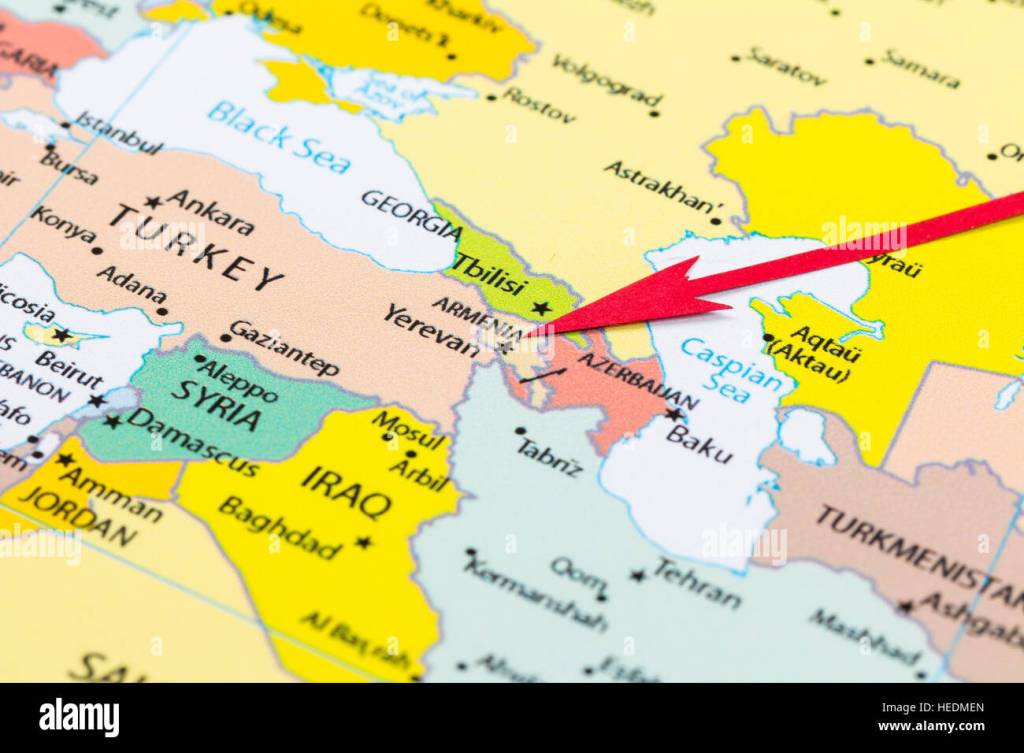
Marie Yovanovitch earned a BA in History and Russian Studies at Princeton. During her career she studied at the Pushkin Institute of Moscow and acquired a Master of Science in National Security Strategy from the National War College. Her background certainly qualified her for diplomatic posts. Her early assignments were in Africa which eventually led to Russian speaking countries like Russia, Kyrgyzstan, Armenia, and Ukraine.

Russian speaking countries.

An example of the difficulty of her job is when America wishes to maintain the American Kyrgyzstan’ Air Force base because of America’s role in Afghanistan in 2009. Kyrgyzstan offers closer logistic support for the American military.

The Kyger’ President demands an increase from a $17.4 million-dollar annual rent payment (Yovanovich indicated the rent payment was $2,000,000/yr) to $200,000,000 per year for the continuation of Kyrgyzstan’s American military base. Yovanovich implies Kyrgyzstan’s President, Mr. Bakiyev, demand for higher rent would be to line his pockets with stolen revenue, not help the citizens of Kyrgyzstan.

A final settlement increased annual rent to $60 million per year with additional payments of $37 million and $30 million for new aircraft slots and additional land for location of a new American navigation system.

Kyrgyzstan’s American Air Force Base.

Many questions come to mind in listening/reading Yovanovitch’s book. How important are the presence of American military bases around the world? What is the difference between isolationism and internationalism? Should America remain isolated from other nations or engage and collaborate with other countries of the world? Where is the line to be drawn between American influence and the cost of that influence? This last question is answered in the last chapters of “Lessons from the Edge”.

Yovanovich takes on the complicated role of American Ambassador to Armenia from 2008 to 2011.

Armenia and Azerbaijan are a source of political and territorial tension. There is a dispute over a region called Nagorno-Karabakh that is under the control of Armenia with a majority Armenian population. Turkey supports Azerbaijan while Armenia has a close relationship with Russia. Armenia and Turkey’s relationship is strained because of a WWI Armenian Genocide perpetrated by Turkey. An estimated 600,000 to 1.5 million Armenians were killed between 1915 and 1917. Turkey refuses to identify it as genocide which aggravates Turkey’s relationship with Armenia. Russia has a military base in Armenia and has tried to mediate the Nagorno-Karabakh conflict without much success. Because of energy projects and trade relations, Russia has managed a balanced relationship with Azerbaijan.

Yovanovitch decides to return to the U.S. because of her aging mother and an offer to take the role of Principal Deputy Assistant Secretary for the Bureau of European and Eurasian Affairs. However, as Ukraine becomes embroiled in a conflict with Russia and her previous assignment and knowledge of Ukraine, she returns as America’s Ambassador. Her mother’s decision to accompany her made the opportunity worth taking.

When Ukraine became independent of the U.S.S.R. in 1991, its transition to a market economy was marked by widespread corruption in the same way as alleged in Russia.

The assets of the country fell into the hands of Ukraine’s leaders who became wealthy oligarchs at the expense of the general population. Election to the leadership of Ukraine gave Presidents like Viktor Yanukovych, who served from 2010 to 2014, license to embezzle state funds. Compounding that corruption were Ukrainian bank owners who were equally corrupt. The fifth president of Ukraine, Petro Poroshenko faces allegations of corruption with his ownership of the International Investment Bank (IIB).

Rudy Giuliani (American politician, former NY mayor, former U.S. Associate Attorney General–now a disbarred lawyer.)

As if Rudy Giuliani needs no further damage to his reputation than his lies about election fraud, Yovanovitch reveals his role in discrediting her reputation with false accusations about badmouthing Trump as the new President of the United States. Judging from Yovanovitch’s book, Trump is unlikely to have been someone she admired. However, as an experienced diplomat, it is inconceivable that she would have undermined Trump or any U.S. President’s reputation. Trump ordered Yovanovitch’s removal. She is recalled in May 2019.

Volodymyr Zelensky became the President of Ukraine in May of 2019.

Zelensky soundly defeated the corrupt Vasily Poroshenko with 73% of the vote.

Though Yovanovitch had nothing to do with Poroshenko’s defeat by Zelensky, it seems clear that her tenure as Ambassador to Ukraine set the table for a change in direction for Ukraine. This is a very personal memoir of Yovanovitch’s career that is somewhat marred by a plaintive melancholy about life and an aging mother but “Lessons from the Edge” is highly informative about what it takes to be an American diplomat.

America makes a mistake if it chooses to isolate itself from allied countries that have similar economic and political aspirations. It may be time to reset America’s international relations, but isolation is not a rational alternative for an interdependent ecological and economic world.

BEING OPINIONATED

Trump is threatening government employees with being fired for doing their job and Congress for being the third branch of the American government.

Personal Commentary
 Website: chetyarbrough.blog

Political Grandstanding

By: Chet Yarbrough

Those who have read book reviews in this blog know some of my political beliefs. The more I read, listen to, and review books written by others, the more I know I do not know what is true and not true. We all get trapped in our own world of experience, belief, and understanding. With concern over that personal trap, this personal opinion is written.

America’s current President is a man of inherited wealth and privilege.

Trump’s popularity comes from attracting attention, impressing followers with strong public stances on issues of which he has little understanding or willingness to educate himself about. His focus is on self-aggrandizement with hyperbolic misrepresentations of facts that appeal to those wishing for definitive answers to multifaceted social issues.

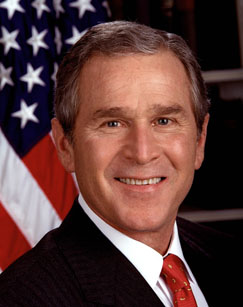
Trump is not the only elected representative or President to oversimplify issues to appeal to voters. Johnson’s war on poverty was used to justify policies that ineffectively addressed needs of the poor. Nixon’s “Southern Strategy” used coded language and policies that indirectly targeted African Americans. Reagan’s “War on Drugs” disproportionately affected minority communities and contributed to mass incarceration. George W. Bush emphasized the threat of weapons of mass destruction (WMD’s) to justify invasion of Iraq. Obama’s red line rhetoric threatened commitment to military intervention, which never happened when lethal gas was used to kill Syrian citizens. Trump’s rhetoric on immigration inferred most immigrants were criminals and a threat to national security. In all of these examples the common denominator is, at worst a lie or at best, a misrepresentation of truth to gain public support.

So, what is the difference? Trump does not care about the impact of his lies.

Image result for LIAR

Trump focuses on self-aggrandizement to promote himself as powerful and important. He is a school-yard bully who scared banks and subcontractors with the fear of handing a financially bankrupt casino back to the bank, and who threatened subcontractors’ pay who worked for him.

Now, Trump is threatening government employees with being fired for doing their job and Congress for being the third branch of the American government. In the end, Trump is threatening the American people who either did or did not vote for him.