SHAMING

Sexuality is the boon and bane of human society. The boon is human procreation. The bane is the shame visited upon human beings.

Books of Interest
 Website: chetyarbrough.blog

The Mothers

By: Brit Bennett

Narrated By: Adenrele Ojo

Brit Bennett (Author, New York Times Bestseller, graduate of Stanford University and University of Michigan.)

In one sense, “The Mothers” is about the serendipity of life. In another it is about human shaming. Brit Bennett’s book infers life’s happiness comes as much from chance as by effort. Of course, human life begins with “…Mothers” but as science explains, a part of who we are and who we become is from fathers. Bennett’s story is a view of life through the eyes of a daughter who loses her mother through suicide. The daughter’s genetic inheritance is intelligence and ambition. The daughter is born in a lower middleclass family. She lives through her high school years when her mother dies. She lives with her father and remembers her mother’s disappointment with life. Her mother’s wish for herself and daughter is to become more than what the circumstances of life seem to offer.

The main female characters of “The Mothers” are the daughter, Nadia Turner and her friend, Aubrey Evans.

The main male character is Luke Sheppard, a high school football athlete who is seriously injured in a sports accident. He is 21, living at home with his father who is a minister and his mother who manages the household and helps her husband with the ministry. Nadia is 17 and in high school. She is academically near the top of her class. Luke becomes Nadia’s boyfriend. Nadia becomes pregnant. Aubrey Evans becomes a close friend sometime after Nadia’s abortion. It is Nadia’s decision to have the abortion. Luke is ambivalent about Nadia’s decision but, with the help of Luke’s mother, $600 is given to Nadia for the abortion.

Luke leaves the decision to Nadia on the abortion but limits his involvement to giving her the required $600 fee.

Luke regrets his behavior as the father of an unborn child and his absence during and after the abortion. Nadia goes on to college at the University of Michigan after having become friends with Aubrey in high school. Nadia and Aubrey become close friends. While Nadia is going to college and seeing the world, Luke and Aubrey meet and become a couple. They eventually marry. Nadia never tells Aubrey of her relationship with Luke or the abortion.

Once listeners become acquainted with the three main characters, human shaming takes over the story.

Every major and minor character shames themselves and others by their acts or ignorance. Both mothers and fathers are guilty, but the author infers mothers are the most shaming. Mothers shame children rather than try to understand and guide their human nature.

Human sexuality dominates lives whether male or female, young, middle aged, or old.

The story is well written, but its theme misses the mark. Mothers and fathers (all humans) are equally blame-worthy when it comes to shaming. Sexuality is the boon and bane of human society. The boon is human procreation. The bane is the shame visited upon human beings. Bennett’s characters show there is plenty of shame to go around. Shaming is popular which explains why Bennett’s book became a bestseller.

TIME TRAVEL

The social implications of time travel are revealed in Bradley’s clever, adventurous, sometimes humorous, and apocryphal story.

Books of Interest
 Website: chetyarbrough.blog

“The Ministry of Time” 

By: Kaliane Bradley

Narrated By: George Weightman, Katie Leung

Kaliane Bradley (Author)

Kaliane Bradley imaginatively writes about the social complications that arise if time travel were found possible in the 21st century. The main characters are an unnamed narrator and a 19th century British Commander named Graham Gore. A key to understanding “The Ministry of Time” is that the narrator is unnamed.

At times, “The Ministry of Time” is difficult to understand because of a perspective that mystifies listener/readers who are not raised in a British culture. However, on balance, comedy, tragedy, romance, and history are universal experiences that pull one into Bradley’s imaginative story.

The story begins with the final interview of a person who is hired by “The Ministry of Time” to become a councilor to one of several characters drawn out of time into the 21st century.

This interviewee is a Cambodian born British citizen. The choice of the person’s birth country is clever for several reasons. One, the interviewee, her mother, and grandfather are born in a country that experienced the killing fields of Cambodia’s Pol Pot. Two, the interviewee is an attractive non-white woman who knows what it is like to work in a country largely controlled by white men. And three, she represents a libertine western world’ lifestyle.

The main character of the story, the interviewee, is to become one of several councilors to stay with individuals who are rescued from assured death in past centuries.

There is a limit to the number of people that can be rescued because of the design of the time-travel’ portal. That limit generates an interest in a time traveler who wishes to control who can use the portal. A surprise is to find who that time traveler is and why he/she is determined to control its use.

The social implications of time travel are revealed in Bradley’s clever, adventurous, sometimes humorous, and apocryphal story.

Along the way, reader/listeners are exposed to the complexity of human beings, the historic recurrence of discrimination, the consequence of despoilation of the world’s environment, and the power of attraction that leads to love, and sometimes tragedy.

Who’s Right?

There are many ways of understanding Andrew Boryga’s book, “Victim”. It is an eye-opening examination of minority life in America.

Books of Interest
 Website: chetyarbrough.blog

“Victim” 

By: Andrew Boryga

Narrated by: Anthony Rey Perez

Andrew Boryga (Author, Bronx resident, Cornell graduate, freelance writer for the NYT, The New Yorker, and The Atlantic.)

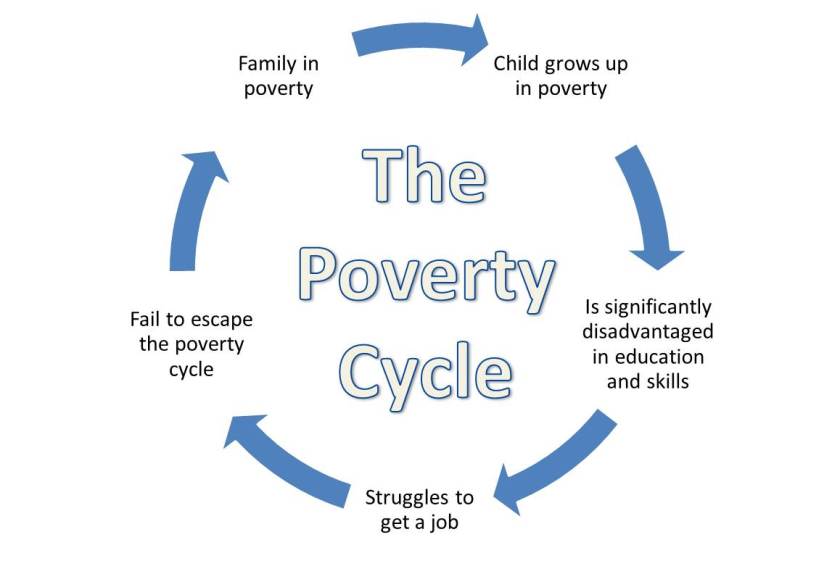
There are many ways of understanding Andrew Boryga’s book, “Victim”. It is an eye-opening examination of minority life in America. Being poor, whether a minority or a white American, is a struggle for identity. A white person in America has immense advantage, but Boryga’s story shows how much greater the challenge is for a person of color.

The main characters of Boryga’s story are Latinos named Javier Perez, Gio and Lena. Some may argue only Javier and Gio are the most relevant but Lena, Javier’s romantic partner, is at the heart of a question of who is right in lives of inequality.

There are many reasons to appreciate Boryga’s insightful story. It gives credit to committed teachers who struggle to raise the sights of students who are challenged by poverty and hardship. Javier is a character with ambition to be more than a street hustler trying to get by in a low-income neighborhood in the Bronx. It is with the help of a single mother and a dedicated teacher that Javier pursues a better life. His father was a drug dealer, murdered in Puerto Rico. Being raised in New York by his mother, Javier visits his father when he is murdered. That experience, the strict upbringing of his mother, and a teacher at his school offer lessons of life and opportunity to Javier. With the help of his teacher, Javier becomes a college-educated’ writer who struggles to become a literary and financial success.

It seems the window of opportunity for Javier depends on his intelligence, the help of his teacher, and retrospectively, his friend, Gio.

At first reading of “Victim”, Gio appears to offer an alternative life like that which Javier’s father followed. Obviously, what happened to Javier’s father influences Javier’s choices in life. Javier tries to influence Gio to abandon the drug-mule’ road he is following. Javier fails Gio, himself, Lena, and the Latino students he teaches in his neighborhood.

Javier meets Lena in college.

Lena is Latino but comes from a more financially secure family in the Bronx with a strict father and loving mother. In contrast, Javier is being raised by his widowed mother who is barely making enough money to keep a roof over their head and food on the table. Lena is a social activist for Latino rights. Javier and Lena become lovers but from quite different economic and family backgrounds. They move in together, but their place of cohabitation is the old neighborhood in which Javier is a teacher and struggling writer.

Lena pursues her activist career with little pay and a difficult adjustment in an unsafe neighborhood in the Bronx.

She grows to feel isolated and unfulfilled in her pursuit of equal rights, both as a Latino and woman. Javier understands the neighborhood in which they live but to Lena it is too dangerous, and her job does not offer enough personal satisfaction and income for her and Javier to improve their lives. Javier ignores her concern because he understands life in the neighborhood and feels comfortable in dealing with its risks.

Javier and Lena are at a crossroads in their lives. Javier decides their crossroad has a meaning that is worthy of a story that could be published in the paper for which he works part time while teaching at the local school.

His story disingenuously describes the conflict between Lena and himself. Javier believes and writes that he would be abandoning the fight for Latino rights by leaving his neighborhood for a safer community that Lena desires. Javier does not take into consideration their common goals or the difference between a woman and a man when living in a tough neighborhood. The story he writes about their relationship and its breakup makes him famous. He is offered a higher paying job as a full-time writer. He quits teaching but the break-up is irreversible. The reason for its irreversibility is substance of the story. His story distorts the truth of why Lena leaves Javier and the neighborhood.

While Javier strives for success as a writer, Gio is arrested for drug dealing and sentenced to prison. Javier loses touch with Gio because of their different life decisions.

Earlier, Javier tries to rescue his friend Gio from the gang life of the neighborhood. Ironically, Gio saves Javier from a false understanding of what happened in his life. The mistake Javier makes with Gio is similar to the mistake he makes with Lena. Gio’s and Lena’s lives are only their own. Javier fails to appreciate their personal experiences and how they made them who they became. Gio’s life is changed by his gang and later prison experience. Lena’s life is formed by the influence of her parents and life as a middleclass woman who wishes to help her race succeed in a prejudiced world. Javier sacrifices his relationship with both Gio and Lena by not understanding their personal identities and reasons for being who they become.

Javier makes the mistake of using Lena and Gio as subjects of his stories that do not represent who they are from their personal life experiences.

However, Javier’s stories are so well written that he becomes a coveted writer by his newspaper and a book agent who wishes to represent him. The problem is that his stories are made of facts that are not truthful representations of either Lena’s or Gio’s evolved lives.

Javier is publicly exposed for his distorted stories about what it is like, and what it means to be a Latino American in a white-biased culture.

Javier’s wish to become a renowned writer is halted by a you-tube interview by an investigative reporter. He is fired by the paper who employs him. Gio tells Javier to quit feeling sorry for himself and tells him to get on with his life. Gio has overcome the trials of his imprisonment and is on the way to becoming a positive contribution to society even though it continues to be biased against his success. Javier begins to understand the importance of factual accuracy and understanding of others when writing a story purported to be the truth. One wonders if that is why the author chooses to identify “Victim” as a novel and not a report of his or anyone else’s life.

The story of “Victim” is that inequality is a fact of life but not an insurmountable obstacle to peace and prosperity for determined individuals.

LIFE’S CONSEQUENCES

Good and bad luck accompanies every life but what happens in the end comes from what we have done in the past.

Books of Interest
 Website: chetyarbrough.blog

“The Twelve Lives of Samuel Hawley” (A Novel)

By: Hannah Tinti

Narrated by: Elizabeth Wiley

Hannah Tinti (American author, magazine editor, won the Alex Award for “The Good Thief”.)

Hannah Tinti writes a story about the life of a 21st century American outlaw, Samuel Hawley. He lives a peripatetic life as a robber, former convict, and part time collector for fellow criminals. When acting as a robber, he has few scruples about acting outside the boundaries of civil society. Hawley is a meticulous and practiced gun owner who wanders through America carrying the scars of bullets and a life of violence.

The woman he marries is alleged to have drowned in an accident but is believed by a grandmother to have been murdered by Hawley.

Hawley’s daughter, Loo, doubts the truth of her maternal grandmother’s claim but is faced with reports of her mother being an excellent swimmer, unlikely to be drowned as an accident.

Tinti leads the listener/reader to a conclusion about the drowning that on the one hand seems possible but on the other inconsistent with the complicated history of an American outlaw. Hawley’s moral center is at an extreme end of societal norms but within the boundary of truth and rightness. That truth and rightness suggests he could not have drowned his wife.

The dynamics of childhood are broken when either a father or mother are missing. Each parent contributes something to a child that is different when either are absent. Single parents become both bread winner and nurturer of a child when there is an absent parent. Hawley is a criminal who loves his daughter, idolizes his lost wife, and carries on with a life into which he was born. The peripatetic life of Hawley continues after the death of his wife. Now he is faced with raising a daughter on his own. They travel across the country, never truly becoming a part of one place or another.

The daughter becomes like her father in knowledge and love of guns and their use in America.

She emulates her father’s character by choosing to be in control of what she sees as a transactional world. It is the world her father has experienced and passes on to his daughter. Tinti shows Hawley deeply loves his daughter, grieves and idolizes his lost wife, but only views life as a societal transaction.

What we do in our lives have consequences. Good and bad luck accompanies every life but what happens in the end comes from what we have done in the past. Maybe life is just a transaction.

SCHIZOPHRENIA

Being one of “The Best Minds” is of little help in coping with schizophrenia’s symptoms.

Blog: awalkingdelight

Books of Interest
 Website: chetyarbrough.blog

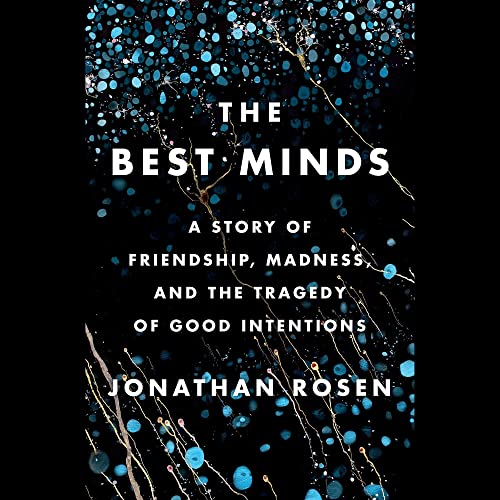
“The Best Minds” A Story of Friendship, Madness, and the Tragedy of Good Intentions

By: Jonathan Rosen

Narrated by: Jonathan Rosen

Jonathan Rosen (Author, Yale graduate–Accepted but dropped out of a PhD English program at Berkeley.)

Jonathan Rosen tells the story of his boyhood and adult friendship with Michael, a boy of his age who excels academically and professionally as a young graduate of Yale. Michael has a mental breakdown in his early twenties. He is diagnosed as schizophrenic. Rosen compares his years of adolescence with Michael’s.

Rosen’s stricken friend excels in every academic and business pursuit he undertakes before his slip into schizophrenia. In reflecting on the boy’s relationship, Rosen explains his perception of himself is as a grade school and high school plodder who prefers literature to math and the sciences. In contrast, Rosen suggests Michael’s academic qualities give him the ability to read, understand, and recite literary and science subjects with the ease of a savant. Michael reads everything with speed and understanding while Rosen labors over his studies.

The irony of Rosen’s perception of himself is that despite their differences, both he and Michael are accepted at Yale.

Rosen becomes an editor of the University’ newspaper, and later, a published author. Michael aspires to the editorship of the Yale paper, tries to become a published author, but is unsuccessful. Before graduation, Michael is recruited by a prestigious publicly held investment firm and seems on his way to great wealth and success. Instead, Rosen explains Michael leaves the investment company and begins to lose his way in life. Michael slips into a schizophrenic state that diminishes his eidetic memory and gives him a combination of debilitating psychological symptoms. At the height of Michael’s illness, he threatens his mother with a knife. With the persuasion of his father, Michael agrees to admit himself to a psychological ward which finally diagnosis his schizophrenia.

Michael, Rosen’s brilliant childhood friend, is admitted to a psychiatric ward for treatment designed to isolate and medicate its patients into a fog of confusion that is designed to lessen paranoid depression.

Rosen’s long introduction of himself and Michael seems prelude to an explanation of the ineptitude of the American psychiatric industry. Michael’s journey is an indictment of the American system of treatment for mental dysfunction. Michael is eventually discharged but is placed in a group home with other patients suffering from mental dysfunction. They share bedrooms with medications designed to isolate and offer palliative care that deadens their psychological symptoms.

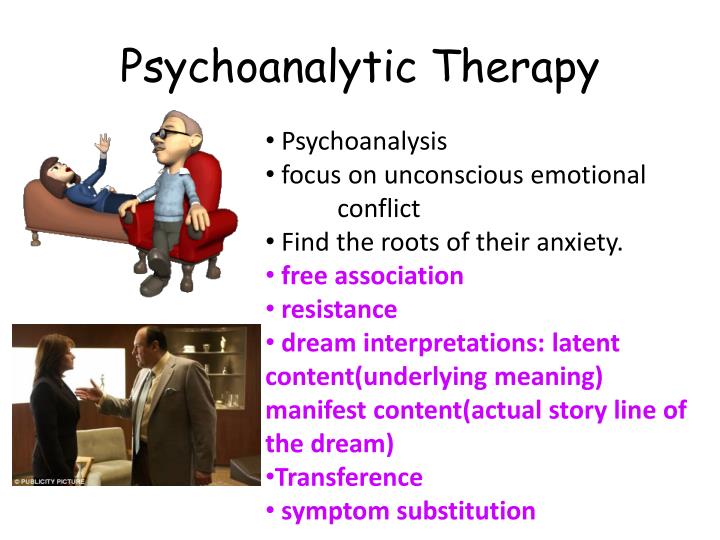
Michael continues his treatment with the aid of minimal income from a government disability program that helps pay for his accommodation and psychoanalytic therapy.

He is directed to reengage life by his therapist with work as a clerk at a Macy’s Department Store. Michael’s father is incensed by the therapist’s diminishment of his son’s accomplishments and begins a campaign to have Yale reengage his son in pursuit of a law degree. With the help of Yale’s faculty, Michael is readmitted to the University.

Ironically, the Yale faculty and students become a caring haven that helps Michael cope with his medical condition.

However, Yale’s help is only palliative, not curative. Michael remains schizophrenic, only ameliorated by drugs and the calming influence of Yale students and faculty. His paranoia continues and becomes more severe when his father dies.

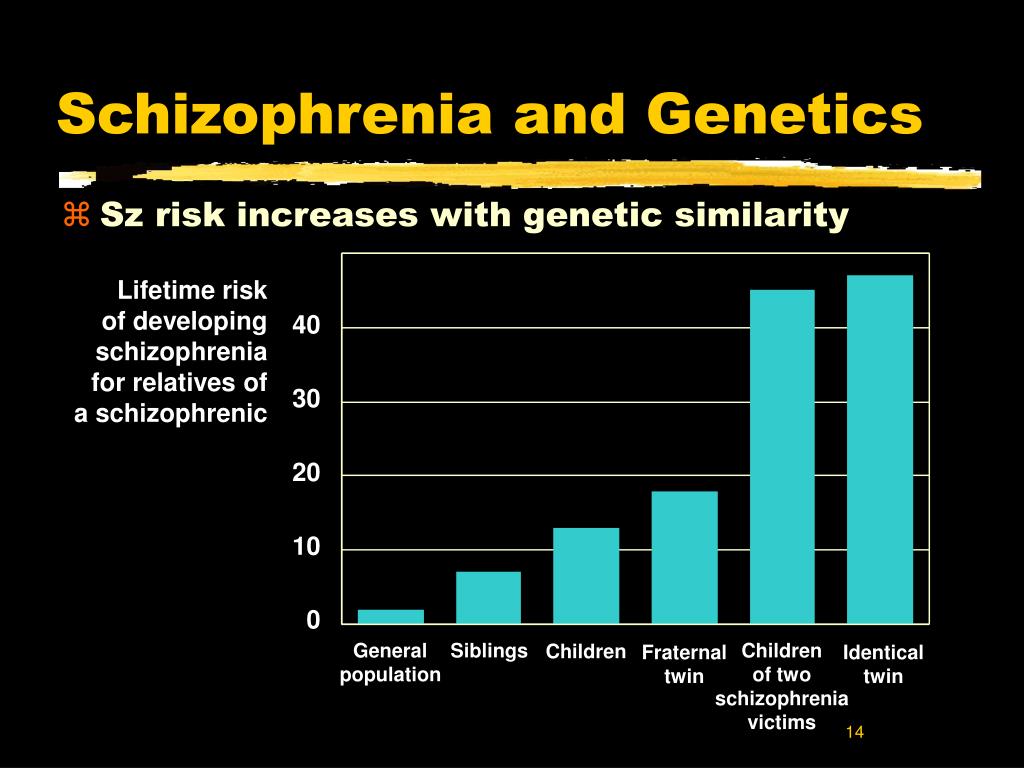
Schizophrenia affects only 1% of the population but has a higher risk of contraction from first degree relatives. (Michael’s grandmother was diagnosed with the disease.)

Michael seems on a road toward managed recovery with a detailed intellectual explanation of what schizophrenia is to him and how it creates delusional images that threaten his existence. His intellectual ability to explain his illness to the public attracts book publishers and the film industry to offer him over a million dollars for a book and film about his life. As this financial windfall becomes real, Michael and his fiancé plan to marry.

On June 17, 1998 Michael B. Laudor stabs his pregnant fiancé, Caroline Costello.

In a schizophrenic episode, Michael grabs his fiancé from behind, stabs her several times, and cuts her throat. Michael leaves her to die on their kitchen floor. Rosen notes that Michael quit taking his medication. He lost control in an episode of paranoia that viewed his fiancé as a maleficent alien presence. It seems a recurrence of what happened with his mother when he was thankfully convinced by his father to voluntarily commit himself to a hospital ward.

What becomes increasingly clear in Rosen’s biographical story is that there is no cure for schizophrenia.

Schizophrenic treatment is a life-long process that requires medication and a support system from caring caregivers, both professional and familial. Being one of “The Best Minds” is of little help in coping with schizophrenia’s symptoms. It requires lifelong assistance because it affects a person’s thinking, emotions, and interactions with the world.

Michael is charged with second-degree murder but is found not guilty by reason of mental defect. He is eventually committed to the Mid-Hudson Forensic Psychotherapy Center in New Hampton, New York in which he remains as of 2023.

(This is a terrible and tragic story. Rosen’s detailed research shows Caroline Costello was a good person, willing to help others, intending to adopt her husband’s faith, and trying to care for Michael in his struggle with an incurable brain dysfunction.)